Segments - by Product Type (Sodium Polyacrylate, Polyacrylamide Copolymers, Others), by Application (Hygiene Products, Medical, Agriculture, Industrial, Others), by End-User (Personal Care, Healthcare, Agriculture, Packaging, Others)
This report is updated with the latest market data and insights as of June 2026. Base year: 2025 | Forecast period: 2026-2034
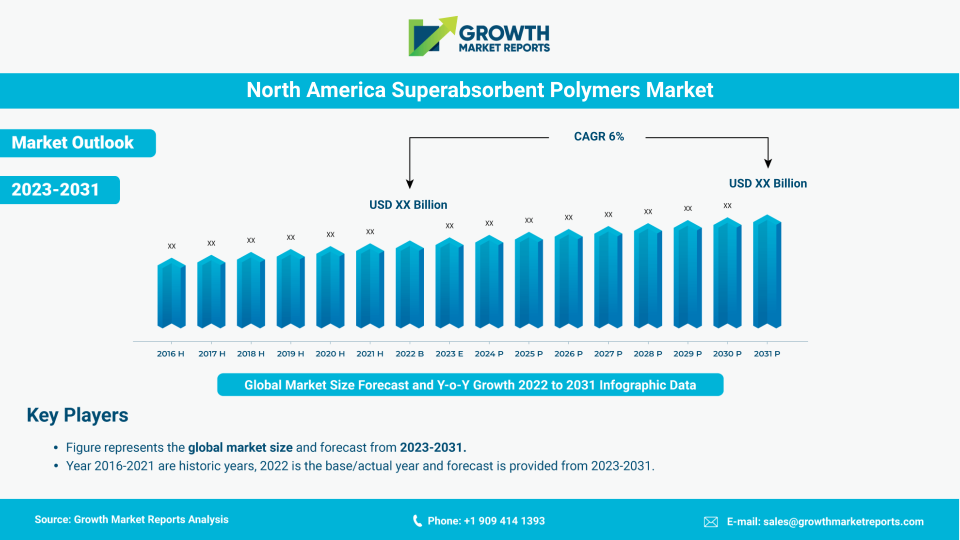
According to our latest research, the global superabsorbent polymers market size stood at USD 10.2 billion in 2025, demonstrating robust demand across multiple industries. The market is expected to expand at a CAGR of 6.2% during the 2026-2034 period, reaching a forecasted value of USD 17.5 billion by 2034. This growth trajectory is driven primarily by increasing applications in hygiene products and agriculture, as well as ongoing innovation in polymer chemistry, which is enabling higher absorption capacities and improved environmental profiles. The breadth of applications covered by super absorbent polymers continues to widen, anchoring long-term market expansion across diverse geographies and end-use sectors.
One of the most significant growth factors for the superabsorbent polymers market is the surging demand for personal hygiene products, especially in emerging economies. With rising global awareness about health and hygiene, there has been a notable uptick in the consumption of diapers, adult incontinence products, and feminine hygiene items. These products rely heavily on superabsorbent polymers, particularly sodium polyacrylate, for their exceptional moisture retention capabilities. The expanding middle-class population in Asia Pacific and other developing regions is further fueling this demand, as consumers increasingly prioritize convenience and hygiene. Additionally, the ongoing trend toward urbanization and rising birth rates in select regions are expected to sustain high demand for hygiene products, thereby boosting the superabsorbent polymers market through the forecast horizon.
Another vital growth driver is the expanding use of superabsorbent polymers in agriculture and medical applications. In agriculture, these polymers are used to enhance soil moisture retention, reduce irrigation frequency, and improve crop yields, especially in arid and semi-arid regions. The increasing adoption of sustainable farming techniques and the growing emphasis on water conservation are encouraging farmers and agricultural enterprises to utilize these materials. In the medical sector, superabsorbent polymers are employed in wound care products, surgical pads, and drug delivery systems due to their ability to absorb and retain large amounts of fluid. The rise in chronic diseases, an aging global population, and advancements in medical technology are all contributing to the growing demand for superabsorbent polymers in healthcare applications as the market moves through 2025 and beyond.
Technological advancements and product innovations are also playing a crucial role in the expansion of the market. Leading manufacturers are investing in research and development to create polymers with enhanced absorption rates, biodegradability, and environmental safety. The development of bio-based superabsorbent alternatives is particularly noteworthy, as it addresses the increasing regulatory and consumer concerns regarding the environmental impact of traditional petroleum-based products. These innovations not only open new avenues for market growth but also help companies differentiate their offerings in a competitive landscape. Furthermore, collaborations between industry players and research institutions are accelerating the commercialization of next-generation superabsorbent polymers, thus supporting the market's long-term growth prospects through 2034.
From a regional perspective, Asia Pacific continues to dominate the global superabsorbent polymers market, both in terms of production and consumption. This dominance is attributed to the large population base, rapid industrialization, and the presence of major hygiene product manufacturers in countries like China, India, and Japan. North America and Europe also represent significant markets, driven by high per capita consumption of hygiene products, advanced healthcare infrastructure, and stringent quality standards. Meanwhile, Latin America and the Middle East and Africa are experiencing steady growth, supported by improving economic conditions and increasing awareness about hygiene and agricultural productivity. The regional landscape is expected to evolve further as manufacturers expand their footprint and adapt to local market dynamics across the 2026-2034 forecast period.
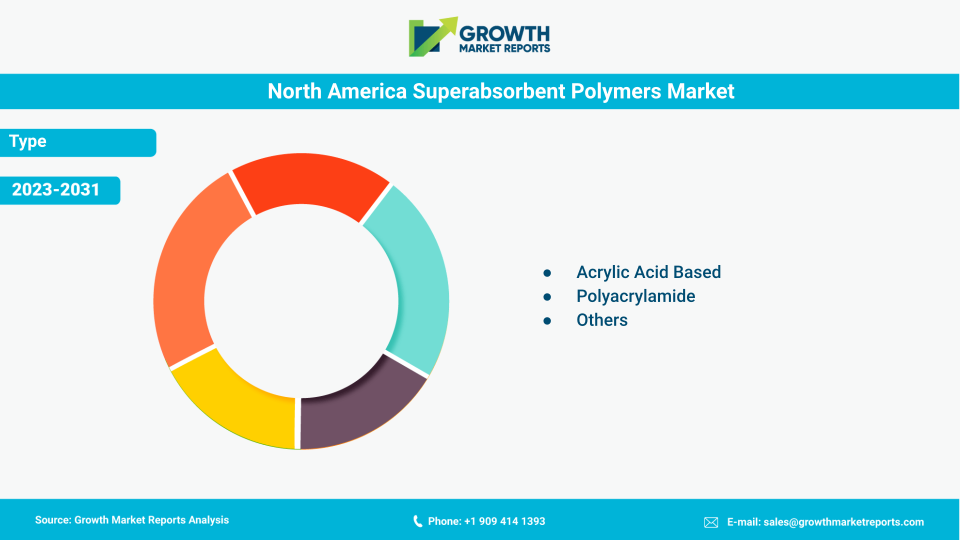
The superabsorbent polymers market is segmented by product type into sodium polyacrylate, polyacrylamide copolymers, and others. Sodium polyacrylate remains the most widely used product type, accounting for approximately 62.5% of the market in 2025. Its popularity stems from its superior absorption capacity, cost-effectiveness, and versatility, making it the preferred choice for disposable hygiene products such as diapers, adult incontinence products, and sanitary napkins. The polymer's unique ability to absorb and retain multiple times its weight in liquid has made it indispensable in the personal care industry. Ongoing research aimed at enhancing the biodegradability of sodium polyacrylate is likely to further strengthen its position in the market over the forecast period.
The growing momentum behind biodegradable superabsorbent materials is reshaping procurement strategies across the hygiene, medical, and agricultural sectors. These innovative polymers break down naturally over time, reducing the accumulation of plastic waste in landfills and oceans. The shift toward biodegradable alternatives is being driven by stringent regulatory frameworks, particularly within the European Union, and the growing consumer preference for sustainable products. In the hygiene sector, these polymers are being incorporated into products such as diapers and sanitary pads, offering the same level of performance while ensuring minimal environmental impact. The agricultural industry is also benefiting, as biodegradable superabsorbent polymers improve soil health and water retention without leaving harmful residues in the field.
Polyacrylamide copolymers represent another significant segment, holding approximately 27% of global market share in 2025. These copolymers are primarily used in agricultural applications due to their ability to improve soil structure, reduce water runoff, and enhance water retention. They are also utilized in various industrial processes, such as wastewater treatment and oil recovery, where their flocculating properties are highly valued. The demand for polyacrylamide copolymers is being propelled by the increasing focus on sustainable agriculture and water management, particularly in regions facing water scarcity. Manufacturers are also exploring new formulations and cross-linking technologies to improve the performance and environmental profile of these polymers, which is expected to drive segment growth through 2034. Innovations in this space are closely connected to advances in starch-graft polyacrylate superabsorbent chemistry, which offers a renewable pathway to high-performance agricultural polymers.
The "others" category includes a range of specialty superabsorbent polymers, such as natural and bio-based variants, which are gaining traction in niche applications. These polymers are often derived from renewable resources and are designed to offer a more environmentally friendly alternative to conventional products. Their adoption is being driven by the growing demand for sustainable solutions across various industries, as well as by regulatory initiatives aimed at reducing plastic waste and promoting the use of biodegradable materials. While currently representing approximately 10.5% of the overall market in 2025, the "others" segment is expected to witness robust growth as technological advancements continue to improve the performance and cost-effectiveness of bio-based superabsorbent polymers.
In terms of innovation, the product type landscape is witnessing significant R&D activity focused on enhancing absorption rates, improving biodegradability, and expanding the range of applications. Leading manufacturers are investing in the development of superabsorbent polymers that can withstand extreme environmental conditions, resist bacterial growth, and maintain their performance over extended periods. These advancements are not only expanding the potential uses of superabsorbent polymers but are also helping companies meet the evolving needs of customers in diverse end-use sectors. As a result, the product type landscape is expected to become increasingly dynamic through 2034, with new entrants and innovative offerings shaping the future of the market. The introduction of superabsorbent polymer concrete additives also illustrates how the material science underlying these products is finding entirely new commercial applications beyond traditional hygiene and agriculture.
| Attributes | Details |
| Report Title | Superabsorbent Polymers Market Research Report 2034 |
| By Product Type | Sodium Polyacrylate, Polyacrylamide Copolymers, Others |
| By Application | Hygiene Products, Medical, Agriculture, Industrial, Others |
| By End-User | Personal Care, Healthcare, Agriculture, Packaging, Others |
| Regions Covered | North America, Europe, APAC, Latin America, MEA |
| Base Year | 2025 |
| Historic Data | 2019-2024 |
| Forecast Period | 2026-2034 |
| Number of Pages | 260 |
| Number of Tables & Figures | 363 |
| Customization Available | Yes, the report can be customized as per your need. |
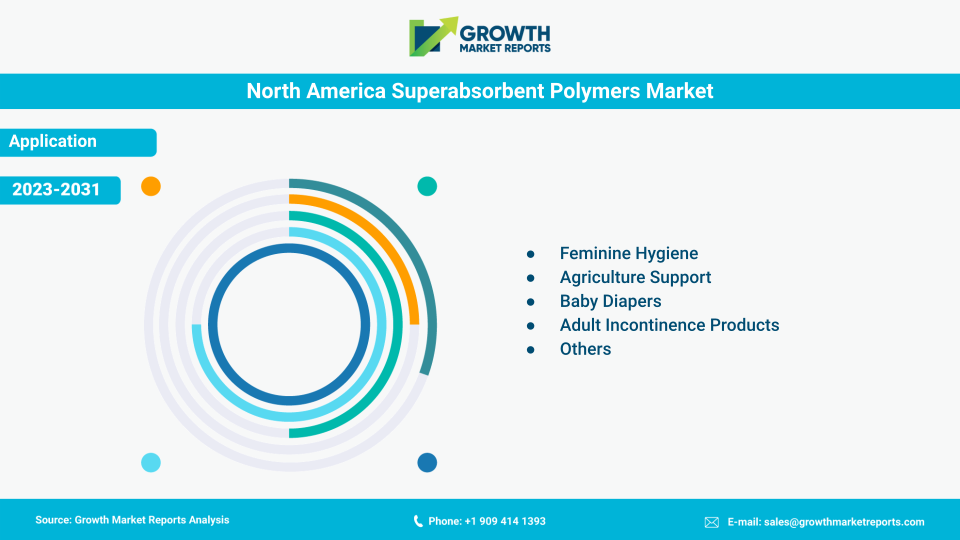
The application segment of the superabsorbent polymers market is dominated by hygiene products, which accounted for the largest share in 2025. This segment encompasses baby diapers, adult incontinence products, and feminine hygiene items, all of which rely extensively on superabsorbent polymers for their moisture management capabilities. The growing global population, increasing urbanization, and rising disposable incomes are fueling the demand for these products, particularly in emerging markets. Additionally, the shift toward premium and ultra-thin hygiene products is driving manufacturers to develop superabsorbent polymers with enhanced absorption efficiency, reduced bulk, and improved skin-friendliness. The hygiene products segment is expected to maintain its dominance over the 2026-2034 forecast period, supported by continuous product innovation and expanding distribution networks.
Medical applications constitute another important segment of the superabsorbent polymers market. These polymers are used in a variety of healthcare products, including wound dressings, surgical pads, and drug delivery systems, due to their ability to absorb and retain large volumes of bodily fluids. The increasing prevalence of chronic wounds, the aging population, and the growing focus on advanced wound care are all contributing to the rising demand for superabsorbent polymers in the medical sector. Furthermore, ongoing advancements in polymer technology are enabling the development of medical-grade superabsorbent polymers with improved biocompatibility and antimicrobial properties, which are expected to drive further growth in this segment through 2034.
In the agriculture sector, superabsorbent polymers are employed to enhance soil moisture retention, reduce irrigation frequency, and improve crop yields. These polymers are particularly valuable in regions with limited water resources, as they help optimize water usage and support sustainable farming practices. The increasing adoption of precision agriculture and the growing awareness of water conservation are driving the demand for superabsorbent polymers in this segment. Government initiatives and subsidies aimed at promoting sustainable agriculture are also encouraging farmers to integrate these polymers into their cultivation practices, thereby supporting market growth across the forecast period.
Industrial applications of superabsorbent polymers include their use in water treatment, oil and gas recovery, and packaging. In water treatment, these polymers are used as flocculants to remove contaminants and improve water quality. In the oil and gas industry, they are employed in drilling fluids and enhanced oil recovery processes. The packaging industry is also exploring the use of superabsorbent polymers in moisture-absorbing pads and liners to extend the shelf life of perishable products. The versatility of superabsorbent polymers and their ability to address specific industry challenges are driving their adoption across a wide range of industrial applications, thereby contributing to the overall growth of the market through 2034.
The end-user landscape of the superabsorbent polymers market is characterized by its diversity, with personal care emerging as the leading segment in 2025. The personal care industry relies heavily on superabsorbent polymers for the production of diapers, sanitary napkins, and adult incontinence products. The growing awareness of hygiene, coupled with the rising purchasing power of consumers in developing regions, is fueling the demand for these products. Manufacturers are responding by investing in new product development and expanding their production capacities to meet the evolving needs of the personal care sector. The trend toward premiumization and the increasing preference for eco-friendly and skin-friendly products are also shaping the demand for advanced superabsorbent polymers in this segment.
Healthcare is another significant end-user of superabsorbent polymers, with applications ranging from wound care and surgical pads to drug delivery systems. The rising incidence of chronic wounds, an aging population, and the growing focus on infection control are all contributing to the increased use of superabsorbent polymers in healthcare settings. The development of medical-grade polymers with enhanced absorption, biocompatibility, and antimicrobial properties is enabling healthcare providers to deliver better patient outcomes. The healthcare segment is expected to witness steady growth over the 2026-2034 forecast period, supported by ongoing advancements in medical technology and the increasing prevalence of lifestyle-related diseases.
The agriculture sector represents a rapidly growing end-user segment for superabsorbent polymers. These materials are used to improve soil moisture retention, reduce water consumption, and support sustainable farming practices. The increasing adoption of modern agricultural techniques, coupled with the need to address water scarcity and improve crop yields, is driving the demand for superabsorbent polymers in this sector. Government initiatives aimed at promoting sustainable agriculture and water conservation are also encouraging farmers to incorporate these polymers into their cultivation practices. As a result, the agriculture segment is expected to witness robust growth through 2034.
Packaging is an emerging end-user segment for superabsorbent polymers, particularly in the food and beverage industry. These polymers are used in moisture-absorbing pads and liners to extend the shelf life of perishable products and prevent spoilage. The growing demand for convenience foods, coupled with the increasing focus on food safety and quality, is driving the adoption of superabsorbent polymers in packaging applications. Additionally, the development of biodegradable and compostable superabsorbent polymers is enabling the packaging industry to meet the growing demand for sustainable solutions. The versatility and adaptability of superabsorbent polymers are expected to drive their adoption across a wide range of end-user industries through 2034.
The superabsorbent polymers market presents a host of opportunities for growth and innovation. One of the most promising areas is the development of bio-based and biodegradable superabsorbent polymers, which address growing environmental concerns and regulatory pressures. As governments and consumers increasingly prioritize sustainability, there is a significant opportunity for manufacturers to differentiate their products by offering eco-friendly alternatives to traditional petroleum-based polymers. Additionally, the expansion of superabsorbent polymer applications into new industries, such as pharmaceuticals, horticulture, and specialty packaging, offers further avenues for market growth. Companies that invest in research and development to create innovative, high-performance, and sustainable products are well-positioned to capitalize on these emerging opportunities and gain a competitive edge in the market through 2034.
Another major opportunity lies in the increasing adoption of superabsorbent polymers in agriculture and water management. As climate change and water scarcity become more pressing global challenges through the mid-2020s and into the 2030s, the demand for technologies that enhance water efficiency and support sustainable farming practices is expected to rise significantly. Superabsorbent polymers offer a practical solution by improving soil moisture retention, reducing irrigation frequency, and supporting crop growth in arid and semi-arid regions. Governments and international organizations are likely to continue promoting the use of these polymers through subsidies, incentives, and awareness campaigns. This presents a significant growth opportunity for manufacturers, particularly in regions facing acute water shortages and food security challenges.
Despite the numerous opportunities, the superabsorbent polymers market also faces certain restraints and threats. One of the primary challenges is the environmental impact of traditional petroleum-based superabsorbent polymers, which are not biodegradable and can contribute to plastic pollution. Increasing regulatory scrutiny and consumer demand for sustainable products are putting pressure on manufacturers to develop greener alternatives. Additionally, fluctuations in raw material prices, particularly for acrylic acid and other key petrochemical inputs, can impact production costs and profit margins. The market also faces competition from alternative absorbent materials, such as cellulose-based products, which may offer comparable performance with a lower environmental footprint. Addressing these challenges will require ongoing innovation, strategic partnerships, and a firm commitment to sustainability across the value chain.
Asia Pacific continues to lead the global superabsorbent polymers market, accounting for approximately 38.5% of total market revenue in 2025. The region's dominance is driven by its large population base, rapid urbanization, and the presence of major hygiene product manufacturers in countries like China, India, and Japan. The increasing adoption of disposable hygiene products, rising birth rates in select markets, and growing awareness of personal hygiene are all fueling demand for superabsorbent polymers across the region. Additionally, government initiatives aimed at improving healthcare infrastructure and promoting sustainable agriculture are supporting market growth. The Asia Pacific market is expected to maintain a strong growth trajectory, with a projected CAGR of 7.1% over the 2026-2034 forecast period.
North America represents the second-largest regional market for superabsorbent polymers, with a market value of approximately USD 2.4 billion in 2025. The region benefits from high per capita consumption of hygiene products, advanced healthcare infrastructure, and a strong focus on product innovation. The presence of leading manufacturers and a well-established distribution network further support market growth in North America. In addition to hygiene and medical applications, the region is witnessing increasing adoption of superabsorbent polymers in agriculture and packaging, driven by the growing emphasis on sustainability and water conservation. The North American market is expected to experience steady growth, supported by ongoing product development and expanding end-use applications through 2034.
Europe is another significant market for superabsorbent polymers, with a market size of approximately USD 2.2 billion in 2025. The region is characterized by stringent quality standards, a strong regulatory framework, and a high level of environmental awareness. European manufacturers are at the forefront of developing bio-based and biodegradable superabsorbent polymers, driven by regulatory initiatives including the European Green Deal aimed at reducing plastic waste and promoting sustainability. The region also boasts a well-developed healthcare sector and a high level of hygiene product consumption. While growth in Europe is expected to be moderate compared to Asia Pacific, the market will continue to benefit from ongoing innovation and the increasing adoption of sustainable solutions through 2034.
The competitive landscape of the superabsorbent polymers market is characterized by the presence of several global and regional players, each vying for market share through product innovation, capacity expansion, and strategic partnerships. The market is moderately consolidated, with a few leading companies accounting for a significant share of total revenue in 2025. These companies are investing heavily in research and development to create high-performance, sustainable, and cost-effective superabsorbent polymers that meet the evolving needs of customers across various end-use industries. In addition to product development, leading players are focusing on expanding their production capacities, optimizing supply chains, and strengthening their distribution networks to enhance their market presence going into the 2026-2034 period.
Mergers, acquisitions, and collaborations are common strategies employed by key market players to gain a competitive edge and accelerate growth. Companies are increasingly partnering with research institutions, universities, and other industry players to develop next-generation superabsorbent polymers and explore new applications. These collaborations are enabling the rapid commercialization of innovative products and supporting market expansion into new geographic regions and end-use sectors. Furthermore, companies are leveraging digital technologies and data analytics to optimize their manufacturing processes, reduce costs, and improve product quality, thereby enhancing their competitive position in the market through 2034.
Sustainability is emerging as a key differentiator in the superabsorbent polymers market, with leading companies investing in the development of bio-based and biodegradable products. These efforts are being driven by increasing regulatory scrutiny, consumer demand for eco-friendly solutions, and the need to address the environmental impact of traditional petroleum-based polymers. Companies that can successfully develop and commercialize sustainable superabsorbent polymers are likely to gain a significant competitive advantage, particularly in regions with stringent environmental regulations and high levels of consumer awareness. As the market continues to evolve through the forecast period, sustainability will remain a central focus for both established players and new entrants.
Some of the major companies operating in the superabsorbent polymers market include BASF SE, Nippon Shokubai Co., Ltd., Evonik Industries AG, Sumitomo Seika Chemicals Co., Ltd., and LG Chem Ltd. BASF SE is a global leader in the production of superabsorbent polymers, with a strong focus on product innovation and sustainability. The company has a broad product portfolio and a well-established global presence, enabling it to serve a diverse customer base across multiple industries. Nippon Shokubai Co., Ltd. is another major player, known for its advanced polymer technologies and commitment to quality, with a strong presence in the Asia Pacific region and active development of next-generation sustainable polymer grades.
Evonik Industries AG is a leading manufacturer of specialty chemicals, including superabsorbent polymers for hygiene, medical, and agricultural applications. The company is focused on expanding its product offerings and investing in sustainable solutions to meet the growing demand for eco-friendly polymers. Sumitomo Seika Chemicals Co., Ltd. is renowned for its high-performance superabsorbent polymers and strong research and development capabilities. The company is actively exploring new applications and markets to drive growth through 2034. LG Chem Ltd., a major chemical company based in South Korea, is also a key player in the superabsorbent polymers market, with a focus on innovation, quality, and sustainability across its global operations.
In addition to these major players, the market features a number of regional and niche manufacturers, including Zhejiang Satellite Petrochemical Co., Ltd., Wanhua Chemical Group Co., Ltd., SDP Global Co., Ltd., Sanyo Chemical Industries, Ltd., and Songwon Industrial Co., Ltd., that are contributing to the overall growth and competitiveness of the industry. These companies are often focused on serving specific end-use sectors or geographic regions and are leveraging their agility and specialized expertise to capture market share. As the superabsorbent polymers market continues to evolve through 2034, the competitive landscape is expected to become increasingly dynamic, with ongoing innovation, strategic partnerships, and a strong focus on sustainability shaping the future of the industry.
The Superabsorbent Polymers market has been segmented on the basis of
Several high-growth opportunities are materializing. The commercialization of fully biodegradable and bio-based superabsorbent polymers represents a major frontier, particularly in European and North American markets where sustainability mandates are strictest. Expansion into pharmaceutical drug delivery, wound care innovation, and specialty horticulture offers diversified revenue streams beyond traditional hygiene applications. Rapidly developing markets across Southeast Asia, Sub-Saharan Africa, and Latin America present volume growth potential as hygiene product penetration rises. Strategic collaborations between chemical companies and agricultural technology firms are also creating new pathways for precision water management solutions.
The foremost challenge is the environmental persistence of conventional petroleum-based superabsorbent polymers, which contributes to plastic waste accumulation and faces tightening regulatory scrutiny across major markets including the European Union. Volatility in acrylic acid and other petrochemical raw material prices creates margin pressure for producers. Competition from alternative absorbent materials, including cellulose-based and fluff pulp composites, also poses a threat to market share. Additionally, high production costs for bio-based variants currently limit their widespread commercial adoption despite strong consumer and regulatory preference for sustainable options.
The global market is led by BASF SE, Nippon Shokubai Co., Ltd., Evonik Industries AG, Sumitomo Seika Chemicals Co., Ltd., and LG Chem Ltd. These companies collectively account for a significant share of global production capacity and are at the forefront of R&D, sustainability initiatives, and geographic expansion. Regional players such as Zhejiang Satellite Petrochemical Co., Ltd., SDP Global Co., Ltd., Wanhua Chemical Group Co., Ltd., and Sanyo Chemical Industries, Ltd. are also strengthening their positions through capacity additions and product diversification.
The most significant innovation trend is the development of bio-based and biodegradable superabsorbent polymers derived from renewable feedstocks such as starch, cellulose, and chitosan, which address mounting environmental and regulatory pressures on petroleum-based products. Manufacturers are also advancing polymer formulations with higher gel-blocking resistance, antimicrobial properties, and improved performance under challenging pH and salinity conditions. Smart hydrogels capable of stimuli-responsive release and multi-functional superabsorbents for medical drug delivery are also attracting substantial R&D investment as of 2025.
In agriculture, superabsorbent polymers, particularly polyacrylamide copolymers and certain specialty variants, are incorporated into soil to absorb and slowly release water, substantially reducing irrigation frequency. They improve soil structure, minimize water runoff, and support crop growth in arid and semi-arid environments. Their use aligns closely with precision agriculture initiatives and government water conservation programs, making them increasingly valuable as global water scarcity concerns intensify through the 2020s and beyond.
The three primary product types are sodium polyacrylate, polyacrylamide copolymers, and a growing "others" category that includes natural and bio-based variants. Sodium polyacrylate is the most commercially prevalent, holding roughly 62.5% of the market in 2025, owing to its exceptional absorption capacity and cost efficiency. Polyacrylamide copolymers hold about 27% share and are widely used in agriculture and industrial processes. Bio-based and specialty polymers collectively account for the remaining approximately 10.5%.
Asia Pacific dominates the global superabsorbent polymers market, representing approximately 38.5% of total revenue in 2025. China, India, and Japan are the primary contributors, supported by large populations, rapid urbanization, a robust manufacturing base, and increasing hygiene awareness. The region is expected to sustain the highest regional CAGR of approximately 7.1% through 2034.
The personal care and hygiene industry remains the single largest demand driver, accounting for the majority of superabsorbent polymer consumption through products such as baby diapers, adult incontinence items, and feminine hygiene goods. Agriculture is the second most prominent sector, leveraging these materials for soil moisture retention and water conservation. Healthcare, industrial water treatment, and specialty packaging are also important and rapidly growing application areas.
The global superabsorbent polymers market is projected to grow at a compound annual growth rate (CAGR) of 6.2% over the 2026-2034 forecast period, reaching an estimated USD 17.5 billion by 2034. This growth is driven by rising hygiene product consumption, agricultural water management needs, and continued innovation in bio-based and biodegradable polymer formulations.
As of 2025, the global superabsorbent polymers market is valued at approximately USD 10.2 billion. This figure reflects strong and consistent demand across hygiene, medical, agricultural, and industrial applications worldwide, underpinned by population growth, rising hygiene awareness, and expanding end-use sectors in emerging economies.