Superabsorbent Polymer Market Research Report 2033

Superabsorbent Polymer Market Research Report 2033

Segments - by Product Type (Sodium Polyacrylate, Polyacrylamide Copolymers, Others), by Application (Personal Care & Hygiene, Agriculture, Medical, Industrial, Packaging, Others), by End-User (Baby Diapers, Adult Incontinence Products, Feminine Hygiene, Agriculture, Medical, Others)

https://growthmarketreports.com/Raksha
Author : Raksha Sharma
https://growthmarketreports.com/Vaibhav
Fact-checked by : V. Chandola
https://growthmarketreports.com/Shruti
Editor : Shruti Bhat

Upcoming | Report ID :MC-3836 | 5.0 Rating | 32 Reviews | 284 Pages | Format : Docx PDF

Report Description


Superabsorbent Polymer Market Outlook

According to our latest research, the global superabsorbent polymer market size was valued at USD 10.8 billion in 2024, reflecting robust demand across key end-use industries. The market is projected to grow at a compound annual growth rate (CAGR) of 6.3% from 2025 to 2033, reaching an estimated value of USD 18.7 billion by 2033. This growth is primarily driven by increasing applications in personal care and hygiene products, particularly in developing regions, alongside expanding uses in agriculture and medical sectors. As per our latest research, the market is witnessing dynamic shifts in consumer preferences, technological advancements in product formulations, and a steady rise in demand for sustainable and high-performance absorbent materials.

One of the most significant growth factors fueling the superabsorbent polymer market is the rising awareness and adoption of hygiene and personal care products worldwide. With an increasing global population and improved living standards, especially in emerging economies, the demand for baby diapers, adult incontinence products, and feminine hygiene items has surged. These products rely heavily on superabsorbent polymers due to their exceptional liquid retention capabilities and comfort-enhancing properties. Furthermore, urbanization and the growing middle-class population in countries such as China, India, and Brazil are driving higher consumption rates, which, in turn, translates to greater market expansion. The market is also experiencing innovation in product design, with manufacturers focusing on thinner, more absorbent, and skin-friendly materials, which is expected to further boost demand in the coming years.

Another key driver for the superabsorbent polymer market is the expanding application base in agriculture and medical sectors. In agriculture, superabsorbent polymers are increasingly being used as soil conditioners and water retention agents, helping to improve crop yield and reduce irrigation needs, particularly in arid and drought-prone regions. This application is gaining traction in regions facing water scarcity, as it aligns with sustainable farming practices. In the medical field, these polymers are used in wound dressings, surgical pads, and other healthcare products due to their ability to manage exudates and maintain moisture balance, which is critical for wound healing. The ongoing research and development activities aimed at enhancing the biodegradability and performance of superabsorbent polymers are opening new avenues for market growth and diversification.

Technological advancements and sustainability trends are reshaping the superabsorbent polymer market landscape. Manufacturers are investing in the development of bio-based and eco-friendly superabsorbent polymers in response to growing environmental concerns and stringent regulations regarding plastic waste and non-biodegradable materials. These innovations are not only addressing regulatory compliance but also catering to the evolving preferences of environmentally conscious consumers. Additionally, the integration of smart technologies and nanotechnology in polymer synthesis is leading to the creation of products with improved absorbency, durability, and reusability. Such advancements are expected to create lucrative opportunities for market players and further accelerate market growth during the forecast period.

In recent years, the development of Bio-Based Polyacrylate Superabsorbent materials has gained significant attention as a sustainable alternative to traditional synthetic polymers. These bio-based variants are derived from renewable resources, offering a more environmentally friendly option for industries seeking to reduce their carbon footprint. The use of bio-based materials aligns with the growing demand for sustainability and compliance with stringent environmental regulations. As industries strive to meet these requirements, the adoption of Bio-Based Polyacrylate Superabsorbent polymers is expected to rise, providing a competitive edge to manufacturers who prioritize eco-friendly solutions. This shift not only addresses environmental concerns but also caters to the evolving preferences of consumers who are increasingly conscious of the environmental impact of the products they use.

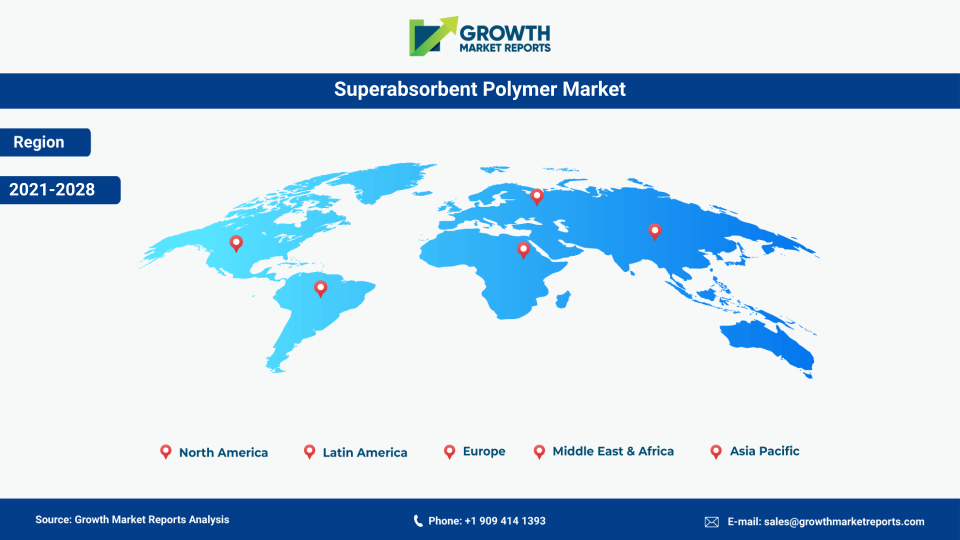
From a regional perspective, the Asia Pacific region stands out as the dominant market for superabsorbent polymers, accounting for a significant share of global consumption in 2024. This is primarily attributed to the high population density, rapid urbanization, and increasing disposable incomes in countries such as China, India, and Japan. North America and Europe also represent substantial markets, driven by mature personal care industries and early adoption of advanced polymer technologies. Meanwhile, Latin America and the Middle East & Africa are witnessing steady growth, supported by improving healthcare infrastructure and rising awareness about hygiene products. The regional outlook remains positive, with Asia Pacific expected to maintain its leadership position throughout the forecast period, followed by North America and Europe.

Global Superabsorbent Polymer Industry Outlook

Product Type Analysis

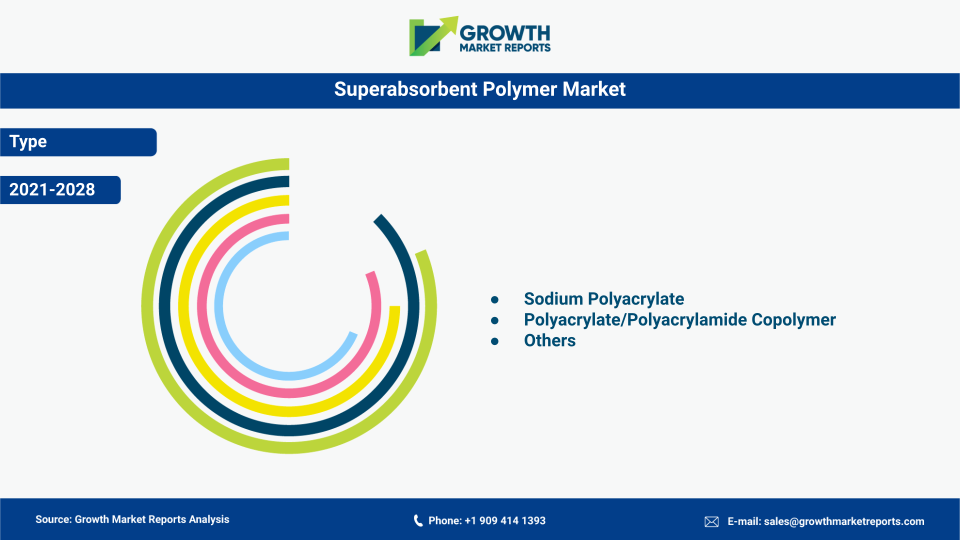
The superabsorbent polymer market is segmented by product type into sodium polyacrylate, polyacrylamide copolymers, and other variants. Sodium polyacrylate dominates the market, capturing the largest share due to its superior absorption properties, cost-effectiveness, and widespread use in disposable hygiene products. This polymer is highly favored for its ability to absorb and retain large volumes of liquid relative to its mass, making it indispensable in applications such as baby diapers, feminine hygiene products, and adult incontinence pads. The extensive research and development activities focusing on improving the performance and safety profile of sodium polyacrylate have further solidified its position in the market. As manufacturers strive to enhance product efficiency and reduce environmental impact, the demand for high-purity and bio-based sodium polyacrylate is expected to rise.

Polyacrylamide copolymers represent another significant segment within the superabsorbent polymer market. These copolymers are primarily used in applications requiring specific performance characteristics, such as enhanced gel strength, slower release of absorbed liquids, or compatibility with certain medical and industrial formulations. The versatility of polyacrylamide copolymers allows them to be tailored for niche applications, including water treatment, agriculture, and specialty medical products. The segment is witnessing steady growth, driven by advancements in copolymerization techniques and increasing demand for customized solutions that address unique end-user requirements. Market players are investing in research to develop copolymers with improved biodegradability and reduced toxicity, which is anticipated to open new growth avenues.

The 'others' segment encompasses a range of alternative superabsorbent polymers, including natural and bio-based materials such as cellulose derivatives, starch-based polymers, and chitosan. Although these alternatives currently account for a smaller market share compared to synthetic polymers, they are gaining attention due to their environmental benefits and potential to meet regulatory requirements for sustainability. The growing consumer preference for eco-friendly products, coupled with government initiatives to reduce plastic waste, is encouraging manufacturers to explore and commercialize these alternatives. The segment is expected to witness accelerated growth as technological barriers are overcome and cost-competitiveness improves, particularly in regions with stringent environmental regulations.

Across all product types, innovation remains a key focus area for market participants. The development of superabsorbent polymers with enhanced absorption capacity, faster swelling rates, and improved skin compatibility is gaining momentum. Additionally, efforts to reduce the environmental footprint of these polymers through the use of renewable raw materials, green synthesis processes, and improved end-of-life disposal options are shaping the future of the market. The continuous evolution of product formulations and the integration of advanced materials science are expected to drive the adoption of next-generation superabsorbent polymers across various industries.

In summary, the product type segment of the superabsorbent polymer market is characterized by technological advancements, increasing focus on sustainability, and a strong demand for high-performance materials. Sodium polyacrylate remains the cornerstone of the market, while polyacrylamide copolymers and bio-based alternatives are emerging as promising segments with significant growth potential. The interplay between regulatory requirements, consumer preferences, and technological innovation will continue to shape the competitive dynamics and growth trajectory of this segment in the years ahead.

Report Scope

Attributes Details
Report Title Superabsorbent Polymer Market Research Report 2033
By Product Type Sodium Polyacrylate, Polyacrylamide Copolymers, Others
By Application Personal Care & Hygiene, Agriculture, Medical, Industrial, Packaging, Others
By End-User Baby Diapers, Adult Incontinence Products, Feminine Hygiene, Agriculture, Medical, Others
Regions Covered North America, Europe, APAC, Latin America, MEA
Base Year 2024
Historic Data 2018-2023
Forecast Period 2025-2033
Number of Pages 284
Number of Tables & Figures 283
Customization Available Yes, the report can be customized as per your need.

Application Analysis

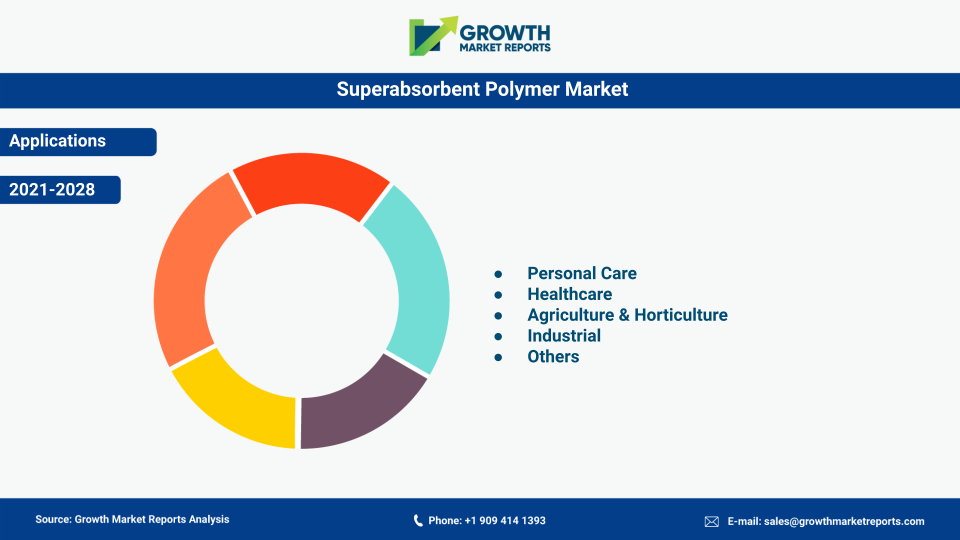
The application landscape for superabsorbent polymers is diverse, with personal care and hygiene products constituting the largest segment. This includes baby diapers, adult incontinence products, and feminine hygiene items, all of which rely on the superior liquid absorption and retention properties of superabsorbent polymers. The increasing birth rates in developing countries, rising geriatric population in developed regions, and growing awareness about personal hygiene are key factors driving demand in this segment. Manufacturers are continually innovating to develop thinner, more comfortable, and highly absorbent products that cater to evolving consumer needs. The integration of odor control, skin protection, and eco-friendly features is further enhancing product appeal and expanding the market base.

Agriculture represents a rapidly growing application segment for superabsorbent polymers. These materials are used as soil conditioners and water retention agents, helping to improve soil structure, enhance water use efficiency, and support plant growth in water-scarce environments. The adoption of superabsorbent polymers in agriculture is being driven by the need to address water scarcity, improve crop yields, and promote sustainable farming practices. Governments and agricultural organizations are increasingly promoting the use of these polymers through subsidies and awareness campaigns, particularly in regions prone to drought and erratic rainfall. The segment is expected to witness robust growth as farmers and agribusinesses recognize the long-term benefits of incorporating superabsorbent polymers into their cultivation practices.

In the medical sector, superabsorbent polymers are used in a variety of applications, including wound dressings, surgical pads, and drug delivery systems. Their ability to absorb and retain large volumes of bodily fluids while maintaining a moist environment is critical for wound healing and infection prevention. The growing prevalence of chronic wounds, increasing surgical procedures, and rising healthcare expenditures are contributing to the expansion of this segment. Additionally, ongoing research into the development of antimicrobial and biocompatible superabsorbent polymers is expected to enhance their utility in advanced medical applications, further driving market growth.

Industrial and packaging applications of superabsorbent polymers are also gaining prominence. In industrial settings, these polymers are used for spill control, water blocking in cables, and as additives in concrete and construction materials. The packaging industry utilizes superabsorbent polymers for moisture control in food packaging, transport of perishable goods, and preservation of sensitive products. The rising demand for high-performance packaging solutions and the growing emphasis on product safety and quality are fueling the adoption of superabsorbent polymers in this segment. The versatility and adaptability of these materials make them valuable across a wide range of industrial and packaging applications.

Other applications, such as environmental remediation, pet care products, and specialty uses, are also contributing to the growth of the superabsorbent polymer market. The ability of these polymers to absorb and immobilize contaminants makes them suitable for use in environmental cleanup and remediation projects. In pet care, superabsorbent polymers are used in products such as pet pads and litter, offering superior odor control and liquid retention. As new applications continue to emerge and existing ones evolve, the application segment of the superabsorbent polymer market is expected to witness sustained growth and diversification in the coming years.

End-User Analysis

The end-user segment of the superabsorbent polymer market is primarily driven by the baby diaper industry, which accounts for the largest share of global consumption. The increasing birth rates in developing regions, coupled with rising disposable incomes and changing lifestyles, are fueling the demand for high-quality, comfortable, and absorbent diapers. Manufacturers are focusing on developing products that offer enhanced leakage protection, skin-friendliness, and environmental sustainability. The trend towards premiumization, characterized by the introduction of ultra-thin, highly absorbent, and eco-friendly diapers, is further boosting market growth. Additionally, the expansion of distribution networks and the proliferation of e-commerce platforms are making these products more accessible to a wider consumer base.

Adult incontinence products represent another significant end-user segment, driven by the growing aging population and increasing prevalence of urinary incontinence and related health conditions. The rising awareness about the importance of maintaining hygiene and dignity among elderly individuals is contributing to the adoption of adult incontinence products. Innovations in product design, such as improved fit, odor control, and discreetness, are enhancing user comfort and acceptance. Healthcare providers and caregivers are also playing a crucial role in promoting the use of these products, particularly in long-term care and home healthcare settings. The segment is expected to witness sustained growth as demographic trends and healthcare advancements continue to shape consumer needs.

Feminine hygiene products, including sanitary napkins, panty liners, and tampons, constitute a major end-user category for superabsorbent polymers. The increasing awareness about menstrual health, rising female workforce participation, and changing societal attitudes are driving demand for high-performance feminine hygiene products. Manufacturers are investing in research and development to create products that offer superior absorbency, comfort, and skin protection. The shift towards organic and biodegradable feminine hygiene products, in response to environmental concerns, is also influencing market dynamics. The segment is poised for growth as womenÂ’s health and wellness become a greater focus globally.

The agriculture and medical end-user segments are experiencing steady growth, supported by the increasing adoption of superabsorbent polymers for water conservation, soil improvement, and medical applications. In agriculture, the use of these polymers is helping farmers enhance crop productivity and resilience to climate variability. In the medical sector, the demand for advanced wound care products, surgical pads, and other absorbent medical devices is on the rise, driven by the growing burden of chronic diseases and surgical procedures. The versatility and effectiveness of superabsorbent polymers make them indispensable in these end-user segments, with ongoing innovation expected to unlock new opportunities for market expansion.

Other end-users, such as industrial, packaging, and specialty product manufacturers, are also contributing to the growth of the superabsorbent polymer market. The ability to customize polymer properties to meet specific application requirements is enabling manufacturers to address a wide range of industry needs. As the market continues to evolve, the end-user segment is expected to diversify further, with new applications and industries emerging as key drivers of demand.

Opportunities & Threats

The superabsorbent polymer market presents a multitude of opportunities for growth, particularly in the development and commercialization of bio-based and biodegradable polymers. With increasing regulatory pressure and consumer demand for sustainable products, manufacturers are investing in research and development to create eco-friendly alternatives to traditional synthetic polymers. The integration of renewable raw materials, green chemistry, and advanced manufacturing processes is enabling the production of high-performance, environmentally responsible superabsorbent polymers. These innovations are not only helping companies comply with evolving regulations but also providing a competitive edge in a market that is increasingly driven by sustainability considerations. The expansion of applications in agriculture, medical, and specialty industries further enhances the growth potential of the market, as new use cases and customer segments are identified.

Another significant opportunity lies in the advancement of product performance and functionality through technological innovation. The development of superabsorbent polymers with enhanced absorption capacity, faster swelling rates, improved durability, and tailored release properties is opening new avenues for application across diverse industries. The integration of smart technologies, such as nanotechnology and responsive materials, is enabling the creation of next-generation polymers with unique properties and capabilities. As end-users seek solutions that offer greater efficiency, safety, and user experience, manufacturers that can deliver differentiated and high-value products are well-positioned to capture market share. Strategic partnerships, collaborations, and investments in research and development are expected to drive innovation and accelerate market growth in the coming years.

Despite the promising opportunities, the superabsorbent polymer market faces several restraining factors, most notably environmental concerns related to the disposal and degradation of synthetic polymers. The accumulation of non-biodegradable superabsorbent polymers in landfills and the potential for microplastic pollution have raised significant regulatory and societal challenges. Governments and regulatory bodies are imposing stricter regulations on the use of certain chemicals and materials, prompting manufacturers to seek alternative solutions. The transition to sustainable and biodegradable polymers involves technical, economic, and scalability challenges, which may pose barriers to market entry and expansion. Additionally, fluctuations in raw material prices and supply chain disruptions can impact production costs and profitability, further constraining market growth.

Regional Outlook

The Asia Pacific region continues to dominate the global superabsorbent polymer market, accounting for over 41% of total market revenue in 2024, with a market value of approximately USD 4.4 billion. This dominance is attributed to the region's large and growing population, rapid urbanization, and increasing disposable incomes, particularly in countries such as China, India, and Japan. The rising demand for personal care and hygiene products, coupled with expanding applications in agriculture and medical sectors, is driving robust market growth. The region is also witnessing significant investments in manufacturing capacity expansion and technological innovation, further strengthening its position in the global market. The Asia Pacific market is expected to maintain a healthy CAGR of 7.2% during the forecast period, outpacing other regions in terms of growth rate and market size.

North America represents the second-largest market for superabsorbent polymers, with a market size of approximately USD 2.9 billion in 2024. The region benefits from a mature personal care industry, high healthcare expenditure, and early adoption of advanced polymer technologies. The demand for high-performance and sustainable absorbent products is driving innovation and product development in the region. Additionally, the presence of leading market players, well-established distribution networks, and supportive regulatory frameworks are contributing to market stability and growth. The North American market is expected to experience steady growth, with a focus on sustainability, product differentiation, and expanding applications in medical and industrial sectors.

Europe holds a significant share of the global superabsorbent polymer market, valued at around USD 2.3 billion in 2024. The region is characterized by stringent environmental regulations, high consumer awareness, and a strong emphasis on sustainability. The demand for bio-based and biodegradable superabsorbent polymers is particularly pronounced in Europe, driven by regulatory mandates and consumer preferences for eco-friendly products. The market is witnessing increased investment in research and development, as well as collaboration between industry stakeholders and academic institutions. While growth in Europe is moderate compared to Asia Pacific, the region remains a key hub for innovation and sustainability in the superabsorbent polymer market. Latin America and the Middle East & Africa are emerging as growth markets, supported by improving healthcare infrastructure, rising awareness about hygiene products, and expanding agricultural applications. These regions, although smaller in market size, offer significant long-term growth potential as market penetration increases and economic conditions improve.

Superabsorbent Polymer Market Statistics

Competitor Outlook

The competitive landscape of the superabsorbent polymer market is characterized by the presence of several large multinational corporations, as well as a growing number of regional and specialty players. The market is highly competitive, with companies focusing on product innovation, capacity expansion, and strategic partnerships to strengthen their market position. Leading players are investing in research and development to develop next-generation superabsorbent polymers that offer enhanced performance, sustainability, and cost-effectiveness. The emphasis on sustainability and environmental responsibility is driving the development of bio-based and biodegradable polymers, with companies seeking to differentiate themselves through green product offerings and eco-friendly manufacturing processes. Mergers, acquisitions, and collaborations are common strategies employed by market participants to expand their product portfolios, enter new markets, and leverage technological synergies.

In addition to product innovation, companies are focusing on operational efficiency and supply chain optimization to maintain competitiveness in a dynamic market environment. The volatility in raw material prices, coupled with increasing regulatory scrutiny, is prompting manufacturers to adopt flexible sourcing strategies and invest in backward integration. The ability to offer customized solutions that address specific end-user requirements is becoming a key differentiator, with companies leveraging their technical expertise and application knowledge to deliver value-added products. The growing importance of digitalization and automation in manufacturing processes is also enabling companies to enhance productivity, quality, and responsiveness to market demands.

The market is witnessing a shift towards customer-centric business models, with companies placing greater emphasis on understanding and addressing the evolving needs of end-users. This includes offering comprehensive technical support, after-sales services, and collaborative product development initiatives. The expansion of distribution networks, both online and offline, is enabling companies to reach a broader customer base and improve market penetration. As competition intensifies, the ability to innovate, adapt to changing market dynamics, and deliver superior customer value will be critical for long-term success in the superabsorbent polymer market.

Major companies operating in the superabsorbent polymer market include BASF SE, Evonik Industries AG, Nippon Shokubai Co., Ltd., Sumitomo Seika Chemicals Co., Ltd., LG Chem Ltd., Archer Daniels Midland Company, and Yixing Danson Technology. BASF SE is a global leader, known for its extensive product portfolio, strong research capabilities, and commitment to sustainability. Evonik Industries AG focuses on innovation and product development, with a strong emphasis on high-performance and specialty polymers. Nippon Shokubai Co., Ltd. is recognized for its advanced manufacturing technologies and significant presence in the Asia Pacific region. Sumitomo Seika Chemicals Co., Ltd. and LG Chem Ltd. are key players in the Asia Pacific market, leveraging their technical expertise and regional presence to drive growth. Archer Daniels Midland Company and Yixing Danson Technology are expanding their market reach through strategic investments and collaborations.

These companies are actively engaged in expanding their production capacities, developing new product formulations, and exploring opportunities in emerging markets. The focus on sustainability, innovation, and customer-centricity is expected to shape the competitive dynamics of the superabsorbent polymer market in the coming years. The ability to anticipate and respond to market trends, regulatory changes, and customer preferences will be critical for maintaining a competitive edge and driving long-term growth in this dynamic and evolving market.

Key Players

  • BASF SE
  • Evonik Industries AG
  • Sumitomo Seika Chemicals Co., Ltd.
  • Nippon Shokubai Co., Ltd.
  • LG Chem Ltd.
  • Sanyo Chemical Industries, Ltd.
  • Formosa Plastics Corporation
  • Yixing Danson Technology
  • Zhejiang Satellite Petrochemical Co., Ltd.
  • Shandong Nuoer Biological Technology Co., Ltd.
  • Chase Corporation
  • Songwon Industrial Co., Ltd.
  • Kao Corporation
  • TASNEE (National Industrialization Company)
  • Mitsubishi Chemical Holdings Corporation
  • China National Petroleum Corporation (CNPC)
  • Wanhua Chemical Group Co., Ltd.
  • Xitao Polymer Co., Ltd.
  • Quanzhou Nanhua Resin Co., Ltd.
  • Henan Huayuan Water-Soluble Materials Co., Ltd.
Superabsorbent Polymer Market Overview

Segments

The Superabsorbent Polymer market has been segmented on the basis of

Product Type

  • Sodium Polyacrylate
  • Polyacrylamide Copolymers
  • Others

Application

  • Personal Care & Hygiene
  • Agriculture
  • Medical
  • Industrial
  • Packaging
  • Others

End-User

  • Baby Diapers
  • Adult Incontinence Products
  • Feminine Hygiene
  • Agriculture
  • Medical
  • Others

Competitive Landscape

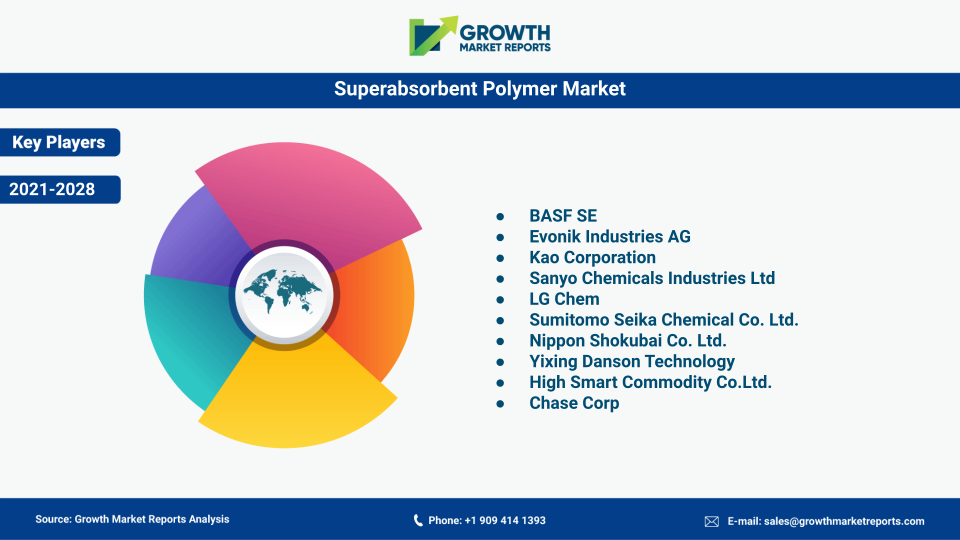
  • Key players operating in the global Superabsorbent Polymer market include BASF SE, Evonik Industries AG, Kao Corporation, Sanyo Chemicals Industries Ltd, LG Chem, Sumitomo Seika Chemical Co. Ltd., Nippon Shokubai Co. Ltd., Yixing Danson Technology, High Smart Commodity Co.Ltd., Chase Corp and Others. These companies are considered as key developers of Superabsorbent Polymer based on their revenue, research & development (R&D) activities, presence, and value chain management system.
  • Market Players are pursuing key strategies such as acquisitions, collaborations, and geographic expansion where a potential opportunity arises for the superabsorbent polymer market.

Superabsorbent Polymer Market Key Players

Frequently Asked Questions

Additional company profiles can be provided on request For a discussion related to above findings, click Speak to Analyst

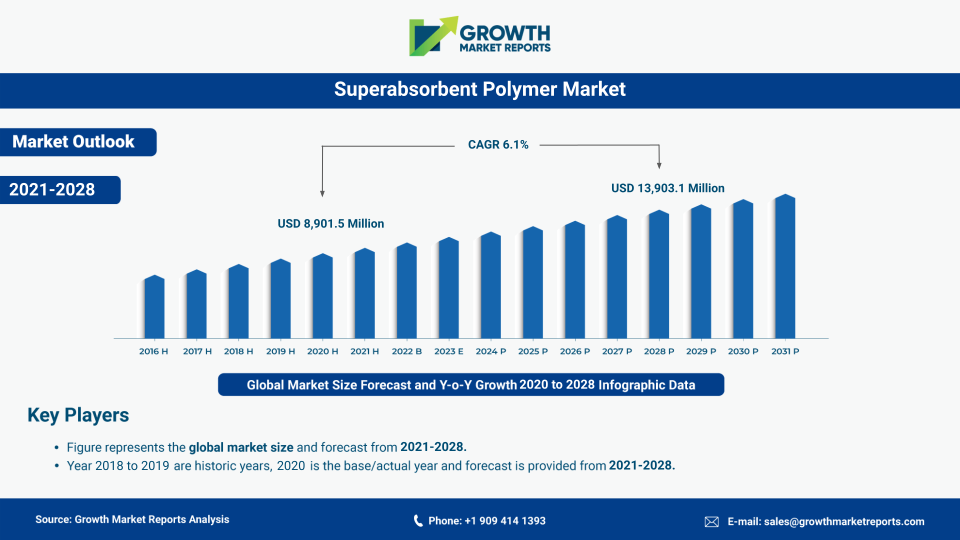
According to this Growth Market Reports report, the Superabsorbent Polymer market is likely to register a CAGR of 6.1%during forecast period 2020-2028, with an anticipated valuation of USD 13,903.1 million by the end of the 2028.

In addition to market size (in US$ Million), Company Market Share (in % for base year 2020), impact of key regulations and technological landscape.

Factors such as competitive strength and market positioning are key areas considered while selecting top companies to be profiled.

Growing demand for feminine hygiene and rising awareness of infant hygiene is expected to boost the demand for sanitary napkins and baby diapers which is likely to drive Superabsorbent Polymer market growth during forecast period.

The market is expected to experience negative impact in 2019 and 2020 owing to the COVID 19 pandemic impact on the superabsorbent polymer market.

Personal care are the major application of superabsorbent polymer.

The base year considered for the global superabsorbent polymer market report is 2020. The complete analysis period is 2018 to 2028, wherein, 2018, and 2019 are the historic years, and the forecast is provided from 2021 to 2028.

Factors such as R&D activities, government regulations, polymer industry, and product demand are analyzed in the final report.

Major Manufacturers include, BASF SE, Evonik Industries AG, Kao Corporation, Sanyo Chemicals Industries Ltd, LG Chem, Sumitomo Seika Chemical Co. Ltd., Nippon Shokubai Co. Ltd., Yixing Danson Technology, High Smart Commodity Co.Ltd., Chase Corp.

Table Of Content

Chapter 1 Executive Summary
Chapter 2 Assumptions and Acronyms Used
Chapter 3 Research Methodology
Chapter 4 Superabsorbent Polymer Market Overview
   4.1 Introduction
      4.1.1 Market Taxonomy
      4.1.2 Market Definition
      4.1.3 Macro-Economic Factors Impacting the Market Growth
   4.2 Superabsorbent Polymer Market Dynamics
      4.2.1 Market Drivers
      4.2.2 Market Restraints
      4.2.3 Market Opportunity
   4.3 Superabsorbent Polymer Market - Supply Chain Analysis
      4.3.1 List of Key Suppliers
      4.3.2 List of Key Distributors
      4.3.3 List of Key Consumers
   4.4 Key Forces Shaping the Superabsorbent Polymer Market
      4.4.1 Bargaining Power of Suppliers
      4.4.2 Bargaining Power of Buyers
      4.4.3 Threat of Substitution
      4.4.4 Threat of New Entrants
      4.4.5 Competitive Rivalry
   4.5 Global Superabsorbent Polymer Market Size & Forecast, 2023-2032
      4.5.1 Superabsorbent Polymer Market Size and Y-o-Y Growth
      4.5.2 Superabsorbent Polymer Market Absolute $ Opportunity

Chapter 5 Global Superabsorbent Polymer Market Analysis and Forecast By Product Type
   5.1 Introduction
      5.1.1 Key Market Trends & Growth Opportunities By Product Type
      5.1.2 Basis Point Share (BPS) Analysis By Product Type
      5.1.3 Absolute $ Opportunity Assessment By Product Type
   5.2 Superabsorbent Polymer Market Size Forecast By Product Type
      5.2.1 Sodium Polyacrylate
      5.2.2 Polyacrylamide Copolymers
      5.2.3 Others
   5.3 Market Attractiveness Analysis By Product Type

Chapter 6 Global Superabsorbent Polymer Market Analysis and Forecast By Application
   6.1 Introduction
      6.1.1 Key Market Trends & Growth Opportunities By Application
      6.1.2 Basis Point Share (BPS) Analysis By Application
      6.1.3 Absolute $ Opportunity Assessment By Application
   6.2 Superabsorbent Polymer Market Size Forecast By Application
      6.2.1 Personal Care & Hygiene
      6.2.2 Agriculture
      6.2.3 Medical
      6.2.4 Industrial
      6.2.5 Packaging
      6.2.6 Others
   6.3 Market Attractiveness Analysis By Application

Chapter 7 Global Superabsorbent Polymer Market Analysis and Forecast By End-User
   7.1 Introduction
      7.1.1 Key Market Trends & Growth Opportunities By End-User
      7.1.2 Basis Point Share (BPS) Analysis By End-User
      7.1.3 Absolute $ Opportunity Assessment By End-User
   7.2 Superabsorbent Polymer Market Size Forecast By End-User
      7.2.1 Baby Diapers
      7.2.2 Adult Incontinence Products
      7.2.3 Feminine Hygiene
      7.2.4 Agriculture
      7.2.5 Medical
      7.2.6 Others
   7.3 Market Attractiveness Analysis By End-User

Chapter 8 Global Superabsorbent Polymer Market Analysis and Forecast by Region
   8.1 Introduction
      8.1.1 Key Market Trends & Growth Opportunities By Region
      8.1.2 Basis Point Share (BPS) Analysis By Region
      8.1.3 Absolute $ Opportunity Assessment By Region
   8.2 Superabsorbent Polymer Market Size Forecast By Region
      8.2.1 North America
      8.2.2 Europe
      8.2.3 Asia Pacific
      8.2.4 Latin America
      8.2.5 Middle East & Africa (MEA)
   8.3 Market Attractiveness Analysis By Region

Chapter 9 Coronavirus Disease (COVID-19) Impact 
   9.1 Introduction 
   9.2 Current & Future Impact Analysis 
   9.3 Economic Impact Analysis 
   9.4 Government Policies 
   9.5 Investment Scenario

Chapter 10 North America Superabsorbent Polymer Analysis and Forecast
   10.1 Introduction
   10.2 North America Superabsorbent Polymer Market Size Forecast by Country
      10.2.1 U.S.
      10.2.2 Canada
   10.3 Basis Point Share (BPS) Analysis by Country
   10.4 Absolute $ Opportunity Assessment by Country
   10.5 Market Attractiveness Analysis by Country
   10.6 North America Superabsorbent Polymer Market Size Forecast By Product Type
      10.6.1 Sodium Polyacrylate
      10.6.2 Polyacrylamide Copolymers
      10.6.3 Others
   10.7 Basis Point Share (BPS) Analysis By Product Type 
   10.8 Absolute $ Opportunity Assessment By Product Type 
   10.9 Market Attractiveness Analysis By Product Type
   10.10 North America Superabsorbent Polymer Market Size Forecast By Application
      10.10.1 Personal Care & Hygiene
      10.10.2 Agriculture
      10.10.3 Medical
      10.10.4 Industrial
      10.10.5 Packaging
      10.10.6 Others
   10.11 Basis Point Share (BPS) Analysis By Application 
   10.12 Absolute $ Opportunity Assessment By Application 
   10.13 Market Attractiveness Analysis By Application
   10.14 North America Superabsorbent Polymer Market Size Forecast By End-User
      10.14.1 Baby Diapers
      10.14.2 Adult Incontinence Products
      10.14.3 Feminine Hygiene
      10.14.4 Agriculture
      10.14.5 Medical
      10.14.6 Others
   10.15 Basis Point Share (BPS) Analysis By End-User 
   10.16 Absolute $ Opportunity Assessment By End-User 
   10.17 Market Attractiveness Analysis By End-User

Chapter 11 Europe Superabsorbent Polymer Analysis and Forecast
   11.1 Introduction
   11.2 Europe Superabsorbent Polymer Market Size Forecast by Country
      11.2.1 Germany
      11.2.2 France
      11.2.3 Italy
      11.2.4 U.K.
      11.2.5 Spain
      11.2.6 Russia
      11.2.7 Rest of Europe
   11.3 Basis Point Share (BPS) Analysis by Country
   11.4 Absolute $ Opportunity Assessment by Country
   11.5 Market Attractiveness Analysis by Country
   11.6 Europe Superabsorbent Polymer Market Size Forecast By Product Type
      11.6.1 Sodium Polyacrylate
      11.6.2 Polyacrylamide Copolymers
      11.6.3 Others
   11.7 Basis Point Share (BPS) Analysis By Product Type 
   11.8 Absolute $ Opportunity Assessment By Product Type 
   11.9 Market Attractiveness Analysis By Product Type
   11.10 Europe Superabsorbent Polymer Market Size Forecast By Application
      11.10.1 Personal Care & Hygiene
      11.10.2 Agriculture
      11.10.3 Medical
      11.10.4 Industrial
      11.10.5 Packaging
      11.10.6 Others
   11.11 Basis Point Share (BPS) Analysis By Application 
   11.12 Absolute $ Opportunity Assessment By Application 
   11.13 Market Attractiveness Analysis By Application
   11.14 Europe Superabsorbent Polymer Market Size Forecast By End-User
      11.14.1 Baby Diapers
      11.14.2 Adult Incontinence Products
      11.14.3 Feminine Hygiene
      11.14.4 Agriculture
      11.14.5 Medical
      11.14.6 Others
   11.15 Basis Point Share (BPS) Analysis By End-User 
   11.16 Absolute $ Opportunity Assessment By End-User 
   11.17 Market Attractiveness Analysis By End-User

Chapter 12 Asia Pacific Superabsorbent Polymer Analysis and Forecast
   12.1 Introduction
   12.2 Asia Pacific Superabsorbent Polymer Market Size Forecast by Country
      12.2.1 China
      12.2.2 Japan
      12.2.3 South Korea
      12.2.4 India
      12.2.5 Australia
      12.2.6 South East Asia (SEA)
      12.2.7 Rest of Asia Pacific (APAC)
   12.3 Basis Point Share (BPS) Analysis by Country
   12.4 Absolute $ Opportunity Assessment by Country
   12.5 Market Attractiveness Analysis by Country
   12.6 Asia Pacific Superabsorbent Polymer Market Size Forecast By Product Type
      12.6.1 Sodium Polyacrylate
      12.6.2 Polyacrylamide Copolymers
      12.6.3 Others
   12.7 Basis Point Share (BPS) Analysis By Product Type 
   12.8 Absolute $ Opportunity Assessment By Product Type 
   12.9 Market Attractiveness Analysis By Product Type
   12.10 Asia Pacific Superabsorbent Polymer Market Size Forecast By Application
      12.10.1 Personal Care & Hygiene
      12.10.2 Agriculture
      12.10.3 Medical
      12.10.4 Industrial
      12.10.5 Packaging
      12.10.6 Others
   12.11 Basis Point Share (BPS) Analysis By Application 
   12.12 Absolute $ Opportunity Assessment By Application 
   12.13 Market Attractiveness Analysis By Application
   12.14 Asia Pacific Superabsorbent Polymer Market Size Forecast By End-User
      12.14.1 Baby Diapers
      12.14.2 Adult Incontinence Products
      12.14.3 Feminine Hygiene
      12.14.4 Agriculture
      12.14.5 Medical
      12.14.6 Others
   12.15 Basis Point Share (BPS) Analysis By End-User 
   12.16 Absolute $ Opportunity Assessment By End-User 
   12.17 Market Attractiveness Analysis By End-User

Chapter 13 Latin America Superabsorbent Polymer Analysis and Forecast
   13.1 Introduction
   13.2 Latin America Superabsorbent Polymer Market Size Forecast by Country
      13.2.1 Brazil
      13.2.2 Mexico
      13.2.3 Rest of Latin America (LATAM)
   13.3 Basis Point Share (BPS) Analysis by Country
   13.4 Absolute $ Opportunity Assessment by Country
   13.5 Market Attractiveness Analysis by Country
   13.6 Latin America Superabsorbent Polymer Market Size Forecast By Product Type
      13.6.1 Sodium Polyacrylate
      13.6.2 Polyacrylamide Copolymers
      13.6.3 Others
   13.7 Basis Point Share (BPS) Analysis By Product Type 
   13.8 Absolute $ Opportunity Assessment By Product Type 
   13.9 Market Attractiveness Analysis By Product Type
   13.10 Latin America Superabsorbent Polymer Market Size Forecast By Application
      13.10.1 Personal Care & Hygiene
      13.10.2 Agriculture
      13.10.3 Medical
      13.10.4 Industrial
      13.10.5 Packaging
      13.10.6 Others
   13.11 Basis Point Share (BPS) Analysis By Application 
   13.12 Absolute $ Opportunity Assessment By Application 
   13.13 Market Attractiveness Analysis By Application
   13.14 Latin America Superabsorbent Polymer Market Size Forecast By End-User
      13.14.1 Baby Diapers
      13.14.2 Adult Incontinence Products
      13.14.3 Feminine Hygiene
      13.14.4 Agriculture
      13.14.5 Medical
      13.14.6 Others
   13.15 Basis Point Share (BPS) Analysis By End-User 
   13.16 Absolute $ Opportunity Assessment By End-User 
   13.17 Market Attractiveness Analysis By End-User

Chapter 14 Middle East & Africa (MEA) Superabsorbent Polymer Analysis and Forecast
   14.1 Introduction
   14.2 Middle East & Africa (MEA) Superabsorbent Polymer Market Size Forecast by Country
      14.2.1 Saudi Arabia
      14.2.2 South Africa
      14.2.3 UAE
      14.2.4 Rest of Middle East & Africa (MEA)
   14.3 Basis Point Share (BPS) Analysis by Country
   14.4 Absolute $ Opportunity Assessment by Country
   14.5 Market Attractiveness Analysis by Country
   14.6 Middle East & Africa (MEA) Superabsorbent Polymer Market Size Forecast By Product Type
      14.6.1 Sodium Polyacrylate
      14.6.2 Polyacrylamide Copolymers
      14.6.3 Others
   14.7 Basis Point Share (BPS) Analysis By Product Type 
   14.8 Absolute $ Opportunity Assessment By Product Type 
   14.9 Market Attractiveness Analysis By Product Type
   14.10 Middle East & Africa (MEA) Superabsorbent Polymer Market Size Forecast By Application
      14.10.1 Personal Care & Hygiene
      14.10.2 Agriculture
      14.10.3 Medical
      14.10.4 Industrial
      14.10.5 Packaging
      14.10.6 Others
   14.11 Basis Point Share (BPS) Analysis By Application 
   14.12 Absolute $ Opportunity Assessment By Application 
   14.13 Market Attractiveness Analysis By Application
   14.14 Middle East & Africa (MEA) Superabsorbent Polymer Market Size Forecast By End-User
      14.14.1 Baby Diapers
      14.14.2 Adult Incontinence Products
      14.14.3 Feminine Hygiene
      14.14.4 Agriculture
      14.14.5 Medical
      14.14.6 Others
   14.15 Basis Point Share (BPS) Analysis By End-User 
   14.16 Absolute $ Opportunity Assessment By End-User 
   14.17 Market Attractiveness Analysis By End-User

Chapter 15 Competition Landscape 
   15.1 Superabsorbent Polymer Market: Competitive Dashboard
   15.2 Global Superabsorbent Polymer Market: Market Share Analysis, 2023
   15.3 Company Profiles (Details – Overview, Financials, Developments, Strategy) 
      15.3.1 BASF SE
Evonik Industries AG
Sumitomo Seika Chemicals Co., Ltd.
Nippon Shokubai Co., Ltd.
LG Chem Ltd.
Sanyo Chemical Industries, Ltd.
Formosa Plastics Corporation
Yixing Danson Technology
Zhejiang Satellite Petrochemical Co., Ltd.
Shandong Nuoer Biological Technology Co., Ltd.
Chase Corporation
Songwon Industrial Co., Ltd.
Kao Corporation
TASNEE (National Industrialization Company)
Mitsubishi Chemical Holdings Corporation
China National Petroleum Corporation (CNPC)
Wanhua Chemical Group Co., Ltd.
Xitao Polymer Co., Ltd.
Quanzhou Nanhua Resin Co., Ltd.
Henan Huayuan Water-Soluble Materials Co., Ltd.

Methodology

Our Clients

Dassault Aviation
General Electric
The John Holland Group
Pfizer
Deloitte
FedEx Logistics
General Mills
Nestle SA