Segments - by Product Type (Water-Soluble Sulfonated Asphalt, Oil-Soluble Sulfonated Asphalt, Emulsified Sulfonated Asphalt, Others), by Application (Drilling Fluids, Cementing, Asphalt Additives, Others), by End-Use Industry (Oil & Gas, Construction, Road Paving, Others), by Distribution Channel (Direct Sales, Distributors, Online Sales)
According to our latest research, the global sulfonated asphalt market size reached USD 187.6 million in 2024, driven by robust demand across oil & gas and construction sectors. The market is projected to grow at a CAGR of 4.9% from 2025 to 2033, reaching an estimated USD 284.2 million by 2033. This steady expansion is underpinned by increasing investments in oilfield drilling operations, rising infrastructure development, and the growing adoption of high-performance asphalt additives worldwide. The marketÂ’s growth trajectory is further supported by technological advancements in drilling fluid formulations and the rising need for enhanced wellbore stability in challenging geological environments.
One of the primary growth drivers for the sulfonated asphalt market is the escalating demand from the oil & gas sector, particularly for drilling fluid applications. Sulfonated asphalt, known for its ability to control shale hydration and stabilize wellbores, has become an essential additive in water-based and oil-based drilling muds. As exploration activities move toward more complex and deeper reservoirs, the demand for advanced drilling fluid additives that prevent wellbore instability, mitigate differential sticking, and enhance filtration control is rising. Moreover, the global push for energy security and the resurgence of upstream investments in regions such as North America, the Middle East, and Asia Pacific are expected to further propel the consumption of sulfonated asphalt in drilling operations over the forecast period.
Another significant growth factor is the increasing use of sulfonated asphalt in the construction and road paving industries. The unique properties of sulfonated asphalt, such as improved water resistance, enhanced adhesion, and superior durability, make it an ideal additive for asphalt mixtures used in road construction and maintenance. With governments worldwide prioritizing infrastructure development and rehabilitation projects, the demand for high-performance asphalt additives is witnessing considerable growth. Additionally, the shift toward sustainable construction practices and the need for longer-lasting pavements are encouraging the adoption of advanced additives like sulfonated asphalt, which can extend the service life of roads and reduce maintenance costs.
Technological advancements and product innovation also play a pivotal role in the sulfonated asphalt marketÂ’s expansion. Manufacturers are increasingly focusing on the development of customized sulfonated asphalt products tailored to specific end-use requirements, such as water-soluble, oil-soluble, and emulsified variants. These innovations are designed to address the evolving needs of diverse industries, from oil & gas drilling to road paving and construction. Furthermore, the integration of eco-friendly and performance-enhancing additives is gaining traction, reflecting the industryÂ’s commitment to sustainability and regulatory compliance. The ongoing research and development efforts aimed at improving the efficacy and versatility of sulfonated asphalt are expected to unlock new growth opportunities in the coming years.
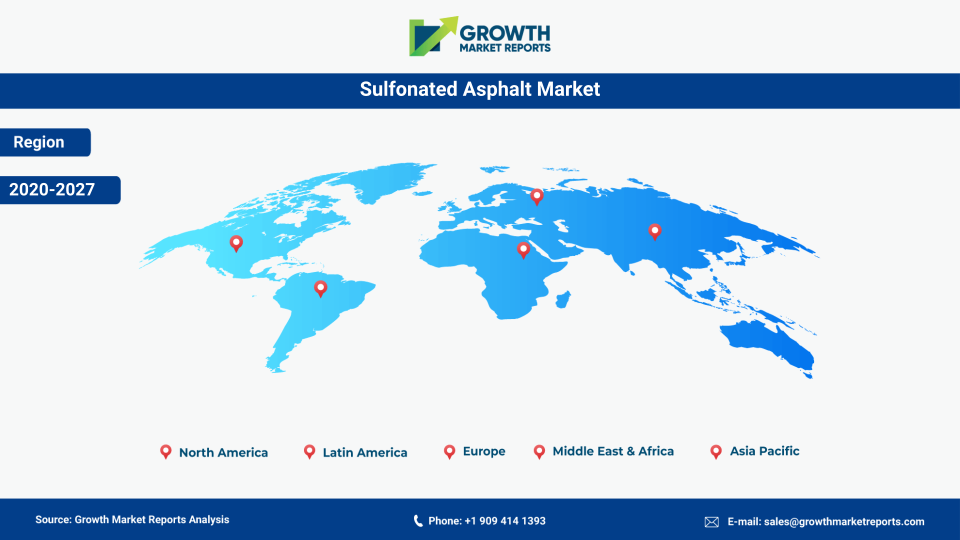
From a regional perspective, Asia Pacific remains the largest and fastest-growing market for sulfonated asphalt, accounting for a substantial share of global consumption in 2024. This dominance is attributed to the regionÂ’s booming oil & gas exploration activities, rapid urbanization, and expansive infrastructure projects, particularly in China, India, and Southeast Asia. North America and the Middle East are also significant contributors, driven by robust drilling operations and infrastructure investments. Meanwhile, Europe and Latin America are witnessing steady growth, supported by ongoing construction and road maintenance initiatives. The regional landscape is characterized by varying regulatory frameworks, technological adoption rates, and market maturity levels, all of which influence the overall demand dynamics for sulfonated asphalt.
In the realm of drilling fluid additives, Gilsonite has emerged as a noteworthy natural asphalt modifier, often used in conjunction with sulfonated asphalt to enhance drilling fluid properties. Gilsonite, a naturally occurring solid hydrocarbon, is valued for its ability to improve the thermal stability and lubricity of drilling muds, making it particularly beneficial in high-temperature and high-pressure drilling environments. Its unique properties help in reducing torque and drag, preventing differential sticking, and improving the overall efficiency of drilling operations. As the industry continues to explore deeper and more challenging reservoirs, the integration of Gilsonite with sulfonated asphalt is gaining traction, offering a synergistic approach to addressing complex drilling challenges.
The product type segment of the sulfonated asphalt market is categorized into water-soluble sulfonated asphalt, oil-soluble sulfonated asphalt, emulsified sulfonated asphalt, and others. Water-soluble sulfonated asphalt holds a prominent position due to its widespread application in water-based drilling fluids. Its excellent dispersibility, compatibility with various fluid systems, and ability to prevent shale hydration make it a preferred choice in oilfield operations. This sub-segment is witnessing increased adoption in regions with significant onshore and offshore drilling activities, reflecting its critical role in enhancing drilling efficiency and wellbore stability.
Oil-soluble sulfonated asphalt, on the other hand, is gaining traction in oil-based mud systems, particularly in deepwater and high-temperature drilling environments. Its superior thermal stability, lubricity, and ability to form a thin, impermeable filter cake contribute to reduced differential sticking and improved drilling performance. The demand for oil-soluble variants is expected to grow steadily, driven by the exploration of unconventional reserves and the need for advanced drilling fluid formulations that can withstand harsh downhole conditions. Manufacturers are investing in research to further enhance the performance attributes of oil-soluble sulfonated asphalt, catering to the evolving needs of the oil & gas industry.
Emulsified sulfonated asphalt represents another key product type, offering advantages such as ease of handling, improved mixing properties, and enhanced compatibility with various asphalt and cement systems. This variant is particularly favored in road construction and repair applications, where it acts as a performance-enhancing additive in asphalt mixtures. The growing emphasis on sustainable and durable road infrastructure is boosting the demand for emulsified sulfonated asphalt, as it helps improve the longevity and weather resistance of pavements. Additionally, its application in cementing operations is gaining momentum, especially in regions with high construction activity.
The ‘others’ category encompasses specialty sulfonated asphalt products tailored for niche applications, including specialty coatings, water treatment, and industrial formulations. While this segment currently represents a smaller share of the market, it is expected to witness gradual growth as manufacturers explore new application areas and develop innovative product offerings. The increasing focus on product differentiation and value-added solutions is likely to drive the expansion of this segment, providing new avenues for market players to capitalize on emerging opportunities.
| Attributes | Details |
| Report Title | Sulfonated Asphalt Market Research Report 2033 |
| By Product Type | Water-Soluble Sulfonated Asphalt, Oil-Soluble Sulfonated Asphalt, Emulsified Sulfonated Asphalt, Others |
| By Application | Drilling Fluids, Cementing, Asphalt Additives, Others |
| By End-Use Industry | Oil & Gas, Construction, Road Paving, Others |
| By Distribution Channel | Direct Sales, Distributors, Online Sales |
| Regions Covered | North America, Europe, APAC, Latin America, MEA |
| Base Year | 2024 |
| Historic Data | 2018-2023 |
| Forecast Period | 2025-2033 |
| Number of Pages | 297 |
| Number of Tables & Figures | 289 |
| Customization Available | Yes, the report can be customized as per your need. |
Within the application segment, drilling fluids emerge as the dominant application for sulfonated asphalt, accounting for the largest share of market consumption in 2024. The critical role of sulfonated asphalt in stabilizing shale formations, controlling fluid loss, and enhancing the rheological properties of drilling muds underscores its indispensability in modern drilling operations. As oil & gas companies venture into deeper and more challenging reservoirs, the need for advanced fluid additives that ensure operational efficiency and wellbore integrity is becoming increasingly pronounced. Consequently, the drilling fluids sub-segment is poised for sustained growth throughout the forecast period.
Cementing applications also represent a significant market for sulfonated asphalt, particularly in the construction and oilfield sectors. The use of sulfonated asphalt as an additive in cement slurries enhances the durability, water resistance, and bonding strength of cementitious materials. This is especially important in critical infrastructure projects and well cementing operations, where material performance directly impacts the longevity and safety of structures. The growing demand for high-performance cement additives in emerging economies, coupled with stringent quality standards in developed regions, is expected to drive the adoption of sulfonated asphalt in this application segment.
Asphalt additives constitute another key application area, with sulfonated asphalt being increasingly incorporated into road paving and maintenance projects. Its ability to improve the adhesion, flexibility, and weather resistance of asphalt mixtures has made it a sought-after additive in the construction of durable and long-lasting roads. The rising volume of infrastructure investments, particularly in Asia Pacific and North America, is fueling the demand for asphalt additives that can withstand heavy traffic loads and adverse climatic conditions. Moreover, the shift toward sustainable road construction practices is encouraging the use of sulfonated asphalt as a means to extend pavement life and minimize maintenance costs.
The ‘others’ application category includes a range of specialized uses, such as coatings, sealants, and industrial formulations. While these applications currently represent a smaller portion of total market demand, they offer significant growth potential as manufacturers continue to explore innovative uses for sulfonated asphalt. The development of customized solutions for niche industries, coupled with ongoing research into new functional properties, is expected to expand the scope of sulfonated asphalt applications in the coming years.
The end-use industry segment of the sulfonated asphalt market is dominated by the oil & gas sector, which accounted for the largest share of global demand in 2024. The reliance on sulfonated asphalt as a key additive in drilling fluids and cementing operations underscores its strategic importance in upstream exploration and production activities. As the energy sector continues to invest in the development of new reserves, particularly in unconventional and deepwater fields, the consumption of sulfonated asphalt is expected to remain robust. The sectorÂ’s focus on operational efficiency, safety, and environmental compliance further reinforces the demand for high-performance drilling and cementing additives.
The construction industry represents another major end-use sector, driven by the need for advanced materials that enhance the performance and durability of concrete and asphalt structures. Sulfonated asphaltÂ’s ability to improve water resistance, adhesion, and flexibility makes it an ideal additive for a wide range of construction applications, from building foundations to road pavements. The global push for urbanization, coupled with large-scale infrastructure projects in emerging markets, is fueling the adoption of sulfonated asphalt in the construction sector. Additionally, the emphasis on sustainable building practices and the use of eco-friendly additives are expected to drive further growth in this segment.
Road paving is a rapidly expanding end-use industry for sulfonated asphalt, as governments and municipalities invest in the development and maintenance of modern transportation networks. The need for durable, weather-resistant, and low-maintenance road surfaces is driving the demand for advanced asphalt additives, with sulfonated asphalt emerging as a preferred choice. Its proven ability to enhance the performance of asphalt mixtures, extend pavement life, and reduce lifecycle costs is contributing to its growing adoption in road paving projects worldwide. The increasing focus on smart and sustainable infrastructure is expected to create new opportunities for sulfonated asphalt suppliers in this segment.
Other end-use industries, including specialty chemicals, coatings, and water treatment, are also exploring the benefits of sulfonated asphalt in their respective applications. While these sectors currently represent a smaller share of total market demand, ongoing research and product innovation are expected to unlock new growth avenues. The development of customized sulfonated asphalt solutions tailored to the unique requirements of diverse industries is likely to drive the expansion of this segment over the forecast period.
The distribution channel segment of the sulfonated asphalt market is segmented into direct sales, distributors, and online sales. Direct sales continue to dominate the market, particularly for large-volume industrial customers in the oil & gas and construction sectors. The preference for direct procurement is driven by the need for customized product solutions, technical support, and reliable supply chain management. Major manufacturers maintain strong relationships with key clients, offering tailored services and value-added support to ensure optimal product performance and customer satisfaction.
Distributors play a crucial role in expanding the reach of sulfonated asphalt products to a broader customer base, particularly in regions where manufacturers have limited direct presence. Distributors facilitate market penetration by providing localized inventory, technical expertise, and after-sales support. They also play a vital role in educating end-users about the benefits and applications of sulfonated asphalt, thereby driving market adoption. As the market continues to grow, the role of distributors is expected to become increasingly important, especially in emerging markets with rapidly expanding construction and oil & gas sectors.
Online sales are emerging as a significant distribution channel, reflecting the broader digital transformation of the chemical and construction materials industries. E-commerce platforms and digital marketplaces offer customers the convenience of product comparison, easy ordering, and transparent pricing. While online sales currently represent a smaller share of total market volume, their importance is expected to grow as digital adoption accelerates and end-users seek more flexible and efficient procurement options. Manufacturers are investing in digital platforms and e-commerce capabilities to enhance their market presence and streamline the buying process for customers.
The evolving distribution landscape is characterized by increasing collaboration between manufacturers, distributors, and digital platforms to provide integrated solutions and seamless customer experiences. The focus on supply chain efficiency, product availability, and responsive customer service is driving innovation in distribution strategies, enabling market participants to better meet the diverse needs of end-users across different industries and geographies.
The sulfonated asphalt market presents significant opportunities for growth, particularly in the context of evolving energy and infrastructure needs. The ongoing expansion of oil & gas exploration into deeper and more complex geological formations is driving demand for advanced drilling fluid additives that can enhance wellbore stability and operational efficiency. Technological advancements in sulfonated asphalt formulations, including the development of eco-friendly and high-performance variants, are opening new avenues for market penetration. Additionally, the increasing focus on sustainable construction and road paving practices is creating opportunities for sulfonated asphalt suppliers to provide value-added solutions that extend pavement life, reduce maintenance costs, and support environmental objectives. The rapid urbanization and infrastructure development in emerging economies, especially in Asia Pacific and the Middle East, are expected to further fuel market growth by creating a robust demand base for sulfonated asphalt products.
Another key opportunity lies in the diversification of application areas for sulfonated asphalt. As manufacturers invest in research and development, new uses for sulfonated asphalt are being discovered across industries such as specialty chemicals, coatings, water treatment, and industrial formulations. The ability to tailor product properties to specific end-use requirements is enabling market players to address niche applications and expand their customer base. The rise of digital sales channels and e-commerce platforms also presents an opportunity to reach new customers and streamline the procurement process, particularly for small and medium-sized enterprises. Strategic collaborations, partnerships, and mergers and acquisitions are expected to play a pivotal role in enabling companies to capitalize on emerging opportunities and strengthen their market position.
Despite the positive outlook, the sulfonated asphalt market faces certain restraining factors that could impact its growth trajectory. One of the primary challenges is the volatility in raw material prices, particularly those derived from petroleum sources. Fluctuations in crude oil prices can affect the cost structure of sulfonated asphalt production, leading to pricing pressures and margin constraints for manufacturers. Additionally, stringent environmental regulations and growing concerns about the ecological impact of chemical additives may pose compliance challenges and necessitate investments in sustainable product development. The presence of alternative drilling and construction additives, coupled with competitive pressures from established and emerging players, also represents a potential threat to market growth. Addressing these challenges will require ongoing innovation, strategic supply chain management, and a proactive approach to regulatory compliance.
Asia Pacific stands out as the largest and fastest-growing regional market for sulfonated asphalt, accounting for approximately 38% of global market revenue in 2024, which translates to about USD 71.3 million. The regionÂ’s dominance is driven by robust oil & gas exploration activities, rapid urbanization, and extensive infrastructure development, particularly in China, India, and Southeast Asia. The growing emphasis on road construction and maintenance projects, coupled with increasing investments in energy and industrial sectors, is fueling the demand for sulfonated asphalt across multiple applications. Asia Pacific is projected to maintain a strong growth trajectory with a CAGR of 5.5% through 2033, supported by favorable government policies, rising construction spending, and technological advancements in drilling and construction materials.
North America is another significant market, contributing approximately 27% of global revenues, or around USD 50.7 million in 2024. The regionÂ’s market growth is primarily driven by the United States, which boasts a mature oil & gas sector and a well-developed infrastructure network. The adoption of advanced drilling technologies, coupled with ongoing investments in road maintenance and rehabilitation, is sustaining the demand for sulfonated asphalt in North America. The presence of leading manufacturers, coupled with a focus on product innovation and regulatory compliance, is further enhancing the regionÂ’s competitive position. While market growth in North America is relatively steady, opportunities exist for expansion into new application areas and the development of customized product solutions for niche industries.
The Middle East & Africa, Europe, and Latin America collectively account for the remaining market share, with the Middle East & Africa contributing approximately 15% (USD 28.1 million), Europe 13% (USD 24.4 million), and Latin America 7% (USD 13.1 million) of global revenues in 2024. The Middle East & Africa market is buoyed by significant oil & gas exploration and infrastructure investments, while EuropeÂ’s growth is supported by stringent quality standards and ongoing road maintenance initiatives. Latin America, though smaller in size, is experiencing steady growth driven by rising construction activity and the adoption of advanced materials in road paving and industrial applications. The regional landscape is characterized by varying levels of market maturity, regulatory frameworks, and technological adoption, all of which influence the demand dynamics for sulfonated asphalt.
The sulfonated asphalt market is characterized by a moderately consolidated competitive landscape, with a mix of global players and regional manufacturers vying for market share. Leading companies are focused on product innovation, strategic partnerships, and capacity expansions to strengthen their market position and cater to the evolving needs of end-users. The competitive environment is shaped by the ability to deliver high-quality, performance-enhancing additives that meet stringent industry standards and regulatory requirements. Companies are investing in research and development to launch new product variants, improve manufacturing processes, and address the growing demand for sustainable and eco-friendly solutions.
Strategic collaborations and mergers & acquisitions are increasingly being pursued by market participants as a means to expand their product portfolios, access new markets, and leverage synergies across the value chain. The integration of digital technologies and e-commerce platforms is also transforming the competitive landscape, enabling companies to reach new customer segments and streamline their sales and distribution processes. The focus on customer-centric solutions, technical support, and value-added services is becoming a key differentiator, as end-users seek reliable partners capable of delivering customized products and comprehensive support throughout the project lifecycle.
In addition to established global players, a number of regional and local manufacturers are actively participating in the market, offering competitively priced products and catering to the specific requirements of local customers. These companies often focus on niche applications and leverage their proximity to end-users to provide responsive service and flexible solutions. The presence of a diverse supplier base enhances market competitiveness but also intensifies pricing pressures and the need for continuous innovation. As the market evolves, the ability to balance cost efficiency with product performance and sustainability will be critical for long-term success.
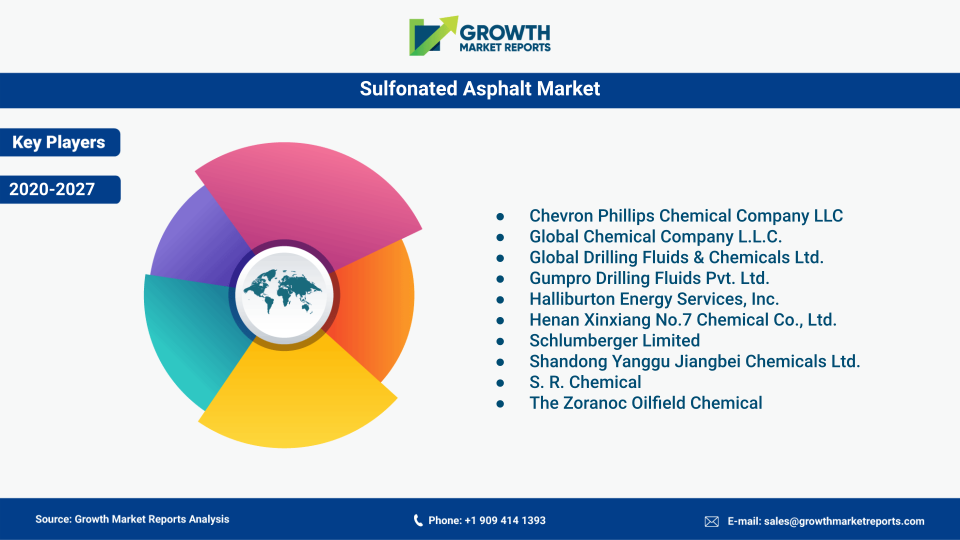
Major companies operating in the sulfonated asphalt market include Halliburton, Schlumberger Limited, Baker Hughes, Newpark Resources Inc., and Shandong Lubei Chemical Co., Ltd. Halliburton is renowned for its comprehensive portfolio of drilling fluid additives and strong global presence, while Schlumberger leverages its technological expertise and extensive research capabilities to deliver innovative solutions. Baker Hughes focuses on product differentiation and customer-centric strategies, with a strong emphasis on sustainability and operational efficiency. Newpark Resources Inc. and Shandong Lubei Chemical Co., Ltd. are recognized for their regional strengths and ability to cater to the specific needs of local markets. These companies invest heavily in research and development, technical support, and supply chain optimization to maintain their competitive edge and capitalize on emerging opportunities in the global sulfonated asphalt market.
The Sulfonated Asphalt market has been segmented on the basis of
Additional company profiles can be provided on request.
Yes, the report provides supply chain analysis along with a list of raw material suppliers, manufacturers, distributors, and customers.
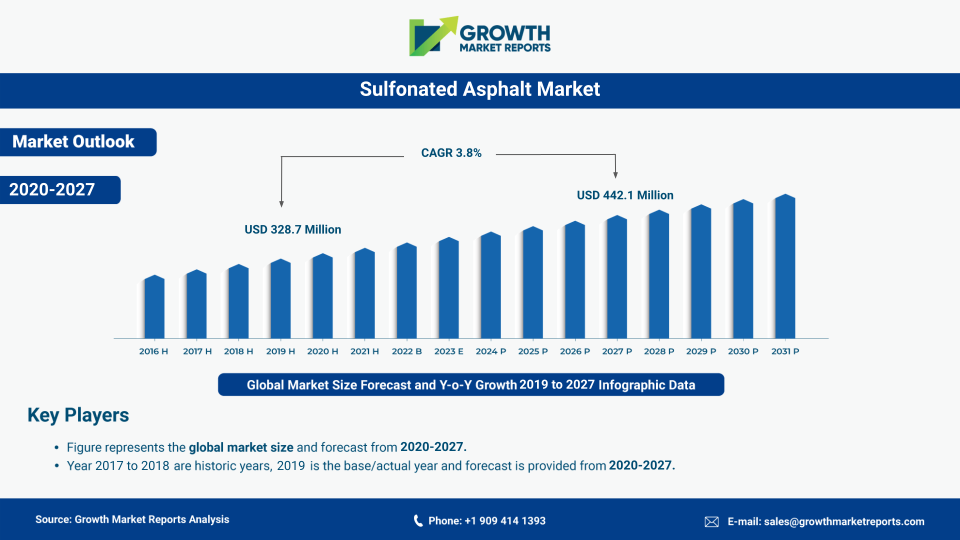
According to this Growth Market Reports, the market from sulfonated asphalt is likely to register a CAGR of 3.8% during forecast period 2020-2027, with an anticipated valuation of USD 442.1 million by the end of the 2027.
In addition to market size (in USD Million), company market share (in % for base year 2019), other data such macro-economic factors and COVID-19 impact on the value chain are also available in the final report.
The applications in the global sulfonated asphalt market include drilling fluid emulsifier and drilling fluid lubricant.
Factors such as competitive strength and market positioning are key areas considered while selecting top companies to be profiled.
The demand for sulfonated asphalt is expected to continue to increase over the forecast period, taking into account rapid growth in drilling activities, awareness about the benefit associated with sulfonated asphalt, and rise in government support.
The market is expected to witness a decrease of around 2% between 2019 and 2020 owing to the adverse impact of COVID-19 pandemic on the sulfonated asphalt market.
The base year considered for the global sulfonated asphalt market report is 2019. The complete analysis period is 2017 to 2027, wherein, 2017 & 2018 are the historic years and the forecast is provided from 2020 to 2027.
Major Manufactures Schlumberger Limited, Chevron Phillips Chemical Company LLC, and Henan Xinxiang No.7 Chemical Co.