Submersible Pumps Market Research Report 2033

Submersible Pumps Market Research Report 2033

Segments - by Product Type (Borewell Submersible Pumps, Openwell Submersible Pumps, Non-Clog Submersible Pumps, Others), by Application (Agriculture, Industrial, Residential, Municipal, Others), by Operation (Single Stage, Multi Stage), by Power Rating (Up to 1 HP, 1-5 HP, Above 5 HP), by Distribution Channel (Direct Sales, Distributors/Dealers, Online Retail)

https://growthmarketreports.com/Raksha
Author : Raksha Sharma
https://growthmarketreports.com/Vaibhav
Fact-checked by : V. Chandola
https://growthmarketreports.com/Shruti
Editor : Shruti Bhat

Upcoming | Report ID :EP-3413 | 4.8 Rating | 51 Reviews | 286 Pages | Format : Docx PDF

Report Description


Submersible Pumps Market Outlook

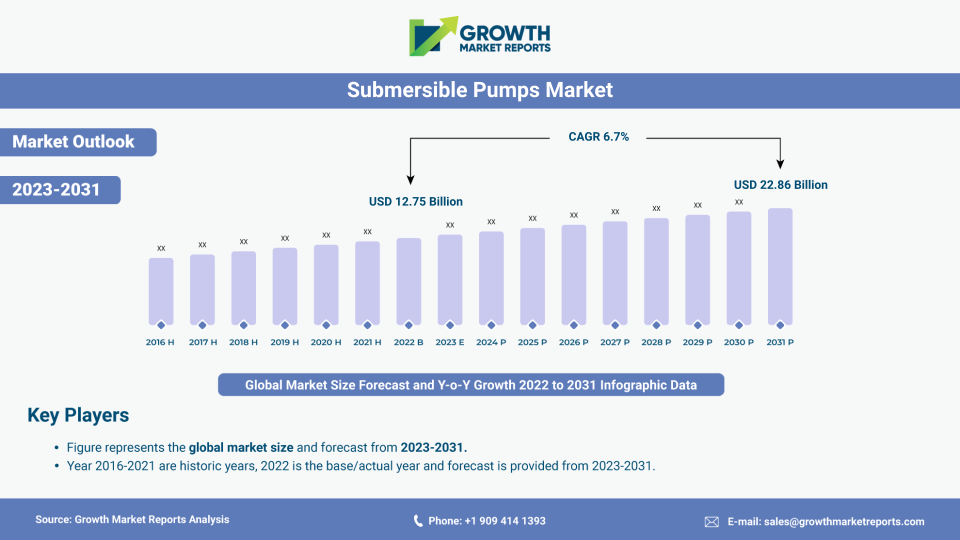
As per our latest research, the global submersible pumps market size was valued at USD 14.8 billion in 2024, and it is anticipated to reach USD 25.7 billion by 2033 at a robust CAGR of 6.4% during the forecast period. The marketÂ’s steady growth is primarily driven by rising demand for efficient water management solutions across sectors such as agriculture, industrial, and municipal utilities, combined with ongoing investments in infrastructure and urbanization projects worldwide. This expansion is further fueled by the increasing need for reliable water extraction and wastewater handling systems, making submersible pumps an integral component in modern fluid management strategies.

One of the key growth factors propelling the submersible pumps market is the rapid pace of urbanization and industrialization, particularly in emerging economies. The surge in population density in urban centers has necessitated significant upgrades to water supply and sewage treatment infrastructure. Submersible pumps, recognized for their high efficiency and ability to operate under submerged conditions, have become indispensable in large-scale municipal and industrial water management projects. These pumps are increasingly favored for their low maintenance, reduced noise, and higher operational safety compared to traditional pump systems. The ongoing expansion of smart cities and the integration of advanced water management technologies further amplify the demand for innovative submersible pump solutions, ensuring reliable water distribution and effective wastewater treatment.

Another notable driver for the submersible pumps market is the agricultural sector's growing reliance on advanced irrigation systems. With unpredictable rainfall patterns and the pressing need to maximize crop yields, farmers are adopting submersible pumps to ensure consistent water supply for irrigation. The ability of these pumps to efficiently draw water from deep wells or boreholes, even in challenging terrains, makes them a preferred choice in regions facing water scarcity. Government initiatives aimed at improving agricultural productivity, coupled with subsidies for modern irrigation equipment, have further spurred the adoption of submersible pumps. This trend is particularly evident in Asia Pacific and parts of Africa, where agriculture remains a cornerstone of the economy.

Technological advancements and product innovations are also playing a crucial role in shaping the submersible pumps market. Manufacturers are investing in research and development to enhance pump efficiency, durability, and energy-saving capabilities. The integration of IoT-based monitoring systems and automation features enables real-time performance tracking and predictive maintenance, reducing operational downtime and extending pump lifespan. Furthermore, the shift towards eco-friendly and energy-efficient pumping solutions aligns with global sustainability goals, prompting industries and municipalities to upgrade their existing pump infrastructure. These technological improvements not only address evolving customer needs but also open new avenues for market growth.

Electric Submersible Pumps are gaining significant traction within the industry due to their unique ability to operate efficiently under submerged conditions. These pumps are particularly valued in oil and gas extraction, where they are used to lift fluids from deep wells, enhancing production rates and reducing operational costs. Their compact design and high efficiency make them ideal for offshore and onshore applications, where space and energy conservation are critical. As the demand for energy resources continues to rise, the role of electric submersible pumps in optimizing extraction processes becomes increasingly vital, driving innovation and adoption across the sector.

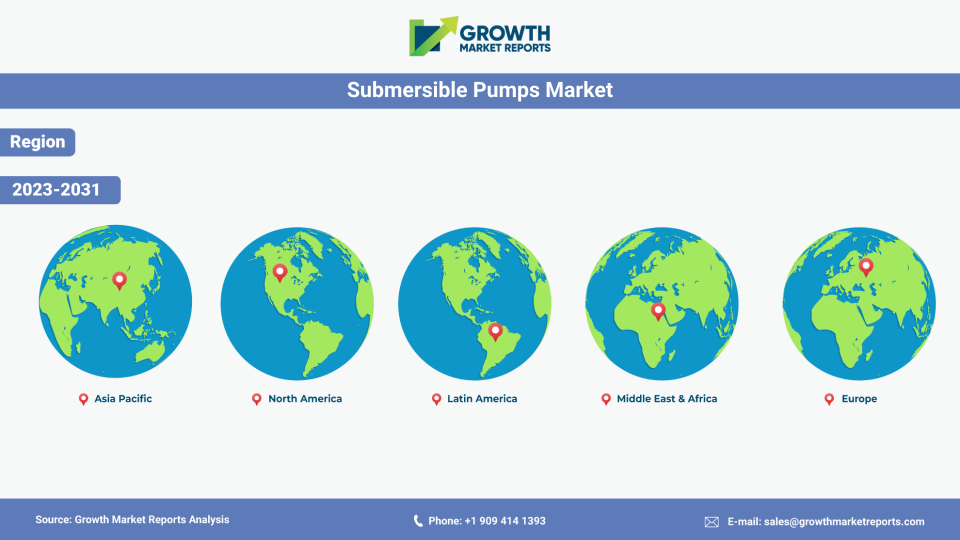
From a regional perspective, Asia Pacific leads the global submersible pumps market, accounting for the largest market share in 2024. The regionÂ’s dominance is attributed to rapid industrialization, extensive agricultural activities, and significant infrastructure development, particularly in countries like China, India, and Southeast Asian nations. North America and Europe follow, driven by stringent environmental regulations, a focus on water conservation, and modernization of water utilities. Meanwhile, the Middle East & Africa and Latin America are witnessing rising adoption of submersible pumps, fueled by large-scale irrigation projects and urban water supply modernization efforts. Each region presents unique growth opportunities, shaped by distinct economic, environmental, and regulatory factors.

Global Submersible Pumps Industry Outlook

Product Type Analysis

The product type segment of the submersible pumps market is categorized into borewell submersible pumps, openwell submersible pumps, non-clog submersible pumps, and others. Borewell submersible pumps dominate this segment owing to their widespread application in deep well water extraction, particularly in agricultural and municipal sectors. Their robust design and ability to operate efficiently at significant depths make them indispensable for groundwater management in regions facing water scarcity. The demand for borewell pumps is further accentuated by government-supported rural water supply schemes and the growing need for reliable irrigation solutions in developing economies.

Openwell submersible pumps, on the other hand, are gaining traction due to their versatility and ease of installation in surface water applications such as rivers, ponds, and tanks. These pumps are particularly favored in areas with fluctuating water levels, offering flexibility and consistent performance. Their adoption is increasing not only in agriculture but also in residential and small-scale industrial settings where water extraction from shallow sources is required. The growing emphasis on sustainable water management and the need for efficient dewatering systems in flood-prone regions further boost the demand for openwell submersible pumps.

Non-clog submersible pumps are engineered to handle fluids with high solid content, making them ideal for sewage, wastewater, and slurry applications. Their ability to operate without clogging, even in challenging environments, positions them as the preferred choice for municipal wastewater treatment plants, industrial effluent management, and flood control systems. The rising focus on environmental sustainability and the implementation of stringent wastewater disposal regulations are driving the adoption of non-clog pumps, especially in urban centers and industrial clusters.

The "others" category encompasses specialized submersible pumps designed for niche applications, such as mining, oil and gas extraction, and firefighting. These pumps are tailored to withstand harsh operating conditions and aggressive fluids, ensuring reliability and longevity. Technological advancements, such as corrosion-resistant materials and explosion-proof designs, are expanding the application scope of these pumps. As industries continue to diversify their operations and demand customized pumping solutions, the market for specialized submersible pumps is expected to witness steady growth in the coming years.

Report Scope

Attributes Details
Report Title Submersible Pumps Market Research Report 2033
By Product Type Borewell Submersible Pumps, Openwell Submersible Pumps, Non-Clog Submersible Pumps, Others
By Application Agriculture, Industrial, Residential, Municipal, Others
By Operation Single Stage, Multi Stage
By Power Rating Up to 1 HP, 1-5 HP, Above 5 HP
By Distribution Channel Direct Sales, Distributors/Dealers, Online Retail
Regions Covered North America, Europe, APAC, Latin America, MEA
Base Year 2024
Historic Data 2018-2023
Forecast Period 2025-2033
Number of Pages 286
Number of Tables & Figures 360
Customization Available Yes, the report can be customized as per your need.

Application Analysis

The application segment of the submersible pumps market is broad, encompassing agriculture, industrial, residential, municipal, and other specialized applications. Agriculture remains the leading segment, accounting for a significant share of global pump installations. The reliance on submersible pumps for irrigation, livestock watering, and groundwater extraction is particularly pronounced in regions with erratic rainfall and limited surface water resources. Government incentives and the proliferation of modern farming practices are further accelerating the adoption of submersible pumps in agriculture, ensuring year-round productivity and resilience against climate variability.

Industrial applications of submersible pumps are equally significant, spanning sectors such as manufacturing, mining, oil and gas, and construction. These pumps are essential for dewatering, process water handling, slurry transport, and chemical transfer operations. The industrial sectorÂ’s demand is driven by the need for uninterrupted production, compliance with environmental standards, and the adoption of automation in fluid management. As industries strive for operational efficiency and sustainability, the integration of energy-efficient and smart submersible pumps is becoming increasingly prevalent.

In the residential segment, submersible pumps are widely used for domestic water supply, basement dewatering, and small-scale wastewater management. The growing trend of urbanization, coupled with the expansion of housing projects and smart home technologies, is boosting the demand for compact and user-friendly submersible pumps. Consumers are increasingly opting for pumps with low noise, easy installation, and minimal maintenance requirements, prompting manufacturers to innovate and diversify their product offerings.

Municipal applications represent a critical growth area, as cities and towns invest in upgrading water supply networks, sewage treatment facilities, and stormwater drainage systems. Submersible pumps play a vital role in ensuring reliable water distribution and effective wastewater management, particularly in densely populated urban centers. The implementation of smart city initiatives and the push for sustainable urban infrastructure are expected to drive further investments in municipal submersible pump projects.

Other applications, such as firefighting, aquaculture, and environmental remediation, are also contributing to the growth of the submersible pumps market. These niche areas require specialized pump designs tailored to specific operational challenges, such as high-pressure delivery, corrosion resistance, or the ability to handle abrasive fluids. As new use cases emerge and industries seek customized solutions, the application scope of submersible pumps continues to expand.

Operation Analysis

The operation segment of the submersible pumps market is divided into single stage and multi stage pumps, each catering to distinct application needs. Single stage submersible pumps are typically used for applications requiring moderate head and flow, such as residential water supply, small-scale irrigation, and dewatering. Their simple design, ease of maintenance, and cost-effectiveness make them a popular choice for households, small farms, and construction sites. The growing demand for affordable and reliable water pumping solutions in developing regions is driving the adoption of single stage pumps.

Multi stage submersible pumps, on the other hand, are engineered for applications demanding higher head and pressure, such as deep well water extraction, high-rise building water supply, and industrial fluid transfer. These pumps consist of multiple impellers stacked in series, enabling them to generate significant pressure and lift water from greater depths. The use of multi stage pumps is particularly prevalent in agriculture, municipal water supply, and large-scale industrial operations where consistent and high-pressure water delivery is essential.

Technological advancements are enhancing the performance and efficiency of both single stage and multi stage submersible pumps. Innovations such as variable frequency drives (VFDs), smart controllers, and advanced materials are improving energy efficiency, reducing wear and tear, and enabling remote monitoring and control. These features are increasingly sought after by end-users looking to optimize pump operations, minimize operational costs, and ensure long-term reliability.

The choice between single stage and multi stage submersible pumps is largely dictated by application requirements, site conditions, and budget considerations. Manufacturers are responding to diverse customer needs by offering a wide range of models with varying capacities, power ratings, and customization options. As end-users become more discerning and demand solutions tailored to their specific operational challenges, the market for both single stage and multi stage submersible pumps is expected to grow steadily.

Power Rating Analysis

The power rating segment of the submersible pumps market is categorized into up to 1 HP, 1-5 HP, and above 5 HP. Pumps with power ratings up to 1 HP are predominantly used in residential and small-scale agricultural applications, where moderate flow and head are sufficient. These pumps are valued for their compact size, low energy consumption, and affordability, making them accessible to a wide range of consumers. The rising demand for efficient water supply solutions in urban and rural households is driving the growth of this segment.

The 1-5 HP segment caters to medium-scale applications, such as larger farms, small industrial units, and community water supply schemes. These pumps offer a balance between performance and energy efficiency, making them suitable for a variety of uses. The growing trend towards mechanized agriculture, coupled with the expansion of small and medium enterprises (SMEs), is fueling demand for submersible pumps in this power range. Additionally, government initiatives aimed at improving rural water infrastructure are expected to boost segment growth.

Pumps with power ratings above 5 HP are primarily used in large-scale agricultural, industrial, and municipal applications where high flow rates and significant head are required. These heavy-duty pumps are designed to handle demanding operational conditions, such as deep well water extraction, industrial process water handling, and municipal sewage management. The increasing scale of infrastructure projects and the need for reliable, high-capacity pumping solutions are driving the adoption of high-power submersible pumps.

Technological advancements in motor efficiency, materials, and control systems are enhancing the performance and reliability of submersible pumps across all power ratings. The integration of energy-saving features and smart monitoring capabilities is particularly important in high-power applications, where operational costs and downtime can have significant financial implications. Manufacturers are focusing on developing pumps that deliver optimal performance while minimizing energy consumption and environmental impact.

Distribution Channel Analysis

The distribution channel segment of the submersible pumps market includes direct sales, distributors/dealers, and online retail. Direct sales remain a preferred channel for large-scale buyers, such as industrial and municipal clients, who require customized solutions, technical support, and after-sales services. Manufacturers often establish long-term relationships with key customers, offering tailored products and maintenance contracts to ensure optimal pump performance and reliability.

Distributors and dealers play a critical role in expanding market reach, particularly in regions with fragmented demand and diverse customer needs. They provide localized inventory, technical expertise, and installation services, making it easier for end-users to access suitable submersible pump solutions. The presence of an extensive dealer network is especially important in rural and semi-urban areas, where direct manufacturer access may be limited.

Online retail is emerging as a significant distribution channel, driven by the growing adoption of e-commerce platforms and the increasing digitalization of procurement processes. Online channels offer convenience, competitive pricing, and access to a wide range of products, enabling customers to compare features and make informed purchasing decisions. The COVID-19 pandemic accelerated the shift towards online retail, prompting manufacturers and distributors to enhance their digital presence and invest in user-friendly e-commerce platforms.

The choice of distribution channel is influenced by factors such as customer preferences, product complexity, and regional market dynamics. Manufacturers are adopting omnichannel strategies to ensure seamless customer experiences and maximize market penetration. As competition intensifies and customer expectations evolve, the ability to offer flexible, responsive, and value-added distribution solutions will be a key differentiator in the submersible pumps market.

Opportunities & Threats

The submersible pumps market presents significant opportunities for growth, particularly in emerging economies undergoing rapid urbanization and industrialization. The increasing focus on sustainable water management, coupled with government investments in infrastructure development, creates a favorable environment for market expansion. Technological advancements, such as the integration of IoT, automation, and energy-efficient designs, offer new avenues for product differentiation and value creation. Manufacturers can capitalize on these trends by developing innovative solutions that address evolving customer needs and regulatory requirements.

Another major opportunity lies in the growing emphasis on environmental sustainability and resource conservation. As industries and municipalities seek to minimize water wastage, reduce energy consumption, and comply with stringent environmental standards, the demand for advanced submersible pump solutions is expected to rise. The adoption of smart pumps with real-time monitoring, predictive maintenance, and remote control capabilities can help end-users optimize operations, reduce costs, and enhance system reliability. Furthermore, the expansion of renewable energy-powered pumps, such as solar submersible pumps, presents a promising growth avenue, particularly in off-grid and remote locations.

Despite these opportunities, the submersible pumps market faces several restraining factors, including intense price competition, fluctuating raw material costs, and the presence of counterfeit products. The high initial investment required for advanced pump systems can also be a barrier for small-scale users, particularly in developing regions. Additionally, the lack of skilled technicians for installation and maintenance, coupled with inadequate after-sales support in some markets, can hinder adoption and impact customer satisfaction. Addressing these challenges will require concerted efforts from manufacturers, distributors, and policymakers to ensure product quality, affordability, and accessibility.

Regional Outlook

The Asia Pacific region dominates the global submersible pumps market, accounting for over 46% of total market revenue in 2024, with a market size of approximately USD 6.8 billion. This leadership is attributed to rapid industrialization, extensive agricultural activities, and large-scale infrastructure development in countries such as China, India, and Indonesia. The regionÂ’s robust economic growth, coupled with government initiatives aimed at improving water supply and sanitation, is driving significant investments in submersible pump installations. The Asia Pacific market is expected to maintain a strong CAGR of 7.1% through 2033, outpacing other regions in terms of both volume and value growth.

North America and Europe collectively accounted for around 31% of the global submersible pumps market in 2024, with market sizes of USD 2.6 billion and USD 1.9 billion respectively. These regions are characterized by advanced water management infrastructure, stringent environmental regulations, and a strong focus on energy efficiency. The adoption of smart pump technologies and the modernization of aging water utilities are key drivers of market growth in North America and Europe. Additionally, the increasing frequency of extreme weather events, such as floods and droughts, is prompting investments in resilient water extraction and drainage systems.

The Middle East & Africa and Latin America regions, with market sizes of USD 2.1 billion and USD 1.4 billion respectively in 2024, are witnessing rising demand for submersible pumps, fueled by large-scale irrigation projects, urban water supply upgrades, and mining activities. These regions present unique challenges, such as water scarcity, harsh operating environments, and limited access to reliable electricity, driving the adoption of specialized pump solutions, including solar-powered models. As governments and private sector players prioritize water security and sustainable development, the submersible pumps market in these regions is expected to experience steady growth throughout the forecast period.

Submersible Pumps Market Statistics

Competitor Outlook

The global submersible pumps market is characterized by intense competition, with a mix of multinational corporations and regional players vying for market share. Leading companies are focusing on product innovation, strategic partnerships, and geographic expansion to strengthen their competitive positions. The market is witnessing a trend towards consolidation, as larger players acquire smaller firms to enhance their technological capabilities, broaden their product portfolios, and access new customer segments. The ability to offer customized solutions, comprehensive after-sales support, and competitive pricing is becoming increasingly important in retaining customer loyalty and expanding market presence.

Technological innovation remains a key differentiator in the submersible pumps market. Major players are investing heavily in research and development to introduce energy-efficient, durable, and smart pump solutions that cater to evolving customer needs. The integration of IoT, automation, and advanced materials is enabling companies to offer value-added features such as remote monitoring, predictive maintenance, and enhanced corrosion resistance. These advancements not only improve pump performance and reliability but also align with global sustainability goals, positioning leading brands as preferred partners for large-scale infrastructure projects.

The competitive landscape is also shaped by the growing importance of digitalization and e-commerce. Companies are enhancing their digital presence, leveraging online platforms to reach a wider customer base and streamline sales processes. The ability to provide detailed product information, virtual consultations, and responsive customer service through digital channels is emerging as a critical success factor. Additionally, manufacturers are strengthening their dealer and distributor networks to ensure timely delivery, technical support, and localized inventory management.

Some of the major companies operating in the global submersible pumps market include Grundfos Holding A/S, Xylem Inc., KSB Group, Sulzer Ltd., Franklin Electric Co., Inc., Wilo SE, Ebara Corporation, Kirloskar Brothers Limited, Flowserve Corporation, and CRI Pumps Pvt. Ltd.. Grundfos, a global leader, is renowned for its focus on sustainability and innovation, offering a wide range of energy-efficient and smart pump solutions. Xylem Inc. is recognized for its expertise in water technology and robust service network, catering to diverse industrial and municipal needs. KSB Group and Sulzer Ltd. are prominent players in the industrial and municipal segments, known for their high-performance and durable pump systems. Franklin Electric and CRI Pumps have a strong presence in the agricultural and residential sectors, leveraging extensive distribution networks and customer-centric product offerings.

These companies are continuously expanding their product portfolios, investing in cutting-edge technologies, and forging strategic alliances to address emerging opportunities and challenges in the submersible pumps market. Their commitment to quality, innovation, and customer satisfaction positions them as key drivers of market growth and transformation in the years ahead.

Key Players

  • Grundfos
  • Xylem Inc.
  • Sulzer Ltd.
  • KSB SE & Co. KGaA
  • Franklin Electric Co., Inc.
  • Wilo SE
  • EBARA Corporation
  • Flowserve Corporation
  • ITT Inc.
  • Baker Hughes Company
  • Schlumberger Limited
  • Weir Group PLC
  • Tsurumi Manufacturing Co., Ltd.
  • Pedrollo S.p.A.
  • CRI Pumps Pvt Ltd
  • Atlas Copco AB
  • Kirloskar Brothers Limited
  • DAB Pumps S.p.A.
  • Gorman-Rupp Company
  • Shakti Pumps (India) Ltd.
Submersible Pumps Market Overview

Segments

The Submersible Pumps market has been segmented on the basis of

Product Type

  • Borewell Submersible Pumps
  • Openwell Submersible Pumps
  • Non-Clog Submersible Pumps
  • Others

Application

  • Agriculture
  • Industrial
  • Residential
  • Municipal
  • Others

Operation

  • Single Stage
  • Multi Stage

Power Rating

  • Up to 1 HP
  • 1-5 HP
  • Above 5 HP

Distribution Channel

  • Direct Sales
  • Distributors/Dealers
  • Online Retail

Competitive Landscape

The market for submersible pumps remains to be highly fragmented,  and key players competing in the global submersible pumps market are Flowserve Corporation; Sulzer Limited; Borets International Ltd; and The Gorman-Rupp Company
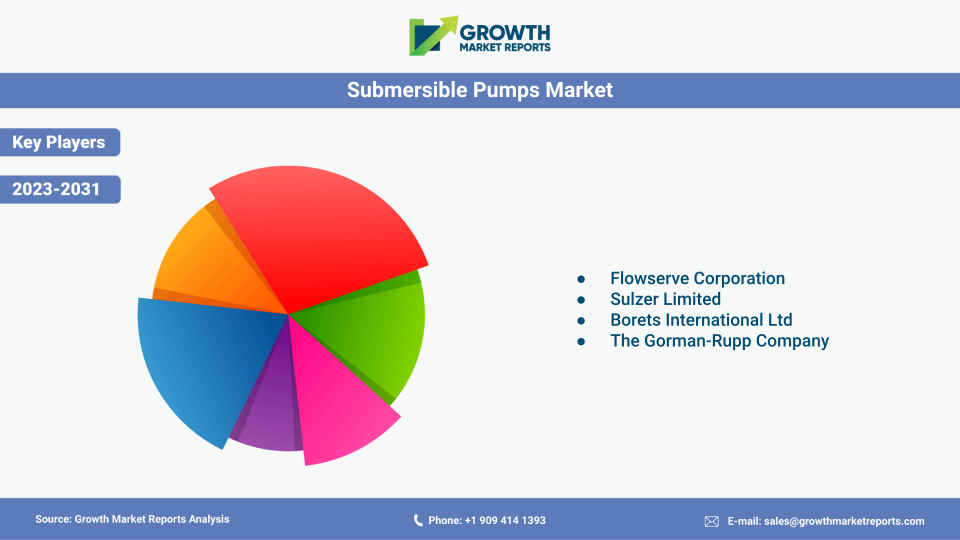

Submersible Pumps Market Key Players

Frequently Asked Questions

Opportunities include the adoption of smart and energy-efficient pumps, expansion in emerging economies, government initiatives for water management, and the development of solar-powered and eco-friendly pump solutions.

Submersible pumps are distributed through direct sales, distributors/dealers, and online retail channels. Direct sales are preferred for large-scale buyers, while online retail is gaining traction due to digitalization.

Key players include Grundfos Holding A/S, Xylem Inc., KSB Group, Sulzer Ltd., Franklin Electric Co., Inc., Wilo SE, Ebara Corporation, Kirloskar Brothers Limited, Flowserve Corporation, and CRI Pumps Pvt. Ltd.

Major challenges include intense price competition, fluctuating raw material costs, counterfeit products, high initial investment for advanced systems, and a shortage of skilled technicians for installation and maintenance.

Technological advancements such as IoT-based monitoring, automation, energy-efficient designs, and smart controllers are enhancing pump efficiency, durability, and ease of maintenance, driving adoption across industries.

Submersible pumps are widely used in agriculture (irrigation, livestock watering), industrial (dewatering, slurry transport), residential (domestic water supply, basement dewatering), municipal (water supply, sewage treatment), and specialized applications like firefighting and aquaculture.

The main types of submersible pumps are borewell submersible pumps, openwell submersible pumps, non-clog submersible pumps, and specialized pumps for niche applications such as mining and firefighting.

Asia Pacific leads the global submersible pumps market, followed by North America and Europe. The Middle East & Africa and Latin America are also experiencing significant growth due to large-scale irrigation and urban water supply projects.

Key growth drivers include rising demand for efficient water management in agriculture, industrial, and municipal sectors, rapid urbanization and industrialization, technological advancements, and government investments in infrastructure.

The global submersible pumps market was valued at USD 14.8 billion in 2024 and is expected to reach USD 25.7 billion by 2033, growing at a CAGR of 6.4% during the forecast period.

Table Of Content

Chapter 1 Executive Summary
Chapter 2 Assumptions and Acronyms Used
Chapter 3 Research Methodology
Chapter 4 Submersible Pumps Market Overview
   4.1 Introduction
      4.1.1 Market Taxonomy
      4.1.2 Market Definition
      4.1.3 Macro-Economic Factors Impacting the Market Growth
   4.2 Submersible Pumps Market Dynamics
      4.2.1 Market Drivers
      4.2.2 Market Restraints
      4.2.3 Market Opportunity
   4.3 Submersible Pumps Market - Supply Chain Analysis
      4.3.1 List of Key Suppliers
      4.3.2 List of Key Distributors
      4.3.3 List of Key Consumers
   4.4 Key Forces Shaping the Submersible Pumps Market
      4.4.1 Bargaining Power of Suppliers
      4.4.2 Bargaining Power of Buyers
      4.4.3 Threat of Substitution
      4.4.4 Threat of New Entrants
      4.4.5 Competitive Rivalry
   4.5 Global Submersible Pumps Market Size & Forecast, 2023-2032
      4.5.1 Submersible Pumps Market Size and Y-o-Y Growth
      4.5.2 Submersible Pumps Market Absolute $ Opportunity

Chapter 5 Global Submersible Pumps Market Analysis and Forecast By Product Type
   5.1 Introduction
      5.1.1 Key Market Trends & Growth Opportunities By Product Type
      5.1.2 Basis Point Share (BPS) Analysis By Product Type
      5.1.3 Absolute $ Opportunity Assessment By Product Type
   5.2 Submersible Pumps Market Size Forecast By Product Type
      5.2.1 Borewell Submersible Pumps
      5.2.2 Openwell Submersible Pumps
      5.2.3 Non-Clog Submersible Pumps
      5.2.4 Others
   5.3 Market Attractiveness Analysis By Product Type

Chapter 6 Global Submersible Pumps Market Analysis and Forecast By Application
   6.1 Introduction
      6.1.1 Key Market Trends & Growth Opportunities By Application
      6.1.2 Basis Point Share (BPS) Analysis By Application
      6.1.3 Absolute $ Opportunity Assessment By Application
   6.2 Submersible Pumps Market Size Forecast By Application
      6.2.1 Agriculture
      6.2.2 Industrial
      6.2.3 Residential
      6.2.4 Municipal
      6.2.5 Others
   6.3 Market Attractiveness Analysis By Application

Chapter 7 Global Submersible Pumps Market Analysis and Forecast By Operation
   7.1 Introduction
      7.1.1 Key Market Trends & Growth Opportunities By Operation
      7.1.2 Basis Point Share (BPS) Analysis By Operation
      7.1.3 Absolute $ Opportunity Assessment By Operation
   7.2 Submersible Pumps Market Size Forecast By Operation
      7.2.1 Single Stage
      7.2.2 Multi Stage
   7.3 Market Attractiveness Analysis By Operation

Chapter 8 Global Submersible Pumps Market Analysis and Forecast By Power Rating
   8.1 Introduction
      8.1.1 Key Market Trends & Growth Opportunities By Power Rating
      8.1.2 Basis Point Share (BPS) Analysis By Power Rating
      8.1.3 Absolute $ Opportunity Assessment By Power Rating
   8.2 Submersible Pumps Market Size Forecast By Power Rating
      8.2.1 Up to 1 HP
      8.2.2 1-5 HP
      8.2.3 Above 5 HP
   8.3 Market Attractiveness Analysis By Power Rating

Chapter 9 Global Submersible Pumps Market Analysis and Forecast By Distribution Channel
   9.1 Introduction
      9.1.1 Key Market Trends & Growth Opportunities By Distribution Channel
      9.1.2 Basis Point Share (BPS) Analysis By Distribution Channel
      9.1.3 Absolute $ Opportunity Assessment By Distribution Channel
   9.2 Submersible Pumps Market Size Forecast By Distribution Channel
      9.2.1 Direct Sales
      9.2.2 Distributors/Dealers
      9.2.3 Online Retail
   9.3 Market Attractiveness Analysis By Distribution Channel

Chapter 10 Global Submersible Pumps Market Analysis and Forecast by Region
   10.1 Introduction
      10.1.1 Key Market Trends & Growth Opportunities By Region
      10.1.2 Basis Point Share (BPS) Analysis By Region
      10.1.3 Absolute $ Opportunity Assessment By Region
   10.2 Submersible Pumps Market Size Forecast By Region
      10.2.1 North America
      10.2.2 Europe
      10.2.3 Asia Pacific
      10.2.4 Latin America
      10.2.5 Middle East & Africa (MEA)
   10.3 Market Attractiveness Analysis By Region

Chapter 11 Coronavirus Disease (COVID-19) Impact 
   11.1 Introduction 
   11.2 Current & Future Impact Analysis 
   11.3 Economic Impact Analysis 
   11.4 Government Policies 
   11.5 Investment Scenario

Chapter 12 North America Submersible Pumps Analysis and Forecast
   12.1 Introduction
   12.2 North America Submersible Pumps Market Size Forecast by Country
      12.2.1 U.S.
      12.2.2 Canada
   12.3 Basis Point Share (BPS) Analysis by Country
   12.4 Absolute $ Opportunity Assessment by Country
   12.5 Market Attractiveness Analysis by Country
   12.6 North America Submersible Pumps Market Size Forecast By Product Type
      12.6.1 Borewell Submersible Pumps
      12.6.2 Openwell Submersible Pumps
      12.6.3 Non-Clog Submersible Pumps
      12.6.4 Others
   12.7 Basis Point Share (BPS) Analysis By Product Type 
   12.8 Absolute $ Opportunity Assessment By Product Type 
   12.9 Market Attractiveness Analysis By Product Type
   12.10 North America Submersible Pumps Market Size Forecast By Application
      12.10.1 Agriculture
      12.10.2 Industrial
      12.10.3 Residential
      12.10.4 Municipal
      12.10.5 Others
   12.11 Basis Point Share (BPS) Analysis By Application 
   12.12 Absolute $ Opportunity Assessment By Application 
   12.13 Market Attractiveness Analysis By Application
   12.14 North America Submersible Pumps Market Size Forecast By Operation
      12.14.1 Single Stage
      12.14.2 Multi Stage
   12.15 Basis Point Share (BPS) Analysis By Operation 
   12.16 Absolute $ Opportunity Assessment By Operation 
   12.17 Market Attractiveness Analysis By Operation
   12.18 North America Submersible Pumps Market Size Forecast By Power Rating
      12.18.1 Up to 1 HP
      12.18.2 1-5 HP
      12.18.3 Above 5 HP
   12.19 Basis Point Share (BPS) Analysis By Power Rating 
   12.20 Absolute $ Opportunity Assessment By Power Rating 
   12.21 Market Attractiveness Analysis By Power Rating
   12.22 North America Submersible Pumps Market Size Forecast By Distribution Channel
      12.22.1 Direct Sales
      12.22.2 Distributors/Dealers
      12.22.3 Online Retail
   12.23 Basis Point Share (BPS) Analysis By Distribution Channel 
   12.24 Absolute $ Opportunity Assessment By Distribution Channel 
   12.25 Market Attractiveness Analysis By Distribution Channel

Chapter 13 Europe Submersible Pumps Analysis and Forecast
   13.1 Introduction
   13.2 Europe Submersible Pumps Market Size Forecast by Country
      13.2.1 Germany
      13.2.2 France
      13.2.3 Italy
      13.2.4 U.K.
      13.2.5 Spain
      13.2.6 Russia
      13.2.7 Rest of Europe
   13.3 Basis Point Share (BPS) Analysis by Country
   13.4 Absolute $ Opportunity Assessment by Country
   13.5 Market Attractiveness Analysis by Country
   13.6 Europe Submersible Pumps Market Size Forecast By Product Type
      13.6.1 Borewell Submersible Pumps
      13.6.2 Openwell Submersible Pumps
      13.6.3 Non-Clog Submersible Pumps
      13.6.4 Others
   13.7 Basis Point Share (BPS) Analysis By Product Type 
   13.8 Absolute $ Opportunity Assessment By Product Type 
   13.9 Market Attractiveness Analysis By Product Type
   13.10 Europe Submersible Pumps Market Size Forecast By Application
      13.10.1 Agriculture
      13.10.2 Industrial
      13.10.3 Residential
      13.10.4 Municipal
      13.10.5 Others
   13.11 Basis Point Share (BPS) Analysis By Application 
   13.12 Absolute $ Opportunity Assessment By Application 
   13.13 Market Attractiveness Analysis By Application
   13.14 Europe Submersible Pumps Market Size Forecast By Operation
      13.14.1 Single Stage
      13.14.2 Multi Stage
   13.15 Basis Point Share (BPS) Analysis By Operation 
   13.16 Absolute $ Opportunity Assessment By Operation 
   13.17 Market Attractiveness Analysis By Operation
   13.18 Europe Submersible Pumps Market Size Forecast By Power Rating
      13.18.1 Up to 1 HP
      13.18.2 1-5 HP
      13.18.3 Above 5 HP
   13.19 Basis Point Share (BPS) Analysis By Power Rating 
   13.20 Absolute $ Opportunity Assessment By Power Rating 
   13.21 Market Attractiveness Analysis By Power Rating
   13.22 Europe Submersible Pumps Market Size Forecast By Distribution Channel
      13.22.1 Direct Sales
      13.22.2 Distributors/Dealers
      13.22.3 Online Retail
   13.23 Basis Point Share (BPS) Analysis By Distribution Channel 
   13.24 Absolute $ Opportunity Assessment By Distribution Channel 
   13.25 Market Attractiveness Analysis By Distribution Channel

Chapter 14 Asia Pacific Submersible Pumps Analysis and Forecast
   14.1 Introduction
   14.2 Asia Pacific Submersible Pumps Market Size Forecast by Country
      14.2.1 China
      14.2.2 Japan
      14.2.3 South Korea
      14.2.4 India
      14.2.5 Australia
      14.2.6 South East Asia (SEA)
      14.2.7 Rest of Asia Pacific (APAC)
   14.3 Basis Point Share (BPS) Analysis by Country
   14.4 Absolute $ Opportunity Assessment by Country
   14.5 Market Attractiveness Analysis by Country
   14.6 Asia Pacific Submersible Pumps Market Size Forecast By Product Type
      14.6.1 Borewell Submersible Pumps
      14.6.2 Openwell Submersible Pumps
      14.6.3 Non-Clog Submersible Pumps
      14.6.4 Others
   14.7 Basis Point Share (BPS) Analysis By Product Type 
   14.8 Absolute $ Opportunity Assessment By Product Type 
   14.9 Market Attractiveness Analysis By Product Type
   14.10 Asia Pacific Submersible Pumps Market Size Forecast By Application
      14.10.1 Agriculture
      14.10.2 Industrial
      14.10.3 Residential
      14.10.4 Municipal
      14.10.5 Others
   14.11 Basis Point Share (BPS) Analysis By Application 
   14.12 Absolute $ Opportunity Assessment By Application 
   14.13 Market Attractiveness Analysis By Application
   14.14 Asia Pacific Submersible Pumps Market Size Forecast By Operation
      14.14.1 Single Stage
      14.14.2 Multi Stage
   14.15 Basis Point Share (BPS) Analysis By Operation 
   14.16 Absolute $ Opportunity Assessment By Operation 
   14.17 Market Attractiveness Analysis By Operation
   14.18 Asia Pacific Submersible Pumps Market Size Forecast By Power Rating
      14.18.1 Up to 1 HP
      14.18.2 1-5 HP
      14.18.3 Above 5 HP
   14.19 Basis Point Share (BPS) Analysis By Power Rating 
   14.20 Absolute $ Opportunity Assessment By Power Rating 
   14.21 Market Attractiveness Analysis By Power Rating
   14.22 Asia Pacific Submersible Pumps Market Size Forecast By Distribution Channel
      14.22.1 Direct Sales
      14.22.2 Distributors/Dealers
      14.22.3 Online Retail
   14.23 Basis Point Share (BPS) Analysis By Distribution Channel 
   14.24 Absolute $ Opportunity Assessment By Distribution Channel 
   14.25 Market Attractiveness Analysis By Distribution Channel

Chapter 15 Latin America Submersible Pumps Analysis and Forecast
   15.1 Introduction
   15.2 Latin America Submersible Pumps Market Size Forecast by Country
      15.2.1 Brazil
      15.2.2 Mexico
      15.2.3 Rest of Latin America (LATAM)
   15.3 Basis Point Share (BPS) Analysis by Country
   15.4 Absolute $ Opportunity Assessment by Country
   15.5 Market Attractiveness Analysis by Country
   15.6 Latin America Submersible Pumps Market Size Forecast By Product Type
      15.6.1 Borewell Submersible Pumps
      15.6.2 Openwell Submersible Pumps
      15.6.3 Non-Clog Submersible Pumps
      15.6.4 Others
   15.7 Basis Point Share (BPS) Analysis By Product Type 
   15.8 Absolute $ Opportunity Assessment By Product Type 
   15.9 Market Attractiveness Analysis By Product Type
   15.10 Latin America Submersible Pumps Market Size Forecast By Application
      15.10.1 Agriculture
      15.10.2 Industrial
      15.10.3 Residential
      15.10.4 Municipal
      15.10.5 Others
   15.11 Basis Point Share (BPS) Analysis By Application 
   15.12 Absolute $ Opportunity Assessment By Application 
   15.13 Market Attractiveness Analysis By Application
   15.14 Latin America Submersible Pumps Market Size Forecast By Operation
      15.14.1 Single Stage
      15.14.2 Multi Stage
   15.15 Basis Point Share (BPS) Analysis By Operation 
   15.16 Absolute $ Opportunity Assessment By Operation 
   15.17 Market Attractiveness Analysis By Operation
   15.18 Latin America Submersible Pumps Market Size Forecast By Power Rating
      15.18.1 Up to 1 HP
      15.18.2 1-5 HP
      15.18.3 Above 5 HP
   15.19 Basis Point Share (BPS) Analysis By Power Rating 
   15.20 Absolute $ Opportunity Assessment By Power Rating 
   15.21 Market Attractiveness Analysis By Power Rating
   15.22 Latin America Submersible Pumps Market Size Forecast By Distribution Channel
      15.22.1 Direct Sales
      15.22.2 Distributors/Dealers
      15.22.3 Online Retail
   15.23 Basis Point Share (BPS) Analysis By Distribution Channel 
   15.24 Absolute $ Opportunity Assessment By Distribution Channel 
   15.25 Market Attractiveness Analysis By Distribution Channel

Chapter 16 Middle East & Africa (MEA) Submersible Pumps Analysis and Forecast
   16.1 Introduction
   16.2 Middle East & Africa (MEA) Submersible Pumps Market Size Forecast by Country
      16.2.1 Saudi Arabia
      16.2.2 South Africa
      16.2.3 UAE
      16.2.4 Rest of Middle East & Africa (MEA)
   16.3 Basis Point Share (BPS) Analysis by Country
   16.4 Absolute $ Opportunity Assessment by Country
   16.5 Market Attractiveness Analysis by Country
   16.6 Middle East & Africa (MEA) Submersible Pumps Market Size Forecast By Product Type
      16.6.1 Borewell Submersible Pumps
      16.6.2 Openwell Submersible Pumps
      16.6.3 Non-Clog Submersible Pumps
      16.6.4 Others
   16.7 Basis Point Share (BPS) Analysis By Product Type 
   16.8 Absolute $ Opportunity Assessment By Product Type 
   16.9 Market Attractiveness Analysis By Product Type
   16.10 Middle East & Africa (MEA) Submersible Pumps Market Size Forecast By Application
      16.10.1 Agriculture
      16.10.2 Industrial
      16.10.3 Residential
      16.10.4 Municipal
      16.10.5 Others
   16.11 Basis Point Share (BPS) Analysis By Application 
   16.12 Absolute $ Opportunity Assessment By Application 
   16.13 Market Attractiveness Analysis By Application
   16.14 Middle East & Africa (MEA) Submersible Pumps Market Size Forecast By Operation
      16.14.1 Single Stage
      16.14.2 Multi Stage
   16.15 Basis Point Share (BPS) Analysis By Operation 
   16.16 Absolute $ Opportunity Assessment By Operation 
   16.17 Market Attractiveness Analysis By Operation
   16.18 Middle East & Africa (MEA) Submersible Pumps Market Size Forecast By Power Rating
      16.18.1 Up to 1 HP
      16.18.2 1-5 HP
      16.18.3 Above 5 HP
   16.19 Basis Point Share (BPS) Analysis By Power Rating 
   16.20 Absolute $ Opportunity Assessment By Power Rating 
   16.21 Market Attractiveness Analysis By Power Rating
   16.22 Middle East & Africa (MEA) Submersible Pumps Market Size Forecast By Distribution Channel
      16.22.1 Direct Sales
      16.22.2 Distributors/Dealers
      16.22.3 Online Retail
   16.23 Basis Point Share (BPS) Analysis By Distribution Channel 
   16.24 Absolute $ Opportunity Assessment By Distribution Channel 
   16.25 Market Attractiveness Analysis By Distribution Channel

Chapter 17 Competition Landscape 
   17.1 Submersible Pumps Market: Competitive Dashboard
   17.2 Global Submersible Pumps Market: Market Share Analysis, 2023
   17.3 Company Profiles (Details – Overview, Financials, Developments, Strategy) 
      17.3.1 Grundfos
Xylem Inc.
Sulzer Ltd.
KSB SE & Co. KGaA
Franklin Electric Co., Inc.
Wilo SE
EBARA Corporation
Flowserve Corporation
ITT Inc.
Baker Hughes Company
Schlumberger Limited
Weir Group PLC
Tsurumi Manufacturing Co., Ltd.
Pedrollo S.p.A.
CRI Pumps Pvt Ltd
Atlas Copco AB
Kirloskar Brothers Limited
DAB Pumps S.p.A.
Gorman-Rupp Company
Shakti Pumps (India) Ltd.

Methodology

Our Clients

Microsoft
Pfizer
Siemens Healthcare
General Electric
Deloitte
sinopec
Dassault Aviation
FedEx Logistics