Segments - by Product Type (Polystyrene, Polyurethane, Polyisocyanurate, Others), by Application (Walls & Floors, Roofs, Cold Storage, Others), by End-Use (Residential, Commercial, Industrial, Institutional, Others)
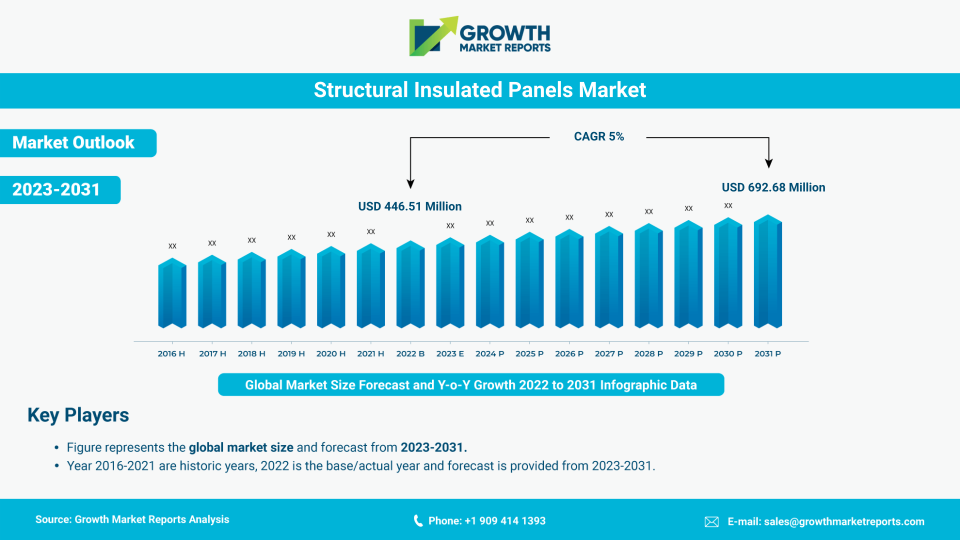
According to our latest research, the global structural insulated panels market size reached USD 13.4 billion in 2024, demonstrating robust growth driven by increasing demand for energy-efficient and sustainable construction materials. The market is projected to expand at a CAGR of 6.7% from 2025 to 2033, reaching a forecasted value of USD 25.5 billion by 2033. This upward trajectory is primarily attributed to the rising focus on green building standards, stringent energy regulations worldwide, and the growing need for rapid construction solutions in both residential and commercial sectors. As per our latest research, the structural insulated panels market continues to gain momentum as construction stakeholders increasingly prioritize high-performance building envelopes and reduced carbon footprints.
One of the major growth factors for the structural insulated panels market is the escalating emphasis on energy efficiency and sustainability in the construction industry. Governments and regulatory bodies across the globe are implementing stringent building codes and energy performance standards, which are compelling builders and developers to adopt advanced insulation materials. Structural insulated panels (SIPs) offer superior thermal insulation, airtightness, and reduced thermal bridging, making them an ideal choice for meeting or exceeding these requirements. Additionally, the increased awareness among consumers and businesses about reducing operational energy costs is further fueling the adoption of SIPs. As energy prices continue to rise and environmental concerns intensify, the demand for high-efficiency building materials like SIPs is expected to remain strong throughout the forecast period.
Another significant driver for the structural insulated panels market is the rapid urbanization and growth in construction activities, particularly in emerging economies. Countries in Asia Pacific, Latin America, and parts of Africa are witnessing substantial investments in residential, commercial, and industrial infrastructure. SIPs are gaining traction in these regions due to their ability to accelerate construction timelines, reduce labor costs, and provide consistent quality. The lightweight nature and modularity of SIPs make them suitable for prefabricated and modular construction, which is increasingly being adopted to address housing shortages and meet tight project deadlines. Moreover, the growing trend of green building certifications, such as LEED and BREEAM, is encouraging developers to incorporate advanced insulation solutions, further boosting the market for SIPs.
Technological advancements and product innovations are also playing a pivotal role in the expansion of the structural insulated panels market. Manufacturers are continuously enhancing the performance characteristics of SIPs by introducing new core materials, improved surface finishes, and integrated smart features. For example, the development of SIPs with enhanced fire resistance, moisture protection, and acoustic insulation broadens their application scope across diverse building types. Furthermore, the integration of digital design tools and Building Information Modeling (BIM) is streamlining the design and installation processes, making SIPs more attractive to architects, engineers, and contractors. As the construction sector increasingly embraces digitalization and offsite manufacturing, SIPs are well-positioned to capture a larger share of the market.
Regionally, North America currently leads the structural insulated panels market, driven by widespread adoption in the United States and Canada, where energy efficiency standards are among the most stringent globally. Europe follows closely, supported by ambitious sustainability targets and a mature prefabricated building industry. However, the Asia Pacific region is expected to exhibit the fastest growth over the forecast period, with countries like China, India, and Southeast Asian nations investing heavily in infrastructure modernization and affordable housing projects. The regional dynamics are also influenced by the availability of raw materials, government incentives, and the pace of technological adoption. Overall, the global structural insulated panels market is characterized by dynamic regional trends and a strong outlook for future growth.
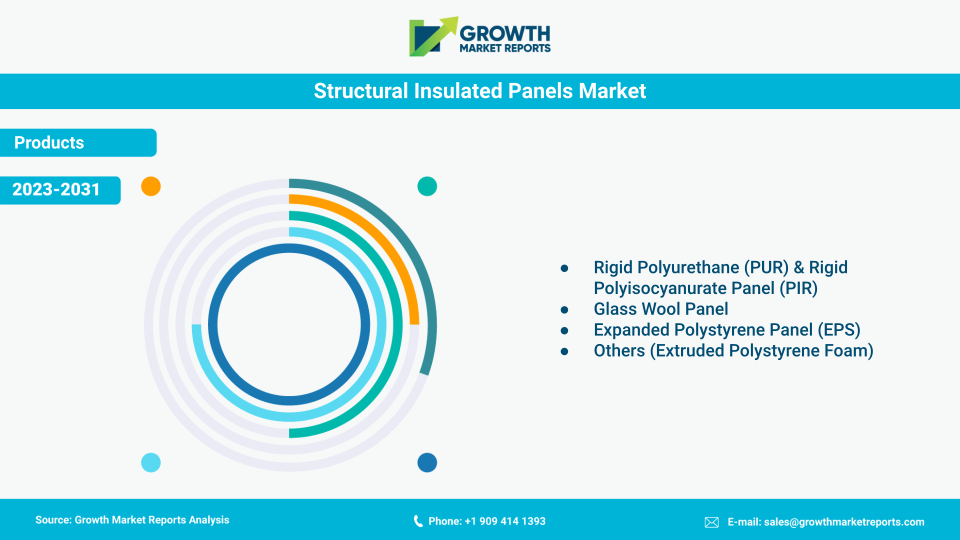
The product type segment of the structural insulated panels market is characterized by a diverse array of core materials, each offering unique performance attributes and application suitability. Polystyrene-based SIPs—including both expanded polystyrene (EPS) and extruded polystyrene (XPS)—are the most widely used due to their excellent thermal insulation properties, cost-effectiveness, and ease of availability. EPS panels, in particular, are favored for residential and light commercial buildings, as they deliver a balanced combination of strength, lightweight construction, and affordability. XPS panels, on the other hand, offer enhanced moisture resistance and compressive strength, making them suitable for applications exposed to higher humidity or requiring greater load-bearing capacity.
Polyurethane (PUR) and polyisocyanurate (PIR) SIPs are gaining significant traction in the market, especially in regions with extreme temperature variations or where superior fire resistance is required. These panels provide higher R-values per inch compared to polystyrene, resulting in thinner wall assemblies without compromising on insulation performance. The closed-cell structure of PUR and PIR also enhances their resistance to water absorption and vapor transmission, which is a critical factor in building durability and indoor air quality. However, the higher cost of these materials can be a limiting factor for price-sensitive projects, although their long-term energy savings often justify the initial investment.
The “Others” segment in product type encompasses a range of alternative core materials such as mineral wool, phenolic foam, and new bio-based or recycled content panels. These innovative solutions are increasingly being explored in response to growing environmental concerns and the need for improved fire safety and sound insulation. Mineral wool SIPs, for example, offer excellent fire resistance and acoustic performance, making them suitable for institutional and commercial buildings where such attributes are prioritized. Manufacturers are also investing in developing eco-friendly SIPs with reduced embodied carbon and improved recyclability, aligning with the global push towards sustainable construction practices.
Competition among product types is intensifying as end-users and specifiers become more discerning about the performance characteristics and lifecycle impacts of building materials. The choice of SIP core material is often dictated by project-specific requirements, local building codes, and climate considerations. As building envelope performance becomes a key differentiator in the construction industry, manufacturers are focusing on expanding their product portfolios, offering customized solutions, and obtaining certifications to cater to diverse market needs. The ongoing evolution of product technology and the introduction of hybrid panels combining multiple materials are expected to further diversify the market landscape.
Overall, the product type segment remains a dynamic and competitive arena within the structural insulated panels market. The interplay between cost, performance, regulatory compliance, and sustainability will continue to shape the adoption patterns of different SIP materials. As the market matures, collaboration between manufacturers, architects, and regulatory bodies will be crucial to ensure that SIPs meet evolving building standards and contribute effectively to high-performance, sustainable construction worldwide.
| Attributes | Details |
| Report Title | Structural Insulated Panels Market Research Report 2033 |
| By Product Type | Polystyrene, Polyurethane, Polyisocyanurate, Others |
| By Application | Walls & Floors, Roofs, Cold Storage, Others |
| By End-Use | Residential, Commercial, Industrial, Institutional, Others |
| Regions Covered | North America, Europe, APAC, Latin America, MEA |
| Countries Covered | North America (United States, Canada), Europe (Germany, France, Italy, United Kingdom, Spain, Russia, Rest of Europe), Asia Pacific (China, Japan, South Korea, India, Australia, South East Asia (SEA), Rest of Asia Pacific), Latin America (Mexico, Brazil, Rest of Latin America), Middle East & Africa (Saudi Arabia, South Africa, United Arab Emirates, Rest of Middle East & Africa) |
| Base Year | 2024 |
| Historic Data | 2018-2023 |
| Forecast Period | 2025-2033 |
| Number of Pages | 269 |
| Number of Tables & Figures | 387 |
| Customization Available | Yes, the report can be customized as per your need. |
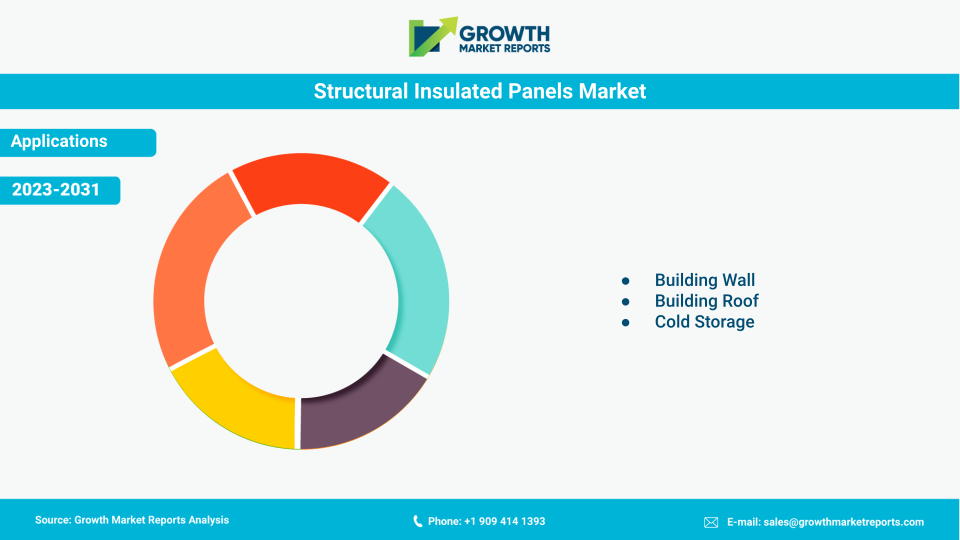
The application segment of the structural insulated panels market is broad, encompassing a variety of uses such as walls and floors, roofs, cold storage, and other specialized applications. Walls and floors represent the largest share of SIP usage, primarily due to the panels’ ability to provide structural support, superior insulation, and rapid installation. SIPs used in walls and floors contribute significantly to reducing thermal bridging, enhancing airtightness, and improving overall building energy performance. These benefits are especially valued in residential and commercial projects seeking to achieve high energy ratings and comply with stringent building codes. The modular nature of SIPs also allows for flexible design and efficient use of materials, reducing waste and lowering construction timelines.
Roof applications are another critical growth area within the structural insulated panels market. SIPs are increasingly preferred for roofing systems in both new constructions and retrofits due to their lightweight properties, ease of handling, and ability to create continuous insulated surfaces with minimal joints. This results in superior thermal performance and reduced risk of air leakage or moisture ingress. SIP roofs are particularly advantageous in cold climates, where preventing heat loss is essential, and in regions prone to extreme weather, where structural integrity and resistance to wind uplift are crucial. The use of SIPs in roofs also supports the integration of renewable energy systems, such as solar panels, by providing a stable and well-insulated substrate.
The cold storage application segment is witnessing strong growth as the global demand for temperature-controlled environments increases across the food processing, pharmaceutical, and logistics industries. SIPs are ideally suited for cold storage facilities due to their exceptional insulating properties, airtight construction, and ability to maintain consistent internal temperatures. These attributes help reduce energy consumption, minimize temperature fluctuations, and prevent condensation, which is vital for preserving product quality and safety. The rapid assembly and customizable dimensions of SIPs further enhance their appeal for cold storage projects, where speed and precision are often critical factors.
Beyond the primary applications, the “Others” segment includes specialized uses such as modular buildings, portable cabins, educational facilities, and disaster relief shelters. The versatility and adaptability of SIPs make them a preferred choice for projects requiring quick deployment, scalability, and durability. For example, SIPs are increasingly being used in the construction of temporary healthcare facilities and affordable housing units, particularly in regions affected by natural disasters or facing acute housing shortages. The ability of SIPs to be prefabricated offsite and assembled rapidly on location is a key advantage in such scenarios.
As construction practices evolve and the emphasis on building performance intensifies, the application landscape for SIPs is expected to broaden further. Collaborations between manufacturers, architects, and end-users are driving the development of new panel configurations, integrated building systems, and innovative installation techniques. The growing popularity of offsite and modular construction methods is also expected to fuel demand for SIPs across a wider range of applications, reinforcing their position as a cornerstone of modern, energy-efficient building solutions.
The end-use segment of the structural insulated panels market is segmented into residential, commercial, industrial, institutional, and other categories, each exhibiting distinct demand drivers and adoption patterns. The residential sector remains the largest consumer of SIPs, propelled by the surge in single-family and multi-family housing projects that prioritize energy efficiency, affordability, and rapid construction. Homebuilders are increasingly turning to SIPs to achieve superior insulation, airtightness, and structural integrity, which contribute to lower utility bills and enhanced indoor comfort for homeowners. The trend towards net-zero energy homes and the adoption of green building certifications in residential construction are further accelerating the uptake of SIPs in this segment.
The commercial end-use segment is experiencing robust growth, driven by the expansion of office complexes, retail centers, hospitality venues, and mixed-use developments. Commercial property developers are recognizing the value proposition of SIPs in terms of reduced construction timelines, lower operating costs, and compliance with energy performance standards. The use of SIPs in commercial buildings also supports flexible design and open floor plans, which are increasingly in demand for modern workspaces and retail environments. Additionally, the growing emphasis on occupant health and wellness is prompting developers to select building materials that contribute to improved indoor air quality and thermal comfort, areas where SIPs excel.
In the industrial sector, SIPs are being adopted for warehouses, manufacturing facilities, and logistics centers that require high-performance building envelopes to maintain controlled environments and optimize operational efficiency. The durability, load-bearing capacity, and rapid installation of SIPs make them well-suited for industrial applications where downtime and construction delays can have significant financial implications. Furthermore, the ability of SIPs to support large spans and integrate with other building systems enhances their appeal for industrial end-users seeking scalable and adaptable solutions.
The institutional segment includes applications in schools, hospitals, government buildings, and community centers, where the focus is on long-term durability, safety, and sustainability. SIPs are increasingly specified for institutional projects due to their fire resistance, acoustic performance, and ability to meet rigorous building codes. Educational institutions, in particular, are adopting SIPs to create energy-efficient learning environments that promote student well-being and reduce operational costs. Similarly, healthcare facilities benefit from the airtight and hygienic construction enabled by SIPs, which supports infection control and indoor air quality.
The “Others” segment encompasses niche applications such as military structures, remote outposts, and custom architectural projects. The adaptability and high-performance attributes of SIPs make them a preferred choice for specialized end-users with unique requirements. As the market continues to evolve, the end-use landscape for SIPs is expected to diversify further, supported by ongoing innovation, regulatory support, and the growing recognition of the long-term value delivered by advanced building envelope solutions.
The structural insulated panels market is poised for significant opportunities as the global construction industry pivots towards sustainability, energy efficiency, and digitalization. The ongoing shift towards green building standards and the proliferation of energy codes worldwide present a fertile ground for SIP adoption. Governments are increasingly offering incentives, subsidies, and tax breaks for energy-efficient construction, which is expected to drive market growth further. Additionally, the rise of modular and prefabricated construction methods aligns perfectly with the inherent advantages of SIPs, such as speed, quality control, and reduced labor dependency. The expansion of cold chain logistics, driven by the growth of e-commerce and pharmaceutical distribution, also presents lucrative opportunities for SIP manufacturers specializing in cold storage solutions.
Technological advancements and product innovation represent another major opportunity area for the structural insulated panels market. The development of new core materials, integration of smart building technologies, and the use of digital design tools are enabling manufacturers to offer customized, high-performance panels that cater to evolving market needs. Collaborations with architects, engineers, and green building consultants are fostering the creation of SIPs that meet specific project requirements, such as enhanced fire safety, acoustic performance, or reduced environmental impact. The growing trend of urbanization and the need for affordable housing in emerging economies further amplify the market potential, as SIPs offer a scalable and cost-effective solution for large-scale construction projects.
Despite the promising outlook, the structural insulated panels market faces certain restraining factors that could impede its growth trajectory. One of the primary challenges is the relatively higher initial cost of SIPs compared to traditional building materials, which can deter price-sensitive customers, especially in developing regions. Additionally, the lack of widespread awareness and familiarity with SIP construction methods among builders, contractors, and regulators can slow down market penetration. Issues related to supply chain logistics, availability of skilled labor for installation, and the need for specialized equipment also pose operational challenges. Regulatory barriers and variations in building codes across different regions further complicate market expansion, necessitating ongoing education and advocacy efforts by industry stakeholders.
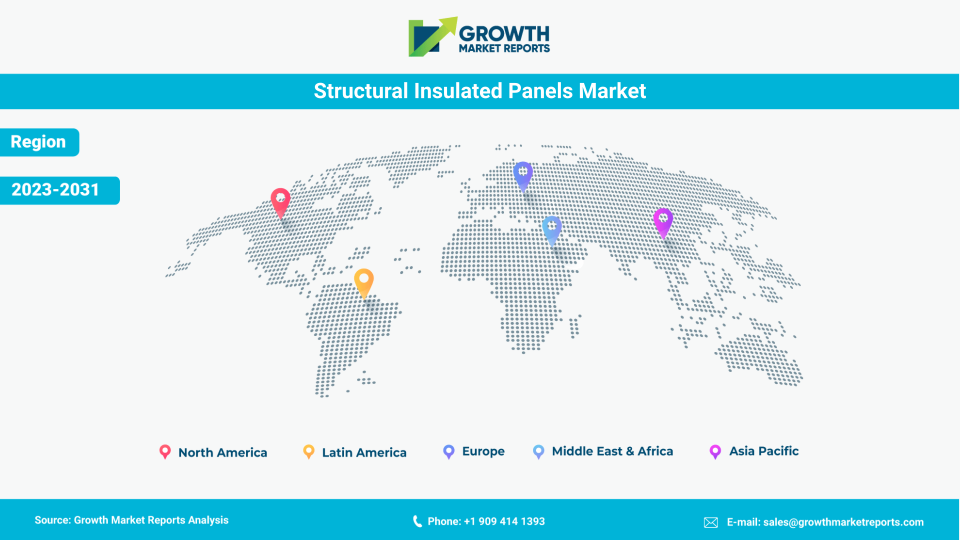
North America dominates the structural insulated panels market, accounting for the largest revenue share in 2024, with an estimated market size of USD 5.5 billion. The region benefits from well-established building codes, high consumer awareness regarding energy efficiency, and a mature prefabricated construction industry. The United States is the key contributor, driven by robust demand in both residential and commercial sectors, while Canada follows closely with strong adoption in cold climate regions. The presence of leading SIP manufacturers and a supportive regulatory environment further bolster regional growth. North America’s market is expected to maintain steady momentum, with a projected CAGR of 5.8% through 2033.
Europe is the second-largest market, with a 2024 value of approximately USD 3.8 billion. The region’s growth is underpinned by ambitious sustainability targets, progressive energy performance standards, and a high rate of urban redevelopment. Countries such as Germany, the United Kingdom, and Scandinavia are at the forefront of SIP adoption, leveraging advanced manufacturing capabilities and a strong focus on green building certifications. The European market is characterized by a high degree of product innovation, with manufacturers offering tailored solutions to meet diverse climatic and regulatory requirements. The region is anticipated to witness a robust CAGR of 6.1% over the forecast period, driven by ongoing investments in energy-efficient infrastructure.
The Asia Pacific region is emerging as the fastest-growing market for structural insulated panels, with a 2024 market size of USD 2.9 billion and a projected CAGR of 8.2% through 2033. Rapid urbanization, infrastructure modernization, and the growing need for affordable, high-performance building materials are key drivers in countries like China, India, and Southeast Asia. Government initiatives promoting green buildings, coupled with increasing investments in residential and commercial construction, are expected to propel market expansion. Latin America and the Middle East & Africa collectively account for the remaining market share, with growing opportunities in cold storage, industrial, and institutional applications, particularly in regions experiencing economic development and climate-driven construction needs.
The structural insulated panels market is highly competitive, with a mix of established global players and regional manufacturers vying for market share. The competitive landscape is shaped by continuous innovation, strategic partnerships, and a focus on expanding product portfolios to cater to evolving customer demands. Leading companies are investing heavily in research and development to enhance the performance, sustainability, and application versatility of their SIP offerings. The adoption of advanced manufacturing technologies, such as automated panel production and digital design integration, is further driving efficiency and product quality across the industry. Market leaders are also actively pursuing mergers, acquisitions, and collaborations to strengthen their geographic presence and access new customer segments.
Brand reputation, product certifications, and compliance with international building codes are critical differentiators in the structural insulated panels market. Companies that offer third-party certified products and demonstrate compliance with energy efficiency and fire safety standards are better positioned to win large-scale projects and government contracts. Customer service, technical support, and the ability to provide customized solutions are also key factors influencing purchasing decisions in this market. As sustainability becomes a central theme, manufacturers that incorporate recycled content, minimize embodied carbon, and offer end-of-life recycling programs are gaining a competitive edge.
The market is witnessing the entry of new players, particularly in emerging regions, where local manufacturers are leveraging proximity to raw materials and lower production costs to compete with established brands. However, global leaders continue to dominate in terms of technological innovation, brand recognition, and distribution networks. The ongoing shift towards digitalization and offsite construction is prompting companies to invest in digital platforms, BIM integration, and supply chain optimization to enhance customer engagement and streamline project delivery.
Some of the major companies operating in the structural insulated panels market include Kingspan Group, Metl-Span, Inc., Owens Corning, PFB Corporation, Alubel SpA, Isopan, Premier SIPs, SIPS Eco Panels, and ACME Panel Company. Kingspan Group stands out as a global leader, known for its extensive product range, strong focus on sustainability, and presence in over 70 countries. Metl-Span, Inc. is recognized for its innovative insulated metal panel solutions and commitment to quality and performance. Owens Corning leverages its expertise in insulation and building materials to offer high-performance SIPs for a variety of applications. PFB Corporation and Premier SIPs are notable for their focus on residential and commercial markets in North America, while European players like Alubel SpA and Isopan are driving innovation in the region through advanced manufacturing processes and tailored solutions.
These companies are continuously expanding their product portfolios, investing in sustainable manufacturing practices, and forming strategic alliances to capture new growth opportunities. The competitive dynamics of the market are expected to intensify as demand for high-performance, energy-efficient building solutions increases globally, paving the way for further innovation and consolidation in the structural insulated panels market.
The Structural Insulated Panels market has been segmented on the basis of
Key players competing in the structural insulated panels market include PFB Corporation; Kingspan Group; Owens Corning; Rautaruukki Corporation; and Premier Building Systems
The majority of industry leaders are forward integrated, which means they manufacture structural insulated panels as well as provide installation and maintenance services. As With increasing demand companies are expanding their production capacity to leverage their market position.
Technological advancements are enhancing SIP performance (e.g., fire resistance, moisture protection), enabling digital design integration (BIM), and supporting the development of eco-friendly and smart panels.
Major players include Kingspan Group, Metl-Span, Inc., Owens Corning, PFB Corporation, Alubel SpA, Isopan, Premier SIPs, SIPS Eco Panels, and ACME Panel Company.
Opportunities include the shift toward green buildings, modular construction, and technological innovation. Challenges involve higher initial costs, lack of awareness, supply chain issues, and regulatory barriers.
The residential sector is the largest consumer, followed by commercial, industrial, institutional, and specialized applications like military and remote structures.
SIPs are primarily used in walls and floors, roofs, cold storage facilities, modular buildings, portable cabins, educational facilities, and disaster relief shelters.
The main SIP types are polystyrene-based panels (EPS and XPS), polyurethane (PUR), polyisocyanurate (PIR), and other materials such as mineral wool, phenolic foam, and bio-based panels.
North America currently leads the market, followed by Europe. However, Asia Pacific is expected to experience the fastest growth through 2033.
Key growth drivers include increasing demand for energy-efficient and sustainable construction materials, stricter energy regulations, rapid urbanization, and the adoption of green building standards.
The SIPs market is expected to grow at a CAGR of 6.7% from 2025 to 2033, reaching USD 25.5 billion by 2033.
As of 2024, the global structural insulated panels market size reached USD 13.4 billion.