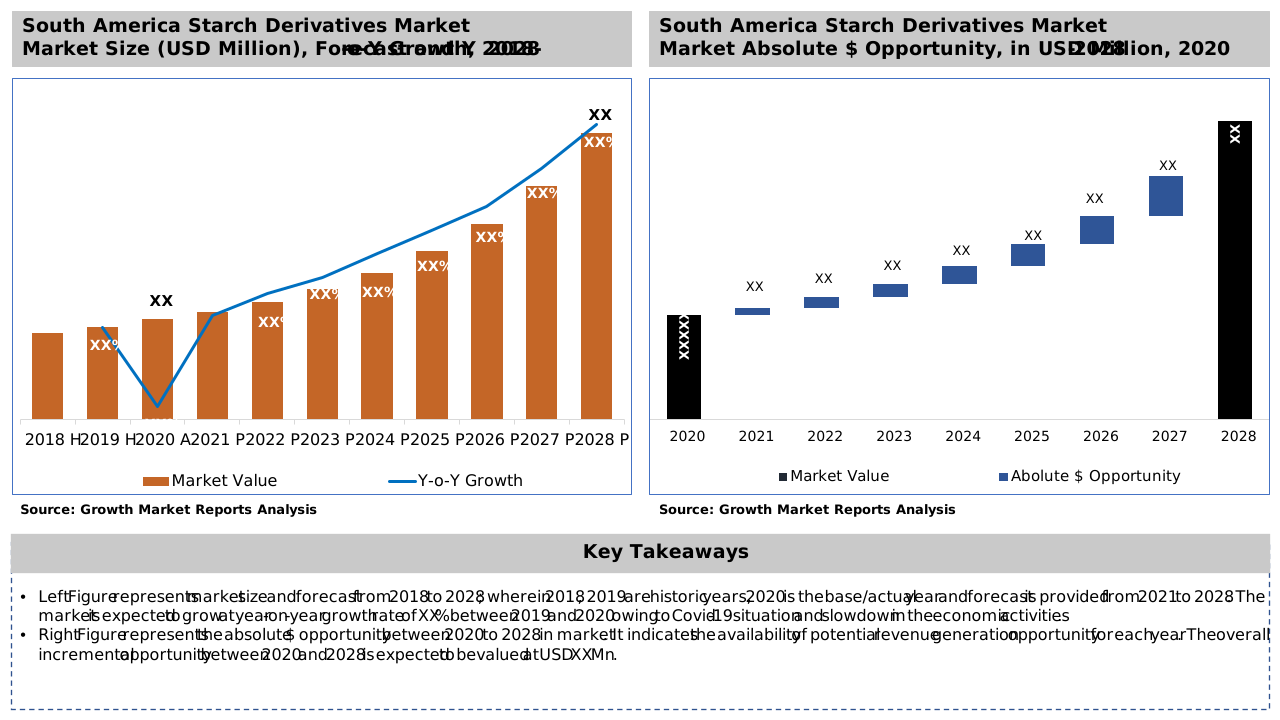
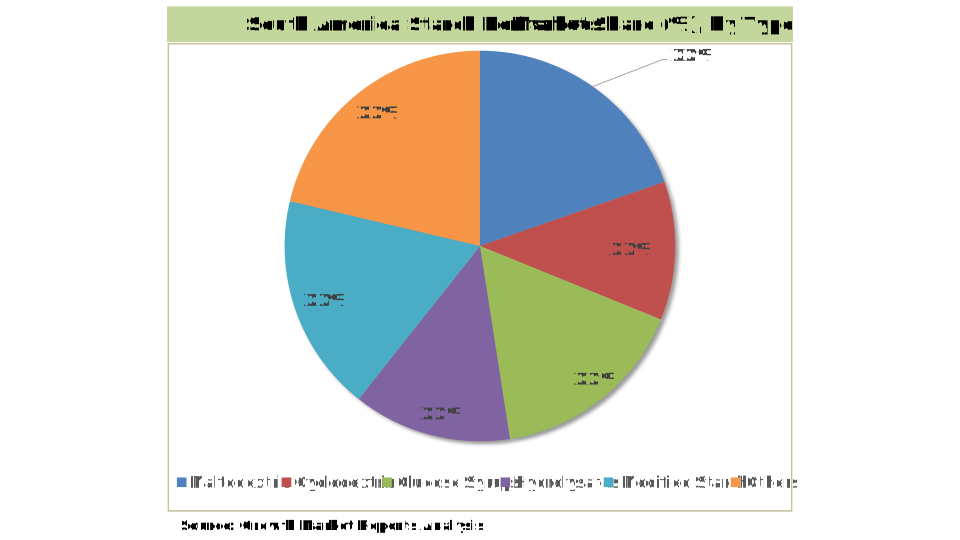
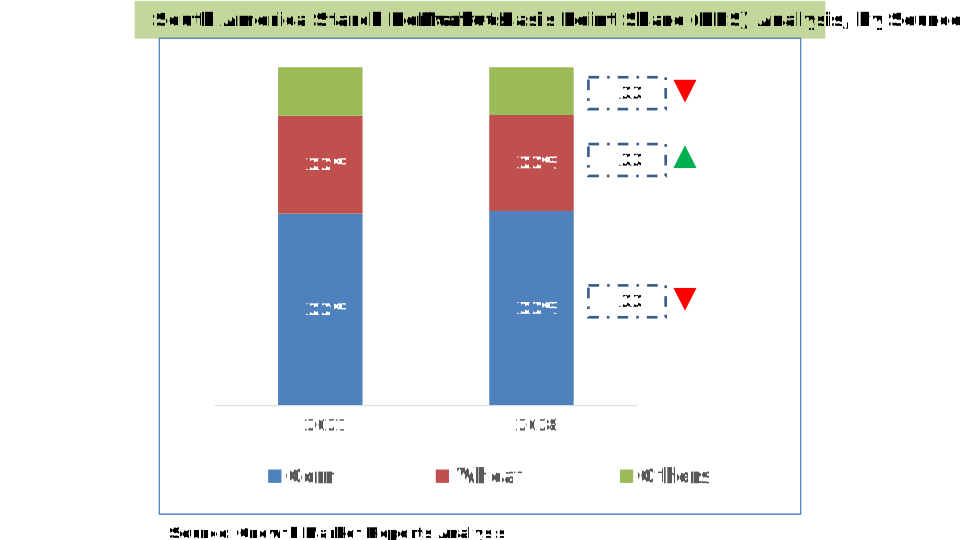
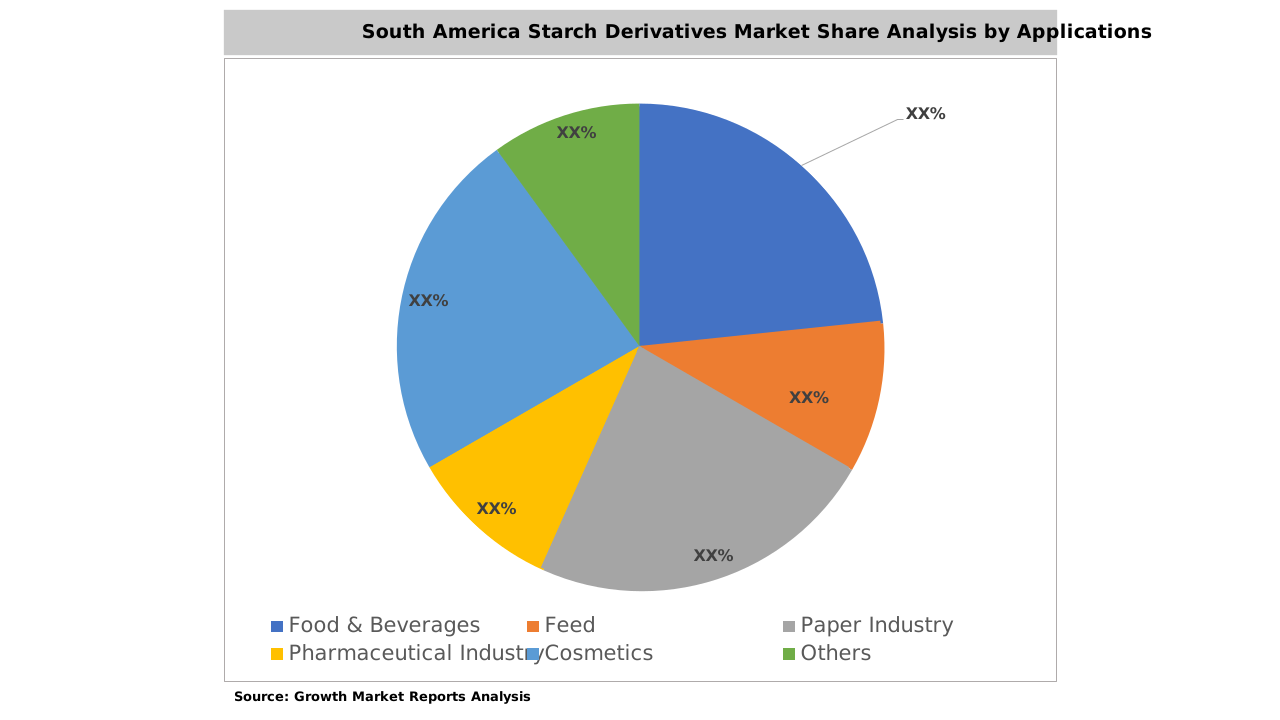
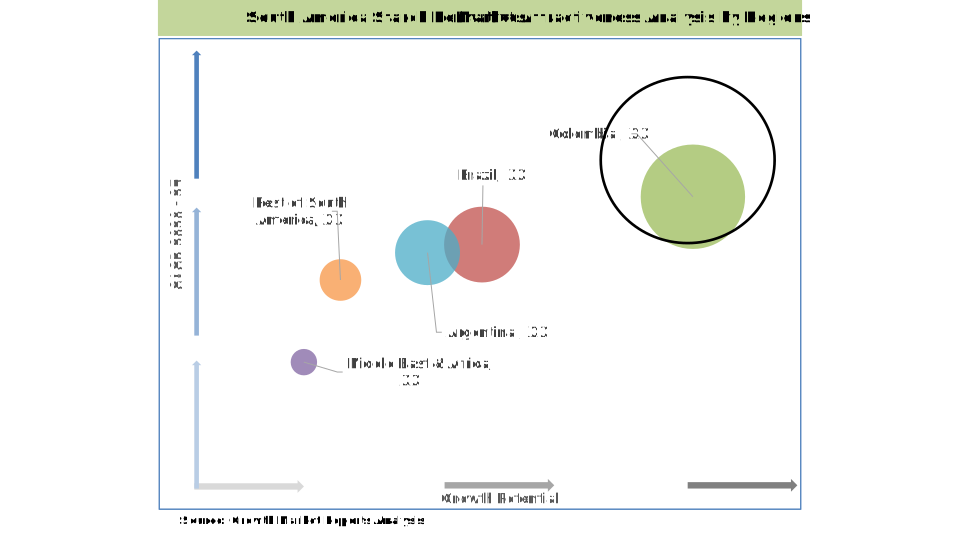
Segments - by Product Type (Maltodextrin, Cyclodextrin, Glucose Syrup, Hydrolysates, Modified Starch, Others), by Application (Food & Beverages, Pharmaceuticals, Cosmetics, Paper, Feed, Others), by Source (Corn, Wheat, Potato, Cassava, Others), by Form (Dry, Liquid)
According to our latest research, the global starch derivatives market size reached USD 62.7 billion in 2024, reflecting a robust industry expansion driven by diverse end-user demand. The market is projected to grow at a CAGR of 6.8% from 2025 to 2033, reaching an estimated USD 115.3 billion by 2033. This impressive growth trajectory is underpinned by the increasing utilization of starch derivatives across food and beverage, pharmaceutical, and industrial sectors, coupled with rising consumer preference for convenience and processed foods. The market's dynamic evolution is also shaped by technological advancements and innovative product development, which are continuously expanding the application scope of starch derivatives globally.
One of the primary growth drivers for the starch derivatives market is the surging demand from the food and beverage industry. Manufacturers are increasingly relying on starch derivatives such as maltodextrin, glucose syrup, and modified starch as thickeners, stabilizers, and sweeteners in a wide array of processed foods and beverages. The shift in consumer preferences towards ready-to-eat meals, functional foods, and low-calorie sweeteners has significantly fueled the adoption of starch derivatives. Furthermore, the clean label movement and the trend towards healthier ingredients have prompted food producers to seek natural and plant-based additives, further boosting the market for starch derivatives. In addition, the growing popularity of gluten-free and allergen-free products is creating new avenues for the use of alternative starch sources such as potato, cassava, and corn.
The pharmaceutical and cosmetic industries have also emerged as significant contributors to the starch derivatives marketÂ’s expansion. In pharmaceuticals, starch derivatives such as cyclodextrins and modified starches are widely used as excipients, drug carriers, and disintegrants, enhancing drug solubility and stability. The increasing prevalence of chronic diseases and the subsequent rise in pharmaceutical production have led to a substantial uptick in starch derivative consumption. In the cosmetics sector, starch derivatives are valued for their emulsifying, thickening, and moisture-retention properties, making them integral to formulations for skincare, haircare, and personal hygiene products. Ongoing innovation in drug delivery systems and the rising demand for natural cosmetic ingredients are expected to further propel the market.
Industrial applications—including paper manufacturing, adhesives, and animal feed—represent another critical growth avenue for the starch derivatives market. In the paper industry, starch derivatives are employed to improve paper strength and surface quality, while in adhesives, they enhance bond strength and flexibility. The animal feed sector utilizes starch derivatives to improve digestibility and nutrient absorption. The ongoing expansion of the packaging and paper industries, particularly in emerging markets, is expected to drive additional demand. Moreover, the increasing focus on sustainability and biodegradable materials is encouraging manufacturers to explore starch-based alternatives for packaging and industrial products, further catalyzing market growth.
Starch, a fundamental carbohydrate, plays a crucial role in the starch derivatives market, serving as the primary raw material for a wide range of applications. Derived from various sources such as corn, wheat, and potatoes, starch is transformed through chemical and enzymatic processes to produce derivatives with enhanced properties. These derivatives are integral to numerous industries, providing functionalities like thickening, stabilizing, and binding. The versatility of starch makes it indispensable in food formulations, pharmaceuticals, and industrial products, where it contributes to product quality and performance. As the demand for natural and sustainable ingredients grows, starch continues to be at the forefront of innovation, driving the development of eco-friendly and health-conscious products.
Regionally, the Asia Pacific region dominates the global starch derivatives market, accounting for the largest share in 2024, followed by North America and Europe. Rapid urbanization, a burgeoning middle-class population, and changing dietary habits in countries such as China, India, and Southeast Asian nations are fueling the demand for processed foods and beverages, thereby boosting starch derivative consumption. North America and Europe continue to be strong markets due to established food processing industries, advanced pharmaceutical sectors, and a growing focus on clean label and functional ingredients. Latin America and the Middle East & Africa are emerging as high-potential markets, supported by industrial development and rising disposable incomes. Regional disparities in raw material availability, regulatory frameworks, and consumer preferences are expected to influence market dynamics and shape future growth trajectories.
The starch derivatives market is segmented by product type into maltodextrin, cyclodextrin, glucose syrup, hydrolysates, modified starch, and others. Among these, maltodextrin holds a significant share due to its versatile functional properties such as thickening, bulking, and stabilizing, making it a preferred ingredient in food and beverage formulations. MaltodextrinÂ’s rapid solubility and neutral taste have led to its widespread incorporation in sports drinks, infant formula, and processed foods. The growing trend for low-calorie and sugar-free products is further propelling the demand for maltodextrin as a sugar substitute, especially in health-conscious consumer segments. Additionally, its application in pharmaceuticals as a carrier and filler enhances its market appeal.
Cyclodextrins are gaining traction, particularly in the pharmaceutical and cosmetic industries, owing to their unique ability to form inclusion complexes with active ingredients. This property enhances the solubility, stability, and bioavailability of drugs and cosmetic actives, making cyclodextrins invaluable in the formulation of advanced drug delivery systems and high-performance skincare products. The increasing investment in R&D for novel drug formulations and the rising demand for premium cosmetics are expected to drive cyclodextrin consumption in the coming years. Furthermore, cyclodextrins are being explored for their potential in food preservation and flavor encapsulation, opening up new growth avenues.
Corn starch, a highly versatile and widely used derivative, is a staple in the food and beverage industry due to its excellent thickening and stabilizing properties. Extracted from the endosperm of corn kernels, it serves as a key ingredient in sauces, soups, and baked goods, enhancing texture and consistency. Beyond culinary uses, corn starch is also employed in the pharmaceutical sector as a disintegrant in tablets, aiding in the efficient release of active ingredients. Its role extends to the industrial sector, where it is used in adhesives and paper manufacturing. The abundant availability and cost-effectiveness of corn starch make it a preferred choice for manufacturers seeking reliable and multifunctional ingredients.
Glucose syrup continues to be a staple in the confectionery and beverage industries due to its excellent sweetening and texturizing properties. It is widely used in the production of candies, soft drinks, ice creams, and bakery products. The shift towards processed and convenience foods, especially in urban markets, has bolstered the demand for glucose syrup. Additionally, the beverage industryÂ’s ongoing innovation in low-calorie and functional drinks is driving the adoption of glucose syrup as a versatile ingredient. However, health concerns regarding high sugar intake may pose challenges, prompting manufacturers to innovate with low-sugar and alternative sweetener blends.
Modified starch represents a rapidly growing segment, driven by its extensive use across food, pharmaceutical, paper, and industrial applications. Modified starches offer enhanced functionalities such as improved viscosity, stability under varying temperature and pH conditions, and resistance to retrogradation. These properties make them indispensable in processed foods, sauces, soups, and ready meals. In the paper and textile industries, modified starches are utilized to improve product strength and quality. The increasing demand for convenience foods and sustainable industrial products is likely to sustain the growth of this segment. Other starch derivatives, including hydrolysates, cater to niche applications and are expected to witness steady growth as manufacturers diversify their product portfolios.
Waxy maize starch, known for its unique amylopectin-rich composition, offers distinct advantages in various applications. Unlike regular corn starch, waxy maize starch provides superior stability and viscosity, making it ideal for use in food products that require freeze-thaw stability and clarity. Its ability to maintain texture and consistency under varying conditions has made it popular in the production of frozen foods, sauces, and dressings. In the industrial sector, waxy maize starch is valued for its adhesive properties and is used in paper and textile manufacturing. As consumer demand for high-quality and resilient food products grows, waxy maize starch is increasingly sought after for its functional benefits and versatility.
| Attributes | Details |
| Report Title | Starch Derivatives Market Research Report 2033 |
| By Product Type | Maltodextrin, Cyclodextrin, Glucose Syrup, Hydrolysates, Modified Starch, Others |
| By Application | Food & Beverages, Pharmaceuticals, Cosmetics, Paper, Feed, Others |
| By Source | Corn, Wheat, Potato, Cassava, Others |
| By Form | Dry, Liquid |
| Regions Covered | North America, Europe, APAC, Latin America, MEA |
| Base Year | 2024 |
| Historic Data | 2018-2023 |
| Forecast Period | 2025-2033 |
| Number of Pages | 294 |
| Number of Tables & Figures | 306 |
| Customization Available | Yes, the report can be customized as per your need. |
The starch derivatives market finds diverse applications across food & beverages, pharmaceuticals, cosmetics, paper, feed, and other industrial sectors. The food & beverages segment remains the largest application area, accounting for over 45% of the market share in 2024. Starch derivatives serve as essential ingredients in bakery, confectionery, dairy, sauces, and beverages, owing to their thickening, stabilizing, and texturizing properties. The ongoing shift towards convenience and processed foods, along with rising consumer awareness about food quality and safety, is driving the adoption of starch derivatives. Additionally, the growing demand for clean label and natural ingredients is prompting manufacturers to replace synthetic additives with plant-based starch derivatives.
The pharmaceutical sector is another significant application area, utilizing starch derivatives as excipients, binders, disintegrants, and drug carriers. The increasing prevalence of chronic diseases, coupled with the rising demand for advanced drug delivery systems, is propelling the use of modified starches and cyclodextrins in pharmaceutical formulations. Starch derivatives enhance the solubility, stability, and bioavailability of active pharmaceutical ingredients, contributing to improved therapeutic outcomes. The expansion of the generic drug market and ongoing innovation in drug formulation are expected to sustain the growth of this application segment.
In the cosmetics industry, starch derivatives are valued for their emulsifying, thickening, and moisture-retention properties. They are widely used in skincare, haircare, and personal hygiene products, offering a natural and safe alternative to synthetic ingredients. The rising consumer preference for natural and organic cosmetics, along with increasing awareness about ingredient safety, is boosting the demand for starch derivatives in cosmetic formulations. Furthermore, the trend towards multifunctional and high-performance cosmetic products is driving innovation and expanding the application scope of starch derivatives in this sector.
The paper and feed industries also represent important application areas for starch derivatives. In the paper industry, starch derivatives are used to improve paper strength, printability, and surface quality, while in animal feed, they enhance digestibility and nutrient absorption. The ongoing expansion of the packaging and paper sectors, particularly in emerging markets, is driving additional demand for starch derivatives. Moreover, the growing focus on sustainability and biodegradable materials is encouraging the use of starch-based alternatives in packaging and industrial products, further supporting market growth.
The starch derivatives market is segmented by source into corn, wheat, potato, cassava, and others. Corn remains the dominant source, accounting for over 60% of the market share in 2024, primarily due to its abundant availability, high starch content, and well-established processing infrastructure. Corn-derived starch derivatives are widely used across food, beverage, pharmaceutical, and industrial applications, offering versatility and cost-effectiveness. The United States, China, and Brazil are leading producers of corn-based starch derivatives, supported by large-scale corn cultivation and advanced processing technologies.
Wheat is another significant source of starch derivatives, particularly in regions where wheat cultivation is prevalent, such as Europe and parts of Asia. Wheat-derived starch derivatives are valued for their unique functional properties and are extensively used in bakery, confectionery, and processed food applications. The ongoing trend towards gluten-free and allergen-free products has prompted manufacturers to explore alternative sources such as potato and cassava, further diversifying the market.
Potato and cassava are gaining prominence as alternative sources of starch derivatives, especially in regions with limited corn and wheat production. Potato-derived starch derivatives are known for their high viscosity and clarity, making them ideal for use in soups, sauces, and snack foods. Cassava, on the other hand, is a vital source in tropical regions and is increasingly being utilized for its sustainability and cost advantages. The growing demand for non-GMO and allergen-free ingredients is driving the adoption of potato and cassava starch derivatives, particularly in specialized food and industrial applications.
Other sources, such as rice and tapioca, cater to niche markets and specific regional preferences. The diversification of starch sources is expected to continue, driven by factors such as raw material availability, cost considerations, and evolving consumer preferences. Manufacturers are increasingly investing in R&D to develop innovative starch derivatives from alternative sources, aiming to capture emerging market opportunities and address supply chain challenges.
The starch derivatives market is segmented by form into dry and liquid forms, each catering to distinct application requirements. Dry starch derivatives account for the majority share, owing to their ease of handling, storage stability, and versatility in various end-use industries. Dry forms are extensively used in food processing, pharmaceuticals, and cosmetics, where precise dosing and long shelf life are critical. The convenience of dry powders and granules makes them a preferred choice for manufacturers seeking to optimize production efficiency and product quality.
Liquid starch derivatives are gaining traction, particularly in the food and beverage industry, where they are used as sweeteners, thickeners, and stabilizers in syrups, beverages, and confectionery products. Liquid forms offer advantages such as rapid solubility, ease of mixing, and uniform dispersion, making them ideal for high-speed manufacturing processes. The growing demand for ready-to-use ingredients and the trend towards convenience foods are driving the adoption of liquid starch derivatives.
The choice between dry and liquid forms is often dictated by application-specific requirements, production processes, and end-user preferences. For instance, the pharmaceutical industry favors dry forms for tablet and capsule formulations, while the beverage industry prefers liquid forms for ease of incorporation and consistency. The ongoing innovation in formulation technologies and the development of customized starch derivatives are expected to further diversify the market by form.
Manufacturers are also focusing on improving the functional properties of both dry and liquid starch derivatives, such as solubility, stability, and dispersibility, to meet the evolving needs of end-users. The increasing emphasis on product quality, safety, and sustainability is driving the adoption of advanced processing technologies and quality assurance measures across the value chain.
The starch derivatives market presents substantial opportunities for growth, particularly in emerging economies where rapid urbanization, rising disposable incomes, and changing dietary habits are driving the demand for processed foods and beverages. The increasing focus on health and wellness, coupled with the growing popularity of clean label and natural ingredients, is creating new avenues for starch derivative applications in functional foods, nutraceuticals, and organic products. Furthermore, the ongoing innovation in drug delivery systems and cosmetic formulations is expanding the application scope of starch derivatives in the pharmaceutical and personal care industries. The shift towards sustainable and biodegradable materials is also encouraging manufacturers to develop starch-based alternatives for packaging, adhesives, and industrial products, aligning with global sustainability goals.
Technological advancements and R&D investments are unlocking new possibilities in the starch derivatives market, enabling the development of high-performance and customized products tailored to specific end-user requirements. The integration of advanced processing technologies, such as enzymatic hydrolysis and genetic modification, is enhancing the functional properties and application versatility of starch derivatives. Strategic collaborations, mergers, and acquisitions are further strengthening the market position of key players and facilitating access to new markets and technologies. The increasing adoption of e-commerce and digital marketing channels is also enabling manufacturers to reach a broader customer base and tap into emerging market trends.
Despite the promising growth prospects, the starch derivatives market faces certain restraining factors, such as fluctuating raw material prices, supply chain disruptions, and stringent regulatory requirements. The volatility in the prices of corn, wheat, and other raw materials can impact production costs and profit margins, posing challenges for manufacturers. Additionally, the growing scrutiny of food additives and the implementation of strict safety and labeling regulations in developed markets may increase compliance costs and limit market entry for new players. Health concerns related to high sugar intake and the rising demand for alternative sweeteners may also pose challenges for certain starch derivatives, necessitating continuous innovation and adaptation.
The Asia Pacific region leads the global starch derivatives market, accounting for approximately 39% of the total market share in 2024, with a market value of nearly USD 24.5 billion. This dominance is attributed to the regionÂ’s large population, rapid urbanization, and shifting dietary preferences towards processed and convenience foods. China, India, and Southeast Asian countries are the primary growth engines, supported by expanding food processing industries, rising disposable incomes, and increasing adoption of Western dietary patterns. The region is also witnessing significant investments in pharmaceutical and cosmetic manufacturing, further boosting the demand for starch derivatives. The Asia Pacific market is projected to grow at a CAGR of 7.3% through 2033, outpacing other regions due to favorable demographic and economic trends.
North America represents the second-largest regional market, valued at USD 16.8 billion in 2024, driven by a mature food and beverage industry, advanced pharmaceutical sector, and a strong focus on health and wellness. The United States remains the largest consumer and producer of corn-based starch derivatives, benefiting from abundant raw material availability and well-established processing infrastructure. The regionÂ’s emphasis on clean label, organic, and functional ingredients is shaping product innovation and influencing market dynamics. Europe follows closely, with a market size of USD 13.2 billion in 2024, characterized by stringent regulatory standards, high consumer awareness, and a growing preference for natural and sustainable ingredients. The European market is also witnessing increased demand for wheat and potato-based starch derivatives, particularly in bakery, confectionery, and pharmaceutical applications.
Latin America and the Middle East & Africa collectively account for a smaller but rapidly growing share of the global market, with a combined value of USD 8.2 billion in 2024. These regions are experiencing increased investment in food processing, packaging, and industrial sectors, supported by economic development and rising consumer incomes. Brazil, Mexico, and South Africa are key markets, benefiting from favorable government policies and expanding agricultural production. The adoption of starch derivatives in animal feed, paper, and industrial applications is also gaining momentum, presenting new opportunities for market players. Regional disparities in raw material availability, infrastructure, and regulatory frameworks will continue to influence growth patterns and competitive dynamics.
The global starch derivatives market is characterized by intense competition among key players, with a strong emphasis on product innovation, quality, and sustainability. Leading companies are investing heavily in research and development to develop high-performance and customized starch derivatives that cater to evolving end-user requirements. Strategic partnerships, mergers, and acquisitions are common strategies employed by market leaders to expand their product portfolios, strengthen their market presence, and gain access to new technologies and markets. The increasing focus on sustainability and clean label ingredients is prompting manufacturers to adopt eco-friendly production processes and source raw materials from sustainable and non-GMO sources.
The competitive landscape is further shaped by the presence of both multinational corporations and regional players, each leveraging their strengths to capture market share. Multinational companies benefit from extensive distribution networks, advanced processing technologies, and strong brand recognition, enabling them to serve a diverse customer base across multiple regions. Regional players, on the other hand, often focus on niche markets and specialized applications, capitalizing on local raw material availability and consumer preferences. The growing demand for alternative starch sources and customized solutions is encouraging collaboration between manufacturers, research institutions, and end-users to drive product development and market expansion.
Innovation remains a key differentiator in the starch derivatives market, with companies striving to develop multifunctional and value-added products that address specific industry challenges. The integration of advanced processing technologies, such as enzymatic modification and nanotechnology, is enabling the development of starch derivatives with enhanced functional properties and application versatility. Companies are also investing in sustainability initiatives, such as reducing water and energy consumption, minimizing waste, and adopting biodegradable packaging solutions, to align with global environmental goals and meet consumer expectations.
Some of the major players in the starch derivatives market include Cargill, Incorporated; Archer Daniels Midland Company (ADM); Ingredion Incorporated; Tate & Lyle PLC; Roquette Frères; Avebe; AGRANA Beteiligungs-AG; and Tereos Group. Cargill and ADM are global leaders with a comprehensive product portfolio and a strong presence in both developed and emerging markets. Ingredion and Tate & Lyle are renowned for their focus on innovation, quality, and sustainability, offering a wide range of starch derivatives for food, beverage, and industrial applications. Roquette Frères and Avebe specialize in plant-based and potato-derived starch derivatives, catering to the growing demand for alternative and allergen-free ingredients. AGRANA and Tereos Group are prominent players in the European market, leveraging their expertise in agricultural processing and value-added product development.
These companies are actively engaged in expanding their production capacities, investing in new technologies, and collaborating with industry stakeholders to drive market growth and innovation. They are also focusing on enhancing their sustainability credentials by adopting responsible sourcing practices, reducing environmental impact, and developing eco-friendly products. The competitive landscape is expected to remain dynamic, with ongoing consolidation, technological advancements, and evolving consumer preferences shaping the future of the starch derivatives market.
The Starch Derivatives market has been segmented on the basis of
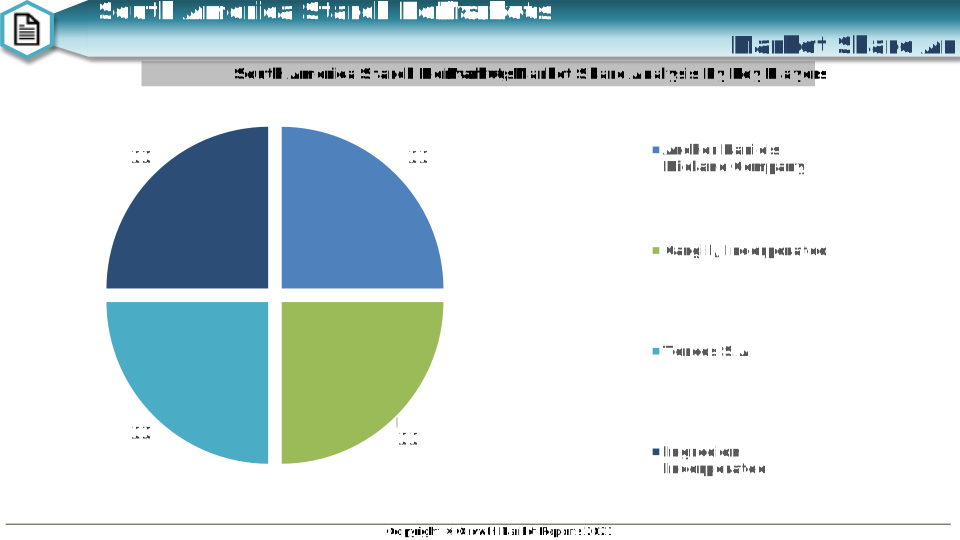
Key players competing in the South America starch derivatives market include Archer Daniels Midland Company, Cargill, Incorporated, Tereos S.A, and Ingredion Incorporated.
Challenges include fluctuating raw material prices, supply chain disruptions, stringent regulatory requirements, and health concerns related to high sugar intake.
Major companies include Cargill, ADM, Ingredion, Tate & Lyle, Roquette Frères, Avebe, AGRANA, and Tereos Group, among others.
Key trends include rising demand for convenience and processed foods, clean label and natural ingredients, gluten-free and allergen-free products, and sustainable, biodegradable materials.
In pharmaceuticals, starch derivatives are used as excipients, drug carriers, and disintegrants. In cosmetics, they serve as emulsifiers, thickeners, and moisture-retention agents in skincare and personal care products.
Corn is the dominant source, followed by wheat, potato, cassava, and others such as rice and tapioca, with corn accounting for over 60% of the market share in 2024.
Asia Pacific dominates the market, followed by North America and Europe. Latin America and the Middle East & Africa are emerging as high-potential markets.
Maltodextrin is popular due to its thickening, bulking, and stabilizing properties, rapid solubility, neutral taste, and use as a sugar substitute in low-calorie and sugar-free products.
Major types include maltodextrin, cyclodextrin, glucose syrup, hydrolysates, and modified starch, each offering unique functional properties for various applications.
Key industries driving demand include food and beverages, pharmaceuticals, cosmetics, paper manufacturing, adhesives, and animal feed.
The global starch derivatives market reached USD 62.7 billion in 2024 and is projected to grow at a CAGR of 6.8%, reaching approximately USD 115.3 billion by 2033.