Sports Drink Market Research Report 2033

Sports Drink Market Research Report 2033

Segments - by Product Type (Isotonic, Hypertonic, Hypotonic), by Packaging (Bottles, Cans, Pouches, Others), by Flavor (Citrus, Berry, Mixed Fruit, Others), by Distribution Channel (Supermarkets/Hypermarkets, Convenience Stores, Online Retail, Specialty Stores, Others), by End-User (Athletes, Fitness Enthusiasts, General Consumers)

https://growthmarketreports.com/Anuradha
Author : Anuradha B. More
https://growthmarketreports.com/Vaibhav
Fact-checked by : Vaibhav Chandola
https://growthmarketreports.com/Shruti
Editor : Shruti Bhat

Upcoming | Report ID :FB-2933 | 4.0 Rating | 63 Reviews | 253 Pages | Format : Docx PDF

Report Description


Sports Drink Market Outlook

According to our latest research, the global sports drink market size reached USD 31.8 billion in 2024, demonstrating robust momentum driven by evolving consumer lifestyles and increasing health awareness. The market is expected to register a CAGR of 5.7% during the forecast period, culminating in a projected value of USD 52.7 billion by 2033. This growth is primarily attributed to rising participation in sports and fitness activities, coupled with a surge in demand for functional beverages that offer hydration and energy replenishment. As per the latest research, shifting consumer preferences toward healthier beverage options and the proliferation of organized sports events worldwide are further catalyzing the expansion of the sports drink market.

One of the key growth drivers for the sports drink market is the increasing global awareness regarding health, wellness, and physical fitness. As sedentary lifestyles and work-related stress continue to impact public health, more individuals are engaging in physical activities such as running, cycling, gym workouts, and organized sports. This shift is particularly evident among urban populations, where access to fitness centers and sports clubs has become more widespread. Sports drinks, formulated to replenish electrolytes and provide instant energy, have become an essential part of post-exercise routines for both amateur and professional athletes. The rising trend of fitness challenges, marathons, and group exercise sessions is further fueling demand for these beverages, as consumers seek convenient solutions for hydration and energy restoration.

Another significant factor propelling the growth of the sports drink market is the continuous innovation in product formulations and flavors. Leading manufacturers are investing heavily in research and development to introduce sports drinks with reduced sugar content, natural ingredients, and added functional benefits, such as vitamins, minerals, and plant-based extracts. These innovations are designed to cater to the evolving preferences of health-conscious consumers who are increasingly wary of artificial additives and high sugar intake. Additionally, the expansion of product lines to include organic, vegan, and gluten-free options has broadened the consumer base, attracting not only athletes but also fitness enthusiasts and general consumers looking for healthier beverage alternatives.

The expansion of distribution channels, particularly the rise of e-commerce and online retail, has also played a pivotal role in boosting the sports drink market. Consumers now have greater access to a wide variety of sports drinks through online platforms, which offer convenience, product comparisons, and doorstep delivery. This trend is especially pronounced in emerging economies, where increasing internet penetration and smartphone adoption are driving online purchases. Supermarkets, hypermarkets, and specialty stores continue to be important distribution channels, but the rapid growth of online retail is expected to significantly enhance market reach and consumer engagement in the coming years.

In recent years, the market has also seen the introduction of Carbonated Sports Drink Powder, which offers a unique twist on traditional sports beverages. This innovative product combines the effervescence of carbonated drinks with the functional benefits of sports drinks, providing a refreshing and energizing experience for consumers. The carbonation process not only enhances the sensory appeal but also aids in faster absorption of electrolytes and nutrients, making it an attractive option for athletes and fitness enthusiasts. As consumers continue to seek out novel and convenient hydration solutions, carbonated sports drink powders are gaining traction, particularly among younger demographics who are drawn to their dynamic flavors and portability.

From a regional perspective, North America currently holds the largest share of the global sports drink market, driven by a high prevalence of sports culture, established fitness infrastructure, and strong consumer purchasing power. However, the Asia Pacific region is anticipated to witness the fastest growth over the forecast period, fueled by rising disposable incomes, growing urbanization, and increasing participation in sports and fitness activities. Europe also represents a significant market, supported by robust demand for functional beverages and a well-developed retail network. Meanwhile, Latin America and the Middle East & Africa are emerging as promising markets, with expanding youth populations and government initiatives to promote sports and healthy lifestyles.

Global Sports Drink Industry Outlook

Product Type Analysis

The sports drink market is segmented by product type into isotonic, hypertonic, and hypotonic drinks, each catering to specific hydration and energy needs. Isotonic sports drinks are the most popular segment, accounting for a significant market share due to their balanced concentration of electrolytes and carbohydrates, which closely match the bodyÂ’s natural fluid levels. These drinks are widely favored by athletes and fitness enthusiasts for their ability to quickly replace fluids lost through sweat and provide sustained energy during prolonged physical activity. The convenience and efficacy of isotonic drinks have led to their widespread availability across retail channels, making them the go-to choice for both professional and recreational users.

Team Sports Hydration Drinks are becoming increasingly popular as they cater specifically to the needs of athletes engaged in group sports activities. These drinks are formulated to provide optimal hydration and energy replenishment during team sports such as soccer, basketball, and rugby, where endurance and teamwork are crucial. The emphasis on team sports hydration drinks is on delivering balanced electrolytes and carbohydrates to support sustained performance and recovery. As organized sports events and leagues continue to grow globally, the demand for specialized hydration solutions that cater to the unique requirements of team sports is expected to rise, offering significant growth opportunities for manufacturers.

Hypertonic sports drinks, characterized by higher concentrations of carbohydrates compared to body fluids, are primarily consumed for rapid energy replenishment after intense exercise or endurance events. While they are less commonly used during exercise due to their slower absorption rates, hypertonic drinks play a crucial role in post-workout recovery, particularly among athletes engaged in high-intensity training. Manufacturers are focusing on developing hypertonic formulations with added protein, amino acids, and micronutrients to enhance muscle recovery and reduce fatigue, thereby expanding their appeal among serious athletes and sports professionals.

Hypotonic sports drinks contain lower concentrations of electrolytes and carbohydrates, making them ideal for quick hydration without excessive calorie intake. These drinks are gaining popularity among general consumers, casual exercisers, and those participating in low-intensity activities where rapid fluid absorption is prioritized over energy replenishment. The growing trend toward calorie-conscious consumption has spurred demand for hypotonic variants, with manufacturers introducing sugar-free and low-calorie options to cater to health-focused demographics. This segment is expected to witness steady growth as more consumers seek hydration solutions that align with their dietary preferences and fitness goals.

The emergence of CBD Sports Drinks marks a new frontier in the sports drink market, blending the benefits of cannabidiol (CBD) with traditional hydration and recovery solutions. These drinks are designed to offer not only hydration and energy replenishment but also the potential therapeutic effects of CBD, such as reduced inflammation and improved recovery times. As consumers become more aware of the potential health benefits of CBD, its incorporation into sports drinks is gaining popularity among athletes and fitness enthusiasts seeking natural alternatives for recovery and wellness. The trend towards holistic health and wellness is driving the exploration of CBD-infused sports drinks, positioning them as a promising segment within the broader market.

Overall, the product type segmentation reflects the diverse needs of the sports drink marketÂ’s end-users, from professional athletes requiring targeted energy and recovery solutions to everyday consumers seeking hydration and wellness benefits. The ongoing innovation in product formulations, such as the incorporation of natural flavors, plant-based ingredients, and functional additives, is expected to further diversify the product landscape and drive market growth across all segments.

Report Scope

Attributes Details
Report Title Sports Drink Market Research Report 2033
By Product Type Isotonic, Hypertonic, Hypotonic
By Packaging Bottles, Cans, Pouches, Others
By Flavor Citrus, Berry, Mixed Fruit, Others
By Distribution Channel Supermarkets/Hypermarkets, Convenience Stores, Online Retail, Specialty Stores, Others
By End-User Athletes, Fitness Enthusiasts, General Consumers
Regions Covered North America, Europe, APAC, Latin America, MEA
Base Year 2024
Historic Data 2018-2023
Forecast Period 2025-2033
Number of Pages 253
Number of Tables & Figures 270
Customization Available Yes, the report can be customized as per your need.

Packaging Analysis

Packaging plays a critical role in the sports drink market, influencing consumer convenience, brand differentiation, and product shelf life. Bottles remain the dominant packaging format, accounting for the largest share of the market due to their portability, ease of use, and widespread availability. Bottled sports drinks are favored by consumers for on-the-go consumption, particularly during workouts, sports events, and outdoor activities. Manufacturers are continuously innovating with bottle designs, incorporating ergonomic shapes, spill-proof caps, and eco-friendly materials to enhance user experience and address environmental concerns.

Cans represent another significant packaging segment, offering advantages such as durability, recyclability, and extended shelf life. Canned sports drinks are particularly popular in regions with hot climates and among consumers seeking convenient, single-serve options. The lightweight and stackable nature of cans makes them ideal for vending machines, convenience stores, and large-scale sporting events. In response to growing environmental awareness, many brands are transitioning to aluminum cans and promoting recycling initiatives to reduce their carbon footprint and appeal to eco-conscious consumers.

Pouches are emerging as an innovative and sustainable packaging solution in the sports drink market, especially among younger consumers and outdoor enthusiasts. Pouches offer flexibility, reduced packaging waste, and lower transportation costs compared to traditional bottles and cans. Their compact size and resealable features make them ideal for on-the-go hydration, travel, and outdoor activities such as hiking and cycling. The increasing focus on sustainability and convenience is expected to drive the adoption of pouch packaging, with manufacturers investing in biodegradable and recyclable materials to enhance their environmental credentials.

Other packaging formats, including cartons and tetra packs, are also gaining traction, particularly in markets where consumers prioritize sustainability and product freshness. These formats offer advantages such as reduced light exposure, extended shelf life, and easy storage, making them suitable for bulk purchases and family consumption. The diversification of packaging options reflects the sports drink marketÂ’s commitment to meeting evolving consumer preferences and regulatory requirements while ensuring product safety, quality, and environmental responsibility.

Flavor Analysis

Flavor innovation is a key driver of consumer engagement and brand loyalty in the sports drink market. Citrus flavors, including lemon, lime, and orange, continue to dominate the market due to their refreshing taste and widespread appeal among both athletes and general consumers. The natural association of citrus flavors with energy and hydration makes them a popular choice for post-exercise recovery and everyday consumption. Leading brands are leveraging advanced flavor technology to enhance the authenticity and intensity of citrus profiles, catering to evolving consumer palates.

Berry flavors, such as strawberry, blueberry, and raspberry, have witnessed significant growth in recent years, driven by their perceived health benefits and unique taste profiles. Berry-flavored sports drinks are particularly popular among younger consumers and those seeking variety beyond traditional citrus options. The antioxidant properties of berries and their association with natural wellness have further boosted their appeal, prompting manufacturers to introduce new berry blends and limited-edition flavors to capture consumer interest and drive repeat purchases.

Mixed fruit flavors represent a dynamic and rapidly expanding segment within the sports drink market. These blends combine multiple fruit profiles to create innovative and exotic taste experiences that cater to adventurous consumers and flavor seekers. Mixed fruit sports drinks are often positioned as premium offerings, featuring tropical, exotic, or seasonal fruit combinations that differentiate them from standard flavors. The versatility of mixed fruit formulations allows brands to experiment with new ingredients, natural sweeteners, and functional additives, enhancing both taste and nutritional value.

Other flavors, including tropical, herbal, and unique regional variants, are gaining popularity as consumers seek novel and personalized beverage experiences. The growing demand for natural and clean-label ingredients has prompted manufacturers to reduce artificial flavorings and incorporate real fruit extracts, botanicals, and superfoods into their formulations. This trend toward flavor diversity and authenticity is expected to continue, with brands focusing on limited-edition releases, co-branded collaborations, and regional innovations to capture consumer attention and drive market growth.

Distribution Channel Analysis

The distribution landscape of the sports drink market is characterized by a diverse mix of retail and digital channels, each playing a strategic role in market penetration and consumer accessibility. Supermarkets and hypermarkets remain the leading distribution channels, accounting for a significant share of sales due to their extensive product assortments, promotional activities, and convenient locations. These large-format stores offer consumers the opportunity to compare brands, flavors, and packaging options, driving impulse purchases and brand switching. Promotional strategies such as discounts, in-store sampling, and sports event tie-ins further enhance the visibility and sales of sports drinks in these channels.

Convenience stores are another critical distribution channel, particularly for on-the-go consumption and impulse purchases. The proximity of convenience stores to gyms, sports complexes, and urban centers makes them a preferred choice for athletes, fitness enthusiasts, and commuters seeking quick hydration solutions. The ability to stock single-serve bottles, cans, and pouches enables convenience stores to cater to immediate consumption needs, driving foot traffic and repeat purchases. Manufacturers often collaborate with convenience store chains to launch exclusive flavors, promotional packs, and limited-time offers, further boosting sales in this segment.

Online retail has emerged as a rapidly growing channel in the sports drink market, fueled by increasing internet penetration, smartphone adoption, and changing consumer shopping habits. E-commerce platforms offer consumers access to a wide range of sports drink brands, flavors, and packaging formats, along with the convenience of home delivery and subscription services. Online retail also enables brands to engage directly with consumers, gather feedback, and launch targeted marketing campaigns. The COVID-19 pandemic accelerated the shift toward online purchases, and this trend is expected to continue, with brands investing in digital marketing, influencer partnerships, and direct-to-consumer models to capture market share.

Specialty stores, including health food outlets, sports nutrition shops, and gym vending machines, cater to niche consumer segments seeking premium, organic, or functional sports drinks. These channels offer personalized recommendations, expert advice, and exclusive product lines, enhancing the consumer experience and brand loyalty. Other distribution channels, such as vending machines and foodservice outlets, also contribute to market growth by providing convenient access to sports drinks in high-traffic locations such as stadiums, airports, and recreational centers.

End-User Analysis

The sports drink market caters to a diverse range of end-users, each with unique needs, preferences, and consumption patterns. Athletes constitute a core segment, driving demand for high-performance sports drinks designed to optimize hydration, energy replenishment, and recovery. Professional and amateur athletes rely on scientifically formulated beverages that deliver precise electrolyte and carbohydrate profiles, enabling them to maintain peak performance during training and competition. Sports organizations, teams, and coaches often collaborate with leading brands to provide athletes with customized hydration solutions, further reinforcing the importance of this segment in shaping product innovation and market trends.

Fitness enthusiasts represent a rapidly growing end-user segment, encompassing individuals engaged in regular exercise, gym workouts, fitness classes, and recreational sports. This demographic values convenience, taste, and functional benefits, seeking sports drinks that support hydration, muscle recovery, and overall wellness. The rise of fitness culture, social media influence, and wearable technology has heightened awareness of the importance of proper hydration and nutrition, driving demand for sports drinks with added vitamins, minerals, and natural ingredients. Brands are responding by targeting fitness enthusiasts with tailored marketing campaigns, influencer partnerships, and product innovations that align with their active lifestyles and health goals.

General consumers are increasingly incorporating sports drinks into their daily routines, viewing them as convenient and flavorful alternatives to traditional soft drinks, juices, and water. This segment includes individuals seeking hydration during work, travel, or leisure activities, as well as parents purchasing sports drinks for childrenÂ’s extracurricular activities and outdoor play. The appeal of sports drinks as a lifestyle beverage has expanded the market beyond its traditional athletic base, with brands introducing low-calorie, sugar-free, and functional variants to cater to a broader audience. The growing emphasis on health and wellness, coupled with the desire for convenient hydration solutions, is expected to drive continued growth in the general consumer segment.

The segmentation by end-user highlights the sports drink marketÂ’s ability to adapt to changing consumer needs and preferences, offering a wide range of products that cater to athletes, fitness enthusiasts, and everyday consumers alike. The ongoing expansion of product portfolios, targeted marketing strategies, and partnerships with sports organizations are expected to further strengthen the marketÂ’s appeal across all end-user segments.

Opportunities & Threats

The sports drink market presents a wealth of opportunities for manufacturers, retailers, and investors alike. One of the most promising avenues for growth is the development of functional and fortified sports drinks that offer additional health benefits beyond hydration and energy replenishment. Products enriched with vitamins, minerals, antioxidants, and plant-based extracts are gaining traction among health-conscious consumers seeking comprehensive wellness solutions. The integration of cutting-edge technologies, such as personalized nutrition and smart packaging, also holds significant potential to enhance consumer engagement and differentiate brands in a competitive market. Furthermore, the expansion into emerging markets, particularly in Asia Pacific, Latin America, and the Middle East, offers opportunities to tap into large, underserved populations with rising disposable incomes and growing interest in sports and fitness.

Sustainability and environmental responsibility are emerging as key opportunities for the sports drink market, as consumers increasingly prioritize eco-friendly packaging and ethical sourcing practices. Brands that invest in recyclable, biodegradable, or reusable packaging materials, as well as transparent supply chains, are likely to gain a competitive edge and foster long-term customer loyalty. The adoption of digital marketing, influencer collaborations, and direct-to-consumer sales channels also presents opportunities to reach new audiences, gather valuable consumer insights, and drive brand advocacy. Additionally, the growing trend of premiumization, with consumers willing to pay a premium for high-quality, organic, or specialty sports drinks, offers avenues for margin expansion and product differentiation.

Despite the numerous opportunities, the sports drink market faces several restraining factors that could hinder growth. One of the primary challenges is the increasing scrutiny of sugar content, artificial additives, and calorie levels in sports drinks, particularly among health-conscious consumers and regulatory authorities. Negative publicity and regulatory restrictions related to sugar-sweetened beverages could impact consumer perception and demand, prompting brands to reformulate products and invest in healthier alternatives. Intense competition from alternative beverages, such as flavored water, coconut water, and energy drinks, also poses a threat, as consumers seek a wider range of hydration and wellness options. Economic uncertainties, supply chain disruptions, and fluctuating raw material costs further add to the complexity of the market landscape.

Regional Outlook

From a regional perspective, North America remains the largest and most mature market for sports drinks, accounting for approximately USD 12.4 billion in 2024. The regionÂ’s dominance is underpinned by a strong sports culture, high consumer awareness, and well-established distribution networks. The United States, in particular, leads the market with a high penetration of sports drinks among athletes, fitness enthusiasts, and general consumers. Ongoing product innovation, celebrity endorsements, and partnerships with sports leagues and events continue to drive brand visibility and consumer engagement in North America. The market is expected to maintain steady growth, supported by rising health consciousness and the adoption of new flavors and functional formulations.

Asia Pacific is emerging as the fastest-growing region in the sports drink market, with a projected CAGR of 7.2% during 2025-2033. The regionÂ’s market size reached USD 7.6 billion in 2024, driven by rapid urbanization, rising disposable incomes, and increasing participation in sports and fitness activities. Countries such as China, India, Japan, and South Korea are witnessing a surge in demand for sports drinks, fueled by expanding youth populations, government initiatives to promote physical activity, and growing awareness of the importance of hydration and nutrition. The proliferation of modern retail formats, e-commerce platforms, and international brand presence is further accelerating market growth in Asia Pacific.

Europe represents a significant market for sports drinks, with a market size of USD 6.1 billion in 2024. The regionÂ’s growth is supported by robust demand for functional beverages, a well-developed retail infrastructure, and increasing health and wellness trends. Countries such as the United Kingdom, Germany, and France are leading contributors, with consumers seeking premium, organic, and low-sugar sports drink options. The market is characterized by intense competition, innovation in flavors and packaging, and a growing emphasis on sustainability and ethical sourcing. Meanwhile, Latin America and the Middle East & Africa are emerging as promising markets, with combined market sizes of USD 5.7 billion in 2024, driven by expanding youth populations, sports events, and rising health awareness.

Sports Drink Market Statistics

Competitor Outlook

The global sports drink market is characterized by intense competition, with a mix of multinational corporations, regional players, and emerging startups vying for market share. Leading companies are leveraging their extensive distribution networks, brand equity, and marketing prowess to maintain dominance and drive innovation. The competitive landscape is marked by frequent product launches, strategic partnerships, mergers and acquisitions, and aggressive promotional campaigns aimed at capturing consumer attention and fostering brand loyalty. As consumer preferences evolve, companies are increasingly focusing on product differentiation, sustainability, and digital engagement to stay ahead in the market.

Innovation remains a key competitive strategy, with major players investing heavily in research and development to introduce new flavors, functional ingredients, and packaging solutions. The shift toward natural, organic, and low-sugar formulations is particularly pronounced, as health-conscious consumers demand cleaner labels and transparency in ingredient sourcing. Companies are also exploring opportunities in premium and specialty sports drinks, targeting niche segments such as vegan, gluten-free, and plant-based beverages. Digital transformation is reshaping the competitive landscape, with brands leveraging e-commerce, social media, and influencer marketing to reach younger, tech-savvy consumers and build direct relationships with their target audience.

The competitive environment is further intensified by the entry of non-traditional players, such as beverage startups, health and wellness brands, and private label offerings from major retailers. These new entrants are challenging established brands by offering innovative products, competitive pricing, and unique value propositions. The ability to adapt quickly to changing market trends, consumer preferences, and regulatory requirements is critical for sustained success in the sports drink market. Strategic collaborations with sports organizations, fitness influencers, and health professionals are also becoming increasingly important for brand differentiation and market penetration.

Some of the major companies operating in the sports drink market include The Coca-Cola Company (Powerade), PepsiCo (Gatorade), BA Sports Nutrition (BodyArmor), Monster Beverage Corporation, Abbott Laboratories (Ensure), Britvic PLC, and Otsuka Pharmaceutical Co., Ltd. (Pocari Sweat). The Coca-Cola Company and PepsiCo dominate the market with their iconic brands, extensive distribution networks, and ongoing innovation in flavors and formulations. BA Sports Nutrition has gained significant traction with its BodyArmor brand, focusing on natural ingredients and athlete endorsements. Monster Beverage Corporation is expanding its presence through product diversification and strategic partnerships, while Abbott Laboratories targets the functional nutrition segment with its Ensure line. Britvic and Otsuka Pharmaceutical are notable players in Europe and Asia, respectively, leveraging regional expertise and brand loyalty to capture market share.

These companies are continuously investing in marketing, sponsorships, and product development to strengthen their market position and respond to evolving consumer needs. The competitive landscape is expected to remain dynamic, with ongoing consolidation, new product launches, and the emergence of innovative startups shaping the future of the sports drink market. As the market continues to evolve, companies that prioritize consumer-centric innovation, sustainability, and digital engagement will be best positioned to capitalize on growth opportunities and drive long-term success.

Key Players

  • PepsiCo (Gatorade)
  • The Coca-Cola Company (Powerade)
  • BA Sports Nutrition (BODYARMOR)
  • Monster Beverage Corporation (Reign Total Body Fuel)
  • Red Bull GmbH
  • Britvic plc (Lucozade Sport)
  • AJE Group (Sporade)
  • Otsuka Pharmaceutical Co., Ltd. (Pocari Sweat)
  • Danone S.A. (Mizone)
  • Nestlé S.A.
  • Suntory Beverage & Food Ltd. (Aquarius)
  • Abbott Laboratories (Pedialyte Sport)
  • Dr Pepper Snapple Group (All Sport)
  • Coca-Cola Amatil (Pump)
  • BioSteel Sports Nutrition Inc.
  • The Kraft Heinz Company (Sqwincher)
  • Frucor Suntory (Maximus)
  • Oshee Polska Sp. z o.o.
  • Nongfu Spring Co., Ltd.
  • GlaxoSmithKline plc (Ribena, Lucozade)
Sports Drink Market Overview

Segments

The Sports Drink market has been segmented on the basis of

Product Type

  • Isotonic
  • Hypertonic
  • Hypotonic

Packaging

  • Bottles
  • Cans
  • Pouches
  • Others

Flavor

  • Citrus
  • Berry
  • Mixed Fruit
  • Others

Distribution Channel

  • Supermarkets/Hypermarkets
  • Convenience Stores
  • Online Retail
  • Specialty Stores
  • Others

End-User

  • Athletes
  • Fitness Enthusiasts
  • General Consumers

Competitive Landscape

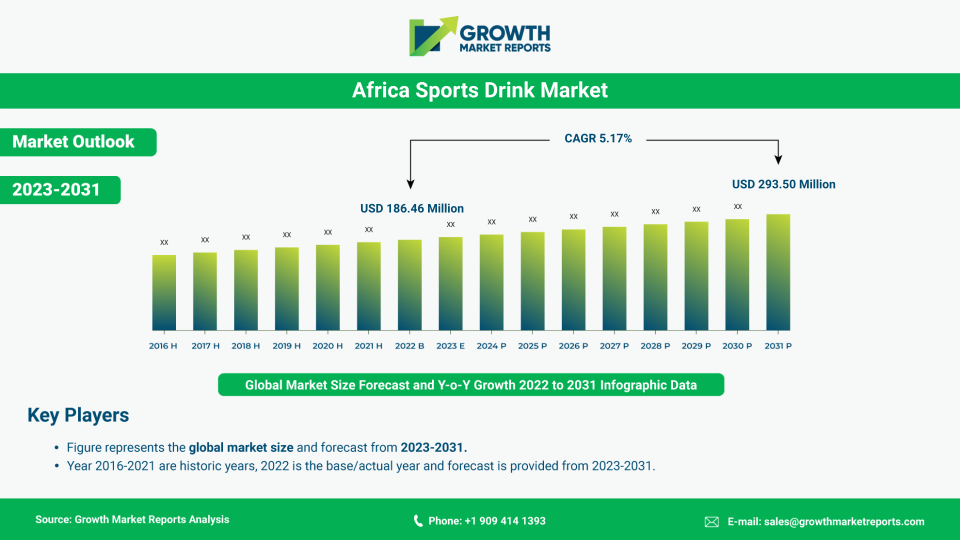
Key players competing in the Africa sports drink market include PepsiCo Inc.; Energade; Coca-Cola Company; and Abbott.

Some of these players are targeting on business strategies such as mergers, acquisitions, partnerships, collaborations, capacity expansion, and product launches to increase their market shares. For instance

  • In October 2021, PepsiCo Inc. unveils new limited edition Pepsi x Cracker Jack flavored cola to celebrate baseball.
  • In September 2021, PepsiCo introduced Pepsi cola soda in two different flavors cream soda and black cherry with a new music video featuring Doja Cats.
  • In May 2021, PepsiCo Inc. launched product known as soul boost a sparkling water beverage with functional ingredients with a splash of real juice.
  • In January 2020, The Coca-Cola Company launched the first coke brand energy drink in the United States.

 Africa Sports Drink Market Key Players


Frequently Asked Questions

Major companies include PepsiCo (Gatorade), The Coca-Cola Company (Powerade), BA Sports Nutrition (BODYARMOR), Monster Beverage Corporation, Red Bull GmbH, Britvic plc, Otsuka Pharmaceutical, Danone S.A., and others.

Opportunities include functional and fortified drinks, premiumization, sustainability, and digital marketing. Threats involve scrutiny over sugar content, competition from alternative beverages, and regulatory challenges.

North America is the largest market, while Asia Pacific is the fastest-growing region. Europe, Latin America, and the Middle East & Africa are also significant and emerging markets, respectively.

The primary end-users are athletes, fitness enthusiasts, and general consumers. Each group has unique needs, from performance and recovery to convenient hydration and lifestyle consumption.

Sports drinks are distributed through supermarkets/hypermarkets, convenience stores, online retail, specialty stores, and vending machines, with online retail experiencing rapid growth due to changing shopping habits.

Citrus flavors (lemon, lime, orange) dominate the market, with growing demand for berry, mixed fruit, and exotic flavors as consumers seek variety and health benefits.

Bottles are the most popular packaging format, followed by cans and pouches. Eco-friendly and innovative packaging solutions like biodegradable pouches and aluminum cans are gaining traction due to sustainability concerns.

Isotonic sports drinks hold the largest market share due to their balanced electrolyte and carbohydrate content, followed by hypertonic and hypotonic drinks catering to specific hydration and energy needs.

Key growth drivers include increasing health awareness, rising participation in sports and fitness activities, demand for functional beverages, product innovation, and expansion of distribution channels such as e-commerce.

As of 2024, the global sports drink market reached USD 31.8 billion and is projected to grow to USD 52.7 billion by 2033 at a CAGR of 5.7%.

Table Of Content

Chapter 1 Executive Summary
Chapter 2 Assumptions and Acronyms Used
Chapter 3 Research Methodology
Chapter 4 Sports Drink Market Overview
   4.1 Introduction
      4.1.1 Market Taxonomy
      4.1.2 Market Definition
      4.1.3 Macro-Economic Factors Impacting the Market Growth
   4.2 Sports Drink Market Dynamics
      4.2.1 Market Drivers
      4.2.2 Market Restraints
      4.2.3 Market Opportunity
   4.3 Sports Drink Market - Supply Chain Analysis
      4.3.1 List of Key Suppliers
      4.3.2 List of Key Distributors
      4.3.3 List of Key Consumers
   4.4 Key Forces Shaping the Sports Drink Market
      4.4.1 Bargaining Power of Suppliers
      4.4.2 Bargaining Power of Buyers
      4.4.3 Threat of Substitution
      4.4.4 Threat of New Entrants
      4.4.5 Competitive Rivalry
   4.5 Global Sports Drink Market Size & Forecast, 2023-2032
      4.5.1 Sports Drink Market Size and Y-o-Y Growth
      4.5.2 Sports Drink Market Absolute $ Opportunity

Chapter 5 Global Sports Drink Market Analysis and Forecast By Product Type
   5.1 Introduction
      5.1.1 Key Market Trends & Growth Opportunities By Product Type
      5.1.2 Basis Point Share (BPS) Analysis By Product Type
      5.1.3 Absolute $ Opportunity Assessment By Product Type
   5.2 Sports Drink Market Size Forecast By Product Type
      5.2.1 Isotonic
      5.2.2 Hypertonic
      5.2.3 Hypotonic
   5.3 Market Attractiveness Analysis By Product Type

Chapter 6 Global Sports Drink Market Analysis and Forecast By Packaging
   6.1 Introduction
      6.1.1 Key Market Trends & Growth Opportunities By Packaging
      6.1.2 Basis Point Share (BPS) Analysis By Packaging
      6.1.3 Absolute $ Opportunity Assessment By Packaging
   6.2 Sports Drink Market Size Forecast By Packaging
      6.2.1 Bottles
      6.2.2 Cans
      6.2.3 Pouches
      6.2.4 Others
   6.3 Market Attractiveness Analysis By Packaging

Chapter 7 Global Sports Drink Market Analysis and Forecast By Flavor
   7.1 Introduction
      7.1.1 Key Market Trends & Growth Opportunities By Flavor
      7.1.2 Basis Point Share (BPS) Analysis By Flavor
      7.1.3 Absolute $ Opportunity Assessment By Flavor
   7.2 Sports Drink Market Size Forecast By Flavor
      7.2.1 Citrus
      7.2.2 Berry
      7.2.3 Mixed Fruit
      7.2.4 Others
   7.3 Market Attractiveness Analysis By Flavor

Chapter 8 Global Sports Drink Market Analysis and Forecast By Distribution Channel
   8.1 Introduction
      8.1.1 Key Market Trends & Growth Opportunities By Distribution Channel
      8.1.2 Basis Point Share (BPS) Analysis By Distribution Channel
      8.1.3 Absolute $ Opportunity Assessment By Distribution Channel
   8.2 Sports Drink Market Size Forecast By Distribution Channel
      8.2.1 Supermarkets/Hypermarkets
      8.2.2 Convenience Stores
      8.2.3 Online Retail
      8.2.4 Specialty Stores
      8.2.5 Others
   8.3 Market Attractiveness Analysis By Distribution Channel

Chapter 9 Global Sports Drink Market Analysis and Forecast By End-User
   9.1 Introduction
      9.1.1 Key Market Trends & Growth Opportunities By End-User
      9.1.2 Basis Point Share (BPS) Analysis By End-User
      9.1.3 Absolute $ Opportunity Assessment By End-User
   9.2 Sports Drink Market Size Forecast By End-User
      9.2.1 Athletes
      9.2.2 Fitness Enthusiasts
      9.2.3 General Consumers
   9.3 Market Attractiveness Analysis By End-User

Chapter 10 Global Sports Drink Market Analysis and Forecast by Region
   10.1 Introduction
      10.1.1 Key Market Trends & Growth Opportunities By Region
      10.1.2 Basis Point Share (BPS) Analysis By Region
      10.1.3 Absolute $ Opportunity Assessment By Region
   10.2 Sports Drink Market Size Forecast By Region
      10.2.1 North America
      10.2.2 Europe
      10.2.3 Asia Pacific
      10.2.4 Latin America
      10.2.5 Middle East & Africa (MEA)
   10.3 Market Attractiveness Analysis By Region

Chapter 11 Coronavirus Disease (COVID-19) Impact 
   11.1 Introduction 
   11.2 Current & Future Impact Analysis 
   11.3 Economic Impact Analysis 
   11.4 Government Policies 
   11.5 Investment Scenario

Chapter 12 North America Sports Drink Analysis and Forecast
   12.1 Introduction
   12.2 North America Sports Drink Market Size Forecast by Country
      12.2.1 U.S.
      12.2.2 Canada
   12.3 Basis Point Share (BPS) Analysis by Country
   12.4 Absolute $ Opportunity Assessment by Country
   12.5 Market Attractiveness Analysis by Country
   12.6 North America Sports Drink Market Size Forecast By Product Type
      12.6.1 Isotonic
      12.6.2 Hypertonic
      12.6.3 Hypotonic
   12.7 Basis Point Share (BPS) Analysis By Product Type 
   12.8 Absolute $ Opportunity Assessment By Product Type 
   12.9 Market Attractiveness Analysis By Product Type
   12.10 North America Sports Drink Market Size Forecast By Packaging
      12.10.1 Bottles
      12.10.2 Cans
      12.10.3 Pouches
      12.10.4 Others
   12.11 Basis Point Share (BPS) Analysis By Packaging 
   12.12 Absolute $ Opportunity Assessment By Packaging 
   12.13 Market Attractiveness Analysis By Packaging
   12.14 North America Sports Drink Market Size Forecast By Flavor
      12.14.1 Citrus
      12.14.2 Berry
      12.14.3 Mixed Fruit
      12.14.4 Others
   12.15 Basis Point Share (BPS) Analysis By Flavor 
   12.16 Absolute $ Opportunity Assessment By Flavor 
   12.17 Market Attractiveness Analysis By Flavor
   12.18 North America Sports Drink Market Size Forecast By Distribution Channel
      12.18.1 Supermarkets/Hypermarkets
      12.18.2 Convenience Stores
      12.18.3 Online Retail
      12.18.4 Specialty Stores
      12.18.5 Others
   12.19 Basis Point Share (BPS) Analysis By Distribution Channel 
   12.20 Absolute $ Opportunity Assessment By Distribution Channel 
   12.21 Market Attractiveness Analysis By Distribution Channel
   12.22 North America Sports Drink Market Size Forecast By End-User
      12.22.1 Athletes
      12.22.2 Fitness Enthusiasts
      12.22.3 General Consumers
   12.23 Basis Point Share (BPS) Analysis By End-User 
   12.24 Absolute $ Opportunity Assessment By End-User 
   12.25 Market Attractiveness Analysis By End-User

Chapter 13 Europe Sports Drink Analysis and Forecast
   13.1 Introduction
   13.2 Europe Sports Drink Market Size Forecast by Country
      13.2.1 Germany
      13.2.2 France
      13.2.3 Italy
      13.2.4 U.K.
      13.2.5 Spain
      13.2.6 Russia
      13.2.7 Rest of Europe
   13.3 Basis Point Share (BPS) Analysis by Country
   13.4 Absolute $ Opportunity Assessment by Country
   13.5 Market Attractiveness Analysis by Country
   13.6 Europe Sports Drink Market Size Forecast By Product Type
      13.6.1 Isotonic
      13.6.2 Hypertonic
      13.6.3 Hypotonic
   13.7 Basis Point Share (BPS) Analysis By Product Type 
   13.8 Absolute $ Opportunity Assessment By Product Type 
   13.9 Market Attractiveness Analysis By Product Type
   13.10 Europe Sports Drink Market Size Forecast By Packaging
      13.10.1 Bottles
      13.10.2 Cans
      13.10.3 Pouches
      13.10.4 Others
   13.11 Basis Point Share (BPS) Analysis By Packaging 
   13.12 Absolute $ Opportunity Assessment By Packaging 
   13.13 Market Attractiveness Analysis By Packaging
   13.14 Europe Sports Drink Market Size Forecast By Flavor
      13.14.1 Citrus
      13.14.2 Berry
      13.14.3 Mixed Fruit
      13.14.4 Others
   13.15 Basis Point Share (BPS) Analysis By Flavor 
   13.16 Absolute $ Opportunity Assessment By Flavor 
   13.17 Market Attractiveness Analysis By Flavor
   13.18 Europe Sports Drink Market Size Forecast By Distribution Channel
      13.18.1 Supermarkets/Hypermarkets
      13.18.2 Convenience Stores
      13.18.3 Online Retail
      13.18.4 Specialty Stores
      13.18.5 Others
   13.19 Basis Point Share (BPS) Analysis By Distribution Channel 
   13.20 Absolute $ Opportunity Assessment By Distribution Channel 
   13.21 Market Attractiveness Analysis By Distribution Channel
   13.22 Europe Sports Drink Market Size Forecast By End-User
      13.22.1 Athletes
      13.22.2 Fitness Enthusiasts
      13.22.3 General Consumers
   13.23 Basis Point Share (BPS) Analysis By End-User 
   13.24 Absolute $ Opportunity Assessment By End-User 
   13.25 Market Attractiveness Analysis By End-User

Chapter 14 Asia Pacific Sports Drink Analysis and Forecast
   14.1 Introduction
   14.2 Asia Pacific Sports Drink Market Size Forecast by Country
      14.2.1 China
      14.2.2 Japan
      14.2.3 South Korea
      14.2.4 India
      14.2.5 Australia
      14.2.6 South East Asia (SEA)
      14.2.7 Rest of Asia Pacific (APAC)
   14.3 Basis Point Share (BPS) Analysis by Country
   14.4 Absolute $ Opportunity Assessment by Country
   14.5 Market Attractiveness Analysis by Country
   14.6 Asia Pacific Sports Drink Market Size Forecast By Product Type
      14.6.1 Isotonic
      14.6.2 Hypertonic
      14.6.3 Hypotonic
   14.7 Basis Point Share (BPS) Analysis By Product Type 
   14.8 Absolute $ Opportunity Assessment By Product Type 
   14.9 Market Attractiveness Analysis By Product Type
   14.10 Asia Pacific Sports Drink Market Size Forecast By Packaging
      14.10.1 Bottles
      14.10.2 Cans
      14.10.3 Pouches
      14.10.4 Others
   14.11 Basis Point Share (BPS) Analysis By Packaging 
   14.12 Absolute $ Opportunity Assessment By Packaging 
   14.13 Market Attractiveness Analysis By Packaging
   14.14 Asia Pacific Sports Drink Market Size Forecast By Flavor
      14.14.1 Citrus
      14.14.2 Berry
      14.14.3 Mixed Fruit
      14.14.4 Others
   14.15 Basis Point Share (BPS) Analysis By Flavor 
   14.16 Absolute $ Opportunity Assessment By Flavor 
   14.17 Market Attractiveness Analysis By Flavor
   14.18 Asia Pacific Sports Drink Market Size Forecast By Distribution Channel
      14.18.1 Supermarkets/Hypermarkets
      14.18.2 Convenience Stores
      14.18.3 Online Retail
      14.18.4 Specialty Stores
      14.18.5 Others
   14.19 Basis Point Share (BPS) Analysis By Distribution Channel 
   14.20 Absolute $ Opportunity Assessment By Distribution Channel 
   14.21 Market Attractiveness Analysis By Distribution Channel
   14.22 Asia Pacific Sports Drink Market Size Forecast By End-User
      14.22.1 Athletes
      14.22.2 Fitness Enthusiasts
      14.22.3 General Consumers
   14.23 Basis Point Share (BPS) Analysis By End-User 
   14.24 Absolute $ Opportunity Assessment By End-User 
   14.25 Market Attractiveness Analysis By End-User

Chapter 15 Latin America Sports Drink Analysis and Forecast
   15.1 Introduction
   15.2 Latin America Sports Drink Market Size Forecast by Country
      15.2.1 Brazil
      15.2.2 Mexico
      15.2.3 Rest of Latin America (LATAM)
   15.3 Basis Point Share (BPS) Analysis by Country
   15.4 Absolute $ Opportunity Assessment by Country
   15.5 Market Attractiveness Analysis by Country
   15.6 Latin America Sports Drink Market Size Forecast By Product Type
      15.6.1 Isotonic
      15.6.2 Hypertonic
      15.6.3 Hypotonic
   15.7 Basis Point Share (BPS) Analysis By Product Type 
   15.8 Absolute $ Opportunity Assessment By Product Type 
   15.9 Market Attractiveness Analysis By Product Type
   15.10 Latin America Sports Drink Market Size Forecast By Packaging
      15.10.1 Bottles
      15.10.2 Cans
      15.10.3 Pouches
      15.10.4 Others
   15.11 Basis Point Share (BPS) Analysis By Packaging 
   15.12 Absolute $ Opportunity Assessment By Packaging 
   15.13 Market Attractiveness Analysis By Packaging
   15.14 Latin America Sports Drink Market Size Forecast By Flavor
      15.14.1 Citrus
      15.14.2 Berry
      15.14.3 Mixed Fruit
      15.14.4 Others
   15.15 Basis Point Share (BPS) Analysis By Flavor 
   15.16 Absolute $ Opportunity Assessment By Flavor 
   15.17 Market Attractiveness Analysis By Flavor
   15.18 Latin America Sports Drink Market Size Forecast By Distribution Channel
      15.18.1 Supermarkets/Hypermarkets
      15.18.2 Convenience Stores
      15.18.3 Online Retail
      15.18.4 Specialty Stores
      15.18.5 Others
   15.19 Basis Point Share (BPS) Analysis By Distribution Channel 
   15.20 Absolute $ Opportunity Assessment By Distribution Channel 
   15.21 Market Attractiveness Analysis By Distribution Channel
   15.22 Latin America Sports Drink Market Size Forecast By End-User
      15.22.1 Athletes
      15.22.2 Fitness Enthusiasts
      15.22.3 General Consumers
   15.23 Basis Point Share (BPS) Analysis By End-User 
   15.24 Absolute $ Opportunity Assessment By End-User 
   15.25 Market Attractiveness Analysis By End-User

Chapter 16 Middle East & Africa (MEA) Sports Drink Analysis and Forecast
   16.1 Introduction
   16.2 Middle East & Africa (MEA) Sports Drink Market Size Forecast by Country
      16.2.1 Saudi Arabia
      16.2.2 South Africa
      16.2.3 UAE
      16.2.4 Rest of Middle East & Africa (MEA)
   16.3 Basis Point Share (BPS) Analysis by Country
   16.4 Absolute $ Opportunity Assessment by Country
   16.5 Market Attractiveness Analysis by Country
   16.6 Middle East & Africa (MEA) Sports Drink Market Size Forecast By Product Type
      16.6.1 Isotonic
      16.6.2 Hypertonic
      16.6.3 Hypotonic
   16.7 Basis Point Share (BPS) Analysis By Product Type 
   16.8 Absolute $ Opportunity Assessment By Product Type 
   16.9 Market Attractiveness Analysis By Product Type
   16.10 Middle East & Africa (MEA) Sports Drink Market Size Forecast By Packaging
      16.10.1 Bottles
      16.10.2 Cans
      16.10.3 Pouches
      16.10.4 Others
   16.11 Basis Point Share (BPS) Analysis By Packaging 
   16.12 Absolute $ Opportunity Assessment By Packaging 
   16.13 Market Attractiveness Analysis By Packaging
   16.14 Middle East & Africa (MEA) Sports Drink Market Size Forecast By Flavor
      16.14.1 Citrus
      16.14.2 Berry
      16.14.3 Mixed Fruit
      16.14.4 Others
   16.15 Basis Point Share (BPS) Analysis By Flavor 
   16.16 Absolute $ Opportunity Assessment By Flavor 
   16.17 Market Attractiveness Analysis By Flavor
   16.18 Middle East & Africa (MEA) Sports Drink Market Size Forecast By Distribution Channel
      16.18.1 Supermarkets/Hypermarkets
      16.18.2 Convenience Stores
      16.18.3 Online Retail
      16.18.4 Specialty Stores
      16.18.5 Others
   16.19 Basis Point Share (BPS) Analysis By Distribution Channel 
   16.20 Absolute $ Opportunity Assessment By Distribution Channel 
   16.21 Market Attractiveness Analysis By Distribution Channel
   16.22 Middle East & Africa (MEA) Sports Drink Market Size Forecast By End-User
      16.22.1 Athletes
      16.22.2 Fitness Enthusiasts
      16.22.3 General Consumers
   16.23 Basis Point Share (BPS) Analysis By End-User 
   16.24 Absolute $ Opportunity Assessment By End-User 
   16.25 Market Attractiveness Analysis By End-User

Chapter 17 Competition Landscape 
   17.1 Sports Drink Market: Competitive Dashboard
   17.2 Global Sports Drink Market: Market Share Analysis, 2023
   17.3 Company Profiles (Details – Overview, Financials, Developments, Strategy) 
      17.3.1 PepsiCo (Gatorade)
The Coca-Cola Company (Powerade)
BA Sports Nutrition (BODYARMOR)
Monster Beverage Corporation (Reign Total Body Fuel)
Red Bull GmbH
Britvic plc (Lucozade Sport)
AJE Group (Sporade)
Otsuka Pharmaceutical Co., Ltd. (Pocari Sweat)
Danone S.A. (Mizone)
Nestlé S.A.
Suntory Beverage & Food Ltd. (Aquarius)
Abbott Laboratories (Pedialyte Sport)
Dr Pepper Snapple Group (All Sport)
Coca-Cola Amatil (Pump)
BioSteel Sports Nutrition Inc.
The Kraft Heinz Company (Sqwincher)
Frucor Suntory (Maximus)
Oshee Polska Sp. z o.o.
Nongfu Spring Co., Ltd.
GlaxoSmithKline plc (Ribena, Lucozade)

Methodology

Our Clients

Dassault Aviation
Deloitte
The John Holland Group
Siemens Healthcare
Honda Motor Co. Ltd.
FedEx Logistics
Nestle SA
General Electric