Speech Analytics Market Research Report 2033

Speech Analytics Market Research Report 2033

Segments - by Component (Software, Services), by Deployment Mode (On-Premises, Cloud), by Application (Customer Experience Management, Call Monitoring, Risk and Compliance Management, Sales and Marketing Management, Others), by Organization Size (Small and Medium Enterprises, Large Enterprises), by End-User (BFSI, Healthcare, Retail, IT and Telecommunications, Government, Media and Entertainment, Others)

https://growthmarketreports.com/Raksha
Author : Raksha Sharma
https://growthmarketreports.com/Vaibhav
Fact-checked by : V. Chandola
https://growthmarketreports.com/Shruti
Editor : Shruti Bhat

Upcoming | Report ID :ICT-SE-478 | 4.0 Rating | 98 Reviews | 260 Pages | Format : Docx PDF

Report Description


Speech Analytics Market Outlook

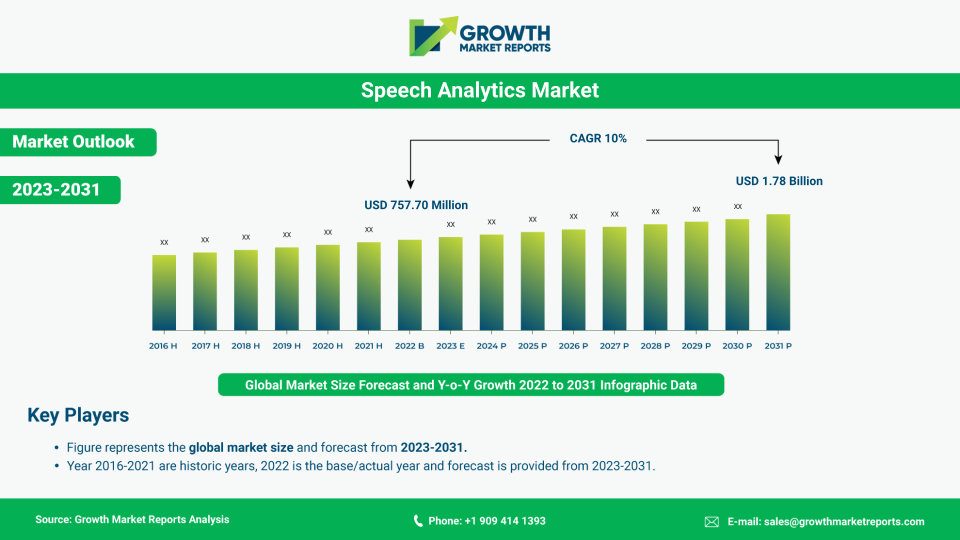
According to our latest research, the global Speech Analytics market size reached USD 3.45 billion in 2024, demonstrating robust momentum driven by advancements in artificial intelligence and the rising need for actionable customer insights. The market is projected to expand at a CAGR of 19.7% from 2025 to 2033, reaching a forecasted value of USD 14.63 billion by 2033. This impressive growth is fueled by the increasing adoption of speech analytics solutions across diverse industries such as BFSI, healthcare, retail, and telecommunications, where organizations are leveraging these technologies to enhance customer experience, ensure compliance, and drive operational efficiencies.

One of the primary growth factors propelling the Speech Analytics market is the escalating demand for improved customer experience management. Businesses across sectors are recognizing the value of real-time voice data analysis to better understand customer sentiment, preferences, and pain points. This capability enables organizations to tailor their services, resolve issues proactively, and foster stronger customer relationships. Additionally, the integration of advanced technologies such as machine learning, natural language processing, and big data analytics is amplifying the capabilities of speech analytics platforms, making them more accurate and scalable. As organizations increasingly shift towards digital and omnichannel engagement, the need to extract meaningful insights from customer interactions continues to drive the adoption of speech analytics solutions globally.

Another significant growth driver is the rising regulatory pressure and the need for risk and compliance management. In highly regulated industries such as banking, financial services, and insurance (BFSI), as well as healthcare, organizations must adhere to stringent compliance standards. Speech analytics tools help automate monitoring and auditing processes, ensuring that conversations comply with legal and regulatory requirements. This not only mitigates the risk of non-compliance and associated penalties but also enhances transparency and accountability. Furthermore, the ability to detect fraud, monitor agent performance, and identify potential risks in real-time is compelling organizations to invest heavily in speech analytics technologies, thereby accelerating market growth.

The expanding application of speech analytics in sales and marketing management is also a key contributor to market growth. By analyzing voice interactions, businesses can gain deeper insights into customer needs, market trends, and campaign effectiveness. This data-driven approach empowers sales and marketing teams to refine their strategies, improve lead conversion rates, and maximize return on investment. Additionally, the growing adoption of cloud-based deployment models is making speech analytics solutions more accessible to small and medium enterprises, further broadening the market’s addressable base. The scalability, flexibility, and cost-effectiveness offered by cloud solutions are particularly attractive to organizations seeking to enhance their analytical capabilities without incurring significant infrastructure investments.

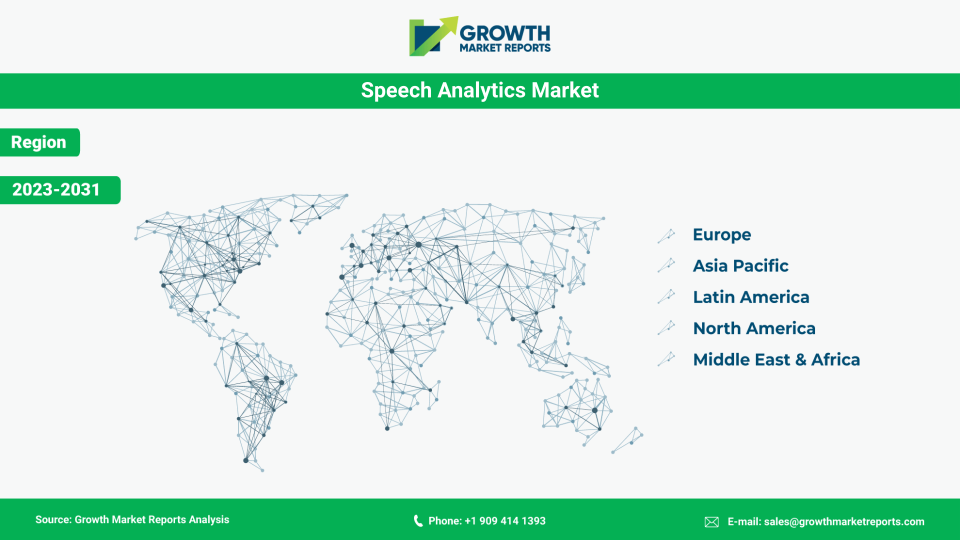
From a regional perspective, North America continues to dominate the Speech Analytics market, accounting for the largest revenue share in 2024. This leadership is attributed to the early adoption of advanced technologies, a mature contact center industry, and the presence of leading market players. However, the Asia Pacific region is expected to witness the fastest growth over the forecast period, driven by rapid digital transformation, increasing investments in customer engagement solutions, and the proliferation of cloud-based speech analytics platforms. Europe, Latin America, and the Middle East & Africa are also experiencing steady growth, fueled by rising awareness of the benefits of speech analytics and the expanding footprint of multinational companies in these regions.

Global Speech Analytics Industry Outlook

Component Analysis

The Speech Analytics market by component is segmented into software and services. The software segment currently holds the largest share, as organizations increasingly invest in sophisticated platforms capable of real-time voice analysis, sentiment detection, and automated transcription. Advanced software solutions leverage artificial intelligence and natural language processing to deliver actionable insights, enabling organizations to enhance customer experience, ensure compliance, and optimize operational efficiency. The continuous evolution of software capabilities, such as multilingual support, emotion detection, and integration with existing CRM and contact center systems, is further driving adoption across industries. As businesses prioritize data-driven decision-making, the demand for robust speech analytics software is expected to remain strong throughout the forecast period.

The services segment, comprising professional and managed services, is witnessing significant growth as organizations seek expert guidance for solution implementation, customization, and ongoing support. Professional services include consulting, training, and system integration, which are essential for ensuring seamless deployment and maximizing the value of speech analytics investments. Managed services, on the other hand, offer end-to-end management of speech analytics solutions, allowing organizations to focus on core business activities while outsourcing the complexities of system maintenance and updates. The increasing complexity of speech analytics technologies and the need for specialized expertise are prompting many enterprises to engage with service providers, thereby fueling the growth of the services segment.

A notable trend within the component segment is the convergence of software and services, with vendors offering integrated solutions that combine advanced analytics platforms with tailored consulting and support. This approach enables organizations to accelerate time-to-value, minimize implementation risks, and achieve better outcomes from their speech analytics initiatives. Furthermore, the rise of subscription-based pricing models and cloud-based delivery is making it easier for organizations to access and scale speech analytics solutions, particularly in resource-constrained environments. As the market matures, the focus is shifting towards delivering holistic, end-to-end solutions that address the unique needs of different industries and use cases.

The competitive landscape within the component segment is characterized by intense innovation and differentiation, as vendors strive to enhance their offerings with new features and capabilities. Leading players are investing heavily in research and development to stay ahead of the curve, while also expanding their service portfolios to cater to a broader range of customer requirements. Strategic partnerships, mergers, and acquisitions are common as companies seek to strengthen their market position and expand their global footprint. As a result, customers benefit from a wide array of options, ranging from standalone software products to comprehensive, fully managed speech analytics solutions.

Report Scope

Attributes Details
Report Title Speech Analytics Market Research Report 2033
By Component Software, Services
By Deployment Mode On-Premises, Cloud
By Application Customer Experience Management, Call Monitoring, Risk and Compliance Management, Sales and Marketing Management, Others
By Organization Size Small and Medium Enterprises, Large Enterprises
By End-User BFSI, Healthcare, Retail, IT and Telecommunications, Government, Media and Entertainment, Others
Regions Covered North America, Europe, APAC, Latin America, MEA
Base Year 2024
Historic Data 2018-2023
Forecast Period 2025-2033
Number of Pages 260
Number of Tables & Figures 268
Customization Available Yes, the report can be customized as per your need.

Deployment Mode Analysis

The Speech Analytics market is segmented by deployment mode into on-premises and cloud-based solutions. The on-premises segment has traditionally dominated the market, particularly among large enterprises and highly regulated industries that require complete control over data security, privacy, and system customization. On-premises deployment offers organizations the ability to tailor speech analytics solutions to their specific needs, integrate with existing IT infrastructure, and maintain compliance with internal and external regulations. However, the high upfront costs, ongoing maintenance requirements, and limited scalability associated with on-premises deployment are prompting many organizations to reassess their strategies.

Cloud-based deployment is rapidly gaining traction, driven by its scalability, flexibility, and cost-effectiveness. Cloud solutions enable organizations to access advanced speech analytics capabilities without the need for significant capital investment in hardware and infrastructure. This model is particularly attractive to small and medium enterprises, which often lack the resources to deploy and manage on-premises systems. Cloud-based platforms offer seamless integration with other cloud applications, automatic updates, and the ability to scale resources up or down based on demand. As a result, the cloud segment is expected to register the highest CAGR over the forecast period, reshaping the competitive landscape of the speech analytics market.

The shift towards cloud deployment is also being fueled by the growing adoption of remote work and digital engagement channels. As organizations adapt to changing workforce dynamics and customer expectations, the ability to analyze voice interactions from anywhere, at any time, becomes increasingly important. Cloud-based speech analytics solutions support distributed teams, enable real-time collaboration, and facilitate the rapid deployment of new features and capabilities. Additionally, cloud vendors are investing in robust security measures, including encryption, multi-factor authentication, and compliance certifications, to address concerns around data privacy and regulatory compliance.

Despite the rapid growth of cloud-based deployment, on-premises solutions continue to play a vital role in industries with stringent data governance requirements. Organizations in sectors such as BFSI, healthcare, and government often prefer on-premises deployment to retain full control over sensitive information and ensure compliance with industry-specific regulations. Hybrid deployment models, which combine the benefits of both on-premises and cloud solutions, are emerging as a popular choice for organizations seeking to balance flexibility, security, and cost. As the deployment landscape evolves, vendors are focusing on offering versatile, interoperable solutions that cater to the diverse needs of their customers.

Application Analysis

The Speech Analytics market encompasses a wide range of applications, including customer experience management, call monitoring, risk and compliance management, sales and marketing management, and others. Customer experience management is the leading application segment, as organizations increasingly recognize the importance of understanding and enhancing customer interactions. Speech analytics solutions enable businesses to capture and analyze customer feedback, identify pain points, and implement targeted improvements to service delivery. By leveraging real-time insights, companies can resolve issues proactively, personalize interactions, and build lasting customer loyalty. The growing emphasis on customer-centricity and the need to differentiate in competitive markets are driving the adoption of speech analytics for customer experience management.

Call monitoring is another critical application of speech analytics, particularly in contact centers and customer support environments. By analyzing recorded conversations, organizations can assess agent performance, ensure adherence to scripts and protocols, and identify training needs. Speech analytics tools can automatically flag calls that require further review, detect instances of non-compliance, and provide actionable feedback to agents and supervisors. This capability not only improves service quality and operational efficiency but also helps organizations meet regulatory requirements and minimize the risk of disputes. As contact centers continue to evolve and handle increasing volumes of interactions, the demand for advanced call monitoring solutions is expected to grow.

Risk and compliance management is a rapidly expanding application area, especially in highly regulated industries such as BFSI and healthcare. Speech analytics platforms enable organizations to monitor conversations for compliance with legal and regulatory standards, detect potential fraud, and identify emerging risks. Automated alerts and reporting features streamline the auditing process, reduce manual effort, and enhance transparency. By ensuring that all interactions are properly documented and analyzed, organizations can mitigate the risk of non-compliance, avoid costly penalties, and maintain a strong reputation. The increasing complexity of regulatory environments and the growing focus on data privacy are further fueling the adoption of speech analytics for risk and compliance management.

Sales and marketing management is also benefiting from the integration of speech analytics technologies. By analyzing customer conversations, organizations can gain valuable insights into market trends, customer preferences, and the effectiveness of sales strategies. This information enables sales teams to identify high-potential leads, tailor their messaging, and improve conversion rates. Marketing teams can use speech analytics to measure campaign performance, refine targeting, and optimize content. As businesses seek to maximize the impact of their sales and marketing efforts, the ability to leverage voice data for strategic decision-making is becoming increasingly important. Other applications, such as workforce optimization, product development, and competitive intelligence, are also emerging as organizations explore new ways to harness the power of speech analytics.

Organization Size Analysis

The Speech Analytics market is segmented by organization size into small and medium enterprises (SMEs) and large enterprises. Large enterprises have historically dominated the market, leveraging their substantial resources to invest in advanced speech analytics solutions. These organizations often operate large-scale contact centers, handle high volumes of customer interactions, and face complex regulatory requirements. As a result, they require robust, scalable platforms capable of delivering real-time insights, ensuring compliance, and supporting integration with existing IT systems. Large enterprises also benefit from dedicated IT teams and budgets, enabling them to customize and optimize their speech analytics deployments for maximum impact.

Small and medium enterprises are increasingly adopting speech analytics solutions as the technology becomes more accessible and affordable. The proliferation of cloud-based platforms, subscription pricing models, and user-friendly interfaces is lowering the barriers to entry for SMEs. These organizations are recognizing the value of speech analytics in enhancing customer experience, improving operational efficiency, and gaining a competitive edge. By leveraging speech analytics, SMEs can better understand customer needs, identify growth opportunities, and make data-driven decisions. The ability to scale solutions based on business requirements and the availability of managed services further support the adoption of speech analytics among SMEs.

A key trend in the organization size segment is the democratization of speech analytics technology. Vendors are developing solutions tailored to the unique needs and constraints of SMEs, offering flexible deployment options, simplified implementation processes, and comprehensive support services. This approach is enabling smaller organizations to compete more effectively with larger players, driving innovation and growth across the market. As the benefits of speech analytics become increasingly apparent, the adoption curve among SMEs is expected to accelerate, contributing to the overall expansion of the market.

Despite the growing adoption among SMEs, large enterprises continue to set the pace in terms of investment and innovation. These organizations are at the forefront of deploying advanced analytics capabilities, integrating speech analytics with artificial intelligence, machine learning, and big data platforms. By harnessing the full potential of speech analytics, large enterprises are able to drive transformational change, optimize business processes, and deliver superior customer experiences. The ongoing evolution of the technology landscape and the increasing availability of tailored solutions are expected to further blur the lines between SMEs and large enterprises, fostering a more inclusive and dynamic market environment.

End-User Analysis

The Speech Analytics market serves a diverse array of end-users, including BFSI, healthcare, retail, IT and telecommunications, government, media and entertainment, and others. The BFSI sector is a major adopter of speech analytics technologies, driven by the need to enhance customer service, ensure regulatory compliance, and detect fraudulent activities. Financial institutions leverage speech analytics to monitor customer interactions, assess agent performance, and identify trends that inform product development and marketing strategies. The ability to automate compliance monitoring and streamline auditing processes is particularly valuable in an industry characterized by stringent regulations and high stakes.

Healthcare organizations are increasingly embracing speech analytics to improve patient engagement, streamline administrative processes, and ensure compliance with privacy regulations. By analyzing patient interactions, healthcare providers can identify areas for improvement, enhance the quality of care, and reduce the risk of errors. Speech analytics also supports workforce optimization, enabling healthcare organizations to allocate resources more effectively and improve operational efficiency. The growing emphasis on patient-centric care and the need to navigate complex regulatory environments are driving the adoption of speech analytics in the healthcare sector.

The retail industry is leveraging speech analytics to gain deeper insights into customer preferences, optimize sales strategies, and enhance the overall shopping experience. Retailers use speech analytics to monitor customer service interactions, identify common issues, and implement targeted improvements. The ability to analyze voice data in real-time allows retailers to respond quickly to changing customer needs, personalize recommendations, and drive loyalty. As the retail landscape becomes increasingly competitive and customer expectations continue to rise, speech analytics is emerging as a critical tool for differentiation and growth.

IT and telecommunications companies are also significant users of speech analytics, utilizing the technology to monitor service quality, resolve technical issues, and improve customer satisfaction. By analyzing customer support calls, these organizations can identify recurring problems, streamline troubleshooting processes, and enhance agent training. Government agencies and media and entertainment companies are adopting speech analytics for a variety of use cases, including public service delivery, content analysis, and audience engagement. As awareness of the benefits of speech analytics grows, adoption is expected to expand across additional sectors, further diversifying the market’s end-user base.

Opportunities & Threats

The Speech Analytics market presents a wealth of opportunities for innovation and growth, particularly as organizations increasingly prioritize customer-centric strategies. The ongoing development of artificial intelligence, machine learning, and natural language processing technologies is unlocking new capabilities for speech analytics platforms, enabling them to deliver more accurate, nuanced, and actionable insights. The integration of speech analytics with other business intelligence tools, such as customer relationship management (CRM) and workforce optimization systems, is creating opportunities for end-to-end solutions that drive operational excellence. As organizations seek to differentiate themselves in competitive markets, the demand for advanced speech analytics solutions is expected to rise, creating significant opportunities for vendors and service providers.

Another key opportunity lies in the expansion of the Speech Analytics market into emerging economies and new industry verticals. The rapid digital transformation underway in regions such as Asia Pacific, Latin America, and the Middle East & Africa is creating new demand for speech analytics solutions. Organizations in these regions are seeking to modernize their customer engagement strategies, improve service delivery, and comply with evolving regulatory standards. The availability of cloud-based platforms and flexible pricing models is making it easier for organizations of all sizes to adopt speech analytics, further accelerating market growth. Additionally, the emergence of new use cases, such as sentiment analysis, fraud detection, and employee engagement, is expanding the addressable market and creating opportunities for innovation.

Despite the many opportunities, the Speech Analytics market faces several challenges and restrainers. Data privacy and security concerns remain a significant barrier to adoption, particularly in industries that handle sensitive information. Organizations must ensure that speech analytics solutions comply with data protection regulations, such as the General Data Protection Regulation (GDPR) in Europe and the Health Insurance Portability and Accountability Act (HIPAA) in the United States. The complexity of integrating speech analytics with existing IT systems and the need for specialized expertise can also pose challenges, particularly for smaller organizations. Additionally, the high cost of advanced speech analytics solutions and the potential for resistance to change among employees may hinder adoption in certain segments of the market.

Regional Outlook

From a regional perspective, North America remains the largest market for Speech Analytics, accounting for approximately USD 1.38 billion in revenue in 2024. The region’s leadership is underpinned by the early adoption of advanced technologies, a mature contact center industry, and the presence of major market players. Organizations in the United States and Canada are at the forefront of deploying speech analytics solutions to enhance customer experience, ensure compliance, and drive operational efficiencies. The region is also characterized by a strong focus on innovation, with vendors investing heavily in research and development to deliver cutting-edge capabilities.

Europe is the second-largest market, with a market size of around USD 920 million in 2024. The region is experiencing steady growth, driven by increasing awareness of the benefits of speech analytics, the need for regulatory compliance, and the expanding footprint of multinational companies. Countries such as the United Kingdom, Germany, and France are leading the adoption of speech analytics solutions, particularly in the BFSI, healthcare, and retail sectors. The European market is characterized by a strong emphasis on data privacy and security, with organizations seeking solutions that comply with stringent regulatory standards such as GDPR. The region is expected to register a CAGR of 17.8% over the forecast period, reflecting growing demand for advanced analytics capabilities.

The Asia Pacific region is poised for the fastest growth, with a market size of USD 690 million in 2024 and an expected CAGR of 23.1% through 2033. Rapid digital transformation, increasing investments in customer engagement solutions, and the proliferation of cloud-based speech analytics platforms are driving adoption across the region. Countries such as China, India, Japan, and Australia are witnessing significant uptake of speech analytics technologies, particularly in the telecommunications, retail, and BFSI sectors. The growing focus on customer-centric strategies, coupled with government initiatives to promote digitalization, is creating new opportunities for vendors and service providers in the Asia Pacific market. Latin America and the Middle East & Africa are also experiencing steady growth, with organizations in these regions increasingly recognizing the value of speech analytics in enhancing customer experience and driving business outcomes.

Speech Analytics Market Statistics

Competitor Outlook

The Speech Analytics market is characterized by intense competition, with a mix of established players and emerging startups vying for market share. The competitive landscape is shaped by continuous innovation, as vendors seek to differentiate their offerings through advanced features, seamless integration, and superior performance. Leading companies are investing heavily in research and development to enhance the accuracy, scalability, and usability of their speech analytics platforms. Strategic partnerships, mergers, and acquisitions are common, as companies look to expand their product portfolios, enter new markets, and strengthen their competitive position. The market is also witnessing the entry of new players, particularly in the cloud-based segment, further intensifying competition.

Key players in the Speech Analytics market are focused on delivering comprehensive solutions that address the evolving needs of their customers. This includes offering end-to-end platforms that combine speech analytics with other business intelligence tools, such as customer relationship management (CRM), workforce optimization, and compliance management systems. Vendors are also prioritizing user experience, with intuitive interfaces, real-time dashboards, and customizable reporting features. The ability to support multiple languages, dialects, and industry-specific requirements is becoming increasingly important, as organizations seek solutions that can adapt to diverse business environments. As the market matures, the focus is shifting towards delivering value-added services, such as consulting, training, and managed services, to help customers maximize the return on their speech analytics investments.

Some of the major companies operating in the Speech Analytics market include NICE Ltd., Verint Systems Inc., Genesys, CallMiner, Avaya Inc., Calabrio Inc., and Aspect Software. NICE Ltd. is recognized for its robust analytics platform and strong presence in the contact center industry, offering advanced features such as real-time analytics, sentiment analysis, and automated compliance monitoring. Verint Systems Inc. is another leading player, known for its comprehensive suite of customer engagement solutions and a strong focus on innovation. Genesys and CallMiner are notable for their cloud-based offerings, which provide scalability, flexibility, and ease of integration with other business systems. Avaya Inc. and Calabrio Inc. are also prominent players, with a focus on delivering user-friendly, customizable solutions that cater to the unique needs of different industries.

In addition to these established players, the market is witnessing the emergence of innovative startups and niche vendors that are disrupting the status quo with new technologies and business models. These companies are leveraging advancements in artificial intelligence, machine learning, and natural language processing to deliver next-generation speech analytics solutions. Strategic collaborations between technology providers, system integrators, and industry partners are also shaping the competitive landscape, enabling vendors to deliver more comprehensive, integrated solutions. As the Speech Analytics market continues to evolve, competition is expected to intensify, driving further innovation and delivering greater value to customers across industries.

Key Players

  • NICE Ltd.
  • Verint Systems Inc.
  • Genesys Telecommunications Laboratories, Inc.
  • CallMiner, Inc.
  • Avaya Inc.
  • Clarabridge, Inc.
  • Calabrio, Inc.
  • Aspect Software, Inc.
  • IBM Corporation
  • Google LLC
  • Amazon Web Services, Inc.
  • Microsoft Corporation
  • Hewlett Packard Enterprise Development LP (HPE)
  • Zoom International
  • Speechmatics Ltd.
  • Voci Technologies, Inc.
  • Talkdesk, Inc.
  • Observe.AI
  • 8x8, Inc.
  • Uniphore Technologies Inc.
Speech Analytics Market Overview

Segments

The Speech Analytics market has been segmented on the basis of

Component

  • Software
  • Services

Deployment Mode

  • On-Premises
  • Cloud

Application

  • Customer Experience Management
  • Call Monitoring
  • Risk and Compliance Management
  • Sales and Marketing Management
  • Others

Organization Size

  • Small and Medium Enterprises
  • Large Enterprises

End-User

  • BFSI
  • Healthcare
  • Retail
  • IT and Telecommunications
  • Government
  • Media and Entertainment
  • Others

Competitive Landscape

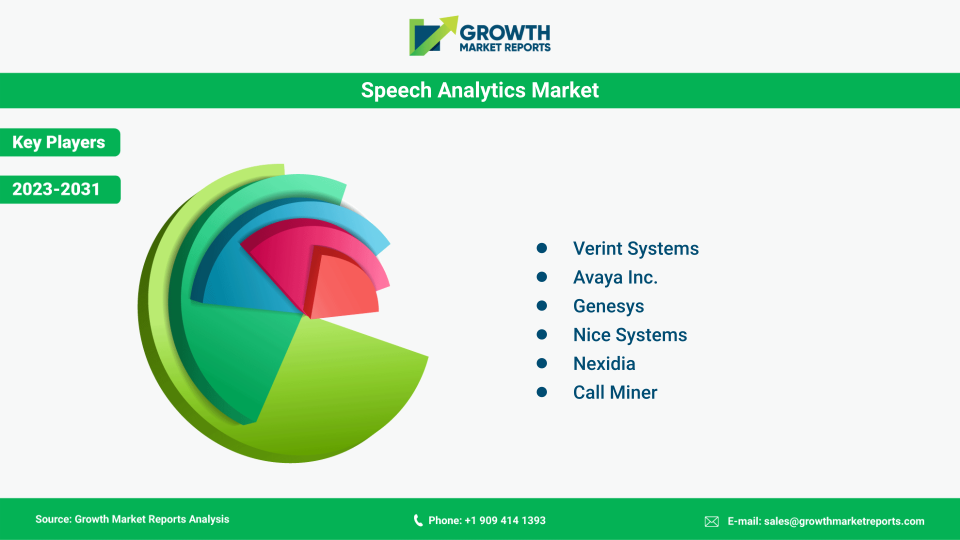
Key players in the global speech analytics market include Verint Systems, Avaya Inc., Genesys, Nice Systems, Nexidia, and Call Miner. Major players in the market are investing majorly in R&D to improve technological capability and accuracy of their products. The players are focusing on strategic alliances to gain a competitive advantage in the market.

Speech Analytics Market Key Players

Frequently Asked Questions

Key trends include the integration of AI and machine learning, the rise of cloud-based and hybrid deployment models, expansion into emerging markets, and the convergence of software and managed services for end-to-end solutions.

SMEs are increasingly adopting speech analytics due to the availability of cloud-based platforms, subscription pricing, and user-friendly interfaces, allowing them to enhance customer experience and compete with larger enterprises.

Major challenges include data privacy and security concerns, integration complexity, high costs of advanced solutions, and resistance to change within organizations.

Key players include NICE Ltd., Verint Systems Inc., Genesys, CallMiner, Avaya Inc., Calabrio Inc., Aspect Software, IBM Corporation, Google LLC, Amazon Web Services, Microsoft Corporation, and others.

North America leads the market due to early technology adoption and a mature contact center industry. Asia Pacific is expected to witness the fastest growth, while Europe, Latin America, and the Middle East & Africa are also experiencing steady expansion.

Speech analytics helps organizations enhance customer experience, ensure compliance, detect fraud, improve agent performance, gain actionable insights, and optimize sales and marketing strategies.

On-premises deployments offer greater control over data and customization, favored by large and regulated enterprises. Cloud-based solutions are gaining popularity for their scalability, flexibility, lower upfront costs, and ease of integration, especially among SMEs.

Speech analytics is widely used for customer experience management, call monitoring, risk and compliance management, sales and marketing management, workforce optimization, and product development.

Key industries adopting speech analytics include BFSI (banking, financial services, and insurance), healthcare, retail, IT and telecommunications, government, and media & entertainment.

The global Speech Analytics market reached USD 3.45 billion in 2024 and is projected to grow at a CAGR of 19.7% from 2025 to 2033, reaching USD 14.63 billion by 2033.

Table Of Content

Chapter 1 Executive Summary
Chapter 2 Assumptions and Acronyms Used
Chapter 3 Research Methodology
Chapter 4 Speech Analytics Market Overview
   4.1 Introduction
      4.1.1 Market Taxonomy
      4.1.2 Market Definition
      4.1.3 Macro-Economic Factors Impacting the Market Growth
   4.2 Speech Analytics Market Dynamics
      4.2.1 Market Drivers
      4.2.2 Market Restraints
      4.2.3 Market Opportunity
   4.3 Speech Analytics Market - Supply Chain Analysis
      4.3.1 List of Key Suppliers
      4.3.2 List of Key Distributors
      4.3.3 List of Key Consumers
   4.4 Key Forces Shaping the Speech Analytics Market
      4.4.1 Bargaining Power of Suppliers
      4.4.2 Bargaining Power of Buyers
      4.4.3 Threat of Substitution
      4.4.4 Threat of New Entrants
      4.4.5 Competitive Rivalry
   4.5 Global Speech Analytics Market Size & Forecast, 2023-2032
      4.5.1 Speech Analytics Market Size and Y-o-Y Growth
      4.5.2 Speech Analytics Market Absolute $ Opportunity

Chapter 5 Global Speech Analytics Market Analysis and Forecast By Component
   5.1 Introduction
      5.1.1 Key Market Trends & Growth Opportunities By Component
      5.1.2 Basis Point Share (BPS) Analysis By Component
      5.1.3 Absolute $ Opportunity Assessment By Component
   5.2 Speech Analytics Market Size Forecast By Component
      5.2.1 Software
      5.2.2 Services
   5.3 Market Attractiveness Analysis By Component

Chapter 6 Global Speech Analytics Market Analysis and Forecast By Deployment Mode
   6.1 Introduction
      6.1.1 Key Market Trends & Growth Opportunities By Deployment Mode
      6.1.2 Basis Point Share (BPS) Analysis By Deployment Mode
      6.1.3 Absolute $ Opportunity Assessment By Deployment Mode
   6.2 Speech Analytics Market Size Forecast By Deployment Mode
      6.2.1 On-Premises
      6.2.2 Cloud
   6.3 Market Attractiveness Analysis By Deployment Mode

Chapter 7 Global Speech Analytics Market Analysis and Forecast By Application
   7.1 Introduction
      7.1.1 Key Market Trends & Growth Opportunities By Application
      7.1.2 Basis Point Share (BPS) Analysis By Application
      7.1.3 Absolute $ Opportunity Assessment By Application
   7.2 Speech Analytics Market Size Forecast By Application
      7.2.1 Customer Experience Management
      7.2.2 Call Monitoring
      7.2.3 Risk and Compliance Management
      7.2.4 Sales and Marketing Management
      7.2.5 Others
   7.3 Market Attractiveness Analysis By Application

Chapter 8 Global Speech Analytics Market Analysis and Forecast By Organization Size
   8.1 Introduction
      8.1.1 Key Market Trends & Growth Opportunities By Organization Size
      8.1.2 Basis Point Share (BPS) Analysis By Organization Size
      8.1.3 Absolute $ Opportunity Assessment By Organization Size
   8.2 Speech Analytics Market Size Forecast By Organization Size
      8.2.1 Small and Medium Enterprises
      8.2.2 Large Enterprises
   8.3 Market Attractiveness Analysis By Organization Size

Chapter 9 Global Speech Analytics Market Analysis and Forecast By End-User
   9.1 Introduction
      9.1.1 Key Market Trends & Growth Opportunities By End-User
      9.1.2 Basis Point Share (BPS) Analysis By End-User
      9.1.3 Absolute $ Opportunity Assessment By End-User
   9.2 Speech Analytics Market Size Forecast By End-User
      9.2.1 BFSI
      9.2.2 Healthcare
      9.2.3 Retail
      9.2.4 IT and Telecommunications
      9.2.5 Government
      9.2.6 Media and Entertainment
      9.2.7 Others
   9.3 Market Attractiveness Analysis By End-User

Chapter 10 Global Speech Analytics Market Analysis and Forecast by Region
   10.1 Introduction
      10.1.1 Key Market Trends & Growth Opportunities By Region
      10.1.2 Basis Point Share (BPS) Analysis By Region
      10.1.3 Absolute $ Opportunity Assessment By Region
   10.2 Speech Analytics Market Size Forecast By Region
      10.2.1 North America
      10.2.2 Europe
      10.2.3 Asia Pacific
      10.2.4 Latin America
      10.2.5 Middle East & Africa (MEA)
   10.3 Market Attractiveness Analysis By Region

Chapter 11 Coronavirus Disease (COVID-19) Impact 
   11.1 Introduction 
   11.2 Current & Future Impact Analysis 
   11.3 Economic Impact Analysis 
   11.4 Government Policies 
   11.5 Investment Scenario

Chapter 12 North America Speech Analytics Analysis and Forecast
   12.1 Introduction
   12.2 North America Speech Analytics Market Size Forecast by Country
      12.2.1 U.S.
      12.2.2 Canada
   12.3 Basis Point Share (BPS) Analysis by Country
   12.4 Absolute $ Opportunity Assessment by Country
   12.5 Market Attractiveness Analysis by Country
   12.6 North America Speech Analytics Market Size Forecast By Component
      12.6.1 Software
      12.6.2 Services
   12.7 Basis Point Share (BPS) Analysis By Component 
   12.8 Absolute $ Opportunity Assessment By Component 
   12.9 Market Attractiveness Analysis By Component
   12.10 North America Speech Analytics Market Size Forecast By Deployment Mode
      12.10.1 On-Premises
      12.10.2 Cloud
   12.11 Basis Point Share (BPS) Analysis By Deployment Mode 
   12.12 Absolute $ Opportunity Assessment By Deployment Mode 
   12.13 Market Attractiveness Analysis By Deployment Mode
   12.14 North America Speech Analytics Market Size Forecast By Application
      12.14.1 Customer Experience Management
      12.14.2 Call Monitoring
      12.14.3 Risk and Compliance Management
      12.14.4 Sales and Marketing Management
      12.14.5 Others
   12.15 Basis Point Share (BPS) Analysis By Application 
   12.16 Absolute $ Opportunity Assessment By Application 
   12.17 Market Attractiveness Analysis By Application
   12.18 North America Speech Analytics Market Size Forecast By Organization Size
      12.18.1 Small and Medium Enterprises
      12.18.2 Large Enterprises
   12.19 Basis Point Share (BPS) Analysis By Organization Size 
   12.20 Absolute $ Opportunity Assessment By Organization Size 
   12.21 Market Attractiveness Analysis By Organization Size
   12.22 North America Speech Analytics Market Size Forecast By End-User
      12.22.1 BFSI
      12.22.2 Healthcare
      12.22.3 Retail
      12.22.4 IT and Telecommunications
      12.22.5 Government
      12.22.6 Media and Entertainment
      12.22.7 Others
   12.23 Basis Point Share (BPS) Analysis By End-User 
   12.24 Absolute $ Opportunity Assessment By End-User 
   12.25 Market Attractiveness Analysis By End-User

Chapter 13 Europe Speech Analytics Analysis and Forecast
   13.1 Introduction
   13.2 Europe Speech Analytics Market Size Forecast by Country
      13.2.1 Germany
      13.2.2 France
      13.2.3 Italy
      13.2.4 U.K.
      13.2.5 Spain
      13.2.6 Russia
      13.2.7 Rest of Europe
   13.3 Basis Point Share (BPS) Analysis by Country
   13.4 Absolute $ Opportunity Assessment by Country
   13.5 Market Attractiveness Analysis by Country
   13.6 Europe Speech Analytics Market Size Forecast By Component
      13.6.1 Software
      13.6.2 Services
   13.7 Basis Point Share (BPS) Analysis By Component 
   13.8 Absolute $ Opportunity Assessment By Component 
   13.9 Market Attractiveness Analysis By Component
   13.10 Europe Speech Analytics Market Size Forecast By Deployment Mode
      13.10.1 On-Premises
      13.10.2 Cloud
   13.11 Basis Point Share (BPS) Analysis By Deployment Mode 
   13.12 Absolute $ Opportunity Assessment By Deployment Mode 
   13.13 Market Attractiveness Analysis By Deployment Mode
   13.14 Europe Speech Analytics Market Size Forecast By Application
      13.14.1 Customer Experience Management
      13.14.2 Call Monitoring
      13.14.3 Risk and Compliance Management
      13.14.4 Sales and Marketing Management
      13.14.5 Others
   13.15 Basis Point Share (BPS) Analysis By Application 
   13.16 Absolute $ Opportunity Assessment By Application 
   13.17 Market Attractiveness Analysis By Application
   13.18 Europe Speech Analytics Market Size Forecast By Organization Size
      13.18.1 Small and Medium Enterprises
      13.18.2 Large Enterprises
   13.19 Basis Point Share (BPS) Analysis By Organization Size 
   13.20 Absolute $ Opportunity Assessment By Organization Size 
   13.21 Market Attractiveness Analysis By Organization Size
   13.22 Europe Speech Analytics Market Size Forecast By End-User
      13.22.1 BFSI
      13.22.2 Healthcare
      13.22.3 Retail
      13.22.4 IT and Telecommunications
      13.22.5 Government
      13.22.6 Media and Entertainment
      13.22.7 Others
   13.23 Basis Point Share (BPS) Analysis By End-User 
   13.24 Absolute $ Opportunity Assessment By End-User 
   13.25 Market Attractiveness Analysis By End-User

Chapter 14 Asia Pacific Speech Analytics Analysis and Forecast
   14.1 Introduction
   14.2 Asia Pacific Speech Analytics Market Size Forecast by Country
      14.2.1 China
      14.2.2 Japan
      14.2.3 South Korea
      14.2.4 India
      14.2.5 Australia
      14.2.6 South East Asia (SEA)
      14.2.7 Rest of Asia Pacific (APAC)
   14.3 Basis Point Share (BPS) Analysis by Country
   14.4 Absolute $ Opportunity Assessment by Country
   14.5 Market Attractiveness Analysis by Country
   14.6 Asia Pacific Speech Analytics Market Size Forecast By Component
      14.6.1 Software
      14.6.2 Services
   14.7 Basis Point Share (BPS) Analysis By Component 
   14.8 Absolute $ Opportunity Assessment By Component 
   14.9 Market Attractiveness Analysis By Component
   14.10 Asia Pacific Speech Analytics Market Size Forecast By Deployment Mode
      14.10.1 On-Premises
      14.10.2 Cloud
   14.11 Basis Point Share (BPS) Analysis By Deployment Mode 
   14.12 Absolute $ Opportunity Assessment By Deployment Mode 
   14.13 Market Attractiveness Analysis By Deployment Mode
   14.14 Asia Pacific Speech Analytics Market Size Forecast By Application
      14.14.1 Customer Experience Management
      14.14.2 Call Monitoring
      14.14.3 Risk and Compliance Management
      14.14.4 Sales and Marketing Management
      14.14.5 Others
   14.15 Basis Point Share (BPS) Analysis By Application 
   14.16 Absolute $ Opportunity Assessment By Application 
   14.17 Market Attractiveness Analysis By Application
   14.18 Asia Pacific Speech Analytics Market Size Forecast By Organization Size
      14.18.1 Small and Medium Enterprises
      14.18.2 Large Enterprises
   14.19 Basis Point Share (BPS) Analysis By Organization Size 
   14.20 Absolute $ Opportunity Assessment By Organization Size 
   14.21 Market Attractiveness Analysis By Organization Size
   14.22 Asia Pacific Speech Analytics Market Size Forecast By End-User
      14.22.1 BFSI
      14.22.2 Healthcare
      14.22.3 Retail
      14.22.4 IT and Telecommunications
      14.22.5 Government
      14.22.6 Media and Entertainment
      14.22.7 Others
   14.23 Basis Point Share (BPS) Analysis By End-User 
   14.24 Absolute $ Opportunity Assessment By End-User 
   14.25 Market Attractiveness Analysis By End-User

Chapter 15 Latin America Speech Analytics Analysis and Forecast
   15.1 Introduction
   15.2 Latin America Speech Analytics Market Size Forecast by Country
      15.2.1 Brazil
      15.2.2 Mexico
      15.2.3 Rest of Latin America (LATAM)
   15.3 Basis Point Share (BPS) Analysis by Country
   15.4 Absolute $ Opportunity Assessment by Country
   15.5 Market Attractiveness Analysis by Country
   15.6 Latin America Speech Analytics Market Size Forecast By Component
      15.6.1 Software
      15.6.2 Services
   15.7 Basis Point Share (BPS) Analysis By Component 
   15.8 Absolute $ Opportunity Assessment By Component 
   15.9 Market Attractiveness Analysis By Component
   15.10 Latin America Speech Analytics Market Size Forecast By Deployment Mode
      15.10.1 On-Premises
      15.10.2 Cloud
   15.11 Basis Point Share (BPS) Analysis By Deployment Mode 
   15.12 Absolute $ Opportunity Assessment By Deployment Mode 
   15.13 Market Attractiveness Analysis By Deployment Mode
   15.14 Latin America Speech Analytics Market Size Forecast By Application
      15.14.1 Customer Experience Management
      15.14.2 Call Monitoring
      15.14.3 Risk and Compliance Management
      15.14.4 Sales and Marketing Management
      15.14.5 Others
   15.15 Basis Point Share (BPS) Analysis By Application 
   15.16 Absolute $ Opportunity Assessment By Application 
   15.17 Market Attractiveness Analysis By Application
   15.18 Latin America Speech Analytics Market Size Forecast By Organization Size
      15.18.1 Small and Medium Enterprises
      15.18.2 Large Enterprises
   15.19 Basis Point Share (BPS) Analysis By Organization Size 
   15.20 Absolute $ Opportunity Assessment By Organization Size 
   15.21 Market Attractiveness Analysis By Organization Size
   15.22 Latin America Speech Analytics Market Size Forecast By End-User
      15.22.1 BFSI
      15.22.2 Healthcare
      15.22.3 Retail
      15.22.4 IT and Telecommunications
      15.22.5 Government
      15.22.6 Media and Entertainment
      15.22.7 Others
   15.23 Basis Point Share (BPS) Analysis By End-User 
   15.24 Absolute $ Opportunity Assessment By End-User 
   15.25 Market Attractiveness Analysis By End-User

Chapter 16 Middle East & Africa (MEA) Speech Analytics Analysis and Forecast
   16.1 Introduction
   16.2 Middle East & Africa (MEA) Speech Analytics Market Size Forecast by Country
      16.2.1 Saudi Arabia
      16.2.2 South Africa
      16.2.3 UAE
      16.2.4 Rest of Middle East & Africa (MEA)
   16.3 Basis Point Share (BPS) Analysis by Country
   16.4 Absolute $ Opportunity Assessment by Country
   16.5 Market Attractiveness Analysis by Country
   16.6 Middle East & Africa (MEA) Speech Analytics Market Size Forecast By Component
      16.6.1 Software
      16.6.2 Services
   16.7 Basis Point Share (BPS) Analysis By Component 
   16.8 Absolute $ Opportunity Assessment By Component 
   16.9 Market Attractiveness Analysis By Component
   16.10 Middle East & Africa (MEA) Speech Analytics Market Size Forecast By Deployment Mode
      16.10.1 On-Premises
      16.10.2 Cloud
   16.11 Basis Point Share (BPS) Analysis By Deployment Mode 
   16.12 Absolute $ Opportunity Assessment By Deployment Mode 
   16.13 Market Attractiveness Analysis By Deployment Mode
   16.14 Middle East & Africa (MEA) Speech Analytics Market Size Forecast By Application
      16.14.1 Customer Experience Management
      16.14.2 Call Monitoring
      16.14.3 Risk and Compliance Management
      16.14.4 Sales and Marketing Management
      16.14.5 Others
   16.15 Basis Point Share (BPS) Analysis By Application 
   16.16 Absolute $ Opportunity Assessment By Application 
   16.17 Market Attractiveness Analysis By Application
   16.18 Middle East & Africa (MEA) Speech Analytics Market Size Forecast By Organization Size
      16.18.1 Small and Medium Enterprises
      16.18.2 Large Enterprises
   16.19 Basis Point Share (BPS) Analysis By Organization Size 
   16.20 Absolute $ Opportunity Assessment By Organization Size 
   16.21 Market Attractiveness Analysis By Organization Size
   16.22 Middle East & Africa (MEA) Speech Analytics Market Size Forecast By End-User
      16.22.1 BFSI
      16.22.2 Healthcare
      16.22.3 Retail
      16.22.4 IT and Telecommunications
      16.22.5 Government
      16.22.6 Media and Entertainment
      16.22.7 Others
   16.23 Basis Point Share (BPS) Analysis By End-User 
   16.24 Absolute $ Opportunity Assessment By End-User 
   16.25 Market Attractiveness Analysis By End-User

Chapter 17 Competition Landscape 
   17.1 Speech Analytics Market: Competitive Dashboard
   17.2 Global Speech Analytics Market: Market Share Analysis, 2023
   17.3 Company Profiles (Details – Overview, Financials, Developments, Strategy) 
      17.3.1 NICE Ltd.
Verint Systems Inc.
Genesys Telecommunications Laboratories, Inc.
CallMiner, Inc.
Avaya Inc.
Clarabridge, Inc.
Calabrio, Inc.
Aspect Software, Inc.
IBM Corporation
Google LLC
Amazon Web Services, Inc.
Microsoft Corporation
Hewlett Packard Enterprise Development LP (HPE)
Zoom International
Speechmatics Ltd.
Voci Technologies, Inc.
Talkdesk, Inc.
Observe.AI
8x8, Inc.
Uniphore Technologies Inc.

Methodology

Our Clients

Microsoft
General Mills
The John Holland Group
Nestle SA
Deloitte
Siemens Healthcare
General Electric
Honda Motor Co. Ltd.