Segments - by Product Type (Epoxy Adhesives, Polyurethane Adhesives, Acrylic Adhesives, Silicone Adhesives, Cyanoacrylate Adhesives, Others), by Application (Automotive, Aerospace, Construction, Electronics, Medical, Packaging, Others), by End-User (Industrial, Commercial, Residential, Others), by Distribution Channel (Direct Sales, Distributors/Wholesalers, Online Retail, Others)
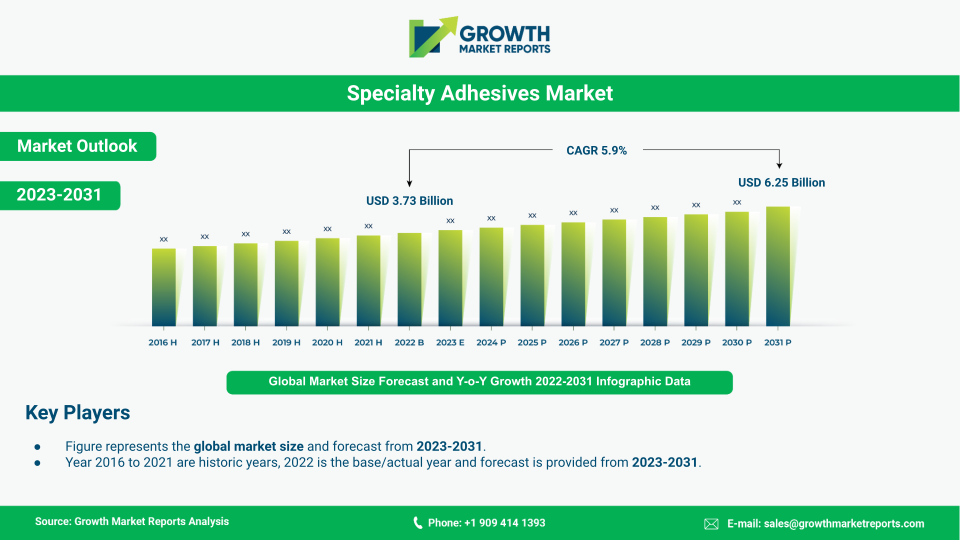
As per our latest research, the global specialty adhesives market size in 2024 stands at USD 13.2 billion, reflecting robust demand across multiple industries. The market is projected to exhibit a CAGR of 6.1% from 2025 to 2033, resulting in a forecasted market size of USD 22.6 billion by 2033. This impressive growth trajectory is primarily driven by increasing applications in high-performance sectors such as automotive, aerospace, electronics, and healthcare, where reliability and advanced bonding solutions are critical.
One of the primary growth factors for the specialty adhesives market is the rapid advancement in material sciences and the subsequent demand for high-performance bonding solutions. Industries such as automotive and aerospace are increasingly utilizing lightweight composite materials to enhance fuel efficiency and meet stringent regulatory standards. Specialty adhesives, including epoxy and polyurethane variants, offer superior bonding, chemical resistance, and durability, making them indispensable in assembling intricate components. Furthermore, the shift towards electric vehicles and renewable energy infrastructure has intensified the need for adhesives that can withstand extreme operational environments, thereby propelling market expansion.
Another significant driver is the proliferation of electronics and medical devices, where precision and reliability are paramount. Specialty adhesives play a crucial role in miniaturized electronic assemblies, providing thermal management, electrical insulation, and enhanced mechanical strength. In the medical sector, the adoption of specialty adhesives in devices, surgical instruments, and wearable health monitors is surging, owing to their biocompatibility and ability to withstand sterilization processes. The ongoing trend towards smart, connected devices and the integration of advanced materials in healthcare further amplify the demand for innovative adhesive solutions.
Sustainability trends and regulatory pressures are also shaping the specialty adhesives market landscape. Manufacturers are increasingly focusing on developing eco-friendly, low-VOC (volatile organic compound) formulations to comply with environmental standards and cater to consumer preferences for green products. The construction industry, in particular, is witnessing heightened adoption of specialty adhesives for energy-efficient buildings, thanks to their superior bonding capabilities and contribution to sustainable construction practices. This shift towards environmentally responsible solutions not only opens new avenues for market growth but also compels industry players to invest in research and development for next-generation adhesive technologies.
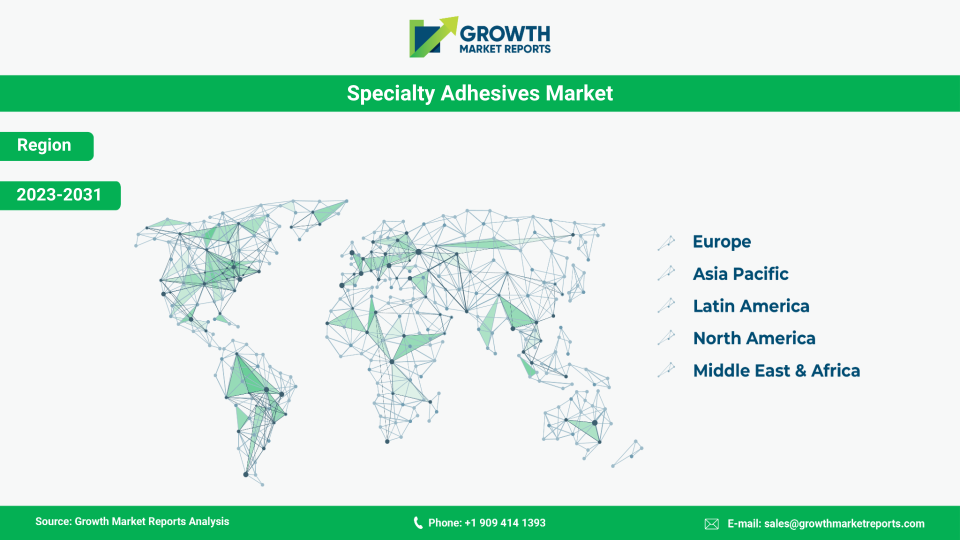
Regionally, the Asia Pacific market dominates the global specialty adhesives landscape, accounting for the largest share in 2024. The region's strong industrial base, rapid urbanization, and ongoing infrastructure development projects are key contributors to this leadership. North America and Europe follow, driven by technological advancements and stringent quality standards in high-value industries. Meanwhile, emerging markets in Latin America and the Middle East & Africa are experiencing steady growth, buoyed by increasing investments in manufacturing and construction. Each region presents unique opportunities and challenges, making localized strategies essential for sustained market success.
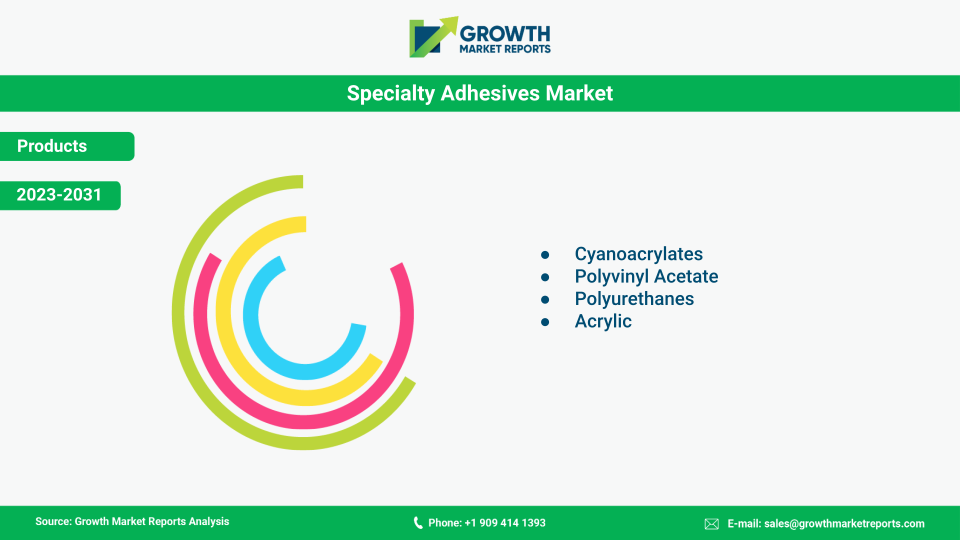
The specialty adhesives market is segmented by product type into epoxy adhesives, polyurethane adhesives, acrylic adhesives, silicone adhesives, cyanoacrylate adhesives, and others. Epoxy adhesives lead the market due to their exceptional mechanical strength, chemical resistance, and versatility across diverse applications. These adhesives are widely used in automotive, aerospace, and construction sectors, where structural integrity and long-term durability are crucial. The ability of epoxy adhesives to bond a wide range of substrates, including metals, composites, and plastics, further strengthens their market position. Continuous innovations, such as fast-curing and low-temperature epoxy formulations, are expanding their application scope and driving incremental demand.
Polyurethane adhesives are gaining significant traction, particularly in industries requiring flexibility and impact resistance. These adhesives are highly valued in automotive and construction applications for their ability to absorb vibrations and accommodate dynamic loads. Polyurethane adhesives also offer superior adhesion to a variety of surfaces, including porous materials, making them suitable for wood, concrete, and fabric bonding. The ongoing shift towards modular construction and prefabricated building components is expected to boost the consumption of polyurethane adhesives, especially in emerging economies where infrastructure development is a priority.
Acrylic adhesives are another important segment, known for their fast-setting properties and resistance to environmental factors such as UV light and moisture. These adhesives are extensively used in the electronics, signage, and medical device industries, where rapid assembly and long-term performance are critical. Acrylic adhesives are also favored for their transparency and compatibility with a wide range of substrates, making them ideal for aesthetic applications. The ongoing trend towards lightweight and miniaturized electronic devices is fueling the demand for advanced acrylic adhesive formulations that offer high bond strength without compromising on process efficiency.
Silicone adhesives and cyanoacrylate adhesives cater to niche applications that require unique properties such as high-temperature resistance, electrical insulation, and instant bonding. Silicone adhesives are widely used in electronics, automotive, and medical devices for their flexibility and ability to withstand thermal cycling. Cyanoacrylate adhesives, commonly known as super glues, are prized for their rapid curing and strong adhesion to various materials, making them indispensable in repair and assembly applications. Innovations in low-odor and medical-grade cyanoacrylates are further expanding their use in sensitive environments.
The "others" category includes specialty hot-melt adhesives, phenolic adhesives, and anaerobic adhesives, each serving specific industrial needs. Hot-melt adhesives are popular in packaging and woodworking, while phenolic adhesives are used in high-temperature applications such as aerospace interiors. Anaerobic adhesives find utility in sealing and locking threaded fasteners in machinery and automotive assemblies. The expanding range of specialty adhesive products reflects the industry's commitment to addressing evolving application requirements and enhancing end-user satisfaction.
| Attributes | Details |
| Report Title | Specialty Adhesives Market Research Report 2033 |
| By Product Type | Epoxy Adhesives, Polyurethane Adhesives, Acrylic Adhesives, Silicone Adhesives, Cyanoacrylate Adhesives, Others |
| By Application | Automotive, Aerospace, Construction, Electronics, Medical, Packaging, Others |
| By End-User | Industrial, Commercial, Residential, Others |
| By Distribution Channel | Direct Sales, Distributors/Wholesalers, Online Retail, Others |
| Regions Covered | North America, Europe, APAC, Latin America, MEA |
| Base Year | 2024 |
| Historic Data | 2018-2023 |
| Forecast Period | 2025-2033 |
| Number of Pages | 267 |
| Number of Tables & Figures | 324 |
| Customization Available | Yes, the report can be customized as per your need. |
The specialty adhesives market finds application across a diverse array of industries, with the automotive sector accounting for a significant share in 2024. The increasing emphasis on lightweight vehicles, crash safety, and energy efficiency has spurred the adoption of specialty adhesives in place of traditional mechanical fasteners. These adhesives enable the bonding of dissimilar materials, reduce vehicle weight, and enhance structural rigidity, contributing to improved fuel economy and reduced emissions. The transition towards electric vehicles further amplifies the need for advanced adhesives that can manage thermal loads and provide electrical insulation.
In the aerospace industry, specialty adhesives are indispensable for assembling composite structures, bonding metal-to-composite joints, and attaching interior components. The demand for high-performance adhesives with excellent fatigue resistance, fire retardancy, and environmental stability is particularly pronounced in this sector. As aerospace manufacturers strive to produce lighter, more fuel-efficient aircraft, the use of specialty adhesives is expected to grow steadily. The stringent regulatory requirements for safety and reliability further underscore the importance of advanced adhesive solutions in aerospace applications.
The construction sector is another major application area, driven by the need for durable, weather-resistant, and energy-efficient bonding solutions. Specialty adhesives are used in flooring, paneling, insulation, and facade systems, where they offer superior adhesion, flexibility, and resistance to moisture and temperature fluctuations. The trend towards green buildings and sustainable construction practices is fueling the adoption of low-VOC and eco-friendly adhesives, especially in developed markets. The ongoing urbanization and infrastructure development in emerging economies are expected to provide additional impetus to the construction adhesives segment.
In electronics manufacturing, specialty adhesives play a vital role in the assembly of printed circuit boards, display panels, and microelectronic components. The miniaturization of devices and the integration of advanced functionalities necessitate adhesives that offer high bond strength, thermal management, and electrical insulation. Specialty adhesives also contribute to the reliability and longevity of electronic products by protecting sensitive components from environmental stressors. The rapid proliferation of consumer electronics, wearables, and IoT devices is anticipated to drive sustained growth in this application segment.
Other key applications include the medical and packaging industries. In medical devices, specialty adhesives ensure biocompatibility, sterilization resistance, and minimal cytotoxicity, making them suitable for use in surgical instruments, implants, and wound care products. In packaging, specialty adhesives enable innovative designs, tamper-evident seals, and high-speed production processes. The need for adhesives that comply with food safety and regulatory standards is particularly important in this segment. The versatility and performance benefits of specialty adhesives continue to expand their application scope across new and emerging industries.
The specialty adhesives market is segmented by end-user into industrial, commercial, residential, and others. The industrial segment dominates the market, driven by extensive use in manufacturing, assembly, and maintenance operations across automotive, aerospace, electronics, and construction industries. Industrial users prioritize adhesives that offer high performance, reliability, and compliance with regulatory standards. The increasing automation of manufacturing processes and the adoption of Industry 4.0 principles are further enhancing the demand for specialty adhesives that can support high-speed, precision assembly operations.
The commercial sector represents a significant share of the specialty adhesives market, particularly in applications such as commercial construction, signage, and facility maintenance. Commercial users value adhesives for their ease of application, fast curing times, and ability to bond a wide range of substrates. The growing trend towards sustainable and energy-efficient commercial buildings is driving the adoption of specialty adhesives that contribute to improved indoor air quality and reduced environmental impact. The expansion of retail, hospitality, and office infrastructure worldwide provides additional growth opportunities for specialty adhesives in the commercial segment.
The residential segment is witnessing steady growth, fueled by rising home renovation activities, increased consumer awareness of advanced building materials, and the proliferation of DIY home improvement projects. Specialty adhesives are used in flooring, tiling, plumbing, and insulation applications, offering homeowners enhanced durability, aesthetics, and ease of installation. The shift towards smart homes and energy-efficient building solutions is expected to drive further adoption of specialty adhesives in the residential sector, particularly in developed markets where consumer preferences are evolving rapidly.
The "others" category encompasses a range of niche end-users, including government agencies, research institutions, and specialty manufacturers. These users often require customized adhesive solutions for specific applications, such as defense equipment, laboratory instruments, and specialty vehicles. The demand for specialty adhesives in these segments is typically project-driven and characterized by stringent performance requirements. As new technologies and materials emerge, the need for tailored adhesive solutions is expected to grow, creating opportunities for innovation and market differentiation.
Overall, the end-user landscape of the specialty adhesives market is characterized by diverse requirements, ranging from high-volume industrial applications to specialized, low-volume uses. Market players must develop a deep understanding of end-user needs and invest in research and development to deliver products that meet evolving performance, safety, and regulatory standards. The ability to offer value-added services, technical support, and customized solutions will be critical for capturing and retaining market share across different end-user segments.
The specialty adhesives market is distributed through several channels, including direct sales, distributors/wholesalers, online retail, and others. Direct sales remain a preferred channel for large industrial customers who require customized solutions, technical support, and long-term supply agreements. Manufacturers often establish direct relationships with key accounts in automotive, aerospace, and electronics industries to ensure product quality, timely delivery, and after-sales service. The direct sales channel is characterized by high-value transactions, complex procurement processes, and the need for ongoing collaboration between suppliers and customers.
Distributors and wholesalers play a crucial role in expanding the market reach of specialty adhesives, particularly among small and medium-sized enterprises (SMEs) and commercial users. Distributors offer a wide range of products from multiple manufacturers, providing customers with flexibility and convenience in sourcing adhesives for various applications. The distributor channel is especially important in regions with fragmented markets or where direct access to manufacturers is limited. Distributors also provide value-added services such as inventory management, technical support, and product training, enhancing customer satisfaction and loyalty.
The rise of online retail has transformed the specialty adhesives market, making products more accessible to a broader customer base, including DIY enthusiasts, small businesses, and residential users. Online platforms offer a convenient and cost-effective way to compare products, access technical information, and place orders with minimal lead times. The growth of e-commerce is particularly pronounced in developed markets, where digital adoption is high and consumers value convenience. Manufacturers and distributors are increasingly investing in online sales channels, digital marketing, and customer engagement strategies to capitalize on this trend.
Other distribution channels include specialty stores, home improvement centers, and direct-to-consumer models. Specialty stores cater to niche markets with specific adhesive requirements, such as automotive repair shops, electronics assembly centers, and medical device manufacturers. Home improvement centers are popular among residential and DIY users, offering a curated selection of adhesives for common household applications. The direct-to-consumer model is gaining traction as manufacturers seek to build brand loyalty, gather customer feedback, and offer personalized solutions.
The distribution landscape for specialty adhesives is evolving rapidly, driven by changing customer preferences, technological advancements, and competitive pressures. Successful market players are those who can offer a seamless, omnichannel experience, combining the strengths of direct sales, distributor networks, and online platforms. Investments in digital tools, supply chain optimization, and customer relationship management will be essential for capturing growth opportunities and maintaining a competitive edge in the specialty adhesives market.
The specialty adhesives market presents a wealth of opportunities, driven by technological advancements and evolving application requirements. The ongoing shift towards lightweight materials, miniaturized devices, and high-performance assemblies is creating demand for next-generation adhesives with enhanced properties such as thermal conductivity, electrical insulation, and environmental resistance. Innovations in nanotechnology, bio-based formulations, and smart adhesives are opening new avenues for market growth, particularly in emerging sectors such as renewable energy, wearable electronics, and advanced healthcare devices. Companies that invest in research and development, collaborate with end-users, and anticipate future trends are well-positioned to capitalize on these opportunities and achieve sustainable growth.
Another significant opportunity lies in the growing emphasis on sustainability and environmental responsibility. Regulatory pressures and consumer preferences are driving the adoption of low-VOC, solvent-free, and recyclable adhesive solutions across industries. The construction sector, in particular, is witnessing increased demand for green adhesives that contribute to energy-efficient buildings and reduced carbon footprints. Companies that develop eco-friendly products, obtain relevant certifications, and communicate their sustainability credentials effectively can differentiate themselves in the marketplace and capture a larger share of environmentally conscious customers. The integration of digital technologies, such as IoT-enabled monitoring and predictive maintenance, also presents opportunities for enhancing product performance and customer value.
Despite these growth prospects, the specialty adhesives market faces certain restrainers, chief among them being the volatility in raw material prices and supply chain disruptions. Many specialty adhesives rely on petrochemical-based inputs, making them vulnerable to fluctuations in crude oil prices and geopolitical uncertainties. Supply chain disruptions, such as those experienced during the COVID-19 pandemic, can lead to shortages, increased lead times, and higher costs, impacting both manufacturers and end-users. To mitigate these risks, market players must focus on diversifying their supplier base, investing in local production capabilities, and developing alternative, bio-based raw materials. Proactive risk management and supply chain resilience will be critical for maintaining competitiveness and ensuring business continuity in the face of external challenges.
The Asia Pacific region commands the largest share of the global specialty adhesives market, with a market size of USD 5.1 billion in 2024. This dominance is attributed to the region's strong industrial base, rapid urbanization, and ongoing infrastructure development in countries such as China, India, Japan, and South Korea. The automotive, electronics, and construction sectors are key drivers of demand, supported by favorable government policies, foreign investments, and a growing middle-class population. Asia Pacific is also the fastest-growing region, with a projected CAGR of 7.2% from 2025 to 2033, outpacing other regions and offering significant opportunities for market players.
North America holds a substantial share of the specialty adhesives market, valued at USD 3.2 billion in 2024. The region's growth is fueled by technological advancements, high-quality standards, and a strong presence of leading manufacturers in automotive, aerospace, and healthcare industries. The United States is the largest market within the region, driven by robust R&D activities, advanced manufacturing capabilities, and a focus on sustainability. The increasing adoption of eco-friendly adhesives and the transition towards electric vehicles are expected to further boost market growth in North America over the forecast period.
Europe follows closely, with a market size of USD 2.8 billion in 2024, characterized by a mature industrial base, stringent regulatory standards, and a strong emphasis on sustainability. Germany, France, and the United Kingdom are key markets within the region, supported by investments in automotive, aerospace, and green construction projects. The European Union's focus on reducing carbon emissions and promoting circular economy principles is driving the adoption of bio-based and recyclable adhesives. Latin America and the Middle East & Africa collectively account for USD 2.1 billion in 2024, with growth prospects driven by infrastructure development, industrialization, and increasing investments in manufacturing. However, these regions face challenges such as economic volatility and regulatory uncertainties, which may impact market growth.
The specialty adhesives market is characterized by intense competition, with a mix of global giants and regional players vying for market share. The industry is marked by continuous innovation, with companies investing heavily in research and development to introduce advanced formulations that address evolving customer needs. Product differentiation, quality assurance, and compliance with regulatory standards are key competitive factors, as end-users demand adhesives that offer superior performance, safety, and environmental sustainability. Strategic partnerships, mergers and acquisitions, and expansion into emerging markets are common strategies employed by leading players to strengthen their market position and diversify their product portfolios.
Technological innovation is a major driver of competitive advantage in the specialty adhesives market. Companies are leveraging advancements in nanotechnology, polymer chemistry, and process automation to develop adhesives with enhanced properties such as higher bond strength, faster curing times, and improved resistance to environmental stressors. The ability to offer customized solutions tailored to specific application requirements is increasingly important, as end-users seek adhesives that can meet unique performance, safety, and regulatory standards. Digitalization and the integration of smart technologies, such as IoT-enabled monitoring and predictive maintenance, are also emerging as differentiators in the market.
Sustainability is another key focus area for market leaders, as regulatory pressures and consumer preferences shift towards eco-friendly products. Companies are investing in the development of low-VOC, solvent-free, and recyclable adhesive formulations, as well as obtaining certifications such as GreenGuard and LEED. Transparent communication of sustainability credentials and collaboration with customers to achieve shared environmental goals are becoming essential components of competitive strategy. The ability to balance performance, cost, and sustainability will be critical for long-term success in the specialty adhesives market.
The competitive landscape is further shaped by the presence of major multinational corporations, including Henkel AG & Co. KGaA, 3M Company, Sika AG, H.B. Fuller Company, and Arkema Group. These companies have a global footprint, extensive product portfolios, and strong R&D capabilities, enabling them to serve diverse customer segments and respond swiftly to market trends. Henkel, for example, is renowned for its innovation in industrial adhesives and commitment to sustainability, while 3M leverages its expertise in materials science to offer a wide range of specialty adhesive solutions. Sika AG is a leader in construction adhesives, with a strong presence in emerging markets, and H.B. Fuller focuses on customer-centric innovation and technical support. Arkema Group is known for its advanced polymer technologies and emphasis on bio-based adhesives.
Other notable players include Dow Inc., Avery Dennison Corporation, Huntsman Corporation, and Ashland Global Holdings, each contributing to the competitive intensity of the market through product innovation, strategic collaborations, and geographic expansion. Dow Inc. is recognized for its high-performance adhesives for automotive and electronics applications, while Avery Dennison specializes in pressure-sensitive adhesives for packaging and labeling. Huntsman Corporation offers a diverse portfolio of specialty adhesives for industrial and consumer applications, and Ashland Global Holdings is known for its expertise in specialty chemicals and customized solutions. The presence of regional and niche players adds further dynamism to the market, ensuring a competitive environment that drives continuous improvement and value creation for customers.
The Specialty Adhesives market has been segmented on the basis of
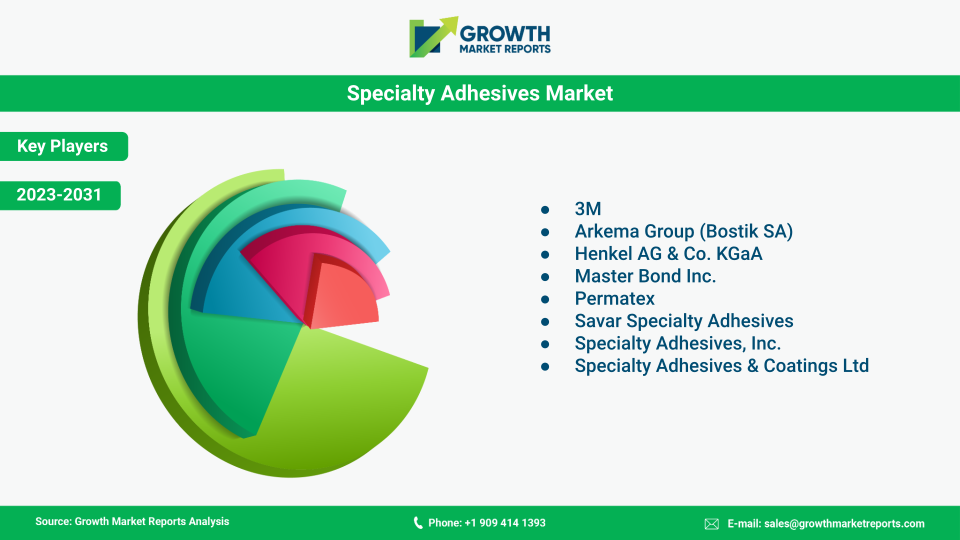
The major players of the market are 3M, Arkema Group (Bostik SA), Henkel AG & Co. KGaA, Master Bond Inc., Permatex, Savar Specialty Adhesives, Specialty Adhesives, Inc., and Specialty Adhesives & Coatings Ltd.
Companies are focusing on innovations and acquisitions to expand their market share.
Key challenges include volatility in raw material prices, supply chain disruptions, and the need to comply with stringent environmental and regulatory standards.
Specialty adhesives are distributed through direct sales, distributors/wholesalers, online retail, specialty stores, and home improvement centers.
Major players include 3M, Henkel AG & Co. KGaA, H.B. Fuller Company, Sika AG, Arkema Group, Dow Inc., Bostik SA, Ashland Global Holdings Inc., Avery Dennison Corporation, and Pidilite Industries Limited.
In automotive, specialty adhesives are used for bonding lightweight materials, improving crash safety, enhancing energy efficiency, and supporting electric vehicle manufacturing.
The Asia Pacific region dominates the global specialty adhesives market, accounting for the largest share in 2024.
Sustainability trends are leading to increased demand for eco-friendly, low-VOC, and recyclable adhesive formulations, especially in construction and packaging sectors.
The main types include epoxy adhesives, polyurethane adhesives, acrylic adhesives, silicone adhesives, cyanoacrylate adhesives, and others such as hot-melt, phenolic, and anaerobic adhesives.
Key industries driving demand include automotive, aerospace, electronics, healthcare, construction, and packaging.
The specialty adhesives market is expected to grow at a CAGR of 6.1% from 2025 to 2033, reaching USD 22.6 billion by 2033.
As of 2024, the global specialty adhesives market size is valued at USD 13.2 billion.