Segments - by Product Type (Regular Sour Cream, Low-Fat Sour Cream, Non-Dairy Sour Cream, Others), by Application (Food Service, Retail, Bakery & Confectionery, Sauces & Dressings, Others), by Distribution Channel (Supermarkets/Hypermarkets, Convenience Stores, Online Stores, Specialty Stores, Others), by Packaging Type (Tubs, Bottles, Sachets, Others)
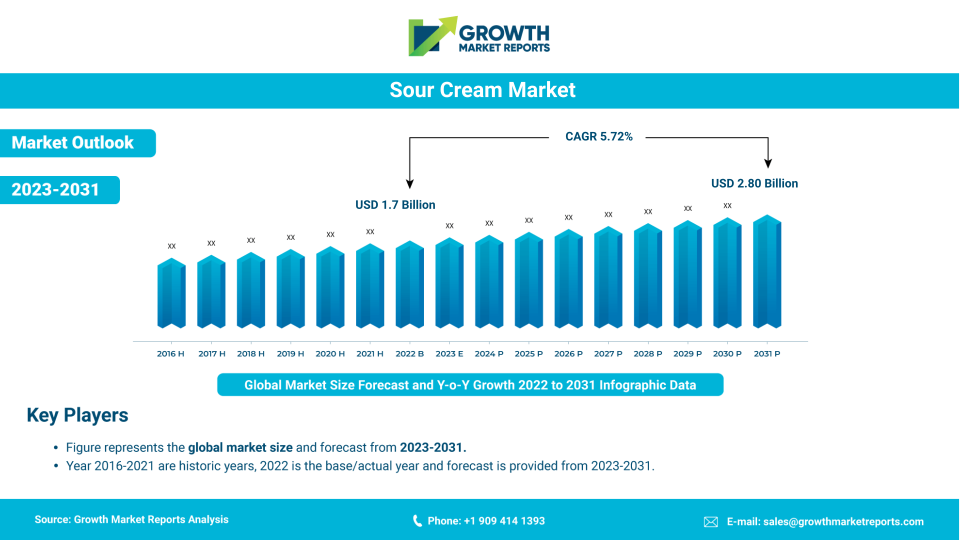
According to our latest research, the global sour cream market size was valued at USD 1.95 billion in 2024. The market is anticipated to register a CAGR of 4.6% during the forecast period from 2025 to 2033, reaching approximately USD 2.93 billion by 2033. This steady growth trajectory is primarily driven by evolving consumer preferences for versatile dairy products, expanding culinary applications, and the increasing adoption of convenience foods worldwide. The market's robust performance in 2024 is underpinned by rising demand from both retail and food service sectors, as well as heightened product innovation in terms of flavors, packaging, and health-oriented variants.
One of the key growth factors propelling the sour cream market is the rising trend of global urbanization and changing dietary habits. Urban consumers are increasingly seeking quick, easy-to-use food ingredients that enhance taste and texture, and sour cream fits this niche perfectly. The proliferation of fast-food chains, casual dining restaurants, and quick-service outlets has further augmented demand, as sour cream is a staple ingredient in a wide array of cuisines, including Mexican, Eastern European, and American dishes. This surge in out-of-home consumption, coupled with the growing popularity of international cuisines, is expected to sustain market momentum over the coming years.
Another significant driver is the increasing consumer inclination toward healthier and functional food options. Manufacturers are responding by introducing low-fat, reduced-calorie, and non-dairy sour cream variants to cater to health-conscious segments and those with dietary restrictions such as lactose intolerance or vegan preferences. The emergence of plant-based alternatives, leveraging ingredients like soy, coconut, and cashew, has not only broadened the consumer base but also stimulated innovation within the industry. Furthermore, the clean label movement and demand for organic products are encouraging producers to focus on natural ingredients, minimal processing, and transparent labeling, which is resonating well with modern consumers.
Product innovation and diversification have also played a pivotal role in shaping the sour cream market landscape. Companies are investing in research and development to introduce new flavors, improved textures, and convenient packaging formats that align with evolving consumer lifestyles. Enhanced shelf-life, single-serve packs, and eco-friendly packaging solutions are gaining traction, particularly among millennials and Gen Z consumers who prioritize sustainability and convenience. These advancements are not only boosting product visibility and accessibility but also fostering brand differentiation in an increasingly competitive market.
From a regional perspective, North America continues to dominate the global sour cream market, accounting for a significant share in 2024, followed closely by Europe. The Asia Pacific region, however, is witnessing the fastest growth, driven by rising disposable incomes, westernization of food habits, and increased penetration of modern retail channels. Latin America and the Middle East & Africa are also emerging as promising markets, supported by expanding urban populations and growing interest in international cuisines. This dynamic regional landscape presents ample opportunities for industry players to tailor their offerings and marketing strategies to diverse consumer preferences and cultural nuances.
The sour cream market is segmented by product type into regular sour cream, low-fat sour cream, non-dairy sour cream, and others. Regular sour cream continues to hold the largest market share, owing to its widespread culinary usage and established consumer base. Its rich texture and tangy flavor make it a preferred choice for dips, dressings, and toppings, especially in North American and European cuisines. Despite increasing health consciousness, the demand for traditional full-fat variants remains robust, particularly in regions where indulgence and authenticity are prioritized in food consumption. However, the segment faces challenges from the rising popularity of healthier alternatives, prompting manufacturers to innovate and enhance product quality.
Low-fat sour cream is gaining significant traction, especially among health-conscious consumers and those looking to reduce calorie intake without compromising on taste. This segment is benefiting from the global trend toward healthier lifestyles and preventive healthcare. Manufacturers are leveraging advanced processing techniques to maintain the creamy texture and flavor profile of traditional sour cream while reducing fat content. Marketing campaigns highlighting the health benefits and nutritional value of low-fat options are further boosting consumer acceptance and driving segment growth, particularly in developed markets with mature health and wellness sectors.
Non-dairy sour cream represents one of the most dynamic and rapidly growing segments within the market. The surge in veganism, lactose intolerance, and allergy awareness has created a fertile ground for plant-based alternatives. Innovations in food technology have enabled producers to develop non-dairy sour cream using ingredients such as soy, coconut, almond, and cashew, closely mimicking the taste and texture of conventional dairy products. This segment is particularly popular among millennials and Gen Z consumers, who are more likely to experiment with plant-based diets and seek sustainable, ethical food choices. The non-dairy segment is expected to witness the highest CAGR during the forecast period, as product availability and consumer awareness continue to expand.
The "others" segment includes flavored, organic, and specialty sour cream products that cater to niche markets and specific consumer preferences. Flavored sour creams infused with herbs, spices, or fruit extracts are gaining popularity as versatile accompaniments for snacks and appetizers. Organic sour cream, made from milk sourced from organically raised cows, is appealing to environmentally conscious consumers seeking clean label products. Specialty variants targeting gourmet and premium segments are also emerging, offering unique taste experiences and artisanal quality. This diversification within the product type segment is enhancing market competitiveness and providing consumers with a broader array of choices.
| Attributes | Details |
| Report Title | Sour Cream Market Research Report 2033 |
| By Product Type | Regular Sour Cream, Low-Fat Sour Cream, Non-Dairy Sour Cream, Others |
| By Application | Food Service, Retail, Bakery & Confectionery, Sauces & Dressings, Others |
| By Distribution Channel | Supermarkets/Hypermarkets, Convenience Stores, Online Stores, Specialty Stores, Others |
| By Packaging Type | Tubs, Bottles, Sachets, Others |
| Regions Covered | North America, Europe, APAC, Latin America, MEA |
| Base Year | 2024 |
| Historic Data | 2018-2023 |
| Forecast Period | 2025-2033 |
| Number of Pages | 296 |
| Number of Tables & Figures | 373 |
| Customization Available | Yes, the report can be customized as per your need. |
The application segment of the sour cream market encompasses food service, retail, bakery & confectionery, sauces & dressings, and others. The food service sector is a dominant application area, accounting for a substantial portion of global consumption in 2024. Sour cream is a staple ingredient in restaurants, fast-food chains, and catering services, used in dishes ranging from baked potatoes and nachos to soups and salads. The growth of the hospitality industry, coupled with the rising number of quick-service restaurants, is driving demand in this segment. Additionally, the trend of menu diversification and the inclusion of international flavors are further boosting the use of sour cream in food service establishments.
Retail distribution of sour cream is witnessing robust growth, supported by the increasing penetration of supermarkets, hypermarkets, and convenience stores. Consumers are purchasing sour cream for home use, driven by the desire to recreate restaurant-style dishes and experiment with new recipes. The availability of a wide variety of product types, including low-fat and non-dairy options, is expanding the retail consumer base. Promotions, discounts, and attractive packaging in retail outlets are also playing a crucial role in influencing purchase decisions. The rise of home cooking and baking trends, especially post-pandemic, has further fueled retail sales of sour cream.
Bakery & confectionery is an important application segment, where sour cream is used to enhance the texture, moisture, and flavor of baked goods such as cakes, muffins, and pastries. Its acidic properties contribute to tenderizing gluten, resulting in softer and richer products. The growing popularity of artisanal and specialty baked goods is driving the adoption of sour cream in commercial bakeries and home baking. Innovations in product formulation, such as organic and flavored sour cream, are also expanding its applications in the bakery and confectionery sector, catering to evolving consumer tastes.
Sour cream is widely used in sauces & dressings, where its creamy texture and tangy flavor add depth and richness to various recipes. The demand for convenient, ready-to-use sauces and salad dressings is increasing, particularly among busy urban consumers seeking quick meal solutions. Manufacturers are developing innovative formulations, including low-fat and plant-based sour cream-based sauces, to cater to diverse dietary preferences. The versatility of sour cream in both cold and hot applications makes it a preferred choice for food manufacturers and home cooks alike, further strengthening its position in this segment.
The "others" application segment includes niche uses such as dips, spreads, and culinary toppings, as well as industrial applications in processed foods. The growing trend of snacking and the popularity of ethnic cuisines are creating new opportunities for sour cream-based dips and spreads. Industrial food processors are incorporating sour cream into ready meals, frozen foods, and snack products to enhance flavor and texture. This segment is expected to grow steadily as manufacturers continue to explore innovative uses and develop value-added products to meet changing consumer demands.
The distribution channel segment is a critical factor influencing the accessibility and visibility of sour cream products in the market. Supermarkets and hypermarkets remain the most prominent distribution channels, accounting for the largest share of sour cream sales globally. These retail outlets offer a wide variety of brands, product types, and packaging options, providing consumers with the convenience of one-stop shopping. The strategic placement of sour cream in dairy sections, coupled with in-store promotions and sampling campaigns, is driving impulse purchases and enhancing brand recognition. The expansion of modern retail infrastructure, particularly in emerging economies, is expected to further bolster sales through this channel.
Convenience stores are gaining importance as a distribution channel, especially in urban areas where consumers seek quick and easy access to food products. The smaller store format and extended operating hours make convenience stores an attractive option for on-the-go purchases. Sour cream products in single-serve and small pack sizes are particularly popular in this channel, catering to the needs of busy individuals and small households. The growing number of convenience stores in developing regions is expected to contribute to the overall growth of the sour cream market by increasing product reach and availability.
Online stores are emerging as a rapidly growing distribution channel, driven by the proliferation of e-commerce platforms and changing shopping behaviors. The convenience of home delivery, wide product selection, and attractive discounts are encouraging consumers to purchase sour cream online. E-commerce platforms are also enabling manufacturers to reach a broader audience and gather valuable consumer insights through digital marketing and data analytics. The COVID-19 pandemic has accelerated the shift toward online grocery shopping, a trend that is likely to persist in the coming years. Manufacturers are investing in robust online distribution strategies, including direct-to-consumer models and partnerships with leading e-commerce players, to capitalize on this growth opportunity.
Specialty stores, including gourmet food shops and health food stores, cater to niche consumer segments seeking premium, organic, or specialty sour cream products. These stores offer curated selections and personalized service, attracting discerning consumers willing to pay a premium for quality and exclusivity. The rise of specialty retailing is supporting the growth of high-value segments such as organic, flavored, and non-dairy sour cream. Manufacturers are leveraging partnerships with specialty retailers to enhance brand visibility, build customer loyalty, and differentiate their offerings in a crowded marketplace.
The "others" distribution channel includes food service distributors, direct sales, and institutional buyers such as hotels, restaurants, and catering companies. These channels play a vital role in supplying bulk quantities of sour cream for commercial and industrial use. The growing demand from the food service sector, coupled with the expansion of institutional catering services, is driving sales through these channels. Manufacturers are focusing on building strong relationships with distributors and institutional buyers to ensure consistent supply, competitive pricing, and customized product offerings tailored to specific business needs.
Packaging plays a pivotal role in the sour cream market, influencing product shelf-life, convenience, and consumer appeal. Tubs are the most commonly used packaging type, offering practicality and ease of use for both retail and food service applications. Tubs are available in various sizes, catering to different consumption needs, from single-serve portions to family packs. The resealable nature of tubs helps maintain product freshness and prevents contamination, making them a preferred choice for consumers. Innovations in tub design, such as transparent lids and eco-friendly materials, are enhancing product visibility and sustainability, further driving demand in this segment.
Bottles are gaining popularity as an alternative packaging format, particularly for sour cream-based sauces and dressings. Squeeze bottles and pourable containers offer enhanced convenience, allowing consumers to dispense the desired quantity with ease and minimal mess. Bottles are also suitable for on-the-go consumption and food service applications, where portion control and hygiene are critical considerations. The growing demand for ready-to-use and portable food products is prompting manufacturers to invest in innovative bottle designs and materials that ensure product integrity and extend shelf-life.
Sachets are emerging as a cost-effective and convenient packaging solution, especially in developing markets where affordability and portion control are key factors. Sachets are lightweight, easy to store, and ideal for single-use applications, making them suitable for quick-service restaurants, catering services, and travel retail. The low production and transportation costs associated with sachets are enabling manufacturers to penetrate price-sensitive markets and expand their consumer base. As demand for small pack sizes and on-the-go consumption continues to rise, the sachet segment is expected to witness steady growth during the forecast period.
The "others" packaging segment includes innovative and specialty packaging formats such as pouches, cups, and eco-friendly containers. Pouches offer flexibility, reduced material usage, and improved portability, making them an attractive option for both manufacturers and consumers. Cups, often used for premium or specialty sour cream products, provide a premium look and feel, enhancing product differentiation and brand positioning. The increasing focus on sustainability is driving the adoption of biodegradable, recyclable, and compostable packaging materials, aligning with consumer preferences for environmentally responsible products. Manufacturers are investing in research and development to create packaging solutions that balance convenience, aesthetics, and sustainability, thereby gaining a competitive edge in the market.
The sour cream market presents numerous opportunities for growth and expansion, particularly through product innovation and diversification. The rising demand for healthier, low-fat, and non-dairy alternatives is encouraging manufacturers to invest in research and development to create new formulations that cater to evolving consumer preferences. The growing popularity of plant-based diets and clean label products offers significant potential for market players to tap into new consumer segments and differentiate their offerings. Additionally, the increasing penetration of e-commerce and digital marketing is enabling brands to reach a wider audience, gather real-time consumer insights, and personalize marketing strategies. Collaborations with food service providers, chefs, and influencers can further enhance brand visibility and drive product adoption in both retail and food service channels.
Geographical expansion into emerging markets represents another lucrative opportunity for sour cream manufacturers. Rapid urbanization, rising disposable incomes, and the westernization of food habits in regions such as Asia Pacific, Latin America, and the Middle East & Africa are creating new avenues for market growth. Tailoring product offerings to local tastes, preferences, and dietary requirements can help companies gain a competitive advantage and build brand loyalty in these regions. Strategic partnerships with local distributors, retailers, and food service operators can facilitate market entry and ensure efficient supply chain management. Furthermore, investments in sustainable packaging and production practices can enhance brand reputation and appeal to environmentally conscious consumers, driving long-term growth.
Despite the positive outlook, the sour cream market faces certain restraints that could hinder growth. Increasing health concerns related to the consumption of high-fat and high-calorie dairy products may negatively impact demand for traditional sour cream, particularly in developed markets with mature health and wellness sectors. The growing prevalence of lactose intolerance and dairy allergies is also limiting the consumer base for conventional sour cream. Additionally, intense competition from alternative products such as Greek yogurt, crème fraîche, and plant-based spreads poses a threat to market share. Fluctuations in raw material prices, particularly milk and cream, can impact production costs and profit margins, further challenging market players.
North America remains the largest regional market for sour cream, accounting for a substantial share of global revenue in 2024, with sales totaling approximately USD 720 million. The region's dominance is attributed to the widespread consumption of sour cream in various culinary applications, well-established retail infrastructure, and high consumer awareness. The United States, in particular, is a key market, driven by the popularity of Mexican and American cuisines that prominently feature sour cream as an ingredient and topping. The presence of leading manufacturers and a robust distribution network further support market growth in North America.
Europe is the second-largest market, with a market size of around USD 600 million in 2024. The region boasts a rich culinary tradition that incorporates sour cream in a variety of dishes, from Eastern European soups and stews to Western European baked goods and sauces. The European market is characterized by high demand for premium, organic, and specialty sour cream products, reflecting the region's sophisticated consumer preferences. The market is expected to grow at a steady CAGR of 4.2% during the forecast period, supported by ongoing product innovation and the expansion of modern retail channels.
The Asia Pacific region is emerging as the fastest-growing market, with a current market size of USD 400 million and a projected CAGR of 6.1% from 2025 to 2033. Rapid urbanization, rising disposable incomes, and increasing exposure to Western cuisines are driving demand for sour cream in countries such as China, Japan, India, and Australia. The expansion of the food service sector, coupled with the growing popularity of home cooking and baking, is further boosting sales. Market players are focusing on product localization, innovative packaging, and targeted marketing campaigns to capture the diverse and dynamic consumer base in the Asia Pacific region.
The global sour cream market is characterized by intense competition, with a mix of multinational corporations, regional players, and emerging startups vying for market share. Companies are focusing on product innovation, brand differentiation, and strategic partnerships to strengthen their positions in the market. The competitive landscape is shaped by ongoing efforts to introduce new flavors, improve product quality, and develop healthier alternatives that cater to changing consumer preferences. Investments in research and development, marketing, and distribution are critical success factors, enabling companies to respond quickly to market trends and capitalize on emerging opportunities.
Brand loyalty and consumer trust play a significant role in shaping the competitive dynamics of the sour cream market. Established brands with a long-standing reputation for quality and consistency enjoy a competitive advantage, particularly in mature markets such as North America and Europe. However, the entry of new players offering innovative, organic, and plant-based products is intensifying competition and challenging incumbents to continuously evolve. Companies are leveraging digital marketing, influencer partnerships, and experiential marketing campaigns to engage consumers and build brand affinity in an increasingly crowded marketplace.
Mergers, acquisitions, and strategic alliances are common strategies employed by market participants to expand their product portfolios, enter new markets, and achieve operational efficiencies. Collaborations with food service operators, retailers, and e-commerce platforms are enabling companies to enhance distribution reach and improve supply chain management. The focus on sustainability and corporate social responsibility is also emerging as a key differentiator, with leading players investing in eco-friendly packaging, responsible sourcing, and community engagement initiatives to enhance brand reputation and appeal to socially conscious consumers.
Major companies operating in the global sour cream market include Daisy Brand LLC, Dean Foods Company, Kraft Heinz Company, Danone S.A., General Mills Inc., Nestlé S.A., Organic Valley, Arla Foods, Lactalis Group, and Fonterra Co-operative Group Limited. Daisy Brand LLC is renowned for its high-quality, preservative-free sour cream products and strong presence in the United States. Dean Foods Company and Kraft Heinz Company offer a wide range of dairy products, including various sour cream formulations, catering to both retail and food service customers. Danone S.A. and General Mills Inc. are global leaders with extensive product portfolios and strong distribution networks, enabling them to reach diverse consumer segments worldwide.
Nestlé S.A. and Arla Foods are prominent players in the European market, known for their commitment to quality, innovation, and sustainability. Organic Valley specializes in organic and premium dairy products, targeting health-conscious and environmentally aware consumers. Lactalis Group and Fonterra Co-operative Group Limited are major international dairy companies with a broad product range and global presence, leveraging their scale and expertise to drive growth in the sour cream market. These companies are continuously investing in new product development, marketing, and distribution to maintain their competitive edge and capitalize on emerging market opportunities.
The Sour Cream market has been segmented on the basis of
Key players competing in the global sour cream market include Laiterie Chalifoux, Organic Valley, Cabot Creamery, WhiteWave Services, Uelzena Ingredients, Daisy Brand, and Meggle.
Some of these players are investing heavily in several market strategies such as mergers, acquisitions, partnerships, collaborations, capacity expansion, and product launches to increase their market shares.
Challenges include health concerns over high-fat dairy, increasing lactose intolerance and dairy allergies, competition from alternative products like Greek yogurt and plant-based spreads, and fluctuations in raw material prices.
Key players include Daisy Brand LLC, Dean Foods Company, Kraft Heinz Company, Danone S.A., General Mills Inc., Nestlé S.A., Organic Valley, Arla Foods, Lactalis Group, and Fonterra Co-operative Group Limited.
Recent trends include the introduction of low-fat and non-dairy variants, clean label and organic products, innovative flavors, sustainable packaging, and the expansion of online sales channels.
Popular packaging types include tubs, bottles, sachets, and specialty formats like pouches and cups, with a growing focus on eco-friendly and convenient packaging solutions.
Sour cream is distributed through supermarkets/hypermarkets, convenience stores, online stores, specialty stores, and food service distributors.
Sour cream is widely used in food service, retail, bakery & confectionery, sauces & dressings, and as dips, spreads, and toppings in various cuisines.
The market offers regular sour cream, low-fat sour cream, non-dairy (plant-based) sour cream, and specialty options such as flavored and organic sour cream.
North America dominates the global sour cream market, followed by Europe. The Asia Pacific region is experiencing the fastest growth due to rising disposable incomes, westernization of diets, and expansion of modern retail channels.
Key growth drivers include evolving consumer preferences for versatile dairy products, expanding culinary applications, increasing adoption of convenience foods, product innovation, and the rising trend of healthier and plant-based options.
As of 2024, the global sour cream market is valued at USD 1.95 billion and is projected to reach approximately USD 2.93 billion by 2033.