Software Defined Perimeter Market Research Report 2033

Software Defined Perimeter Market Research Report 2033

Segments - by Component (Solutions, Services), by Deployment Mode (On-Premises, Cloud), by Organization Size (Small and Medium Enterprises, Large Enterprises), by End-User (BFSI, IT and Telecom, Government and Defense, Healthcare, Retail and E-commerce, Manufacturing, Others)

https://growthmarketreports.com/Raksha
Author : Raksha Sharma
https://growthmarketreports.com/Vaibhav
Fact-checked by : V. Chandola
https://growthmarketreports.com/Shruti
Editor : Shruti Bhat

Upcoming | Report ID :ICT-SE-2885 | 4.5 Rating | 92 Reviews | 285 Pages | Format : Docx PDF

Report Description


Software Defined Perimeter Market Outlook

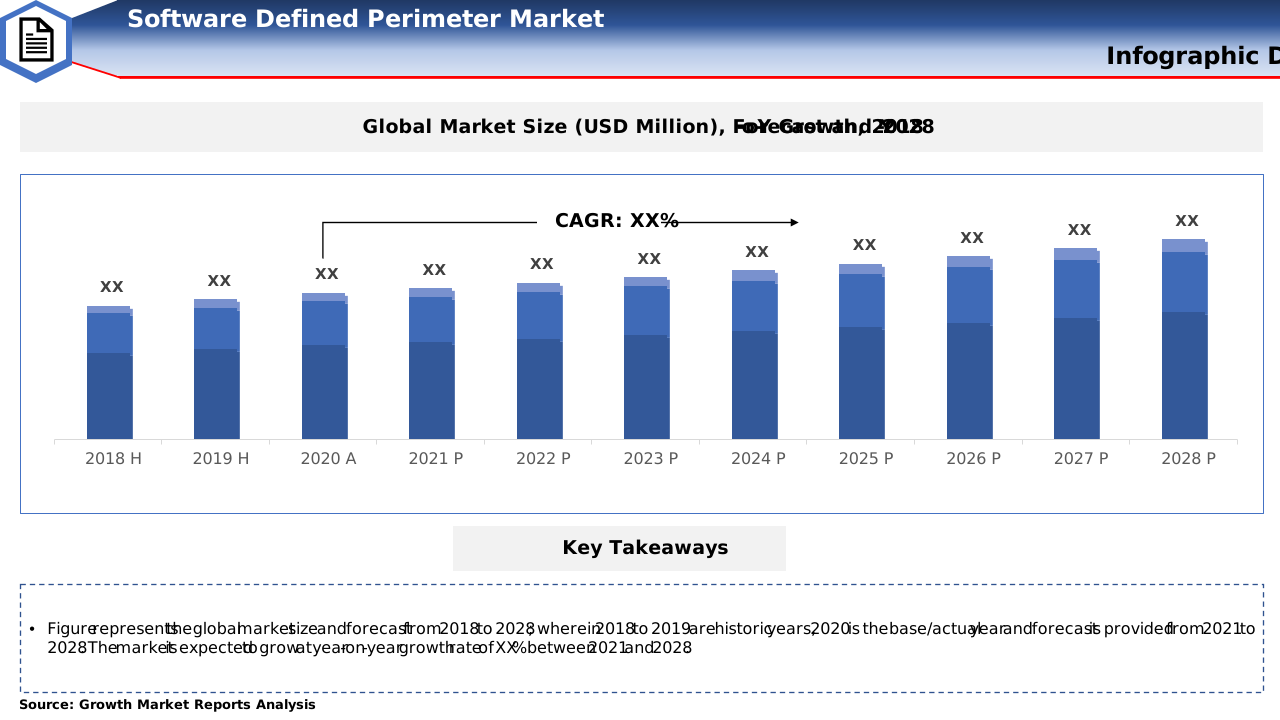
According to our latest research, the global Software Defined Perimeter (SDP) market size in 2024 stands at USD 5.2 billion, reflecting the rapid adoption of advanced security architectures across various industries. The market is exhibiting robust momentum, registering a compound annual growth rate (CAGR) of 28.4% from 2025 to 2033. By the end of 2033, the market is projected to reach a significant value of USD 49.6 billion, driven by the escalating need for dynamic and adaptive cybersecurity solutions in an increasingly digital and cloud-centric world. As per our latest research, the primary growth factor fueling this expansion is the rising frequency and sophistication of cyber threats, compelling organizations to embrace SDP as a proactive security framework.

A major growth driver for the Software Defined Perimeter market is the exponential increase in cyberattacks targeting traditional network boundaries. With the proliferation of remote work, cloud applications, and mobile devices, conventional perimeter-based security models are proving inadequate. Organizations are transitioning to SDP solutions to establish dynamic, identity-centric, and context-aware security perimeters that are highly resilient against modern attack vectors such as ransomware, phishing, and lateral movement threats. The SDP architecture’s ability to render infrastructure invisible to unauthorized users and dynamically segment network resources is a critical advantage, especially as enterprises adopt hybrid and multi-cloud environments. The growing regulatory pressure for data protection and privacy, particularly in sectors like BFSI, healthcare, and government, further amplifies the demand for robust, scalable, and compliant security frameworks, positioning SDP as a cornerstone of next-generation cybersecurity strategies.

Another significant factor propelling the Software Defined Perimeter market is the ongoing digital transformation across industries. Enterprises are embracing cloud-native applications, IoT devices, and edge computing, which introduce complex security challenges. SDP solutions offer a unified approach to securing distributed assets by leveraging a zero-trust model—granting access strictly on a need-to-know basis and continuously verifying user and device identities. This paradigm shift not only enhances security postures but also simplifies network management, reduces attack surfaces, and ensures seamless user experiences. The integration of artificial intelligence and machine learning into SDP platforms further augments their capabilities, enabling real-time threat detection, automated response, and adaptive policy enforcement. As organizations prioritize agility, scalability, and operational efficiency, the adoption of SDP is becoming integral to their digital strategies.

The expanding ecosystem of managed security service providers (MSSPs) and increasing investments in cybersecurity infrastructure are also catalyzing the growth of the Software Defined Perimeter market. Enterprises, particularly small and medium-sized businesses (SMEs), are leveraging managed SDP solutions to overcome resource constraints, address skill gaps, and ensure 24/7 protection against emerging threats. The rise of as-a-service delivery models, including Security-as-a-Service (SECaaS), is democratizing access to advanced security technologies and accelerating market penetration across diverse industry verticals. Strategic partnerships, mergers, and acquisitions among technology vendors are fostering innovation and expanding the portfolio of SDP offerings, making them more accessible and customizable for organizations of all sizes.

Regionally, North America remains at the forefront of SDP adoption, accounting for the largest share of the global market in 2024. The region’s dominance is attributed to its advanced IT infrastructure, high awareness of cybersecurity best practices, and stringent regulatory landscape. Europe and Asia Pacific are also witnessing substantial growth, driven by increasing digitalization, rising cyber risk exposure, and government initiatives promoting secure digital transformation. Asia Pacific, in particular, is emerging as a high-growth market, with countries like China, India, and Japan investing heavily in cybersecurity frameworks to safeguard critical infrastructure and sensitive data. Latin America and the Middle East & Africa, while relatively nascent, are gradually embracing SDP solutions as digital ecosystems mature and cyber threats escalate.

Global Software Defined Perimeter Industry Outlook

Component Analysis

The Software Defined Perimeter market is segmented by component into Solutions and Services, each playing a pivotal role in the overall value proposition of SDP deployments. Solutions comprise the core technologies and platforms that enable organizations to implement dynamic, policy-driven security perimeters. These include software suites for access control, authentication, encryption, and network segmentation. The solutions segment is experiencing robust growth as enterprises seek comprehensive, integrated platforms capable of securing complex, hybrid IT environments. The continuous evolution of SDP solutions, incorporating artificial intelligence, machine learning, and advanced analytics, is enhancing their efficacy in threat detection, user behavior analysis, and automated policy enforcement. As a result, organizations are increasingly investing in feature-rich SDP solutions that offer scalability, interoperability, and centralized management, driving the segment’s expansion.

The services segment encompasses a wide array of offerings, including consulting, integration, training, and managed services, which are essential for the successful deployment and operation of SDP solutions. Consulting services assist organizations in assessing their security requirements, designing tailored SDP architectures, and developing implementation roadmaps. Integration services facilitate the seamless deployment of SDP platforms within existing IT ecosystems, ensuring compatibility with legacy systems and third-party applications. Training services empower IT teams with the knowledge and skills needed to manage and optimize SDP deployments, while managed services provide ongoing monitoring, maintenance, and support. The growing complexity of cyber threats and the shortage of skilled cybersecurity professionals are fueling demand for managed SDP services, particularly among SMEs and organizations with limited in-house expertise.

A significant trend within the component segment is the convergence of solutions and services into unified, end-to-end offerings. Technology vendors are increasingly bundling their SDP platforms with value-added services such as threat intelligence, incident response, and compliance management. This integrated approach not only simplifies procurement and deployment but also enhances the overall security posture by providing organizations with comprehensive, continuously updated protection. The rise of cloud-based delivery models is further accelerating the adoption of bundled solutions and services, enabling organizations to scale their security infrastructure on-demand and reduce total cost of ownership.

The competitive landscape within the component segment is characterized by intense innovation and differentiation. Leading vendors are investing heavily in research and development to introduce next-generation features such as adaptive access controls, context-aware authentication, and automated remediation. Strategic alliances with cloud service providers, network operators, and cybersecurity firms are expanding the reach and functionality of SDP solutions. As the market matures, the ability to deliver seamless integration, superior user experiences, and proactive threat mitigation will be key differentiators for solution and service providers alike.

Report Scope

Attributes Details
Report Title Software Defined Perimeter Market Research Report 2033
By Component Solutions, Services
By Deployment Mode On-Premises, Cloud
By Organization Size Small and Medium Enterprises, Large Enterprises
By End-User BFSI, IT and Telecom, Government and Defense, Healthcare, Retail and E-commerce, Manufacturing, Others
Regions Covered North America, Europe, APAC, Latin America, MEA
Base Year 2024
Historic Data 2018-2023
Forecast Period 2025-2033
Number of Pages 285
Number of Tables & Figures 324
Customization Available Yes, the report can be customized as per your need.

Deployment Mode Analysis

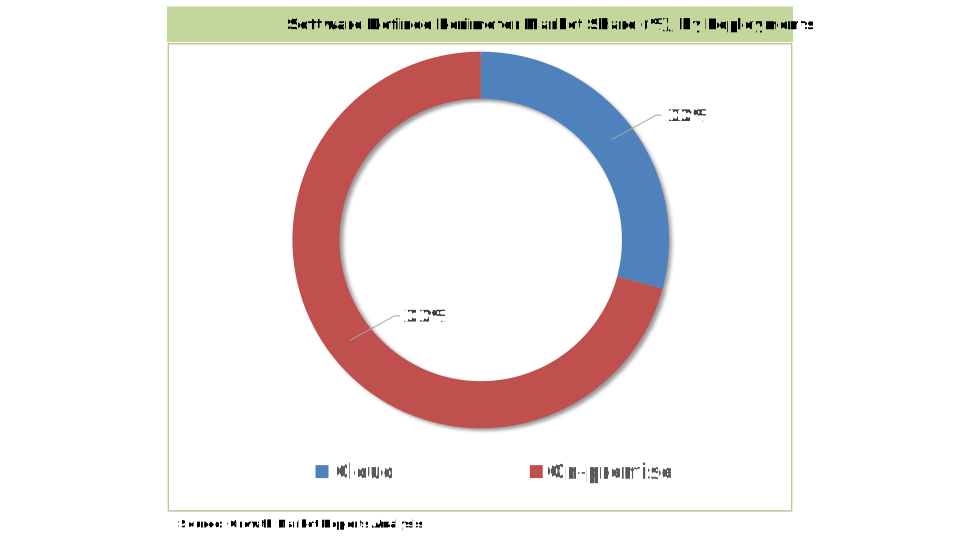
The Software Defined Perimeter market is bifurcated by deployment mode into On-Premises and Cloud deployments, each catering to distinct organizational needs and security requirements. On-premises deployment remains a preferred choice for organizations with stringent regulatory compliance mandates, sensitive data, and highly customized IT environments. Industries such as government, defense, and BFSI often opt for on-premises SDP solutions to maintain full control over their security infrastructure, ensure data sovereignty, and mitigate risks associated with third-party cloud providers. The on-premises segment is characterized by high upfront investments, longer implementation cycles, and greater operational complexity, but it offers unparalleled visibility, customization, and integration with legacy systems.

Cloud-based deployment, on the other hand, is witnessing explosive growth as organizations embrace digital transformation and cloud-first strategies. Cloud SDP solutions offer unmatched scalability, agility, and cost efficiency, enabling organizations to secure distributed assets, remote workforces, and hybrid environments with minimal infrastructure overhead. The as-a-service delivery model allows enterprises to rapidly deploy, update, and manage SDP platforms without the need for extensive in-house resources. Cloud deployment is particularly attractive to SMEs and digital-native companies seeking to leverage advanced security capabilities while minimizing capital expenditures and operational complexity. The growing adoption of multi-cloud and hybrid cloud architectures is further accelerating the shift toward cloud-based SDP solutions.

A notable trend within the deployment mode segment is the rise of hybrid deployment models, which combine the strengths of both on-premises and cloud solutions. Hybrid SDP deployments enable organizations to maintain critical workloads and sensitive data on-premises while leveraging the scalability and flexibility of the cloud for less sensitive operations. This approach offers a balanced trade-off between security, performance, and cost, making it increasingly popular among large enterprises with diverse operational requirements. The ability to seamlessly orchestrate security policies across on-premises and cloud environments is a key differentiator for leading SDP vendors.

The deployment mode segment is also influenced by evolving regulatory landscapes and industry standards. Data protection regulations such as GDPR, HIPAA, and CCPA are shaping deployment decisions, with organizations prioritizing solutions that ensure compliance and facilitate auditability. The integration of SDP platforms with cloud access security brokers (CASBs), identity and access management (IAM) systems, and security information and event management (SIEM) tools is enhancing the security, visibility, and governance of both on-premises and cloud deployments. As organizations navigate the complexities of digital transformation, the ability to offer flexible, interoperable, and compliant deployment options will be critical to capturing market share.

Organization Size Analysis

The Software Defined Perimeter market is segmented by organization size into Small and Medium Enterprises (SMEs) and Large Enterprises, each exhibiting unique adoption patterns and security priorities. Large enterprises, with their expansive IT infrastructures, complex network architectures, and high-value digital assets, represent the dominant segment in terms of market share and investment. These organizations are at the forefront of SDP adoption, leveraging advanced security frameworks to protect against sophisticated cyber threats, ensure regulatory compliance, and support business continuity. Large enterprises typically have the resources and expertise to deploy, manage, and optimize comprehensive SDP solutions, integrating them with existing security infrastructure and orchestrating policies across global operations.

Small and medium enterprises, while historically slower to adopt advanced security technologies, are emerging as a high-growth segment within the SDP market. The democratization of cybersecurity through cloud-based delivery models, managed services, and as-a-service offerings is enabling SMEs to access enterprise-grade security capabilities without the need for significant capital investments or specialized expertise. The increasing frequency of targeted attacks on SMEs, coupled with rising awareness of the business impact of data breaches, is driving demand for scalable, cost-effective, and easy-to-deploy SDP solutions. Vendors are responding by offering tailored packages, simplified deployment processes, and pay-as-you-go pricing models that cater to the unique needs of SMEs.

A key trend within the organization size segment is the convergence of security and business objectives. Both large enterprises and SMEs are recognizing the strategic value of cybersecurity as an enabler of digital transformation, customer trust, and competitive differentiation. SDP solutions are being positioned not only as protective measures but also as catalysts for innovation, agility, and operational resilience. The integration of SDP with business applications, collaboration platforms, and digital workflows is enhancing productivity, reducing friction, and supporting hybrid work models.

The organization size segment is also witnessing increased collaboration between technology vendors, managed service providers, and industry associations to drive awareness, education, and adoption of SDP solutions. Initiatives aimed at bridging the cybersecurity skills gap, promoting best practices, and facilitating knowledge sharing are empowering organizations of all sizes to strengthen their security postures. As cyber threats continue to evolve, the ability to deliver scalable, user-friendly, and affordable SDP solutions will be a key determinant of success in this segment.

End-User Analysis

The Software Defined Perimeter market serves a diverse array of end-users, including BFSI, IT and Telecom, Government and Defense, Healthcare, Retail and E-commerce, Manufacturing, and Others. The BFSI sector is a major adopter of SDP solutions, driven by the need to protect sensitive financial data, ensure regulatory compliance, and defend against increasingly sophisticated cyberattacks. Banks, insurance companies, and financial service providers are leveraging SDP to secure digital channels, enable secure remote access, and mitigate insider threats. The zero-trust architecture of SDP aligns well with the stringent security requirements of the BFSI sector, providing granular access controls, continuous monitoring, and rapid incident response.

The IT and Telecom sector is another significant end-user, characterized by highly distributed networks, large user bases, and complex service delivery models. SDP solutions are being deployed to secure cloud infrastructure, manage third-party access, and protect against advanced persistent threats. The ability to dynamically segment networks, enforce least-privilege access, and automate policy management is particularly valuable in this sector, where agility, scalability, and uptime are critical. Telecom operators are also leveraging SDP to secure 5G networks, IoT devices, and edge computing environments, addressing emerging security challenges in next-generation connectivity.

Government and defense organizations are prioritizing SDP adoption to protect critical infrastructure, national security assets, and sensitive data from state-sponsored and cybercriminal threats. The need for robust, adaptive, and resilient security frameworks is driving investments in SDP solutions that offer comprehensive visibility, rapid threat detection, and automated response capabilities. Governments are also promoting the adoption of zero-trust architectures through policy initiatives, funding programs, and public-private partnerships, further accelerating market growth in this segment.

Healthcare, retail and e-commerce, and manufacturing sectors are also embracing SDP to address sector-specific security challenges. In healthcare, SDP is being used to secure electronic health records, telemedicine platforms, and connected medical devices, ensuring patient privacy and regulatory compliance. Retail and e-commerce companies are leveraging SDP to protect customer data, secure payment transactions, and prevent fraud. Manufacturers are deploying SDP to safeguard industrial control systems, supply chain networks, and intellectual property from cyber threats. The ability of SDP to provide context-aware, identity-centric security is a key differentiator across these diverse end-user segments.

Opportunities & Threats

The Software Defined Perimeter market presents a multitude of opportunities for innovation, growth, and value creation. One of the most promising opportunities lies in the integration of SDP with emerging technologies such as artificial intelligence, machine learning, and automation. By leveraging AI-driven analytics, SDP platforms can deliver real-time threat detection, predictive risk assessment, and automated incident response, significantly enhancing the speed and effectiveness of security operations. The convergence of SDP with identity and access management (IAM), endpoint protection, and security orchestration, automation, and response (SOAR) platforms is creating holistic, end-to-end security ecosystems that address the full spectrum of cyber risks. As organizations prioritize digital transformation, cloud migration, and remote work, the demand for intelligent, adaptive, and scalable security solutions is expected to surge.

Another significant opportunity is the expansion of SDP adoption among small and medium enterprises and in emerging markets. The proliferation of as-a-service delivery models, managed security services, and cloud-native platforms is democratizing access to advanced cybersecurity technologies, enabling organizations of all sizes and geographies to strengthen their defenses. Strategic partnerships, channel expansion, and targeted marketing initiatives are key to capturing untapped market segments and driving widespread adoption. The increasing emphasis on regulatory compliance, data privacy, and supply chain security is also creating new avenues for SDP vendors to differentiate their offerings and deliver value-added services. By aligning product development with evolving customer needs and industry trends, vendors can capitalize on the growing demand for comprehensive, user-friendly, and cost-effective security solutions.

Despite the numerous opportunities, the Software Defined Perimeter market faces certain restraining factors, the most notable being the complexity of implementation and integration. Organizations, particularly those with legacy IT environments, may encounter challenges in deploying SDP solutions alongside existing security infrastructure and business applications. The need for skilled personnel, comprehensive training, and change management can create barriers to adoption, especially for resource-constrained SMEs. Additionally, concerns around interoperability, vendor lock-in, and the maturity of SDP standards may impact buyer confidence and slow market growth. Addressing these challenges through robust support services, interoperability frameworks, and industry collaboration will be essential to unlocking the full potential of the SDP market.

Regional Outlook

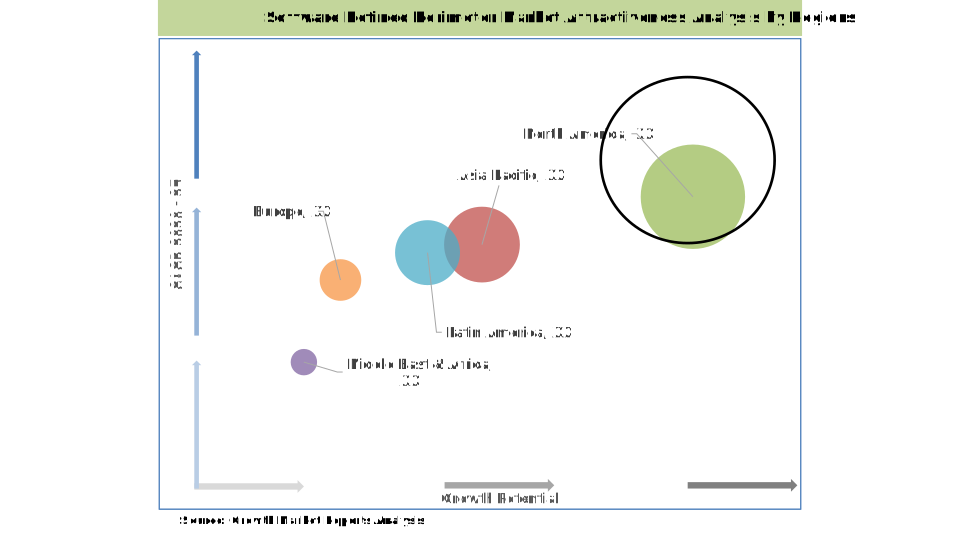
The regional analysis of the Software Defined Perimeter market reveals distinct adoption patterns, growth drivers, and market dynamics across key geographies. North America leads the global SDP market, accounting for approximately USD 2.3 billion in 2024. The region’s dominance is underpinned by advanced digital infrastructure, high cybersecurity awareness, and a stringent regulatory environment. The United States, in particular, is a major contributor, with enterprises across BFSI, government, healthcare, and technology sectors prioritizing zero-trust security frameworks. The presence of leading technology vendors, robust investment in research and development, and a mature ecosystem of managed security service providers further bolster North America’s leadership in the global market.

Europe is the second-largest market, valued at around USD 1.3 billion in 2024, driven by increasing digitalization, rising cyber risk exposure, and regulatory mandates such as GDPR. Countries like the United Kingdom, Germany, and France are at the forefront of SDP adoption, leveraging advanced security solutions to protect critical infrastructure, financial systems, and sensitive data. The region’s focus on data privacy, cross-border collaboration, and public-private partnerships is fostering innovation and accelerating the deployment of SDP platforms across diverse industry verticals. Europe’s SDP market is projected to grow at a CAGR of 27.2% through 2033, reflecting sustained investment and adoption momentum.

The Asia Pacific region is emerging as a high-growth market, with a 2024 value of approximately USD 900 million. Rapid digital transformation, expanding cloud adoption, and increasing cyber threats are driving demand for advanced security solutions in countries such as China, India, Japan, and Australia. Government initiatives promoting secure digital ecosystems, coupled with rising investments in cybersecurity infrastructure, are propelling market growth. Asia Pacific is expected to register the highest CAGR globally, making it a focal point for vendor expansion and innovation. Meanwhile, Latin America and the Middle East & Africa are gradually embracing SDP as digital ecosystems mature and cyber risk awareness increases, with combined market values totaling around USD 700 million in 2024. While these regions represent a smaller share of the global market, they offer significant long-term growth potential as organizations prioritize digital security and resilience.

Software Defined Perimeter Market Statistics

Competitor Outlook

The competitive landscape of the Software Defined Perimeter market is characterized by intense rivalry, rapid innovation, and a dynamic mix of global technology giants, specialized cybersecurity vendors, and emerging startups. Leading players are investing heavily in research and development to enhance the functionality, scalability, and interoperability of their SDP solutions. The market is witnessing a wave of strategic partnerships, mergers, and acquisitions as companies seek to expand their product portfolios, enter new markets, and capitalize on synergies. The ability to deliver end-to-end, integrated security platforms that address the full spectrum of customer needs is a key differentiator in this competitive environment.

Innovation is at the heart of the SDP market, with vendors continuously introducing new features, capabilities, and delivery models to stay ahead of evolving cyber threats. The integration of artificial intelligence, machine learning, and automation into SDP platforms is enabling real-time threat detection, predictive analytics, and automated response, significantly enhancing the value proposition for customers. Vendors are also focusing on user experience, offering intuitive interfaces, centralized management, and seamless integration with existing IT ecosystems. Customization, scalability, and support for multi-cloud and hybrid environments are becoming essential criteria for buyer decision-making.

The market is also witnessing the rise of managed security service providers (MSSPs) and channel partners, who are playing a critical role in driving adoption, especially among small and medium enterprises. These partners offer value-added services such as consulting, integration, training, and ongoing support, enabling organizations to overcome resource constraints and maximize the benefits of SDP deployments. The growing emphasis on regulatory compliance, data privacy, and industry-specific requirements is prompting vendors to develop tailored solutions and services that address the unique needs of different sectors.

Major companies operating in the global Software Defined Perimeter market include Cisco Systems, Inc., Akamai Technologies, Inc., Palo Alto Networks, Inc., Check Point Software Technologies Ltd., Broadcom Inc., Fortinet, Inc., IBM Corporation, Symantec Corporation, Cloudflare, Inc., and Verizon Communications Inc. These industry leaders are known for their comprehensive product portfolios, global reach, and strong customer relationships. Cisco Systems, for example, offers a robust suite of SDP solutions integrated with its broader security and networking platforms, while Akamai Technologies leverages its global content delivery network to deliver scalable, cloud-based SDP services. Palo Alto Networks and Check Point Software Technologies are recognized for their innovation in zero-trust security and advanced threat protection, catering to the needs of large enterprises and government agencies.

Broadcom Inc. and Fortinet, Inc. are making significant investments in integrating SDP with endpoint protection, network security, and cloud access security broker (CASB) solutions, offering holistic security platforms for hybrid and multi-cloud environments. IBM Corporation and Symantec Corporation are leveraging their expertise in artificial intelligence and analytics to deliver intelligent, adaptive SDP solutions that enhance threat detection and response. Cloudflare, Inc. is known for its cloud-native approach, providing scalable and easy-to-deploy SDP services for organizations of all sizes. Verizon Communications Inc. is leveraging its telecommunications infrastructure and managed security services to deliver end-to-end SDP solutions for enterprises and government clients.

In addition to these established players, the market is witnessing the emergence of innovative startups and niche vendors focused on specific aspects of SDP, such as identity-centric security, micro-segmentation, and adaptive access control. These companies are driving innovation, challenging incumbents, and expanding the range of options available to customers. The competitive landscape is expected to remain dynamic, with ongoing consolidation, technological advancements, and evolving customer needs shaping the future of the Software Defined Perimeter market.

Key Players

  • Cisco Systems, Inc.
  • Check Point Software Technologies Ltd.
  • Palo Alto Networks, Inc.
  • Akamai Technologies, Inc.
  • Fortinet, Inc.
  • Zscaler, Inc.
  • Broadcom Inc. (Symantec)
  • IBM Corporation
  • Google LLC (BeyondCorp)
  • Microsoft Corporation
  • Appgate, Inc.
  • Okta, Inc.
  • Nok Nok Labs, Inc.
  • Centrify Corporation
  • CloudPassage, Inc.
  • Vidder, Inc.
  • Catbird Networks, Inc.
  • DH2i Company
  • Perimeter 81
  • Safe-T Group Ltd.
Software Defined Perimeter Market Overview

Segments

The Software Defined Perimeter market has been segmented on the basis of

Component

  • Solutions
  • Services

Deployment Mode

  • On-Premises
  • Cloud

Organization Size

  • Small and Medium Enterprises
  • Large Enterprises

End-User

  • BFSI
  • IT and Telecom
  • Government and Defense
  • Healthcare
  • Retail and E-commerce
  • Manufacturing
  • Others

Competitive Landscape

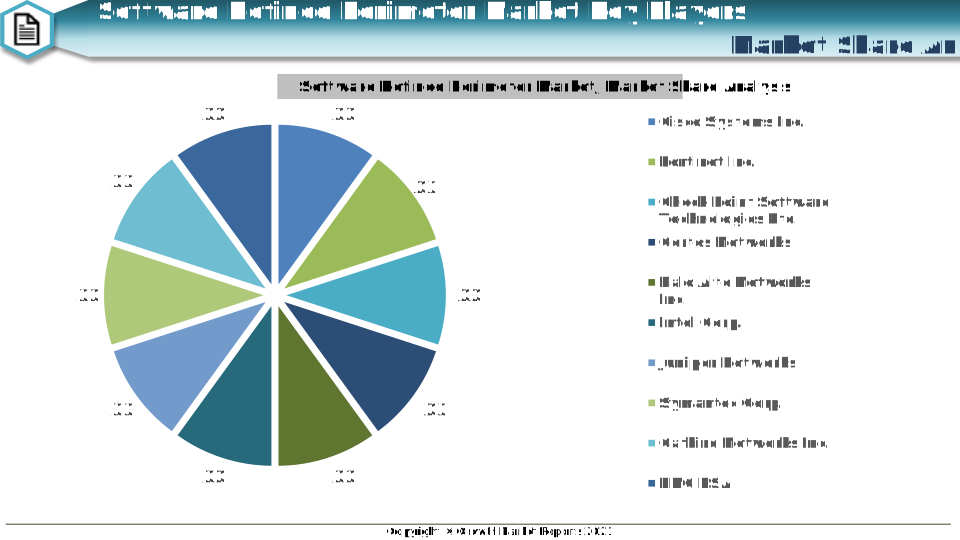
Key players competing in the global software defined perimeter market are Cisco Systems Inc.; Fortinet Inc.; Check Point Software Technologies Ltd.; Certes Networks; Palo Alto Networks Inc.; Intel Corp.; Juniper Networks; Symantec Corp.; Catbird Networks Inc.; and EMC RSA

Companies are focusing on investment in R&D for the development of cost effective and more secure SDP solutions for the market. Furthermore, companies are widely engaging in strategic partnership, merger & acquisition, new product launch, and collaborations to boost their market share and acquiring new buyers. For instance, in May 2017, Verizon the U.S. based wireless network operator announced a launch of SDP services. This services are developed for enterprises to block and identify cyber-attacks by creating a virtual perimeter around the network.

In January 2019, ForceNock security Ltd., a web Application and Application Program Interface protection start-up in Israel acquired by Check Point Software Technologies Ltd. This acquisition was aimed to integrate the ForceNock’s technology into Checkpoints Infinity Architecture to strengthen its machine learning capabilities and provide highest security against cyber-attacks.

Software Defined Perimeter Market

Frequently Asked Questions

AI and machine learning are enhancing SDP platforms with real-time threat detection, automated response, adaptive policy enforcement, and predictive risk analytics.

Challenges include complexity of integration with legacy systems, need for skilled personnel, potential vendor lock-in, and ensuring interoperability with existing security infrastructure.

Key vendors include Cisco Systems, Akamai Technologies, Palo Alto Networks, Check Point Software Technologies, Broadcom (Symantec), Fortinet, IBM, Cloudflare, Verizon, and others.

North America leads the global SDP market, followed by Europe and Asia Pacific. Asia Pacific is expected to experience the highest growth rate through 2033.

SMEs are increasingly adopting cloud-based and managed SDP services to access enterprise-grade security without large capital investments or specialized expertise.

SDP solutions can be deployed on-premises or via the cloud, with hybrid models combining both approaches to balance security, scalability, and cost.

Major adopters include BFSI (banking, financial services, and insurance), IT and telecom, government and defense, healthcare, retail and e-commerce, and manufacturing.

Key growth drivers include the rising frequency and sophistication of cyber threats, increased adoption of cloud and remote work, regulatory pressures for data protection, and the need for dynamic, zero-trust security architectures.

The SDP market is expected to grow at a compound annual growth rate (CAGR) of 28.4% from 2025 to 2033, reaching USD 49.6 billion by 2033.

As of 2024, the global Software Defined Perimeter (SDP) market is valued at USD 5.2 billion, reflecting rapid adoption across various industries.

Table Of Content

Chapter 1 Executive Summary
Chapter 2 Assumptions and Acronyms Used
Chapter 3 Research Methodology
Chapter 4 Software Defined Perimeter Market Overview
   4.1 Introduction
      4.1.1 Market Taxonomy
      4.1.2 Market Definition
      4.1.3 Macro-Economic Factors Impacting the Market Growth
   4.2 Software Defined Perimeter Market Dynamics
      4.2.1 Market Drivers
      4.2.2 Market Restraints
      4.2.3 Market Opportunity
   4.3 Software Defined Perimeter Market - Supply Chain Analysis
      4.3.1 List of Key Suppliers
      4.3.2 List of Key Distributors
      4.3.3 List of Key Consumers
   4.4 Key Forces Shaping the Software Defined Perimeter Market
      4.4.1 Bargaining Power of Suppliers
      4.4.2 Bargaining Power of Buyers
      4.4.3 Threat of Substitution
      4.4.4 Threat of New Entrants
      4.4.5 Competitive Rivalry
   4.5 Global Software Defined Perimeter Market Size & Forecast, 2023-2032
      4.5.1 Software Defined Perimeter Market Size and Y-o-Y Growth
      4.5.2 Software Defined Perimeter Market Absolute $ Opportunity

Chapter 5 Global Software Defined Perimeter Market Analysis and Forecast By Component
   5.1 Introduction
      5.1.1 Key Market Trends & Growth Opportunities By Component
      5.1.2 Basis Point Share (BPS) Analysis By Component
      5.1.3 Absolute $ Opportunity Assessment By Component
   5.2 Software Defined Perimeter Market Size Forecast By Component
      5.2.1 Solutions
      5.2.2 Services
   5.3 Market Attractiveness Analysis By Component

Chapter 6 Global Software Defined Perimeter Market Analysis and Forecast By Deployment Mode
   6.1 Introduction
      6.1.1 Key Market Trends & Growth Opportunities By Deployment Mode
      6.1.2 Basis Point Share (BPS) Analysis By Deployment Mode
      6.1.3 Absolute $ Opportunity Assessment By Deployment Mode
   6.2 Software Defined Perimeter Market Size Forecast By Deployment Mode
      6.2.1 On-Premises
      6.2.2 Cloud
   6.3 Market Attractiveness Analysis By Deployment Mode

Chapter 7 Global Software Defined Perimeter Market Analysis and Forecast By Organization Size
   7.1 Introduction
      7.1.1 Key Market Trends & Growth Opportunities By Organization Size
      7.1.2 Basis Point Share (BPS) Analysis By Organization Size
      7.1.3 Absolute $ Opportunity Assessment By Organization Size
   7.2 Software Defined Perimeter Market Size Forecast By Organization Size
      7.2.1 Small and Medium Enterprises
      7.2.2 Large Enterprises
   7.3 Market Attractiveness Analysis By Organization Size

Chapter 8 Global Software Defined Perimeter Market Analysis and Forecast By End-User
   8.1 Introduction
      8.1.1 Key Market Trends & Growth Opportunities By End-User
      8.1.2 Basis Point Share (BPS) Analysis By End-User
      8.1.3 Absolute $ Opportunity Assessment By End-User
   8.2 Software Defined Perimeter Market Size Forecast By End-User
      8.2.1 BFSI
      8.2.2 IT and Telecom
      8.2.3 Government and Defense
      8.2.4 Healthcare
      8.2.5 Retail and E-commerce
      8.2.6 Manufacturing
      8.2.7 Others
   8.3 Market Attractiveness Analysis By End-User

Chapter 9 Global Software Defined Perimeter Market Analysis and Forecast by Region
   9.1 Introduction
      9.1.1 Key Market Trends & Growth Opportunities By Region
      9.1.2 Basis Point Share (BPS) Analysis By Region
      9.1.3 Absolute $ Opportunity Assessment By Region
   9.2 Software Defined Perimeter Market Size Forecast By Region
      9.2.1 North America
      9.2.2 Europe
      9.2.3 Asia Pacific
      9.2.4 Latin America
      9.2.5 Middle East & Africa (MEA)
   9.3 Market Attractiveness Analysis By Region

Chapter 10 Coronavirus Disease (COVID-19) Impact 
   10.1 Introduction 
   10.2 Current & Future Impact Analysis 
   10.3 Economic Impact Analysis 
   10.4 Government Policies 
   10.5 Investment Scenario

Chapter 11 North America Software Defined Perimeter Analysis and Forecast
   11.1 Introduction
   11.2 North America Software Defined Perimeter Market Size Forecast by Country
      11.2.1 U.S.
      11.2.2 Canada
   11.3 Basis Point Share (BPS) Analysis by Country
   11.4 Absolute $ Opportunity Assessment by Country
   11.5 Market Attractiveness Analysis by Country
   11.6 North America Software Defined Perimeter Market Size Forecast By Component
      11.6.1 Solutions
      11.6.2 Services
   11.7 Basis Point Share (BPS) Analysis By Component 
   11.8 Absolute $ Opportunity Assessment By Component 
   11.9 Market Attractiveness Analysis By Component
   11.10 North America Software Defined Perimeter Market Size Forecast By Deployment Mode
      11.10.1 On-Premises
      11.10.2 Cloud
   11.11 Basis Point Share (BPS) Analysis By Deployment Mode 
   11.12 Absolute $ Opportunity Assessment By Deployment Mode 
   11.13 Market Attractiveness Analysis By Deployment Mode
   11.14 North America Software Defined Perimeter Market Size Forecast By Organization Size
      11.14.1 Small and Medium Enterprises
      11.14.2 Large Enterprises
   11.15 Basis Point Share (BPS) Analysis By Organization Size 
   11.16 Absolute $ Opportunity Assessment By Organization Size 
   11.17 Market Attractiveness Analysis By Organization Size
   11.18 North America Software Defined Perimeter Market Size Forecast By End-User
      11.18.1 BFSI
      11.18.2 IT and Telecom
      11.18.3 Government and Defense
      11.18.4 Healthcare
      11.18.5 Retail and E-commerce
      11.18.6 Manufacturing
      11.18.7 Others
   11.19 Basis Point Share (BPS) Analysis By End-User 
   11.20 Absolute $ Opportunity Assessment By End-User 
   11.21 Market Attractiveness Analysis By End-User

Chapter 12 Europe Software Defined Perimeter Analysis and Forecast
   12.1 Introduction
   12.2 Europe Software Defined Perimeter Market Size Forecast by Country
      12.2.1 Germany
      12.2.2 France
      12.2.3 Italy
      12.2.4 U.K.
      12.2.5 Spain
      12.2.6 Russia
      12.2.7 Rest of Europe
   12.3 Basis Point Share (BPS) Analysis by Country
   12.4 Absolute $ Opportunity Assessment by Country
   12.5 Market Attractiveness Analysis by Country
   12.6 Europe Software Defined Perimeter Market Size Forecast By Component
      12.6.1 Solutions
      12.6.2 Services
   12.7 Basis Point Share (BPS) Analysis By Component 
   12.8 Absolute $ Opportunity Assessment By Component 
   12.9 Market Attractiveness Analysis By Component
   12.10 Europe Software Defined Perimeter Market Size Forecast By Deployment Mode
      12.10.1 On-Premises
      12.10.2 Cloud
   12.11 Basis Point Share (BPS) Analysis By Deployment Mode 
   12.12 Absolute $ Opportunity Assessment By Deployment Mode 
   12.13 Market Attractiveness Analysis By Deployment Mode
   12.14 Europe Software Defined Perimeter Market Size Forecast By Organization Size
      12.14.1 Small and Medium Enterprises
      12.14.2 Large Enterprises
   12.15 Basis Point Share (BPS) Analysis By Organization Size 
   12.16 Absolute $ Opportunity Assessment By Organization Size 
   12.17 Market Attractiveness Analysis By Organization Size
   12.18 Europe Software Defined Perimeter Market Size Forecast By End-User
      12.18.1 BFSI
      12.18.2 IT and Telecom
      12.18.3 Government and Defense
      12.18.4 Healthcare
      12.18.5 Retail and E-commerce
      12.18.6 Manufacturing
      12.18.7 Others
   12.19 Basis Point Share (BPS) Analysis By End-User 
   12.20 Absolute $ Opportunity Assessment By End-User 
   12.21 Market Attractiveness Analysis By End-User

Chapter 13 Asia Pacific Software Defined Perimeter Analysis and Forecast
   13.1 Introduction
   13.2 Asia Pacific Software Defined Perimeter Market Size Forecast by Country
      13.2.1 China
      13.2.2 Japan
      13.2.3 South Korea
      13.2.4 India
      13.2.5 Australia
      13.2.6 South East Asia (SEA)
      13.2.7 Rest of Asia Pacific (APAC)
   13.3 Basis Point Share (BPS) Analysis by Country
   13.4 Absolute $ Opportunity Assessment by Country
   13.5 Market Attractiveness Analysis by Country
   13.6 Asia Pacific Software Defined Perimeter Market Size Forecast By Component
      13.6.1 Solutions
      13.6.2 Services
   13.7 Basis Point Share (BPS) Analysis By Component 
   13.8 Absolute $ Opportunity Assessment By Component 
   13.9 Market Attractiveness Analysis By Component
   13.10 Asia Pacific Software Defined Perimeter Market Size Forecast By Deployment Mode
      13.10.1 On-Premises
      13.10.2 Cloud
   13.11 Basis Point Share (BPS) Analysis By Deployment Mode 
   13.12 Absolute $ Opportunity Assessment By Deployment Mode 
   13.13 Market Attractiveness Analysis By Deployment Mode
   13.14 Asia Pacific Software Defined Perimeter Market Size Forecast By Organization Size
      13.14.1 Small and Medium Enterprises
      13.14.2 Large Enterprises
   13.15 Basis Point Share (BPS) Analysis By Organization Size 
   13.16 Absolute $ Opportunity Assessment By Organization Size 
   13.17 Market Attractiveness Analysis By Organization Size
   13.18 Asia Pacific Software Defined Perimeter Market Size Forecast By End-User
      13.18.1 BFSI
      13.18.2 IT and Telecom
      13.18.3 Government and Defense
      13.18.4 Healthcare
      13.18.5 Retail and E-commerce
      13.18.6 Manufacturing
      13.18.7 Others
   13.19 Basis Point Share (BPS) Analysis By End-User 
   13.20 Absolute $ Opportunity Assessment By End-User 
   13.21 Market Attractiveness Analysis By End-User

Chapter 14 Latin America Software Defined Perimeter Analysis and Forecast
   14.1 Introduction
   14.2 Latin America Software Defined Perimeter Market Size Forecast by Country
      14.2.1 Brazil
      14.2.2 Mexico
      14.2.3 Rest of Latin America (LATAM)
   14.3 Basis Point Share (BPS) Analysis by Country
   14.4 Absolute $ Opportunity Assessment by Country
   14.5 Market Attractiveness Analysis by Country
   14.6 Latin America Software Defined Perimeter Market Size Forecast By Component
      14.6.1 Solutions
      14.6.2 Services
   14.7 Basis Point Share (BPS) Analysis By Component 
   14.8 Absolute $ Opportunity Assessment By Component 
   14.9 Market Attractiveness Analysis By Component
   14.10 Latin America Software Defined Perimeter Market Size Forecast By Deployment Mode
      14.10.1 On-Premises
      14.10.2 Cloud
   14.11 Basis Point Share (BPS) Analysis By Deployment Mode 
   14.12 Absolute $ Opportunity Assessment By Deployment Mode 
   14.13 Market Attractiveness Analysis By Deployment Mode
   14.14 Latin America Software Defined Perimeter Market Size Forecast By Organization Size
      14.14.1 Small and Medium Enterprises
      14.14.2 Large Enterprises
   14.15 Basis Point Share (BPS) Analysis By Organization Size 
   14.16 Absolute $ Opportunity Assessment By Organization Size 
   14.17 Market Attractiveness Analysis By Organization Size
   14.18 Latin America Software Defined Perimeter Market Size Forecast By End-User
      14.18.1 BFSI
      14.18.2 IT and Telecom
      14.18.3 Government and Defense
      14.18.4 Healthcare
      14.18.5 Retail and E-commerce
      14.18.6 Manufacturing
      14.18.7 Others
   14.19 Basis Point Share (BPS) Analysis By End-User 
   14.20 Absolute $ Opportunity Assessment By End-User 
   14.21 Market Attractiveness Analysis By End-User

Chapter 15 Middle East & Africa (MEA) Software Defined Perimeter Analysis and Forecast
   15.1 Introduction
   15.2 Middle East & Africa (MEA) Software Defined Perimeter Market Size Forecast by Country
      15.2.1 Saudi Arabia
      15.2.2 South Africa
      15.2.3 UAE
      15.2.4 Rest of Middle East & Africa (MEA)
   15.3 Basis Point Share (BPS) Analysis by Country
   15.4 Absolute $ Opportunity Assessment by Country
   15.5 Market Attractiveness Analysis by Country
   15.6 Middle East & Africa (MEA) Software Defined Perimeter Market Size Forecast By Component
      15.6.1 Solutions
      15.6.2 Services
   15.7 Basis Point Share (BPS) Analysis By Component 
   15.8 Absolute $ Opportunity Assessment By Component 
   15.9 Market Attractiveness Analysis By Component
   15.10 Middle East & Africa (MEA) Software Defined Perimeter Market Size Forecast By Deployment Mode
      15.10.1 On-Premises
      15.10.2 Cloud
   15.11 Basis Point Share (BPS) Analysis By Deployment Mode 
   15.12 Absolute $ Opportunity Assessment By Deployment Mode 
   15.13 Market Attractiveness Analysis By Deployment Mode
   15.14 Middle East & Africa (MEA) Software Defined Perimeter Market Size Forecast By Organization Size
      15.14.1 Small and Medium Enterprises
      15.14.2 Large Enterprises
   15.15 Basis Point Share (BPS) Analysis By Organization Size 
   15.16 Absolute $ Opportunity Assessment By Organization Size 
   15.17 Market Attractiveness Analysis By Organization Size
   15.18 Middle East & Africa (MEA) Software Defined Perimeter Market Size Forecast By End-User
      15.18.1 BFSI
      15.18.2 IT and Telecom
      15.18.3 Government and Defense
      15.18.4 Healthcare
      15.18.5 Retail and E-commerce
      15.18.6 Manufacturing
      15.18.7 Others
   15.19 Basis Point Share (BPS) Analysis By End-User 
   15.20 Absolute $ Opportunity Assessment By End-User 
   15.21 Market Attractiveness Analysis By End-User

Chapter 16 Competition Landscape 
   16.1 Software Defined Perimeter Market: Competitive Dashboard
   16.2 Global Software Defined Perimeter Market: Market Share Analysis, 2023
   16.3 Company Profiles (Details – Overview, Financials, Developments, Strategy) 
      16.3.1 Cisco Systems, Inc.
Check Point Software Technologies Ltd.
Palo Alto Networks, Inc.
Akamai Technologies, Inc.
Fortinet, Inc.
Zscaler, Inc.
Broadcom Inc. (Symantec)
IBM Corporation
Google LLC (BeyondCorp)
Microsoft Corporation
Appgate, Inc.
Okta, Inc.
Nok Nok Labs, Inc.
Centrify Corporation
CloudPassage, Inc.
Vidder, Inc.
Catbird Networks, Inc.
DH2i Company
Perimeter 81
Safe-T Group Ltd.

Methodology

Our Clients

The John Holland Group
Honda Motor Co. Ltd.
Siemens Healthcare
General Mills
Microsoft
FedEx Logistics
General Electric
Pfizer