Smartphone Sanitizer Market Research Report 2033

Smartphone Sanitizer Market Research Report 2033

Segments - by Product Type (Phone Sanitizing Devices, Cleaning Wipes, UV-C Sanitizers, Sprays, Others), by Technology (UV-C Light, Alcohol-Based, Others), by Distribution Channel (Online Stores, Retail Stores, Specialty Stores, Others), by End-User (Residential, Commercial, Healthcare, Others)

https://growthmarketreports.com/Debadatta
Author : Debadatta Patel
https://growthmarketreports.com/Vaibhav
Fact-checked by : V. Chandola
https://growthmarketreports.com/Shruti
Editor : Shruti Bhat

Upcoming | Report ID :CG-404 | 4.5 Rating | 97 Reviews | 294 Pages | Format : Docx PDF

Report Description


Smartphone Sanitizer Market Outlook

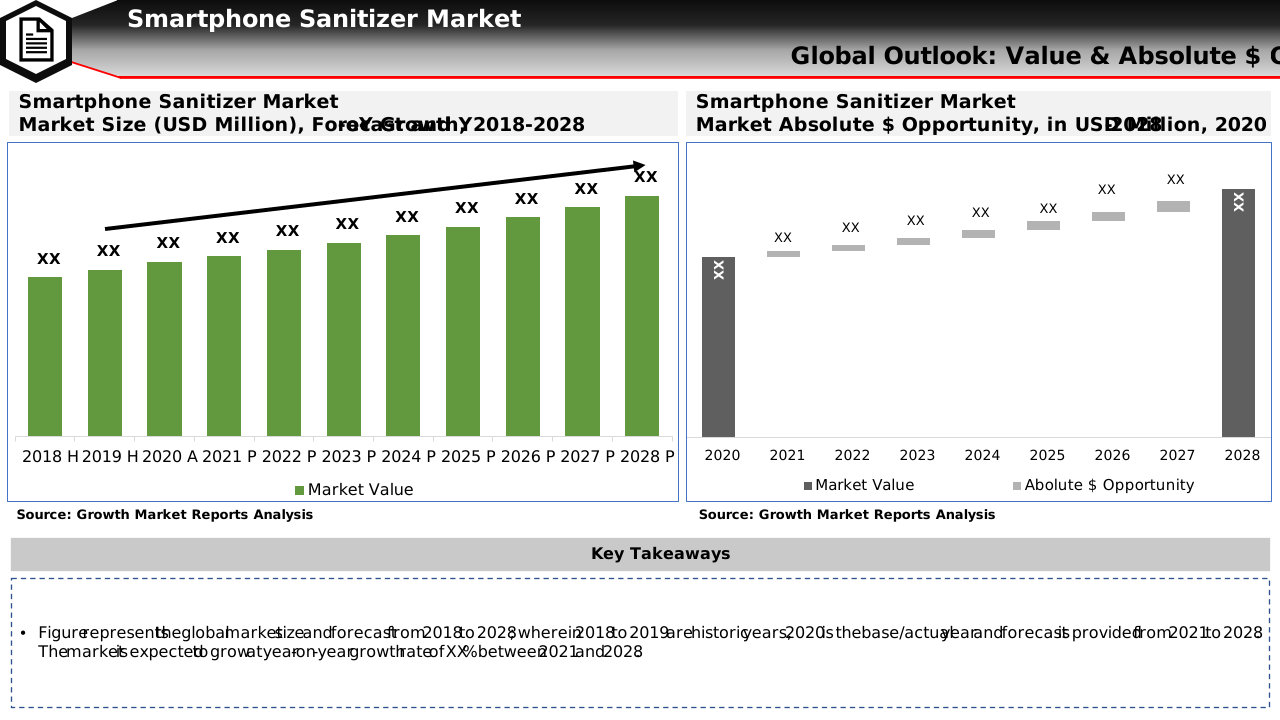
According to our latest research, the global smartphone sanitizer market size reached USD 2.14 billion in 2024, driven by increasing consumer awareness of hygiene and infection prevention. The market is expected to grow at a robust CAGR of 11.8% from 2025 to 2033, reaching a forecasted value of USD 5.85 billion by 2033. The rapid adoption of smartphones, coupled with heightened concerns about bacterial and viral contamination, continues to propel demand for effective and convenient smartphone sanitizing solutions worldwide.

A key growth factor for the smartphone sanitizer market is the growing public awareness regarding the dangers of microbial contamination on mobile devices. Studies have shown that smartphones can harbor more bacteria than toilet seats, making them a significant vector for disease transmission. The COVID-19 pandemic, in particular, heightened consumer consciousness about personal hygiene, leading to a surge in demand for smartphone sanitizers. As consumers seek products that ensure the cleanliness of their devices, manufacturers have responded by launching innovative and user-friendly sanitizing solutions. This trend is expected to persist as hygiene remains a top priority for both individuals and organizations, further fueling market growth.

Technological advancements in smartphone sanitization products are another major driver of market expansion. The integration of UV-C light technology in phone sanitizing devices has garnered significant attention due to its proven efficacy in eliminating up to 99.9% of bacteria and viruses. Companies are investing in research and development to enhance the efficiency, portability, and speed of their products, making them more appealing to both residential and commercial end-users. Additionally, the introduction of alcohol-based sprays, antimicrobial wipes, and multi-functional sanitizing stations has diversified the product landscape, catering to a wide range of consumer preferences and needs. This continuous innovation is expected to sustain the momentum of the smartphone sanitizer market in the coming years.

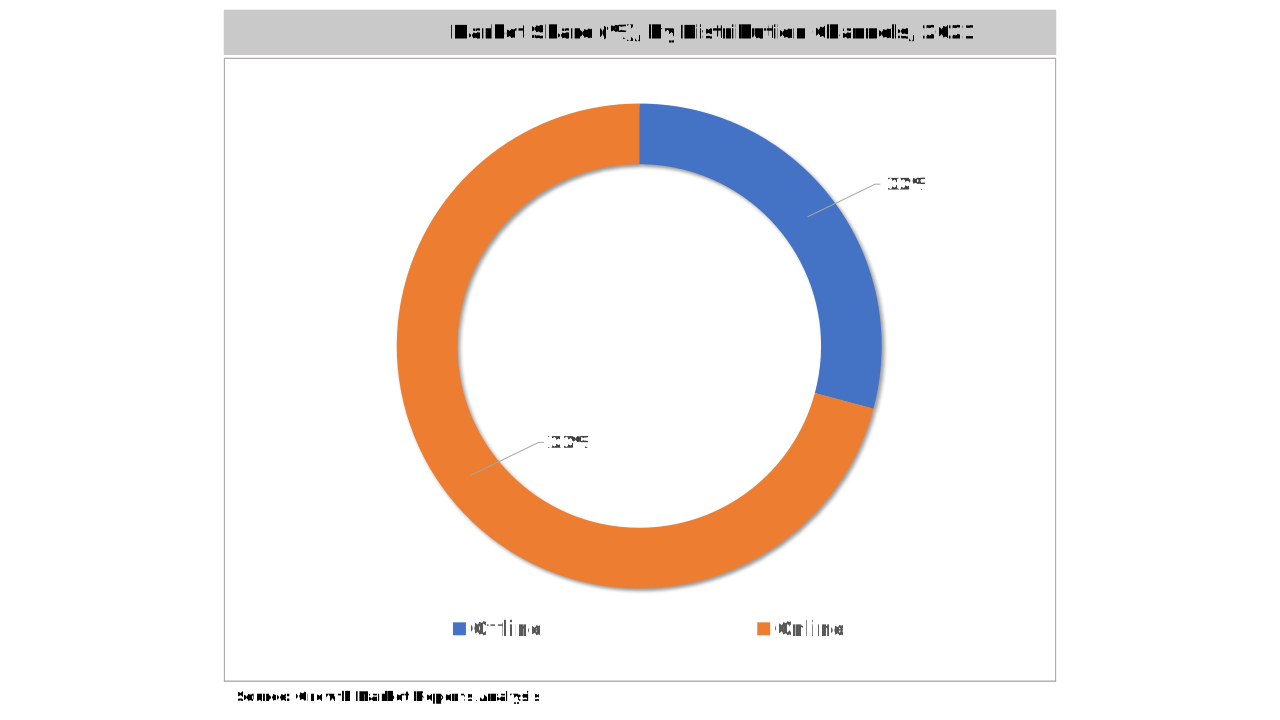
Another important growth factor is the expansion of distribution channels, particularly online retail. The proliferation of e-commerce platforms has made smartphone sanitizers more accessible to consumers across the globe. Major brands and emerging players alike are leveraging digital marketing strategies and partnerships with leading online retailers to reach a broader customer base. The convenience of home delivery, coupled with detailed product information and customer reviews, has contributed to the rising popularity of online purchases. Furthermore, specialty stores and retail chains are also expanding their offerings, ensuring that consumers can easily find suitable sanitizing solutions in both physical and digital marketplaces.

Regionally, North America currently dominates the smartphone sanitizer market, accounting for the largest share in 2024, followed closely by Europe and Asia Pacific. The United States, in particular, has witnessed significant adoption of smartphone sanitizers due to high smartphone penetration rates and heightened awareness of hygiene standards. Meanwhile, Asia Pacific is anticipated to exhibit the fastest growth during the forecast period, driven by rising disposable incomes, increasing smartphone usage, and growing health consciousness among consumers in countries such as China, Japan, and India. Europe remains a key market, with strong demand from both residential and healthcare sectors. As the market continues to expand globally, regional players are expected to play a pivotal role in shaping the competitive landscape.

Global Smartphone Sanitizer Industry Outlook

Product Type Analysis

The smartphone sanitizer market is segmented by product type into phone sanitizing devices, cleaning wipes, UV-C sanitizers, sprays, and others. Phone sanitizing devices have emerged as the leading product category, driven by their effectiveness and convenience. These devices typically use UV-C light or other advanced technologies to eliminate germs from smartphones within minutes. The growing popularity of wireless charging and portable sanitizing boxes has further boosted demand for these devices, especially among tech-savvy consumers and professionals who require frequent device cleaning. Manufacturers are focusing on enhancing the portability and efficiency of phone sanitizing devices to cater to the evolving needs of users, making this segment a major contributor to overall market growth.

Cleaning wipes represent another significant product segment, offering a simple and quick solution for on-the-go sanitization. These wipes are impregnated with antimicrobial agents or alcohol-based solutions, making them effective against a broad spectrum of pathogens. The convenience and affordability of cleaning wipes have made them a popular choice among consumers, particularly for travel and daily use. The segment has witnessed increased demand from both residential and commercial users, including offices, educational institutions, and healthcare facilities. As concerns about cross-contamination persist, manufacturers are introducing eco-friendly and biodegradable options to appeal to environmentally conscious customers.

The UV-C sanitizers segment has gained substantial traction due to its scientific backing and ability to provide thorough sanitization without the use of chemicals. UV-C sanitizers are available in various forms, including portable wands, boxes, and multi-device stations. Their effectiveness in neutralizing viruses and bacteria, combined with user-friendly designs, has made them a preferred choice for consumers seeking advanced cleaning solutions. The segment is expected to witness continued innovation, with manufacturers incorporating features such as wireless charging, automatic shutoff, and compatibility with multiple device sizes. The increasing adoption of UV-C sanitizers in healthcare and commercial settings further underscores their importance in the market.

Sprays and other emerging products, such as antimicrobial films and device-safe cleaning solutions, are also contributing to the diversification of the smartphone sanitizer market. Sprays offer a convenient way to sanitize devices quickly, often incorporating alcohol-based or natural disinfectants. These products are particularly popular among users who prefer liquid-based cleaning methods or require frequent sanitization throughout the day. The "others" category includes innovative solutions such as antimicrobial coatings and self-cleaning phone cases, which are gaining attention for their long-lasting protection. As consumer preferences evolve, manufacturers are expected to introduce new product formats that combine effectiveness, safety, and ease of use.

Report Scope

Attributes Details
Report Title Smartphone Sanitizer Market Research Report 2033
By Product Type Phone Sanitizing Devices, Cleaning Wipes, UV-C Sanitizers, Sprays, Others
By Technology UV-C Light, Alcohol-Based, Others
By Distribution Channel Online Stores, Retail Stores, Specialty Stores, Others
By End-User Residential, Commercial, Healthcare, Others
Regions Covered North America, Europe, APAC, Latin America, MEA
Base Year 2024
Historic Data 2018-2023
Forecast Period 2025-2033
Number of Pages 294
Number of Tables & Figures 321
Customization Available Yes, the report can be customized as per your need.

Technology Analysis

The smartphone sanitizer market is segmented by technology into UV-C light, alcohol-based, and other technologies. UV-C light technology has emerged as the dominant segment, owing to its proven ability to destroy the DNA and RNA of microorganisms, rendering them inactive. UV-C sanitizers are widely used in both residential and commercial applications due to their non-toxic and residue-free nature. The technology's effectiveness against a broad range of pathogens, including bacteria, viruses, and fungi, has made it a preferred choice among consumers. Manufacturers are investing in research and development to improve the safety, efficiency, and portability of UV-C devices, ensuring compliance with regulatory standards and user safety.

Alcohol-based sanitization technology remains a staple in the market, particularly in the form of cleaning wipes and sprays. Alcohol-based products are valued for their rapid action and broad-spectrum efficacy against common pathogens. These solutions are widely used in healthcare settings, offices, and households, where quick and effective sanitization is essential. The segment benefits from consumer familiarity and trust in alcohol as a disinfectant, as well as its availability in various convenient formats. However, concerns about potential damage to device coatings and screens have prompted manufacturers to develop formulations that are both effective and safe for use on electronic devices.

The "others" category encompasses emerging technologies such as ozone sanitization, antimicrobial coatings, and hybrid solutions that combine multiple cleaning methods. Ozone-based sanitizers, for example, leverage the oxidative properties of ozone to neutralize pathogens on smartphone surfaces. Antimicrobial coatings, on the other hand, provide long-lasting protection by inhibiting the growth of microbes on device surfaces. These innovative technologies are gaining traction among consumers seeking advanced and sustainable sanitization solutions. As the market evolves, the adoption of hybrid and next-generation technologies is expected to increase, offering consumers more choices and improved performance.

The technology landscape of the smartphone sanitizer market is characterized by continuous innovation and competition among manufacturers. Companies are striving to develop products that balance efficacy, safety, and user convenience. Regulatory compliance and product certifications play a crucial role in building consumer trust and ensuring market acceptance. As new pathogens and health challenges emerge, the demand for advanced sanitization technologies is expected to rise, driving further growth and diversification in the market.

Distribution Channel Analysis

Distribution channels play a critical role in the growth and accessibility of the smartphone sanitizer market. The market is segmented into online stores, retail stores, specialty stores, and others. Online stores have emerged as the fastest-growing distribution channel, driven by the global shift towards e-commerce and digital shopping. The convenience of browsing, comparing, and purchasing products from the comfort of home has made online platforms the preferred choice for many consumers. Leading e-commerce players, such as Amazon and Alibaba, offer a wide range of smartphone sanitizers, complete with detailed product descriptions, customer reviews, and competitive pricing. The rise of direct-to-consumer brands and subscription models has further accelerated online sales, making this channel a key driver of market expansion.

Retail stores continue to play a significant role in the smartphone sanitizer market, particularly for consumers who prefer to see and test products before making a purchase. Major retail chains and electronics stores have expanded their product offerings to include a variety of sanitizing solutions, catering to the growing demand for device hygiene. In-store promotions, product demonstrations, and knowledgeable staff contribute to a positive shopping experience and help drive sales. Retail stores are especially important in regions with lower internet penetration or where consumers value personal interaction and immediate product availability.

Specialty stores, including health and wellness outlets, electronics boutiques, and mobile accessory shops, have carved out a niche in the distribution landscape. These stores offer curated selections of high-quality smartphone sanitizers, often focusing on premium and innovative products. Specialty stores are well-positioned to serve discerning customers who seek expert advice, personalized recommendations, and exclusive product offerings. The segment is expected to benefit from rising consumer interest in health and technology, as well as the growing trend towards experiential retail.

The "others" category includes alternative distribution channels such as pharmacies, supermarkets, and vending machines. Pharmacies, in particular, have witnessed increased demand for smartphone sanitizers, especially during periods of heightened health concerns. Supermarkets and convenience stores offer accessible and affordable options for everyday consumers, while vending machines provide on-the-go solutions in public spaces such as airports and malls. As the market matures, manufacturers and distributors are likely to explore new and innovative ways to reach consumers, ensuring that smartphone sanitizers are readily available wherever and whenever they are needed.

End-User Analysis

The smartphone sanitizer market serves a diverse range of end-users, including residential, commercial, healthcare, and others. The residential segment represents the largest share of the market, driven by the widespread use of smartphones in households and growing awareness of device hygiene. Consumers are increasingly incorporating smartphone sanitizers into their daily routines, seeking products that are easy to use, effective, and safe for family members. The segment has witnessed strong demand for portable and affordable solutions, such as cleaning wipes and compact UV-C devices, which cater to the needs of individuals and families alike.

Commercial end-users encompass a broad spectrum of businesses and organizations, including offices, educational institutions, hotels, and retail outlets. These entities recognize the importance of maintaining a clean and hygienic environment for employees, customers, and visitors. Smartphone sanitizers are often deployed in shared spaces, meeting rooms, and reception areas to reduce the risk of cross-contamination. The commercial segment benefits from bulk purchasing and customized solutions, such as multi-device sanitizing stations and branded products. As workplace hygiene standards continue to evolve, demand from commercial end-users is expected to remain strong.

The healthcare sector represents a critical end-user segment, given the stringent hygiene requirements in hospitals, clinics, and other medical facilities. Healthcare professionals frequently use smartphones and tablets for communication, patient monitoring, and data management, making device sanitization a top priority. The adoption of UV-C sanitizers and medical-grade cleaning solutions has increased significantly in this segment, driven by the need to prevent healthcare-associated infections (HAIs) and ensure patient safety. Manufacturers are developing specialized products that meet the rigorous standards of healthcare environments, further strengthening the market's presence in this sector.

The "others" category includes niche end-users such as government agencies, transportation providers, and event organizers. These entities often require large-scale or customized sanitization solutions to address specific needs and challenges. For example, public transportation operators may install smartphone sanitizing stations in vehicles and terminals, while event organizers may provide on-site sanitization services for attendees. As the importance of device hygiene continues to grow across various sectors, the market is expected to see increased adoption among a wide range of end-users.

Opportunities & Threats

The smartphone sanitizer market presents significant opportunities for growth and innovation. One of the most promising opportunities lies in the development of smart and connected sanitizing devices. The integration of IoT technology enables real-time monitoring, usage tracking, and remote control of sanitization processes, enhancing convenience and user experience. Manufacturers can leverage data analytics to offer personalized recommendations and maintenance alerts, creating value-added services for consumers. Additionally, the growing demand for eco-friendly and sustainable products presents an opportunity for companies to differentiate themselves through the use of biodegradable materials, energy-efficient technologies, and environmentally responsible manufacturing practices. As consumers become more discerning, brands that prioritize sustainability and innovation are likely to gain a competitive edge in the market.

Another key opportunity is the expansion into emerging markets, where rising smartphone penetration and increasing health awareness are driving demand for sanitizing solutions. Countries in Asia Pacific, Latin America, and the Middle East offer untapped potential for market growth, particularly as disposable incomes rise and access to digital technologies improves. Local partnerships, targeted marketing campaigns, and tailored product offerings can help manufacturers establish a strong presence in these regions. Furthermore, the ongoing threat of infectious diseases and the potential for future pandemics underscore the need for effective sanitization solutions, ensuring sustained demand for smartphone sanitizers in both developed and developing markets.

Despite the positive outlook, the smartphone sanitizer market faces certain restraining factors. One of the primary challenges is the presence of low-cost, counterfeit, or substandard products in the market. These products may fail to deliver the promised level of sanitization, potentially damaging devices or posing health risks to users. The proliferation of unregulated and uncertified products can erode consumer trust and hinder market growth. Manufacturers must prioritize quality assurance, regulatory compliance, and product certification to address these concerns and maintain consumer confidence. Additionally, the high cost of advanced sanitizing devices may limit adoption among price-sensitive consumers, particularly in emerging markets. Overcoming these challenges will be essential for sustained market expansion.

Regional Outlook

Regionally, North America held the largest share of the smartphone sanitizer market in 2024, with a market size of approximately USD 750 million. The region's dominance is attributed to high smartphone penetration rates, strong consumer awareness of hygiene standards, and the presence of leading market players. The United States, in particular, has witnessed widespread adoption of smartphone sanitizers across residential, commercial, and healthcare sectors. Canada and Mexico have also seen increased demand, driven by similar trends. North America is expected to maintain its leadership position during the forecast period, supported by continuous product innovation and robust distribution networks.

Europe accounted for the second-largest share in 2024, with a market size of around USD 600 million. The region benefits from a well-established healthcare infrastructure, high standards of personal hygiene, and strong regulatory oversight. Countries such as Germany, the United Kingdom, and France are key contributors to market growth, with significant adoption in both residential and healthcare settings. The European market is characterized by a strong focus on sustainability and environmental responsibility, driving demand for eco-friendly and energy-efficient sanitizing solutions. The region is expected to grow at a steady CAGR of 10.2% through 2033, supported by ongoing product development and increasing consumer awareness.

Asia Pacific is projected to be the fastest-growing region, with a market size of USD 500 million in 2024 and an anticipated CAGR of 14.5% from 2025 to 2033. Rapid urbanization, rising disposable incomes, and increasing smartphone adoption are key drivers of market growth in countries such as China, India, and Japan. The region's large and youthful population, coupled with growing health consciousness, presents significant opportunities for manufacturers. Local players are expanding their product offerings and distribution networks to meet the diverse needs of consumers. As the market matures, Asia Pacific is expected to emerge as a major hub for smartphone sanitizer innovation and production, contributing significantly to global market expansion.

Smartphone Sanitizer Market Statistics

Competitor Outlook

The smartphone sanitizer market is highly competitive, with a mix of established players and emerging startups vying for market share. The competitive landscape is characterized by rapid innovation, frequent product launches, and strategic partnerships. Leading companies are investing in research and development to enhance the effectiveness, safety, and convenience of their products. They are also expanding their product portfolios to include a wide range of sanitizing solutions, from portable UV-C devices to multi-functional cleaning kits. The emphasis on quality assurance, regulatory compliance, and customer education is paramount, as companies seek to build trust and loyalty among consumers. Mergers, acquisitions, and collaborations are common strategies used to strengthen market presence and accelerate growth.

Brand differentiation is a key focus area for market participants, with companies leveraging unique features, design aesthetics, and value-added services to stand out in a crowded marketplace. For example, some brands offer smartphone sanitizers with wireless charging capabilities, while others emphasize eco-friendly materials and energy-efficient operation. Marketing and promotional activities, including influencer partnerships and social media campaigns, play a crucial role in raising brand awareness and driving consumer engagement. The growing importance of online sales channels has prompted companies to invest in digital marketing, e-commerce platforms, and direct-to-consumer models, further intensifying competition.

The market is also witnessing the entry of new players, particularly startups and technology companies, who are introducing disruptive innovations and challenging established norms. These entrants often focus on niche segments or target specific customer needs, such as antimicrobial coatings for healthcare devices or smart sanitizing stations for commercial spaces. The influx of new competitors has spurred existing players to accelerate their innovation cycles and explore new business models, such as subscription services and product bundling. As the market continues to evolve, agility and adaptability will be critical success factors for companies seeking to capture and retain market share.

Major companies operating in the smartphone sanitizer market include PhoneSoap LLC, HoMedics, CleanSlate UV, Lexon, Samsung Electronics, CASETiFY, Mophie (ZAGG Inc.), 59S, and Verilux. PhoneSoap LLC is renowned for its pioneering UV-C sanitizing devices, which have gained widespread popularity among consumers and healthcare professionals alike. HoMedics offers a diverse range of wellness products, including portable UV sanitizers and cleaning solutions tailored to different device types. CleanSlate UV specializes in commercial-grade sanitizing stations, catering to the needs of hospitals, offices, and public spaces. Lexon and Samsung Electronics have introduced innovative sanitizing devices that combine functionality with sleek design aesthetics, appealing to style-conscious users.

CASETiFY and Mophie (ZAGG Inc.) are prominent players in the mobile accessories market, offering smartphone sanitizers as part of their broader product portfolios. 59S is recognized for its compact and efficient UV-C sanitizing devices, which have gained traction in both residential and commercial markets. Verilux focuses on UV-C technology and energy-efficient solutions, emphasizing safety and user convenience. These companies are continuously expanding their product offerings, distribution networks, and marketing initiatives to capture a larger share of the growing smartphone sanitizer market. As competition intensifies, ongoing innovation, customer-centric strategies, and strategic partnerships will be essential for sustaining leadership and driving long-term success in this dynamic market.

Key Players

  • PhoneSoap
  • HoMedics
  • Casetify
  • Mophie
  • Samsung Electronics
  • Lexon
  • CleanSlate UV
  • 3B Medical
  • Verilux
  • Totallee
  • Sharper Image
  • Philips
  • UV-Clean
  • ZAGG
  • PurLite
  • Tersano
  • SteriShoe
  • GermGuardian
  • Medklinn
  • Violet Defense
Smartphone Sanitizer Market Overview

Segments

The Smartphone Sanitizer market has been segmented on the basis of

Product Type

  • Phone Sanitizing Devices
  • Cleaning Wipes
  • UV-C Sanitizers
  • Sprays
  • Others

Technology

  • UV-C Light
  • Alcohol-Based
  • Others

Distribution Channel

  • Online Stores
  • Retail Stores
  • Specialty Stores
  • Others

End-User

  • Residential
  • Commercial
  • Healthcare
  • Others

Competitive Landscape

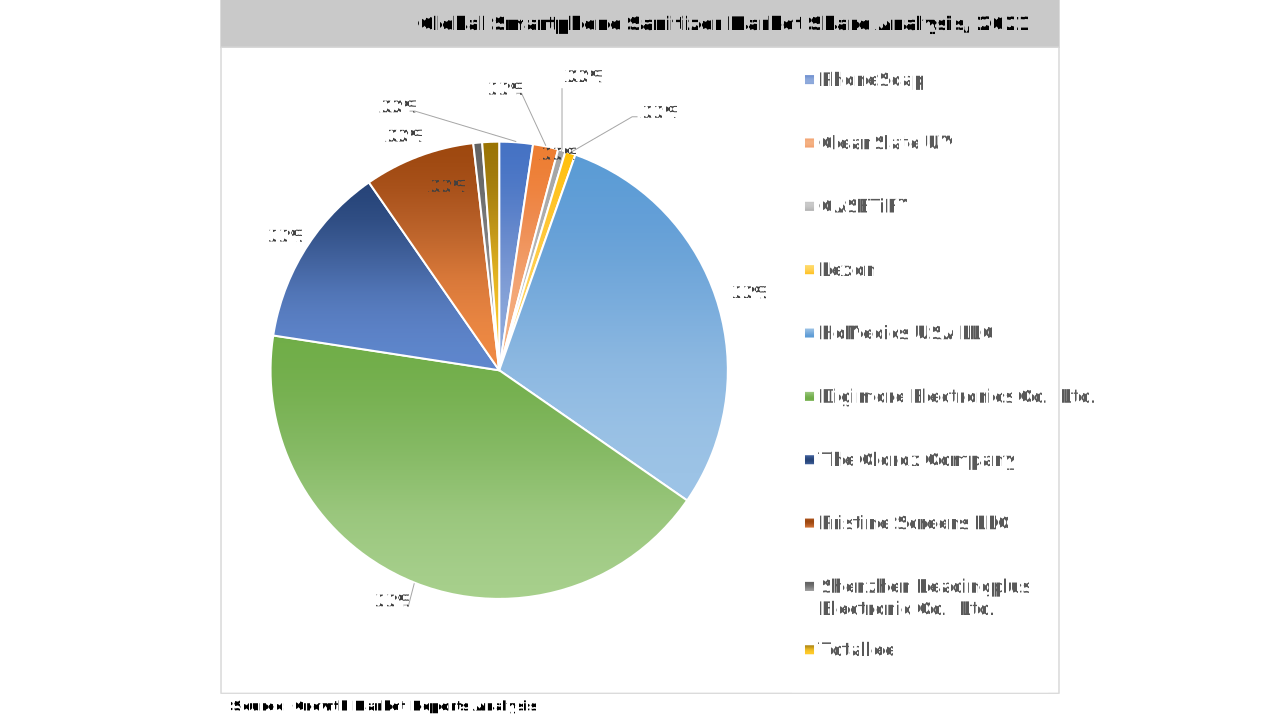
Some of the key manufacturers in the global smartphone sanitizer market are PhoneSoap, CleanSlate UV, CASETiFY, Lexon, HoMedics USA LLC, Digimore Electronics Co., Ltd., The Clorox Company, Pristine Screens LLC, Shenzhen Leadingplus Electronic Co., Ltd. and Totallee.

Key players are focusing on product innovation to improve their product offering and expand their market share.

In March 2020, CASETiFY announced the launch of a UV sanitizer case to kill all the smartphone germs. It uses UV light to destroy 99.9% of the germs living on the smartphone’s surface. It is a compact device and can be fit easily in a backpack or handbag. Additionally, it has a wireless charging function and it charges the smartphone while cleaning it.

Smartphone Sanitizer Market By Key Players

Frequently Asked Questions

Key challenges include the presence of low-cost or counterfeit products, potential device damage from substandard solutions, and the high cost of advanced sanitizing devices limiting adoption in price-sensitive markets.

Recent trends include the integration of IoT for smart sanitizing devices, the development of eco-friendly and biodegradable products, and the introduction of multi-functional sanitizing stations and antimicrobial coatings.

Key players include PhoneSoap LLC, HoMedics, CleanSlate UV, Lexon, Samsung Electronics, CASETiFY, Mophie (ZAGG Inc.), 59S, and Verilux.

Major end-users include residential consumers, commercial organizations (offices, schools, hotels), healthcare facilities, and niche sectors like government agencies and transportation providers.

Smartphone sanitizers are distributed through online stores, retail stores, specialty stores, pharmacies, supermarkets, and vending machines, with online channels experiencing the fastest growth.

UV-C light technology destroys the DNA and RNA of microorganisms, rendering them inactive. UV-C sanitizers can eliminate up to 99.9% of bacteria and viruses without using chemicals.

The market includes phone sanitizing devices, cleaning wipes, UV-C sanitizers, sprays, and other products such as antimicrobial films and self-cleaning phone cases.

North America currently holds the largest share of the smartphone sanitizer market, followed by Europe and Asia Pacific. The United States is a significant contributor, while Asia Pacific is expected to exhibit the fastest growth.

The smartphone sanitizer market is expected to grow at a CAGR of 11.8% from 2025 to 2033, reaching a forecasted value of USD 5.85 billion by 2033.

As of 2024, the global smartphone sanitizer market size reached USD 2.14 billion, driven by increasing consumer awareness of hygiene and infection prevention.

Table Of Content

Chapter 1 Executive Summary
Chapter 2 Assumptions and Acronyms Used
Chapter 3 Research Methodology
Chapter 4 Smartphone Sanitizer Market Overview
   4.1 Introduction
      4.1.1 Market Taxonomy
      4.1.2 Market Definition
      4.1.3 Macro-Economic Factors Impacting the Market Growth
   4.2 Smartphone Sanitizer Market Dynamics
      4.2.1 Market Drivers
      4.2.2 Market Restraints
      4.2.3 Market Opportunity
   4.3 Smartphone Sanitizer Market - Supply Chain Analysis
      4.3.1 List of Key Suppliers
      4.3.2 List of Key Distributors
      4.3.3 List of Key Consumers
   4.4 Key Forces Shaping the Smartphone Sanitizer Market
      4.4.1 Bargaining Power of Suppliers
      4.4.2 Bargaining Power of Buyers
      4.4.3 Threat of Substitution
      4.4.4 Threat of New Entrants
      4.4.5 Competitive Rivalry
   4.5 Global Smartphone Sanitizer Market Size & Forecast, 2023-2032
      4.5.1 Smartphone Sanitizer Market Size and Y-o-Y Growth
      4.5.2 Smartphone Sanitizer Market Absolute $ Opportunity

Chapter 5 Global Smartphone Sanitizer Market Analysis and Forecast By Product Type
   5.1 Introduction
      5.1.1 Key Market Trends & Growth Opportunities By Product Type
      5.1.2 Basis Point Share (BPS) Analysis By Product Type
      5.1.3 Absolute $ Opportunity Assessment By Product Type
   5.2 Smartphone Sanitizer Market Size Forecast By Product Type
      5.2.1 Phone Sanitizing Devices
      5.2.2 Cleaning Wipes
      5.2.3 UV-C Sanitizers
      5.2.4 Sprays
      5.2.5 Others
   5.3 Market Attractiveness Analysis By Product Type

Chapter 6 Global Smartphone Sanitizer Market Analysis and Forecast By Technology
   6.1 Introduction
      6.1.1 Key Market Trends & Growth Opportunities By Technology
      6.1.2 Basis Point Share (BPS) Analysis By Technology
      6.1.3 Absolute $ Opportunity Assessment By Technology
   6.2 Smartphone Sanitizer Market Size Forecast By Technology
      6.2.1 UV-C Light
      6.2.2 Alcohol-Based
      6.2.3 Others
   6.3 Market Attractiveness Analysis By Technology

Chapter 7 Global Smartphone Sanitizer Market Analysis and Forecast By Distribution Channel
   7.1 Introduction
      7.1.1 Key Market Trends & Growth Opportunities By Distribution Channel
      7.1.2 Basis Point Share (BPS) Analysis By Distribution Channel
      7.1.3 Absolute $ Opportunity Assessment By Distribution Channel
   7.2 Smartphone Sanitizer Market Size Forecast By Distribution Channel
      7.2.1 Online Stores
      7.2.2 Retail Stores
      7.2.3 Specialty Stores
      7.2.4 Others
   7.3 Market Attractiveness Analysis By Distribution Channel

Chapter 8 Global Smartphone Sanitizer Market Analysis and Forecast By End-User
   8.1 Introduction
      8.1.1 Key Market Trends & Growth Opportunities By End-User
      8.1.2 Basis Point Share (BPS) Analysis By End-User
      8.1.3 Absolute $ Opportunity Assessment By End-User
   8.2 Smartphone Sanitizer Market Size Forecast By End-User
      8.2.1 Residential
      8.2.2 Commercial
      8.2.3 Healthcare
      8.2.4 Others
   8.3 Market Attractiveness Analysis By End-User

Chapter 9 Global Smartphone Sanitizer Market Analysis and Forecast by Region
   9.1 Introduction
      9.1.1 Key Market Trends & Growth Opportunities By Region
      9.1.2 Basis Point Share (BPS) Analysis By Region
      9.1.3 Absolute $ Opportunity Assessment By Region
   9.2 Smartphone Sanitizer Market Size Forecast By Region
      9.2.1 North America
      9.2.2 Europe
      9.2.3 Asia Pacific
      9.2.4 Latin America
      9.2.5 Middle East & Africa (MEA)
   9.3 Market Attractiveness Analysis By Region

Chapter 10 Coronavirus Disease (COVID-19) Impact 
   10.1 Introduction 
   10.2 Current & Future Impact Analysis 
   10.3 Economic Impact Analysis 
   10.4 Government Policies 
   10.5 Investment Scenario

Chapter 11 North America Smartphone Sanitizer Analysis and Forecast
   11.1 Introduction
   11.2 North America Smartphone Sanitizer Market Size Forecast by Country
      11.2.1 U.S.
      11.2.2 Canada
   11.3 Basis Point Share (BPS) Analysis by Country
   11.4 Absolute $ Opportunity Assessment by Country
   11.5 Market Attractiveness Analysis by Country
   11.6 North America Smartphone Sanitizer Market Size Forecast By Product Type
      11.6.1 Phone Sanitizing Devices
      11.6.2 Cleaning Wipes
      11.6.3 UV-C Sanitizers
      11.6.4 Sprays
      11.6.5 Others
   11.7 Basis Point Share (BPS) Analysis By Product Type 
   11.8 Absolute $ Opportunity Assessment By Product Type 
   11.9 Market Attractiveness Analysis By Product Type
   11.10 North America Smartphone Sanitizer Market Size Forecast By Technology
      11.10.1 UV-C Light
      11.10.2 Alcohol-Based
      11.10.3 Others
   11.11 Basis Point Share (BPS) Analysis By Technology 
   11.12 Absolute $ Opportunity Assessment By Technology 
   11.13 Market Attractiveness Analysis By Technology
   11.14 North America Smartphone Sanitizer Market Size Forecast By Distribution Channel
      11.14.1 Online Stores
      11.14.2 Retail Stores
      11.14.3 Specialty Stores
      11.14.4 Others
   11.15 Basis Point Share (BPS) Analysis By Distribution Channel 
   11.16 Absolute $ Opportunity Assessment By Distribution Channel 
   11.17 Market Attractiveness Analysis By Distribution Channel
   11.18 North America Smartphone Sanitizer Market Size Forecast By End-User
      11.18.1 Residential
      11.18.2 Commercial
      11.18.3 Healthcare
      11.18.4 Others
   11.19 Basis Point Share (BPS) Analysis By End-User 
   11.20 Absolute $ Opportunity Assessment By End-User 
   11.21 Market Attractiveness Analysis By End-User

Chapter 12 Europe Smartphone Sanitizer Analysis and Forecast
   12.1 Introduction
   12.2 Europe Smartphone Sanitizer Market Size Forecast by Country
      12.2.1 Germany
      12.2.2 France
      12.2.3 Italy
      12.2.4 U.K.
      12.2.5 Spain
      12.2.6 Russia
      12.2.7 Rest of Europe
   12.3 Basis Point Share (BPS) Analysis by Country
   12.4 Absolute $ Opportunity Assessment by Country
   12.5 Market Attractiveness Analysis by Country
   12.6 Europe Smartphone Sanitizer Market Size Forecast By Product Type
      12.6.1 Phone Sanitizing Devices
      12.6.2 Cleaning Wipes
      12.6.3 UV-C Sanitizers
      12.6.4 Sprays
      12.6.5 Others
   12.7 Basis Point Share (BPS) Analysis By Product Type 
   12.8 Absolute $ Opportunity Assessment By Product Type 
   12.9 Market Attractiveness Analysis By Product Type
   12.10 Europe Smartphone Sanitizer Market Size Forecast By Technology
      12.10.1 UV-C Light
      12.10.2 Alcohol-Based
      12.10.3 Others
   12.11 Basis Point Share (BPS) Analysis By Technology 
   12.12 Absolute $ Opportunity Assessment By Technology 
   12.13 Market Attractiveness Analysis By Technology
   12.14 Europe Smartphone Sanitizer Market Size Forecast By Distribution Channel
      12.14.1 Online Stores
      12.14.2 Retail Stores
      12.14.3 Specialty Stores
      12.14.4 Others
   12.15 Basis Point Share (BPS) Analysis By Distribution Channel 
   12.16 Absolute $ Opportunity Assessment By Distribution Channel 
   12.17 Market Attractiveness Analysis By Distribution Channel
   12.18 Europe Smartphone Sanitizer Market Size Forecast By End-User
      12.18.1 Residential
      12.18.2 Commercial
      12.18.3 Healthcare
      12.18.4 Others
   12.19 Basis Point Share (BPS) Analysis By End-User 
   12.20 Absolute $ Opportunity Assessment By End-User 
   12.21 Market Attractiveness Analysis By End-User

Chapter 13 Asia Pacific Smartphone Sanitizer Analysis and Forecast
   13.1 Introduction
   13.2 Asia Pacific Smartphone Sanitizer Market Size Forecast by Country
      13.2.1 China
      13.2.2 Japan
      13.2.3 South Korea
      13.2.4 India
      13.2.5 Australia
      13.2.6 South East Asia (SEA)
      13.2.7 Rest of Asia Pacific (APAC)
   13.3 Basis Point Share (BPS) Analysis by Country
   13.4 Absolute $ Opportunity Assessment by Country
   13.5 Market Attractiveness Analysis by Country
   13.6 Asia Pacific Smartphone Sanitizer Market Size Forecast By Product Type
      13.6.1 Phone Sanitizing Devices
      13.6.2 Cleaning Wipes
      13.6.3 UV-C Sanitizers
      13.6.4 Sprays
      13.6.5 Others
   13.7 Basis Point Share (BPS) Analysis By Product Type 
   13.8 Absolute $ Opportunity Assessment By Product Type 
   13.9 Market Attractiveness Analysis By Product Type
   13.10 Asia Pacific Smartphone Sanitizer Market Size Forecast By Technology
      13.10.1 UV-C Light
      13.10.2 Alcohol-Based
      13.10.3 Others
   13.11 Basis Point Share (BPS) Analysis By Technology 
   13.12 Absolute $ Opportunity Assessment By Technology 
   13.13 Market Attractiveness Analysis By Technology
   13.14 Asia Pacific Smartphone Sanitizer Market Size Forecast By Distribution Channel
      13.14.1 Online Stores
      13.14.2 Retail Stores
      13.14.3 Specialty Stores
      13.14.4 Others
   13.15 Basis Point Share (BPS) Analysis By Distribution Channel 
   13.16 Absolute $ Opportunity Assessment By Distribution Channel 
   13.17 Market Attractiveness Analysis By Distribution Channel
   13.18 Asia Pacific Smartphone Sanitizer Market Size Forecast By End-User
      13.18.1 Residential
      13.18.2 Commercial
      13.18.3 Healthcare
      13.18.4 Others
   13.19 Basis Point Share (BPS) Analysis By End-User 
   13.20 Absolute $ Opportunity Assessment By End-User 
   13.21 Market Attractiveness Analysis By End-User

Chapter 14 Latin America Smartphone Sanitizer Analysis and Forecast
   14.1 Introduction
   14.2 Latin America Smartphone Sanitizer Market Size Forecast by Country
      14.2.1 Brazil
      14.2.2 Mexico
      14.2.3 Rest of Latin America (LATAM)
   14.3 Basis Point Share (BPS) Analysis by Country
   14.4 Absolute $ Opportunity Assessment by Country
   14.5 Market Attractiveness Analysis by Country
   14.6 Latin America Smartphone Sanitizer Market Size Forecast By Product Type
      14.6.1 Phone Sanitizing Devices
      14.6.2 Cleaning Wipes
      14.6.3 UV-C Sanitizers
      14.6.4 Sprays
      14.6.5 Others
   14.7 Basis Point Share (BPS) Analysis By Product Type 
   14.8 Absolute $ Opportunity Assessment By Product Type 
   14.9 Market Attractiveness Analysis By Product Type
   14.10 Latin America Smartphone Sanitizer Market Size Forecast By Technology
      14.10.1 UV-C Light
      14.10.2 Alcohol-Based
      14.10.3 Others
   14.11 Basis Point Share (BPS) Analysis By Technology 
   14.12 Absolute $ Opportunity Assessment By Technology 
   14.13 Market Attractiveness Analysis By Technology
   14.14 Latin America Smartphone Sanitizer Market Size Forecast By Distribution Channel
      14.14.1 Online Stores
      14.14.2 Retail Stores
      14.14.3 Specialty Stores
      14.14.4 Others
   14.15 Basis Point Share (BPS) Analysis By Distribution Channel 
   14.16 Absolute $ Opportunity Assessment By Distribution Channel 
   14.17 Market Attractiveness Analysis By Distribution Channel
   14.18 Latin America Smartphone Sanitizer Market Size Forecast By End-User
      14.18.1 Residential
      14.18.2 Commercial
      14.18.3 Healthcare
      14.18.4 Others
   14.19 Basis Point Share (BPS) Analysis By End-User 
   14.20 Absolute $ Opportunity Assessment By End-User 
   14.21 Market Attractiveness Analysis By End-User

Chapter 15 Middle East & Africa (MEA) Smartphone Sanitizer Analysis and Forecast
   15.1 Introduction
   15.2 Middle East & Africa (MEA) Smartphone Sanitizer Market Size Forecast by Country
      15.2.1 Saudi Arabia
      15.2.2 South Africa
      15.2.3 UAE
      15.2.4 Rest of Middle East & Africa (MEA)
   15.3 Basis Point Share (BPS) Analysis by Country
   15.4 Absolute $ Opportunity Assessment by Country
   15.5 Market Attractiveness Analysis by Country
   15.6 Middle East & Africa (MEA) Smartphone Sanitizer Market Size Forecast By Product Type
      15.6.1 Phone Sanitizing Devices
      15.6.2 Cleaning Wipes
      15.6.3 UV-C Sanitizers
      15.6.4 Sprays
      15.6.5 Others
   15.7 Basis Point Share (BPS) Analysis By Product Type 
   15.8 Absolute $ Opportunity Assessment By Product Type 
   15.9 Market Attractiveness Analysis By Product Type
   15.10 Middle East & Africa (MEA) Smartphone Sanitizer Market Size Forecast By Technology
      15.10.1 UV-C Light
      15.10.2 Alcohol-Based
      15.10.3 Others
   15.11 Basis Point Share (BPS) Analysis By Technology 
   15.12 Absolute $ Opportunity Assessment By Technology 
   15.13 Market Attractiveness Analysis By Technology
   15.14 Middle East & Africa (MEA) Smartphone Sanitizer Market Size Forecast By Distribution Channel
      15.14.1 Online Stores
      15.14.2 Retail Stores
      15.14.3 Specialty Stores
      15.14.4 Others
   15.15 Basis Point Share (BPS) Analysis By Distribution Channel 
   15.16 Absolute $ Opportunity Assessment By Distribution Channel 
   15.17 Market Attractiveness Analysis By Distribution Channel
   15.18 Middle East & Africa (MEA) Smartphone Sanitizer Market Size Forecast By End-User
      15.18.1 Residential
      15.18.2 Commercial
      15.18.3 Healthcare
      15.18.4 Others
   15.19 Basis Point Share (BPS) Analysis By End-User 
   15.20 Absolute $ Opportunity Assessment By End-User 
   15.21 Market Attractiveness Analysis By End-User

Chapter 16 Competition Landscape 
   16.1 Smartphone Sanitizer Market: Competitive Dashboard
   16.2 Global Smartphone Sanitizer Market: Market Share Analysis, 2023
   16.3 Company Profiles (Details – Overview, Financials, Developments, Strategy) 
      16.3.1 PhoneSoap
HoMedics
Casetify
Mophie
Samsung Electronics
Lexon
CleanSlate UV
3B Medical
Verilux
Totallee
Sharper Image
Philips
UV-Clean
ZAGG
PurLite
Tersano
SteriShoe
GermGuardian
Medklinn
Violet Defense

Methodology

Our Clients

FedEx Logistics
sinopec
Dassault Aviation
General Mills
General Electric
Microsoft
Deloitte
Pfizer