Segments - by Technology (Time-of-Flight, Stereoscopic, Structured Light), by Resolution (Below 8 MP, 8–16 MP, Above 16 MP), by Application (Photography, Gaming, Augmented Reality, Virtual Reality, Others), by End-User (Consumer Electronics, Healthcare, Automotive, Industrial, Others), by Distribution Channel (Online, Offline)
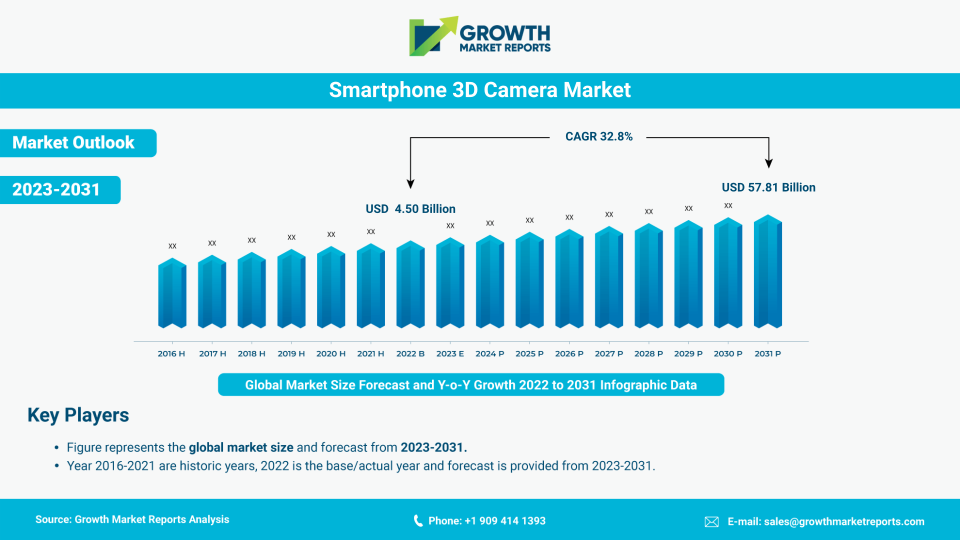
According to our latest research, the global smartphone 3D camera market size reached USD 6.71 billion in 2024, demonstrating robust growth driven by innovation in mobile imaging technologies and increasing integration of 3D cameras in flagship smartphones. The market is expected to expand at a CAGR of 22.9% during the forecast period, culminating in a projected market size of USD 51.15 billion by 2033. This impressive trajectory is primarily fueled by the surging demand for immersive photography, augmented reality (AR), and virtual reality (VR) experiences among consumers, as well as advancements in depth-sensing and image processing technologies.
The rapid proliferation of smartphones with advanced imaging capabilities is a key growth factor propelling the smartphone 3D camera market. As consumers increasingly seek devices that offer superior camera performance, manufacturers are integrating 3D sensing technologies such as Time-of-Flight (ToF), stereoscopic, and structured light into their latest models. These technologies enable smartphones to capture more accurate depth information, resulting in enhanced image quality, improved facial recognition, and a richer user experience. The growing popularity of social media platforms and user-generated content further amplifies the demand for high-quality 3D imaging, prompting OEMs to prioritize 3D camera features in their product development strategies.
Another significant driver for the smartphone 3D camera market is the expansion of AR and VR applications. The integration of 3D cameras in smartphones facilitates the development of immersive AR and VR experiences, which are gaining traction in gaming, e-commerce, and education. The ability to map and understand real-world environments in three dimensions allows for more interactive and engaging applications, from AR filters and virtual try-ons to spatial gaming and real-time 3D scanning. As the ecosystem of AR and VR applications continues to mature, the demand for smartphones equipped with advanced 3D cameras is expected to witness sustained growth, further bolstering market expansion.
Technological advancements in semiconductor manufacturing and miniaturization are also playing a pivotal role in shaping the smartphone 3D camera market. The development of compact, energy-efficient 3D camera modules has enabled OEMs to integrate these components into slimmer devices without compromising on performance. Innovations in AI-driven image processing and machine learning algorithms are enhancing the capabilities of 3D cameras, enabling features such as real-time object detection, gesture recognition, and advanced biometric authentication. These technological breakthroughs are not only improving the user experience but also reducing production costs, making 3D camera-enabled smartphones more accessible to a broader consumer base.
The evolution of smartphone cameras has been significantly influenced by the development of the Front Camera. Initially introduced as a secondary feature for video calls, the front camera has evolved into a crucial component for selfies and video conferencing, especially in the era of social media and remote communication. With the advent of 3D camera technology, front cameras are now equipped with depth-sensing capabilities, enhancing the quality of selfies and enabling features such as portrait mode and facial recognition. This advancement not only improves image quality but also enhances security and user interaction, making the front camera an indispensable feature in modern smartphones. As manufacturers continue to innovate, the integration of advanced front camera technologies is expected to further drive consumer interest and market growth.
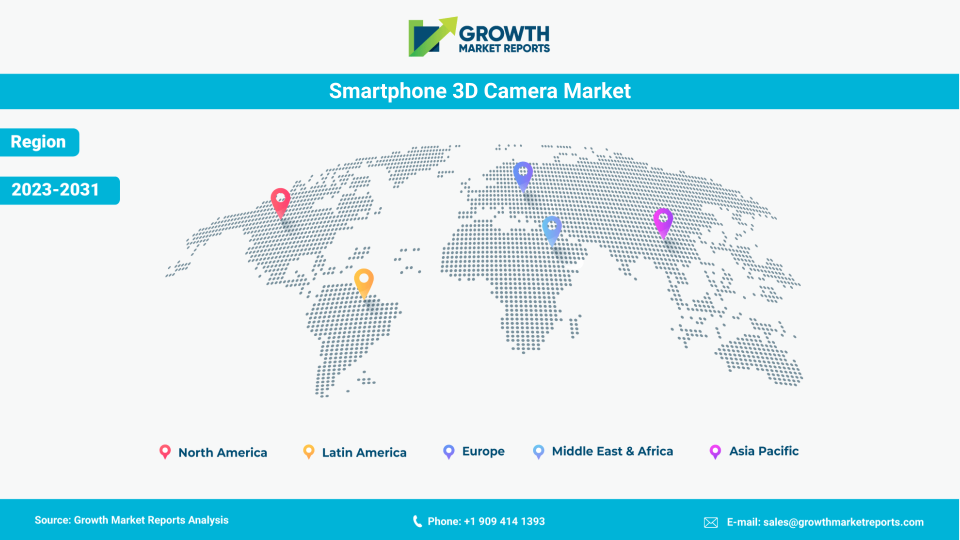
From a regional perspective, Asia Pacific continues to dominate the smartphone 3D camera market, accounting for the largest share in 2024. The region's leadership is attributed to the presence of major smartphone manufacturers, a vast consumer base, and rapid adoption of cutting-edge technologies. North America and Europe are also witnessing substantial growth, driven by high consumer spending power, technological innovation, and increasing demand for AR/VR applications. Meanwhile, emerging markets in Latin America and the Middle East & Africa are experiencing steady growth, supported by rising smartphone penetration and improving digital infrastructure. Collectively, these regional trends underscore the global nature of the smartphone 3D camera market's expansion.
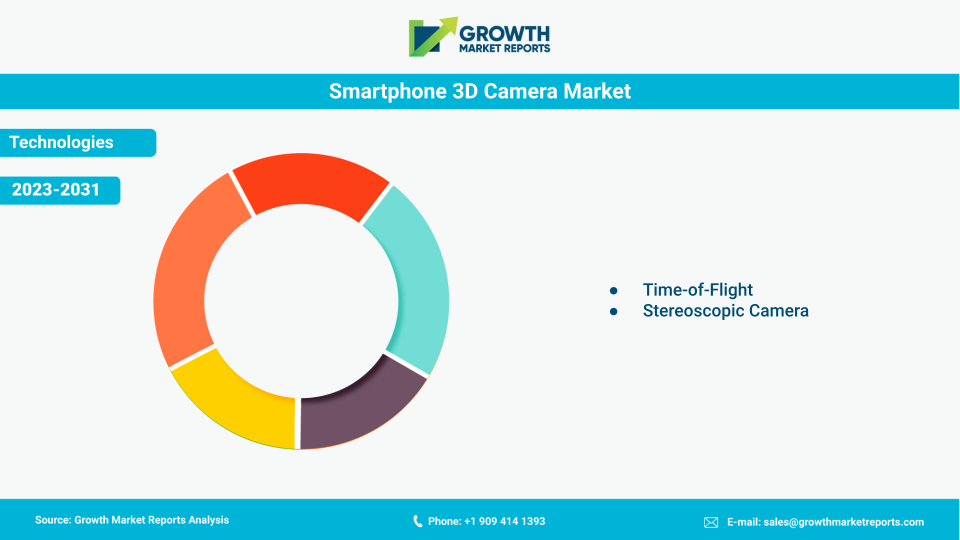
The technology segment of the smartphone 3D camera market is primarily categorized into Time-of-Flight (ToF), stereoscopic, and structured light. Time-of-Flight technology has emerged as a dominant force in recent years, owing to its ability to deliver precise depth sensing and rapid image capture. ToF cameras emit infrared light and measure the time it takes for the light to return after reflecting off objects, enabling accurate distance measurement and real-time depth mapping. This technology is widely adopted in premium smartphones for applications such as facial recognition, portrait photography, and AR experiences. The increasing adoption of ToF sensors by leading smartphone brands is driving significant growth in this segment, as consumers demand more advanced camera functionalities.
Stereoscopic technology, which uses two or more cameras to mimic human binocular vision, continues to be a popular choice for 3D imaging in smartphones. By capturing images from slightly different angles, stereoscopic cameras create a sense of depth and dimensionality, enhancing the realism of photographs and videos. While this technology is less complex than ToF or structured light, it offers a cost-effective solution for mid-range and entry-level smartphones. The ongoing refinement of stereoscopic algorithms and improvements in camera module design are making this technology increasingly viable for a wider range of devices, contributing to its sustained relevance in the market.
Structured light technology, which projects a known pattern onto a scene and analyzes the deformation of the pattern to calculate depth information, is also gaining traction in the smartphone 3D camera market. This technology is particularly valued for its accuracy in facial recognition and biometric authentication, making it a preferred choice for secure unlocking mechanisms in high-end smartphones. Structured light cameras are being integrated into front-facing modules to enable features such as 3D face scanning and advanced AR interactions. The growing emphasis on security and user authentication is expected to drive further adoption of structured light technology in the coming years.
The competitive landscape within the technology segment is characterized by continuous innovation and collaboration between smartphone manufacturers and component suppliers. Companies are investing heavily in research and development to enhance the performance, efficiency, and miniaturization of 3D camera modules. The integration of AI and machine learning is further augmenting the capabilities of these technologies, enabling features such as scene recognition, object tracking, and real-time image enhancement. As the market evolves, the convergence of ToF, stereoscopic, and structured light technologies is likely to give rise to hybrid solutions that offer unparalleled depth sensing and imaging capabilities.
| Attributes | Details |
| Report Title | Smartphone 3D Camera Market Research Report 2033 |
| By Technology | Time-of-Flight, Stereoscopic, Structured Light |
| By Resolution | Below 8 MP, 8–16 MP, Above 16 MP |
| By Application | Photography, Gaming, Augmented Reality, Virtual Reality, Others |
| By End-User | Consumer Electronics, Healthcare, Automotive, Industrial, Others |
| By Distribution Channel | Online, Offline |
| Regions Covered | North America, Europe, APAC, Latin America, MEA |
| Base Year | 2024 |
| Historic Data | 2018-2023 |
| Forecast Period | 2025-2033 |
| Number of Pages | 287 |
| Number of Tables & Figures | 260 |
| Customization Available | Yes, the report can be customized as per your need. |
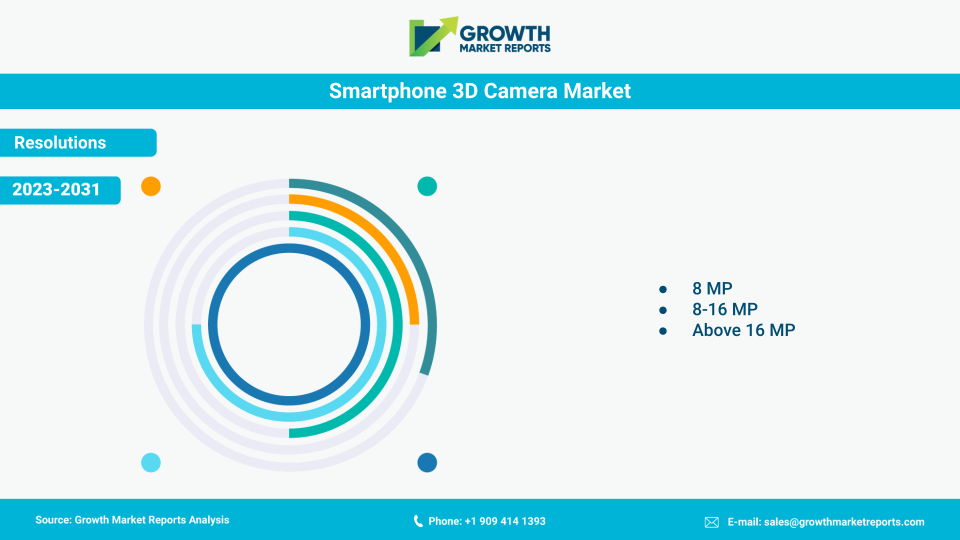
The resolution segment of the smartphone 3D camera market is divided into below 8 MP, 8–16 MP, and above 16 MP categories. The demand for higher resolution 3D cameras is being driven by consumer expectations for crystal-clear images, detailed depth maps, and superior video quality. Cameras with resolutions of 8–16 MP have become the standard in mid-range and premium smartphones, offering a balanced combination of image clarity and processing efficiency. These cameras are capable of capturing intricate details in both still photographs and video recordings, making them ideal for a wide range of applications, from photography to AR and VR experiences.
The segment for 3D cameras with resolutions above 16 MP is experiencing the fastest growth, as smartphone manufacturers strive to differentiate their products through cutting-edge imaging capabilities. High-resolution 3D cameras enable users to capture ultra-detailed images and videos, which are particularly valuable for professional photography, content creation, and immersive media applications. The integration of advanced sensors and image processors in flagship devices is pushing the boundaries of what is possible with smartphone photography, setting new benchmarks for image quality and depth perception.
Cameras with resolutions below 8 MP continue to serve the entry-level and budget smartphone segments, where cost considerations and power efficiency are paramount. While these cameras may not deliver the same level of detail as their higher-resolution counterparts, they are sufficient for basic 3D imaging tasks such as facial recognition, gesture control, and simple AR applications. The ongoing optimization of image processing algorithms is helping to enhance the performance of low-resolution 3D cameras, ensuring that they remain relevant in price-sensitive markets.
The resolution segment is witnessing increasing convergence with advancements in sensor technology, lens design, and computational photography. Manufacturers are leveraging AI-driven image enhancement techniques to compensate for hardware limitations and deliver superior image quality across all resolution categories. As consumer preferences continue to evolve, the demand for high-resolution 3D cameras is expected to intensify, prompting further innovation and investment in this segment. The ability to offer differentiated camera experiences will remain a key competitive advantage for smartphone OEMs in the years ahead.
The application segment of the smartphone 3D camera market encompasses photography, gaming, augmented reality, virtual reality, and other emerging use cases. Photography remains the largest and most influential application, as consumers increasingly use their smartphones as primary devices for capturing and sharing images. The integration of 3D cameras has revolutionized mobile photography, enabling features such as bokeh effects, 3D portraits, and enhanced low-light performance. The ability to capture depth information has opened up new creative possibilities for both amateur and professional photographers, driving sustained demand for 3D camera-enabled smartphones.
Gaming is another significant application area, with 3D cameras enabling immersive gameplay experiences through real-time motion tracking, gesture recognition, and spatial mapping. The rise of mobile gaming and the popularity of AR-based games have created new opportunities for 3D camera integration, allowing developers to create more interactive and engaging content. The growing ecosystem of gaming applications that leverage 3D sensing capabilities is expected to drive further adoption of 3D cameras in smartphones, particularly among younger and tech-savvy consumers.
Augmented reality and virtual reality applications are at the forefront of innovation in the smartphone 3D camera market. 3D cameras play a critical role in enabling AR features such as real-time object placement, spatial navigation, and interactive overlays. In VR, 3D cameras facilitate the creation of immersive environments and realistic avatars, enhancing the overall user experience. The increasing availability of AR and VR content, coupled with advancements in hardware and software, is fueling demand for smartphones equipped with advanced 3D camera systems.
Beyond these core applications, 3D cameras are finding new use cases in areas such as biometric authentication, health and fitness tracking, and industrial inspection. The versatility of 3D imaging technology is enabling smartphone manufacturers to explore innovative applications that extend beyond traditional photography and entertainment. As the ecosystem of 3D-enabled applications continues to expand, the smartphone 3D camera market is poised for sustained growth and diversification.
The end-user segment of the smartphone 3D camera market includes consumer electronics, healthcare, automotive, industrial, and other sectors. Consumer electronics remains the dominant end-user category, driven by the widespread adoption of smartphones as multifunctional devices. The integration of 3D cameras in smartphones is enhancing the user experience across a range of applications, from photography and gaming to AR and biometric authentication. As consumers continue to demand more advanced features and capabilities, the consumer electronics segment is expected to maintain its leadership position in the market.
The healthcare sector is emerging as a promising end-user for smartphone 3D cameras, leveraging the technology for applications such as telemedicine, remote diagnostics, and patient monitoring. 3D cameras enable accurate measurement of body dimensions, wound assessment, and facial recognition for patient identification, improving the efficiency and effectiveness of healthcare delivery. The increasing adoption of mobile health solutions and the growing emphasis on digital healthcare are driving demand for 3D camera-enabled smartphones in this sector.
In the automotive industry, smartphone 3D cameras are being used for advanced driver assistance systems (ADAS), in-cabin monitoring, and vehicle access control. The ability to capture and analyze depth information in real-time is enabling new safety and convenience features, such as driver fatigue detection, gesture-based controls, and secure vehicle unlocking. As the automotive sector continues to embrace digital transformation, the integration of 3D cameras in smartphones is expected to create new opportunities for innovation and growth.
The industrial sector is also adopting smartphone 3D cameras for applications such as quality inspection, inventory management, and equipment maintenance. The portability and versatility of smartphones make them ideal tools for capturing 3D images and conducting remote inspections in manufacturing and logistics environments. The growing focus on automation and digitalization in industrial operations is expected to drive further adoption of 3D camera technology in this segment, supporting the broader trend towards Industry 4.0.
The distribution channel segment of the smartphone 3D camera market is bifurcated into online and offline channels. The online channel has witnessed significant growth in recent years, driven by the increasing popularity of e-commerce platforms and the convenience of online shopping. Consumers are increasingly turning to online retailers to purchase smartphones equipped with advanced 3D cameras, attracted by competitive pricing, extensive product selection, and the ability to compare features and reviews. The proliferation of online marketplaces and the growing penetration of internet connectivity are expected to sustain the momentum of the online distribution channel.
Offline distribution channels, including brick-and-mortar stores, electronics retailers, and carrier outlets, continue to play a vital role in the smartphone 3D camera market. Many consumers prefer to purchase smartphones in person, where they can physically examine the device, seek expert advice, and take advantage of in-store promotions. Offline channels also provide opportunities for experiential marketing, allowing customers to test 3D camera features and experience AR/VR applications firsthand. Despite the rise of online sales, offline channels remain an important avenue for reaching a diverse customer base and building brand loyalty.
The interplay between online and offline distribution channels is prompting manufacturers and retailers to adopt omnichannel strategies, seamlessly integrating digital and physical touchpoints to enhance the customer experience. Companies are leveraging data analytics and personalized marketing to target consumers across multiple channels, driving higher engagement and conversion rates. The ability to offer a consistent and convenient shopping experience, whether online or offline, is becoming a key differentiator in the competitive smartphone market.
As the smartphone 3D camera market continues to evolve, the distribution channel landscape is expected to become increasingly dynamic and competitive. The emergence of new retail formats, such as pop-up stores and experiential showrooms, is providing additional avenues for product discovery and brand engagement. The ongoing digital transformation of the retail sector, coupled with changing consumer preferences, will shape the future of distribution in the smartphone 3D camera market.
The smartphone 3D camera market presents a wealth of opportunities for innovation and growth, particularly as the adoption of AR and VR technologies accelerates across various industries. The integration of 3D cameras in smartphones is enabling new use cases in fields such as e-commerce, healthcare, and education, where immersive experiences and precise spatial mapping are highly valued. The rise of mobile AR applications, virtual shopping, and remote diagnostics is creating new revenue streams for smartphone manufacturers and app developers, while also driving demand for advanced 3D camera modules. The ongoing convergence of AI, machine learning, and 3D imaging technology is expected to unlock further opportunities for differentiation and value creation in the market.
Another significant opportunity lies in the expansion of the smartphone 3D camera market into emerging economies, where rising smartphone penetration and improving digital infrastructure are creating favorable conditions for growth. As manufacturers introduce more affordable 3D camera-enabled devices, a broader segment of the population will gain access to advanced imaging capabilities, fueling demand for related applications and services. The increasing focus on digital transformation in sectors such as healthcare, automotive, and industrial is also expected to drive adoption of 3D camera technology, opening up new avenues for market expansion and diversification.
Despite the promising outlook, the smartphone 3D camera market faces certain restraining factors, including the high cost of advanced 3D camera modules and the complexity of integration. The development and manufacturing of 3D cameras require significant investment in research, engineering, and quality control, which can drive up production costs and limit adoption in price-sensitive segments. Additionally, the integration of 3D cameras into slim and compact smartphone designs presents technical challenges related to space, power consumption, and thermal management. Addressing these challenges will be critical for manufacturers seeking to scale production and broaden the appeal of 3D camera-enabled smartphones.
Asia Pacific remains the largest and most dynamic region in the smartphone 3D camera market, accounting for approximately 45% of global revenue in 2024, or around USD 3.02 billion. The region's dominance is underpinned by the presence of leading smartphone manufacturers such as Samsung, Huawei, Xiaomi, and Oppo, as well as a vast and tech-savvy consumer base. Rapid urbanization, rising disposable incomes, and increasing demand for premium smartphones are driving growth in key markets such as China, India, South Korea, and Japan. The region is also a hotbed for innovation, with significant investments in R&D and a thriving ecosystem of component suppliers and technology partners.
North America is another major market for smartphone 3D cameras, with a market size of approximately USD 1.34 billion in 2024. The region is characterized by high consumer spending power, early adoption of new technologies, and a strong focus on AR/VR applications in sectors such as gaming, healthcare, and retail. The presence of leading technology companies and a robust startup ecosystem are fostering innovation and driving demand for advanced 3D camera features. North America is expected to maintain a healthy CAGR of 21.7% through 2033, supported by ongoing investments in digital infrastructure and the proliferation of 5G networks.
Europe accounts for a significant share of the global smartphone 3D camera market, with revenue of around USD 1.08 billion in 2024. The region is witnessing steady growth, driven by increasing consumer awareness, favorable regulatory policies, and the growing adoption of AR and VR technologies. Key markets such as Germany, the United Kingdom, and France are at the forefront of this trend, supported by strong demand for premium smartphones and a vibrant digital ecosystem. Meanwhile, Latin America and the Middle East & Africa are emerging as promising regions, with combined market revenues of approximately USD 1.27 billion in 2024. These regions are benefiting from rising smartphone penetration, improving digital infrastructure, and a growing appetite for advanced mobile technologies.
The competitive landscape of the smartphone 3D camera market is characterized by intense rivalry among global and regional players, each vying to capture a larger share of this rapidly expanding market. Leading smartphone manufacturers are investing heavily in research and development to enhance the performance, efficiency, and miniaturization of 3D camera modules. Strategic partnerships with semiconductor companies, sensor manufacturers, and software developers are commonplace, as firms seek to leverage complementary expertise and accelerate innovation. The ability to offer differentiated camera experiences, such as advanced AR/VR features, superior low-light performance, and secure biometric authentication, is becoming a key competitive advantage in the market.
The market is also witnessing the entry of new players and startups, particularly in the areas of AI-driven image processing, 3D sensing algorithms, and component manufacturing. These companies are introducing innovative solutions that address specific pain points, such as reducing power consumption, improving depth accuracy, and enabling real-time image enhancement. The increasing modularity and interoperability of 3D camera components are enabling OEMs to customize their offerings and cater to diverse consumer preferences. As competition intensifies, price wars, rapid product cycles, and aggressive marketing campaigns are becoming more prevalent, further shaping the dynamics of the market.
Intellectual property and patent portfolios are playing an increasingly important role in the competitive landscape, as companies seek to protect their innovations and establish barriers to entry. The enforcement of patents and the resolution of disputes are influencing the pace of technological adoption and the allocation of market share. Regulatory compliance and adherence to international standards are also critical considerations, particularly as data privacy and security concerns gain prominence in the context of 3D imaging and facial recognition technologies.
Some of the major companies operating in the smartphone 3D camera market include Samsung Electronics Co. Ltd., Apple Inc., Sony Corporation, Huawei Technologies Co. Ltd., Xiaomi Corporation, Oppo Electronics Corp., LG Electronics Inc., STMicroelectronics N.V., Infineon Technologies AG, and Lumentum Holdings Inc. Samsung and Apple are at the forefront of innovation, consistently introducing new camera technologies and setting industry benchmarks for performance and user experience. Sony and STMicroelectronics are leading suppliers of image sensors and 3D sensing components, powering a wide range of devices across the market. Huawei, Xiaomi, and Oppo are leveraging their strong presence in Asia Pacific to drive adoption of 3D camera-enabled smartphones, while also expanding into international markets.
Lumentum Holdings Inc. and Infineon Technologies AG are key players in the development of ToF and structured light technologies, providing critical components for flagship devices. LG Electronics, though less prominent in recent years, continues to contribute to innovation in 3D imaging and camera module design. The collaborative efforts of these companies, coupled with ongoing investments in R&D, are driving the evolution of the smartphone 3D camera market and shaping the future of mobile imaging. As the market continues to mature, the ability to anticipate and respond to changing consumer preferences will remain a key determinant of success in this highly competitive landscape.
The Smartphone 3D Camera market has been segmented on the basis of
Key players competing in the market are Toshiba Corporation, SoftKinetic Systems SA, Sony Corporation, Panasonic Corporation, LG Electronics, Samsung Electronics, Bevel Corporation, PMD technologies AG, Sharp Corporation, and Infineon Technologies. Several players are actively engaged in various market strategies such as mergers, product launches, acquisitions, and expansion of production capacity to increase their market position and expand their customer base.
In 2018, PMD technologies AG announced that it planned to unite with Leica Camera AG to develop smartphone cameras integrated with in-depth sensors.

Key challenges include the high cost and complexity of 3D camera modules, integration into slim smartphone designs, and the need to balance performance with power efficiency and affordability.
Smartphones with 3D cameras are sold through both online channels (e-commerce platforms) and offline channels (brick-and-mortar stores, electronics retailers, carrier outlets), with omnichannel strategies becoming more common.
Leading companies include Samsung Electronics, Apple, Sony, Huawei, Xiaomi, Oppo, LG Electronics, STMicroelectronics, Infineon Technologies, and Lumentum Holdings.
3D cameras enable real-time depth mapping, object placement, spatial navigation, and interactive overlays, making AR and VR applications more immersive and engaging for users.
Cameras with 8–16 MP resolution are standard in mid-range and premium smartphones, while above 16 MP cameras are growing fastest for professional and immersive applications. Below 8 MP cameras serve entry-level devices.
Asia Pacific dominates the market, accounting for about 45% of global revenue in 2024, followed by North America and Europe. Latin America and the Middle East & Africa are also experiencing steady growth.
3D cameras in smartphones are primarily used for photography, gaming, augmented reality (AR), virtual reality (VR), biometric authentication, and emerging applications in healthcare and industry.
Key technologies include Time-of-Flight (ToF), stereoscopic, and structured light. These enable precise depth sensing, enhanced facial recognition, and immersive AR/VR experiences.
The smartphone 3D camera market is expected to expand at a CAGR of 22.9% from 2025 to 2033, reaching a projected market size of USD 51.15 billion by 2033.
As of 2024, the global smartphone 3D camera market size reached USD 6.71 billion, with expectations to grow significantly in the coming years.