Smart Pills Market Research Report 2033

Smart Pills Market Research Report 2033

Segments - by Product Type (Capsule Endoscopy, Drug Delivery, Patient Monitoring), by Application (Diagnostic, Therapeutic), by Disease Indication (Gastrointestinal Diseases, Neurological Disorders, Others), by End-User (Hospitals, Diagnostic Centers, Research Institutes, Others)

https://growthmarketreports.com/raksha
Author : Raksha Sharma
https://growthmarketreports.com/Vaibhav
Fact-checked by : V. Chandola
https://growthmarketreports.com/Shruti
Editor : Shruti Bhat

Upcoming | Report ID :HC-2141 | 4.8 Rating | 100 Reviews | 251 Pages | Format : Docx PDF

Report Description


Smart Pills Market Outlook

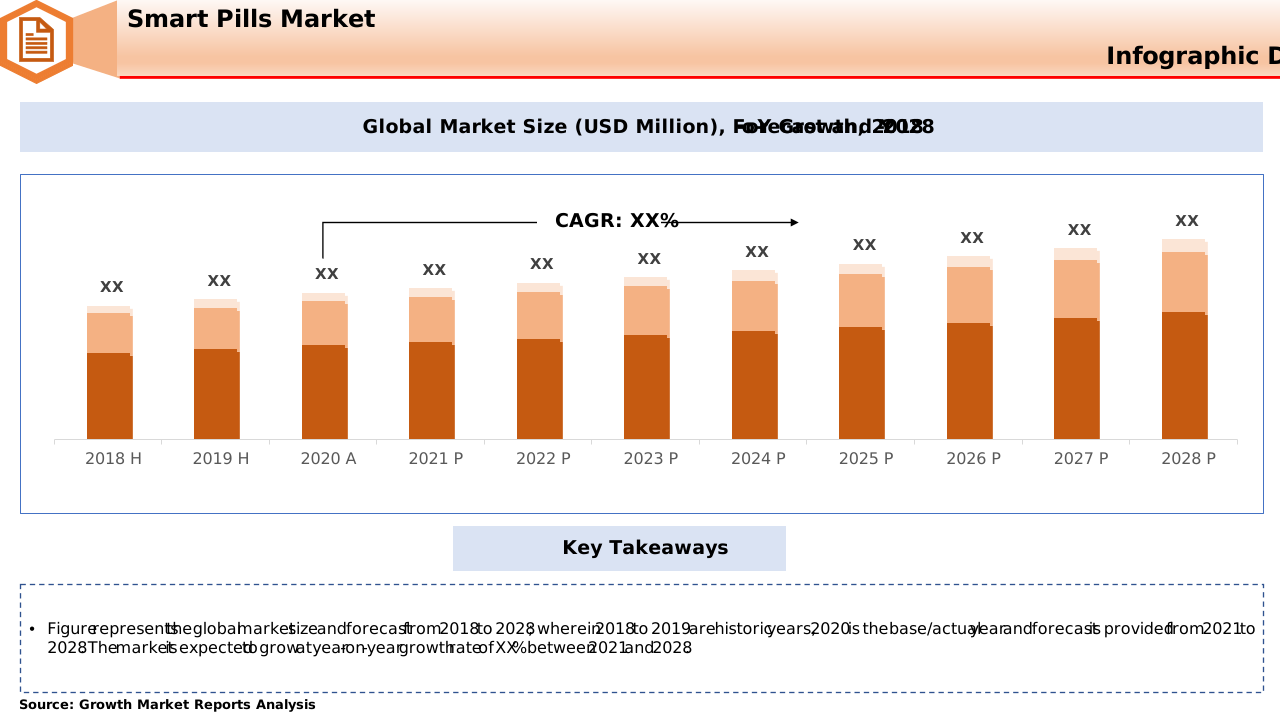
The global smart pills market size in 2024 stood at USD 5.1 billion, as per our latest research, with the market demonstrating a robust growth trajectory. The market is expected to expand at a CAGR of 11.2% from 2025 to 2033, reaching a forecasted value of USD 13.1 billion by 2033. This remarkable growth is primarily driven by the increasing prevalence of gastrointestinal and neurological disorders, advancements in minimally invasive diagnostic technologies, and the rising adoption of digital health solutions worldwide. The integration of wireless communication and miniaturized sensors into ingestible capsules is fundamentally transforming the landscape of patient monitoring and targeted drug delivery, positioning smart pills as a key innovation in modern healthcare.

One of the primary growth factors propelling the smart pills market is the rising global burden of gastrointestinal diseases. Disorders such as CrohnÂ’s disease, irritable bowel syndrome, and colorectal cancer are becoming increasingly common, necessitating more effective and less invasive diagnostic tools. Smart pills, particularly capsule endoscopy devices, offer a non-invasive means to visualize the entire gastrointestinal tract, improving diagnostic accuracy and patient comfort. Furthermore, the growing elderly population, which is more susceptible to chronic digestive ailments, is further fueling demand for smart pill technologies. As healthcare systems strive to enhance early diagnosis and disease management, smart pills are rapidly gaining traction as a preferred solution.

Technological advancements represent another significant driver for the smart pills market. The convergence of microelectronics, wireless communication, and advanced imaging has enabled the development of highly sophisticated ingestible devices capable of performing complex diagnostic and therapeutic functions. These innovations have expanded the applications of smart pills beyond traditional diagnostics to include real-time patient monitoring and targeted drug delivery. The integration of artificial intelligence and data analytics is also enhancing the interpretability of data generated by smart pills, enabling personalized treatment approaches and improving clinical outcomes. As research and development activities intensify, the market is witnessing the launch of new products with enhanced functionalities, further accelerating market growth.

The increasing focus on patient-centric healthcare and the shift towards minimally invasive procedures are also critical growth drivers for the smart pills market. Patients and healthcare providers alike are seeking alternatives to conventional endoscopy and invasive monitoring techniques, which are often associated with discomfort, longer recovery times, and higher risks of complications. Smart pills address these concerns by offering a painless, convenient, and highly accurate means of diagnosis and monitoring. The growing adoption of digital health solutions, coupled with favorable reimbursement policies in developed markets, is further supporting the widespread uptake of smart pills. Additionally, strategic collaborations between medical device manufacturers, technology companies, and healthcare providers are fostering innovation and expanding the marketÂ’s reach.

Smart Pill Motility Testing is an emerging application within the smart pills market, offering significant advancements in the diagnosis and management of gastrointestinal motility disorders. This innovative approach leverages ingestible capsules equipped with sensors to measure parameters such as pH, pressure, and temperature as they travel through the gastrointestinal tract. By providing detailed insights into gut motility, Smart Pill Motility Testing enables healthcare providers to diagnose conditions like gastroparesis and chronic constipation more accurately. The non-invasive nature of this testing method enhances patient comfort and compliance, making it a preferred choice for both patients and clinicians. As the demand for precise and patient-friendly diagnostic tools grows, Smart Pill Motility Testing is poised to become an integral component of gastrointestinal healthcare.

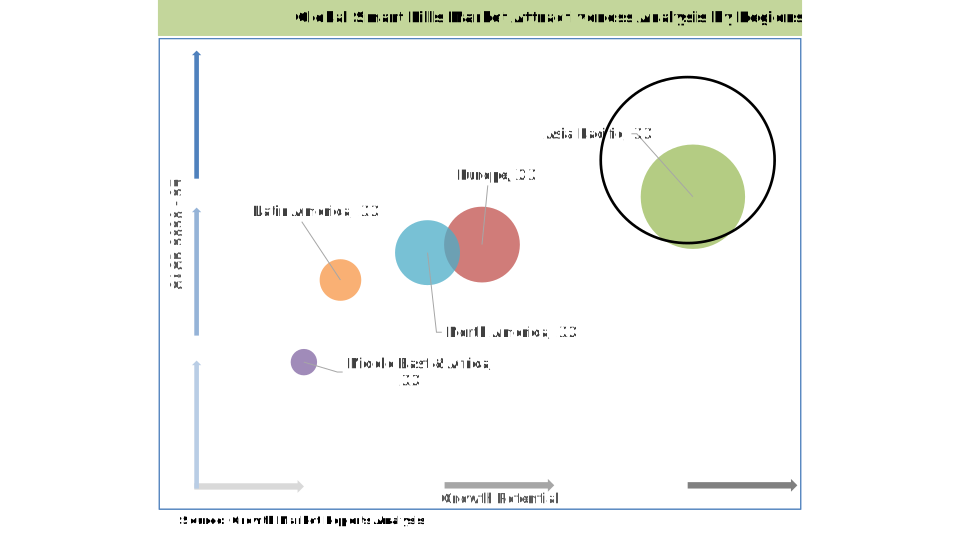
From a regional perspective, North America continues to dominate the smart pills market, accounting for the largest share in 2024. This leadership position is attributed to the presence of advanced healthcare infrastructure, high healthcare expenditure, and a strong focus on technological innovation. Europe follows closely, driven by supportive regulatory frameworks and increasing awareness about minimally invasive diagnostics. The Asia Pacific region, on the other hand, is emerging as the fastest-growing market, fueled by rising healthcare investments, expanding patient populations, and rapid adoption of digital health technologies. Latin America and the Middle East & Africa are also witnessing steady growth, albeit at a slower pace, as healthcare systems in these regions modernize and access to advanced medical devices improves.

Global Smart Pills Industry Outlook

Product Type Analysis

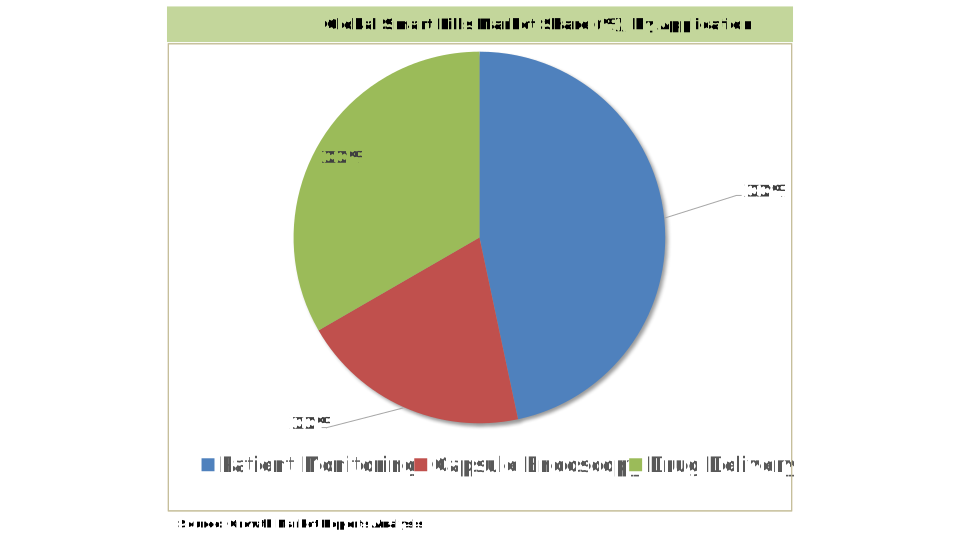
The product type segment of the smart pills market is broadly categorized into capsule endoscopy, drug delivery, and patient monitoring devices. Capsule endoscopy currently holds the largest market share, owing to its widespread adoption in the diagnosis of gastrointestinal disorders. These ingestible capsules, equipped with miniature cameras and sensors, enable comprehensive visualization of the gastrointestinal tract, offering significant advantages over traditional endoscopy. The non-invasive nature of capsule endoscopy, combined with its ability to provide high-resolution images and real-time data, has made it the gold standard for diagnosing conditions such as small bowel tumors, CrohnÂ’s disease, and obscure gastrointestinal bleeding. The continuous evolution of imaging technologies and the introduction of multi-sensor capsules are further enhancing the diagnostic capabilities of capsule endoscopy, driving sustained growth in this segment.

The drug delivery segment is witnessing rapid growth, driven by the increasing demand for targeted and controlled drug administration. Smart pills designed for drug delivery are equipped with mechanisms that enable the timed or location-specific release of therapeutic agents within the gastrointestinal tract. This targeted approach minimizes systemic side effects and enhances the efficacy of treatment, particularly for chronic conditions such as inflammatory bowel disease and colon cancer. The integration of wireless communication and biosensors allows for real-time monitoring of drug release and patient response, paving the way for personalized medicine. As research in nanotechnology and bioengineering advances, the development of next-generation smart pills with enhanced drug delivery capabilities is expected to further expand this market segment.

Patient monitoring smart pills represent a transformative innovation in the field of remote healthcare. These devices are embedded with sensors that can monitor a range of physiological parameters, including pH, temperature, pressure, and motility, as they traverse the gastrointestinal tract. The data collected is transmitted wirelessly to external receivers, enabling continuous and real-time monitoring of patient health. This capability is particularly valuable for patients with chronic gastrointestinal disorders, as it allows for early detection of complications and timely intervention. The growing adoption of telemedicine and remote patient monitoring solutions is driving demand for smart pills in this segment, as healthcare providers seek to improve patient outcomes while reducing hospital visits and associated costs.

Competition among product types is intensifying as manufacturers strive to differentiate their offerings through technological innovation and enhanced functionalities. The introduction of multifunctional smart pills that combine diagnostic, therapeutic, and monitoring capabilities is a key trend shaping the market landscape. These integrated devices offer comprehensive solutions for disease management, reducing the need for multiple procedures and improving patient compliance. As regulatory agencies continue to streamline approval processes for novel medical devices, the market is poised for the launch of a new generation of smart pills with expanded applications across various medical specialties.

Report Scope

Attributes Details
Report Title Smart Pills Market Research Report 2033
By Product Type Capsule Endoscopy, Drug Delivery, Patient Monitoring
By Application Diagnostic, Therapeutic
By Disease Indication Gastrointestinal Diseases, Neurological Disorders, Others
By End-User Hospitals, Diagnostic Centers, Research Institutes, Others
Regions Covered North America, Europe, APAC, Latin America, MEA
Base Year 2024
Historic Data 2018-2023
Forecast Period 2025-2033
Number of Pages 251
Number of Tables & Figures 376
Customization Available Yes, the report can be customized as per your need.

Application Analysis

The application segment of the smart pills market is divided into diagnostic and therapeutic uses, with diagnostic applications currently dominating the market. The primary driver for this dominance is the increasing need for accurate, non-invasive diagnostic tools for gastrointestinal and neurological disorders. Smart pills, particularly those used in capsule endoscopy, have revolutionized the diagnosis of small bowel diseases, celiac disease, and gastrointestinal bleeding. Their ability to provide high-resolution images and real-time data from within the body has significantly improved diagnostic accuracy and patient outcomes. The demand for early and precise diagnosis, coupled with the limitations of traditional diagnostic methods, is fueling the adoption of smart pills in clinical practice.

Therapeutic applications of smart pills are gaining momentum as advancements in drug delivery technologies enable more effective and personalized treatment options. Smart pills designed for therapeutic purposes can deliver drugs directly to specific sites within the gastrointestinal tract, optimizing therapeutic efficacy while minimizing systemic exposure and side effects. This targeted approach is particularly beneficial for conditions such as inflammatory bowel disease, colorectal cancer, and other localized gastrointestinal disorders. The integration of sensors and wireless communication allows for real-time monitoring of drug release and patient response, enabling healthcare providers to tailor treatment regimens based on individual patient needs.

The expanding scope of smart pills in patient monitoring is also contributing to their growing use in both diagnostic and therapeutic applications. By continuously monitoring physiological parameters such as pH, temperature, and pressure, smart pills provide valuable insights into disease progression and treatment efficacy. This real-time data enables healthcare providers to make informed decisions and adjust treatment plans promptly, improving patient outcomes and reducing the risk of complications. The integration of artificial intelligence and data analytics is further enhancing the utility of smart pills in clinical decision-making, paving the way for more personalized and proactive healthcare.

As the range of applications for smart pills continues to expand, manufacturers are investing heavily in research and development to enhance device functionality and broaden their clinical utility. The development of multifunctional smart pills capable of performing diagnostic, therapeutic, and monitoring functions is a key trend shaping the future of this market segment. These integrated solutions offer significant advantages in terms of convenience, patient compliance, and overall healthcare efficiency. As regulatory agencies increasingly recognize the value of smart pills in improving patient care, the market is expected to witness the launch of new products with expanded indications and enhanced performance.

Disease Indication Analysis

The disease indication segment of the smart pills market is primarily categorized into gastrointestinal diseases, neurological disorders, and other indications. Gastrointestinal diseases represent the largest share of the market, driven by the high prevalence of conditions such as CrohnÂ’s disease, ulcerative colitis, irritable bowel syndrome, and colorectal cancer. The ability of smart pills to provide non-invasive, real-time visualization and monitoring of the gastrointestinal tract has revolutionized the diagnosis and management of these conditions. Capsule endoscopy, in particular, has become the standard of care for the evaluation of small bowel disorders, offering significant advantages over traditional endoscopic techniques in terms of patient comfort, diagnostic accuracy, and safety.

Neurological disorders are an emerging area of application for smart pills, as advancements in sensor technology and wireless communication enable the monitoring of neurological function and drug delivery to the central nervous system. Smart pills equipped with biosensors can monitor physiological parameters relevant to neurological health, such as gut motility and pH, providing valuable insights into conditions like ParkinsonÂ’s disease, epilepsy, and multiple sclerosis. The development of smart pills capable of crossing the blood-brain barrier and delivering therapeutics directly to the brain is an area of active research, with the potential to transform the treatment of neurological disorders.

Other disease indications for smart pills include metabolic disorders, cardiovascular diseases, and infectious diseases. The versatility of smart pill technology allows for the customization of devices to address a wide range of clinical needs, from monitoring glucose levels in diabetic patients to detecting early signs of cardiovascular events. The integration of advanced sensors and data analytics is enabling the development of smart pills with enhanced diagnostic and therapeutic capabilities, expanding their utility across multiple medical specialties.

As the prevalence of chronic diseases continues to rise globally, the demand for innovative diagnostic and therapeutic solutions is expected to drive sustained growth in the disease indication segment of the smart pills market. Manufacturers are focusing on the development of disease-specific smart pills tailored to the unique needs of different patient populations. The growing emphasis on personalized medicine and precision healthcare is further accelerating the adoption of smart pills across a broad spectrum of disease indications, positioning them as a cornerstone of modern medical practice.

End-User Analysis

The end-user segment of the smart pills market includes hospitals, diagnostic centers, research institutes, and other healthcare facilities. Hospitals represent the largest end-user segment, accounting for a significant share of the market in 2024. The widespread adoption of smart pills in hospital settings is driven by the need for advanced diagnostic and therapeutic tools to manage complex gastrointestinal and neurological disorders. Hospitals benefit from the ability of smart pills to provide accurate, real-time data, enabling timely diagnosis and personalized treatment. The integration of smart pill technology into hospital workflows is improving patient outcomes, reducing the need for invasive procedures, and enhancing overall healthcare efficiency.

Diagnostic centers are also significant end-users of smart pills, particularly for capsule endoscopy and patient monitoring applications. These centers offer specialized diagnostic services and are increasingly adopting smart pill technology to enhance the accuracy and efficiency of their diagnostic processes. The non-invasive nature of smart pills makes them an attractive option for patients seeking convenient and painless diagnostic solutions. As awareness of the benefits of smart pills grows among healthcare providers and patients, diagnostic centers are expected to play a pivotal role in driving market adoption.

Research institutes represent a growing end-user segment, as academic and clinical researchers explore the potential of smart pill technology to advance medical knowledge and improve patient care. Research activities are focused on the development of next-generation smart pills with enhanced diagnostic, therapeutic, and monitoring capabilities. Collaborative efforts between research institutes, medical device manufacturers, and technology companies are accelerating innovation and expanding the clinical applications of smart pills. The involvement of research institutes in clinical trials and product development is expected to drive the adoption of smart pill technology in both academic and clinical settings.

Other end-users, including specialty clinics and home healthcare providers, are increasingly recognizing the value of smart pills in improving patient care and reducing healthcare costs. The growing trend towards decentralized and patient-centric healthcare is driving the adoption of smart pills in non-traditional settings. Home healthcare providers, in particular, are leveraging smart pill technology to enable remote monitoring and management of chronic diseases, reducing the need for frequent hospital visits and improving patient quality of life. As the healthcare landscape continues to evolve, the end-user segment of the smart pills market is expected to diversify and expand, creating new opportunities for market growth.

Opportunities & Threats

The smart pills market presents substantial opportunities for growth, particularly in the areas of technological innovation and expanding clinical applications. The continuous advancement of microelectronics, biosensors, and wireless communication technologies is enabling the development of next-generation smart pills with enhanced diagnostic, therapeutic, and monitoring capabilities. The integration of artificial intelligence and data analytics is further enhancing the utility of smart pills in personalized medicine, enabling healthcare providers to tailor treatment regimens based on real-time patient data. As regulatory agencies increasingly recognize the value of smart pill technology in improving patient outcomes, the market is poised for the launch of new products with expanded indications and improved performance. Strategic collaborations between medical device manufacturers, technology companies, and healthcare providers are fostering innovation and expanding the marketÂ’s reach, creating new opportunities for growth and market penetration.

Emerging markets represent another significant opportunity for the smart pills market. Rapidly growing healthcare investments, expanding patient populations, and increasing adoption of digital health technologies in regions such as Asia Pacific and Latin America are creating new avenues for market expansion. The rising prevalence of chronic diseases and the growing demand for minimally invasive diagnostic and therapeutic solutions are driving the adoption of smart pill technology in these regions. As healthcare systems in emerging markets modernize and access to advanced medical devices improves, manufacturers have the opportunity to tap into a large and underserved patient population. The development of cost-effective smart pill solutions tailored to the unique needs of emerging markets is expected to drive sustained growth and market penetration.

Despite the numerous opportunities, the smart pills market faces several restraining factors that could impede growth. High development and manufacturing costs, coupled with stringent regulatory requirements, pose significant challenges for market participants. The complex nature of smart pill technology necessitates extensive research and clinical validation, resulting in lengthy approval processes and high upfront investments. Additionally, concerns related to data privacy and security, particularly with the transmission of sensitive patient information, may hinder adoption among healthcare providers and patients. Addressing these challenges will require continued investment in research and development, as well as collaboration between industry stakeholders and regulatory agencies to streamline approval processes and ensure the safety and efficacy of smart pill devices.

Regional Outlook

North America remains the dominant region in the global smart pills market, accounting for the largest share with a market size of USD 2.2 billion in 2024. This stronghold is attributed to the presence of advanced healthcare infrastructure, high healthcare expenditure, and a strong focus on technological innovation. The United States, in particular, leads the region in terms of adoption and innovation, supported by favorable reimbursement policies and a robust regulatory framework. The growing prevalence of gastrointestinal and neurological disorders, coupled with increasing demand for minimally invasive diagnostic and therapeutic solutions, is driving sustained growth in the North American smart pills market. As the region continues to invest in digital health and personalized medicine, the market is expected to maintain its leadership position through 2033.

Europe follows closely, with a market size of USD 1.4 billion in 2024 and a projected CAGR of 10.7% through 2033. The regionÂ’s growth is driven by supportive regulatory frameworks, increasing awareness about the benefits of smart pill technology, and rising healthcare investments. Countries such as Germany, the United Kingdom, and France are at the forefront of smart pill adoption, supported by strong research and development activities and collaborations between academic institutions, healthcare providers, and medical device manufacturers. The emphasis on early diagnosis, patient-centric care, and minimally invasive procedures is fueling demand for smart pills across Europe, positioning the region as a key market for future growth.

The Asia Pacific region is emerging as the fastest-growing market for smart pills, with a market size of USD 900 million in 2024 and a projected CAGR of 13.5% through 2033. Rapidly growing healthcare investments, expanding patient populations, and increasing adoption of digital health technologies are driving market growth in countries such as China, Japan, and India. The rising prevalence of chronic diseases, coupled with the modernization of healthcare infrastructure and increasing access to advanced medical devices, is creating new opportunities for smart pill adoption in the region. As healthcare systems in Asia Pacific continue to evolve, the market is expected to witness significant growth and market penetration through the forecast period.

Smart Pills Market Statistics

Competitor Outlook

The smart pills market is characterized by intense competition, with a diverse array of players ranging from established medical device manufacturers to innovative startups. The competitive landscape is shaped by continuous technological innovation, strategic collaborations, and a strong focus on research and development. Companies are investing heavily in the development of next-generation smart pills with enhanced diagnostic, therapeutic, and monitoring capabilities, seeking to differentiate their offerings and capture greater market share. The introduction of multifunctional smart pills that combine multiple functionalities is a key trend driving competition, as manufacturers strive to provide comprehensive solutions for disease management and patient care.

Strategic partnerships and collaborations are playing a critical role in shaping the competitive landscape of the smart pills market. Medical device manufacturers are increasingly partnering with technology companies, academic institutions, and healthcare providers to accelerate innovation, expand product portfolios, and enhance market reach. These collaborations are facilitating the development of integrated solutions that leverage advancements in microelectronics, biosensors, wireless communication, and artificial intelligence. By combining expertise across disciplines, companies are able to bring innovative smart pill products to market more rapidly and effectively, strengthening their competitive positions.

The regulatory environment is also influencing the competitive dynamics of the smart pills market. Companies that can navigate complex regulatory requirements and obtain timely approvals for their products are better positioned to capitalize on market opportunities. The ability to demonstrate the safety, efficacy, and cost-effectiveness of smart pill devices is critical for gaining regulatory approval and achieving market acceptance. As regulatory agencies continue to streamline approval processes for novel medical devices, companies with strong regulatory expertise and a track record of successful product launches are expected to maintain a competitive edge.

Major players in the smart pills market include Medtronic plc, Olympus Corporation, CapsoVision, Inc., Given Imaging (now part of Medtronic), Proteus Digital Health, Check-Cap Ltd., and IntroMedic Co., Ltd. Medtronic is a global leader in medical technology, offering a comprehensive portfolio of smart pill products for diagnostic and therapeutic applications. Olympus Corporation is renowned for its advanced imaging technologies and capsule endoscopy solutions. CapsoVision specializes in innovative capsule endoscopy devices with 360-degree panoramic imaging capabilities. Proteus Digital Health is a pioneer in digital medicine, developing ingestible sensors for patient monitoring and medication adherence. Check-Cap and IntroMedic are emerging players focused on the development of next-generation smart pills for colorectal cancer screening and gastrointestinal diagnostics.

These companies are distinguished by their commitment to innovation, strong research and development capabilities, and strategic collaborations with healthcare providers and technology partners. By continuously advancing smart pill technology and expanding clinical applications, these leading players are driving the growth and evolution of the global smart pills market. As competition intensifies and new entrants emerge, the market is expected to witness ongoing innovation and the launch of novel products that will shape the future of healthcare.

Key Players

  • Medtronic plc
  • Proteus Digital Health
  • CapsoVision, Inc.
  • Olympus Corporation
  • Given Imaging (Medtronic)
  • Check-Cap Ltd.
  • RF Co., Ltd.
  • IntroMedic Co., Ltd.
  • Philips Healthcare
  • Boston Scientific Corporation
  • PillCam (Medtronic)
  • JINSHAN Science & Technology
  • F. Hoffmann-La Roche Ltd
  • Otsuka Pharmaceutical Co., Ltd.
  • Novartis AG
  • GE Healthcare
  • Bio-Images Research Ltd.
  • SmartPill Corporation
  • Siemens Healthineers
  • Abbott Laboratories
Smart Pills Market Overview

Segments

The Smart Pills market has been segmented on the basis of

Product Type

  • Capsule Endoscopy
  • Drug Delivery
  • Patient Monitoring

Application

  • Diagnostic
  • Therapeutic

Disease Indication

  • Gastrointestinal Diseases
  • Neurological Disorders
  • Others

End-User

  • Hospitals
  • Diagnostic Centers
  • Research Institutes
  • Others

Competitive Landscape

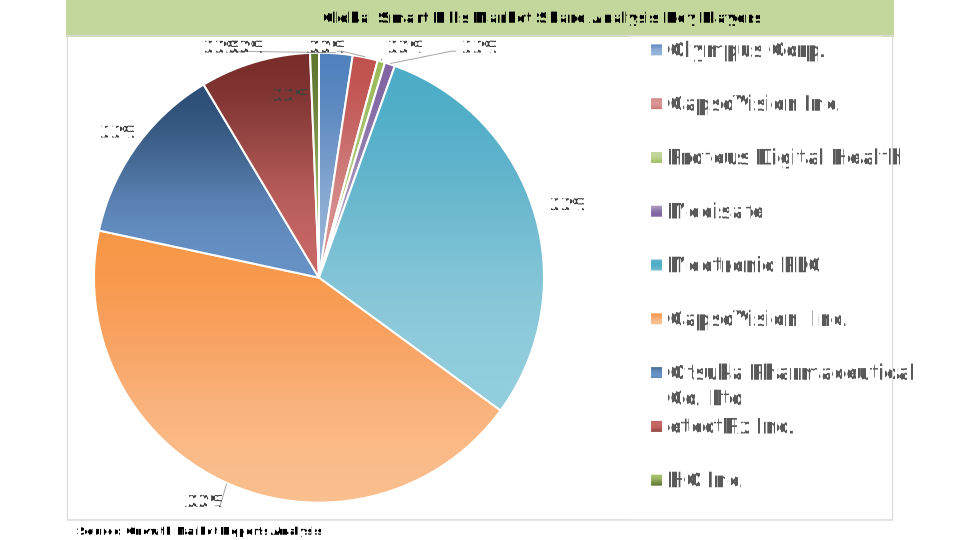
Some of the major players competing in the market are Olympus Corp.; CapsoVision Inc.; Proteus Digital Health; Medisafe; Medtronic PLC; CapsoVision, Inc.; Otsuka Pharmaceutical Co. Ltd; etectRx Inc.; and HQ Inc.

Key players in smart pills market are focusing on marketing strategies such as expansion of their product portfolio, merger & acquisition, collaboration, and partnerships by offering latest version of devices to gain substantial share in the market. New competitors in the market are focusing on advanced and affordable alternatives to existing products in order to take advantage of the market potential available in the developing countries.

For instance, in December 2019, the US Food and Drug Administration had given approvals to a Florida-based company, etectRx Inc. for its sensor technology for its sensor technology applied in smart pills. In addition, etectRx Inc. has also announced the partnership with Pear Therapeutics to develop the two products combined that are etectRx’s sensor technology with Pear’s digital therapeutic in January 2021. In August 2020, Proteus Digital Health has been acquired by Otsuka Pharmaceutical Co. Ltd for USD 15 million.

Smart Pills Market

Frequently Asked Questions

Yes, smart pill solutions can be customized for specific clinical needs, disease indications, and regional requirements. Manufacturers are developing cost-effective and disease-specific smart pills, particularly for emerging markets with unique healthcare challenges.

Key challenges include high development and manufacturing costs, stringent regulatory requirements, lengthy approval processes, and concerns about data privacy and security related to wireless transmission of patient information.

Smart pills are primarily used for diagnostic applications such as capsule endoscopy for gastrointestinal disorders. They are also increasingly used for therapeutic drug delivery and continuous patient monitoring, especially in remote healthcare and telemedicine.

Major companies include Medtronic plc, Olympus Corporation, CapsoVision, Inc., Proteus Digital Health, Check-Cap Ltd., IntroMedic Co., Ltd., Philips Healthcare, Boston Scientific Corporation, and others.

North America leads the global smart pills market, followed by Europe. The Asia Pacific region is the fastest-growing market due to rising healthcare investments, expanding patient populations, and rapid adoption of digital health technologies.

Key advancements include the integration of microelectronics, wireless communication, advanced imaging, artificial intelligence, and biosensors. These innovations enable multifunctional smart pills capable of diagnostics, therapy, and real-time health monitoring.

The main types of smart pills include capsule endoscopy devices, drug delivery capsules, and patient monitoring smart pills. Capsule endoscopy is the most widely adopted for gastrointestinal diagnostics, while drug delivery and monitoring capsules are rapidly gaining traction.

Smart pills are mainly used for diagnosing and treating gastrointestinal diseases such as Crohn’s disease, irritable bowel syndrome, ulcerative colitis, and colorectal cancer. They are also being developed for neurological disorders and other conditions like metabolic and cardiovascular diseases.

Smart pills are ingestible medical devices equipped with miniaturized sensors, cameras, and wireless communication technology. They are used for non-invasive diagnostics, real-time patient monitoring, and targeted drug delivery, transforming patient care by providing accurate data from within the body.

The global smart pills market size stood at USD 5.1 billion in 2024 and is projected to grow at a CAGR of 11.2% from 2025 to 2033, reaching an estimated value of USD 13.1 billion by 2033.

Table Of Content

Chapter 1 Executive Summary
Chapter 2 Assumptions and Acronyms Used
Chapter 3 Research Methodology
Chapter 4 Smart Pills Market Overview
   4.1 Introduction
      4.1.1 Market Taxonomy
      4.1.2 Market Definition
      4.1.3 Macro-Economic Factors Impacting the Market Growth
   4.2 Smart Pills Market Dynamics
      4.2.1 Market Drivers
      4.2.2 Market Restraints
      4.2.3 Market Opportunity
   4.3 Smart Pills Market - Supply Chain Analysis
      4.3.1 List of Key Suppliers
      4.3.2 List of Key Distributors
      4.3.3 List of Key Consumers
   4.4 Key Forces Shaping the Smart Pills Market
      4.4.1 Bargaining Power of Suppliers
      4.4.2 Bargaining Power of Buyers
      4.4.3 Threat of Substitution
      4.4.4 Threat of New Entrants
      4.4.5 Competitive Rivalry
   4.5 Global Smart Pills Market Size & Forecast, 2023-2032
      4.5.1 Smart Pills Market Size and Y-o-Y Growth
      4.5.2 Smart Pills Market Absolute $ Opportunity

Chapter 5 Global Smart Pills Market Analysis and Forecast By Product Type
   5.1 Introduction
      5.1.1 Key Market Trends & Growth Opportunities By Product Type
      5.1.2 Basis Point Share (BPS) Analysis By Product Type
      5.1.3 Absolute $ Opportunity Assessment By Product Type
   5.2 Smart Pills Market Size Forecast By Product Type
      5.2.1 Capsule Endoscopy
      5.2.2 Drug Delivery
      5.2.3 Patient Monitoring
   5.3 Market Attractiveness Analysis By Product Type

Chapter 6 Global Smart Pills Market Analysis and Forecast By Application
   6.1 Introduction
      6.1.1 Key Market Trends & Growth Opportunities By Application
      6.1.2 Basis Point Share (BPS) Analysis By Application
      6.1.3 Absolute $ Opportunity Assessment By Application
   6.2 Smart Pills Market Size Forecast By Application
      6.2.1 Diagnostic
      6.2.2 Therapeutic
   6.3 Market Attractiveness Analysis By Application

Chapter 7 Global Smart Pills Market Analysis and Forecast By Disease Indication
   7.1 Introduction
      7.1.1 Key Market Trends & Growth Opportunities By Disease Indication
      7.1.2 Basis Point Share (BPS) Analysis By Disease Indication
      7.1.3 Absolute $ Opportunity Assessment By Disease Indication
   7.2 Smart Pills Market Size Forecast By Disease Indication
      7.2.1 Gastrointestinal Diseases
      7.2.2 Neurological Disorders
      7.2.3 Others
   7.3 Market Attractiveness Analysis By Disease Indication

Chapter 8 Global Smart Pills Market Analysis and Forecast By End-User
   8.1 Introduction
      8.1.1 Key Market Trends & Growth Opportunities By End-User
      8.1.2 Basis Point Share (BPS) Analysis By End-User
      8.1.3 Absolute $ Opportunity Assessment By End-User
   8.2 Smart Pills Market Size Forecast By End-User
      8.2.1 Hospitals
      8.2.2 Diagnostic Centers
      8.2.3 Research Institutes
      8.2.4 Others
   8.3 Market Attractiveness Analysis By End-User

Chapter 9 Global Smart Pills Market Analysis and Forecast by Region
   9.1 Introduction
      9.1.1 Key Market Trends & Growth Opportunities By Region
      9.1.2 Basis Point Share (BPS) Analysis By Region
      9.1.3 Absolute $ Opportunity Assessment By Region
   9.2 Smart Pills Market Size Forecast By Region
      9.2.1 North America
      9.2.2 Europe
      9.2.3 Asia Pacific
      9.2.4 Latin America
      9.2.5 Middle East & Africa (MEA)
   9.3 Market Attractiveness Analysis By Region

Chapter 10 Coronavirus Disease (COVID-19) Impact 
   10.1 Introduction 
   10.2 Current & Future Impact Analysis 
   10.3 Economic Impact Analysis 
   10.4 Government Policies 
   10.5 Investment Scenario

Chapter 11 North America Smart Pills Analysis and Forecast
   11.1 Introduction
   11.2 North America Smart Pills Market Size Forecast by Country
      11.2.1 U.S.
      11.2.2 Canada
   11.3 Basis Point Share (BPS) Analysis by Country
   11.4 Absolute $ Opportunity Assessment by Country
   11.5 Market Attractiveness Analysis by Country
   11.6 North America Smart Pills Market Size Forecast By Product Type
      11.6.1 Capsule Endoscopy
      11.6.2 Drug Delivery
      11.6.3 Patient Monitoring
   11.7 Basis Point Share (BPS) Analysis By Product Type 
   11.8 Absolute $ Opportunity Assessment By Product Type 
   11.9 Market Attractiveness Analysis By Product Type
   11.10 North America Smart Pills Market Size Forecast By Application
      11.10.1 Diagnostic
      11.10.2 Therapeutic
   11.11 Basis Point Share (BPS) Analysis By Application 
   11.12 Absolute $ Opportunity Assessment By Application 
   11.13 Market Attractiveness Analysis By Application
   11.14 North America Smart Pills Market Size Forecast By Disease Indication
      11.14.1 Gastrointestinal Diseases
      11.14.2 Neurological Disorders
      11.14.3 Others
   11.15 Basis Point Share (BPS) Analysis By Disease Indication 
   11.16 Absolute $ Opportunity Assessment By Disease Indication 
   11.17 Market Attractiveness Analysis By Disease Indication
   11.18 North America Smart Pills Market Size Forecast By End-User
      11.18.1 Hospitals
      11.18.2 Diagnostic Centers
      11.18.3 Research Institutes
      11.18.4 Others
   11.19 Basis Point Share (BPS) Analysis By End-User 
   11.20 Absolute $ Opportunity Assessment By End-User 
   11.21 Market Attractiveness Analysis By End-User

Chapter 12 Europe Smart Pills Analysis and Forecast
   12.1 Introduction
   12.2 Europe Smart Pills Market Size Forecast by Country
      12.2.1 Germany
      12.2.2 France
      12.2.3 Italy
      12.2.4 U.K.
      12.2.5 Spain
      12.2.6 Russia
      12.2.7 Rest of Europe
   12.3 Basis Point Share (BPS) Analysis by Country
   12.4 Absolute $ Opportunity Assessment by Country
   12.5 Market Attractiveness Analysis by Country
   12.6 Europe Smart Pills Market Size Forecast By Product Type
      12.6.1 Capsule Endoscopy
      12.6.2 Drug Delivery
      12.6.3 Patient Monitoring
   12.7 Basis Point Share (BPS) Analysis By Product Type 
   12.8 Absolute $ Opportunity Assessment By Product Type 
   12.9 Market Attractiveness Analysis By Product Type
   12.10 Europe Smart Pills Market Size Forecast By Application
      12.10.1 Diagnostic
      12.10.2 Therapeutic
   12.11 Basis Point Share (BPS) Analysis By Application 
   12.12 Absolute $ Opportunity Assessment By Application 
   12.13 Market Attractiveness Analysis By Application
   12.14 Europe Smart Pills Market Size Forecast By Disease Indication
      12.14.1 Gastrointestinal Diseases
      12.14.2 Neurological Disorders
      12.14.3 Others
   12.15 Basis Point Share (BPS) Analysis By Disease Indication 
   12.16 Absolute $ Opportunity Assessment By Disease Indication 
   12.17 Market Attractiveness Analysis By Disease Indication
   12.18 Europe Smart Pills Market Size Forecast By End-User
      12.18.1 Hospitals
      12.18.2 Diagnostic Centers
      12.18.3 Research Institutes
      12.18.4 Others
   12.19 Basis Point Share (BPS) Analysis By End-User 
   12.20 Absolute $ Opportunity Assessment By End-User 
   12.21 Market Attractiveness Analysis By End-User

Chapter 13 Asia Pacific Smart Pills Analysis and Forecast
   13.1 Introduction
   13.2 Asia Pacific Smart Pills Market Size Forecast by Country
      13.2.1 China
      13.2.2 Japan
      13.2.3 South Korea
      13.2.4 India
      13.2.5 Australia
      13.2.6 South East Asia (SEA)
      13.2.7 Rest of Asia Pacific (APAC)
   13.3 Basis Point Share (BPS) Analysis by Country
   13.4 Absolute $ Opportunity Assessment by Country
   13.5 Market Attractiveness Analysis by Country
   13.6 Asia Pacific Smart Pills Market Size Forecast By Product Type
      13.6.1 Capsule Endoscopy
      13.6.2 Drug Delivery
      13.6.3 Patient Monitoring
   13.7 Basis Point Share (BPS) Analysis By Product Type 
   13.8 Absolute $ Opportunity Assessment By Product Type 
   13.9 Market Attractiveness Analysis By Product Type
   13.10 Asia Pacific Smart Pills Market Size Forecast By Application
      13.10.1 Diagnostic
      13.10.2 Therapeutic
   13.11 Basis Point Share (BPS) Analysis By Application 
   13.12 Absolute $ Opportunity Assessment By Application 
   13.13 Market Attractiveness Analysis By Application
   13.14 Asia Pacific Smart Pills Market Size Forecast By Disease Indication
      13.14.1 Gastrointestinal Diseases
      13.14.2 Neurological Disorders
      13.14.3 Others
   13.15 Basis Point Share (BPS) Analysis By Disease Indication 
   13.16 Absolute $ Opportunity Assessment By Disease Indication 
   13.17 Market Attractiveness Analysis By Disease Indication
   13.18 Asia Pacific Smart Pills Market Size Forecast By End-User
      13.18.1 Hospitals
      13.18.2 Diagnostic Centers
      13.18.3 Research Institutes
      13.18.4 Others
   13.19 Basis Point Share (BPS) Analysis By End-User 
   13.20 Absolute $ Opportunity Assessment By End-User 
   13.21 Market Attractiveness Analysis By End-User

Chapter 14 Latin America Smart Pills Analysis and Forecast
   14.1 Introduction
   14.2 Latin America Smart Pills Market Size Forecast by Country
      14.2.1 Brazil
      14.2.2 Mexico
      14.2.3 Rest of Latin America (LATAM)
   14.3 Basis Point Share (BPS) Analysis by Country
   14.4 Absolute $ Opportunity Assessment by Country
   14.5 Market Attractiveness Analysis by Country
   14.6 Latin America Smart Pills Market Size Forecast By Product Type
      14.6.1 Capsule Endoscopy
      14.6.2 Drug Delivery
      14.6.3 Patient Monitoring
   14.7 Basis Point Share (BPS) Analysis By Product Type 
   14.8 Absolute $ Opportunity Assessment By Product Type 
   14.9 Market Attractiveness Analysis By Product Type
   14.10 Latin America Smart Pills Market Size Forecast By Application
      14.10.1 Diagnostic
      14.10.2 Therapeutic
   14.11 Basis Point Share (BPS) Analysis By Application 
   14.12 Absolute $ Opportunity Assessment By Application 
   14.13 Market Attractiveness Analysis By Application
   14.14 Latin America Smart Pills Market Size Forecast By Disease Indication
      14.14.1 Gastrointestinal Diseases
      14.14.2 Neurological Disorders
      14.14.3 Others
   14.15 Basis Point Share (BPS) Analysis By Disease Indication 
   14.16 Absolute $ Opportunity Assessment By Disease Indication 
   14.17 Market Attractiveness Analysis By Disease Indication
   14.18 Latin America Smart Pills Market Size Forecast By End-User
      14.18.1 Hospitals
      14.18.2 Diagnostic Centers
      14.18.3 Research Institutes
      14.18.4 Others
   14.19 Basis Point Share (BPS) Analysis By End-User 
   14.20 Absolute $ Opportunity Assessment By End-User 
   14.21 Market Attractiveness Analysis By End-User

Chapter 15 Middle East & Africa (MEA) Smart Pills Analysis and Forecast
   15.1 Introduction
   15.2 Middle East & Africa (MEA) Smart Pills Market Size Forecast by Country
      15.2.1 Saudi Arabia
      15.2.2 South Africa
      15.2.3 UAE
      15.2.4 Rest of Middle East & Africa (MEA)
   15.3 Basis Point Share (BPS) Analysis by Country
   15.4 Absolute $ Opportunity Assessment by Country
   15.5 Market Attractiveness Analysis by Country
   15.6 Middle East & Africa (MEA) Smart Pills Market Size Forecast By Product Type
      15.6.1 Capsule Endoscopy
      15.6.2 Drug Delivery
      15.6.3 Patient Monitoring
   15.7 Basis Point Share (BPS) Analysis By Product Type 
   15.8 Absolute $ Opportunity Assessment By Product Type 
   15.9 Market Attractiveness Analysis By Product Type
   15.10 Middle East & Africa (MEA) Smart Pills Market Size Forecast By Application
      15.10.1 Diagnostic
      15.10.2 Therapeutic
   15.11 Basis Point Share (BPS) Analysis By Application 
   15.12 Absolute $ Opportunity Assessment By Application 
   15.13 Market Attractiveness Analysis By Application
   15.14 Middle East & Africa (MEA) Smart Pills Market Size Forecast By Disease Indication
      15.14.1 Gastrointestinal Diseases
      15.14.2 Neurological Disorders
      15.14.3 Others
   15.15 Basis Point Share (BPS) Analysis By Disease Indication 
   15.16 Absolute $ Opportunity Assessment By Disease Indication 
   15.17 Market Attractiveness Analysis By Disease Indication
   15.18 Middle East & Africa (MEA) Smart Pills Market Size Forecast By End-User
      15.18.1 Hospitals
      15.18.2 Diagnostic Centers
      15.18.3 Research Institutes
      15.18.4 Others
   15.19 Basis Point Share (BPS) Analysis By End-User 
   15.20 Absolute $ Opportunity Assessment By End-User 
   15.21 Market Attractiveness Analysis By End-User

Chapter 16 Competition Landscape 
   16.1 Smart Pills Market: Competitive Dashboard
   16.2 Global Smart Pills Market: Market Share Analysis, 2023
   16.3 Company Profiles (Details – Overview, Financials, Developments, Strategy) 
      16.3.1 Medtronic plc
Proteus Digital Health
CapsoVision, Inc.
Olympus Corporation
Given Imaging (Medtronic)
Check-Cap Ltd.
RF Co., Ltd.
IntroMedic Co., Ltd.
Philips Healthcare
Boston Scientific Corporation
PillCam (Medtronic)
JINSHAN Science & Technology
F. Hoffmann-La Roche Ltd
Otsuka Pharmaceutical Co., Ltd.
Novartis AG
GE Healthcare
Bio-Images Research Ltd.
SmartPill Corporation
Siemens Healthineers
Abbott Laboratories

Methodology

Our Clients

Microsoft
Siemens Healthcare
sinopec
General Electric
Deloitte
General Mills
The John Holland Group
FedEx Logistics