Smart Machines Market Research Report 2033

Smart Machines Market Research Report 2033

Segments - by Component (Hardware, Software, Services), by Technology (Machine Learning, Robotics, Cognitive Computing, Natural Language Processing, Computer Vision, Others), by Application (Automotive, Healthcare, Manufacturing, Consumer Electronics, Aerospace & Defense, Retail, BFSI, Others), by End-User (Industrial, Commercial, Residential, Others)

https://growthmarketreports.com/Raksha
Author : Raksha Sharma
https://growthmarketreports.com/Vaibhav
Fact-checked by : V. Chandola
https://growthmarketreports.com/Shruti
Editor : Shruti Bhat

Upcoming | Report ID :ICT-SE-3339 | 4.3 Rating | 60 Reviews | 295 Pages | Format : Docx PDF

Report Description


Smart Machines Market Outlook

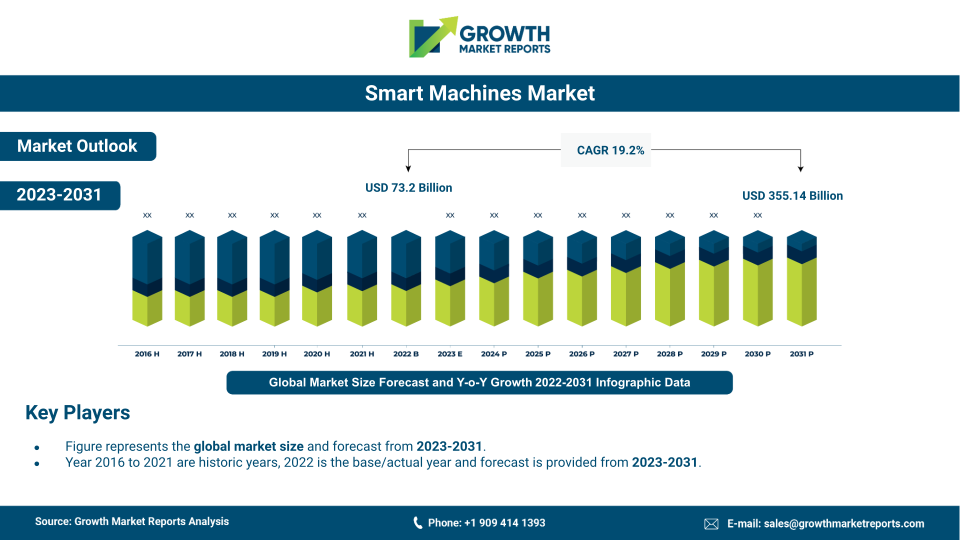
According to our latest research, the global Smart Machines Market size reached USD 187.2 billion in 2024, reflecting robust adoption across diverse industries. The market is projected to grow at a CAGR of 18.5% from 2025 to 2033, reaching an estimated USD 908.6 billion by 2033. This remarkable growth is primarily driven by rapid advancements in artificial intelligence, machine learning, and robotics, which are enabling the deployment of intelligent systems in sectors such as healthcare, manufacturing, automotive, and consumer electronics. As per our latest research, the convergence of digital technologies and the increasing need for automation and data-driven decision-making are the key factors fueling the expansion of the smart machines market globally.

One of the most significant growth factors for the smart machines market is the escalating demand for automation and intelligent decision-making across industries. Organizations are increasingly leveraging smart machines to optimize operational efficiency, reduce human error, and enhance productivity. In manufacturing, for instance, smart robots and cognitive systems are revolutionizing assembly lines by automating repetitive tasks and enabling predictive maintenance. Similarly, in the healthcare sector, smart diagnostic devices and AI-driven analytics are improving patient outcomes through faster and more accurate diagnoses. The proliferation of Industry 4.0 and the Internet of Things (IoT) further amplifies this trend, as connected devices generate massive data streams that smart machines can analyze in real-time to derive actionable insights.

Another critical driver of market growth is the continuous evolution of enabling technologies such as machine learning, natural language processing, and computer vision. These technologies empower smart machines to understand, learn, and interact with their environments in increasingly sophisticated ways. For example, advancements in natural language processing have led to the development of intelligent virtual assistants and chatbots that can seamlessly interact with users, transforming customer service and support functions. Meanwhile, machine learning algorithms are being integrated into autonomous vehicles and robotics, enabling them to learn from data, adapt to new situations, and make complex decisions with minimal human intervention. The synergy between hardware advancements and software intelligence is accelerating the adoption of smart machines across both traditional and emerging industries.

The rising emphasis on personalized experiences and enhanced user engagement is also contributing to the expansion of the smart machines market. In sectors such as retail and consumer electronics, smart machines are being utilized to deliver tailored recommendations, automate inventory management, and improve customer interactions. Retailers are deploying AI-powered systems to analyze consumer behavior, predict trends, and optimize supply chains, while smart home devices are enhancing convenience and security for residential users. The integration of smart machines into everyday life is driving a shift toward more intelligent, responsive, and adaptive environments, further reinforcing the market's upward trajectory.

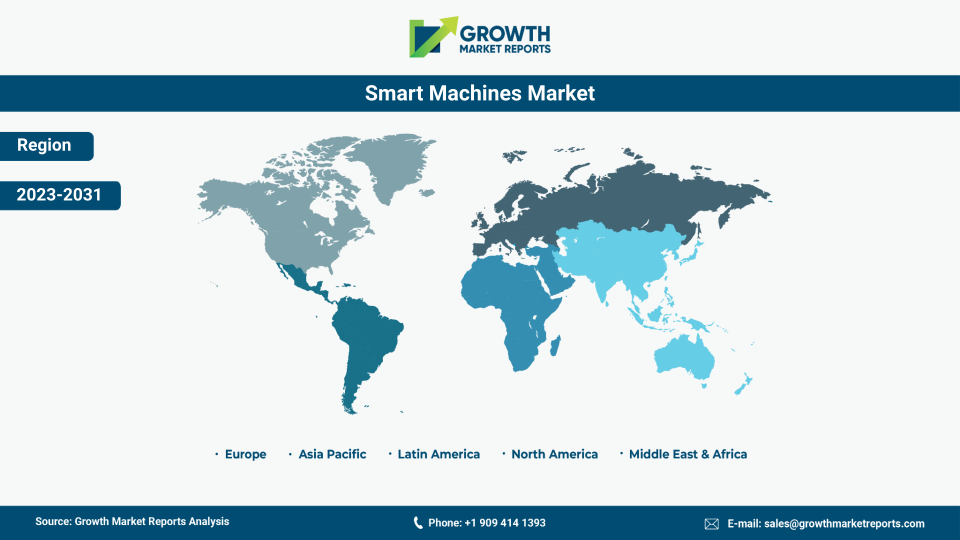
From a regional perspective, North America continues to dominate the smart machines market, accounting for the largest revenue share in 2024. This leadership is attributed to the presence of major technology providers, a highly developed digital infrastructure, and significant investments in research and development. However, the Asia Pacific region is rapidly emerging as a key growth engine, fueled by increasing industrialization, government initiatives to promote automation, and a burgeoning consumer electronics market. Europe also holds a substantial market share, driven by strong adoption in automotive and manufacturing sectors. Meanwhile, regions such as Latin America and the Middle East & Africa are witnessing steady growth as organizations in these areas begin to embrace smart technologies to enhance competitiveness and drive economic development.

Global Smart Machines Industry Outlook

Component Analysis

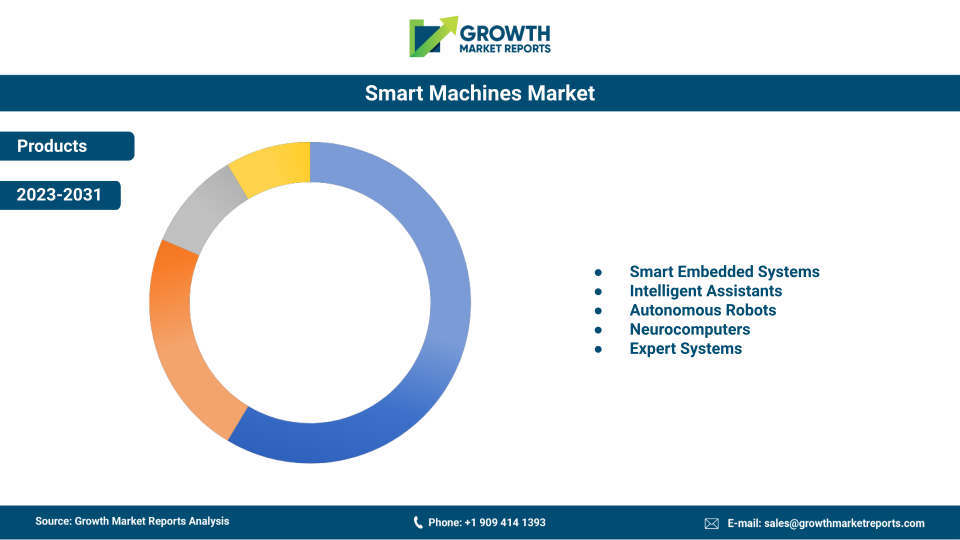
The smart machines market is segmented by component into hardware, software, and services, each playing a pivotal role in the ecosystem. Hardware forms the foundation of smart machines, encompassing sensors, actuators, processors, and communication modules that enable machines to interact with their environment. The evolution of miniaturized sensors, high-performance processors, and advanced connectivity solutions has significantly enhanced the capabilities of smart machines, allowing them to perform complex tasks with greater accuracy and efficiency. Hardware innovations are particularly crucial in robotics and autonomous systems, where real-time data processing and robust physical interfaces are essential for safe and effective operation.

Software is the intelligence layer that drives the functionality of smart machines. It includes machine learning algorithms, cognitive computing platforms, natural language processing engines, and computer vision frameworks. The software segment is witnessing rapid growth as organizations seek to harness the power of artificial intelligence to analyze data, recognize patterns, and make autonomous decisions. Software solutions are increasingly being delivered through cloud-based platforms, enabling scalability, flexibility, and seamless integration with existing IT infrastructure. The proliferation of open-source AI frameworks and the availability of pre-trained models are further accelerating software adoption, making it easier for businesses to deploy smart machine applications across various domains.

Services represent a critical component of the smart machines market, encompassing consulting, integration, maintenance, and support services. As the adoption of smart machines becomes more widespread, organizations require expert guidance to design, implement, and optimize intelligent systems tailored to their specific needs. Service providers play a vital role in facilitating the seamless integration of hardware and software, ensuring interoperability, and providing ongoing support to maximize the value of smart machine investments. The growing complexity of smart machine ecosystems, coupled with the need for continuous updates and cybersecurity measures, is driving demand for specialized services that can address evolving business and technical challenges.

The interplay between hardware, software, and services is shaping the competitive landscape of the smart machines market. Leading vendors are increasingly offering integrated solutions that combine cutting-edge hardware with advanced software and comprehensive services, enabling end-to-end automation and intelligence. This holistic approach is particularly appealing to enterprises seeking to accelerate digital transformation and achieve measurable business outcomes. As a result, the component segment is expected to witness sustained growth, with software and services outpacing hardware in terms of market share due to their critical role in enabling and supporting intelligent machine capabilities.

Report Scope

Attributes Details
Report Title Smart Machines Market Research Report 2033
By Component Hardware, Software, Services
By Technology Machine Learning, Robotics, Cognitive Computing, Natural Language Processing, Computer Vision, Others
By Application Automotive, Healthcare, Manufacturing, Consumer Electronics, Aerospace & Defense, Retail, BFSI, Others
By End-User Industrial, Commercial, Residential, Others
Regions Covered North America, Europe, APAC, Latin America, MEA
Base Year 2024
Historic Data 2018-2023
Forecast Period 2025-2033
Number of Pages 295
Number of Tables & Figures 388
Customization Available Yes, the report can be customized as per your need.

Technology Analysis

The technology segment of the smart machines market includes machine learning, robotics, cognitive computing, natural language processing, computer vision, and other emerging technologies. Machine learning is at the core of smart machines, empowering them to analyze vast amounts of data, recognize patterns, and improve performance over time without explicit programming. The adoption of machine learning is particularly prominent in applications such as predictive maintenance, fraud detection, and autonomous decision-making, where real-time insights and adaptability are crucial. The availability of powerful computing resources and large datasets has accelerated the development and deployment of machine learning models across industries.

Robotics is another major technological pillar, enabling the automation of physical tasks in environments ranging from factories to homes. Advances in sensor technology, motion control, and artificial intelligence have resulted in robots that can perform intricate operations with precision and safety. In manufacturing, collaborative robots (cobots) are working alongside human operators to boost productivity and ensure workplace safety. In healthcare, surgical robots are enhancing the precision of medical procedures, while service robots are being deployed for tasks such as cleaning, delivery, and patient care. The integration of robotics with other smart technologies is expanding the scope and impact of automation in diverse sectors.

Cognitive computing and natural language processing (NLP) are transforming the way machines interact with humans and understand unstructured data. Cognitive computing systems simulate human thought processes, enabling machines to reason, learn, and make decisions in complex and dynamic environments. NLP technologies, on the other hand, facilitate seamless communication between humans and machines by enabling them to understand, interpret, and respond to natural language inputs. These capabilities are driving the adoption of virtual assistants, chatbots, and intelligent customer service platforms, which are enhancing user experiences and streamlining business operations.

Computer vision is enabling smart machines to interpret and understand visual information from the world around them. This technology is being used in applications such as quality inspection, facial recognition, autonomous vehicles, and surveillance systems. The ability to process and analyze images and videos in real-time is opening new possibilities for automation and intelligence in sectors such as automotive, retail, and security. Other emerging technologies, including edge computing and swarm intelligence, are also contributing to the evolution of smart machines by enabling decentralized processing and collaborative decision-making among distributed devices.

Application Analysis

The application segment of the smart machines market is highly diverse, encompassing automotive, healthcare, manufacturing, consumer electronics, aerospace and defense, retail, BFSI, and other sectors. In the automotive industry, smart machines are driving the development of autonomous vehicles, advanced driver-assistance systems (ADAS), and intelligent infotainment solutions. These technologies are enhancing vehicle safety, improving fuel efficiency, and delivering personalized driving experiences. The integration of AI-powered sensors and computer vision systems is enabling real-time monitoring of road conditions and driver behavior, paving the way for fully autonomous transportation.

Healthcare is another key application area, where smart machines are revolutionizing diagnostics, treatment, and patient care. AI-driven diagnostic tools are enabling faster and more accurate detection of diseases, while robotic surgical systems are enhancing the precision and safety of medical procedures. Smart wearable devices are empowering patients to monitor their health in real-time, facilitating proactive interventions and personalized treatment plans. The combination of machine learning, natural language processing, and computer vision is enabling healthcare providers to analyze vast amounts of medical data, leading to improved clinical decision-making and better patient outcomes.

In manufacturing, smart machines are at the heart of Industry 4.0 initiatives, enabling the automation of production lines, quality control, and supply chain management. The use of collaborative robots, predictive maintenance systems, and AI-powered analytics is driving operational efficiency, reducing downtime, and minimizing costs. Smart machines are also being deployed in consumer electronics, where they are powering intelligent home devices, virtual assistants, and smart appliances that enhance convenience, security, and energy efficiency. The rapid adoption of IoT devices and the proliferation of connected ecosystems are further fueling the demand for smart machines in this segment.

The aerospace and defense sector is leveraging smart machines for applications such as autonomous drones, intelligent surveillance systems, and advanced simulation platforms. These technologies are enhancing situational awareness, improving mission effectiveness, and reducing operational risks. In retail, smart machines are being used to automate inventory management, optimize supply chains, and deliver personalized shopping experiences. The BFSI sector is adopting AI-powered systems for fraud detection, risk assessment, and customer service automation, leading to improved operational efficiency and enhanced customer satisfaction. Other emerging applications include agriculture, logistics, and energy management, where smart machines are enabling data-driven decision-making and sustainable practices.

End-User Analysis

The smart machines market serves a broad spectrum of end-users, including industrial, commercial, residential, and others. The industrial segment represents the largest share of the market, driven by widespread adoption in manufacturing, automotive, aerospace, and energy sectors. Industrial organizations are leveraging smart machines to automate production processes, optimize resource utilization, and enhance workplace safety. The integration of AI, robotics, and IoT is enabling real-time monitoring and control of complex industrial systems, leading to significant improvements in productivity and cost efficiency. The shift toward smart factories and digital twins is further accelerating the adoption of intelligent machines in this segment.

The commercial end-user segment encompasses sectors such as retail, healthcare, BFSI, and hospitality, where smart machines are being deployed to enhance customer experiences, streamline operations, and drive business growth. In retail, AI-powered recommendation engines and automated checkout systems are transforming the shopping experience, while in healthcare, smart diagnostic devices and virtual assistants are improving patient care and administrative efficiency. The BFSI sector is utilizing smart machines for fraud detection, risk management, and customer service automation, resulting in faster and more accurate decision-making. The commercial segment is expected to witness rapid growth as organizations increasingly prioritize digital transformation and customer-centric strategies.

The residential segment is experiencing significant growth due to the rising adoption of smart home devices, intelligent appliances, and home automation systems. Consumers are embracing smart machines for convenience, security, and energy management, with devices such as smart speakers, thermostats, and security cameras becoming increasingly common in households. The integration of AI and IoT is enabling seamless control and automation of home environments, enhancing comfort and safety for residents. The growing popularity of connected ecosystems and the availability of affordable smart devices are expected to drive continued expansion in the residential segment.

Other end-users, including government agencies, educational institutions, and transportation providers, are also adopting smart machines to enhance service delivery, improve operational efficiency, and support public safety initiatives. Governments are deploying smart surveillance systems and intelligent transportation solutions to manage urban infrastructure and ensure public security. Educational institutions are leveraging AI-powered learning platforms and virtual assistants to enhance teaching and learning experiences. The versatility and adaptability of smart machines make them valuable assets across a wide range of end-user segments, driving their adoption in both established and emerging markets.

Opportunities & Threats

The smart machines market presents substantial opportunities for innovation, growth, and value creation across industries. One of the most promising opportunities lies in the integration of AI, IoT, and edge computing to enable real-time, decentralized decision-making. By processing data closer to the source, smart machines can deliver faster responses, reduce latency, and enhance operational efficiency in critical applications such as autonomous vehicles, industrial automation, and healthcare monitoring. The emergence of 5G networks is further expanding the possibilities for smart machines by enabling high-speed, low-latency connectivity for a vast array of devices and applications. As organizations increasingly embrace digital transformation, the demand for intelligent, connected solutions is expected to drive significant market growth and create new business models.

Another key opportunity is the development of industry-specific smart machine solutions tailored to the unique needs and challenges of different sectors. For example, in agriculture, smart machines equipped with AI-powered sensors and drones can optimize crop management, monitor soil health, and improve yield prediction. In logistics, autonomous vehicles and intelligent routing systems can enhance supply chain visibility and efficiency. The ability to customize smart machine solutions for specific use cases is enabling organizations to achieve targeted business outcomes, differentiate themselves in the market, and unlock new revenue streams. Strategic partnerships between technology providers, system integrators, and industry stakeholders are also fostering innovation and accelerating the adoption of smart machines in niche markets.

Despite the numerous opportunities, the smart machines market faces several restraining factors that could hinder its growth trajectory. One of the primary challenges is the high initial investment required for the development, deployment, and maintenance of smart machine systems. The complexity of integrating intelligent hardware and software with existing infrastructure, coupled with the need for skilled personnel and ongoing support, can pose significant barriers for small and medium-sized enterprises. Additionally, concerns related to data privacy, cybersecurity, and regulatory compliance are becoming increasingly prominent as smart machines handle sensitive information and critical operations. Addressing these challenges will require concerted efforts from industry stakeholders, policymakers, and technology providers to ensure the safe, secure, and responsible deployment of smart machines.

Regional Outlook

North America continues to lead the global smart machines market, accounting for the largest revenue share of USD 67.5 billion in 2024. The region's dominance is attributed to the presence of leading technology companies, a well-established digital infrastructure, and strong investments in research and development. The United States, in particular, is at the forefront of innovation, with significant advancements in AI, robotics, and cognitive computing driving the adoption of smart machines across industries. The region's focus on digital transformation, coupled with supportive government policies and funding initiatives, is expected to sustain its leadership position throughout the forecast period.

The Asia Pacific region is emerging as the fastest-growing market for smart machines, with a projected CAGR of 22.3% from 2025 to 2033. The market size in Asia Pacific reached USD 42.8 billion in 2024, driven by rapid industrialization, urbanization, and increasing investments in automation and digital technologies. Countries such as China, Japan, South Korea, and India are leading the adoption of smart machines in manufacturing, automotive, consumer electronics, and healthcare sectors. Government initiatives to promote Industry 4.0, smart cities, and digital innovation are further accelerating market growth in the region. The rising demand for connected devices and the proliferation of IoT ecosystems are expected to create significant opportunities for smart machine vendors in Asia Pacific.

Europe holds a substantial share of the global smart machines market, with a market size of USD 38.9 billion in 2024. The region is characterized by strong adoption in automotive, manufacturing, and healthcare sectors, supported by a robust regulatory framework and a focus on sustainability and innovation. Germany, the United Kingdom, and France are key markets, driving advancements in robotics, AI, and cognitive computing. The European Union's emphasis on digital transformation, research funding, and cross-border collaboration is fostering the development and deployment of smart machines across the region. Meanwhile, Latin America and the Middle East & Africa are witnessing steady growth, with market sizes of USD 19.1 billion and USD 18.9 billion in 2024, respectively, as organizations in these regions increasingly adopt smart technologies to enhance competitiveness and drive economic development.

Smart Machines Market Statistics

Competitor Outlook

The competitive landscape of the smart machines market is characterized by intense rivalry among global technology giants, specialized solution providers, and emerging startups. The market is highly dynamic, with continuous innovation and strategic partnerships shaping the competitive dynamics. Leading players are investing heavily in research and development to enhance the capabilities of their smart machine offerings, expand their product portfolios, and address the evolving needs of customers across industries. The focus on end-to-end solutions that integrate hardware, software, and services is becoming increasingly prominent, as organizations seek comprehensive and scalable smart machine platforms that can deliver measurable business outcomes.

Collaboration and ecosystem development are key strategies adopted by major players to strengthen their market position and accelerate innovation. Technology providers are forming alliances with system integrators, industry stakeholders, and academic institutions to co-develop industry-specific solutions and drive adoption in niche markets. Mergers and acquisitions are also prevalent, enabling companies to acquire new capabilities, enter new markets, and enhance their competitive edge. The emphasis on open standards, interoperability, and cybersecurity is driving the development of robust and secure smart machine ecosystems that can support diverse applications and use cases.

The market is witnessing the emergence of innovative startups that are disrupting traditional business models with agile, AI-driven solutions tailored to specific industries and applications. These startups are leveraging advances in machine learning, robotics, and computer vision to deliver cutting-edge smart machine technologies that address unmet needs and unlock new value propositions. The influx of venture capital and government funding is supporting the growth of these startups, fostering a vibrant and competitive innovation landscape. Established players are increasingly partnering with or acquiring startups to accelerate their digital transformation initiatives and gain access to new technologies and talent.

Major companies operating in the smart machines market include IBM Corporation, Siemens AG, General Electric Company, Microsoft Corporation, Google LLC (Alphabet Inc.), Apple Inc., Amazon Web Services, Inc., ABB Ltd., KUKA AG, and Samsung Electronics Co., Ltd. IBM is recognized for its leadership in cognitive computing and AI-powered solutions, while Siemens is a pioneer in industrial automation and smart manufacturing. General Electric is driving innovation in industrial IoT and predictive maintenance, and Microsoft is at the forefront of cloud-based AI and machine learning platforms. Google and Amazon are leveraging their expertise in cloud computing, AI, and natural language processing to deliver intelligent virtual assistants and smart home solutions. ABB and KUKA are leading providers of industrial robots and automation systems, and Samsung is a major player in consumer electronics and smart home devices. These companies are continuously expanding their portfolios through innovation, strategic partnerships, and acquisitions to maintain their competitive edge in the rapidly evolving smart machines market.

Key Players

  • IBM Corporation
  • Google LLC
  • Microsoft Corporation
  • Apple Inc.
  • Samsung Electronics Co., Ltd.
  • Siemens AG
  • General Electric Company
  • Amazon Web Services, Inc.
  • Intel Corporation
  • NVIDIA Corporation
  • ABB Ltd.
  • Rockwell Automation, Inc.
  • KUKA AG
  • Fanuc Corporation
  • Bosch Group
  • Honeywell International Inc.
  • Schneider Electric SE
  • Cognex Corporation
  • Yaskawa Electric Corporation
  • Baidu, Inc.
Smart Machines Market Overview

Segments

The Smart Machines market has been segmented on the basis of

Component

  • Hardware
  • Software
  • Services

Technology

  • Machine Learning
  • Robotics
  • Cognitive Computing
  • Natural Language Processing
  • Computer Vision
  • Others

Application

  • Automotive
  • Healthcare
  • Manufacturing
  • Consumer Electronics
  • Aerospace & Defense
  • Retail
  • BFSI
  • Others

End-User

  • Industrial
  • Commercial
  • Residential
  • Others

Competitive Landscape

Key players competing in the global smart machines market are AlchemyAPI; Narrative Science; Google Inc.; LG Electronics Inc.; Digital Reasoning; Apple Inc.; and IBM Corp. Companies are focusing on investments in R&D sector to gain an early mover advantage. Companies have been widely engaged in strategic partnership, merger & acquisition, new product launch, and collaborations to boost their market share and acquiring new buyers.
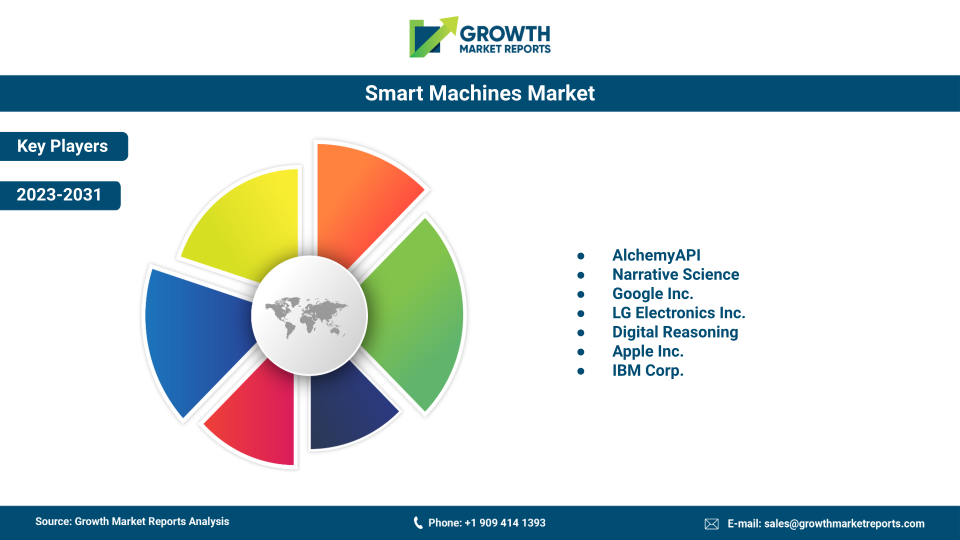

Smart Machines Market Key Players

Frequently Asked Questions

Software provides the intelligence for smart machines, enabling data analysis and autonomous decision-making, while services ensure integration, maintenance, and ongoing support, making them critical for market growth.

In manufacturing, smart machines automate production lines, enable predictive maintenance, and improve quality control. In healthcare, they power AI-driven diagnostics, robotic surgery, and real-time patient monitoring for better outcomes.

Key companies include IBM Corporation, Siemens AG, General Electric Company, Microsoft Corporation, Google LLC, Apple Inc., Amazon Web Services, ABB Ltd., KUKA AG, Samsung Electronics, Intel, NVIDIA, Rockwell Automation, Fanuc, Bosch, Honeywell, Schneider Electric, Cognex, Yaskawa Electric, and Baidu.

Opportunities include AI-IoT integration, edge computing, 5G connectivity, and industry-specific solutions. Challenges involve high initial investment, integration complexity, data privacy, cybersecurity, and regulatory compliance.

North America leads the market, followed by Asia Pacific (the fastest-growing region), Europe, Latin America, and the Middle East & Africa.

Key enabling technologies include machine learning, robotics, cognitive computing, natural language processing (NLP), computer vision, edge computing, and IoT.

The market is segmented by component into hardware (sensors, processors, actuators), software (AI algorithms, machine learning, NLP, computer vision), and services (consulting, integration, maintenance, and support).

Smart machines are being widely adopted in healthcare, manufacturing, automotive, consumer electronics, aerospace & defense, retail, and the BFSI (banking, financial services, and insurance) sectors.

Key growth drivers include rapid advancements in artificial intelligence, machine learning, robotics, the convergence of digital technologies, increasing demand for automation, and the need for data-driven decision-making across industries.

The global smart machines market reached USD 187.2 billion in 2024 and is projected to grow at a CAGR of 18.5% from 2025 to 2033, reaching an estimated USD 908.6 billion by 2033.

Table Of Content

Chapter 1 Executive Summary
Chapter 2 Assumptions and Acronyms Used
Chapter 3 Research Methodology
Chapter 4 Smart Machines Market Overview
   4.1 Introduction
      4.1.1 Market Taxonomy
      4.1.2 Market Definition
      4.1.3 Macro-Economic Factors Impacting the Market Growth
   4.2 Smart Machines Market Dynamics
      4.2.1 Market Drivers
      4.2.2 Market Restraints
      4.2.3 Market Opportunity
   4.3 Smart Machines Market - Supply Chain Analysis
      4.3.1 List of Key Suppliers
      4.3.2 List of Key Distributors
      4.3.3 List of Key Consumers
   4.4 Key Forces Shaping the Smart Machines Market
      4.4.1 Bargaining Power of Suppliers
      4.4.2 Bargaining Power of Buyers
      4.4.3 Threat of Substitution
      4.4.4 Threat of New Entrants
      4.4.5 Competitive Rivalry
   4.5 Global Smart Machines Market Size & Forecast, 2023-2032
      4.5.1 Smart Machines Market Size and Y-o-Y Growth
      4.5.2 Smart Machines Market Absolute $ Opportunity

Chapter 5 Global Smart Machines Market Analysis and Forecast By Component
   5.1 Introduction
      5.1.1 Key Market Trends & Growth Opportunities By Component
      5.1.2 Basis Point Share (BPS) Analysis By Component
      5.1.3 Absolute $ Opportunity Assessment By Component
   5.2 Smart Machines Market Size Forecast By Component
      5.2.1 Hardware
      5.2.2 Software
      5.2.3 Services
   5.3 Market Attractiveness Analysis By Component

Chapter 6 Global Smart Machines Market Analysis and Forecast By Technology
   6.1 Introduction
      6.1.1 Key Market Trends & Growth Opportunities By Technology
      6.1.2 Basis Point Share (BPS) Analysis By Technology
      6.1.3 Absolute $ Opportunity Assessment By Technology
   6.2 Smart Machines Market Size Forecast By Technology
      6.2.1 Machine Learning
      6.2.2 Robotics
      6.2.3 Cognitive Computing
      6.2.4 Natural Language Processing
      6.2.5 Computer Vision
      6.2.6 Others
   6.3 Market Attractiveness Analysis By Technology

Chapter 7 Global Smart Machines Market Analysis and Forecast By Application
   7.1 Introduction
      7.1.1 Key Market Trends & Growth Opportunities By Application
      7.1.2 Basis Point Share (BPS) Analysis By Application
      7.1.3 Absolute $ Opportunity Assessment By Application
   7.2 Smart Machines Market Size Forecast By Application
      7.2.1 Automotive
      7.2.2 Healthcare
      7.2.3 Manufacturing
      7.2.4 Consumer Electronics
      7.2.5 Aerospace & Defense
      7.2.6 Retail
      7.2.7 BFSI
      7.2.8 Others
   7.3 Market Attractiveness Analysis By Application

Chapter 8 Global Smart Machines Market Analysis and Forecast By End-User
   8.1 Introduction
      8.1.1 Key Market Trends & Growth Opportunities By End-User
      8.1.2 Basis Point Share (BPS) Analysis By End-User
      8.1.3 Absolute $ Opportunity Assessment By End-User
   8.2 Smart Machines Market Size Forecast By End-User
      8.2.1 Industrial
      8.2.2 Commercial
      8.2.3 Residential
      8.2.4 Others
   8.3 Market Attractiveness Analysis By End-User

Chapter 9 Global Smart Machines Market Analysis and Forecast by Region
   9.1 Introduction
      9.1.1 Key Market Trends & Growth Opportunities By Region
      9.1.2 Basis Point Share (BPS) Analysis By Region
      9.1.3 Absolute $ Opportunity Assessment By Region
   9.2 Smart Machines Market Size Forecast By Region
      9.2.1 North America
      9.2.2 Europe
      9.2.3 Asia Pacific
      9.2.4 Latin America
      9.2.5 Middle East & Africa (MEA)
   9.3 Market Attractiveness Analysis By Region

Chapter 10 Coronavirus Disease (COVID-19) Impact 
   10.1 Introduction 
   10.2 Current & Future Impact Analysis 
   10.3 Economic Impact Analysis 
   10.4 Government Policies 
   10.5 Investment Scenario

Chapter 11 North America Smart Machines Analysis and Forecast
   11.1 Introduction
   11.2 North America Smart Machines Market Size Forecast by Country
      11.2.1 U.S.
      11.2.2 Canada
   11.3 Basis Point Share (BPS) Analysis by Country
   11.4 Absolute $ Opportunity Assessment by Country
   11.5 Market Attractiveness Analysis by Country
   11.6 North America Smart Machines Market Size Forecast By Component
      11.6.1 Hardware
      11.6.2 Software
      11.6.3 Services
   11.7 Basis Point Share (BPS) Analysis By Component 
   11.8 Absolute $ Opportunity Assessment By Component 
   11.9 Market Attractiveness Analysis By Component
   11.10 North America Smart Machines Market Size Forecast By Technology
      11.10.1 Machine Learning
      11.10.2 Robotics
      11.10.3 Cognitive Computing
      11.10.4 Natural Language Processing
      11.10.5 Computer Vision
      11.10.6 Others
   11.11 Basis Point Share (BPS) Analysis By Technology 
   11.12 Absolute $ Opportunity Assessment By Technology 
   11.13 Market Attractiveness Analysis By Technology
   11.14 North America Smart Machines Market Size Forecast By Application
      11.14.1 Automotive
      11.14.2 Healthcare
      11.14.3 Manufacturing
      11.14.4 Consumer Electronics
      11.14.5 Aerospace & Defense
      11.14.6 Retail
      11.14.7 BFSI
      11.14.8 Others
   11.15 Basis Point Share (BPS) Analysis By Application 
   11.16 Absolute $ Opportunity Assessment By Application 
   11.17 Market Attractiveness Analysis By Application
   11.18 North America Smart Machines Market Size Forecast By End-User
      11.18.1 Industrial
      11.18.2 Commercial
      11.18.3 Residential
      11.18.4 Others
   11.19 Basis Point Share (BPS) Analysis By End-User 
   11.20 Absolute $ Opportunity Assessment By End-User 
   11.21 Market Attractiveness Analysis By End-User

Chapter 12 Europe Smart Machines Analysis and Forecast
   12.1 Introduction
   12.2 Europe Smart Machines Market Size Forecast by Country
      12.2.1 Germany
      12.2.2 France
      12.2.3 Italy
      12.2.4 U.K.
      12.2.5 Spain
      12.2.6 Russia
      12.2.7 Rest of Europe
   12.3 Basis Point Share (BPS) Analysis by Country
   12.4 Absolute $ Opportunity Assessment by Country
   12.5 Market Attractiveness Analysis by Country
   12.6 Europe Smart Machines Market Size Forecast By Component
      12.6.1 Hardware
      12.6.2 Software
      12.6.3 Services
   12.7 Basis Point Share (BPS) Analysis By Component 
   12.8 Absolute $ Opportunity Assessment By Component 
   12.9 Market Attractiveness Analysis By Component
   12.10 Europe Smart Machines Market Size Forecast By Technology
      12.10.1 Machine Learning
      12.10.2 Robotics
      12.10.3 Cognitive Computing
      12.10.4 Natural Language Processing
      12.10.5 Computer Vision
      12.10.6 Others
   12.11 Basis Point Share (BPS) Analysis By Technology 
   12.12 Absolute $ Opportunity Assessment By Technology 
   12.13 Market Attractiveness Analysis By Technology
   12.14 Europe Smart Machines Market Size Forecast By Application
      12.14.1 Automotive
      12.14.2 Healthcare
      12.14.3 Manufacturing
      12.14.4 Consumer Electronics
      12.14.5 Aerospace & Defense
      12.14.6 Retail
      12.14.7 BFSI
      12.14.8 Others
   12.15 Basis Point Share (BPS) Analysis By Application 
   12.16 Absolute $ Opportunity Assessment By Application 
   12.17 Market Attractiveness Analysis By Application
   12.18 Europe Smart Machines Market Size Forecast By End-User
      12.18.1 Industrial
      12.18.2 Commercial
      12.18.3 Residential
      12.18.4 Others
   12.19 Basis Point Share (BPS) Analysis By End-User 
   12.20 Absolute $ Opportunity Assessment By End-User 
   12.21 Market Attractiveness Analysis By End-User

Chapter 13 Asia Pacific Smart Machines Analysis and Forecast
   13.1 Introduction
   13.2 Asia Pacific Smart Machines Market Size Forecast by Country
      13.2.1 China
      13.2.2 Japan
      13.2.3 South Korea
      13.2.4 India
      13.2.5 Australia
      13.2.6 South East Asia (SEA)
      13.2.7 Rest of Asia Pacific (APAC)
   13.3 Basis Point Share (BPS) Analysis by Country
   13.4 Absolute $ Opportunity Assessment by Country
   13.5 Market Attractiveness Analysis by Country
   13.6 Asia Pacific Smart Machines Market Size Forecast By Component
      13.6.1 Hardware
      13.6.2 Software
      13.6.3 Services
   13.7 Basis Point Share (BPS) Analysis By Component 
   13.8 Absolute $ Opportunity Assessment By Component 
   13.9 Market Attractiveness Analysis By Component
   13.10 Asia Pacific Smart Machines Market Size Forecast By Technology
      13.10.1 Machine Learning
      13.10.2 Robotics
      13.10.3 Cognitive Computing
      13.10.4 Natural Language Processing
      13.10.5 Computer Vision
      13.10.6 Others
   13.11 Basis Point Share (BPS) Analysis By Technology 
   13.12 Absolute $ Opportunity Assessment By Technology 
   13.13 Market Attractiveness Analysis By Technology
   13.14 Asia Pacific Smart Machines Market Size Forecast By Application
      13.14.1 Automotive
      13.14.2 Healthcare
      13.14.3 Manufacturing
      13.14.4 Consumer Electronics
      13.14.5 Aerospace & Defense
      13.14.6 Retail
      13.14.7 BFSI
      13.14.8 Others
   13.15 Basis Point Share (BPS) Analysis By Application 
   13.16 Absolute $ Opportunity Assessment By Application 
   13.17 Market Attractiveness Analysis By Application
   13.18 Asia Pacific Smart Machines Market Size Forecast By End-User
      13.18.1 Industrial
      13.18.2 Commercial
      13.18.3 Residential
      13.18.4 Others
   13.19 Basis Point Share (BPS) Analysis By End-User 
   13.20 Absolute $ Opportunity Assessment By End-User 
   13.21 Market Attractiveness Analysis By End-User

Chapter 14 Latin America Smart Machines Analysis and Forecast
   14.1 Introduction
   14.2 Latin America Smart Machines Market Size Forecast by Country
      14.2.1 Brazil
      14.2.2 Mexico
      14.2.3 Rest of Latin America (LATAM)
   14.3 Basis Point Share (BPS) Analysis by Country
   14.4 Absolute $ Opportunity Assessment by Country
   14.5 Market Attractiveness Analysis by Country
   14.6 Latin America Smart Machines Market Size Forecast By Component
      14.6.1 Hardware
      14.6.2 Software
      14.6.3 Services
   14.7 Basis Point Share (BPS) Analysis By Component 
   14.8 Absolute $ Opportunity Assessment By Component 
   14.9 Market Attractiveness Analysis By Component
   14.10 Latin America Smart Machines Market Size Forecast By Technology
      14.10.1 Machine Learning
      14.10.2 Robotics
      14.10.3 Cognitive Computing
      14.10.4 Natural Language Processing
      14.10.5 Computer Vision
      14.10.6 Others
   14.11 Basis Point Share (BPS) Analysis By Technology 
   14.12 Absolute $ Opportunity Assessment By Technology 
   14.13 Market Attractiveness Analysis By Technology
   14.14 Latin America Smart Machines Market Size Forecast By Application
      14.14.1 Automotive
      14.14.2 Healthcare
      14.14.3 Manufacturing
      14.14.4 Consumer Electronics
      14.14.5 Aerospace & Defense
      14.14.6 Retail
      14.14.7 BFSI
      14.14.8 Others
   14.15 Basis Point Share (BPS) Analysis By Application 
   14.16 Absolute $ Opportunity Assessment By Application 
   14.17 Market Attractiveness Analysis By Application
   14.18 Latin America Smart Machines Market Size Forecast By End-User
      14.18.1 Industrial
      14.18.2 Commercial
      14.18.3 Residential
      14.18.4 Others
   14.19 Basis Point Share (BPS) Analysis By End-User 
   14.20 Absolute $ Opportunity Assessment By End-User 
   14.21 Market Attractiveness Analysis By End-User

Chapter 15 Middle East & Africa (MEA) Smart Machines Analysis and Forecast
   15.1 Introduction
   15.2 Middle East & Africa (MEA) Smart Machines Market Size Forecast by Country
      15.2.1 Saudi Arabia
      15.2.2 South Africa
      15.2.3 UAE
      15.2.4 Rest of Middle East & Africa (MEA)
   15.3 Basis Point Share (BPS) Analysis by Country
   15.4 Absolute $ Opportunity Assessment by Country
   15.5 Market Attractiveness Analysis by Country
   15.6 Middle East & Africa (MEA) Smart Machines Market Size Forecast By Component
      15.6.1 Hardware
      15.6.2 Software
      15.6.3 Services
   15.7 Basis Point Share (BPS) Analysis By Component 
   15.8 Absolute $ Opportunity Assessment By Component 
   15.9 Market Attractiveness Analysis By Component
   15.10 Middle East & Africa (MEA) Smart Machines Market Size Forecast By Technology
      15.10.1 Machine Learning
      15.10.2 Robotics
      15.10.3 Cognitive Computing
      15.10.4 Natural Language Processing
      15.10.5 Computer Vision
      15.10.6 Others
   15.11 Basis Point Share (BPS) Analysis By Technology 
   15.12 Absolute $ Opportunity Assessment By Technology 
   15.13 Market Attractiveness Analysis By Technology
   15.14 Middle East & Africa (MEA) Smart Machines Market Size Forecast By Application
      15.14.1 Automotive
      15.14.2 Healthcare
      15.14.3 Manufacturing
      15.14.4 Consumer Electronics
      15.14.5 Aerospace & Defense
      15.14.6 Retail
      15.14.7 BFSI
      15.14.8 Others
   15.15 Basis Point Share (BPS) Analysis By Application 
   15.16 Absolute $ Opportunity Assessment By Application 
   15.17 Market Attractiveness Analysis By Application
   15.18 Middle East & Africa (MEA) Smart Machines Market Size Forecast By End-User
      15.18.1 Industrial
      15.18.2 Commercial
      15.18.3 Residential
      15.18.4 Others
   15.19 Basis Point Share (BPS) Analysis By End-User 
   15.20 Absolute $ Opportunity Assessment By End-User 
   15.21 Market Attractiveness Analysis By End-User

Chapter 16 Competition Landscape 
   16.1 Smart Machines Market: Competitive Dashboard
   16.2 Global Smart Machines Market: Market Share Analysis, 2023
   16.3 Company Profiles (Details – Overview, Financials, Developments, Strategy) 
      16.3.1 IBM Corporation
Google LLC
Microsoft Corporation
Apple Inc.
Samsung Electronics Co., Ltd.
Siemens AG
General Electric Company
Amazon Web Services, Inc.
Intel Corporation
NVIDIA Corporation
ABB Ltd.
Rockwell Automation, Inc.
KUKA AG
Fanuc Corporation
Bosch Group
Honeywell International Inc.
Schneider Electric SE
Cognex Corporation
Yaskawa Electric Corporation
Baidu, Inc.

Methodology

Our Clients

Dassault Aviation
Nestle SA
Pfizer
Deloitte
Microsoft
FedEx Logistics
General Mills
Siemens Healthcare