Smart Inhalers Market Research Report 2033

Smart Inhalers Market Research Report 2033

Segments - by Product Type (Inhaler Devices, Nebulizers, Others), by Technology (Bluetooth-enabled, Sensor-based, Others), by Disease Indication (Asthma, Chronic Obstructive Pulmonary Disease (COPD), Others), by Distribution Channel (Hospital Pharmacies, Retail Pharmacies, Online Pharmacies, Others), by End-User (Hospitals & Clinics, Homecare Settings, Others)

https://growthmarketreports.com/raksha
Author : Raksha Sharma
https://growthmarketreports.com/Vaibhav
Fact-checked by : V. Chandola
https://growthmarketreports.com/Shruti
Editor : Shruti Bhat

Upcoming | Report ID :HC-3639 | 4.5 Rating | 88 Reviews | 274 Pages | Format : Docx PDF

Report Description


Smart Inhalers Market Outlook

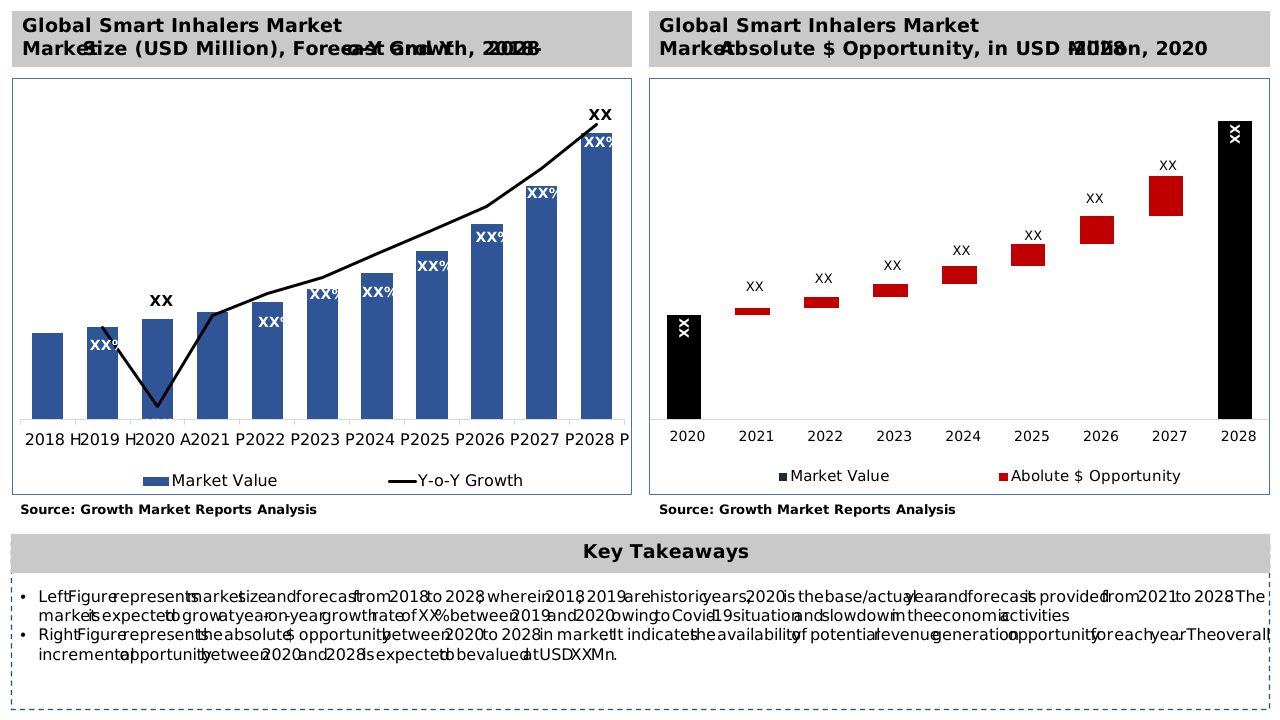
According to our latest research, the global Smart Inhalers market size stood at USD 1.56 billion in 2024, reflecting a robust industry that is increasingly gaining traction due to technological advancements and rising respiratory disease prevalence. The market is projected to grow at a CAGR of 24.1% from 2025 to 2033, reaching an estimated value of USD 12.87 billion by 2033. This significant growth is primarily driven by the integration of digital health technologies, the rising burden of chronic respiratory conditions, and the growing focus on patient adherence and personalized healthcare solutions.

One of the primary growth drivers for the Smart Inhalers market is the escalating prevalence of respiratory diseases such as asthma and chronic obstructive pulmonary disease (COPD) worldwide. The World Health Organization estimates that over 262 million people are affected by asthma alone, making the need for effective disease management solutions critical. Smart inhalers, equipped with sensors and connectivity features, provide real-time data on medication usage and patient adherence, enabling healthcare professionals to tailor treatment plans and improve outcomes. Additionally, the increased awareness among patients and healthcare providers regarding the benefits of smart inhalers, such as reduced hospitalizations and improved quality of life, is further fueling market adoption.

Technological innovation is another key catalyst propelling the growth of the smart inhalers market. The integration of Bluetooth-enabled and sensor-based technologies has revolutionized the way respiratory diseases are managed. These advancements allow for seamless data transmission to mobile devices and cloud platforms, facilitating remote monitoring and timely intervention. Moreover, the proliferation of digital health ecosystems and the adoption of telemedicine during the COVID-19 pandemic have accelerated the uptake of smart inhalers. Pharmaceutical companies are increasingly collaborating with technology firms to develop next-generation inhaler devices that not only dispense medication but also provide actionable insights, thereby enhancing patient engagement and medication adherence.

Furthermore, favorable regulatory policies and reimbursement frameworks in developed markets are supporting the widespread adoption of smart inhalers. Governments and healthcare payers are recognizing the long-term cost savings associated with improved disease management and reduced emergency room visits. This has led to increased investments in digital health infrastructure and the inclusion of smart inhalers in public and private insurance schemes. The trend towards value-based healthcare and the emphasis on patient-centric care models are expected to sustain the growth momentum of the smart inhalers market over the forecast period.

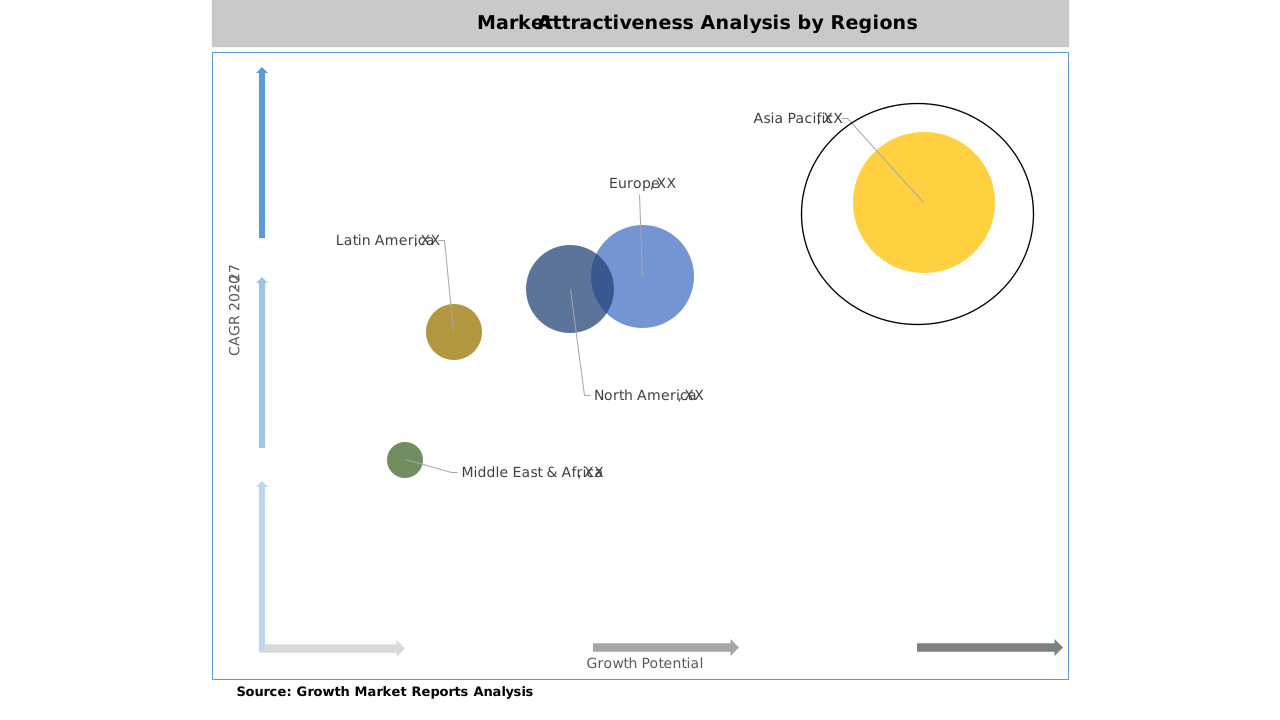
From a regional perspective, North America currently dominates the smart inhalers market, accounting for the largest share due to high healthcare expenditure, advanced healthcare infrastructure, and strong presence of leading market players. Europe follows closely, driven by supportive government initiatives and rising awareness about digital health solutions. The Asia Pacific region is anticipated to witness the fastest growth during the forecast period, attributed to increasing healthcare investments, rising prevalence of respiratory diseases, and growing adoption of smart medical devices. Emerging markets in Latin America and the Middle East & Africa are also expected to present lucrative opportunities as healthcare systems modernize and digital health adoption accelerates.

Global Smart Inhalers Industry Outlook

Product Type Analysis

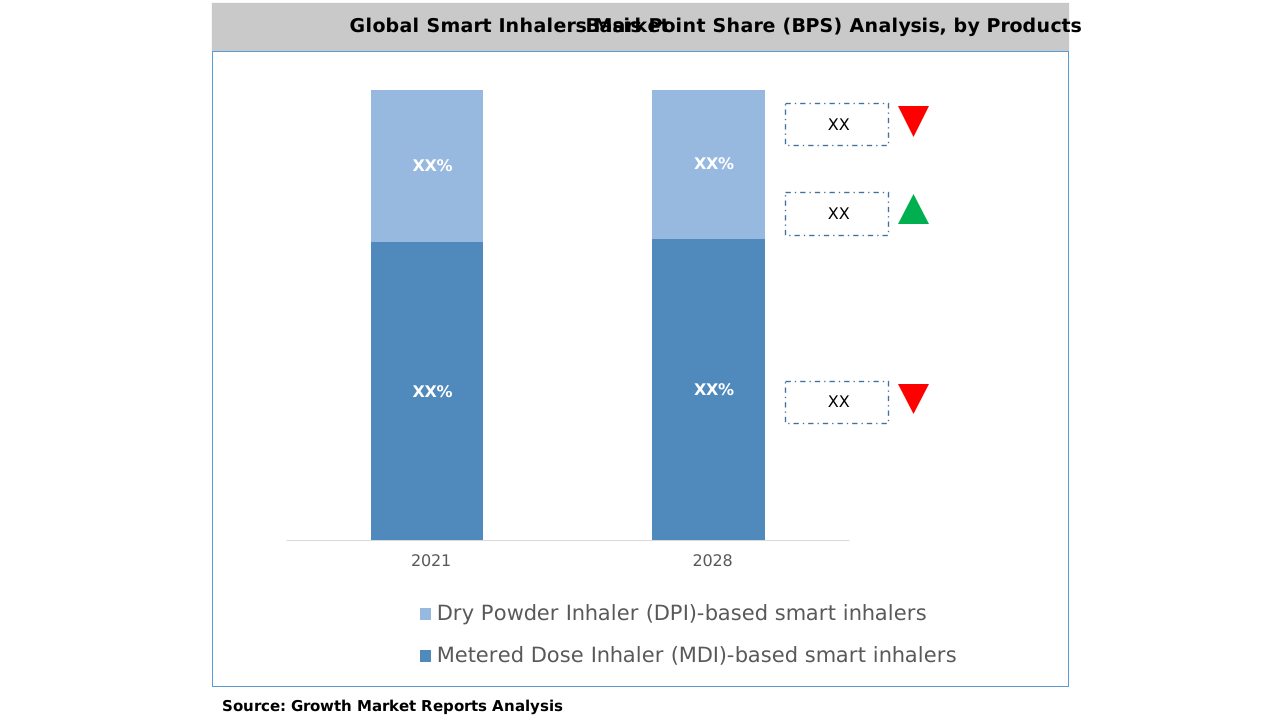
The smart inhalers market by product type is segmented into inhaler devices, nebulizers, and others. Inhaler devices represent the largest segment, owing to their widespread use in the management of asthma and COPD. These devices are increasingly being equipped with smart sensors and connectivity features, allowing patients and healthcare providers to monitor medication usage and adherence in real time. The convenience, portability, and user-friendly nature of smart inhaler devices have made them the preferred choice among both patients and clinicians. Additionally, ongoing research and development efforts are focused on enhancing the functionality and accuracy of these devices, further boosting their adoption.

Nebulizers, while traditionally used in hospital and clinical settings, are also witnessing a surge in demand as smart technologies are integrated into their design. Smart nebulizers are particularly beneficial for patients with severe respiratory conditions who require precise and controlled medication delivery. These devices enable remote monitoring of treatment sessions, medication adherence, and even respiratory parameters, providing valuable data for personalized care. The development of portable and battery-operated smart nebulizers is expanding their use beyond hospitals to homecare settings, catering to the growing trend of self-management among patients.

The "others" category includes emerging smart respiratory devices that complement inhalers and nebulizers, such as wearable respiratory monitors and digital spirometers. These devices are gaining traction as part of integrated disease management programs, offering comprehensive monitoring and early detection of exacerbations. As the ecosystem of connected health devices expands, the role of these ancillary products is expected to grow, contributing to the overall market expansion. Companies are investing in the development of interoperable solutions that can seamlessly integrate data from multiple devices, enhancing the value proposition for patients and healthcare providers.

The competitive landscape within the product type segment is characterized by continuous innovation and the introduction of feature-rich devices. Leading manufacturers are focusing on miniaturization, improved battery life, and enhanced data security to differentiate their offerings. The integration of artificial intelligence and machine learning algorithms into smart inhalers and nebulizers is also emerging as a key trend, enabling predictive analytics and early intervention. As the market matures, partnerships between pharmaceutical companies, medical device manufacturers, and technology firms are expected to drive the development of next-generation smart respiratory devices.

Report Scope

Attributes Details
Report Title Smart Inhalers Market Research Report 2033
By Product Type Inhaler Devices, Nebulizers, Others
By Technology Bluetooth-enabled, Sensor-based, Others
By Disease Indication Asthma, Chronic Obstructive Pulmonary Disease (COPD), Others
By Distribution Channel Hospital Pharmacies, Retail Pharmacies, Online Pharmacies, Others
By End-User Hospitals & Clinics, Homecare Settings, Others
Regions Covered North America, Europe, APAC, Latin America, MEA
Base Year 2024
Historic Data 2018-2023
Forecast Period 2025-2033
Number of Pages 274
Number of Tables & Figures 295
Customization Available Yes, the report can be customized as per your need.

Technology Analysis

The smart inhalers market is segmented by technology into Bluetooth-enabled, sensor-based, and others. Bluetooth-enabled smart inhalers dominate the market due to their ability to wirelessly transmit data to smartphones and cloud platforms. This connectivity empowers patients to track their medication usage, receive reminders, and share adherence data with healthcare providers. Bluetooth technology also facilitates the integration of inhaler data with electronic health records (EHRs), supporting comprehensive disease management and improving clinical decision-making. The widespread adoption of smartphones and mobile health applications has been instrumental in driving the growth of this segment.

Sensor-based smart inhalers represent the next frontier in respiratory care, offering advanced capabilities such as inhalation flow measurement, environmental monitoring, and real-time feedback. These devices utilize sophisticated sensors to detect and record inhaler usage patterns, medication doses, and even external factors like air quality and humidity. By providing actionable insights, sensor-based inhalers enable proactive disease management and help prevent exacerbations. The integration of environmental sensors is particularly valuable for asthma patients, as it allows for the identification of triggers and the customization of treatment plans. The growing focus on precision medicine and personalized healthcare is expected to drive the adoption of sensor-based technologies in the smart inhalers market.

The "others" technology segment includes emerging technologies such as near-field communication (NFC), cloud-based platforms, and artificial intelligence-powered analytics. These technologies are enhancing the functionality and interoperability of smart inhalers, enabling seamless data exchange and advanced analytics. Cloud-based platforms, in particular, are playing a pivotal role in facilitating remote patient monitoring and telehealth services. The integration of AI and machine learning is enabling the development of predictive models that can identify patients at risk of non-adherence or disease exacerbation, supporting timely interventions and improved outcomes.

The technology landscape in the smart inhalers market is highly dynamic, with continuous advancements aimed at improving device accuracy, usability, and data security. Regulatory bodies are increasingly focusing on the safety and efficacy of connected medical devices, driving manufacturers to invest in robust cybersecurity measures and compliance with data privacy regulations. As interoperability standards evolve, the seamless integration of smart inhaler data with broader digital health ecosystems is expected to become a key differentiator in the market. Companies that can offer end-to-end solutions encompassing device, software, and analytics capabilities are likely to gain a competitive edge.

Disease Indication Analysis

The smart inhalers market is segmented by disease indication into asthma, chronic obstructive pulmonary disease (COPD), and others. Asthma remains the largest indication for smart inhalers, driven by the high global prevalence of the disease and the critical need for effective disease management. Smart inhalers offer significant benefits for asthma patients, including improved medication adherence, real-time monitoring, and the ability to identify triggers and patterns of exacerbation. The availability of personalized feedback and educational resources through connected devices has been shown to reduce hospitalizations and emergency room visits, making smart inhalers an essential tool in asthma care.

COPD is another major segment within the smart inhalers market, with a growing patient population and increasing disease burden worldwide. COPD patients often require complex medication regimens and frequent monitoring, making them ideal candidates for smart inhaler solutions. These devices enable healthcare providers to remotely track medication usage, monitor symptoms, and intervene promptly in case of deteriorating respiratory function. The integration of remote monitoring features is particularly valuable for elderly and homebound patients, reducing the need for frequent hospital visits and improving overall quality of life.

The "others" segment includes respiratory conditions such as cystic fibrosis, bronchitis, and allergic rhinitis, where smart inhalers are increasingly being adopted as part of comprehensive disease management strategies. As the understanding of respiratory diseases evolves and new therapeutic indications emerge, the scope of smart inhaler applications is expected to expand. Pharmaceutical companies are conducting clinical trials to evaluate the efficacy of smart inhalers in a broader range of respiratory conditions, paving the way for future market growth.

The disease indication segment is characterized by a growing emphasis on personalized medicine and patient-centric care. Healthcare providers are leveraging the data generated by smart inhalers to tailor treatment plans, optimize medication dosages, and provide targeted interventions. The ability to monitor patient adherence and disease progression in real time is transforming the management of chronic respiratory diseases, leading to better outcomes and reduced healthcare costs. As the adoption of smart inhalers continues to rise across various disease indications, the market is poised for sustained growth.

Distribution Channel Analysis

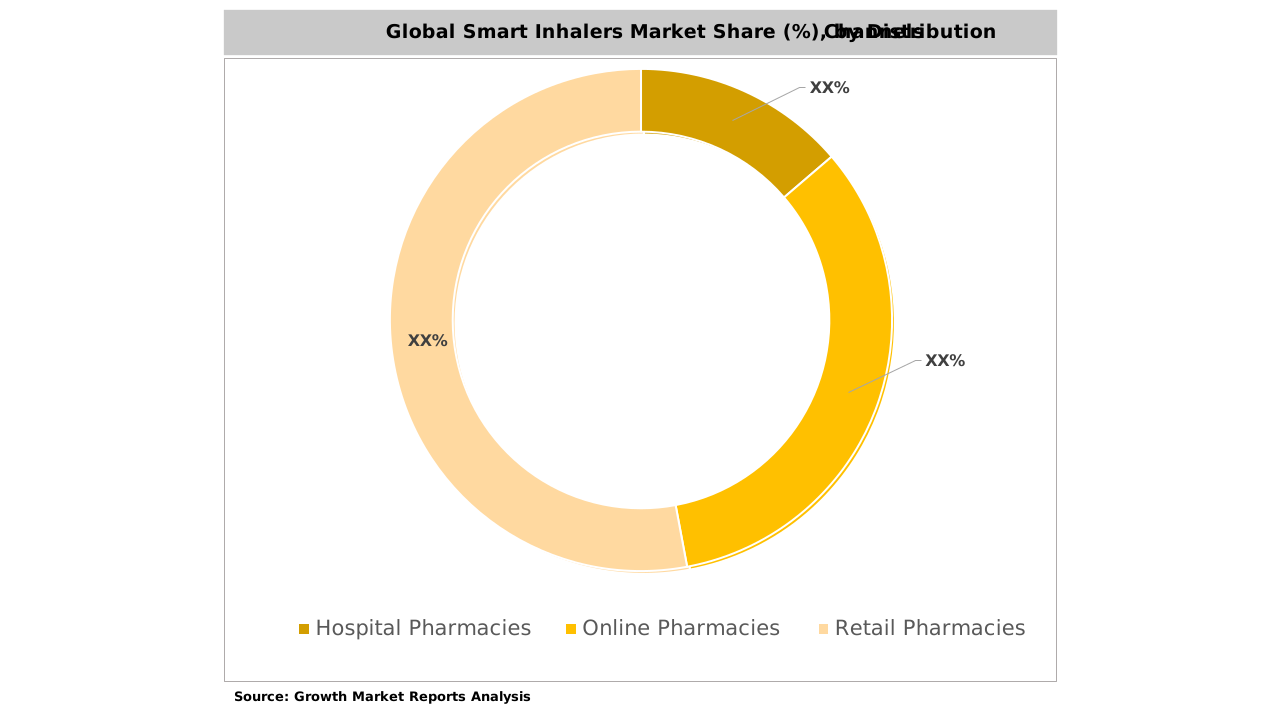
The distribution channel segment of the smart inhalers market includes hospital pharmacies, retail pharmacies, online pharmacies, and others. Hospital pharmacies hold a significant share of the market, as they are often the primary point of distribution for newly diagnosed patients and those requiring complex medication regimens. Hospitals and clinics are increasingly adopting smart inhalers as part of integrated care pathways, enabling healthcare professionals to monitor patient adherence and adjust treatment plans as needed. The presence of trained medical staff and access to comprehensive patient records further supports the adoption of smart inhalers in hospital settings.

Retail pharmacies represent another important distribution channel, catering to the needs of ambulatory patients and those managing chronic respiratory conditions at home. The widespread availability of smart inhalers in retail pharmacies has improved accessibility for patients, facilitating timely medication refills and adherence support. Retail pharmacists play a crucial role in educating patients about the proper use of smart inhalers and the benefits of connected health technologies. As awareness of smart inhalers grows, retail pharmacies are expected to play an increasingly prominent role in market expansion.

Online pharmacies are experiencing rapid growth in the smart inhalers market, driven by the convenience of home delivery, competitive pricing, and the increasing adoption of digital health platforms. The COVID-19 pandemic has accelerated the shift towards online purchasing of medical devices, including smart inhalers, as patients seek to minimize in-person interactions and maintain continuity of care. Online pharmacies are leveraging telehealth consultations and digital prescription services to streamline the purchasing process and provide personalized recommendations. The integration of smart inhalers with online health management platforms is expected to further boost the growth of this distribution channel.

The "others" category includes alternative distribution channels such as specialty clinics, direct-to-consumer sales, and partnerships with healthcare organizations. As the market matures, innovative distribution models are emerging to address the evolving needs of patients and healthcare providers. Companies are exploring direct-to-consumer strategies, bundled offerings with telemedicine services, and collaborations with payers to enhance market penetration. The ability to reach a diverse patient population through multiple distribution channels is critical for sustained growth and market leadership.

End-User Analysis

The end-user segment of the smart inhalers market comprises hospitals and clinics, homecare settings, and others. Hospitals and clinics are the primary end-users, accounting for the largest market share due to the high volume of respiratory disease patients and the availability of advanced healthcare infrastructure. These settings are ideal for the deployment of smart inhalers, as they facilitate comprehensive disease management, real-time monitoring, and multidisciplinary care. Healthcare providers in hospitals and clinics are increasingly adopting smart inhalers to improve patient outcomes, reduce hospital readmissions, and optimize resource utilization.

Homecare settings are emerging as a rapidly growing end-user segment, driven by the increasing emphasis on patient self-management and the shift towards outpatient care. Smart inhalers are particularly well-suited for home use, as they enable patients to monitor their medication adherence, track symptoms, and receive personalized feedback without frequent visits to healthcare facilities. The proliferation of telehealth and remote monitoring solutions has further accelerated the adoption of smart inhalers in homecare settings, empowering patients to take a proactive role in managing their respiratory conditions.

The "others" category includes long-term care facilities, rehabilitation centers, and community health organizations that are incorporating smart inhalers into their respiratory care programs. These end-users are leveraging the benefits of connected health technologies to improve patient engagement, monitor treatment progress, and facilitate early intervention in case of exacerbations. As healthcare delivery models evolve and the focus shifts towards value-based care, the adoption of smart inhalers across diverse end-user settings is expected to increase.

The end-user segment is characterized by a growing emphasis on patient education, support services, and integrated care pathways. Healthcare providers are investing in training programs, digital health platforms, and patient engagement initiatives to maximize the benefits of smart inhalers. The ability to deliver personalized care, improve medication adherence, and reduce healthcare costs is driving the widespread adoption of smart inhalers across hospitals, homecare settings, and other end-user segments.

Opportunities & Threats

The smart inhalers market presents numerous opportunities for growth, particularly in the areas of technological innovation and personalized healthcare. The integration of artificial intelligence, machine learning, and data analytics into smart inhaler platforms is enabling the development of predictive models and personalized treatment plans. These advancements are expected to enhance patient engagement, improve medication adherence, and reduce the burden of respiratory diseases on healthcare systems. Additionally, the growing adoption of telemedicine and remote monitoring solutions is creating new opportunities for market expansion, as patients and healthcare providers seek convenient and effective ways to manage chronic respiratory conditions.

Another significant opportunity lies in the expansion of smart inhalers into emerging markets, where the prevalence of respiratory diseases is rising and healthcare infrastructure is rapidly evolving. Governments and healthcare organizations in these regions are increasingly investing in digital health solutions to improve disease management and address the growing burden of chronic conditions. The development of affordable and user-friendly smart inhaler devices tailored to the needs of emerging markets is expected to drive adoption and market growth. Strategic partnerships between pharmaceutical companies, medical device manufacturers, and technology firms are also creating opportunities for innovation and market expansion.

Despite the promising growth prospects, the smart inhalers market faces several challenges that could restrain its expansion. One of the primary restrainers is the high cost of smart inhaler devices, which may limit accessibility for patients in low- and middle-income countries. Additionally, concerns regarding data privacy and security, regulatory compliance, and interoperability with existing healthcare systems pose challenges for manufacturers and healthcare providers. The need for robust evidence demonstrating the clinical and economic benefits of smart inhalers is also critical for widespread adoption and reimbursement. Addressing these challenges through continued innovation, stakeholder collaboration, and regulatory alignment will be essential for unlocking the full potential of the smart inhalers market.

Regional Outlook

North America leads the global smart inhalers market, accounting for approximately 38% of the total market share in 2024, with a market size of around USD 590 million. The region's dominance is attributed to high healthcare expenditure, advanced digital health infrastructure, and a strong presence of leading market players. The United States is the primary contributor to regional growth, driven by a high prevalence of respiratory diseases, favorable reimbursement policies, and widespread adoption of connected health technologies. Canada is also witnessing increased adoption of smart inhalers, supported by government initiatives aimed at promoting digital health and improving chronic disease management.

Europe holds the second-largest share of the smart inhalers market, with a market size of approximately USD 420 million in 2024. The region is characterized by a supportive regulatory environment, robust healthcare systems, and growing awareness of the benefits of digital health solutions. Countries such as the United Kingdom, Germany, and France are at the forefront of smart inhaler adoption, driven by government-led initiatives, public-private partnerships, and a focus on value-based care. The European market is expected to grow at a CAGR of 23.2% during the forecast period, supported by increasing investments in healthcare innovation and the expansion of telemedicine services.

The Asia Pacific region is poised for the fastest growth in the smart inhalers market, with a market size of around USD 310 million in 2024 and a projected CAGR of 27.4% from 2025 to 2033. The region's rapid growth is driven by rising healthcare investments, increasing prevalence of respiratory diseases, and growing adoption of digital health technologies. Countries such as China, India, and Japan are experiencing significant market expansion, supported by government initiatives, improving healthcare infrastructure, and a growing middle-class population. Latin America and the Middle East & Africa are also emerging as attractive markets, with increasing awareness of smart inhalers and efforts to modernize healthcare systems.

Smart Inhalers Market Statistics

Competitor Outlook

The smart inhalers market is characterized by intense competition, with a mix of established pharmaceutical companies, medical device manufacturers, and innovative technology firms vying for market share. The competitive landscape is shaped by continuous innovation, strategic partnerships, and a focus on product differentiation. Leading players are investing heavily in research and development to enhance the functionality, accuracy, and usability of their smart inhaler offerings. The integration of artificial intelligence, data analytics, and cloud-based platforms is enabling companies to offer comprehensive solutions that address the evolving needs of patients and healthcare providers.

Strategic collaborations and partnerships are a key feature of the competitive landscape, as companies seek to leverage complementary strengths and accelerate the development of next-generation smart inhalers. Pharmaceutical companies are partnering with technology firms to integrate connectivity features, develop mobile health applications, and enhance data analytics capabilities. These collaborations are facilitating the creation of end-to-end solutions that encompass device, software, and service components, providing a seamless experience for patients and healthcare providers. The ability to offer interoperable solutions that integrate with broader digital health ecosystems is emerging as a critical success factor in the market.

Mergers and acquisitions are also shaping the competitive dynamics of the smart inhalers market, as companies seek to expand their product portfolios, enter new markets, and gain access to innovative technologies. The acquisition of start-ups and technology firms by established players is enabling the rapid commercialization of cutting-edge solutions and accelerating market penetration. Additionally, companies are focusing on geographic expansion, particularly in emerging markets, to capitalize on the growing demand for smart inhalers and digital health solutions.

Some of the major companies operating in the smart inhalers market include Teva Pharmaceutical Industries Ltd., GlaxoSmithKline plc, AstraZeneca plc, Propeller Health (ResMed Inc.), Adherium Limited, Novartis AG, 3M Health Care, Cohero Health, and Boehringer Ingelheim International GmbH. These companies are at the forefront of innovation, offering a wide range of smart inhaler devices, digital health platforms, and patient engagement solutions. Teva Pharmaceutical Industries, for example, has developed the Digihaler line of connected inhalers, while Propeller Health offers a comprehensive digital platform that integrates with multiple inhaler devices. AstraZeneca and GlaxoSmithKline are leveraging their expertise in respiratory therapeutics to develop smart inhalers that improve medication adherence and patient outcomes.

In addition to established players, a number of start-ups and technology firms are entering the market with innovative solutions and disruptive business models. Companies such as Adherium Limited and Cohero Health are focusing on the development of sensor-based inhaler attachments and mobile health applications that enable remote monitoring and personalized feedback. These new entrants are driving competition and fostering innovation, contributing to the rapid evolution of the smart inhalers market. As the market continues to grow, the competitive landscape is expected to become increasingly dynamic, with ongoing advancements in technology, strategic partnerships, and the entry of new players shaping the future of the industry.

Key Players

  • Adherium Limited
  • AstraZeneca plc
  • Boehringer Ingelheim International GmbH
  • Cipla Limited
  • Cohero Health, Inc.
  • GlaxoSmithKline plc
  • H&T Presspart Manufacturing Ltd.
  • Novartis AG
  • OPKO Health, Inc.
  • Propeller Health (ResMed Inc.)
  • Sensirion AG
  • Teva Pharmaceutical Industries Ltd.
  • Vectura Group plc
  • 3M Health Care Limited
  • Amiko Digital Health Limited
  • FindAir Sp. z o.o.
  • Pneuma Respiratory, Inc.
  • Smart Respiratory Products Ltd.
  • AptarGroup, Inc.
  • Bespoke Medical Innovations Ltd.
Smart Inhalers Market Overview

Segments

The Smart Inhalers market has been segmented on the basis of

Product Type

  • Inhaler Devices
  • Nebulizers
  • Others

Technology

  • Bluetooth-enabled
  • Sensor-based
  • Others

Disease Indication

  • Asthma
  • Chronic Obstructive Pulmonary Disease (COPD)
  • Others

Distribution Channel

  • Hospital Pharmacies
  • Retail Pharmacies
  • Online Pharmacies
  • Others

End-User

  • Hospitals & Clinics
  • Homecare Settings
  • Others

Competitive Landscape

Key players in the smart inhalers market are Boehringer Ingelheim, H&T Presspart Manufacturing Ltd., Aptar Pharma, Cohero Health, Inc., Findair Sp. z o. o., Vectura Group, GlaxoSmithKline, Propeller Health, and Zeolr Technologies Pvt Ltd. These players have actively engaged in several market development activities including collaborations, agreements, mergers & acquisitions, production capacity expansion, new product launches, and partnerships to increase their market share.
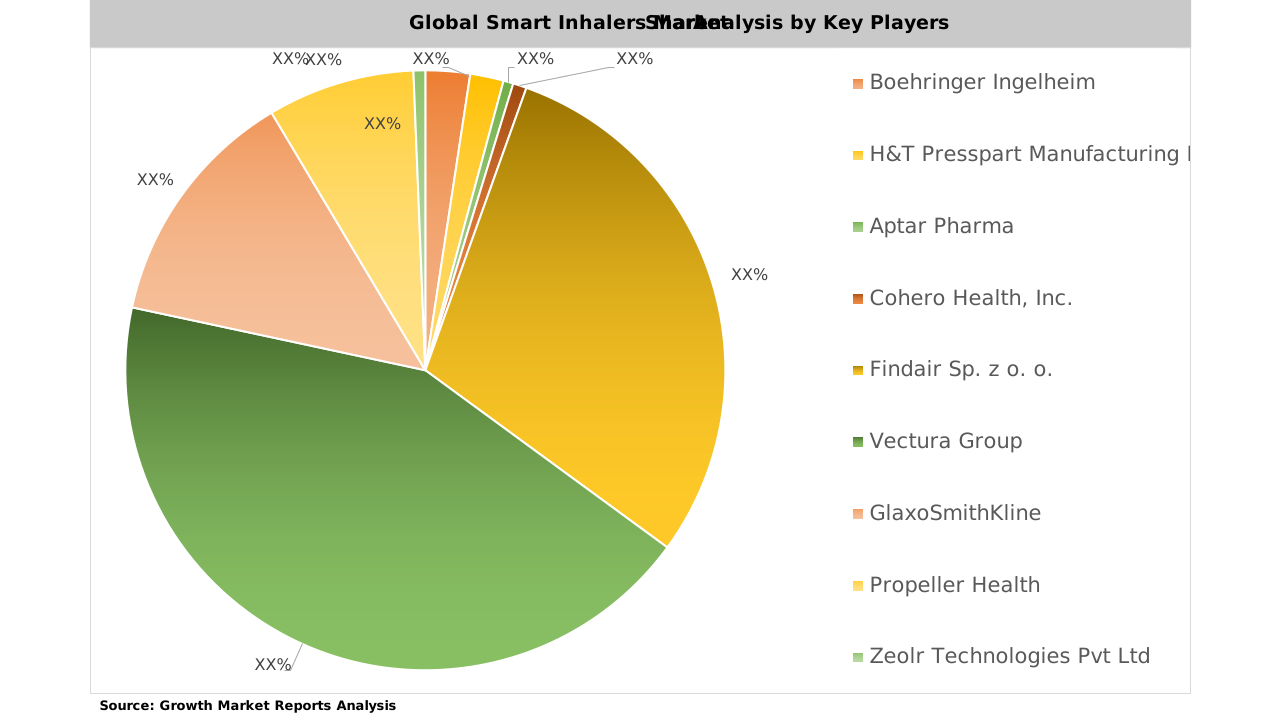

Global Smart Inhalers Market Key Players

Frequently Asked Questions

Opportunities include technological innovation, expansion into emerging markets, and integration with telemedicine. Challenges involve high device costs, data privacy concerns, regulatory compliance, and the need for robust clinical evidence.

Major companies include Teva Pharmaceutical Industries Ltd., GlaxoSmithKline plc, AstraZeneca plc, Propeller Health (ResMed Inc.), Adherium Limited, Novartis AG, 3M Health Care, Cohero Health, and Boehringer Ingelheim International GmbH.

Smart inhalers are distributed through hospital pharmacies, retail pharmacies, online pharmacies, and other channels such as specialty clinics and direct-to-consumer sales.

Smart inhalers are primarily used for asthma and chronic obstructive pulmonary disease (COPD), but their use is expanding to other respiratory conditions such as cystic fibrosis, bronchitis, and allergic rhinitis.

Smart inhalers commonly use Bluetooth-enabled and sensor-based technologies, with emerging use of NFC, cloud-based platforms, and artificial intelligence for enhanced data analytics and remote monitoring.

Smart inhalers provide real-time data on medication usage and patient adherence, enabling healthcare professionals to tailor treatment plans, monitor disease progression, and reduce hospitalizations through timely interventions.

The market is segmented into inhaler devices, nebulizers, and other emerging smart respiratory devices such as wearable respiratory monitors and digital spirometers.

North America currently leads the market, followed by Europe. The Asia Pacific region is expected to witness the fastest growth due to rising healthcare investments, increasing respiratory disease prevalence, and rapid adoption of digital health technologies.

Key growth drivers include the rising prevalence of respiratory diseases like asthma and COPD, technological advancements such as Bluetooth and sensor integration, increased focus on patient adherence, and supportive regulatory and reimbursement policies.

The global smart inhalers market was valued at USD 1.56 billion in 2024 and is projected to reach USD 12.87 billion by 2033, growing at a CAGR of 24.1% from 2025 to 2033.

Table Of Content

Chapter 1 Executive Summary
Chapter 2 Assumptions and Acronyms Used
Chapter 3 Research Methodology
Chapter 4 Smart Inhalers Market Overview
   4.1 Introduction
      4.1.1 Market Taxonomy
      4.1.2 Market Definition
      4.1.3 Macro-Economic Factors Impacting the Market Growth
   4.2 Smart Inhalers Market Dynamics
      4.2.1 Market Drivers
      4.2.2 Market Restraints
      4.2.3 Market Opportunity
   4.3 Smart Inhalers Market - Supply Chain Analysis
      4.3.1 List of Key Suppliers
      4.3.2 List of Key Distributors
      4.3.3 List of Key Consumers
   4.4 Key Forces Shaping the Smart Inhalers Market
      4.4.1 Bargaining Power of Suppliers
      4.4.2 Bargaining Power of Buyers
      4.4.3 Threat of Substitution
      4.4.4 Threat of New Entrants
      4.4.5 Competitive Rivalry
   4.5 Global Smart Inhalers Market Size & Forecast, 2023-2032
      4.5.1 Smart Inhalers Market Size and Y-o-Y Growth
      4.5.2 Smart Inhalers Market Absolute $ Opportunity

Chapter 5 Global Smart Inhalers Market Analysis and Forecast By Product Type
   5.1 Introduction
      5.1.1 Key Market Trends & Growth Opportunities By Product Type
      5.1.2 Basis Point Share (BPS) Analysis By Product Type
      5.1.3 Absolute $ Opportunity Assessment By Product Type
   5.2 Smart Inhalers Market Size Forecast By Product Type
      5.2.1 Inhaler Devices
      5.2.2 Nebulizers
      5.2.3 Others
   5.3 Market Attractiveness Analysis By Product Type

Chapter 6 Global Smart Inhalers Market Analysis and Forecast By Technology
   6.1 Introduction
      6.1.1 Key Market Trends & Growth Opportunities By Technology
      6.1.2 Basis Point Share (BPS) Analysis By Technology
      6.1.3 Absolute $ Opportunity Assessment By Technology
   6.2 Smart Inhalers Market Size Forecast By Technology
      6.2.1 Bluetooth-enabled
      6.2.2 Sensor-based
      6.2.3 Others
   6.3 Market Attractiveness Analysis By Technology

Chapter 7 Global Smart Inhalers Market Analysis and Forecast By Disease Indication
   7.1 Introduction
      7.1.1 Key Market Trends & Growth Opportunities By Disease Indication
      7.1.2 Basis Point Share (BPS) Analysis By Disease Indication
      7.1.3 Absolute $ Opportunity Assessment By Disease Indication
   7.2 Smart Inhalers Market Size Forecast By Disease Indication
      7.2.1 Asthma
      7.2.2 Chronic Obstructive Pulmonary Disease (COPD)
      7.2.3 Others
   7.3 Market Attractiveness Analysis By Disease Indication

Chapter 8 Global Smart Inhalers Market Analysis and Forecast By Distribution Channel
   8.1 Introduction
      8.1.1 Key Market Trends & Growth Opportunities By Distribution Channel
      8.1.2 Basis Point Share (BPS) Analysis By Distribution Channel
      8.1.3 Absolute $ Opportunity Assessment By Distribution Channel
   8.2 Smart Inhalers Market Size Forecast By Distribution Channel
      8.2.1 Hospital Pharmacies
      8.2.2 Retail Pharmacies
      8.2.3 Online Pharmacies
      8.2.4 Others
   8.3 Market Attractiveness Analysis By Distribution Channel

Chapter 9 Global Smart Inhalers Market Analysis and Forecast By End-User
   9.1 Introduction
      9.1.1 Key Market Trends & Growth Opportunities By End-User
      9.1.2 Basis Point Share (BPS) Analysis By End-User
      9.1.3 Absolute $ Opportunity Assessment By End-User
   9.2 Smart Inhalers Market Size Forecast By End-User
      9.2.1 Hospitals & Clinics
      9.2.2 Homecare Settings
      9.2.3 Others
   9.3 Market Attractiveness Analysis By End-User

Chapter 10 Global Smart Inhalers Market Analysis and Forecast by Region
   10.1 Introduction
      10.1.1 Key Market Trends & Growth Opportunities By Region
      10.1.2 Basis Point Share (BPS) Analysis By Region
      10.1.3 Absolute $ Opportunity Assessment By Region
   10.2 Smart Inhalers Market Size Forecast By Region
      10.2.1 North America
      10.2.2 Europe
      10.2.3 Asia Pacific
      10.2.4 Latin America
      10.2.5 Middle East & Africa (MEA)
   10.3 Market Attractiveness Analysis By Region

Chapter 11 Coronavirus Disease (COVID-19) Impact 
   11.1 Introduction 
   11.2 Current & Future Impact Analysis 
   11.3 Economic Impact Analysis 
   11.4 Government Policies 
   11.5 Investment Scenario

Chapter 12 North America Smart Inhalers Analysis and Forecast
   12.1 Introduction
   12.2 North America Smart Inhalers Market Size Forecast by Country
      12.2.1 U.S.
      12.2.2 Canada
   12.3 Basis Point Share (BPS) Analysis by Country
   12.4 Absolute $ Opportunity Assessment by Country
   12.5 Market Attractiveness Analysis by Country
   12.6 North America Smart Inhalers Market Size Forecast By Product Type
      12.6.1 Inhaler Devices
      12.6.2 Nebulizers
      12.6.3 Others
   12.7 Basis Point Share (BPS) Analysis By Product Type 
   12.8 Absolute $ Opportunity Assessment By Product Type 
   12.9 Market Attractiveness Analysis By Product Type
   12.10 North America Smart Inhalers Market Size Forecast By Technology
      12.10.1 Bluetooth-enabled
      12.10.2 Sensor-based
      12.10.3 Others
   12.11 Basis Point Share (BPS) Analysis By Technology 
   12.12 Absolute $ Opportunity Assessment By Technology 
   12.13 Market Attractiveness Analysis By Technology
   12.14 North America Smart Inhalers Market Size Forecast By Disease Indication
      12.14.1 Asthma
      12.14.2 Chronic Obstructive Pulmonary Disease (COPD)
      12.14.3 Others
   12.15 Basis Point Share (BPS) Analysis By Disease Indication 
   12.16 Absolute $ Opportunity Assessment By Disease Indication 
   12.17 Market Attractiveness Analysis By Disease Indication
   12.18 North America Smart Inhalers Market Size Forecast By Distribution Channel
      12.18.1 Hospital Pharmacies
      12.18.2 Retail Pharmacies
      12.18.3 Online Pharmacies
      12.18.4 Others
   12.19 Basis Point Share (BPS) Analysis By Distribution Channel 
   12.20 Absolute $ Opportunity Assessment By Distribution Channel 
   12.21 Market Attractiveness Analysis By Distribution Channel
   12.22 North America Smart Inhalers Market Size Forecast By End-User
      12.22.1 Hospitals & Clinics
      12.22.2 Homecare Settings
      12.22.3 Others
   12.23 Basis Point Share (BPS) Analysis By End-User 
   12.24 Absolute $ Opportunity Assessment By End-User 
   12.25 Market Attractiveness Analysis By End-User

Chapter 13 Europe Smart Inhalers Analysis and Forecast
   13.1 Introduction
   13.2 Europe Smart Inhalers Market Size Forecast by Country
      13.2.1 Germany
      13.2.2 France
      13.2.3 Italy
      13.2.4 U.K.
      13.2.5 Spain
      13.2.6 Russia
      13.2.7 Rest of Europe
   13.3 Basis Point Share (BPS) Analysis by Country
   13.4 Absolute $ Opportunity Assessment by Country
   13.5 Market Attractiveness Analysis by Country
   13.6 Europe Smart Inhalers Market Size Forecast By Product Type
      13.6.1 Inhaler Devices
      13.6.2 Nebulizers
      13.6.3 Others
   13.7 Basis Point Share (BPS) Analysis By Product Type 
   13.8 Absolute $ Opportunity Assessment By Product Type 
   13.9 Market Attractiveness Analysis By Product Type
   13.10 Europe Smart Inhalers Market Size Forecast By Technology
      13.10.1 Bluetooth-enabled
      13.10.2 Sensor-based
      13.10.3 Others
   13.11 Basis Point Share (BPS) Analysis By Technology 
   13.12 Absolute $ Opportunity Assessment By Technology 
   13.13 Market Attractiveness Analysis By Technology
   13.14 Europe Smart Inhalers Market Size Forecast By Disease Indication
      13.14.1 Asthma
      13.14.2 Chronic Obstructive Pulmonary Disease (COPD)
      13.14.3 Others
   13.15 Basis Point Share (BPS) Analysis By Disease Indication 
   13.16 Absolute $ Opportunity Assessment By Disease Indication 
   13.17 Market Attractiveness Analysis By Disease Indication
   13.18 Europe Smart Inhalers Market Size Forecast By Distribution Channel
      13.18.1 Hospital Pharmacies
      13.18.2 Retail Pharmacies
      13.18.3 Online Pharmacies
      13.18.4 Others
   13.19 Basis Point Share (BPS) Analysis By Distribution Channel 
   13.20 Absolute $ Opportunity Assessment By Distribution Channel 
   13.21 Market Attractiveness Analysis By Distribution Channel
   13.22 Europe Smart Inhalers Market Size Forecast By End-User
      13.22.1 Hospitals & Clinics
      13.22.2 Homecare Settings
      13.22.3 Others
   13.23 Basis Point Share (BPS) Analysis By End-User 
   13.24 Absolute $ Opportunity Assessment By End-User 
   13.25 Market Attractiveness Analysis By End-User

Chapter 14 Asia Pacific Smart Inhalers Analysis and Forecast
   14.1 Introduction
   14.2 Asia Pacific Smart Inhalers Market Size Forecast by Country
      14.2.1 China
      14.2.2 Japan
      14.2.3 South Korea
      14.2.4 India
      14.2.5 Australia
      14.2.6 South East Asia (SEA)
      14.2.7 Rest of Asia Pacific (APAC)
   14.3 Basis Point Share (BPS) Analysis by Country
   14.4 Absolute $ Opportunity Assessment by Country
   14.5 Market Attractiveness Analysis by Country
   14.6 Asia Pacific Smart Inhalers Market Size Forecast By Product Type
      14.6.1 Inhaler Devices
      14.6.2 Nebulizers
      14.6.3 Others
   14.7 Basis Point Share (BPS) Analysis By Product Type 
   14.8 Absolute $ Opportunity Assessment By Product Type 
   14.9 Market Attractiveness Analysis By Product Type
   14.10 Asia Pacific Smart Inhalers Market Size Forecast By Technology
      14.10.1 Bluetooth-enabled
      14.10.2 Sensor-based
      14.10.3 Others
   14.11 Basis Point Share (BPS) Analysis By Technology 
   14.12 Absolute $ Opportunity Assessment By Technology 
   14.13 Market Attractiveness Analysis By Technology
   14.14 Asia Pacific Smart Inhalers Market Size Forecast By Disease Indication
      14.14.1 Asthma
      14.14.2 Chronic Obstructive Pulmonary Disease (COPD)
      14.14.3 Others
   14.15 Basis Point Share (BPS) Analysis By Disease Indication 
   14.16 Absolute $ Opportunity Assessment By Disease Indication 
   14.17 Market Attractiveness Analysis By Disease Indication
   14.18 Asia Pacific Smart Inhalers Market Size Forecast By Distribution Channel
      14.18.1 Hospital Pharmacies
      14.18.2 Retail Pharmacies
      14.18.3 Online Pharmacies
      14.18.4 Others
   14.19 Basis Point Share (BPS) Analysis By Distribution Channel 
   14.20 Absolute $ Opportunity Assessment By Distribution Channel 
   14.21 Market Attractiveness Analysis By Distribution Channel
   14.22 Asia Pacific Smart Inhalers Market Size Forecast By End-User
      14.22.1 Hospitals & Clinics
      14.22.2 Homecare Settings
      14.22.3 Others
   14.23 Basis Point Share (BPS) Analysis By End-User 
   14.24 Absolute $ Opportunity Assessment By End-User 
   14.25 Market Attractiveness Analysis By End-User

Chapter 15 Latin America Smart Inhalers Analysis and Forecast
   15.1 Introduction
   15.2 Latin America Smart Inhalers Market Size Forecast by Country
      15.2.1 Brazil
      15.2.2 Mexico
      15.2.3 Rest of Latin America (LATAM)
   15.3 Basis Point Share (BPS) Analysis by Country
   15.4 Absolute $ Opportunity Assessment by Country
   15.5 Market Attractiveness Analysis by Country
   15.6 Latin America Smart Inhalers Market Size Forecast By Product Type
      15.6.1 Inhaler Devices
      15.6.2 Nebulizers
      15.6.3 Others
   15.7 Basis Point Share (BPS) Analysis By Product Type 
   15.8 Absolute $ Opportunity Assessment By Product Type 
   15.9 Market Attractiveness Analysis By Product Type
   15.10 Latin America Smart Inhalers Market Size Forecast By Technology
      15.10.1 Bluetooth-enabled
      15.10.2 Sensor-based
      15.10.3 Others
   15.11 Basis Point Share (BPS) Analysis By Technology 
   15.12 Absolute $ Opportunity Assessment By Technology 
   15.13 Market Attractiveness Analysis By Technology
   15.14 Latin America Smart Inhalers Market Size Forecast By Disease Indication
      15.14.1 Asthma
      15.14.2 Chronic Obstructive Pulmonary Disease (COPD)
      15.14.3 Others
   15.15 Basis Point Share (BPS) Analysis By Disease Indication 
   15.16 Absolute $ Opportunity Assessment By Disease Indication 
   15.17 Market Attractiveness Analysis By Disease Indication
   15.18 Latin America Smart Inhalers Market Size Forecast By Distribution Channel
      15.18.1 Hospital Pharmacies
      15.18.2 Retail Pharmacies
      15.18.3 Online Pharmacies
      15.18.4 Others
   15.19 Basis Point Share (BPS) Analysis By Distribution Channel 
   15.20 Absolute $ Opportunity Assessment By Distribution Channel 
   15.21 Market Attractiveness Analysis By Distribution Channel
   15.22 Latin America Smart Inhalers Market Size Forecast By End-User
      15.22.1 Hospitals & Clinics
      15.22.2 Homecare Settings
      15.22.3 Others
   15.23 Basis Point Share (BPS) Analysis By End-User 
   15.24 Absolute $ Opportunity Assessment By End-User 
   15.25 Market Attractiveness Analysis By End-User

Chapter 16 Middle East & Africa (MEA) Smart Inhalers Analysis and Forecast
   16.1 Introduction
   16.2 Middle East & Africa (MEA) Smart Inhalers Market Size Forecast by Country
      16.2.1 Saudi Arabia
      16.2.2 South Africa
      16.2.3 UAE
      16.2.4 Rest of Middle East & Africa (MEA)
   16.3 Basis Point Share (BPS) Analysis by Country
   16.4 Absolute $ Opportunity Assessment by Country
   16.5 Market Attractiveness Analysis by Country
   16.6 Middle East & Africa (MEA) Smart Inhalers Market Size Forecast By Product Type
      16.6.1 Inhaler Devices
      16.6.2 Nebulizers
      16.6.3 Others
   16.7 Basis Point Share (BPS) Analysis By Product Type 
   16.8 Absolute $ Opportunity Assessment By Product Type 
   16.9 Market Attractiveness Analysis By Product Type
   16.10 Middle East & Africa (MEA) Smart Inhalers Market Size Forecast By Technology
      16.10.1 Bluetooth-enabled
      16.10.2 Sensor-based
      16.10.3 Others
   16.11 Basis Point Share (BPS) Analysis By Technology 
   16.12 Absolute $ Opportunity Assessment By Technology 
   16.13 Market Attractiveness Analysis By Technology
   16.14 Middle East & Africa (MEA) Smart Inhalers Market Size Forecast By Disease Indication
      16.14.1 Asthma
      16.14.2 Chronic Obstructive Pulmonary Disease (COPD)
      16.14.3 Others
   16.15 Basis Point Share (BPS) Analysis By Disease Indication 
   16.16 Absolute $ Opportunity Assessment By Disease Indication 
   16.17 Market Attractiveness Analysis By Disease Indication
   16.18 Middle East & Africa (MEA) Smart Inhalers Market Size Forecast By Distribution Channel
      16.18.1 Hospital Pharmacies
      16.18.2 Retail Pharmacies
      16.18.3 Online Pharmacies
      16.18.4 Others
   16.19 Basis Point Share (BPS) Analysis By Distribution Channel 
   16.20 Absolute $ Opportunity Assessment By Distribution Channel 
   16.21 Market Attractiveness Analysis By Distribution Channel
   16.22 Middle East & Africa (MEA) Smart Inhalers Market Size Forecast By End-User
      16.22.1 Hospitals & Clinics
      16.22.2 Homecare Settings
      16.22.3 Others
   16.23 Basis Point Share (BPS) Analysis By End-User 
   16.24 Absolute $ Opportunity Assessment By End-User 
   16.25 Market Attractiveness Analysis By End-User

Chapter 17 Competition Landscape 
   17.1 Smart Inhalers Market: Competitive Dashboard
   17.2 Global Smart Inhalers Market: Market Share Analysis, 2023
   17.3 Company Profiles (Details – Overview, Financials, Developments, Strategy) 
      17.3.1 Adherium Limited
AstraZeneca plc
Boehringer Ingelheim International GmbH
Cipla Limited
Cohero Health, Inc.
GlaxoSmithKline plc
H&T Presspart Manufacturing Ltd.
Novartis AG
OPKO Health, Inc.
Propeller Health (ResMed Inc.)
Sensirion AG
Teva Pharmaceutical Industries Ltd.
Vectura Group plc
3M Health Care Limited
Amiko Digital Health Limited
FindAir Sp. z o.o.
Pneuma Respiratory, Inc.
Smart Respiratory Products Ltd.
AptarGroup, Inc.
Bespoke Medical Innovations Ltd.

Methodology

Our Clients

The John Holland Group
sinopec
Pfizer
Nestle SA
General Electric
Microsoft
Siemens Healthcare
General Mills