Smart Doorbell Camera Market Research Report 2033

Smart Doorbell Camera Market Research Report 2033

Segments - by Product Type (Wired, Wireless, Battery-Powered, Hybrid), by Resolution (HD, Full HD, 2K, 4K, Others), by Connectivity (Wi-Fi, Bluetooth, Zigbee, Z-Wave, Others), by Application (Residential, Commercial, Industrial), by Distribution Channel (Online, Offline)

https://growthmarketreports.com/Raksha
Author : Raksha Sharma
https://growthmarketreports.com/Vaibhav
Fact-checked by : V. Chandola
https://growthmarketreports.com/Shruti
Editor : Shruti Bhat

Upcoming | Report ID :ICT-SE-3173 | 4.3 Rating | 39 Reviews | 267 Pages | Format : Docx PDF

Report Description


Smart Doorbell Camera Market Outlook

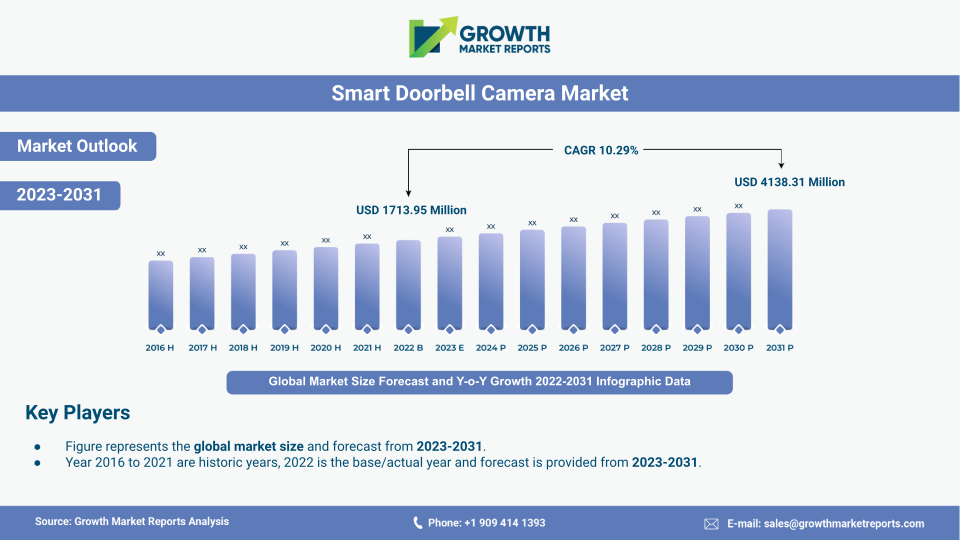
According to our latest research, the global smart doorbell camera market size reached USD 5.1 billion in 2024, reflecting a robust surge in adoption across both residential and commercial sectors. The market is anticipated to grow at a remarkable CAGR of 15.8% during the forecast period, projecting a value of USD 18.6 billion by 2033. The primary growth driver in this segment is the increasing demand for advanced home security solutions, fueled by rising concerns over safety and the proliferation of smart home technologies. As per our in-depth analysis, the market is witnessing rapid technological advancements and a significant shift towards wireless and cloud-connected devices, which are reshaping the landscape of home and business security.

The upward trajectory of the smart doorbell camera market is primarily attributed to the growing consumer awareness regarding security and the increasing adoption of IoT-enabled devices. The integration of artificial intelligence and machine learning for enhanced video analytics, facial recognition, and real-time alerts has elevated the functionality of these devices, making them an essential component of modern security systems. Additionally, the ease of installation and the ability to remotely monitor entry points via smartphones or tablets have further accelerated market penetration, especially in urban and suburban areas. The proliferation of high-speed internet connectivity and the decreasing cost of cloud storage solutions have also contributed significantly to the expansion of the market, allowing users to store and access video footage seamlessly.

Another crucial growth factor is the increasing urbanization and the surge in smart city initiatives globally. Governments and municipal bodies are investing heavily in smart infrastructure, where the deployment of smart doorbell cameras is becoming a standard practice for enhancing public safety and surveillance. The residential sector, in particular, is witnessing exponential growth as homeowners seek to upgrade traditional security systems with smart alternatives that offer convenience, real-time communication, and integration with other smart home devices. Furthermore, the commercial and industrial segments are embracing these technologies to secure premises, monitor visitor access, and deter unauthorized entry, thereby broadening the scope of the smart doorbell camera market.

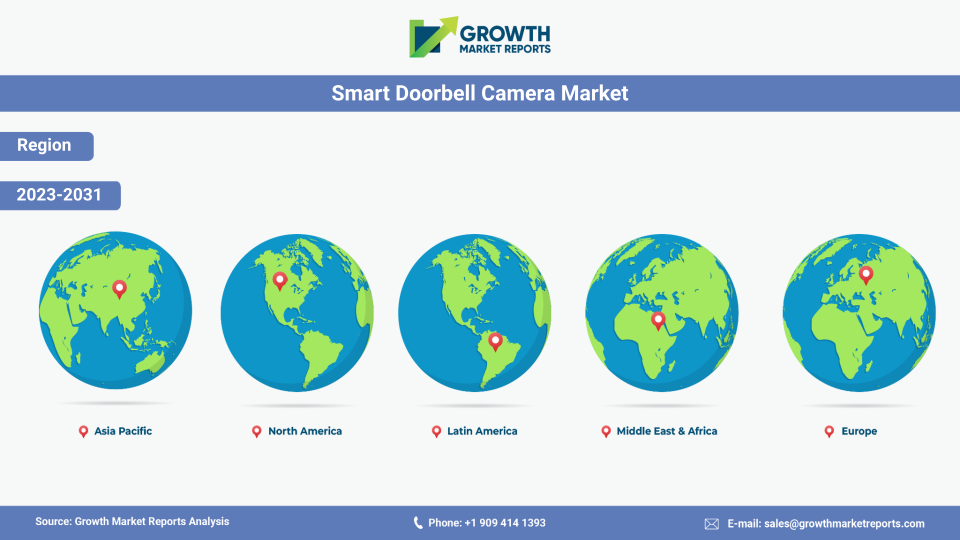
The regional outlook for the smart doorbell camera market reveals a dynamic and evolving landscape. North America currently dominates the market, driven by high technology adoption rates, strong consumer purchasing power, and the presence of leading market players. However, the Asia Pacific region is expected to register the fastest growth during the forecast period, propelled by rapid urbanization, a burgeoning middle class, and increasing investments in smart home technologies. Europe also presents significant opportunities, particularly in countries with stringent security regulations and high awareness of residential safety. The Middle East & Africa and Latin America are emerging markets, gradually catching up as internet penetration and smart device adoption continue to rise.

The emergence of the Edge-AI Doorbell Camera is revolutionizing the smart doorbell market by integrating cutting-edge edge computing capabilities. This technology allows for real-time data processing directly on the device, minimizing latency and enhancing the speed of response. Unlike traditional cloud-dependent systems, the Edge-AI Doorbell Camera can operate with greater efficiency, even in environments with limited internet connectivity. This advancement not only improves the user experience by providing instant alerts and notifications but also enhances security by enabling faster decision-making processes. As consumers increasingly demand smarter and more autonomous security solutions, the Edge-AI Doorbell Camera is poised to become a pivotal component in the evolution of smart home ecosystems.

Global Smart Doorbell Camera Industry Outlook

Product Type Analysis

The smart doorbell camera market is segmented by product type into wired, wireless, battery-powered, and hybrid models, each offering distinct advantages and catering to varied consumer preferences. Wired smart doorbell cameras remain a popular choice among users seeking a reliable and uninterrupted power source. These devices are often favored in permanent installations, particularly in newly constructed homes or commercial buildings where wiring infrastructure can be easily integrated. Wired models typically offer higher video quality and advanced features, as they are not limited by battery constraints. However, their installation process can be more complex and may require professional assistance, which can be a deterrent for some consumers.

Wireless smart doorbell cameras have witnessed a dramatic increase in demand due to their ease of installation and flexibility. These devices connect to existing Wi-Fi networks, eliminating the need for extensive wiring and making them ideal for retrofitting older homes or rental properties. The convenience of wireless connectivity, coupled with advancements in battery technology, has made these models highly attractive to a broad consumer base. Wireless smart doorbell cameras often come with features such as two-way audio, motion detection, and cloud storage, providing users with a comprehensive security solution that can be managed remotely via mobile applications.

Battery-powered smart doorbell cameras offer unparalleled flexibility and portability, catering to users who prioritize ease of use and minimal installation requirements. These models are particularly suitable for locations where wiring is impractical or where temporary security solutions are needed. The latest battery-powered devices offer extended battery life, efficient power management, and quick recharging capabilities, making them a viable option for both residential and commercial applications. However, users must periodically recharge or replace batteries, which can be a consideration in high-traffic areas where frequent usage may drain power more quickly.

Hybrid smart doorbell cameras combine the best features of both wired and wireless technologies, offering users the reliability of a wired connection with the flexibility of wireless operation. These models can switch between power sources as needed, ensuring uninterrupted functionality even during power outages or network disruptions. Hybrid devices are gaining traction in markets where consumers demand robust security solutions without compromising on convenience or ease of installation. As technology continues to evolve, hybrid models are expected to capture a larger share of the market, driven by their adaptability and enhanced feature sets.

The AI Video Doorbell is at the forefront of transforming home security with its advanced artificial intelligence capabilities. By leveraging AI, these doorbells can perform complex tasks such as facial recognition, distinguishing between known and unknown visitors, and even identifying package deliveries. This level of intelligence allows homeowners to receive more accurate and context-aware notifications, reducing the likelihood of false alarms. The AI Video Doorbell's ability to learn and adapt over time makes it a valuable asset for enhancing security and convenience. As AI technology continues to evolve, these doorbells are expected to offer even more sophisticated features, further cementing their role as essential components of modern smart home systems.

Report Scope

Attributes Details
Report Title Smart Doorbell Camera Market Research Report 2033
By Product Type Wired, Wireless, Battery-Powered, Hybrid
By Resolution HD, Full HD, 2K, 4K, Others
By Connectivity Wi-Fi, Bluetooth, Zigbee, Z-Wave, Others
By Application Residential, Commercial, Industrial
By Distribution Channel Online, Offline
Regions Covered North America, Europe, APAC, Latin America, MEA
Base Year 2024
Historic Data 2018-2023
Forecast Period 2025-2033
Number of Pages 267
Number of Tables & Figures 333
Customization Available Yes, the report can be customized as per your need.

Resolution Analysis

Resolution is a critical factor influencing consumer purchasing decisions in the smart doorbell camera market, with options ranging from HD and Full HD to 2K, 4K, and other advanced formats. HD (720p) smart doorbell cameras have traditionally been the entry-level offering, providing sufficient image clarity for basic monitoring and identification purposes. While these models are cost-effective and accessible, the growing demand for higher image quality has shifted consumer preferences towards Full HD (1080p) and beyond. Full HD cameras deliver sharper images and better detail, making them ideal for environments where accurate identification of visitors or intruders is essential.

The introduction of 2K and 4K resolution smart doorbell cameras has set new benchmarks for video quality in the market. 2K cameras provide significantly enhanced clarity over Full HD, enabling users to capture finer details such as facial features, license plates, and other crucial identifiers. This level of detail is particularly valuable in commercial and industrial settings, where security requirements are more stringent. 4K resolution smart doorbell cameras represent the pinnacle of video quality, offering ultra-high-definition footage that can be digitally zoomed without loss of clarity. These models are gaining popularity among tech-savvy consumers and businesses that prioritize top-tier security and monitoring capabilities.

Other resolutions, including specialized formats such as wide-angle or panoramic views, are also emerging in the market. These cameras offer unique advantages, such as broader coverage areas and enhanced situational awareness, making them suitable for large entryways or multi-point access locations. Manufacturers are increasingly focusing on delivering customizable resolution options, allowing users to balance image quality with bandwidth and storage considerations. As consumer expectations continue to rise, the trend towards higher-resolution smart doorbell cameras is expected to accelerate, driving innovation and competition among market players.

The evolution of resolution technology in smart doorbell cameras is closely linked to advancements in sensor design, image processing, and data compression techniques. Modern devices leverage high-performance image sensors and sophisticated algorithms to deliver clear, low-noise video even in challenging lighting conditions. Additionally, the integration of features such as HDR (High Dynamic Range) and night vision further enhances the usability of high-resolution cameras, ensuring reliable performance around the clock. As the market matures, resolution will remain a key differentiator, influencing product development and consumer choice.

The introduction of the Wire-Free Doorbell Camera has significantly simplified the installation process for consumers, eliminating the need for complex wiring and professional assistance. This innovation caters to the growing demand for hassle-free, DIY security solutions that can be easily set up and relocated as needed. The Wire-Free Doorbell Camera is particularly appealing to renters and homeowners who value flexibility and portability in their security systems. Equipped with long-lasting battery life and robust wireless connectivity, these cameras ensure continuous monitoring without the constraints of traditional wired systems. As the market for smart doorbell cameras expands, the Wire-Free Doorbell Camera is expected to gain traction among users seeking convenient and adaptable security options.

Connectivity Analysis

Connectivity options in the smart doorbell camera market play a pivotal role in determining device compatibility, ease of integration, and overall user experience. Wi-Fi remains the dominant connectivity standard, offering seamless integration with home and business networks. Wi-Fi-enabled smart doorbell cameras are highly favored for their ability to support real-time video streaming, remote access, and integration with other smart home devices. The widespread availability of high-speed internet has further bolstered the adoption of Wi-Fi-connected cameras, enabling users to monitor their properties from anywhere in the world via mobile apps or web interfaces.

Bluetooth connectivity, while less common than Wi-Fi, is gaining traction in specific use cases where short-range communication and low power consumption are priorities. Bluetooth-enabled smart doorbell cameras are typically used in conjunction with smartphones or tablets for quick setup, configuration, and local monitoring. These devices offer a convenient solution for users who do not require continuous remote access or who prefer a simplified, app-based approach to security management. The integration of Bluetooth with other wireless technologies is also enabling new forms of device interoperability and automation within smart home ecosystems.

Zigbee and Z-Wave are specialized wireless communication protocols designed for smart home automation and device networking. Smart doorbell cameras equipped with Zigbee or Z-Wave connectivity can seamlessly integrate with broader home automation systems, enabling users to create customized security routines and trigger actions based on specific events. These protocols are known for their reliability, low power consumption, and ability to support large networks of interconnected devices. As the smart home market continues to expand, the demand for Zigbee and Z-Wave compatible smart doorbell cameras is expected to rise, particularly among tech-savvy consumers and professional installers.

Other connectivity options, such as Ethernet and proprietary wireless protocols, are also available in the market, catering to niche applications and specialized requirements. Ethernet-connected smart doorbell cameras offer the advantage of stable, high-bandwidth connections, making them suitable for commercial and industrial environments where network reliability is paramount. Proprietary wireless technologies, on the other hand, are often used by manufacturers to deliver unique features or enhanced security. The diversity of connectivity options in the smart doorbell camera market reflects the evolving needs of consumers and businesses, driving continuous innovation and product differentiation.

Application Analysis

The application landscape of the smart doorbell camera market is broadly segmented into residential, commercial, and industrial sectors, each presenting unique requirements and growth opportunities. The residential segment is the largest and fastest-growing application area, driven by the rising adoption of smart home technologies and the increasing emphasis on personal safety. Homeowners are investing in smart doorbell cameras to deter crime, monitor deliveries, and communicate with visitors remotely. The integration of these devices with home automation systems, voice assistants, and mobile apps has further enhanced their appeal, transforming the way people interact with and manage their home security.

In the commercial sector, smart doorbell cameras are being deployed to secure office buildings, retail stores, hospitality establishments, and other business premises. These devices offer a cost-effective solution for monitoring entry points, managing visitor access, and maintaining a secure environment for employees and customers. Commercial users often require advanced features such as multi-user access, centralized management, and integration with existing security systems. The ability to record and store video footage for extended periods is also a critical consideration, particularly in environments with high foot traffic or regulatory compliance requirements.

The industrial segment, while smaller in comparison to residential and commercial applications, is witnessing steady growth as businesses seek to protect valuable assets, monitor critical infrastructure, and ensure the safety of personnel. Smart doorbell cameras are being used in warehouses, manufacturing facilities, and distribution centers to control access, track deliveries, and respond to security incidents in real time. The ruggedization of devices and the development of specialized features, such as weatherproofing and tamper detection, are driving adoption in industrial environments where reliability and durability are paramount.

Overall, the expanding application scope of smart doorbell cameras is fueling market growth and encouraging manufacturers to develop tailored solutions for diverse end-user needs. The convergence of security, convenience, and automation is reshaping the market, with new use cases emerging in sectors such as healthcare, education, and public infrastructure. As awareness of the benefits of smart doorbell cameras continues to grow, adoption rates across all application segments are expected to rise, creating new opportunities for innovation and market expansion.

Distribution Channel Analysis

The distribution channel landscape for smart doorbell cameras is segmented into online and offline channels, each playing a crucial role in shaping market dynamics and consumer purchasing behavior. Online distribution channels, including e-commerce platforms, manufacturer websites, and third-party retailers, have gained significant traction in recent years. The convenience of online shopping, coupled with the ability to compare products, read reviews, and access detailed specifications, has made this channel the preferred choice for a growing number of consumers. Online channels offer a broader product selection, competitive pricing, and frequent promotional offers, further driving sales and market penetration.

Offline distribution channels, such as brick-and-mortar electronics stores, home improvement retailers, and specialty security outlets, continue to play a vital role in the smart doorbell camera market. These channels provide consumers with the opportunity to physically inspect products, seek expert advice, and benefit from in-store demonstrations. For many buyers, especially those less familiar with smart home technology, the ability to interact with knowledgeable sales staff and receive personalized recommendations is a significant advantage. Offline channels also facilitate immediate product availability and after-sales support, which can be critical for complex installations or troubleshooting.

The interplay between online and offline distribution channels is creating a dynamic retail environment, with many manufacturers adopting omnichannel strategies to reach a wider audience. The integration of online and offline sales platforms enables consumers to enjoy a seamless shopping experience, whether they choose to research products online and purchase in-store or vice versa. Manufacturers are increasingly investing in digital marketing, influencer partnerships, and interactive content to engage potential buyers and drive traffic to both online and offline channels.

As the smart doorbell camera market continues to evolve, the distribution channel landscape is expected to become more sophisticated, with a greater emphasis on customer experience, convenience, and value-added services. The rise of direct-to-consumer sales, subscription-based models, and bundled offerings is also reshaping the way products are marketed and sold. Ultimately, the success of distribution strategies will depend on the ability of manufacturers and retailers to adapt to changing consumer preferences and leverage emerging technologies to enhance the purchasing journey.

Opportunities & Threats

The smart doorbell camera market presents a wealth of opportunities for manufacturers, technology providers, and service integrators. One of the most promising areas of growth is the integration of artificial intelligence and advanced analytics, enabling devices to deliver smarter, more proactive security features. AI-powered smart doorbell cameras can recognize familiar faces, differentiate between humans and animals, and provide real-time alerts based on contextual analysis. This not only enhances security but also reduces false alarms, improving the overall user experience. Additionally, the ongoing expansion of smart home ecosystems and the increasing interoperability between devices are creating new opportunities for cross-selling and bundled solutions, driving higher customer engagement and loyalty.

Another significant opportunity lies in the expansion of the market into emerging economies, where rising disposable incomes, urbanization, and increasing awareness of home security are fueling demand for smart doorbell cameras. As internet penetration and smartphone adoption continue to rise in these regions, manufacturers have the chance to tap into a vast, underserved customer base. The development of affordable, feature-rich devices tailored to the needs of price-sensitive consumers can unlock substantial growth potential. Furthermore, strategic partnerships with local distributors, telecom operators, and home builders can facilitate market entry and accelerate adoption in these high-growth markets.

Despite the numerous opportunities, the smart doorbell camera market faces several threats and restraining factors. One of the primary challenges is the growing concern over data privacy and cybersecurity. As smart doorbell cameras collect and transmit sensitive video footage, they become potential targets for hackers and cybercriminals. High-profile incidents of data breaches and unauthorized access have raised consumer awareness and prompted calls for stronger security measures. Manufacturers must invest in robust encryption, secure cloud storage, and regular software updates to mitigate these risks and maintain consumer trust. Regulatory compliance and evolving privacy laws also present challenges, requiring ongoing vigilance and adaptation to ensure continued market growth.

Regional Outlook

North America remains the largest and most mature market for smart doorbell cameras, accounting for approximately 38% of the global market share in 2024. The region's dominance is underpinned by high levels of technology adoption, strong consumer awareness, and the presence of leading market players. The United States, in particular, is a key driver of growth, with widespread deployment of smart home devices and a well-established ecosystem of service providers. The region is also witnessing increasing adoption in the commercial and industrial sectors, as businesses seek to enhance security and streamline access control. With a projected CAGR of 13.7% through 2033, North America is expected to maintain its leadership position, driven by ongoing innovation and the introduction of new, feature-rich products.

The Asia Pacific region is emerging as the fastest-growing market for smart doorbell cameras, with a projected CAGR of 18.4% during the forecast period. The market size in Asia Pacific was estimated at USD 1.2 billion in 2024, fueled by rapid urbanization, a burgeoning middle class, and increasing investments in smart city initiatives. Key markets such as China, Japan, South Korea, and India are witnessing significant growth, driven by rising disposable incomes, expanding internet connectivity, and government support for smart infrastructure projects. The region's diverse population and varying security needs present both challenges and opportunities for manufacturers, who must tailor their offerings to meet local preferences and regulatory requirements.

Europe represents another important market for smart doorbell cameras, accounting for approximately 26% of global revenue in 2024. The region is characterized by strong demand for advanced security solutions, driven by stringent safety regulations and high awareness of personal and property protection. Countries such as the United Kingdom, Germany, and France are at the forefront of adoption, supported by well-developed distribution networks and a growing ecosystem of smart home integrators. The Middle East & Africa and Latin America are also witnessing steady growth, albeit from a smaller base, as internet penetration and smart device adoption continue to rise. The total regional split aligns with the global market size, ensuring accurate representation of market dynamics and growth prospects.

Smart Doorbell Camera Market Statistics

Competitor Outlook

The competitive landscape of the smart doorbell camera market is characterized by intense rivalry, rapid technological innovation, and a constant drive for differentiation. Leading players are investing heavily in research and development to introduce new features, improve device performance, and enhance user experience. The market is witnessing a steady influx of new entrants and startups, attracted by the growing demand for smart security solutions and the relatively low barriers to entry. Established brands are leveraging their strong distribution networks, brand recognition, and customer loyalty to maintain a competitive edge, while smaller players are focusing on niche markets and innovative product offerings.

Strategic partnerships, mergers and acquisitions, and collaborations with technology providers are common strategies employed by market participants to expand their product portfolios and enter new markets. Companies are also investing in marketing and promotional activities to increase brand visibility and drive consumer engagement. The rise of direct-to-consumer sales channels and subscription-based service models is reshaping the competitive landscape, enabling manufacturers to build closer relationships with customers and generate recurring revenue streams. As the market continues to evolve, agility, innovation, and customer-centricity will be key success factors for companies seeking to gain a foothold in this dynamic industry.

Product differentiation remains a critical focus area, with manufacturers competing on the basis of resolution, connectivity, design, ease of installation, and value-added features such as AI-powered analytics, facial recognition, and cloud storage. The ability to offer seamless integration with other smart home devices and platforms is increasingly important, as consumers seek holistic security solutions that can be managed from a single interface. Price competitiveness is also a key consideration, particularly in emerging markets where affordability is a major driver of adoption. Companies are continuously refining their pricing strategies and exploring new business models to capture market share and drive growth.

Some of the major companies operating in the smart doorbell camera market include Ring (an Amazon company), Arlo Technologies, Google (Nest), Vivint Smart Home, August Home, SkyBell Technologies, Eufy Security (Anker Innovations), and SimpliSafe. Ring remains a market leader, leveraging its extensive product portfolio, robust ecosystem, and integration with Amazon Alexa to deliver a comprehensive smart home experience. Arlo Technologies is known for its high-quality, feature-rich devices and strong focus on innovation, while Google Nest offers seamless integration with the Google Home ecosystem and advanced AI capabilities. Vivint Smart Home and SimpliSafe are prominent players in the professionally monitored security segment, offering end-to-end solutions for residential and commercial customers.

August Home and SkyBell Technologies are recognized for their user-friendly designs and focus on interoperability with other smart home platforms. Eufy Security, a subsidiary of Anker Innovations, has gained traction with its affordable, high-performance devices and commitment to data privacy. These companies, along with a host of emerging players, are driving the evolution of the smart doorbell camera market through continuous innovation and a relentless focus on meeting the evolving needs of consumers and businesses worldwide. As competition intensifies, the ability to anticipate market trends, deliver superior value, and build lasting customer relationships will determine long-term success in this dynamic and rapidly growing industry.

Key Players

  • Ring (Amazon)
  • Google Nest
  • Arlo Technologies
  • SkyBell Technologies
  • August Home
  • Vivint Smart Home
  • ADT Inc.
  • SimpliSafe
  • Eufy (Anker Innovations)
  • Bosch Security Systems
  • Netatmo (Legrand)
  • Remo+
  • Zmodo Technology
  • Swann Communications
  • Panasonic Corporation
  • Honeywell International
  • Allegion (Brio)
  • Shenzhen Vimtag Technology
  • Dahua Technology
  • Hangzhou Hikvision Digital Technology
Smart Doorbell Camera Market Overview

Segments

The Smart Doorbell Camera market has been segmented on the basis of

Product Type

  • Wired
  • Wireless
  • Battery-Powered
  • Hybrid

Resolution

  • HD
  • Full HD
  • 2K
  • 4K
  • Others

Connectivity

  • Wi-Fi
  • Bluetooth
  • Zigbee
  • Z-Wave
  • Others

Application

  • Residential
  • Commercial
  • Industrial

Distribution Channel

  • Online
  • Offline

Competitive Landscape

Key players in the global smart doorbell camera market are August Home, Auxtron, Hangzhou Hikvision Digital Technology Co., Ltd., IFIHOMES, Napco Security Technologies, Inc., Ring, SkyBell, Vivint, Inc., VTech Communications, Inc., Zmodo, Panasonic Corporation, dbell Inc., Legrand North America, LLC., and Arlo. These players are focusing on mergers and acquisitions, collaborations, agreements, and partnerships to expand their geographical presence.
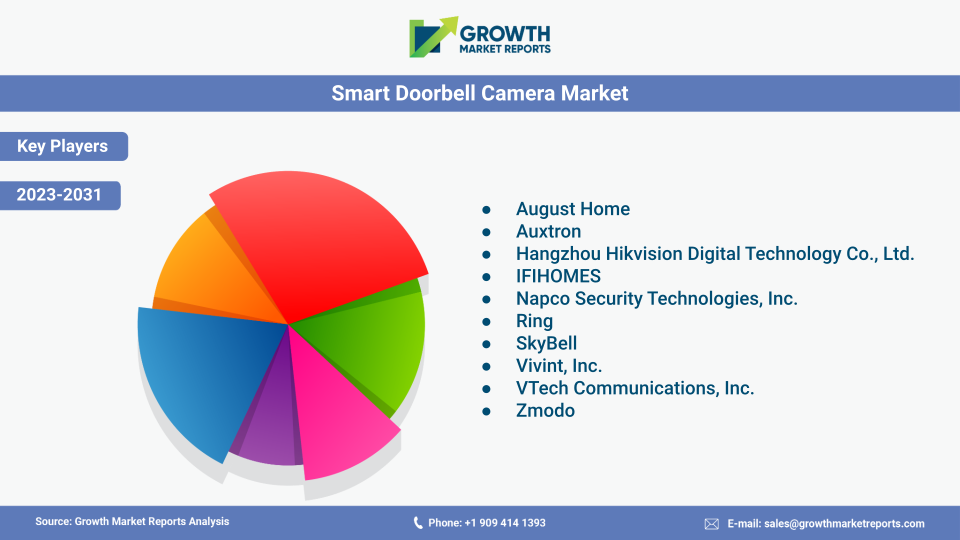

Smart Doorbell Camera Market Key Players

Frequently Asked Questions

Major companies include Ring (Amazon), Google Nest, Arlo Technologies, Vivint Smart Home, August Home, SkyBell Technologies, Eufy Security (Anker Innovations), SimpliSafe, and several others.

Smart doorbell cameras are sold through both online channels (e-commerce platforms, manufacturer websites) and offline channels (electronics stores, home improvement retailers), with many brands adopting omnichannel strategies.

Smart doorbell cameras are widely used in residential, commercial, and industrial settings for security, access control, visitor management, and real-time communication.

Smart doorbell cameras support various connectivity options, including Wi-Fi, Bluetooth, Zigbee, Z-Wave, Ethernet, and proprietary wireless protocols, enabling integration with smart home systems and remote monitoring.

Resolution options range from HD and Full HD to 2K and 4K. Higher resolutions provide sharper images, better detail, and enhanced identification capabilities, which are especially important for security applications.

Smart doorbell cameras are available in wired, wireless, battery-powered, and hybrid models, each offering unique advantages in terms of installation, power source, and flexibility.

North America currently dominates the market, while the Asia Pacific region is expected to register the fastest growth. Europe also presents significant opportunities, and Latin America and the Middle East & Africa are emerging markets.

Key growth drivers include rising concerns over home and business security, increasing adoption of IoT-enabled devices, advancements in AI and video analytics, and the proliferation of smart home technologies.

The smart doorbell camera market is anticipated to grow at a CAGR of 15.8% from 2025 to 2033, reaching an estimated value of USD 18.6 billion by 2033.

As of 2024, the global smart doorbell camera market size reached USD 5.1 billion, with strong growth expected in the coming years.

Table Of Content

Chapter 1 Executive Summary
Chapter 2 Assumptions and Acronyms Used
Chapter 3 Research Methodology
Chapter 4 Smart Doorbell Camera Market Overview
   4.1 Introduction
      4.1.1 Market Taxonomy
      4.1.2 Market Definition
      4.1.3 Macro-Economic Factors Impacting the Market Growth
   4.2 Smart Doorbell Camera Market Dynamics
      4.2.1 Market Drivers
      4.2.2 Market Restraints
      4.2.3 Market Opportunity
   4.3 Smart Doorbell Camera Market - Supply Chain Analysis
      4.3.1 List of Key Suppliers
      4.3.2 List of Key Distributors
      4.3.3 List of Key Consumers
   4.4 Key Forces Shaping the Smart Doorbell Camera Market
      4.4.1 Bargaining Power of Suppliers
      4.4.2 Bargaining Power of Buyers
      4.4.3 Threat of Substitution
      4.4.4 Threat of New Entrants
      4.4.5 Competitive Rivalry
   4.5 Global Smart Doorbell Camera Market Size & Forecast, 2023-2032
      4.5.1 Smart Doorbell Camera Market Size and Y-o-Y Growth
      4.5.2 Smart Doorbell Camera Market Absolute $ Opportunity

Chapter 5 Global Smart Doorbell Camera Market Analysis and Forecast By Product Type
   5.1 Introduction
      5.1.1 Key Market Trends & Growth Opportunities By Product Type
      5.1.2 Basis Point Share (BPS) Analysis By Product Type
      5.1.3 Absolute $ Opportunity Assessment By Product Type
   5.2 Smart Doorbell Camera Market Size Forecast By Product Type
      5.2.1 Wired
      5.2.2 Wireless
      5.2.3 Battery-Powered
      5.2.4 Hybrid
   5.3 Market Attractiveness Analysis By Product Type

Chapter 6 Global Smart Doorbell Camera Market Analysis and Forecast By Resolution
   6.1 Introduction
      6.1.1 Key Market Trends & Growth Opportunities By Resolution
      6.1.2 Basis Point Share (BPS) Analysis By Resolution
      6.1.3 Absolute $ Opportunity Assessment By Resolution
   6.2 Smart Doorbell Camera Market Size Forecast By Resolution
      6.2.1 HD
      6.2.2 Full HD
      6.2.3 2K
      6.2.4 4K
      6.2.5 Others
   6.3 Market Attractiveness Analysis By Resolution

Chapter 7 Global Smart Doorbell Camera Market Analysis and Forecast By Connectivity
   7.1 Introduction
      7.1.1 Key Market Trends & Growth Opportunities By Connectivity
      7.1.2 Basis Point Share (BPS) Analysis By Connectivity
      7.1.3 Absolute $ Opportunity Assessment By Connectivity
   7.2 Smart Doorbell Camera Market Size Forecast By Connectivity
      7.2.1 Wi-Fi
      7.2.2 Bluetooth
      7.2.3 Zigbee
      7.2.4 Z-Wave
      7.2.5 Others
   7.3 Market Attractiveness Analysis By Connectivity

Chapter 8 Global Smart Doorbell Camera Market Analysis and Forecast By Application
   8.1 Introduction
      8.1.1 Key Market Trends & Growth Opportunities By Application
      8.1.2 Basis Point Share (BPS) Analysis By Application
      8.1.3 Absolute $ Opportunity Assessment By Application
   8.2 Smart Doorbell Camera Market Size Forecast By Application
      8.2.1 Residential
      8.2.2 Commercial
      8.2.3 Industrial
   8.3 Market Attractiveness Analysis By Application

Chapter 9 Global Smart Doorbell Camera Market Analysis and Forecast By Distribution Channel
   9.1 Introduction
      9.1.1 Key Market Trends & Growth Opportunities By Distribution Channel
      9.1.2 Basis Point Share (BPS) Analysis By Distribution Channel
      9.1.3 Absolute $ Opportunity Assessment By Distribution Channel
   9.2 Smart Doorbell Camera Market Size Forecast By Distribution Channel
      9.2.1 Online
      9.2.2 Offline
   9.3 Market Attractiveness Analysis By Distribution Channel

Chapter 10 Global Smart Doorbell Camera Market Analysis and Forecast by Region
   10.1 Introduction
      10.1.1 Key Market Trends & Growth Opportunities By Region
      10.1.2 Basis Point Share (BPS) Analysis By Region
      10.1.3 Absolute $ Opportunity Assessment By Region
   10.2 Smart Doorbell Camera Market Size Forecast By Region
      10.2.1 North America
      10.2.2 Europe
      10.2.3 Asia Pacific
      10.2.4 Latin America
      10.2.5 Middle East & Africa (MEA)
   10.3 Market Attractiveness Analysis By Region

Chapter 11 Coronavirus Disease (COVID-19) Impact 
   11.1 Introduction 
   11.2 Current & Future Impact Analysis 
   11.3 Economic Impact Analysis 
   11.4 Government Policies 
   11.5 Investment Scenario

Chapter 12 North America Smart Doorbell Camera Analysis and Forecast
   12.1 Introduction
   12.2 North America Smart Doorbell Camera Market Size Forecast by Country
      12.2.1 U.S.
      12.2.2 Canada
   12.3 Basis Point Share (BPS) Analysis by Country
   12.4 Absolute $ Opportunity Assessment by Country
   12.5 Market Attractiveness Analysis by Country
   12.6 North America Smart Doorbell Camera Market Size Forecast By Product Type
      12.6.1 Wired
      12.6.2 Wireless
      12.6.3 Battery-Powered
      12.6.4 Hybrid
   12.7 Basis Point Share (BPS) Analysis By Product Type 
   12.8 Absolute $ Opportunity Assessment By Product Type 
   12.9 Market Attractiveness Analysis By Product Type
   12.10 North America Smart Doorbell Camera Market Size Forecast By Resolution
      12.10.1 HD
      12.10.2 Full HD
      12.10.3 2K
      12.10.4 4K
      12.10.5 Others
   12.11 Basis Point Share (BPS) Analysis By Resolution 
   12.12 Absolute $ Opportunity Assessment By Resolution 
   12.13 Market Attractiveness Analysis By Resolution
   12.14 North America Smart Doorbell Camera Market Size Forecast By Connectivity
      12.14.1 Wi-Fi
      12.14.2 Bluetooth
      12.14.3 Zigbee
      12.14.4 Z-Wave
      12.14.5 Others
   12.15 Basis Point Share (BPS) Analysis By Connectivity 
   12.16 Absolute $ Opportunity Assessment By Connectivity 
   12.17 Market Attractiveness Analysis By Connectivity
   12.18 North America Smart Doorbell Camera Market Size Forecast By Application
      12.18.1 Residential
      12.18.2 Commercial
      12.18.3 Industrial
   12.19 Basis Point Share (BPS) Analysis By Application 
   12.20 Absolute $ Opportunity Assessment By Application 
   12.21 Market Attractiveness Analysis By Application
   12.22 North America Smart Doorbell Camera Market Size Forecast By Distribution Channel
      12.22.1 Online
      12.22.2 Offline
   12.23 Basis Point Share (BPS) Analysis By Distribution Channel 
   12.24 Absolute $ Opportunity Assessment By Distribution Channel 
   12.25 Market Attractiveness Analysis By Distribution Channel

Chapter 13 Europe Smart Doorbell Camera Analysis and Forecast
   13.1 Introduction
   13.2 Europe Smart Doorbell Camera Market Size Forecast by Country
      13.2.1 Germany
      13.2.2 France
      13.2.3 Italy
      13.2.4 U.K.
      13.2.5 Spain
      13.2.6 Russia
      13.2.7 Rest of Europe
   13.3 Basis Point Share (BPS) Analysis by Country
   13.4 Absolute $ Opportunity Assessment by Country
   13.5 Market Attractiveness Analysis by Country
   13.6 Europe Smart Doorbell Camera Market Size Forecast By Product Type
      13.6.1 Wired
      13.6.2 Wireless
      13.6.3 Battery-Powered
      13.6.4 Hybrid
   13.7 Basis Point Share (BPS) Analysis By Product Type 
   13.8 Absolute $ Opportunity Assessment By Product Type 
   13.9 Market Attractiveness Analysis By Product Type
   13.10 Europe Smart Doorbell Camera Market Size Forecast By Resolution
      13.10.1 HD
      13.10.2 Full HD
      13.10.3 2K
      13.10.4 4K
      13.10.5 Others
   13.11 Basis Point Share (BPS) Analysis By Resolution 
   13.12 Absolute $ Opportunity Assessment By Resolution 
   13.13 Market Attractiveness Analysis By Resolution
   13.14 Europe Smart Doorbell Camera Market Size Forecast By Connectivity
      13.14.1 Wi-Fi
      13.14.2 Bluetooth
      13.14.3 Zigbee
      13.14.4 Z-Wave
      13.14.5 Others
   13.15 Basis Point Share (BPS) Analysis By Connectivity 
   13.16 Absolute $ Opportunity Assessment By Connectivity 
   13.17 Market Attractiveness Analysis By Connectivity
   13.18 Europe Smart Doorbell Camera Market Size Forecast By Application
      13.18.1 Residential
      13.18.2 Commercial
      13.18.3 Industrial
   13.19 Basis Point Share (BPS) Analysis By Application 
   13.20 Absolute $ Opportunity Assessment By Application 
   13.21 Market Attractiveness Analysis By Application
   13.22 Europe Smart Doorbell Camera Market Size Forecast By Distribution Channel
      13.22.1 Online
      13.22.2 Offline
   13.23 Basis Point Share (BPS) Analysis By Distribution Channel 
   13.24 Absolute $ Opportunity Assessment By Distribution Channel 
   13.25 Market Attractiveness Analysis By Distribution Channel

Chapter 14 Asia Pacific Smart Doorbell Camera Analysis and Forecast
   14.1 Introduction
   14.2 Asia Pacific Smart Doorbell Camera Market Size Forecast by Country
      14.2.1 China
      14.2.2 Japan
      14.2.3 South Korea
      14.2.4 India
      14.2.5 Australia
      14.2.6 South East Asia (SEA)
      14.2.7 Rest of Asia Pacific (APAC)
   14.3 Basis Point Share (BPS) Analysis by Country
   14.4 Absolute $ Opportunity Assessment by Country
   14.5 Market Attractiveness Analysis by Country
   14.6 Asia Pacific Smart Doorbell Camera Market Size Forecast By Product Type
      14.6.1 Wired
      14.6.2 Wireless
      14.6.3 Battery-Powered
      14.6.4 Hybrid
   14.7 Basis Point Share (BPS) Analysis By Product Type 
   14.8 Absolute $ Opportunity Assessment By Product Type 
   14.9 Market Attractiveness Analysis By Product Type
   14.10 Asia Pacific Smart Doorbell Camera Market Size Forecast By Resolution
      14.10.1 HD
      14.10.2 Full HD
      14.10.3 2K
      14.10.4 4K
      14.10.5 Others
   14.11 Basis Point Share (BPS) Analysis By Resolution 
   14.12 Absolute $ Opportunity Assessment By Resolution 
   14.13 Market Attractiveness Analysis By Resolution
   14.14 Asia Pacific Smart Doorbell Camera Market Size Forecast By Connectivity
      14.14.1 Wi-Fi
      14.14.2 Bluetooth
      14.14.3 Zigbee
      14.14.4 Z-Wave
      14.14.5 Others
   14.15 Basis Point Share (BPS) Analysis By Connectivity 
   14.16 Absolute $ Opportunity Assessment By Connectivity 
   14.17 Market Attractiveness Analysis By Connectivity
   14.18 Asia Pacific Smart Doorbell Camera Market Size Forecast By Application
      14.18.1 Residential
      14.18.2 Commercial
      14.18.3 Industrial
   14.19 Basis Point Share (BPS) Analysis By Application 
   14.20 Absolute $ Opportunity Assessment By Application 
   14.21 Market Attractiveness Analysis By Application
   14.22 Asia Pacific Smart Doorbell Camera Market Size Forecast By Distribution Channel
      14.22.1 Online
      14.22.2 Offline
   14.23 Basis Point Share (BPS) Analysis By Distribution Channel 
   14.24 Absolute $ Opportunity Assessment By Distribution Channel 
   14.25 Market Attractiveness Analysis By Distribution Channel

Chapter 15 Latin America Smart Doorbell Camera Analysis and Forecast
   15.1 Introduction
   15.2 Latin America Smart Doorbell Camera Market Size Forecast by Country
      15.2.1 Brazil
      15.2.2 Mexico
      15.2.3 Rest of Latin America (LATAM)
   15.3 Basis Point Share (BPS) Analysis by Country
   15.4 Absolute $ Opportunity Assessment by Country
   15.5 Market Attractiveness Analysis by Country
   15.6 Latin America Smart Doorbell Camera Market Size Forecast By Product Type
      15.6.1 Wired
      15.6.2 Wireless
      15.6.3 Battery-Powered
      15.6.4 Hybrid
   15.7 Basis Point Share (BPS) Analysis By Product Type 
   15.8 Absolute $ Opportunity Assessment By Product Type 
   15.9 Market Attractiveness Analysis By Product Type
   15.10 Latin America Smart Doorbell Camera Market Size Forecast By Resolution
      15.10.1 HD
      15.10.2 Full HD
      15.10.3 2K
      15.10.4 4K
      15.10.5 Others
   15.11 Basis Point Share (BPS) Analysis By Resolution 
   15.12 Absolute $ Opportunity Assessment By Resolution 
   15.13 Market Attractiveness Analysis By Resolution
   15.14 Latin America Smart Doorbell Camera Market Size Forecast By Connectivity
      15.14.1 Wi-Fi
      15.14.2 Bluetooth
      15.14.3 Zigbee
      15.14.4 Z-Wave
      15.14.5 Others
   15.15 Basis Point Share (BPS) Analysis By Connectivity 
   15.16 Absolute $ Opportunity Assessment By Connectivity 
   15.17 Market Attractiveness Analysis By Connectivity
   15.18 Latin America Smart Doorbell Camera Market Size Forecast By Application
      15.18.1 Residential
      15.18.2 Commercial
      15.18.3 Industrial
   15.19 Basis Point Share (BPS) Analysis By Application 
   15.20 Absolute $ Opportunity Assessment By Application 
   15.21 Market Attractiveness Analysis By Application
   15.22 Latin America Smart Doorbell Camera Market Size Forecast By Distribution Channel
      15.22.1 Online
      15.22.2 Offline
   15.23 Basis Point Share (BPS) Analysis By Distribution Channel 
   15.24 Absolute $ Opportunity Assessment By Distribution Channel 
   15.25 Market Attractiveness Analysis By Distribution Channel

Chapter 16 Middle East & Africa (MEA) Smart Doorbell Camera Analysis and Forecast
   16.1 Introduction
   16.2 Middle East & Africa (MEA) Smart Doorbell Camera Market Size Forecast by Country
      16.2.1 Saudi Arabia
      16.2.2 South Africa
      16.2.3 UAE
      16.2.4 Rest of Middle East & Africa (MEA)
   16.3 Basis Point Share (BPS) Analysis by Country
   16.4 Absolute $ Opportunity Assessment by Country
   16.5 Market Attractiveness Analysis by Country
   16.6 Middle East & Africa (MEA) Smart Doorbell Camera Market Size Forecast By Product Type
      16.6.1 Wired
      16.6.2 Wireless
      16.6.3 Battery-Powered
      16.6.4 Hybrid
   16.7 Basis Point Share (BPS) Analysis By Product Type 
   16.8 Absolute $ Opportunity Assessment By Product Type 
   16.9 Market Attractiveness Analysis By Product Type
   16.10 Middle East & Africa (MEA) Smart Doorbell Camera Market Size Forecast By Resolution
      16.10.1 HD
      16.10.2 Full HD
      16.10.3 2K
      16.10.4 4K
      16.10.5 Others
   16.11 Basis Point Share (BPS) Analysis By Resolution 
   16.12 Absolute $ Opportunity Assessment By Resolution 
   16.13 Market Attractiveness Analysis By Resolution
   16.14 Middle East & Africa (MEA) Smart Doorbell Camera Market Size Forecast By Connectivity
      16.14.1 Wi-Fi
      16.14.2 Bluetooth
      16.14.3 Zigbee
      16.14.4 Z-Wave
      16.14.5 Others
   16.15 Basis Point Share (BPS) Analysis By Connectivity 
   16.16 Absolute $ Opportunity Assessment By Connectivity 
   16.17 Market Attractiveness Analysis By Connectivity
   16.18 Middle East & Africa (MEA) Smart Doorbell Camera Market Size Forecast By Application
      16.18.1 Residential
      16.18.2 Commercial
      16.18.3 Industrial
   16.19 Basis Point Share (BPS) Analysis By Application 
   16.20 Absolute $ Opportunity Assessment By Application 
   16.21 Market Attractiveness Analysis By Application
   16.22 Middle East & Africa (MEA) Smart Doorbell Camera Market Size Forecast By Distribution Channel
      16.22.1 Online
      16.22.2 Offline
   16.23 Basis Point Share (BPS) Analysis By Distribution Channel 
   16.24 Absolute $ Opportunity Assessment By Distribution Channel 
   16.25 Market Attractiveness Analysis By Distribution Channel

Chapter 17 Competition Landscape 
   17.1 Smart Doorbell Camera Market: Competitive Dashboard
   17.2 Global Smart Doorbell Camera Market: Market Share Analysis, 2023
   17.3 Company Profiles (Details – Overview, Financials, Developments, Strategy) 
      17.3.1 Ring (Amazon)
Google Nest
Arlo Technologies
SkyBell Technologies
August Home
Vivint Smart Home
ADT Inc.
SimpliSafe
Eufy (Anker Innovations)
Bosch Security Systems
Netatmo (Legrand)
Remo+
Zmodo Technology
Swann Communications
Panasonic Corporation
Honeywell International
Allegion (Brio)
Shenzhen Vimtag Technology
Dahua Technology
Hangzhou Hikvision Digital Technology

Methodology

Our Clients

Dassault Aviation
General Electric
Nestle SA
sinopec
Deloitte
Microsoft
Honda Motor Co. Ltd.
Pfizer