Segments - by Product Type (Digital Smart Clocks, Analog Smart Clocks, Hybrid Smart Clocks), by Connectivity (Wi-Fi, Bluetooth, Zigbee, Others), by Application (Residential, Commercial, Industrial, Others), by Distribution Channel (Online Stores, Supermarkets/Hypermarkets, Specialty Stores, Others)
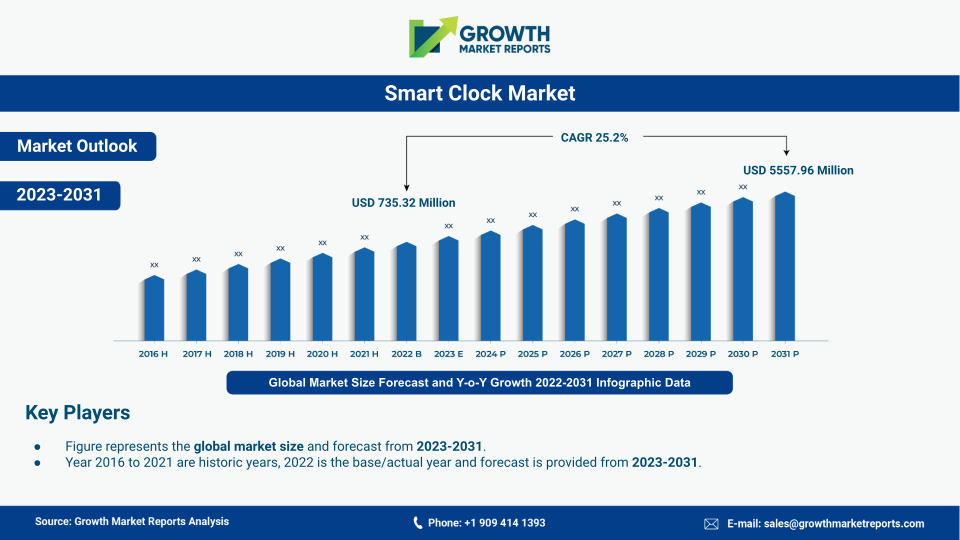
According to our latest research, the global smart clock market size reached USD 2.18 billion in 2024, reflecting robust demand and technological advancements in the consumer electronics sector. The market is expected to grow at a CAGR of 16.4% from 2025 to 2033, culminating in a forecasted market size of USD 9.13 billion by 2033. This vigorous expansion is fueled by the rising integration of artificial intelligence and IoT capabilities in smart home devices, driving consumer interest and adoption worldwide.
One of the primary growth factors propelling the smart clock market is the increasing penetration of smart home ecosystems. As consumers seek to automate and streamline their daily routines, smart clocks have emerged as essential components, offering functionalities that extend far beyond traditional timekeeping. These devices now integrate seamlessly with voice assistants, home automation systems, and even security devices, providing users with centralized control and convenience. The demand for interoperability and enhanced user experience is pushing manufacturers to innovate rapidly, ensuring that smart clocks remain at the forefront of the connected home revolution.
Another significant driver is the ongoing advancements in wireless connectivity and sensor technologies. The proliferation of Wi-Fi, Bluetooth, and Zigbee-enabled smart clocks has enabled more reliable and secure communication between devices, facilitating the adoption of these products across various settings. Enhanced connectivity not only improves the user interface but also allows for remote monitoring, advanced scheduling, and personalized notifications. As a result, both residential and commercial users are increasingly recognizing the value proposition offered by smart clocks, leading to a steady rise in global shipments and market penetration.
Furthermore, the expansion of e-commerce and digital retail channels has played a pivotal role in the growth of the smart clock market. Online stores have democratized access to the latest smart clock models, empowering consumers to compare features, prices, and reviews before making informed purchasing decisions. This shift towards digital retailing has also enabled manufacturers to reach a broader audience, particularly in emerging markets where traditional brick-and-mortar presence may be limited. The combination of digital marketing, targeted promotions, and seamless logistics has accelerated the adoption curve, contributing significantly to the market’s robust growth trajectory.
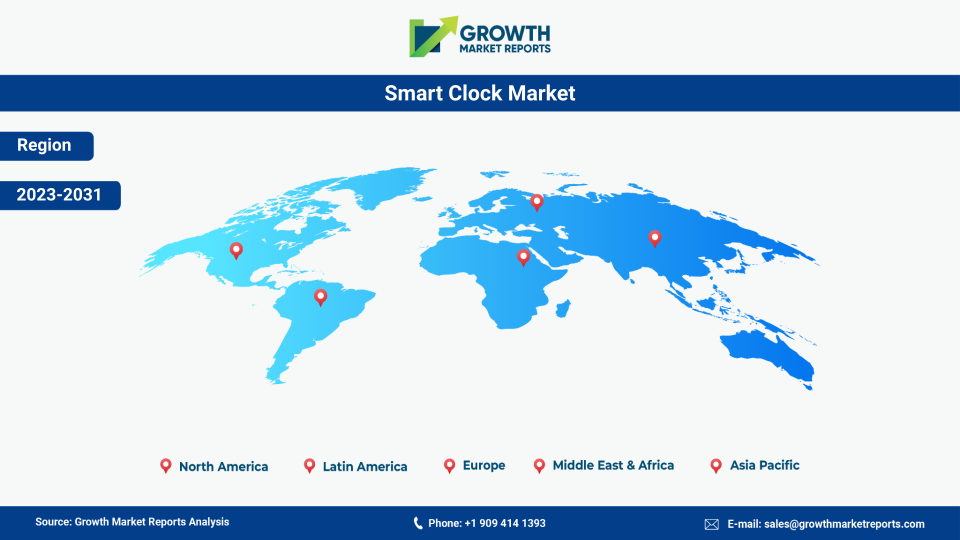
Regionally, the Asia Pacific market is witnessing the fastest growth, driven by rapid urbanization, increasing disposable incomes, and the proliferation of smart home infrastructure. North America and Europe also maintain substantial market shares, owing to high technology adoption rates and a strong presence of leading industry players. Meanwhile, Latin America and the Middle East & Africa are experiencing gradual uptake, supported by growing awareness and improving internet connectivity. This diverse regional landscape underscores the global appeal and adaptability of smart clocks across different demographic and economic contexts.
The smart clock market by product type is segmented into Digital Smart Clocks, Analog Smart Clocks, and Hybrid Smart Clocks. Digital smart clocks currently dominate the market, accounting for over 65% of the total revenue in 2024. Their popularity is attributed to advanced features such as touchscreens, voice assistant integration, and customizable alarms, which appeal to tech-savvy consumers seeking multifunctional devices. Digital smart clocks are particularly favored in urban households, where space optimization and connectivity are highly valued. The continuous evolution of digital displays and the incorporation of health monitoring features are expected to further bolster their market share over the forecast period.
Analog smart clocks, while representing a smaller segment, have carved out a niche among consumers who appreciate traditional aesthetics combined with modern functionality. These products often integrate subtle digital enhancements, such as Bluetooth connectivity or ambient lighting, catering to users who desire smart features without compromising on classic design. The demand for analog smart clocks is particularly strong in mature markets like Europe, where there is a blend of appreciation for heritage and a willingness to adopt new technology in a discreet manner. Manufacturers are increasingly focusing on premium materials and craftsmanship to differentiate their offerings in this segment.
Hybrid smart clocks, which combine elements of both digital and analog designs, are gaining traction among consumers seeking the best of both worlds. These products offer traditional clock faces complemented by digital notifications, smart alarms, and connectivity features. Hybrid smart clocks appeal to a broad demographic, including both younger users attracted to smart functionalities and older consumers who value familiarity. The versatility of hybrid models makes them suitable for a wide range of applications, from bedside tables to office desks, and their market share is expected to grow steadily through 2033 as manufacturers introduce more innovative designs.
The product type landscape is characterized by intense competition and rapid innovation. Leading brands are investing heavily in research and development to enhance user interfaces, battery life, and device compatibility. The integration of AI-driven personalization, such as adaptive alarm settings and contextual reminders, is transforming the user experience and setting new benchmarks for the industry. As consumer preferences continue to evolve, the product type segment will remain a critical battleground for differentiation and market leadership in the global smart clock market.
| Attributes | Details |
| Report Title | Smart Clock Market Research Report 2033 |
| By Product Type | Digital Smart Clocks, Analog Smart Clocks, Hybrid Smart Clocks |
| By Connectivity | Wi-Fi, Bluetooth, Zigbee, Others |
| By Application | Residential, Commercial, Industrial, Others |
| By Distribution Channel | Online Stores, Supermarkets/Hypermarkets, Specialty Stores, Others |
| Regions Covered | North America, Europe, APAC, Latin America, MEA |
| Base Year | 2024 |
| Historic Data | 2018-2023 |
| Forecast Period | 2025-2033 |
| Number of Pages | 259 |
| Number of Tables & Figures | 318 |
| Customization Available | Yes, the report can be customized as per your need. |
Connectivity is a defining feature of modern smart clocks, with Wi-Fi, Bluetooth, Zigbee, and other protocols shaping the user experience and device capabilities. Wi-Fi-enabled smart clocks have emerged as the most popular choice, capturing nearly 58% of the market share in 2024. These devices offer seamless integration with home networks, enabling features such as real-time weather updates, music streaming, and remote control via mobile apps. The ability to connect with other smart home devices, such as lights and thermostats, has made Wi-Fi connectivity a must-have for consumers seeking a fully integrated living environment.
Bluetooth connectivity remains a key feature, particularly for users who prioritize direct pairing with smartphones and wireless audio devices. Bluetooth-enabled smart clocks are often more affordable and energy-efficient, making them an attractive option for budget-conscious consumers and those looking for basic smart functionalities. The proliferation of Bluetooth 5.0 and subsequent versions has improved data transfer speeds and connection stability, enhancing the overall user experience. These devices are especially popular in the youth segment, where portability and ease of use are significant purchasing factors.
Zigbee-enabled smart clocks cater to users who require robust and secure communication within larger smart home ecosystems. Zigbee’s low power consumption and mesh networking capabilities make it ideal for environments where multiple devices need to communicate reliably over extended distances. This connectivity option is particularly valued in commercial and industrial settings, where scalability and security are paramount. As the adoption of Zigbee-based home automation solutions continues to rise, the demand for compatible smart clocks is expected to follow suit, driving innovation in this segment.
Other connectivity options, including NFC and proprietary wireless protocols, are also being explored by manufacturers to address niche requirements and differentiate their products. These alternatives often target specialized applications, such as healthcare monitoring or enterprise time management, where unique connectivity needs exist. As the smart clock market matures, interoperability and compatibility with emerging standards will become increasingly important, influencing purchasing decisions and shaping the competitive landscape. The connectivity segment remains a critical area of focus for both product development and strategic partnerships within the smart clock industry.
The application landscape for smart clocks is diverse, encompassing residential, commercial, industrial, and other settings. Residential applications currently account for the largest share, representing approximately 67% of the global market in 2024. Homeowners are increasingly adopting smart clocks as central hubs for time management, reminders, and home automation control. The integration of voice assistants and compatibility with other smart devices has made smart clocks indispensable in modern households, where convenience and efficiency are highly prized. The growing trend towards home offices and remote work is further boosting demand in this segment.
Commercial applications are also witnessing significant growth, particularly in sectors such as hospitality, healthcare, and corporate offices. Smart clocks are being deployed in hotels to enhance guest experiences, providing personalized wake-up calls, weather updates, and room control functionalities. In healthcare settings, these devices are used for patient monitoring, medication reminders, and staff coordination, contributing to improved operational efficiency and patient outcomes. The ability to customize smart clocks for specific business needs is driving adoption across a wide range of commercial environments.
Industrial applications, while still emerging, hold substantial potential for future growth. Smart clocks are being integrated into manufacturing facilities, warehouses, and logistics centers to optimize shift management, synchronize operations, and enhance workplace safety. The use of ruggedized smart clocks with advanced connectivity features is enabling real-time communication and coordination among teams, reducing downtime and improving productivity. As Industry 4.0 initiatives gain momentum, the demand for smart time management solutions in industrial settings is expected to rise steadily.
Other applications, including educational institutions and public spaces, are also exploring the benefits of smart clocks. Schools and universities are adopting these devices for classroom management, scheduling, and student engagement, while public transportation hubs are leveraging smart clocks for real-time information dissemination. The versatility and adaptability of smart clocks make them suitable for a wide range of use cases, ensuring continued market growth and diversification across different application segments.
The distribution landscape for smart clocks is evolving rapidly, with online stores, supermarkets/hypermarkets, specialty stores, and other channels playing pivotal roles. Online stores have emerged as the dominant channel, accounting for over 52% of global sales in 2024. The convenience of browsing, comparing, and purchasing smart clocks from the comfort of home has resonated strongly with consumers, especially amid the ongoing digital transformation. E-commerce platforms offer a wide selection, competitive pricing, and detailed product information, empowering buyers to make informed decisions and driving robust sales growth.
Supermarkets and hypermarkets continue to play a significant role, particularly in regions where physical retail remains a preferred shopping method. These outlets offer the advantage of immediate product availability and the ability for consumers to physically inspect smart clocks before purchase. Retailers are increasingly dedicating more shelf space to smart home devices, reflecting growing consumer interest and demand. In-store promotions, bundled offers, and knowledgeable staff contribute to a positive shopping experience, helping to sustain the relevance of brick-and-mortar channels in the smart clock market.
Specialty stores, including electronics retailers and dedicated smart home outlets, cater to consumers seeking expert advice and personalized service. These stores often feature the latest models and provide hands-on demonstrations, allowing customers to experience the full range of smart clock functionalities. The ability to offer after-sales support and installation services further enhances the value proposition of specialty stores. As the smart clock market becomes increasingly sophisticated, the role of specialty retailers in educating and guiding consumers is expected to grow in importance.
Other distribution channels, such as direct sales and business-to-business (B2B) partnerships, are also contributing to market expansion. Manufacturers are exploring innovative approaches, including subscription models and bundled offerings with other smart home devices, to drive customer acquisition and retention. The evolving distribution ecosystem is characterized by a blend of digital and physical touchpoints, ensuring that smart clocks are accessible to a broad and diverse customer base worldwide.
The smart clock market presents a myriad of opportunities for innovation and expansion, particularly as consumer preferences shift towards personalized and connected living environments. The integration of advanced AI features, such as adaptive learning and voice recognition, offers manufacturers the chance to differentiate their products and deliver enhanced user experiences. There is significant potential for collaboration with other smart home device makers, enabling the creation of holistic ecosystems that address multiple aspects of daily life. As smart clocks become more intelligent and intuitive, new use cases are likely to emerge, further expanding the addressable market and driving long-term growth.
Another promising opportunity lies in the untapped potential of emerging markets, where rising disposable incomes and improving internet infrastructure are creating fertile ground for smart home adoption. Manufacturers that tailor their products to local preferences, languages, and regulatory requirements stand to gain a competitive edge. The expansion of digital retail channels and strategic partnerships with local distributors can accelerate market entry and penetration. Additionally, the growing emphasis on sustainability and energy efficiency presents an opportunity for brands to develop eco-friendly smart clocks, appealing to environmentally conscious consumers and aligning with global sustainability goals.
However, the smart clock market is not without its challenges. One of the primary restraining factors is the high level of competition and rapid technological obsolescence. New entrants face significant barriers in establishing brand recognition and differentiating their offerings in a crowded marketplace. Additionally, concerns around data privacy and cybersecurity pose risks to consumer trust, particularly as smart clocks become more integrated with personal and sensitive information. Manufacturers must invest in robust security measures and transparent data practices to mitigate these threats and maintain consumer confidence. The ability to navigate these challenges will be critical to sustaining growth and achieving long-term success in the smart clock industry.
The Asia Pacific region leads the global smart clock market, accounting for approximately 33% of total revenues in 2024, translating to USD 0.72 billion. This dominance is driven by rapid urbanization, a burgeoning middle class, and increasing investment in smart home infrastructure across countries like China, Japan, and South Korea. The region is witnessing a surge in demand for connected devices, supported by favorable government initiatives and a thriving consumer electronics industry. With a projected CAGR of 18.2% through 2033, Asia Pacific is expected to maintain its leadership position, attracting significant investments from both local and international players.
North America remains a key market for smart clocks, contributing USD 0.61 billion in revenues in 2024, or about 28% of the global total. The region benefits from high technology adoption rates, a mature smart home ecosystem, and strong purchasing power among consumers. Leading brands such as Amazon and Google have established a robust presence, driving innovation and setting industry standards. The market is characterized by intense competition, continuous product launches, and a strong focus on interoperability and user experience. North America is expected to sustain steady growth, supported by ongoing advancements in AI and IoT technologies.
Europe accounts for roughly USD 0.48 billion in smart clock sales in 2024, representing 22% of the global market. The region is distinguished by a blend of traditional design preferences and a willingness to embrace new technology, resulting in strong demand for both analog and hybrid smart clocks. Regulatory support for energy-efficient and sustainable products is driving innovation, while collaborations between manufacturers and local retailers are enhancing market reach. Latin America and the Middle East & Africa, though smaller in scale, are experiencing gradual uptake, with combined revenues of USD 0.37 billion in 2024. These regions are poised for future growth as awareness increases and internet connectivity improves, presenting new opportunities for market expansion.
The competitive landscape of the smart clock market is characterized by the presence of both established consumer electronics giants and innovative startups. Leading companies are leveraging their technological expertise, brand equity, and extensive distribution networks to maintain a stronghold in the market. Intense competition is driving continuous product innovation, with players focusing on enhancing connectivity, user interface, and integration with broader smart home ecosystems. Strategic partnerships, mergers, and acquisitions are commonplace, as companies seek to expand their product portfolios and capture new market segments.
Product differentiation is a key strategy employed by major players, with an emphasis on unique features such as voice assistant compatibility, health monitoring, and adaptive learning. The ability to offer seamless integration with other smart home devices, such as security cameras and lighting systems, is a critical success factor. Manufacturers are also investing in user-centric design, ensuring that smart clocks are both aesthetically pleasing and functionally superior. The rise of direct-to-consumer sales channels and digital marketing campaigns is enabling companies to engage with tech-savvy consumers and build lasting brand loyalty.
In addition to established brands, the market is witnessing the emergence of niche players specializing in premium, design-focused, or application-specific smart clocks. These companies are targeting discerning consumers who value craftsmanship, customization, and exclusive features. The entry of new players is fostering a dynamic and innovative market environment, encouraging established brands to continuously raise the bar in terms of quality and functionality. As the smart clock market matures, the competitive landscape is expected to evolve, with a greater emphasis on ecosystem integration, data security, and personalized user experiences.
Major companies operating in the smart clock market include Amazon, Google, Lenovo, Sony, Philips, Xiaomi, and LG Electronics. Amazon and Google have established themselves as market leaders through their popular Echo and Nest Hub devices, which offer advanced voice assistant capabilities and seamless smart home integration. Lenovo has gained traction with its Smart Clock series, known for its intuitive interface and robust feature set. Sony and Philips are leveraging their expertise in audio and lighting to deliver smart clocks with enhanced entertainment and wellness functionalities. Xiaomi and LG Electronics are focusing on affordability and design innovation, targeting price-sensitive consumers in emerging markets. These companies are continuously expanding their product portfolios, investing in R&D, and forging strategic alliances to maintain their competitive edge in the rapidly evolving smart clock market.
The Smart Clock market has been segmented on the basis of
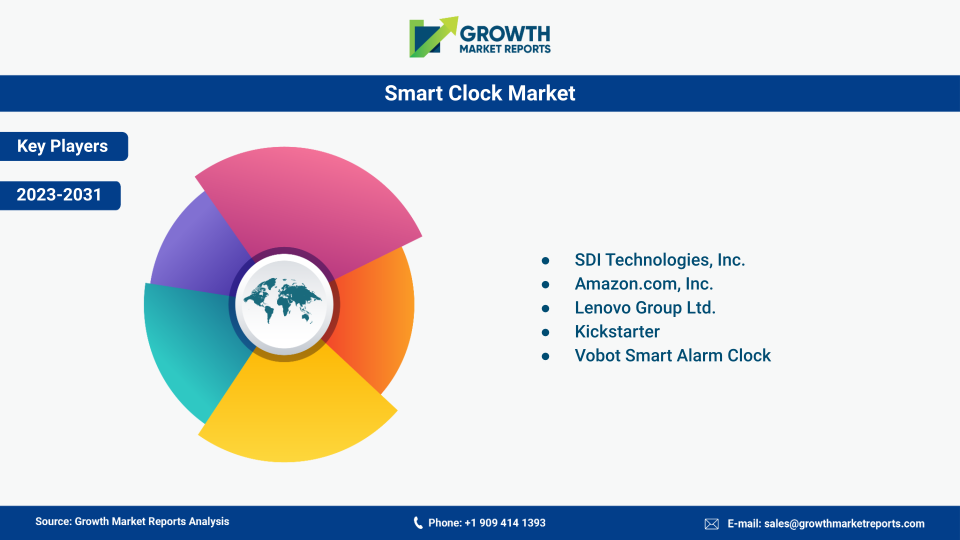
Key players in the smart clock market include SDI Technologies, Inc., Amazon.com, Inc., Lenovo Group Ltd., Kickstarter, and Vobot Smart Alarm Clock. These industrialists are using several market strategies such as celebrity endorsement, merger & acquisitions, distribution channels, and technological & product innovations to acquire a major market share across the globe. For instance, Lenovo Group Ltd is focusing on partnership with e-commerce portals.
Key challenges include intense competition, rapid technological obsolescence, data privacy and cybersecurity concerns, and the need for continuous innovation to maintain consumer trust and market share.
Trends include integration with AI and IoT, enhanced connectivity, voice assistant compatibility, health monitoring features, and the development of eco-friendly and energy-efficient models.
Key players include Amazon, Google, Lenovo, Sony, Philips, Apple, Samsung, LG Electronics, Xiaomi, Harman International (JBL), iHome, Panasonic, Emerson Radio, Anker Innovations, VTech, LaMetric, Sonic Alert, Withings, and Braun.
Online stores are the dominant distribution channel, accounting for over 52% of global sales in 2024. Supermarkets, hypermarkets, and specialty stores also play significant roles.
Smart clocks are used in residential, commercial, and industrial settings. Residential applications account for about 67% of the market, serving as hubs for time management and home automation.
Asia Pacific leads the market with 33% of global revenues in 2024, followed by North America (28%) and Europe (22%). Latin America and the Middle East & Africa are experiencing gradual uptake.
Smart clocks commonly offer Wi-Fi, Bluetooth, and Zigbee connectivity. Wi-Fi is the most popular, enabling integration with home networks and other smart devices.
Digital smart clocks dominate the market, accounting for over 65% of total revenue in 2024, due to features like touchscreens, voice assistant integration, and customizable alarms.
The smart clock market is expected to grow at a CAGR of 16.4% from 2025 to 2033, reaching an estimated USD 9.13 billion by 2033.
As of 2024, the global smart clock market size has reached USD 2.18 billion, reflecting strong demand and technological advancements in consumer electronics.