Segments - by Product Type (Standard Smart Ceiling Fans, Decorative Smart Ceiling Fans, Energy-Efficient Smart Ceiling Fans, Others), by Connectivity (Wi-Fi, Bluetooth, Zigbee, Others), by Control Type (Remote Control, Smartphone App, Voice Control, Others), by Application (Residential, Commercial, Industrial, Others), by Distribution Channel (Online, Offline)
According to our latest research, the global smart ceiling fans market size reached USD 2.12 billion in 2024, reflecting robust consumer adoption and significant advancements in smart home technologies. The market is projected to expand at a CAGR of 10.6% from 2025 to 2033, reaching an estimated value of USD 5.13 billion by 2033. This remarkable growth trajectory is driven by the increasing integration of IoT devices in residential and commercial environments, coupled with rising consumer awareness about energy efficiency and home automation. As per our latest research, the demand for smart ceiling fans is being fueled by technological innovations, evolving consumer lifestyles, and the growing emphasis on sustainable living.
One of the primary growth drivers for the smart ceiling fans market is the rapid proliferation of smart homes across the globe. As consumers seek greater convenience, comfort, and control over their living environments, the adoption of smart home devices, including smart ceiling fans, has surged. These fans offer advanced features such as remote operation, voice control, scheduling, and integration with other smart home systems, providing users with enhanced energy savings and personalized comfort. The increasing penetration of high-speed internet and the widespread availability of affordable smart devices are further catalyzing market growth. Additionally, the growing awareness of energy conservation and the need to reduce electricity bills have encouraged consumers to replace traditional ceiling fans with energy-efficient smart alternatives.
Another significant factor contributing to the expansion of the smart ceiling fans market is the continuous innovation in connectivity and control technologies. Manufacturers are focusing on developing products compatible with popular home automation platforms, such as Amazon Alexa, Google Assistant, and Apple HomeKit. The integration of Wi-Fi, Bluetooth, and Zigbee protocols allows seamless connectivity and interoperability with other smart devices, enhancing the overall user experience. Furthermore, advancements in sensor technology, such as temperature and occupancy sensors, enable fans to adjust their operation automatically based on environmental conditions, further optimizing energy usage. These technological enhancements, combined with attractive product designs and user-friendly interfaces, are making smart ceiling fans increasingly appealing to a broad consumer base.
The advent of Voice-Control Ceiling Fan Light technology is revolutionizing the way consumers interact with their home appliances. This innovation allows users to control their ceiling fans and integrated lighting systems through simple voice commands, offering unparalleled convenience and accessibility. By integrating with popular voice assistants like Amazon Alexa and Google Assistant, these fans provide a seamless user experience, enabling hands-free operation and personalized settings. This feature is particularly beneficial for individuals with mobility challenges or those who prefer a more streamlined approach to home automation. As the demand for smart home solutions continues to rise, the inclusion of voice control in ceiling fans is becoming a standard expectation among tech-savvy consumers, further driving market growth.
The smart ceiling fans market is also benefiting from favorable regulatory policies and government initiatives aimed at promoting energy efficiency and sustainable building practices. In many regions, governments are offering incentives and rebates for the adoption of energy-efficient appliances, including smart ceiling fans. This has encouraged both residential and commercial property owners to invest in smart solutions that contribute to lower carbon footprints and reduced operational costs. The growing trend of green buildings and the increasing adoption of building automation systems in commercial spaces are further accelerating market growth. Moreover, the expansion of organized retail channels and the rise of e-commerce platforms have made smart ceiling fans more accessible to consumers worldwide, supporting the sustained growth of the market.
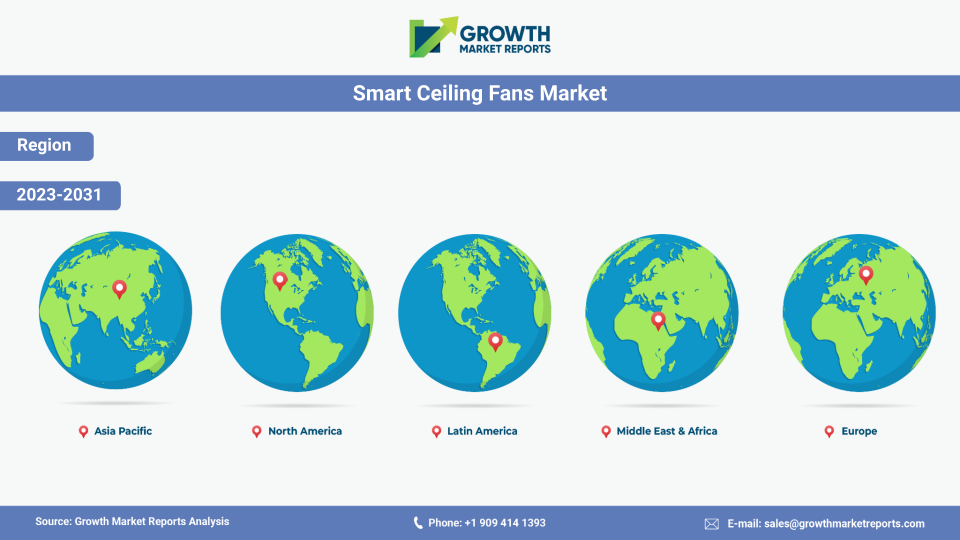
From a regional perspective, Asia Pacific is emerging as the fastest-growing market for smart ceiling fans, driven by rapid urbanization, rising disposable incomes, and the increasing adoption of smart home technologies in countries such as China, India, and Japan. North America and Europe are also witnessing significant growth, supported by high consumer awareness, strong technological infrastructure, and a growing focus on energy efficiency. Latin America and the Middle East & Africa are gradually catching up, with increasing investments in smart infrastructure and expanding retail networks. Overall, the global smart ceiling fans market is poised for substantial growth, underpinned by technological advancements, evolving consumer preferences, and supportive regulatory frameworks.
The traditional Ceiling Fan has undergone a significant transformation with the advent of smart technology. Modern ceiling fans are no longer just about circulating air; they now come equipped with advanced features such as remote control, scheduling, and integration with smart home systems. These enhancements not only improve user convenience but also contribute to energy efficiency by allowing precise control over fan operation. The evolution of ceiling fans into smart devices reflects the broader trend of home automation, where connectivity and control are key drivers of consumer interest. As more households adopt smart home technologies, the humble ceiling fan is poised to play a pivotal role in creating comfortable and energy-efficient living environments.
The smart ceiling fans market is segmented by product type into standard smart ceiling fans, decorative smart ceiling fans, energy-efficient smart ceiling fans, and others. Standard smart ceiling fans represent a significant portion of the market, appealing to consumers seeking reliable and cost-effective solutions for everyday comfort and convenience. These fans typically offer essential smart features such as remote control, scheduling, and basic integration with home automation systems. Their affordability and ease of installation make them popular choices for both new constructions and retrofit projects. As consumer awareness of smart home technology grows, the demand for standard smart ceiling fans is expected to remain strong, particularly in emerging markets where price sensitivity is a key consideration.
Decorative smart ceiling fans are gaining traction among consumers who prioritize aesthetics and interior design. These fans combine advanced smart functionalities with stylish designs, catering to the growing demand for home décor products that enhance the visual appeal of living spaces. Manufacturers are offering a wide range of decorative options, including customizable finishes, unique blade designs, and integrated lighting solutions, allowing consumers to personalize their environments. The ability to blend technology with design has made decorative smart ceiling fans particularly popular in the residential segment, especially among urban homeowners and interior designers. As trends in home décor continue to evolve, the market for decorative smart ceiling fans is expected to experience robust growth.
Energy-efficient smart ceiling fans represent a rapidly expanding segment, driven by increasing consumer awareness of sustainability and the need to reduce energy consumption. These fans are equipped with advanced motors, such as brushless DC (BLDC) motors, and feature intelligent sensors that optimize performance based on room occupancy and temperature. Energy-efficient models often come with certifications such as ENERGY STAR, making them eligible for government incentives and rebates. The growing emphasis on green building practices and the rising cost of electricity are encouraging both residential and commercial users to invest in energy-efficient smart ceiling fans. As regulatory standards for energy efficiency become more stringent, this segment is expected to witness accelerated growth.
The "others" category includes niche product types such as smart ceiling fans with air purification capabilities, fans designed for outdoor use, and models tailored for specific applications such as industrial or hospitality settings. These specialized products cater to unique consumer needs and are often equipped with additional features such as integrated air quality sensors, weather-resistant materials, and advanced control options. While the market share of these niche products is currently smaller compared to mainstream segments, their importance is growing as manufacturers seek to differentiate their offerings and address emerging trends in health, wellness, and outdoor living. As consumer preferences continue to diversify, the "others" segment is expected to contribute to the overall growth and innovation in the smart ceiling fans market.
| Attributes | Details |
| Report Title | Smart Ceiling Fans Market Research Report 2033 |
| By Product Type | Standard Smart Ceiling Fans, Decorative Smart Ceiling Fans, Energy-Efficient Smart Ceiling Fans, Others |
| By Connectivity | Wi-Fi, Bluetooth, Zigbee, Others |
| By Control Type | Remote Control, Smartphone App, Voice Control, Others |
| By Application | Residential, Commercial, Industrial, Others |
| By Distribution Channel | Online, Offline |
| Regions Covered | North America, Europe, APAC, Latin America, MEA |
| Base Year | 2024 |
| Historic Data | 2018-2023 |
| Forecast Period | 2025-2033 |
| Number of Pages | 270 |
| Number of Tables & Figures | 307 |
| Customization Available | Yes, the report can be customized as per your need. |
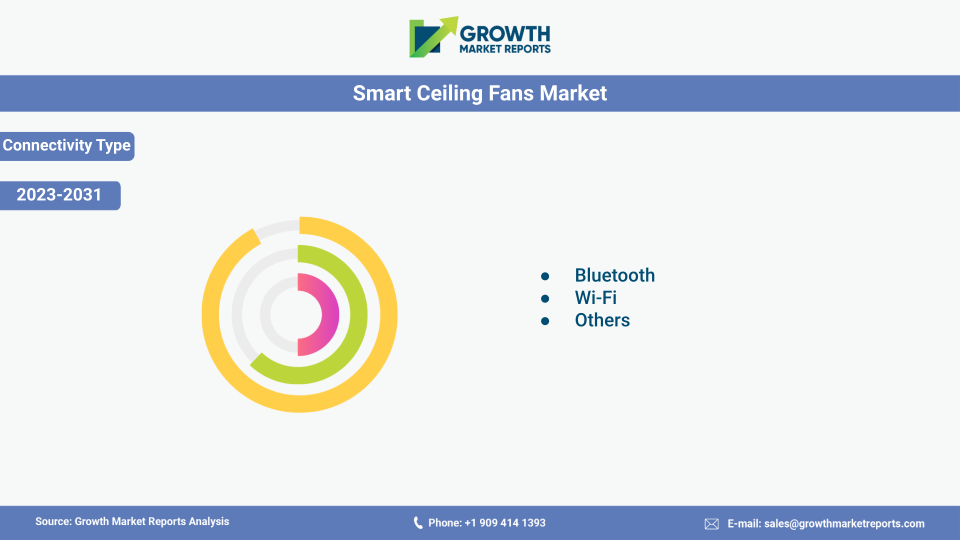
Connectivity is a crucial aspect of the smart ceiling fans market, with major segments including Wi-Fi, Bluetooth, Zigbee, and others. Wi-Fi-enabled smart ceiling fans dominate the market, as they offer seamless integration with home networks and provide users with the flexibility to control their fans remotely via smartphones, tablets, or voice assistants. The popularity of Wi-Fi connectivity is further reinforced by its compatibility with a wide range of home automation platforms, enabling users to create customized routines and automate fan operation based on various triggers. The widespread availability of high-speed internet and the increasing adoption of smart home ecosystems are expected to sustain the dominance of Wi-Fi-enabled smart ceiling fans in the coming years.
Bluetooth-enabled smart ceiling fans are particularly appealing for users seeking straightforward, local control without the need for complex network configurations. These fans can be easily paired with smartphones or dedicated remote controls, offering convenient operation within a limited range. Bluetooth connectivity is often favored in environments where Wi-Fi coverage may be inconsistent or where users prefer a more direct control method. While Bluetooth-enabled fans may lack some of the advanced features offered by Wi-Fi models, such as integration with voice assistants or remote access from outside the home, they remain a popular choice for budget-conscious consumers and those with simpler smart home setups.
Zigbee and other proprietary connectivity protocols are gaining traction in the smart ceiling fans market, particularly among users who prioritize robust and reliable communication within larger home automation systems. Zigbee-enabled fans are designed to operate within mesh networks, allowing for greater scalability and interoperability with a wide range of smart devices. This makes them ideal for commercial applications and larger residential properties where multiple smart devices need to communicate seamlessly. The adoption of Zigbee and similar protocols is expected to increase as the smart home market matures and consumers seek more integrated and scalable solutions for their connected environments.
The "others" category in connectivity includes emerging protocols such as Z-Wave, Thread, and custom solutions developed by manufacturers to address specific use cases or enhance security. These alternative connectivity options are often designed to address unique challenges, such as low power consumption, extended range, or enhanced data encryption. While their market share remains relatively small compared to mainstream options like Wi-Fi and Bluetooth, these protocols are gaining attention as the smart home ecosystem evolves and new requirements emerge. As interoperability and security become increasingly important to consumers, the adoption of alternative connectivity solutions in smart ceiling fans is expected to grow, contributing to the diversification and innovation within the market.
The control type segment of the smart ceiling fans market encompasses remote control, smartphone app, voice control, and others. Remote control remains a foundational feature, offering users the convenience of adjusting fan speed, direction, and lighting without the need to physically interact with the device. Modern remote controls often include advanced features such as programmable timers, sleep modes, and memory functions, enhancing user comfort and energy efficiency. The familiarity and ease of use associated with remote controls continue to make them a popular choice among consumers, particularly in markets where smartphone penetration is still growing.
Smartphone app control is rapidly emerging as a preferred method for operating smart ceiling fans, driven by the widespread adoption of mobile devices and the increasing sophistication of smart home applications. Through dedicated apps, users can access a wide range of features, including scheduling, automation, energy monitoring, and integration with other smart devices. The ability to control fans from anywhere, receive real-time notifications, and customize settings based on personal preferences has made smartphone app control highly attractive to tech-savvy consumers. As app ecosystems continue to evolve, manufacturers are investing in user-friendly interfaces and enhanced security features to further improve the user experience.
Voice control is revolutionizing the way users interact with smart ceiling fans, offering hands-free convenience and seamless integration with popular voice assistants such as Amazon Alexa, Google Assistant, and Apple Siri. Voice-controlled fans allow users to adjust settings, create routines, and access advanced features using simple voice commands, making them particularly appealing for individuals with mobility challenges or those seeking maximum convenience. The growing popularity of smart speakers and the increasing integration of voice assistants into home automation systems are expected to drive significant growth in the voice control segment. As natural language processing and artificial intelligence technologies continue to advance, voice control is poised to become an essential feature in the smart ceiling fans market.
The "others" category in control type includes innovative solutions such as gesture control, wall-mounted touch panels, and integration with wearable devices. These alternative control methods are designed to enhance accessibility and provide users with multiple options for interacting with their smart ceiling fans. For example, gesture control allows users to adjust fan settings with simple hand movements, while wall-mounted panels offer centralized control for multiple fans within a building. As manufacturers continue to explore new ways to enhance user interaction and accessibility, the "others" segment is expected to contribute to the ongoing evolution of control technologies in the smart ceiling fans market.
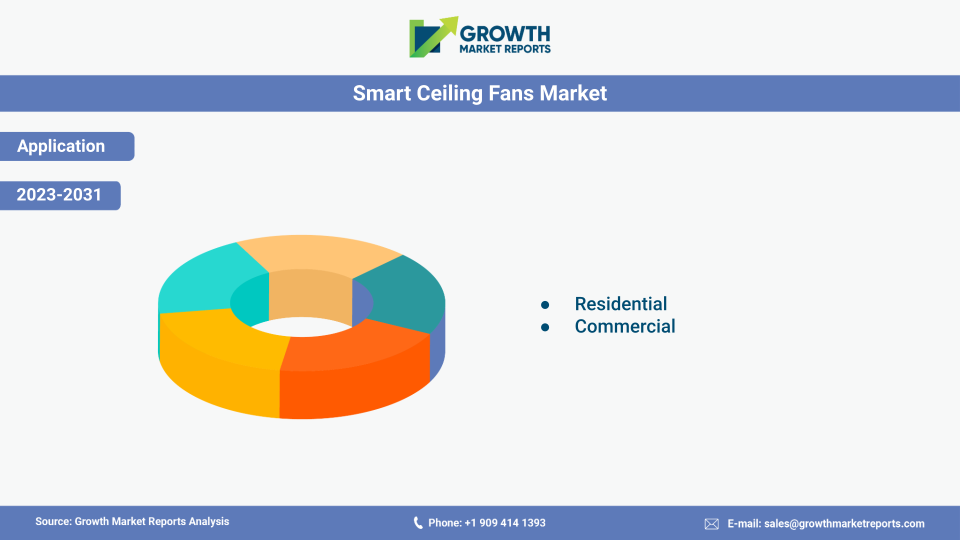
The application segment of the smart ceiling fans market is categorized into residential, commercial, industrial, and others. The residential segment accounts for the largest share of the market, driven by the growing adoption of smart home technologies and increasing consumer demand for comfort, convenience, and energy efficiency. Smart ceiling fans are becoming an integral part of modern homes, offering features such as remote operation, scheduling, and integration with other smart devices. The rising trend of home automation, coupled with the growing awareness of energy conservation, is expected to sustain strong growth in the residential segment over the forecast period.
The commercial segment is witnessing significant growth as businesses and organizations increasingly invest in smart building solutions to enhance energy efficiency, occupant comfort, and operational efficiency. Smart ceiling fans are being deployed in offices, retail stores, hotels, and educational institutions, where they provide automated climate control, reduce energy consumption, and contribute to green building certifications. The integration of smart ceiling fans with building management systems allows for centralized control and monitoring, enabling facility managers to optimize energy usage and reduce operational costs. As sustainability becomes a key focus in the commercial sector, the adoption of smart ceiling fans is expected to accelerate.
The industrial segment, while representing a smaller share of the market, is experiencing steady growth as manufacturing facilities, warehouses, and other industrial environments seek to improve ventilation, reduce energy consumption, and enhance worker comfort. Smart ceiling fans designed for industrial applications are typically larger, more durable, and equipped with advanced features such as automated speed adjustment based on temperature and occupancy. The ability to integrate these fans with industrial automation systems and IoT platforms is driving their adoption in large-scale facilities. As industrial operators continue to prioritize energy efficiency and workplace safety, the demand for smart ceiling fans in this segment is expected to increase.
The "others" category includes specialized applications such as hospitality, healthcare, and public infrastructure. In the hospitality sector, smart ceiling fans are being used to create personalized guest experiences and improve energy management in hotels and resorts. In healthcare facilities, these fans contribute to maintaining optimal indoor air quality and comfort for patients and staff. Public infrastructure projects, such as airports and transportation hubs, are also adopting smart ceiling fans to enhance passenger comfort and reduce energy costs. As the benefits of smart ceiling fans become more widely recognized across diverse applications, the "others" segment is expected to play an increasingly important role in the overall market.
The smart ceiling fans market is segmented by distribution channel into online and offline channels. Online distribution has witnessed exponential growth in recent years, driven by the increasing popularity of e-commerce platforms and the convenience of online shopping. Consumers are increasingly turning to online channels to research, compare, and purchase smart ceiling fans, benefiting from a wide selection, competitive pricing, and doorstep delivery. E-commerce giants and specialized online retailers are offering detailed product information, customer reviews, and virtual demonstrations, making it easier for consumers to make informed purchasing decisions. The COVID-19 pandemic further accelerated the shift towards online shopping, and this trend is expected to continue as digital literacy and internet penetration increase globally.
Offline distribution channels, including brick-and-mortar stores, specialty retailers, and home improvement centers, continue to play a vital role in the smart ceiling fans market. Many consumers prefer to physically inspect products before making a purchase, particularly for higher-value items such as ceiling fans. Offline channels offer the advantage of personalized customer service, expert advice, and immediate product availability. Retailers are enhancing the in-store experience by offering interactive displays, live demonstrations, and after-sales support. In emerging markets, where online infrastructure may be less developed, offline channels remain the primary means of product distribution. As consumer preferences evolve, the integration of omni-channel strategies is becoming increasingly important for manufacturers and retailers.
The growing trend of direct-to-consumer (DTC) sales is also influencing the distribution landscape for smart ceiling fans. Many manufacturers are launching their own online stores and leveraging digital marketing to reach consumers directly, bypassing traditional retail channels. This approach allows brands to build stronger relationships with customers, gather valuable feedback, and offer exclusive products or promotions. DTC sales are particularly popular among tech-savvy consumers who value convenience and are willing to engage with brands online. As the smart ceiling fans market becomes more competitive, the ability to offer a seamless and personalized shopping experience across multiple channels will be a key differentiator for market players.
Hybrid distribution models, which combine online and offline elements, are gaining popularity as manufacturers and retailers seek to provide a holistic customer experience. For example, consumers may research products online and then visit a physical store to make a purchase, or vice versa. Click-and-collect services, where customers order online and pick up their products at a local store, are also becoming more common. These hybrid models cater to the diverse preferences of consumers and help bridge the gap between digital and physical retail. As the smart ceiling fans market continues to evolve, the adoption of flexible and customer-centric distribution strategies will be essential for sustained growth and competitiveness.
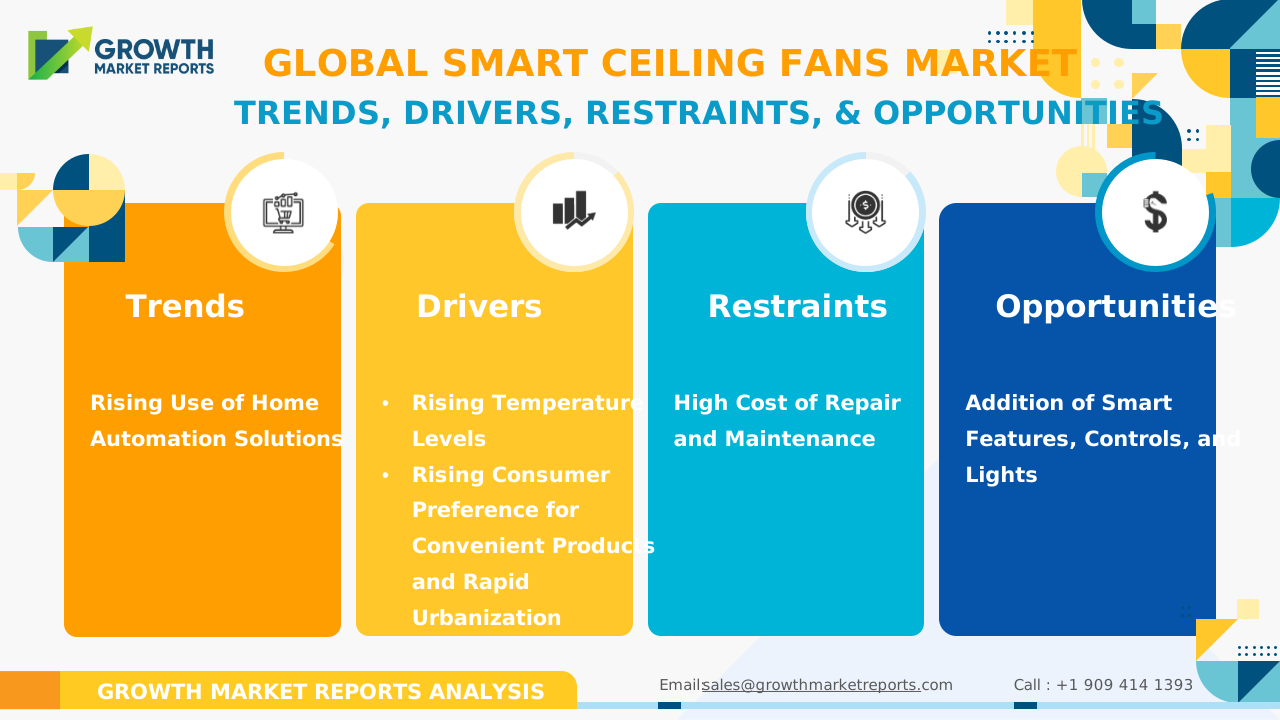
The smart ceiling fans market presents a wealth of opportunities for manufacturers, retailers, and technology providers. One of the most significant opportunities lies in the ongoing digital transformation of homes and buildings, as consumers and businesses increasingly seek to enhance comfort, convenience, and energy efficiency through smart technologies. The integration of artificial intelligence, machine learning, and advanced sensor technologies into smart ceiling fans offers the potential to deliver highly personalized and automated experiences, driving greater adoption across residential, commercial, and industrial sectors. Furthermore, the growing emphasis on sustainability and green building practices is creating demand for energy-efficient solutions, positioning smart ceiling fans as a key component of eco-friendly living and working environments.
Another major opportunity for market players is the expansion into emerging markets, where rapid urbanization, rising disposable incomes, and increasing digital literacy are fueling demand for smart home products. Countries in Asia Pacific, Latin America, and the Middle East & Africa represent untapped potential, as consumers in these regions become more aware of the benefits of smart ceiling fans and seek to upgrade their living and working spaces. Strategic partnerships with local distributors, investments in localized product development, and targeted marketing campaigns can help manufacturers capture market share in these high-growth regions. Additionally, the development of innovative business models, such as subscription-based services and bundled smart home packages, can further enhance market penetration and customer loyalty.
Despite the numerous opportunities, the smart ceiling fans market also faces certain restrainers and threats that could impact its growth trajectory. One of the primary challenges is the high initial cost of smart ceiling fans compared to traditional models, which may deter price-sensitive consumers, particularly in developing markets. Additionally, concerns related to data privacy and cybersecurity remain significant, as smart ceiling fans are increasingly connected to home networks and collect user data. Manufacturers must invest in robust security measures and transparent data practices to address these concerns and build consumer trust. Furthermore, the rapid pace of technological change and the emergence of competing smart home solutions may pose a threat to market stability, requiring continuous innovation and adaptation by market players.
The Asia Pacific region is poised to lead the global smart ceiling fans market, with a market size of approximately USD 800 million in 2024. This region is projected to grow at a CAGR of 12.1% through 2033, driven by rapid urbanization, rising middle-class incomes, and increasing adoption of smart home technologies in countries such as China, India, and Japan. Government initiatives promoting energy efficiency and the expansion of organized retail networks are further supporting market growth. The presence of leading manufacturers and the availability of affordable smart ceiling fan options are contributing to the region's dominance in the global market. As digital infrastructure continues to improve, Asia Pacific is expected to remain the fastest-growing and most dynamic market for smart ceiling fans.
North America holds a significant share of the smart ceiling fans market, with a market size of around USD 600 million in 2024. The region's growth is fueled by high consumer awareness, strong technological infrastructure, and a growing emphasis on energy conservation and home automation. The United States and Canada are at the forefront of smart home adoption, with consumers increasingly seeking integrated solutions that enhance comfort and convenience. The presence of major technology companies and a well-established e-commerce ecosystem further support market expansion. As regulatory standards for energy efficiency become more stringent, the demand for smart ceiling fans in North America is expected to continue its upward trajectory.
Europe is another key market for smart ceiling fans, with a market size of approximately USD 450 million in 2024. The region benefits from a strong focus on sustainability, energy efficiency, and smart building technologies. Countries such as Germany, the United Kingdom, and France are witnessing increasing adoption of smart ceiling fans in both residential and commercial applications. The European Union's commitment to reducing carbon emissions and promoting green building practices is driving demand for energy-efficient solutions. Latin America and the Middle East & Africa, while currently representing smaller market shares, are experiencing steady growth as digital infrastructure improves and consumer awareness of smart home technologies increases. Together, these regions are expected to contribute to the overall expansion of the global smart ceiling fans market, with combined market sizes well aligned with the global total.
The global smart ceiling fans market is characterized by intense competition, with a diverse mix of established players and emerging entrants vying for market share. Leading companies are focusing on product innovation, technological advancements, and strategic partnerships to differentiate their offerings and capture new customer segments. The competitive landscape is further shaped by the rapid pace of technological change, evolving consumer preferences, and the increasing integration of smart ceiling fans with broader home automation ecosystems. Companies are investing heavily in research and development to introduce new features, enhance energy efficiency, and improve user interfaces, ensuring that their products remain at the forefront of industry trends.
In addition to product innovation, market players are leveraging strategic collaborations and alliances to expand their distribution networks and strengthen their market presence. Partnerships with technology providers, e-commerce platforms, and home automation companies are enabling manufacturers to offer integrated solutions that meet the diverse needs of consumers. Mergers and acquisitions are also common, as companies seek to enhance their product portfolios, access new markets, and achieve economies of scale. The ability to offer a comprehensive range of products, from standard to decorative and energy-efficient models, is becoming increasingly important for maintaining a competitive edge in the market.
The competitive landscape is further influenced by the growing importance of customer experience and brand loyalty. Companies are investing in marketing campaigns, customer support services, and after-sales programs to build strong relationships with consumers and enhance brand reputation. The rise of direct-to-consumer sales channels is enabling manufacturers to engage more directly with customers, gather valuable feedback, and offer personalized products and services. As competition intensifies, the ability to deliver superior value, reliability, and customer satisfaction will be critical for long-term success in the smart ceiling fans market.
Some of the major companies operating in the global smart ceiling fans market include Hunter Fan Company, Haiku Home (Big Ass Fans), Orient Electric, Havells India Ltd., Crompton Greaves Consumer Electricals Ltd., Minka Group, Fanimation, Panasonic Corporation, Westinghouse Electric Corporation, and Atomberg Technologies. Hunter Fan Company is renowned for its innovative designs and extensive product portfolio, catering to both residential and commercial customers. Haiku Home (Big Ass Fans) is a leader in premium smart ceiling fans, known for its cutting-edge technology and energy-efficient solutions. Orient Electric and Havells India Ltd. are prominent players in the Asia Pacific region, offering a wide range of smart ceiling fans tailored to local preferences and requirements.
Crompton Greaves Consumer Electricals Ltd. and Atomberg Technologies are recognized for their focus on energy efficiency and advanced motor technologies, addressing the growing demand for sustainable solutions. Minka Group and Fanimation are known for their decorative and designer smart ceiling fans, targeting consumers who prioritize aesthetics and customization. Panasonic Corporation and Westinghouse Electric Corporation have a strong presence in both the residential and commercial segments, leveraging their global distribution networks and technological expertise. These companies are continuously investing in research and development, expanding their product offerings, and exploring new market opportunities to maintain their competitive positions in the rapidly evolving smart ceiling fans market.
The Smart Ceiling Fans market has been segmented on the basis of
The competitive landscape of the global smart ceiling fans market report provides key insights into the growth strategies and development initiatives implemented by the key players in the market.
Key players competing in the global smart ceiling fans market are LG Electronics.; Orient Electric; Ottomate Smart Fans.; Minka Lighting Inc.; Modern Forms.; Fanimation.; OCECO; Havells India Ltd.; CG Power & Industrial Solutions Ltd.; Honeywell International Inc.; Hunter Fan Company; Panasonic Holdings Corporation; Westinghouse Electric Corporation.; Craftmade; Emerson Electric Co.; and Insteon.
Some of these major companies adopted various business development strategies including mergers, acquisitions, partnerships, collaboration, product launches, and production capacity expansion to expand their consumer base and enhance their market share.
On March 10, 2022, Havells India Limited, a leading company in Fast Moving Electrical Goods (FMEG) revealed its revolutionary range of energy-efficient ECOACTIV fans. The company launched 19 new models under the ceiling, pedestal, wall, and ventilator fan categories for the summer season. These new ranges of technologically advanced fans come equipped with ECOACTIV super-efficient BLDC and induction motor.
On February 23, 2021, Orient Electric Limited, part of the diversified USD 2.4 billion CK Birla Group, announced the expansion of its premium fans portfolio with the addition of IoT-enabled and 50% energy-saving inverter fans. The company currently is one of the largest manufacturers of premium fans and is eyeing an even bigger share on the back of the ever-growing demand for high-end products, thus contributing to the growth of the smart ceiling fans market.
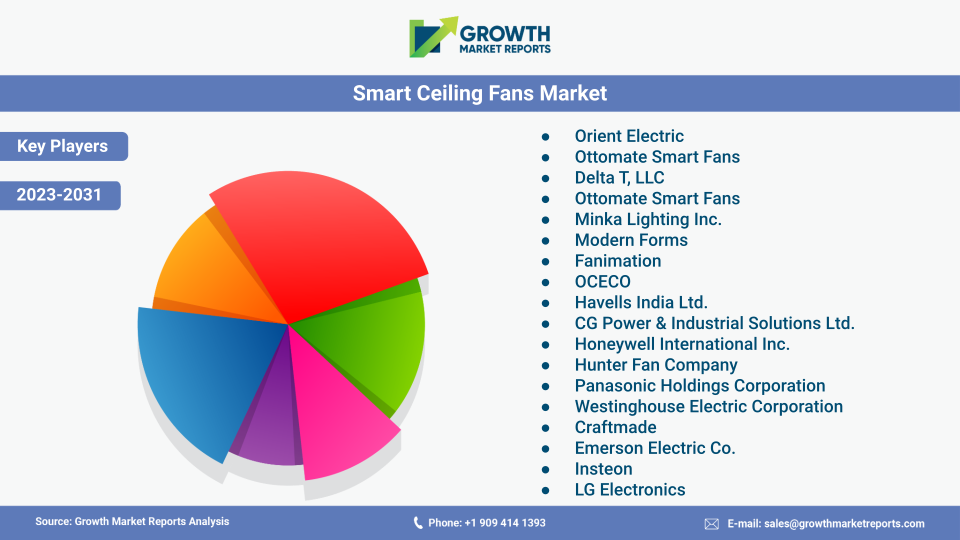
Some of the key global smart ceiling fans market players are Orient Electric; Delta T, LLC; Ottomate Smart Fans; Minka Lighting Inc.; Modern Forms; Fanimation; OCECO; Havells India Ltd.; CG Power & Industrial Solutions Ltd.; Honeywell International Inc.; Hunter Fan Company; and Panasonic Holdings Corporation.
For regional analysis, Asia Pacific dominates the smart ceiling fan market.
The market growth is attributed to the changing lifestyle, rising income levels, and increasing adoption of smart home automation solutions.
The offline segment accounted for a market share of more than 85% of global revenue in 2021 and is projected to continue expanding at a significant growth rate during the forecast period.
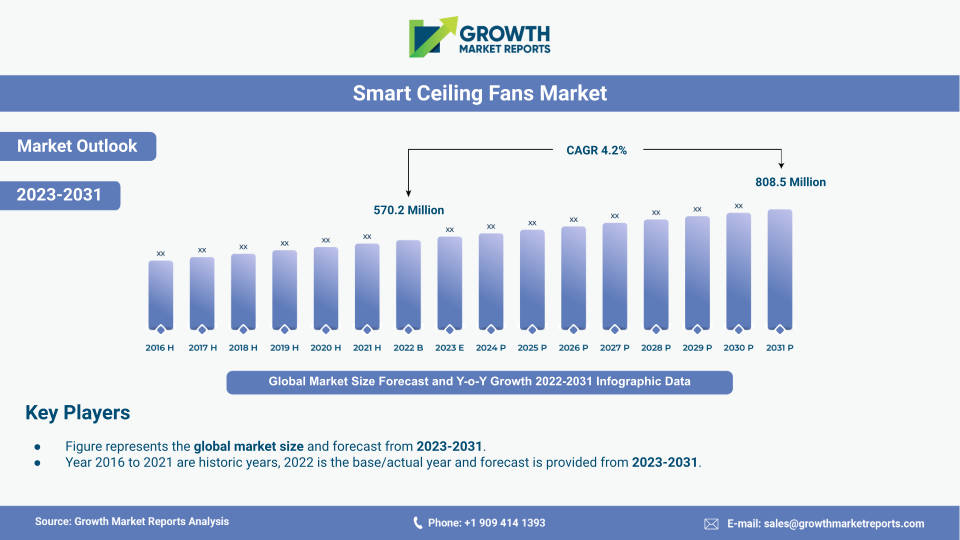
The global smart ceiling fans market size was USD 570.2 Mn in 2021 and is likely to reach USD 808.5 Mn by 2030, expanding at a CAGR of 4.2% during 2022–2030.