Single Photon Emission Computed Tomography (SPECT) Market Research Report 2033

Single Photon Emission Computed Tomography (SPECT) Market Research Report 2033

Segments - by Product Type (Standalone SPECT Systems, Hybrid SPECT Systems), by Application (Oncology, Cardiology, Neurology, Others), by End-User (Hospitals, Diagnostic Imaging Centers, Research Institutes, Others)

https://growthmarketreports.com/raksha
Author : Raksha Sharma
https://growthmarketreports.com/Vaibhav
Fact-checked by : V. Chandola
https://growthmarketreports.com/Shruti
Editor : Shruti Bhat

Upcoming | Report ID :HC-1049 | 4.4 Rating | 81 Reviews | 276 Pages | Format : Docx PDF

Report Description


Single Photon Emission Computed Tomography (SPECT) Market Outlook

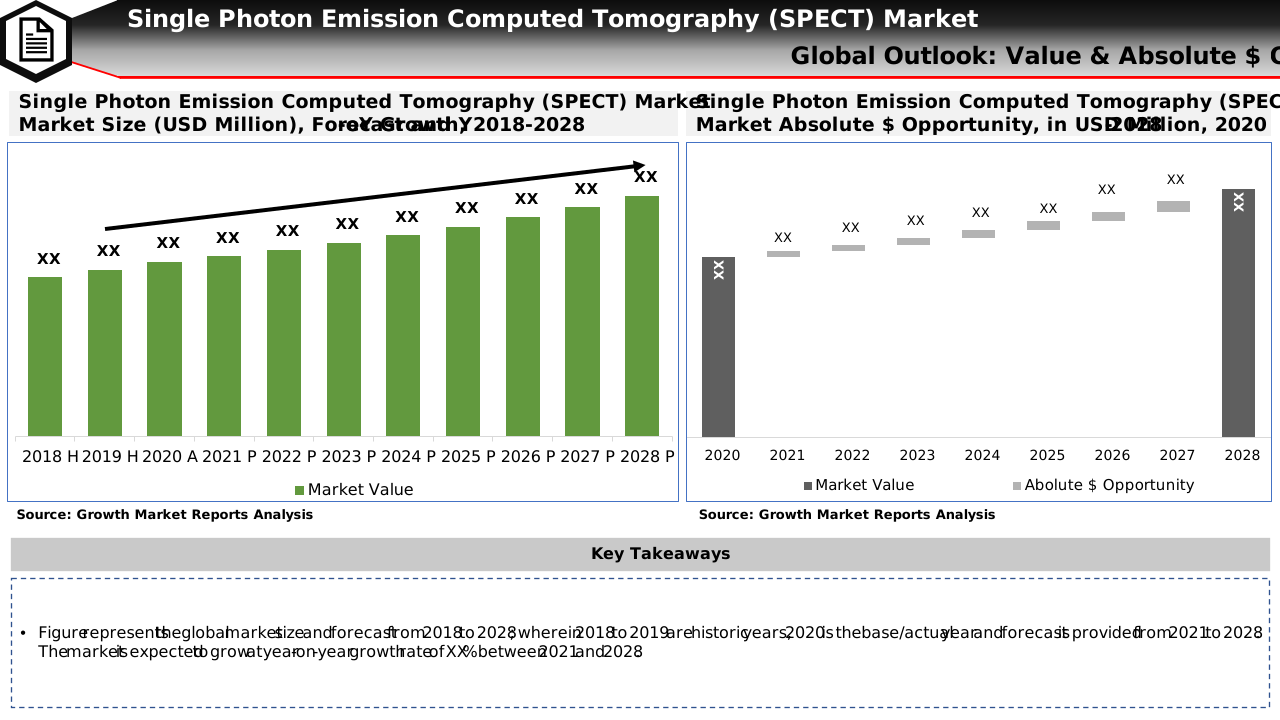
As per our latest research, the global Single Photon Emission Computed Tomography (SPECT) market size reached USD 2.56 billion in 2024, reflecting robust demand for advanced nuclear imaging technologies. The market is projected to expand at a CAGR of 6.8% during the forecast period, reaching an estimated USD 4.69 billion by 2033. Growth in this market is primarily driven by increasing prevalence of chronic diseases, rapid technological advancements, and a growing emphasis on early and accurate diagnosis in healthcare systems worldwide.

The upward trajectory of the SPECT market is fundamentally anchored in the rising incidence of cardiovascular, oncological, and neurological disorders globally. With aging populations and lifestyle-related risk factors contributing to higher rates of these diseases, healthcare providers are increasingly adopting advanced diagnostic modalities such as SPECT to facilitate early detection and effective disease management. SPECT imaging offers unique benefits, including the ability to visualize functional information about organs and tissues, which is critical for accurate diagnosis and treatment planning. This has led to heightened investments in nuclear medicine infrastructure and a steady increase in the number of SPECT procedures performed annually, particularly in developed healthcare markets.

Another significant growth factor for the Single Photon Emission Computed Tomography (SPECT) market is the ongoing wave of technological innovation. The integration of SPECT with computed tomography (CT) to develop hybrid systems has revolutionized diagnostic imaging by providing both anatomical and functional insights in a single scan. These hybrid SPECT/CT systems are gaining traction due to their superior diagnostic accuracy, reduced scan times, and improved patient outcomes. Furthermore, manufacturers are focusing on enhancing the sensitivity, resolution, and user-friendliness of SPECT systems, which is encouraging broader adoption across hospitals, diagnostic imaging centers, and research institutes. The growing use of artificial intelligence and machine learning algorithms to improve image reconstruction and interpretation is also expected to accelerate market expansion in the coming years.

Government initiatives and reimbursement policies are playing a pivotal role in shaping the SPECT market landscape. In many regions, public and private healthcare systems are increasingly recognizing the value of nuclear imaging for population health management and are allocating resources to upgrade imaging infrastructure. Favorable reimbursement frameworks for SPECT procedures, particularly in North America and Europe, are making these advanced diagnostics more accessible to patients. Additionally, collaborations between academic institutions, research organizations, and industry players are fostering innovation and facilitating the development of next-generation SPECT technologies. These concerted efforts are not only expanding the market but also ensuring that SPECT imaging remains at the forefront of precision medicine.

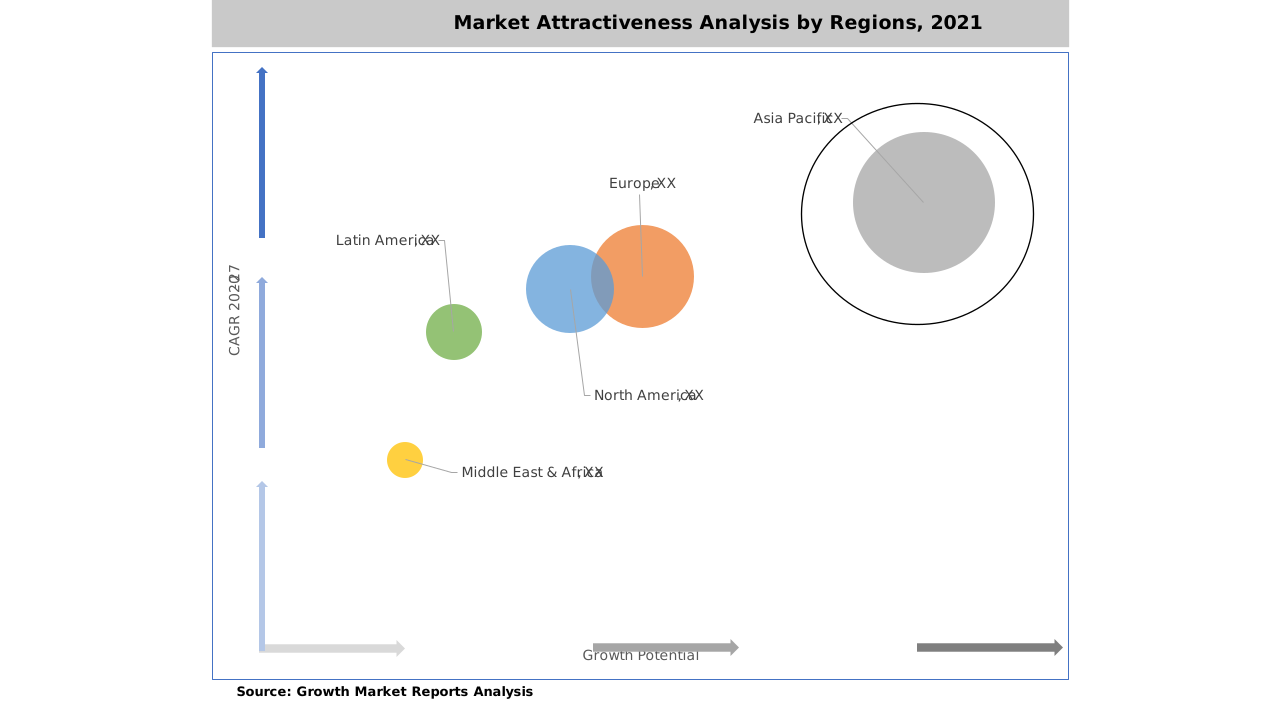
Regionally, the market is witnessing robust growth in North America and Europe, driven by high healthcare spending, technological advancements, and a strong focus on research and development. However, the Asia Pacific region is emerging as a significant growth engine, fueled by rising healthcare investments, expanding medical tourism, and increasing awareness about the benefits of early disease detection. Countries such as China, India, and Japan are witnessing rapid adoption of SPECT systems, supported by government initiatives to modernize healthcare infrastructure. As a result, the global SPECT market is poised for sustained growth, with regional dynamics playing a critical role in shaping its future trajectory.

Global Single Photon Emission Computed Tomography (SPECT) Industry Outlook

Product Type Analysis

The Single Photon Emission Computed Tomography (SPECT) market is broadly segmented by product type into Standalone SPECT Systems and Hybrid SPECT Systems. Standalone SPECT systems have traditionally been the backbone of nuclear imaging, offering reliable and cost-effective solutions for functional imaging across various clinical applications. These systems continue to find widespread use in smaller healthcare facilities and emerging markets, where budget constraints and limited access to advanced imaging infrastructure prevail. Standalone systems are valued for their simplicity, ease of use, and lower maintenance requirements, making them an attractive option for routine diagnostic procedures in cardiology, oncology, and neurology.

However, the market landscape is rapidly shifting in favor of Hybrid SPECT Systems, which integrate SPECT with computed tomography (CT) technology to provide both functional and anatomical imaging in a single session. Hybrid SPECT/CT systems are gaining significant traction among hospitals and advanced diagnostic centers due to their superior diagnostic accuracy, ability to localize lesions more precisely, and potential to reduce the number of unnecessary invasive procedures. The growing clinical evidence supporting the use of hybrid systems in complex cases, such as oncology staging and cardiac perfusion imaging, is further driving their adoption. Manufacturers are continuously innovating to enhance the performance, image quality, and workflow efficiency of hybrid SPECT systems, making them the preferred choice for high-volume healthcare settings.

The technological evolution in hybrid SPECT/CT systems is characterized by the incorporation of advanced detectors, improved image reconstruction algorithms, and user-friendly interfaces. These advancements have not only improved the sensitivity and specificity of imaging but also reduced patient exposure to radiation and shortened scan times. The ability to perform quantitative analysis and three-dimensional imaging has expanded the clinical utility of SPECT/CT systems, enabling more personalized and precise treatment planning. As a result, the hybrid segment is expected to outpace standalone systems in terms of revenue growth, capturing a larger share of the global SPECT market during the forecast period.

Despite the growing dominance of hybrid systems, standalone SPECT systems are expected to maintain a steady presence, particularly in resource-limited settings and for routine applications where advanced anatomical imaging is not required. The cost-effectiveness and lower infrastructure requirements of standalone systems ensure their continued relevance, especially in emerging markets. However, as healthcare providers increasingly prioritize diagnostic accuracy and patient outcomes, the long-term trend is likely to favor hybrid systems, supported by ongoing technological advancements and expanding clinical indications.

Report Scope

Attributes Details
Report Title Single Photon Emission Computed Tomography (SPECT) Market Research Report 2033
By Product Type Standalone SPECT Systems, Hybrid SPECT Systems
By Application Oncology, Cardiology, Neurology, Others
By End-User Hospitals, Diagnostic Imaging Centers, Research Institutes, Others
Regions Covered North America, Europe, APAC, Latin America, MEA
Base Year 2024
Historic Data 2018-2023
Forecast Period 2025-2033
Number of Pages 276
Number of Tables & Figures 325
Customization Available Yes, the report can be customized as per your need.

Application Analysis

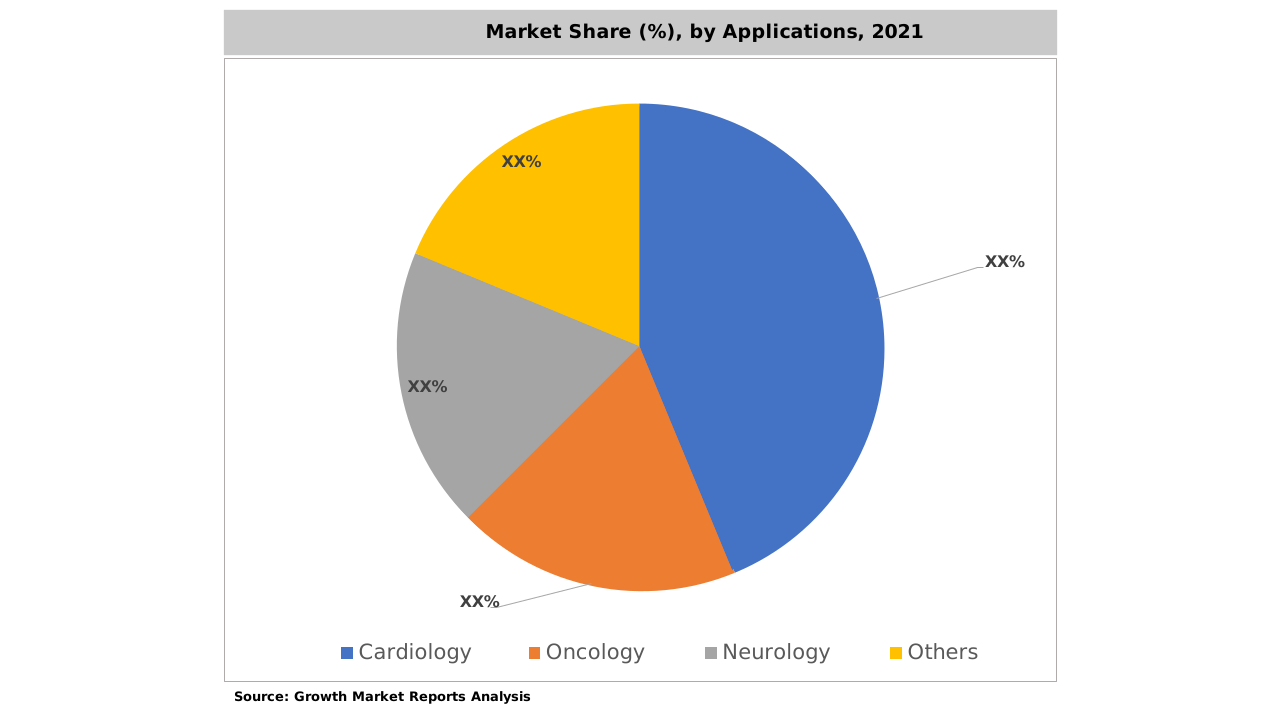
The SPECT market is segmented by application into Oncology, Cardiology, Neurology, and Others, reflecting the diverse clinical utility of this imaging modality. Oncology represents a major application area, driven by the rising global burden of cancer and the critical need for early detection, accurate staging, and treatment monitoring. SPECT imaging plays a vital role in identifying malignant lesions, assessing tumor metabolism, and evaluating the efficacy of therapeutic interventions. The ability to combine functional and anatomical information through hybrid SPECT/CT systems has significantly enhanced the precision of oncological imaging, leading to better patient outcomes and increased demand for SPECT procedures in cancer care.

Cardiology is another key application segment, accounting for a substantial share of the Single Photon Emission Computed Tomography (SPECT) market. SPECT imaging is widely used for myocardial perfusion studies, enabling clinicians to assess blood flow to the heart muscle, detect areas of ischemia, and evaluate the severity of coronary artery disease. The non-invasive nature of SPECT, coupled with its ability to provide quantitative data on cardiac function, makes it an indispensable tool in the management of patients with suspected or known cardiovascular conditions. Advances in SPECT technology, such as the development of high-sensitivity detectors and rapid imaging protocols, have further improved the accuracy and efficiency of cardiac imaging, driving adoption in both hospital and outpatient settings.

Neurology is an emerging application area for SPECT imaging, with growing recognition of its value in the diagnosis and management of neurological disorders such as epilepsy, Alzheimer’s disease, and Parkinson’s disease. SPECT enables functional brain imaging, allowing clinicians to visualize regional cerebral blood flow and identify abnormalities that may not be detectable with conventional anatomical imaging techniques. The increasing prevalence of neurodegenerative diseases, coupled with the need for early and accurate diagnosis, is fueling demand for SPECT procedures in neurology. Ongoing research into novel radiotracers and imaging protocols is expected to expand the clinical applications of SPECT in the neurological domain, creating new growth opportunities for market players.

The “Others” segment encompasses a range of additional clinical applications, including orthopedics, renal imaging, and infection/inflammation studies. The versatility of SPECT technology allows it to be adapted for various diagnostic purposes, contributing to its widespread adoption across multiple medical specialties. As the clinical evidence base for SPECT continues to grow, and as new radiopharmaceuticals are developed, the scope of applications is expected to broaden further, reinforcing the market’s long-term growth prospects.

End-User Analysis

The Single Photon Emission Computed Tomography (SPECT) market is categorized by end-user into Hospitals, Diagnostic Imaging Centers, Research Institutes, and Others. Hospitals represent the largest end-user segment, accounting for a significant share of the market due to their comprehensive healthcare services, high patient volumes, and greater access to advanced imaging infrastructure. The integration of SPECT systems into hospital radiology departments and nuclear medicine units enables seamless diagnostic workflows, supports multidisciplinary clinical decision-making, and enhances patient care. Hospitals are also at the forefront of adopting hybrid SPECT/CT systems, driven by the need for high-throughput imaging, complex case management, and participation in clinical research initiatives.

Diagnostic Imaging Centers constitute a rapidly growing end-user segment, reflecting the increasing trend toward outpatient imaging services and the decentralization of diagnostic care. These centers offer specialized imaging services, including SPECT, to a diverse patient population, often with shorter wait times and greater convenience compared to hospital-based facilities. The adoption of advanced SPECT systems by imaging centers is being driven by competitive pressures to offer high-quality, cost-effective diagnostic solutions, as well as by the growing demand for preventive health screenings and early disease detection. The proliferation of standalone and hybrid SPECT systems in these centers is contributing to the overall expansion of the market.

Research Institutes play a critical role in advancing the science and technology of SPECT imaging. These institutions are engaged in the development of new radiotracers, imaging protocols, and data analysis tools, as well as in the conduct of clinical trials to evaluate the efficacy of novel diagnostic and therapeutic approaches. The collaboration between research institutes, healthcare providers, and industry partners is driving innovation and facilitating the translation of scientific discoveries into clinical practice. The growing emphasis on personalized medicine and precision diagnostics is expected to further strengthen the role of research institutes in the SPECT market.

The “Others” segment includes a variety of healthcare facilities, such as specialty clinics, ambulatory surgical centers, and veterinary hospitals, that utilize SPECT imaging for specific diagnostic purposes. The versatility and adaptability of SPECT technology make it suitable for a wide range of clinical settings, supporting its continued adoption beyond traditional hospital and imaging center environments. As healthcare delivery models evolve and as the focus on patient-centered care intensifies, the demand for SPECT imaging across diverse end-user segments is expected to rise, contributing to the sustained growth of the global market.

Opportunities & Threats

The Single Photon Emission Computed Tomography (SPECT) market presents a wealth of opportunities for both existing players and new entrants. One of the most significant opportunities lies in the ongoing development and commercialization of novel radiopharmaceuticals. As research efforts intensify to discover new biomarkers and targeted agents for a variety of diseases, the clinical utility of SPECT imaging is expected to expand considerably. This will not only drive demand for SPECT systems but also create new revenue streams in the form of radiopharmaceutical sales and related services. Additionally, the integration of artificial intelligence (AI) and advanced data analytics into SPECT imaging platforms offers the potential to enhance image quality, automate interpretation, and improve diagnostic accuracy, thereby increasing the value proposition for healthcare providers and patients alike.

Another major opportunity for market growth is the rising healthcare investments in emerging economies, particularly in the Asia Pacific and Latin American regions. As governments and private sector stakeholders prioritize the modernization of healthcare infrastructure, there is a growing focus on expanding access to advanced diagnostic technologies such as SPECT. The increasing adoption of hybrid SPECT/CT systems in these regions, coupled with the rising prevalence of chronic diseases, is expected to create significant market opportunities. Moreover, the expansion of medical tourism and the growing emphasis on preventive healthcare are driving demand for state-of-the-art imaging solutions, positioning the SPECT market for robust growth in these high-potential regions.

Despite the promising outlook, the SPECT market faces certain restraining factors that could impede its growth trajectory. One of the primary challenges is the high cost of advanced SPECT systems, particularly hybrid SPECT/CT platforms, which may limit adoption in resource-constrained settings. Additionally, the complexity of regulatory approval processes for new radiopharmaceuticals and imaging technologies can delay market entry and increase development costs. Reimbursement challenges and variations in healthcare policies across different regions also pose hurdles to market expansion. Addressing these barriers will require coordinated efforts from industry stakeholders, policymakers, and healthcare providers to ensure that the benefits of SPECT imaging are accessible to a broader patient population.

Regional Outlook

North America dominates the Single Photon Emission Computed Tomography (SPECT) market, accounting for approximately 38% of the global market share in 2024, with a market value of around USD 0.97 billion. The region’s leadership is underpinned by advanced healthcare infrastructure, high per capita healthcare spending, and a strong emphasis on early disease detection and precision medicine. The United States, in particular, is a major contributor to regional growth, driven by a large installed base of SPECT systems, favorable reimbursement policies, and ongoing investments in research and development. The presence of leading market players and academic institutions further supports innovation and adoption of next-generation SPECT technologies.

Europe is the second-largest regional market, representing an estimated 27% share of the global SPECT market in 2024, valued at approximately USD 0.69 billion. The region benefits from well-established healthcare systems, extensive coverage of nuclear medicine procedures, and strong regulatory frameworks that support the adoption of advanced imaging modalities. Countries such as Germany, the United Kingdom, and France are at the forefront of SPECT utilization, driven by high disease prevalence, robust government support, and active participation in clinical research. The European market is expected to grow at a steady CAGR of 6.2% during the forecast period, supported by ongoing investments in healthcare modernization and cross-border collaborations in medical research.

The Asia Pacific region is emerging as the fastest-growing market for SPECT, with a projected CAGR of 8.1% from 2025 to 2033. The regional market size reached approximately USD 0.62 billion in 2024, accounting for nearly 24% of the global market. Growth in Asia Pacific is driven by rising healthcare expenditures, expanding access to diagnostic services, and increasing awareness of the benefits of early disease detection. Major economies such as China, India, and Japan are witnessing rapid adoption of SPECT systems, supported by government initiatives to upgrade healthcare infrastructure and promote medical innovation. The region’s large population base and growing burden of chronic diseases present significant opportunities for market expansion, positioning Asia Pacific as a key growth engine for the global SPECT market in the coming years.

Single Photon Emission Computed Tomography (SPECT) Market Statistics

Competitor Outlook

The Single Photon Emission Computed Tomography (SPECT) market is characterized by a dynamic and competitive landscape, with a mix of established multinational corporations and emerging players driving innovation and market expansion. Competition is primarily based on technological advancements, product quality, clinical efficacy, and after-sales service. Leading companies are investing heavily in research and development to enhance the performance, accuracy, and user-friendliness of their SPECT systems, with a particular focus on hybrid SPECT/CT platforms. Strategic collaborations, mergers and acquisitions, and partnerships with academic institutions are common strategies employed to strengthen market position and expand product portfolios.

The market is witnessing a trend towards the integration of artificial intelligence and advanced data analytics into SPECT imaging workflows. Companies are developing AI-powered solutions to automate image reconstruction, improve diagnostic accuracy, and streamline clinical workflows. This focus on digital transformation is enabling market leaders to differentiate their offerings and deliver greater value to healthcare providers and patients. Additionally, efforts to develop cost-effective and scalable SPECT solutions for emerging markets are gaining momentum, as manufacturers seek to tap into high-growth regions and address unmet clinical needs.

Regulatory compliance and quality assurance are critical factors influencing competitive dynamics in the SPECT market. Companies must navigate complex regulatory environments to obtain approvals for new products and radiopharmaceuticals, which requires significant investment in clinical trials and documentation. The ability to demonstrate clinical efficacy, safety, and cost-effectiveness is essential for gaining market acceptance and securing reimbursement from healthcare payers. As the market continues to evolve, companies that can successfully balance innovation with regulatory compliance and customer support are likely to maintain a competitive edge.

Major players in the global Single Photon Emission Computed Tomography (SPECT) market include GE Healthcare, Siemens Healthineers, Philips Healthcare, Canon Medical Systems Corporation, and Digirad Corporation. GE Healthcare is recognized for its comprehensive portfolio of SPECT and hybrid SPECT/CT systems, as well as its focus on digital solutions and AI integration. Siemens Healthineers is a leader in hybrid imaging, offering advanced SPECT/CT platforms with high-resolution detectors and user-friendly interfaces. Philips Healthcare is known for its innovative imaging technologies and emphasis on workflow optimization and patient comfort. Canon Medical Systems Corporation has a strong presence in Asia and is expanding its global footprint through strategic partnerships and product launches. Digirad Corporation specializes in mobile and portable SPECT systems, catering to niche markets and outpatient care settings.

These companies are continuously expanding their product offerings and investing in research to maintain their leadership positions. For example, GE Healthcare and Siemens Healthineers have launched next-generation SPECT/CT systems with enhanced imaging capabilities and integrated AI tools to support clinical decision-making. Philips Healthcare is focusing on developing scalable and modular solutions to meet the needs of diverse healthcare settings. Canon Medical Systems is leveraging its expertise in medical imaging to introduce innovative SPECT technologies tailored for the Asia Pacific market. Digirad Corporation is targeting the growing demand for point-of-care and ambulatory imaging solutions, offering flexible and cost-effective SPECT systems for smaller healthcare facilities.

In summary, the Single Photon Emission Computed Tomography (SPECT) market is poised for sustained growth, driven by technological innovation, expanding clinical applications, and increasing demand for advanced diagnostic imaging. The competitive landscape is marked by continuous product development, strategic collaborations, and a focus on delivering high-quality, patient-centered solutions. As the market evolves, companies that can effectively address the diverse needs of healthcare providers and adapt to changing regulatory and reimbursement environments will be well-positioned for long-term success.

Key Players

  • GE Healthcare
  • Siemens Healthineers
  • Philips Healthcare
  • Canon Medical Systems Corporation
  • Digirad Corporation
  • Spectrum Dynamics Medical
  • Mediso Medical Imaging Systems
  • Bruker Corporation
  • MILabs B.V.
  • Neusoft Medical Systems
  • CZT SPECT Systems
  • DDD-Diagnostic A/S
  • CardiArc Ltd.
  • Sofie Biosciences
  • Positron Corporation
  • Cubresa Inc.
  • Shenzhen Anke High-tech Co., Ltd.
  • Beijing ADTech Technology Co., Ltd.
  • Shenzhen Basda Medical Apparatus Co., Ltd.
  • United Imaging Healthcare Co., Ltd.
Single Photon Emission Computed Tomography (SPECT) Market Overview

Segments

The Single Photon Emission Computed Tomography (SPECT) market has been segmented on the basis of

Product Type

  • Standalone SPECT Systems
  • Hybrid SPECT Systems

Application

  • Oncology
  • Cardiology
  • Neurology
  • Others

End-User

  • Hospitals
  • Diagnostic Imaging Centers
  • Research Institutes
  • Others

Competitive Landscape

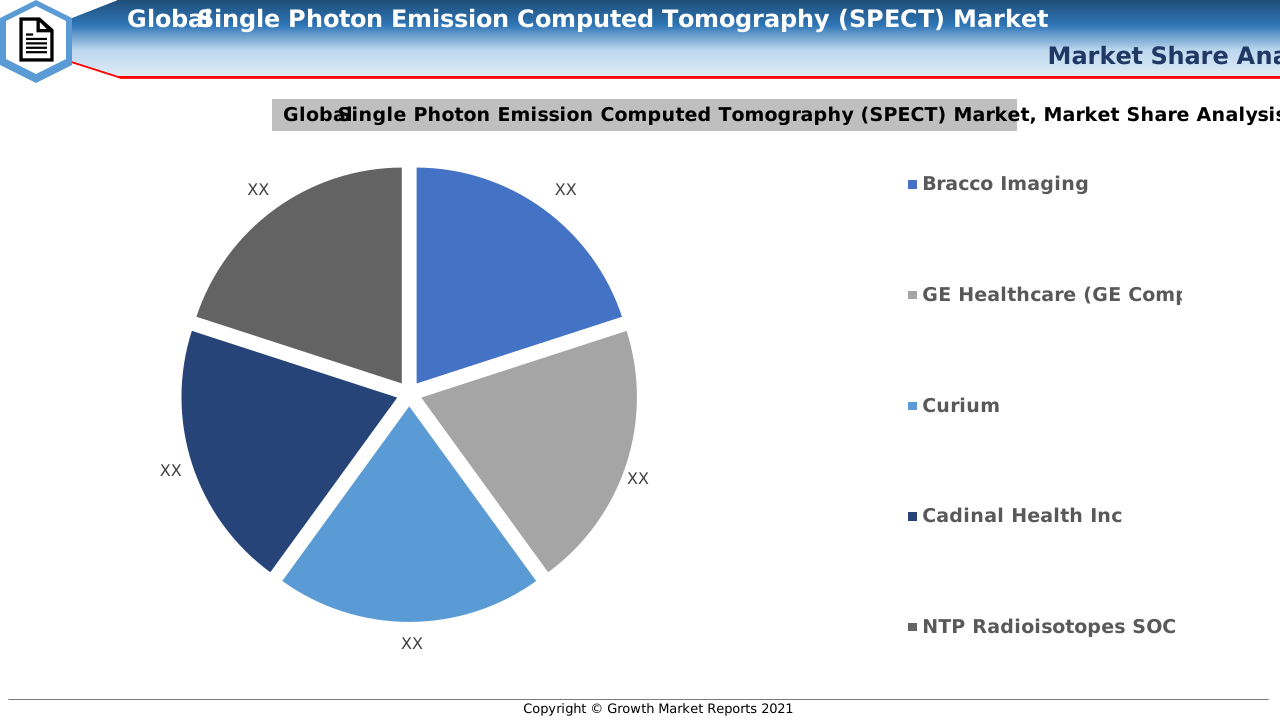
Key players competing in the Single Photon Emission Computed Tomography (SPECT) market include Bracco Imaging, GE Healthcare (GE Company), Curium, Cadinal Health Inc, and NTP Radioisotopes SOC Ltd.
 

Single Photon Emission Computed Tomography (SPECT) Market Share

Frequently Asked Questions

AI and machine learning are being integrated into SPECT imaging to enhance image reconstruction, automate interpretation, improve diagnostic accuracy, and streamline clinical workflows, driving further market expansion.

Key players include GE Healthcare, Siemens Healthineers, Philips Healthcare, Canon Medical Systems Corporation, Digirad Corporation, Spectrum Dynamics Medical, Mediso Medical Imaging Systems, and others.

North America leads the market, followed by Europe. The Asia Pacific region is the fastest-growing, driven by increasing healthcare investments, medical tourism, and government initiatives in countries like China, India, and Japan.

Opportunities include the development of novel radiopharmaceuticals, AI integration, and rising healthcare investments in emerging markets. Challenges include high equipment costs, regulatory hurdles, and reimbursement issues.

Primary end-users include hospitals, diagnostic imaging centers, research institutes, and specialty clinics. Hospitals account for the largest market share due to their comprehensive services and advanced imaging infrastructure.

Major applications include oncology (cancer detection and monitoring), cardiology (myocardial perfusion studies), neurology (functional brain imaging), and other areas such as orthopedics and renal imaging.

The SPECT market is segmented into Standalone SPECT Systems and Hybrid SPECT Systems. Hybrid SPECT/CT systems are gaining popularity due to their ability to provide both functional and anatomical imaging in a single scan.

Key growth drivers include the rising prevalence of chronic diseases, rapid technological advancements, increased emphasis on early diagnosis, and government initiatives to modernize healthcare infrastructure.

The global SPECT market reached USD 2.56 billion in 2024 and is expected to grow at a CAGR of 6.8%, reaching approximately USD 4.69 billion by 2033.

Single Photon Emission Computed Tomography (SPECT) is a nuclear imaging technique that provides functional information about organs and tissues, aiding in early and accurate diagnosis of various diseases such as cardiovascular, oncological, and neurological disorders.

Table Of Content

Chapter 1 Executive Summary
Chapter 2 Assumptions and Acronyms Used
Chapter 3 Research Methodology
Chapter 4 Single Photon Emission Computed Tomography (SPECT) Market Overview
   4.1 Introduction
      4.1.1 Market Taxonomy
      4.1.2 Market Definition
      4.1.3 Macro-Economic Factors Impacting the Market Growth
   4.2 Single Photon Emission Computed Tomography (SPECT) Market Dynamics
      4.2.1 Market Drivers
      4.2.2 Market Restraints
      4.2.3 Market Opportunity
   4.3 Single Photon Emission Computed Tomography (SPECT) Market - Supply Chain Analysis
      4.3.1 List of Key Suppliers
      4.3.2 List of Key Distributors
      4.3.3 List of Key Consumers
   4.4 Key Forces Shaping the Single Photon Emission Computed Tomography (SPECT) Market
      4.4.1 Bargaining Power of Suppliers
      4.4.2 Bargaining Power of Buyers
      4.4.3 Threat of Substitution
      4.4.4 Threat of New Entrants
      4.4.5 Competitive Rivalry
   4.5 Global Single Photon Emission Computed Tomography (SPECT) Market Size & Forecast, 2023-2032
      4.5.1 Single Photon Emission Computed Tomography (SPECT) Market Size and Y-o-Y Growth
      4.5.2 Single Photon Emission Computed Tomography (SPECT) Market Absolute $ Opportunity

Chapter 5 Global Single Photon Emission Computed Tomography (SPECT) Market Analysis and Forecast By Product Type
   5.1 Introduction
      5.1.1 Key Market Trends & Growth Opportunities By Product Type
      5.1.2 Basis Point Share (BPS) Analysis By Product Type
      5.1.3 Absolute $ Opportunity Assessment By Product Type
   5.2 Single Photon Emission Computed Tomography (SPECT) Market Size Forecast By Product Type
      5.2.1 Standalone SPECT Systems
      5.2.2 Hybrid SPECT Systems
   5.3 Market Attractiveness Analysis By Product Type

Chapter 6 Global Single Photon Emission Computed Tomography (SPECT) Market Analysis and Forecast By Application
   6.1 Introduction
      6.1.1 Key Market Trends & Growth Opportunities By Application
      6.1.2 Basis Point Share (BPS) Analysis By Application
      6.1.3 Absolute $ Opportunity Assessment By Application
   6.2 Single Photon Emission Computed Tomography (SPECT) Market Size Forecast By Application
      6.2.1 Oncology
      6.2.2 Cardiology
      6.2.3 Neurology
      6.2.4 Others
   6.3 Market Attractiveness Analysis By Application

Chapter 7 Global Single Photon Emission Computed Tomography (SPECT) Market Analysis and Forecast By End-User
   7.1 Introduction
      7.1.1 Key Market Trends & Growth Opportunities By End-User
      7.1.2 Basis Point Share (BPS) Analysis By End-User
      7.1.3 Absolute $ Opportunity Assessment By End-User
   7.2 Single Photon Emission Computed Tomography (SPECT) Market Size Forecast By End-User
      7.2.1 Hospitals
      7.2.2 Diagnostic Imaging Centers
      7.2.3 Research Institutes
      7.2.4 Others
   7.3 Market Attractiveness Analysis By End-User

Chapter 8 Global Single Photon Emission Computed Tomography (SPECT) Market Analysis and Forecast by Region
   8.1 Introduction
      8.1.1 Key Market Trends & Growth Opportunities By Region
      8.1.2 Basis Point Share (BPS) Analysis By Region
      8.1.3 Absolute $ Opportunity Assessment By Region
   8.2 Single Photon Emission Computed Tomography (SPECT) Market Size Forecast By Region
      8.2.1 North America
      8.2.2 Europe
      8.2.3 Asia Pacific
      8.2.4 Latin America
      8.2.5 Middle East & Africa (MEA)
   8.3 Market Attractiveness Analysis By Region

Chapter 9 Coronavirus Disease (COVID-19) Impact 
   9.1 Introduction 
   9.2 Current & Future Impact Analysis 
   9.3 Economic Impact Analysis 
   9.4 Government Policies 
   9.5 Investment Scenario

Chapter 10 North America Single Photon Emission Computed Tomography (SPECT) Analysis and Forecast
   10.1 Introduction
   10.2 North America Single Photon Emission Computed Tomography (SPECT) Market Size Forecast by Country
      10.2.1 U.S.
      10.2.2 Canada
   10.3 Basis Point Share (BPS) Analysis by Country
   10.4 Absolute $ Opportunity Assessment by Country
   10.5 Market Attractiveness Analysis by Country
   10.6 North America Single Photon Emission Computed Tomography (SPECT) Market Size Forecast By Product Type
      10.6.1 Standalone SPECT Systems
      10.6.2 Hybrid SPECT Systems
   10.7 Basis Point Share (BPS) Analysis By Product Type 
   10.8 Absolute $ Opportunity Assessment By Product Type 
   10.9 Market Attractiveness Analysis By Product Type
   10.10 North America Single Photon Emission Computed Tomography (SPECT) Market Size Forecast By Application
      10.10.1 Oncology
      10.10.2 Cardiology
      10.10.3 Neurology
      10.10.4 Others
   10.11 Basis Point Share (BPS) Analysis By Application 
   10.12 Absolute $ Opportunity Assessment By Application 
   10.13 Market Attractiveness Analysis By Application
   10.14 North America Single Photon Emission Computed Tomography (SPECT) Market Size Forecast By End-User
      10.14.1 Hospitals
      10.14.2 Diagnostic Imaging Centers
      10.14.3 Research Institutes
      10.14.4 Others
   10.15 Basis Point Share (BPS) Analysis By End-User 
   10.16 Absolute $ Opportunity Assessment By End-User 
   10.17 Market Attractiveness Analysis By End-User

Chapter 11 Europe Single Photon Emission Computed Tomography (SPECT) Analysis and Forecast
   11.1 Introduction
   11.2 Europe Single Photon Emission Computed Tomography (SPECT) Market Size Forecast by Country
      11.2.1 Germany
      11.2.2 France
      11.2.3 Italy
      11.2.4 U.K.
      11.2.5 Spain
      11.2.6 Russia
      11.2.7 Rest of Europe
   11.3 Basis Point Share (BPS) Analysis by Country
   11.4 Absolute $ Opportunity Assessment by Country
   11.5 Market Attractiveness Analysis by Country
   11.6 Europe Single Photon Emission Computed Tomography (SPECT) Market Size Forecast By Product Type
      11.6.1 Standalone SPECT Systems
      11.6.2 Hybrid SPECT Systems
   11.7 Basis Point Share (BPS) Analysis By Product Type 
   11.8 Absolute $ Opportunity Assessment By Product Type 
   11.9 Market Attractiveness Analysis By Product Type
   11.10 Europe Single Photon Emission Computed Tomography (SPECT) Market Size Forecast By Application
      11.10.1 Oncology
      11.10.2 Cardiology
      11.10.3 Neurology
      11.10.4 Others
   11.11 Basis Point Share (BPS) Analysis By Application 
   11.12 Absolute $ Opportunity Assessment By Application 
   11.13 Market Attractiveness Analysis By Application
   11.14 Europe Single Photon Emission Computed Tomography (SPECT) Market Size Forecast By End-User
      11.14.1 Hospitals
      11.14.2 Diagnostic Imaging Centers
      11.14.3 Research Institutes
      11.14.4 Others
   11.15 Basis Point Share (BPS) Analysis By End-User 
   11.16 Absolute $ Opportunity Assessment By End-User 
   11.17 Market Attractiveness Analysis By End-User

Chapter 12 Asia Pacific Single Photon Emission Computed Tomography (SPECT) Analysis and Forecast
   12.1 Introduction
   12.2 Asia Pacific Single Photon Emission Computed Tomography (SPECT) Market Size Forecast by Country
      12.2.1 China
      12.2.2 Japan
      12.2.3 South Korea
      12.2.4 India
      12.2.5 Australia
      12.2.6 South East Asia (SEA)
      12.2.7 Rest of Asia Pacific (APAC)
   12.3 Basis Point Share (BPS) Analysis by Country
   12.4 Absolute $ Opportunity Assessment by Country
   12.5 Market Attractiveness Analysis by Country
   12.6 Asia Pacific Single Photon Emission Computed Tomography (SPECT) Market Size Forecast By Product Type
      12.6.1 Standalone SPECT Systems
      12.6.2 Hybrid SPECT Systems
   12.7 Basis Point Share (BPS) Analysis By Product Type 
   12.8 Absolute $ Opportunity Assessment By Product Type 
   12.9 Market Attractiveness Analysis By Product Type
   12.10 Asia Pacific Single Photon Emission Computed Tomography (SPECT) Market Size Forecast By Application
      12.10.1 Oncology
      12.10.2 Cardiology
      12.10.3 Neurology
      12.10.4 Others
   12.11 Basis Point Share (BPS) Analysis By Application 
   12.12 Absolute $ Opportunity Assessment By Application 
   12.13 Market Attractiveness Analysis By Application
   12.14 Asia Pacific Single Photon Emission Computed Tomography (SPECT) Market Size Forecast By End-User
      12.14.1 Hospitals
      12.14.2 Diagnostic Imaging Centers
      12.14.3 Research Institutes
      12.14.4 Others
   12.15 Basis Point Share (BPS) Analysis By End-User 
   12.16 Absolute $ Opportunity Assessment By End-User 
   12.17 Market Attractiveness Analysis By End-User

Chapter 13 Latin America Single Photon Emission Computed Tomography (SPECT) Analysis and Forecast
   13.1 Introduction
   13.2 Latin America Single Photon Emission Computed Tomography (SPECT) Market Size Forecast by Country
      13.2.1 Brazil
      13.2.2 Mexico
      13.2.3 Rest of Latin America (LATAM)
   13.3 Basis Point Share (BPS) Analysis by Country
   13.4 Absolute $ Opportunity Assessment by Country
   13.5 Market Attractiveness Analysis by Country
   13.6 Latin America Single Photon Emission Computed Tomography (SPECT) Market Size Forecast By Product Type
      13.6.1 Standalone SPECT Systems
      13.6.2 Hybrid SPECT Systems
   13.7 Basis Point Share (BPS) Analysis By Product Type 
   13.8 Absolute $ Opportunity Assessment By Product Type 
   13.9 Market Attractiveness Analysis By Product Type
   13.10 Latin America Single Photon Emission Computed Tomography (SPECT) Market Size Forecast By Application
      13.10.1 Oncology
      13.10.2 Cardiology
      13.10.3 Neurology
      13.10.4 Others
   13.11 Basis Point Share (BPS) Analysis By Application 
   13.12 Absolute $ Opportunity Assessment By Application 
   13.13 Market Attractiveness Analysis By Application
   13.14 Latin America Single Photon Emission Computed Tomography (SPECT) Market Size Forecast By End-User
      13.14.1 Hospitals
      13.14.2 Diagnostic Imaging Centers
      13.14.3 Research Institutes
      13.14.4 Others
   13.15 Basis Point Share (BPS) Analysis By End-User 
   13.16 Absolute $ Opportunity Assessment By End-User 
   13.17 Market Attractiveness Analysis By End-User

Chapter 14 Middle East & Africa (MEA) Single Photon Emission Computed Tomography (SPECT) Analysis and Forecast
   14.1 Introduction
   14.2 Middle East & Africa (MEA) Single Photon Emission Computed Tomography (SPECT) Market Size Forecast by Country
      14.2.1 Saudi Arabia
      14.2.2 South Africa
      14.2.3 UAE
      14.2.4 Rest of Middle East & Africa (MEA)
   14.3 Basis Point Share (BPS) Analysis by Country
   14.4 Absolute $ Opportunity Assessment by Country
   14.5 Market Attractiveness Analysis by Country
   14.6 Middle East & Africa (MEA) Single Photon Emission Computed Tomography (SPECT) Market Size Forecast By Product Type
      14.6.1 Standalone SPECT Systems
      14.6.2 Hybrid SPECT Systems
   14.7 Basis Point Share (BPS) Analysis By Product Type 
   14.8 Absolute $ Opportunity Assessment By Product Type 
   14.9 Market Attractiveness Analysis By Product Type
   14.10 Middle East & Africa (MEA) Single Photon Emission Computed Tomography (SPECT) Market Size Forecast By Application
      14.10.1 Oncology
      14.10.2 Cardiology
      14.10.3 Neurology
      14.10.4 Others
   14.11 Basis Point Share (BPS) Analysis By Application 
   14.12 Absolute $ Opportunity Assessment By Application 
   14.13 Market Attractiveness Analysis By Application
   14.14 Middle East & Africa (MEA) Single Photon Emission Computed Tomography (SPECT) Market Size Forecast By End-User
      14.14.1 Hospitals
      14.14.2 Diagnostic Imaging Centers
      14.14.3 Research Institutes
      14.14.4 Others
   14.15 Basis Point Share (BPS) Analysis By End-User 
   14.16 Absolute $ Opportunity Assessment By End-User 
   14.17 Market Attractiveness Analysis By End-User

Chapter 15 Competition Landscape 
   15.1 Single Photon Emission Computed Tomography (SPECT) Market: Competitive Dashboard
   15.2 Global Single Photon Emission Computed Tomography (SPECT) Market: Market Share Analysis, 2023
   15.3 Company Profiles (Details – Overview, Financials, Developments, Strategy) 
      15.3.1 GE Healthcare
Siemens Healthineers
Philips Healthcare
Canon Medical Systems Corporation
Digirad Corporation
Spectrum Dynamics Medical
Mediso Medical Imaging Systems
Bruker Corporation
MILabs B.V.
Neusoft Medical Systems
CZT SPECT Systems
DDD-Diagnostic A/S
CardiArc Ltd.
Sofie Biosciences
Positron Corporation
Cubresa Inc.
Shenzhen Anke High-tech Co., Ltd.
Beijing ADTech Technology Co., Ltd.
Shenzhen Basda Medical Apparatus Co., Ltd.
United Imaging Healthcare Co., Ltd.

Methodology

Our Clients

The John Holland Group
Pfizer
sinopec
Nestle SA
General Mills
Deloitte
Dassault Aviation
Honda Motor Co. Ltd.