Segments - by Product Type (Homofermentative, Heterofermentative, Combination), by Form (Dry, Liquid, Granular), by Crop Type (Corn, Alfalfa, Sorghum, Barley, Others), by Application (Cereal Crops, Legumes, Others), by End-User (Dairy Farms, Livestock Farms, Others), by Distribution Channel (Direct Sales, Indirect Sales)
According to our latest research, the global silage inoculant market size in 2024 is valued at approximately USD 593 million. The market is experiencing robust expansion, driven by the rising demand for high-quality animal feed and improved silage preservation practices. The market is projected to grow at a CAGR of 4.8% from 2025 to 2033, reaching an estimated value of USD 915 million by 2033. This growth is attributed to increasing awareness among farmers about the benefits of silage inoculants in enhancing livestock productivity and feed efficiency, as well as advancements in biotechnology that have resulted in more effective and diverse inoculant products.
The primary growth driver for the silage inoculant market is the escalating demand for superior forage quality in the livestock industry. As global meat and dairy consumption continues to rise, livestock producers are increasingly focused on optimizing feed conversion rates and improving animal health. Silage inoculants play a crucial role in this context by promoting the rapid fermentation of silage, reducing nutrient losses, and inhibiting the growth of spoilage organisms. The adoption of silage inoculants not only improves the nutritional profile of silage but also contributes to higher milk yields and weight gains in animals, thereby providing direct economic benefits to farmers. Furthermore, the trend toward precision agriculture and the integration of biological solutions into farming practices are further propelling the adoption of silage inoculants worldwide.
Another significant factor fueling market growth is the increasing prevalence of large-scale dairy and livestock farms, particularly in emerging economies. As farms consolidate and scale up operations, there is a growing emphasis on feed consistency and quality assurance. Silage inoculants offer a reliable solution for preserving silage under diverse climatic conditions and storage environments, which is especially critical for large operations with substantial feed requirements. Additionally, government initiatives and extension services promoting modern silage management practices are encouraging the adoption of silage inoculants, particularly in regions where traditional silage preservation methods have led to substantial post-harvest losses. The availability of customized inoculant formulations tailored to specific crops and local conditions is also contributing to market expansion.
Technological advancements and product innovation represent another pivotal growth catalyst in the silage inoculant market. Leading manufacturers are investing heavily in research and development to introduce next-generation inoculants that offer enhanced efficacy, broader crop compatibility, and improved shelf life. The emergence of combination inoculants, which blend homofermentative and heterofermentative strains, has further expanded the range of applications and effectiveness of silage inoculants. These innovations are not only helping to address the unique challenges faced by livestock producers in different regions but are also enabling the development of value-added products that cater to the evolving needs of the agricultural sector. As a result, the market is witnessing a steady influx of new entrants and product launches, intensifying competition and driving further growth.
From a regional perspective, North America and Europe continue to dominate the global silage inoculant market, accounting for the largest share of revenue in 2024. These regions benefit from well-established livestock industries, widespread adoption of advanced silage management practices, and a strong presence of leading market players. However, the Asia Pacific region is emerging as a key growth frontier, driven by rapid industrialization of livestock farming, rising disposable incomes, and increasing awareness of the benefits of silage inoculants. Latin America and the Middle East & Africa are also witnessing steady growth, supported by expanding dairy and beef sectors and growing investment in agricultural infrastructure. The diverse dynamics across regions underscore the global nature of the silage inoculant market and highlight the need for tailored strategies to address local challenges and opportunities.
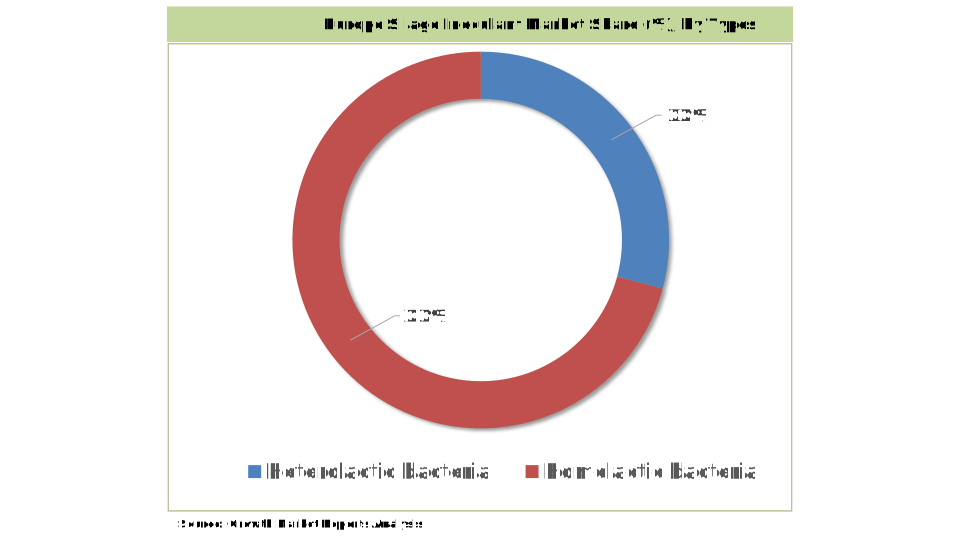
The silage inoculant market is segmented by product type into homofermentative, heterofermentative, and combination inoculants, each offering distinct advantages and applications. Homofermentative inoculants, primarily composed of lactic acid bacteria such as Lactobacillus plantarum, are designed to rapidly lower silage pH by producing lactic acid. This swift acidification process inhibits the growth of undesirable microorganisms, preserving the nutritional value of the silage and ensuring higher digestibility for livestock. The widespread adoption of homofermentative inoculants is driven by their proven efficacy in enhancing silage stability and reducing dry matter losses, making them a preferred choice for dairy and livestock producers seeking to optimize feed quality and animal performance.
Heterofermentative inoculants, on the other hand, introduce a broader spectrum of fermentation products, including acetic acid and propionic acid, in addition to lactic acid. These inoculants are particularly effective in preventing spoilage caused by yeasts and molds, which can proliferate during aerobic exposure of silage. The use of heterofermentative strains such as Lactobacillus buchneri has gained traction in regions with warm and humid climates, where silage is more susceptible to aerobic deterioration. By extending the aerobic stability of silage, heterofermentative inoculants help reduce feed wastage and improve overall feed management, contributing to their growing popularity among progressive farmers.
The combination segment, which blends homofermentative and heterofermentative strains, represents a rapidly expanding category within the silage inoculant market. These combination inoculants are engineered to deliver the synergistic benefits of rapid acidification and enhanced aerobic stability, addressing the limitations of single-strain products. The increasing demand for versatile and high-performance inoculants, capable of delivering consistent results across diverse crop types and storage conditions, is fueling the growth of this segment. Manufacturers are actively developing and marketing combination inoculants as value-added solutions that offer comprehensive protection against spoilage and nutrient losses, thereby supporting higher productivity in modern livestock operations.
The competitive dynamics within the product type segment are characterized by continuous innovation and differentiation. Leading players are investing in the development of proprietary microbial strains, advanced formulation technologies, and user-friendly packaging formats to capture market share and address evolving customer needs. The growing emphasis on sustainability and natural feed additives is also driving the adoption of bio-based and non-GMO inoculant products, further diversifying the product landscape. As the market matures, the ability to offer tailored solutions that address specific crop, climate, and operational requirements will be a key determinant of success for manufacturers operating in the silage inoculant market.
| Attributes | Details |
| Report Title | Silage Inoculant Market Research Report 2033 |
| By Product Type | Homofermentative, Heterofermentative, Combination |
| By Form | Dry, Liquid, Granular |
| By Crop Type | Corn, Alfalfa, Sorghum, Barley, Others |
| By Application | Cereal Crops, Legumes, Others |
| By End-User | Dairy Farms, Livestock Farms, Others |
| By Distribution Channel | Direct Sales, Indirect Sales |
| Regions Covered | North America, Europe, APAC, Latin America, MEA |
| Base Year | 2024 |
| Historic Data | 2018-2023 |
| Forecast Period | 2025-2033 |
| Number of Pages | 289 |
| Number of Tables & Figures | 335 |
| Customization Available | Yes, the report can be customized as per your need. |
The silage inoculant market is segmented by form into dry, liquid, and granular formulations, each catering to different user preferences and application requirements. Dry inoculants, available as powders or freeze-dried cultures, are widely favored for their ease of storage, long shelf life, and cost-effectiveness. These products can be easily transported and stored without the need for refrigeration, making them particularly suitable for small and medium-sized farms or regions with limited cold chain infrastructure. Dry inoculants are typically reconstituted with water before application, ensuring uniform distribution and effective colonization of silage material.
Liquid silage inoculants have gained significant traction in recent years, driven by their superior ease of application and rapid activation in the silage mass. Liquid formulations are often delivered using specialized applicators that ensure precise dosing and even coverage, resulting in more consistent fermentation outcomes. The ability to pre-mix liquid inoculants with water or other carriers further enhances their versatility and convenience, particularly for large-scale operations that require efficient and reliable silage treatment. Advances in formulation technology have also improved the stability and shelf life of liquid inoculants, addressing previous concerns related to microbial viability during storage and transport.
Granular inoculants represent a niche but growing segment within the silage inoculant market. These products are designed for direct application to silage crops during harvesting or ensiling, offering a convenient and dust-free alternative to traditional dry powders. Granular inoculants are particularly well-suited for use with automated forage harvesters and applicators, enabling streamlined integration into modern silage production workflows. The development of granular inoculant formulations with enhanced adhesion and dispersal properties is further expanding their adoption among progressive livestock producers seeking to optimize operational efficiency and feed quality.
The choice of inoculant form is influenced by a range of factors, including farm size, crop type, application method, and local infrastructure. Manufacturers are responding to these diverse needs by offering a broad portfolio of silage inoculant products in multiple formats, supported by technical guidance and after-sales support to ensure optimal results. The increasing availability of customized application equipment and user-friendly packaging is further driving the adoption of advanced inoculant forms, enabling farmers to achieve higher levels of precision and consistency in silage management. As the market continues to evolve, the ability to deliver innovative and convenient inoculant solutions will be a key differentiator for leading brands.
Crop type is a critical determinant in the selection and performance of silage inoculants, with the market segmented into corn, alfalfa, sorghum, barley, and others. Corn silage represents the largest segment, accounting for a substantial share of global silage production and inoculant usage. The high starch content and fermentable carbohydrates in corn make it an ideal substrate for rapid lactic acid fermentation, resulting in high-quality silage with excellent feed value. The widespread cultivation of corn for silage, particularly in North America, Europe, and parts of Latin America, underpins the strong demand for specialized corn silage inoculants designed to maximize fermentation efficiency and nutrient preservation.
Alfalfa silage is another significant crop type, valued for its high protein content and digestibility. However, ensiling alfalfa presents unique challenges due to its lower sugar content and higher buffering capacity, which can slow down the fermentation process and increase the risk of spoilage. Silage inoculants formulated for alfalfa typically contain homofermentative strains that accelerate acidification and inhibit undesirable microbial activity, ensuring the production of stable and nutritious silage. The adoption of alfalfa silage inoculants is particularly pronounced in regions with intensive dairy farming, where high-quality forage is essential for supporting milk production and animal health.
Sorghum and barley silage are gaining prominence in regions with variable climatic conditions and water availability, such as parts of Asia Pacific, Africa, and Australia. These crops are valued for their adaptability, drought tolerance, and ability to produce high yields under challenging conditions. Silage inoculants for sorghum and barley are formulated to address the specific fermentation dynamics and nutrient profiles of these crops, enabling farmers to optimize feed quality and reduce post-harvest losses. The growing emphasis on crop diversification and sustainable forage production is driving the adoption of specialized silage inoculants tailored to non-traditional silage crops.
The "others" category encompasses a wide range of forage crops, including grasses, legumes, and crop residues, each presenting unique ensiling challenges and opportunities. The development of multi-crop inoculant formulations, capable of delivering consistent results across diverse forage types, is an emerging trend in the silage inoculant market. Manufacturers are investing in research to identify and commercialize microbial strains with broad-spectrum activity, enabling farmers to achieve higher levels of flexibility and efficiency in silage management. As the demand for alternative forage sources continues to rise, the availability of crop-specific and multi-crop silage inoculants will be instrumental in supporting the growth and sustainability of the global livestock industry.
The application segment of the silage inoculant market is categorized into cereal crops, legumes, and others, reflecting the diverse range of forage materials utilized in silage production. Cereal crops, including corn, barley, wheat, and oats, dominate the application landscape, owing to their high energy content and widespread cultivation for animal feed. Silage inoculants designed for cereal crops are formulated to enhance lactic acid fermentation, minimize dry matter losses, and preserve the nutritional integrity of the silage. The strong demand for high-energy forages in dairy and beef production systems is a key driver of growth in this segment, particularly in regions with intensive livestock farming.
Legume silages, such as alfalfa and clover, are valued for their high protein content and digestibility, making them an essential component of balanced rations for dairy cows and other ruminants. However, the ensiling of legumes presents unique challenges, including slower fermentation and higher susceptibility to spoilage. Silage inoculants for legumes are specifically engineered to accelerate acidification, inhibit the growth of undesirable microbes, and improve the aerobic stability of the silage. The adoption of legume-specific inoculants is gaining momentum in regions with advanced dairy industries, where feed quality and consistency are critical to maximizing milk yields and animal health.
The "others" application segment encompasses a diverse array of forage materials, including mixed forages, crop residues, and by-products from food processing industries. The use of silage inoculants in these applications is driven by the need to enhance the preservation and feed value of non-traditional forages, reduce wastage, and support sustainable livestock production. Manufacturers are developing innovative inoculant formulations that cater to the unique characteristics and fermentation dynamics of these alternative feedstocks, enabling farmers to make efficient use of available resources and diversify their forage base.
The growing emphasis on feed security, resource efficiency, and environmental sustainability is shaping the application trends in the silage inoculant market. The integration of silage inoculants into comprehensive forage management programs, supported by technical advisory services and on-farm demonstrations, is helping to drive adoption and maximize the benefits of these products. As livestock producers seek to optimize feed quality, reduce costs, and enhance animal performance, the demand for specialized and versatile silage inoculants across a broad spectrum of applications is expected to continue its upward trajectory.
The end-user segment of the silage inoculant market is broadly classified into dairy farms, livestock farms, and others, each with distinct requirements and adoption patterns. Dairy farms represent the largest end-user group, driven by the critical importance of high-quality silage in supporting milk production, animal health, and reproductive performance. The use of silage inoculants on dairy farms is motivated by the need to maximize nutrient preservation, minimize spoilage, and achieve consistent feed quality throughout the year. As dairy operations continue to scale up and adopt more sophisticated feed management practices, the demand for advanced silage inoculant solutions is expected to remain strong.
Livestock farms, encompassing beef, sheep, goat, and other ruminant operations, constitute another significant end-user segment. The adoption of silage inoculants in these settings is driven by the need to optimize feed conversion efficiency, support weight gains, and improve overall herd health. Livestock producers are increasingly recognizing the value of silage inoculants in reducing feed wastage, enhancing palatability, and supporting sustainable production practices. The growing emphasis on animal welfare and the use of natural feed additives is further fueling the uptake of silage inoculants among livestock farms worldwide.
The "others" end-user category includes smallholder farmers, contract silage producers, and feedlot operators, each with unique operational challenges and opportunities. The adoption of silage inoculants in these segments is influenced by factors such as farm size, access to technical support, and local market dynamics. Manufacturers are responding by offering flexible packaging, targeted training programs, and tailored product solutions to address the specific needs of these diverse end-user groups. The increasing availability of affordable and user-friendly silage inoculant products is helping to drive penetration in traditionally underserved markets.
The end-user landscape is characterized by a growing focus on value-added services, including on-farm consultation, technical support, and performance monitoring. Leading silage inoculant suppliers are partnering with agricultural extension agencies, cooperatives, and industry associations to promote best practices in silage management and demonstrate the tangible benefits of inoculant use. As the livestock industry continues to evolve, the ability to deliver comprehensive and integrated solutions that address the full spectrum of end-user needs will be a key factor in shaping the competitive dynamics of the silage inoculant market.
Distribution channels play a pivotal role in the accessibility and adoption of silage inoculants, with the market segmented into direct sales and indirect sales. Direct sales channels, including company-owned sales teams and exclusive distributors, are favored by large-scale farms and agribusinesses seeking customized solutions, technical support, and value-added services. Direct engagement enables manufacturers to build strong relationships with key customers, provide tailored product recommendations, and deliver comprehensive after-sales support. The emphasis on direct sales is particularly pronounced in developed markets, where customer loyalty and brand reputation are critical drivers of market share.
Indirect sales channels, encompassing agricultural retailers, cooperatives, and online platforms, are instrumental in extending the reach of silage inoculant products to a broader customer base. These channels offer convenience, competitive pricing, and access to a wide range of complementary agricultural inputs, making them an attractive option for small and medium-sized farms. The growing penetration of e-commerce and digital marketing is further enhancing the visibility and accessibility of silage inoculant products, enabling manufacturers to tap into new and emerging markets with minimal infrastructure investment.
The distribution channel landscape is characterized by increasing collaboration and partnership between manufacturers, distributors, and agricultural service providers. Joint marketing initiatives, co-branded product offerings, and integrated advisory services are helping to drive awareness and adoption of silage inoculants across diverse customer segments. The ability to offer flexible distribution models, responsive customer service, and timely delivery is a key differentiator for leading brands in the highly competitive silage inoculant market.
As the market continues to expand, the role of distribution channels in supporting farmer education, technical training, and product demonstration is becoming increasingly important. Manufacturers are investing in capacity building and knowledge transfer initiatives to empower distributors and retailers with the skills and resources needed to effectively promote and support silage inoculant products. The integration of digital tools and data-driven insights is further enhancing the efficiency and effectiveness of distribution channels, enabling manufacturers to optimize inventory management, track product performance, and respond rapidly to changing market dynamics.
The silage inoculant market presents significant opportunities for growth and innovation, driven by the increasing global demand for high-quality animal feed and the intensification of livestock production systems. The expansion of commercial dairy and beef operations, particularly in emerging markets, is creating new opportunities for the adoption of advanced silage preservation technologies. The development of next-generation inoculant formulations, incorporating novel microbial strains and bioactive compounds, offers the potential to deliver enhanced efficacy, broader crop compatibility, and improved shelf life. Manufacturers that invest in research and development, product differentiation, and customer-centric solutions are well positioned to capitalize on the growing demand for value-added silage inoculant products.
Another key opportunity lies in the integration of silage inoculants into holistic forage management and sustainability programs. The increasing focus on resource efficiency, environmental stewardship, and climate resilience is driving demand for biological solutions that support sustainable agriculture and reduce reliance on chemical inputs. The adoption of silage inoculants as part of integrated crop-livestock systems, supported by precision agriculture technologies and data-driven decision-making, offers the potential to enhance feed security, reduce greenhouse gas emissions, and promote circular economy principles. Strategic partnerships between manufacturers, research institutions, and agricultural stakeholders will be instrumental in unlocking the full potential of silage inoculants as a catalyst for sustainable livestock production.
Despite the positive outlook, the silage inoculant market faces several restraining factors that could temper growth prospects. One of the primary challenges is the lack of awareness and technical knowledge among smallholder farmers and producers in developing regions. Limited access to extension services, training, and demonstration programs can hinder the adoption of silage inoculants and limit their impact on feed quality and animal performance. Additionally, the perception of high upfront costs and uncertain return on investment may deter some farmers from investing in silage inoculant products, particularly in price-sensitive markets. Addressing these barriers through targeted education, capacity building, and value demonstration initiatives will be essential to unlocking the full growth potential of the silage inoculant market.
North America dominates the global silage inoculant market, accounting for a market size of approximately USD 210 million in 2024. The region’s leadership is attributed to its highly developed dairy and beef industries, widespread adoption of advanced silage management practices, and a strong focus on feed quality and animal productivity. The United States and Canada are the primary contributors to regional growth, supported by robust agricultural infrastructure, a high degree of farm mechanization, and the presence of leading silage inoculant manufacturers. The North American market is expected to maintain steady growth, driven by ongoing innovation, increasing farm consolidation, and rising demand for sustainable feed solutions.
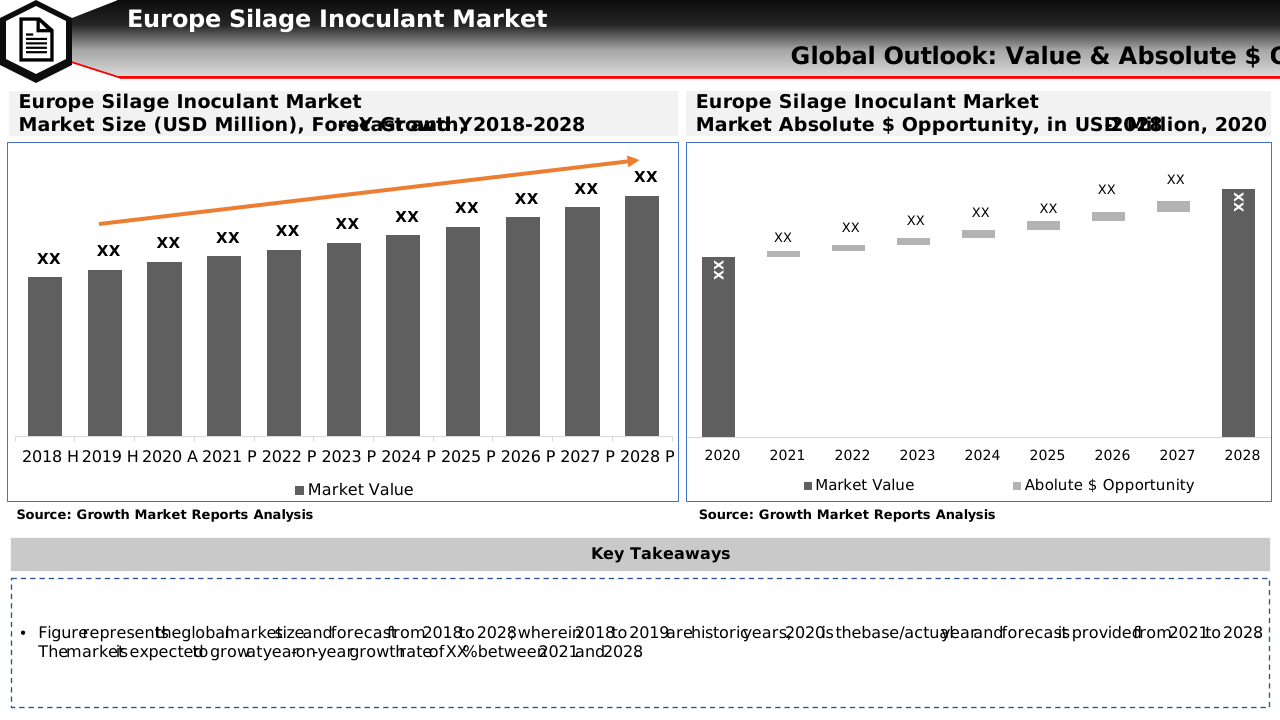
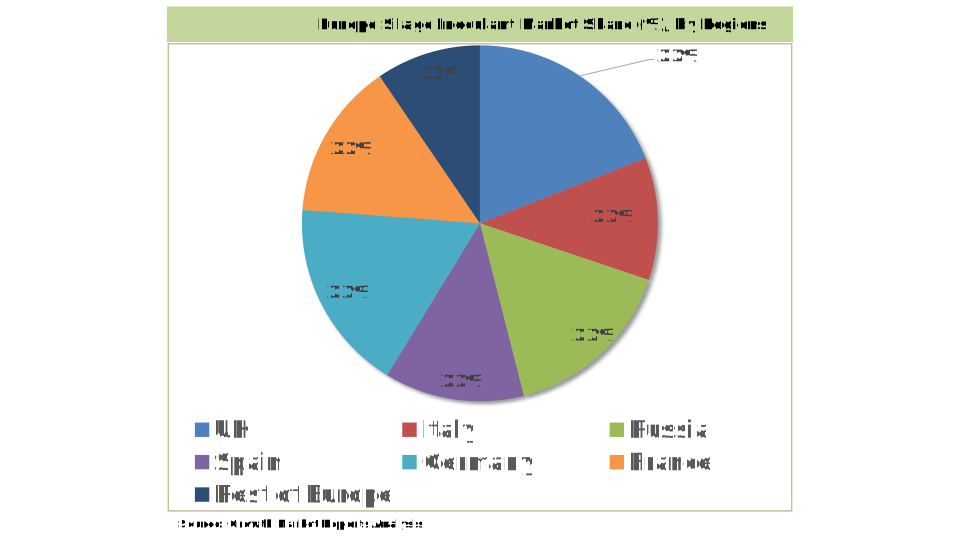
Europe is another major market for silage inoculants, with a 2024 market size estimated at USD 180 million. The region’s growth is underpinned by the intensive dairy and livestock sectors in countries such as Germany, France, the United Kingdom, and the Netherlands. Stringent regulatory standards, a strong emphasis on feed safety and traceability, and a high level of technological adoption are key drivers of silage inoculant usage in Europe. The market is expected to grow at a CAGR of 4.2% through 2033, supported by ongoing investments in research and development, government support for sustainable agriculture, and increasing consumer demand for high-quality animal products.
The Asia Pacific region represents the fastest-growing market for silage inoculants, with a 2024 market size of USD 120 million. Rapid industrialization of livestock farming, rising disposable incomes, and increasing awareness of the benefits of silage inoculants are driving market expansion in countries such as China, India, Australia, and New Zealand. The region’s diverse agro-climatic conditions and expanding livestock populations present significant opportunities for tailored silage inoculant solutions. Latin America and the Middle East & Africa, with market sizes of USD 50 million and USD 33 million respectively, are also witnessing steady growth, supported by expanding dairy and beef sectors, government initiatives, and increasing investment in agricultural infrastructure. Together, these regional dynamics highlight the global reach and growth potential of the silage inoculant market.
The competitive landscape of the silage inoculant market is characterized by a mix of multinational corporations, regional players, and emerging startups, all vying for market share through innovation, product differentiation, and strategic partnerships. Leading companies are focusing on research and development to introduce next-generation inoculant formulations with enhanced efficacy, broader crop compatibility, and improved shelf life. The ability to offer customized solutions that address specific crop, climate, and operational requirements is a key differentiator for market leaders. Additionally, companies are investing in capacity expansion, distribution network optimization, and digital marketing to strengthen their presence in both established and emerging markets.
Strategic collaborations and alliances are increasingly shaping the competitive dynamics of the silage inoculant market. Manufacturers are partnering with agricultural research institutions, universities, and extension agencies to advance product development, validate performance claims, and promote best practices in silage management. Joint ventures and co-marketing agreements with input suppliers, equipment manufacturers, and agricultural retailers are enabling companies to offer integrated solutions and capture value across the silage value chain. The emphasis on sustainability, traceability, and regulatory compliance is driving the adoption of bio-based and non-GMO inoculant products, further intensifying competition and spurring innovation.
Customer engagement and value-added services are emerging as critical success factors in the silage inoculant market. Leading suppliers are differentiating themselves through comprehensive technical support, on-farm consultation, and performance monitoring programs designed to maximize the benefits of inoculant use. The integration of digital tools, data analytics, and precision agriculture technologies is enabling companies to deliver personalized recommendations, track product performance, and respond rapidly to changing customer needs. As the market matures, the ability to build long-term relationships and deliver measurable value to end-users will be a key determinant of competitive advantage.
Major companies operating in the global silage inoculant market include Chr. Hansen Holding A/S, DuPont (now part of IFF), Lallemand Inc., BASF SE, Corteva Agriscience, ADM Animal Nutrition, ForFarmers N.V., Biomin GmbH, Volac International Ltd., and Schaumann BioEnergy GmbH. Chr. Hansen is renowned for its extensive portfolio of microbial solutions and strong focus on innovation, while Lallemand Inc. is recognized for its expertise in fermentation technology and global distribution network. BASF SE and Corteva Agriscience are leveraging their broad agricultural expertise to develop integrated silage management solutions, while ADM Animal Nutrition and ForFarmers N.V. are expanding their product offerings to meet the evolving needs of livestock producers. Biomin GmbH, Volac International, and Schaumann BioEnergy are distinguished by their commitment to research, sustainability, and customer-centric solutions, positioning them as key players in the highly competitive silage inoculant market.
The Silage Inoculant market has been segmented on the basis of
The presence of many companies in the European silage inoculant market such as Provita Eurotech Limited; CHR. Hansen Holdings; Lallemand Animal NutritionBiomin; and Mircroferm Limited. Companies are engaging in partnerships, collaborations, mergers, and acquisitions to expand their market share. Moreover, they’re increasing their production capacity to leverage their market position.
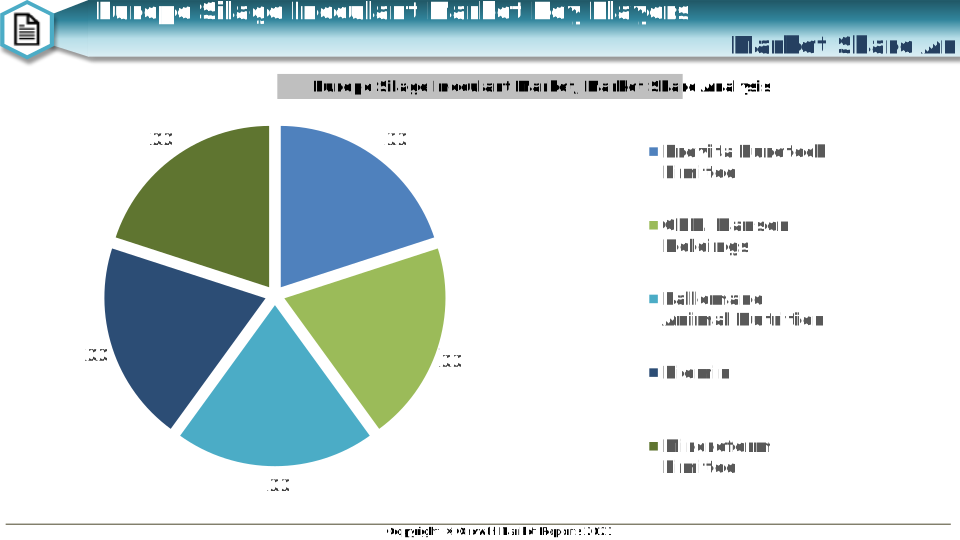
Major companies include Chr. Hansen Holding A/S, DuPont (IFF), Lallemand Inc., BASF SE, Corteva Agriscience, ADM Animal Nutrition, ForFarmers N.V., Biomin GmbH, Volac International Ltd., and Schaumann BioEnergy GmbH.
Silage inoculants are distributed through direct sales (company teams, exclusive distributors) and indirect sales (agricultural retailers, cooperatives, online platforms).
Dairy farms are the largest end-users, followed by livestock farms (beef, sheep, goats) and others such as smallholder farmers and feedlot operators.
Corn is the largest crop segment for silage inoculants, followed by alfalfa, sorghum, barley, and other forage crops.
Silage inoculants are available in dry, liquid, and granular forms, catering to different farm sizes, application methods, and infrastructure capabilities.
The market is segmented into homofermentative, heterofermentative, and combination inoculants, each offering unique benefits for silage preservation and animal nutrition.
North America and Europe currently dominate the market, with Asia Pacific emerging as the fastest-growing region due to rapid industrialization of livestock farming and increasing awareness.
Key growth drivers include rising demand for high-quality animal feed, increasing awareness among farmers about silage inoculant benefits, advancements in biotechnology, and the expansion of large-scale dairy and livestock farms.
The market is expected to grow at a CAGR of 4.8% from 2025 to 2033, reaching an estimated USD 915 million by 2033.
As of 2024, the global silage inoculant market is valued at approximately USD 593 million.