Set Top Box Market Research Report 2033

Set Top Box Market Research Report 2033

Segments - by Product Type (Cable, Satellite, IPTV, Hybrid, Others), by Content Type (Standard Definition, High Definition, 4K and Above), by End-User (Residential, Commercial), by Distribution Channel (Online, Offline)

https://growthmarketreports.com/Debadatta
Author : Debadatta Patel
https://growthmarketreports.com/Vaibhav
Fact-checked by : V. Chandola
https://growthmarketreports.com/Shruti
Editor : Shruti Bhat

Upcoming | Report ID :CG-512 | 4.5 Rating | 16 Reviews | 269 Pages | Format : Docx PDF

Report Description


Set Top Box Market Outlook

According to our latest research, the global set top box market size stood at USD 21.7 billion in 2024, reflecting a robust industry that continues to evolve with technological advancements and consumer demand. The market is projected to grow at a CAGR of 3.8% from 2025 to 2033, reaching an estimated USD 30.2 billion by 2033. This growth is primarily fueled by rapid digitalization, increasing penetration of high-definition and 4K content, and the ongoing transition from analog to digital broadcasting across both developed and emerging economies. As per the latest research, the industry is witnessing significant momentum due to rising consumer expectations for premium viewing experiences and the proliferation of smart home technologies.

One of the most significant growth factors for the set top box market is the widespread shift toward digital television and high-definition content. Governments in several regions are mandating the switchover from analog to digital broadcasting, which is compelling households and commercial establishments to upgrade their existing infrastructure. This regulatory push, combined with the growing availability of digital content, is accelerating the adoption of advanced set top box solutions. Moreover, the rising popularity of over-the-top (OTT) platforms and streaming services is prompting set top box manufacturers to innovate and integrate internet connectivity features, enabling consumers to seamlessly access both traditional broadcast and online content through a single device.

Technological advancements are another key driver shaping the set top box market landscape. The integration of artificial intelligence, voice recognition, and cloud-based functionalities is transforming set top boxes into smart entertainment hubs. Manufacturers are focusing on developing hybrid devices that support multiple content delivery methods, such as cable, satellite, IPTV, and OTT, to cater to the diverse preferences of users. The advent of 4K and ultra-high-definition (UHD) televisions is further boosting demand for compatible set top boxes, as consumers increasingly seek immersive viewing experiences. Additionally, the growing adoption of smart home ecosystems is driving the need for connected devices, making set top boxes an integral part of modern living rooms.

Affordability and accessibility are also contributing to the expansion of the set top box market. The availability of cost-effective devices, coupled with attractive subscription packages offered by service providers, is making it easier for consumers across various income segments to upgrade their entertainment systems. In emerging markets, local manufacturers are introducing budget-friendly set top boxes tailored to regional requirements, thereby expanding the addressable market. Furthermore, the increasing penetration of broadband internet and the rollout of next-generation wireless networks are enhancing the capabilities of set top boxes, making them more appealing to technologically savvy consumers.

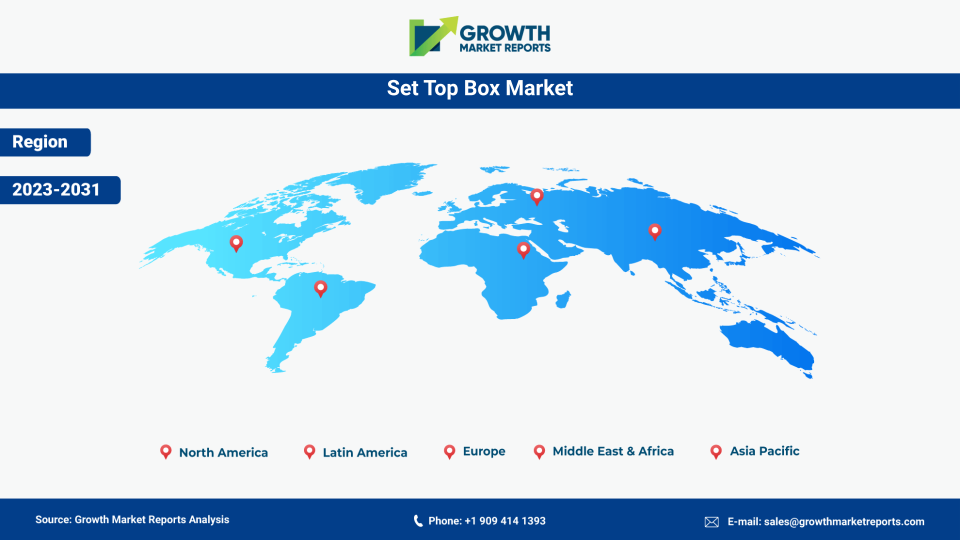
From a regional perspective, Asia Pacific remains the dominant market for set top boxes, accounting for a substantial share of global revenue due to its large population base and rapid urbanization. North America and Europe follow closely, driven by high disposable incomes and early adoption of advanced technologies. Meanwhile, Latin America and the Middle East & Africa are witnessing steady growth, supported by government initiatives to promote digitalization and the expansion of pay-TV services. Each region presents unique opportunities and challenges, with local market dynamics influencing product preferences, distribution channels, and regulatory compliance.

Global Set Top Box Industry Outlook

Product Type Analysis

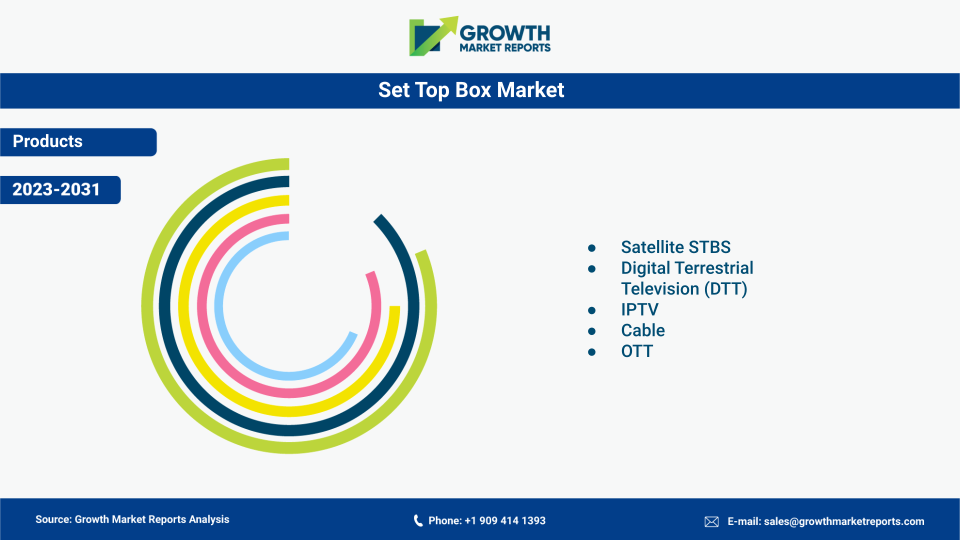
The set top box market is segmented by product type into cable, satellite, IPTV, hybrid, and others, each catering to distinct user requirements and content delivery infrastructures. Cable set top boxes continue to hold a significant market share, particularly in regions with well-established cable television networks. These devices are favored for their reliability, cost-effectiveness, and ability to deliver a wide range of channels. The ongoing digitalization of cable networks, coupled with the introduction of high-definition and interactive services, is sustaining demand for cable set top boxes, especially in urban and suburban areas.

Satellite set top boxes are gaining traction in areas where cable infrastructure is limited or absent, such as rural and remote regions. These devices enable access to a diverse array of national and international channels, making them a popular choice for consumers seeking extensive content options. The deployment of advanced satellites and the availability of direct-to-home (DTH) services are further enhancing the appeal of satellite set top boxes. Additionally, the integration of features such as digital video recording (DVR), on-demand content, and interactive program guides is elevating the user experience and driving market growth in this segment.

IPTV set top boxes are experiencing rapid adoption, propelled by the increasing penetration of high-speed broadband internet and the growing popularity of streaming services. These devices leverage internet protocols to deliver television content, offering greater flexibility and interactivity compared to traditional broadcast methods. The ability to access a wide range of on-demand content, personalized recommendations, and interactive applications is resonating with tech-savvy consumers. Service providers are also leveraging IPTV set top boxes to offer bundled packages, integrating television, internet, and voice services to enhance customer value and retention.

Hybrid set top boxes represent the next evolution in content delivery, combining the capabilities of cable, satellite, IPTV, and OTT platforms within a single device. These versatile solutions are designed to cater to the increasingly complex viewing habits of modern consumers, who demand seamless access to both linear and non-linear content. The integration of smart features, such as voice control, AI-powered recommendations, and cloud-based storage, is positioning hybrid set top boxes as the preferred choice in markets with diverse content consumption patterns. The “others” category, which includes terrestrial and specialty set top boxes, continues to serve niche markets and specific regional needs.

Report Scope

Attributes Details
Report Title Set Top Box Market Research Report 2033
By Product Type Cable, Satellite, IPTV, Hybrid, Others
By Content Type Standard Definition, High Definition, 4K and Above
By End-User Residential, Commercial
By Distribution Channel Online, Offline
Regions Covered North America, Europe, APAC, Latin America, MEA
Base Year 2024
Historic Data 2018-2023
Forecast Period 2025-2033
Number of Pages 269
Number of Tables & Figures 293
Customization Available Yes, the report can be customized as per your need.

Content Type Analysis

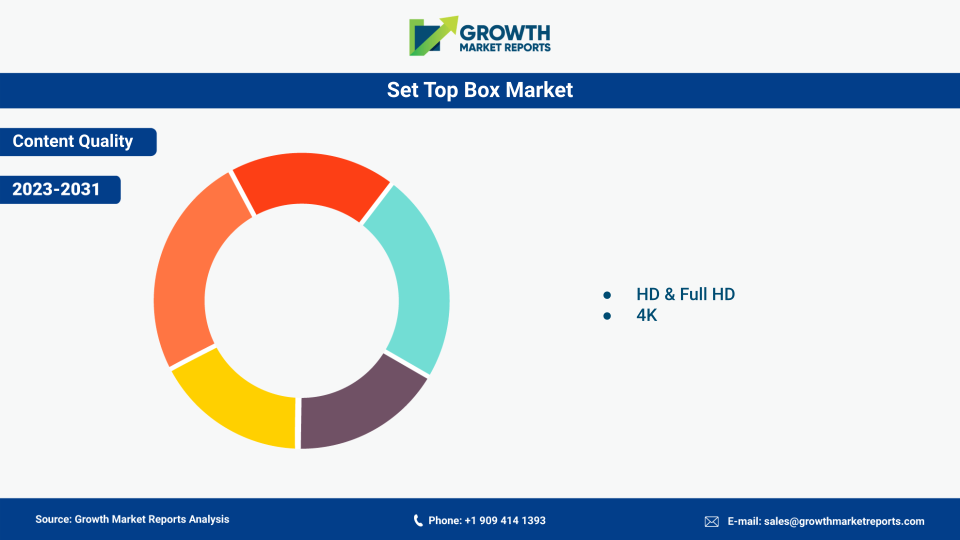
The content type segment of the set top box market is categorized into standard definition (SD), high definition (HD), and 4K and above, reflecting the evolving preferences of consumers for superior picture quality. Standard definition set top boxes, while still prevalent in certain developing regions, are gradually being phased out as consumers upgrade to higher resolution devices. The transition from SD to HD is being driven by increasing awareness of the benefits of enhanced picture clarity and the availability of affordable HD-enabled televisions and set top boxes.

High definition set top boxes have become the industry standard in most developed markets, offering a significant improvement in visual quality over their SD counterparts. The widespread adoption of HD content by broadcasters and content providers is fueling demand for HD-compatible set top boxes, particularly among consumers seeking a more immersive viewing experience. The affordability of HD devices, coupled with attractive subscription packages from service providers, is accelerating the shift toward high-definition television in both residential and commercial settings.

The introduction of 4K and above set top boxes marks a significant leap forward in content delivery, catering to the growing demand for ultra-high-definition entertainment. As 4K televisions become more accessible and affordable, consumers are increasingly seeking set top boxes that can deliver content in stunning detail and clarity. Content providers are responding by expanding their 4K offerings, including live sports, movies, and original programming. The rollout of next-generation broadcasting standards, such as DVB-T2 and ATSC 3.0, is further supporting the adoption of 4K set top boxes by enabling higher bandwidth and improved signal quality.

The evolution toward higher resolution content is also driving innovation in set top box hardware and software. Manufacturers are incorporating advanced processing capabilities, enhanced storage, and support for high dynamic range (HDR) and Dolby Vision to deliver a truly cinematic experience. The growing availability of 8K televisions, although still in its nascent stage, is prompting early investments in compatible set top boxes, positioning the market for future growth as content and infrastructure mature. Overall, the content type segment reflects the ongoing pursuit of superior visual experiences, with consumers increasingly prioritizing quality and performance.

End-User Analysis

The set top box market serves two primary end-user segments: residential and commercial. The residential segment dominates the market, accounting for the majority of global revenue. Households continue to invest in set top boxes to access a diverse range of television channels, on-demand content, and interactive services. The proliferation of smart TVs and the integration of set top boxes with home automation systems are enhancing the appeal of these devices in residential settings. Consumers are increasingly seeking personalized viewing experiences, driving demand for set top boxes with advanced features such as voice control, AI-powered recommendations, and seamless connectivity with other smart devices.

The commercial segment, while smaller in comparison, represents a significant growth opportunity for set top box manufacturers and service providers. Commercial establishments, such as hotels, hospitals, educational institutions, and offices, are adopting set top boxes to deliver tailored content and entertainment solutions to their guests, patients, students, and employees. The ability to offer customized channel lineups, interactive information services, and digital signage capabilities is positioning set top boxes as a versatile tool for enhancing customer engagement and operational efficiency in commercial environments.

In the hospitality industry, for example, set top boxes are being used to provide guests with a personalized in-room entertainment experience, including access to premium channels, on-demand movies, and interactive hotel services. Hospitals are leveraging set top box solutions to deliver educational content, entertainment, and information to patients, improving the overall patient experience. Educational institutions are utilizing set top boxes to broadcast lectures, training modules, and campus announcements, supporting remote learning and communication.

The commercial segment is also witnessing increased adoption of advanced set top box solutions that support digital rights management, content encryption, and secure access controls. These features are critical for organizations seeking to protect intellectual property and ensure compliance with industry regulations. As the demand for digital content and interactive services continues to grow across various commercial sectors, the set top box market is poised to capture new opportunities and expand its footprint beyond traditional residential applications.

Distribution Channel Analysis

The set top box market is distributed through two primary channels: online and offline. The offline channel, which includes electronics retailers, specialty stores, and direct sales by service providers, has traditionally dominated the market. Consumers often prefer to purchase set top boxes from physical stores, where they can receive hands-on demonstrations, expert advice, and immediate after-sales support. The presence of established retail networks and partnerships with service providers is sustaining the relevance of offline channels, particularly in regions where digital literacy and e-commerce penetration are still evolving.

However, the online distribution channel is experiencing rapid growth, driven by the increasing adoption of e-commerce platforms and changing consumer shopping behaviors. Online retailers offer a wide selection of set top box models, competitive pricing, and the convenience of home delivery, making them an attractive option for tech-savvy consumers. The ability to compare features, read customer reviews, and access exclusive online promotions is further enhancing the appeal of online channels. Manufacturers and service providers are also leveraging their own e-commerce platforms to reach a broader audience and offer personalized product bundles and subscription packages.

The COVID-19 pandemic has accelerated the shift toward online purchasing, as consumers seek contactless shopping experiences and prioritize convenience and safety. This trend is expected to persist, with online channels capturing an increasing share of set top box sales in the coming years. To capitalize on this opportunity, manufacturers are investing in digital marketing, enhancing their online presence, and optimizing their supply chains to ensure timely delivery and customer satisfaction.

Despite the growth of online channels, the offline segment remains important for certain consumer segments, particularly in rural and semi-urban areas where internet access and digital literacy may be limited. Service providers often bundle set top boxes with installation and maintenance services, which are best delivered through physical channels. The coexistence of online and offline distribution channels is enabling manufacturers and service providers to cater to diverse consumer preferences and maximize market reach.

Opportunities & Threats

The set top box market is ripe with opportunities, particularly in the realm of technological innovation and product diversification. The integration of artificial intelligence, voice assistants, and smart home connectivity is transforming set top boxes into multifunctional entertainment hubs. Manufacturers have the opportunity to differentiate their offerings by incorporating advanced features such as personalized content recommendations, seamless integration with streaming platforms, and support for immersive audio and video formats. The growing adoption of 4K and 8K televisions presents a significant opportunity for set top box manufacturers to develop compatible devices and capture early market share in the ultra-high-definition segment. Additionally, the expansion of broadband infrastructure and the rollout of next-generation wireless networks are enabling the delivery of high-quality, low-latency content, further enhancing the value proposition of advanced set top box solutions.

Emerging markets present another major opportunity for growth, as governments and service providers continue to invest in digitalization initiatives and expand access to pay-TV and broadband services. Local manufacturers can capitalize on these trends by offering affordable, region-specific set top box solutions that cater to the unique needs of diverse consumer segments. The increasing popularity of hybrid set top boxes, which combine traditional broadcast and internet-based content delivery, is creating new revenue streams for manufacturers and service providers. Partnerships with content providers, OTT platforms, and smart home ecosystem players can further enhance the value proposition and drive market expansion.

Despite these opportunities, the set top box market faces several restraining factors, most notably the growing competition from smart TVs and direct streaming devices. As smart TVs become more affordable and feature-rich, consumers are increasingly opting for integrated solutions that eliminate the need for external set top boxes. The proliferation of streaming sticks and media players, such as Roku, Amazon Fire TV, and Google Chromecast, is further intensifying competition and eroding the market share of traditional set top boxes. Additionally, the rapid pace of technological change and evolving consumer preferences pose challenges for manufacturers in terms of product development, compatibility, and lifecycle management. Regulatory complexities and the need for compliance with diverse broadcasting standards across regions can also hinder market growth.

Regional Outlook

Asia Pacific remains the largest and fastest-growing region in the global set top box market, accounting for approximately USD 8.9 billion in revenue in 2024. The region’s growth is driven by its large and rapidly urbanizing population, increasing disposable incomes, and government-led digitalization initiatives. Countries such as China, India, and Indonesia are witnessing massive deployments of digital set top boxes as part of nationwide efforts to transition from analog to digital broadcasting. The proliferation of pay-TV and broadband services, coupled with the rising popularity of OTT platforms, is fueling demand for advanced set top box solutions. The Asia Pacific market is projected to grow at a CAGR of 4.7% through 2033, outpacing other regions.

North America is another significant market, with a value of USD 5.6 billion in 2024. The region benefits from high levels of disposable income, early adoption of cutting-edge technologies, and a mature pay-TV ecosystem. The demand for 4K and UHD set top boxes is particularly strong, driven by widespread ownership of high-definition televisions and a preference for premium content experiences. The presence of leading manufacturers and service providers, combined with a competitive content landscape, is fostering innovation and driving market growth. However, the increasing penetration of smart TVs and direct streaming devices is gradually impacting the demand for traditional set top boxes, prompting manufacturers to focus on hybrid and value-added solutions.

Europe, with a market size of USD 4.2 billion in 2024, is characterized by a diverse and highly regulated broadcasting environment. The region is witnessing steady demand for set top boxes, particularly in countries that are transitioning to digital terrestrial television and upgrading to next-generation broadcasting standards. The commercial segment, including hospitality and healthcare, is also contributing to market growth. Latin America and the Middle East & Africa together accounted for USD 3.0 billion in 2024, with growth driven by expanding pay-TV services and government-led digitalization programs. These regions present significant untapped potential, particularly as local content and affordable set top box solutions become more widely available.

Set Top Box Market Statistics

Competitor Outlook

The set top box market is highly competitive, characterized by the presence of established global players, regional manufacturers, and a growing number of niche innovators. The competitive landscape is shaped by rapid technological advancements, evolving consumer preferences, and the need for continuous product differentiation. Leading companies are investing heavily in research and development to introduce advanced features, enhance user interfaces, and improve device compatibility with emerging content formats and smart home ecosystems. Strategic partnerships with content providers, pay-TV operators, and OTT platforms are also playing a crucial role in shaping market dynamics and expanding the reach of set top box solutions.

Price competitiveness remains a key factor in the set top box market, particularly in price-sensitive regions such as Asia Pacific and Latin America. Manufacturers are focusing on optimizing their supply chains, leveraging economies of scale, and localizing production to offer cost-effective solutions without compromising on quality or performance. The ability to provide value-added services, such as cloud-based content storage, personalized recommendations, and integrated smart home controls, is emerging as a differentiator in mature markets. Companies are also exploring new business models, including subscription-based offerings and bundled packages, to enhance customer loyalty and generate recurring revenue streams.

The market is witnessing increased consolidation, with leading players acquiring or partnering with smaller companies to expand their product portfolios, enter new markets, and accelerate innovation. Mergers and acquisitions are enabling companies to strengthen their competitive positions, access new technologies, and achieve synergies across their operations. At the same time, regional and niche players are leveraging their deep understanding of local market dynamics to offer customized solutions and capture specific customer segments. The ongoing evolution of broadcasting standards and content delivery technologies is creating both challenges and opportunities for market participants, requiring agility and adaptability to stay ahead of the curve.

Major companies operating in the global set top box market include Cisco Systems, Inc., Technicolor SA, Huawei Technologies Co., Ltd., ARRIS International plc (now part of CommScope), Skyworth Digital Holdings Ltd., Sagemcom, Kaonmedia Co., Ltd., Humax Co., Ltd., and EchoStar Corporation. Cisco Systems has established itself as a leader in networked set top box solutions, leveraging its expertise in connectivity and cloud-based services. Technicolor SA is renowned for its innovative set top box designs and partnerships with leading pay-TV operators worldwide. Huawei Technologies is a major player in the IPTV and hybrid set top box segments, particularly in Asia and Europe. ARRIS International, now part of CommScope, offers a comprehensive portfolio of cable and satellite set top boxes, with a strong focus on advanced video and broadband solutions. Skyworth Digital and Sagemcom are prominent in the Asia Pacific and European markets, respectively, known for their cost-effective and feature-rich devices. Kaonmedia and Humax are recognized for their innovation in hybrid and connected set top box solutions, while EchoStar specializes in satellite set top boxes and digital video recorders.

Key Players

  • Arris International
  • Technicolor SA
  • Pace plc
  • Cisco Systems
  • Samsung Electronics
  • Huawei Technologies
  • Skyworth Digital
  • EchoStar Corporation
  • Humax Co. Ltd.
  • Sagemcom
  • Comcast Corporation
  • Apple Inc.
  • Roku Inc.
  • Sony Corporation
  • LG Electronics
  • ZTE Corporation
  • ADB (Advanced Digital Broadcast)
  • Dish Network Corporation
  • Vestel
  • Kaonmedia Co. Ltd.
Set Top Box Market Overview

Segments

The Set Top Box market has been segmented on the basis of

Product Type

  • Cable
  • Satellite
  • IPTV
  • Hybrid
  • Others

Content Type

  • Standard Definition
  • High Definition
  • 4K and Above

End-User

  • Residential
  • Commercial

Distribution Channel

  • Online
  • Offline

Competitive Landscape

Key players in the global set top box market include Huawei Technologies Co. Ltd., Samsung Electronics Limited, Technicolor, EchoStar Corporation, Amazon.com, Inc., HUMAX Co. Ltd., Cisco Systems, Inc., ADB Global, Skyworth Group, and Coship Electronics Co. Ltd. Launch of cameras and motion sensors in STBs are the recent developments in the STB industry.

Some STB chips are available with Bluetooth connectivity and allow STB connection through motion recognition and remote control. Availability of enhanced services and extra features of STBs at low prices helps increase the customer base and drives the market. Huawei provides low cost STBs for developing countries such as India and Zimbabwe, where government has put compulsion on cable digitization.
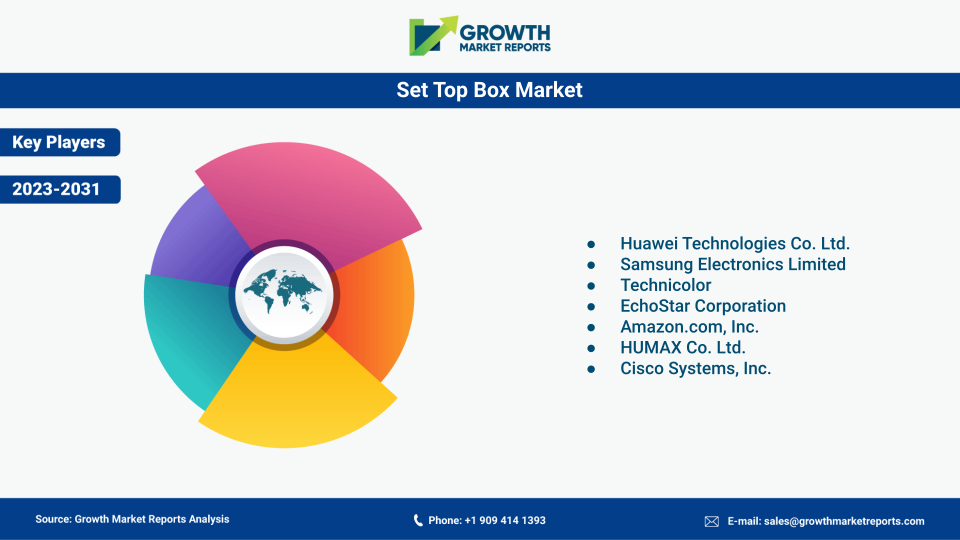

Set Top Box Market Key Players

Frequently Asked Questions

The cable STBs segment is estimated to expand at a high CAGR during the forecast period.

The market in Asia Pacific is expected to expand at a rapid pace during the forecast period. Rising demand for digitization in rural and urban areas is driving the market in the region.

Key players in the global set top box market include Huawei Technologies Co. Ltd., Samsung Electronics Limited, Technicolor, EchoStar Corporation, Amazon.com, Inc., HUMAX Co. Ltd., Cisco Systems, Inc., ADB Global, Skyworth Group, and Coship Electronics Co. Ltd.

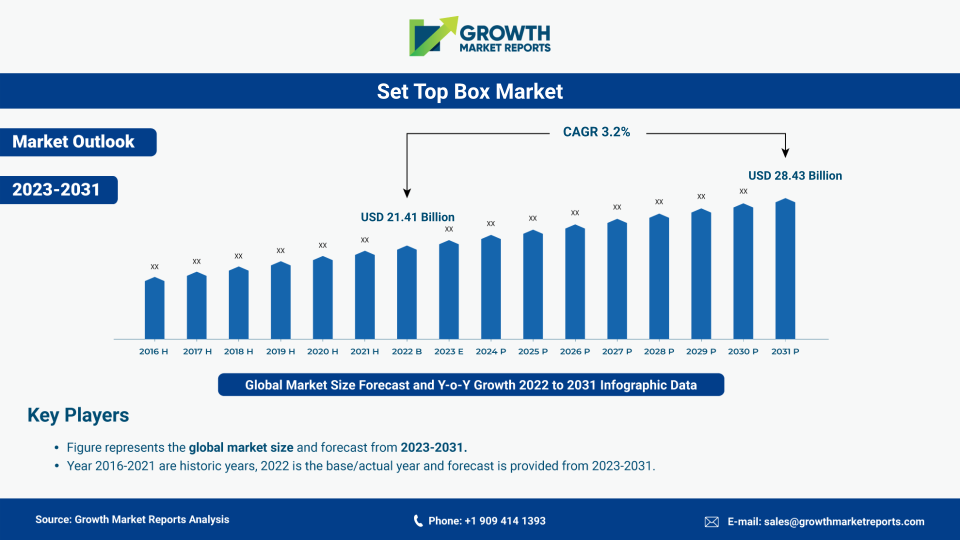
The Set Top Box Market is studied from 2023 - 2031.

Set Top Box Market is growing at a CAGR of 3.2% in forecast period.

The global Set Top Box Market size was valued at USD 21.41 billion in 2022.

Table Of Content

Chapter 1 Executive Summary
Chapter 2 Assumptions and Acronyms Used
Chapter 3 Research Methodology
Chapter 4 Set Top Box Market Overview
   4.1 Introduction
      4.1.1 Market Taxonomy
      4.1.2 Market Definition
      4.1.3 Macro-Economic Factors Impacting the Market Growth
   4.2 Set Top Box Market Dynamics
      4.2.1 Market Drivers
      4.2.2 Market Restraints
      4.2.3 Market Opportunity
   4.3 Set Top Box Market - Supply Chain Analysis
      4.3.1 List of Key Suppliers
      4.3.2 List of Key Distributors
      4.3.3 List of Key Consumers
   4.4 Key Forces Shaping the Set Top Box Market
      4.4.1 Bargaining Power of Suppliers
      4.4.2 Bargaining Power of Buyers
      4.4.3 Threat of Substitution
      4.4.4 Threat of New Entrants
      4.4.5 Competitive Rivalry
   4.5 Global Set Top Box Market Size & Forecast, 2023-2032
      4.5.1 Set Top Box Market Size and Y-o-Y Growth
      4.5.2 Set Top Box Market Absolute $ Opportunity

Chapter 5 Global Set Top Box Market Analysis and Forecast By Product Type
   5.1 Introduction
      5.1.1 Key Market Trends & Growth Opportunities By Product Type
      5.1.2 Basis Point Share (BPS) Analysis By Product Type
      5.1.3 Absolute $ Opportunity Assessment By Product Type
   5.2 Set Top Box Market Size Forecast By Product Type
      5.2.1 Cable
      5.2.2 Satellite
      5.2.3 IPTV
      5.2.4 Hybrid
      5.2.5 Others
   5.3 Market Attractiveness Analysis By Product Type

Chapter 6 Global Set Top Box Market Analysis and Forecast By Content Type
   6.1 Introduction
      6.1.1 Key Market Trends & Growth Opportunities By Content Type
      6.1.2 Basis Point Share (BPS) Analysis By Content Type
      6.1.3 Absolute $ Opportunity Assessment By Content Type
   6.2 Set Top Box Market Size Forecast By Content Type
      6.2.1 Standard Definition
      6.2.2 High Definition
      6.2.3 4K and Above
   6.3 Market Attractiveness Analysis By Content Type

Chapter 7 Global Set Top Box Market Analysis and Forecast By End-User
   7.1 Introduction
      7.1.1 Key Market Trends & Growth Opportunities By End-User
      7.1.2 Basis Point Share (BPS) Analysis By End-User
      7.1.3 Absolute $ Opportunity Assessment By End-User
   7.2 Set Top Box Market Size Forecast By End-User
      7.2.1 Residential
      7.2.2 Commercial
   7.3 Market Attractiveness Analysis By End-User

Chapter 8 Global Set Top Box Market Analysis and Forecast By Distribution Channel
   8.1 Introduction
      8.1.1 Key Market Trends & Growth Opportunities By Distribution Channel
      8.1.2 Basis Point Share (BPS) Analysis By Distribution Channel
      8.1.3 Absolute $ Opportunity Assessment By Distribution Channel
   8.2 Set Top Box Market Size Forecast By Distribution Channel
      8.2.1 Online
      8.2.2 Offline
   8.3 Market Attractiveness Analysis By Distribution Channel

Chapter 9 Global Set Top Box Market Analysis and Forecast by Region
   9.1 Introduction
      9.1.1 Key Market Trends & Growth Opportunities By Region
      9.1.2 Basis Point Share (BPS) Analysis By Region
      9.1.3 Absolute $ Opportunity Assessment By Region
   9.2 Set Top Box Market Size Forecast By Region
      9.2.1 North America
      9.2.2 Europe
      9.2.3 Asia Pacific
      9.2.4 Latin America
      9.2.5 Middle East & Africa (MEA)
   9.3 Market Attractiveness Analysis By Region

Chapter 10 Coronavirus Disease (COVID-19) Impact 
   10.1 Introduction 
   10.2 Current & Future Impact Analysis 
   10.3 Economic Impact Analysis 
   10.4 Government Policies 
   10.5 Investment Scenario

Chapter 11 North America Set Top Box Analysis and Forecast
   11.1 Introduction
   11.2 North America Set Top Box Market Size Forecast by Country
      11.2.1 U.S.
      11.2.2 Canada
   11.3 Basis Point Share (BPS) Analysis by Country
   11.4 Absolute $ Opportunity Assessment by Country
   11.5 Market Attractiveness Analysis by Country
   11.6 North America Set Top Box Market Size Forecast By Product Type
      11.6.1 Cable
      11.6.2 Satellite
      11.6.3 IPTV
      11.6.4 Hybrid
      11.6.5 Others
   11.7 Basis Point Share (BPS) Analysis By Product Type 
   11.8 Absolute $ Opportunity Assessment By Product Type 
   11.9 Market Attractiveness Analysis By Product Type
   11.10 North America Set Top Box Market Size Forecast By Content Type
      11.10.1 Standard Definition
      11.10.2 High Definition
      11.10.3 4K and Above
   11.11 Basis Point Share (BPS) Analysis By Content Type 
   11.12 Absolute $ Opportunity Assessment By Content Type 
   11.13 Market Attractiveness Analysis By Content Type
   11.14 North America Set Top Box Market Size Forecast By End-User
      11.14.1 Residential
      11.14.2 Commercial
   11.15 Basis Point Share (BPS) Analysis By End-User 
   11.16 Absolute $ Opportunity Assessment By End-User 
   11.17 Market Attractiveness Analysis By End-User
   11.18 North America Set Top Box Market Size Forecast By Distribution Channel
      11.18.1 Online
      11.18.2 Offline
   11.19 Basis Point Share (BPS) Analysis By Distribution Channel 
   11.20 Absolute $ Opportunity Assessment By Distribution Channel 
   11.21 Market Attractiveness Analysis By Distribution Channel

Chapter 12 Europe Set Top Box Analysis and Forecast
   12.1 Introduction
   12.2 Europe Set Top Box Market Size Forecast by Country
      12.2.1 Germany
      12.2.2 France
      12.2.3 Italy
      12.2.4 U.K.
      12.2.5 Spain
      12.2.6 Russia
      12.2.7 Rest of Europe
   12.3 Basis Point Share (BPS) Analysis by Country
   12.4 Absolute $ Opportunity Assessment by Country
   12.5 Market Attractiveness Analysis by Country
   12.6 Europe Set Top Box Market Size Forecast By Product Type
      12.6.1 Cable
      12.6.2 Satellite
      12.6.3 IPTV
      12.6.4 Hybrid
      12.6.5 Others
   12.7 Basis Point Share (BPS) Analysis By Product Type 
   12.8 Absolute $ Opportunity Assessment By Product Type 
   12.9 Market Attractiveness Analysis By Product Type
   12.10 Europe Set Top Box Market Size Forecast By Content Type
      12.10.1 Standard Definition
      12.10.2 High Definition
      12.10.3 4K and Above
   12.11 Basis Point Share (BPS) Analysis By Content Type 
   12.12 Absolute $ Opportunity Assessment By Content Type 
   12.13 Market Attractiveness Analysis By Content Type
   12.14 Europe Set Top Box Market Size Forecast By End-User
      12.14.1 Residential
      12.14.2 Commercial
   12.15 Basis Point Share (BPS) Analysis By End-User 
   12.16 Absolute $ Opportunity Assessment By End-User 
   12.17 Market Attractiveness Analysis By End-User
   12.18 Europe Set Top Box Market Size Forecast By Distribution Channel
      12.18.1 Online
      12.18.2 Offline
   12.19 Basis Point Share (BPS) Analysis By Distribution Channel 
   12.20 Absolute $ Opportunity Assessment By Distribution Channel 
   12.21 Market Attractiveness Analysis By Distribution Channel

Chapter 13 Asia Pacific Set Top Box Analysis and Forecast
   13.1 Introduction
   13.2 Asia Pacific Set Top Box Market Size Forecast by Country
      13.2.1 China
      13.2.2 Japan
      13.2.3 South Korea
      13.2.4 India
      13.2.5 Australia
      13.2.6 South East Asia (SEA)
      13.2.7 Rest of Asia Pacific (APAC)
   13.3 Basis Point Share (BPS) Analysis by Country
   13.4 Absolute $ Opportunity Assessment by Country
   13.5 Market Attractiveness Analysis by Country
   13.6 Asia Pacific Set Top Box Market Size Forecast By Product Type
      13.6.1 Cable
      13.6.2 Satellite
      13.6.3 IPTV
      13.6.4 Hybrid
      13.6.5 Others
   13.7 Basis Point Share (BPS) Analysis By Product Type 
   13.8 Absolute $ Opportunity Assessment By Product Type 
   13.9 Market Attractiveness Analysis By Product Type
   13.10 Asia Pacific Set Top Box Market Size Forecast By Content Type
      13.10.1 Standard Definition
      13.10.2 High Definition
      13.10.3 4K and Above
   13.11 Basis Point Share (BPS) Analysis By Content Type 
   13.12 Absolute $ Opportunity Assessment By Content Type 
   13.13 Market Attractiveness Analysis By Content Type
   13.14 Asia Pacific Set Top Box Market Size Forecast By End-User
      13.14.1 Residential
      13.14.2 Commercial
   13.15 Basis Point Share (BPS) Analysis By End-User 
   13.16 Absolute $ Opportunity Assessment By End-User 
   13.17 Market Attractiveness Analysis By End-User
   13.18 Asia Pacific Set Top Box Market Size Forecast By Distribution Channel
      13.18.1 Online
      13.18.2 Offline
   13.19 Basis Point Share (BPS) Analysis By Distribution Channel 
   13.20 Absolute $ Opportunity Assessment By Distribution Channel 
   13.21 Market Attractiveness Analysis By Distribution Channel

Chapter 14 Latin America Set Top Box Analysis and Forecast
   14.1 Introduction
   14.2 Latin America Set Top Box Market Size Forecast by Country
      14.2.1 Brazil
      14.2.2 Mexico
      14.2.3 Rest of Latin America (LATAM)
   14.3 Basis Point Share (BPS) Analysis by Country
   14.4 Absolute $ Opportunity Assessment by Country
   14.5 Market Attractiveness Analysis by Country
   14.6 Latin America Set Top Box Market Size Forecast By Product Type
      14.6.1 Cable
      14.6.2 Satellite
      14.6.3 IPTV
      14.6.4 Hybrid
      14.6.5 Others
   14.7 Basis Point Share (BPS) Analysis By Product Type 
   14.8 Absolute $ Opportunity Assessment By Product Type 
   14.9 Market Attractiveness Analysis By Product Type
   14.10 Latin America Set Top Box Market Size Forecast By Content Type
      14.10.1 Standard Definition
      14.10.2 High Definition
      14.10.3 4K and Above
   14.11 Basis Point Share (BPS) Analysis By Content Type 
   14.12 Absolute $ Opportunity Assessment By Content Type 
   14.13 Market Attractiveness Analysis By Content Type
   14.14 Latin America Set Top Box Market Size Forecast By End-User
      14.14.1 Residential
      14.14.2 Commercial
   14.15 Basis Point Share (BPS) Analysis By End-User 
   14.16 Absolute $ Opportunity Assessment By End-User 
   14.17 Market Attractiveness Analysis By End-User
   14.18 Latin America Set Top Box Market Size Forecast By Distribution Channel
      14.18.1 Online
      14.18.2 Offline
   14.19 Basis Point Share (BPS) Analysis By Distribution Channel 
   14.20 Absolute $ Opportunity Assessment By Distribution Channel 
   14.21 Market Attractiveness Analysis By Distribution Channel

Chapter 15 Middle East & Africa (MEA) Set Top Box Analysis and Forecast
   15.1 Introduction
   15.2 Middle East & Africa (MEA) Set Top Box Market Size Forecast by Country
      15.2.1 Saudi Arabia
      15.2.2 South Africa
      15.2.3 UAE
      15.2.4 Rest of Middle East & Africa (MEA)
   15.3 Basis Point Share (BPS) Analysis by Country
   15.4 Absolute $ Opportunity Assessment by Country
   15.5 Market Attractiveness Analysis by Country
   15.6 Middle East & Africa (MEA) Set Top Box Market Size Forecast By Product Type
      15.6.1 Cable
      15.6.2 Satellite
      15.6.3 IPTV
      15.6.4 Hybrid
      15.6.5 Others
   15.7 Basis Point Share (BPS) Analysis By Product Type 
   15.8 Absolute $ Opportunity Assessment By Product Type 
   15.9 Market Attractiveness Analysis By Product Type
   15.10 Middle East & Africa (MEA) Set Top Box Market Size Forecast By Content Type
      15.10.1 Standard Definition
      15.10.2 High Definition
      15.10.3 4K and Above
   15.11 Basis Point Share (BPS) Analysis By Content Type 
   15.12 Absolute $ Opportunity Assessment By Content Type 
   15.13 Market Attractiveness Analysis By Content Type
   15.14 Middle East & Africa (MEA) Set Top Box Market Size Forecast By End-User
      15.14.1 Residential
      15.14.2 Commercial
   15.15 Basis Point Share (BPS) Analysis By End-User 
   15.16 Absolute $ Opportunity Assessment By End-User 
   15.17 Market Attractiveness Analysis By End-User
   15.18 Middle East & Africa (MEA) Set Top Box Market Size Forecast By Distribution Channel
      15.18.1 Online
      15.18.2 Offline
   15.19 Basis Point Share (BPS) Analysis By Distribution Channel 
   15.20 Absolute $ Opportunity Assessment By Distribution Channel 
   15.21 Market Attractiveness Analysis By Distribution Channel

Chapter 16 Competition Landscape 
   16.1 Set Top Box Market: Competitive Dashboard
   16.2 Global Set Top Box Market: Market Share Analysis, 2023
   16.3 Company Profiles (Details – Overview, Financials, Developments, Strategy) 
      16.3.1 Arris International
Technicolor SA
Pace plc
Cisco Systems
Samsung Electronics
Huawei Technologies
Skyworth Digital
EchoStar Corporation
Humax Co. Ltd.
Sagemcom
Comcast Corporation
Apple Inc.
Roku Inc.
Sony Corporation
LG Electronics
ZTE Corporation
ADB (Advanced Digital Broadcast)
Dish Network Corporation
Vestel
Kaonmedia Co. Ltd.

Methodology

Our Clients

Pfizer
Nestle SA
General Electric
General Mills
Dassault Aviation
FedEx Logistics
The John Holland Group
Deloitte