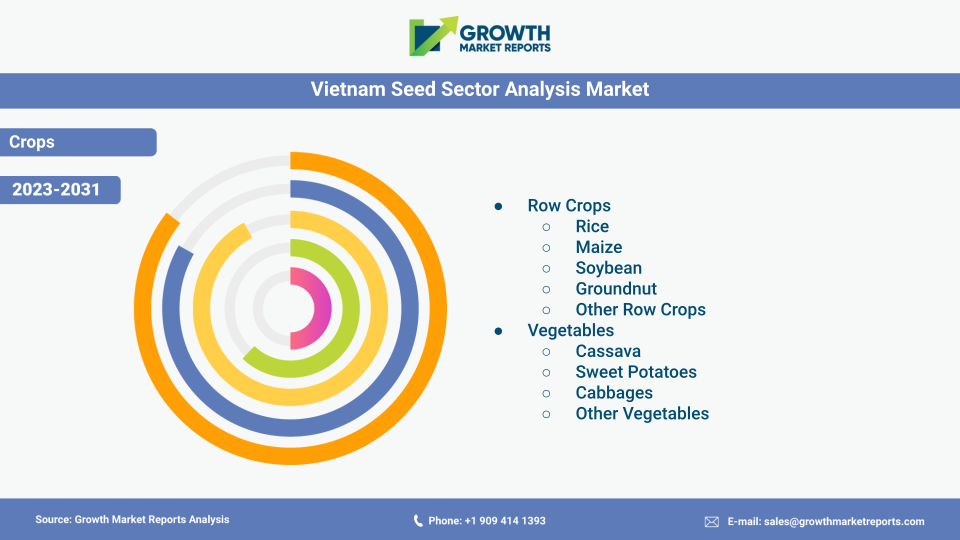
Segments - by Crop Type (Cereals & Grains, Fruits & Vegetables, Oilseeds, Others), by Seed Type (Hybrid, Open-Pollinated Varieties, Genetically Modified), by Application (Commercial, Research, Others), by Distribution Channel (Direct Sales, Retailers, Online, Others)
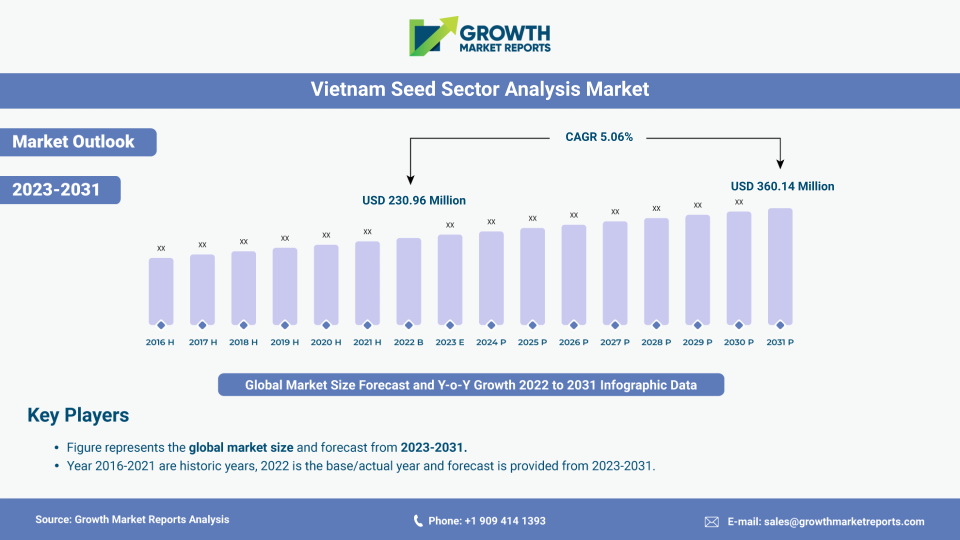
According to our latest research, the global seed market size reached USD 75.2 billion in 2024, with a robust compound annual growth rate (CAGR) of 6.1%. The market is expected to reach USD 126.8 billion by 2033, driven by the increasing demand for high-quality seeds, technological advancements, and a growing focus on agricultural productivity worldwide. A key growth factor for the seed market is the rising adoption of hybrid and genetically modified seeds, which are enhancing crop yields and resistance to pests and diseases, particularly in emerging markets like Vietnam.
One of the primary growth drivers for the Vietnam seed market is the country’s ongoing transformation from traditional to modern agricultural practices. Vietnam has made significant investments in agricultural research and development, with a focus on improving crop yields, disease resistance, and climate adaptability. This shift has been fueled by government policies aimed at ensuring food security and increasing export potential. The adoption of hybrid and genetically modified seeds is also gaining momentum, enabling farmers to achieve higher productivity and better adapt to adverse climatic conditions. In addition, the integration of advanced seed technologies, such as tissue culture and molecular breeding, has further strengthened the sector’s growth trajectory.
Another critical factor contributing to the expansion of the Vietnam seed market is the increasing demand for fruits, vegetables, and high-value crops. As consumer preferences shift toward healthier diets and diversified food options, there is a corresponding surge in demand for quality seeds that can produce superior varieties of fruits and vegetables. This trend is further amplified by Vietnam’s expanding middle class, urbanization, and the growth of modern retail channels. The government’s initiatives to promote sustainable agriculture and organic farming have also played a pivotal role in encouraging the adoption of improved seed varieties, thereby supporting the overall market growth.
The rapid development of Vietnam’s agri-food export sector has also catalyzed the need for high-performance seeds. With Vietnam emerging as a leading exporter of rice, coffee, pepper, and various fruits, the pressure to maintain consistent quality, yield, and supply is higher than ever. Export-oriented farmers are increasingly turning to certified, disease-resistant, and high-yielding seed varieties to meet the stringent requirements of international markets. This has prompted both domestic and international seed companies to invest in research, development, and distribution infrastructure within Vietnam, further fueling the growth of the seed sector.
Regionally, the Vietnam seed market exhibits diverse dynamics, with Northern, Central, and Southern Vietnam each contributing distinct strengths. The Northern region, with its fertile Red River Delta, is a key hub for rice and cereal seed demand. Central Vietnam, characterized by its challenging climatic conditions, is witnessing growth in drought-resistant and hybrid seed adoption. Southern Vietnam, home to the Mekong Delta, remains the powerhouse for fruit, vegetable, and export crop seeds. The interplay of regional agricultural priorities, climate, and infrastructure development continues to shape the Vietnam seed market’s trajectory, making it one of the most dynamic segments in Southeast Asia.
The Vietnam seed market is segmented by crop type into cereals and grains, fruits and vegetables, oilseeds, and others, each of which plays a pivotal role in the nation’s agricultural landscape. Cereals and grains, especially rice, dominate the seed market, reflecting Vietnam’s status as one of the world’s largest rice exporters. The demand for high-yielding and disease-resistant rice seeds is consistently high, driven by both domestic consumption and export requirements. In addition to rice, maize and wheat seeds are gaining traction due to their importance in animal feed and food processing industries. The push for improved varieties that can withstand pests and changing climatic conditions is prompting significant investment in research and development for cereal and grain seeds.
Fruits and vegetables represent another dynamic segment within the Vietnam seed sector, bolstered by rising consumer awareness of nutrition and health. The shift toward diversified diets and the expansion of modern retail channels have stimulated demand for high-quality seeds capable of producing superior yields and improved shelf life. Popular vegetable seeds include those for tomatoes, cucumbers, cabbages, and leafy greens, while fruit seeds such as watermelon, dragon fruit, and citrus are increasingly sought after by commercial growers. The adoption of hybrid and disease-resistant varieties is particularly notable in this segment, as farmers seek to maximize returns and minimize crop losses.
Oilseeds, including soybean, sesame, and groundnut, are gaining strategic importance in Vietnam’s seed market, especially as the country aims to reduce its reliance on imported edible oils. The government’s initiatives to promote oilseed cultivation and improve self-sufficiency have led to increased research into high-yielding, pest-resistant, and climate-resilient seed varieties. Both public and private sector players are investing in the development and distribution of improved oilseed seeds, recognizing their potential to enhance farm incomes and support the nation’s food security goals. The expansion of the livestock and food processing sectors further boosts demand for quality oilseed seeds.
The ‘others’ category encompasses a variety of specialty crops, legumes, and pulses that are increasingly being cultivated in Vietnam. These crops, while representing a smaller share of the overall seed market, are gaining prominence due to their role in crop rotation, soil fertility management, and niche export markets. Seeds for crops such as mung beans, peanuts, and spices are seeing gradual adoption, particularly among smallholder farmers seeking to diversify income streams. The growing emphasis on sustainable and organic farming practices is also encouraging the use of improved and certified seeds across these crop types, contributing to the overall growth and resilience of the Vietnam seed market.
| Attributes | Details |
| Report Title | Vietnam Seed Sector Analysis Market Research Report 2033 |
| By Crop Type | Cereals & Grains, Fruits & Vegetables, Oilseeds, Others |
| By Seed Type | Hybrid, Open-Pollinated Varieties, Genetically Modified |
| By Application | Commercial, Research, Others |
| By Distribution Channel | Direct Sales, Retailers, Online, Others |
| Regions Covered | North America, Europe, APAC, Latin America, MEA |
| Base Year | 2024 |
| Historic Data | 2018-2023 |
| Forecast Period | 2025-2033 |
| Number of Pages | 252 |
| Number of Tables & Figures | 286 |
| Customization Available | Yes, the report can be customized as per your need. |
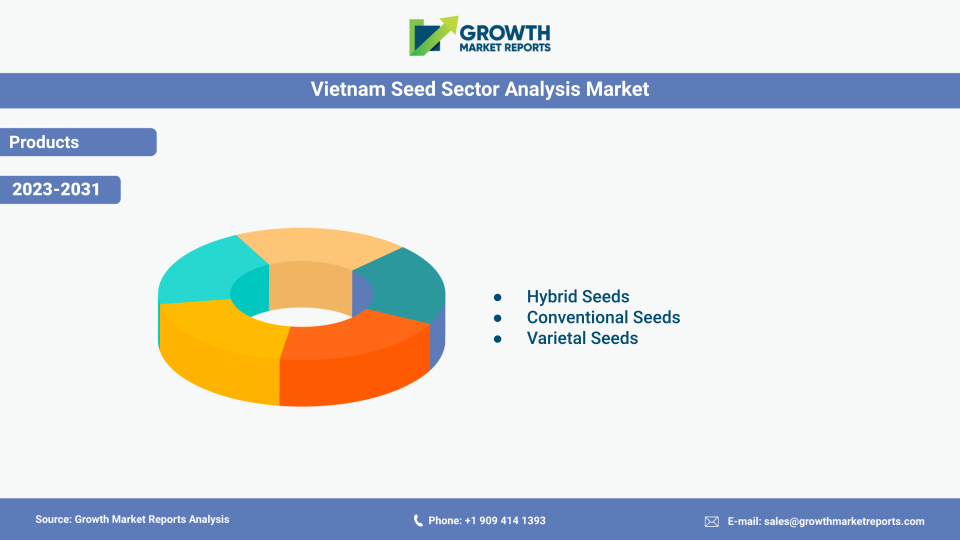
The seed type segment in the Vietnam seed market comprises hybrid seeds, open-pollinated varieties (OPVs), and genetically modified (GM) seeds, each offering unique advantages and challenges. Hybrid seeds are increasingly popular among Vietnamese farmers due to their superior yield potential, uniformity, and resistance to pests and diseases. The adoption of hybrid seeds has been particularly pronounced in high-value crops such as maize, vegetables, and certain fruits, where productivity gains are most significant. Seed companies, both domestic and international, are investing heavily in hybrid seed research, production, and distribution to meet the growing demand from commercial and export-oriented farmers.
Open-pollinated varieties (OPVs) continue to hold a significant share of the Vietnam seed market, especially among smallholder and subsistence farmers. OPVs are valued for their adaptability to local conditions, affordability, and the ability for farmers to save seeds for future planting cycles. This seed type is commonly used for staple crops such as rice, legumes, and certain vegetables. However, the productivity of OPVs generally lags behind that of hybrid seeds, prompting ongoing efforts by research institutes and seed companies to improve their performance through selective breeding and technological interventions. The balance between preserving traditional practices and adopting modern seed technologies remains a key consideration in this segment.
Genetically modified (GM) seeds are a relatively new but rapidly growing segment in the Vietnam seed market. While regulatory and public acceptance challenges remain, the benefits offered by GM seeds, such as enhanced resistance to pests, diseases, and environmental stresses, are driving gradual adoption. GM maize and soybean seeds have been introduced on a pilot basis, with positive results in terms of yield improvement and input cost reduction. The government is cautiously expanding the scope of GM seed usage, balancing food safety, environmental concerns, and the need to boost agricultural productivity. As regulatory frameworks evolve and consumer awareness increases, the GM seed segment is expected to play a more prominent role in Vietnam’s seed industry.
The interplay between hybrid, OPV, and GM seed types reflects the diverse needs and capacities of Vietnamese farmers. While large-scale commercial growers are quick to adopt advanced seed technologies for competitive advantage, smallholders often rely on more affordable and accessible OPVs. Seed companies and policymakers are working to bridge this gap through targeted extension services, subsidies, and educational programs, ensuring that the benefits of modern seed innovations reach all segments of the farming community. This multi-faceted approach is critical to achieving sustainable growth and resilience in the Vietnam seed market.
The application segment of the Vietnam seed market is categorized into commercial, research, and others, each contributing uniquely to the sector’s development. Commercial application dominates the market, accounting for the majority of seed use in large-scale farming operations, contract farming, and export-oriented agriculture. The commercial segment is characterized by the widespread adoption of certified, high-yielding, and disease-resistant seeds, driven by the need to ensure consistent quality, productivity, and compliance with international standards. Seed companies are increasingly focusing on developing tailored solutions for commercial growers, including value-added services such as agronomic support, crop monitoring, and integrated pest management.
Research applications play a pivotal role in the Vietnam seed market, underpinning the sector’s capacity for innovation and adaptation. Public and private research institutions are engaged in extensive breeding programs aimed at developing new seed varieties with improved traits such as drought tolerance, pest resistance, and nutritional quality. Research-driven seed development is essential for addressing the challenges posed by climate change, evolving pest pressures, and shifting consumer preferences. Collaborative efforts between universities, government agencies, and seed companies are accelerating the pace of innovation, ensuring that Vietnamese agriculture remains competitive and sustainable in the long term.
The ‘others’ category within the application segment includes seeds used for educational, experimental, and niche purposes. Agricultural colleges, vocational training centers, and non-governmental organizations (NGOs) utilize seeds for demonstration plots, farmer training programs, and pilot projects aimed at promoting best practices and new technologies. This segment, though smaller in scale, plays a critical role in capacity building and knowledge transfer, enabling farmers to make informed decisions about seed selection and crop management. The integration of digital tools and platforms for seed information dissemination is further enhancing the reach and impact of these initiatives.
The interplay between commercial, research, and other applications underscores the multi-dimensional nature of the Vietnam seed market. While commercial growers drive demand for advanced seed technologies, research institutions ensure a continuous pipeline of innovation, and educational applications facilitate knowledge diffusion. This holistic approach is vital for building a resilient and adaptive seed sector capable of meeting the diverse needs of Vietnamese agriculture. The ongoing collaboration between stakeholders across the value chain is expected to further strengthen the sector’s growth prospects in the coming years.
Distribution channels in the Vietnam seed market are evolving rapidly, reflecting changes in consumer behavior, technological advancements, and market integration. Direct sales remain a cornerstone of the seed distribution landscape, particularly for large-scale commercial farmers and institutional buyers. Seed companies often establish direct relationships with growers, offering customized solutions, technical support, and after-sales services. This channel enables greater control over product quality, traceability, and customer engagement, making it the preferred choice for high-value and specialty seeds. Direct sales also facilitate the dissemination of new seed technologies and innovations, accelerating their adoption among progressive farmers.
Retailers constitute another significant distribution channel, catering primarily to smallholder and medium-scale farmers. Agricultural supply stores, cooperatives, and local dealers serve as vital access points for a wide range of seed varieties, fertilizers, and crop protection products. Retailers play a crucial role in bridging the gap between seed producers and end-users, providing localized advice, credit facilities, and logistical support. The expansion of organized retail networks, coupled with government initiatives to regulate seed quality and certification, is enhancing the reliability and reach of this channel across urban and rural areas.
Online distribution is an emerging and rapidly growing channel in the Vietnam seed market, driven by the digital transformation of agriculture and the proliferation of e-commerce platforms. Online sales offer farmers greater convenience, transparency, and access to a broader selection of seed varieties, including those from international suppliers. Digital platforms also facilitate knowledge sharing, product reviews, and price comparisons, empowering farmers to make informed purchasing decisions. Seed companies are increasingly investing in digital marketing, mobile apps, and online advisory services to tap into this expanding market segment, particularly among tech-savvy younger farmers.
Other distribution channels include government-run seed distribution programs, NGO-led initiatives, and contract farming arrangements. These channels are particularly important for reaching marginalized and remote farming communities, ensuring equitable access to improved seed varieties and agricultural inputs. Public-private partnerships and donor-funded projects often leverage these channels to promote sustainable agriculture, climate resilience, and food security. The diversification of distribution channels is enhancing the overall efficiency, inclusivity, and resilience of the Vietnam seed market, enabling it to respond effectively to evolving market demands and challenges.
The Vietnam seed market is poised for significant opportunities driven by technological innovation, supportive government policies, and expanding export potential. The increasing adoption of advanced breeding techniques, such as marker-assisted selection and gene editing, is enabling the development of seed varieties with enhanced traits, including drought tolerance, pest resistance, and improved nutritional content. These innovations are critical for addressing the challenges of climate change, resource constraints, and evolving consumer preferences. Government initiatives to promote sustainable agriculture, organic farming, and food security are further creating a conducive environment for investment and growth in the seed sector. The expansion of modern retail channels, digital platforms, and export-oriented value chains is opening up new avenues for market penetration and revenue generation.
Another major opportunity lies in the growing demand for high-value crops, fruits, and vegetables, both domestically and in international markets. Vietnam’s strategic location, favorable agro-climatic conditions, and established reputation as a reliable exporter of agricultural products position it well to capitalize on rising global demand for quality produce. Seed companies can leverage this trend by developing tailored solutions for specific crops, regions, and market segments, thereby enhancing their competitiveness and market share. The increasing focus on sustainable and regenerative agriculture is also creating opportunities for the development and commercialization of organic, non-GMO, and specialty seeds, catering to niche consumer segments and premium markets.
Despite these opportunities, the Vietnam seed market faces several threats and restrainers that could impact its growth trajectory. Regulatory challenges, particularly concerning the approval and commercialization of genetically modified seeds, remain a significant barrier. Public perception and consumer acceptance of GM crops are still evolving, necessitating robust stakeholder engagement and transparent communication. Additionally, the prevalence of counterfeit and substandard seeds in the market poses risks to crop productivity, farmer incomes, and overall sector credibility. Addressing these challenges requires coordinated efforts by policymakers, industry players, and research institutions to strengthen regulatory frameworks, enhance quality assurance mechanisms, and promote awareness among farmers and consumers.
The regional dynamics of the Vietnam seed market are shaped by varying agro-ecological conditions, crop preferences, and infrastructure development across Northern, Central, and Southern Vietnam. In Northern Vietnam, which includes the fertile Red River Delta, the seed market size was estimated at USD 410 million in 2024. This region is a key hub for rice and cereal seed demand, driven by intensive paddy cultivation and a strong focus on food security. The adoption of high-yielding and disease-resistant rice varieties is particularly high, supported by government research programs and extension services. The region also shows increasing interest in vegetable and fruit seeds, reflecting changing dietary patterns and urbanization.
In Central Vietnam, the seed market reached approximately USD 185 million in 2024, characterized by a diverse crop mix and challenging climatic conditions. This region faces frequent droughts and soil salinity, prompting a shift toward drought-tolerant, hybrid, and climate-resilient seed varieties. The adoption of advanced seed technologies is gaining momentum, supported by public-private partnerships and donor-funded projects aimed at enhancing climate resilience and sustainable agriculture. Central Vietnam is also witnessing growth in specialty crops and high-value fruits, driven by tourism, export opportunities, and the expansion of modern retail channels.
Southern Vietnam, home to the Mekong Delta, represents the largest regional market, with a seed market size of USD 570 million in 2024 and an expected CAGR of 6.7% through 2033. The region’s agricultural landscape is dominated by rice, fruits, and export-oriented crops, making it a focal point for innovation and investment in the seed sector. The adoption of hybrid, GM, and certified seeds is particularly high among commercial and export-oriented farmers, supported by a well-developed distribution network and access to international markets. Southern Vietnam’s dynamic agribusiness ecosystem, coupled with strong government support for research and infrastructure development, positions it as a key driver of growth and transformation in the Vietnam seed market.
The competitive landscape of the Vietnam seed market is characterized by the presence of both domestic and international players, each vying for market share through innovation, quality, and distribution excellence. Leading multinational seed companies have established a strong foothold in Vietnam, leveraging their global expertise, research capabilities, and extensive product portfolios. These companies invest heavily in localized breeding programs, capacity building, and farmer education to tailor their offerings to the specific needs of Vietnamese agriculture. The entry of international players has also spurred domestic seed companies to enhance their R&D capabilities, improve product quality, and expand their distribution networks.
Domestic seed companies play a crucial role in the Vietnam seed market, particularly in the development and distribution of open-pollinated and region-specific seed varieties. These companies benefit from their deep understanding of local agro-ecological conditions, farmer preferences, and regulatory requirements. Many domestic players collaborate with research institutes, universities, and government agencies to develop improved seed varieties, participate in public tenders, and support government-led seed distribution programs. The agility and adaptability of local companies enable them to respond quickly to emerging market trends, such as the growing demand for organic and specialty seeds.
The competitive dynamics are further shaped by the emergence of innovative startups and technology-driven companies focused on digital agriculture, precision breeding, and e-commerce. These new entrants are leveraging advanced technologies, such as artificial intelligence, data analytics, and blockchain, to enhance seed quality, traceability, and customer engagement. The proliferation of digital platforms and online marketplaces is creating new opportunities for both established and emerging players to reach a broader customer base, streamline operations, and differentiate their offerings in an increasingly crowded market.
Major companies operating in the Vietnam seed market include Vinaseed Group, Southern Seed Corporation (SSC), East-West Seed, Syngenta, Bayer Crop Science, and Monsanto (now part of Bayer). Vinaseed Group is recognized for its leadership in rice and cereal seed development, with a strong focus on research, innovation, and sustainability. Southern Seed Corporation (SSC) is a key player in hybrid and vegetable seeds, catering to both domestic and export markets. East-West Seed is renowned for its expertise in high-value vegetable seeds and farmer training programs. Syngenta and Bayer Crop Science bring global R&D capabilities and a broad product portfolio, while also investing in local partnerships and capacity building. These companies are at the forefront of driving innovation, quality assurance, and sustainable growth in the Vietnam seed market, ensuring that Vietnamese agriculture remains competitive on the global stage.
The Vietnam Seed Sector Analysis market has been segmented on the basis of
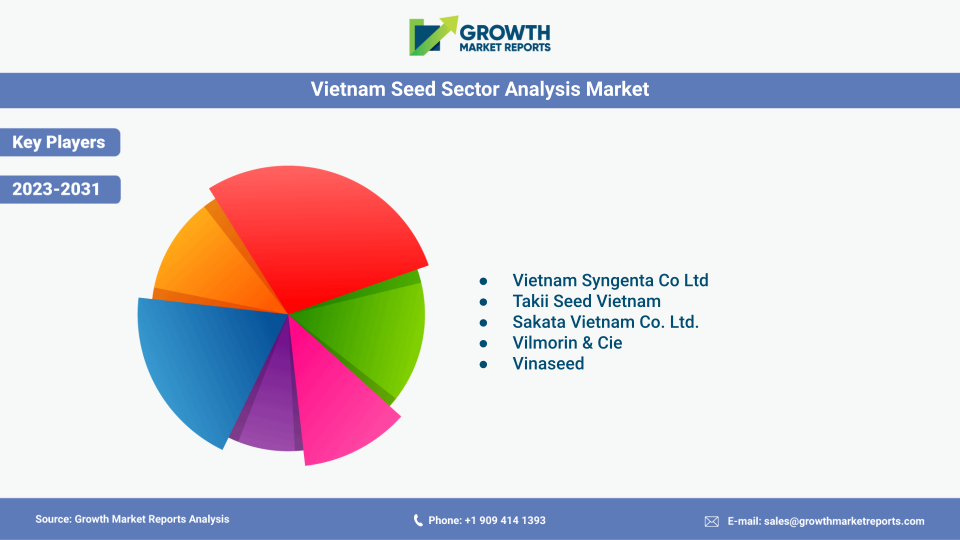
Key players competing in the Vietnam seed sector analysis market include Vietnam Syngenta Co Ltd, Takii Seed Vietnam, Sakata Vietnam Co. Ltd., Vilmorin & Cie, and Vinaseed.
Yes, the report offers customization options to meet specific client needs, including tailored data, analysis, and regional or crop-specific insights.
Key players include Vinaseed Group, Southern Seed Corporation (SSC), East-West Seed, Syngenta, Bayer Crop Science, Monsanto (Bayer), An Giang Plant Protection JSC, Thai Binh Seed Corporation, Loc Troi Group, Sakata Seed Corporation, and several international seed companies.
Northern Vietnam focuses on rice and cereal seeds, Central Vietnam emphasizes drought-resistant and hybrid seeds due to challenging climates, and Southern Vietnam (Mekong Delta) leads in fruit, vegetable, and export crop seeds with the largest market share.
Opportunities include technological innovation, government support, growing demand for high-value crops, and expansion of digital and export channels. Threats include regulatory hurdles for GM seeds, public acceptance issues, and the prevalence of counterfeit or substandard seeds.
Seeds in Vietnam are distributed through direct sales (to large farms), retailers (agricultural stores and cooperatives), online platforms (e-commerce), and government or NGO-led programs. Online sales are growing rapidly due to digital transformation in agriculture.
The market is segmented into commercial, research, and other applications. Commercial use dominates, especially in large-scale and export-oriented farming. Research applications focus on breeding and innovation, while 'other' includes educational and demonstration uses.
The Vietnam seed market offers hybrid seeds, open-pollinated varieties (OPVs), and genetically modified (GM) seeds. Hybrid seeds are popular for their high yields and disease resistance, OPVs are valued for adaptability and affordability, while GM seeds are gaining traction for their pest and climate resilience.
Cereals and grains, especially rice, dominate the Vietnam seed market due to the country's status as a leading rice exporter. Fruits and vegetables, oilseeds (such as soybean and sesame), and specialty crops like legumes and pulses also play significant roles.
Key growth drivers include the adoption of hybrid and genetically modified seeds, government policies promoting food security and exports, investments in agricultural R&D, rising demand for fruits and vegetables, and the expansion of modern retail and export channels.
As of 2024, the global seed market reached USD 75.2 billion, with Vietnam being a rapidly growing segment. The market is projected to reach USD 126.8 billion globally by 2033, driven by increased demand for high-quality seeds, technological advancements, and a focus on agricultural productivity. Vietnam's seed sector is expected to experience strong growth due to modernization, government support, and export opportunities.