Screw Compressors Market Research Report 2033

Screw Compressors Market Research Report 2033

Segments - by Type (Oil-Injected, Oil-Free), by Stage (Single-Stage, Multi-Stage), by Technology (Stationary, Portable), by End-User Industry (Manufacturing, Oil & Gas, Energy & Power, Automotive, Chemical & Petrochemical, Food & Beverage, Pharmaceuticals, Others)

https://growthmarketreports.com/Raksha
Author : Raksha Sharma
https://growthmarketreports.com/Vaibhav
Fact-checked by : V. Chandola
https://growthmarketreports.com/Shruti
Editor : Shruti Bhat

Upcoming | Report ID :EP-2761 | 4.6 Rating | 95 Reviews | 268 Pages | Format : Docx PDF

Report Description


Screw Compressors Market Outlook

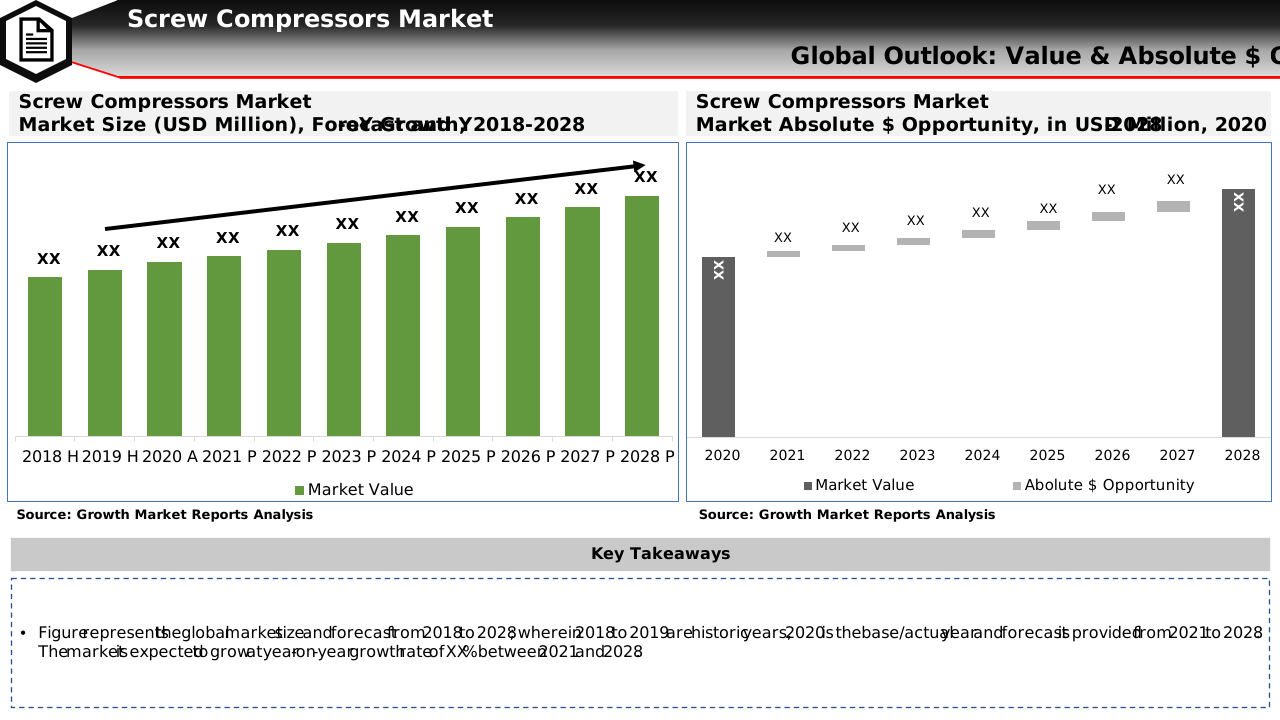
According to our latest research, the global screw compressors market size stood at USD 10.8 billion in 2024. The market is exhibiting a robust growth trajectory, with a recorded CAGR of 6.3% during the forecast period. By 2033, the screw compressors market is projected to reach a value of USD 18.6 billion, driven by increasing industrialization, rising demand for energy-efficient solutions, and expanding applications across diverse sectors. The market's expansion is underpinned by technological advancements and the growing need for reliable compressed air systems in manufacturing, oil and gas, and other end-user industries.

The primary growth factor for the screw compressors market is the rapid pace of industrialization globally, particularly in emerging economies. As industries expand, the demand for efficient and cost-effective compressed air solutions intensifies. Screw compressors, known for their high efficiency, reliability, and low maintenance requirements, have become the preferred choice across manufacturing, automotive, and energy sectors. The trend towards automation and the adoption of advanced manufacturing processes further amplify the need for robust and continuous compressed air supply, cementing the critical role of screw compressors in supporting industrial operations.

Another significant driver is the increasing focus on energy efficiency and sustainability. With rising energy costs and stringent environmental regulations, industries are prioritizing equipment that minimizes energy consumption and reduces carbon footprint. Modern screw compressors are engineered with advanced controls and variable speed drives, enabling precise performance management and substantial energy savings. This shift towards sustainable production practices is compelling manufacturers to replace older, less efficient compressors with state-of-the-art screw compressor systems, thus accelerating market growth.

Technological advancements have also played a pivotal role in propelling the screw compressors market forward. Innovations such as oil-free screw compressors, smart monitoring systems, and IoT-enabled predictive maintenance solutions are transforming the landscape. These advancements not only enhance operational efficiency but also extend equipment lifespan and reduce downtime. The integration of digital technologies allows for real-time performance monitoring and remote diagnostics, providing end-users with actionable insights to optimize compressor operations and improve overall productivity.

In addition to technological advancements, the market for screw compressors is also witnessing a growing trend in Screw Compressor Rental services. This trend is particularly beneficial for industries that require temporary or project-specific compressed air solutions without the commitment of purchasing new equipment. Rental services provide flexibility and cost-effectiveness, allowing businesses to access the latest compressor technologies without significant capital expenditure. As industries face fluctuating demand and project-based requirements, the option to rent screw compressors offers a strategic advantage, ensuring that companies can maintain operational efficiency while managing costs effectively.

From a regional perspective, Asia Pacific continues to dominate the screw compressors market, accounting for the largest share in 2024. The regionÂ’s leadership is attributed to rapid industrial growth, significant investments in infrastructure, and the presence of major manufacturing hubs in China, India, and Southeast Asia. North America and Europe also hold substantial market shares, driven by technological innovation and the adoption of energy-efficient solutions. Meanwhile, the Middle East & Africa and Latin America are witnessing steady growth, supported by expanding oil and gas activities and increasing industrialization.

Global Screw Compressors Industry Outlook

Type Analysis

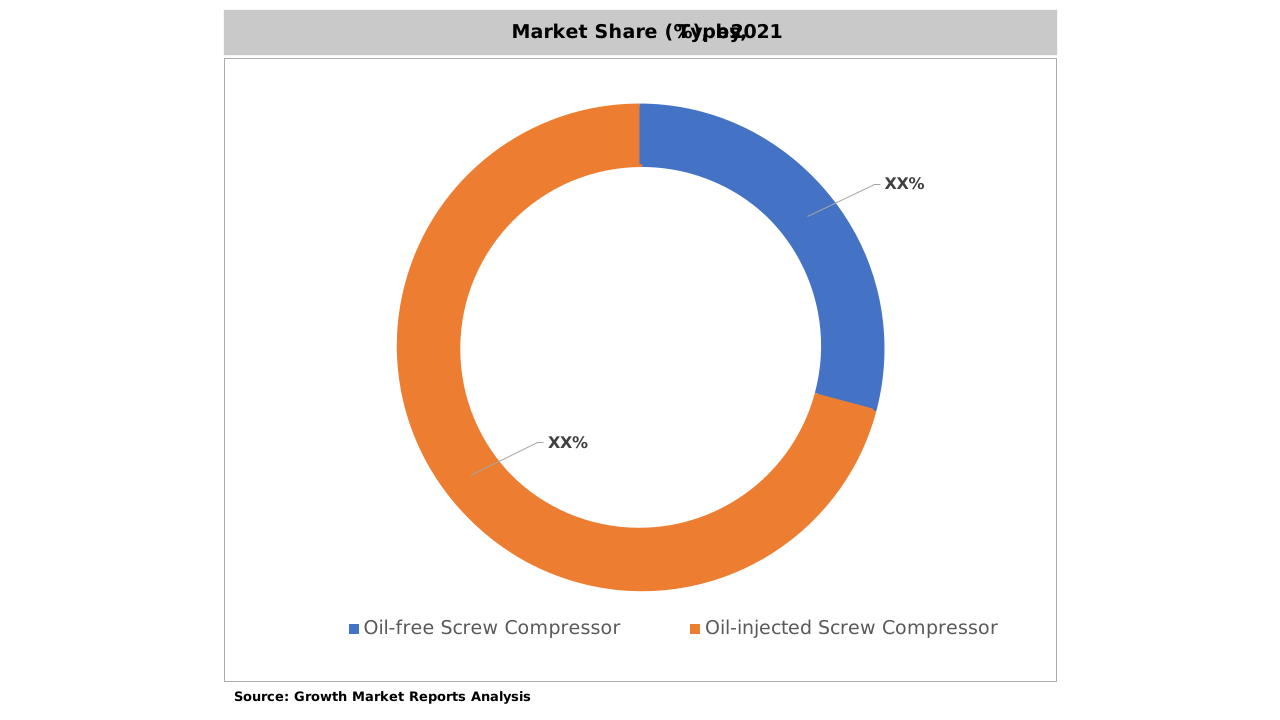
The screw compressors market by type is broadly segmented into oil-injected and oil-free variants, each catering to distinct operational needs and industry requirements. Oil-injected screw compressors are the most widely used type, owing to their superior efficiency, robustness, and cost-effectiveness. These compressors are ideal for applications where minimal air contamination is permissible, such as in general manufacturing, automotive, and energy sectors. The high adoption rate of oil-injected compressors is further supported by their ability to handle heavy-duty operations and deliver consistent performance in demanding environments.

On the other hand, oil-free screw compressors are gaining significant traction, especially in industries where air purity is paramount. Sectors such as food and beverage, pharmaceuticals, electronics, and healthcare require compressed air that is completely free of oil contaminants. Oil-free compressors are designed to meet stringent quality standards and regulatory requirements, ensuring product safety and process integrity. Although they tend to have higher upfront costs compared to oil-injected models, the long-term benefits of reduced maintenance, minimized risk of contamination, and compliance with industry standards are driving their increased adoption.

The competitive landscape within the type segment is marked by continuous innovation and product development. Leading manufacturers are focusing on enhancing the efficiency and reliability of both oil-injected and oil-free screw compressors. This includes the integration of advanced control systems, improved rotor profiles, and enhanced cooling mechanisms. The objective is to deliver compressors that not only meet but exceed the evolving needs of end-users in terms of performance, energy savings, and operational flexibility.

Market trends indicate a gradual shift towards oil-free screw compressors, particularly in regions with strict environmental and safety regulations. However, oil-injected compressors will continue to maintain a strong presence due to their cost advantages and versatility across a wide range of applications. The overall growth in both segments is expected to remain robust, as industries seek to balance operational efficiency with sustainability and compliance requirements.

Report Scope

Attributes Details
Report Title Screw Compressors Market Research Report 2033
By Type Oil-Injected, Oil-Free
By Stage Single-Stage, Multi-Stage
By Technology Stationary, Portable
By End-User Industry Manufacturing, Oil & Gas, Energy & Power, Automotive, Chemical & Petrochemical, Food & Beverage, Pharmaceuticals, Others
Regions Covered North America, Europe, APAC, Latin America, MEA
Base Year 2024
Historic Data 2018-2023
Forecast Period 2025-2033
Number of Pages 268
Number of Tables & Figures 361
Customization Available Yes, the report can be customized as per your need.

Stage Analysis

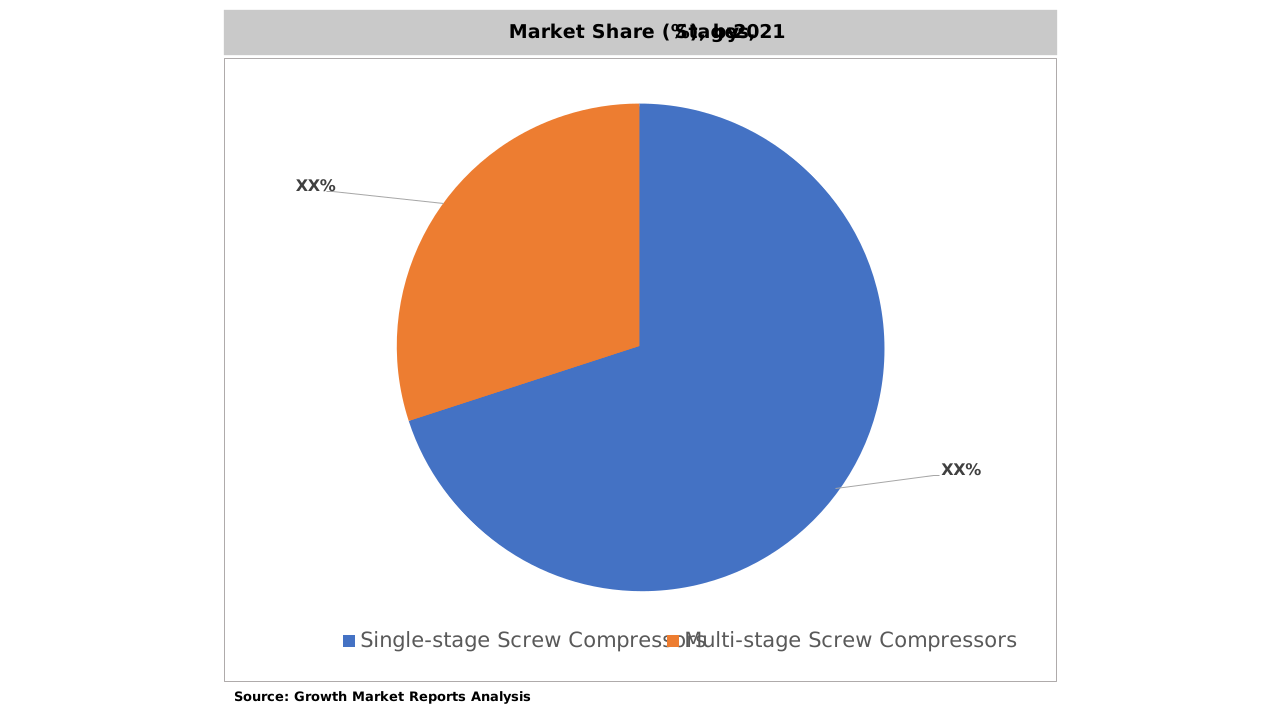
The stage segment of the screw compressors market is divided into single-stage and multi-stage compressors, each offering unique advantages depending on the application. Single-stage screw compressors are typically used in applications requiring moderate pressure levels and continuous operation. They are favored for their simplicity, lower initial investment, and ease of maintenance. Single-stage compressors are widely deployed in industries such as manufacturing, automotive, and general industrial processes, where the demand for compressed air is steady but not excessively high.

Multi-stage screw compressors, on the other hand, are engineered to deliver higher pressure ratios and enhanced efficiency, making them suitable for more demanding applications. These compressors are commonly used in sectors such as oil and gas, chemical and petrochemical, and power generation, where process requirements necessitate higher pressures and greater reliability. The multi-stage configuration allows for better energy utilization and reduced operational costs over time, which is particularly important in large-scale industrial settings.

Technological advancements in compressor design have led to significant improvements in both single-stage and multi-stage systems. Manufacturers are focusing on optimizing rotor profiles, improving sealing technologies, and incorporating advanced control systems to enhance performance and reliability. The adoption of variable speed drives and smart monitoring solutions is further enhancing the operational efficiency of both single-stage and multi-stage screw compressors, enabling end-users to achieve optimal energy savings and process control.

The choice between single-stage and multi-stage screw compressors is largely influenced by the specific requirements of the application, including desired pressure levels, duty cycles, and total cost of ownership. While single-stage compressors will continue to dominate less demanding applications, the market for multi-stage compressors is expected to witness steady growth, driven by the increasing complexity and scale of industrial processes worldwide. The ongoing trend towards process optimization and energy efficiency will further propel demand in both segments.

Technology Analysis

The screw compressors market by technology is segmented into stationary and portable compressors, each serving distinct operational needs across industries. Stationary screw compressors account for the majority of market share, as they are integral to large-scale industrial operations requiring continuous, high-capacity compressed air supply. These compressors are typically installed in fixed locations within manufacturing plants, refineries, and power generation facilities, providing a reliable and efficient source of compressed air for a wide range of applications.

Portable screw compressors, while representing a smaller share of the market, are essential for applications requiring mobility and flexibility. These compressors are widely used in construction, mining, and infrastructure projects, where compressed air is needed at multiple or remote locations. The portability of these units allows for easy transportation and deployment, making them indispensable for operations that demand on-site compressed air supply. Technological advancements have led to the development of more compact, lightweight, and fuel-efficient portable compressors, further expanding their range of applications.

The stationary segment is witnessing significant innovation, with manufacturers focusing on enhancing energy efficiency, reducing noise levels, and integrating digital controls. The adoption of smart technologies, such as IoT-enabled monitoring and predictive maintenance, is transforming stationary compressor operations, enabling real-time performance tracking and proactive issue resolution. These advancements are particularly valuable in industries where uptime and operational efficiency are critical to productivity and profitability.

In the portable segment, the emphasis is on durability, ease of use, and adaptability to challenging environments. Manufacturers are investing in the development of ruggedized compressors that can withstand harsh operating conditions while maintaining high performance and reliability. The growing demand for portable compressors in emerging economies, driven by infrastructure development and increased construction activities, is expected to fuel further growth in this segment. Overall, both stationary and portable screw compressors will continue to play a vital role in meeting the diverse needs of end-users across various industries.

End-User Industry Analysis

The screw compressors market serves a broad spectrum of end-user industries, each with unique requirements and growth drivers. The manufacturing sector remains the largest end-user, accounting for a significant share of the market in 2024. Screw compressors are essential in manufacturing processes for powering pneumatic tools, conveying materials, and supporting automation systems. The ongoing trend towards smart manufacturing and Industry 4.0 is driving the adoption of advanced screw compressors that offer enhanced efficiency, reliability, and integration capabilities.

The oil and gas industry is another key end-user, utilizing screw compressors for a variety of applications, including gas gathering, gas lift, and vapor recovery. The demand for reliable and efficient compression solutions in upstream, midstream, and downstream operations is fueling market growth in this sector. Additionally, the energy and power sector relies on screw compressors for applications such as gas turbine starting, air separation, and plant maintenance, further contributing to market expansion.

Other prominent end-user industries include automotive, chemical and petrochemical, food and beverage, and pharmaceuticals. In the automotive sector, screw compressors are used in assembly lines, painting, and tire inflation. The chemical and petrochemical industry requires high-performance compressors for process gas compression, refrigeration, and pneumatic conveying. The food and beverage sector prioritizes oil-free compressors to ensure product purity and compliance with safety standards, while the pharmaceutical industry demands compressors that meet stringent regulatory requirements for clean and sterile air supply.

Emerging end-user segments, such as electronics, textiles, and water treatment, are also contributing to the growth of the screw compressors market. The increasing adoption of automation and precision manufacturing in these industries is driving the need for reliable and energy-efficient compressed air solutions. As industries continue to evolve and diversify, the demand for customized screw compressor solutions tailored to specific operational needs is expected to rise, presenting new opportunities for market players.

Opportunities & Threats

The screw compressors market is brimming with opportunities, particularly in the realm of technological innovation and digital transformation. The integration of IoT, artificial intelligence, and advanced analytics into compressor systems is revolutionizing maintenance practices, operational efficiency, and energy management. Predictive maintenance solutions enable real-time monitoring of compressor health, reducing unplanned downtime and extending equipment lifespan. These digital advancements not only enhance productivity but also provide end-users with actionable insights to optimize compressor operations and reduce total cost of ownership. As industries increasingly embrace smart manufacturing and Industry 4.0 initiatives, the demand for intelligent and connected screw compressors is expected to soar, opening up new avenues for growth and differentiation.

Another significant opportunity lies in the growing emphasis on sustainability and energy efficiency. Governments and regulatory bodies worldwide are implementing strict energy consumption and emission standards, compelling industries to adopt eco-friendly and energy-efficient equipment. Screw compressors, with their inherent efficiency advantages and advancements in variable speed technology, are well-positioned to capitalize on this trend. The transition towards green manufacturing practices and the adoption of renewable energy sources are expected to drive the replacement of older, less efficient compressors with modern, energy-saving screw compressor systems. This shift not only supports environmental goals but also delivers tangible cost savings to end-users, further boosting market demand.

Despite the numerous growth opportunities, the screw compressors market faces certain restraining factors. One of the primary challenges is the high initial investment associated with advanced screw compressor systems, particularly oil-free and multi-stage variants. Small and medium-sized enterprises (SMEs) may find it difficult to justify the upfront costs, especially in price-sensitive markets. Additionally, the presence of alternative compression technologies, such as reciprocating and centrifugal compressors, poses a competitive threat, particularly in applications where these alternatives offer comparable performance at lower costs. Market players must therefore focus on demonstrating the long-term value proposition of screw compressors, including energy savings, reliability, and reduced maintenance, to overcome these barriers and sustain growth.

Regional Outlook

The regional distribution of the screw compressors market highlights Asia Pacific as the dominant force, with the region accounting for approximately 42% of global market revenue in 2024, equivalent to around USD 4.5 billion. The region's leadership is driven by rapid industrialization, significant infrastructure investments, and the presence of major manufacturing hubs in China, India, Japan, and Southeast Asia. The growing demand for energy-efficient solutions, coupled with government initiatives to promote industrial development, is fueling the adoption of advanced screw compressors across diverse sectors. The Asia Pacific market is also experiencing the fastest growth, with a projected CAGR of 7.1% through 2033.

North America and Europe collectively account for a substantial share of the screw compressors market, with North America contributing around USD 2.8 billion and Europe around USD 2.3 billion in 2024. These regions are characterized by high levels of technological innovation, stringent regulatory standards, and a strong focus on energy efficiency. The adoption of oil-free and variable speed screw compressors is particularly high in industries such as food and beverage, pharmaceuticals, and chemicals, where air quality and operational reliability are critical. Both regions are also witnessing increased investments in digitalization and smart manufacturing, further driving market demand.

The Middle East & Africa and Latin America represent emerging markets for screw compressors, with a combined market size of approximately USD 1.2 billion in 2024. Growth in these regions is primarily driven by expanding oil and gas activities, infrastructure development, and increasing industrialization. While the adoption of advanced screw compressors is still in the early stages, rising awareness of energy efficiency and sustainability is expected to accelerate market growth in the coming years. Local and regional players are also entering the market, offering customized solutions to meet the specific needs of end-users in these regions.

Screw Compressors Market Statistics

Competitor Outlook

The competitive landscape of the screw compressors market is characterized by intense rivalry among global and regional players, each striving to enhance their market position through innovation, strategic partnerships, and expansion initiatives. Leading companies are investing heavily in research and development to introduce technologically advanced screw compressors that offer superior efficiency, reliability, and digital integration. The focus is on developing products that cater to the evolving needs of end-users, including energy savings, reduced maintenance, and compliance with stringent regulatory standards. Mergers, acquisitions, and collaborations are also common strategies employed by market players to expand their product portfolios, strengthen distribution networks, and gain access to new markets.

Innovation remains a key differentiator in the screw compressors market, with manufacturers competing on the basis of product performance, energy efficiency, and value-added features. The integration of IoT, artificial intelligence, and predictive analytics into compressor systems is enabling companies to offer smart, connected solutions that deliver real-time monitoring, remote diagnostics, and proactive maintenance. These advancements not only enhance customer value but also provide a competitive edge in an increasingly digitalized industrial landscape. Additionally, companies are focusing on sustainability by developing oil-free and environmentally friendly compressors that meet the growing demand for green manufacturing solutions.

Customer-centricity is another critical aspect of the competitive landscape, with leading players offering comprehensive after-sales services, technical support, and customized solutions to address specific industry requirements. The ability to provide end-to-end solutions, from initial consultation and system design to installation, maintenance, and upgrades, is becoming increasingly important in securing long-term customer relationships and driving repeat business. Companies are also leveraging digital platforms and e-commerce channels to enhance customer engagement and streamline the purchasing process.

Some of the major companies operating in the global screw compressors market include Atlas Copco AB, Ingersoll Rand, Kaeser Kompressoren, Hitachi Industrial Equipment Systems, Gardner Denver Holdings, Sullair LLC, Kobe Steel Ltd., BOGE Kompressoren, Quincy Compressor, and Siemens AG. Atlas Copco AB is renowned for its extensive portfolio of oil-injected and oil-free screw compressors, backed by a strong global presence and commitment to innovation. Ingersoll Rand is a leading player known for its advanced compressor technologies and comprehensive service offerings. Kaeser Kompressoren and Gardner Denver Holdings are recognized for their focus on energy efficiency and customer-centric solutions, while Hitachi Industrial Equipment Systems and Sullair LLC are prominent for their technological advancements and reliability.

These companies are continuously expanding their product lines and investing in digital transformation to stay ahead of the competition. Strategic collaborations with technology providers, industry associations, and end-users are enabling them to co-develop innovative solutions and address emerging market trends. The competitive landscape is expected to remain dynamic, with ongoing investments in R&D, digitalization, and sustainability shaping the future of the screw compressors market.

Key Players

  • Atlas Copco AB
  • Ingersoll Rand Plc
  • Siemens AG
  • Gardner Denver Holdings Inc.
  • GEA Group AG
  • Hitachi Ltd.
  • Kobe Steel Ltd.
  • Kaeser Kompressoren SE
  • Sullair LLC
  • Boge Kompressoren
  • Elgi Equipments Limited
  • Quincy Compressor LLC
  • FS-Elliott Co., LLC
  • MAN Energy Solutions SE
  • Danfoss Group
  • Shanghai Screw Compressor Co., Ltd.
  • BAUER COMP Holding GmbH
  • Fusheng Co., Ltd.
  • Aerzen Maschinenfabrik GmbH
  • Hanbell Precise Machinery Co., Ltd.
Screw Compressors Market Overview

Segments

The Screw Compressors market has been segmented on the basis of

Type

  • Oil-Injected
  • Oil-Free

Stage

  • Single-Stage
  • Multi-Stage

Technology

  • Stationary
  • Portable

End-User Industry

  • Manufacturing
  • Oil & Gas
  • Energy & Power
  • Automotive
  • Chemical & Petrochemical
  • Food & Beverage
  • Pharmaceuticals
  • Others

Competitive Landscape

Key players competing in the global screw compressors market are Emerson Electric Co; Ingersoll-Rand PLC; Daikin Industries, Ltd; and Atlas Copco AB. Companies are focusing on business strategies, various innovations, and collaborations with other industry players for multiple start-ups in emerging economies and new products launches to improve their competitive position in the market.

In September 2021, Daikin Industries, Ltd announced to set up its third manufacturing unit at Sri City, Andhra Pradesh, India. The company planned to manufacture ACs and its components, with a potential to create 3,000 jobs. The plan aimed to serve both domestic and international markets to achieve aggressive market growth in the AC exports over the next few years.
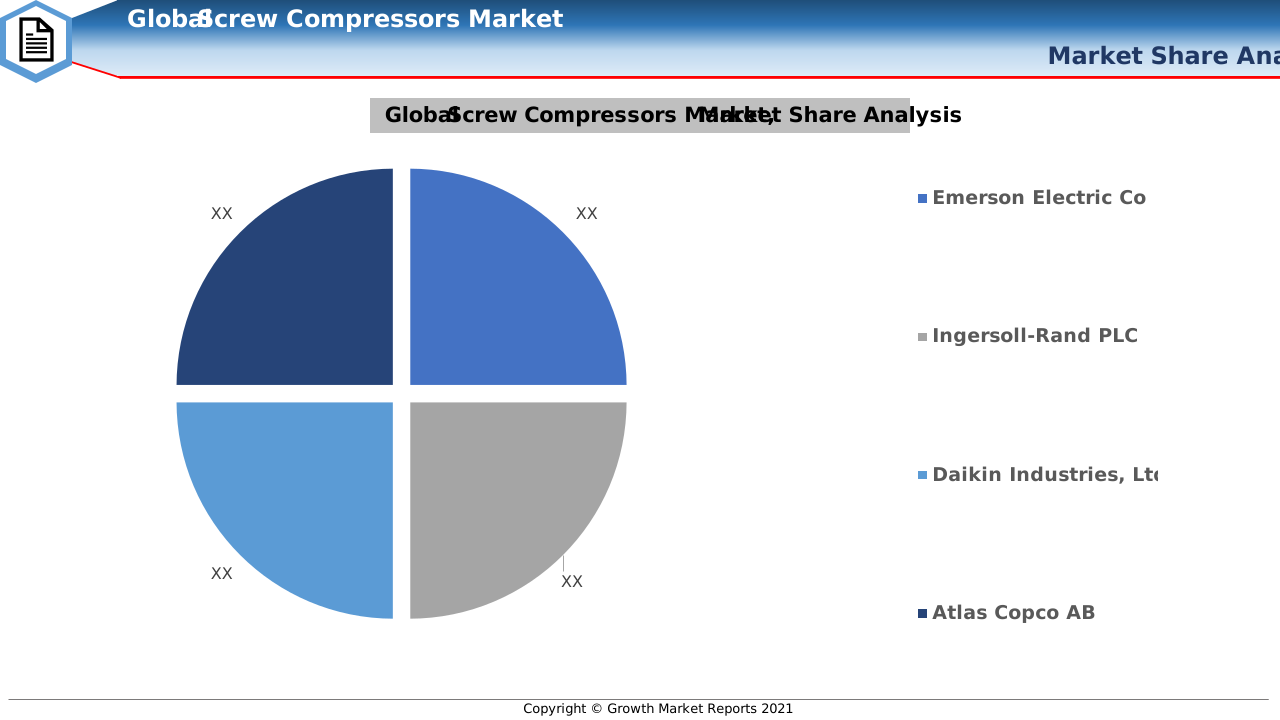

Screw Compressors Market by key players

Frequently Asked Questions

Yes, the Screw Compressors Market Research Report 2033 offers customization options to meet specific client requirements.

Key companies include Atlas Copco AB, Ingersoll Rand, Siemens AG, Gardner Denver Holdings, Kaeser Kompressoren, Hitachi Ltd., Sullair LLC, Kobe Steel Ltd., BOGE Kompressoren, Quincy Compressor, and others.

Opportunities include digital transformation, IoT integration, and the push for energy efficiency and sustainability. Challenges include high initial investment costs and competition from alternative compressor technologies like reciprocating and centrifugal compressors.

By stage, screw compressors are classified as single-stage (for moderate pressure and continuous operation) and multi-stage (for higher pressure and efficiency). By technology, they are segmented into stationary (for large-scale operations) and portable (for mobile and flexible applications).

Major end-user industries include manufacturing, oil & gas, energy & power, automotive, chemical & petrochemical, food & beverage, pharmaceuticals, electronics, textiles, and water treatment.

Innovations include oil-free compressors, smart monitoring systems, IoT-enabled predictive maintenance, advanced control systems, and variable speed drives, all contributing to improved efficiency, reliability, and reduced downtime.

Asia Pacific leads the market, accounting for about 42% of global revenue in 2024, followed by North America and Europe. The Middle East & Africa and Latin America are emerging markets with steady growth.

Oil-injected screw compressors are widely used for their efficiency and cost-effectiveness in general manufacturing and heavy-duty applications, while oil-free screw compressors are preferred in industries requiring high air purity, such as food and beverage, pharmaceuticals, and electronics.

Key growth drivers include rapid industrialization, increasing demand for energy-efficient solutions, expanding applications across industries, technological advancements, and the need for reliable compressed air systems.

The global screw compressors market was valued at USD 10.8 billion in 2024 and is projected to reach USD 18.6 billion by 2033, growing at a CAGR of 6.3% during the forecast period.

Table Of Content

Chapter 1 Executive Summary
Chapter 2 Assumptions and Acronyms Used
Chapter 3 Research Methodology
Chapter 4 Screw Compressors Market Overview
   4.1 Introduction
      4.1.1 Market Taxonomy
      4.1.2 Market Definition
      4.1.3 Macro-Economic Factors Impacting the Market Growth
   4.2 Screw Compressors Market Dynamics
      4.2.1 Market Drivers
      4.2.2 Market Restraints
      4.2.3 Market Opportunity
   4.3 Screw Compressors Market - Supply Chain Analysis
      4.3.1 List of Key Suppliers
      4.3.2 List of Key Distributors
      4.3.3 List of Key Consumers
   4.4 Key Forces Shaping the Screw Compressors Market
      4.4.1 Bargaining Power of Suppliers
      4.4.2 Bargaining Power of Buyers
      4.4.3 Threat of Substitution
      4.4.4 Threat of New Entrants
      4.4.5 Competitive Rivalry
   4.5 Global Screw Compressors Market Size & Forecast, 2023-2032
      4.5.1 Screw Compressors Market Size and Y-o-Y Growth
      4.5.2 Screw Compressors Market Absolute $ Opportunity

Chapter 5 Global Screw Compressors Market Analysis and Forecast By Type
   5.1 Introduction
      5.1.1 Key Market Trends & Growth Opportunities By Type
      5.1.2 Basis Point Share (BPS) Analysis By Type
      5.1.3 Absolute $ Opportunity Assessment By Type
   5.2 Screw Compressors Market Size Forecast By Type
      5.2.1 Oil-Injected
      5.2.2 Oil-Free
   5.3 Market Attractiveness Analysis By Type

Chapter 6 Global Screw Compressors Market Analysis and Forecast By Stage
   6.1 Introduction
      6.1.1 Key Market Trends & Growth Opportunities By Stage
      6.1.2 Basis Point Share (BPS) Analysis By Stage
      6.1.3 Absolute $ Opportunity Assessment By Stage
   6.2 Screw Compressors Market Size Forecast By Stage
      6.2.1 Single-Stage
      6.2.2 Multi-Stage
   6.3 Market Attractiveness Analysis By Stage

Chapter 7 Global Screw Compressors Market Analysis and Forecast By Technology
   7.1 Introduction
      7.1.1 Key Market Trends & Growth Opportunities By Technology
      7.1.2 Basis Point Share (BPS) Analysis By Technology
      7.1.3 Absolute $ Opportunity Assessment By Technology
   7.2 Screw Compressors Market Size Forecast By Technology
      7.2.1 Stationary
      7.2.2 Portable
   7.3 Market Attractiveness Analysis By Technology

Chapter 8 Global Screw Compressors Market Analysis and Forecast By End-User Industry
   8.1 Introduction
      8.1.1 Key Market Trends & Growth Opportunities By End-User Industry
      8.1.2 Basis Point Share (BPS) Analysis By End-User Industry
      8.1.3 Absolute $ Opportunity Assessment By End-User Industry
   8.2 Screw Compressors Market Size Forecast By End-User Industry
      8.2.1 Manufacturing
      8.2.2 Oil & Gas
      8.2.3 Energy & Power
      8.2.4 Automotive
      8.2.5 Chemical & Petrochemical
      8.2.6 Food & Beverage
      8.2.7 Pharmaceuticals
      8.2.8 Others
   8.3 Market Attractiveness Analysis By End-User Industry

Chapter 9 Global Screw Compressors Market Analysis and Forecast by Region
   9.1 Introduction
      9.1.1 Key Market Trends & Growth Opportunities By Region
      9.1.2 Basis Point Share (BPS) Analysis By Region
      9.1.3 Absolute $ Opportunity Assessment By Region
   9.2 Screw Compressors Market Size Forecast By Region
      9.2.1 North America
      9.2.2 Europe
      9.2.3 Asia Pacific
      9.2.4 Latin America
      9.2.5 Middle East & Africa (MEA)
   9.3 Market Attractiveness Analysis By Region

Chapter 10 Coronavirus Disease (COVID-19) Impact 
   10.1 Introduction 
   10.2 Current & Future Impact Analysis 
   10.3 Economic Impact Analysis 
   10.4 Government Policies 
   10.5 Investment Scenario

Chapter 11 North America Screw Compressors Analysis and Forecast
   11.1 Introduction
   11.2 North America Screw Compressors Market Size Forecast by Country
      11.2.1 U.S.
      11.2.2 Canada
   11.3 Basis Point Share (BPS) Analysis by Country
   11.4 Absolute $ Opportunity Assessment by Country
   11.5 Market Attractiveness Analysis by Country
   11.6 North America Screw Compressors Market Size Forecast By Type
      11.6.1 Oil-Injected
      11.6.2 Oil-Free
   11.7 Basis Point Share (BPS) Analysis By Type 
   11.8 Absolute $ Opportunity Assessment By Type 
   11.9 Market Attractiveness Analysis By Type
   11.10 North America Screw Compressors Market Size Forecast By Stage
      11.10.1 Single-Stage
      11.10.2 Multi-Stage
   11.11 Basis Point Share (BPS) Analysis By Stage 
   11.12 Absolute $ Opportunity Assessment By Stage 
   11.13 Market Attractiveness Analysis By Stage
   11.14 North America Screw Compressors Market Size Forecast By Technology
      11.14.1 Stationary
      11.14.2 Portable
   11.15 Basis Point Share (BPS) Analysis By Technology 
   11.16 Absolute $ Opportunity Assessment By Technology 
   11.17 Market Attractiveness Analysis By Technology
   11.18 North America Screw Compressors Market Size Forecast By End-User Industry
      11.18.1 Manufacturing
      11.18.2 Oil & Gas
      11.18.3 Energy & Power
      11.18.4 Automotive
      11.18.5 Chemical & Petrochemical
      11.18.6 Food & Beverage
      11.18.7 Pharmaceuticals
      11.18.8 Others
   11.19 Basis Point Share (BPS) Analysis By End-User Industry 
   11.20 Absolute $ Opportunity Assessment By End-User Industry 
   11.21 Market Attractiveness Analysis By End-User Industry

Chapter 12 Europe Screw Compressors Analysis and Forecast
   12.1 Introduction
   12.2 Europe Screw Compressors Market Size Forecast by Country
      12.2.1 Germany
      12.2.2 France
      12.2.3 Italy
      12.2.4 U.K.
      12.2.5 Spain
      12.2.6 Russia
      12.2.7 Rest of Europe
   12.3 Basis Point Share (BPS) Analysis by Country
   12.4 Absolute $ Opportunity Assessment by Country
   12.5 Market Attractiveness Analysis by Country
   12.6 Europe Screw Compressors Market Size Forecast By Type
      12.6.1 Oil-Injected
      12.6.2 Oil-Free
   12.7 Basis Point Share (BPS) Analysis By Type 
   12.8 Absolute $ Opportunity Assessment By Type 
   12.9 Market Attractiveness Analysis By Type
   12.10 Europe Screw Compressors Market Size Forecast By Stage
      12.10.1 Single-Stage
      12.10.2 Multi-Stage
   12.11 Basis Point Share (BPS) Analysis By Stage 
   12.12 Absolute $ Opportunity Assessment By Stage 
   12.13 Market Attractiveness Analysis By Stage
   12.14 Europe Screw Compressors Market Size Forecast By Technology
      12.14.1 Stationary
      12.14.2 Portable
   12.15 Basis Point Share (BPS) Analysis By Technology 
   12.16 Absolute $ Opportunity Assessment By Technology 
   12.17 Market Attractiveness Analysis By Technology
   12.18 Europe Screw Compressors Market Size Forecast By End-User Industry
      12.18.1 Manufacturing
      12.18.2 Oil & Gas
      12.18.3 Energy & Power
      12.18.4 Automotive
      12.18.5 Chemical & Petrochemical
      12.18.6 Food & Beverage
      12.18.7 Pharmaceuticals
      12.18.8 Others
   12.19 Basis Point Share (BPS) Analysis By End-User Industry 
   12.20 Absolute $ Opportunity Assessment By End-User Industry 
   12.21 Market Attractiveness Analysis By End-User Industry

Chapter 13 Asia Pacific Screw Compressors Analysis and Forecast
   13.1 Introduction
   13.2 Asia Pacific Screw Compressors Market Size Forecast by Country
      13.2.1 China
      13.2.2 Japan
      13.2.3 South Korea
      13.2.4 India
      13.2.5 Australia
      13.2.6 South East Asia (SEA)
      13.2.7 Rest of Asia Pacific (APAC)
   13.3 Basis Point Share (BPS) Analysis by Country
   13.4 Absolute $ Opportunity Assessment by Country
   13.5 Market Attractiveness Analysis by Country
   13.6 Asia Pacific Screw Compressors Market Size Forecast By Type
      13.6.1 Oil-Injected
      13.6.2 Oil-Free
   13.7 Basis Point Share (BPS) Analysis By Type 
   13.8 Absolute $ Opportunity Assessment By Type 
   13.9 Market Attractiveness Analysis By Type
   13.10 Asia Pacific Screw Compressors Market Size Forecast By Stage
      13.10.1 Single-Stage
      13.10.2 Multi-Stage
   13.11 Basis Point Share (BPS) Analysis By Stage 
   13.12 Absolute $ Opportunity Assessment By Stage 
   13.13 Market Attractiveness Analysis By Stage
   13.14 Asia Pacific Screw Compressors Market Size Forecast By Technology
      13.14.1 Stationary
      13.14.2 Portable
   13.15 Basis Point Share (BPS) Analysis By Technology 
   13.16 Absolute $ Opportunity Assessment By Technology 
   13.17 Market Attractiveness Analysis By Technology
   13.18 Asia Pacific Screw Compressors Market Size Forecast By End-User Industry
      13.18.1 Manufacturing
      13.18.2 Oil & Gas
      13.18.3 Energy & Power
      13.18.4 Automotive
      13.18.5 Chemical & Petrochemical
      13.18.6 Food & Beverage
      13.18.7 Pharmaceuticals
      13.18.8 Others
   13.19 Basis Point Share (BPS) Analysis By End-User Industry 
   13.20 Absolute $ Opportunity Assessment By End-User Industry 
   13.21 Market Attractiveness Analysis By End-User Industry

Chapter 14 Latin America Screw Compressors Analysis and Forecast
   14.1 Introduction
   14.2 Latin America Screw Compressors Market Size Forecast by Country
      14.2.1 Brazil
      14.2.2 Mexico
      14.2.3 Rest of Latin America (LATAM)
   14.3 Basis Point Share (BPS) Analysis by Country
   14.4 Absolute $ Opportunity Assessment by Country
   14.5 Market Attractiveness Analysis by Country
   14.6 Latin America Screw Compressors Market Size Forecast By Type
      14.6.1 Oil-Injected
      14.6.2 Oil-Free
   14.7 Basis Point Share (BPS) Analysis By Type 
   14.8 Absolute $ Opportunity Assessment By Type 
   14.9 Market Attractiveness Analysis By Type
   14.10 Latin America Screw Compressors Market Size Forecast By Stage
      14.10.1 Single-Stage
      14.10.2 Multi-Stage
   14.11 Basis Point Share (BPS) Analysis By Stage 
   14.12 Absolute $ Opportunity Assessment By Stage 
   14.13 Market Attractiveness Analysis By Stage
   14.14 Latin America Screw Compressors Market Size Forecast By Technology
      14.14.1 Stationary
      14.14.2 Portable
   14.15 Basis Point Share (BPS) Analysis By Technology 
   14.16 Absolute $ Opportunity Assessment By Technology 
   14.17 Market Attractiveness Analysis By Technology
   14.18 Latin America Screw Compressors Market Size Forecast By End-User Industry
      14.18.1 Manufacturing
      14.18.2 Oil & Gas
      14.18.3 Energy & Power
      14.18.4 Automotive
      14.18.5 Chemical & Petrochemical
      14.18.6 Food & Beverage
      14.18.7 Pharmaceuticals
      14.18.8 Others
   14.19 Basis Point Share (BPS) Analysis By End-User Industry 
   14.20 Absolute $ Opportunity Assessment By End-User Industry 
   14.21 Market Attractiveness Analysis By End-User Industry

Chapter 15 Middle East & Africa (MEA) Screw Compressors Analysis and Forecast
   15.1 Introduction
   15.2 Middle East & Africa (MEA) Screw Compressors Market Size Forecast by Country
      15.2.1 Saudi Arabia
      15.2.2 South Africa
      15.2.3 UAE
      15.2.4 Rest of Middle East & Africa (MEA)
   15.3 Basis Point Share (BPS) Analysis by Country
   15.4 Absolute $ Opportunity Assessment by Country
   15.5 Market Attractiveness Analysis by Country
   15.6 Middle East & Africa (MEA) Screw Compressors Market Size Forecast By Type
      15.6.1 Oil-Injected
      15.6.2 Oil-Free
   15.7 Basis Point Share (BPS) Analysis By Type 
   15.8 Absolute $ Opportunity Assessment By Type 
   15.9 Market Attractiveness Analysis By Type
   15.10 Middle East & Africa (MEA) Screw Compressors Market Size Forecast By Stage
      15.10.1 Single-Stage
      15.10.2 Multi-Stage
   15.11 Basis Point Share (BPS) Analysis By Stage 
   15.12 Absolute $ Opportunity Assessment By Stage 
   15.13 Market Attractiveness Analysis By Stage
   15.14 Middle East & Africa (MEA) Screw Compressors Market Size Forecast By Technology
      15.14.1 Stationary
      15.14.2 Portable
   15.15 Basis Point Share (BPS) Analysis By Technology 
   15.16 Absolute $ Opportunity Assessment By Technology 
   15.17 Market Attractiveness Analysis By Technology
   15.18 Middle East & Africa (MEA) Screw Compressors Market Size Forecast By End-User Industry
      15.18.1 Manufacturing
      15.18.2 Oil & Gas
      15.18.3 Energy & Power
      15.18.4 Automotive
      15.18.5 Chemical & Petrochemical
      15.18.6 Food & Beverage
      15.18.7 Pharmaceuticals
      15.18.8 Others
   15.19 Basis Point Share (BPS) Analysis By End-User Industry 
   15.20 Absolute $ Opportunity Assessment By End-User Industry 
   15.21 Market Attractiveness Analysis By End-User Industry

Chapter 16 Competition Landscape 
   16.1 Screw Compressors Market: Competitive Dashboard
   16.2 Global Screw Compressors Market: Market Share Analysis, 2023
   16.3 Company Profiles (Details – Overview, Financials, Developments, Strategy) 
      16.3.1 Atlas Copco AB
Ingersoll Rand Plc
Siemens AG
Gardner Denver Holdings Inc.
GEA Group AG
Hitachi Ltd.
Kobe Steel Ltd.
Kaeser Kompressoren SE
Sullair LLC
Boge Kompressoren
Elgi Equipments Limited
Quincy Compressor LLC
FS-Elliott Co., LLC
MAN Energy Solutions SE
Danfoss Group
Shanghai Screw Compressor Co., Ltd.
BAUER COMP Holding GmbH
Fusheng Co., Ltd.
Aerzen Maschinenfabrik GmbH
Hanbell Precise Machinery Co., Ltd.

Methodology

Our Clients

Siemens Healthcare
FedEx Logistics
Dassault Aviation
Pfizer
General Electric
Honda Motor Co. Ltd.
The John Holland Group
Deloitte