Savory Snacks Market Research Report 2033

Savory Snacks Market Research Report 2033

Segments - by Product Type (Potato Chips, Extruded Snacks, Nuts & Seeds, Popcorn, Pretzels, Meat Snacks, Others), by Flavor (Spicy, Barbecue, Cheese, Plain/Original, Others), by Distribution Channel (Supermarkets/Hypermarkets, Convenience Stores, Online Retail, Specialty Stores, Others), by Packaging Type (Flexible Packaging, Rigid Packaging, Others)

https://growthmarketreports.com/Anuradha
Author : Anuradha B. More
https://growthmarketreports.com/Vaibhav
Fact-checked by : Vaibhav Chandola
https://growthmarketreports.com/Shruti
Editor : Shruti Bhat

Upcoming | Report ID :FB-2194 | 4.7 Rating | 97 Reviews | 254 Pages | Format : Docx PDF

Report Description


Savory Snacks Market Outlook

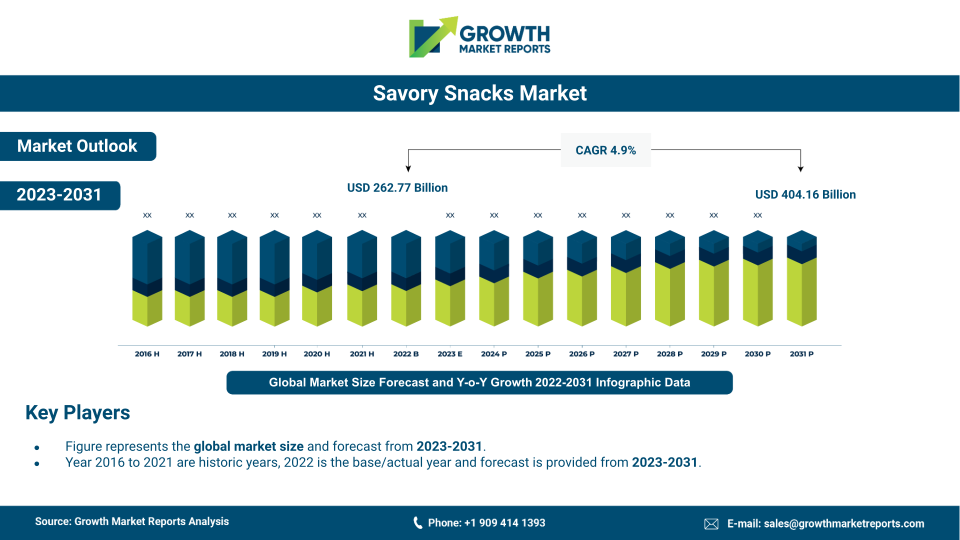
According to our latest research, the global savory snacks market size reached USD 256.2 billion in 2024, reflecting the sector's robust consumer demand and product innovation. The market is expected to expand at a CAGR of 5.3% from 2025 to 2033, resulting in a forecasted value of USD 410.1 billion by 2033. This impressive growth trajectory is driven by shifting consumer lifestyles, increased snacking frequency, and a surge in demand for convenient, ready-to-eat food options. As per the latest research, evolving flavor profiles and the rising adoption of healthier snack alternatives are significant factors propelling the savory snacks market forward.

The savory snacks market is experiencing dynamic growth due to several key factors. Foremost among these is the global trend toward urbanization and busier lifestyles, which has significantly increased the demand for on-the-go and convenient snack options. Consumers, particularly millennials and Gen Z, are seeking snacks that fit seamlessly into their fast-paced routines, prompting manufacturers to innovate with portable packaging and single-serve options. Additionally, the proliferation of dual-income households has led to a rise in disposable incomes, further driving the purchase of premium and novel snack products. The expansion of modern retail formats, including supermarkets and hypermarkets, has also enhanced product availability and accessibility, thereby fueling market growth on a global scale.

Product innovation is another major growth driver in the savory snacks market. Manufacturers are keenly focusing on developing new flavors, unique textures, and healthier formulations to cater to the ever-evolving consumer palate. The demand for clean-label, gluten-free, and low-fat snacks is rising as health-conscious consumers become more vigilant about ingredient transparency and nutritional content. Companies are leveraging advanced food processing technologies to create snacks that retain taste and crunch while minimizing unhealthy fats and artificial additives. Furthermore, the integration of global and ethnic flavors has broadened the appeal of savory snacks, attracting adventurous eaters and expanding the consumer base across diverse demographic segments.

Digital transformation and the rise of e-commerce platforms have also played a pivotal role in the savory snacks market’s expansion. Online retail channels have enabled brands to reach a wider audience, especially in emerging markets where traditional retail infrastructure may be limited. The convenience of online shopping, coupled with targeted digital marketing campaigns, has made it easier for consumers to discover and purchase a wide variety of savory snacks. Subscription snack boxes and direct-to-consumer models are gaining traction, providing consumers with curated selections and personalized experiences. This digital shift is expected to further accelerate market growth as brands continue to invest in online presence and logistics capabilities.

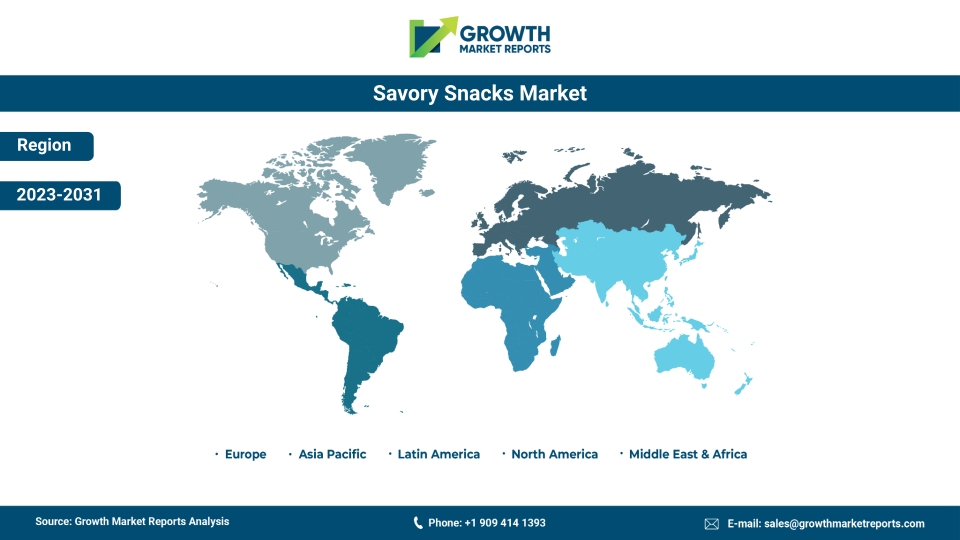
Regionally, the Asia Pacific market is witnessing the fastest growth, fueled by rising urbanization, a burgeoning middle class, and increasing westernization of dietary habits. North America and Europe remain mature markets but continue to see innovation-driven growth, particularly in the premium and health-oriented snack segments. Latin America and the Middle East & Africa are emerging as attractive markets due to changing consumption patterns and improved retail infrastructure. These regional dynamics collectively contribute to the vibrant and competitive landscape of the global savory snacks market.

Global Savory Snacks Industry Outlook

Product Type Analysis

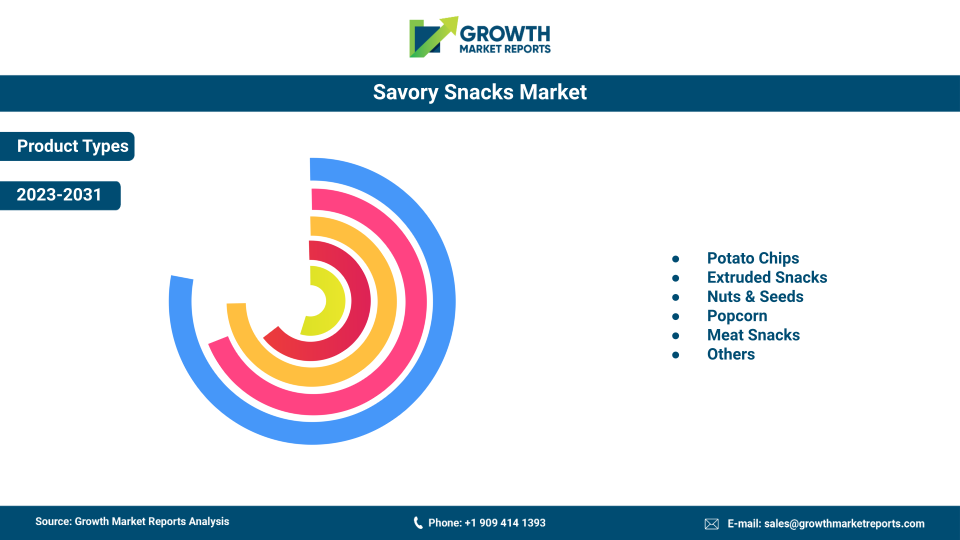
The savory snacks market is segmented by product type into potato chips, extruded snacks, nuts & seeds, popcorn, pretzels, meat snacks, and others. Among these, potato chips continue to dominate the market, accounting for a substantial share due to their widespread popularity, diverse flavor offerings, and strong brand recognition. The convenience and affordability of potato chips make them a staple in households and a go-to choice for social gatherings and events. Manufacturers consistently introduce limited-edition flavors and healthier variants, such as baked or reduced-fat chips, to cater to evolving consumer preferences. The potato chips segment's growth is further supported by extensive marketing campaigns and strategic collaborations with popular foodservice outlets.

Extruded snacks represent a rapidly growing segment within the savory snacks market, driven by their versatility and appeal to both children and adults. These snacks, made from corn, rice, or wheat, are often fortified with vitamins and minerals, making them attractive to health-conscious consumers. The ability to mold extruded snacks into various shapes and textures allows for creative product development and differentiation. Companies are leveraging this flexibility to introduce innovative products that combine bold flavors with nutritional benefits. The rising demand for gluten-free and allergen-friendly snacks has also contributed to the expansion of the extruded snacks segment.

Nuts & seeds have emerged as a prominent category, particularly among consumers seeking healthier snacking alternatives. This segment benefits from the perception of nuts and seeds as nutrient-dense, protein-rich, and heart-healthy options. Brands are capitalizing on this trend by offering a wide range of seasoned and roasted varieties, often blended with exotic spices or superfoods. The growing popularity of plant-based diets and clean-label products has further propelled the demand for nuts & seeds, positioning them as a premium offering within the savory snacks market. Additionally, convenient packaging formats, such as resealable pouches and single-serve packs, have enhanced the portability and shelf life of these snacks.

Popcorn, pretzels, and meat snacks round out the product type segmentation, each contributing unique value propositions to the savory snacks market. Popcorn has gained traction as a low-calorie, whole-grain snack, with brands introducing gourmet flavors and organic options to attract health-conscious consumers. Pretzels, known for their crunchy texture and savory taste, are increasingly available in gluten-free and whole wheat versions. Meat snacks, including jerky and meat sticks, are experiencing a renaissance fueled by high-protein diets and the popularity of paleo and keto lifestyles. These segments are expected to witness steady growth as manufacturers continue to innovate with new flavors, healthier ingredients, and convenient packaging solutions.

Report Scope

Attributes Details
Report Title Savory Snacks Market Research Report 2033
By Product Type Potato Chips, Extruded Snacks, Nuts & Seeds, Popcorn, Pretzels, Meat Snacks, Others
By Flavor Spicy, Barbecue, Cheese, Plain/Original, Others
By Distribution Channel Supermarkets/Hypermarkets, Convenience Stores, Online Retail, Specialty Stores, Others
By Packaging Type Flexible Packaging, Rigid Packaging, Others
Regions Covered North America, Europe, APAC, Latin America, MEA
Base Year 2024
Historic Data 2018-2023
Forecast Period 2025-2033
Number of Pages 254
Number of Tables & Figures 334
Customization Available Yes, the report can be customized as per your need.

Flavor Analysis

The flavor segment of the savory snacks market is highly dynamic, reflecting the diverse and ever-changing preferences of global consumers. Spicy flavors have witnessed remarkable growth, particularly in regions such as Asia Pacific and Latin America, where consumers have a strong affinity for bold and intense taste experiences. Brands are experimenting with flavors like chili, jalapeño, and sriracha, often combining them with traditional seasonings to create unique fusion snacks. The popularity of spicy snacks is further amplified by social media trends and influencer-driven marketing campaigns, which encourage consumers to try new and adventurous flavors.

Barbecue-flavored snacks continue to enjoy widespread popularity, especially in North America and Europe. The smoky, sweet, and tangy notes of barbecue seasoning resonate with consumers seeking familiar and comforting flavors. Manufacturers regularly introduce limited-edition barbecue variants, incorporating regional twists such as Korean BBQ or Texas-style barbecue to differentiate their offerings. The enduring appeal of barbecue flavors is supported by strong brand loyalty and frequent promotional activities, making this segment a mainstay in the savory snacks market.

Cheese-flavored snacks are another significant segment, appealing to a broad demographic that spans children, teenagers, and adults. The rich, creamy taste of cheese is often paired with other flavors, such as herbs or spices, to create multi-layered taste profiles. Innovations in cheese flavoring technology have enabled brands to replicate the taste and texture of real cheese, even in plant-based or dairy-free snacks. This versatility has contributed to the sustained growth of cheese-flavored snacks, with manufacturers continuously expanding their product portfolios to include new and exciting cheese combinations.

Plain or original flavored snacks retain a loyal consumer base, particularly among individuals who prefer simple and classic tastes. These snacks often highlight the natural flavors of the base ingredients, such as potatoes, grains, or nuts, without the addition of artificial seasonings or additives. The plain/original segment is especially popular among health-conscious consumers and those with dietary restrictions, as it offers a clean-label alternative to heavily seasoned options. Brands are responding to this demand by emphasizing minimal processing and transparent ingredient sourcing in their marketing strategies.

Other flavors, including exotic and ethnic-inspired profiles, are gaining traction as consumers seek novel and exciting snacking experiences. Flavors such as wasabi, truffle, and Mediterranean herbs are being introduced to cater to adventurous eaters and global food enthusiasts. The ability to quickly adapt to emerging flavor trends and regional preferences is a key competitive advantage for brands operating in the savory snacks market. As consumer palates continue to evolve, the flavor segment is expected to remain a focal point for innovation and differentiation.

Distribution Channel Analysis

The distribution channel landscape for the savory snacks market is characterized by a mix of traditional and modern retail formats, each playing a crucial role in product accessibility and consumer reach. Supermarkets and hypermarkets dominate the distribution landscape, accounting for the largest share of sales due to their extensive product assortments, attractive in-store promotions, and convenient locations. These retail giants provide consumers with the opportunity to compare brands, explore new products, and benefit from bulk purchasing options. The presence of dedicated snack aisles and frequent product launches further enhances the visibility and appeal of savory snacks in supermarkets and hypermarkets.

Convenience stores represent a vital distribution channel, particularly for impulse purchases and on-the-go snacking. The strategic placement of convenience stores in urban and suburban areas ensures easy access to a wide range of savory snacks, catering to consumers seeking quick and hassle-free options. The growing trend of smaller, neighborhood stores is especially prominent in densely populated regions, where consumers prioritize convenience and proximity. Brands often collaborate with convenience store chains to launch exclusive products or limited-time offers, leveraging the channel's high foot traffic and spontaneous purchasing behavior.

Online retail is rapidly emerging as a significant distribution channel, driven by the increasing penetration of smartphones, improved internet connectivity, and the rise of e-commerce platforms. Consumers are increasingly turning to online channels for the convenience of home delivery, access to a broader product selection, and the ability to read reviews and compare prices. The growth of online grocery shopping, accelerated by the COVID-19 pandemic, has further boosted the sales of savory snacks through digital platforms. Subscription snack boxes and direct-to-consumer models are gaining popularity, offering personalized experiences and fostering brand loyalty.

Specialty stores, including health food stores and gourmet outlets, cater to niche consumer segments seeking premium, organic, or artisanal savory snacks. These stores often feature curated selections and exclusive products that are not readily available in mainstream retail channels. The emphasis on product quality, unique flavors, and sustainable sourcing appeals to discerning consumers willing to pay a premium for differentiated offerings. Specialty stores also serve as important platforms for emerging brands and new product launches, providing valuable exposure and feedback from early adopters.

Other distribution channels, such as vending machines, foodservice outlets, and travel retail, contribute to the overall growth and diversification of the savory snacks market. Vending machines, in particular, are gaining traction in workplaces, educational institutions, and public spaces, offering convenient access to a variety of snack options. Foodservice outlets, including cafes and quick-service restaurants, are increasingly incorporating savory snacks into their menus as side dishes or meal accompaniments. The expansion of these alternative channels is expected to complement traditional retail formats and drive incremental growth in the savory snacks market.

Packaging Type Analysis

Packaging plays a pivotal role in the savory snacks market, influencing consumer purchasing decisions, product shelf life, and brand differentiation. Flexible packaging, including pouches, bags, and sachets, is the most widely used packaging type due to its lightweight nature, cost-effectiveness, and ability to preserve product freshness. The versatility of flexible packaging allows for innovative shapes, resealable closures, and eye-catching designs, making it an attractive choice for both manufacturers and consumers. The growing emphasis on sustainability has prompted brands to explore eco-friendly materials and recyclable packaging solutions, further enhancing the appeal of flexible packaging in the savory snacks market.

Rigid packaging, such as cans, jars, and boxes, is commonly used for premium and delicate snack products that require additional protection against breakage and contamination. Rigid packaging offers superior barrier properties, ensuring the integrity and quality of the product throughout its shelf life. The use of transparent materials, such as glass or clear plastic, allows consumers to visually inspect the product before purchase, fostering trust and confidence in the brand. Rigid packaging is often associated with higher-end products and gift packs, positioning them as suitable choices for special occasions and festive gifting.

Innovations in packaging technology are driving the development of new packaging formats that enhance convenience, portability, and sustainability. Single-serve packs, portion-controlled containers, and resealable pouches cater to the growing demand for on-the-go snacking and portion management. Smart packaging solutions, incorporating QR codes or freshness indicators, are being introduced to provide consumers with additional information and interactive experiences. The integration of biodegradable and compostable materials aligns with the increasing consumer preference for environmentally responsible packaging options.

Packaging also serves as a critical marketing tool in the savory snacks market, enabling brands to communicate their value propositions, nutritional benefits, and unique selling points. Eye-catching graphics, bold colors, and innovative shapes help products stand out on crowded retail shelves and capture consumer attention. Limited-edition packaging designs, seasonal themes, and co-branded collaborations are frequently used to create excitement and drive impulse purchases. The ability to quickly adapt packaging designs in response to emerging trends and consumer feedback is a key competitive advantage for leading brands.

The ongoing focus on sustainability and circular economy principles is expected to shape the future of packaging in the savory snacks market. Manufacturers are increasingly investing in research and development to minimize packaging waste, reduce carbon footprints, and promote recycling initiatives. Collaboration with packaging suppliers and industry associations is fostering the adoption of best practices and the development of industry-wide standards. As regulatory pressures and consumer expectations continue to evolve, sustainable packaging is poised to become a defining feature of the savory snacks market.

Opportunities & Threats

The savory snacks market presents a multitude of opportunities for growth and innovation. One of the most significant opportunities lies in the development of healthier snack options that cater to the rising demand for better-for-you products. Consumers are increasingly seeking snacks that offer functional benefits, such as high protein, low sugar, and added vitamins or minerals. Brands that invest in research and development to create nutritious, clean-label snacks with transparent ingredient sourcing are well-positioned to capture a larger share of the market. The growing popularity of plant-based diets and alternative proteins presents additional avenues for product diversification and expansion into new consumer segments.

Another major opportunity stems from the rapid expansion of digital and direct-to-consumer sales channels. The increasing penetration of e-commerce platforms and the proliferation of online grocery shopping have created new distribution avenues for savory snack brands. Companies that leverage data analytics, personalized marketing, and subscription-based models can build stronger relationships with consumers and drive repeat purchases. The ability to quickly respond to changing consumer preferences and launch new products through online channels provides a competitive edge in a fast-paced market environment. Collaborations with influencers, social media campaigns, and interactive digital experiences further enhance brand visibility and consumer engagement.

Despite the numerous opportunities, the savory snacks market faces certain restraining factors that could impact growth. One of the primary challenges is the increasing scrutiny of processed foods and the growing awareness of health risks associated with excessive consumption of sodium, fats, and artificial additives. Regulatory authorities in several regions are implementing stricter labeling requirements and nutritional guidelines, compelling manufacturers to reformulate products and invest in healthier alternatives. The rising cost of raw materials, supply chain disruptions, and fluctuating commodity prices also pose significant challenges to profitability and operational efficiency. Brands must navigate these complexities while maintaining product quality, affordability, and consumer trust.

Regional Outlook

Asia Pacific leads the savory snacks market in terms of growth rate, with the region’s market size reaching USD 72.5 billion in 2024. The region is projected to expand at a CAGR of 7.1% through 2033, driven by rapid urbanization, a growing middle-class population, and increasing adoption of western snacking habits. Countries such as China, India, Japan, and South Korea are witnessing a surge in demand for savory snacks, fueled by rising disposable incomes and a young, dynamic consumer base. The proliferation of modern retail formats and the expansion of e-commerce platforms have further improved product accessibility and distribution efficiency in the region. Local flavor innovations and the introduction of affordable, small-pack snacks are key strategies employed by brands to capture market share in this highly competitive landscape.

North America remains a mature yet highly lucrative market for savory snacks, with a market size of USD 68.9 billion in 2024. The region is characterized by high per capita consumption, a diverse product portfolio, and a strong focus on innovation and premiumization. The demand for healthier, clean-label, and protein-rich snacks is particularly pronounced in the United States and Canada, where consumers are increasingly prioritizing wellness and nutrition. The presence of major multinational brands, coupled with the growth of private label offerings, has intensified competition and spurred continuous product development. The region’s well-established retail infrastructure and widespread adoption of online shopping further support the market’s sustained growth.

Europe follows closely, with a market size of USD 54.3 billion in 2024, driven by strong demand in countries such as the United Kingdom, Germany, France, and Italy. The European market is characterized by a preference for premium, artisanal, and organic snacks, as well as a growing interest in sustainable packaging and ethical sourcing. The region’s stringent regulatory environment and emphasis on food safety have prompted manufacturers to invest in product quality and transparency. Latin America and the Middle East & Africa, with market sizes of USD 34.1 billion and USD 26.4 billion respectively, are emerging as promising markets due to changing lifestyles, urbanization, and improved retail infrastructure. These regions offer significant growth potential for brands willing to adapt to local tastes and invest in distribution capabilities.

Savory Snacks Market Statistics

Competitor Outlook

The savory snacks market is highly competitive, characterized by the presence of both global giants and regional players vying for market share through innovation, branding, and distribution strategies. The competitive landscape is marked by frequent product launches, aggressive marketing campaigns, and strategic mergers and acquisitions aimed at expanding product portfolios and geographic reach. Leading companies are investing heavily in research and development to create differentiated products that cater to changing consumer preferences, such as healthier formulations, unique flavors, and sustainable packaging. The ability to quickly adapt to emerging trends and respond to consumer feedback is a critical success factor in this fast-evolving market.

Brand loyalty and consumer trust play a significant role in the savory snacks market, with established brands leveraging their heritage, quality assurance, and extensive distribution networks to maintain a competitive edge. However, the market is also witnessing the rise of challenger brands and startups that are disrupting traditional categories with innovative products and direct-to-consumer business models. These new entrants often focus on niche segments, such as plant-based snacks, gluten-free options, or artisanal offerings, appealing to health-conscious and environmentally aware consumers. The proliferation of online retail and social media has lowered entry barriers and enabled smaller brands to reach a wider audience and build loyal communities.

Strategic partnerships and collaborations are becoming increasingly common as companies seek to enhance their product offerings and expand their market presence. Collaborations with celebrity chefs, foodservice chains, and technology providers are enabling brands to create unique value propositions and differentiate themselves in a crowded marketplace. Investment in supply chain optimization, digital transformation, and sustainable sourcing practices is also a priority for leading players, as they strive to improve operational efficiency and meet evolving regulatory and consumer expectations.

Prominent companies in the savory snacks market include PepsiCo, Inc. (Frito-Lay), Kellogg Company, Mondelez International, Inc., General Mills, Inc., The Hershey Company, Calbee, Inc., Intersnack Group GmbH & Co. KG, and ITC Limited. PepsiCo’s Frito-Lay division dominates the global market with iconic brands such as Lay’s, Doritos, and Cheetos, supported by extensive distribution and marketing capabilities. Kellogg Company and General Mills have strengthened their positions through product innovation and acquisitions in the healthy snacks segment. Mondelez International’s diverse portfolio includes popular brands like Ritz and Triscuit, while The Hershey Company has expanded into the savory snacks category through strategic acquisitions.

Regional leaders such as Calbee, Intersnack Group, and ITC Limited are leveraging their deep understanding of local tastes and preferences to drive growth in Asia Pacific and Europe. Calbee, a market leader in Japan, is renowned for its innovative potato-based snacks and commitment to quality. Intersnack Group, headquartered in Germany, operates a broad portfolio of brands across Europe and is known for its focus on sustainable sourcing and production. ITC Limited, a major player in India, has successfully expanded its savory snacks business through a combination of traditional flavors and modern packaging. These companies, along with numerous emerging brands, are shaping the future of the savory snacks market through continuous innovation, strategic investments, and a relentless focus on consumer needs.

Key Players

  • PepsiCo, Inc.
  • The Kellogg Company
  • Mondelez International, Inc.
  • General Mills, Inc.
  • Calbee, Inc.
  • Intersnack Group GmbH & Co. KG
  • The Kraft Heinz Company
  • Conagra Brands, Inc.
  • Campbell Soup Company
  • Blue Diamond Growers
  • ITC Limited
  • Nestlé S.A.
  • Orkla ASA
  • Hain Celestial Group, Inc.
  • Snyder’s-Lance, Inc.
  • Grupo Bimbo, S.A.B. de C.V.
  • Universal Robina Corporation
  • JFC International Inc.
  • Want Want China Holdings Limited
  • Tyson Foods, Inc.
Savory Snacks Market Overview

Segments

The Savory Snacks market has been segmented on the basis of

Product Type

  • Potato Chips
  • Extruded Snacks
  • Nuts & Seeds
  • Popcorn
  • Pretzels
  • Meat Snacks
  • Others

Flavor

  • Spicy
  • Barbecue
  • Cheese
  • Plain/Original
  • Others

Distribution Channel

  • Supermarkets/Hypermarkets
  • Convenience Stores
  • Online Retail
  • Specialty Stores
  • Others

Packaging Type

  • Flexible Packaging
  • Rigid Packaging
  • Others

Competitive Landscape

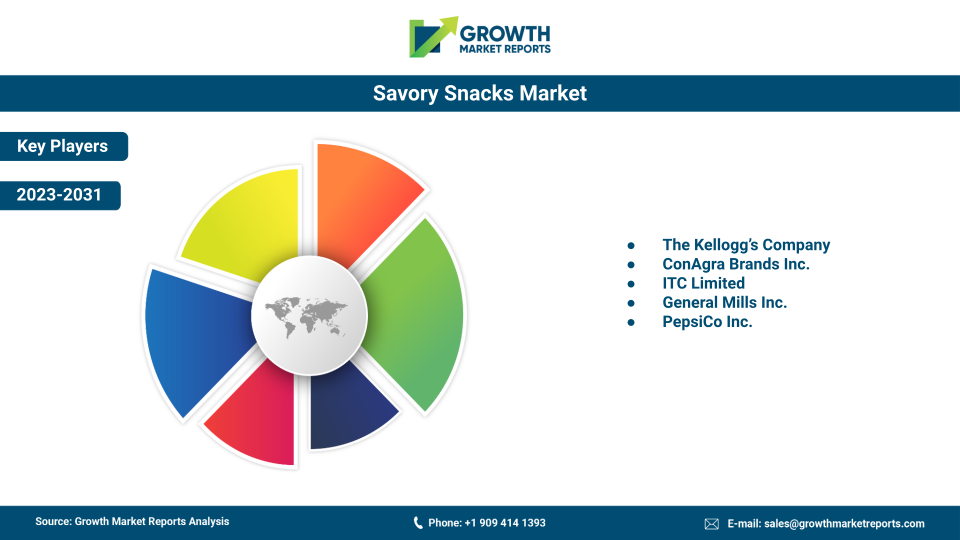
Key players competing in the savory snacks market include The Kellogg’s Company; ConAgra Brands Inc.; ITC Limited; General Mills Inc.; and PepsiCo Inc.

Some of these players are using several market strategies such as mergers, acquisitions, partnerships, collaborations, capacity expansion, and product launches to increase their market shares.

Savory Snacks Market Key Players

Frequently Asked Questions

Opportunities include developing healthier, clean-label snacks and leveraging digital sales channels. Challenges involve regulatory pressures on processed foods, rising raw material costs, and the need for sustainable packaging and ingredient transparency.

Prominent players include PepsiCo (Frito-Lay), The Kellogg Company, Mondelez International, General Mills, Calbee, Intersnack Group, ITC Limited, The Kraft Heinz Company, Conagra Brands, and Nestlé S.A., among others.

Flexible packaging (pouches, bags, sachets) is most common due to its convenience and freshness preservation, while rigid packaging (cans, jars, boxes) is used for premium or delicate snacks. Sustainable and innovative packaging solutions are also on the rise.

Savory snacks are distributed through supermarkets/hypermarkets, convenience stores, online retail, specialty stores, vending machines, foodservice outlets, and travel retail.

Popular flavors include spicy (such as chili and sriracha), barbecue, cheese, plain/original, and a growing range of exotic and ethnic-inspired options.

Asia Pacific is witnessing the fastest growth, driven by urbanization, a growing middle class, and westernization of diets. North America and Europe remain mature but innovative markets, while Latin America and the Middle East & Africa are emerging as attractive regions.

Key trends include increased demand for convenient, ready-to-eat snacks, evolving flavor profiles, healthier alternatives, innovative packaging, and the expansion of online retail channels.

The savory snacks market includes potato chips, extruded snacks, nuts & seeds, popcorn, pretzels, meat snacks, and other varieties.

The savory snacks market is expected to grow at a CAGR of 5.3% from 2025 to 2033, reaching a forecasted value of USD 410.1 billion by 2033.

As of 2024, the global savory snacks market size reached USD 256.2 billion, reflecting robust consumer demand and ongoing product innovation.

Table Of Content

Chapter 1 Executive Summary
Chapter 2 Assumptions and Acronyms Used
Chapter 3 Research Methodology
Chapter 4 Savory Snacks Market Overview
   4.1 Introduction
      4.1.1 Market Taxonomy
      4.1.2 Market Definition
      4.1.3 Macro-Economic Factors Impacting the Market Growth
   4.2 Savory Snacks Market Dynamics
      4.2.1 Market Drivers
      4.2.2 Market Restraints
      4.2.3 Market Opportunity
   4.3 Savory Snacks Market - Supply Chain Analysis
      4.3.1 List of Key Suppliers
      4.3.2 List of Key Distributors
      4.3.3 List of Key Consumers
   4.4 Key Forces Shaping the Savory Snacks Market
      4.4.1 Bargaining Power of Suppliers
      4.4.2 Bargaining Power of Buyers
      4.4.3 Threat of Substitution
      4.4.4 Threat of New Entrants
      4.4.5 Competitive Rivalry
   4.5 Global Savory Snacks Market Size & Forecast, 2023-2032
      4.5.1 Savory Snacks Market Size and Y-o-Y Growth
      4.5.2 Savory Snacks Market Absolute $ Opportunity

Chapter 5 Global Savory Snacks Market Analysis and Forecast By Product Type
   5.1 Introduction
      5.1.1 Key Market Trends & Growth Opportunities By Product Type
      5.1.2 Basis Point Share (BPS) Analysis By Product Type
      5.1.3 Absolute $ Opportunity Assessment By Product Type
   5.2 Savory Snacks Market Size Forecast By Product Type
      5.2.1 Potato Chips
      5.2.2 Extruded Snacks
      5.2.3 Nuts & Seeds
      5.2.4 Popcorn
      5.2.5 Pretzels
      5.2.6 Meat Snacks
      5.2.7 Others
   5.3 Market Attractiveness Analysis By Product Type

Chapter 6 Global Savory Snacks Market Analysis and Forecast By Flavor
   6.1 Introduction
      6.1.1 Key Market Trends & Growth Opportunities By Flavor
      6.1.2 Basis Point Share (BPS) Analysis By Flavor
      6.1.3 Absolute $ Opportunity Assessment By Flavor
   6.2 Savory Snacks Market Size Forecast By Flavor
      6.2.1 Spicy
      6.2.2 Barbecue
      6.2.3 Cheese
      6.2.4 Plain/Original
      6.2.5 Others
   6.3 Market Attractiveness Analysis By Flavor

Chapter 7 Global Savory Snacks Market Analysis and Forecast By Distribution Channel
   7.1 Introduction
      7.1.1 Key Market Trends & Growth Opportunities By Distribution Channel
      7.1.2 Basis Point Share (BPS) Analysis By Distribution Channel
      7.1.3 Absolute $ Opportunity Assessment By Distribution Channel
   7.2 Savory Snacks Market Size Forecast By Distribution Channel
      7.2.1 Supermarkets/Hypermarkets
      7.2.2 Convenience Stores
      7.2.3 Online Retail
      7.2.4 Specialty Stores
      7.2.5 Others
   7.3 Market Attractiveness Analysis By Distribution Channel

Chapter 8 Global Savory Snacks Market Analysis and Forecast By Packaging Type
   8.1 Introduction
      8.1.1 Key Market Trends & Growth Opportunities By Packaging Type
      8.1.2 Basis Point Share (BPS) Analysis By Packaging Type
      8.1.3 Absolute $ Opportunity Assessment By Packaging Type
   8.2 Savory Snacks Market Size Forecast By Packaging Type
      8.2.1 Flexible Packaging
      8.2.2 Rigid Packaging
      8.2.3 Others
   8.3 Market Attractiveness Analysis By Packaging Type

Chapter 9 Global Savory Snacks Market Analysis and Forecast by Region
   9.1 Introduction
      9.1.1 Key Market Trends & Growth Opportunities By Region
      9.1.2 Basis Point Share (BPS) Analysis By Region
      9.1.3 Absolute $ Opportunity Assessment By Region
   9.2 Savory Snacks Market Size Forecast By Region
      9.2.1 North America
      9.2.2 Europe
      9.2.3 Asia Pacific
      9.2.4 Latin America
      9.2.5 Middle East & Africa (MEA)
   9.3 Market Attractiveness Analysis By Region

Chapter 10 Coronavirus Disease (COVID-19) Impact 
   10.1 Introduction 
   10.2 Current & Future Impact Analysis 
   10.3 Economic Impact Analysis 
   10.4 Government Policies 
   10.5 Investment Scenario

Chapter 11 North America Savory Snacks Analysis and Forecast
   11.1 Introduction
   11.2 North America Savory Snacks Market Size Forecast by Country
      11.2.1 U.S.
      11.2.2 Canada
   11.3 Basis Point Share (BPS) Analysis by Country
   11.4 Absolute $ Opportunity Assessment by Country
   11.5 Market Attractiveness Analysis by Country
   11.6 North America Savory Snacks Market Size Forecast By Product Type
      11.6.1 Potato Chips
      11.6.2 Extruded Snacks
      11.6.3 Nuts & Seeds
      11.6.4 Popcorn
      11.6.5 Pretzels
      11.6.6 Meat Snacks
      11.6.7 Others
   11.7 Basis Point Share (BPS) Analysis By Product Type 
   11.8 Absolute $ Opportunity Assessment By Product Type 
   11.9 Market Attractiveness Analysis By Product Type
   11.10 North America Savory Snacks Market Size Forecast By Flavor
      11.10.1 Spicy
      11.10.2 Barbecue
      11.10.3 Cheese
      11.10.4 Plain/Original
      11.10.5 Others
   11.11 Basis Point Share (BPS) Analysis By Flavor 
   11.12 Absolute $ Opportunity Assessment By Flavor 
   11.13 Market Attractiveness Analysis By Flavor
   11.14 North America Savory Snacks Market Size Forecast By Distribution Channel
      11.14.1 Supermarkets/Hypermarkets
      11.14.2 Convenience Stores
      11.14.3 Online Retail
      11.14.4 Specialty Stores
      11.14.5 Others
   11.15 Basis Point Share (BPS) Analysis By Distribution Channel 
   11.16 Absolute $ Opportunity Assessment By Distribution Channel 
   11.17 Market Attractiveness Analysis By Distribution Channel
   11.18 North America Savory Snacks Market Size Forecast By Packaging Type
      11.18.1 Flexible Packaging
      11.18.2 Rigid Packaging
      11.18.3 Others
   11.19 Basis Point Share (BPS) Analysis By Packaging Type 
   11.20 Absolute $ Opportunity Assessment By Packaging Type 
   11.21 Market Attractiveness Analysis By Packaging Type

Chapter 12 Europe Savory Snacks Analysis and Forecast
   12.1 Introduction
   12.2 Europe Savory Snacks Market Size Forecast by Country
      12.2.1 Germany
      12.2.2 France
      12.2.3 Italy
      12.2.4 U.K.
      12.2.5 Spain
      12.2.6 Russia
      12.2.7 Rest of Europe
   12.3 Basis Point Share (BPS) Analysis by Country
   12.4 Absolute $ Opportunity Assessment by Country
   12.5 Market Attractiveness Analysis by Country
   12.6 Europe Savory Snacks Market Size Forecast By Product Type
      12.6.1 Potato Chips
      12.6.2 Extruded Snacks
      12.6.3 Nuts & Seeds
      12.6.4 Popcorn
      12.6.5 Pretzels
      12.6.6 Meat Snacks
      12.6.7 Others
   12.7 Basis Point Share (BPS) Analysis By Product Type 
   12.8 Absolute $ Opportunity Assessment By Product Type 
   12.9 Market Attractiveness Analysis By Product Type
   12.10 Europe Savory Snacks Market Size Forecast By Flavor
      12.10.1 Spicy
      12.10.2 Barbecue
      12.10.3 Cheese
      12.10.4 Plain/Original
      12.10.5 Others
   12.11 Basis Point Share (BPS) Analysis By Flavor 
   12.12 Absolute $ Opportunity Assessment By Flavor 
   12.13 Market Attractiveness Analysis By Flavor
   12.14 Europe Savory Snacks Market Size Forecast By Distribution Channel
      12.14.1 Supermarkets/Hypermarkets
      12.14.2 Convenience Stores
      12.14.3 Online Retail
      12.14.4 Specialty Stores
      12.14.5 Others
   12.15 Basis Point Share (BPS) Analysis By Distribution Channel 
   12.16 Absolute $ Opportunity Assessment By Distribution Channel 
   12.17 Market Attractiveness Analysis By Distribution Channel
   12.18 Europe Savory Snacks Market Size Forecast By Packaging Type
      12.18.1 Flexible Packaging
      12.18.2 Rigid Packaging
      12.18.3 Others
   12.19 Basis Point Share (BPS) Analysis By Packaging Type 
   12.20 Absolute $ Opportunity Assessment By Packaging Type 
   12.21 Market Attractiveness Analysis By Packaging Type

Chapter 13 Asia Pacific Savory Snacks Analysis and Forecast
   13.1 Introduction
   13.2 Asia Pacific Savory Snacks Market Size Forecast by Country
      13.2.1 China
      13.2.2 Japan
      13.2.3 South Korea
      13.2.4 India
      13.2.5 Australia
      13.2.6 South East Asia (SEA)
      13.2.7 Rest of Asia Pacific (APAC)
   13.3 Basis Point Share (BPS) Analysis by Country
   13.4 Absolute $ Opportunity Assessment by Country
   13.5 Market Attractiveness Analysis by Country
   13.6 Asia Pacific Savory Snacks Market Size Forecast By Product Type
      13.6.1 Potato Chips
      13.6.2 Extruded Snacks
      13.6.3 Nuts & Seeds
      13.6.4 Popcorn
      13.6.5 Pretzels
      13.6.6 Meat Snacks
      13.6.7 Others
   13.7 Basis Point Share (BPS) Analysis By Product Type 
   13.8 Absolute $ Opportunity Assessment By Product Type 
   13.9 Market Attractiveness Analysis By Product Type
   13.10 Asia Pacific Savory Snacks Market Size Forecast By Flavor
      13.10.1 Spicy
      13.10.2 Barbecue
      13.10.3 Cheese
      13.10.4 Plain/Original
      13.10.5 Others
   13.11 Basis Point Share (BPS) Analysis By Flavor 
   13.12 Absolute $ Opportunity Assessment By Flavor 
   13.13 Market Attractiveness Analysis By Flavor
   13.14 Asia Pacific Savory Snacks Market Size Forecast By Distribution Channel
      13.14.1 Supermarkets/Hypermarkets
      13.14.2 Convenience Stores
      13.14.3 Online Retail
      13.14.4 Specialty Stores
      13.14.5 Others
   13.15 Basis Point Share (BPS) Analysis By Distribution Channel 
   13.16 Absolute $ Opportunity Assessment By Distribution Channel 
   13.17 Market Attractiveness Analysis By Distribution Channel
   13.18 Asia Pacific Savory Snacks Market Size Forecast By Packaging Type
      13.18.1 Flexible Packaging
      13.18.2 Rigid Packaging
      13.18.3 Others
   13.19 Basis Point Share (BPS) Analysis By Packaging Type 
   13.20 Absolute $ Opportunity Assessment By Packaging Type 
   13.21 Market Attractiveness Analysis By Packaging Type

Chapter 14 Latin America Savory Snacks Analysis and Forecast
   14.1 Introduction
   14.2 Latin America Savory Snacks Market Size Forecast by Country
      14.2.1 Brazil
      14.2.2 Mexico
      14.2.3 Rest of Latin America (LATAM)
   14.3 Basis Point Share (BPS) Analysis by Country
   14.4 Absolute $ Opportunity Assessment by Country
   14.5 Market Attractiveness Analysis by Country
   14.6 Latin America Savory Snacks Market Size Forecast By Product Type
      14.6.1 Potato Chips
      14.6.2 Extruded Snacks
      14.6.3 Nuts & Seeds
      14.6.4 Popcorn
      14.6.5 Pretzels
      14.6.6 Meat Snacks
      14.6.7 Others
   14.7 Basis Point Share (BPS) Analysis By Product Type 
   14.8 Absolute $ Opportunity Assessment By Product Type 
   14.9 Market Attractiveness Analysis By Product Type
   14.10 Latin America Savory Snacks Market Size Forecast By Flavor
      14.10.1 Spicy
      14.10.2 Barbecue
      14.10.3 Cheese
      14.10.4 Plain/Original
      14.10.5 Others
   14.11 Basis Point Share (BPS) Analysis By Flavor 
   14.12 Absolute $ Opportunity Assessment By Flavor 
   14.13 Market Attractiveness Analysis By Flavor
   14.14 Latin America Savory Snacks Market Size Forecast By Distribution Channel
      14.14.1 Supermarkets/Hypermarkets
      14.14.2 Convenience Stores
      14.14.3 Online Retail
      14.14.4 Specialty Stores
      14.14.5 Others
   14.15 Basis Point Share (BPS) Analysis By Distribution Channel 
   14.16 Absolute $ Opportunity Assessment By Distribution Channel 
   14.17 Market Attractiveness Analysis By Distribution Channel
   14.18 Latin America Savory Snacks Market Size Forecast By Packaging Type
      14.18.1 Flexible Packaging
      14.18.2 Rigid Packaging
      14.18.3 Others
   14.19 Basis Point Share (BPS) Analysis By Packaging Type 
   14.20 Absolute $ Opportunity Assessment By Packaging Type 
   14.21 Market Attractiveness Analysis By Packaging Type

Chapter 15 Middle East & Africa (MEA) Savory Snacks Analysis and Forecast
   15.1 Introduction
   15.2 Middle East & Africa (MEA) Savory Snacks Market Size Forecast by Country
      15.2.1 Saudi Arabia
      15.2.2 South Africa
      15.2.3 UAE
      15.2.4 Rest of Middle East & Africa (MEA)
   15.3 Basis Point Share (BPS) Analysis by Country
   15.4 Absolute $ Opportunity Assessment by Country
   15.5 Market Attractiveness Analysis by Country
   15.6 Middle East & Africa (MEA) Savory Snacks Market Size Forecast By Product Type
      15.6.1 Potato Chips
      15.6.2 Extruded Snacks
      15.6.3 Nuts & Seeds
      15.6.4 Popcorn
      15.6.5 Pretzels
      15.6.6 Meat Snacks
      15.6.7 Others
   15.7 Basis Point Share (BPS) Analysis By Product Type 
   15.8 Absolute $ Opportunity Assessment By Product Type 
   15.9 Market Attractiveness Analysis By Product Type
   15.10 Middle East & Africa (MEA) Savory Snacks Market Size Forecast By Flavor
      15.10.1 Spicy
      15.10.2 Barbecue
      15.10.3 Cheese
      15.10.4 Plain/Original
      15.10.5 Others
   15.11 Basis Point Share (BPS) Analysis By Flavor 
   15.12 Absolute $ Opportunity Assessment By Flavor 
   15.13 Market Attractiveness Analysis By Flavor
   15.14 Middle East & Africa (MEA) Savory Snacks Market Size Forecast By Distribution Channel
      15.14.1 Supermarkets/Hypermarkets
      15.14.2 Convenience Stores
      15.14.3 Online Retail
      15.14.4 Specialty Stores
      15.14.5 Others
   15.15 Basis Point Share (BPS) Analysis By Distribution Channel 
   15.16 Absolute $ Opportunity Assessment By Distribution Channel 
   15.17 Market Attractiveness Analysis By Distribution Channel
   15.18 Middle East & Africa (MEA) Savory Snacks Market Size Forecast By Packaging Type
      15.18.1 Flexible Packaging
      15.18.2 Rigid Packaging
      15.18.3 Others
   15.19 Basis Point Share (BPS) Analysis By Packaging Type 
   15.20 Absolute $ Opportunity Assessment By Packaging Type 
   15.21 Market Attractiveness Analysis By Packaging Type

Chapter 16 Competition Landscape 
   16.1 Savory Snacks Market: Competitive Dashboard
   16.2 Global Savory Snacks Market: Market Share Analysis, 2023
   16.3 Company Profiles (Details – Overview, Financials, Developments, Strategy) 
      16.3.1 PepsiCo, Inc.
The Kellogg Company
Mondelez International, Inc.
General Mills, Inc.
Calbee, Inc.
Intersnack Group GmbH & Co. KG
The Kraft Heinz Company
Conagra Brands, Inc.
Campbell Soup Company
Blue Diamond Growers
ITC Limited
Nestlé S.A.
Orkla ASA
Hain Celestial Group, Inc.
Snyder’s-Lance, Inc.
Grupo Bimbo, S.A.B. de C.V.
Universal Robina Corporation
JFC International Inc.
Want Want China Holdings Limited
Tyson Foods, Inc.

Methodology

Our Clients

sinopec
Siemens Healthcare
Dassault Aviation
General Mills
General Electric
Pfizer
Microsoft
The John Holland Group