Sanitary Ware Market Report 2025-2034

Sanitary Ware Market Report 2025-2034

Segments - by Product Type (Toilets, Wash Basins, Urinals, Bathtubs, Cisterns, Faucets, Others), by Material (Ceramic, Pressed Metal, Acrylic Plastics, Others), by Application (Residential, Commercial, Institutional), by Distribution Channel (Offline Retail, Online Retail, Wholesale)

https://growthmarketreports.com/Debadatta
Author : Debadatta Patel
https://growthmarketreports.com/Vaibhav
Fact-checked by : V. Chandola
https://growthmarketreports.com/Shruti
Editor : Shruti Bhat

Last Updated : Jun, 2026 | Report ID :CG-2859 | 4.8 Rating | 24 Reviews | 275 Pages | Format : Docx PDF

Report Description

This report is updated with the latest market data and insights as of June 2026. Base year: 2025  |  Forecast period: 2026-2034


Sanitary Ware Market Outlook

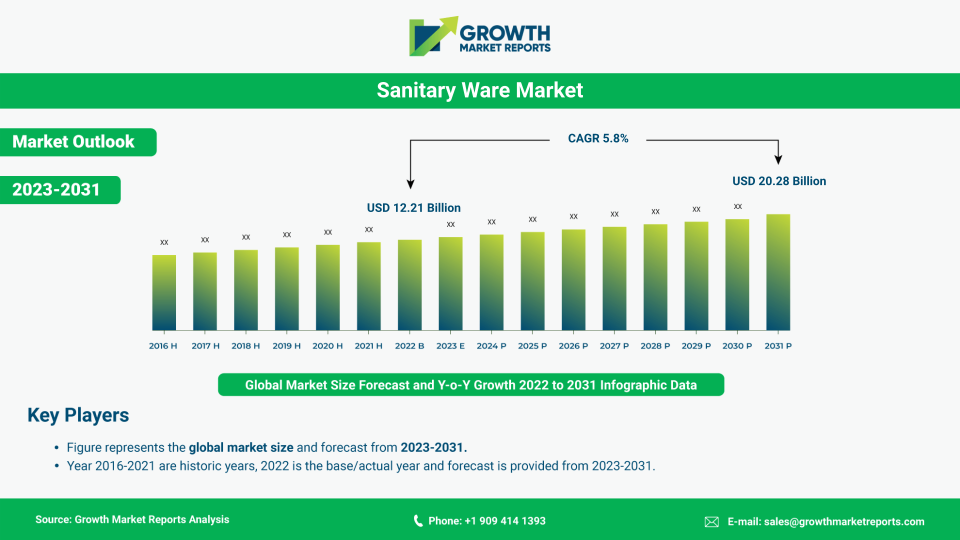
According to our latest research, the global sanitary ware market size stands at USD 57.5 billion in 2025, demonstrating a robust growth trajectory supported by accelerating urbanization, rising hygiene awareness, and continuous product innovation. The market is growing at a CAGR of 6.1% during the 2026-2034 forecast period, with the overall value projected to reach USD 97.8 billion by 2034. This sustained expansion is attributed to increasing construction activities worldwide, rapid adoption of smart and water-efficient technologies, and a growing consumer focus on health, wellness, and bathroom aesthetics. As per our latest research, the market is witnessing significant investments in eco-friendly materials, IoT-enabled products, and digitalized retail experiences, all of which are expected to further accelerate market growth through the forecast period.

Global Sanitary Ware Market Size Forecast 2025-2034, USD Billion

One of the primary growth factors for the sanitary ware market is the rapid pace of urbanization across emerging economies. With increasing urban migration throughout Asia Pacific, Africa, and Latin America, there is heightened demand for residential and commercial infrastructure, which directly influences the need for modern sanitary ware solutions. Urban dwellers are increasingly seeking sophisticated and aesthetically pleasing bathroom fixtures that offer both functionality and design appeal. Governments worldwide are investing heavily in infrastructure development, including affordable housing projects and smart city initiatives, further boosting demand for sanitary ware products such as toilets, wash basins, urinals, and bathtubs. This trend is particularly pronounced in Asia Pacific and Middle Eastern regions, where urban expansion continues at a formidable pace in 2025.

Heightened awareness around hygiene and sanitation, a behavioral shift firmly established in the post-pandemic era, continues to drive demand for advanced sanitary ware products in 2025. Consumers and institutions remain highly conscious of maintaining clean and sanitary environments, accelerating the adoption of touchless technology, water-saving mechanisms, and anti-bacterial surfaces. Government regulations and initiatives promoting sanitation, such as the Swachh Bharat Abhiyan in India and various United Nations Sustainable Development Goal programs, are further fueling demand. The growing trend of bathroom remodeling and renovations in developed markets, combined with rising replacement cycles for aging fixtures, is also contributing meaningfully to market expansion. Complementary product categories such as bathroom accessories and fixtures are experiencing parallel growth as consumers invest holistically in their living spaces.

Sustainability and environmental considerations are defining the next phase of innovation in the sanitary ware market. Consumers are increasingly opting for eco-friendly products made from sustainable or recycled materials and featuring water-efficient technologies. Manufacturers are responding by channeling research and development investments into products that reduce water consumption and minimize environmental impact throughout the product lifecycle. The push toward green buildings and LEED certifications is also driving demand for sustainable sanitary ware in commercial and institutional applications. The proliferation of online retail channels is making it easier for consumers to access a diverse range of products, while augmented reality tools are improving purchase confidence. The broader bathroom fixtures sector is evolving in lockstep, with design-led and sustainability-focused innovation setting the competitive agenda across the industry.

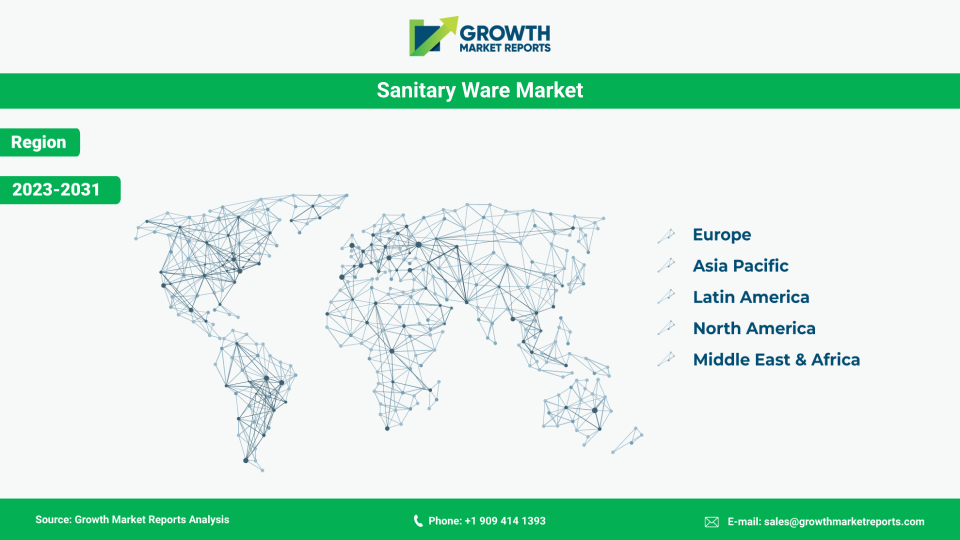
From a regional perspective, Asia Pacific dominates the sanitary ware market in 2025, accounting for the largest share at approximately 41.5% of global revenue, followed by Europe and North America. Growth in Asia Pacific is driven by rapid urbanization, rising disposable incomes, and large-scale government investments in infrastructure. North America and Europe are witnessing steady growth due to renovation activities, sustainability mandates, and robust demand from the hospitality and healthcare sectors. Meanwhile, the Middle East & Africa and Latin America are emerging as high-potential markets, propelled by increasing construction projects and improving standards of living. Each region presents unique opportunities and challenges, making it essential for market players to tailor their strategies to local consumer preferences and regulatory environments.

Product Type Analysis

The product type segment in the sanitary ware market is highly diversified, encompassing toilets, wash basins, urinals, bathtubs, cisterns, faucets, and other products. Toilets remain the most significant contributor to market revenue, holding approximately 28.5% of the global market share in 2025, driven by their essential role in both residential and commercial settings. The demand for toilets is further amplified by government-led sanitation programs and the ongoing construction of public restrooms and affordable housing in developing countries. Innovations such as rimless designs, dual-flush mechanisms, and fully integrated smart toilet systems are elevating the category in premium markets, while value-oriented products continue to address volume demand in emerging economies.

Sanitary Ware Market Share by Product Type 2025

Wash basins represent the second largest product segment at approximately 22% of market revenue in 2025, witnessing robust demand due to their ubiquitous use in homes, offices, hotels, and public spaces. Innovations such as sensor-based faucets, integrated vanity units, and anti-bacterial surface treatments are transforming the wash basin category, offering enhanced hygiene and modern aesthetics. The growing overlap between sanitary ware and the broader houseware industry is encouraging manufacturers to develop cohesive, design-led product ranges that appeal to style-conscious consumers undertaking full bathroom renovations.

Faucets, contributing approximately 18.5% of market revenue, are benefiting from the rapid adoption of touchless and thermostatic technologies in both residential and commercial applications. Urinals and bathtubs are experiencing steady growth, particularly in commercial and hospitality sectors. The adoption of waterless urinals and hydrotherapy-enabled bathtubs is gaining momentum as businesses and consumers seek to reduce operational costs and environmental impact. Cisterns are integral to modern bathroom systems, with dual-flush and concealed cistern designs driving significant upgrade cycles. Other products, including bidets, shower panels, and spa-inspired fixtures, are gradually capturing market share, especially in premium and luxury segments. The convergence of wellness culture with bathroom design is creating entirely new product subcategories that did not exist a decade ago.

The competitive landscape within each product type is characterized by continuous innovation and differentiation. Manufacturers are focusing on ergonomic designs, smart functionalities, and premium finishes to cater to evolving consumer preferences. The integration of IoT and smart home technologies, as reflected in growing consumer interest in connected bathroom fittings, is creating new growth avenues, with features such as temperature control, automatic flushing, usage monitoring, and voice-activated controls enhancing daily user experience. Market penetration varies considerably across product types and regions, with developing countries prioritizing basic installations while developed markets emphasize luxury, smart, and sustainable solutions. Overall, the product type segment is expected to witness sustained and diversified growth through 2034, driven by innovation, rising consumer aspirations, and supportive regulatory frameworks.

Report Scope

Attributes Details
Report Title Sanitary Ware Market Research Report 2025-2034
By Product Type Toilets, Wash Basins, Urinals, Bathtubs, Cisterns, Faucets, Others
By Material Ceramic, Pressed Metal, Acrylic Plastics, Others
By Application Residential, Commercial, Institutional
By Distribution Channel Offline Retail, Online Retail, Wholesale
Regions Covered North America, Europe, APAC, Latin America, MEA
Base Year 2025
Historic Data 2019-2024
Forecast Period 2026-2034
Number of Pages 275
Number of Tables & Figures 300
Customization Available Yes, the report can be customized as per your need.

Material Analysis

The sanitary ware market is segmented by material into ceramic, pressed metal, acrylic plastics, and others, with ceramic dominating the market due to its durability, versatility, and cost-effectiveness. In 2025, ceramic sanitary ware products retain the leading position, widely preferred for their resistance to stains, scratches, and chemical reactions, making them ideal for both residential and commercial applications. The ease of cleaning and long service life further enhance the appeal of ceramic products. Manufacturers are continually improving ceramic formulations to achieve enhanced strength, reduced weight, and a broader palette of colors and finishes, enabling them to address the full spectrum of consumer preferences from value to luxury.

Pressed metal sanitary ware products, including stainless steel sinks and basins, are gaining traction in commercial and institutional settings where durability and vandal resistance are critical requirements. These products are particularly popular in airports, schools, hospitals, and public restrooms, where high usage rates and stringent hygiene standards necessitate robust solutions. The growing emphasis on infection control in healthcare and food service environments is driving demand for metal sanitary ware, which offers superior resistance to bacteria and corrosion. Manufacturers are exploring innovative coatings, physical vapor deposition finishes, and surface treatments to enhance both the aesthetic appeal and antimicrobial performance of metal products.

Acrylic plastics are a prominent material choice in the sanitary ware market in 2025, particularly for bathtubs, shower trays, and vanity units. The lightweight nature of acrylic simplifies installation and reduces transportation costs, while its inherent flexibility allows for the creation of complex shapes and contemporary designs that are difficult to achieve in ceramic. Acrylic products are also valued for their smooth, non-porous surfaces that resist mold and mildew, making them well suited to humid bathroom environments. The availability of a wide spectrum of colors and matte or gloss finishes enables manufacturers to align with current interior design trends and consumer preferences for personalized, cohesive bathroom aesthetics.

Other materials, including tempered glass, natural stone, and composite materials, are increasingly present in the premium and luxury segments of the sanitary ware market. These materials offer distinctive aesthetic and tactile qualities that appeal to consumers seeking bespoke, high-end bathroom solutions. The use of recycled and sustainably sourced materials is gaining momentum in response to growing environmental consciousness and evolving regulatory expectations. Manufacturers are investing in research and development to create eco-friendly sanitary ware products that meet both regulatory requirements and consumer sustainability expectations. Material innovation will remain a central pillar of product differentiation in the global sanitary ware market through 2034.

Application Analysis

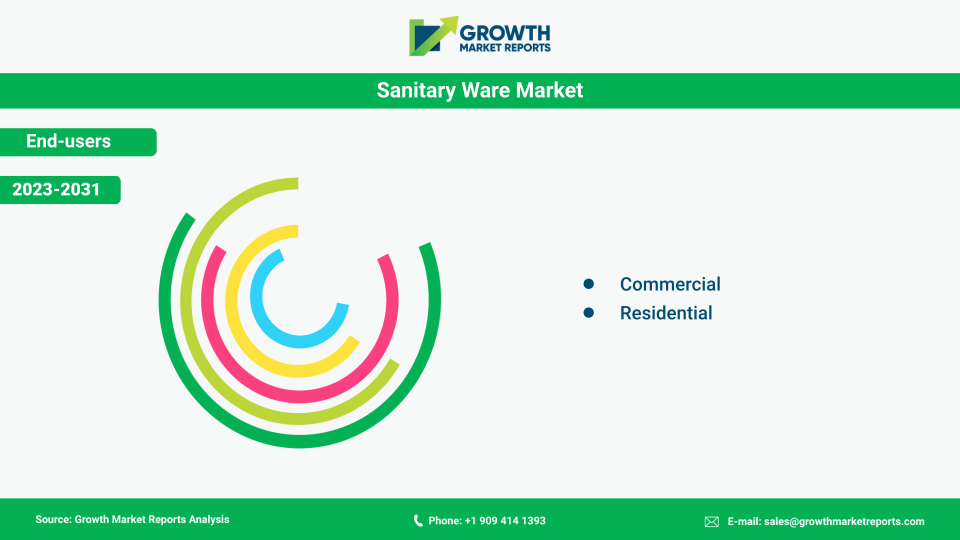
The application segment of the sanitary ware market is categorized into residential, commercial, and institutional segments, each with distinct demand drivers and growth dynamics. The residential segment accounts for the largest share of the market in 2025, fueled by rising home ownership rates, urbanization, increasing disposable incomes, and the sustained global boom in home improvement spending. Homeowners are investing in modern, aesthetically refined bathrooms, driving demand across the full range of sanitary ware products. The growing popularity of smart homes and wellness-oriented living spaces is influencing product choices, with consumers increasingly seeking integrated bathroom solutions that combine hygiene, convenience, and design. Adjacent product categories such as bathroom accessories are benefiting from the same renovation tailwind.

The commercial segment, encompassing hotels, offices, shopping malls, airports, and restaurants, is witnessing robust growth in 2025 due to expansion of the hospitality and tourism industries and a post-pandemic resurgence in commercial real estate development. The emphasis on hygiene, brand-aligned aesthetics, and water efficiency is driving demand for advanced sanitary ware solutions in commercial spaces. Large-scale construction projects, including business parks, transit hubs, and mixed-use developments, are creating compelling new opportunities for market players. The adoption of touchless and sensor-based sanitary ware solutions continues to accelerate in commercial settings, as building operators seek to minimize infection risk, reduce water bills, and enhance the user experience for guests and occupants.

Institutional applications, including schools, hospitals, public restrooms, and government buildings, represent a significant and resilient growth area for the sanitary ware market. The focus on public health and hygiene remains elevated in 2025, driving continued investment in the upgrade and expansion of sanitation infrastructure in institutional settings. Governments and development organizations are implementing programs to improve access to clean sanitation facilities, especially in developing regions across sub-Saharan Africa and South Asia. The demand for vandal-resistant, easy-to-clean, and durable sanitary ware products is particularly high in institutional applications, where usage rates and maintenance requirements are considerable. Sanitary ware products in this segment are increasingly specified alongside broader categories including plumbing and bathroom fixtures within comprehensive infrastructure procurement programs.

The application segment is characterized by varying product requirements and regulatory standards, necessitating tailored solutions for different end-users. Manufacturers are responding by offering diversified product portfolios that address the specific functional, aesthetic, and compliance needs of residential, commercial, and institutional customers. The integration of smart technologies, water-saving features, and sustainable materials is becoming increasingly important across all three application segments. As consumer expectations evolve and regulatory frameworks become more stringent, the application segment is expected to continue delivering growth and driving product innovation throughout the 2026-2034 forecast period.

Distribution Channel Analysis

The distribution channel segment in the sanitary ware market comprises offline retail, online retail, and wholesale channels, each playing a crucial role in product accessibility and market penetration. Offline retail, including specialty stores, home improvement centers, branded showrooms, and department stores, remains the dominant distribution channel in 2025, accounting for the majority of sales. Consumers frequently prefer offline channels for sanitary ware purchases due to the ability to physically inspect products, consult with trained sales advisors, and arrange professional installation services. Retailers are continuously enhancing the in-store experience through interactive displays, working product demonstrations, and personalized consultations, fostering customer loyalty and higher average transaction values.

Online retail is rapidly gaining ground in the sanitary ware market, driven by the ongoing expansion of e-commerce platforms and the continuing evolution of consumer shopping behavior. The convenience of browsing extensive product ranges, accessing detailed specifications and customer reviews, and comparing prices across suppliers has made online channels increasingly popular among both residential consumers and procurement professionals. Manufacturers and retailers have responded by investing in digital platforms, virtual showrooms, and augmented reality configuration tools that allow customers to visualize products in their own spaces before purchasing. Doorstep delivery, easy returns, and competitive online pricing are making digital retail an appealing and growing channel for sanitary ware across all market tiers.

Wholesale channels play a critical role in supplying sanitary ware products to large-scale construction projects, institutional buyers, independent retailers, and trade contractors. Wholesalers leverage their extensive distribution networks and bulk purchasing capabilities to offer competitive pricing and reliable delivery schedules, making them a preferred procurement route for contractors, project developers, and housing authorities. The wholesale segment is particularly important in emerging markets, where government-led infrastructure development and sanitation initiatives drive substantial bulk procurement volumes. Manufacturers are collaborating closely with wholesale partners to expand geographic reach, streamline logistics, and capitalize on growing institutional and commercial demand.

The distribution channel landscape is evolving at pace in 2025, with leading manufacturers adopting comprehensive omnichannel strategies to maximize market coverage and deepen customer engagement. The seamless integration of online and offline channels, supported by advanced logistics, real-time inventory management, and data-driven marketing, is enabling consistent product availability and high-quality service delivery. Retailers and wholesalers are leveraging analytics and customer behavior data to optimize assortment planning, personalize promotions, and improve satisfaction scores. As competition intensifies and the boundaries between physical and digital commerce continue to blur, distribution channel innovation will remain a key arena for competitive differentiation in the global sanitary ware market through 2034.

Opportunities & Threats

The sanitary ware market presents a rich set of opportunities for growth and innovation in 2025 and beyond, driven by evolving consumer preferences, technological breakthroughs, and supportive policy environments. One of the most significant opportunities lies in the accelerating adoption of smart and connected sanitary ware products, which deliver enhanced convenience, hygiene, water efficiency, and operational insights. The integration of IoT, sensor-based technologies, and home automation platforms is enabling manufacturers to develop next-generation products that resonate with modern consumers and facilities managers alike. The growing emphasis on sustainability and water conservation is creating additional opportunities for brands to differentiate through eco-certified products and contributions to green building programs.

Emerging markets, particularly in Asia Pacific, Latin America, and Africa, offer substantial untapped growth potential for the sanitary ware market through 2034. Rapid urbanization, expanding middle classes, rising disposable incomes, and government-led sanitation investments are driving demand for modern sanitary ware solutions at unprecedented scale. Manufacturers can capitalize on these opportunities by investing in local manufacturing capacity, region-specific product development, and targeted distribution partnerships. The premiumization trend is also gathering momentum in developing markets, with aspirational consumers seeking branded, design-led products that reflect improving living standards. The broader home products ecosystem, encompassing categories such as kitchenware and tableware, is evolving similarly, suggesting coordinated opportunities for companies with diversified home products portfolios.

Despite the positive outlook, the sanitary ware market faces several challenges and restraints that require careful strategic management. Fluctuations in raw material prices, particularly for ceramics, stainless steel, and petrochemical-derived plastics, can compress production cost structures and erode profit margins, especially for manufacturers operating on thin volumes. The market is subject to increasingly stringent regulatory standards relating to water consumption, chemical emissions, and product safety, which raise compliance costs and can limit the pace of new product introductions. Intense price competition from low-cost regional manufacturers poses a persistent threat to established global players, demanding continuous innovation, quality leadership, and brand investment to sustain premium positioning. Economic uncertainties, fluctuating construction activity cycles, and geopolitical disruptions in key markets can dampen demand unpredictably, underscoring the importance of geographic diversification and operational agility for all participants in the global sanitary ware market.

Regional Outlook

Asia Pacific remains the largest and fastest-growing region in the global sanitary ware market, accounting for approximately USD 23.9 billion in 2025. The region is projected to maintain a leading CAGR of approximately 7.3% through 2034, driven by rapid urbanization, escalating infrastructure investments, and rising disposable incomes across key markets. China and India together account for the dominant share of regional demand, supported by ambitious government housing programs and sanitation improvement initiatives. Countries including Indonesia, Vietnam, Bangladesh, and the Philippines are emerging as significant secondary growth centers, as improving economic conditions and expanding urban populations drive first-time adoption of modern sanitary ware products.

Sanitary Ware Market Regional Share 2025

Europe and North America collectively account for a substantial share of the sanitary ware market, with a combined market value of approximately USD 24.4 billion in 2025. These regions are characterized by high renovation and remodeling activity, strong sustainability mandates, and robust consumer demand for premium and smart bathroom solutions. The adoption of water-efficient and IoT-enabled products is gaining momentum, supported by stringent regulatory standards and high consumer willingness to pay for quality and innovation. The hospitality, healthcare, and premium residential sectors are key demand drivers in these mature markets, with manufacturers focusing heavily on design differentiation, digital sales channels, and after-sales service excellence to maintain competitive positioning.

The Middle East & Africa and Latin America are emerging as promising growth regions for the sanitary ware market, with a combined market size of approximately USD 9.2 billion in 2025, projected to grow at above-average rates through 2034. These regions are experiencing robust construction activity, rising urbanization rates, and increasing government investments in public infrastructure and sanitation. The demand for durable, vandal-resistant, and cost-effective sanitary ware products is particularly high in institutional and public infrastructure applications. As living standards improve and consumer awareness regarding hygiene and product quality increases, these regions are expected to offer compelling and sustained opportunities for global and regional sanitary ware manufacturers over the forecast period.

Competitor Outlook

The sanitary ware market in 2025 is highly competitive, featuring a mix of global industry leaders and agile regional specialists competing for market share across product categories and geographies. The competitive landscape is defined by continuous innovation, compelling product differentiation, strategic partnerships, and growing investment in sustainability credentials. Leading companies are channeling significant resources into research and development to introduce advanced products that address evolving consumer demands for design excellence, smart functionality, water efficiency, and eco-friendliness. Mergers, acquisitions, and strategic collaborations remain active tools for companies seeking to expand product portfolios, strengthen distribution infrastructure, and enter new geographic markets quickly.

Brand reputation, consistent product quality, and responsive customer service are the critical purchase decision factors in the sanitary ware market. Established global players leverage extensive distribution networks, strong brand equity, and comprehensive after-sales support to maintain customer loyalty and command price premiums. Regional players compete effectively by offering cost-optimized solutions precisely tailored to local preferences, building codes, and regulatory requirements. Price competition remains intense, particularly in volume-driven emerging markets, compelling all participants to pursue operational efficiency alongside product and service innovation. Digitalization, spanning e-commerce, virtual showrooms, data-driven marketing, and smart product ecosystems, is becoming a key competitive dimension as the market evolves through the 2026-2034 period.

Sustainability and corporate responsibility are increasingly central to competitive strategy in the sanitary ware industry. Leading companies are implementing environmentally responsible manufacturing processes, aggressively reducing water and energy consumption in their operations, and developing recyclable or sustainably sourced product lines to address growing demand for green solutions. Environmental certifications, including LEED, ISO 14001, and regional water-efficiency labels, are becoming important differentiators, particularly in commercial specification and institutional procurement contexts. Companies that can demonstrate measurable environmental impact reductions alongside compelling product performance will enjoy strengthening competitive positions in an era of rising regulatory scrutiny and consumer environmental awareness.

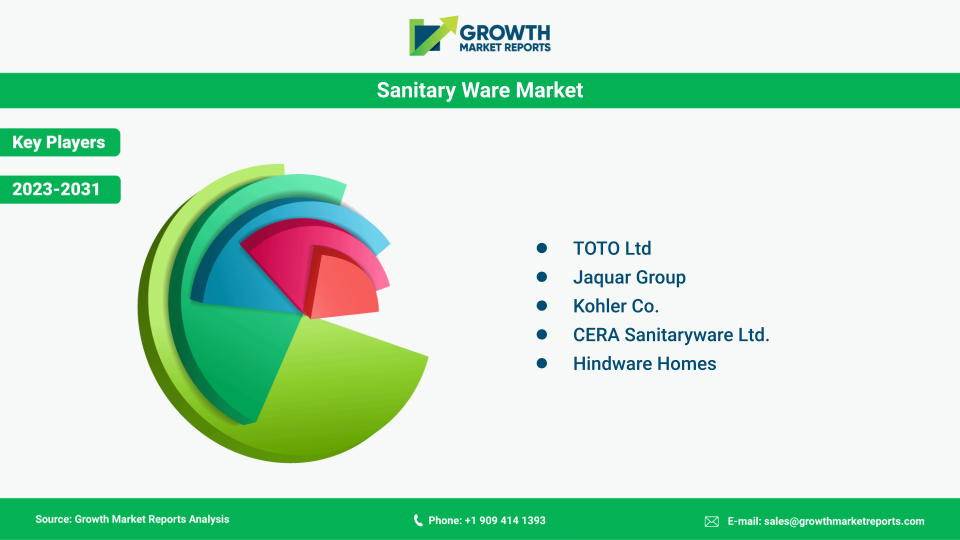
Major companies operating in the global sanitary ware market include Kohler Co., TOTO Ltd., Geberit AG, Roca Sanitario S.A., LIXIL Group Corporation, Villeroy & Boch AG, Duravit AG, Jaquar Group, Hansgrohe SE, Grohe AG, American Standard Brands, Ideal Standard International, CERA Sanitaryware Limited, Hindware Homes Limited, Vitra (Eczacibasi Group), HSIL Limited, Sloan Valve Company, and Masco Corporation. Kohler Co. is recognized for its commitment to design leadership, smart product innovation, and sustainability across premium residential and commercial segments. TOTO Ltd. continues to set global benchmarks for intelligent sanitary ware, particularly in smart toilets and water-saving systems, with a growing international footprint extending well beyond its core Japanese market. Geberit AG specializes in integrated sanitary systems and water-efficient cistern technology, serving both residential and large institutional customers across Europe and beyond. Roca Sanitario S.A. and LIXIL Group Corporation maintain extensive global product portfolios and well-established international distribution networks, enabling them to serve diverse market segments worldwide. Villeroy & Boch AG and Duravit AG are recognized as design and quality leaders in premium bathroom solutions, appealing to architects, interior designers, and discerning end consumers. Jaquar Group and HSIL Limited are prominent and fast-growing forces in the Indian subcontinent, competing effectively on the basis of innovation, affordability, and expanding distribution reach. These and other leading players are continuously reinforcing their market positions through targeted R&D investment, strategic acquisitions, and expanding omnichannel sales capabilities.

Key Players

  • Kohler Co.
  • TOTO Ltd.
  • Geberit AG
  • LIXIL Group Corporation
  • Roca Sanitario S.A.
  • Villeroy & Boch AG
  • Duravit AG
  • American Standard Brands
  • Hansgrohe SE
  • Jaquar Group
  • Ideal Standard International
  • Grohe AG
  • CERA Sanitaryware Limited
  • Hindware Homes Limited
  • Vitra (Eczacibasi Group)
  • HSIL Limited
  • Sloan Valve Company
  • Masco Corporation
  • Twyford Bathrooms
  • Porcelain Sanitaryware (Rak Ceramics)

Segments

The Sanitary Ware market has been segmented on the basis of

Product Type

  • Toilets
  • Wash Basins
  • Urinals
  • Bathtubs
  • Cisterns
  • Faucets
  • Others

Material

  • Ceramic
  • Pressed Metal
  • Acrylic Plastics
  • Others

Application

  • Residential
  • Commercial
  • Institutional

Distribution Channel

  • Offline Retail
  • Online Retail
  • Wholesale

Frequently Asked Questions

The sanitary ware market faces several notable challenges. Volatility in raw material prices, particularly ceramics, metals, and plastics, puts pressure on manufacturing costs and profit margins. Stringent environmental and water-use regulations in developed markets increase compliance costs. Intense competition from low-cost manufacturers in Asia creates pricing pressure for established brands. Economic slowdowns and fluctuations in construction activity can suppress demand in key markets. Additionally, supply chain disruptions and the complexity of integrating advanced smart technologies into affordable product lines present ongoing operational challenges for manufacturers of all sizes.

The global sanitary ware market features a competitive mix of international and regional leaders. Key players include Kohler Co., TOTO Ltd., Geberit AG, LIXIL Group Corporation, Roca Sanitario S.A., Villeroy & Boch AG, Duravit AG, Hansgrohe SE, Grohe AG, Jaquar Group, American Standard Brands, Ideal Standard International, CERA Sanitaryware Limited, Hindware Homes Limited, Vitra (Eczacibasi Group), HSIL Limited, Sloan Valve Company, and Masco Corporation. These companies compete on product innovation, sustainability credentials, brand equity, and distribution reach.

The sanitary ware market is served through three primary distribution channels: offline retail (specialty stores, home improvement centers, and showrooms), online retail, and wholesale. Offline retail remains dominant, as consumers prefer to inspect products physically before purchasing. However, online retail is growing rapidly, supported by e-commerce expansion, virtual showrooms, and augmented reality tools. Wholesale channels are critical for large-scale construction and institutional procurement. Manufacturers are increasingly adopting omnichannel strategies to maximize reach and customer engagement across all touchpoints.

Smart technologies are fundamentally transforming the sanitary ware market in 2025. IoT-enabled products such as smart toilets with automatic flushing, seat warming, and bidet functions, touchless sensor faucets, and digitally controlled shower systems are gaining widespread adoption. Integration with smart home ecosystems allows remote monitoring and control of water usage, temperature, and hygiene settings. The demand for smart bathroom fittings is accelerating particularly in North America, Europe, and premium segments across Asia Pacific, as consumers seek comfort, hygiene, and energy efficiency.

Ceramic remains the dominant material in the sanitary ware market, prized for its durability, ease of cleaning, stain resistance, and cost-effectiveness across toilets, wash basins, and urinals. Pressed metal, particularly stainless steel, is widely used in commercial and institutional settings for its vandal resistance and superior hygiene properties. Acrylic plastics are popular for bathtubs and shower trays due to their lightweight nature and design flexibility. Premium segments are also seeing increased use of glass, natural stone, and composite materials for bespoke bathroom solutions.

Sustainability is reshaping the sanitary ware industry at every level. Consumers and businesses are prioritizing water-efficient products such as dual-flush cisterns, low-flow faucets, and sensor-activated fixtures that reduce water consumption significantly. Manufacturers are investing in eco-friendly materials, including recycled ceramics and bio-based composites, while pursuing green building certifications like LEED. Regulatory pressure in Europe and North America is driving stricter water-use standards, compelling brands to innovate. Sustainability is now a key competitive differentiator rather than a secondary consideration.

Toilets are the leading product type, holding approximately 28.5% of market revenue in 2025, owing to their essential role in every sanitary installation. Wash basins follow closely at around 22%, driven by widespread use across residential, hospitality, and commercial spaces. Faucets represent approximately 18.5% of the market. Bathtubs, cisterns, urinals, and other products such as bidets and shower panels make up the remainder, with premium and smart variants gaining traction in developed markets.

Asia Pacific leads the global sanitary ware market in 2025, accounting for approximately 41.5% of total revenue, driven by rapid urbanization and large-scale infrastructure investments in China, India, Indonesia, and Vietnam. Europe and North America collectively represent a substantial share, supported by renovation activities and sustainability mandates. The Middle East & Africa and Latin America are emerging as high-growth regions, propelled by increasing construction projects and improving living standards.

The primary drivers of sanitary ware market growth include rapid urbanization in emerging economies, increasing construction activities, rising disposable incomes, and heightened hygiene awareness following the COVID-19 pandemic. Government-led sanitation programs such as India's Swachh Bharat Abhiyan, the expansion of smart city initiatives, and growing consumer preference for water-efficient and technologically advanced bathroom solutions are also significant contributors. The renovation and remodeling boom in developed markets adds further momentum.

According to our latest research, the global sanitary ware market size stands at USD 57.5 billion in 2025. The market is projected to grow at a CAGR of 6.1% during the 2026-2034 forecast period, reaching approximately USD 97.8 billion by 2034. This growth is underpinned by rapid urbanization, rising hygiene awareness, and continuous product innovation across residential, commercial, and institutional applications.

Table Of Content

Chapter 1 Executive Summary
Chapter 2 Assumptions and Acronyms Used
Chapter 3 Research Methodology
Chapter 4 Sanitary Ware Market Overview
   4.1 Introduction
      4.1.1 Market Taxonomy
      4.1.2 Market Definition
      4.1.3 Macro-Economic Factors Impacting the Market Growth
   4.2 Sanitary Ware Market Dynamics
      4.2.1 Market Drivers
      4.2.2 Market Restraints
      4.2.3 Market Opportunity
   4.3 Sanitary Ware Market - Supply Chain Analysis
      4.3.1 List of Key Suppliers
      4.3.2 List of Key Distributors
      4.3.3 List of Key Consumers
   4.4 Key Forces Shaping the Sanitary Ware Market
      4.4.1 Bargaining Power of Suppliers
      4.4.2 Bargaining Power of Buyers
      4.4.3 Threat of Substitution
      4.4.4 Threat of New Entrants
      4.4.5 Competitive Rivalry
   4.5 Global Sanitary Ware Market Size & Forecast, 2023-2032
      4.5.1 Sanitary Ware Market Size and Y-o-Y Growth
      4.5.2 Sanitary Ware Market Absolute $ Opportunity

Chapter 5 Global Sanitary Ware Market Analysis and Forecast By Product Type
   5.1 Introduction
      5.1.1 Key Market Trends & Growth Opportunities By Product Type
      5.1.2 Basis Point Share (BPS) Analysis By Product Type
      5.1.3 Absolute $ Opportunity Assessment By Product Type
   5.2 Sanitary Ware Market Size Forecast By Product Type
      5.2.1 Toilets
      5.2.2 Wash Basins
      5.2.3 Urinals
      5.2.4 Bathtubs
      5.2.5 Cisterns
      5.2.6 Faucets
      5.2.7 Others
   5.3 Market Attractiveness Analysis By Product Type

Chapter 6 Global Sanitary Ware Market Analysis and Forecast By Material
   6.1 Introduction
      6.1.1 Key Market Trends & Growth Opportunities By Material
      6.1.2 Basis Point Share (BPS) Analysis By Material
      6.1.3 Absolute $ Opportunity Assessment By Material
   6.2 Sanitary Ware Market Size Forecast By Material
      6.2.1 Ceramic
      6.2.2 Pressed Metal
      6.2.3 Acrylic Plastics
      6.2.4 Others
   6.3 Market Attractiveness Analysis By Material

Chapter 7 Global Sanitary Ware Market Analysis and Forecast By Application
   7.1 Introduction
      7.1.1 Key Market Trends & Growth Opportunities By Application
      7.1.2 Basis Point Share (BPS) Analysis By Application
      7.1.3 Absolute $ Opportunity Assessment By Application
   7.2 Sanitary Ware Market Size Forecast By Application
      7.2.1 Residential
      7.2.2 Commercial
      7.2.3 Institutional
   7.3 Market Attractiveness Analysis By Application

Chapter 8 Global Sanitary Ware Market Analysis and Forecast By Distribution Channel
   8.1 Introduction
      8.1.1 Key Market Trends & Growth Opportunities By Distribution Channel
      8.1.2 Basis Point Share (BPS) Analysis By Distribution Channel
      8.1.3 Absolute $ Opportunity Assessment By Distribution Channel
   8.2 Sanitary Ware Market Size Forecast By Distribution Channel
      8.2.1 Offline Retail
      8.2.2 Online Retail
      8.2.3 Wholesale
   8.3 Market Attractiveness Analysis By Distribution Channel

Chapter 9 Global Sanitary Ware Market Analysis and Forecast by Region
   9.1 Introduction
      9.1.1 Key Market Trends & Growth Opportunities By Region
      9.1.2 Basis Point Share (BPS) Analysis By Region
      9.1.3 Absolute $ Opportunity Assessment By Region
   9.2 Sanitary Ware Market Size Forecast By Region
      9.2.1 North America
      9.2.2 Europe
      9.2.3 Asia Pacific
      9.2.4 Latin America
      9.2.5 Middle East & Africa (MEA)
   9.3 Market Attractiveness Analysis By Region

Chapter 10 Coronavirus Disease (COVID-19) Impact 
   10.1 Introduction 
   10.2 Current & Future Impact Analysis 
   10.3 Economic Impact Analysis 
   10.4 Government Policies 
   10.5 Investment Scenario

Chapter 11 North America Sanitary Ware Analysis and Forecast
   11.1 Introduction
   11.2 North America Sanitary Ware Market Size Forecast by Country
      11.2.1 U.S.
      11.2.2 Canada
   11.3 Basis Point Share (BPS) Analysis by Country
   11.4 Absolute $ Opportunity Assessment by Country
   11.5 Market Attractiveness Analysis by Country
   11.6 North America Sanitary Ware Market Size Forecast By Product Type
      11.6.1 Toilets
      11.6.2 Wash Basins
      11.6.3 Urinals
      11.6.4 Bathtubs
      11.6.5 Cisterns
      11.6.6 Faucets
      11.6.7 Others
   11.7 Basis Point Share (BPS) Analysis By Product Type 
   11.8 Absolute $ Opportunity Assessment By Product Type 
   11.9 Market Attractiveness Analysis By Product Type
   11.10 North America Sanitary Ware Market Size Forecast By Material
      11.10.1 Ceramic
      11.10.2 Pressed Metal
      11.10.3 Acrylic Plastics
      11.10.4 Others
   11.11 Basis Point Share (BPS) Analysis By Material 
   11.12 Absolute $ Opportunity Assessment By Material 
   11.13 Market Attractiveness Analysis By Material
   11.14 North America Sanitary Ware Market Size Forecast By Application
      11.14.1 Residential
      11.14.2 Commercial
      11.14.3 Institutional
   11.15 Basis Point Share (BPS) Analysis By Application 
   11.16 Absolute $ Opportunity Assessment By Application 
   11.17 Market Attractiveness Analysis By Application
   11.18 North America Sanitary Ware Market Size Forecast By Distribution Channel
      11.18.1 Offline Retail
      11.18.2 Online Retail
      11.18.3 Wholesale
   11.19 Basis Point Share (BPS) Analysis By Distribution Channel 
   11.20 Absolute $ Opportunity Assessment By Distribution Channel 
   11.21 Market Attractiveness Analysis By Distribution Channel

Chapter 12 Europe Sanitary Ware Analysis and Forecast
   12.1 Introduction
   12.2 Europe Sanitary Ware Market Size Forecast by Country
      12.2.1 Germany
      12.2.2 France
      12.2.3 Italy
      12.2.4 U.K.
      12.2.5 Spain
      12.2.6 Russia
      12.2.7 Rest of Europe
   12.3 Basis Point Share (BPS) Analysis by Country
   12.4 Absolute $ Opportunity Assessment by Country
   12.5 Market Attractiveness Analysis by Country
   12.6 Europe Sanitary Ware Market Size Forecast By Product Type
      12.6.1 Toilets
      12.6.2 Wash Basins
      12.6.3 Urinals
      12.6.4 Bathtubs
      12.6.5 Cisterns
      12.6.6 Faucets
      12.6.7 Others
   12.7 Basis Point Share (BPS) Analysis By Product Type 
   12.8 Absolute $ Opportunity Assessment By Product Type 
   12.9 Market Attractiveness Analysis By Product Type
   12.10 Europe Sanitary Ware Market Size Forecast By Material
      12.10.1 Ceramic
      12.10.2 Pressed Metal
      12.10.3 Acrylic Plastics
      12.10.4 Others
   12.11 Basis Point Share (BPS) Analysis By Material 
   12.12 Absolute $ Opportunity Assessment By Material 
   12.13 Market Attractiveness Analysis By Material
   12.14 Europe Sanitary Ware Market Size Forecast By Application
      12.14.1 Residential
      12.14.2 Commercial
      12.14.3 Institutional
   12.15 Basis Point Share (BPS) Analysis By Application 
   12.16 Absolute $ Opportunity Assessment By Application 
   12.17 Market Attractiveness Analysis By Application
   12.18 Europe Sanitary Ware Market Size Forecast By Distribution Channel
      12.18.1 Offline Retail
      12.18.2 Online Retail
      12.18.3 Wholesale
   12.19 Basis Point Share (BPS) Analysis By Distribution Channel 
   12.20 Absolute $ Opportunity Assessment By Distribution Channel 
   12.21 Market Attractiveness Analysis By Distribution Channel

Chapter 13 Asia Pacific Sanitary Ware Analysis and Forecast
   13.1 Introduction
   13.2 Asia Pacific Sanitary Ware Market Size Forecast by Country
      13.2.1 China
      13.2.2 Japan
      13.2.3 South Korea
      13.2.4 India
      13.2.5 Australia
      13.2.6 South East Asia (SEA)
      13.2.7 Rest of Asia Pacific (APAC)
   13.3 Basis Point Share (BPS) Analysis by Country
   13.4 Absolute $ Opportunity Assessment by Country
   13.5 Market Attractiveness Analysis by Country
   13.6 Asia Pacific Sanitary Ware Market Size Forecast By Product Type
      13.6.1 Toilets
      13.6.2 Wash Basins
      13.6.3 Urinals
      13.6.4 Bathtubs
      13.6.5 Cisterns
      13.6.6 Faucets
      13.6.7 Others
   13.7 Basis Point Share (BPS) Analysis By Product Type 
   13.8 Absolute $ Opportunity Assessment By Product Type 
   13.9 Market Attractiveness Analysis By Product Type
   13.10 Asia Pacific Sanitary Ware Market Size Forecast By Material
      13.10.1 Ceramic
      13.10.2 Pressed Metal
      13.10.3 Acrylic Plastics
      13.10.4 Others
   13.11 Basis Point Share (BPS) Analysis By Material 
   13.12 Absolute $ Opportunity Assessment By Material 
   13.13 Market Attractiveness Analysis By Material
   13.14 Asia Pacific Sanitary Ware Market Size Forecast By Application
      13.14.1 Residential
      13.14.2 Commercial
      13.14.3 Institutional
   13.15 Basis Point Share (BPS) Analysis By Application 
   13.16 Absolute $ Opportunity Assessment By Application 
   13.17 Market Attractiveness Analysis By Application
   13.18 Asia Pacific Sanitary Ware Market Size Forecast By Distribution Channel
      13.18.1 Offline Retail
      13.18.2 Online Retail
      13.18.3 Wholesale
   13.19 Basis Point Share (BPS) Analysis By Distribution Channel 
   13.20 Absolute $ Opportunity Assessment By Distribution Channel 
   13.21 Market Attractiveness Analysis By Distribution Channel

Chapter 14 Latin America Sanitary Ware Analysis and Forecast
   14.1 Introduction
   14.2 Latin America Sanitary Ware Market Size Forecast by Country
      14.2.1 Brazil
      14.2.2 Mexico
      14.2.3 Rest of Latin America (LATAM)
   14.3 Basis Point Share (BPS) Analysis by Country
   14.4 Absolute $ Opportunity Assessment by Country
   14.5 Market Attractiveness Analysis by Country
   14.6 Latin America Sanitary Ware Market Size Forecast By Product Type
      14.6.1 Toilets
      14.6.2 Wash Basins
      14.6.3 Urinals
      14.6.4 Bathtubs
      14.6.5 Cisterns
      14.6.6 Faucets
      14.6.7 Others
   14.7 Basis Point Share (BPS) Analysis By Product Type 
   14.8 Absolute $ Opportunity Assessment By Product Type 
   14.9 Market Attractiveness Analysis By Product Type
   14.10 Latin America Sanitary Ware Market Size Forecast By Material
      14.10.1 Ceramic
      14.10.2 Pressed Metal
      14.10.3 Acrylic Plastics
      14.10.4 Others
   14.11 Basis Point Share (BPS) Analysis By Material 
   14.12 Absolute $ Opportunity Assessment By Material 
   14.13 Market Attractiveness Analysis By Material
   14.14 Latin America Sanitary Ware Market Size Forecast By Application
      14.14.1 Residential
      14.14.2 Commercial
      14.14.3 Institutional
   14.15 Basis Point Share (BPS) Analysis By Application 
   14.16 Absolute $ Opportunity Assessment By Application 
   14.17 Market Attractiveness Analysis By Application
   14.18 Latin America Sanitary Ware Market Size Forecast By Distribution Channel
      14.18.1 Offline Retail
      14.18.2 Online Retail
      14.18.3 Wholesale
   14.19 Basis Point Share (BPS) Analysis By Distribution Channel 
   14.20 Absolute $ Opportunity Assessment By Distribution Channel 
   14.21 Market Attractiveness Analysis By Distribution Channel

Chapter 15 Middle East & Africa (MEA) Sanitary Ware Analysis and Forecast
   15.1 Introduction
   15.2 Middle East & Africa (MEA) Sanitary Ware Market Size Forecast by Country
      15.2.1 Saudi Arabia
      15.2.2 South Africa
      15.2.3 UAE
      15.2.4 Rest of Middle East & Africa (MEA)
   15.3 Basis Point Share (BPS) Analysis by Country
   15.4 Absolute $ Opportunity Assessment by Country
   15.5 Market Attractiveness Analysis by Country
   15.6 Middle East & Africa (MEA) Sanitary Ware Market Size Forecast By Product Type
      15.6.1 Toilets
      15.6.2 Wash Basins
      15.6.3 Urinals
      15.6.4 Bathtubs
      15.6.5 Cisterns
      15.6.6 Faucets
      15.6.7 Others
   15.7 Basis Point Share (BPS) Analysis By Product Type 
   15.8 Absolute $ Opportunity Assessment By Product Type 
   15.9 Market Attractiveness Analysis By Product Type
   15.10 Middle East & Africa (MEA) Sanitary Ware Market Size Forecast By Material
      15.10.1 Ceramic
      15.10.2 Pressed Metal
      15.10.3 Acrylic Plastics
      15.10.4 Others
   15.11 Basis Point Share (BPS) Analysis By Material 
   15.12 Absolute $ Opportunity Assessment By Material 
   15.13 Market Attractiveness Analysis By Material
   15.14 Middle East & Africa (MEA) Sanitary Ware Market Size Forecast By Application
      15.14.1 Residential
      15.14.2 Commercial
      15.14.3 Institutional
   15.15 Basis Point Share (BPS) Analysis By Application 
   15.16 Absolute $ Opportunity Assessment By Application 
   15.17 Market Attractiveness Analysis By Application
   15.18 Middle East & Africa (MEA) Sanitary Ware Market Size Forecast By Distribution Channel
      15.18.1 Offline Retail
      15.18.2 Online Retail
      15.18.3 Wholesale
   15.19 Basis Point Share (BPS) Analysis By Distribution Channel 
   15.20 Absolute $ Opportunity Assessment By Distribution Channel 
   15.21 Market Attractiveness Analysis By Distribution Channel

Chapter 16 Competition Landscape 
   16.1 Sanitary Ware Market: Competitive Dashboard
   16.2 Global Sanitary Ware Market: Market Share Analysis, 2023
   16.3 Company Profiles (Details – Overview, Financials, Developments, Strategy) 
      16.3.1 Kohler Co.
      16.3.2 TOTO Ltd.
      16.3.3 Geberit AG
      16.3.4 LIXIL Group Corporation
      16.3.5 Roca Sanitario S.A.
      16.3.6 Villeroy & Boch AG
      16.3.7 Duravit AG
      16.3.8 American Standard Brands
      16.3.9 Hansgrohe SE
      16.3.10 Jaquar Group
      16.3.11 Ideal Standard International
      16.3.12 Grohe AG
      16.3.13 CERA Sanitaryware Limited
      16.3.14 Hindware Homes Limited
      16.3.15 Vitra (Eczacibasi Group)
      16.3.16 HSIL Limited
      16.3.17 Sloan Valve Company
      16.3.18 Masco Corporation
      16.3.19 Twyford Bathrooms
      16.3.20 Porcelain Sanitaryware (Rak Ceramics)

Methodology

Our Clients

sinopec
The John Holland Group
Honda Motor Co. Ltd.
Deloitte
Microsoft
Dassault Aviation
Pfizer
FedEx Logistics