Segments - by Service Type (B2B, B2C, C2C), by Application (Retail, Healthcare, Food & Beverages, E-commerce, Documents & Letters, Others), by Mode Of Transportation (Airways, Roadways, Railways), by End-User (Individuals, Enterprises)
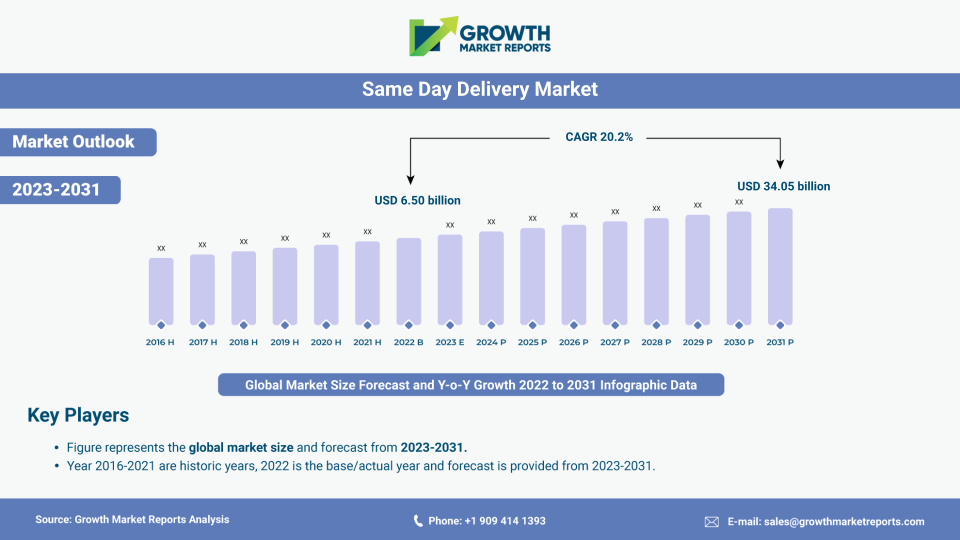
According to our latest research, the global same day delivery market size reached USD 8.9 billion in 2024, reflecting the robust expansion seen in the last few years. The market is anticipated to grow at a CAGR of 21.7% from 2025 to 2033, reaching an estimated USD 66.8 billion by the end of the forecast period. This remarkable growth is driven by the increasing consumer demand for rapid fulfillment, technological advancements in logistics, and the proliferation of e-commerce platforms worldwide. As per our latest research, the same day delivery industry is witnessing accelerated transformation, fueled by both digital innovation and evolving customer expectations.
A primary growth factor for the same day delivery market is the explosive rise of e-commerce across both developed and emerging markets. Online retailers are continuously seeking to differentiate themselves through enhanced customer experiences, with rapid delivery being a key competitive advantage. The shift in consumer behavior towards instant gratification, coupled with the normalization of digital shopping, has compelled logistics providers to optimize their operations for speed and efficiency. Furthermore, the integration of advanced technologies such as real-time tracking, artificial intelligence, and route optimization software has significantly improved the reliability and cost-effectiveness of same day delivery services, making them accessible to a broader range of businesses and consumers.
Another significant driver is the increasing demand from specialized sectors, particularly healthcare and food & beverages. In healthcare, the urgency of medical supplies, pharmaceuticals, and diagnostic samples has necessitated the adoption of same day delivery solutions to ensure timely and secure transportation. Similarly, the food and beverage industry has experienced a surge in demand for rapid delivery, especially with the rise of online food ordering platforms and meal kit services. Enterprises in these sectors are investing heavily in logistics infrastructure and last-mile delivery networks to meet stringent delivery timelines, thereby contributing to the overall market growth.
Moreover, urbanization and the expansion of metropolitan areas have played a crucial role in the proliferation of same day delivery services. The concentration of consumers in urban centers, coupled with improved road and transportation networks, has enabled logistics companies to serve larger populations within shorter timeframes. Additionally, the growth of gig economy platforms and crowdsourced delivery models has introduced new flexibility and scalability to the market, allowing providers to dynamically allocate resources based on real-time demand fluctuations. These developments are not only enhancing service levels but also driving down operational costs, further accelerating market adoption.
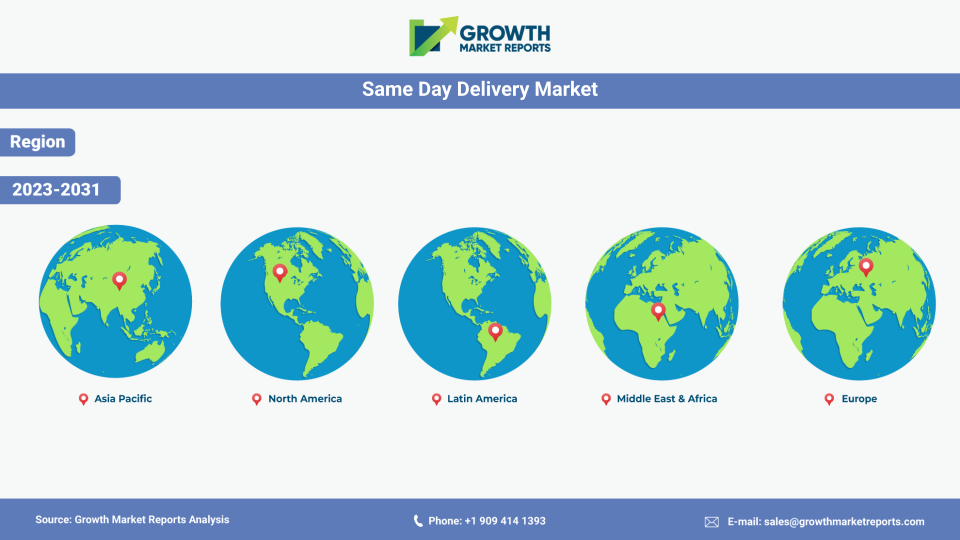
From a regional perspective, North America continues to dominate the same day delivery market, owing to its mature e-commerce ecosystem, high consumer expectations, and advanced logistics infrastructure. However, Asia Pacific is rapidly emerging as the fastest-growing region, fueled by the burgeoning middle class, rising urbanization, and aggressive investments in digital commerce and transportation networks. Europe and the Middle East & Africa are also witnessing steady growth, supported by regulatory reforms and the expansion of cross-border e-commerce. Each region presents unique opportunities and challenges, shaping the competitive dynamics and innovation landscape of the global same day delivery market.
The same day delivery market is segmented by service type into B2B (business-to-business), B2C (business-to-consumer), and C2C (consumer-to-consumer) categories, each with distinct demand drivers and operational requirements. The B2C segment currently holds the largest market share, driven by the surge in online retail and the growing expectation among consumers for instant delivery. Major e-commerce platforms and retailers are investing heavily in logistics capabilities to ensure prompt fulfillment, often partnering with third-party providers or developing proprietary delivery networks. The B2C segment is also characterized by high transaction volumes and a diverse product mix, necessitating robust tracking, communication, and customer service capabilities to manage expectations and resolve issues promptly.
The B2B segment, while smaller in volume compared to B2C, is witnessing rapid growth due to the increasing need for expedited delivery of critical business supplies, spare parts, and equipment. Industries such as manufacturing, automotive, and healthcare rely on same day delivery to minimize downtime and maintain operational continuity. B2B deliveries often involve higher-value consignments and require specialized handling, security, and compliance protocols. As businesses continue to streamline their supply chains and embrace just-in-time inventory models, the demand for reliable and flexible same day delivery solutions in the B2B segment is expected to rise significantly.
The C2C segment, though still emerging, is gaining traction with the proliferation of peer-to-peer marketplaces and second-hand goods platforms. Consumers are increasingly seeking convenient and rapid ways to exchange goods, facilitated by app-based delivery services and gig economy platforms. The C2C market presents unique challenges in terms of routing, pickup, and drop-off coordination, as well as payment and verification processes. However, advancements in mobile technology and the growing acceptance of digital payment systems are helping to overcome these barriers, enabling greater adoption of same day delivery in the C2C space.
Overall, the service type segmentation highlights the versatility and adaptability of same day delivery solutions across different user groups and transaction types. Providers are continuously innovating to address the specific needs of each segment, whether it be through differentiated pricing, tailored service levels, or value-added offerings such as insurance and packaging. The convergence of B2B, B2C, and C2C models is also fostering new business models and partnerships, further expanding the addressable market for same day delivery services.
| Attributes | Details |
| Report Title | Same Day Delivery Market Research Report 2033 |
| By Service Type | B2B, B2C, C2C |
| By Application | Retail, Healthcare, Food & Beverages, E-commerce, Documents & Letters, Others |
| By Mode Of Transportation | Airways, Roadways, Railways |
| By End-User | Individuals, Enterprises |
| Regions Covered | North America, Europe, APAC, Latin America, MEA |
| Base Year | 2024 |
| Historic Data | 2018-2023 |
| Forecast Period | 2025-2033 |
| Number of Pages | 273 |
| Number of Tables & Figures | 391 |
| Customization Available | Yes, the report can be customized as per your need. |
The application segment of the same day delivery market encompasses a wide range of industries, including retail, healthcare, food & beverages, e-commerce, documents & letters, and others. The retail sector is the largest contributor, accounting for a significant share of total market revenue. Retailers are under immense pressure to meet rising consumer expectations for quick delivery, particularly for high-demand items such as electronics, apparel, and personal care products. The integration of same day delivery into omnichannel strategies is enabling retailers to enhance customer loyalty, reduce cart abandonment rates, and differentiate themselves in a highly competitive marketplace.
Healthcare is another critical application area, where the timely delivery of pharmaceuticals, medical devices, and diagnostic samples can have life-saving implications. Hospitals, clinics, and pharmacies are increasingly leveraging same day delivery services to ensure the availability of essential supplies, reduce inventory costs, and improve patient outcomes. The healthcare segment also demands stringent quality control, temperature management, and regulatory compliance, driving the need for specialized logistics providers with expertise in medical transportation.
The food & beverages segment has experienced exponential growth, fueled by the proliferation of online food ordering platforms, meal kit delivery services, and grocery e-commerce. Consumers are increasingly seeking convenience and variety, with same day delivery playing a pivotal role in fulfilling these needs. Restaurants, supermarkets, and specialty food retailers are partnering with logistics providers to offer rapid delivery, often leveraging real-time tracking and dynamic routing to optimize service levels. The perishability and sensitivity of food products also necessitate robust cold chain management and timely handling to ensure freshness and safety.
Other application areas, such as documents & letters, continue to be relevant, particularly for legal, financial, and corporate communications that require urgent delivery. The growing adoption of digital signatures and online document management has reduced the volume of physical document deliveries, but critical and time-sensitive correspondence still relies on same day services. Additionally, emerging applications in sectors such as automotive, electronics, and luxury goods are expanding the scope of same day delivery, as businesses seek to enhance customer experiences and respond to market trends more rapidly.
The mode of transportation is a key determinant of same day delivery performance, with airways, roadways, and railways serving as the primary channels for moving goods. Roadways dominate the market, accounting for the majority of same day deliveries due to their flexibility, accessibility, and cost-effectiveness. Delivery vans, motorcycles, and bicycles are commonly used for last-mile fulfillment, particularly in urban and suburban areas where traffic congestion and parking constraints are significant considerations. Road-based delivery networks are continuously being optimized through route planning algorithms, real-time traffic data, and fleet management systems to maximize efficiency and minimize delivery times.
Airways play a crucial role in enabling same day delivery over longer distances and for high-value or time-sensitive shipments. Major logistics providers and e-commerce companies are investing in dedicated air cargo fleets, drone delivery pilots, and partnerships with commercial airlines to expand their same day delivery capabilities. Air transportation is particularly valuable for connecting metropolitan hubs, serving remote or underserved areas, and facilitating cross-border e-commerce. While airways are typically more expensive than road-based options, advancements in automation, fuel efficiency, and regulatory frameworks are helping to drive down costs and expand accessibility.
Railways, though less commonly used for same day delivery, are gaining traction in specific contexts where bulk shipments, intercity connectivity, and environmental sustainability are priorities. Rail-based solutions offer advantages in terms of capacity, reliability, and reduced carbon footprint, making them attractive for large-scale B2B deliveries and strategic partnerships between logistics providers and rail operators. The integration of railways with road and air networks is also enabling multi-modal solutions that combine the strengths of each mode to optimize delivery speed, cost, and environmental impact.
The evolving landscape of transportation technologies, including electric vehicles, autonomous delivery robots, and hyperloop systems, is poised to further transform the mode of transportation segment. Logistics providers are experimenting with hybrid models that leverage multiple modes in a single delivery journey, dynamically selecting the optimal route based on real-time conditions and customer preferences. These innovations are expected to enhance the scalability, resilience, and sustainability of same day delivery networks, supporting continued market growth and differentiation.
The end-user segment of the same day delivery market is broadly categorized into individuals and enterprises, each with distinct needs, expectations, and usage patterns. Individuals represent a significant and growing user base, driven by the proliferation of e-commerce, online food delivery, and peer-to-peer marketplaces. Consumers are increasingly valuing convenience, speed, and transparency, with same day delivery becoming a key consideration in purchasing decisions. The rise of mobile apps, digital wallets, and personalized delivery options has further empowered individuals to access rapid fulfillment services tailored to their lifestyles and preferences.
Enterprises, on the other hand, leverage same day delivery to enhance operational efficiency, reduce inventory costs, and improve customer satisfaction. Businesses across sectors such as retail, healthcare, manufacturing, and professional services are integrating same day delivery into their supply chains to respond more quickly to market demands, fulfill urgent orders, and support just-in-time inventory management. Enterprises often require customized solutions, including scheduled pickups, bulk deliveries, specialized handling, and integration with enterprise resource planning (ERP) systems. Logistics providers are responding by offering tailored service packages, dedicated account management, and value-added services such as tracking, insurance, and reporting.
The interplay between individual and enterprise end-users is fostering new business models and service offerings in the same day delivery market. For example, gig economy platforms are enabling individuals to act as both senders and couriers, while enterprise partnerships with logistics startups are driving innovation in last-mile delivery, real-time tracking, and customer engagement. The convergence of B2C, B2B, and C2C use cases is expanding the addressable market and creating new opportunities for differentiation and value creation.
As the market matures, the expectations of both individual and enterprise end-users are evolving, with greater emphasis on reliability, transparency, and sustainability. Providers are investing in advanced technologies, workforce training, and customer support to meet these expectations and build long-term loyalty. The ongoing digital transformation of commerce and logistics is expected to further blur the lines between individual and enterprise end-users, driving continued innovation and growth in the same day delivery market.
The same day delivery market presents significant opportunities for growth and innovation, particularly as digital commerce continues to expand and consumer expectations evolve. One major opportunity lies in the integration of advanced technologies such as artificial intelligence, machine learning, and the Internet of Things (IoT) to optimize route planning, inventory management, and real-time tracking. These technologies enable logistics providers to enhance operational efficiency, reduce delivery times, and improve customer satisfaction. Additionally, the rise of smart cities and connected infrastructure is creating new possibilities for seamless, automated delivery networks that can adapt dynamically to changing demand patterns and traffic conditions.
Another key opportunity is the expansion of same day delivery services into new verticals and geographic markets. As consumers and businesses in emerging economies become more digitally connected, there is growing demand for rapid fulfillment solutions that can bridge the gap between urban and rural areas. Logistics providers that can offer reliable, cost-effective, and scalable same day delivery services in these markets stand to capture significant market share. Furthermore, the increasing focus on sustainability and green logistics presents opportunities for providers to differentiate themselves through eco-friendly delivery options, such as electric vehicles, bicycle couriers, and carbon-neutral shipping programs.
Despite the numerous opportunities, the same day delivery market also faces significant challenges and restrainers. Chief among these is the high cost and operational complexity associated with rapid fulfillment, particularly in densely populated urban areas or regions with limited transportation infrastructure. Logistics providers must balance the need for speed with profitability, often requiring substantial investments in technology, workforce, and fleet management. Additionally, regulatory constraints, labor shortages, and fluctuating fuel prices can impact service levels and margins. Providers that fail to address these challenges risk losing market share to more agile and innovative competitors.
The regional analysis of the same day delivery market reveals distinct trends and growth dynamics across key geographies. North America remains the largest regional market, accounting for approximately USD 3.2 billion in 2024, driven by its mature e-commerce sector, high consumer expectations, and advanced logistics infrastructure. The United States is the primary contributor, with major cities such as New York, Los Angeles, and Chicago serving as hubs for rapid fulfillment and last-mile delivery innovation. The presence of leading technology companies, logistics providers, and venture capital investment has further accelerated market growth and competition in the region.
Asia Pacific is the fastest-growing regional market, with a projected CAGR of 27.4% from 2025 to 2033, reaching an estimated USD 24.9 billion by the end of the forecast period. The region's rapid urbanization, rising middle class, and widespread adoption of digital commerce platforms are fueling demand for same day delivery services. Major markets such as China, India, and Southeast Asia are witnessing aggressive investments in logistics infrastructure, mobile technology, and digital payments, enabling providers to scale their operations and reach new customer segments. The competitive landscape in Asia Pacific is also characterized by the emergence of local startups, cross-border e-commerce partnerships, and government initiatives to improve transportation networks.
Europe and the Middle East & Africa (MEA) are also experiencing steady growth, with the European market valued at approximately USD 2.1 billion in 2024 and MEA at USD 0.9 billion. In Europe, regulatory harmonization, cross-border trade, and the expansion of urban delivery zones are driving the adoption of same day delivery solutions. Key markets such as the United Kingdom, Germany, and France are leading the way, supported by strong consumer demand and investments in sustainable logistics. The MEA region, while smaller in size, presents significant untapped potential, particularly in major urban centers and emerging e-commerce markets. Providers that can navigate the regulatory, cultural, and infrastructural challenges in these regions are well-positioned to capture future growth.
The competitive landscape of the same day delivery market is highly dynamic and fragmented, with a mix of global logistics giants, regional players, and innovative startups vying for market share. Major companies such as FedEx, UPS, DHL, and Amazon Logistics have established extensive networks and invested heavily in technology, fleet expansion, and last-mile delivery capabilities. These industry leaders leverage their scale, brand recognition, and operational expertise to offer comprehensive same day delivery solutions to both individual and enterprise customers. In addition to traditional logistics providers, technology-driven companies and gig economy platforms are reshaping the market by introducing new business models, flexible workforce solutions, and app-based delivery services.
Competition in the same day delivery market is intensifying as new entrants and incumbents seek to differentiate themselves through service innovation, pricing strategies, and customer experience enhancements. Providers are increasingly focusing on value-added services such as real-time tracking, personalized delivery options, and integrated returns management to attract and retain customers. Strategic partnerships, mergers and acquisitions, and investments in digital transformation are common strategies employed by leading players to expand their geographic reach, enhance service offerings, and achieve operational efficiencies. The rise of crowdsourced delivery models and autonomous delivery technologies is also driving competitive disruption, enabling smaller players to compete effectively with established incumbents.
The ability to adapt to changing market conditions, invest in technology, and build resilient supply chains will be critical for success in the same day delivery market. Companies that can offer reliable, scalable, and sustainable solutions are likely to capture a larger share of the growing demand for rapid fulfillment. The ongoing digitalization of commerce and logistics is expected to level the playing field, enabling innovative startups and regional players to challenge traditional market leaders and foster greater competition and innovation.
Major companies operating in the same day delivery market include FedEx Corporation, United Parcel Service (UPS), DHL Express, Amazon Logistics, SF Express, Deliv, Postmates, JD Logistics, and GrabExpress. FedEx and UPS are renowned for their global reach, extensive air and ground networks, and commitment to technological innovation, offering a wide range of same day and express delivery services to businesses and consumers worldwide. DHL Express is a leader in international express delivery, leveraging its global network and expertise in cross-border logistics to serve diverse customer segments. Amazon Logistics has rapidly expanded its same day delivery capabilities through proprietary technology, last-mile delivery stations, and partnerships with local couriers, setting new standards for speed and convenience in e-commerce fulfillment.
Regional players such as SF Express (China), JD Logistics (China), and GrabExpress (Southeast Asia) are driving innovation and competition in their respective markets, leveraging local expertise, digital platforms, and agile delivery models to capture market share. Postmates and Deliv have pioneered app-based, on-demand delivery services in the United States, focusing on food, groceries, and retail segments. These companies are continuously expanding their service offerings, investing in technology, and forming strategic alliances to strengthen their market positions and respond to evolving customer needs. The competitive landscape is expected to remain dynamic and fast-evolving, with ongoing consolidation, technological disruption, and the emergence of new business models shaping the future of the same day delivery market.
The Same Day Delivery market has been segmented on the basis of
Key players in the same day delivery market include Jet Delivery, Inc., Courier Express, United Parcel Service of America, Inc., FedEx, Deutsche Post AG, XPO Logistics, Inc., A1 Express Services Inc., Aramex, Dropoff, Inc., and Deliv.
The companies are majorly concentrating on acquisitions, mergers, and collaborations to be relevant in the market by implementing various growth strategies. Additionally, companies are continuously focusing on providing high-quality services as a part of the growth strategy.
Yes, the Same Day Delivery Market Research Report 2033 can be customized according to specific needs.
Key challenges include high operational costs, logistical complexity, regulatory constraints, labor shortages, and fluctuating fuel prices, especially in densely populated or infrastructure-limited regions.
Technologies such as real-time tracking, artificial intelligence, route optimization software, and the Internet of Things (IoT) are enhancing speed, reliability, and cost-effectiveness.
Major companies include Amazon, FedEx, UPS, DHL Express, Postmates, DoorDash, Instacart, Deliv, Shipt, Uber Eats, JD.com, Alibaba (Cainiao), SF Express, Glovo, Dunzo, Getir, Gopuff, Swiggy, Zomato, and Lalamove.
Same day delivery utilizes airways, roadways, and railways, with roadways being the most common due to their flexibility and cost-effectiveness.
North America dominates the market due to its mature e-commerce ecosystem, while Asia Pacific is the fastest-growing region, driven by rapid urbanization and digital commerce adoption.
The market is segmented into B2B (business-to-business), B2C (business-to-consumer), and C2C (consumer-to-consumer) service types, with B2C currently holding the largest market share.
Key industries driving demand include retail, healthcare, food & beverages, e-commerce, and documents & letters, with retail and healthcare being major contributors.
The same day delivery market is expected to grow at a CAGR of 21.7% from 2025 to 2033, reaching an estimated USD 66.8 billion by the end of the forecast period.
As of 2024, the global same day delivery market size reached USD 8.9 billion, reflecting robust growth in recent years.