Segments - by Component (Software, Services), by Deployment Mode (On-Premises, Cloud), by Organization Size (Large Enterprises, Small and Medium Enterprises), by Application (Incentive Compensation Management, Territory Management, Sales Planning and Monitoring, Performance Analytics and Reporting, Others), by End-User (BFSI, Healthcare, Retail, IT and Telecommunications, Manufacturing, Others)
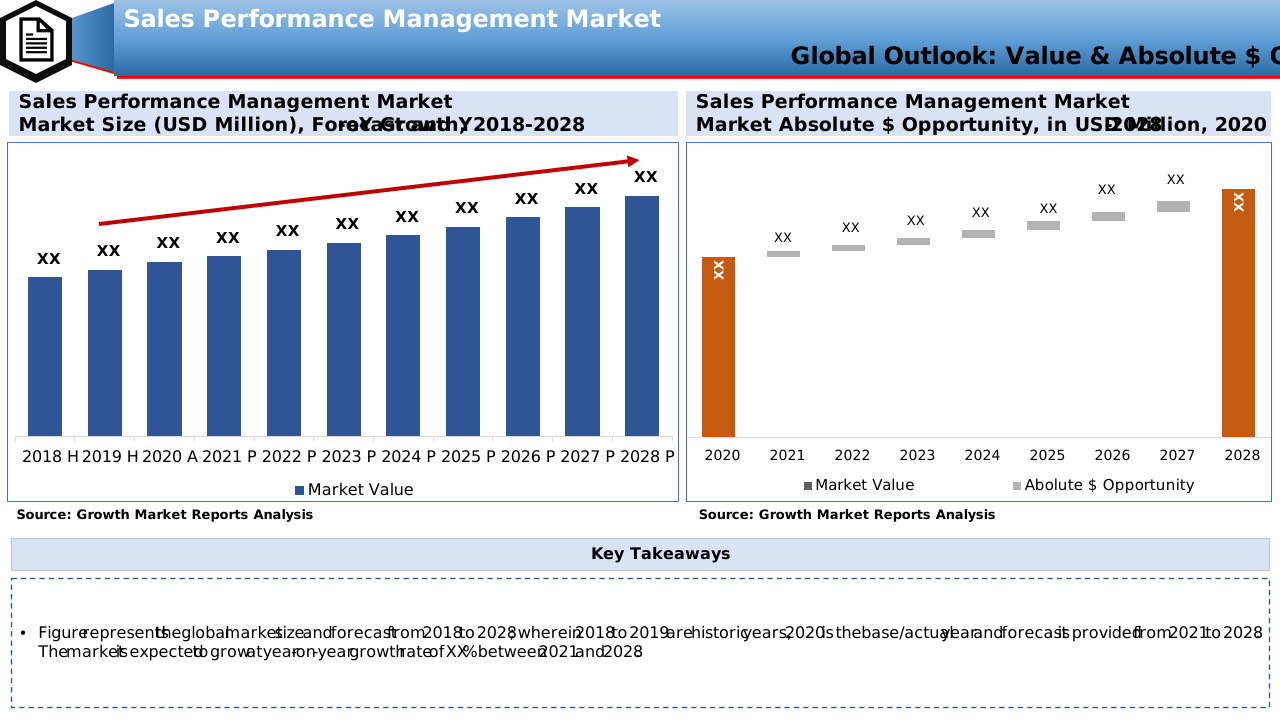
According to our latest research, the global sales performance management (SPM) market size reached USD 4.2 billion in 2024, driven by the accelerating adoption of digital tools across sales organizations worldwide. The market is exhibiting robust momentum, with a strong CAGR of 13.8% projected from 2025 to 2033. By the end of the forecast period in 2033, the sales performance management market is expected to attain a value of USD 13.1 billion. This remarkable growth is fueled by the increasing need for advanced analytics, automation, and real-time performance monitoring to maximize sales productivity and optimize incentive compensation structures.
A primary growth factor for the sales performance management market is the surging demand for data-driven decision-making across sales organizations. As companies strive to gain a competitive edge, they are increasingly investing in SPM solutions that leverage artificial intelligence, machine learning, and predictive analytics. These technologies empower sales leaders to identify high-performing strategies, optimize territory management, and design effective incentive programs. The integration of SPM platforms with customer relationship management (CRM) and enterprise resource planning (ERP) systems further enhances the ability to track performance metrics in real time, resulting in improved sales forecasting, resource allocation, and overall revenue growth. The growing complexity of sales processes, coupled with the need for transparency and accountability, has made SPM an indispensable tool for organizations seeking to drive sustainable sales excellence.
Another significant driver is the rapid digital transformation occurring across industries, particularly in the wake of the COVID-19 pandemic. Organizations have accelerated their adoption of cloud-based SPM solutions to support remote and hybrid sales teams, streamline operations, and ensure business continuity. Cloud deployment offers scalability, flexibility, and cost-effectiveness, enabling companies of all sizes to access advanced SPM functionalities without heavy upfront investments in IT infrastructure. This shift is also facilitating the democratization of sophisticated sales analytics, making it possible for small and medium-sized enterprises (SMEs) to compete with larger counterparts. Furthermore, regulatory compliance requirements, especially in highly regulated sectors like BFSI and healthcare, are compelling organizations to implement robust SPM systems for error-free incentive calculations, audit trails, and transparent performance evaluation processes.
The sales performance management market is also benefiting from the increasing emphasis on employee engagement and motivation. As the war for talent intensifies, organizations are leveraging SPM solutions to design personalized incentive compensation plans, set achievable sales targets, and provide real-time feedback to their teams. This focus on employee-centric sales management not only boosts morale and retention but also drives higher productivity and revenue. The ability to align sales goals with corporate objectives, track individual and team performance, and recognize top performers in a timely manner is becoming a key differentiator for organizations aiming to attract and retain top sales talent in a highly competitive market.
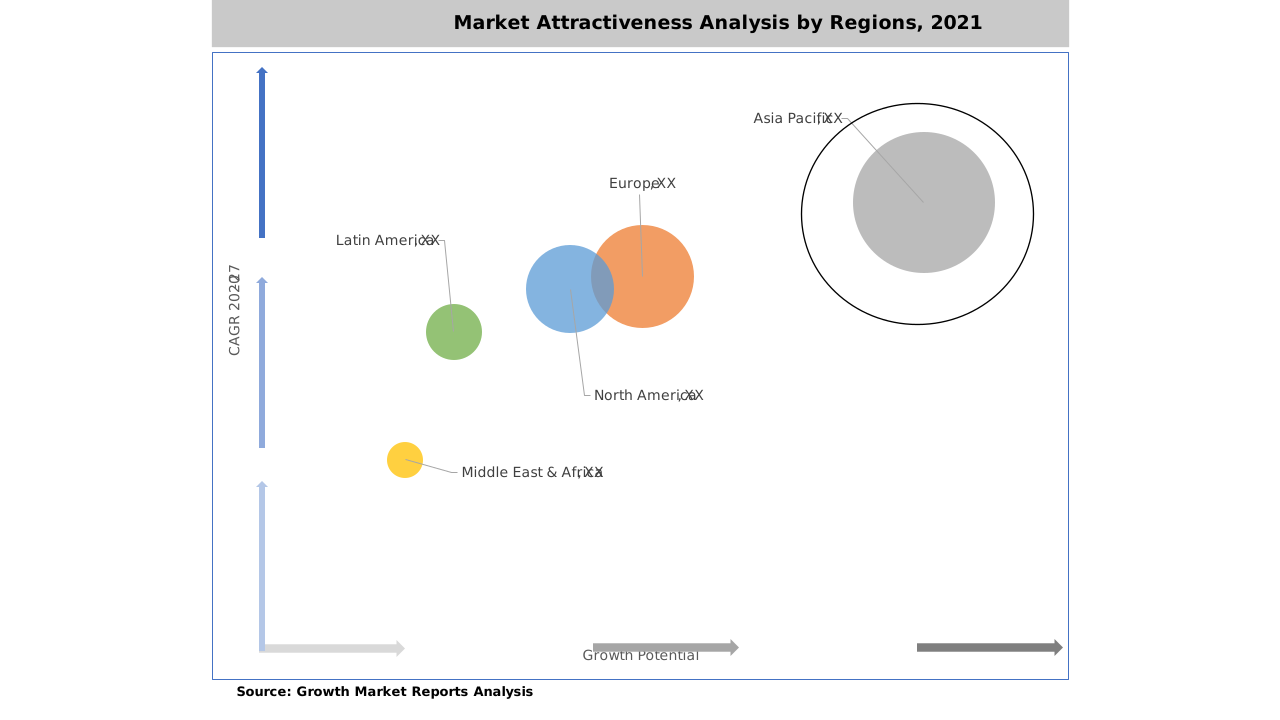
Regionally, North America continues to dominate the sales performance management market, accounting for the largest revenue share in 2024. This leadership position is attributed to the presence of major SPM vendors, high digital adoption rates, and the strong focus on sales process optimization among enterprises in the United States and Canada. Europe and Asia Pacific are also witnessing significant growth, driven by the expansion of multinational corporations, increasing investments in digital transformation, and the rising adoption of cloud-based solutions. While Latin America and the Middle East & Africa currently represent smaller market shares, these regions are expected to experience accelerated growth over the forecast period as organizations prioritize sales automation and performance analytics to drive business expansion.
The sales performance management market is segmented by component into software and services, each playing a pivotal role in driving market growth. The software segment, which includes core SPM platforms and specialized modules for incentive compensation, territory management, and analytics, accounted for the largest share of the market in 2024. Organizations are increasingly investing in comprehensive SPM software to automate and streamline complex sales processes, reduce administrative overhead, and minimize manual errors. The integration of advanced technologies such as artificial intelligence and machine learning within SPM software is further enhancing its value proposition, enabling predictive analytics, intelligent forecasting, and personalized recommendations for sales teams. As the demand for end-to-end automation and real-time insights continues to rise, the software segment is expected to maintain its dominance throughout the forecast period.
The services segment—which encompasses consulting, implementation, training, and support—also represents a significant and rapidly growing component of the sales performance management market. As organizations embark on digital transformation journeys, they are seeking expert guidance to ensure seamless deployment and integration of SPM solutions with existing IT infrastructure. Service providers are playing a crucial role in customizing SPM platforms to meet unique business requirements, optimizing workflows, and delivering ongoing support to maximize return on investment. The growing complexity of sales processes and incentive structures is driving demand for specialized consulting services, particularly among large enterprises and highly regulated industries. As a result, the services segment is projected to exhibit strong growth, with increasing investments in managed services and strategic partnerships between SPM vendors and consulting firms.
The evolving landscape of SPM solutions is also characterized by the rise of modular and best-of-breed offerings, allowing organizations to select and implement specific components based on their immediate needs and long-term strategies. This flexibility is particularly appealing to small and medium-sized enterprises, which may not require the full suite of SPM functionalities but still seek to benefit from targeted automation and analytics capabilities. The availability of cloud-based and subscription-based SPM software is further lowering barriers to entry, enabling organizations of all sizes to access cutting-edge sales management tools without significant upfront investments. As the market matures, vendors are increasingly focusing on enhancing interoperability, scalability, and user experience to differentiate their offerings and capture a larger share of the expanding SPM market.
In summary, both the software and services segments are integral to the growth and evolution of the sales performance management market. The continued innovation in software capabilities, coupled with the rising demand for expert services, is driving the adoption of SPM solutions across industries and regions. Organizations are recognizing the strategic importance of investing in comprehensive SPM platforms and services to achieve sales excellence, optimize incentive compensation, and drive sustainable revenue growth in an increasingly competitive business environment.
| Attributes | Details |
| Report Title | Sales Performance Management Market Research Report 2033 |
| By Component | Software, Services |
| By Deployment Mode | On-Premises, Cloud |
| By Organization Size | Large Enterprises, Small and Medium Enterprises |
| By Application | Incentive Compensation Management, Territory Management, Sales Planning and Monitoring, Performance Analytics and Reporting, Others |
| By End-User | BFSI, Healthcare, Retail, IT and Telecommunications, Manufacturing, Others |
| Regions Covered | North America, Europe, APAC, Latin America, MEA |
| Base Year | 2024 |
| Historic Data | 2018-2023 |
| Forecast Period | 2025-2033 |
| Number of Pages | 250 |
| Number of Tables & Figures | 370 |
| Customization Available | Yes, the report can be customized as per your need. |
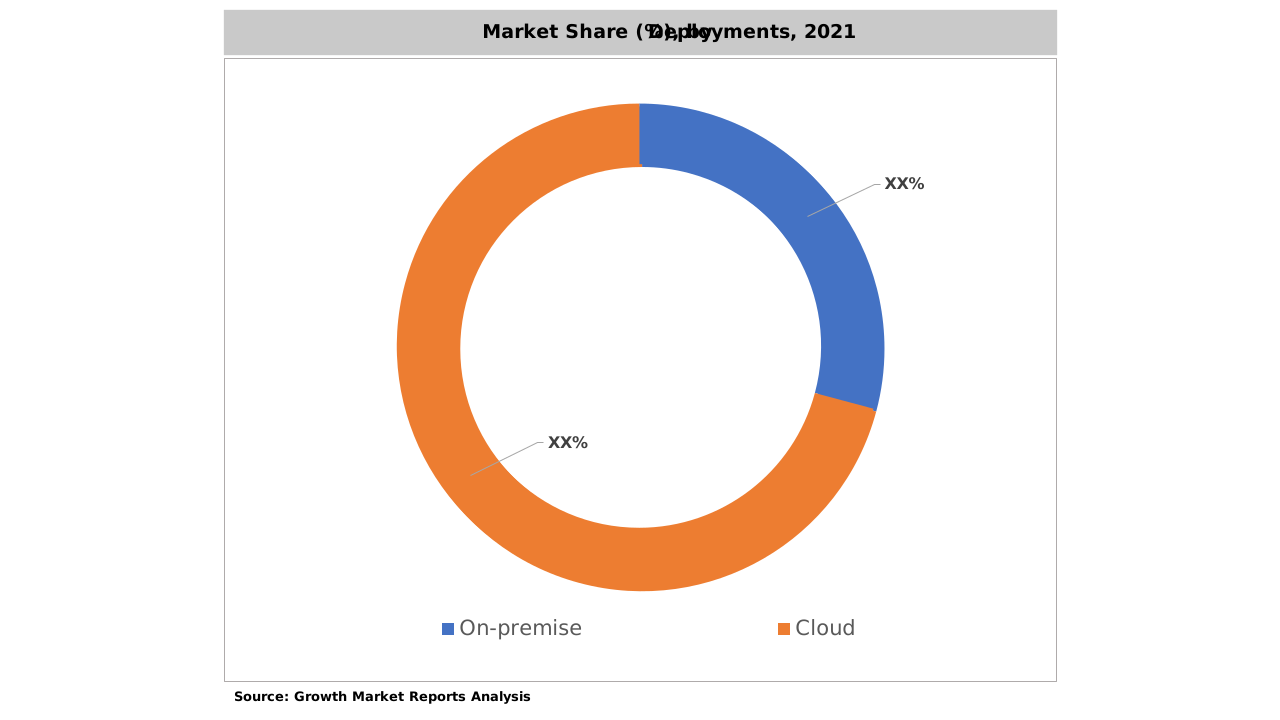
The sales performance management market is segmented by deployment mode into on-premises and cloud-based solutions, reflecting the diverse preferences and requirements of organizations worldwide. Cloud deployment emerged as the dominant mode in 2024, accounting for over 65% of the global SPM market revenue. The rapid adoption of cloud-based SPM solutions is driven by their scalability, flexibility, and cost-effectiveness, making them particularly attractive to organizations seeking to support remote and distributed sales teams. Cloud deployment eliminates the need for significant upfront investments in IT infrastructure, enables seamless updates and enhancements, and facilitates integration with other cloud-based business applications. As a result, cloud-based SPM solutions are increasingly being adopted by both large enterprises and SMEs across industries.
On-premises deployment, while representing a smaller share of the market, continues to be preferred by organizations with stringent data security, privacy, and compliance requirements. Highly regulated industries such as BFSI and healthcare often opt for on-premises SPM solutions to maintain greater control over sensitive sales and compensation data. On-premises deployment also allows for deeper customization and integration with legacy systems, which can be critical for organizations with complex IT environments. However, the higher upfront costs, longer implementation timelines, and ongoing maintenance requirements associated with on-premises solutions are prompting many organizations to reconsider their deployment strategies and explore hybrid or cloud-based alternatives.
The shift towards cloud deployment is further accelerated by the growing trend of remote and hybrid work models, which require sales teams to access SPM tools and data from anywhere, at any time. Cloud-based SPM solutions offer enhanced mobility, real-time collaboration, and centralized data management, enabling sales leaders to monitor performance, adjust targets, and manage incentives across geographically dispersed teams. The ability to scale resources up or down based on business needs, coupled with the rapid pace of innovation in cloud technologies, is positioning cloud deployment as the preferred choice for organizations aiming to future-proof their sales operations.
Despite the clear advantages of cloud deployment, some organizations continue to face challenges related to data migration, integration, and change management. Vendors are addressing these concerns by offering comprehensive migration services, robust security features, and user-friendly interfaces to facilitate the transition to cloud-based SPM solutions. As cloud adoption continues to accelerate, the market is witnessing the emergence of hybrid deployment models that combine the benefits of both cloud and on-premises solutions, providing organizations with greater flexibility and control over their SPM environments. Overall, the deployment mode segment is expected to evolve in response to changing business needs, technological advancements, and regulatory requirements, with cloud deployment leading the way in driving market growth.
The sales performance management market is segmented by organization size into large enterprises and small and medium-sized enterprises (SMEs), each exhibiting distinct adoption patterns and requirements. Large enterprises accounted for the largest share of the SPM market in 2024, driven by their complex sales structures, diverse product portfolios, and global operations. These organizations require robust SPM solutions capable of managing intricate incentive compensation plans, territory assignments, and performance analytics across multiple regions and business units. Large enterprises are also more likely to invest in advanced SPM functionalities such as AI-driven forecasting, real-time dashboards, and integration with CRM and ERP systems. The need for compliance, transparency, and scalability further underscores the importance of comprehensive SPM platforms in large organizations.
Small and medium-sized enterprises are increasingly recognizing the value of SPM solutions in driving sales productivity, optimizing compensation, and supporting growth initiatives. Historically, SMEs faced barriers to adoption due to the high costs and complexity associated with traditional SPM systems. However, the advent of cloud-based, subscription-driven SPM platforms has democratized access to advanced sales management tools, enabling SMEs to compete more effectively with larger competitors. SMEs are leveraging SPM solutions to automate manual processes, gain actionable insights into sales performance, and design incentive programs that align with business objectives. As SMEs continue to embrace digital transformation, their share of the SPM market is expected to grow significantly over the forecast period.
The differing needs of large enterprises and SMEs are shaping the evolution of SPM solutions, with vendors offering tailored features, pricing models, and support services to address the unique requirements of each segment. Large enterprises prioritize scalability, integration, and advanced analytics, while SMEs seek ease of use, affordability, and rapid deployment. This segmentation is driving innovation in the SPM market, with vendors developing modular, configurable, and user-friendly solutions that cater to organizations of all sizes. The growing trend of hybrid work models and the increasing focus on employee engagement are further influencing the adoption of SPM solutions across both large enterprises and SMEs.
In conclusion, the organization size segment of the sales performance management market reflects the diverse needs and priorities of businesses at different stages of growth. Large enterprises continue to drive demand for comprehensive, enterprise-grade SPM platforms, while SMEs are fueling the expansion of cloud-based, cost-effective solutions. As the market matures, the ability of vendors to deliver scalable, flexible, and intuitive SPM solutions will be critical in capturing a larger share of both segments and driving sustained market growth.
The sales performance management market is segmented by application into incentive compensation management, territory management, sales planning and monitoring, performance analytics and reporting, and others. Incentive compensation management remains the largest and most critical application, as organizations seek to design, automate, and optimize complex compensation plans that motivate sales teams and align with business objectives. SPM solutions enable organizations to manage multiple incentive programs, track performance against targets, and ensure accurate, timely payouts. The growing complexity of compensation structures, coupled with the need for transparency and compliance, is driving the adoption of advanced incentive compensation management modules across industries.
Territory management is another key application area, enabling organizations to design, assign, and optimize sales territories based on market potential, customer segmentation, and resource availability. Effective territory management ensures balanced workloads, minimizes coverage gaps, and maximizes sales opportunities. SPM solutions provide advanced mapping, analytics, and scenario planning capabilities, allowing sales leaders to make data-driven decisions and adapt to changing market conditions. The ability to simulate territory changes, assess their impact on sales performance, and implement adjustments in real time is becoming increasingly important as organizations expand into new markets and adapt to evolving customer needs.
Sales planning and monitoring represent a growing area of focus within the sales performance management market, as organizations seek to align sales strategies with corporate objectives, forecast revenue, and monitor progress against targets. SPM solutions offer robust planning tools, real-time dashboards, and automated alerts, enabling sales leaders to identify trends, address performance gaps, and adjust strategies proactively. The integration of predictive analytics and AI-driven insights is further enhancing the ability of organizations to optimize sales planning, allocate resources effectively, and drive sustainable revenue growth.
Performance analytics and reporting are essential components of modern SPM solutions, providing organizations with actionable insights into sales activities, outcomes, and trends. Advanced analytics modules enable sales leaders to track key performance indicators (KPIs), identify top performers, and uncover areas for improvement. The ability to generate customized reports, visualize data, and share insights across the organization is critical for fostering a culture of continuous improvement and accountability. As organizations increasingly prioritize data-driven decision-making, the demand for sophisticated performance analytics and reporting capabilities is expected to rise significantly.
The sales performance management market is segmented by end-user into BFSI, healthcare, retail, IT and telecommunications, manufacturing, and others. The BFSI sector accounted for the largest share of the market in 2024, driven by the need for regulatory compliance, transparency, and accuracy in incentive compensation management. Financial institutions are leveraging SPM solutions to automate complex compensation structures, ensure auditability, and align sales activities with strategic objectives. The ability to manage multiple incentive programs, track performance, and generate compliance reports is particularly valuable in the highly regulated BFSI environment.
The healthcare sector is also experiencing significant growth in SPM adoption, as organizations seek to optimize sales performance, manage incentive programs, and comply with industry regulations. Pharmaceutical and medical device companies are leveraging SPM solutions to track sales activities, monitor compliance with sales and marketing guidelines, and design incentive plans that drive desired behaviors. The increasing complexity of healthcare sales processes, coupled with the need for transparency and accountability, is fueling demand for advanced SPM platforms in this sector.
Retail, IT and telecommunications, and manufacturing are other key end-user segments driving the growth of the sales performance management market. Retailers are adopting SPM solutions to manage diverse product portfolios, optimize territory assignments, and design incentive programs that drive sales growth. IT and telecommunications companies are leveraging SPM platforms to manage large, distributed sales teams, track performance across multiple channels, and align sales strategies with evolving market dynamics. In the manufacturing sector, SPM solutions are enabling organizations to automate complex compensation plans, monitor sales performance, and drive operational efficiency.
The "others" category includes a diverse range of industries such as professional services, energy, and logistics, all of which are increasingly recognizing the value of SPM solutions in driving sales productivity and optimizing incentive compensation. As organizations across industries continue to prioritize sales excellence and digital transformation, the demand for tailored SPM solutions that address sector-specific requirements is expected to grow, driving further expansion of the market.
The sales performance management market is brimming with opportunities for innovation and expansion as organizations across industries embrace digital transformation and data-driven sales strategies. One of the most significant opportunities lies in the integration of artificial intelligence and machine learning into SPM platforms. These technologies enable predictive analytics, intelligent forecasting, and personalized recommendations, empowering sales leaders to make more informed decisions and optimize incentive programs. The growing trend of remote and hybrid work models is also creating new opportunities for cloud-based SPM solutions, which offer enhanced mobility, real-time collaboration, and centralized data management. As organizations seek to support geographically dispersed sales teams, the demand for scalable, flexible, and user-friendly SPM platforms is expected to rise significantly.
Another key opportunity is the expansion of SPM solutions into emerging markets and verticals. As businesses in regions such as Asia Pacific, Latin America, and the Middle East & Africa invest in digital transformation and sales automation, there is significant potential for SPM vendors to capture new market share. The increasing adoption of SPM solutions by small and medium-sized enterprises, driven by the availability of affordable, cloud-based platforms, is further expanding the addressable market. Vendors that can deliver tailored, industry-specific solutions and provide localized support will be well-positioned to capitalize on these growth opportunities. Additionally, the rising emphasis on employee engagement and well-being is driving demand for SPM solutions that offer personalized incentive plans, real-time feedback, and recognition programs, further fueling market expansion.
Despite the numerous opportunities, the sales performance management market faces several restraining factors that could impact growth. One of the primary challenges is the complexity and cost associated with implementing and integrating SPM solutions, particularly for organizations with legacy systems and limited IT resources. Data migration, change management, and user adoption can pose significant hurdles, especially for large enterprises with complex sales structures. Additionally, concerns around data security, privacy, and regulatory compliance may deter some organizations from adopting cloud-based SPM solutions. Vendors must address these challenges by offering robust security features, comprehensive support services, and user-friendly interfaces to ensure successful deployment and maximize return on investment.
North America remains the largest and most mature market for sales performance management, accounting for approximately USD 1.7 billion in revenue in 2024. The region's dominance is driven by the presence of major SPM vendors, high digital adoption rates, and the strong focus on sales process optimization among enterprises in the United States and Canada. Organizations in North America are early adopters of advanced SPM technologies, leveraging AI-driven analytics, cloud deployment, and integration with CRM and ERP systems to drive sales excellence. The region is expected to maintain its leadership position throughout the forecast period, supported by ongoing investments in digital transformation and sales automation.
Europe is the second-largest market for sales performance management, with a market size of approximately USD 1.1 billion in 2024. The region is characterized by a diverse mix of large multinational corporations and rapidly growing SMEs, all seeking to optimize sales performance and incentive compensation. The increasing focus on regulatory compliance, data privacy, and transparency is driving demand for robust SPM solutions across industries such as BFSI, healthcare, and manufacturing. Europe is expected to exhibit a steady CAGR of 12.5% over the forecast period, supported by ongoing investments in digital technologies and the expansion of cloud-based SPM platforms.
Asia Pacific is emerging as the fastest-growing region in the sales performance management market, with a market size of approximately USD 0.9 billion in 2024 and a projected CAGR of 15.2% from 2025 to 2033. The region's growth is fueled by the rapid expansion of multinational corporations, increasing investments in digital transformation, and the rising adoption of cloud-based solutions. Countries such as China, India, Japan, and Australia are witnessing significant growth in SPM adoption, driven by the need to support large, distributed sales teams and optimize incentive compensation. Latin America and the Middle East & Africa, while currently representing smaller shares of the global market, are expected to experience accelerated growth as organizations prioritize sales automation and performance analytics to drive business expansion.
The sales performance management market is characterized by intense competition, with a diverse array of global and regional vendors vying for market share. The competitive landscape is shaped by the rapid pace of technological innovation, evolving customer requirements, and the increasing demand for integrated, end-to-end SPM solutions. Leading vendors are investing heavily in research and development to enhance the capabilities of their SPM platforms, incorporating advanced analytics, artificial intelligence, and machine learning to deliver greater value to customers. The ability to offer scalable, flexible, and user-friendly solutions that can be seamlessly integrated with existing business applications is emerging as a key differentiator in the market.
Strategic partnerships, mergers and acquisitions, and geographic expansion are common strategies employed by major players to strengthen their market positions and broaden their customer bases. Vendors are increasingly focusing on industry-specific solutions, tailoring their offerings to meet the unique needs of sectors such as BFSI, healthcare, and manufacturing. The rise of cloud-based SPM platforms is also driving the emergence of new entrants and niche players, particularly in the SME segment, further intensifying competition. Customer support, implementation services, and training are becoming critical components of vendor differentiation, as organizations seek to maximize the value of their SPM investments and ensure successful adoption.
The market is also witnessing a growing emphasis on ecosystem development, with SPM vendors collaborating with CRM, ERP, and business intelligence providers to deliver integrated solutions that address the full spectrum of sales performance management needs. Open APIs, interoperability, and robust integration capabilities are increasingly important as organizations seek to create unified, data-driven sales environments. As the market continues to evolve, vendors that can deliver innovative, scalable, and customer-centric SPM solutions will be best positioned to capture a larger share of the expanding market.
Some of the major companies operating in the sales performance management market include SAP SE, Oracle Corporation, Salesforce, Inc., Xactly Corporation, Varicent, Anaplan, Inc., NICE Ltd., and beqom. SAP SE and Oracle Corporation are recognized for their comprehensive, enterprise-grade SPM platforms that offer deep integration with ERP and CRM systems, advanced analytics, and robust compliance features. Salesforce, Inc. leverages its extensive CRM ecosystem to deliver seamless SPM functionalities, while Xactly Corporation is renowned for its cloud-based incentive compensation management solutions tailored to both large enterprises and SMEs. Varicent and Anaplan, Inc. are gaining traction with their AI-driven analytics and planning capabilities, enabling organizations to optimize sales performance and drive revenue growth.
NICE Ltd. and beqom are also notable players, offering specialized SPM solutions that cater to the unique requirements of industries such as BFSI, healthcare, and manufacturing. These vendors are distinguished by their focus on user experience, scalability, and industry-specific functionalities, enabling organizations to achieve greater transparency, compliance, and sales excellence. As the market continues to expand, ongoing innovation, strategic partnerships, and a relentless focus on customer success will be critical for vendors seeking to maintain and enhance their competitive positions in the dynamic sales performance management market.
The Sales Performance Management market has been segmented on the basis of
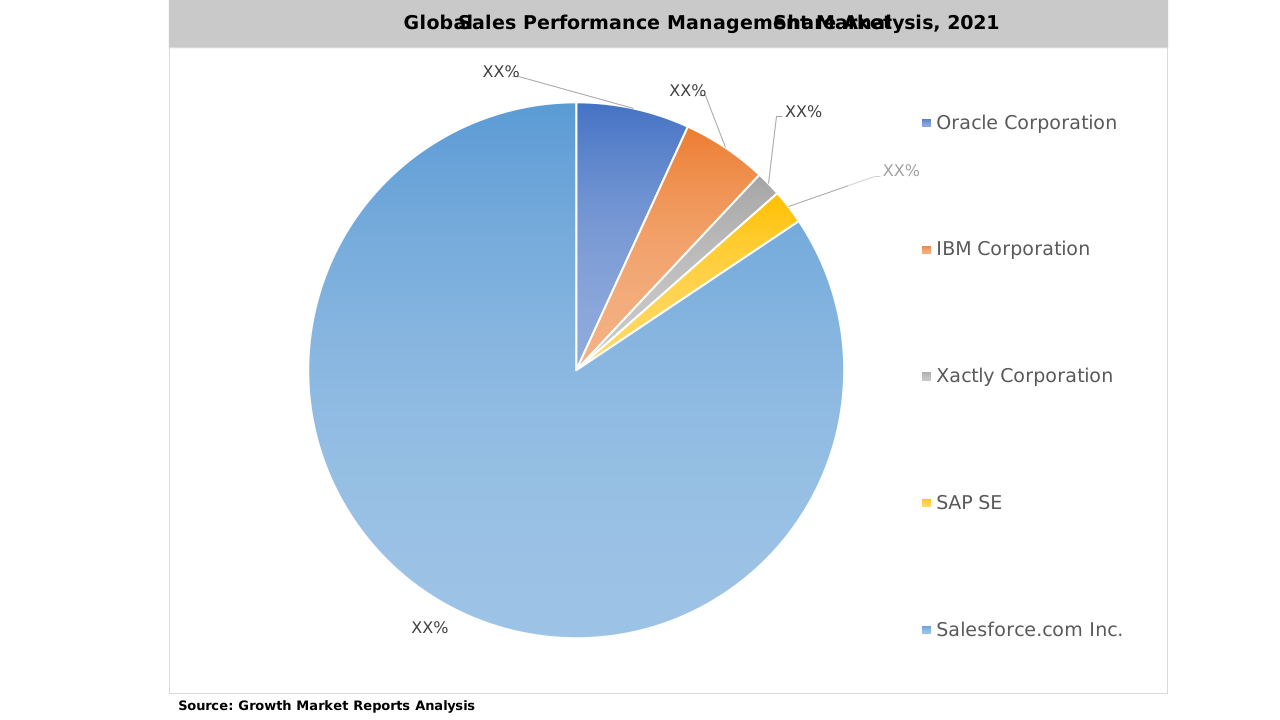
The major players of the market are Oracle Corporation, IBM Corporation, Xactly Corporation, SAP SE, and Salesforce.com Inc. Companies are investing in research and developments, and focusing on joint ventures and acquisitions to expand their market share.
Yes, the report offers customization options to meet specific business needs.
Key players include SAP SE, Oracle Corporation, Salesforce, Xactly Corporation, Varicent, Anaplan, NICE Ltd., beqom, Optymyze, IBM, Infor, Iconixx Software, CallidusCloud, MindTickle, Axtria, Performio, ZS Associates, OpenSymmetry, Alexander Group, and Upland Software.
Opportunities include AI and machine learning integration, cloud adoption, expansion into emerging markets, and SME adoption. Challenges involve implementation complexity, integration with legacy systems, data security, and regulatory compliance.
Major end-users include BFSI, healthcare, retail, IT and telecommunications, manufacturing, and other sectors such as professional services, energy, and logistics.
Key applications include incentive compensation management, territory management, sales planning and monitoring, and performance analytics and reporting.
Large enterprises use SPM for complex sales structures, advanced analytics, and integration with CRM/ERP systems. SMEs are adopting cloud-based, affordable SPM platforms to automate processes, gain insights, and support growth.
SPM solutions can be deployed on-premises or via the cloud. Cloud-based deployment is increasingly popular due to scalability, flexibility, and cost-effectiveness, while on-premises solutions are preferred by organizations with strict data security and compliance requirements.
North America dominates the SPM market, followed by Europe and Asia Pacific. North America leads due to high digital adoption and the presence of major vendors, while Asia Pacific is the fastest-growing region.
Major growth drivers include the adoption of digital tools, demand for data-driven decision-making, integration of AI and machine learning, cloud deployment, regulatory compliance needs, and a focus on employee engagement and motivation.
The global sales performance management (SPM) market is expected to reach USD 13.1 billion by 2033, growing at a CAGR of 13.8% from 2025 to 2033.