Segments - by Product Type (Terminal Blocks, Connectors, Plugs & Sockets, Cable Assemblies, Others), by Application (Industrial Automation, Building & Construction, Energy & Power, Automotive, Aerospace & Defense, Others), by End-User (Manufacturing, Utilities, Transportation, Oil & Gas, Others), by Distribution Channel (Direct Sales, Distributors/Wholesalers, Online Retail)
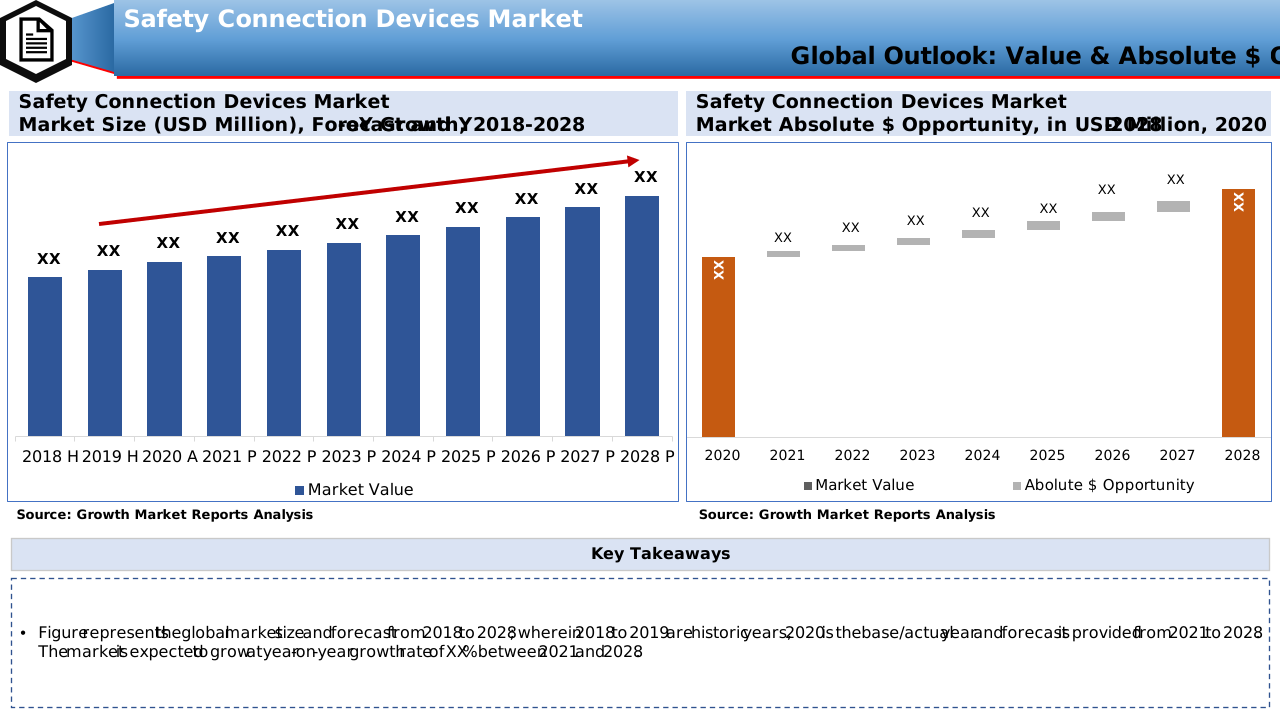
As per our latest research, the global safety connection devices market size reached USD 7.1 billion in 2024, reflecting robust demand across industrial, commercial, and infrastructure sectors. The market is projected to grow at a CAGR of 6.8% from 2025 to 2033, reaching a forecasted value of USD 13.9 billion by 2033. This growth is primarily driven by the increasing emphasis on workplace safety, stringent regulatory requirements, and the rapid adoption of automation technologies across diverse industries.
One of the most significant growth factors for the safety connection devices market is the escalating focus on industrial safety standards worldwide. Governments and regulatory authorities are enforcing stricter safety norms, especially in high-risk industries such as manufacturing, oil and gas, and energy. These regulations mandate the use of advanced safety connection devices to minimize workplace hazards, prevent electrical accidents, and ensure reliable system performance. The proliferation of Industry 4.0 and smart manufacturing initiatives further amplifies the need for intelligent and robust connection solutions, thereby fueling market expansion. Additionally, the growing awareness among enterprises about the importance of employee safety and operational continuity is prompting substantial investments in safety infrastructure, including advanced connectors, terminal blocks, and cable assemblies.
Technological advancements are playing a pivotal role in shaping the trajectory of the safety connection devices market. Innovations such as smart connectors, IoT-enabled safety devices, and modular terminal blocks are enhancing the efficiency, reliability, and scalability of safety systems. These next-generation products offer features like real-time monitoring, predictive maintenance, and seamless integration with automation platforms, making them highly attractive to end-users. The shift towards miniaturization and the increasing adoption of wireless safety connection solutions are also contributing to market growth, as they address space constraints and simplify installation processes. Furthermore, the rising demand for energy-efficient and environmentally friendly products is encouraging manufacturers to develop sustainable safety connection solutions, which is expected to open new avenues for market players in the coming years.
The expanding application base of safety connection devices across various sectors is another crucial driver for market growth. Beyond traditional industries like manufacturing and energy, sectors such as building and construction, automotive, and aerospace & defense are increasingly deploying advanced connection devices to enhance safety and reliability. In the construction sector, for instance, the integration of smart connection solutions in building automation and fire safety systems is gaining momentum. Similarly, the automotive industry is witnessing a surge in demand for high-performance connectors and cable assemblies to support the electrification of vehicles and the implementation of advanced driver-assistance systems (ADAS). This diversification of applications is broadening the market’s scope and creating lucrative opportunities for both established players and new entrants.
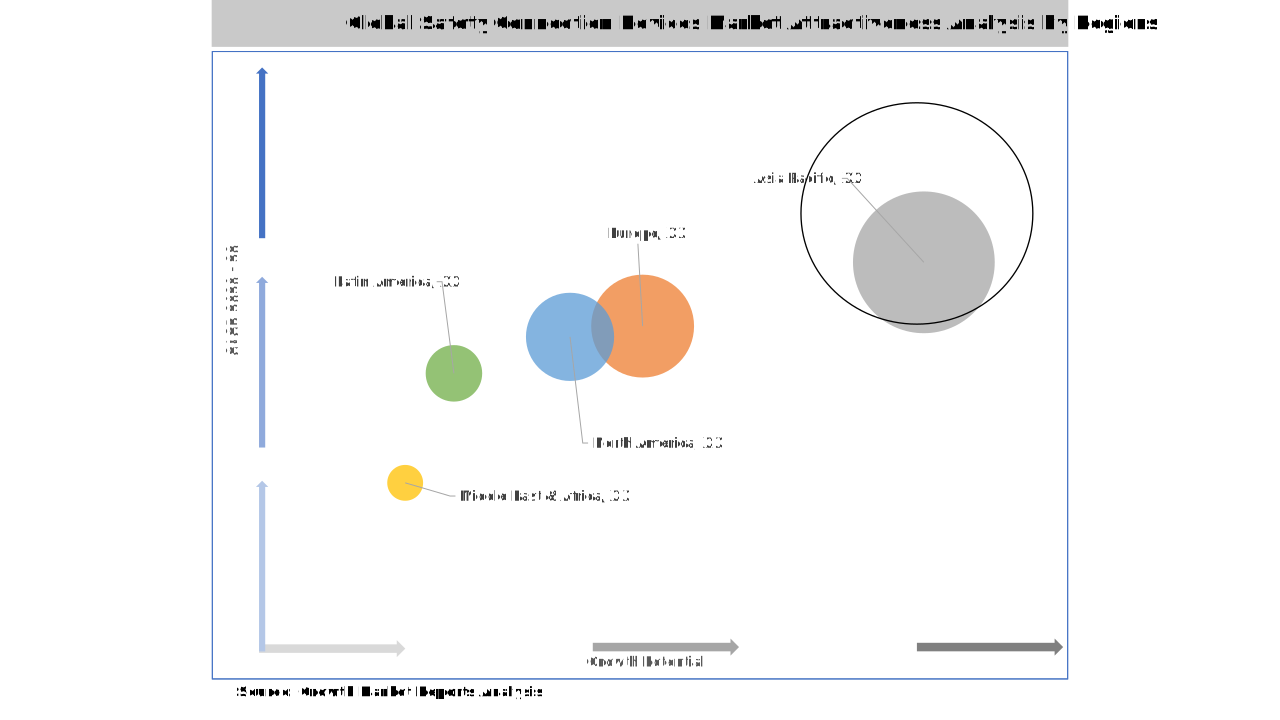
From a regional perspective, Asia Pacific remains the dominant market for safety connection devices, accounting for the largest share in 2024 due to rapid industrialization, significant investments in infrastructure, and the presence of a robust manufacturing ecosystem. North America and Europe are also key markets, driven by stringent safety regulations, technological innovation, and the widespread adoption of automation solutions. Emerging economies in Latin America and the Middle East & Africa are expected to witness accelerated growth, supported by increasing industrial activities and rising awareness about workplace safety. Regional dynamics, such as government initiatives, economic development, and the pace of technological adoption, will continue to shape the competitive landscape and growth prospects of the global safety connection devices market.
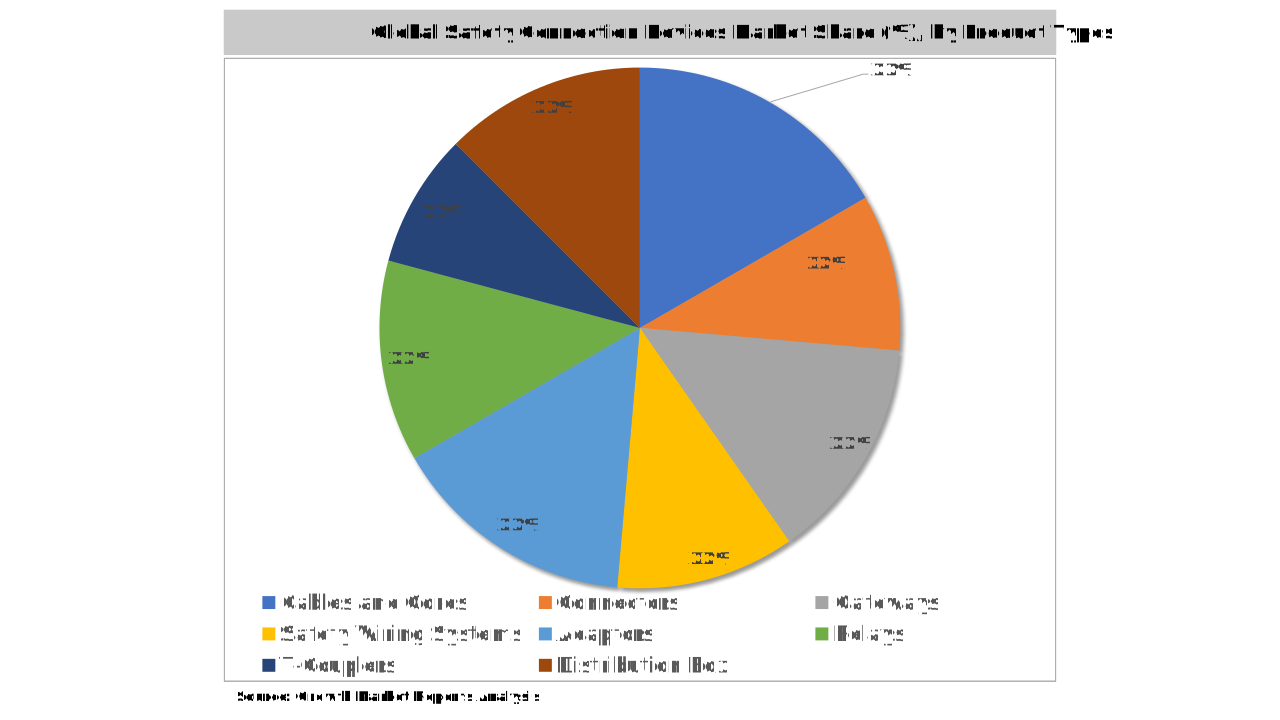
The product type segment of the safety connection devices market encompasses terminal blocks, connectors, plugs & sockets, cable assemblies, and other related devices. Terminal blocks remain a cornerstone in this segment, widely used for secure and efficient electrical connections in control panels, machinery, and distribution systems. Their popularity is driven by their ability to provide safe, reliable, and maintenance-friendly connections, which are essential in environments where system uptime and safety are paramount. The evolution of terminal blocks towards modular and DIN-rail mounted designs has further increased their adoption, especially in automation and process industries. As industries continue to automate and digitize operations, the demand for advanced terminal blocks with features like surge protection and status indication is expected to surge, driving overall segment growth.
Connectors represent another vital component in the product type segment, offering versatile solutions for both power and signal transmission across various industrial and commercial applications. The increasing complexity of machinery and the integration of sophisticated automation technologies have spurred the demand for high-performance, rugged connectors that can withstand harsh environments and frequent mating cycles. Innovations such as quick-connect and tool-less connectors are gaining traction due to their ease of use and time-saving benefits. Additionally, the rise of smart factories and the Internet of Things (IoT) is fostering the adoption of intelligent connectors equipped with sensors and communication capabilities, enabling real-time monitoring and predictive maintenance.
Plugs & sockets are integral to ensuring safe and reliable electrical connections in both fixed and portable installations. Their significance is particularly pronounced in sectors where frequent equipment movement or reconfiguration is required, such as construction, events, and temporary power setups. The growing emphasis on worker safety and the prevention of electrical hazards has led to the development of plugs & sockets with enhanced safety features, such as interlocks, splash-proof designs, and thermal protection. The increasing use of renewable energy sources and the electrification of industrial processes are also contributing to the rising demand for high-quality plugs & sockets that can handle varying voltage and current requirements.
Cable assemblies form the backbone of electrical connectivity in complex systems, providing organized, reliable, and safe routing of power and signals. As equipment and systems become more sophisticated, the need for customized cable assemblies with specific configurations, shielding, and environmental protection is becoming more pronounced. The automotive, aerospace, and defense industries, in particular, are driving innovation in cable assembly design to meet stringent safety, performance, and weight requirements. Manufacturers are increasingly offering pre-assembled, tested, and certified cable solutions to reduce installation time and ensure compliance with safety standards, thereby boosting the growth of this product type segment.
The “others” category includes a range of supplementary safety connection devices such as safety relays, circuit protection devices, and specialized adapters. While these products may represent a smaller share of the market, their importance is growing as end-users seek comprehensive safety solutions that integrate seamlessly with primary connection devices. The trend towards holistic safety systems, where every component plays a crucial role in ensuring overall safety and reliability, is expected to drive steady demand for these ancillary products.
| Attributes | Details |
| Report Title | Safety Connection Devices Market Research Report 2033 |
| By Product Type | Terminal Blocks, Connectors, Plugs & Sockets, Cable Assemblies, Others |
| By Application | Industrial Automation, Building & Construction, Energy & Power, Automotive, Aerospace & Defense, Others |
| By End-User | Manufacturing, Utilities, Transportation, Oil & Gas, Others |
| By Distribution Channel | Direct Sales, Distributors/Wholesalers, Online Retail |
| Regions Covered | North America, Europe, APAC, Latin America, MEA |
| Base Year | 2024 |
| Historic Data | 2018-2023 |
| Forecast Period | 2025-2033 |
| Number of Pages | 254 |
| Number of Tables & Figures | 304 |
| Customization Available | Yes, the report can be customized as per your need. |
The application segment of the safety connection devices market is characterized by its diverse and expanding range of use cases, spanning industrial automation, building & construction, energy & power, automotive, aerospace & defense, and other sectors. Industrial automation remains the largest application area, as industries worldwide continue to embrace automation to enhance productivity, safety, and efficiency. Safety connection devices are critical in automated systems, ensuring secure and reliable connections between sensors, actuators, controllers, and other system components. The increasing adoption of robotics, programmable logic controllers (PLCs), and machine safety systems is driving significant demand for high-performance connection solutions that can support complex, high-speed operations while maintaining stringent safety standards.
In the building & construction sector, safety connection devices are integral to the safe installation and operation of electrical systems in residential, commercial, and industrial buildings. The growing focus on smart buildings and the integration of advanced building automation systems are fueling the demand for intelligent connection devices that can facilitate seamless communication between various subsystems, such as lighting, HVAC, security, and fire safety. The trend towards green and energy-efficient buildings is also prompting the adoption of innovative connection solutions that support renewable energy integration, energy monitoring, and load management, further boosting market growth in this application segment.
The energy & power sector represents a critical application area for safety connection devices, given the high-risk nature of electrical generation, transmission, and distribution activities. Reliable connection solutions are essential for ensuring the safety and efficiency of power plants, substations, and renewable energy installations. The transition towards decentralized energy systems, such as solar and wind farms, is driving demand for robust, weather-resistant connection devices that can withstand harsh environmental conditions and provide long-term performance. Additionally, the modernization of aging power infrastructure and the expansion of smart grid projects are creating new opportunities for advanced safety connection devices with enhanced monitoring and diagnostic capabilities.
In the automotive industry, the electrification of vehicles and the increasing adoption of advanced driver-assistance systems (ADAS) are fueling demand for high-reliability connection devices. These devices play a crucial role in ensuring the safe and efficient transmission of power and data within vehicles, supporting functions such as battery management, safety monitoring, and communication between electronic control units (ECUs). The shift towards electric and autonomous vehicles is expected to further accelerate the adoption of innovative safety connection solutions that meet stringent automotive safety and performance standards.
Aerospace & defense applications demand the highest levels of safety, reliability, and performance from connection devices, given the critical nature of operations and the extreme environments in which they operate. Safety connection devices in this sector must comply with rigorous standards for shock, vibration, temperature, and electromagnetic interference. The increasing complexity of aerospace systems, the integration of advanced avionics, and the growing emphasis on mission-critical safety are driving continuous innovation in connection device design and manufacturing. This trend is expected to sustain robust growth in the aerospace & defense application segment over the forecast period.
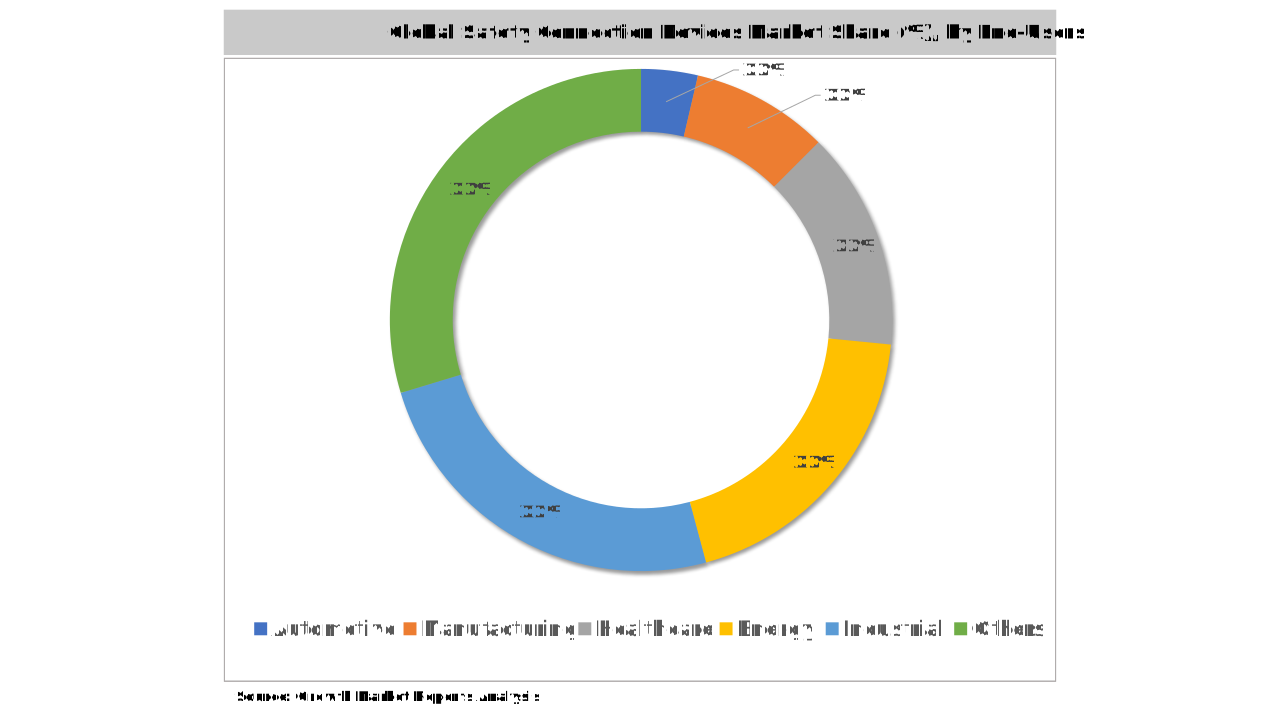
The end-user segment of the safety connection devices market features a diverse array of industries, including manufacturing, utilities, transportation, oil & gas, and others. Manufacturing remains the largest end-user category, accounting for a significant share of market demand. The sector’s reliance on complex machinery, automated production lines, and rigorous safety protocols necessitates the use of advanced connection devices to ensure safe and efficient operations. As manufacturers increasingly adopt smart factory concepts and digital transformation initiatives, the integration of intelligent safety connection devices is becoming a standard practice, further driving market growth in this segment.
Utilities, encompassing electricity, water, and gas providers, represent a critical end-user group for safety connection devices. The safe and reliable operation of utility infrastructure depends on robust connection solutions that can withstand continuous operation, environmental stress, and potential fault conditions. The ongoing modernization of utility networks, the deployment of smart meters, and the integration of distributed energy resources are driving demand for advanced safety connection devices with enhanced monitoring, diagnostic, and communication capabilities. As utilities strive to enhance grid resilience and operational efficiency, the adoption of next-generation connection solutions is expected to accelerate.
The transportation sector, including railways, metros, and public transit systems, is another significant end-user of safety connection devices. The sector’s focus on passenger safety, system reliability, and efficient operation necessitates the use of high-performance connection devices in signaling, communication, power distribution, and control systems. The expansion of urban transit networks, the adoption of smart transportation solutions, and the increasing emphasis on electrification are driving sustained demand for innovative safety connection devices tailored to the unique requirements of the transportation industry.
In the oil & gas sector, safety connection devices are indispensable for ensuring the safe and efficient operation of exploration, production, and distribution activities. The sector’s exposure to hazardous environments, extreme temperatures, and corrosive substances necessitates the use of rugged, explosion-proof connection solutions that can withstand demanding conditions and prevent safety incidents. The ongoing digitalization of oil & gas operations, the deployment of remote monitoring systems, and the emphasis on operational safety are driving continuous innovation and adoption of advanced safety connection devices in this end-user segment.
The “others” category includes a range of additional end-users, such as healthcare, data centers, and commercial facilities, where safety connection devices play a crucial role in ensuring reliable and safe operation of critical systems. As these sectors continue to adopt advanced technologies and prioritize safety, the demand for high-quality connection devices is expected to grow steadily, contributing to the overall expansion of the market.
The distribution channel segment of the safety connection devices market comprises direct sales, distributors/wholesalers, and online retail. Direct sales remain a preferred channel for large-scale industrial buyers and enterprises seeking customized solutions, technical support, and long-term partnerships. Leading manufacturers often maintain dedicated sales teams and technical consultants to address complex customer requirements, provide on-site support, and ensure seamless integration of safety connection devices into existing systems. The direct sales channel is particularly prominent in sectors such as manufacturing, utilities, and oil & gas, where the complexity and criticality of applications demand personalized service and expertise.
Distributors and wholesalers play a vital role in extending the reach of safety connection device manufacturers to a broader customer base, including small and medium-sized enterprises (SMEs) and contractors. These intermediaries offer a wide range of products from multiple brands, enabling customers to compare options and source products quickly and efficiently. Distributors often provide value-added services such as inventory management, technical training, and after-sales support, making them an integral part of the market ecosystem. The growing demand for just-in-time delivery and localized support is further strengthening the role of distributors and wholesalers in the safety connection devices market.
Online retail is emerging as a rapidly growing distribution channel, driven by the increasing digitalization of procurement processes and the rising preference for convenient, time-saving purchasing options. E-commerce platforms and specialized online marketplaces now offer an extensive selection of safety connection devices, complete with detailed product specifications, customer reviews, and competitive pricing. The ability to compare products, access technical documentation, and place orders 24/7 is appealing to a wide range of customers, from individual contractors to large enterprises. The COVID-19 pandemic has further accelerated the shift towards online procurement, as businesses seek to minimize physical interactions and streamline supply chain operations.
Manufacturers are increasingly adopting an omnichannel distribution strategy, combining the strengths of direct sales, distributors, and online retail to maximize market coverage and customer satisfaction. This approach enables them to cater to the diverse needs of different customer segments, from large industrial clients requiring bespoke solutions to SMEs and individual buyers seeking standard products. The integration of digital tools, such as customer relationship management (CRM) systems and e-commerce platforms, is enhancing the efficiency and effectiveness of distribution channels, enabling manufacturers to respond quickly to market demands and deliver superior customer experiences.
The evolving distribution landscape is also fostering greater competition and innovation among channel partners, as they seek to differentiate themselves through specialized services, technical expertise, and value-added offerings. This dynamic environment is expected to drive continuous improvement in product availability, customer support, and overall market responsiveness, benefiting end-users and contributing to the sustained growth of the safety connection devices market.
The safety connection devices market is poised for substantial growth, driven by a multitude of opportunities arising from technological advancements, regulatory developments, and expanding application areas. The increasing adoption of Industry 4.0 and the proliferation of smart factories present significant opportunities for manufacturers to develop and market intelligent safety connection devices with advanced features such as real-time monitoring, remote diagnostics, and predictive maintenance. The integration of IoT and wireless connectivity into safety connection solutions is opening new avenues for innovation, enabling seamless communication between devices and enhancing overall system safety and reliability. Additionally, the rising focus on renewable energy and sustainable infrastructure is creating demand for specialized connection devices that can support the unique requirements of solar, wind, and electric vehicle applications. These trends are expected to drive robust market growth and create new revenue streams for industry participants over the forecast period.
Another key opportunity lies in the growing emphasis on safety and reliability in emerging economies, where rapid industrialization and infrastructure development are driving demand for high-quality connection solutions. Governments in regions such as Asia Pacific, Latin America, and the Middle East are implementing stringent safety regulations and investing in modernizing critical infrastructure, creating a fertile environment for market expansion. The increasing adoption of digital procurement channels and the rise of online retail are also enabling manufacturers to reach a broader customer base and tap into previously underserved markets. Collaborative partnerships between manufacturers, technology providers, and end-users are fostering innovation and accelerating the development of next-generation safety connection devices tailored to specific industry needs.
Despite the positive outlook, the safety connection devices market faces several restraining factors that could impact its growth trajectory. One of the primary challenges is the high cost associated with the development and deployment of advanced safety connection solutions, particularly for small and medium-sized enterprises with limited budgets. The need for continuous investment in research and development, compliance with evolving safety standards, and the integration of new technologies can pose financial and operational hurdles for market participants. Additionally, the presence of low-cost, unbranded products in the market can lead to price competition and margin pressures, particularly in price-sensitive regions. Addressing these challenges will require manufacturers to focus on cost optimization, value-added services, and customer education to differentiate their offerings and sustain long-term growth.
Asia Pacific continues to dominate the safety connection devices market, accounting for approximately 38% of the global market share in 2024, with a market size of around USD 2.7 billion. The region's leadership is underpinned by rapid industrialization, robust infrastructure development, and the presence of a large manufacturing base in countries such as China, India, Japan, and South Korea. Government initiatives aimed at enhancing workplace safety, coupled with significant investments in smart manufacturing and automation, are driving sustained demand for advanced safety connection devices. The Asia Pacific market is expected to register the fastest CAGR of 7.5% during the forecast period, supported by ongoing industrial expansion and rising safety awareness across diverse sectors.
North America represents the second-largest regional market, with a market size of USD 1.8 billion in 2024, driven by stringent safety regulations, technological innovation, and a strong focus on operational excellence. The United States and Canada are at the forefront of adopting advanced safety connection solutions, particularly in industries such as manufacturing, energy, and transportation. The region’s mature industrial ecosystem, coupled with a high degree of automation and digitalization, is fostering continuous innovation and driving demand for intelligent, high-performance connection devices. The North American market is projected to grow at a steady CAGR of 6.2% through 2033, reflecting ongoing investments in infrastructure modernization and safety enhancement initiatives.
Europe holds a significant share of the global safety connection devices market, with a market size of USD 1.5 billion in 2024. The region’s growth is driven by the presence of leading industrial and automotive manufacturers, strict regulatory frameworks, and a strong emphasis on workplace safety and sustainability. Countries such as Germany, France, and the United Kingdom are leading adopters of advanced safety connection solutions, supported by government initiatives promoting industrial automation and energy efficiency. The European market is expected to maintain a healthy growth trajectory, with a CAGR of 6.4% over the forecast period. Latin America and the Middle East & Africa, although smaller in terms of market size, are witnessing increasing adoption of safety connection devices, driven by industrialization, infrastructure development, and rising awareness about safety standards. Collectively, these regions accounted for a market size of USD 1.1 billion in 2024 and are expected to experience accelerated growth as economic development and regulatory enforcement gain momentum.
The safety connection devices market is characterized by intense competition, with a mix of global industry leaders, regional players, and niche manufacturers vying for market share. The competitive landscape is shaped by factors such as product innovation, quality, reliability, and the ability to offer customized solutions that meet the evolving needs of end-users. Leading companies are investing heavily in research and development to introduce next-generation safety connection devices with enhanced features, such as IoT integration, real-time monitoring, and predictive maintenance capabilities. The focus on sustainability and energy efficiency is also driving innovation, as manufacturers seek to differentiate their offerings and address the growing demand for environmentally friendly products.
Strategic partnerships, mergers, and acquisitions are common strategies employed by market participants to expand their product portfolios, enhance technological capabilities, and strengthen their global presence. Companies are increasingly collaborating with technology providers, system integrators, and end-users to develop tailored solutions that address specific industry challenges and regulatory requirements. The ability to provide comprehensive, end-to-end safety solutions, backed by robust technical support and after-sales service, is emerging as a key differentiator in the market. Additionally, the adoption of digital tools and platforms is enabling companies to streamline operations, enhance customer engagement, and respond more effectively to market demands.
The market is also witnessing the entry of new players, particularly in the online retail and e-commerce space, who are leveraging digital platforms to reach a wider customer base and offer competitive pricing. While established players benefit from strong brand recognition, extensive distribution networks, and long-standing customer relationships, new entrants are driving innovation and challenging traditional business models. This dynamic competitive environment is fostering continuous improvement in product quality, customer service, and overall market responsiveness, ultimately benefiting end-users and driving market growth.
Major companies operating in the safety connection devices market include Phoenix Contact, TE Connectivity, WAGO Kontakttechnik, Weidmüller Interface, ABB Ltd., Siemens AG, Schneider Electric, Rockwell Automation, Molex LLC, and Legrand SA. Phoenix Contact is renowned for its wide range of terminal blocks and connection solutions, with a strong focus on innovation and sustainability. TE Connectivity is a global leader in connectivity and sensor solutions, offering a comprehensive portfolio of safety connection devices for diverse industries. WAGO Kontakttechnik and Weidmüller Interface are recognized for their expertise in automation and industrial connectivity, delivering high-quality products and tailored solutions to meet the needs of industrial customers.
ABB Ltd. and Siemens AG are prominent players with a strong presence in the industrial automation and energy sectors, offering advanced safety connection devices as part of their broader automation and control portfolios. Schneider Electric is known for its integrated approach to safety, providing a wide range of connection devices and solutions for building, infrastructure, and industrial applications. Rockwell Automation, Molex LLC, and Legrand SA are also key contributors to the market, leveraging their technological expertise and global reach to deliver innovative, reliable, and efficient safety connection solutions. These companies are continuously investing in research and development, expanding their product offerings, and enhancing their global distribution networks to maintain a competitive edge and capitalize on emerging market opportunities.
The Safety Connection Devices market has been segmented on the basis of
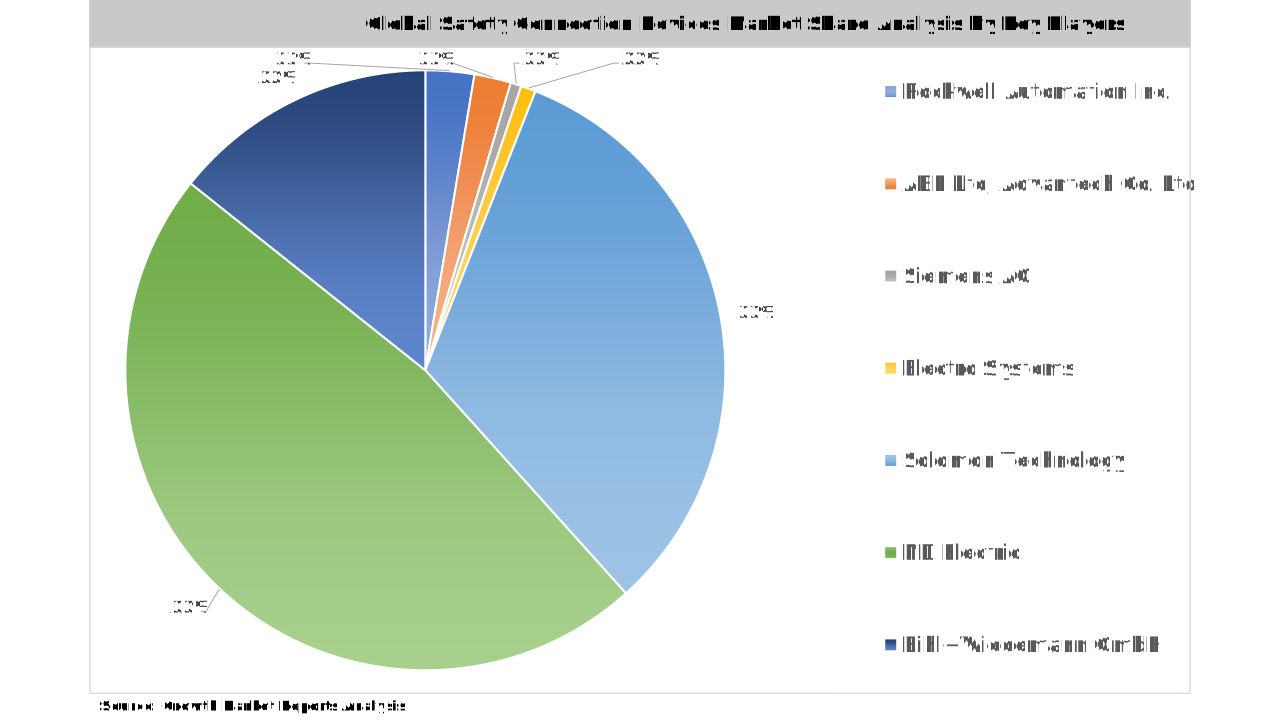
Key players competing in the global safety connection devices Rockwell Automation Inc., ABB Ltd, Advantech Co. Ltd, Siemens AG, Electro Systems, Solomon Technology, and ND Electric, Bihl+Wiedemann GmbH.
The proliferation of Industry 4.0 and smart manufacturing is increasing demand for intelligent, robust, and integrated safety connection solutions, supporting real-time monitoring, predictive maintenance, and enhanced system safety.
Opportunities include Industry 4.0 adoption, IoT integration, renewable energy applications, and growth in emerging economies. Challenges include high development costs, compliance with evolving standards, and price competition from low-cost products.
Major companies include Phoenix Contact, TE Connectivity, WAGO Kontakttechnik, Weidmüller Interface, ABB Ltd., Siemens AG, Schneider Electric, Rockwell Automation, Molex LLC, and Legrand SA.
Safety connection devices are distributed through direct sales, distributors/wholesalers, and online retail channels. Manufacturers are increasingly adopting omnichannel strategies to maximize market reach.
Asia Pacific is the dominant region, accounting for about 38% of the global market share in 2024, followed by North America and Europe. Latin America and the Middle East & Africa are also experiencing accelerated growth.
Technological advancements such as smart connectors, IoT integration, modular terminal blocks, and wireless solutions are enhancing efficiency, reliability, and scalability, driving market growth and innovation.
The main product types are terminal blocks, connectors, plugs & sockets, cable assemblies, and other devices like safety relays and circuit protection devices.
Key end-users include manufacturing, utilities, transportation, oil & gas, building & construction, automotive, aerospace & defense, and sectors such as healthcare and data centers.
Growth is driven by increasing workplace safety emphasis, stringent regulatory requirements, rapid automation adoption, technological advancements (such as IoT-enabled and smart connectors), and expanding applications across various industries.
The global safety connection devices market reached USD 7.1 billion in 2024 and is projected to grow at a CAGR of 6.8% from 2025 to 2033, reaching USD 13.9 billion by 2033.