revenue cycle management Market Research Report 2033

revenue cycle management Market Research Report 2033

Segments - by Component (Software, Services), by Deployment Mode (On-Premises, Cloud-Based), by Function (Claims & Denial Management, Medical Billing & Coding, Patient Insurance Eligibility Verification, Payment Remittance, Electronic Health Record Integration, Others), by End-User (Hospitals, Physician Offices, Diagnostic & Ambulatory Care Centers, Others)

https://growthmarketreports.com/raksha
Author : Raksha Sharma
https://growthmarketreports.com/Vaibhav
Fact-checked by : V. Chandola
https://growthmarketreports.com/Shruti
Editor : Shruti Bhat

Upcoming | Report ID :HC-3624 | 4.7 Rating | 32 Reviews | 275 Pages | Format : Docx PDF

Report Description


Revenue Cycle Management Market Outlook

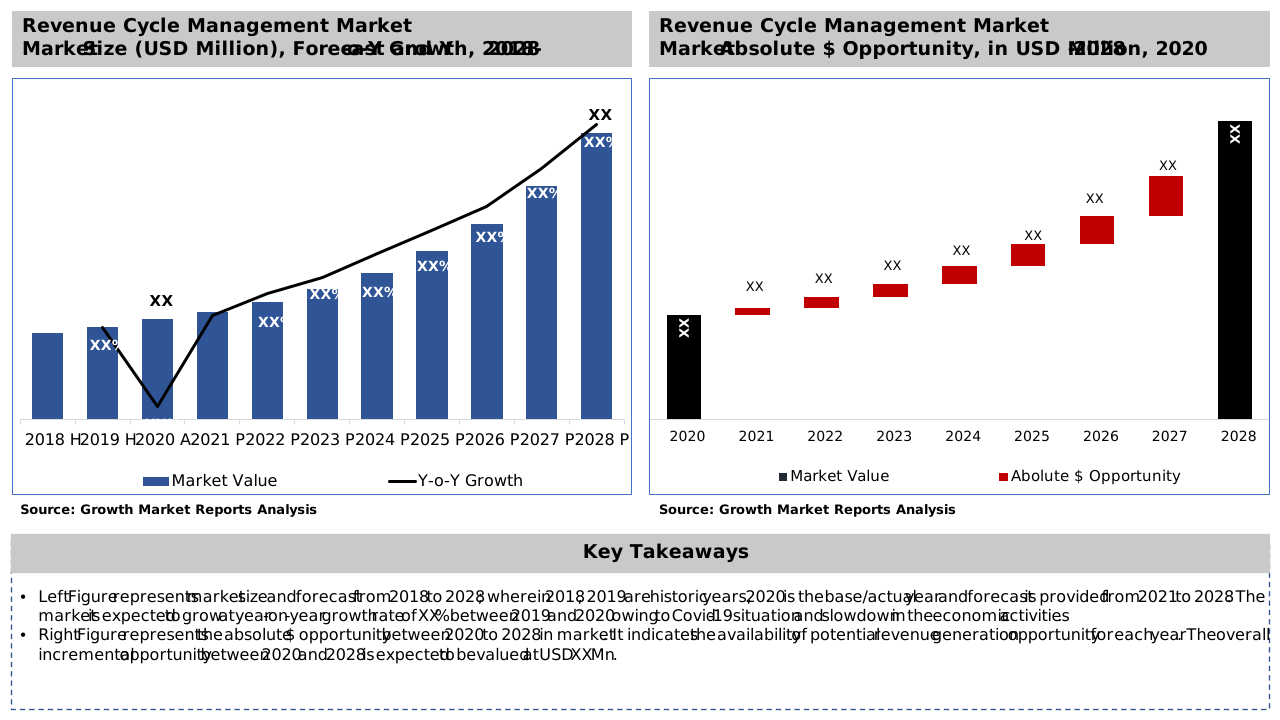
According to our latest research, the global revenue cycle management (RCM) market size reached USD 147.6 billion in 2024, reflecting the industry’s robust expansion and the growing adoption of digital healthcare solutions worldwide. The market is projected to grow at a CAGR of 11.2% between 2025 and 2033, reaching a forecasted market size of USD 382.8 billion by 2033. This impressive growth trajectory is driven by a confluence of factors including the rapid digitization of healthcare processes, increasing regulatory complexities, and the urgent need for cost containment and operational efficiency across healthcare providers globally.

One of the primary growth drivers for the revenue cycle management market is the increasing complexity of healthcare reimbursement models and regulatory requirements. As governments and private payers continue to implement value-based care initiatives and shift away from traditional fee-for-service models, healthcare providers are under mounting pressure to optimize their revenue cycles. RCM solutions, encompassing both software and services, are essential for managing claims, reducing denials, automating billing and coding, and ensuring compliance with new regulations. The integration of advanced analytics and artificial intelligence into RCM platforms further enables providers to identify revenue leakage, streamline workflows, and make data-driven decisions, fueling the industry’s continued expansion.

Another significant factor propelling the growth of the revenue cycle management market is the widespread adoption of electronic health records (EHR) and the ongoing digital transformation in healthcare. As providers transition from paper-based systems to digital platforms, there is an increasing need for seamless integration between EHRs and RCM solutions. This integration not only enhances data accuracy and interoperability but also improves the patient experience by reducing administrative burdens and expediting the billing process. Moreover, the COVID-19 pandemic accelerated the adoption of telehealth and remote patient management, further increasing the demand for cloud-based RCM solutions capable of supporting these evolving care delivery models.

The rising focus on patient-centric care and the growing trend of healthcare consumerism are also shaping the revenue cycle management market. Patients are increasingly seeking transparency in billing and faster resolution of claims, prompting providers to invest in advanced RCM tools that offer real-time eligibility verification, automated payment reminders, and user-friendly patient portals. Additionally, the expansion of insurance coverage in emerging markets, coupled with the increasing prevalence of chronic diseases and aging populations, is driving healthcare organizations to adopt comprehensive RCM systems to efficiently manage growing patient volumes and complex payer landscapes.

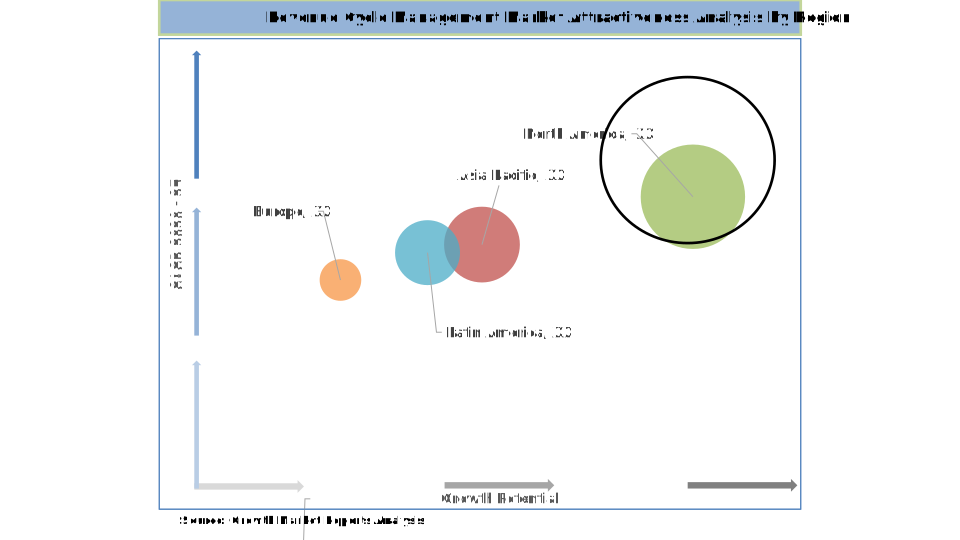
From a regional perspective, North America continues to dominate the revenue cycle management market due to its advanced healthcare infrastructure, high adoption rates of digital health technologies, and stringent regulatory environment. However, the Asia Pacific region is witnessing the fastest growth, fueled by government initiatives to modernize healthcare systems, rising healthcare expenditures, and increasing investments in health IT. Europe also represents a significant market share, driven by the adoption of electronic health records and the implementation of cross-border healthcare regulations. Latin America and the Middle East & Africa, while smaller in market size, are experiencing steady growth as healthcare providers in these regions increasingly recognize the benefits of RCM solutions for improving financial performance and patient outcomes.

Global revenue cycle management Industry Outlook

Component Analysis

The revenue cycle management market is segmented by component into software and services, each playing a pivotal role in the digital transformation of healthcare financial operations. RCM software is designed to automate and streamline the entire revenue cycle process, from patient registration and insurance verification to claims submission and payment posting. The software segment commands a significant share of the market, driven by the growing need for integrated platforms that can handle complex billing requirements, automate repetitive tasks, and deliver actionable insights through advanced analytics. As healthcare organizations increasingly adopt cloud-based and AI-powered RCM solutions, the demand for flexible, scalable, and interoperable software is expected to rise further.

The services segment encompasses a wide range of offerings, including consulting, implementation, training, support, and outsourcing of RCM functions. Many healthcare providers, particularly small and medium-sized practices, lack the internal resources and expertise to manage the intricacies of revenue cycle operations effectively. As a result, they turn to third-party service providers to handle tasks such as medical billing, coding, denial management, and compliance monitoring. The outsourcing of RCM services allows providers to focus on core patient care activities while ensuring timely and accurate reimbursement, reducing administrative costs, and maintaining regulatory compliance.

Service providers are increasingly leveraging automation, robotic process automation (RPA), and artificial intelligence to enhance the efficiency and accuracy of RCM processes. These technological advancements are enabling service providers to deliver value-added services such as predictive analytics for denial prevention, real-time eligibility verification, and automated payment reconciliation. The growing trend of value-based care and risk-sharing models is also driving demand for specialized RCM services that can help providers navigate complex payer contracts, measure performance metrics, and optimize revenue capture.

The integration of software and services is becoming more prevalent as healthcare organizations seek end-to-end RCM solutions that offer seamless interoperability, real-time data exchange, and comprehensive support throughout the revenue cycle. Leading vendors are offering bundled solutions that combine robust software platforms with expert services, enabling providers to achieve greater operational efficiency, improved financial outcomes, and enhanced patient satisfaction. As the market continues to evolve, the convergence of software and services is expected to play a critical role in shaping the future of revenue cycle management.

Report Scope

Attributes Details
Report Title revenue cycle management Market Research Report 2033
By Component Software, Services
By Deployment Mode On-Premises, Cloud-Based
By Function Claims & Denial Management, Medical Billing & Coding, Patient Insurance Eligibility Verification, Payment Remittance, Electronic Health Record Integration, Others
By End-User Hospitals, Physician Offices, Diagnostic & Ambulatory Care Centers, Others
Regions Covered North America, Europe, APAC, Latin America, MEA
Base Year 2024
Historic Data 2018-2023
Forecast Period 2025-2033
Number of Pages 275
Number of Tables & Figures 336
Customization Available Yes, the report can be customized as per your need.

Deployment Mode Analysis

Deployment mode is a critical consideration for healthcare organizations when selecting revenue cycle management solutions, with the market segmented into on-premises and cloud-based models. On-premises deployment involves installing RCM software and infrastructure within the healthcare provider’s own data center, offering greater control over data security, customization, and integration with existing systems. This deployment mode has traditionally been favored by large hospitals and healthcare networks with substantial IT resources and stringent data privacy requirements. However, on-premises solutions often involve higher upfront capital investment, ongoing maintenance costs, and longer implementation timelines.

In contrast, cloud-based RCM solutions are gaining rapid traction due to their scalability, flexibility, and cost-effectiveness. Cloud deployment allows healthcare providers to access RCM software and services via the internet, eliminating the need for extensive on-site infrastructure and reducing IT overhead. The subscription-based pricing model of cloud solutions is particularly attractive to small and medium-sized practices, enabling them to access advanced RCM capabilities without significant capital investment. Cloud-based platforms also facilitate seamless updates, remote access, and integration with other digital health tools, supporting the growing trend of telehealth and virtual care delivery.

The adoption of cloud-based RCM solutions is further driven by the increasing need for interoperability, data sharing, and real-time analytics in healthcare. Cloud platforms enable providers to aggregate and analyze large volumes of financial and clinical data, identify revenue optimization opportunities, and respond quickly to changing regulatory requirements. Additionally, the enhanced security features and compliance certifications offered by leading cloud vendors are addressing concerns related to data privacy and regulatory compliance, making cloud deployment a preferred choice for many healthcare organizations.

Hybrid deployment models are also emerging as healthcare organizations seek to balance the benefits of both on-premises and cloud-based solutions. By leveraging a hybrid approach, providers can retain sensitive data on-premises while utilizing cloud-based tools for analytics, reporting, and interoperability with external stakeholders. This flexibility is particularly valuable in regions with varying regulatory environments and data residency requirements. As the market continues to evolve, the shift towards cloud-based and hybrid RCM solutions is expected to accelerate, driven by the need for agility, scalability, and enhanced operational efficiency.

Function Analysis

The revenue cycle management market is further segmented by function, encompassing a wide range of processes critical to the financial health of healthcare organizations. Claims and denial management is a core function, involving the submission, tracking, and resolution of insurance claims. Efficient claims management is essential for reducing payment delays, minimizing denials, and ensuring timely reimbursement. Advanced RCM solutions employ automated workflows, real-time claim status updates, and predictive analytics to identify and address potential issues before they result in denials, significantly improving the financial performance of healthcare providers.

Medical billing and coding is another vital function within the RCM ecosystem, responsible for translating clinical documentation into standardized codes for billing and reimbursement purposes. Accurate coding is essential for compliance with regulatory requirements, preventing claim rejections, and maximizing revenue capture. The increasing complexity of coding systems, such as ICD-10 and CPT, has heightened the demand for sophisticated RCM tools that automate coding processes, reduce errors, and ensure adherence to evolving payer guidelines. Integration with EHR systems further streamlines the billing and coding workflow, enhancing efficiency and reducing administrative burden.

Patient insurance eligibility verification is a critical step in the revenue cycle, ensuring that patients have valid insurance coverage and that services are billed correctly. Automated eligibility verification tools integrated within RCM platforms enable providers to verify patient coverage in real-time, reducing claim denials due to eligibility issues and improving the patient experience. These tools also facilitate accurate cost estimation, enabling providers to inform patients of their financial responsibilities upfront and reduce the risk of bad debt.

Other key functions within the RCM market include payment remittance and electronic health record (EHR) integration. Payment remittance solutions automate the reconciliation of payments received from payers and patients, reducing manual effort and improving cash flow management. EHR integration is essential for ensuring seamless data exchange between clinical and financial systems, enhancing data accuracy, and supporting comprehensive reporting and analytics. As healthcare organizations continue to seek ways to optimize their revenue cycles, the demand for integrated, function-rich RCM solutions is expected to grow steadily.

End-User Analysis

The revenue cycle management market serves a diverse range of end-users, each with unique needs and challenges. Hospitals represent the largest segment, accounting for a significant share of the market due to their complex billing environments, high patient volumes, and diverse payer mix. Hospitals require comprehensive RCM solutions capable of managing multiple service lines, handling intricate reimbursement models, and ensuring compliance with regulatory requirements. The adoption of advanced RCM platforms enables hospitals to streamline financial processes, reduce administrative costs, and improve overall revenue capture.

Physician offices and group practices also constitute a substantial portion of the RCM market. These providers often face resource constraints and lack the internal expertise to manage complex revenue cycle operations effectively. As a result, they are increasingly turning to outsourced RCM services and cloud-based solutions that offer scalability, flexibility, and cost savings. By leveraging RCM tools, physician offices can automate billing and coding, reduce claim denials, and enhance patient engagement through user-friendly portals and real-time eligibility verification.

Diagnostic and ambulatory care centers are another key end-user segment, driven by the growing demand for outpatient services and the shift towards value-based care. These centers require RCM solutions that can handle high patient throughput, manage multiple payer contracts, and support rapid billing cycles. The integration of RCM platforms with laboratory information systems and EHRs is particularly important for diagnostic centers, enabling accurate charge capture, streamlined claims submission, and timely reimbursement.

Other end-users, including specialty clinics, long-term care facilities, and home healthcare providers, are also adopting RCM solutions to address their unique operational and financial challenges. The increasing focus on patient-centered care, regulatory compliance, and cost containment is driving these organizations to invest in advanced RCM tools that offer tailored functionality, robust analytics, and seamless integration with existing healthcare IT systems. As the healthcare landscape continues to evolve, the demand for specialized, end-user-focused RCM solutions is expected to rise.

Opportunities & Threats

The revenue cycle management market presents significant opportunities for growth and innovation, particularly in the areas of artificial intelligence, machine learning, and predictive analytics. The integration of AI-driven tools within RCM platforms enables healthcare providers to automate routine tasks, identify revenue leakage, and predict claim denials with greater accuracy. These advancements not only improve operational efficiency but also enhance financial outcomes by reducing administrative costs and accelerating reimbursement cycles. Furthermore, the increasing adoption of value-based care and risk-sharing models presents opportunities for RCM vendors to develop solutions that support performance measurement, contract management, and population health analytics.

Another major opportunity lies in the expansion of RCM solutions in emerging markets, where healthcare systems are undergoing rapid modernization and digitization. Governments across Asia Pacific, Latin America, and the Middle East & Africa are investing heavily in healthcare infrastructure and health IT, creating a fertile environment for the adoption of advanced RCM tools. Vendors that can offer scalable, cost-effective, and regionally tailored solutions stand to gain a significant competitive advantage. Additionally, the growing trend of healthcare consumerism and patient engagement is driving demand for RCM platforms that offer transparent billing, real-time communication, and user-friendly patient portals, further expanding market opportunities.

Despite the promising outlook, the revenue cycle management market faces several restraining factors, chief among them being data security and privacy concerns. The increasing digitization of healthcare data and the proliferation of cloud-based RCM solutions have heightened the risk of data breaches and cyberattacks. Healthcare organizations must navigate a complex regulatory landscape, including HIPAA, GDPR, and other data protection laws, to ensure the confidentiality and integrity of patient information. Vendors must invest in robust security measures, compliance certifications, and ongoing risk assessments to address these concerns and build trust with healthcare providers.

Regional Outlook

North America remains the largest market for revenue cycle management, accounting for a significant portion of global revenue. In 2024, North America’s RCM market size was valued at USD 61.8 billion, driven by the region’s advanced healthcare infrastructure, high adoption rates of digital health technologies, and a complex regulatory environment. The United States, in particular, is a major contributor, with healthcare providers facing increasing reimbursement challenges and regulatory requirements. The region’s focus on value-based care, interoperability, and patient engagement is fueling demand for integrated RCM solutions that offer end-to-end functionality and robust analytics.

Europe represents the second-largest market, with a 2024 market size of USD 37.2 billion. The region’s growth is supported by the widespread adoption of electronic health records, cross-border healthcare regulations, and government initiatives to modernize healthcare systems. Countries such as Germany, the United Kingdom, and France are leading the way in digital health adoption, creating a favorable environment for RCM vendors. The European market is expected to grow at a steady CAGR of 9.7% through 2033, driven by ongoing investments in health IT and the increasing focus on cost containment and efficiency.

The Asia Pacific region is experiencing the fastest growth in the revenue cycle management market, with a 2024 market size of USD 28.3 billion and a projected CAGR of 14.6% through 2033. Rapid economic development, rising healthcare expenditures, and government-led digital health initiatives are driving the adoption of RCM solutions across countries such as China, India, Japan, and Australia. The region’s large and aging population, combined with the expansion of insurance coverage and the proliferation of private healthcare providers, is creating a substantial market opportunity for RCM vendors. Latin America and the Middle East & Africa, with market sizes of USD 11.4 billion and USD 8.9 billion respectively in 2024, are also witnessing steady growth as healthcare organizations in these regions increasingly recognize the benefits of RCM solutions for improving financial performance and patient outcomes.

revenue cycle management Market Statistics

Competitor Outlook

The revenue cycle management market is characterized by intense competition, with a mix of established global players, specialized vendors, and emerging startups vying for market share. The competitive landscape is shaped by ongoing innovation, strategic partnerships, and mergers and acquisitions aimed at expanding product portfolios, enhancing technological capabilities, and entering new geographic markets. Leading companies are investing heavily in research and development to integrate advanced technologies such as artificial intelligence, machine learning, robotic process automation, and predictive analytics into their RCM platforms, offering differentiated value propositions to healthcare providers.

Strategic collaborations between RCM vendors and healthcare providers are becoming increasingly common, as organizations seek to co-develop tailored solutions that address specific operational and regulatory challenges. Vendors are also focusing on expanding their service offerings beyond traditional billing and coding to include end-to-end revenue cycle management, consulting, and analytics services. The shift towards cloud-based and subscription-based models is enabling vendors to reach a broader customer base, particularly among small and medium-sized healthcare organizations seeking cost-effective and scalable solutions.

The market is also witnessing the entry of non-traditional players, including technology giants and health IT startups, who are leveraging their expertise in cloud computing, data analytics, and cybersecurity to disrupt the RCM landscape. These new entrants are driving innovation and increasing competition, prompting established vendors to accelerate their digital transformation efforts and enhance customer engagement through improved user experiences, personalized support, and value-added services. The ability to offer interoperable solutions that seamlessly integrate with existing healthcare IT systems is becoming a key differentiator in the market.

Some of the major companies operating in the revenue cycle management market include Optum, Inc. (a part of UnitedHealth Group), Cerner Corporation, McKesson Corporation, Change Healthcare, GE Healthcare, Allscripts Healthcare Solutions, Inc., athenahealth, Inc., Epic Systems Corporation, and R1 RCM Inc.. Optum is a global leader in health services and technology, offering comprehensive RCM solutions that leverage advanced analytics and AI to optimize financial performance. Cerner and Epic Systems are renowned for their integrated EHR and RCM platforms, enabling seamless data exchange and improved revenue cycle efficiency. Change Healthcare, recently acquired by UnitedHealth Group, is a major player in healthcare technology and payment solutions, with a strong focus on interoperability and value-based care.

McKesson Corporation and GE Healthcare are also prominent players, offering a wide range of RCM software and services tailored to hospitals, physician offices, and ambulatory care centers. Allscripts and athenahealth are known for their cloud-based RCM platforms, catering to the needs of small and medium-sized practices. R1 RCM Inc. specializes in end-to-end revenue cycle outsourcing, providing comprehensive solutions that encompass billing, coding, denial management, and patient engagement. These companies are continuously innovating and expanding their offerings through strategic partnerships, acquisitions, and investments in cutting-edge technologies to maintain their competitive edge in the rapidly evolving RCM market.

Key Players

  • Optum
  • Change Healthcare
  • McKesson Corporation
  • Cerner Corporation
  • Conifer Health Solutions
  • nThrive
  • GeBBS Healthcare Solutions
  • The SSI Group
  • R1 RCM
  • Allscripts Healthcare Solutions
  • 3M Health Information Systems
  • Cognizant Technology Solutions
  • MedData
  • Experian Health
  • AdvantEdge Healthcare Solutions
  • Xtend Healthcare
  • Huron Consulting Group
  • Quest Diagnostics
  • eClinicalWorks
  • Athenahealth
revenue cycle management Market Overview

Segments

The revenue cycle management market has been segmented on the basis of

Component

  • Software
  • Services

Deployment Mode

  • On-Premises
  • Cloud-Based

Function

  • Claims & Denial Management
  • Medical Billing & Coding
  • Patient Insurance Eligibility Verification
  • Payment Remittance
  • Electronic Health Record Integration
  • Others

End-User

  • Hospitals
  • Physician Offices
  • Diagnostic & Ambulatory Care Centers
  • Others

Competitive Landscape

Key players competing in the global revenue cycle management market are R1 RCM Inc.; Quest Diagnostics, Inc.; The SSI Group, LLC; Allscripts Healthcare Solutions, Inc.; Experian Health, Inc.; athenahealth, Inc.; Epic Systems Corp.; NXGN Management, LLC; CareCloud Corp.; and McKesson Corp. As part of their efforts to expand their client base and acquire a competitive advantage over competitors, manufacturers operating in the market have adopted various strategic initiatives, such as partnerships, collaborations, and mergers & acquisitions. Moreover, companies are focusing on investment in R&D for development and launching of new products to maintain their competitive positions in the market.
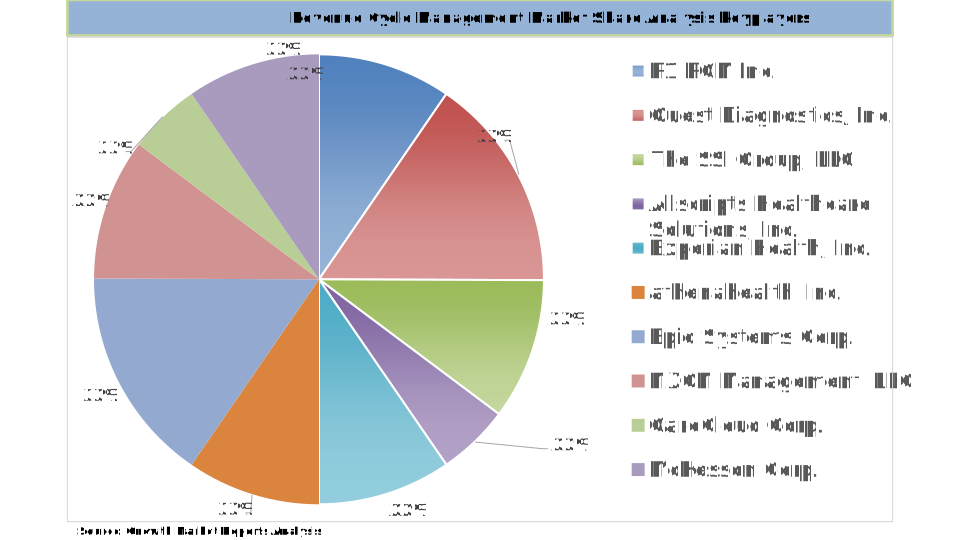
Revenue Cycle Management Market keyplayers

For instance, in October 2019, Medidal, a provider of payer search, transfer DRG, and pharmacy reimbursement solutions, were bought by eSolution, a healthcare technology business. The acquisition was to maintain its commitment to provide revenue cycle management technologies to increase workflow efficiency and save customers' time and money. In January 2020, R1 RCM launched R1 Professional, a physician revenue cycle management solution aimed for large hospital-owned medical groups and independent clinics. This aided in the development of a consistent revenue cycle management approach and reimbursement models.

Frequently Asked Questions

Key players include Optum, Change Healthcare, McKesson Corporation, Cerner Corporation, R1 RCM, Allscripts Healthcare Solutions, Epic Systems Corporation, athenahealth, GE Healthcare, and others, all of which offer a range of RCM software and services.

Opportunities include the integration of AI and predictive analytics, expansion in emerging markets, and increasing healthcare consumerism. Threats include data security and privacy concerns, regulatory compliance challenges, and the risk of cyberattacks.

Key RCM functions include claims and denial management, medical billing and coding, patient insurance eligibility verification, payment remittance, and electronic health record (EHR) integration.

Major end-users include hospitals, physician offices, diagnostic and ambulatory care centers, specialty clinics, long-term care facilities, and home healthcare providers, each with unique operational and financial needs.

RCM solutions are segmented into software and services. Software automates the revenue cycle process, while services include consulting, implementation, training, support, and outsourcing of RCM functions such as billing, coding, and compliance management.

North America dominates the RCM market due to advanced healthcare infrastructure and high digital adoption. Asia Pacific is the fastest-growing region, while Europe holds a significant share. Latin America and the Middle East & Africa are also experiencing steady growth.

RCM solutions can be deployed on-premises, where software is installed locally within a healthcare provider’s data center, or cloud-based, which allows access via the internet and offers greater scalability, flexibility, and cost-effectiveness. Hybrid models combining both approaches are also emerging.

Key growth drivers include the digitization of healthcare, increasing regulatory complexities, adoption of value-based care models, integration of AI and analytics, widespread use of electronic health records (EHR), and the demand for cost containment and operational efficiency.

The global revenue cycle management market reached USD 147.6 billion in 2024 and is projected to grow at a CAGR of 11.2% to reach USD 382.8 billion by 2033, driven by digital healthcare adoption, regulatory complexities, and the need for operational efficiency.

Revenue cycle management (RCM) in healthcare refers to the process of managing a healthcare provider’s financial transactions, from patient registration and insurance verification to claims submission, payment posting, and revenue collection. RCM solutions help providers optimize billing, reduce claim denials, and ensure compliance with regulatory requirements.

Table Of Content

Chapter 1 Executive Summary
Chapter 2 Assumptions and Acronyms Used
Chapter 3 Research Methodology
Chapter 4 revenue cycle management Market Overview
   4.1 Introduction
      4.1.1 Market Taxonomy
      4.1.2 Market Definition
      4.1.3 Macro-Economic Factors Impacting the Market Growth
   4.2 revenue cycle management Market Dynamics
      4.2.1 Market Drivers
      4.2.2 Market Restraints
      4.2.3 Market Opportunity
   4.3 revenue cycle management Market - Supply Chain Analysis
      4.3.1 List of Key Suppliers
      4.3.2 List of Key Distributors
      4.3.3 List of Key Consumers
   4.4 Key Forces Shaping the revenue cycle management Market
      4.4.1 Bargaining Power of Suppliers
      4.4.2 Bargaining Power of Buyers
      4.4.3 Threat of Substitution
      4.4.4 Threat of New Entrants
      4.4.5 Competitive Rivalry
   4.5 Global revenue cycle management Market Size & Forecast, 2023-2032
      4.5.1 revenue cycle management Market Size and Y-o-Y Growth
      4.5.2 revenue cycle management Market Absolute $ Opportunity

Chapter 5 Global revenue cycle management Market Analysis and Forecast By Component
   5.1 Introduction
      5.1.1 Key Market Trends & Growth Opportunities By Component
      5.1.2 Basis Point Share (BPS) Analysis By Component
      5.1.3 Absolute $ Opportunity Assessment By Component
   5.2 revenue cycle management Market Size Forecast By Component
      5.2.1 Software
      5.2.2 Services
   5.3 Market Attractiveness Analysis By Component

Chapter 6 Global revenue cycle management Market Analysis and Forecast By Deployment Mode
   6.1 Introduction
      6.1.1 Key Market Trends & Growth Opportunities By Deployment Mode
      6.1.2 Basis Point Share (BPS) Analysis By Deployment Mode
      6.1.3 Absolute $ Opportunity Assessment By Deployment Mode
   6.2 revenue cycle management Market Size Forecast By Deployment Mode
      6.2.1 On-Premises
      6.2.2 Cloud-Based
   6.3 Market Attractiveness Analysis By Deployment Mode

Chapter 7 Global revenue cycle management Market Analysis and Forecast By Function
   7.1 Introduction
      7.1.1 Key Market Trends & Growth Opportunities By Function
      7.1.2 Basis Point Share (BPS) Analysis By Function
      7.1.3 Absolute $ Opportunity Assessment By Function
   7.2 revenue cycle management Market Size Forecast By Function
      7.2.1 Claims & Denial Management
      7.2.2 Medical Billing & Coding
      7.2.3 Patient Insurance Eligibility Verification
      7.2.4 Payment Remittance
      7.2.5 Electronic Health Record Integration
      7.2.6 Others
   7.3 Market Attractiveness Analysis By Function

Chapter 8 Global revenue cycle management Market Analysis and Forecast By End-User
   8.1 Introduction
      8.1.1 Key Market Trends & Growth Opportunities By End-User
      8.1.2 Basis Point Share (BPS) Analysis By End-User
      8.1.3 Absolute $ Opportunity Assessment By End-User
   8.2 revenue cycle management Market Size Forecast By End-User
      8.2.1 Hospitals
      8.2.2 Physician Offices
      8.2.3 Diagnostic & Ambulatory Care Centers
      8.2.4 Others
   8.3 Market Attractiveness Analysis By End-User

Chapter 9 Global revenue cycle management Market Analysis and Forecast by Region
   9.1 Introduction
      9.1.1 Key Market Trends & Growth Opportunities By Region
      9.1.2 Basis Point Share (BPS) Analysis By Region
      9.1.3 Absolute $ Opportunity Assessment By Region
   9.2 revenue cycle management Market Size Forecast By Region
      9.2.1 North America
      9.2.2 Europe
      9.2.3 Asia Pacific
      9.2.4 Latin America
      9.2.5 Middle East & Africa (MEA)
   9.3 Market Attractiveness Analysis By Region

Chapter 10 Coronavirus Disease (COVID-19) Impact 
   10.1 Introduction 
   10.2 Current & Future Impact Analysis 
   10.3 Economic Impact Analysis 
   10.4 Government Policies 
   10.5 Investment Scenario

Chapter 11 North America revenue cycle management Analysis and Forecast
   11.1 Introduction
   11.2 North America revenue cycle management Market Size Forecast by Country
      11.2.1 U.S.
      11.2.2 Canada
   11.3 Basis Point Share (BPS) Analysis by Country
   11.4 Absolute $ Opportunity Assessment by Country
   11.5 Market Attractiveness Analysis by Country
   11.6 North America revenue cycle management Market Size Forecast By Component
      11.6.1 Software
      11.6.2 Services
   11.7 Basis Point Share (BPS) Analysis By Component 
   11.8 Absolute $ Opportunity Assessment By Component 
   11.9 Market Attractiveness Analysis By Component
   11.10 North America revenue cycle management Market Size Forecast By Deployment Mode
      11.10.1 On-Premises
      11.10.2 Cloud-Based
   11.11 Basis Point Share (BPS) Analysis By Deployment Mode 
   11.12 Absolute $ Opportunity Assessment By Deployment Mode 
   11.13 Market Attractiveness Analysis By Deployment Mode
   11.14 North America revenue cycle management Market Size Forecast By Function
      11.14.1 Claims & Denial Management
      11.14.2 Medical Billing & Coding
      11.14.3 Patient Insurance Eligibility Verification
      11.14.4 Payment Remittance
      11.14.5 Electronic Health Record Integration
      11.14.6 Others
   11.15 Basis Point Share (BPS) Analysis By Function 
   11.16 Absolute $ Opportunity Assessment By Function 
   11.17 Market Attractiveness Analysis By Function
   11.18 North America revenue cycle management Market Size Forecast By End-User
      11.18.1 Hospitals
      11.18.2 Physician Offices
      11.18.3 Diagnostic & Ambulatory Care Centers
      11.18.4 Others
   11.19 Basis Point Share (BPS) Analysis By End-User 
   11.20 Absolute $ Opportunity Assessment By End-User 
   11.21 Market Attractiveness Analysis By End-User

Chapter 12 Europe revenue cycle management Analysis and Forecast
   12.1 Introduction
   12.2 Europe revenue cycle management Market Size Forecast by Country
      12.2.1 Germany
      12.2.2 France
      12.2.3 Italy
      12.2.4 U.K.
      12.2.5 Spain
      12.2.6 Russia
      12.2.7 Rest of Europe
   12.3 Basis Point Share (BPS) Analysis by Country
   12.4 Absolute $ Opportunity Assessment by Country
   12.5 Market Attractiveness Analysis by Country
   12.6 Europe revenue cycle management Market Size Forecast By Component
      12.6.1 Software
      12.6.2 Services
   12.7 Basis Point Share (BPS) Analysis By Component 
   12.8 Absolute $ Opportunity Assessment By Component 
   12.9 Market Attractiveness Analysis By Component
   12.10 Europe revenue cycle management Market Size Forecast By Deployment Mode
      12.10.1 On-Premises
      12.10.2 Cloud-Based
   12.11 Basis Point Share (BPS) Analysis By Deployment Mode 
   12.12 Absolute $ Opportunity Assessment By Deployment Mode 
   12.13 Market Attractiveness Analysis By Deployment Mode
   12.14 Europe revenue cycle management Market Size Forecast By Function
      12.14.1 Claims & Denial Management
      12.14.2 Medical Billing & Coding
      12.14.3 Patient Insurance Eligibility Verification
      12.14.4 Payment Remittance
      12.14.5 Electronic Health Record Integration
      12.14.6 Others
   12.15 Basis Point Share (BPS) Analysis By Function 
   12.16 Absolute $ Opportunity Assessment By Function 
   12.17 Market Attractiveness Analysis By Function
   12.18 Europe revenue cycle management Market Size Forecast By End-User
      12.18.1 Hospitals
      12.18.2 Physician Offices
      12.18.3 Diagnostic & Ambulatory Care Centers
      12.18.4 Others
   12.19 Basis Point Share (BPS) Analysis By End-User 
   12.20 Absolute $ Opportunity Assessment By End-User 
   12.21 Market Attractiveness Analysis By End-User

Chapter 13 Asia Pacific revenue cycle management Analysis and Forecast
   13.1 Introduction
   13.2 Asia Pacific revenue cycle management Market Size Forecast by Country
      13.2.1 China
      13.2.2 Japan
      13.2.3 South Korea
      13.2.4 India
      13.2.5 Australia
      13.2.6 South East Asia (SEA)
      13.2.7 Rest of Asia Pacific (APAC)
   13.3 Basis Point Share (BPS) Analysis by Country
   13.4 Absolute $ Opportunity Assessment by Country
   13.5 Market Attractiveness Analysis by Country
   13.6 Asia Pacific revenue cycle management Market Size Forecast By Component
      13.6.1 Software
      13.6.2 Services
   13.7 Basis Point Share (BPS) Analysis By Component 
   13.8 Absolute $ Opportunity Assessment By Component 
   13.9 Market Attractiveness Analysis By Component
   13.10 Asia Pacific revenue cycle management Market Size Forecast By Deployment Mode
      13.10.1 On-Premises
      13.10.2 Cloud-Based
   13.11 Basis Point Share (BPS) Analysis By Deployment Mode 
   13.12 Absolute $ Opportunity Assessment By Deployment Mode 
   13.13 Market Attractiveness Analysis By Deployment Mode
   13.14 Asia Pacific revenue cycle management Market Size Forecast By Function
      13.14.1 Claims & Denial Management
      13.14.2 Medical Billing & Coding
      13.14.3 Patient Insurance Eligibility Verification
      13.14.4 Payment Remittance
      13.14.5 Electronic Health Record Integration
      13.14.6 Others
   13.15 Basis Point Share (BPS) Analysis By Function 
   13.16 Absolute $ Opportunity Assessment By Function 
   13.17 Market Attractiveness Analysis By Function
   13.18 Asia Pacific revenue cycle management Market Size Forecast By End-User
      13.18.1 Hospitals
      13.18.2 Physician Offices
      13.18.3 Diagnostic & Ambulatory Care Centers
      13.18.4 Others
   13.19 Basis Point Share (BPS) Analysis By End-User 
   13.20 Absolute $ Opportunity Assessment By End-User 
   13.21 Market Attractiveness Analysis By End-User

Chapter 14 Latin America revenue cycle management Analysis and Forecast
   14.1 Introduction
   14.2 Latin America revenue cycle management Market Size Forecast by Country
      14.2.1 Brazil
      14.2.2 Mexico
      14.2.3 Rest of Latin America (LATAM)
   14.3 Basis Point Share (BPS) Analysis by Country
   14.4 Absolute $ Opportunity Assessment by Country
   14.5 Market Attractiveness Analysis by Country
   14.6 Latin America revenue cycle management Market Size Forecast By Component
      14.6.1 Software
      14.6.2 Services
   14.7 Basis Point Share (BPS) Analysis By Component 
   14.8 Absolute $ Opportunity Assessment By Component 
   14.9 Market Attractiveness Analysis By Component
   14.10 Latin America revenue cycle management Market Size Forecast By Deployment Mode
      14.10.1 On-Premises
      14.10.2 Cloud-Based
   14.11 Basis Point Share (BPS) Analysis By Deployment Mode 
   14.12 Absolute $ Opportunity Assessment By Deployment Mode 
   14.13 Market Attractiveness Analysis By Deployment Mode
   14.14 Latin America revenue cycle management Market Size Forecast By Function
      14.14.1 Claims & Denial Management
      14.14.2 Medical Billing & Coding
      14.14.3 Patient Insurance Eligibility Verification
      14.14.4 Payment Remittance
      14.14.5 Electronic Health Record Integration
      14.14.6 Others
   14.15 Basis Point Share (BPS) Analysis By Function 
   14.16 Absolute $ Opportunity Assessment By Function 
   14.17 Market Attractiveness Analysis By Function
   14.18 Latin America revenue cycle management Market Size Forecast By End-User
      14.18.1 Hospitals
      14.18.2 Physician Offices
      14.18.3 Diagnostic & Ambulatory Care Centers
      14.18.4 Others
   14.19 Basis Point Share (BPS) Analysis By End-User 
   14.20 Absolute $ Opportunity Assessment By End-User 
   14.21 Market Attractiveness Analysis By End-User

Chapter 15 Middle East & Africa (MEA) revenue cycle management Analysis and Forecast
   15.1 Introduction
   15.2 Middle East & Africa (MEA) revenue cycle management Market Size Forecast by Country
      15.2.1 Saudi Arabia
      15.2.2 South Africa
      15.2.3 UAE
      15.2.4 Rest of Middle East & Africa (MEA)
   15.3 Basis Point Share (BPS) Analysis by Country
   15.4 Absolute $ Opportunity Assessment by Country
   15.5 Market Attractiveness Analysis by Country
   15.6 Middle East & Africa (MEA) revenue cycle management Market Size Forecast By Component
      15.6.1 Software
      15.6.2 Services
   15.7 Basis Point Share (BPS) Analysis By Component 
   15.8 Absolute $ Opportunity Assessment By Component 
   15.9 Market Attractiveness Analysis By Component
   15.10 Middle East & Africa (MEA) revenue cycle management Market Size Forecast By Deployment Mode
      15.10.1 On-Premises
      15.10.2 Cloud-Based
   15.11 Basis Point Share (BPS) Analysis By Deployment Mode 
   15.12 Absolute $ Opportunity Assessment By Deployment Mode 
   15.13 Market Attractiveness Analysis By Deployment Mode
   15.14 Middle East & Africa (MEA) revenue cycle management Market Size Forecast By Function
      15.14.1 Claims & Denial Management
      15.14.2 Medical Billing & Coding
      15.14.3 Patient Insurance Eligibility Verification
      15.14.4 Payment Remittance
      15.14.5 Electronic Health Record Integration
      15.14.6 Others
   15.15 Basis Point Share (BPS) Analysis By Function 
   15.16 Absolute $ Opportunity Assessment By Function 
   15.17 Market Attractiveness Analysis By Function
   15.18 Middle East & Africa (MEA) revenue cycle management Market Size Forecast By End-User
      15.18.1 Hospitals
      15.18.2 Physician Offices
      15.18.3 Diagnostic & Ambulatory Care Centers
      15.18.4 Others
   15.19 Basis Point Share (BPS) Analysis By End-User 
   15.20 Absolute $ Opportunity Assessment By End-User 
   15.21 Market Attractiveness Analysis By End-User

Chapter 16 Competition Landscape 
   16.1 revenue cycle management Market: Competitive Dashboard
   16.2 Global revenue cycle management Market: Market Share Analysis, 2023
   16.3 Company Profiles (Details – Overview, Financials, Developments, Strategy) 
      16.3.1 Optum
Change Healthcare
McKesson Corporation
Cerner Corporation
Conifer Health Solutions
nThrive
GeBBS Healthcare Solutions
The SSI Group
R1 RCM
Allscripts Healthcare Solutions
3M Health Information Systems
Cognizant Technology Solutions
MedData
Experian Health
AdvantEdge Healthcare Solutions
Xtend Healthcare
Huron Consulting Group
Quest Diagnostics
eClinicalWorks
Athenahealth

Methodology

Our Clients

sinopec
FedEx Logistics
Deloitte
Honda Motor Co. Ltd.
Dassault Aviation
Pfizer
Siemens Healthcare
Microsoft