Segments - by Component (Software, Services), by Deployment Mode (On-Premises, Cloud), by Organization Size (Small and Medium Enterprises, Large Enterprises), by Application (Supplier Management, Contract Management, Spend Analysis, Strategic Sourcing, Others), by End-User (Supermarkets/Hypermarkets, Department Stores, Specialty Stores, Online Retailers, Others)
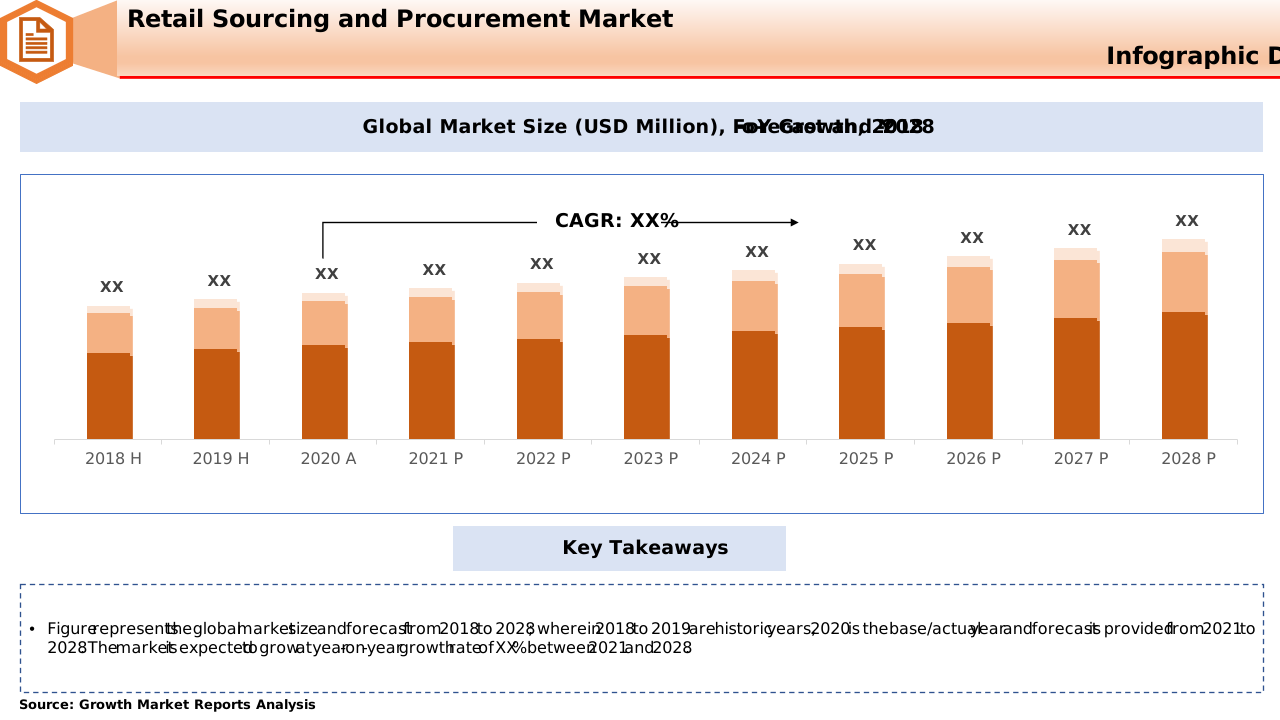
According to our latest research, the global retail sourcing and procurement market size reached USD 6.8 billion in 2024. The market is experiencing robust expansion with a compound annual growth rate (CAGR) of 10.5% from 2025 to 2033. By the end of 2033, the market is forecasted to attain a value of USD 17.1 billion. This surge is primarily driven by the increasing digitalization of retail operations, the growing need for cost optimization, and the rapid adoption of advanced procurement solutions across diverse retail segments. As per our latest research, retailers are investing heavily in technology-driven sourcing and procurement solutions to streamline operations, manage supplier relationships, and enhance overall supply chain efficiency.
One of the key growth factors propelling the retail sourcing and procurement market is the escalating complexity of global supply chains. Retailers are increasingly sourcing products from multiple geographies, which introduces logistical challenges, fluctuating costs, and compliance risks. To address these complexities, organizations are leveraging advanced procurement software and services that offer real-time visibility, predictive analytics, and automation capabilities. The integration of artificial intelligence and machine learning into procurement solutions is further augmenting their ability to forecast demand, optimize inventory, and negotiate better contracts with suppliers. This technological evolution is enabling retailers to achieve higher levels of agility, cost savings, and operational resilience, thereby fueling market expansion.
Another significant factor contributing to the growth of the retail sourcing and procurement market is the intensifying focus on sustainability and ethical sourcing. Consumers and regulatory bodies are increasingly demanding transparency and accountability in supply chains. Retailers are responding by adopting procurement solutions that facilitate supplier audits, compliance tracking, and sustainable sourcing practices. These solutions help retailers mitigate reputational risks, comply with environmental and social governance (ESG) standards, and build stronger relationships with conscientious consumers. The ability to track and report on sustainability metrics is becoming a competitive differentiator in the retail sector, driving further investment in sourcing and procurement technologies.
The proliferation of e-commerce and omnichannel retailing is also playing a pivotal role in market growth. Online retailers and traditional brick-and-mortar stores are both seeking to optimize their procurement processes to meet the demands of a rapidly changing retail landscape. The need for faster product launches, efficient inventory management, and seamless supplier collaboration is pushing retailers to adopt integrated procurement platforms. These platforms offer centralized control, automated workflows, and data-driven insights that support strategic sourcing decisions. As the retail industry continues to evolve, the demand for sophisticated sourcing and procurement solutions is expected to rise, further accelerating market growth.
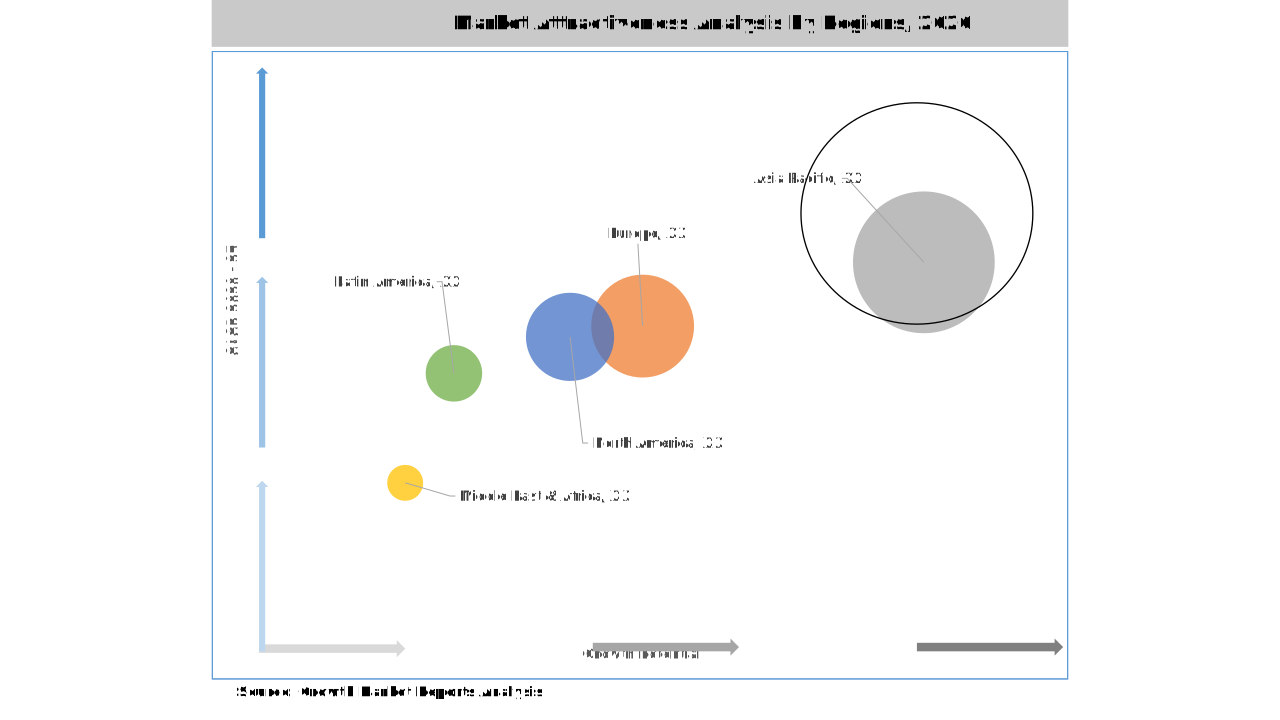
From a regional perspective, North America currently dominates the retail sourcing and procurement market, accounting for the largest share in 2024. This is attributed to the early adoption of advanced procurement technologies, the presence of established retail giants, and a mature digital infrastructure. However, the Asia Pacific region is anticipated to witness the highest growth rate during the forecast period, driven by rapid urbanization, expanding retail networks, and increasing investments in digital transformation initiatives. Europe and Latin America are also emerging as significant markets, supported by regulatory reforms and the growing adoption of cloud-based procurement solutions. The Middle East & Africa region is gradually catching up, with retailers focusing on modernizing their procurement processes to enhance competitiveness.
The component segment of the retail sourcing and procurement market is primarily bifurcated into software and services. Software solutions form the backbone of modern procurement systems, offering comprehensive functionalities such as supplier management, contract management, spend analysis, and strategic sourcing. These solutions are increasingly being adopted by retailers to automate routine tasks, enhance data accuracy, and facilitate informed decision-making. The integration of artificial intelligence and machine learning into procurement software is enabling predictive analytics, advanced reporting, and real-time monitoring of procurement activities. As a result, software solutions are experiencing significant demand, particularly among large enterprises seeking to optimize their sourcing strategies and drive operational efficiency.
On the other hand, services play a crucial role in supporting the implementation, customization, and maintenance of procurement solutions. Services include consulting, system integration, training, and support, which are essential for ensuring the successful deployment and adoption of procurement technologies. Retailers often rely on service providers to tailor procurement solutions to their specific business needs, integrate them with existing systems, and provide ongoing support to address emerging challenges. The growing complexity of retail operations and the need for specialized expertise are driving the demand for professional services in the sourcing and procurement market. Service providers are also offering managed procurement services, enabling retailers to outsource non-core procurement functions and focus on strategic activities.
The synergy between software and services is critical for maximizing the value of procurement investments. Retailers are increasingly seeking end-to-end solutions that combine robust software platforms with comprehensive support services. This integrated approach ensures seamless implementation, rapid user adoption, and continuous improvement of procurement processes. Vendors are responding by offering bundled solutions that include both software and services, providing retailers with a one-stop-shop for all their sourcing and procurement needs. The emphasis on value-added services, such as supplier risk management, compliance monitoring, and sustainability reporting, is further enhancing the appeal of service offerings in the market.
Looking ahead, the component segment is expected to witness sustained growth, driven by ongoing innovation in procurement software and the rising demand for specialized services. The increasing adoption of cloud-based procurement solutions is creating new opportunities for service providers to offer remote support, training, and consulting services. As retailers continue to invest in digital transformation, the component segment will remain a key driver of market growth, enabling organizations to achieve greater efficiency, transparency, and agility in their sourcing and procurement operations.
| Attributes | Details |
| Report Title | Retail Sourcing and Procurement Market Research Report 2033 |
| By Component | Software, Services |
| By Deployment Mode | On-Premises, Cloud |
| By Organization Size | Small and Medium Enterprises, Large Enterprises |
| By Application | Supplier Management, Contract Management, Spend Analysis, Strategic Sourcing, Others |
| By End-User | Supermarkets/Hypermarkets, Department Stores, Specialty Stores, Online Retailers, Others |
| Regions Covered | North America, Europe, APAC, Latin America, MEA |
| Base Year | 2024 |
| Historic Data | 2018-2023 |
| Forecast Period | 2025-2033 |
| Number of Pages | 259 |
| Number of Tables & Figures | 264 |
| Customization Available | Yes, the report can be customized as per your need. |
The deployment mode segment of the retail sourcing and procurement market is categorized into on-premises and cloud-based solutions. Traditionally, on-premises deployment has been the preferred choice for large retailers with complex IT infrastructures and stringent data security requirements. On-premises solutions offer greater control over data, customization options, and seamless integration with legacy systems. However, they require significant upfront investments in hardware, software, and IT personnel, making them less attractive for small and medium enterprises (SMEs) with limited resources. Despite these challenges, on-premises solutions continue to be favored by retailers operating in highly regulated environments or dealing with sensitive customer and supplier data.
In recent years, cloud-based deployment has gained significant traction in the retail sourcing and procurement market. Cloud solutions offer numerous advantages, including lower upfront costs, scalability, flexibility, and ease of access from any location. Retailers are increasingly adopting cloud-based procurement platforms to accelerate digital transformation, reduce IT overheads, and enable remote collaboration with suppliers. The subscription-based pricing model of cloud solutions allows retailers to align procurement costs with business growth, making it an attractive option for organizations of all sizes. Additionally, cloud platforms are continuously updated with new features and security enhancements, ensuring that retailers have access to the latest innovations in procurement technology.
The shift towards cloud-based deployment is being driven by the need for greater agility and responsiveness in retail operations. Cloud solutions enable real-time data sharing, automated workflows, and seamless integration with other business applications, such as enterprise resource planning (ERP) and customer relationship management (CRM) systems. This interconnectedness enhances supply chain visibility, improves decision-making, and supports strategic sourcing initiatives. Retailers are also leveraging cloud-based procurement solutions to facilitate collaboration with global suppliers, manage multiple sourcing channels, and respond quickly to market changes. The ability to scale procurement operations up or down based on demand is particularly valuable in the dynamic retail environment.
While cloud-based deployment is experiencing rapid growth, on-premises solutions are expected to maintain a presence in the market, especially among large retailers with complex requirements. The hybrid deployment model, which combines the benefits of both on-premises and cloud solutions, is also gaining popularity. Retailers are adopting hybrid models to balance data security with the need for flexibility and scalability. As the retail sourcing and procurement market continues to evolve, deployment mode will remain a critical consideration for retailers seeking to optimize their procurement strategies and achieve sustainable growth.
The organization size segment of the retail sourcing and procurement market is divided into small and medium enterprises (SMEs) and large enterprises. Large enterprises have traditionally been the primary adopters of advanced procurement solutions due to their complex supply chains, high transaction volumes, and greater financial resources. These organizations require robust procurement platforms that can handle multiple suppliers, diverse product categories, and global sourcing operations. Large retailers are investing in comprehensive procurement solutions to automate processes, reduce costs, and gain a competitive edge in the market. The ability to integrate procurement systems with other enterprise applications, such as ERP and supply chain management (SCM) platforms, is a key requirement for large enterprises.
Small and medium enterprises are increasingly recognizing the benefits of digital procurement solutions in enhancing efficiency, reducing manual errors, and improving supplier relationships. The availability of affordable, cloud-based procurement platforms is enabling SMEs to access advanced functionalities that were previously out of reach. These solutions offer intuitive interfaces, standardized workflows, and pre-configured templates that simplify procurement processes for smaller organizations. SMEs are leveraging procurement solutions to gain visibility into spending, negotiate better terms with suppliers, and comply with regulatory requirements. The growing emphasis on cost optimization and operational agility is driving the adoption of procurement technologies among SMEs.
The needs and priorities of SMEs and large enterprises differ significantly, influencing their procurement strategies and technology adoption. Large enterprises prioritize scalability, customization, and integration capabilities, while SMEs focus on ease of use, affordability, and rapid deployment. Solution providers are responding by offering tailored procurement platforms that cater to the unique requirements of each segment. For example, vendors are developing modular solutions that allow large enterprises to customize functionalities, while offering simplified, plug-and-play solutions for SMEs. This segmentation strategy is enabling solution providers to capture a broader share of the retail sourcing and procurement market.
As the retail industry becomes more competitive, both SMEs and large enterprises are expected to increase their investments in sourcing and procurement solutions. The democratization of procurement technology, driven by cloud computing and software-as-a-service (SaaS) models, is leveling the playing field for organizations of all sizes. SMEs, in particular, stand to benefit from the ability to access best-in-class procurement tools without the need for significant capital investments. The organization size segment will continue to be a key driver of market growth, as retailers of all sizes seek to enhance their procurement capabilities and achieve sustainable business outcomes.
The application segment of the retail sourcing and procurement market encompasses supplier management, contract management, spend analysis, strategic sourcing, and other related functions. Supplier management is a critical application area, enabling retailers to identify, evaluate, and collaborate with suppliers to ensure timely delivery of quality products. Advanced supplier management solutions offer features such as supplier performance tracking, risk assessment, and compliance monitoring. Retailers are leveraging these solutions to build resilient supply chains, mitigate risks, and foster long-term partnerships with key suppliers. The ability to manage supplier information centrally and automate communication processes is enhancing efficiency and reducing administrative overheads.
Contract management is another vital application, helping retailers create, negotiate, and manage contracts with suppliers. Automated contract management solutions streamline contract creation, approval, and renewal processes, reducing the risk of errors and ensuring compliance with regulatory requirements. These solutions also provide visibility into contract terms, expiration dates, and performance metrics, enabling retailers to optimize contract outcomes and avoid costly disputes. The integration of contract management with other procurement functions, such as spend analysis and supplier management, is enabling retailers to achieve greater transparency and control over their procurement activities.
Spend analysis is gaining prominence as retailers seek to gain deeper insights into their procurement expenditures. Spend analysis solutions aggregate and analyze procurement data from multiple sources, providing actionable insights into spending patterns, supplier performance, and cost-saving opportunities. Retailers are using spend analysis to identify maverick spending, negotiate better terms with suppliers, and implement strategic sourcing initiatives. The ability to visualize spending data through interactive dashboards and reports is empowering procurement teams to make data-driven decisions and drive continuous improvement.
Strategic sourcing is a key application area, enabling retailers to identify and select the best suppliers based on a range of criteria, including cost, quality, reliability, and sustainability. Strategic sourcing solutions support the entire sourcing lifecycle, from supplier identification and evaluation to negotiation and contract award. Retailers are leveraging these solutions to optimize sourcing strategies, reduce procurement costs, and enhance supplier collaboration. The integration of artificial intelligence and machine learning into strategic sourcing platforms is enabling predictive analytics, scenario modeling, and automated supplier recommendations, further enhancing the effectiveness of sourcing initiatives.
The end-user segment of the retail sourcing and procurement market includes supermarkets/hypermarkets, department stores, specialty stores, online retailers, and other retail formats. Supermarkets and hypermarkets represent a significant share of the market, owing to their large-scale operations, diverse product offerings, and extensive supplier networks. These retailers require robust procurement solutions to manage high transaction volumes, optimize inventory levels, and ensure timely replenishment of stock. The adoption of advanced procurement technologies is enabling supermarkets and hypermarkets to streamline sourcing processes, reduce costs, and enhance customer satisfaction.
Department stores are also major end-users of sourcing and procurement solutions, driven by the need to manage multiple product categories and suppliers efficiently. Procurement platforms tailored for department stores offer features such as centralized supplier management, automated purchase order generation, and real-time inventory tracking. These capabilities enable department stores to maintain optimal stock levels, minimize stockouts, and respond quickly to changing customer preferences. The integration of procurement solutions with point-of-sale (POS) systems and inventory management platforms is further enhancing operational efficiency.
Specialty stores, which focus on specific product categories such as electronics, apparel, or home goods, are increasingly adopting procurement solutions to gain a competitive edge. These retailers often deal with niche suppliers and require specialized procurement functionalities, such as vendor scorecards, quality control, and compliance tracking. Procurement solutions tailored for specialty stores offer customizable workflows, supplier performance analytics, and integration with e-commerce platforms. By leveraging these solutions, specialty stores can enhance supplier collaboration, reduce lead times, and improve product quality.
Online retailers represent a rapidly growing segment in the retail sourcing and procurement market, driven by the explosive growth of e-commerce. Online retailers require agile procurement solutions that support rapid product launches, dynamic pricing, and seamless integration with digital marketplaces. Procurement platforms for online retailers offer features such as automated supplier onboarding, real-time inventory synchronization, and analytics-driven decision-making. The ability to collaborate with global suppliers, manage multiple sourcing channels, and respond quickly to market trends is critical for online retailers seeking to maintain a competitive advantage.
The retail sourcing and procurement market is brimming with opportunities, particularly in the areas of digital transformation and sustainability. The ongoing shift towards cloud-based procurement solutions presents significant growth potential, as retailers seek to modernize their procurement processes and achieve greater agility. The integration of advanced technologies such as artificial intelligence, machine learning, and blockchain is unlocking new possibilities for automation, predictive analytics, and transparency in procurement operations. Retailers that embrace digital transformation are well-positioned to enhance supplier collaboration, optimize sourcing strategies, and drive cost savings. Additionally, the growing emphasis on sustainability and ethical sourcing is creating opportunities for solution providers to offer specialized tools that support ESG compliance, supplier audits, and sustainable procurement practices.
Another major opportunity lies in the expansion of procurement solutions to emerging markets, particularly in the Asia Pacific and Latin America regions. Rapid urbanization, the growth of organized retail, and increasing investments in digital infrastructure are driving demand for advanced procurement technologies in these regions. Solution providers that tailor their offerings to the unique needs of emerging markets, such as language localization, regulatory compliance, and integration with local suppliers, stand to gain a competitive edge. The rise of omnichannel retailing and the proliferation of e-commerce platforms are also creating new opportunities for procurement solution providers to support retailers in managing complex, multi-channel supply chains.
Despite the numerous opportunities, the retail sourcing and procurement market faces certain restraining factors, the most notable being data security and privacy concerns. As retailers increasingly adopt cloud-based procurement solutions and collaborate with global suppliers, the risk of data breaches, cyberattacks, and unauthorized access to sensitive information is heightened. Retailers must invest in robust security measures, such as encryption, multi-factor authentication, and regular security audits, to safeguard procurement data. Regulatory compliance with data protection laws, such as GDPR and CCPA, adds another layer of complexity for retailers operating in multiple jurisdictions. Addressing these challenges is critical for building trust with stakeholders and ensuring the long-term success of procurement initiatives.
North America continues to lead the global retail sourcing and procurement market, accounting for approximately 38% of the total market share in 2024, which translates to a market value of around USD 2.6 billion. The region’s dominance is attributed to the early adoption of advanced procurement technologies, the presence of major retail chains, and a mature digital infrastructure. Retailers in North America are at the forefront of integrating artificial intelligence, machine learning, and cloud solutions into their procurement processes. The emphasis on cost optimization, supplier risk management, and compliance with stringent regulatory standards is further driving the adoption of sophisticated procurement platforms. The region is expected to maintain its leadership position throughout the forecast period, supported by ongoing investments in digital transformation and supply chain modernization.
The Asia Pacific region is emerging as the fastest-growing market for retail sourcing and procurement, with a projected CAGR of 13.2% from 2025 to 2033. The market size in Asia Pacific reached USD 1.7 billion in 2024 and is expected to exceed USD 5.2 billion by 2033. Rapid urbanization, the expansion of organized retail, and increasing investments in digital infrastructure are key drivers of market growth in this region. Countries such as China, India, Japan, and South Korea are witnessing a surge in demand for procurement solutions, as retailers seek to enhance supply chain efficiency and respond to changing consumer preferences. The proliferation of e-commerce platforms and the rise of omnichannel retailing are also contributing to the growth of the procurement market in Asia Pacific.
Europe holds a significant share of the retail sourcing and procurement market, with a market size of approximately USD 1.3 billion in 2024. The region is characterized by a high level of regulatory oversight, a strong focus on sustainability, and the presence of leading retail brands. Retailers in Europe are increasingly adopting procurement solutions to comply with ESG standards, optimize sourcing strategies, and enhance supplier collaboration. The Middle East & Africa and Latin America regions are gradually gaining traction, driven by the modernization of retail infrastructure and the adoption of digital procurement solutions. While these regions currently account for a smaller share of the global market, they present significant growth potential as retailers invest in technology-driven procurement initiatives to enhance competitiveness and drive business growth.
The competitive landscape of the retail sourcing and procurement market is characterized by the presence of a mix of established players and emerging vendors, each striving to differentiate themselves through innovation, customer-centric solutions, and strategic partnerships. Leading companies are focusing on the development of integrated procurement platforms that offer end-to-end functionalities, including supplier management, contract management, spend analysis, and strategic sourcing. The emphasis on cloud-based deployment, artificial intelligence, and machine learning is enabling vendors to deliver advanced analytics, automation, and real-time insights, helping retailers optimize procurement processes and drive business value. Collaboration with technology partners, system integrators, and consulting firms is also a key strategy for expanding market reach and enhancing solution offerings.
In addition to product innovation, market players are investing in customer support, training, and professional services to ensure successful implementation and adoption of procurement solutions. The ability to provide tailored solutions that address the unique needs of different retail segments, such as supermarkets, department stores, specialty stores, and online retailers, is a critical differentiator. Vendors are also focusing on expanding their presence in emerging markets, leveraging local partnerships and language localization to capture new business opportunities. The growing demand for sustainable and ethical sourcing solutions is prompting vendors to incorporate ESG compliance, supplier risk management, and sustainability reporting features into their platforms.
The competitive environment is further shaped by mergers and acquisitions, as companies seek to enhance their technological capabilities, expand their customer base, and gain access to new markets. Strategic acquisitions of niche technology providers, consulting firms, and managed services providers are enabling market leaders to offer comprehensive procurement solutions and strengthen their competitive position. The entry of new players, particularly in the cloud-based procurement segment, is intensifying competition and driving innovation. As the market continues to evolve, the ability to deliver scalable, secure, and user-friendly procurement solutions will be essential for sustaining long-term growth and profitability.
Some of the major companies operating in the retail sourcing and procurement market include SAP SE, Oracle Corporation, Coupa Software Inc., Jaggaer, IBM Corporation, GEP, Zycus, Basware, Ivalua, and Proactis. SAP SE and Oracle Corporation are recognized for their comprehensive procurement platforms that integrate seamlessly with other enterprise applications, offering robust analytics, automation, and supplier collaboration capabilities. Coupa Software Inc. and Jaggaer are known for their cloud-based procurement solutions that cater to a wide range of retail segments, providing intuitive interfaces, real-time insights, and flexible deployment options. IBM Corporation leverages its expertise in artificial intelligence and blockchain to deliver advanced procurement analytics and supply chain transparency.
GEP, Zycus, Basware, Ivalua, and Proactis are prominent players offering specialized procurement solutions tailored to the needs of retailers. These companies focus on delivering value-added services, such as supplier risk management, compliance tracking, and sustainability reporting, to help retailers achieve their business objectives. The ability to offer end-to-end procurement solutions, backed by strong customer support and professional services, is enabling these vendors to build long-term relationships with retail clients. As the retail sourcing and procurement market continues to grow, competition among vendors is expected to intensify, driving further innovation and the development of next-generation procurement technologies.
The Retail Sourcing and Procurement market has been segmented on the basis of
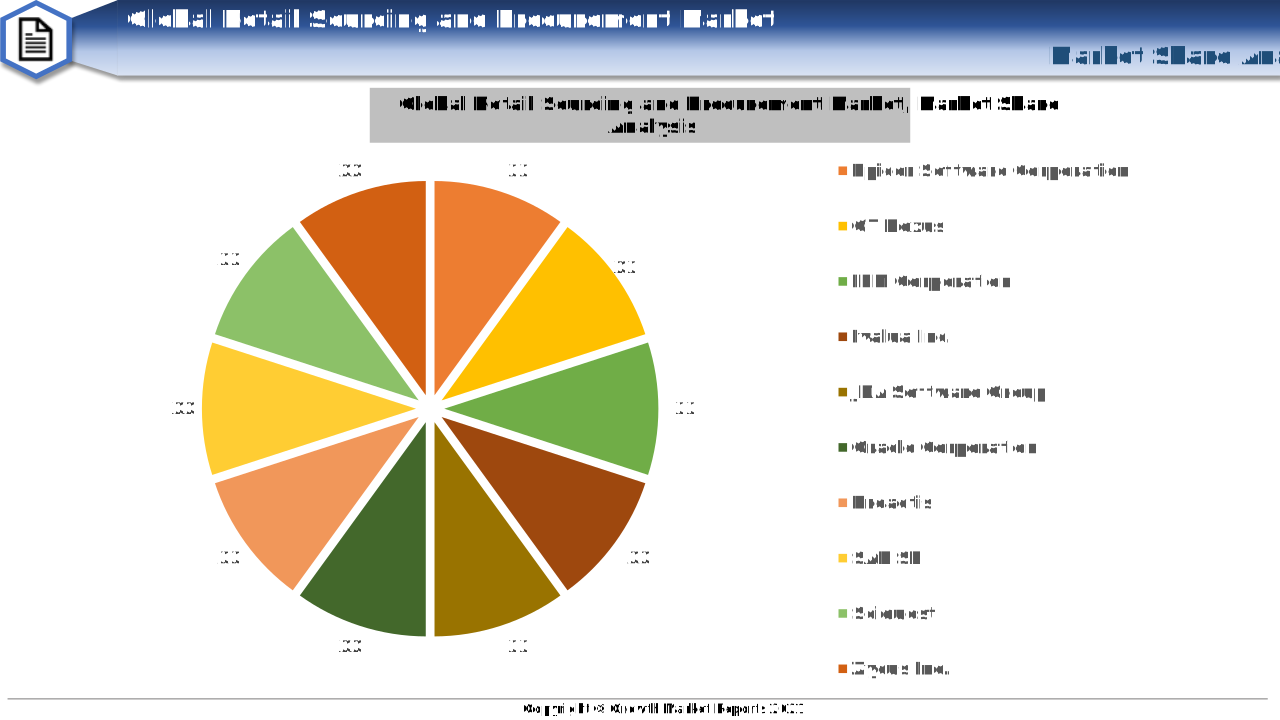
Some key players competing in the global Retail Sourcing and Procurement market include Epicor Software Corporation, GT Nexus, IBM Corporation, Ivalua Inc., JDA Software Group, Oracle Corporation, Proactis, SAP SE, Sciquest, and Zycus Inc. These leading market players are using strategies including mergers, acquisition, partnerships, new launches, collaborations, and product development to build their strong position in the market. The R&D and innovation are the key strategies adopted by players to enhance their market position.
For instance, in April 2018, Epicor Software Corporation (Epicor), a global provider of industry specific software to stimulate business growth, declared the expansion of the partnership agreement with Index InfoTech to cover their operation in India. The partnership combined service capabilities by Index InfoTech with the global organization resource planning (ERP) solution Epicor to support the growth of manufacturing, distribution, and services industries in India. In January 2020, IBM released a research study on global consumer trends that showed the importance of brand purpose to provide convenience service for consumers.
Retailers are adopting procurement solutions that support ESG compliance, supplier audits, and sustainable sourcing practices, driven by consumer and regulatory demands for transparency and ethical supply chains.
Key players include SAP SE, Oracle Corporation, Coupa Software Inc., Jaggaer, IBM Corporation, GEP, Zycus, Basware, Ivalua, and Proactis, among others.
Major challenges include data security and privacy concerns, especially with cloud adoption, as well as the need to comply with complex regulatory requirements across different regions.
Large enterprises prioritize scalability, customization, and integration, while SMEs focus on affordability, ease of use, and rapid deployment. Both segments are increasing investments in procurement technologies.
Key applications include supplier management, contract management, spend analysis, and strategic sourcing, each helping retailers optimize procurement processes and improve supplier relationships.
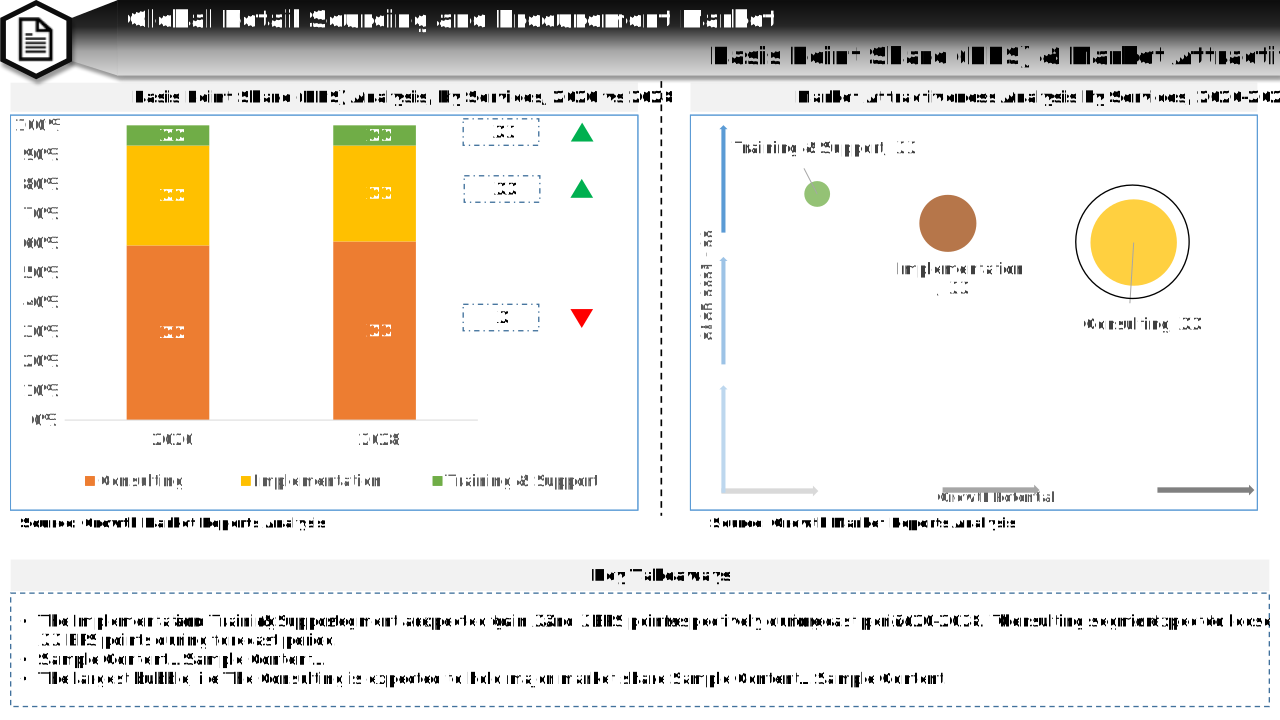
The market is segmented into software and services. Software includes functionalities like supplier management and spend analysis, while services cover consulting, integration, training, and support.
North America currently leads the market due to early technology adoption and strong digital infrastructure, while Asia Pacific is the fastest-growing region, driven by rapid urbanization and expanding retail networks.
Cloud-based procurement solutions offer scalability, lower upfront costs, real-time data access, and easy integration with other business systems, making them popular among retailers seeking agility and digital transformation.
Key growth drivers include increasing digitalization of retail operations, the need for cost optimization, adoption of advanced procurement solutions, supply chain complexity, and a growing focus on sustainability and ethical sourcing.
As of 2024, the global retail sourcing and procurement market is valued at USD 6.8 billion and is expected to reach USD 17.1 billion by 2033, growing at a CAGR of 10.5% from 2025 to 2033.