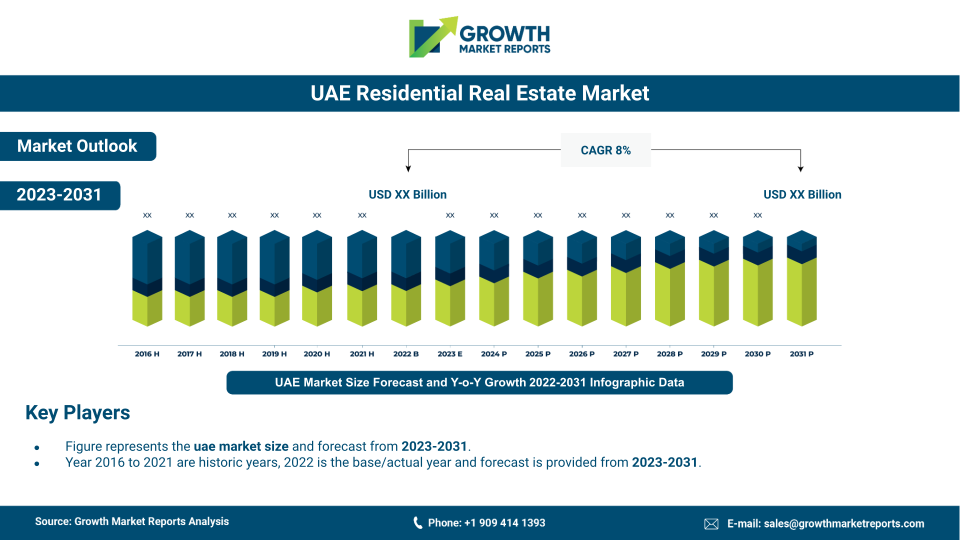
The residential real estate market in UAE was valued at USD XX Billion in 2022 and is anticipated to reach USD XX Billion by 2031, expanding at a CAGR of 8% during the forecast period, 2023–2031. The growth of the market is attributed to new government initiatives in the country.
The residential market in the UAE is decreasing due to high competition and less supply of housing unit. The UAE government announced several initiatives to drive the economic and real estate demand in the country. A permanent residency “gold card” scheme in Dubai was introduced in 2019.
To meet the demand-supply mismatch in the country, an initiative was launched by Dubai government such as Real Estate Planning Committee. This committee was established to improve the mismatch between demand and supply. These schemes are established to increase the demand for housing units in the country.
The Covid-19 pandemic affected the demand and supply of residential real estate market in the UAE market. Lockdown across the globe, supply chain disorders, and oscillating supply of raw materials forced manufacturers to shut down production leading to unfortunate decline in market growth. Launch of vaccines to combat the Covid-19 pandemic is expected to contribute to the market growth over the forecast period.
Market Trends, Drivers, Restraints, and Opportunities
-
New government initiatives and hassle free law for foreign investors are projected to drive the market.
-
High competition and less supply in housing units are estimated to hamper the market growth.
-
Increasing transaction value and investment in UAE’s real estate industry is anticipated to boost the market.
-
R&D investment in real estate sector is expected to create immense growth opportunities for the market players.
Scope of the Report
The report on the residential real estate market in UAE includes an assessment of the market, trends, segments, and regional markets. Overview and dynamics have also been included in the report.
|
Attributes
|
Details
|
|
Report Title
|
Residential Real Estate Market - UAE Industry Analysis, Growth, Share, Size, Trends, and Forecast
|
|
Base Year
|
2022
|
|
Historic Data
|
2016–2021
|
|
Forecast Period
|
2023–2031
|
|
Segmentation
|
Types (Condominiums, Villas, and Others)
|
|
Geography
|
Dubai, Abu Dhabi, and Sharjah
|
|
Report Coverage
|
Company Share, Market Analysis and Size, Competitive Landscape, Growth Factors, and Trends, and Revenue Forecast
|
|
Key Players Covered in the Report
|
Aldar Properties, Emaar, Nakhell PJSC, Deyaar Properties, and Damac Properties.
|
Market Segment Insights
Market Segment Insights:The villa segment is projected to expand at a rapid pace during the forecast period
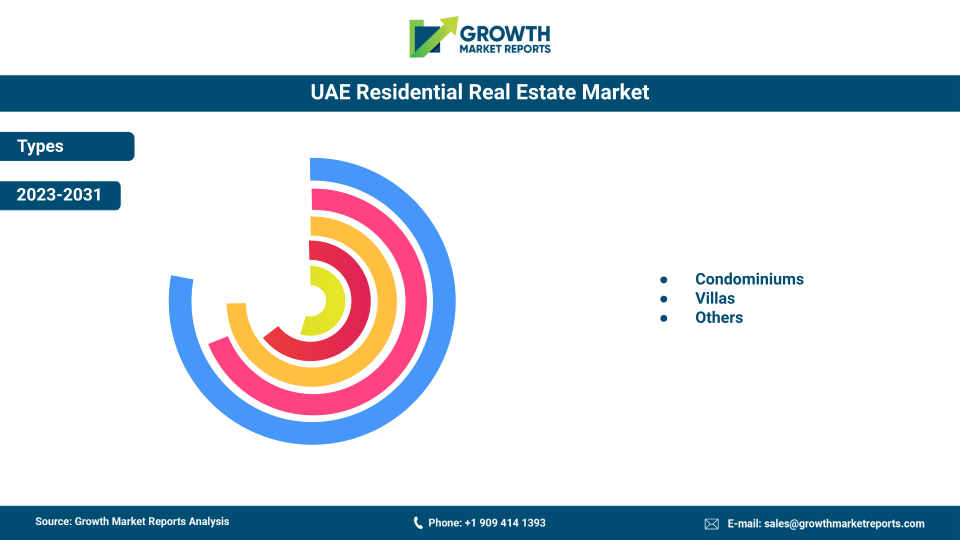
Based on type, the residential real estate market in UAE is segmented as condominiums, villas, and others. The condominium is a large property complex consists of individual units. Each unit is owned separately. Condominium ownership is normally with its management.
Villas are individual homes which are sold as a single unit. It is costlier compared to flat and is mostly used for residential stay. The famous villas in Dubai are Roda Boutique Villas, The Palm Beachfront Estate, J5 villas, Medlock Villas, Dream Inn Dubai, Coral Boutique Villas, Villa Atlantica - Palm Jumeirah, Nikki Beach Villas, and ELAN Four Bedroom Beach JBR Villa.
Abu Dhabi is estimated to hold major market share during the forecast period
On the basis of geography, the residential real estate market is classified as Dubai, Abu Dhabi, and Sharjah. These cities are famous for tourism as well as commercial purpose. Abu Dhabi serves as the capital city, whereas Dubai is famous for its tourism and commercial business.
In these cites majority projects are of apartments to fulfill the needs of general people. Official has also reduced the luxury residential project to minimum as the sale has decreased over the period.
Segments
The residential real estate market in UAE is segmented on the basis of
Types
- Condominiums
- Villas
- Others
Geography
Key Players
- Aldar Properties
- Emaar
- Nakhell PJSC
- Deyaar Properties
- Damac Properties
Competitive Landscape
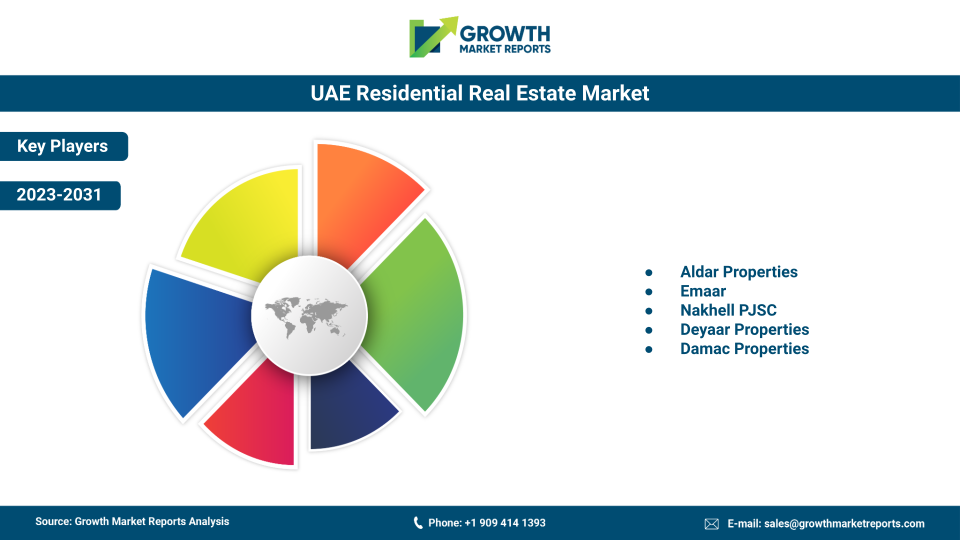
The residential real estate market in UAE is highly competitive and major market players include Aldar Properties, Emaar, Nakhell PJSC, Deyaar Properties, and Damac Properties. Increase in spends on infrastructure, relaxed laws for foreign investors, and new government policies have driven the market by allowing foreign investment.
Companies are engaging in mergers, acquisitions and partnerships to extend their market share. Moreover they are focusing on expanding their product portfolio to leverage their market position. The Expo 2020 which was scheduled to launch in2020 but due to Covid -19 pandemic it was postponded.
These with other projects might boost the residential real estate market of UAE. UAE is in process to allow foreign individuals to buy the freehold properties in designated areas in Dubai.











 Request For Customization
 Enquiry Before Buying
 Speak With Analyst





