Ransom ware Protection Market Research Report 2033

Ransom ware Protection Market Research Report 2033

Segments - by Component (Software, Services), by Deployment Mode (On-Premises, Cloud), by Organization Size (Small and Medium Enterprises, Large Enterprises), by Application (Network Protection, Endpoint Protection, Email Protection, Web Protection, Database Protection, Others), by End-User (BFSI, Healthcare, Government, IT and Telecommunications, Retail, Education, Others)

https://growthmarketreports.com/Raksha
Author : Raksha Sharma
https://growthmarketreports.com/Vaibhav
Fact-checked by : V. Chandola
https://growthmarketreports.com/Shruti
Editor : Shruti Bhat

Upcoming | Report ID :ICT-SE-2892 | 4.9 Rating | 41 Reviews | 270 Pages | Format : Docx PDF

Report Description


Ransomware Protection Market Outlook

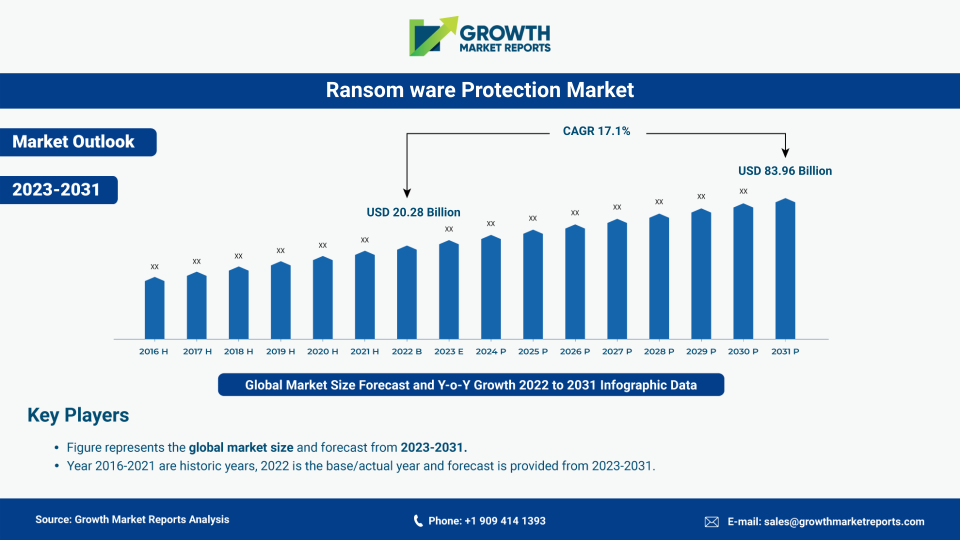
According to our latest research, the global ransomware protection market size in 2024 stands at USD 23.8 billion, with a robust compound annual growth rate (CAGR) of 15.4% projected over the forecast period. By 2033, the market is expected to reach USD 68.1 billion, driven by the escalating frequency and sophistication of ransomware attacks targeting organizations across all sectors. This surge is propelled by the critical need for advanced cybersecurity solutions, stringent regulatory requirements, and the increasing adoption of digital transformation strategies worldwide.

The primary growth driver for the ransomware protection market is the exponential increase in ransomware attacks, which have become more targeted, automated, and damaging in recent years. Organizations are facing not only financial losses but also significant reputational damage and operational disruptions due to these attacks. As a result, businesses are investing heavily in comprehensive ransomware protection solutions that offer real-time threat detection, automated response, and rapid recovery capabilities. The proliferation of remote work and cloud adoption has further expanded the attack surface, necessitating advanced security measures that can safeguard endpoints and networks regardless of their location. This trend is expected to continue as threat actors utilize more sophisticated tactics, including double extortion and supply chain attacks, making robust ransomware protection a top priority for enterprises globally.

Another significant factor fueling the growth of the ransomware protection market is the evolving regulatory landscape. Governments and industry bodies worldwide are introducing stringent data protection and cybersecurity regulations, such as the General Data Protection Regulation (GDPR) in Europe and the Cybersecurity Maturity Model Certification (CMMC) in the United States. These regulations mandate organizations to implement adequate security controls, conduct regular risk assessments, and report security incidents promptly. Non-compliance can result in hefty fines and legal actions, further incentivizing organizations to invest in advanced ransomware protection solutions. Additionally, the rise of cyber insurance as a risk mitigation strategy is encouraging businesses to adopt best-in-class security measures, as insurers increasingly require proof of robust ransomware defense mechanisms before issuing policies.

Technological advancements in artificial intelligence (AI), machine learning (ML), and threat intelligence are also driving the ransomware protection market forward. Modern ransomware protection solutions leverage AI and ML algorithms to detect anomalous behavior, predict potential threats, and automate incident response processes. Integration with threat intelligence platforms enables organizations to stay ahead of emerging threats by continuously updating their defense mechanisms with the latest information on ransomware variants and attack vectors. Furthermore, the growing adoption of zero-trust security frameworks and the convergence of endpoint, network, and cloud security are creating new opportunities for solution providers to deliver holistic ransomware protection platforms tailored to the evolving needs of businesses.

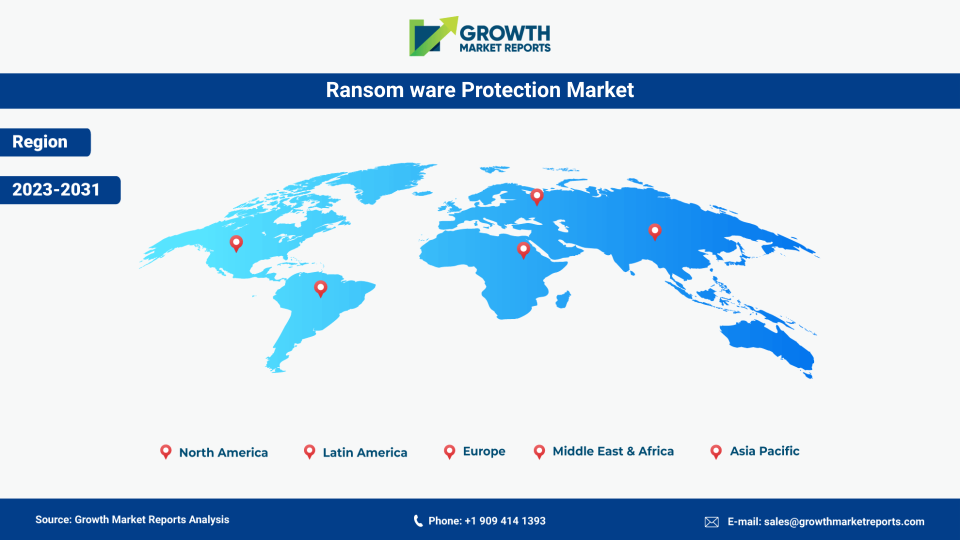
From a regional perspective, North America remains the largest market for ransomware protection, accounting for a significant share of global revenue in 2024. This dominance is attributed to the high prevalence of ransomware attacks in the region, particularly targeting critical infrastructure, financial institutions, and healthcare organizations. Europe follows closely, driven by stringent regulatory requirements and growing awareness of cybersecurity risks. The Asia Pacific region is witnessing the fastest growth, fueled by rapid digitalization, increasing cyber threats, and rising investments in cybersecurity infrastructure. Latin America and the Middle East & Africa are also experiencing steady growth, albeit from a smaller base, as organizations in these regions recognize the importance of proactive ransomware defense. Overall, the global ransomware protection market is poised for sustained expansion as organizations across all geographies prioritize cybersecurity resilience.

Global Ransom ware Protection Industry Outlook

Component Analysis

The ransomware protection market by component is segmented into software and services. The software segment currently holds the largest share, as organizations increasingly deploy advanced security solutions to detect, prevent, and remediate ransomware attacks. These software solutions encompass a wide array of functionalities, including endpoint protection, network security, email filtering, web gateway security, and data backup and recovery. The continuous evolution of ransomware tactics, such as fileless attacks and polymorphic malware, is driving demand for next-generation software that leverages AI and machine learning to identify and neutralize threats in real time. Vendors are also focusing on integrating their software offerings with threat intelligence platforms and security orchestration tools to provide comprehensive protection across the entire attack surface.

The services segment is experiencing rapid growth, driven by the increasing complexity of ransomware threats and the shortage of skilled cybersecurity professionals. Managed security services, incident response, threat hunting, and security consulting are in high demand as organizations seek expert assistance to strengthen their security posture and respond effectively to ransomware incidents. Service providers offer round-the-clock monitoring, threat analysis, vulnerability assessments, and tailored remediation strategies to help businesses minimize the impact of ransomware attacks. As ransomware-as-a-service (RaaS) continues to proliferate, the need for specialized services to counter these threats is expected to rise significantly over the forecast period.

A notable trend within the component segment is the convergence of software and services into unified platforms. Vendors are increasingly offering integrated solutions that combine advanced security software with managed detection and response (MDR) services, enabling organizations to benefit from both automated protection and expert human intervention. This approach is particularly appealing to small and medium enterprises (SMEs) that lack in-house cybersecurity expertise but require robust ransomware defense. Additionally, the rise of cloud-based security services is making ransomware protection more accessible and scalable, allowing organizations to deploy and manage security solutions with minimal upfront investment.

The competitive landscape within the component segment is characterized by intense innovation and strategic partnerships. Leading vendors are investing heavily in research and development to enhance the capabilities of their software and services, focusing on areas such as behavioral analytics, deception technology, and automated incident response. Collaborations with cloud service providers, telecommunications companies, and managed security service providers are enabling vendors to expand their reach and deliver comprehensive ransomware protection solutions to a broader customer base. As the threat landscape continues to evolve, the ability to offer integrated, adaptive, and scalable ransomware protection will be a key differentiator for vendors in this market.

Report Scope

Attributes Details
Report Title Ransom ware Protection Market Research Report 2033
By Component Software, Services
By Deployment Mode On-Premises, Cloud
By Organization Size Small and Medium Enterprises, Large Enterprises
By Application Network Protection, Endpoint Protection, Email Protection, Web Protection, Database Protection, Others
By End-User BFSI, Healthcare, Government, IT and Telecommunications, Retail, Education, Others
Regions Covered North America, Europe, APAC, Latin America, MEA
Base Year 2024
Historic Data 2018-2023
Forecast Period 2025-2033
Number of Pages 270
Number of Tables & Figures 381
Customization Available Yes, the report can be customized as per your need.

Deployment Mode Analysis

The ransomware protection market by deployment mode is segmented into on-premises and cloud-based solutions. On-premises deployment remains a preferred choice for organizations with stringent data privacy and regulatory requirements, particularly in industries such as banking, healthcare, and government. These organizations prioritize control over their security infrastructure and data, opting for on-premises solutions that can be customized to their specific needs. On-premises deployment also enables organizations to maintain direct oversight of their security operations and ensure compliance with industry-specific standards. However, the high upfront costs, ongoing maintenance requirements, and scalability limitations associated with on-premises solutions are prompting some organizations to explore alternative deployment models.

With the increasing reliance on network-attached storage (NAS) systems, the need for robust security measures has never been more critical. A Ransomware Detector for NAS is an essential tool for safeguarding valuable data stored on these systems. These detectors utilize advanced algorithms to monitor file activities and detect anomalous patterns indicative of ransomware attacks. By providing real-time alerts and automated response mechanisms, they enable organizations to swiftly neutralize threats before significant damage occurs. As NAS systems continue to play a pivotal role in data storage and management, integrating a Ransomware Detector for NAS is becoming a vital component of comprehensive cybersecurity strategies.

Cloud-based deployment is witnessing rapid adoption, driven by the growing demand for scalable, flexible, and cost-effective ransomware protection solutions. Cloud-based security platforms offer several advantages, including simplified deployment, automatic updates, and centralized management. These solutions are particularly well-suited for organizations with distributed workforces, remote offices, and hybrid IT environments, as they enable seamless protection across endpoints, networks, and cloud workloads. The ability to leverage cloud-native security features, such as real-time threat intelligence, AI-driven analytics, and automated response, is further enhancing the appeal of cloud-based ransomware protection.

The transition to cloud-based deployment is being accelerated by the increasing adoption of software-as-a-service (SaaS) and infrastructure-as-a-service (IaaS) models. Organizations are moving critical applications and data to the cloud, necessitating robust security measures to protect against ransomware attacks targeting cloud environments. Cloud service providers are partnering with cybersecurity vendors to offer integrated ransomware protection as part of their service portfolios, making it easier for organizations to implement comprehensive security strategies. Additionally, cloud-based deployment enables organizations to scale their security infrastructure in response to evolving threats and changing business requirements, without the need for significant capital investment.

Despite the advantages of cloud-based deployment, some organizations remain cautious due to concerns about data sovereignty, vendor lock-in, and shared responsibility models. To address these concerns, vendors are offering hybrid deployment options that combine the benefits of on-premises and cloud-based solutions. Hybrid deployment allows organizations to retain control over sensitive data while leveraging the scalability and agility of the cloud for less critical workloads. As the ransomware threat landscape continues to evolve, the ability to offer flexible deployment options that meet the diverse needs of organizations will be a key success factor for vendors in the ransomware protection market.

Organization Size Analysis

The ransomware protection market is segmented by organization size into small and medium enterprises (SMEs) and large enterprises. Large enterprises account for the largest share of the market, driven by their extensive IT infrastructure, complex security requirements, and higher risk exposure to ransomware attacks. These organizations typically have dedicated cybersecurity teams and significant budgets to invest in advanced ransomware protection solutions. They prioritize comprehensive security strategies that encompass endpoint protection, network security, data backup, and incident response capabilities. Large enterprises are also early adopters of emerging technologies, such as AI and machine learning, to enhance their ransomware defense mechanisms.

Small and medium enterprises (SMEs) represent a rapidly growing segment of the ransomware protection market. SMEs are increasingly targeted by ransomware attacks due to perceived vulnerabilities, limited cybersecurity resources, and lack of awareness. The financial and operational impact of a successful ransomware attack can be devastating for SMEs, making ransomware protection a critical investment. Vendors are responding to this demand by offering tailored solutions that are affordable, easy to deploy, and require minimal in-house expertise. Cloud-based security services, managed detection and response (MDR), and automated backup solutions are particularly popular among SMEs, enabling them to achieve enterprise-grade protection without the complexity and cost of traditional security infrastructure.

In the realm of data storage, the implementation of Ransomware Detection for Storage solutions is becoming increasingly important. These solutions are designed to protect critical storage infrastructures from the ever-present threat of ransomware attacks. By employing sophisticated detection techniques, such as behavioral analysis and machine learning, they can identify and mitigate ransomware threats in real time. This proactive approach not only helps in preventing data encryption and loss but also ensures business continuity by enabling rapid recovery processes. As data storage environments grow in complexity, the integration of Ransomware Detection for Storage solutions is essential for maintaining robust security and operational resilience.

A key trend within the organization size segment is the democratization of ransomware protection, as vendors strive to make advanced security technologies accessible to organizations of all sizes. Subscription-based pricing models, pay-as-you-go options, and bundled security packages are lowering the barriers to entry for SMEs, enabling them to implement robust ransomware defense strategies. Additionally, awareness campaigns, cybersecurity training, and regulatory initiatives are helping SMEs understand the importance of ransomware protection and adopt best practices to mitigate risks. As ransomware attacks continue to evolve, the ability to provide scalable, user-friendly, and cost-effective solutions will be essential for vendors targeting the SME segment.

The growing convergence of IT and operational technology (OT) environments is also influencing the ransomware protection needs of organizations across all sizes. As more businesses adopt digital transformation initiatives, the attack surface is expanding to include industrial control systems, internet of things (IoT) devices, and critical infrastructure. Vendors are developing specialized ransomware protection solutions that address the unique challenges of securing OT environments, ensuring business continuity and regulatory compliance. The ability to deliver integrated, cross-domain ransomware protection will be a key differentiator for vendors targeting both large enterprises and SMEs in the coming years.

Application Analysis

The ransomware protection market by application is segmented into network protection, endpoint protection, email protection, web protection, database protection, and others. Network protection remains a cornerstone of ransomware defense, as attackers often exploit network vulnerabilities to gain access to critical systems and propagate malware. Organizations are deploying advanced firewalls, intrusion detection and prevention systems (IDPS), and network segmentation strategies to contain the spread of ransomware and limit its impact. The integration of network protection with threat intelligence platforms and automated response capabilities is enabling organizations to detect and neutralize ransomware threats before they can cause significant damage.

Endpoint protection is another critical application area, given that endpoints such as laptops, desktops, and mobile devices are common entry points for ransomware attacks. Modern endpoint protection solutions leverage AI and machine learning to detect malicious behavior, block suspicious files, and prevent unauthorized access. These solutions also provide automated remediation and rollback capabilities, enabling organizations to quickly recover from ransomware incidents. The proliferation of remote work and bring-your-own-device (BYOD) policies is driving demand for endpoint protection solutions that can secure devices regardless of their location or network connection.

Email protection is gaining prominence as ransomware attackers increasingly use phishing emails and malicious attachments to deliver malware payloads. Organizations are investing in advanced email security solutions that provide real-time scanning, URL filtering, and attachment sandboxing to detect and block ransomware-laden emails. Integration with threat intelligence feeds and user awareness training programs further enhance the effectiveness of email protection strategies. As attackers continue to refine their social engineering tactics, the need for comprehensive email protection will remain a top priority for organizations of all sizes.

Web protection and database protection are also essential components of a holistic ransomware defense strategy. Web protection solutions prevent users from accessing malicious websites and downloading ransomware payloads, while database protection safeguards critical data from unauthorized access and encryption. Organizations are deploying web gateways, data loss prevention (DLP) tools, and encryption technologies to protect sensitive information and ensure business continuity. As ransomware attacks become more sophisticated and targeted, the ability to provide multi-layered protection across networks, endpoints, email, web, and databases will be a key differentiator for vendors in the ransomware protection market.

End-User Analysis

The ransomware protection market by end-user is segmented into BFSI, healthcare, government, IT and telecommunications, retail, education, and others. The BFSI sector is a major contributor to market growth, as financial institutions are prime targets for ransomware attacks due to the sensitive nature of their data and the potential for substantial financial losses. Regulatory requirements, such as the Payment Card Industry Data Security Standard (PCI DSS) and the Gramm-Leach-Bliley Act (GLBA), mandate stringent security measures, driving investment in advanced ransomware protection solutions. Financial institutions are deploying multi-layered security architectures, real-time threat intelligence, and automated incident response capabilities to safeguard their operations and customer data.

The healthcare sector is experiencing a surge in ransomware attacks, as cybercriminals target hospitals, clinics, and pharmaceutical companies to disrupt critical services and extort ransom payments. The digitization of healthcare records, proliferation of connected medical devices, and the adoption of telemedicine are expanding the attack surface and increasing the urgency for robust ransomware protection. Healthcare organizations are investing in endpoint protection, network security, data backup, and employee training to mitigate the risk of ransomware incidents. Compliance with regulations such as the Health Insurance Portability and Accountability Act (HIPAA) further underscores the importance of comprehensive ransomware defense in the healthcare sector.

Government agencies and public sector organizations are also high-value targets for ransomware attackers, given their role in delivering essential services and managing sensitive data. The increasing frequency of ransomware attacks on critical infrastructure, public utilities, and municipal governments is prompting significant investment in ransomware protection solutions. Governments are implementing national cybersecurity strategies, investing in threat intelligence sharing, and collaborating with private sector partners to enhance their defense capabilities. The adoption of zero-trust security frameworks and the modernization of legacy IT systems are key trends shaping the ransomware protection landscape in the government sector.

Other end-user segments, such as IT and telecommunications, retail, and education, are also investing heavily in ransomware protection as they face growing cyber threats. The IT and telecommunications sector is focused on securing networks, data centers, and cloud infrastructure, while retailers are prioritizing the protection of customer data and payment systems. Educational institutions are deploying security solutions to protect student records, research data, and online learning platforms. As ransomware attacks continue to evolve, the ability to provide tailored solutions that address the unique needs of each end-user segment will be critical for vendors in the ransomware protection market.

Opportunities & Threats

The ransomware protection market presents significant opportunities for growth and innovation as organizations worldwide prioritize cybersecurity resilience. The increasing adoption of digital transformation initiatives, cloud computing, and remote work is expanding the attack surface and creating new demand for advanced ransomware protection solutions. Vendors have the opportunity to develop and deliver integrated security platforms that combine endpoint, network, email, and cloud protection with AI-driven analytics and automated response capabilities. The rise of managed security services and the growing demand for incident response and threat hunting expertise are opening new revenue streams for service providers. Additionally, the proliferation of ransomware-as-a-service (RaaS) is driving demand for specialized solutions that can detect and neutralize emerging threats in real time.

Another major opportunity lies in the development of industry-specific ransomware protection solutions tailored to the unique needs of sectors such as healthcare, BFSI, government, and critical infrastructure. Regulatory requirements, compliance mandates, and the increasing cost of data breaches are compelling organizations to invest in best-in-class security measures. Vendors that can offer comprehensive, easy-to-deploy, and scalable solutions will be well-positioned to capture market share. The integration of threat intelligence, behavioral analytics, and zero-trust security frameworks is enabling organizations to stay ahead of evolving threats and enhance their overall cybersecurity posture. As the ransomware threat landscape continues to evolve, the ability to deliver innovative, adaptive, and proactive ransomware protection will be a key differentiator for vendors in this market.

Despite the significant opportunities, the ransomware protection market faces several restraining factors. The rapidly evolving nature of ransomware attacks, characterized by the use of sophisticated evasion techniques, fileless malware, and double extortion tactics, poses a constant challenge for security vendors and organizations. The shortage of skilled cybersecurity professionals, high implementation costs, and the complexity of managing multi-layered security architectures can hinder the adoption of ransomware protection solutions, particularly among small and medium enterprises. Additionally, the lack of standardization and interoperability among security solutions can create integration challenges and limit the effectiveness of ransomware defense strategies. Addressing these challenges will be critical for vendors seeking to capitalize on the growing demand for ransomware protection.

Regional Outlook

North America remains the largest regional market for ransomware protection, with a market size of USD 9.7 billion in 2024. The high prevalence of ransomware attacks targeting critical infrastructure, financial institutions, and healthcare organizations is driving significant investment in advanced cybersecurity solutions. The presence of leading technology vendors, a mature cybersecurity ecosystem, and stringent regulatory requirements such as the Health Insurance Portability and Accountability Act (HIPAA) and the Gramm-Leach-Bliley Act (GLBA) are further fueling market growth. The United States, in particular, is a major contributor to the regional market, accounting for the majority of ransomware protection spending in North America.

Europe is the second-largest market for ransomware protection, with a market size of USD 6.1 billion in 2024. The region is characterized by a stringent regulatory environment, with regulations such as the General Data Protection Regulation (GDPR) mandating robust data protection and cybersecurity measures. The increasing frequency of ransomware attacks on critical infrastructure, healthcare organizations, and government agencies is driving demand for comprehensive ransomware protection solutions. The United Kingdom, Germany, and France are the leading markets within Europe, with organizations prioritizing investment in advanced security technologies and incident response capabilities. The region is expected to witness a CAGR of 14.8% over the forecast period, driven by ongoing digital transformation and the growing sophistication of cyber threats.

The Asia Pacific region is experiencing the fastest growth in the ransomware protection market, with a market size of USD 4.2 billion in 2024. Rapid digitalization, increasing adoption of cloud computing, and the proliferation of connected devices are expanding the attack surface and driving demand for advanced security solutions. Countries such as China, India, Japan, and Australia are investing heavily in cybersecurity infrastructure and regulatory frameworks to combat the rising threat of ransomware attacks. The region is expected to achieve a CAGR of 17.2% over the forecast period, outpacing other regions due to the increasing awareness of cybersecurity risks and the growing adoption of proactive ransomware defense strategies. Latin America and the Middle East & Africa are also witnessing steady growth, with organizations in these regions recognizing the importance of ransomware protection as part of their overall cybersecurity strategy.

Ransom ware Protection Market Statistics

Competitor Outlook

The competitive landscape of the ransomware protection market is characterized by intense innovation, strategic partnerships, and a constant race to stay ahead of evolving threats. Leading vendors are investing heavily in research and development to enhance the capabilities of their ransomware protection solutions, focusing on areas such as behavioral analytics, threat intelligence integration, and automated incident response. The market is witnessing a trend towards consolidation, with larger vendors acquiring specialized cybersecurity firms to expand their product portfolios and strengthen their market position. Collaboration with cloud service providers, telecommunications companies, and managed security service providers is enabling vendors to deliver comprehensive, end-to-end ransomware protection solutions to a broader customer base.

The market is highly fragmented, with a mix of established technology giants and innovative startups competing for market share. Leading vendors are differentiating themselves by offering integrated security platforms that combine endpoint, network, email, and cloud protection with advanced analytics and automation capabilities. The ability to deliver scalable, user-friendly, and cost-effective solutions is a key success factor, particularly for vendors targeting small and medium enterprises. Strategic alliances, channel partnerships, and co-marketing initiatives are enabling vendors to expand their reach and accelerate customer acquisition in key markets.

Innovation is at the core of the competitive landscape, with vendors leveraging artificial intelligence, machine learning, and threat intelligence to develop next-generation ransomware protection solutions. The integration of behavioral analytics, deception technology, and zero-trust security frameworks is enabling organizations to detect and neutralize ransomware threats more effectively. Vendors are also focusing on enhancing the user experience, simplifying deployment and management, and providing comprehensive support and training to help organizations maximize the value of their ransomware protection investments. As the threat landscape continues to evolve, the ability to deliver adaptive, proactive, and holistic ransomware protection will be a key differentiator for vendors in this market.

Major companies operating in the ransomware protection market include Symantec (Broadcom), McAfee, Sophos, Trend Micro, Palo Alto Networks, Cisco Systems, CrowdStrike, Bitdefender, Kaspersky, and FireEye (Trellix). Symantec (Broadcom) is known for its comprehensive endpoint and network security solutions, leveraging advanced analytics and threat intelligence to protect against ransomware attacks. McAfee offers a broad portfolio of security solutions, including endpoint protection, cloud security, and managed detection and response services. Sophos is recognized for its next-generation endpoint protection and synchronized security platform, which integrates AI-driven threat detection and automated response capabilities.

Trend Micro specializes in hybrid cloud security, endpoint protection, and network defense, with a strong focus on leveraging AI and machine learning to combat ransomware threats. Palo Alto Networks offers a comprehensive security platform that includes next-generation firewalls, endpoint protection, and cloud security, with a strong emphasis on automation and orchestration. Cisco Systems provides integrated security solutions that combine network, endpoint, and cloud protection with advanced analytics and threat intelligence. CrowdStrike is a leader in cloud-delivered endpoint protection, leveraging AI-powered threat detection and incident response capabilities to protect organizations from ransomware attacks.

Bitdefender is known for its advanced threat prevention, detection, and response solutions, with a strong focus on behavioral analytics and automated remediation. Kaspersky offers a wide range of security solutions, including endpoint protection, threat intelligence, and incident response services, with a global presence and a strong reputation for innovation. FireEye (Trellix) specializes in threat intelligence, incident response, and managed security services, helping organizations detect, contain, and remediate ransomware attacks. These companies are continuously innovating and expanding their product portfolios to address the evolving needs of organizations in the ransomware protection market.

Overall, the ransomware protection market is highly dynamic and competitive, with vendors striving to deliver innovative, integrated, and scalable solutions that address the growing complexity of ransomware threats. As organizations continue to prioritize cybersecurity resilience, the ability to offer comprehensive ransomware protection that combines advanced technology, expert services, and proactive threat intelligence will be critical for success in this rapidly evolving market.

Key Players

  • Symantec Corporation
  • McAfee LLC
  • Trend Micro Incorporated
  • Sophos Group plc
  • CrowdStrike Holdings, Inc.
  • FireEye, Inc.
  • Bitdefender LLC
  • Kaspersky Lab
  • Palo Alto Networks, Inc.
  • Cisco Systems, Inc.
  • Check Point Software Technologies Ltd.
  • Fortinet, Inc.
  • SentinelOne, Inc.
  • ESET, spol. s r.o.
  • Cybereason Inc.
  • Carbon Black (VMware, Inc.)
  • Barracuda Networks, Inc.
  • Acronis International GmbH
  • Malwarebytes Inc.
  • Zscaler, Inc.
Ransom ware Protection Market Overview

Segments

The Ransom ware Protection market has been segmented on the basis of

Component

  • Software
  • Services

Deployment Mode

  • On-Premises
  • Cloud

Organization Size

  • Small and Medium Enterprises
  • Large Enterprises

Application

  • Network Protection
  • Endpoint Protection
  • Email Protection
  • Web Protection
  • Database Protection
  • Others

End-User

  • BFSI
  • Healthcare
  • Government
  • IT and Telecommunications
  • Retail
  • Education
  • Others

Competitive Landscape

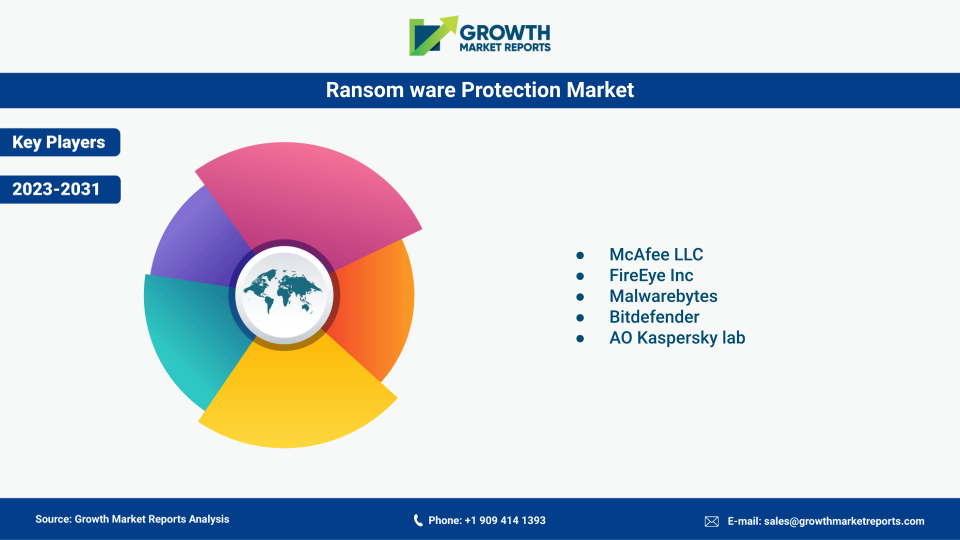
Key players competing in the ransom ware protection market include McAfee LLC; FireEye Inc; Malwarebytes; Bitdefender; AO Kaspersky lab.

Some of these players are targeting on business strategies such as mergers, acquisitions, partnerships, collaborations, capacity expansion, and product launches to increase their market shares.

  • In February 2021, AO Kaspersky lab launches its safer tomorrow platform with an intension to respond the queries of the population powered by neutral network and developed by branch of global advertising agency BBDO.

  • In December 2020, FireEye,Inc announces USD 400 million strategic investment by blackstone tacticals. Black stone joined hands with clear sky a security focused firm as a co-investor in the investment.

 Ransom ware Protection Market Key Players

Frequently Asked Questions

Key trends include the convergence of software and services into unified platforms, adoption of zero-trust security frameworks, integration with threat intelligence, and the rise of managed security services.

Major players include Symantec (Broadcom), McAfee, Sophos, Trend Micro, Palo Alto Networks, Cisco Systems, CrowdStrike, Bitdefender, Kaspersky, and FireEye (Trellix).

Challenges include the evolving nature of ransomware tactics, shortage of skilled cybersecurity professionals, high implementation costs, and integration issues among different security solutions.

AI and machine learning are used to detect anomalous behavior, predict threats, automate incident response, and enhance threat intelligence in modern ransomware protection solutions.

The most targeted sectors include BFSI (banking, financial services, and insurance), healthcare, government, IT and telecommunications, retail, and education.

Ransomware protection can be deployed on-premises or in the cloud. On-premises is preferred for strict data privacy needs, while cloud-based solutions offer scalability, flexibility, and easier management.

The market is segmented into software and services. Software includes endpoint protection, network security, email filtering, and data backup, while services cover managed security, incident response, and consulting.

North America is the largest market, followed by Europe and Asia Pacific. Asia Pacific is experiencing the fastest growth due to rapid digitalization and increasing cybersecurity investments.

Key growth drivers include the rising frequency and sophistication of ransomware attacks, increased digital transformation, stringent regulatory requirements, and the growing adoption of cloud-based solutions.

As of 2024, the global ransomware protection market is valued at USD 23.8 billion and is projected to reach USD 68.1 billion by 2033, growing at a CAGR of 15.4%.

Table Of Content

Chapter 1 Executive Summary
Chapter 2 Assumptions and Acronyms Used
Chapter 3 Research Methodology
Chapter 4 Ransom ware Protection Market Overview
   4.1 Introduction
      4.1.1 Market Taxonomy
      4.1.2 Market Definition
      4.1.3 Macro-Economic Factors Impacting the Market Growth
   4.2 Ransom ware Protection Market Dynamics
      4.2.1 Market Drivers
      4.2.2 Market Restraints
      4.2.3 Market Opportunity
   4.3 Ransom ware Protection Market - Supply Chain Analysis
      4.3.1 List of Key Suppliers
      4.3.2 List of Key Distributors
      4.3.3 List of Key Consumers
   4.4 Key Forces Shaping the Ransom ware Protection Market
      4.4.1 Bargaining Power of Suppliers
      4.4.2 Bargaining Power of Buyers
      4.4.3 Threat of Substitution
      4.4.4 Threat of New Entrants
      4.4.5 Competitive Rivalry
   4.5 Global Ransom ware Protection Market Size & Forecast, 2023-2032
      4.5.1 Ransom ware Protection Market Size and Y-o-Y Growth
      4.5.2 Ransom ware Protection Market Absolute $ Opportunity

Chapter 5 Global Ransom ware Protection Market Analysis and Forecast By Component
   5.1 Introduction
      5.1.1 Key Market Trends & Growth Opportunities By Component
      5.1.2 Basis Point Share (BPS) Analysis By Component
      5.1.3 Absolute $ Opportunity Assessment By Component
   5.2 Ransom ware Protection Market Size Forecast By Component
      5.2.1 Software
      5.2.2 Services
   5.3 Market Attractiveness Analysis By Component

Chapter 6 Global Ransom ware Protection Market Analysis and Forecast By Deployment Mode
   6.1 Introduction
      6.1.1 Key Market Trends & Growth Opportunities By Deployment Mode
      6.1.2 Basis Point Share (BPS) Analysis By Deployment Mode
      6.1.3 Absolute $ Opportunity Assessment By Deployment Mode
   6.2 Ransom ware Protection Market Size Forecast By Deployment Mode
      6.2.1 On-Premises
      6.2.2 Cloud
   6.3 Market Attractiveness Analysis By Deployment Mode

Chapter 7 Global Ransom ware Protection Market Analysis and Forecast By Organization Size
   7.1 Introduction
      7.1.1 Key Market Trends & Growth Opportunities By Organization Size
      7.1.2 Basis Point Share (BPS) Analysis By Organization Size
      7.1.3 Absolute $ Opportunity Assessment By Organization Size
   7.2 Ransom ware Protection Market Size Forecast By Organization Size
      7.2.1 Small and Medium Enterprises
      7.2.2 Large Enterprises
   7.3 Market Attractiveness Analysis By Organization Size

Chapter 8 Global Ransom ware Protection Market Analysis and Forecast By Application
   8.1 Introduction
      8.1.1 Key Market Trends & Growth Opportunities By Application
      8.1.2 Basis Point Share (BPS) Analysis By Application
      8.1.3 Absolute $ Opportunity Assessment By Application
   8.2 Ransom ware Protection Market Size Forecast By Application
      8.2.1 Network Protection
      8.2.2 Endpoint Protection
      8.2.3 Email Protection
      8.2.4 Web Protection
      8.2.5 Database Protection
      8.2.6 Others
   8.3 Market Attractiveness Analysis By Application

Chapter 9 Global Ransom ware Protection Market Analysis and Forecast By End-User
   9.1 Introduction
      9.1.1 Key Market Trends & Growth Opportunities By End-User
      9.1.2 Basis Point Share (BPS) Analysis By End-User
      9.1.3 Absolute $ Opportunity Assessment By End-User
   9.2 Ransom ware Protection Market Size Forecast By End-User
      9.2.1 BFSI
      9.2.2 Healthcare
      9.2.3 Government
      9.2.4 IT and Telecommunications
      9.2.5 Retail
      9.2.6 Education
      9.2.7 Others
   9.3 Market Attractiveness Analysis By End-User

Chapter 10 Global Ransom ware Protection Market Analysis and Forecast by Region
   10.1 Introduction
      10.1.1 Key Market Trends & Growth Opportunities By Region
      10.1.2 Basis Point Share (BPS) Analysis By Region
      10.1.3 Absolute $ Opportunity Assessment By Region
   10.2 Ransom ware Protection Market Size Forecast By Region
      10.2.1 North America
      10.2.2 Europe
      10.2.3 Asia Pacific
      10.2.4 Latin America
      10.2.5 Middle East & Africa (MEA)
   10.3 Market Attractiveness Analysis By Region

Chapter 11 Coronavirus Disease (COVID-19) Impact 
   11.1 Introduction 
   11.2 Current & Future Impact Analysis 
   11.3 Economic Impact Analysis 
   11.4 Government Policies 
   11.5 Investment Scenario

Chapter 12 North America Ransom ware Protection Analysis and Forecast
   12.1 Introduction
   12.2 North America Ransom ware Protection Market Size Forecast by Country
      12.2.1 U.S.
      12.2.2 Canada
   12.3 Basis Point Share (BPS) Analysis by Country
   12.4 Absolute $ Opportunity Assessment by Country
   12.5 Market Attractiveness Analysis by Country
   12.6 North America Ransom ware Protection Market Size Forecast By Component
      12.6.1 Software
      12.6.2 Services
   12.7 Basis Point Share (BPS) Analysis By Component 
   12.8 Absolute $ Opportunity Assessment By Component 
   12.9 Market Attractiveness Analysis By Component
   12.10 North America Ransom ware Protection Market Size Forecast By Deployment Mode
      12.10.1 On-Premises
      12.10.2 Cloud
   12.11 Basis Point Share (BPS) Analysis By Deployment Mode 
   12.12 Absolute $ Opportunity Assessment By Deployment Mode 
   12.13 Market Attractiveness Analysis By Deployment Mode
   12.14 North America Ransom ware Protection Market Size Forecast By Organization Size
      12.14.1 Small and Medium Enterprises
      12.14.2 Large Enterprises
   12.15 Basis Point Share (BPS) Analysis By Organization Size 
   12.16 Absolute $ Opportunity Assessment By Organization Size 
   12.17 Market Attractiveness Analysis By Organization Size
   12.18 North America Ransom ware Protection Market Size Forecast By Application
      12.18.1 Network Protection
      12.18.2 Endpoint Protection
      12.18.3 Email Protection
      12.18.4 Web Protection
      12.18.5 Database Protection
      12.18.6 Others
   12.19 Basis Point Share (BPS) Analysis By Application 
   12.20 Absolute $ Opportunity Assessment By Application 
   12.21 Market Attractiveness Analysis By Application
   12.22 North America Ransom ware Protection Market Size Forecast By End-User
      12.22.1 BFSI
      12.22.2 Healthcare
      12.22.3 Government
      12.22.4 IT and Telecommunications
      12.22.5 Retail
      12.22.6 Education
      12.22.7 Others
   12.23 Basis Point Share (BPS) Analysis By End-User 
   12.24 Absolute $ Opportunity Assessment By End-User 
   12.25 Market Attractiveness Analysis By End-User

Chapter 13 Europe Ransom ware Protection Analysis and Forecast
   13.1 Introduction
   13.2 Europe Ransom ware Protection Market Size Forecast by Country
      13.2.1 Germany
      13.2.2 France
      13.2.3 Italy
      13.2.4 U.K.
      13.2.5 Spain
      13.2.6 Russia
      13.2.7 Rest of Europe
   13.3 Basis Point Share (BPS) Analysis by Country
   13.4 Absolute $ Opportunity Assessment by Country
   13.5 Market Attractiveness Analysis by Country
   13.6 Europe Ransom ware Protection Market Size Forecast By Component
      13.6.1 Software
      13.6.2 Services
   13.7 Basis Point Share (BPS) Analysis By Component 
   13.8 Absolute $ Opportunity Assessment By Component 
   13.9 Market Attractiveness Analysis By Component
   13.10 Europe Ransom ware Protection Market Size Forecast By Deployment Mode
      13.10.1 On-Premises
      13.10.2 Cloud
   13.11 Basis Point Share (BPS) Analysis By Deployment Mode 
   13.12 Absolute $ Opportunity Assessment By Deployment Mode 
   13.13 Market Attractiveness Analysis By Deployment Mode
   13.14 Europe Ransom ware Protection Market Size Forecast By Organization Size
      13.14.1 Small and Medium Enterprises
      13.14.2 Large Enterprises
   13.15 Basis Point Share (BPS) Analysis By Organization Size 
   13.16 Absolute $ Opportunity Assessment By Organization Size 
   13.17 Market Attractiveness Analysis By Organization Size
   13.18 Europe Ransom ware Protection Market Size Forecast By Application
      13.18.1 Network Protection
      13.18.2 Endpoint Protection
      13.18.3 Email Protection
      13.18.4 Web Protection
      13.18.5 Database Protection
      13.18.6 Others
   13.19 Basis Point Share (BPS) Analysis By Application 
   13.20 Absolute $ Opportunity Assessment By Application 
   13.21 Market Attractiveness Analysis By Application
   13.22 Europe Ransom ware Protection Market Size Forecast By End-User
      13.22.1 BFSI
      13.22.2 Healthcare
      13.22.3 Government
      13.22.4 IT and Telecommunications
      13.22.5 Retail
      13.22.6 Education
      13.22.7 Others
   13.23 Basis Point Share (BPS) Analysis By End-User 
   13.24 Absolute $ Opportunity Assessment By End-User 
   13.25 Market Attractiveness Analysis By End-User

Chapter 14 Asia Pacific Ransom ware Protection Analysis and Forecast
   14.1 Introduction
   14.2 Asia Pacific Ransom ware Protection Market Size Forecast by Country
      14.2.1 China
      14.2.2 Japan
      14.2.3 South Korea
      14.2.4 India
      14.2.5 Australia
      14.2.6 South East Asia (SEA)
      14.2.7 Rest of Asia Pacific (APAC)
   14.3 Basis Point Share (BPS) Analysis by Country
   14.4 Absolute $ Opportunity Assessment by Country
   14.5 Market Attractiveness Analysis by Country
   14.6 Asia Pacific Ransom ware Protection Market Size Forecast By Component
      14.6.1 Software
      14.6.2 Services
   14.7 Basis Point Share (BPS) Analysis By Component 
   14.8 Absolute $ Opportunity Assessment By Component 
   14.9 Market Attractiveness Analysis By Component
   14.10 Asia Pacific Ransom ware Protection Market Size Forecast By Deployment Mode
      14.10.1 On-Premises
      14.10.2 Cloud
   14.11 Basis Point Share (BPS) Analysis By Deployment Mode 
   14.12 Absolute $ Opportunity Assessment By Deployment Mode 
   14.13 Market Attractiveness Analysis By Deployment Mode
   14.14 Asia Pacific Ransom ware Protection Market Size Forecast By Organization Size
      14.14.1 Small and Medium Enterprises
      14.14.2 Large Enterprises
   14.15 Basis Point Share (BPS) Analysis By Organization Size 
   14.16 Absolute $ Opportunity Assessment By Organization Size 
   14.17 Market Attractiveness Analysis By Organization Size
   14.18 Asia Pacific Ransom ware Protection Market Size Forecast By Application
      14.18.1 Network Protection
      14.18.2 Endpoint Protection
      14.18.3 Email Protection
      14.18.4 Web Protection
      14.18.5 Database Protection
      14.18.6 Others
   14.19 Basis Point Share (BPS) Analysis By Application 
   14.20 Absolute $ Opportunity Assessment By Application 
   14.21 Market Attractiveness Analysis By Application
   14.22 Asia Pacific Ransom ware Protection Market Size Forecast By End-User
      14.22.1 BFSI
      14.22.2 Healthcare
      14.22.3 Government
      14.22.4 IT and Telecommunications
      14.22.5 Retail
      14.22.6 Education
      14.22.7 Others
   14.23 Basis Point Share (BPS) Analysis By End-User 
   14.24 Absolute $ Opportunity Assessment By End-User 
   14.25 Market Attractiveness Analysis By End-User

Chapter 15 Latin America Ransom ware Protection Analysis and Forecast
   15.1 Introduction
   15.2 Latin America Ransom ware Protection Market Size Forecast by Country
      15.2.1 Brazil
      15.2.2 Mexico
      15.2.3 Rest of Latin America (LATAM)
   15.3 Basis Point Share (BPS) Analysis by Country
   15.4 Absolute $ Opportunity Assessment by Country
   15.5 Market Attractiveness Analysis by Country
   15.6 Latin America Ransom ware Protection Market Size Forecast By Component
      15.6.1 Software
      15.6.2 Services
   15.7 Basis Point Share (BPS) Analysis By Component 
   15.8 Absolute $ Opportunity Assessment By Component 
   15.9 Market Attractiveness Analysis By Component
   15.10 Latin America Ransom ware Protection Market Size Forecast By Deployment Mode
      15.10.1 On-Premises
      15.10.2 Cloud
   15.11 Basis Point Share (BPS) Analysis By Deployment Mode 
   15.12 Absolute $ Opportunity Assessment By Deployment Mode 
   15.13 Market Attractiveness Analysis By Deployment Mode
   15.14 Latin America Ransom ware Protection Market Size Forecast By Organization Size
      15.14.1 Small and Medium Enterprises
      15.14.2 Large Enterprises
   15.15 Basis Point Share (BPS) Analysis By Organization Size 
   15.16 Absolute $ Opportunity Assessment By Organization Size 
   15.17 Market Attractiveness Analysis By Organization Size
   15.18 Latin America Ransom ware Protection Market Size Forecast By Application
      15.18.1 Network Protection
      15.18.2 Endpoint Protection
      15.18.3 Email Protection
      15.18.4 Web Protection
      15.18.5 Database Protection
      15.18.6 Others
   15.19 Basis Point Share (BPS) Analysis By Application 
   15.20 Absolute $ Opportunity Assessment By Application 
   15.21 Market Attractiveness Analysis By Application
   15.22 Latin America Ransom ware Protection Market Size Forecast By End-User
      15.22.1 BFSI
      15.22.2 Healthcare
      15.22.3 Government
      15.22.4 IT and Telecommunications
      15.22.5 Retail
      15.22.6 Education
      15.22.7 Others
   15.23 Basis Point Share (BPS) Analysis By End-User 
   15.24 Absolute $ Opportunity Assessment By End-User 
   15.25 Market Attractiveness Analysis By End-User

Chapter 16 Middle East & Africa (MEA) Ransom ware Protection Analysis and Forecast
   16.1 Introduction
   16.2 Middle East & Africa (MEA) Ransom ware Protection Market Size Forecast by Country
      16.2.1 Saudi Arabia
      16.2.2 South Africa
      16.2.3 UAE
      16.2.4 Rest of Middle East & Africa (MEA)
   16.3 Basis Point Share (BPS) Analysis by Country
   16.4 Absolute $ Opportunity Assessment by Country
   16.5 Market Attractiveness Analysis by Country
   16.6 Middle East & Africa (MEA) Ransom ware Protection Market Size Forecast By Component
      16.6.1 Software
      16.6.2 Services
   16.7 Basis Point Share (BPS) Analysis By Component 
   16.8 Absolute $ Opportunity Assessment By Component 
   16.9 Market Attractiveness Analysis By Component
   16.10 Middle East & Africa (MEA) Ransom ware Protection Market Size Forecast By Deployment Mode
      16.10.1 On-Premises
      16.10.2 Cloud
   16.11 Basis Point Share (BPS) Analysis By Deployment Mode 
   16.12 Absolute $ Opportunity Assessment By Deployment Mode 
   16.13 Market Attractiveness Analysis By Deployment Mode
   16.14 Middle East & Africa (MEA) Ransom ware Protection Market Size Forecast By Organization Size
      16.14.1 Small and Medium Enterprises
      16.14.2 Large Enterprises
   16.15 Basis Point Share (BPS) Analysis By Organization Size 
   16.16 Absolute $ Opportunity Assessment By Organization Size 
   16.17 Market Attractiveness Analysis By Organization Size
   16.18 Middle East & Africa (MEA) Ransom ware Protection Market Size Forecast By Application
      16.18.1 Network Protection
      16.18.2 Endpoint Protection
      16.18.3 Email Protection
      16.18.4 Web Protection
      16.18.5 Database Protection
      16.18.6 Others
   16.19 Basis Point Share (BPS) Analysis By Application 
   16.20 Absolute $ Opportunity Assessment By Application 
   16.21 Market Attractiveness Analysis By Application
   16.22 Middle East & Africa (MEA) Ransom ware Protection Market Size Forecast By End-User
      16.22.1 BFSI
      16.22.2 Healthcare
      16.22.3 Government
      16.22.4 IT and Telecommunications
      16.22.5 Retail
      16.22.6 Education
      16.22.7 Others
   16.23 Basis Point Share (BPS) Analysis By End-User 
   16.24 Absolute $ Opportunity Assessment By End-User 
   16.25 Market Attractiveness Analysis By End-User

Chapter 17 Competition Landscape 
   17.1 Ransom ware Protection Market: Competitive Dashboard
   17.2 Global Ransom ware Protection Market: Market Share Analysis, 2023
   17.3 Company Profiles (Details – Overview, Financials, Developments, Strategy) 
      17.3.1 Symantec Corporation
McAfee LLC
Trend Micro Incorporated
Sophos Group plc
CrowdStrike Holdings, Inc.
FireEye, Inc.
Bitdefender LLC
Kaspersky Lab
Palo Alto Networks, Inc.
Cisco Systems, Inc.
Check Point Software Technologies Ltd.
Fortinet, Inc.
SentinelOne, Inc.
ESET, spol. s r.o.
Cybereason Inc.
Carbon Black (VMware, Inc.)
Barracuda Networks, Inc.
Acronis International GmbH
Malwarebytes Inc.
Zscaler, Inc.

Methodology

Our Clients

Microsoft
sinopec
Dassault Aviation
Deloitte
The John Holland Group
Nestle SA
FedEx Logistics
Pfizer