Radiofrequency Ablation Devices Market Research Report 2033

Radiofrequency Ablation Devices Market Research Report 2033

Segments - by Product Type (Disposable Devices, Capital Equipment, Reusable Devices), by Application (Cardiology, Oncology, Pain Management, Gynecology, Cosmetology, Others), by End-User (Hospitals, Ambulatory Surgical Centers, Specialty Clinics, Others)

https://growthmarketreports.com/raksha
Author : Raksha Sharma
https://growthmarketreports.com/Vaibhav
Fact-checked by : V. Chandola
https://growthmarketreports.com/Shruti
Editor : Shruti Bhat

Upcoming | Report ID :HC-3074 | 4.1 Rating | 95 Reviews | 282 Pages | Format : Docx PDF

Report Description


Radiofrequency Ablation Devices Market Outlook

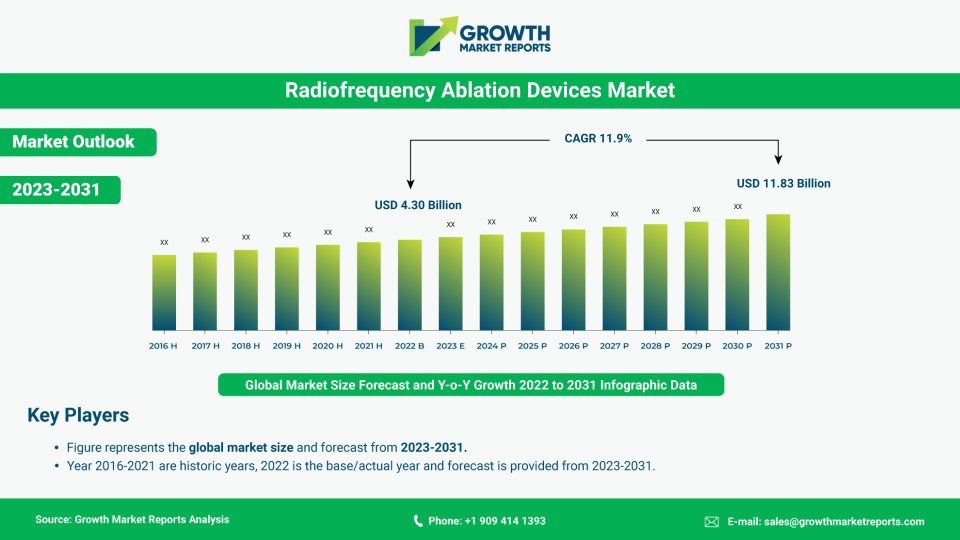
According to our latest research, the global Radiofrequency Ablation Devices market size reached USD 4.7 billion in 2024, reflecting robust momentum driven by increasing adoption across medical specialties. The market is projected to expand at a CAGR of 11.2% from 2025 to 2033, positioning it to achieve a value of USD 12.8 billion by 2033. This growth is underpinned by rising incidences of chronic diseases, technological advancements in minimally invasive procedures, and a growing preference for outpatient care. The radiofrequency ablation devices market is witnessing significant transformation, with innovation and clinical efficacy driving both procedural volumes and device adoption worldwide.

The primary growth factor propelling the radiofrequency ablation devices market is the escalating prevalence of chronic conditions such as cancer, cardiovascular diseases, and chronic pain disorders. As the global population ages and lifestyle-related diseases become more prevalent, the demand for minimally invasive treatment options has surged. Radiofrequency ablation (RFA) offers a less invasive alternative to traditional surgical procedures, enabling precise tissue destruction with reduced recovery times, minimal complications, and lower hospital stays. Healthcare providers are increasingly adopting RFA for its cost-effectiveness, improved patient outcomes, and versatility across a wide range of clinical applications, from oncology to cardiology and pain management. The growing body of clinical evidence supporting the safety and efficacy of RFA further cements its position as a preferred therapeutic modality, especially in regions with advanced healthcare infrastructure.

Technological advancements represent another vital catalyst for market expansion. The development of next-generation ablation devices featuring enhanced energy delivery, real-time imaging integration, temperature control, and automation has significantly improved procedural accuracy and safety. Innovations such as cooled-tip electrodes, multi-tined probes, and advanced feedback systems have broadened the scope of RFA, making it suitable for complex anatomical sites and larger lesion sizes. The integration of artificial intelligence and robotics in ablation procedures is also gaining traction, allowing for greater precision and reproducibility. These advancements not only drive adoption among healthcare professionals but also foster confidence among patients seeking minimally invasive alternatives to conventional surgery. As manufacturers continue to invest in research and development, the pipeline of novel devices and expanded indications is expected to further fuel market growth.

The shift towards outpatient and ambulatory care settings is reshaping the radiofrequency ablation devices market landscape. Healthcare systems worldwide are emphasizing cost containment and improved patient experiences, leading to a migration of procedures from inpatient to outpatient environments. RFA procedures, characterized by shorter recovery periods and minimal complications, are ideally suited for ambulatory surgical centers and specialty clinics. This trend is particularly pronounced in developed markets where reimbursement frameworks support minimally invasive interventions, and patients prioritize reduced downtime. The proliferation of ambulatory surgical centers, combined with increased training and awareness among healthcare practitioners, is accelerating the adoption of RFA across diverse therapeutic areas and geographies.

Electrophysiology (EP) Radiofrequency (RF) Ablation Catheter systems have become increasingly integral in the treatment of cardiac arrhythmias. These catheters are designed to deliver precise RF energy to specific areas of the heart tissue, effectively disrupting abnormal electrical pathways and restoring normal rhythm. The integration of advanced mapping and navigation technologies with EP RF ablation catheters has significantly enhanced procedural accuracy and safety, reducing the risk of complications and improving patient outcomes. As the prevalence of atrial fibrillation and other arrhythmias continues to rise, the demand for these specialized catheters is expected to grow, driving innovation and adoption in electrophysiology labs worldwide.

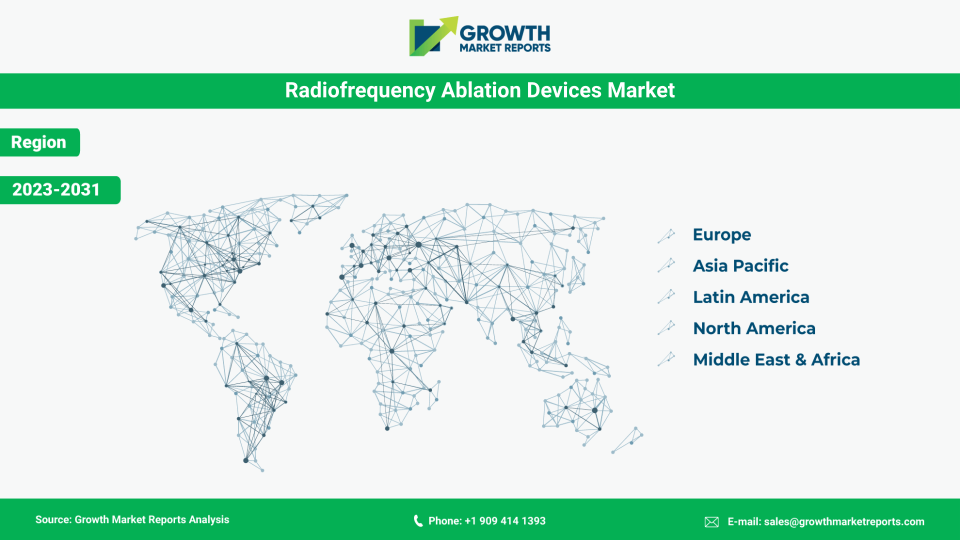
Regionally, North America commands the largest share of the global radiofrequency ablation devices market, attributed to robust healthcare infrastructure, high disease prevalence, and early adoption of advanced medical technologies. Europe follows closely, benefiting from favorable reimbursement policies and a strong focus on minimally invasive procedures. The Asia Pacific region, however, is anticipated to witness the fastest growth over the forecast period, driven by expanding healthcare access, rising disposable incomes, and increasing investments in healthcare modernization. Emerging economies in Latin America and the Middle East & Africa are also exhibiting promising growth trajectories, albeit from a lower base, as awareness and availability of RFA technologies increase.

Global Radiofrequency Ablation Devices Industry Outlook

Product Type Analysis

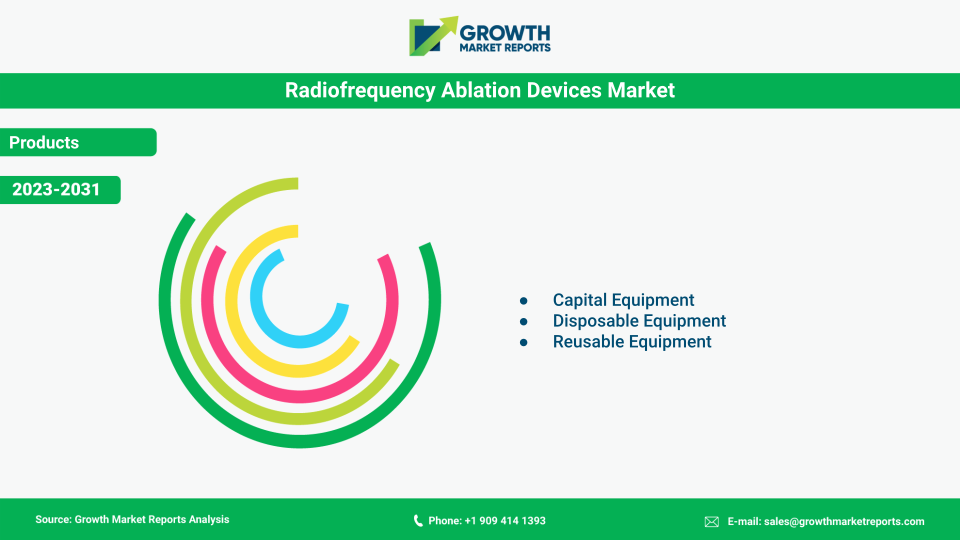
The radiofrequency ablation devices market by product type is segmented into disposable devices, capital equipment, and reusable devices. Disposable devices, such as single-use electrodes and probes, have witnessed significant uptake due to their role in minimizing cross-contamination risks and ensuring procedural sterility. Hospitals and surgical centers are increasingly favoring disposables as infection control becomes a top priority, particularly in the post-pandemic era. The convenience and reliability offered by disposable RFA devices are further bolstered by regulatory guidelines that promote single-use medical devices, especially in high-risk procedures. This trend is expected to continue, with disposable devices accounting for a substantial share of the market throughout the forecast period.

RF Energy-Based Tumor Ablation IC technologies have emerged as a transformative approach in oncology, offering a minimally invasive option for the treatment of solid tumors. These devices utilize RF energy to generate heat, causing targeted tumor cells to undergo necrosis while sparing surrounding healthy tissue. The precision and efficacy of RF energy-based tumor ablation have made it a preferred choice for patients who are not candidates for surgical resection or those seeking palliative care. With ongoing advancements in imaging guidance and combination therapies, the role of RF energy-based tumor ablation is expanding, providing new hope for improved cancer management and patient quality of life.

Capital equipment, comprising the core generators, power sources, and imaging platforms, forms the backbone of any RFA setup. Investment in advanced capital equipment is primarily driven by large hospitals and specialty clinics seeking to expand their procedural capabilities. Technological innovation in this segment has led to the development of compact, user-friendly, and multi-functional generators that support a wide array of applications. The integration of capital equipment with imaging modalities such as ultrasound or CT enhances procedural accuracy, reduces operator dependency, and improves patient outcomes. As healthcare institutions prioritize infrastructure modernization, the demand for state-of-the-art capital equipment is poised for steady growth.

Reusable devices, including electrodes and handpieces designed for multiple uses, offer cost advantages for high-volume centers. However, concerns regarding reprocessing, sterilization, and potential cross-infection have tempered their adoption in some regions. Despite these challenges, reusable devices remain popular in resource-constrained settings where cost containment is paramount. Manufacturers are responding by developing robust, easy-to-sterilize reusable devices with improved durability and traceability features. The balance between cost-effectiveness and infection control will continue to shape the dynamics of this segment, with regulatory oversight playing a crucial role in influencing purchasing decisions.

Uterine Fibroid Radiofrequency Ablation is gaining traction as a non-surgical treatment option for women suffering from symptomatic fibroids. This technique involves the use of RF energy to shrink fibroids by inducing localized thermal damage, leading to symptom relief and improved quality of life. Unlike traditional surgical methods, uterine fibroid RF ablation is performed on an outpatient basis, offering shorter recovery times and minimal complications. As awareness of this procedure grows, more gynecologists are incorporating it into their practice, driven by patient demand for less invasive alternatives to hysterectomy and myomectomy. The expanding application of RF ablation in gynecology underscores its versatility and potential to transform women's health care.

The interplay between disposable, capital equipment, and reusable devices is further complicated by evolving reimbursement policies and procurement strategies. Hospitals and ambulatory surgical centers are increasingly adopting a hybrid approach, leveraging the benefits of each product type based on procedural volume, patient demographics, and infection control protocols. Strategic partnerships between device manufacturers and healthcare providers are also emerging, with bundled offerings and value-based procurement models gaining traction. As the market matures, the focus will shift towards optimizing device utilization, minimizing total cost of ownership, and ensuring compliance with stringent quality and safety standards.

Report Scope

Attributes Details
Report Title Radiofrequency Ablation Devices Market Research Report 2033
By Product Type Disposable Devices, Capital Equipment, Reusable Devices
By Application Cardiology, Oncology, Pain Management, Gynecology, Cosmetology, Others
By End-User Hospitals, Ambulatory Surgical Centers, Specialty Clinics, Others
Regions Covered North America, Europe, APAC, Latin America, MEA
Base Year 2024
Historic Data 2018-2023
Forecast Period 2025-2033
Number of Pages 282
Number of Tables & Figures 344
Customization Available Yes, the report can be customized as per your need.

Application Analysis

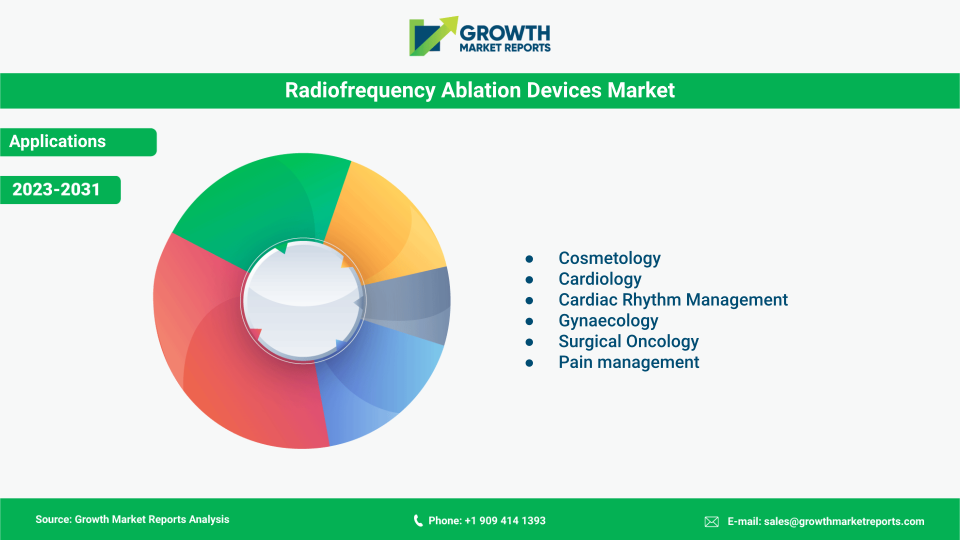
The application landscape of the radiofrequency ablation devices market is marked by its versatility across multiple therapeutic areas. In cardiology, RFA has become the gold standard for the treatment of cardiac arrhythmias, particularly atrial fibrillation and ventricular tachycardia. The increasing prevalence of these conditions, coupled with advancements in mapping and navigation technologies, has led to a surge in ablation procedures. Hospitals and electrophysiology labs are investing in specialized RFA systems capable of delivering precise energy to targeted cardiac tissues, minimizing collateral damage and improving long-term patient outcomes. The cardiology segment continues to command a significant share of the market, driven by continued innovation and growing procedural volumes.

Oncology represents another major application area, with RFA being widely used for the treatment of solid tumors in the liver, lungs, kidneys, and bones. The minimally invasive nature of RFA makes it an attractive option for patients who are not candidates for surgery or who seek palliative care. The oncology segment is benefiting from expanding indications, improved imaging guidance, and the development of combination therapies that integrate RFA with other modalities such as chemotherapy or immunotherapy. As cancer incidence rises globally and the demand for targeted, tissue-sparing interventions grows, the oncology application is expected to be a key driver of market growth.

Pain management is an emerging and rapidly growing application segment within the radiofrequency ablation devices market. RFA is increasingly used to treat chronic pain conditions such as facet joint pain, sacroiliac joint pain, and neuropathic pain syndromes. The opioid crisis and heightened awareness of the risks associated with long-term pharmacological therapies have accelerated the adoption of RFA as a safe and effective alternative. Pain management clinics and ambulatory surgical centers are integrating RFA into their treatment protocols, supported by favorable reimbursement and growing clinical evidence. The demand for non-pharmacological pain relief options is anticipated to sustain robust growth in this segment.

Other application areas include gynecology, where RFA is used for the treatment of uterine fibroids and endometrial ablation, and cosmetology, where it is employed for skin tightening, wrinkle reduction, and body contouring. The expansion of RFA into these non-traditional domains reflects its adaptability and the ongoing quest for minimally invasive solutions across medical and aesthetic fields. As new indications emerge and clinical guidelines evolve, the application spectrum of RFA devices is set to broaden further, creating new opportunities for manufacturers and healthcare providers alike.

End-User Analysis

Hospitals represent the largest end-user segment in the radiofrequency ablation devices market, accounting for a significant share of procedural volumes. The comprehensive infrastructure, skilled personnel, and access to advanced imaging and monitoring technologies make hospitals the preferred setting for complex RFA procedures, particularly in cardiology and oncology. Hospitals are also at the forefront of adopting new technologies, participating in clinical trials, and driving procedural innovation. The focus on quality assurance, infection control, and multidisciplinary care further reinforces the central role of hospitals in the RFA ecosystem.

Ambulatory surgical centers (ASCs) are rapidly gaining prominence as key end-users of radiofrequency ablation devices. The shift towards outpatient care, driven by cost containment, patient convenience, and advances in minimally invasive techniques, has positioned ASCs as attractive venues for RFA procedures. ASCs offer streamlined workflows, reduced overhead costs, and shorter patient turnaround times, making them ideal for high-volume, low-complexity interventions. The proliferation of ASCs, particularly in North America and Europe, is expected to drive substantial growth in device adoption and procedural volumes over the forecast period.

Specialty clinics, including pain management centers, dermatology clinics, and fertility centers, represent a dynamic and expanding end-user segment. These clinics often focus on specific therapeutic areas or patient populations, leveraging their expertise to deliver highly specialized RFA procedures. The growing demand for targeted, outpatient interventions and the increasing availability of portable, user-friendly RFA devices are fueling adoption among specialty clinics. As clinical guidelines evolve and reimbursement frameworks support broader indications, specialty clinics are poised to play an increasingly important role in the market.

Other end-users, such as academic medical centers, research institutions, and mobile healthcare units, contribute to the diversity of the radiofrequency ablation devices market. These entities are often involved in clinical research, device evaluation, and training, supporting innovation and knowledge dissemination. The interplay between different end-user segments underscores the importance of tailored solutions, flexible procurement models, and ongoing education to ensure optimal device utilization and patient outcomes across diverse healthcare settings.

Opportunities & Threats

The radiofrequency ablation devices market is rife with opportunities, particularly as the global healthcare landscape shifts towards minimally invasive and outpatient procedures. The ongoing expansion of indications for RFA, coupled with technological advancements such as real-time imaging, temperature-controlled ablation, and integration with robotic systems, presents significant growth prospects for manufacturers and healthcare providers. Emerging applications in pain management, gynecology, and cosmetology are opening new revenue streams, while the increasing adoption of RFA in developing regions offers untapped market potential. Strategic collaborations, investments in research and development, and a focus on training and education are key to capitalizing on these opportunities and driving sustained market expansion.

Another major opportunity lies in the development of next-generation devices that address current limitations and unmet clinical needs. Innovations aimed at enhancing procedural safety, reducing procedure times, and improving patient comfort are in high demand. The integration of artificial intelligence, data analytics, and remote monitoring capabilities can further differentiate products and support personalized medicine approaches. Additionally, as healthcare systems increasingly prioritize value-based care, manufacturers that offer comprehensive solutions encompassing devices, software, and support services are well-positioned to capture market share. The growing emphasis on patient-centric care and the need for cost-effective, scalable solutions in both developed and emerging markets underscore the vast potential for continued innovation and market penetration.

Despite the promising outlook, the radiofrequency ablation devices market faces several restraining factors. Regulatory hurdles, including stringent approval processes and post-market surveillance requirements, can delay product launches and increase development costs. Reimbursement challenges, particularly in emerging markets, may limit patient access and slow adoption rates. Additionally, concerns regarding device-related complications, such as thermal injury or incomplete ablation, necessitate ongoing vigilance and robust post-market monitoring. Intense competition and pricing pressures further complicate the landscape, requiring manufacturers to balance innovation with cost containment. Addressing these challenges will be critical to sustaining long-term growth and ensuring patient safety and satisfaction.

Regional Outlook

North America remains the dominant region in the radiofrequency ablation devices market, accounting for approximately USD 2.1 billion in 2024, or nearly 45% of global revenue. The region's leadership is attributed to its well-established healthcare infrastructure, high disease prevalence, and rapid adoption of advanced medical technologies. The presence of leading device manufacturers, favorable reimbursement policies, and a robust clinical research ecosystem further reinforce North America's market position. The United States, in particular, is a major contributor, with high procedural volumes in cardiology, oncology, and pain management. The region is expected to maintain steady growth, supported by ongoing innovation and expanding indications for RFA.

Europe is the second-largest market, with a value of approximately USD 1.2 billion in 2024. The region benefits from a strong focus on minimally invasive procedures, comprehensive healthcare coverage, and favorable regulatory frameworks. Key markets such as Germany, France, and the United Kingdom are driving adoption, supported by active clinical research and widespread availability of RFA technologies. The region is projected to grow at a CAGR of 10.5% through 2033, as healthcare systems continue to prioritize cost-effective, patient-centered care. The expansion of outpatient and ambulatory care settings is further accelerating procedural volumes and device utilization across Europe.

The Asia Pacific region is poised for the fastest growth, with a market value of USD 900 million in 2024 and a projected CAGR of 13.7% over the forecast period. Rapid healthcare modernization, rising disposable incomes, and increasing awareness of minimally invasive treatments are driving demand for RFA devices across China, India, Japan, and Southeast Asia. Government initiatives to expand healthcare access and invest in medical technology infrastructure are further supporting market growth. Latin America and the Middle East & Africa, while smaller in absolute terms, are exhibiting promising growth trajectories as awareness, training, and device availability improve. Collectively, these regions are expected to contribute significantly to global market expansion over the next decade.

Radiofrequency Ablation Devices Market Statistics

Competitor Outlook

The radiofrequency ablation devices market is characterized by intense competition and rapid technological innovation. Leading players are focused on expanding their product portfolios, enhancing procedural safety and efficacy, and differentiating their offerings through advanced features and integrated solutions. The competitive landscape is marked by a mix of established multinational corporations and innovative startups, each vying for market share through strategic partnerships, mergers and acquisitions, and investments in research and development. The emphasis on clinical evidence, regulatory compliance, and post-market surveillance is shaping product development and commercialization strategies, with manufacturers seeking to address evolving clinical needs and regulatory requirements.

Product innovation remains a key competitive differentiator, with companies investing heavily in the development of next-generation devices that offer improved energy delivery, real-time feedback, and greater procedural flexibility. The integration of artificial intelligence, robotics, and data analytics is enabling more precise and reproducible outcomes, while the focus on user-friendly interfaces and compact designs is expanding adoption across diverse healthcare settings. Strategic collaborations with healthcare providers, academic institutions, and technology partners are facilitating the development and commercialization of innovative solutions, supporting market penetration and customer loyalty.

Pricing pressures and the need for cost-effective solutions are driving manufacturers to adopt value-based pricing models, bundled offerings, and flexible procurement strategies. The growing importance of training, education, and post-sale support is also shaping competitive dynamics, with companies investing in comprehensive service offerings to differentiate themselves and build long-term relationships with customers. As the market continues to evolve, the ability to anticipate and respond to changing clinical, regulatory, and economic conditions will be critical to sustaining competitive advantage.

Major companies operating in the radiofrequency ablation devices market include Medtronic plc, Boston Scientific Corporation, Abbott Laboratories, Johnson & Johnson (Biosense Webster), AngioDynamics Inc., Stryker Corporation, Smith & Nephew plc, Hologic Inc., and Merit Medical Systems Inc. Medtronic is a global leader, offering a comprehensive portfolio of RFA devices for cardiology, oncology, and pain management applications. Boston Scientific and Abbott are prominent players in the cardiac ablation segment, leveraging their expertise in electrophysiology and advanced mapping technologies. Johnson & Johnson, through its Biosense Webster division, is renowned for its innovative ablation catheters and navigation systems. AngioDynamics and Stryker are key players in oncology and pain management, while Smith & Nephew and Hologic have established strong positions in gynecology and specialty applications. These companies are continually investing in research, clinical studies, and geographic expansion to maintain their leadership positions and capitalize on emerging opportunities in the global radiofrequency ablation devices market.

Key Players

  • Medtronic
  • Boston Scientific Corporation
  • Abbott Laboratories
  • Stryker Corporation
  • Johnson & Johnson (Biosense Webster)
  • AngioDynamics
  • AtriCure, Inc.
  • Smith & Nephew plc
  • CONMED Corporation
  • Olympus Corporation
  • Hologic, Inc.
  • St. Jude Medical (now part of Abbott)
  • Terumo Corporation
  • Merit Medical Systems
  • Baylis Medical (now part of Boston Scientific)
  • Biotronik SE & Co. KG
  • CardioFocus, Inc.
  • MicroPort Scientific Corporation
  • MedSphere International
  • Inomed Medizintechnik GmbH
Radiofrequency Ablation Devices Market Overview

Segments

The Radiofrequency Ablation Devices market has been segmented on the basis of

Product Type

  • Disposable Devices
  • Capital Equipment
  • Reusable Devices

Application

  • Cardiology
  • Oncology
  • Pain Management
  • Gynecology
  • Cosmetology
  • Others

End-User

  • Hospitals
  • Ambulatory Surgical Centers
  • Specialty Clinics
  • Others

Competitive Landscape

Key players in the radiofrequency ablation devices market include AtriCure, Inc.; St. Jude Medical, Inc.; Boston Scientific Corporation; Halyard Health, Inc.; Stryker Corporation; C. R. Bard, Inc.; Hologic, Inc.; AngioDynamics, Inc.; Medtronic Plc.; and Smith & Nephew.

These players have constantly engaged in several market development strategies including collaborations, agreements, mergers & acquisitions, production capacity expansion, new product launches, and partnerships to increase their market share.
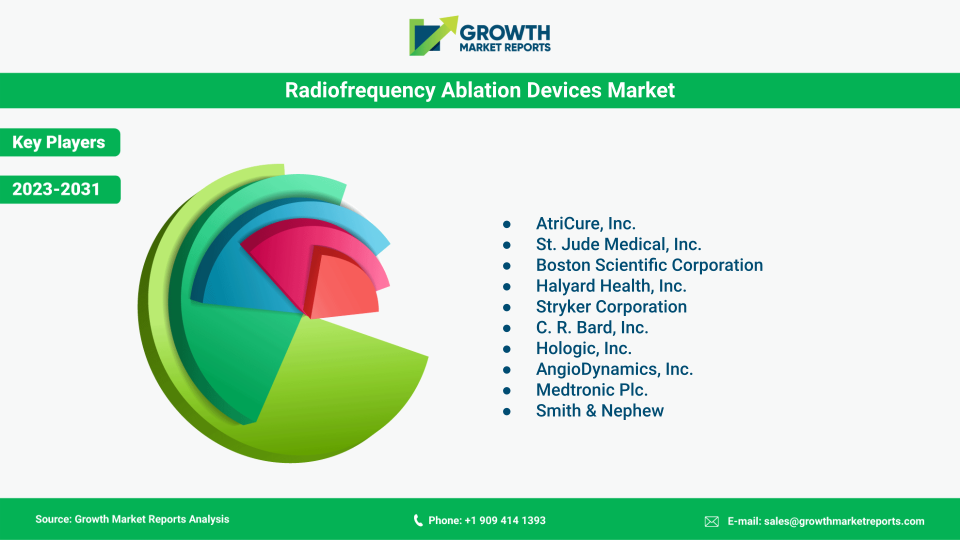

Radiofrequency Ablation Devices Market Key Players

Frequently Asked Questions

Technological advancements such as real-time imaging, temperature control, AI integration, and robotics are improving procedural accuracy, safety, and expanding the range of clinical applications.

Major players include Medtronic, Boston Scientific Corporation, Abbott Laboratories, Johnson & Johnson (Biosense Webster), AngioDynamics, Stryker Corporation, Smith & Nephew, Hologic, and Merit Medical Systems.

Challenges include regulatory hurdles, reimbursement issues, concerns over device-related complications, and intense competition leading to pricing pressures.

Key end-users include hospitals, ambulatory surgical centers (ASCs), specialty clinics, academic medical centers, and research institutions.

The market offers disposable devices, capital equipment (such as generators and imaging platforms), and reusable devices.

Radiofrequency ablation devices are widely used in cardiology (for arrhythmias), oncology (for solid tumors), pain management, gynecology (for uterine fibroids), and cosmetology (for skin tightening and body contouring).

North America leads the market, followed by Europe. The Asia Pacific region is expected to witness the fastest growth due to healthcare modernization and rising disposable incomes.

Key growth drivers include the rising prevalence of chronic diseases, technological advancements in minimally invasive procedures, and a shift towards outpatient care.

The market is expected to grow at a CAGR of 11.2% from 2025 to 2033, reaching USD 12.8 billion by 2033.

As of 2024, the global radiofrequency ablation devices market is valued at USD 4.7 billion.

Table Of Content

Chapter 1 Executive Summary
Chapter 2 Assumptions and Acronyms Used
Chapter 3 Research Methodology
Chapter 4 Radiofrequency Ablation Devices Market Overview
   4.1 Introduction
      4.1.1 Market Taxonomy
      4.1.2 Market Definition
      4.1.3 Macro-Economic Factors Impacting the Market Growth
   4.2 Radiofrequency Ablation Devices Market Dynamics
      4.2.1 Market Drivers
      4.2.2 Market Restraints
      4.2.3 Market Opportunity
   4.3 Radiofrequency Ablation Devices Market - Supply Chain Analysis
      4.3.1 List of Key Suppliers
      4.3.2 List of Key Distributors
      4.3.3 List of Key Consumers
   4.4 Key Forces Shaping the Radiofrequency Ablation Devices Market
      4.4.1 Bargaining Power of Suppliers
      4.4.2 Bargaining Power of Buyers
      4.4.3 Threat of Substitution
      4.4.4 Threat of New Entrants
      4.4.5 Competitive Rivalry
   4.5 Global Radiofrequency Ablation Devices Market Size & Forecast, 2023-2032
      4.5.1 Radiofrequency Ablation Devices Market Size and Y-o-Y Growth
      4.5.2 Radiofrequency Ablation Devices Market Absolute $ Opportunity

Chapter 5 Global Radiofrequency Ablation Devices Market Analysis and Forecast By Product Type
   5.1 Introduction
      5.1.1 Key Market Trends & Growth Opportunities By Product Type
      5.1.2 Basis Point Share (BPS) Analysis By Product Type
      5.1.3 Absolute $ Opportunity Assessment By Product Type
   5.2 Radiofrequency Ablation Devices Market Size Forecast By Product Type
      5.2.1 Disposable Devices
      5.2.2 Capital Equipment
      5.2.3 Reusable Devices
   5.3 Market Attractiveness Analysis By Product Type

Chapter 6 Global Radiofrequency Ablation Devices Market Analysis and Forecast By Application
   6.1 Introduction
      6.1.1 Key Market Trends & Growth Opportunities By Application
      6.1.2 Basis Point Share (BPS) Analysis By Application
      6.1.3 Absolute $ Opportunity Assessment By Application
   6.2 Radiofrequency Ablation Devices Market Size Forecast By Application
      6.2.1 Cardiology
      6.2.2 Oncology
      6.2.3 Pain Management
      6.2.4 Gynecology
      6.2.5 Cosmetology
      6.2.6 Others
   6.3 Market Attractiveness Analysis By Application

Chapter 7 Global Radiofrequency Ablation Devices Market Analysis and Forecast By End-User
   7.1 Introduction
      7.1.1 Key Market Trends & Growth Opportunities By End-User
      7.1.2 Basis Point Share (BPS) Analysis By End-User
      7.1.3 Absolute $ Opportunity Assessment By End-User
   7.2 Radiofrequency Ablation Devices Market Size Forecast By End-User
      7.2.1 Hospitals
      7.2.2 Ambulatory Surgical Centers
      7.2.3 Specialty Clinics
      7.2.4 Others
   7.3 Market Attractiveness Analysis By End-User

Chapter 8 Global Radiofrequency Ablation Devices Market Analysis and Forecast by Region
   8.1 Introduction
      8.1.1 Key Market Trends & Growth Opportunities By Region
      8.1.2 Basis Point Share (BPS) Analysis By Region
      8.1.3 Absolute $ Opportunity Assessment By Region
   8.2 Radiofrequency Ablation Devices Market Size Forecast By Region
      8.2.1 North America
      8.2.2 Europe
      8.2.3 Asia Pacific
      8.2.4 Latin America
      8.2.5 Middle East & Africa (MEA)
   8.3 Market Attractiveness Analysis By Region

Chapter 9 Coronavirus Disease (COVID-19) Impact 
   9.1 Introduction 
   9.2 Current & Future Impact Analysis 
   9.3 Economic Impact Analysis 
   9.4 Government Policies 
   9.5 Investment Scenario

Chapter 10 North America Radiofrequency Ablation Devices Analysis and Forecast
   10.1 Introduction
   10.2 North America Radiofrequency Ablation Devices Market Size Forecast by Country
      10.2.1 U.S.
      10.2.2 Canada
   10.3 Basis Point Share (BPS) Analysis by Country
   10.4 Absolute $ Opportunity Assessment by Country
   10.5 Market Attractiveness Analysis by Country
   10.6 North America Radiofrequency Ablation Devices Market Size Forecast By Product Type
      10.6.1 Disposable Devices
      10.6.2 Capital Equipment
      10.6.3 Reusable Devices
   10.7 Basis Point Share (BPS) Analysis By Product Type 
   10.8 Absolute $ Opportunity Assessment By Product Type 
   10.9 Market Attractiveness Analysis By Product Type
   10.10 North America Radiofrequency Ablation Devices Market Size Forecast By Application
      10.10.1 Cardiology
      10.10.2 Oncology
      10.10.3 Pain Management
      10.10.4 Gynecology
      10.10.5 Cosmetology
      10.10.6 Others
   10.11 Basis Point Share (BPS) Analysis By Application 
   10.12 Absolute $ Opportunity Assessment By Application 
   10.13 Market Attractiveness Analysis By Application
   10.14 North America Radiofrequency Ablation Devices Market Size Forecast By End-User
      10.14.1 Hospitals
      10.14.2 Ambulatory Surgical Centers
      10.14.3 Specialty Clinics
      10.14.4 Others
   10.15 Basis Point Share (BPS) Analysis By End-User 
   10.16 Absolute $ Opportunity Assessment By End-User 
   10.17 Market Attractiveness Analysis By End-User

Chapter 11 Europe Radiofrequency Ablation Devices Analysis and Forecast
   11.1 Introduction
   11.2 Europe Radiofrequency Ablation Devices Market Size Forecast by Country
      11.2.1 Germany
      11.2.2 France
      11.2.3 Italy
      11.2.4 U.K.
      11.2.5 Spain
      11.2.6 Russia
      11.2.7 Rest of Europe
   11.3 Basis Point Share (BPS) Analysis by Country
   11.4 Absolute $ Opportunity Assessment by Country
   11.5 Market Attractiveness Analysis by Country
   11.6 Europe Radiofrequency Ablation Devices Market Size Forecast By Product Type
      11.6.1 Disposable Devices
      11.6.2 Capital Equipment
      11.6.3 Reusable Devices
   11.7 Basis Point Share (BPS) Analysis By Product Type 
   11.8 Absolute $ Opportunity Assessment By Product Type 
   11.9 Market Attractiveness Analysis By Product Type
   11.10 Europe Radiofrequency Ablation Devices Market Size Forecast By Application
      11.10.1 Cardiology
      11.10.2 Oncology
      11.10.3 Pain Management
      11.10.4 Gynecology
      11.10.5 Cosmetology
      11.10.6 Others
   11.11 Basis Point Share (BPS) Analysis By Application 
   11.12 Absolute $ Opportunity Assessment By Application 
   11.13 Market Attractiveness Analysis By Application
   11.14 Europe Radiofrequency Ablation Devices Market Size Forecast By End-User
      11.14.1 Hospitals
      11.14.2 Ambulatory Surgical Centers
      11.14.3 Specialty Clinics
      11.14.4 Others
   11.15 Basis Point Share (BPS) Analysis By End-User 
   11.16 Absolute $ Opportunity Assessment By End-User 
   11.17 Market Attractiveness Analysis By End-User

Chapter 12 Asia Pacific Radiofrequency Ablation Devices Analysis and Forecast
   12.1 Introduction
   12.2 Asia Pacific Radiofrequency Ablation Devices Market Size Forecast by Country
      12.2.1 China
      12.2.2 Japan
      12.2.3 South Korea
      12.2.4 India
      12.2.5 Australia
      12.2.6 South East Asia (SEA)
      12.2.7 Rest of Asia Pacific (APAC)
   12.3 Basis Point Share (BPS) Analysis by Country
   12.4 Absolute $ Opportunity Assessment by Country
   12.5 Market Attractiveness Analysis by Country
   12.6 Asia Pacific Radiofrequency Ablation Devices Market Size Forecast By Product Type
      12.6.1 Disposable Devices
      12.6.2 Capital Equipment
      12.6.3 Reusable Devices
   12.7 Basis Point Share (BPS) Analysis By Product Type 
   12.8 Absolute $ Opportunity Assessment By Product Type 
   12.9 Market Attractiveness Analysis By Product Type
   12.10 Asia Pacific Radiofrequency Ablation Devices Market Size Forecast By Application
      12.10.1 Cardiology
      12.10.2 Oncology
      12.10.3 Pain Management
      12.10.4 Gynecology
      12.10.5 Cosmetology
      12.10.6 Others
   12.11 Basis Point Share (BPS) Analysis By Application 
   12.12 Absolute $ Opportunity Assessment By Application 
   12.13 Market Attractiveness Analysis By Application
   12.14 Asia Pacific Radiofrequency Ablation Devices Market Size Forecast By End-User
      12.14.1 Hospitals
      12.14.2 Ambulatory Surgical Centers
      12.14.3 Specialty Clinics
      12.14.4 Others
   12.15 Basis Point Share (BPS) Analysis By End-User 
   12.16 Absolute $ Opportunity Assessment By End-User 
   12.17 Market Attractiveness Analysis By End-User

Chapter 13 Latin America Radiofrequency Ablation Devices Analysis and Forecast
   13.1 Introduction
   13.2 Latin America Radiofrequency Ablation Devices Market Size Forecast by Country
      13.2.1 Brazil
      13.2.2 Mexico
      13.2.3 Rest of Latin America (LATAM)
   13.3 Basis Point Share (BPS) Analysis by Country
   13.4 Absolute $ Opportunity Assessment by Country
   13.5 Market Attractiveness Analysis by Country
   13.6 Latin America Radiofrequency Ablation Devices Market Size Forecast By Product Type
      13.6.1 Disposable Devices
      13.6.2 Capital Equipment
      13.6.3 Reusable Devices
   13.7 Basis Point Share (BPS) Analysis By Product Type 
   13.8 Absolute $ Opportunity Assessment By Product Type 
   13.9 Market Attractiveness Analysis By Product Type
   13.10 Latin America Radiofrequency Ablation Devices Market Size Forecast By Application
      13.10.1 Cardiology
      13.10.2 Oncology
      13.10.3 Pain Management
      13.10.4 Gynecology
      13.10.5 Cosmetology
      13.10.6 Others
   13.11 Basis Point Share (BPS) Analysis By Application 
   13.12 Absolute $ Opportunity Assessment By Application 
   13.13 Market Attractiveness Analysis By Application
   13.14 Latin America Radiofrequency Ablation Devices Market Size Forecast By End-User
      13.14.1 Hospitals
      13.14.2 Ambulatory Surgical Centers
      13.14.3 Specialty Clinics
      13.14.4 Others
   13.15 Basis Point Share (BPS) Analysis By End-User 
   13.16 Absolute $ Opportunity Assessment By End-User 
   13.17 Market Attractiveness Analysis By End-User

Chapter 14 Middle East & Africa (MEA) Radiofrequency Ablation Devices Analysis and Forecast
   14.1 Introduction
   14.2 Middle East & Africa (MEA) Radiofrequency Ablation Devices Market Size Forecast by Country
      14.2.1 Saudi Arabia
      14.2.2 South Africa
      14.2.3 UAE
      14.2.4 Rest of Middle East & Africa (MEA)
   14.3 Basis Point Share (BPS) Analysis by Country
   14.4 Absolute $ Opportunity Assessment by Country
   14.5 Market Attractiveness Analysis by Country
   14.6 Middle East & Africa (MEA) Radiofrequency Ablation Devices Market Size Forecast By Product Type
      14.6.1 Disposable Devices
      14.6.2 Capital Equipment
      14.6.3 Reusable Devices
   14.7 Basis Point Share (BPS) Analysis By Product Type 
   14.8 Absolute $ Opportunity Assessment By Product Type 
   14.9 Market Attractiveness Analysis By Product Type
   14.10 Middle East & Africa (MEA) Radiofrequency Ablation Devices Market Size Forecast By Application
      14.10.1 Cardiology
      14.10.2 Oncology
      14.10.3 Pain Management
      14.10.4 Gynecology
      14.10.5 Cosmetology
      14.10.6 Others
   14.11 Basis Point Share (BPS) Analysis By Application 
   14.12 Absolute $ Opportunity Assessment By Application 
   14.13 Market Attractiveness Analysis By Application
   14.14 Middle East & Africa (MEA) Radiofrequency Ablation Devices Market Size Forecast By End-User
      14.14.1 Hospitals
      14.14.2 Ambulatory Surgical Centers
      14.14.3 Specialty Clinics
      14.14.4 Others
   14.15 Basis Point Share (BPS) Analysis By End-User 
   14.16 Absolute $ Opportunity Assessment By End-User 
   14.17 Market Attractiveness Analysis By End-User

Chapter 15 Competition Landscape 
   15.1 Radiofrequency Ablation Devices Market: Competitive Dashboard
   15.2 Global Radiofrequency Ablation Devices Market: Market Share Analysis, 2023
   15.3 Company Profiles (Details – Overview, Financials, Developments, Strategy) 
      15.3.1 Medtronic
Boston Scientific Corporation
Abbott Laboratories
Stryker Corporation
Johnson & Johnson (Biosense Webster)
AngioDynamics
AtriCure, Inc.
Smith & Nephew plc
CONMED Corporation
Olympus Corporation
Hologic, Inc.
St. Jude Medical (now part of Abbott)
Terumo Corporation
Merit Medical Systems
Baylis Medical (now part of Boston Scientific)
Biotronik SE & Co. KG
CardioFocus, Inc.
MicroPort Scientific Corporation
MedSphere International
Inomed Medizintechnik GmbH

Methodology

Our Clients

FedEx Logistics
General Mills
Siemens Healthcare
Deloitte
sinopec
General Electric
Dassault Aviation
Pfizer