Quality Management Software Market Research Report 2033

Quality Management Software Market Research Report 2033

Segments - by Solution (Document Control, Non-Conformances/Corrective & Preventive, Audit Management, Change Management, Supplier Quality Management, Training Management, Others), by Deployment Mode (On-Premises, Cloud-Based), by Organization Size (Small & Medium Enterprises, Large Enterprises), by Industry Vertical (Manufacturing, Healthcare, IT & Telecom, Consumer Goods, Aerospace & Defense, Automotive, Food & Beverages, Others)

https://growthmarketreports.com/Raksha
Author : Raksha Sharma
https://growthmarketreports.com/Vaibhav
Fact-checked by : V. Chandola
https://growthmarketreports.com/Shruti
Editor : Shruti Bhat

Upcoming | Report ID :ICT-SE-2975 | 4.8 Rating | 97 Reviews | 250 Pages | Format : Docx PDF

Report Description


Quality Management Software Market Outlook

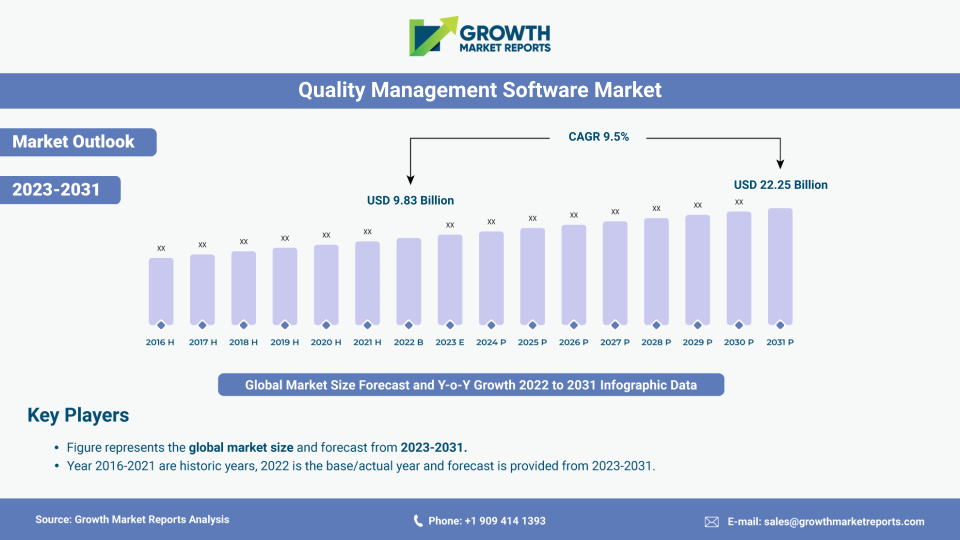
According to our latest research, the global Quality Management Software (QMS) market size reached USD 11.2 billion in 2024, driven by increasing regulatory requirements and a growing emphasis on operational excellence across industries. The market is expected to expand at a robust CAGR of 9.4% from 2025 to 2033, with the forecasted market size projected to reach USD 25.3 billion by 2033. This growth is primarily attributed to heightened demand for automated quality processes, digital transformation initiatives, and the proliferation of cloud-based solutions, as businesses worldwide seek to enhance product quality, reduce risk, and ensure compliance in an increasingly competitive landscape.

A significant growth factor for the Quality Management Software market is the intensification of regulatory scrutiny across multiple sectors, such as healthcare, automotive, food and beverages, and aerospace. Organizations are under mounting pressure to comply with complex and evolving global standards, including ISO 9001, FDA regulations, and other industry-specific guidelines. This regulatory landscape compels businesses to invest in robust QMS platforms that streamline compliance management, automate documentation, and facilitate real-time monitoring of quality processes. The ability of QMS solutions to centralize data, provide audit trails, and generate compliance reports has made them indispensable tools for mitigating risks related to non-compliance, product recalls, and reputational damage. Consequently, the adoption of quality management software is becoming a strategic imperative for organizations aiming to maintain market credibility and customer trust.

Another key driver propelling the Quality Management Software market is the rapid digitalization and automation of business processes. As organizations strive to improve operational efficiency, reduce manual errors, and accelerate time-to-market, the integration of QMS with emerging technologies such as artificial intelligence, machine learning, and the Internet of Things (IoT) is gaining momentum. These advancements enable predictive analytics, real-time quality monitoring, and proactive issue resolution, which are critical for maintaining high standards of product and service quality. Moreover, the shift towards cloud-based QMS platforms offers scalability, remote accessibility, and lower upfront costs, making them particularly attractive to small and medium-sized enterprises (SMEs) that seek to compete with larger counterparts. The convergence of digital transformation and quality management is expected to further fuel market growth in the coming years.

The increasing focus on customer-centricity and continuous improvement is also shaping the evolution of the Quality Management Software market. Companies are recognizing that robust quality management practices not only ensure compliance but also drive customer satisfaction and loyalty. Advanced QMS platforms provide comprehensive tools for tracking customer feedback, managing corrective and preventive actions, and fostering a culture of continuous improvement. By leveraging data-driven insights, organizations can identify root causes of quality issues, optimize processes, and enhance product offerings. This strategic approach to quality management is particularly vital in highly competitive industries, where differentiation based on quality can significantly impact market share and profitability.

Corrective and Preventive Action (CAPA) Management is a crucial aspect of quality management that focuses on identifying and addressing the root causes of non-conformances to prevent their recurrence. In the context of Quality Management Software, CAPA modules are designed to streamline the process of documenting, analyzing, and resolving quality issues. By implementing effective CAPA strategies, organizations can enhance their ability to maintain compliance with regulatory standards, improve operational efficiency, and foster a culture of continuous improvement. The integration of CAPA processes with advanced analytics and automation tools further empowers businesses to proactively manage risks and ensure the delivery of high-quality products and services.

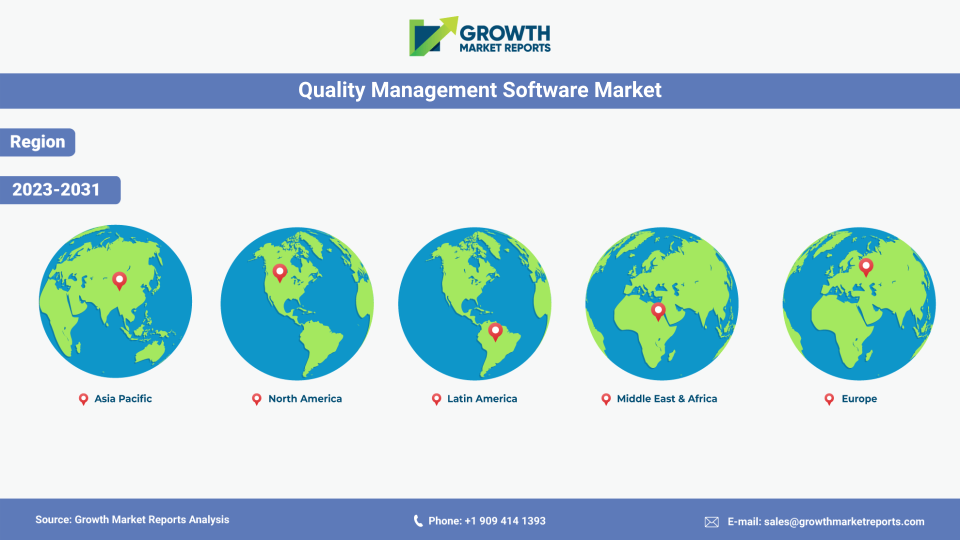
From a regional perspective, North America continues to dominate the Quality Management Software market, accounting for the largest revenue share in 2024. This leadership position is underpinned by the presence of technologically advanced industries, stringent regulatory frameworks, and early adoption of digital solutions. However, the Asia Pacific region is witnessing the fastest growth, propelled by rapid industrialization, expanding manufacturing sectors, and increasing awareness of quality standards. Europe also holds a substantial share, driven by robust regulatory compliance requirements and a strong focus on operational excellence. Latin America and the Middle East & Africa are emerging as promising markets, supported by ongoing investments in infrastructure and quality initiatives. The global landscape is characterized by diverse adoption patterns, with each region presenting unique opportunities and challenges for market participants.

Global Quality Management Software Industry Outlook

Solution Analysis

The Solution segment of the Quality Management Software market is broad, encompassing document control, non-conformances/corrective & preventive actions (CAPA), audit management, change management, supplier quality management, training management, and other specialized solutions. Document control remains a foundational element, as organizations must manage vast repositories of policies, procedures, and records to ensure compliance and operational consistency. Modern QMS platforms offer advanced document control capabilities, such as versioning, automated approvals, and secure access controls, facilitating seamless collaboration and reducing the risk of outdated or unauthorized documents being used in critical processes. The adoption of document control solutions is particularly pronounced in regulated industries like healthcare and pharmaceuticals, where documentation errors can have severe consequences.

Non-conformances and CAPA modules are equally vital, enabling organizations to systematically identify, investigate, and resolve quality issues. These solutions support root cause analysis, corrective action planning, and preventive measures, fostering a culture of continuous improvement. The integration of analytics and workflow automation further enhances the effectiveness of CAPA processes, allowing organizations to track trends, monitor effectiveness, and prevent recurrence of issues. Audit management solutions are gaining traction as well, given the increasing frequency and complexity of internal and external audits. QMS platforms streamline audit planning, execution, and reporting, ensuring that organizations are always audit-ready and can demonstrate compliance with relevant standards.

Change management is another critical component, particularly in dynamic industries where frequent updates to processes, products, or regulations are the norm. QMS platforms provide structured workflows for managing change requests, assessing impacts, obtaining approvals, and communicating changes across the organization. Supplier quality management solutions are seeing rising demand as supply chains become more global and complex. These modules enable organizations to assess supplier performance, manage supplier audits, and ensure that quality standards are upheld throughout the supply chain. Training management solutions round out the portfolio, helping organizations track employee competencies, manage certifications, and ensure that staff are adequately trained to perform their roles in compliance with quality requirements.

In addition to these core solutions, the market is witnessing the emergence of specialized modules tailored to industry-specific needs, such as risk management, customer complaint management, and environmental health and safety (EHS) management. The modular nature of modern QMS platforms allows organizations to customize their deployments based on unique requirements, ensuring scalability and flexibility. The growing trend towards integrated QMS suites, which combine multiple functionalities within a unified platform, is expected to drive further adoption, as organizations seek to eliminate silos and achieve end-to-end visibility into their quality processes.

Construction Quality Management Software is becoming increasingly vital in the construction industry, where maintaining high standards of quality and safety is paramount. These software solutions provide comprehensive tools for managing project documentation, tracking quality metrics, and ensuring compliance with industry regulations. By leveraging Construction Quality Management Software, companies can improve project outcomes, reduce rework, and enhance collaboration among stakeholders. The ability to integrate these solutions with other construction management tools, such as Building Information Modeling (BIM) and project management platforms, further enhances their value, enabling seamless data exchange and real-time decision-making. As the construction industry continues to evolve, the adoption of quality management software is expected to play a key role in driving efficiency and competitiveness.

Overall, the Solution segment is characterized by continuous innovation, with vendors investing in advanced technologies such as artificial intelligence, machine learning, and predictive analytics to enhance the capabilities of their offerings. The ability to deliver actionable insights, automate routine tasks, and support proactive quality management is becoming a key differentiator in the market. As organizations increasingly recognize the strategic value of quality management, demand for comprehensive, configurable, and user-friendly QMS solutions is expected to remain strong throughout the forecast period.

Report Scope

Attributes Details
Report Title Quality Management Software Market Research Report 2033
By Solution Document Control, Non-Conformances/Corrective & Preventive, Audit Management, Change Management, Supplier Quality Management, Training Management, Others
By Deployment Mode On-Premises, Cloud-Based
By Organization Size Small & Medium Enterprises, Large Enterprises
By Industry Vertical Manufacturing, Healthcare, IT & Telecom, Consumer Goods, Aerospace & Defense, Automotive, Food & Beverages, Others
Regions Covered North America, Europe, APAC, Latin America, MEA
Base Year 2024
Historic Data 2018-2023
Forecast Period 2025-2033
Number of Pages 250
Number of Tables & Figures 395
Customization Available Yes, the report can be customized as per your need.

Deployment Mode Analysis

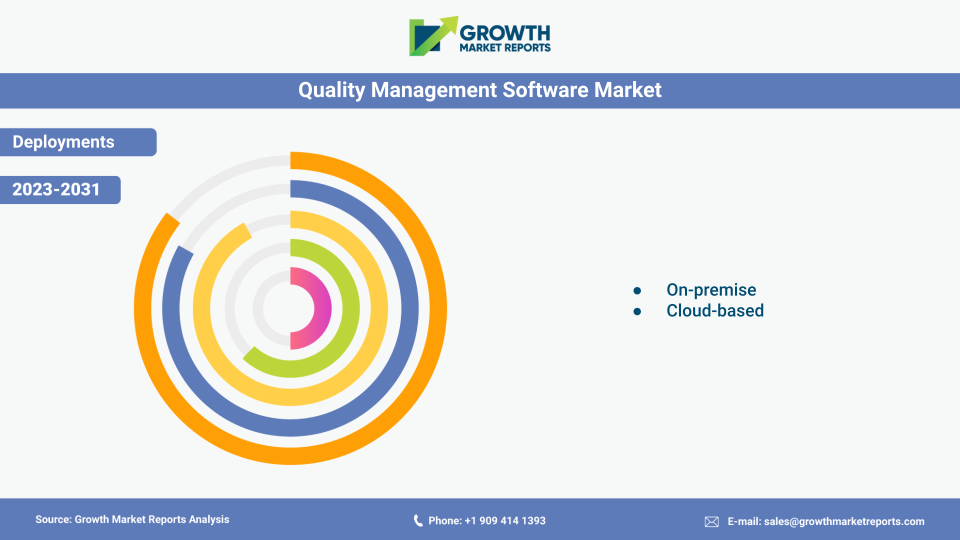
The Deployment Mode segment of the Quality Management Software market is primarily divided into on-premises and cloud-based solutions, each offering distinct advantages and challenges. On-premises QMS solutions have traditionally been favored by large enterprises and organizations operating in highly regulated sectors, where data security, customization, and control are paramount. These deployments allow for deep integration with existing IT infrastructure and offer organizations the ability to tailor the software to their specific workflows and compliance requirements. However, on-premises solutions often entail significant upfront investments in hardware, software, and IT resources, as well as ongoing maintenance and upgrade costs, which can be prohibitive for smaller organizations.

In recent years, cloud-based QMS solutions have gained significant traction, driven by the need for flexibility, scalability, and cost efficiency. Cloud deployments eliminate the need for extensive IT infrastructure, enabling organizations to rapidly implement and scale their quality management initiatives. The subscription-based pricing model of cloud solutions makes them accessible to small and medium-sized enterprises, democratizing access to advanced quality management capabilities. Cloud-based QMS platforms also facilitate remote access, collaboration, and real-time data sharing, which are increasingly important in todayÂ’s distributed and globalized business environments. The COVID-19 pandemic further accelerated the shift towards cloud solutions, as organizations sought to support remote work and ensure business continuity.

Security and compliance remain critical considerations in the choice of deployment mode. While cloud providers have made significant investments in data security, encryption, and regulatory compliance, some organizations continue to prefer on-premises deployments for sensitive data and mission-critical applications. Hybrid deployment models are emerging as a popular option, allowing organizations to leverage the benefits of both on-premises and cloud solutions. This approach enables businesses to retain control over sensitive data while taking advantage of the scalability and flexibility offered by the cloud for less critical functions.

The trend towards cloud-based QMS is expected to intensify over the forecast period, driven by ongoing advancements in cloud technology, growing acceptance of cloud solutions, and the need for rapid innovation. Vendors are increasingly offering multi-tenant, SaaS-based QMS platforms that can be quickly deployed and easily updated, reducing the burden on internal IT teams. The ability to integrate QMS with other cloud-based enterprise applications, such as ERP and CRM systems, further enhances the value proposition of cloud deployments.

In summary, the Deployment Mode segment is evolving in response to changing business needs, technological advancements, and regulatory requirements. Organizations are carefully evaluating their options based on factors such as cost, scalability, security, and integration capabilities. As the market matures, cloud-based QMS solutions are expected to capture a growing share, while on-premises and hybrid models will continue to serve organizations with specialized requirements.

Organization Size Analysis

The Organization Size segment of the Quality Management Software market distinguishes between small & medium enterprises (SMEs) and large enterprises, each with unique needs, challenges, and adoption patterns. Large enterprises have historically been the primary adopters of QMS solutions, driven by the scale and complexity of their operations, stringent regulatory requirements, and the need for comprehensive quality management frameworks. These organizations typically require highly customizable, integrated QMS platforms capable of supporting multiple business units, geographies, and regulatory environments. The ability to centralize quality data, standardize processes, and generate enterprise-wide insights is critical for large enterprises seeking to drive operational excellence and maintain competitive advantage.

Small and medium-sized enterprises, on the other hand, are increasingly recognizing the value of quality management software in enhancing efficiency, reducing costs, and meeting customer expectations. The advent of cloud-based, modular QMS solutions has lowered the barriers to adoption for SMEs, enabling them to implement quality management practices without significant upfront investment or IT overhead. Vendors are tailoring their offerings to address the specific needs of SMEs, such as ease of use, rapid deployment, and scalability. This democratization of quality management is leveling the playing field, allowing smaller organizations to compete with larger counterparts on the basis of quality and compliance.

The adoption of QMS by SMEs is being further driven by increasing regulatory scrutiny, customer demands for quality assurance, and the need to differentiate in crowded markets. Many SMEs operate in supply chains where compliance with quality standards is a prerequisite for doing business with larger partners. QMS solutions help these organizations streamline documentation, automate quality processes, and demonstrate compliance, thereby enhancing their credibility and market access. Training management and supplier quality management modules are particularly popular among SMEs, as they address critical pain points related to workforce competency and supply chain risk.

Large enterprises continue to invest in advanced QMS functionalities, such as predictive analytics, integration with enterprise resource planning (ERP) systems, and support for global operations. These organizations are also exploring the use of artificial intelligence and machine learning to drive continuous improvement and proactive quality management. The scale and complexity of large enterprises necessitate robust, scalable QMS platforms capable of handling high volumes of data and supporting complex workflows. Customization, integration, and support for multiple languages and regulatory environments are key considerations for this segment.

Overall, the Organization Size segment reflects the diverse needs and priorities of businesses across the spectrum. As vendors continue to innovate and expand their offerings, both SMEs and large enterprises are poised to benefit from enhanced quality management capabilities. The convergence of affordability, scalability, and advanced functionality is expected to drive widespread adoption of QMS solutions across organizations of all sizes, contributing to sustained market growth.

Industry Vertical Analysis

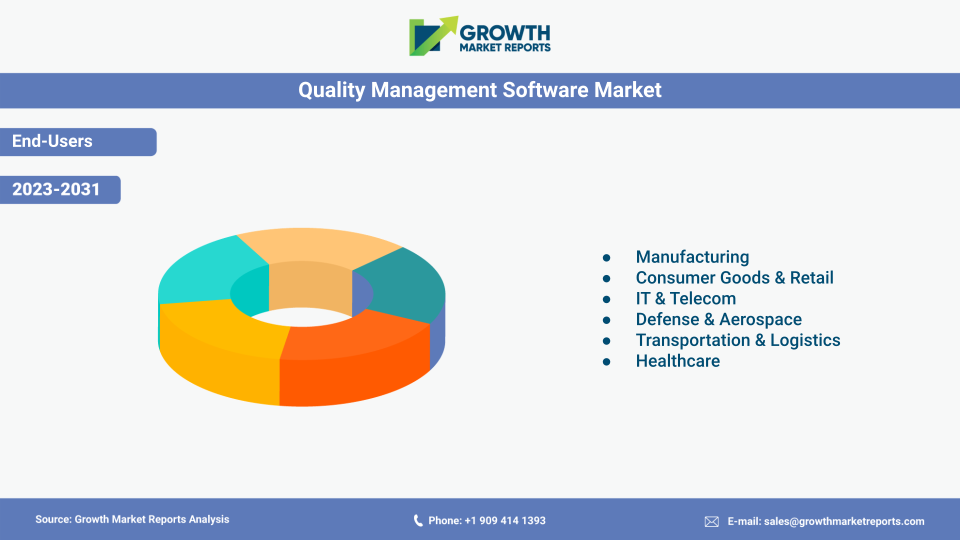
The Industry Vertical segment of the Quality Management Software market encompasses a wide range of sectors, including manufacturing, healthcare, IT & telecom, consumer goods, aerospace & defense, automotive, food & beverages, and others. Manufacturing remains the largest contributor to QMS adoption, driven by the need to maintain high product quality, comply with industry standards, and optimize production processes. Manufacturers leverage QMS platforms to manage documentation, track non-conformances, conduct audits, and ensure supplier quality, all of which are critical for maintaining operational efficiency and minimizing the risk of product recalls or defects. The integration of QMS with manufacturing execution systems (MES) and IoT devices is enabling real-time quality monitoring and data-driven decision-making.

The healthcare sector is another major adopter of QMS solutions, given the stringent regulatory requirements imposed by authorities such as the FDA, EMA, and ISO. Healthcare organizations use QMS platforms to manage clinical documentation, track corrective actions, ensure staff training, and maintain compliance with Good Manufacturing Practices (GMP) and other standards. The ability to centralize quality data, automate reporting, and facilitate audits is particularly valuable in this highly regulated environment. The ongoing digital transformation of healthcare, including the adoption of electronic health records (EHR) and telemedicine, is further driving demand for integrated QMS solutions.

In the IT & telecom sector, QMS adoption is motivated by the need to ensure service quality, manage risk, and comply with industry frameworks such as ISO/IEC 20000 and ITIL. These organizations use QMS platforms to standardize processes, track incidents, and manage change, all of which contribute to improved service delivery and customer satisfaction. The consumer goods industry relies on QMS solutions to manage product quality, ensure regulatory compliance, and respond to changing consumer preferences. Rapid product cycles and global supply chains make quality management a critical success factor in this sector.

Aerospace & defense and automotive industries are characterized by complex supply chains, rigorous quality standards, and high stakes in terms of safety and compliance. QMS platforms play a vital role in managing supplier quality, conducting audits, and ensuring traceability throughout the product lifecycle. The food & beverages sector is also a significant adopter, driven by the need to comply with food safety regulations, manage recalls, and maintain brand reputation. QMS solutions help these organizations track quality metrics, manage incidents, and ensure that products meet stringent safety and quality standards.

Other verticals, such as energy, pharmaceuticals, and logistics, are increasingly investing in QMS platforms to address industry-specific challenges and regulatory requirements. The versatility and configurability of modern QMS solutions enable organizations across diverse sectors to tailor their deployments to unique needs. As quality management becomes a strategic priority across industries, the demand for industry-specific QMS functionalities is expected to grow, driving further innovation and market expansion.

Opportunities & Threats

The Quality Management Software market presents numerous opportunities for growth and innovation. One of the most significant opportunities lies in the integration of advanced technologies such as artificial intelligence, machine learning, and big data analytics into QMS platforms. These technologies enable organizations to move beyond reactive quality management towards predictive and prescriptive approaches, identifying potential issues before they escalate and recommending optimal corrective actions. The ability to harness real-time data from connected devices and systems opens up new possibilities for proactive quality monitoring, continuous improvement, and data-driven decision-making. Vendors that successfully incorporate these capabilities into their offerings are well-positioned to capture a larger share of the market and deliver greater value to customers.

Another major opportunity is the expansion of QMS adoption among small and medium-sized enterprises, particularly in emerging markets. As cloud-based solutions become more affordable and accessible, SMEs are increasingly able to implement quality management practices that were previously out of reach. This democratization of quality management has the potential to drive significant market growth, as millions of SMEs worldwide seek to enhance their competitiveness, meet regulatory requirements, and build customer trust. Vendors that offer modular, scalable, and user-friendly QMS solutions tailored to the needs of SMEs are likely to benefit from this trend. Additionally, the growing focus on supply chain quality management, driven by globalization and the need for greater transparency, presents new opportunities for QMS vendors to offer solutions that address end-to-end quality across complex supply networks.

Despite these opportunities, the Quality Management Software market faces several restraining factors, chief among them being the complexity and cost of implementation, particularly for large-scale or highly customized deployments. Organizations may encounter challenges related to data migration, integration with existing systems, and change management, all of which can prolong implementation timelines and increase costs. Resistance to change among employees, lack of internal expertise, and concerns about data security—especially in cloud deployments—can further hinder adoption. Vendors must address these concerns by offering comprehensive support, robust security features, and clear value propositions to ensure successful implementation and maximize customer satisfaction.

Regional Outlook

North America continues to lead the Quality Management Software market, accounting for the largest regional share with revenue of approximately USD 4.2 billion in 2024. This dominance is driven by the presence of mature industries, a strong regulatory environment, and early adoption of digital technologies. The United States, in particular, is home to numerous large enterprises and innovative QMS vendors, contributing to a vibrant and competitive market landscape. The region's focus on operational excellence, risk management, and continuous improvement further fuels demand for advanced QMS solutions. As organizations in North America continue to invest in digital transformation initiatives, the market is expected to maintain steady growth throughout the forecast period.

Europe represents the second-largest market, with a size of USD 2.9 billion in 2024, supported by stringent regulatory requirements and a strong emphasis on quality and sustainability. Countries such as Germany, the United Kingdom, and France are at the forefront of QMS adoption, particularly in sectors such as manufacturing, automotive, and healthcare. The European market is characterized by a high degree of standardization, widespread adoption of ISO certifications, and a focus on environmental and social governance (ESG) factors. The region is projected to grow at a CAGR of 8.7% from 2025 to 2033, driven by ongoing investments in automation, digitalization, and quality improvement initiatives.

The Asia Pacific region is the fastest-growing market for Quality Management Software, with a size of USD 2.1 billion in 2024 and a projected CAGR of 11.2% through 2033. Rapid industrialization, expanding manufacturing sectors, and increasing awareness of quality standards are key drivers of growth in countries such as China, India, Japan, and South Korea. The region is experiencing a surge in demand for cloud-based QMS solutions, as organizations seek to modernize their operations and compete on a global scale. Latin America and the Middle East & Africa, although smaller in market size, are emerging as promising regions, with growing investments in infrastructure, regulatory compliance, and quality improvement. Collectively, these regions account for the remaining market share, with a combined size of USD 2.0 billion in 2024, and are expected to contribute to overall market expansion as adoption rates increase.

Quality Management Software Market Statistics

Competitor Outlook

The Quality Management Software market is characterized by intense competition, with a mix of established players, emerging vendors, and niche specialists vying for market share. Leading companies differentiate themselves through comprehensive product portfolios, advanced technological capabilities, and deep industry expertise. The competitive landscape is shaped by ongoing innovation, strategic partnerships, mergers and acquisitions, and a relentless focus on customer needs. Vendors are investing heavily in research and development to enhance the functionality, usability, and scalability of their QMS platforms, with a particular emphasis on cloud-based solutions, artificial intelligence, and integration with other enterprise applications.

Market leaders are expanding their offerings to address the evolving needs of customers, providing end-to-end quality management suites that cover the entire quality lifecycle, from document control and CAPA to supplier management and analytics. The trend towards integrated, modular platforms is gaining traction, as organizations seek to eliminate silos, streamline processes, and achieve holistic visibility into their quality operations. Customization, configurability, and user experience are becoming key differentiators, as organizations demand solutions that can be tailored to their unique requirements and easily adopted by users at all levels.

Emerging players and niche vendors are carving out market niches by focusing on specific industries, functionalities, or deployment models. For example, some vendors specialize in QMS solutions for highly regulated sectors such as healthcare or aerospace, offering industry-specific features and compliance tools. Others are targeting SMEs with affordable, easy-to-use cloud-based platforms that can be rapidly deployed and scaled. Strategic partnerships with technology providers, system integrators, and consulting firms are enabling vendors to extend their reach, enhance their offerings, and deliver greater value to customers.

The competitive landscape is also influenced by ongoing consolidation, as larger players acquire smaller firms to expand their product portfolios, enter new markets, or gain access to innovative technologies. This trend is expected to continue as vendors seek to strengthen their positions and respond to the evolving demands of customers. The ability to deliver comprehensive, integrated, and future-proof QMS solutions will be critical for success in this dynamic and rapidly evolving market.

Major companies operating in the Quality Management Software market include MasterControl Inc., SAP SE, Sparta Systems (a Honeywell company), IQVIA, Veeva Systems, Dassault Systèmes, Oracle Corporation, Siemens AG, MetricStream Inc., and Pilgrim Quality Solutions. MasterControl is renowned for its robust QMS platform tailored to the life sciences sector, offering advanced document control, training management, and compliance tools. SAP SE leverages its enterprise software expertise to deliver integrated QMS solutions that seamlessly connect with ERP and other business applications. Sparta Systems, now a part of Honeywell, provides industry-leading QMS platforms for regulated industries, with a strong focus on automation and analytics.

IQVIA and Veeva Systems are prominent players in the healthcare and life sciences sectors, offering cloud-based QMS platforms that support compliance, process optimization, and data-driven decision-making. Dassault Systèmes and Siemens AG bring deep expertise in manufacturing and engineering, offering QMS solutions that integrate with product lifecycle management (PLM) and manufacturing execution systems (MES). Oracle Corporation and MetricStream Inc. offer comprehensive, scalable QMS platforms that cater to a wide range of industries and organizational sizes. Pilgrim Quality Solutions is recognized for its flexible, modular QMS offerings that address the unique needs of highly regulated industries.

These companies are continually innovating to stay ahead in the competitive landscape, investing in new technologies, expanding their global reach, and enhancing customer support. Strategic acquisitions, partnerships, and product launches are common strategies employed to strengthen market positions and address emerging customer needs. As the market continues to evolve, the ability to deliver integrated, user-friendly, and technologically advanced QMS solutions will remain a key determinant of success.

Key Players

  • SAP SE
  • Siemens AG
  • Honeywell International Inc.
  • Dassault Systèmes SE
  • MasterControl Inc.
  • Sparta Systems (a Honeywell company)
  • IQVIA Holdings Inc.
  • Oracle Corporation
  • Veeva Systems Inc.
  • Arena Solutions (a PTC company)
  • Pilgrim Quality Solutions (now part of IQVIA)
  • AssurX Inc.
  • EtQ LLC
  • MetricStream Inc.
  • Intelex Technologies ULC
  • Ideagen PLC
  • Cority Software Inc.
  • Greenlight Guru
  • Qualio
  • ComplianceQuest Inc.
Quality Management Software Market Overview

Segments

The Quality Management Software market has been segmented on the basis of

Solution

  • Document Control
  • Non-Conformances/Corrective & Preventive
  • Audit Management
  • Change Management
  • Supplier Quality Management
  • Training Management
  • Others

Deployment Mode

  • On-Premises
  • Cloud-Based

Organization Size

  • Small & Medium Enterprises
  • Large Enterprises

Industry Vertical

  • Manufacturing
  • Healthcare
  • IT & Telecom
  • Consumer Goods
  • Aerospace & Defense
  • Automotive
  • Food & Beverages
  • Others

Competitive Landscape

Key players competing in the global quality management software market are Plex Systems, Inc.; Unipoint Software, Inc.; Siemens AG; EtQ Management Consultants, Inc.; Dassault Systemes SE; Arena Solutions, Inc.; Biovia Corp. (Dassault Systemes SE); Cority Software Inc.; Enablon (Wolters Kluwer N.V.); Iqms, Inc.; MasterControl, Inc.; MetricStream, Inc.; Microsoft Corp.; Oracle Corp.; Pilgrim Quality Solution, Inc.; QT10 Software; SAP SE; Sparta Systems Inc.; and Verse Solutions, Inc.

Companies are focusing on business strategies such as partnerships, collaborations, and merger & acquisitions to expand their market share. Furthermore, key players are also engaging to expand their capacity to leverage their market position.

In December 2020, Honeywell International Inc., a producer of automotive and aerospace industry-specific solutions, has agreed to buy Sparta Systems Inc. to extend its software and life science capabilities.

In August 2020, MasterControl, Inc. introduced a new platform called MasterControl Manufacturing Excellence that aimed at improving manufacturing operations by increasing efficiency and quality.
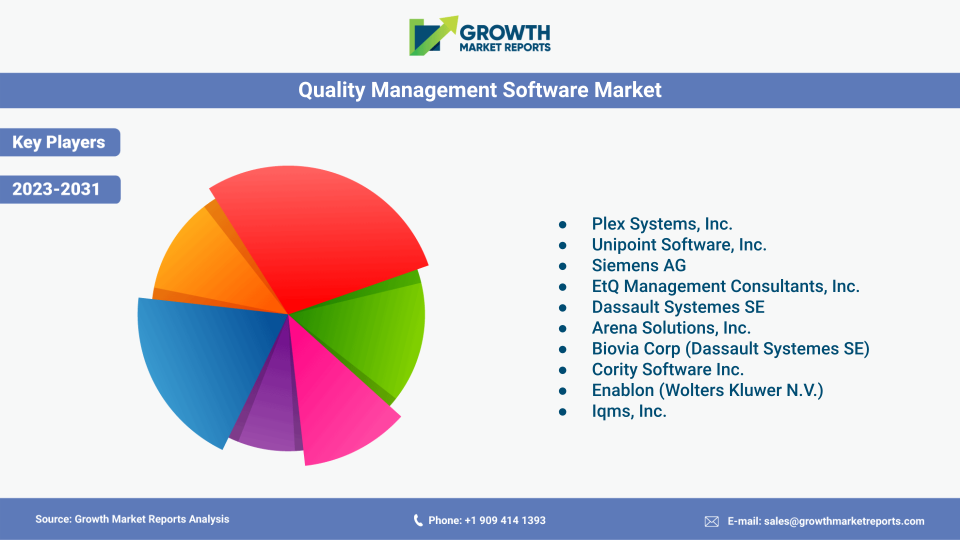

Global Quality Management Software Market Key Players

Frequently Asked Questions

AI, machine learning, and predictive analytics are being integrated into QMS platforms to enable predictive quality management, real-time monitoring, proactive issue resolution, and data-driven decision-making.

Challenges include the complexity and cost of implementation, data migration and integration issues, resistance to change, lack of internal expertise, and concerns over data security, particularly with cloud deployments.

Growth is driven by increasing regulatory scrutiny, digital transformation, automation, the adoption of cloud-based solutions, and a focus on customer-centricity and continuous improvement.

Key players include SAP SE, Siemens AG, Honeywell International Inc., Dassault Systèmes, MasterControl Inc., Sparta Systems, IQVIA, Oracle Corporation, Veeva Systems, Arena Solutions, Pilgrim Quality Solutions, AssurX Inc., EtQ LLC, MetricStream Inc., Intelex Technologies, Ideagen PLC, Cority Software, Greenlight Guru, Qualio, and ComplianceQuest.

North America leads the QMS market, followed by Europe and the Asia Pacific. North America benefits from mature industries and strong regulatory frameworks, while Asia Pacific is the fastest-growing region due to rapid industrialization.

Core QMS solutions include document control, non-conformances/corrective & preventive actions (CAPA), audit management, change management, supplier quality management, and training management, with additional specialized modules for risk and complaint management.

QMS solutions are available in on-premises and cloud-based deployment modes. Cloud-based QMS is gaining traction due to its scalability, flexibility, and lower upfront costs, especially among SMEs.

Key industries adopting QMS include manufacturing, healthcare, IT & telecom, consumer goods, aerospace & defense, automotive, and food & beverages, each with unique compliance and quality requirements.

The QMS market is expected to grow at a CAGR of 9.4% from 2025 to 2033, with the market size forecasted to reach USD 25.3 billion by 2033.

As of 2024, the global Quality Management Software (QMS) market size reached USD 11.2 billion, driven by increasing regulatory requirements and a focus on operational excellence across industries.

Table Of Content

Chapter 1 Executive Summary
Chapter 2 Assumptions and Acronyms Used
Chapter 3 Research Methodology
Chapter 4 Quality Management Software Market Overview
   4.1 Introduction
      4.1.1 Market Taxonomy
      4.1.2 Market Definition
      4.1.3 Macro-Economic Factors Impacting the Market Growth
   4.2 Quality Management Software Market Dynamics
      4.2.1 Market Drivers
      4.2.2 Market Restraints
      4.2.3 Market Opportunity
   4.3 Quality Management Software Market - Supply Chain Analysis
      4.3.1 List of Key Suppliers
      4.3.2 List of Key Distributors
      4.3.3 List of Key Consumers
   4.4 Key Forces Shaping the Quality Management Software Market
      4.4.1 Bargaining Power of Suppliers
      4.4.2 Bargaining Power of Buyers
      4.4.3 Threat of Substitution
      4.4.4 Threat of New Entrants
      4.4.5 Competitive Rivalry
   4.5 Global Quality Management Software Market Size & Forecast, 2023-2032
      4.5.1 Quality Management Software Market Size and Y-o-Y Growth
      4.5.2 Quality Management Software Market Absolute $ Opportunity

Chapter 5 Global Quality Management Software Market Analysis and Forecast By Solution
   5.1 Introduction
      5.1.1 Key Market Trends & Growth Opportunities By Solution
      5.1.2 Basis Point Share (BPS) Analysis By Solution
      5.1.3 Absolute $ Opportunity Assessment By Solution
   5.2 Quality Management Software Market Size Forecast By Solution
      5.2.1 Document Control
      5.2.2 Non-Conformances/Corrective & Preventive
      5.2.3 Audit Management
      5.2.4 Change Management
      5.2.5 Supplier Quality Management
      5.2.6 Training Management
      5.2.7 Others
   5.3 Market Attractiveness Analysis By Solution

Chapter 6 Global Quality Management Software Market Analysis and Forecast By Deployment Mode
   6.1 Introduction
      6.1.1 Key Market Trends & Growth Opportunities By Deployment Mode
      6.1.2 Basis Point Share (BPS) Analysis By Deployment Mode
      6.1.3 Absolute $ Opportunity Assessment By Deployment Mode
   6.2 Quality Management Software Market Size Forecast By Deployment Mode
      6.2.1 On-Premises
      6.2.2 Cloud-Based
   6.3 Market Attractiveness Analysis By Deployment Mode

Chapter 7 Global Quality Management Software Market Analysis and Forecast By Organization Size
   7.1 Introduction
      7.1.1 Key Market Trends & Growth Opportunities By Organization Size
      7.1.2 Basis Point Share (BPS) Analysis By Organization Size
      7.1.3 Absolute $ Opportunity Assessment By Organization Size
   7.2 Quality Management Software Market Size Forecast By Organization Size
      7.2.1 Small & Medium Enterprises
      7.2.2 Large Enterprises
   7.3 Market Attractiveness Analysis By Organization Size

Chapter 8 Global Quality Management Software Market Analysis and Forecast By Industry Vertical
   8.1 Introduction
      8.1.1 Key Market Trends & Growth Opportunities By Industry Vertical
      8.1.2 Basis Point Share (BPS) Analysis By Industry Vertical
      8.1.3 Absolute $ Opportunity Assessment By Industry Vertical
   8.2 Quality Management Software Market Size Forecast By Industry Vertical
      8.2.1 Manufacturing
      8.2.2 Healthcare
      8.2.3 IT & Telecom
      8.2.4 Consumer Goods
      8.2.5 Aerospace & Defense
      8.2.6 Automotive
      8.2.7 Food & Beverages
      8.2.8 Others
   8.3 Market Attractiveness Analysis By Industry Vertical

Chapter 9 Global Quality Management Software Market Analysis and Forecast by Region
   9.1 Introduction
      9.1.1 Key Market Trends & Growth Opportunities By Region
      9.1.2 Basis Point Share (BPS) Analysis By Region
      9.1.3 Absolute $ Opportunity Assessment By Region
   9.2 Quality Management Software Market Size Forecast By Region
      9.2.1 North America
      9.2.2 Europe
      9.2.3 Asia Pacific
      9.2.4 Latin America
      9.2.5 Middle East & Africa (MEA)
   9.3 Market Attractiveness Analysis By Region

Chapter 10 Coronavirus Disease (COVID-19) Impact 
   10.1 Introduction 
   10.2 Current & Future Impact Analysis 
   10.3 Economic Impact Analysis 
   10.4 Government Policies 
   10.5 Investment Scenario

Chapter 11 North America Quality Management Software Analysis and Forecast
   11.1 Introduction
   11.2 North America Quality Management Software Market Size Forecast by Country
      11.2.1 U.S.
      11.2.2 Canada
   11.3 Basis Point Share (BPS) Analysis by Country
   11.4 Absolute $ Opportunity Assessment by Country
   11.5 Market Attractiveness Analysis by Country
   11.6 North America Quality Management Software Market Size Forecast By Solution
      11.6.1 Document Control
      11.6.2 Non-Conformances/Corrective & Preventive
      11.6.3 Audit Management
      11.6.4 Change Management
      11.6.5 Supplier Quality Management
      11.6.6 Training Management
      11.6.7 Others
   11.7 Basis Point Share (BPS) Analysis By Solution 
   11.8 Absolute $ Opportunity Assessment By Solution 
   11.9 Market Attractiveness Analysis By Solution
   11.10 North America Quality Management Software Market Size Forecast By Deployment Mode
      11.10.1 On-Premises
      11.10.2 Cloud-Based
   11.11 Basis Point Share (BPS) Analysis By Deployment Mode 
   11.12 Absolute $ Opportunity Assessment By Deployment Mode 
   11.13 Market Attractiveness Analysis By Deployment Mode
   11.14 North America Quality Management Software Market Size Forecast By Organization Size
      11.14.1 Small & Medium Enterprises
      11.14.2 Large Enterprises
   11.15 Basis Point Share (BPS) Analysis By Organization Size 
   11.16 Absolute $ Opportunity Assessment By Organization Size 
   11.17 Market Attractiveness Analysis By Organization Size
   11.18 North America Quality Management Software Market Size Forecast By Industry Vertical
      11.18.1 Manufacturing
      11.18.2 Healthcare
      11.18.3 IT & Telecom
      11.18.4 Consumer Goods
      11.18.5 Aerospace & Defense
      11.18.6 Automotive
      11.18.7 Food & Beverages
      11.18.8 Others
   11.19 Basis Point Share (BPS) Analysis By Industry Vertical 
   11.20 Absolute $ Opportunity Assessment By Industry Vertical 
   11.21 Market Attractiveness Analysis By Industry Vertical

Chapter 12 Europe Quality Management Software Analysis and Forecast
   12.1 Introduction
   12.2 Europe Quality Management Software Market Size Forecast by Country
      12.2.1 Germany
      12.2.2 France
      12.2.3 Italy
      12.2.4 U.K.
      12.2.5 Spain
      12.2.6 Russia
      12.2.7 Rest of Europe
   12.3 Basis Point Share (BPS) Analysis by Country
   12.4 Absolute $ Opportunity Assessment by Country
   12.5 Market Attractiveness Analysis by Country
   12.6 Europe Quality Management Software Market Size Forecast By Solution
      12.6.1 Document Control
      12.6.2 Non-Conformances/Corrective & Preventive
      12.6.3 Audit Management
      12.6.4 Change Management
      12.6.5 Supplier Quality Management
      12.6.6 Training Management
      12.6.7 Others
   12.7 Basis Point Share (BPS) Analysis By Solution 
   12.8 Absolute $ Opportunity Assessment By Solution 
   12.9 Market Attractiveness Analysis By Solution
   12.10 Europe Quality Management Software Market Size Forecast By Deployment Mode
      12.10.1 On-Premises
      12.10.2 Cloud-Based
   12.11 Basis Point Share (BPS) Analysis By Deployment Mode 
   12.12 Absolute $ Opportunity Assessment By Deployment Mode 
   12.13 Market Attractiveness Analysis By Deployment Mode
   12.14 Europe Quality Management Software Market Size Forecast By Organization Size
      12.14.1 Small & Medium Enterprises
      12.14.2 Large Enterprises
   12.15 Basis Point Share (BPS) Analysis By Organization Size 
   12.16 Absolute $ Opportunity Assessment By Organization Size 
   12.17 Market Attractiveness Analysis By Organization Size
   12.18 Europe Quality Management Software Market Size Forecast By Industry Vertical
      12.18.1 Manufacturing
      12.18.2 Healthcare
      12.18.3 IT & Telecom
      12.18.4 Consumer Goods
      12.18.5 Aerospace & Defense
      12.18.6 Automotive
      12.18.7 Food & Beverages
      12.18.8 Others
   12.19 Basis Point Share (BPS) Analysis By Industry Vertical 
   12.20 Absolute $ Opportunity Assessment By Industry Vertical 
   12.21 Market Attractiveness Analysis By Industry Vertical

Chapter 13 Asia Pacific Quality Management Software Analysis and Forecast
   13.1 Introduction
   13.2 Asia Pacific Quality Management Software Market Size Forecast by Country
      13.2.1 China
      13.2.2 Japan
      13.2.3 South Korea
      13.2.4 India
      13.2.5 Australia
      13.2.6 South East Asia (SEA)
      13.2.7 Rest of Asia Pacific (APAC)
   13.3 Basis Point Share (BPS) Analysis by Country
   13.4 Absolute $ Opportunity Assessment by Country
   13.5 Market Attractiveness Analysis by Country
   13.6 Asia Pacific Quality Management Software Market Size Forecast By Solution
      13.6.1 Document Control
      13.6.2 Non-Conformances/Corrective & Preventive
      13.6.3 Audit Management
      13.6.4 Change Management
      13.6.5 Supplier Quality Management
      13.6.6 Training Management
      13.6.7 Others
   13.7 Basis Point Share (BPS) Analysis By Solution 
   13.8 Absolute $ Opportunity Assessment By Solution 
   13.9 Market Attractiveness Analysis By Solution
   13.10 Asia Pacific Quality Management Software Market Size Forecast By Deployment Mode
      13.10.1 On-Premises
      13.10.2 Cloud-Based
   13.11 Basis Point Share (BPS) Analysis By Deployment Mode 
   13.12 Absolute $ Opportunity Assessment By Deployment Mode 
   13.13 Market Attractiveness Analysis By Deployment Mode
   13.14 Asia Pacific Quality Management Software Market Size Forecast By Organization Size
      13.14.1 Small & Medium Enterprises
      13.14.2 Large Enterprises
   13.15 Basis Point Share (BPS) Analysis By Organization Size 
   13.16 Absolute $ Opportunity Assessment By Organization Size 
   13.17 Market Attractiveness Analysis By Organization Size
   13.18 Asia Pacific Quality Management Software Market Size Forecast By Industry Vertical
      13.18.1 Manufacturing
      13.18.2 Healthcare
      13.18.3 IT & Telecom
      13.18.4 Consumer Goods
      13.18.5 Aerospace & Defense
      13.18.6 Automotive
      13.18.7 Food & Beverages
      13.18.8 Others
   13.19 Basis Point Share (BPS) Analysis By Industry Vertical 
   13.20 Absolute $ Opportunity Assessment By Industry Vertical 
   13.21 Market Attractiveness Analysis By Industry Vertical

Chapter 14 Latin America Quality Management Software Analysis and Forecast
   14.1 Introduction
   14.2 Latin America Quality Management Software Market Size Forecast by Country
      14.2.1 Brazil
      14.2.2 Mexico
      14.2.3 Rest of Latin America (LATAM)
   14.3 Basis Point Share (BPS) Analysis by Country
   14.4 Absolute $ Opportunity Assessment by Country
   14.5 Market Attractiveness Analysis by Country
   14.6 Latin America Quality Management Software Market Size Forecast By Solution
      14.6.1 Document Control
      14.6.2 Non-Conformances/Corrective & Preventive
      14.6.3 Audit Management
      14.6.4 Change Management
      14.6.5 Supplier Quality Management
      14.6.6 Training Management
      14.6.7 Others
   14.7 Basis Point Share (BPS) Analysis By Solution 
   14.8 Absolute $ Opportunity Assessment By Solution 
   14.9 Market Attractiveness Analysis By Solution
   14.10 Latin America Quality Management Software Market Size Forecast By Deployment Mode
      14.10.1 On-Premises
      14.10.2 Cloud-Based
   14.11 Basis Point Share (BPS) Analysis By Deployment Mode 
   14.12 Absolute $ Opportunity Assessment By Deployment Mode 
   14.13 Market Attractiveness Analysis By Deployment Mode
   14.14 Latin America Quality Management Software Market Size Forecast By Organization Size
      14.14.1 Small & Medium Enterprises
      14.14.2 Large Enterprises
   14.15 Basis Point Share (BPS) Analysis By Organization Size 
   14.16 Absolute $ Opportunity Assessment By Organization Size 
   14.17 Market Attractiveness Analysis By Organization Size
   14.18 Latin America Quality Management Software Market Size Forecast By Industry Vertical
      14.18.1 Manufacturing
      14.18.2 Healthcare
      14.18.3 IT & Telecom
      14.18.4 Consumer Goods
      14.18.5 Aerospace & Defense
      14.18.6 Automotive
      14.18.7 Food & Beverages
      14.18.8 Others
   14.19 Basis Point Share (BPS) Analysis By Industry Vertical 
   14.20 Absolute $ Opportunity Assessment By Industry Vertical 
   14.21 Market Attractiveness Analysis By Industry Vertical

Chapter 15 Middle East & Africa (MEA) Quality Management Software Analysis and Forecast
   15.1 Introduction
   15.2 Middle East & Africa (MEA) Quality Management Software Market Size Forecast by Country
      15.2.1 Saudi Arabia
      15.2.2 South Africa
      15.2.3 UAE
      15.2.4 Rest of Middle East & Africa (MEA)
   15.3 Basis Point Share (BPS) Analysis by Country
   15.4 Absolute $ Opportunity Assessment by Country
   15.5 Market Attractiveness Analysis by Country
   15.6 Middle East & Africa (MEA) Quality Management Software Market Size Forecast By Solution
      15.6.1 Document Control
      15.6.2 Non-Conformances/Corrective & Preventive
      15.6.3 Audit Management
      15.6.4 Change Management
      15.6.5 Supplier Quality Management
      15.6.6 Training Management
      15.6.7 Others
   15.7 Basis Point Share (BPS) Analysis By Solution 
   15.8 Absolute $ Opportunity Assessment By Solution 
   15.9 Market Attractiveness Analysis By Solution
   15.10 Middle East & Africa (MEA) Quality Management Software Market Size Forecast By Deployment Mode
      15.10.1 On-Premises
      15.10.2 Cloud-Based
   15.11 Basis Point Share (BPS) Analysis By Deployment Mode 
   15.12 Absolute $ Opportunity Assessment By Deployment Mode 
   15.13 Market Attractiveness Analysis By Deployment Mode
   15.14 Middle East & Africa (MEA) Quality Management Software Market Size Forecast By Organization Size
      15.14.1 Small & Medium Enterprises
      15.14.2 Large Enterprises
   15.15 Basis Point Share (BPS) Analysis By Organization Size 
   15.16 Absolute $ Opportunity Assessment By Organization Size 
   15.17 Market Attractiveness Analysis By Organization Size
   15.18 Middle East & Africa (MEA) Quality Management Software Market Size Forecast By Industry Vertical
      15.18.1 Manufacturing
      15.18.2 Healthcare
      15.18.3 IT & Telecom
      15.18.4 Consumer Goods
      15.18.5 Aerospace & Defense
      15.18.6 Automotive
      15.18.7 Food & Beverages
      15.18.8 Others
   15.19 Basis Point Share (BPS) Analysis By Industry Vertical 
   15.20 Absolute $ Opportunity Assessment By Industry Vertical 
   15.21 Market Attractiveness Analysis By Industry Vertical

Chapter 16 Competition Landscape 
   16.1 Quality Management Software Market: Competitive Dashboard
   16.2 Global Quality Management Software Market: Market Share Analysis, 2023
   16.3 Company Profiles (Details – Overview, Financials, Developments, Strategy) 
      16.3.1 SAP SE
Siemens AG
Honeywell International Inc.
Dassault Systèmes SE
MasterControl Inc.
Sparta Systems (a Honeywell company)
IQVIA Holdings Inc.
Oracle Corporation
Veeva Systems Inc.
Arena Solutions (a PTC company)
Pilgrim Quality Solutions (now part of IQVIA)
AssurX Inc.
EtQ LLC
MetricStream Inc.
Intelex Technologies ULC
Ideagen PLC
Cority Software Inc.
Greenlight Guru
Qualio
ComplianceQuest Inc.

Methodology

Our Clients

FedEx Logistics
General Electric
Dassault Aviation
sinopec
Honda Motor Co. Ltd.
Deloitte
Microsoft
Nestle SA