Pulse Electromagnetic Field Therapy Devices Market Research Report 2033

Pulse Electromagnetic Field Therapy Devices Market Research Report 2033

Segments - by Product Type (Portable PEMF Devices, Fixed PEMF Devices), by Application (Pain Management, Bone Growth, Depression Treatment, Others), by End-User (Hospitals & Clinics, Home Care Settings, Rehabilitation Centers, Others), by Distribution Channel (Online, Offline)

https://growthmarketreports.com/raksha
Author : Raksha Sharma
https://growthmarketreports.com/Vaibhav
Fact-checked by : V. Chandola
https://growthmarketreports.com/Shruti
Editor : Shruti Bhat

Upcoming | Report ID :HC-4955 | 4.1 Rating | 70 Reviews | 300 Pages | Format : Docx PDF

Report Description


Pulse Electromagnetic Field Therapy Devices Market Outlook

According to our latest research, the global Pulse Electromagnetic Field (PEMF) Therapy Devices market size in 2024 stands at USD 650 million. The market is experiencing robust expansion, supported by a CAGR of 8.2% projected through the forecast period. By 2033, the market is expected to reach approximately USD 1,273 million. This growth is primarily driven by increasing incidences of chronic pain, rising awareness of non-invasive therapeutic options, and technological advancements in PEMF therapy devices. As per our latest research, the market is witnessing significant traction across both developed and emerging regions, with healthcare providers and consumers alike recognizing the clinical efficacy and convenience of PEMF therapy.

One of the primary growth factors fueling the expansion of the Pulse Electromagnetic Field Therapy Devices market is the rising prevalence of chronic pain conditions and musculoskeletal disorders globally. With a growing aging population and sedentary lifestyles, diseases such as arthritis, osteoporosis, and lower back pain are on the rise. PEMF therapy devices offer a non-pharmacological, non-invasive solution for managing these conditions, making them highly attractive to patients and healthcare providers. The increasing body of clinical evidence supporting the efficacy of PEMF therapy in pain management and bone healing further enhances adoption rates, especially among individuals seeking alternatives to traditional drug-based treatments or surgical interventions.

Another significant driver for the Pulse Electromagnetic Field Therapy Devices market is the surge in technological innovations and product development. Manufacturers are investing heavily in research and development to create advanced devices that are more portable, user-friendly, and effective. The introduction of wearable and home-use PEMF devices is democratizing access to this therapy, enabling patients to self-administer treatments in the comfort of their homes. This shift towards home-based care is particularly notable in the wake of the COVID-19 pandemic, which accelerated the adoption of telemedicine and remote health monitoring solutions. As a result, the market is seeing a proliferation of compact, battery-operated PEMF devices that cater to the needs of a tech-savvy and convenience-oriented consumer base.

Moreover, the expanding applications of PEMF therapy beyond pain management are contributing to the market's dynamism. Recent studies have highlighted the potential of PEMF devices in promoting bone growth, accelerating post-surgical recovery, and even alleviating symptoms of depression. This broadening scope is attracting attention from a diverse range of end-users, including rehabilitation centers, sports medicine clinics, and mental health practitioners. The integration of PEMF therapy into multidisciplinary treatment protocols is further driving market growth, as healthcare providers seek comprehensive solutions to address complex patient needs. As regulatory agencies in various regions continue to recognize and approve new indications for PEMF devices, the market is poised for sustained expansion.

From a regional perspective, North America currently dominates the Pulse Electromagnetic Field Therapy Devices market, accounting for the largest revenue share in 2024. This leadership is attributed to high healthcare expenditure, widespread adoption of advanced medical technologies, and a strong presence of leading market players. Europe follows closely, benefiting from supportive regulatory frameworks and increasing investments in healthcare innovation. Meanwhile, the Asia Pacific region is emerging as a lucrative market, driven by a large patient pool, rising disposable incomes, and growing awareness of alternative therapies. Latin America and the Middle East & Africa are also witnessing steady growth, albeit from a smaller base, as healthcare infrastructure improves and consumer demand for non-invasive treatments rises.

Global Pulse Electromagnetic Field Therapy Devices Industry Outlook

Product Type Analysis

The Pulse Electromagnetic Field Therapy Devices market is segmented by product type into portable PEMF devices and fixed PEMF devices. Portable devices have gained significant traction in recent years, owing to their convenience, ease of use, and ability to facilitate therapy sessions outside traditional clinical settings. These devices are particularly popular among patients with chronic pain or mobility issues, allowing them to adhere to prescribed treatment regimens without frequent hospital visits. The growing trend towards home healthcare and patient self-management is further accelerating the adoption of portable PEMF devices. Manufacturers are responding to this demand by developing lightweight, battery-operated models equipped with user-friendly interfaces and customizable therapy settings.

Fixed PEMF devices, on the other hand, are primarily utilized in clinical environments such as hospitals, rehabilitation centers, and specialized pain management clinics. These devices are generally larger and more powerful, offering higher intensity electromagnetic fields and broader treatment coverage. They are often used for complex cases requiring professional supervision, such as post-operative recovery, severe musculoskeletal injuries, and advanced bone healing. While fixed devices represent a smaller share of the overall market compared to portable units, they remain indispensable in clinical practice due to their superior efficacy and ability to deliver targeted therapy to multiple anatomical sites simultaneously.

The competitive landscape within the product type segment is characterized by continuous innovation, with manufacturers striving to differentiate their offerings through advanced features and improved therapeutic outcomes. For instance, some portable PEMF devices now incorporate Bluetooth connectivity, mobile app integration, and real-time monitoring capabilities, allowing users and healthcare providers to track treatment progress and adjust protocols as needed. Fixed devices are also evolving, with the integration of multi-frequency technology and enhanced safety features to ensure optimal patient outcomes. This ongoing innovation is fostering healthy competition and driving overall market growth.

Market dynamics within the product type segment are also influenced by pricing strategies and reimbursement policies. Portable PEMF devices are generally more affordable and accessible to a wider consumer base, making them particularly popular in markets with limited healthcare coverage or high out-of-pocket expenses. In contrast, fixed devices often require significant capital investment and are typically procured by institutional buyers with dedicated budgets for advanced medical equipment. As reimbursement frameworks evolve and more clinical evidence emerges to support the cost-effectiveness of PEMF therapy, both product categories are expected to witness sustained demand across diverse healthcare settings.

Report Scope

Attributes Details
Report Title Pulse Electromagnetic Field Therapy Devices Market Research Report 2033
By Product Type Portable PEMF Devices, Fixed PEMF Devices
By Application Pain Management, Bone Growth, Depression Treatment, Others
By End-User Hospitals & Clinics, Home Care Settings, Rehabilitation Centers, Others
By Distribution Channel Online, Offline
Regions Covered North America, Europe, APAC, Latin America, MEA
Base Year 2024
Historic Data 2018-2023
Forecast Period 2025-2033
Number of Pages 300
Number of Tables & Figures 251
Customization Available Yes, the report can be customized as per your need.

Application Analysis

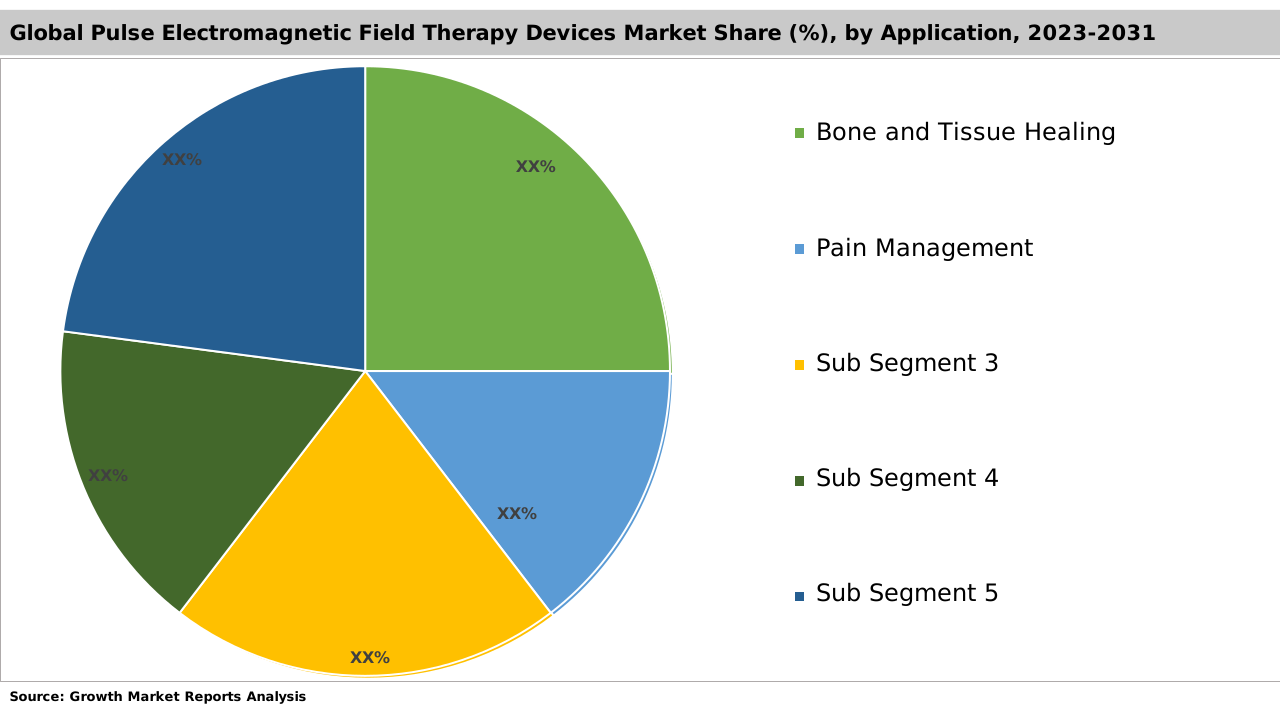
The application segment of the Pulse Electromagnetic Field Therapy Devices market encompasses pain management, bone growth, depression treatment, and other emerging uses. Pain management remains the dominant application, accounting for the largest share of market revenue in 2024. The effectiveness of PEMF therapy in alleviating chronic pain associated with conditions such as arthritis, fibromyalgia, and sports injuries is well-documented, making it a preferred option for both patients and clinicians. The growing burden of chronic pain worldwide, coupled with concerns over opioid dependency and adverse effects of pharmacological treatments, is driving the adoption of PEMF therapy as a safe and effective alternative.

Bone growth stimulation represents another significant application area, particularly in orthopedics and trauma care. PEMF devices are increasingly being used to accelerate the healing of fractures, enhance bone regeneration, and support post-surgical recovery. Clinical studies have demonstrated the ability of electromagnetic fields to stimulate osteogenesis and improve bone density, making PEMF therapy an integral component of comprehensive musculoskeletal rehabilitation protocols. The rising incidence of osteoporosis and bone-related injuries, especially among the elderly population, is further bolstering demand for bone growth stimulation devices.

In recent years, the use of PEMF therapy for depression treatment has garnered considerable attention, supported by emerging research on the neuromodulatory effects of electromagnetic fields. While this application is still in its nascent stages, preliminary studies suggest that PEMF therapy may help alleviate symptoms of major depressive disorder and other mood disorders by modulating neuronal activity and enhancing neuroplasticity. As mental health awareness grows and the limitations of conventional antidepressant medications become more apparent, PEMF devices are poised to play a larger role in multidisciplinary mental health care.

Beyond these primary applications, the versatility of PEMF therapy is being explored in a range of other indications, including wound healing, post-stroke rehabilitation, and migraine management. The expanding clinical evidence base and ongoing research into new therapeutic uses are expected to unlock additional growth opportunities for the market. As regulatory agencies continue to approve new indications and reimbursement policies evolve, the application spectrum of PEMF devices will likely broaden, further cementing their role in modern healthcare.

End-User Analysis

The end-user segment of the Pulse Electromagnetic Field Therapy Devices market includes hospitals and clinics, home care settings, rehabilitation centers, and other healthcare facilities. Hospitals and clinics currently represent the largest end-user category, leveraging both fixed and portable PEMF devices to deliver targeted therapy for a wide range of conditions. These institutions benefit from the clinical expertise of trained healthcare professionals, enabling the safe and effective administration of PEMF therapy to patients with complex medical needs. The availability of advanced medical infrastructure and favorable reimbursement policies further supports the widespread adoption of PEMF devices in hospital and clinic settings.

Home care settings are rapidly emerging as a key growth segment, driven by the increasing availability of portable PEMF devices and the growing preference for self-managed healthcare. Patients with chronic pain, mobility limitations, or long-term rehabilitation needs are increasingly opting for home-based PEMF therapy, attracted by the convenience, cost-effectiveness, and flexibility it offers. Manufacturers are capitalizing on this trend by developing user-friendly devices with intuitive controls, remote monitoring capabilities, and comprehensive support resources. The rise of telemedicine and digital health platforms is further facilitating the integration of PEMF therapy into home care regimens.

Rehabilitation centers constitute another important end-user group, utilizing PEMF devices as part of multidisciplinary treatment protocols for musculoskeletal injuries, neurological disorders, and post-surgical recovery. These facilities often employ fixed PEMF devices to deliver intensive, supervised therapy sessions tailored to individual patient needs. The growing emphasis on early intervention, functional restoration, and long-term rehabilitation is driving demand for advanced PEMF solutions in this segment. Collaboration between rehabilitation specialists, physiotherapists, and device manufacturers is fostering innovation and improving patient outcomes.

Other end-users, such as sports medicine clinics, veterinary practices, and wellness centers, are also adopting PEMF therapy devices to address a variety of health and wellness needs. The versatility and safety profile of PEMF therapy make it an attractive option for diverse healthcare providers seeking to enhance their service offerings. As awareness of the benefits of PEMF therapy continues to grow, the end-user base is expected to expand further, encompassing new market segments and driving overall market growth.

Distribution Channel Analysis

The distribution channel segment of the Pulse Electromagnetic Field Therapy Devices market is bifurcated into online and offline channels. The offline channel, comprising hospital supply stores, medical device distributors, and specialty retail outlets, has traditionally dominated the market. These channels offer the advantage of personalized customer service, professional guidance, and hands-on demonstrations, which are particularly important for first-time buyers and institutional customers. The ability to physically inspect devices and receive immediate support has made offline channels the preferred choice for many healthcare providers and patients.

However, the online channel is rapidly gaining ground, driven by the proliferation of e-commerce platforms, digital health marketplaces, and direct-to-consumer sales models. Online distribution offers unparalleled convenience, enabling customers to browse, compare, and purchase PEMF devices from the comfort of their homes. The availability of detailed product information, customer reviews, and virtual consultations is empowering consumers to make informed purchasing decisions. Manufacturers are increasingly leveraging online channels to reach a broader audience, reduce distribution costs, and enhance brand visibility.

The COVID-19 pandemic has further accelerated the shift towards online distribution, as lockdowns, social distancing measures, and heightened infection control concerns prompted many consumers to avoid physical retail outlets. This trend is expected to persist in the post-pandemic era, as digital literacy and trust in online transactions continue to grow. Online channels are particularly well-suited for the sale of portable PEMF devices, which are often marketed directly to end-users seeking home-based therapy solutions.

Despite the rapid growth of online distribution, offline channels remain critical for certain market segments, particularly in regions with limited internet penetration or stringent regulatory requirements. Hybrid distribution models that combine the strengths of both online and offline channels are emerging as a preferred approach, enabling manufacturers to maximize reach and customer satisfaction. As the competitive landscape evolves, effective distribution strategies will be essential for capturing market share and driving long-term growth.

Opportunities & Threats

The Pulse Electromagnetic Field Therapy Devices market is ripe with opportunities, particularly in the realm of technological innovation and product differentiation. Advances in materials science, microelectronics, and wireless connectivity are enabling the development of next-generation PEMF devices with enhanced performance, greater portability, and improved user experience. The integration of artificial intelligence, data analytics, and telemedicine capabilities is opening new avenues for personalized therapy, remote monitoring, and real-time feedback. These innovations have the potential to transform the way PEMF therapy is delivered, making it more accessible, effective, and engaging for patients across the globe.

Another significant opportunity lies in the expansion of clinical indications and regulatory approvals for PEMF therapy devices. As the body of scientific evidence supporting the efficacy of PEMF therapy continues to grow, regulatory agencies in various regions are approving new uses for these devices, from bone growth stimulation to mental health applications. This expanding scope is creating new market segments and attracting interest from a wider range of healthcare providers, researchers, and investors. Strategic collaborations between device manufacturers, academic institutions, and healthcare organizations are further accelerating the pace of innovation and market adoption.

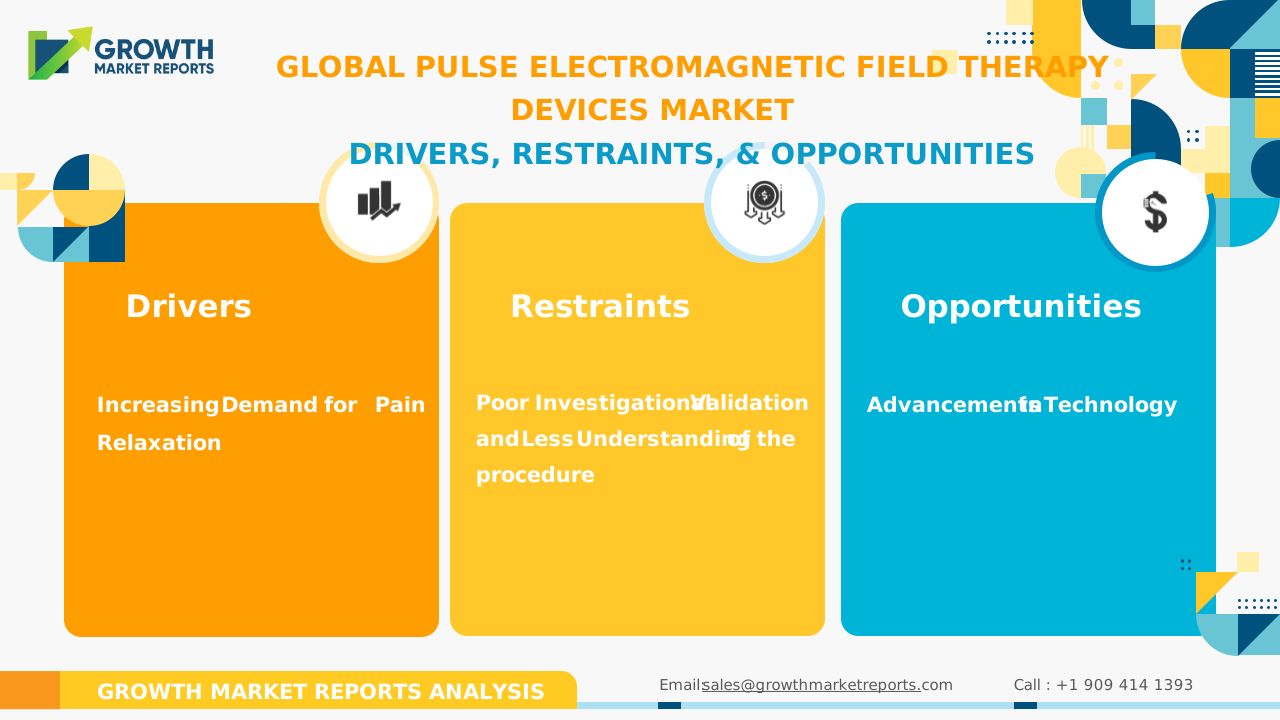
Despite these opportunities, the market faces several restraining factors, chief among them being the lack of standardized clinical guidelines and variability in reimbursement policies across regions. The absence of universally accepted protocols for PEMF therapy can lead to inconsistent treatment outcomes and hinder broader acceptance among healthcare professionals. In addition, limited insurance coverage for PEMF devices in certain markets may restrict access for patients who cannot afford out-of-pocket expenses. Addressing these challenges will require concerted efforts from industry stakeholders, regulatory bodies, and the medical community to establish evidence-based guidelines, promote education, and advocate for favorable reimbursement policies.

Regional Outlook

North America remains the largest regional market for Pulse Electromagnetic Field Therapy Devices, accounting for over 38% of global revenue in 2024, or approximately USD 247 million. The region’s dominance is underpinned by a combination of high healthcare spending, advanced medical infrastructure, and a proactive approach to the adoption of innovative therapeutic technologies. The presence of leading market players, robust distribution networks, and favorable regulatory environments further support the widespread use of PEMF therapy devices across the United States and Canada. Additionally, the growing prevalence of chronic pain and musculoskeletal disorders, coupled with increasing patient awareness, is driving continued demand for both portable and fixed PEMF devices in North America.

Europe follows closely, with a market share of around 32% and revenues reaching USD 208 million in 2024. The region benefits from supportive healthcare policies, well-established reimbursement frameworks, and a strong emphasis on research and innovation. Countries such as Germany, the United Kingdom, and France are at the forefront of PEMF therapy adoption, driven by a high burden of chronic diseases and a growing preference for non-invasive treatment modalities. The European market is characterized by a mix of established players and emerging startups, fostering a competitive and dynamic landscape. The region is expected to maintain a steady growth trajectory, with a projected CAGR of 7.8% through 2033.

The Asia Pacific region is emerging as a high-growth market, accounting for approximately 20% of global revenues, or USD 130 million in 2024. Rapid urbanization, rising disposable incomes, and increasing investments in healthcare infrastructure are fueling demand for advanced therapeutic devices, including PEMF solutions. Countries such as China, Japan, India, and South Korea are witnessing growing awareness of the benefits of PEMF therapy, supported by government initiatives and expanding healthcare access. While the market is still in its early stages compared to North America and Europe, the Asia Pacific region is expected to exhibit the highest CAGR over the forecast period, driven by a large and underserved patient population.

Pulse Electromagnetic Field Therapy Devices Market Statistics

Competitor Outlook

The competitive landscape of the Pulse Electromagnetic Field Therapy Devices market is characterized by a mix of established multinational corporations and innovative startups, each vying for market share through product differentiation, technological innovation, and strategic partnerships. Leading players are investing heavily in research and development to enhance the efficacy, safety, and user-friendliness of their devices, while also expanding their product portfolios to address a broader range of clinical indications. The market is witnessing a trend towards consolidation, as larger companies acquire or partner with smaller firms to strengthen their competitive position and accelerate the commercialization of new technologies.

In addition to product innovation, companies are focusing on expanding their distribution networks and enhancing customer engagement through targeted marketing campaigns, educational initiatives, and post-sale support services. The rise of e-commerce and digital health platforms is enabling manufacturers to reach a wider audience and establish direct relationships with end-users. Regulatory compliance, quality assurance, and clinical validation remain critical differentiators in this highly regulated market, with companies striving to secure approvals from major health authorities such as the US Food and Drug Administration (FDA) and the European Medicines Agency (EMA).

The market is also witnessing increased collaboration between device manufacturers, healthcare providers, and academic institutions, aimed at advancing clinical research, developing evidence-based treatment protocols, and promoting the integration of PEMF therapy into mainstream medical practice. These partnerships are facilitating the generation of robust clinical data, supporting regulatory submissions, and enhancing the credibility of PEMF therapy among healthcare professionals and patients alike. As competition intensifies, companies are also exploring opportunities in emerging markets, where rising healthcare expenditures and growing awareness of alternative therapies are creating new avenues for growth.

Some of the major companies operating in the global Pulse Electromagnetic Field Therapy Devices market include BEMER Group, Orthofix Holdings Inc., Medithera GmbH, Curatronic Ltd., Swiss Bionic Solutions, Omron Corporation, and Pulse Centers. BEMER Group is recognized for its extensive portfolio of portable PEMF devices, with a strong focus on user-friendly design and clinical efficacy. Orthofix Holdings Inc. specializes in bone growth stimulation devices, leveraging a robust research and development pipeline and a global distribution network. Medithera GmbH and Curatronic Ltd. are known for their innovative fixed and portable PEMF solutions, catering to both clinical and home care markets. Swiss Bionic Solutions and Pulse Centers are prominent players in the wellness and sports medicine segments, offering advanced PEMF devices for performance enhancement and recovery.

These companies are distinguished by their commitment to quality, innovation, and customer satisfaction, as evidenced by their extensive product portfolios, clinical research initiatives, and global presence. Many of them have established strategic partnerships with healthcare providers, research institutions, and technology companies to drive product development, market expansion, and regulatory compliance. As the market continues to evolve, the ability to anticipate and respond to changing customer needs, technological advancements, and regulatory requirements will be critical for sustained success in the highly competitive Pulse Electromagnetic Field Therapy Devices market.

Key Players

  • Medtronic
  • Orthofix Holdings Inc.
  • BEMER Group
  • OMRON Corporation
  • Curatronic Ltd.
  • I-Tech Medical Division
  • NeuroMetrix, Inc.
  • BioBalance PEMF
  • Swiss Bionic Solutions
  • Bedfont Scientific Ltd.
  • HealthyLine
  • Nuage Health
  • EarthPulse Technologies
  • Pulse Centers
  • Sentient Element
  • MagnaWave
  • PEMF Systems
  • Sota Instruments Inc.
  • Oska Wellness
  • NewMed Ltd.
Pulse Electromagnetic Field Therapy Devices Market Overview

Segments

The Pulse Electromagnetic Field Therapy Devices market has been segmented on the basis of

Product Type

  • Portable PEMF Devices
  • Fixed PEMF Devices

Application

  • Pain Management
  • Bone Growth
  • Depression Treatment
  • Others

End-User

  • Hospitals & Clinics
  • Home Care Settings
  • Rehabilitation Centers
  • Others

Distribution Channel

  • Online
  • Offline

Competitive Landscape

Key players competing in the global pulse electromagnetic field therapy devices market are Bedfont Scientific; Orthofix Holdings; I-Tech Medical Division; OSKA; Medithera; NiuDesai; Nuage Health; Oxford Medical Instruments Health; Bemer, LLC. The market report provides in-depth insights into growth strategies and development initiatives implemented by the key players in the market.

These major companies adopt various business development strategies including mergers, acquisitions, partnerships, collaboration, product launches, and production capacity expansion to expand their consumer base and enhance their market share.
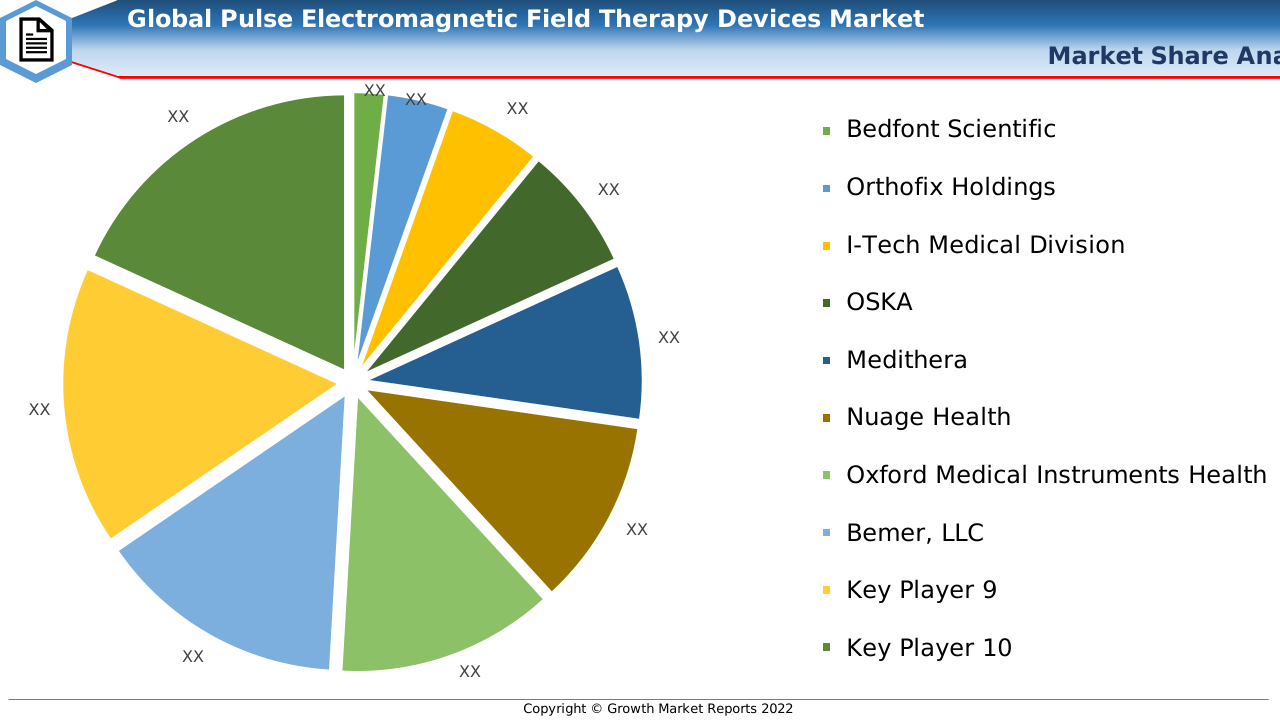

Global Pulse Electromagnetic Field Therapy Devices Market Key Players

Frequently Asked Questions

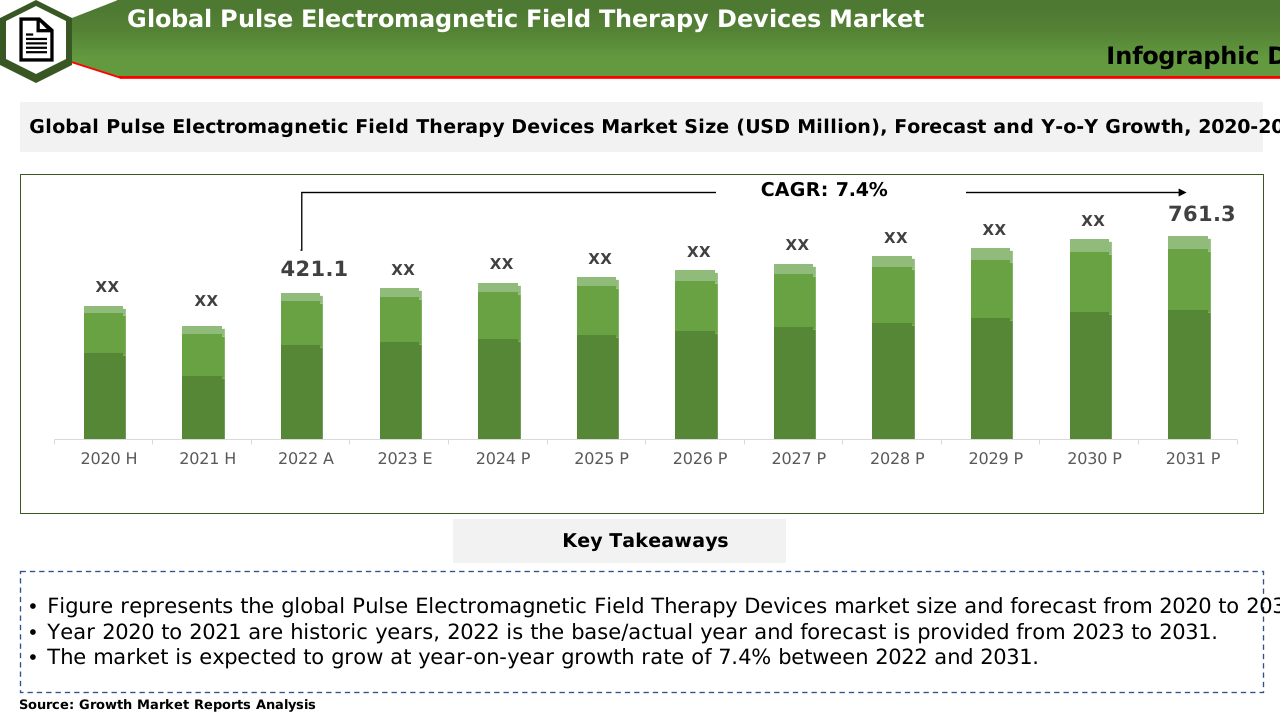
The global pulse electromagnetic field therapy devices market size was USD 421.1 Mn in 2022 and is likely to reach USD 761.3 Mn by 2031

The market growth is attributed to the increasing demand for pain relaxation is also fuels the market growth and increasing demand for pain relaxation devices.

Pulse electromagnetic field therapy devices market is expected to register a compound annual growth rate of 7.4% during the forecast period.

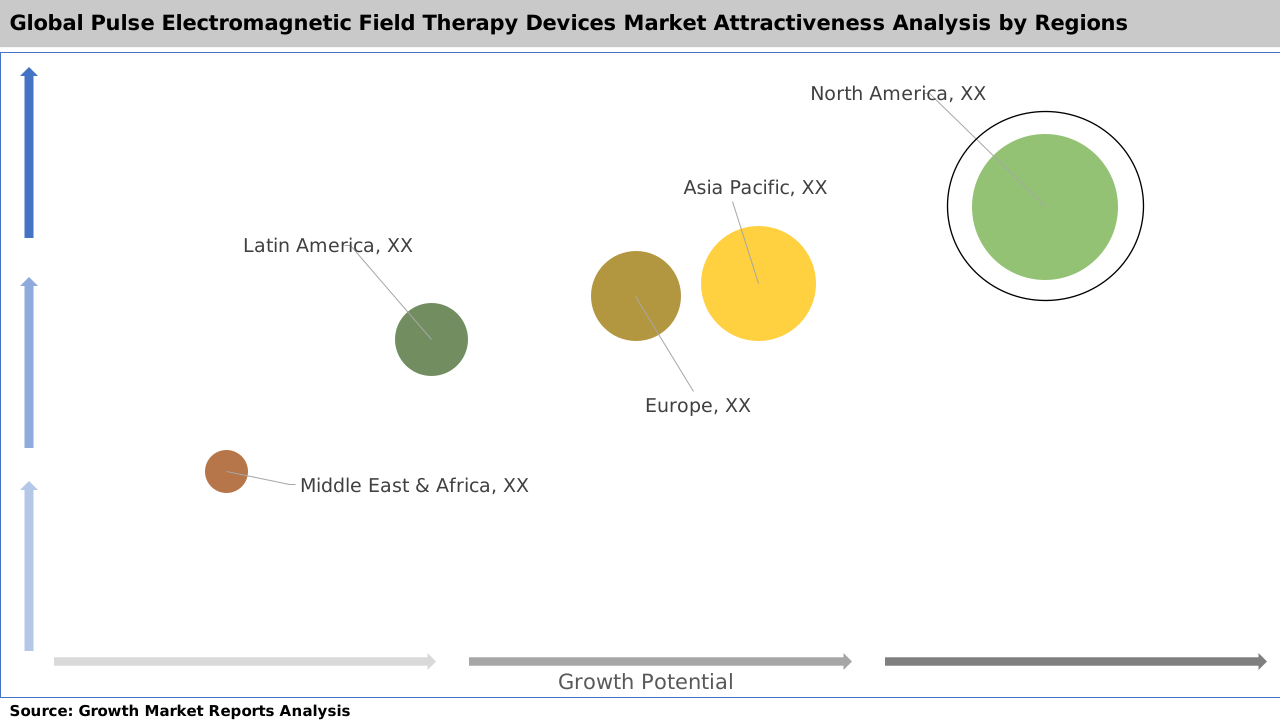
For regional analysis, North America is expected to dominate the market during the projection period.

The pulse electromagnetic field therapy devices key market players are Bedfont Scientific; Orthofix Holdings; I-Tech Medical Division; OSKA; Medithera; NiuDesai; Nuage Health; Oxford Medical Instruments Health; Bemer, LLC.

Table Of Content

Chapter 1 Executive Summary
Chapter 2 Assumptions and Acronyms Used
Chapter 3 Research Methodology
Chapter 4 Pulse Electromagnetic Field Therapy Devices Market Overview
   4.1 Introduction
      4.1.1 Market Taxonomy
      4.1.2 Market Definition
      4.1.3 Macro-Economic Factors Impacting the Market Growth
   4.2 Pulse Electromagnetic Field Therapy Devices Market Dynamics
      4.2.1 Market Drivers
      4.2.2 Market Restraints
      4.2.3 Market Opportunity
   4.3 Pulse Electromagnetic Field Therapy Devices Market - Supply Chain Analysis
      4.3.1 List of Key Suppliers
      4.3.2 List of Key Distributors
      4.3.3 List of Key Consumers
   4.4 Key Forces Shaping the Pulse Electromagnetic Field Therapy Devices Market
      4.4.1 Bargaining Power of Suppliers
      4.4.2 Bargaining Power of Buyers
      4.4.3 Threat of Substitution
      4.4.4 Threat of New Entrants
      4.4.5 Competitive Rivalry
   4.5 Global Pulse Electromagnetic Field Therapy Devices Market Size & Forecast, 2023-2032
      4.5.1 Pulse Electromagnetic Field Therapy Devices Market Size and Y-o-Y Growth
      4.5.2 Pulse Electromagnetic Field Therapy Devices Market Absolute $ Opportunity

Chapter 5 Global Pulse Electromagnetic Field Therapy Devices Market Analysis and Forecast By Product Type
   5.1 Introduction
      5.1.1 Key Market Trends & Growth Opportunities By Product Type
      5.1.2 Basis Point Share (BPS) Analysis By Product Type
      5.1.3 Absolute $ Opportunity Assessment By Product Type
   5.2 Pulse Electromagnetic Field Therapy Devices Market Size Forecast By Product Type
      5.2.1 Portable PEMF Devices
      5.2.2 Fixed PEMF Devices
   5.3 Market Attractiveness Analysis By Product Type

Chapter 6 Global Pulse Electromagnetic Field Therapy Devices Market Analysis and Forecast By Application
   6.1 Introduction
      6.1.1 Key Market Trends & Growth Opportunities By Application
      6.1.2 Basis Point Share (BPS) Analysis By Application
      6.1.3 Absolute $ Opportunity Assessment By Application
   6.2 Pulse Electromagnetic Field Therapy Devices Market Size Forecast By Application
      6.2.1 Pain Management
      6.2.2 Bone Growth
      6.2.3 Depression Treatment
      6.2.4 Others
   6.3 Market Attractiveness Analysis By Application

Chapter 7 Global Pulse Electromagnetic Field Therapy Devices Market Analysis and Forecast By End-User
   7.1 Introduction
      7.1.1 Key Market Trends & Growth Opportunities By End-User
      7.1.2 Basis Point Share (BPS) Analysis By End-User
      7.1.3 Absolute $ Opportunity Assessment By End-User
   7.2 Pulse Electromagnetic Field Therapy Devices Market Size Forecast By End-User
      7.2.1 Hospitals & Clinics
      7.2.2 Home Care Settings
      7.2.3 Rehabilitation Centers
      7.2.4 Others
   7.3 Market Attractiveness Analysis By End-User

Chapter 8 Global Pulse Electromagnetic Field Therapy Devices Market Analysis and Forecast By Distribution Channel
   8.1 Introduction
      8.1.1 Key Market Trends & Growth Opportunities By Distribution Channel
      8.1.2 Basis Point Share (BPS) Analysis By Distribution Channel
      8.1.3 Absolute $ Opportunity Assessment By Distribution Channel
   8.2 Pulse Electromagnetic Field Therapy Devices Market Size Forecast By Distribution Channel
      8.2.1 Online
      8.2.2 Offline
   8.3 Market Attractiveness Analysis By Distribution Channel

Chapter 9 Global Pulse Electromagnetic Field Therapy Devices Market Analysis and Forecast by Region
   9.1 Introduction
      9.1.1 Key Market Trends & Growth Opportunities By Region
      9.1.2 Basis Point Share (BPS) Analysis By Region
      9.1.3 Absolute $ Opportunity Assessment By Region
   9.2 Pulse Electromagnetic Field Therapy Devices Market Size Forecast By Region
      9.2.1 North America
      9.2.2 Europe
      9.2.3 Asia Pacific
      9.2.4 Latin America
      9.2.5 Middle East & Africa (MEA)
   9.3 Market Attractiveness Analysis By Region

Chapter 10 Coronavirus Disease (COVID-19) Impact 
   10.1 Introduction 
   10.2 Current & Future Impact Analysis 
   10.3 Economic Impact Analysis 
   10.4 Government Policies 
   10.5 Investment Scenario

Chapter 11 North America Pulse Electromagnetic Field Therapy Devices Analysis and Forecast
   11.1 Introduction
   11.2 North America Pulse Electromagnetic Field Therapy Devices Market Size Forecast by Country
      11.2.1 U.S.
      11.2.2 Canada
   11.3 Basis Point Share (BPS) Analysis by Country
   11.4 Absolute $ Opportunity Assessment by Country
   11.5 Market Attractiveness Analysis by Country
   11.6 North America Pulse Electromagnetic Field Therapy Devices Market Size Forecast By Product Type
      11.6.1 Portable PEMF Devices
      11.6.2 Fixed PEMF Devices
   11.7 Basis Point Share (BPS) Analysis By Product Type 
   11.8 Absolute $ Opportunity Assessment By Product Type 
   11.9 Market Attractiveness Analysis By Product Type
   11.10 North America Pulse Electromagnetic Field Therapy Devices Market Size Forecast By Application
      11.10.1 Pain Management
      11.10.2 Bone Growth
      11.10.3 Depression Treatment
      11.10.4 Others
   11.11 Basis Point Share (BPS) Analysis By Application 
   11.12 Absolute $ Opportunity Assessment By Application 
   11.13 Market Attractiveness Analysis By Application
   11.14 North America Pulse Electromagnetic Field Therapy Devices Market Size Forecast By End-User
      11.14.1 Hospitals & Clinics
      11.14.2 Home Care Settings
      11.14.3 Rehabilitation Centers
      11.14.4 Others
   11.15 Basis Point Share (BPS) Analysis By End-User 
   11.16 Absolute $ Opportunity Assessment By End-User 
   11.17 Market Attractiveness Analysis By End-User
   11.18 North America Pulse Electromagnetic Field Therapy Devices Market Size Forecast By Distribution Channel
      11.18.1 Online
      11.18.2 Offline
   11.19 Basis Point Share (BPS) Analysis By Distribution Channel 
   11.20 Absolute $ Opportunity Assessment By Distribution Channel 
   11.21 Market Attractiveness Analysis By Distribution Channel

Chapter 12 Europe Pulse Electromagnetic Field Therapy Devices Analysis and Forecast
   12.1 Introduction
   12.2 Europe Pulse Electromagnetic Field Therapy Devices Market Size Forecast by Country
      12.2.1 Germany
      12.2.2 France
      12.2.3 Italy
      12.2.4 U.K.
      12.2.5 Spain
      12.2.6 Russia
      12.2.7 Rest of Europe
   12.3 Basis Point Share (BPS) Analysis by Country
   12.4 Absolute $ Opportunity Assessment by Country
   12.5 Market Attractiveness Analysis by Country
   12.6 Europe Pulse Electromagnetic Field Therapy Devices Market Size Forecast By Product Type
      12.6.1 Portable PEMF Devices
      12.6.2 Fixed PEMF Devices
   12.7 Basis Point Share (BPS) Analysis By Product Type 
   12.8 Absolute $ Opportunity Assessment By Product Type 
   12.9 Market Attractiveness Analysis By Product Type
   12.10 Europe Pulse Electromagnetic Field Therapy Devices Market Size Forecast By Application
      12.10.1 Pain Management
      12.10.2 Bone Growth
      12.10.3 Depression Treatment
      12.10.4 Others
   12.11 Basis Point Share (BPS) Analysis By Application 
   12.12 Absolute $ Opportunity Assessment By Application 
   12.13 Market Attractiveness Analysis By Application
   12.14 Europe Pulse Electromagnetic Field Therapy Devices Market Size Forecast By End-User
      12.14.1 Hospitals & Clinics
      12.14.2 Home Care Settings
      12.14.3 Rehabilitation Centers
      12.14.4 Others
   12.15 Basis Point Share (BPS) Analysis By End-User 
   12.16 Absolute $ Opportunity Assessment By End-User 
   12.17 Market Attractiveness Analysis By End-User
   12.18 Europe Pulse Electromagnetic Field Therapy Devices Market Size Forecast By Distribution Channel
      12.18.1 Online
      12.18.2 Offline
   12.19 Basis Point Share (BPS) Analysis By Distribution Channel 
   12.20 Absolute $ Opportunity Assessment By Distribution Channel 
   12.21 Market Attractiveness Analysis By Distribution Channel

Chapter 13 Asia Pacific Pulse Electromagnetic Field Therapy Devices Analysis and Forecast
   13.1 Introduction
   13.2 Asia Pacific Pulse Electromagnetic Field Therapy Devices Market Size Forecast by Country
      13.2.1 China
      13.2.2 Japan
      13.2.3 South Korea
      13.2.4 India
      13.2.5 Australia
      13.2.6 South East Asia (SEA)
      13.2.7 Rest of Asia Pacific (APAC)
   13.3 Basis Point Share (BPS) Analysis by Country
   13.4 Absolute $ Opportunity Assessment by Country
   13.5 Market Attractiveness Analysis by Country
   13.6 Asia Pacific Pulse Electromagnetic Field Therapy Devices Market Size Forecast By Product Type
      13.6.1 Portable PEMF Devices
      13.6.2 Fixed PEMF Devices
   13.7 Basis Point Share (BPS) Analysis By Product Type 
   13.8 Absolute $ Opportunity Assessment By Product Type 
   13.9 Market Attractiveness Analysis By Product Type
   13.10 Asia Pacific Pulse Electromagnetic Field Therapy Devices Market Size Forecast By Application
      13.10.1 Pain Management
      13.10.2 Bone Growth
      13.10.3 Depression Treatment
      13.10.4 Others
   13.11 Basis Point Share (BPS) Analysis By Application 
   13.12 Absolute $ Opportunity Assessment By Application 
   13.13 Market Attractiveness Analysis By Application
   13.14 Asia Pacific Pulse Electromagnetic Field Therapy Devices Market Size Forecast By End-User
      13.14.1 Hospitals & Clinics
      13.14.2 Home Care Settings
      13.14.3 Rehabilitation Centers
      13.14.4 Others
   13.15 Basis Point Share (BPS) Analysis By End-User 
   13.16 Absolute $ Opportunity Assessment By End-User 
   13.17 Market Attractiveness Analysis By End-User
   13.18 Asia Pacific Pulse Electromagnetic Field Therapy Devices Market Size Forecast By Distribution Channel
      13.18.1 Online
      13.18.2 Offline
   13.19 Basis Point Share (BPS) Analysis By Distribution Channel 
   13.20 Absolute $ Opportunity Assessment By Distribution Channel 
   13.21 Market Attractiveness Analysis By Distribution Channel

Chapter 14 Latin America Pulse Electromagnetic Field Therapy Devices Analysis and Forecast
   14.1 Introduction
   14.2 Latin America Pulse Electromagnetic Field Therapy Devices Market Size Forecast by Country
      14.2.1 Brazil
      14.2.2 Mexico
      14.2.3 Rest of Latin America (LATAM)
   14.3 Basis Point Share (BPS) Analysis by Country
   14.4 Absolute $ Opportunity Assessment by Country
   14.5 Market Attractiveness Analysis by Country
   14.6 Latin America Pulse Electromagnetic Field Therapy Devices Market Size Forecast By Product Type
      14.6.1 Portable PEMF Devices
      14.6.2 Fixed PEMF Devices
   14.7 Basis Point Share (BPS) Analysis By Product Type 
   14.8 Absolute $ Opportunity Assessment By Product Type 
   14.9 Market Attractiveness Analysis By Product Type
   14.10 Latin America Pulse Electromagnetic Field Therapy Devices Market Size Forecast By Application
      14.10.1 Pain Management
      14.10.2 Bone Growth
      14.10.3 Depression Treatment
      14.10.4 Others
   14.11 Basis Point Share (BPS) Analysis By Application 
   14.12 Absolute $ Opportunity Assessment By Application 
   14.13 Market Attractiveness Analysis By Application
   14.14 Latin America Pulse Electromagnetic Field Therapy Devices Market Size Forecast By End-User
      14.14.1 Hospitals & Clinics
      14.14.2 Home Care Settings
      14.14.3 Rehabilitation Centers
      14.14.4 Others
   14.15 Basis Point Share (BPS) Analysis By End-User 
   14.16 Absolute $ Opportunity Assessment By End-User 
   14.17 Market Attractiveness Analysis By End-User
   14.18 Latin America Pulse Electromagnetic Field Therapy Devices Market Size Forecast By Distribution Channel
      14.18.1 Online
      14.18.2 Offline
   14.19 Basis Point Share (BPS) Analysis By Distribution Channel 
   14.20 Absolute $ Opportunity Assessment By Distribution Channel 
   14.21 Market Attractiveness Analysis By Distribution Channel

Chapter 15 Middle East & Africa (MEA) Pulse Electromagnetic Field Therapy Devices Analysis and Forecast
   15.1 Introduction
   15.2 Middle East & Africa (MEA) Pulse Electromagnetic Field Therapy Devices Market Size Forecast by Country
      15.2.1 Saudi Arabia
      15.2.2 South Africa
      15.2.3 UAE
      15.2.4 Rest of Middle East & Africa (MEA)
   15.3 Basis Point Share (BPS) Analysis by Country
   15.4 Absolute $ Opportunity Assessment by Country
   15.5 Market Attractiveness Analysis by Country
   15.6 Middle East & Africa (MEA) Pulse Electromagnetic Field Therapy Devices Market Size Forecast By Product Type
      15.6.1 Portable PEMF Devices
      15.6.2 Fixed PEMF Devices
   15.7 Basis Point Share (BPS) Analysis By Product Type 
   15.8 Absolute $ Opportunity Assessment By Product Type 
   15.9 Market Attractiveness Analysis By Product Type
   15.10 Middle East & Africa (MEA) Pulse Electromagnetic Field Therapy Devices Market Size Forecast By Application
      15.10.1 Pain Management
      15.10.2 Bone Growth
      15.10.3 Depression Treatment
      15.10.4 Others
   15.11 Basis Point Share (BPS) Analysis By Application 
   15.12 Absolute $ Opportunity Assessment By Application 
   15.13 Market Attractiveness Analysis By Application
   15.14 Middle East & Africa (MEA) Pulse Electromagnetic Field Therapy Devices Market Size Forecast By End-User
      15.14.1 Hospitals & Clinics
      15.14.2 Home Care Settings
      15.14.3 Rehabilitation Centers
      15.14.4 Others
   15.15 Basis Point Share (BPS) Analysis By End-User 
   15.16 Absolute $ Opportunity Assessment By End-User 
   15.17 Market Attractiveness Analysis By End-User
   15.18 Middle East & Africa (MEA) Pulse Electromagnetic Field Therapy Devices Market Size Forecast By Distribution Channel
      15.18.1 Online
      15.18.2 Offline
   15.19 Basis Point Share (BPS) Analysis By Distribution Channel 
   15.20 Absolute $ Opportunity Assessment By Distribution Channel 
   15.21 Market Attractiveness Analysis By Distribution Channel

Chapter 16 Competition Landscape 
   16.1 Pulse Electromagnetic Field Therapy Devices Market: Competitive Dashboard
   16.2 Global Pulse Electromagnetic Field Therapy Devices Market: Market Share Analysis, 2023
   16.3 Company Profiles (Details – Overview, Financials, Developments, Strategy) 
      16.3.1 Medtronic
Orthofix Holdings Inc.
BEMER Group
OMRON Corporation
Curatronic Ltd.
I-Tech Medical Division
NeuroMetrix, Inc.
BioBalance PEMF
Swiss Bionic Solutions
Bedfont Scientific Ltd.
HealthyLine
Nuage Health
EarthPulse Technologies
Pulse Centers
Sentient Element
MagnaWave
PEMF Systems
Sota Instruments Inc.
Oska Wellness
NewMed Ltd.

Methodology

Our Clients

FedEx Logistics
Microsoft
The John Holland Group
Dassault Aviation
sinopec
General Electric
Siemens Healthcare
Honda Motor Co. Ltd.