project portfolio management Market Research Report 2033

project portfolio management Market Research Report 2033

Segments - by Component (Software, Services), by Deployment Mode (On-Premises, Cloud), by Organization Size (Large Enterprises, Small and Medium Enterprises), by Application (IT and Telecom, BFSI, Healthcare, Manufacturing, Government, Energy and Utilities, Others)

https://growthmarketreports.com/Raksha
Author : Raksha Sharma
https://growthmarketreports.com/Vaibhav
Fact-checked by : V. Chandola
https://growthmarketreports.com/Shruti
Editor : Shruti Bhat

Upcoming | Report ID :ICT-SE-3461 | 4.1 Rating | 40 Reviews | 267 Pages | Format : Docx PDF

Report Description


Project Portfolio Management Market Outlook

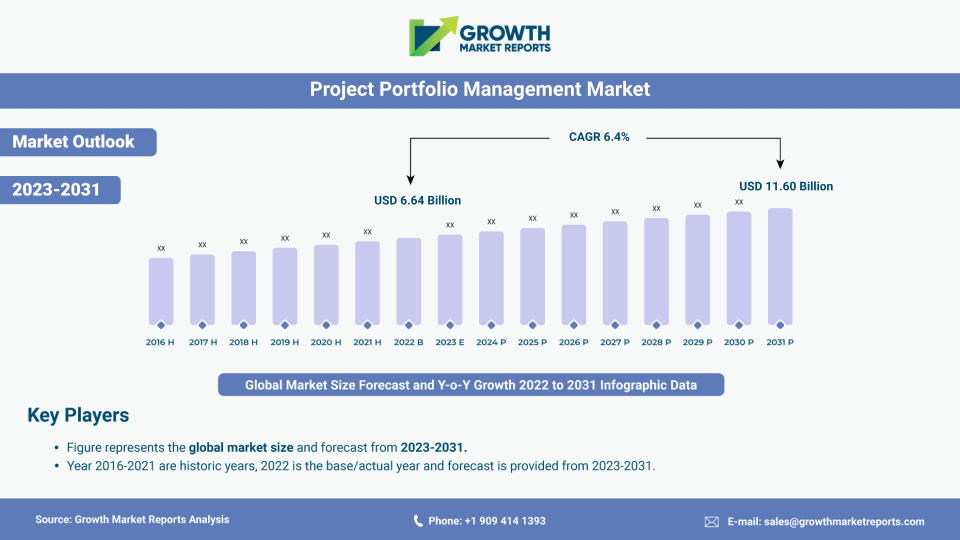
According to the latest research, the global project portfolio management (PPM) market size in 2024 stands at USD 5.9 billion, reflecting robust demand across industries for efficient project oversight and strategic alignment. The market is expected to grow at a CAGR of 10.7% from 2025 to 2033, reaching a projected value of USD 14.5 billion by the end of the forecast period. This significant growth is driven by the increasing complexity of projects, the need for centralized project governance, and the rapid digital transformation initiatives undertaken by enterprises worldwide. As organizations strive to optimize resources, enhance productivity, and ensure the successful delivery of business objectives, the adoption of advanced PPM solutions is accelerating, making it a critical enabler of business success in todayÂ’s dynamic environment.

One of the primary growth factors propelling the project portfolio management market is the rising demand for real-time project tracking and analytics. Organizations are increasingly recognizing the importance of leveraging data-driven insights to make informed decisions and mitigate project risks. The integration of artificial intelligence and machine learning within PPM software has enabled companies to automate routine tasks, predict project outcomes, and optimize resource allocation. This technological evolution ensures that project managers and executives have access to up-to-date information, which is essential for maintaining control over large portfolios and aligning them with strategic business goals. Furthermore, the proliferation of remote and hybrid work models has made cloud-based PPM solutions even more attractive, as they offer the flexibility and accessibility required to manage distributed teams and complex workflows efficiently.

Another significant driver for market expansion is the increasing emphasis on regulatory compliance and governance. Industries such as BFSI, healthcare, and government are subject to stringent regulatory requirements, necessitating robust project management frameworks to ensure transparency, accountability, and auditability. Project portfolio management tools provide comprehensive visibility into project status, budget utilization, and risk exposure, facilitating compliance with industry standards and regulatory mandates. Additionally, the growing trend of merger and acquisition activities across industries has heightened the need for integrated PPM systems to manage the consolidation of projects, resources, and processes. As organizations strive to streamline operations and achieve economies of scale, the adoption of sophisticated PPM solutions is becoming indispensable.

The surge in digital transformation initiatives across sectors is also fueling market growth. Enterprises are increasingly investing in PPM solutions to drive innovation, accelerate time-to-market, and maintain a competitive edge. The adoption of agile methodologies, coupled with the proliferation of Internet of Things (IoT), big data, and cloud computing, has transformed the project management landscape. Modern PPM platforms offer advanced features such as portfolio scenario planning, risk management, and performance analytics, enabling organizations to adapt to rapidly changing market conditions. As businesses continue to prioritize agility and resilience, the demand for scalable and customizable PPM tools is expected to rise significantly over the forecast period.

PPAplace has emerged as a significant player in the project portfolio management landscape, offering innovative solutions that cater to the evolving needs of modern enterprises. As organizations navigate the complexities of digital transformation, PPAplace provides a robust platform that integrates seamlessly with existing systems, enabling real-time project tracking and strategic alignment. The platform's user-friendly interface and advanced analytics capabilities empower project managers to make data-driven decisions, optimize resource allocation, and enhance overall project performance. With a strong focus on customization and scalability, PPAplace is well-positioned to support organizations of all sizes in achieving their business objectives and maintaining a competitive edge in the market.

From a regional perspective, North America continues to dominate the project portfolio management market, driven by the presence of major technology vendors, high adoption rates of advanced IT solutions, and a strong focus on innovation. Europe follows closely, with increasing investments in digital infrastructure and regulatory compliance initiatives. Meanwhile, the Asia Pacific region is witnessing the fastest growth, fueled by rapid industrialization, expanding enterprise sector, and government-led digitization programs. Latin America and the Middle East & Africa are also experiencing steady growth, supported by economic diversification efforts and the modernization of business processes. The global outlook underscores the universal relevance of PPM solutions, as organizations worldwide seek to enhance project visibility, optimize resource utilization, and achieve strategic alignment.

Global project portfolio management Industry Outlook

Component Analysis

The project portfolio management market is segmented by component into software and services, each playing a pivotal role in the ecosystem. PPM software forms the backbone of this market, offering a suite of tools designed to facilitate project planning, resource management, risk assessment, and performance monitoring. With the increasing complexity of projects and the need for real-time collaboration, organizations are investing heavily in sophisticated PPM software solutions. Modern platforms incorporate features such as predictive analytics, scenario planning, and integration capabilities with other enterprise systems, enabling seamless data flow and enhanced decision-making. The demand for customizable and scalable software solutions is particularly strong among large enterprises, which manage extensive project portfolios and require robust governance frameworks.

On the services front, consulting, implementation, training, and support services are integral to the successful deployment and adoption of PPM solutions. As organizations embark on digital transformation journeys, they often require expert guidance to assess their project management maturity, define best practices, and configure PPM tools to align with their unique business processes. Service providers play a crucial role in facilitating change management, ensuring user adoption, and optimizing the value derived from PPM investments. The growing trend of outsourcing non-core functions has further boosted the demand for managed PPM services, as enterprises seek to leverage external expertise while focusing on their core competencies.

The synergy between software and services is evident in the increasing adoption of end-to-end PPM solutions that offer seamless integration, customization, and ongoing support. Vendors are focusing on delivering comprehensive value propositions that encompass not only the technology platform but also the strategic guidance and operational support required to maximize ROI. The rise of subscription-based and cloud-delivered PPM offerings has further democratized access to advanced project management capabilities, enabling organizations of all sizes to benefit from best-in-class tools and services. As the market continues to evolve, the interplay between software innovation and service excellence will remain a key differentiator for leading vendors.

The concept of an Executive Portfolio is gaining traction among organizations seeking to align their strategic initiatives with overarching business goals. By adopting an Executive Portfolio approach, companies can prioritize high-impact projects, allocate resources effectively, and ensure that their project portfolios are aligned with long-term strategic objectives. This holistic view of project management enables executives to make informed decisions, track progress, and assess the impact of various initiatives on overall business performance. As the demand for strategic alignment and governance increases, the integration of Executive Portfolio management within PPM solutions is becoming a critical component of organizational success.

Another noteworthy trend in the component segment is the growing emphasis on user experience and interface design. As end-users demand intuitive and visually appealing platforms, PPM software providers are investing in user-centric design principles, mobile accessibility, and personalized dashboards. This focus on usability not only enhances user satisfaction but also drives higher adoption rates and better project outcomes. In parallel, service providers are expanding their offerings to include advanced analytics, change management, and continuous improvement programs, ensuring that clients can adapt to evolving business needs and stay ahead of the competition.

Report Scope

Attributes Details
Report Title project portfolio management Market Research Report 2033
By Component Software, Services
By Deployment Mode On-Premises, Cloud
By Organization Size Large Enterprises, Small and Medium Enterprises
By Application IT and Telecom, BFSI, Healthcare, Manufacturing, Government, Energy and Utilities, Others
Regions Covered North America, Europe, APAC, Latin America, MEA
Base Year 2024
Historic Data 2018-2023
Forecast Period 2025-2033
Number of Pages 267
Number of Tables & Figures 250
Customization Available Yes, the report can be customized as per your need.

Deployment Mode Analysis

Deployment mode is a critical consideration for organizations evaluating project portfolio management solutions, with on-premises and cloud-based models representing the primary options. On-premises deployment has traditionally been favored by large enterprises and heavily regulated industries that require stringent data security, control, and compliance. With on-premises solutions, organizations retain full ownership of their infrastructure and data, enabling them to customize PPM platforms to their specific requirements. However, this approach often entails significant upfront investments in hardware, software, and IT personnel, as well as ongoing maintenance and upgrade costs. Despite these challenges, on-premises deployments remain prevalent in sectors such as government, BFSI, and healthcare, where data sovereignty and regulatory compliance are paramount.

In contrast, cloud-based PPM solutions have gained substantial traction in recent years, driven by their flexibility, scalability, and cost-effectiveness. Cloud deployment eliminates the need for capital-intensive infrastructure investments, allowing organizations to access PPM tools on a subscription basis and scale resources as needed. This model is particularly attractive to small and medium enterprises (SMEs) and organizations with distributed teams, as it facilitates remote access, real-time collaboration, and seamless integration with other cloud-based applications. The rapid adoption of cloud technologies has accelerated the pace of innovation in the PPM market, with vendors introducing new features, updates, and integrations at a much faster rate than traditional on-premises solutions.

The hybrid deployment model is also emerging as a viable option for organizations seeking to balance the benefits of both on-premises and cloud environments. By leveraging a hybrid approach, enterprises can maintain sensitive data and critical applications on-premises while utilizing cloud-based PPM tools for less sensitive functions and remote collaboration. This flexibility enables organizations to optimize performance, control costs, and meet regulatory requirements without compromising on agility or innovation. As the demand for hybrid and multi-cloud strategies continues to grow, PPM vendors are enhancing their platforms with advanced integration, security, and interoperability features to support diverse deployment scenarios.

Security and data privacy remain top concerns for organizations considering cloud-based PPM solutions, particularly in industries with strict regulatory mandates. To address these concerns, leading vendors are investing in robust security frameworks, encryption technologies, and compliance certifications such as ISO 27001, SOC 2, and GDPR. Additionally, the rise of edge computing and decentralized architectures is prompting PPM providers to develop solutions that can operate seamlessly across multiple environments, ensuring data integrity and business continuity. As organizations continue to embrace digital transformation, the choice of deployment mode will play a critical role in shaping their PPM strategies and outcomes.

Organization Size Analysis

The project portfolio management market serves organizations of all sizes, with distinct requirements and adoption patterns observed among large enterprises and small and medium enterprises (SMEs). Large enterprises typically manage complex and geographically dispersed project portfolios, necessitating robust PPM solutions that offer advanced features such as resource optimization, risk management, and strategic alignment. These organizations often have dedicated project management offices (PMOs) and well-defined governance structures, enabling them to leverage PPM tools for portfolio prioritization, performance measurement, and continuous improvement. The scale and complexity of their operations drive demand for highly customizable, scalable, and integrated PPM platforms that can support diverse business units and global operations.

In contrast, SMEs face unique challenges related to resource constraints, limited budgets, and the need for rapid deployment. For these organizations, ease of use, affordability, and scalability are paramount considerations when selecting PPM solutions. Cloud-based and subscription-driven PPM offerings have democratized access to advanced project management capabilities, enabling SMEs to compete effectively with larger counterparts. Vendors are increasingly tailoring their solutions to meet the specific needs of SMEs, offering simplified interfaces, modular features, and flexible pricing models. The growing recognition of the strategic importance of project management among SMEs is driving increased adoption of PPM tools, particularly in fast-growing sectors such as technology, healthcare, and professional services.

The convergence of digital transformation and agile methodologies is reshaping the PPM landscape for organizations of all sizes. Large enterprises are investing in advanced analytics, artificial intelligence, and automation to enhance project visibility and decision-making, while SMEs are leveraging cloud-based platforms to drive operational efficiency and innovation. The rise of remote and distributed workforces has further accelerated the adoption of PPM solutions, as organizations seek to maintain collaboration, accountability, and transparency across virtual teams. As the market continues to evolve, vendors are focusing on delivering flexible, scalable, and user-friendly PPM platforms that cater to the diverse needs of both large enterprises and SMEs.

Another emerging trend is the increasing focus on user adoption and change management, particularly among large enterprises undergoing digital transformation. Successful PPM implementation requires not only the right technology but also effective training, stakeholder engagement, and cultural alignment. Service providers are expanding their offerings to include comprehensive change management programs, ensuring that organizations can maximize the value of their PPM investments and achieve sustainable business outcomes. As competition intensifies, the ability to deliver measurable ROI and drive organizational change will be a key differentiator for leading PPM vendors.

Application Analysis

The application landscape for project portfolio management is broad, encompassing sectors such as IT and telecom, BFSI, healthcare, manufacturing, government, energy and utilities, and others. The IT and telecom segment represents one of the largest adopters of PPM solutions, driven by the need to manage complex software development projects, infrastructure upgrades, and digital transformation initiatives. PPM tools enable IT organizations to prioritize projects, allocate resources efficiently, and monitor progress in real-time, ensuring alignment with business objectives and timely delivery of critical initiatives. The rapid pace of technological change and the increasing adoption of agile and DevOps methodologies are further driving demand for advanced PPM platforms in this sector.

In the BFSI sector, regulatory compliance, risk management, and customer-centric innovation are key drivers of PPM adoption. Financial institutions leverage PPM solutions to manage large portfolios of IT, operational, and regulatory projects, ensuring transparency, accountability, and alignment with strategic goals. The ability to track project performance, manage budgets, and mitigate risks is particularly important in this highly regulated industry. As banks and insurance companies continue to invest in digital transformation and customer experience initiatives, the demand for robust PPM tools is expected to remain strong.

The healthcare sector is also witnessing increased adoption of project portfolio management solutions, as organizations seek to optimize resource utilization, improve patient outcomes, and comply with regulatory requirements. PPM tools enable healthcare providers to manage diverse projects ranging from clinical trials and facility upgrades to technology implementations and process improvements. The growing focus on value-based care, cost containment, and digital health initiatives is driving demand for integrated PPM platforms that offer real-time visibility, collaboration, and analytics capabilities.

Manufacturing, government, and energy and utilities sectors are also significant contributors to the PPM market. In manufacturing, PPM solutions are used to manage product development, supply chain optimization, and process improvement initiatives. Government agencies leverage PPM tools to ensure transparency, accountability, and efficient allocation of public resources across infrastructure, social, and economic development projects. In the energy and utilities sector, PPM platforms facilitate the management of large-scale capital projects, regulatory compliance, and sustainability initiatives. As organizations across these sectors continue to embrace digital transformation, the adoption of advanced PPM solutions is expected to accelerate, driving market growth.

Opportunities & Threats

The project portfolio management market presents significant opportunities for innovation and expansion, particularly in the areas of artificial intelligence, machine learning, and advanced analytics. As organizations seek to gain deeper insights into project performance and make data-driven decisions, vendors that can offer predictive analytics, scenario modeling, and automated risk assessment will be well-positioned to capture market share. The integration of PPM platforms with other enterprise systems such as ERP, CRM, and HRM is another area of opportunity, enabling organizations to achieve end-to-end visibility and streamline business processes. Additionally, the growing adoption of agile and hybrid project management methodologies is creating demand for flexible, customizable PPM solutions that can support diverse project types and delivery models.

Emerging markets such as Asia Pacific, Latin America, and the Middle East & Africa offer significant growth potential for PPM vendors, driven by rapid industrialization, expanding enterprise sectors, and government-led digitization initiatives. As organizations in these regions invest in digital infrastructure and modernize their project management practices, the demand for scalable, cloud-based PPM solutions is expected to rise. Vendors that can offer localized support, industry-specific solutions, and flexible pricing models will be well-positioned to capitalize on these opportunities. Furthermore, the increasing focus on sustainability, ESG (Environmental, Social, and Governance) reporting, and corporate social responsibility is driving demand for PPM tools that can support the management and reporting of sustainability initiatives.

Despite these opportunities, the project portfolio management market faces several challenges, including data security concerns, integration complexities, and resistance to change. Organizations in heavily regulated industries may be hesitant to adopt cloud-based PPM solutions due to concerns about data privacy, regulatory compliance, and vendor lock-in. Integration with existing enterprise systems can also pose significant challenges, particularly for organizations with legacy IT environments. Additionally, successful PPM implementation requires cultural and organizational change, effective stakeholder engagement, and ongoing training and support. Vendors must address these challenges by investing in robust security frameworks, offering seamless integration capabilities, and providing comprehensive change management services to ensure successful adoption and long-term value creation.

Regional Outlook

North America remains the largest market for project portfolio management, accounting for approximately 38% of the global market share in 2024, with a value of around USD 2.24 billion. The regionÂ’s dominance is underpinned by the presence of leading technology vendors, high levels of digital adoption, and a strong focus on innovation and regulatory compliance. The United States, in particular, is a major contributor, with organizations across sectors such as IT, BFSI, and healthcare investing heavily in advanced PPM solutions to drive strategic alignment and operational efficiency. Canada is also witnessing steady growth, supported by government initiatives to modernize public sector project management and enhance digital infrastructure.

Europe follows closely, capturing approximately 28% of the global market, valued at USD 1.65 billion in 2024. The regionÂ’s growth is driven by increasing investments in digital transformation, regulatory compliance, and sustainability initiatives. Countries such as Germany, the United Kingdom, and France are leading adopters of PPM solutions, particularly in sectors such as manufacturing, energy, and government. The European market is characterized by a strong emphasis on data privacy, security, and interoperability, prompting vendors to offer solutions that comply with stringent regulatory standards such as GDPR. The region is expected to maintain a steady CAGR of 9.8% through 2033, supported by ongoing investments in digital infrastructure and process optimization.

The Asia Pacific region is experiencing the fastest growth in the project portfolio management market, with a CAGR of 13.2% projected over the forecast period. The market size in 2024 is estimated at USD 1.18 billion. Rapid industrialization, expanding enterprise sector, and government-led digitization programs are driving demand for scalable, cloud-based PPM solutions. Countries such as China, India, Japan, and Australia are at the forefront of this growth, with organizations across sectors such as IT, manufacturing, and government investing in modern project management practices. Latin America and the Middle East & Africa, with market sizes of USD 0.53 billion and USD 0.3 billion respectively in 2024, are also witnessing steady adoption, supported by economic diversification efforts and the modernization of business processes. As regional markets continue to mature, the demand for localized, industry-specific PPM solutions is expected to rise, creating new opportunities for vendors and service providers.

project portfolio management Market Statistics

Competitor Outlook

The project portfolio management market is highly competitive, characterized by the presence of global technology giants, specialized PPM vendors, and emerging startups. The competitive landscape is shaped by continuous innovation, strategic partnerships, and a strong focus on customer-centricity. Leading vendors are investing heavily in research and development to enhance their product offerings with advanced features such as artificial intelligence, machine learning, and predictive analytics. The shift towards cloud-based and subscription-driven models has intensified competition, prompting vendors to differentiate themselves through value-added services, seamless integration capabilities, and superior user experience. As organizations increasingly demand holistic solutions that can address their unique project management challenges, vendors are expanding their portfolios to include consulting, implementation, and managed services.

Strategic acquisitions and partnerships are a common strategy among market leaders, enabling them to expand their geographic footprint, access new customer segments, and enhance their technological capabilities. For example, major players are acquiring niche PPM vendors to strengthen their offerings in specific verticals or functional areas such as agile project management, resource optimization, or portfolio analytics. Partnerships with system integrators, cloud providers, and industry associations are also instrumental in driving market penetration and delivering end-to-end solutions. The competitive landscape is further shaped by the entry of new players offering innovative, cloud-native PPM platforms tailored to the needs of SMEs and fast-growing sectors.

Customer support, training, and change management are emerging as key differentiators in the PPM market. Vendors that can offer comprehensive onboarding, ongoing support, and value-added services are better positioned to drive customer satisfaction and long-term loyalty. The increasing complexity of project portfolios and the growing emphasis on strategic alignment are prompting organizations to seek vendors that can not only provide robust technology platforms but also act as trusted advisors. As competition intensifies, the ability to deliver measurable ROI, drive organizational change, and enable continuous improvement will be critical for sustained success.

Major companies operating in the project portfolio management market include Microsoft Corporation, Oracle Corporation, SAP SE, Broadcom Inc. (Clarity PPM), Planview Inc., ServiceNow Inc., Workfront Inc. (Adobe), Planisware, Wrike Inc. (Citrix Systems), and Hexagon AB. Microsoft offers its widely adopted Project Online and Project for the Web solutions, which are integrated with the Microsoft 365 ecosystem, enabling seamless collaboration and productivity. OracleÂ’s Primavera PPM suite is a market leader in industries such as construction, engineering, and manufacturing, known for its robust scheduling, resource management, and analytics capabilities. SAPÂ’s PPM solutions are deeply integrated with its ERP platform, providing end-to-end visibility and control over enterprise projects.

BroadcomÂ’s Clarity PPM is recognized for its comprehensive portfolio management, financial planning, and agile project management features, catering to large enterprises with complex project environments. Planview Inc. offers a suite of PPM tools that support both traditional and agile project management methodologies, with a strong focus on portfolio analytics and strategic alignment. ServiceNow has rapidly gained traction with its cloud-based ITBM (IT Business Management) platform, which integrates PPM capabilities with IT service management and digital workflow automation. Workfront, now part of Adobe, is known for its user-friendly interface and strong collaboration features, making it a preferred choice for marketing, creative, and professional services teams.

Planisware and Wrike are notable for their flexible, cloud-native platforms that cater to a wide range of industries and organization sizes. Planisware is particularly strong in R&D-intensive sectors such as pharmaceuticals and engineering, while WrikeÂ’s intuitive interface and robust collaboration tools have made it popular among SMEs and fast-growing tech companies. Hexagon AB, with its portfolio of project controls and asset management solutions, is a key player in the energy, infrastructure, and industrial sectors. As the market continues to evolve, these companies are expected to maintain their leadership positions by investing in innovation, expanding their service offerings, and forging strategic partnerships to address the evolving needs of global enterprises.

Key Players

  • Oracle Corporation
  • SAP SE
  • Microsoft Corporation
  • Broadcom Inc. (Clarity PPM)
  • Planview Inc.
  • Workfront Inc. (Adobe)
  • ServiceNow Inc.
  • Smartsheet Inc.
  • Planisware S.A.S.
  • Wrike Inc.
  • Upland Software Inc.
  • Changepoint Corporation
  • Sciforma Corporation
  • Celoxis Technologies Pvt. Ltd.
  • One2Team (Sciforma)
  • Clarizen Inc.
  • Hexagon AB
  • Micro Focus International plc
  • Sopheon plc
  • Proggio Ltd.
project portfolio management Market Overview

Segments

The project portfolio management market has been segmented on the basis of

Component

  • Software
  • Services

Deployment Mode

  • On-Premises
  • Cloud

Organization Size

  • Large Enterprises
  • Small and Medium Enterprises

Application

  • IT and Telecom
  • BFSI
  • Healthcare
  • Manufacturing
  • Government
  • Energy and Utilities
  • Others

Competitive Landscape

Key players competing in the global project portfolio management market are Workfront, Inc.; ServiceNow; Planview, Inc.; Planisware; Microsoft; Oracle; Changepoint Corporation; H.P. Development Company, L.P.; Broadcom; and Celoxis Technologies Pvt. Ltd.
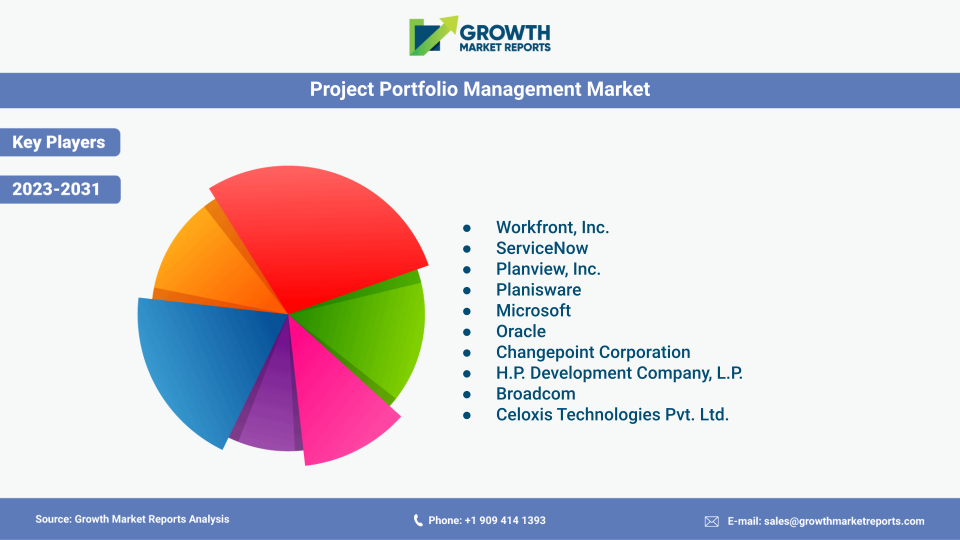
Project Portfolio Management Market Key Players

Major players actively focus on acquiring small businesses or forming partnerships with them to share business intelligence and expertise. Planisware, for example, purchased software publisher NQI in March 2018 to broaden its cloud solutions offering and expand its client base. Planisware can now address a wider range of demands thanks to NQI's Orchestra PPM solution.

 

Frequently Asked Questions

Yes, PPM solutions are available for both large enterprises and SMEs, with customizable features, scalable platforms, and flexible pricing models to meet diverse business needs.

AI and machine learning are enabling automation of routine tasks, predictive analytics, scenario modeling, and improved resource allocation, helping organizations make data-driven decisions and optimize project outcomes.

Key players include Microsoft Corporation, Oracle Corporation, SAP SE, Broadcom Inc. (Clarity PPM), Planview Inc., ServiceNow Inc., Workfront Inc. (Adobe), Planisware, Wrike Inc. (Citrix Systems), and Hexagon AB.

Challenges include data security and privacy concerns, integration complexities with existing systems, resistance to organizational change, and regulatory compliance issues.

North America leads the PPM market, followed by Europe. The Asia Pacific region is experiencing the fastest growth, while Latin America and the Middle East & Africa are also seeing steady adoption.

PPM solutions are primarily deployed via on-premises, cloud, and hybrid models. Cloud-based solutions are gaining popularity due to their scalability and cost-effectiveness.

Major industries adopting PPM solutions include IT and telecom, BFSI (Banking, Financial Services, and Insurance), healthcare, manufacturing, government, and energy and utilities.

Key growth drivers include increasing project complexity, demand for real-time project tracking and analytics, digital transformation initiatives, regulatory compliance, and the adoption of cloud-based PPM solutions.

The PPM market is expected to grow at a CAGR of 10.7% from 2025 to 2033, reaching USD 14.5 billion by the end of the forecast period.

As of 2024, the global project portfolio management (PPM) market size is valued at USD 5.9 billion.

Table Of Content

Chapter 1 Executive Summary
Chapter 2 Assumptions and Acronyms Used
Chapter 3 Research Methodology
Chapter 4 project portfolio management Market Overview
   4.1 Introduction
      4.1.1 Market Taxonomy
      4.1.2 Market Definition
      4.1.3 Macro-Economic Factors Impacting the Market Growth
   4.2 project portfolio management Market Dynamics
      4.2.1 Market Drivers
      4.2.2 Market Restraints
      4.2.3 Market Opportunity
   4.3 project portfolio management Market - Supply Chain Analysis
      4.3.1 List of Key Suppliers
      4.3.2 List of Key Distributors
      4.3.3 List of Key Consumers
   4.4 Key Forces Shaping the project portfolio management Market
      4.4.1 Bargaining Power of Suppliers
      4.4.2 Bargaining Power of Buyers
      4.4.3 Threat of Substitution
      4.4.4 Threat of New Entrants
      4.4.5 Competitive Rivalry
   4.5 Global project portfolio management Market Size & Forecast, 2023-2032
      4.5.1 project portfolio management Market Size and Y-o-Y Growth
      4.5.2 project portfolio management Market Absolute $ Opportunity

Chapter 5 Global project portfolio management Market Analysis and Forecast By Component
   5.1 Introduction
      5.1.1 Key Market Trends & Growth Opportunities By Component
      5.1.2 Basis Point Share (BPS) Analysis By Component
      5.1.3 Absolute $ Opportunity Assessment By Component
   5.2 project portfolio management Market Size Forecast By Component
      5.2.1 Software
      5.2.2 Services
   5.3 Market Attractiveness Analysis By Component

Chapter 6 Global project portfolio management Market Analysis and Forecast By Deployment Mode
   6.1 Introduction
      6.1.1 Key Market Trends & Growth Opportunities By Deployment Mode
      6.1.2 Basis Point Share (BPS) Analysis By Deployment Mode
      6.1.3 Absolute $ Opportunity Assessment By Deployment Mode
   6.2 project portfolio management Market Size Forecast By Deployment Mode
      6.2.1 On-Premises
      6.2.2 Cloud
   6.3 Market Attractiveness Analysis By Deployment Mode

Chapter 7 Global project portfolio management Market Analysis and Forecast By Organization Size
   7.1 Introduction
      7.1.1 Key Market Trends & Growth Opportunities By Organization Size
      7.1.2 Basis Point Share (BPS) Analysis By Organization Size
      7.1.3 Absolute $ Opportunity Assessment By Organization Size
   7.2 project portfolio management Market Size Forecast By Organization Size
      7.2.1 Large Enterprises
      7.2.2 Small and Medium Enterprises
   7.3 Market Attractiveness Analysis By Organization Size

Chapter 8 Global project portfolio management Market Analysis and Forecast By Application
   8.1 Introduction
      8.1.1 Key Market Trends & Growth Opportunities By Application
      8.1.2 Basis Point Share (BPS) Analysis By Application
      8.1.3 Absolute $ Opportunity Assessment By Application
   8.2 project portfolio management Market Size Forecast By Application
      8.2.1 IT and Telecom
      8.2.2 BFSI
      8.2.3 Healthcare
      8.2.4 Manufacturing
      8.2.5 Government
      8.2.6 Energy and Utilities
      8.2.7 Others
   8.3 Market Attractiveness Analysis By Application

Chapter 9 Global project portfolio management Market Analysis and Forecast by Region
   9.1 Introduction
      9.1.1 Key Market Trends & Growth Opportunities By Region
      9.1.2 Basis Point Share (BPS) Analysis By Region
      9.1.3 Absolute $ Opportunity Assessment By Region
   9.2 project portfolio management Market Size Forecast By Region
      9.2.1 North America
      9.2.2 Europe
      9.2.3 Asia Pacific
      9.2.4 Latin America
      9.2.5 Middle East & Africa (MEA)
   9.3 Market Attractiveness Analysis By Region

Chapter 10 Coronavirus Disease (COVID-19) Impact 
   10.1 Introduction 
   10.2 Current & Future Impact Analysis 
   10.3 Economic Impact Analysis 
   10.4 Government Policies 
   10.5 Investment Scenario

Chapter 11 North America project portfolio management Analysis and Forecast
   11.1 Introduction
   11.2 North America project portfolio management Market Size Forecast by Country
      11.2.1 U.S.
      11.2.2 Canada
   11.3 Basis Point Share (BPS) Analysis by Country
   11.4 Absolute $ Opportunity Assessment by Country
   11.5 Market Attractiveness Analysis by Country
   11.6 North America project portfolio management Market Size Forecast By Component
      11.6.1 Software
      11.6.2 Services
   11.7 Basis Point Share (BPS) Analysis By Component 
   11.8 Absolute $ Opportunity Assessment By Component 
   11.9 Market Attractiveness Analysis By Component
   11.10 North America project portfolio management Market Size Forecast By Deployment Mode
      11.10.1 On-Premises
      11.10.2 Cloud
   11.11 Basis Point Share (BPS) Analysis By Deployment Mode 
   11.12 Absolute $ Opportunity Assessment By Deployment Mode 
   11.13 Market Attractiveness Analysis By Deployment Mode
   11.14 North America project portfolio management Market Size Forecast By Organization Size
      11.14.1 Large Enterprises
      11.14.2 Small and Medium Enterprises
   11.15 Basis Point Share (BPS) Analysis By Organization Size 
   11.16 Absolute $ Opportunity Assessment By Organization Size 
   11.17 Market Attractiveness Analysis By Organization Size
   11.18 North America project portfolio management Market Size Forecast By Application
      11.18.1 IT and Telecom
      11.18.2 BFSI
      11.18.3 Healthcare
      11.18.4 Manufacturing
      11.18.5 Government
      11.18.6 Energy and Utilities
      11.18.7 Others
   11.19 Basis Point Share (BPS) Analysis By Application 
   11.20 Absolute $ Opportunity Assessment By Application 
   11.21 Market Attractiveness Analysis By Application

Chapter 12 Europe project portfolio management Analysis and Forecast
   12.1 Introduction
   12.2 Europe project portfolio management Market Size Forecast by Country
      12.2.1 Germany
      12.2.2 France
      12.2.3 Italy
      12.2.4 U.K.
      12.2.5 Spain
      12.2.6 Russia
      12.2.7 Rest of Europe
   12.3 Basis Point Share (BPS) Analysis by Country
   12.4 Absolute $ Opportunity Assessment by Country
   12.5 Market Attractiveness Analysis by Country
   12.6 Europe project portfolio management Market Size Forecast By Component
      12.6.1 Software
      12.6.2 Services
   12.7 Basis Point Share (BPS) Analysis By Component 
   12.8 Absolute $ Opportunity Assessment By Component 
   12.9 Market Attractiveness Analysis By Component
   12.10 Europe project portfolio management Market Size Forecast By Deployment Mode
      12.10.1 On-Premises
      12.10.2 Cloud
   12.11 Basis Point Share (BPS) Analysis By Deployment Mode 
   12.12 Absolute $ Opportunity Assessment By Deployment Mode 
   12.13 Market Attractiveness Analysis By Deployment Mode
   12.14 Europe project portfolio management Market Size Forecast By Organization Size
      12.14.1 Large Enterprises
      12.14.2 Small and Medium Enterprises
   12.15 Basis Point Share (BPS) Analysis By Organization Size 
   12.16 Absolute $ Opportunity Assessment By Organization Size 
   12.17 Market Attractiveness Analysis By Organization Size
   12.18 Europe project portfolio management Market Size Forecast By Application
      12.18.1 IT and Telecom
      12.18.2 BFSI
      12.18.3 Healthcare
      12.18.4 Manufacturing
      12.18.5 Government
      12.18.6 Energy and Utilities
      12.18.7 Others
   12.19 Basis Point Share (BPS) Analysis By Application 
   12.20 Absolute $ Opportunity Assessment By Application 
   12.21 Market Attractiveness Analysis By Application

Chapter 13 Asia Pacific project portfolio management Analysis and Forecast
   13.1 Introduction
   13.2 Asia Pacific project portfolio management Market Size Forecast by Country
      13.2.1 China
      13.2.2 Japan
      13.2.3 South Korea
      13.2.4 India
      13.2.5 Australia
      13.2.6 South East Asia (SEA)
      13.2.7 Rest of Asia Pacific (APAC)
   13.3 Basis Point Share (BPS) Analysis by Country
   13.4 Absolute $ Opportunity Assessment by Country
   13.5 Market Attractiveness Analysis by Country
   13.6 Asia Pacific project portfolio management Market Size Forecast By Component
      13.6.1 Software
      13.6.2 Services
   13.7 Basis Point Share (BPS) Analysis By Component 
   13.8 Absolute $ Opportunity Assessment By Component 
   13.9 Market Attractiveness Analysis By Component
   13.10 Asia Pacific project portfolio management Market Size Forecast By Deployment Mode
      13.10.1 On-Premises
      13.10.2 Cloud
   13.11 Basis Point Share (BPS) Analysis By Deployment Mode 
   13.12 Absolute $ Opportunity Assessment By Deployment Mode 
   13.13 Market Attractiveness Analysis By Deployment Mode
   13.14 Asia Pacific project portfolio management Market Size Forecast By Organization Size
      13.14.1 Large Enterprises
      13.14.2 Small and Medium Enterprises
   13.15 Basis Point Share (BPS) Analysis By Organization Size 
   13.16 Absolute $ Opportunity Assessment By Organization Size 
   13.17 Market Attractiveness Analysis By Organization Size
   13.18 Asia Pacific project portfolio management Market Size Forecast By Application
      13.18.1 IT and Telecom
      13.18.2 BFSI
      13.18.3 Healthcare
      13.18.4 Manufacturing
      13.18.5 Government
      13.18.6 Energy and Utilities
      13.18.7 Others
   13.19 Basis Point Share (BPS) Analysis By Application 
   13.20 Absolute $ Opportunity Assessment By Application 
   13.21 Market Attractiveness Analysis By Application

Chapter 14 Latin America project portfolio management Analysis and Forecast
   14.1 Introduction
   14.2 Latin America project portfolio management Market Size Forecast by Country
      14.2.1 Brazil
      14.2.2 Mexico
      14.2.3 Rest of Latin America (LATAM)
   14.3 Basis Point Share (BPS) Analysis by Country
   14.4 Absolute $ Opportunity Assessment by Country
   14.5 Market Attractiveness Analysis by Country
   14.6 Latin America project portfolio management Market Size Forecast By Component
      14.6.1 Software
      14.6.2 Services
   14.7 Basis Point Share (BPS) Analysis By Component 
   14.8 Absolute $ Opportunity Assessment By Component 
   14.9 Market Attractiveness Analysis By Component
   14.10 Latin America project portfolio management Market Size Forecast By Deployment Mode
      14.10.1 On-Premises
      14.10.2 Cloud
   14.11 Basis Point Share (BPS) Analysis By Deployment Mode 
   14.12 Absolute $ Opportunity Assessment By Deployment Mode 
   14.13 Market Attractiveness Analysis By Deployment Mode
   14.14 Latin America project portfolio management Market Size Forecast By Organization Size
      14.14.1 Large Enterprises
      14.14.2 Small and Medium Enterprises
   14.15 Basis Point Share (BPS) Analysis By Organization Size 
   14.16 Absolute $ Opportunity Assessment By Organization Size 
   14.17 Market Attractiveness Analysis By Organization Size
   14.18 Latin America project portfolio management Market Size Forecast By Application
      14.18.1 IT and Telecom
      14.18.2 BFSI
      14.18.3 Healthcare
      14.18.4 Manufacturing
      14.18.5 Government
      14.18.6 Energy and Utilities
      14.18.7 Others
   14.19 Basis Point Share (BPS) Analysis By Application 
   14.20 Absolute $ Opportunity Assessment By Application 
   14.21 Market Attractiveness Analysis By Application

Chapter 15 Middle East & Africa (MEA) project portfolio management Analysis and Forecast
   15.1 Introduction
   15.2 Middle East & Africa (MEA) project portfolio management Market Size Forecast by Country
      15.2.1 Saudi Arabia
      15.2.2 South Africa
      15.2.3 UAE
      15.2.4 Rest of Middle East & Africa (MEA)
   15.3 Basis Point Share (BPS) Analysis by Country
   15.4 Absolute $ Opportunity Assessment by Country
   15.5 Market Attractiveness Analysis by Country
   15.6 Middle East & Africa (MEA) project portfolio management Market Size Forecast By Component
      15.6.1 Software
      15.6.2 Services
   15.7 Basis Point Share (BPS) Analysis By Component 
   15.8 Absolute $ Opportunity Assessment By Component 
   15.9 Market Attractiveness Analysis By Component
   15.10 Middle East & Africa (MEA) project portfolio management Market Size Forecast By Deployment Mode
      15.10.1 On-Premises
      15.10.2 Cloud
   15.11 Basis Point Share (BPS) Analysis By Deployment Mode 
   15.12 Absolute $ Opportunity Assessment By Deployment Mode 
   15.13 Market Attractiveness Analysis By Deployment Mode
   15.14 Middle East & Africa (MEA) project portfolio management Market Size Forecast By Organization Size
      15.14.1 Large Enterprises
      15.14.2 Small and Medium Enterprises
   15.15 Basis Point Share (BPS) Analysis By Organization Size 
   15.16 Absolute $ Opportunity Assessment By Organization Size 
   15.17 Market Attractiveness Analysis By Organization Size
   15.18 Middle East & Africa (MEA) project portfolio management Market Size Forecast By Application
      15.18.1 IT and Telecom
      15.18.2 BFSI
      15.18.3 Healthcare
      15.18.4 Manufacturing
      15.18.5 Government
      15.18.6 Energy and Utilities
      15.18.7 Others
   15.19 Basis Point Share (BPS) Analysis By Application 
   15.20 Absolute $ Opportunity Assessment By Application 
   15.21 Market Attractiveness Analysis By Application

Chapter 16 Competition Landscape 
   16.1 project portfolio management Market: Competitive Dashboard
   16.2 Global project portfolio management Market: Market Share Analysis, 2023
   16.3 Company Profiles (Details – Overview, Financials, Developments, Strategy) 
      16.3.1 Oracle Corporation
SAP SE
Microsoft Corporation
Broadcom Inc. (Clarity PPM)
Planview Inc.
Workfront Inc. (Adobe)
ServiceNow Inc.
Smartsheet Inc.
Planisware S.A.S.
Wrike Inc.
Upland Software Inc.
Changepoint Corporation
Sciforma Corporation
Celoxis Technologies Pvt. Ltd.
One2Team (Sciforma)
Clarizen Inc.
Hexagon AB
Micro Focus International plc
Sopheon plc
Proggio Ltd.

Methodology

Our Clients

The John Holland Group
Deloitte
Dassault Aviation
Honda Motor Co. Ltd.
Siemens Healthcare
Nestle SA
Microsoft
FedEx Logistics