Segments - by Component (Hardware, Software, Services), by Deployment Model (On-Premises, Hosted), by Organization Size (Small and Medium Enterprises, Large Enterprises), by Industry Vertical (BFSI, Healthcare, IT and Telecommunications, Retail, Government and Public Sector, Manufacturing, Others)
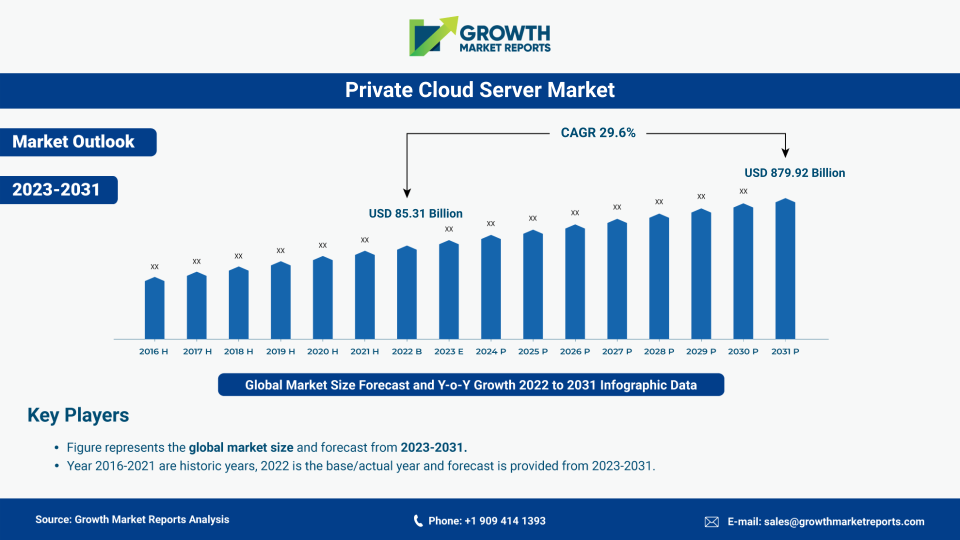
According to our latest research, the global private cloud server market size reached USD 51.2 billion in 2024, demonstrating robust adoption across diverse industries. The market is expected to expand at a CAGR of 13.8% from 2025 to 2033, projecting a significant rise to USD 162.4 billion by 2033. This impressive growth is primarily driven by increasing demands for enhanced data security, regulatory compliance, and scalable IT infrastructure solutions. The private cloud server market continues to evolve as organizations seek to balance control, performance, and flexibility in their digital transformation journeys.
One of the most significant growth factors for the private cloud server market is the escalating need for data privacy and stringent regulatory requirements across industries such as banking, healthcare, and government. Enterprises are increasingly opting for private cloud infrastructure to maintain greater control over sensitive data while ensuring compliance with local and international data protection laws. The proliferation of data breaches and cyber threats has compelled organizations to prioritize secure hosting environments, making private cloud servers an attractive proposition. Additionally, the growing awareness about the risks associated with public cloud deployments is further fueling the shift toward private cloud solutions, especially among organizations handling mission-critical data and applications.
Another key driver for the private cloud server market is the rapid pace of digital transformation and the adoption of advanced technologies such as artificial intelligence, machine learning, and Internet of Things (IoT). These technologies demand robust, scalable, and flexible computing environments that can be tailored to specific business needs. Private cloud servers offer organizations the agility to deploy and manage workloads efficiently, while maintaining strict governance over IT resources. The trend towards hybrid cloud strategies, where enterprises leverage both public and private cloud environments, is also contributing to market growth, as private clouds serve as the foundation for secure and high-performance workloads within these hybrid ecosystems.
The market is further propelled by the rise in remote and distributed workforces, which has increased the need for secure, reliable, and accessible IT infrastructure. Private cloud servers enable organizations to support remote work by providing secure access to corporate applications and data, regardless of employee location. This has become particularly relevant in the post-pandemic era, as businesses seek to enhance operational resilience and continuity. Additionally, advancements in virtualization, automation, and orchestration technologies have made private cloud deployment more cost-effective and manageable, encouraging adoption among both large enterprises and small and medium-sized enterprises (SMEs).
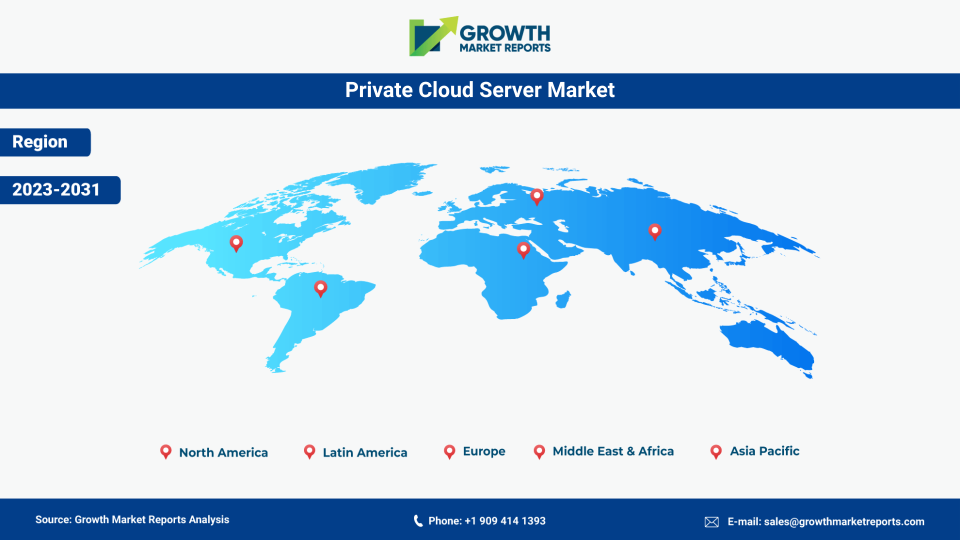
From a regional perspective, North America continues to dominate the private cloud server market, driven by the presence of major technology providers, high digital maturity, and early adoption of cloud technologies. Europe follows closely, with strong emphasis on data sovereignty and GDPR compliance fueling demand for private cloud solutions. The Asia Pacific region is witnessing the fastest growth, attributed to rapid digitalization, expanding IT infrastructure, and increasing investments in cloud computing by enterprises and governments. As the market matures, emerging economies in Latin America and the Middle East & Africa are also expected to contribute significantly to overall growth, supported by ongoing digital transformation initiatives and rising awareness of cloud benefits.
The concept of a Virtual Private Cloud (VPC) has gained traction as organizations seek to combine the benefits of both private and public cloud environments. A VPC allows businesses to create a logically isolated section within a public cloud, providing the flexibility and scalability of public cloud services while maintaining the security and control of a private cloud. This hybrid approach is particularly appealing to enterprises that require stringent data protection measures but also need to leverage the cost efficiencies and agility offered by public cloud providers. By utilizing VPCs, organizations can tailor their cloud environments to specific business needs, ensuring optimal performance and compliance with regulatory standards.
The private cloud server market is segmented by component into hardware, software, and services, each playing a critical role in shaping the ecosystem. The hardware segment, comprising servers, storage systems, and networking equipment, forms the backbone of private cloud infrastructures. Organizations are investing heavily in high-performance and energy-efficient hardware to ensure optimal performance, reliability, and scalability of their private cloud environments. The adoption of advanced hardware technologies, such as hyper-converged infrastructure and flash-based storage, is gaining momentum as enterprises seek to enhance operational efficiency and reduce total cost of ownership. This segment remains crucial, particularly for organizations with stringent performance and latency requirements.
The software segment encompasses cloud management platforms, virtualization software, security tools, and orchestration solutions. With the increasing complexity of private cloud environments, robust software solutions are essential for automating processes, managing resources, and ensuring seamless integration with existing IT systems. Cloud management platforms enable organizations to monitor, provision, and optimize their private cloud resources, while security software provides protection against evolving cyber threats. The demand for software-defined solutions is rising, as enterprises look to achieve greater flexibility and agility in managing their private cloud infrastructures. Enhanced automation and AI-driven management capabilities are further driving the growth of this segment.
Services form another vital component of the private cloud server market, encompassing consulting, integration, migration, support, and managed services. As organizations navigate the complexities of private cloud adoption, they increasingly rely on specialized service providers to design, deploy, and manage their cloud environments. Consulting and integration services help enterprises develop tailored cloud strategies, while migration services facilitate the seamless transition of workloads from legacy systems to private clouds. Managed services are particularly in demand among SMEs, enabling them to leverage private cloud benefits without the need for extensive in-house IT expertise. The services segment is expected to witness steady growth, driven by the need for ongoing support and optimization in dynamic cloud environments.
The interplay between hardware, software, and services is essential for delivering comprehensive private cloud solutions that meet diverse business requirements. Vendors are increasingly offering integrated solutions that combine best-in-class hardware, software, and services, ensuring seamless deployment and management of private cloud infrastructures. This holistic approach not only simplifies procurement and implementation for customers but also enhances the overall value proposition of private cloud offerings. As the market evolves, the focus on interoperability, scalability, and security across all components will remain paramount, shaping the future trajectory of the private cloud server market.
| Attributes | Details |
| Report Title | Private Cloud Server Market Research Report 2033 |
| By Component | Hardware, Software, Services |
| By Deployment Model | On-Premises, Hosted |
| By Organization Size | Small and Medium Enterprises, Large Enterprises |
| By Industry Vertical | BFSI, Healthcare, IT and Telecommunications, Retail, Government and Public Sector, Manufacturing, Others |
| Regions Covered | North America, Europe, APAC, Latin America, MEA |
| Base Year | 2024 |
| Historic Data | 2018-2023 |
| Forecast Period | 2025-2033 |
| Number of Pages | 272 |
| Number of Tables & Figures | 375 |
| Customization Available | Yes, the report can be customized as per your need. |
The deployment model segment of the private cloud server market is bifurcated into on-premises and hosted models, each catering to distinct organizational needs and preferences. On-premises private cloud deployments involve the installation and management of cloud infrastructure within the organizationÂ’s own data centers. This model offers maximum control, customization, and security, making it the preferred choice for enterprises with strict regulatory, compliance, or data sovereignty requirements. On-premises deployments are particularly prevalent in sectors such as banking, healthcare, and government, where data sensitivity and compliance are paramount. However, the capital expenditure and resource requirements for on-premises private clouds can be significant, necessitating careful planning and investment.
Hosted private cloud models, on the other hand, involve outsourcing the management and maintenance of cloud infrastructure to a third-party service provider, while retaining the dedicated resources and isolation benefits of a private cloud. This approach offers organizations the advantages of scalability, reduced operational complexity, and predictable costs, without the need for extensive in-house IT resources. Hosted private clouds are gaining popularity among SMEs and organizations with limited IT expertise, as they enable rapid deployment and access to advanced cloud capabilities. Service providers typically offer robust security, compliance, and support services, ensuring that customer data and applications remain protected and available at all times.
The choice between on-premises and hosted private cloud deployments is influenced by a range of factors, including regulatory requirements, budget constraints, IT maturity, and strategic objectives. Hybrid deployment models are also emerging, allowing organizations to combine the control of on-premises private clouds with the flexibility and scalability of hosted solutions. This hybrid approach is particularly appealing to enterprises seeking to optimize workload placement, enhance disaster recovery capabilities, and support dynamic business needs. As the market matures, the boundaries between deployment models are becoming increasingly blurred, with vendors offering flexible and customizable solutions that can be tailored to specific organizational requirements.
Innovations in deployment models are further driving market growth, as organizations seek to balance performance, security, and cost-effectiveness in their cloud strategies. The adoption of containerization, microservices, and edge computing is enabling more agile and distributed private cloud deployments, supporting a wide range of use cases across industries. As enterprises continue to prioritize digital transformation and operational resilience, the demand for flexible, scalable, and secure private cloud deployment models is expected to remain strong, shaping the future landscape of the market.
The private cloud server market caters to organizations of all sizes, with distinct adoption patterns and requirements observed among small and medium enterprises (SMEs) and large enterprises. Large enterprises, with their complex IT environments and substantial resources, have traditionally been the primary adopters of private cloud solutions. These organizations require robust, scalable, and secure infrastructure to support mission-critical applications, manage vast volumes of data, and ensure compliance with stringent regulatory standards. Large enterprises are increasingly leveraging private clouds as part of their broader hybrid and multi-cloud strategies, enabling them to optimize workload placement, enhance operational efficiency, and drive innovation at scale.
SMEs, on the other hand, are emerging as a significant growth segment in the private cloud server market, driven by the need to enhance competitiveness, agility, and security in an increasingly digital business landscape. While SMEs may face resource constraints compared to larger counterparts, advancements in virtualization, automation, and managed services have lowered the barriers to private cloud adoption. Hosted private cloud solutions, in particular, are gaining traction among SMEs, offering access to enterprise-grade infrastructure and security without the need for significant upfront investment or specialized IT expertise. This democratization of private cloud technology is enabling SMEs to accelerate digital transformation, improve customer experiences, and drive business growth.
The adoption of private cloud servers by organizations of all sizes is further supported by the growing availability of flexible and customizable solutions. Vendors are offering modular private cloud offerings that can be tailored to the specific needs and budgets of different organizations, ensuring that both SMEs and large enterprises can realize the benefits of private cloud computing. The ability to scale resources on-demand, pay only for what is used, and access advanced security and compliance features is particularly appealing to organizations seeking to optimize IT investments and support business growth.
As digital transformation accelerates across industries, the role of private cloud servers in enabling innovation, agility, and resilience is becoming increasingly critical for organizations of all sizes. Whether supporting the complex requirements of large enterprises or empowering SMEs to compete in a digital-first world, private cloud solutions are poised to play a central role in the future of enterprise IT. Ongoing advancements in technology, coupled with evolving business needs, will continue to shape the adoption and evolution of private cloud servers across the organizational spectrum.
The private cloud server market serves a diverse range of industry verticals, each with unique requirements and adoption drivers. The banking, financial services, and insurance (BFSI) sector is among the leading adopters of private cloud solutions, driven by the need for stringent data security, regulatory compliance, and high availability. Private cloud servers enable BFSI organizations to protect sensitive customer data, support real-time transactions, and comply with industry regulations such as PCI DSS and GDPR. The ability to customize and control cloud environments is particularly critical in this sector, where trust, reliability, and performance are paramount.
The healthcare industry is another major vertical driving demand for private cloud servers, as organizations seek to manage and protect vast volumes of sensitive patient data. Private cloud solutions offer healthcare providers the security, compliance, and scalability needed to support electronic health records (EHRs), telemedicine, and advanced analytics. Compliance with regulations such as HIPAA and GDPR is a key consideration, making private clouds an attractive option for healthcare organizations aiming to ensure data privacy and integrity. Additionally, the rise of digital health initiatives and remote patient monitoring is further fueling the adoption of private cloud infrastructure in the healthcare sector.
The IT and telecommunications sector is leveraging private cloud servers to support the rapid growth of digital services, applications, and connected devices. Private clouds enable IT and telecom companies to deliver scalable, high-performance, and secure services to customers, while optimizing resource utilization and operational efficiency. The ability to rapidly provision and manage infrastructure is critical in this fast-paced industry, where agility and innovation are key competitive differentiators. Private cloud servers also play a vital role in supporting emerging technologies such as 5G, IoT, and edge computing, enabling service providers to deliver next-generation solutions to their customers.
Other key industry verticals adopting private cloud servers include retail, government and public sector, and manufacturing. Retailers are leveraging private clouds to enhance customer experiences, streamline operations, and support e-commerce growth, while government agencies are adopting private cloud solutions to ensure data sovereignty, security, and compliance. The manufacturing sector is utilizing private cloud servers to support smart manufacturing, supply chain optimization, and industrial IoT initiatives. The ability to customize and control cloud environments is a common theme across these verticals, as organizations seek to address industry-specific challenges and capitalize on digital transformation opportunities.
The private cloud server market presents a wealth of opportunities for innovation and growth, particularly as organizations increasingly prioritize data security, regulatory compliance, and digital transformation. One of the most significant opportunities lies in the integration of private cloud servers with emerging technologies such as artificial intelligence, machine learning, and edge computing. By leveraging AI-driven automation, predictive analytics, and real-time data processing, organizations can unlock new levels of efficiency, agility, and business value from their private cloud environments. Additionally, the expansion of hybrid and multi-cloud strategies presents opportunities for vendors to offer integrated solutions that seamlessly connect private and public cloud resources, enabling organizations to optimize workload placement and enhance operational resilience.
Another key opportunity in the private cloud server market is the growing demand for industry-specific solutions and managed services. As organizations seek to address unique regulatory, compliance, and operational requirements, there is increasing demand for tailored private cloud offerings that cater to specific industry verticals. Managed service providers can capitalize on this trend by offering end-to-end solutions that encompass consulting, integration, migration, and ongoing management, enabling organizations to focus on core business activities while leveraging the benefits of private cloud computing. The rise of SMEs as a significant adoption segment also presents opportunities for vendors to develop cost-effective, scalable, and easy-to-deploy private cloud solutions that meet the needs of smaller organizations.
Despite the numerous opportunities, the private cloud server market faces several challenges and restrainers that could impact growth. One of the primary restraining factors is the high initial capital investment and resource requirements associated with on-premises private cloud deployments. For many organizations, especially SMEs, the cost and complexity of building and managing private cloud infrastructure can be prohibitive. Additionally, the shortage of skilled IT professionals with expertise in cloud technologies, security, and compliance remains a significant barrier to adoption. As the market evolves, addressing these challenges through innovative solutions, flexible pricing models, and comprehensive support services will be critical to sustaining long-term growth.
North America continues to lead the private cloud server market, accounting for the largest share with a market size of USD 20.4 billion in 2024. The region is characterized by high digital maturity, early adoption of advanced cloud technologies, and a strong presence of leading technology providers such as IBM, Microsoft, and Amazon Web Services. Regulatory requirements related to data privacy and security, particularly in the BFSI and healthcare sectors, are further driving demand for private cloud solutions. The United States remains the dominant market within the region, supported by significant investments in IT infrastructure and a robust ecosystem of cloud service providers.
Europe is the second-largest market for private cloud servers, with a market size of USD 13.6 billion in 2024. The regionÂ’s growth is fueled by stringent data protection regulations, such as the General Data Protection Regulation (GDPR), which mandate strict controls over data storage and processing. Countries such as Germany, the United Kingdom, and France are at the forefront of private cloud adoption, driven by strong demand from government, healthcare, and financial services sectors. The European market is expected to grow at a CAGR of 12.4% over the forecast period, as organizations continue to invest in secure and compliant cloud infrastructure to support digital transformation initiatives.
The Asia Pacific region is witnessing the fastest growth in the private cloud server market, with a market size of USD 10.2 billion in 2024. Rapid digitalization, expanding IT infrastructure, and increasing investments in cloud computing by enterprises and governments are driving market expansion across countries such as China, Japan, India, and Australia. The regionÂ’s diverse business landscape, coupled with rising awareness of cloud benefits and the need for data localization, is fueling demand for private cloud solutions. As digital transformation accelerates in emerging economies, the Asia Pacific market is poised to play a pivotal role in the global private cloud server landscape, contributing significantly to overall market growth.
The private cloud server market is characterized by intense competition, with a diverse array of global and regional players vying for market share. The competitive landscape is shaped by continuous innovation, strategic partnerships, and a focus on delivering comprehensive solutions that address the evolving needs of customers. Leading vendors are investing heavily in research and development to enhance their product offerings, integrate advanced technologies such as AI and automation, and improve interoperability with existing IT environments. The ability to offer flexible, scalable, and secure private cloud solutions is a key differentiator in this dynamic market.
Strategic collaborations and alliances are becoming increasingly important as vendors seek to expand their market reach and deliver integrated solutions that span the entire cloud ecosystem. Partnerships between hardware providers, software vendors, and managed service providers enable the delivery of end-to-end private cloud solutions that address the full spectrum of customer needs, from infrastructure and management to security and compliance. Mergers and acquisitions are also shaping the competitive landscape, as leading players seek to strengthen their capabilities, expand their customer base, and enter new markets.
The market is witnessing the emergence of specialized players focused on industry-specific solutions and managed services, catering to the unique requirements of sectors such as BFSI, healthcare, and government. These niche providers are leveraging deep domain expertise and tailored offerings to differentiate themselves in a crowded marketplace. At the same time, global technology giants continue to dominate the market through their extensive product portfolios, global reach, and robust support capabilities. The ability to deliver seamless integration, superior performance, and comprehensive support is critical to maintaining a competitive edge in the private cloud server market.
Major companies operating in the private cloud server market include IBM Corporation, Microsoft Corporation, Amazon Web Services (AWS), Dell Technologies, Hewlett Packard Enterprise (HPE), Cisco Systems, VMware, Inc., Oracle Corporation, and Rackspace Technology. IBM Corporation is renowned for its hybrid cloud and AI-driven solutions, enabling organizations to modernize IT infrastructure and drive digital transformation. Microsoft Corporation offers Azure Stack, a leading private cloud platform that integrates seamlessly with its public cloud services, providing customers with a unified hybrid cloud experience. Amazon Web Services (AWS) continues to expand its private cloud offerings through AWS Outposts and other solutions, enabling organizations to run AWS infrastructure and services on-premises.
Dell Technologies and Hewlett Packard Enterprise (HPE) are leading providers of private cloud infrastructure, offering a wide range of servers, storage, networking, and management solutions tailored to enterprise requirements. Cisco Systems specializes in networking and security solutions for private cloud environments, while VMware, Inc. is a pioneer in virtualization and cloud management software. Oracle Corporation delivers integrated private cloud solutions optimized for database and enterprise applications, and Rackspace Technology is a prominent managed service provider, offering end-to-end private cloud services to organizations of all sizes. These companies are continuously innovating to address the evolving needs of the market, ensuring that customers can leverage secure, scalable, and high-performance private cloud environments to drive business success.
The Private Cloud Server market has been segmented on the basis of
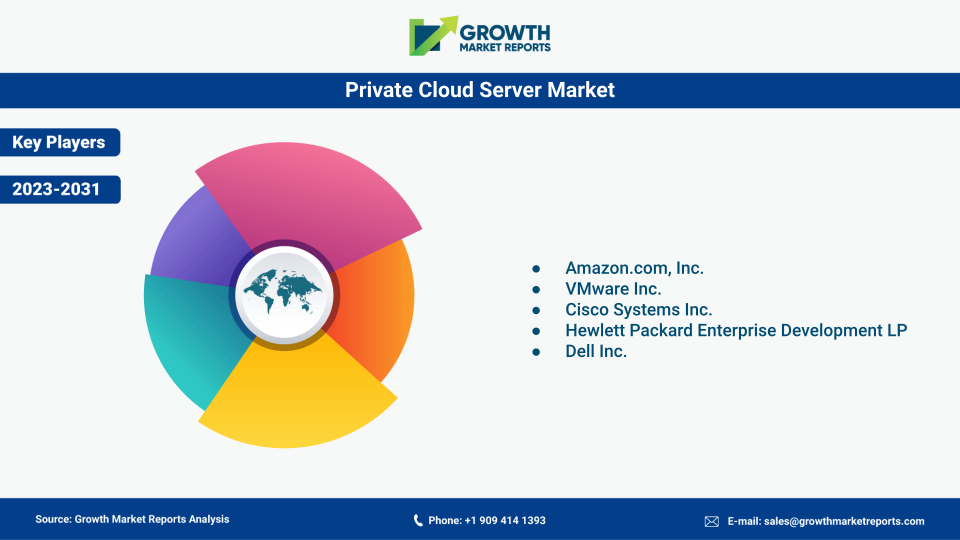
Key players competing in the global private cloud server market are Amazon.com, Inc.; VMware Inc.; Cisco Systems Inc.; Hewlett Packard Enterprise Development LP; and Dell Inc.
Companies are focusing on investment in R&D for development of technological advanced private cloud server for the buildings. Furthermore, companies are widely engaging in strategic partnership, merger & acquisition, agreements, new product launch, and collaborations to boost their market share and acquiring new buyers.
Yes, the Private Cloud Server Market Research Report 2033 offers customization options to address specific business requirements, regions, or industry verticals.
Key players include Amazon Web Services (AWS), Microsoft Corporation, IBM Corporation, Dell Technologies, Hewlett Packard Enterprise (HPE), Cisco Systems, VMware, Oracle Corporation, Rackspace Technology, and others.
Opportunities include integration with AI, machine learning, and edge computing, as well as industry-specific and managed services. Challenges include high initial investment for on-premises deployments and a shortage of skilled IT professionals.
North America leads the market, followed by Europe and the rapidly growing Asia Pacific region. North America benefits from high digital maturity, while Europe is driven by GDPR compliance, and Asia Pacific by rapid digitalization and IT investments.
SMEs are increasingly adopting hosted private cloud solutions due to lower upfront costs, access to enterprise-grade security, and managed services, enabling them to compete digitally without extensive in-house IT resources.
The market is segmented into hardware (servers, storage, networking), software (cloud management, virtualization, security), and services (consulting, integration, migration, managed services), all crucial for comprehensive private cloud solutions.
Leading industries include banking, financial services and insurance (BFSI), healthcare, IT and telecommunications, retail, government and public sector, and manufacturing, each driven by unique security, compliance, and operational needs.
On-premises private cloud deployments are managed within an organization’s own data centers, offering maximum control and security, while hosted private clouds are managed by third-party providers, offering scalability, reduced complexity, and predictable costs.
Key growth drivers include heightened data privacy needs, strict regulatory requirements, the rise in cyber threats, rapid digital transformation, adoption of AI and IoT, and the increasing demand for secure and flexible IT environments.
The global private cloud server market reached USD 51.2 billion in 2024 and is expected to grow at a CAGR of 13.8% to reach USD 162.4 billion by 2033, driven by increasing demand for data security, regulatory compliance, and scalable IT infrastructure.