Pregnancy Test Kit Market Research Report 2033

Pregnancy Test Kit Market Research Report 2033

Segments - by Product Type (Urine Test Kits, Blood Test Kits, Digital Pregnancy Test Kits), by Test Type (Home-Based, Clinical), by Distribution Channel (Pharmacies, Online Stores, Supermarkets/Hypermarkets, Others), by End-User (Hospitals, Diagnostic Laboratories, Home Care, Others)

https://growthmarketreports.com/raksha
Author : Raksha Sharma
https://growthmarketreports.com/Vaibhav
Fact-checked by : V. Chandola
https://growthmarketreports.com/Shruti
Editor : Shruti Bhat

Upcoming | Report ID :HC-4148 | 4.0 Rating | 55 Reviews | 255 Pages | Format : Docx PDF

Report Description


Pregnancy Test Kit Market Outlook

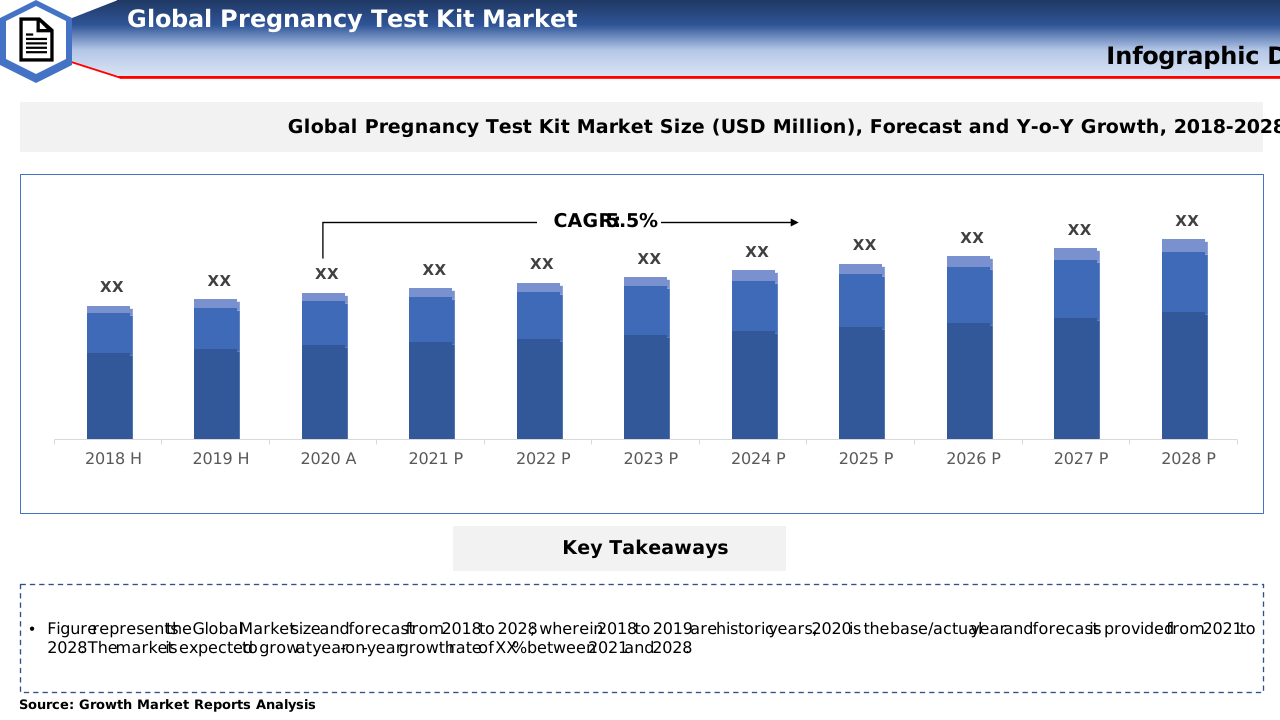
According to our latest research, the global pregnancy test kit market size in 2024 stands at USD 1.83 billion, with a robust compound annual growth rate (CAGR) of 5.2% projected over the forecast period. This consistent growth is propelled by increasing awareness regarding early pregnancy detection, greater accessibility of test kits, and rising demand for home-based healthcare solutions. By 2033, the market is anticipated to reach USD 2.91 billion, as per our CAGR-based projections. The marketÂ’s expansion is further fueled by technological advancements in test kit accuracy and digital integration, as well as evolving consumer preferences for private and rapid results.

One of the key growth drivers for the pregnancy test kit market is the growing awareness about reproductive health and the importance of early pregnancy detection among women worldwide. Educational initiatives by governmental and non-governmental organizations have played a pivotal role in informing women about the benefits of early diagnosis, which helps in timely medical intervention and prenatal care. The increasing literacy rates, especially in emerging economies, have also contributed to a surge in the adoption of pregnancy test kits. Furthermore, the stigma associated with visiting clinics for pregnancy confirmation has encouraged many women to opt for home-based testing, thereby boosting the market demand for convenient and private solutions.

Another significant factor contributing to the marketÂ’s growth is the continuous technological innovation in pregnancy test kits. Manufacturers are increasingly focusing on enhancing the sensitivity, specificity, and user-friendliness of these kits. The advent of digital pregnancy test kits that offer clear digital readouts, Bluetooth connectivity, and app integration for result tracking has transformed the consumer experience. These advancements not only provide more accurate and rapid results but also improve user confidence and satisfaction. The integration of digital technology is particularly appealing to the tech-savvy younger demographic, further expanding the consumer base and driving market growth.

In addition to test kits, the market for Pregnancy Care Products is also witnessing significant growth. These products, which include prenatal vitamins, maternity clothing, and skincare items specifically designed for pregnant women, are becoming increasingly popular as more women prioritize their health and comfort during pregnancy. The rise in disposable income and the growing awareness of prenatal care's importance are driving the demand for these products. Furthermore, the availability of a wide range of options through online platforms and retail stores is making it easier for expectant mothers to access the products they need, contributing to the overall growth of the pregnancy care industry.

The evolution of distribution channels has also played a crucial role in the expansion of the pregnancy test kit market. With the proliferation of online pharmacies and e-commerce platforms, consumers now have easier access to a diverse range of products, often at competitive prices and with the added benefit of privacy. Retail pharmacies and supermarkets/hypermarkets continue to be prominent distribution points, especially in developed regions, owing to their widespread presence and the trust they command among consumers. The rise of direct-to-consumer brands and subscription-based models is also reshaping how pregnancy test kits are marketed and delivered, catering to the modern consumerÂ’s demand for convenience and discretion.

From a regional perspective, North America continues to dominate the pregnancy test kit market due to high awareness, advanced healthcare infrastructure, and the presence of key market players. However, the Asia Pacific region is witnessing the fastest growth, driven by increasing urbanization, rising disposable incomes, and improving healthcare access. Europe follows closely, supported by favorable reimbursement policies and robust retail networks. Latin America and the Middle East & Africa are gradually catching up, with growing investments in healthcare and expanding retail sectors. The regional dynamics are further influenced by cultural factors, government initiatives, and the pace of technological adoption in each market.

Global Pregnancy Test Kit Industry Outlook

Product Type Analysis

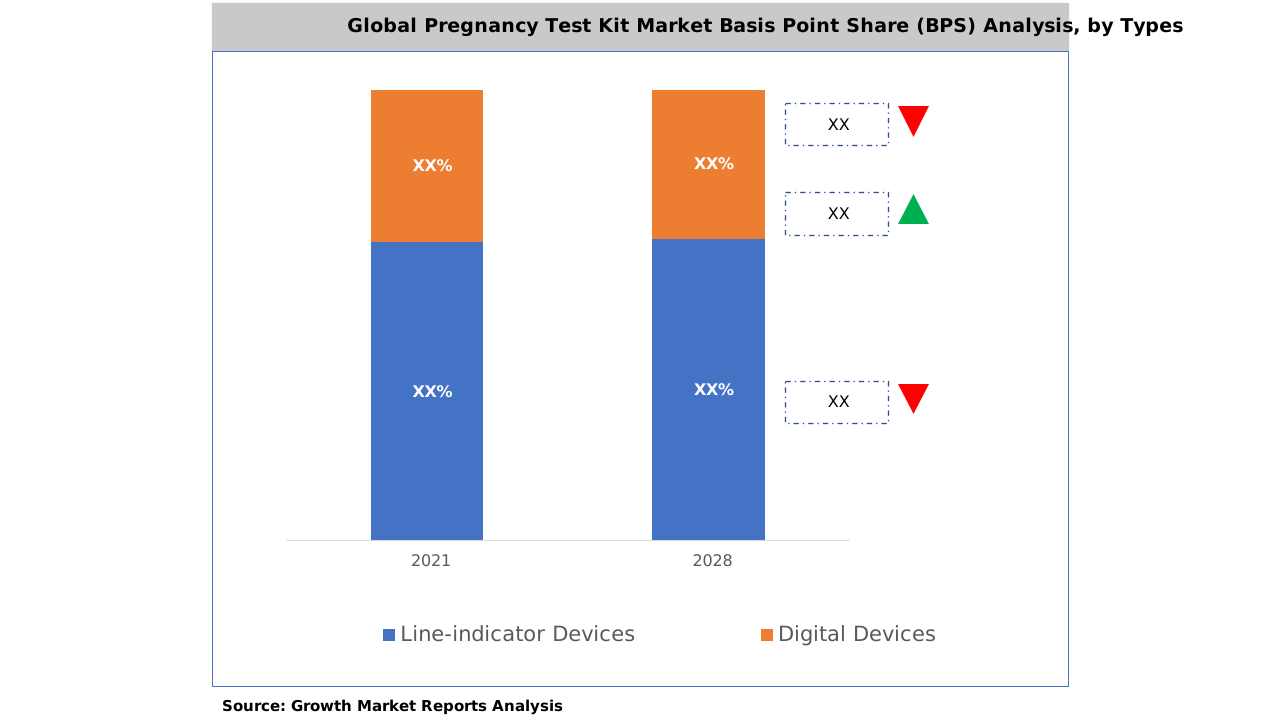
The product type segment of the pregnancy test kit market is broadly categorized into urine test kits, blood test kits, and digital pregnancy test kits. Urine test kits remain the most widely used product type, owing to their affordability, ease of use, and non-invasiveness. These kits are designed for both home and clinical settings, offering rapid results with minimal procedural complexity. Over the years, improvements in the sensitivity and reliability of urine test kits have significantly enhanced their appeal, making them the first choice for early pregnancy detection globally. The widespread availability of these kits across pharmacies and retail outlets further cements their leading position in the market.

Blood test kits, although less commonly used for home testing, are integral in clinical settings where higher accuracy and early detection are critical. These kits can detect pregnancy at earlier stages compared to urine test kits, as they measure the presence of human chorionic gonadotropin (hCG) in blood, which rises sooner after conception. Blood test kits are primarily utilized in hospitals, diagnostic laboratories, and fertility clinics, where confirmatory testing and monitoring of pregnancy progression are required. The adoption of blood test kits is expected to grow steadily, particularly in regions with advanced healthcare infrastructure and a high prevalence of medically supervised pregnancies.

Digital pregnancy test kits represent the fastest-growing product segment, driven by consumer demand for enhanced accuracy and user-friendly interfaces. These kits typically feature digital displays that eliminate ambiguity in result interpretation, offering clear "pregnant" or "not pregnant" readouts. Some advanced models incorporate connectivity features, allowing users to sync results with mobile apps for tracking and guidance. The convenience and reliability offered by digital kits are attracting a younger, tech-savvy demographic, as well as first-time users seeking reassurance and ease of use. As technology continues to evolve, digital pregnancy test kits are expected to capture a larger share of the market.

The competitive landscape within the product type segment is marked by continuous innovation and differentiation strategies. Leading manufacturers are investing in research and development to introduce kits with higher sensitivity, shorter result times, and value-added features such as ovulation tracking and cycle prediction. The integration of eco-friendly materials and sustainable packaging is also emerging as a key trend, reflecting growing consumer awareness about environmental impact. As the market becomes more crowded, branding, regulatory compliance, and customer support are increasingly important factors influencing product success and consumer loyalty.

The market for Ovulation Test Kits is also experiencing a surge in demand, driven by the increasing focus on family planning and fertility awareness. These kits, which help women identify their most fertile days, are becoming an essential tool for those looking to conceive. The convenience and accuracy of modern ovulation test kits, often featuring digital displays and app connectivity, are appealing to tech-savvy consumers. As more women seek to understand their reproductive health better, the demand for ovulation test kits is expected to rise, further complementing the growth of the broader pregnancy and fertility product market.

Report Scope

Attributes Details
Report Title Pregnancy Test Kit Market Research Report 2033
By Product Type Urine Test Kits, Blood Test Kits, Digital Pregnancy Test Kits
By Test Type Home-Based, Clinical
By Distribution Channel Pharmacies, Online Stores, Supermarkets/Hypermarkets, Others
By End-User Hospitals, Diagnostic Laboratories, Home Care, Others
Regions Covered North America, Europe, APAC, Latin America, MEA
Base Year 2024
Historic Data 2018-2023
Forecast Period 2025-2033
Number of Pages 255
Number of Tables & Figures 310
Customization Available Yes, the report can be customized as per your need.

Test Type Analysis

Within the test type segment, pregnancy test kits are primarily divided into home-based and clinical tests. Home-based pregnancy test kits have experienced a surge in demand due to their convenience, privacy, and ease of accessibility. These kits empower women to confirm pregnancy in the comfort of their homes, avoiding the potential stigma or discomfort associated with visiting a healthcare facility. The home-based segmentÂ’s growth is further supported by rising awareness, improved product reliability, and a broad range of options available through retail and online channels. Educational campaigns and endorsements by healthcare professionals have also played a role in building consumer trust in home-based testing solutions.

Clinical pregnancy test kits, on the other hand, are predominantly used in hospitals, diagnostic laboratories, and fertility clinics. These kits are favored for their higher accuracy, early detection capabilities, and the ability to provide quantitative results, which are essential for monitoring hCG levels during early pregnancy. Clinical tests are often used to confirm the results of home-based kits or to detect pregnancy in women undergoing fertility treatments. The clinical segment is also driven by the increasing prevalence of high-risk pregnancies and the growing emphasis on early and accurate diagnosis to ensure optimal maternal and fetal health outcomes.

The interaction between home-based and clinical test types is characterized by a complementary relationship rather than direct competition. While home-based kits cater to the need for privacy and convenience, clinical tests fulfill the demand for precision and medical supervision. This dynamic has led to a holistic market approach, with manufacturers offering product portfolios that address both segments. The trend towards telemedicine and remote consultations is further blurring the lines between home and clinical testing, as healthcare providers increasingly recommend home-based kits for preliminary screening before clinical confirmation.

Regulatory standards and quality assurance play a critical role in shaping the test type segment. Both home-based and clinical pregnancy test kits must adhere to stringent regulatory guidelines to ensure accuracy, safety, and reliability. Regulatory bodies such as the US FDA and the European Medicines Agency (EMA) enforce rigorous testing and approval processes, which instill confidence among consumers and healthcare professionals alike. As the market evolves, ongoing innovation and compliance with regulatory standards will remain central to the sustained growth and credibility of both home-based and clinical test segments.

Distribution Channel Analysis

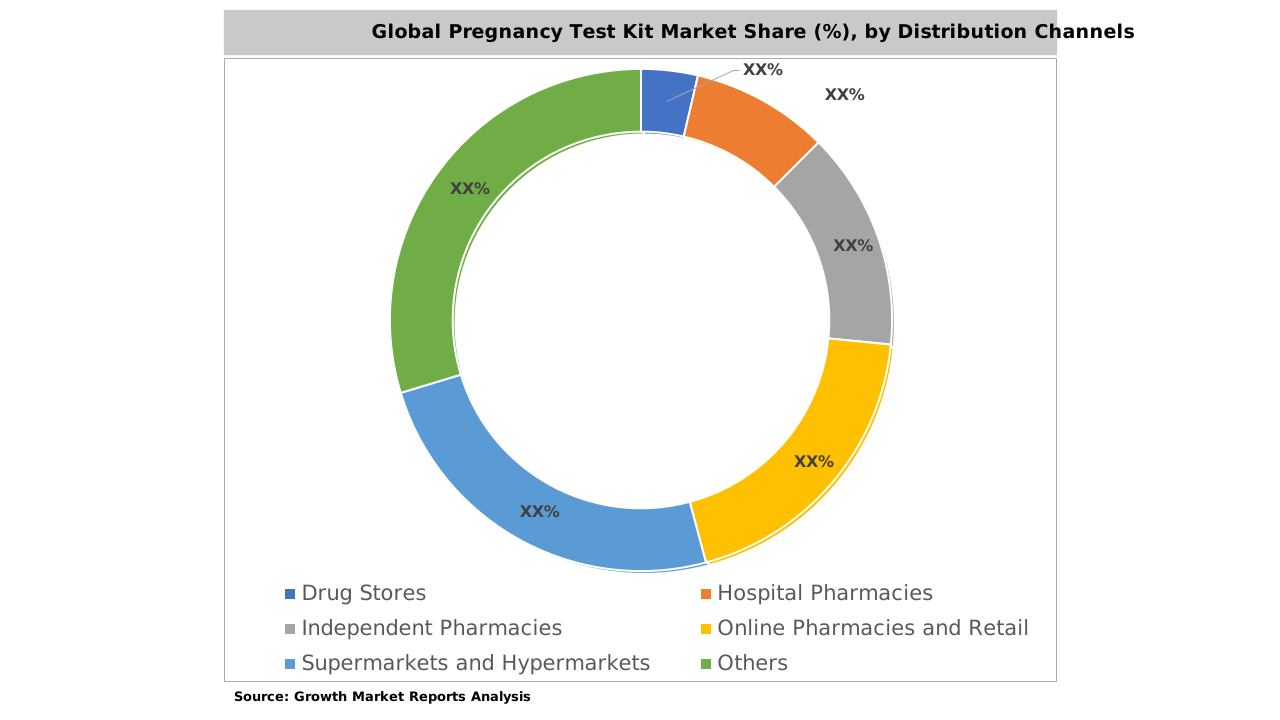
The distribution channel segment is a crucial determinant of the pregnancy test kit marketÂ’s reach and accessibility. Pharmacies remain the dominant distribution channel, accounting for the largest market share due to their widespread network, convenience, and the trust they command among consumers. Pharmacies offer a range of products, from basic urine test kits to advanced digital options, and often provide guidance from trained pharmacists. This channel is particularly important in developing countries, where pharmacies serve as primary healthcare access points and play a vital role in educating consumers about proper product usage and interpretation of results.

Online stores have emerged as the fastest-growing distribution channel, driven by the global shift towards e-commerce and digital health solutions. The rise of online pharmacies and direct-to-consumer brands has made pregnancy test kits more accessible, especially in regions where physical retail infrastructure is limited. Online platforms offer a discreet purchasing experience, competitive pricing, and doorstep delivery, which are highly valued by consumers seeking privacy and convenience. The COVID-19 pandemic further accelerated the adoption of online channels, as lockdowns and social distancing measures prompted consumers to seek remote purchasing options for essential healthcare products.

Supermarkets and hypermarkets also play a significant role in the distribution of pregnancy test kits, particularly in urban areas with high footfall and diverse consumer demographics. These retail outlets offer the advantage of one-stop shopping, where consumers can purchase pregnancy test kits alongside other personal care and healthcare products. The visibility and accessibility provided by supermarkets and hypermarkets contribute to impulse purchases and broaden the marketÂ’s reach to a wider audience. Manufacturers often collaborate with retail chains to launch promotional campaigns and in-store displays to drive sales and enhance brand visibility.

Other distribution channels, such as specialty stores and clinics, cater to niche markets and specific consumer needs. Specialty stores may offer premium or eco-friendly pregnancy test kits, targeting environmentally conscious consumers or those with specific health concerns. Clinics and healthcare facilities distribute pregnancy test kits as part of comprehensive reproductive health services, often in conjunction with counseling and follow-up care. The diversification of distribution channels reflects the marketÂ’s adaptability to changing consumer preferences and the growing emphasis on personalized healthcare solutions.

End-User Analysis

The end-user segment of the pregnancy test kit market encompasses hospitals, diagnostic laboratories, home care, and other settings. Hospitals represent a significant end-user category, particularly for blood-based and clinical pregnancy test kits. In hospital settings, pregnancy testing is often integrated into routine diagnostic protocols for women of reproductive age, emergency care, and pre-surgical assessments. The emphasis on early and accurate diagnosis in hospitals drives the demand for high-sensitivity test kits and supports the adoption of advanced technologies for rapid result delivery and electronic health record integration.

Diagnostic laboratories are another key end-user segment, primarily utilizing blood test kits for quantitative hCG measurement and confirmatory testing. Laboratories play a critical role in supporting fertility clinics, prenatal care providers, and obstetricians by offering precise and reliable pregnancy testing services. The increasing prevalence of fertility treatments and assisted reproductive technologies has led to a rise in laboratory-based pregnancy testing, as timely and accurate detection is essential for monitoring treatment outcomes and managing patient care. The laboratory segment is also characterized by a focus on quality assurance, regulatory compliance, and data management.

Home care is a rapidly expanding end-user segment, driven by the growing preference for self-testing and remote healthcare management. Home-based pregnancy test kits empower women to take charge of their reproductive health, offering privacy, convenience, and immediate results. The rise of telemedicine and digital health platforms has further facilitated the integration of home-based testing into broader healthcare ecosystems, enabling remote consultations and follow-up care. The home care segmentÂ’s growth is supported by increasing consumer awareness, product innovation, and the availability of user-friendly and reliable test kits.

Other end-users, including community health centers, NGOs, and educational institutions, contribute to the marketÂ’s diversity and reach. Community health centers often distribute pregnancy test kits as part of maternal and child health programs, particularly in underserved regions. NGOs and government agencies play a vital role in promoting reproductive health awareness and providing free or subsidized test kits to vulnerable populations. Educational institutions may also offer pregnancy testing services as part of student health programs, reflecting the marketÂ’s adaptability to various healthcare settings and demographic needs.

Opportunities & Threats

The pregnancy test kit market presents significant opportunities driven by technological innovation and the expansion of digital health solutions. The integration of artificial intelligence, mobile applications, and connected devices into pregnancy test kits opens new avenues for personalized healthcare and remote monitoring. These advancements enable users to track results, receive guidance, and connect with healthcare professionals seamlessly, enhancing the overall user experience and engagement. The growing trend towards preventive healthcare and early diagnosis further supports the adoption of advanced pregnancy test kits, creating opportunities for manufacturers to differentiate their products and capture emerging market segments.

Emerging markets represent another major opportunity for growth, as rising disposable incomes, urbanization, and improving healthcare infrastructure drive demand for accessible and reliable pregnancy testing solutions. Governments and non-governmental organizations are increasingly investing in reproductive health programs, which include the distribution of pregnancy test kits and educational campaigns. Collaborations between public and private sectors can accelerate market penetration and address unmet needs in rural and underserved areas. Additionally, the rise of e-commerce and direct-to-consumer models enables manufacturers to reach new customer segments and expand their global footprint.

Despite these opportunities, the market faces certain restraining factors, such as regulatory challenges and product recalls due to quality concerns. Stringent regulatory requirements for product approval and quality assurance can delay market entry and increase development costs for manufacturers. Product recalls, often resulting from inaccurate results or manufacturing defects, can damage brand reputation and erode consumer trust. The presence of counterfeit or low-quality products in some markets also poses a threat to market growth and consumer safety. Addressing these challenges requires ongoing investment in research and development, robust quality control measures, and effective regulatory compliance strategies.

Regional Outlook

North America continues to hold the largest regional share of the pregnancy test kit market, with a market value of approximately USD 630 million in 2024. The regionÂ’s dominance is attributed to high awareness levels, advanced healthcare infrastructure, and the widespread availability of innovative products. The United States, in particular, leads the market with a well-established retail network, strong presence of key market players, and proactive adoption of digital health solutions. The high prevalence of planned pregnancies and the increasing emphasis on early diagnosis further support market growth in North America.

The Asia Pacific region is the fastest-growing market, with a projected CAGR of 7.1% over the forecast period. The regionÂ’s market size is estimated at USD 410 million in 2024, driven by rapid urbanization, rising disposable incomes, and improving access to healthcare services. Countries such as China, India, and Japan are witnessing significant investments in healthcare infrastructure and digital health initiatives, which are expanding the reach of pregnancy test kits. The growing awareness of reproductive health and the increasing adoption of home-based testing solutions are also contributing to the regionÂ’s robust market growth.

Europe holds a substantial share of the global market, with an estimated value of USD 450 million in 2024. The region benefits from favorable reimbursement policies, strong retail networks, and a high level of consumer awareness. The presence of leading manufacturers and ongoing product innovation further support market expansion in Europe. Latin America and the Middle East & Africa are emerging markets with significant growth potential, accounting for USD 190 million and USD 150 million respectively in 2024. These regions are benefiting from increasing investments in healthcare, expanding retail sectors, and targeted reproductive health programs aimed at improving maternal and child health outcomes.

Pregnancy Test Kit Market Statistics

Competitor Outlook

The pregnancy test kit market is characterized by intense competition among established players and new entrants, all striving to capture a larger share of the growing market. The competitive landscape is shaped by continuous product innovation, strategic partnerships, and aggressive marketing efforts. Leading companies are investing heavily in research and development to introduce advanced test kits with higher accuracy, faster results, and user-friendly features. The focus on digital integration and connected health solutions is driving differentiation and enabling companies to cater to the evolving needs of tech-savvy consumers.

Mergers, acquisitions, and collaborations are common strategies employed by key market players to strengthen their market position and expand their product portfolios. Companies are also leveraging global distribution networks and e-commerce platforms to enhance their reach and accessibility. The emphasis on regulatory compliance and quality assurance is critical in maintaining consumer trust and brand reputation. As the market becomes more crowded, branding, customer support, and educational initiatives are increasingly important in building long-term relationships with consumers and healthcare professionals.

The entry of direct-to-consumer brands and startups is intensifying competition, particularly in the online and home-based testing segments. These companies are leveraging digital marketing, subscription models, and personalized healthcare solutions to attract new customer segments. The focus on sustainability and eco-friendly products is also emerging as a key differentiator, with manufacturers introducing biodegradable kits and recyclable packaging to appeal to environmentally conscious consumers. The competitive dynamics are further influenced by regional market trends, regulatory environments, and consumer preferences.

Some of the major companies operating in the pregnancy test kit market include Church & Dwight Co., Inc. (First Response), Procter & Gamble Co. (Clearblue), Abbott Laboratories, Quidel Corporation, Prestige Brands Holdings, Inc., Cardinal Health, SPD Swiss Precision Diagnostics GmbH, and BioMerieux SA. Church & Dwight, with its First Response brand, is recognized for its wide range of home-based pregnancy test kits and strong retail presence. Procter & GambleÂ’s Clearblue is a leading brand known for its innovative digital and rapid detection kits, offering advanced features and high consumer trust. Abbott Laboratories and Quidel Corporation are prominent players in the clinical and laboratory-based testing segments, focusing on high-sensitivity and quantitative test kits for professional use.

Prestige Brands Holdings and Cardinal Health are significant contributors to the market, offering a diverse portfolio of pregnancy and fertility test products through various retail and online channels. SPD Swiss Precision Diagnostics, a joint venture between Procter & Gamble and Alere, specializes in digital pregnancy and fertility monitoring solutions, leveraging cutting-edge technology to enhance user experience. BioMerieux SA is a key player in the laboratory diagnostics segment, providing advanced pregnancy testing solutions for clinical settings. These companies are continuously innovating and expanding their product offerings to maintain a competitive edge and address the evolving needs of consumers and healthcare providers.

In summary, the pregnancy test kit market is poised for sustained growth, driven by technological advancements, expanding distribution channels, and increasing consumer awareness. The competitive landscape is dynamic, with established players and new entrants vying for market share through innovation, strategic partnerships, and a strong focus on quality and customer satisfaction. As the market evolves, companies that prioritize product differentiation, regulatory compliance, and consumer engagement will be best positioned to capitalize on emerging opportunities and navigate the challenges ahead.

Key Players

  • Abbott Laboratories
  • Church & Dwight Co., Inc.
  • Procter & Gamble Co.
  • SPD Swiss Precision Diagnostics GmbH
  • Prestige Brands Holdings, Inc.
  • Quidel Corporation
  • BioMerieux SA
  • Germaine Laboratories, Inc.
  • Cardinal Health, Inc.
  • Roche Diagnostics
  • Siemens Healthineers
  • Sugentech, Inc.
  • Mankind Pharma
  • Wondfo Biotech Co., Ltd.
  • AdvaCare Pharma
  • Fairhaven Health, LLC
  • Jal Innovation (UK) Ltd.
  • Piramal Enterprises Ltd.
  • Easy Healthcare Corporation
  • BPL Medical Technologies
Pregnancy Test Kit Market Overview

Segments

The Pregnancy Test Kit market has been segmented on the basis of

Product Type

  • Urine Test Kits
  • Blood Test Kits
  • Digital Pregnancy Test Kits

Test Type

  • Home-Based
  • Clinical

Distribution Channel

  • Pharmacies
  • Online Stores
  • Supermarkets/Hypermarkets
  • Others

End-User

  • Hospitals
  • Diagnostic Laboratories
  • Home Care
  • Others

Competitive Landscape

Germaine Laboratories, Inc.; Siemens Healthineers; BioMerieux SA; Abbott Laboratories; Quindel Corporation; Church & Dwigth Co., Inc.; Swiss Precision Diagnostics GmbH; Procter & Gamble Corporation; Kent Pharmaceuticals; Prestige Brand Holdings; and others are the key players competing in the global pregnancy test kit market. They use strategies such as mergers, acquisitions, collaborations, partnerships, and product launches to dominate the market. For example,

  • In 2019, Siemens Healthineers received a Food and Drug Administration (FDA) clearance for, Atellica IM Total hCG, which is a quantitative measurement for hCG in human plasma.

  • In December 2020, Church & Dwight Co., Inc. acquired a consumer healthcare company, Matrixx Initiatives, Inc., which utilizes a unique delivery system to deliver products to consumers.

  • In January 2020, Procter & Gamble Corporation acquired Billie, which is a digital startup that provides Buy Now and Pay Later payment method to its consumers.
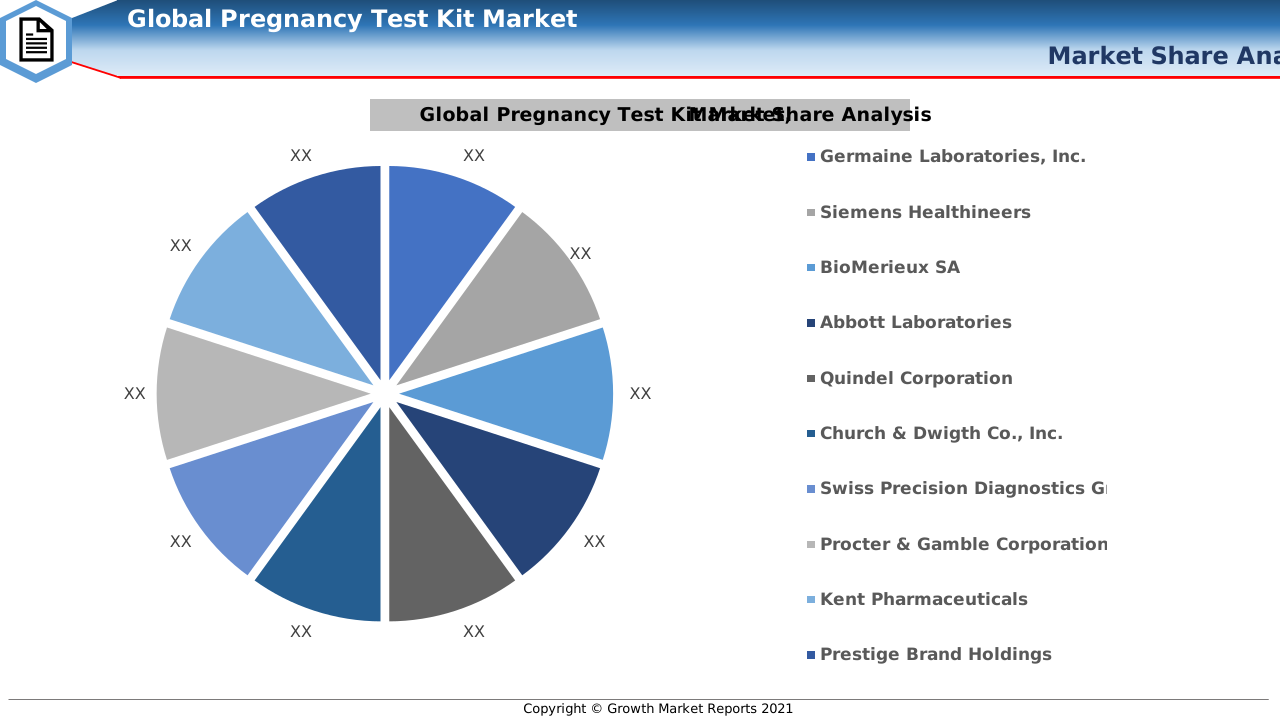

Pregnancy Test Kit Market Key Players

Frequently Asked Questions

Yes, pregnancy test kits are widely available through online pharmacies and e-commerce platforms. Reputable brands sold online are reliable, but consumers should ensure they purchase from trusted sources to avoid counterfeit products.

Challenges include stringent regulatory requirements, potential product recalls due to quality concerns, and the presence of counterfeit or low-quality products in some markets.

Innovations include digital pregnancy test kits with clear digital readouts, Bluetooth connectivity, app integration for result tracking, and the use of eco-friendly materials and sustainable packaging.

Key companies include Abbott Laboratories, Church & Dwight Co., Inc. (First Response), Procter & Gamble Co. (Clearblue), SPD Swiss Precision Diagnostics GmbH, Prestige Brands Holdings, Quidel Corporation, BioMerieux SA, Cardinal Health, and others.

Home-based kits offer privacy, convenience, and rapid results for self-testing, while clinical test kits, often used in hospitals and labs, provide higher accuracy, early detection, and quantitative results for medical supervision.

Pregnancy test kits are distributed through pharmacies, online stores, supermarkets/hypermarkets, and specialty stores. Online channels are growing rapidly due to the demand for privacy and convenience.

The main types are urine test kits, blood test kits, and digital pregnancy test kits. Urine test kits are most widely used for home and clinical settings, blood test kits are primarily used in clinical environments, and digital kits offer enhanced accuracy and user-friendly features.

North America holds the largest market share due to high awareness and advanced healthcare infrastructure, while the Asia Pacific region is the fastest-growing market, driven by urbanization, rising incomes, and improved healthcare access.

Key growth drivers include increasing awareness of early pregnancy detection, greater accessibility of test kits, rising demand for home-based healthcare solutions, and technological advancements such as digital integration and improved accuracy.

As of 2024, the global pregnancy test kit market is valued at USD 1.83 billion, with projections to reach USD 2.91 billion by 2033.

Table Of Content

Chapter 1 Executive Summary
Chapter 2 Assumptions and Acronyms Used
Chapter 3 Research Methodology
Chapter 4 Pregnancy Test Kit Market Overview
   4.1 Introduction
      4.1.1 Market Taxonomy
      4.1.2 Market Definition
      4.1.3 Macro-Economic Factors Impacting the Market Growth
   4.2 Pregnancy Test Kit Market Dynamics
      4.2.1 Market Drivers
      4.2.2 Market Restraints
      4.2.3 Market Opportunity
   4.3 Pregnancy Test Kit Market - Supply Chain Analysis
      4.3.1 List of Key Suppliers
      4.3.2 List of Key Distributors
      4.3.3 List of Key Consumers
   4.4 Key Forces Shaping the Pregnancy Test Kit Market
      4.4.1 Bargaining Power of Suppliers
      4.4.2 Bargaining Power of Buyers
      4.4.3 Threat of Substitution
      4.4.4 Threat of New Entrants
      4.4.5 Competitive Rivalry
   4.5 Global Pregnancy Test Kit Market Size & Forecast, 2023-2032
      4.5.1 Pregnancy Test Kit Market Size and Y-o-Y Growth
      4.5.2 Pregnancy Test Kit Market Absolute $ Opportunity

Chapter 5 Global Pregnancy Test Kit Market Analysis and Forecast By Product Type
   5.1 Introduction
      5.1.1 Key Market Trends & Growth Opportunities By Product Type
      5.1.2 Basis Point Share (BPS) Analysis By Product Type
      5.1.3 Absolute $ Opportunity Assessment By Product Type
   5.2 Pregnancy Test Kit Market Size Forecast By Product Type
      5.2.1 Urine Test Kits
      5.2.2 Blood Test Kits
      5.2.3 Digital Pregnancy Test Kits
   5.3 Market Attractiveness Analysis By Product Type

Chapter 6 Global Pregnancy Test Kit Market Analysis and Forecast By Test Type
   6.1 Introduction
      6.1.1 Key Market Trends & Growth Opportunities By Test Type
      6.1.2 Basis Point Share (BPS) Analysis By Test Type
      6.1.3 Absolute $ Opportunity Assessment By Test Type
   6.2 Pregnancy Test Kit Market Size Forecast By Test Type
      6.2.1 Home-Based
      6.2.2 Clinical
   6.3 Market Attractiveness Analysis By Test Type

Chapter 7 Global Pregnancy Test Kit Market Analysis and Forecast By Distribution Channel
   7.1 Introduction
      7.1.1 Key Market Trends & Growth Opportunities By Distribution Channel
      7.1.2 Basis Point Share (BPS) Analysis By Distribution Channel
      7.1.3 Absolute $ Opportunity Assessment By Distribution Channel
   7.2 Pregnancy Test Kit Market Size Forecast By Distribution Channel
      7.2.1 Pharmacies
      7.2.2 Online Stores
      7.2.3 Supermarkets/Hypermarkets
      7.2.4 Others
   7.3 Market Attractiveness Analysis By Distribution Channel

Chapter 8 Global Pregnancy Test Kit Market Analysis and Forecast By End-User
   8.1 Introduction
      8.1.1 Key Market Trends & Growth Opportunities By End-User
      8.1.2 Basis Point Share (BPS) Analysis By End-User
      8.1.3 Absolute $ Opportunity Assessment By End-User
   8.2 Pregnancy Test Kit Market Size Forecast By End-User
      8.2.1 Hospitals
      8.2.2 Diagnostic Laboratories
      8.2.3 Home Care
      8.2.4 Others
   8.3 Market Attractiveness Analysis By End-User

Chapter 9 Global Pregnancy Test Kit Market Analysis and Forecast by Region
   9.1 Introduction
      9.1.1 Key Market Trends & Growth Opportunities By Region
      9.1.2 Basis Point Share (BPS) Analysis By Region
      9.1.3 Absolute $ Opportunity Assessment By Region
   9.2 Pregnancy Test Kit Market Size Forecast By Region
      9.2.1 North America
      9.2.2 Europe
      9.2.3 Asia Pacific
      9.2.4 Latin America
      9.2.5 Middle East & Africa (MEA)
   9.3 Market Attractiveness Analysis By Region

Chapter 10 Coronavirus Disease (COVID-19) Impact 
   10.1 Introduction 
   10.2 Current & Future Impact Analysis 
   10.3 Economic Impact Analysis 
   10.4 Government Policies 
   10.5 Investment Scenario

Chapter 11 North America Pregnancy Test Kit Analysis and Forecast
   11.1 Introduction
   11.2 North America Pregnancy Test Kit Market Size Forecast by Country
      11.2.1 U.S.
      11.2.2 Canada
   11.3 Basis Point Share (BPS) Analysis by Country
   11.4 Absolute $ Opportunity Assessment by Country
   11.5 Market Attractiveness Analysis by Country
   11.6 North America Pregnancy Test Kit Market Size Forecast By Product Type
      11.6.1 Urine Test Kits
      11.6.2 Blood Test Kits
      11.6.3 Digital Pregnancy Test Kits
   11.7 Basis Point Share (BPS) Analysis By Product Type 
   11.8 Absolute $ Opportunity Assessment By Product Type 
   11.9 Market Attractiveness Analysis By Product Type
   11.10 North America Pregnancy Test Kit Market Size Forecast By Test Type
      11.10.1 Home-Based
      11.10.2 Clinical
   11.11 Basis Point Share (BPS) Analysis By Test Type 
   11.12 Absolute $ Opportunity Assessment By Test Type 
   11.13 Market Attractiveness Analysis By Test Type
   11.14 North America Pregnancy Test Kit Market Size Forecast By Distribution Channel
      11.14.1 Pharmacies
      11.14.2 Online Stores
      11.14.3 Supermarkets/Hypermarkets
      11.14.4 Others
   11.15 Basis Point Share (BPS) Analysis By Distribution Channel 
   11.16 Absolute $ Opportunity Assessment By Distribution Channel 
   11.17 Market Attractiveness Analysis By Distribution Channel
   11.18 North America Pregnancy Test Kit Market Size Forecast By End-User
      11.18.1 Hospitals
      11.18.2 Diagnostic Laboratories
      11.18.3 Home Care
      11.18.4 Others
   11.19 Basis Point Share (BPS) Analysis By End-User 
   11.20 Absolute $ Opportunity Assessment By End-User 
   11.21 Market Attractiveness Analysis By End-User

Chapter 12 Europe Pregnancy Test Kit Analysis and Forecast
   12.1 Introduction
   12.2 Europe Pregnancy Test Kit Market Size Forecast by Country
      12.2.1 Germany
      12.2.2 France
      12.2.3 Italy
      12.2.4 U.K.
      12.2.5 Spain
      12.2.6 Russia
      12.2.7 Rest of Europe
   12.3 Basis Point Share (BPS) Analysis by Country
   12.4 Absolute $ Opportunity Assessment by Country
   12.5 Market Attractiveness Analysis by Country
   12.6 Europe Pregnancy Test Kit Market Size Forecast By Product Type
      12.6.1 Urine Test Kits
      12.6.2 Blood Test Kits
      12.6.3 Digital Pregnancy Test Kits
   12.7 Basis Point Share (BPS) Analysis By Product Type 
   12.8 Absolute $ Opportunity Assessment By Product Type 
   12.9 Market Attractiveness Analysis By Product Type
   12.10 Europe Pregnancy Test Kit Market Size Forecast By Test Type
      12.10.1 Home-Based
      12.10.2 Clinical
   12.11 Basis Point Share (BPS) Analysis By Test Type 
   12.12 Absolute $ Opportunity Assessment By Test Type 
   12.13 Market Attractiveness Analysis By Test Type
   12.14 Europe Pregnancy Test Kit Market Size Forecast By Distribution Channel
      12.14.1 Pharmacies
      12.14.2 Online Stores
      12.14.3 Supermarkets/Hypermarkets
      12.14.4 Others
   12.15 Basis Point Share (BPS) Analysis By Distribution Channel 
   12.16 Absolute $ Opportunity Assessment By Distribution Channel 
   12.17 Market Attractiveness Analysis By Distribution Channel
   12.18 Europe Pregnancy Test Kit Market Size Forecast By End-User
      12.18.1 Hospitals
      12.18.2 Diagnostic Laboratories
      12.18.3 Home Care
      12.18.4 Others
   12.19 Basis Point Share (BPS) Analysis By End-User 
   12.20 Absolute $ Opportunity Assessment By End-User 
   12.21 Market Attractiveness Analysis By End-User

Chapter 13 Asia Pacific Pregnancy Test Kit Analysis and Forecast
   13.1 Introduction
   13.2 Asia Pacific Pregnancy Test Kit Market Size Forecast by Country
      13.2.1 China
      13.2.2 Japan
      13.2.3 South Korea
      13.2.4 India
      13.2.5 Australia
      13.2.6 South East Asia (SEA)
      13.2.7 Rest of Asia Pacific (APAC)
   13.3 Basis Point Share (BPS) Analysis by Country
   13.4 Absolute $ Opportunity Assessment by Country
   13.5 Market Attractiveness Analysis by Country
   13.6 Asia Pacific Pregnancy Test Kit Market Size Forecast By Product Type
      13.6.1 Urine Test Kits
      13.6.2 Blood Test Kits
      13.6.3 Digital Pregnancy Test Kits
   13.7 Basis Point Share (BPS) Analysis By Product Type 
   13.8 Absolute $ Opportunity Assessment By Product Type 
   13.9 Market Attractiveness Analysis By Product Type
   13.10 Asia Pacific Pregnancy Test Kit Market Size Forecast By Test Type
      13.10.1 Home-Based
      13.10.2 Clinical
   13.11 Basis Point Share (BPS) Analysis By Test Type 
   13.12 Absolute $ Opportunity Assessment By Test Type 
   13.13 Market Attractiveness Analysis By Test Type
   13.14 Asia Pacific Pregnancy Test Kit Market Size Forecast By Distribution Channel
      13.14.1 Pharmacies
      13.14.2 Online Stores
      13.14.3 Supermarkets/Hypermarkets
      13.14.4 Others
   13.15 Basis Point Share (BPS) Analysis By Distribution Channel 
   13.16 Absolute $ Opportunity Assessment By Distribution Channel 
   13.17 Market Attractiveness Analysis By Distribution Channel
   13.18 Asia Pacific Pregnancy Test Kit Market Size Forecast By End-User
      13.18.1 Hospitals
      13.18.2 Diagnostic Laboratories
      13.18.3 Home Care
      13.18.4 Others
   13.19 Basis Point Share (BPS) Analysis By End-User 
   13.20 Absolute $ Opportunity Assessment By End-User 
   13.21 Market Attractiveness Analysis By End-User

Chapter 14 Latin America Pregnancy Test Kit Analysis and Forecast
   14.1 Introduction
   14.2 Latin America Pregnancy Test Kit Market Size Forecast by Country
      14.2.1 Brazil
      14.2.2 Mexico
      14.2.3 Rest of Latin America (LATAM)
   14.3 Basis Point Share (BPS) Analysis by Country
   14.4 Absolute $ Opportunity Assessment by Country
   14.5 Market Attractiveness Analysis by Country
   14.6 Latin America Pregnancy Test Kit Market Size Forecast By Product Type
      14.6.1 Urine Test Kits
      14.6.2 Blood Test Kits
      14.6.3 Digital Pregnancy Test Kits
   14.7 Basis Point Share (BPS) Analysis By Product Type 
   14.8 Absolute $ Opportunity Assessment By Product Type 
   14.9 Market Attractiveness Analysis By Product Type
   14.10 Latin America Pregnancy Test Kit Market Size Forecast By Test Type
      14.10.1 Home-Based
      14.10.2 Clinical
   14.11 Basis Point Share (BPS) Analysis By Test Type 
   14.12 Absolute $ Opportunity Assessment By Test Type 
   14.13 Market Attractiveness Analysis By Test Type
   14.14 Latin America Pregnancy Test Kit Market Size Forecast By Distribution Channel
      14.14.1 Pharmacies
      14.14.2 Online Stores
      14.14.3 Supermarkets/Hypermarkets
      14.14.4 Others
   14.15 Basis Point Share (BPS) Analysis By Distribution Channel 
   14.16 Absolute $ Opportunity Assessment By Distribution Channel 
   14.17 Market Attractiveness Analysis By Distribution Channel
   14.18 Latin America Pregnancy Test Kit Market Size Forecast By End-User
      14.18.1 Hospitals
      14.18.2 Diagnostic Laboratories
      14.18.3 Home Care
      14.18.4 Others
   14.19 Basis Point Share (BPS) Analysis By End-User 
   14.20 Absolute $ Opportunity Assessment By End-User 
   14.21 Market Attractiveness Analysis By End-User

Chapter 15 Middle East & Africa (MEA) Pregnancy Test Kit Analysis and Forecast
   15.1 Introduction
   15.2 Middle East & Africa (MEA) Pregnancy Test Kit Market Size Forecast by Country
      15.2.1 Saudi Arabia
      15.2.2 South Africa
      15.2.3 UAE
      15.2.4 Rest of Middle East & Africa (MEA)
   15.3 Basis Point Share (BPS) Analysis by Country
   15.4 Absolute $ Opportunity Assessment by Country
   15.5 Market Attractiveness Analysis by Country
   15.6 Middle East & Africa (MEA) Pregnancy Test Kit Market Size Forecast By Product Type
      15.6.1 Urine Test Kits
      15.6.2 Blood Test Kits
      15.6.3 Digital Pregnancy Test Kits
   15.7 Basis Point Share (BPS) Analysis By Product Type 
   15.8 Absolute $ Opportunity Assessment By Product Type 
   15.9 Market Attractiveness Analysis By Product Type
   15.10 Middle East & Africa (MEA) Pregnancy Test Kit Market Size Forecast By Test Type
      15.10.1 Home-Based
      15.10.2 Clinical
   15.11 Basis Point Share (BPS) Analysis By Test Type 
   15.12 Absolute $ Opportunity Assessment By Test Type 
   15.13 Market Attractiveness Analysis By Test Type
   15.14 Middle East & Africa (MEA) Pregnancy Test Kit Market Size Forecast By Distribution Channel
      15.14.1 Pharmacies
      15.14.2 Online Stores
      15.14.3 Supermarkets/Hypermarkets
      15.14.4 Others
   15.15 Basis Point Share (BPS) Analysis By Distribution Channel 
   15.16 Absolute $ Opportunity Assessment By Distribution Channel 
   15.17 Market Attractiveness Analysis By Distribution Channel
   15.18 Middle East & Africa (MEA) Pregnancy Test Kit Market Size Forecast By End-User
      15.18.1 Hospitals
      15.18.2 Diagnostic Laboratories
      15.18.3 Home Care
      15.18.4 Others
   15.19 Basis Point Share (BPS) Analysis By End-User 
   15.20 Absolute $ Opportunity Assessment By End-User 
   15.21 Market Attractiveness Analysis By End-User

Chapter 16 Competition Landscape 
   16.1 Pregnancy Test Kit Market: Competitive Dashboard
   16.2 Global Pregnancy Test Kit Market: Market Share Analysis, 2023
   16.3 Company Profiles (Details – Overview, Financials, Developments, Strategy) 
      16.3.1 Abbott Laboratories
Church & Dwight Co., Inc.
Procter & Gamble Co.
SPD Swiss Precision Diagnostics GmbH
Prestige Brands Holdings, Inc.
Quidel Corporation
BioMerieux SA
Germaine Laboratories, Inc.
Cardinal Health, Inc.
Roche Diagnostics
Siemens Healthineers
Sugentech, Inc.
Mankind Pharma
Wondfo Biotech Co., Ltd.
AdvaCare Pharma
Fairhaven Health, LLC
Jal Innovation (UK) Ltd.
Piramal Enterprises Ltd.
Easy Healthcare Corporation
BPL Medical Technologies

Methodology

Our Clients

Honda Motor Co. Ltd.
General Mills
Dassault Aviation
FedEx Logistics
Nestle SA
sinopec
General Electric
Siemens Healthcare