Segments - by Technology (Guidance Systems, Remote Sensing, Variable Rate Technology, GIS, Others), by Application (Yield Monitoring, Field Mapping, Crop Scouting, Irrigation Management, Weather Tracking & Forecasting, Others), by Component (Hardware, Software, Services), by Deployment Mode (On-Premises, Cloud-Based), by End-User (Wineries, Vineyards, Research Institutes, Others)
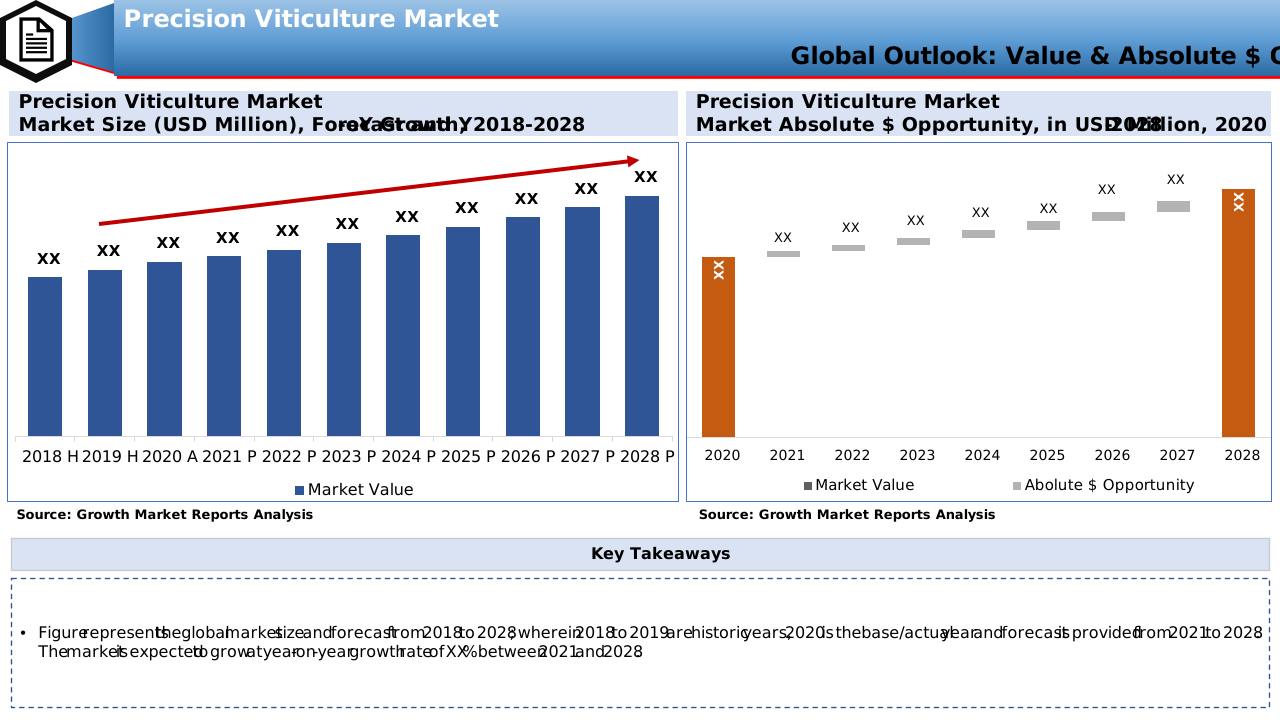
According to our latest research, the global precision viticulture market size reached USD 1.18 billion in 2024, reflecting robust adoption across key wine-producing regions. The market is expanding at a CAGR of 10.3% and is projected to attain a value of USD 2.84 billion by 2033. This significant growth is primarily driven by the increasing demand for advanced technologies to optimize vineyard management, improve grape yield and quality, and reduce environmental impact. The adoption of precision viticulture is also being fueled by evolving consumer preferences for sustainably produced wines and the need for efficient resource utilization in the face of climate variability.
One of the primary growth factors propelling the precision viticulture market is the rapid advancement and integration of digital agriculture technologies. The proliferation of Internet of Things (IoT) devices, drones, remote sensing tools, and Geographic Information Systems (GIS) has revolutionized vineyard management. These technologies enable real-time monitoring of soil health, vine vigor, and microclimatic conditions, allowing vintners to make data-driven decisions that enhance productivity and quality. Furthermore, the increasing affordability of these technologies, coupled with government initiatives supporting sustainable agricultural practices, has lowered the entry barriers for small and medium-sized vineyards, thereby broadening the market base.
The rising concerns regarding climate change and its impact on viticulture are further accelerating the adoption of precision viticulture solutions. Climate variability poses significant challenges to grape growers, affecting yield quality, pest incidence, and water availability. Precision viticulture technologies provide actionable insights through data analytics and predictive modeling, enabling proactive management of vineyard operations. By leveraging weather tracking, yield monitoring, and variable rate application systems, vineyard managers can mitigate risks, optimize inputs such as water and fertilizers, and ensure consistent grape quality. This is particularly crucial for premium wine producers, where even minor variations in grape quality can have substantial economic implications.
Additionally, the growing consumer inclination towards sustainably produced and traceable wines is shaping the precision viticulture market landscape. Consumers are increasingly aware of the environmental footprint of agricultural practices and are demanding transparency in the wine production process. Precision viticulture facilitates sustainable practices through efficient resource management, reduced chemical usage, and enhanced traceability from vine to bottle. This not only meets regulatory requirements but also provides a competitive edge to wineries in a crowded global marketplace. The integration of blockchain and data analytics further augments traceability, allowing producers to authenticate their sustainability claims and build consumer trust.
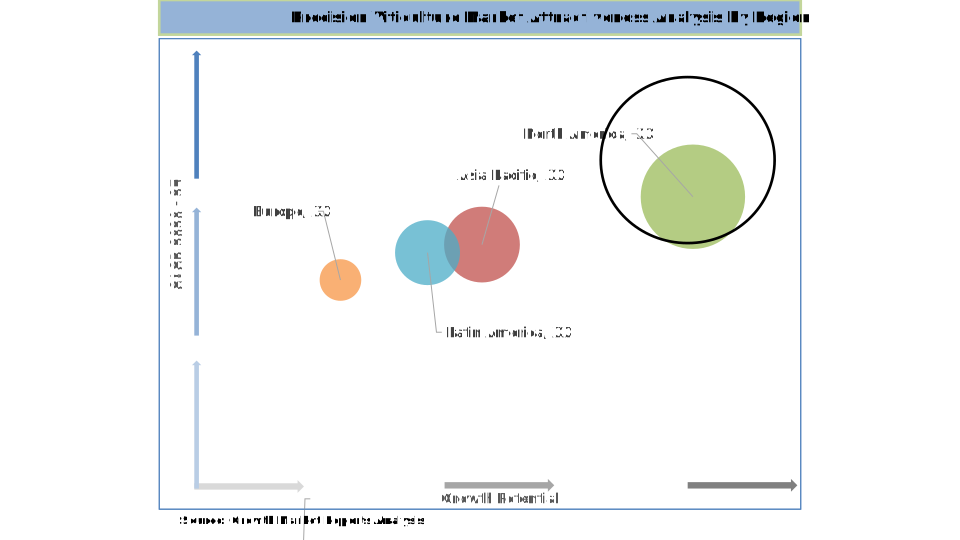
Regionally, Europe continues to dominate the global precision viticulture market, accounting for over 40% of total revenue in 2024, owing to its rich winemaking heritage and early adoption of digital agriculture. North America follows closely, with significant investments in vineyard automation and research. Meanwhile, the Asia Pacific region is witnessing the fastest growth, driven by expanding vineyard areas, rising disposable incomes, and increasing wine consumption. The Middle East & Africa and Latin America are also emerging as promising markets, supported by government initiatives and the modernization of traditional viticulture practices.
The technology segment of the precision viticulture market is characterized by rapid innovation and diversified adoption. Guidance systems, including GPS and GNSS-based technologies, are foundational to precision viticulture, enabling accurate navigation of vineyard machinery and reducing overlaps in field operations. These systems have become increasingly sophisticated, integrating with other digital tools to automate tasks such as planting, spraying, and harvesting. The widespread availability of cost-effective guidance solutions has democratized access, allowing even small-scale vineyards to benefit from precision agriculture.
Remote sensing represents another critical technology, utilizing satellite imagery, UAVs (drones), and multispectral cameras to monitor vine health, detect disease outbreaks, and assess soil variability. The ability to gather high-resolution data over large vineyard areas enables early intervention and targeted management, minimizing crop losses and optimizing input usage. Remote sensing technologies are particularly valuable in regions with diverse topographies and microclimates, where traditional monitoring methods may be inadequate or labor-intensive.
Variable Rate Technology (VRT) is transforming vineyard management by allowing site-specific application of inputs such as fertilizers, pesticides, and irrigation. By leveraging data collected through sensors and remote sensing, VRT systems ensure that each vine receives the precise amount of resources required for optimal growth. This not only enhances yield and quality but also reduces input costs and environmental impact. The adoption of VRT is gaining momentum, especially among large-scale vineyards and those committed to sustainable practices.
Geographic Information Systems (GIS) play a pivotal role in spatial data analysis and vineyard mapping. GIS platforms integrate multiple data layers, including soil composition, topography, and climate variables, providing a comprehensive view of vineyard conditions. This enables vineyard managers to implement zone-specific management strategies, improving efficiency and sustainability. The integration of GIS with other precision viticulture technologies is creating new opportunities for data-driven decision-making and long-term vineyard planning.
Other emerging technologies, such as artificial intelligence (AI), machine learning, and blockchain, are also beginning to make inroads into the precision viticulture market. AI-powered analytics can predict disease outbreaks, optimize harvest timing, and improve supply chain traceability. As these technologies mature and become more accessible, their integration with traditional precision viticulture tools is expected to drive further market growth and innovation.
| Attributes | Details |
| Report Title | Precision Viticulture Market Research Report 2033 |
| By Technology | Guidance Systems, Remote Sensing, Variable Rate Technology, GIS, Others |
| By Application | Yield Monitoring, Field Mapping, Crop Scouting, Irrigation Management, Weather Tracking & Forecasting, Others |
| By Component | Hardware, Software, Services |
| By Deployment Mode | On-Premises, Cloud-Based |
| By End-User | Wineries, Vineyards, Research Institutes, Others |
| Regions Covered | North America, Europe, APAC, Latin America, MEA |
| Base Year | 2024 |
| Historic Data | 2018-2023 |
| Forecast Period | 2025-2033 |
| Number of Pages | 280 |
| Number of Tables & Figures | 254 |
| Customization Available | Yes, the report can be customized as per your need. |
The application landscape of the precision viticulture market is broad and evolving, with yield monitoring emerging as a cornerstone for vineyard optimization. Yield monitoring systems utilize sensors and data analytics to track grape production in real-time, providing actionable insights into spatial variability and identifying underperforming zones. This information is invaluable for vineyard managers seeking to maximize output while maintaining quality standards. The adoption of yield monitoring is particularly high among premium wine producers, where consistency and quality are paramount.
Field mapping is another critical application, leveraging GIS and remote sensing technologies to create detailed spatial representations of vineyard characteristics. Field maps enable precise planning of planting, irrigation, and harvesting operations, reducing inefficiencies and resource wastage. By visualizing variability in soil properties, vine vigor, and pest incidence, vineyard managers can implement targeted interventions and improve overall vineyard health. The increasing availability of user-friendly mapping software is driving broader adoption across vineyards of all sizes.
Crop scouting has been revolutionized by the integration of drones, mobile applications, and sensor networks. Traditionally a labor-intensive process, crop scouting now benefits from automated data collection and real-time alerts, enabling early detection of diseases, pests, and nutrient deficiencies. This proactive approach minimizes crop losses and reduces the need for blanket chemical applications, supporting both economic and environmental sustainability. Crop scouting solutions are increasingly being tailored to the unique needs of viticulture, with specialized algorithms and image recognition capabilities.
Irrigation management is a vital application area, particularly in regions facing water scarcity and erratic rainfall patterns. Precision irrigation systems utilize soil moisture sensors, weather data, and predictive analytics to deliver water precisely where and when it is needed. This not only conserves water but also prevents issues such as root diseases and uneven grape ripening. The adoption of smart irrigation solutions is being driven by both regulatory pressures and the economic imperative to reduce water costs.
Weather tracking and forecasting have become indispensable tools for modern vineyard management. Advanced weather stations, remote sensors, and predictive models provide real-time data on temperature, humidity, rainfall, and wind patterns. Accurate weather forecasting enables vineyard managers to optimize spraying schedules, prevent frost damage, and plan harvests more effectively. As climate variability intensifies, the reliance on weather tracking technologies is expected to grow, further embedding precision viticulture into the fabric of modern winemaking.
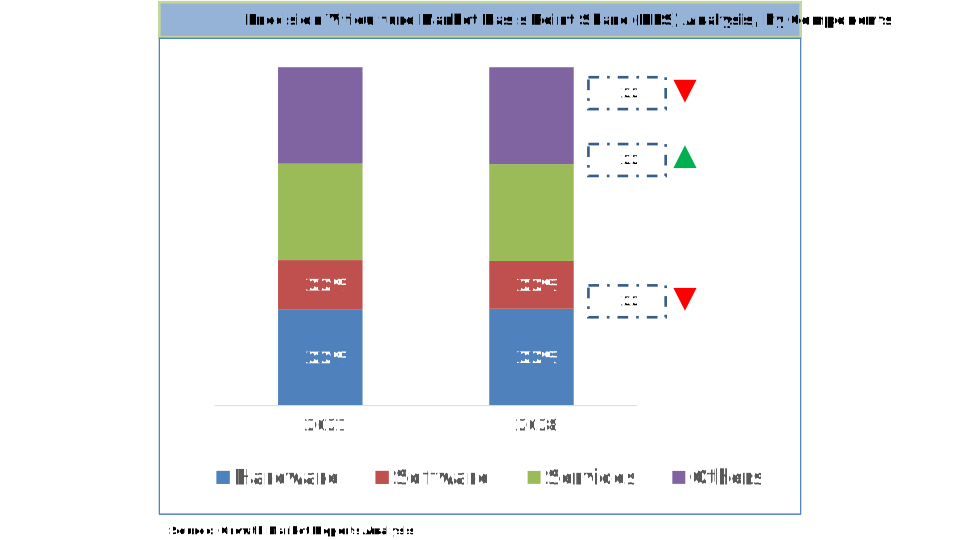
The precision viticulture market is segmented by component into hardware, software, and services, each playing a distinct role in the ecosystem. Hardware forms the backbone of precision viticulture, encompassing sensors, drones, weather stations, GPS devices, and variable rate applicators. The proliferation of affordable and robust hardware solutions has made it feasible for vineyards of all sizes to implement precision agriculture practices. Hardware innovation is focused on increasing accuracy, durability, and ease of integration with other digital tools.
Software solutions are the intelligence layer of precision viticulture, transforming raw data into actionable insights. Vineyard management platforms, data analytics tools, and mobile applications enable users to monitor operations, visualize spatial variability, and make data-driven decisions. The trend towards cloud-based software solutions is gaining momentum, offering scalability, remote access, and seamless updates. Software interoperability and user-friendliness are key differentiators in this highly competitive segment.
Services represent a critical component of the precision viticulture value chain, encompassing consulting, installation, training, and technical support. As the adoption of advanced technologies accelerates, there is a growing demand for specialized service providers who can assist vineyards in selecting, implementing, and maintaining precision viticulture solutions. Managed services, including remote monitoring and data analysis, are gaining popularity, particularly among small and medium-sized vineyards lacking in-house expertise. The services segment is expected to witness robust growth as technology adoption deepens and the complexity of vineyard operations increases.
The interplay between hardware, software, and services is shaping the future of precision viticulture. Integrated solutions that combine robust hardware, intuitive software, and expert support are emerging as the preferred choice for vineyards seeking to maximize return on investment. Vendors are increasingly offering bundled solutions and subscription-based models, lowering upfront costs and facilitating wider adoption. As the market matures, the emphasis is shifting towards interoperability, scalability, and seamless user experiences.
Investment in research and development across all components is driving continuous innovation in the precision viticulture market. Hardware manufacturers are developing multi-functional devices, software vendors are enhancing analytics capabilities, and service providers are expanding their offerings to include remote diagnostics and predictive maintenance. This collaborative ecosystem is fostering a virtuous cycle of innovation and adoption, positioning precision viticulture as a cornerstone of sustainable winemaking.
Deployment mode is a critical consideration for vineyards evaluating precision viticulture solutions, with the market segmented into on-premises and cloud-based deployments. On-premises solutions have traditionally been favored by large vineyards and wineries with substantial IT infrastructure and stringent data security requirements. These solutions offer complete control over data storage and processing, enabling customization and integration with existing systems. However, the high upfront investment and ongoing maintenance costs can be prohibitive for smaller operations.
Cloud-based solutions are gaining traction due to their scalability, cost-effectiveness, and ease of deployment. By leveraging cloud infrastructure, vineyards can access advanced analytics, real-time monitoring, and remote support without the need for significant capital expenditure. Cloud-based platforms facilitate collaboration among stakeholders, enabling seamless data sharing and decision-making across geographically dispersed vineyard operations. The ability to access data and insights from any location is particularly valuable for multinational wine producers and research institutes.
The trend towards software-as-a-service (SaaS) models is transforming the precision viticulture market, making advanced technologies accessible to a broader range of users. Subscription-based pricing, automatic updates, and minimal IT requirements are driving adoption among small and medium-sized vineyards. Cloud-based solutions also enable continuous innovation, with vendors rolling out new features and enhancements based on user feedback and emerging market trends. Data security and privacy remain key concerns, prompting vendors to invest in robust encryption, authentication, and compliance measures.
Hybrid deployment models are emerging as a viable option for vineyards seeking to balance the benefits of on-premises control with the flexibility of cloud-based analytics. These models enable seamless integration of local data processing with cloud-based storage and advanced analytics, optimizing performance and cost. As the digital transformation of viticulture accelerates, the choice of deployment mode will increasingly be guided by operational requirements, regulatory considerations, and the strategic priorities of vineyard operators.
The competitive landscape in the deployment segment is characterized by a mix of established agricultural technology companies and innovative startups. Vendors are differentiating themselves through value-added services, interoperability with third-party systems, and advanced data analytics capabilities. As cloud adoption continues to rise, partnerships between technology providers, research institutes, and industry associations are expected to drive further innovation and market expansion.
The end-user landscape for precision viticulture is diverse, encompassing wineries, vineyards, research institutes, and other stakeholders such as cooperatives and agricultural consultants. Wineries represent a significant market segment, driven by the imperative to ensure consistent grape quality, optimize production processes, and meet consumer demand for sustainably produced wines. Precision viticulture enables wineries to trace grape origins, monitor quality parameters, and implement targeted interventions throughout the production cycle.
Vineyards, both independent and those integrated with wineries, are at the forefront of precision viticulture adoption. The need to maximize yield, reduce input costs, and adapt to changing climatic conditions is prompting vineyard managers to invest in advanced technologies. Precision viticulture solutions empower vineyards to monitor soil health, manage irrigation, and detect diseases early, resulting in improved profitability and sustainability. The adoption rate is particularly high among large-scale vineyards and those producing premium wines, where quality differentiation is critical.
Research institutes play a vital role in advancing precision viticulture, driving innovation through applied research, field trials, and technology transfer. These institutions collaborate with technology providers, government agencies, and industry associations to develop best practices, validate new solutions, and disseminate knowledge to end-users. Research institutes also serve as early adopters and testbeds for emerging technologies, accelerating their commercialization and adoption in the broader market.
Other end-users, including agricultural cooperatives, consultants, and government agencies, are increasingly recognizing the value of precision viticulture in promoting sustainable and efficient vineyard management. Cooperatives are leveraging collective purchasing power to make advanced technologies accessible to smallholder vineyards, while consultants provide specialized expertise in technology selection, implementation, and optimization. Government agencies are supporting precision viticulture through funding, training, and regulatory frameworks aimed at promoting sustainable agricultural practices.
The end-user segment is characterized by diverse needs, operational scales, and resource availability. Vendors are responding by offering tailored solutions, flexible pricing models, and comprehensive support services to address the unique challenges faced by each end-user group. As the market matures, the focus is shifting towards delivering holistic solutions that integrate technology, expertise, and support to drive long-term value creation for all stakeholders.
The precision viticulture market presents significant opportunities for growth and innovation, driven by the convergence of digital technologies, sustainability imperatives, and evolving consumer preferences. The integration of artificial intelligence, machine learning, and big data analytics is enabling the development of predictive models that can optimize vineyard management, reduce input costs, and improve grape quality. The expansion of precision viticulture into emerging markets, such as Asia Pacific and Latin America, presents untapped potential for technology providers and service vendors. Additionally, the growing emphasis on traceability and transparency in the wine supply chain is creating opportunities for blockchain and IoT-enabled solutions that authenticate sustainability claims and enhance consumer trust.
Collaborative partnerships between technology providers, research institutes, and industry associations are fostering a culture of innovation and knowledge sharing in the precision viticulture market. Public-private partnerships and government initiatives supporting digital agriculture are facilitating technology adoption, particularly among small and medium-sized vineyards. The development of user-friendly, interoperable solutions is lowering entry barriers and expanding the addressable market. Furthermore, the increasing focus on climate resilience and resource efficiency is driving demand for precision irrigation, disease prediction, and yield optimization solutions, creating new revenue streams for market participants.
Despite these opportunities, the precision viticulture market faces several restraining factors that could impede growth. High initial investment costs, particularly for hardware and advanced analytics solutions, remain a significant barrier for small-scale vineyards and wineries. Limited technical expertise and resistance to change among traditional vineyard operators can slow the pace of technology adoption. Data security and privacy concerns, especially in cloud-based deployments, may deter some end-users from fully embracing digital solutions. Addressing these challenges will require concerted efforts from vendors, policymakers, and industry stakeholders to provide affordable, user-friendly, and secure precision viticulture solutions.
Europe continues to lead the global precision viticulture market, accounting for over USD 472 million in revenue in 2024, driven by its rich winemaking heritage, favorable regulatory environment, and early adoption of digital agriculture technologies. Key wine-producing countries such as France, Italy, Spain, and Germany are at the forefront of innovation, with significant investments in research, infrastructure, and technology transfer. The presence of leading technology providers, strong industry associations, and supportive government policies are further bolstering market growth in the region.
North America is the second-largest market, with a market size of approximately USD 330 million in 2024. The United States, in particular, is witnessing rapid adoption of precision viticulture solutions, driven by the modernization of vineyards in California, Oregon, and Washington. The region is characterized by a high level of technological innovation, robust research and development activities, and a strong focus on sustainability and resource efficiency. The North American market is projected to grow at a CAGR of 10.7% through 2033, supported by increasing investments in smart agriculture and the expansion of vineyard areas.
The Asia Pacific region is emerging as the fastest-growing market for precision viticulture, with a market size of USD 205 million in 2024. Countries such as China, Australia, and New Zealand are witnessing increased adoption of digital agriculture technologies, driven by rising disposable incomes, expanding vineyard areas, and growing wine consumption. Government initiatives supporting agricultural modernization and sustainability are further accelerating market growth. The Asia Pacific market is expected to outpace other regions in terms of CAGR, presenting significant opportunities for technology providers and service vendors.
The competitive landscape of the precision viticulture market is characterized by intense rivalry among global technology providers, specialized agricultural equipment manufacturers, and innovative startups. The market is witnessing a wave of consolidation, with established players acquiring niche technology firms to expand their product portfolios and strengthen their market presence. Leading companies are investing heavily in research and development to enhance the accuracy, reliability, and user-friendliness of their solutions. Strategic partnerships and collaborations with research institutes, industry associations, and government agencies are also common, enabling vendors to stay at the forefront of innovation and address the evolving needs of end-users.
Product differentiation and customer-centricity are key competitive strategies in the precision viticulture market. Vendors are focusing on developing integrated solutions that combine hardware, software, and services to deliver comprehensive value to vineyards and wineries. The ability to offer scalable, interoperable, and easy-to-use solutions is a critical success factor, particularly as the market expands to include small and medium-sized operations. Pricing flexibility, robust technical support, and continuous innovation are also important differentiators in this dynamic market.
The emergence of new entrants and startups is injecting fresh energy into the precision viticulture market, driving innovation and competition. These companies are leveraging advances in artificial intelligence, machine learning, and IoT to develop next-generation solutions that address specific pain points in vineyard management. Startups are also exploring innovative business models, such as subscription-based services and pay-per-use platforms, to lower entry barriers and expand market reach. The growing interest from venture capital and private equity investors is further fueling innovation and market expansion.
Major companies operating in the precision viticulture market include Trimble Inc., Topcon Corporation, John Deere, Ag Leader Technology, Deveron Corp, and Groupe ICV. Trimble Inc. is renowned for its advanced GPS and guidance systems, offering integrated solutions for vineyard mapping, yield monitoring, and variable rate application. Topcon Corporation specializes in precision measurement and control technologies, with a strong focus on remote sensing and GIS integration. John Deere, a global leader in agricultural machinery, has expanded its precision agriculture portfolio to include specialized solutions for viticulture, leveraging its extensive dealer network and technical expertise. Ag Leader Technology is recognized for its data-driven solutions and user-friendly platforms, while Deveron Corp and Groupe ICV are at the forefront of remote sensing, analytics, and advisory services for vineyards.
These companies are continuously enhancing their offerings through partnerships, acquisitions, and investments in research and development. For example, Trimble has partnered with leading research institutes to develop AI-powered disease prediction models, while Topcon is collaborating with software vendors to enhance interoperability and data analytics capabilities. John Deere is investing in IoT-enabled machinery and cloud-based platforms to provide end-to-end solutions for vineyard management. Ag Leader Technology is focusing on expanding its presence in emerging markets through strategic alliances and localized support services. The competitive landscape is expected to remain dynamic, with ongoing innovation, consolidation, and the entry of new players shaping the future of the precision viticulture market.
The Precision Viticulture market has been segmented on the basis of
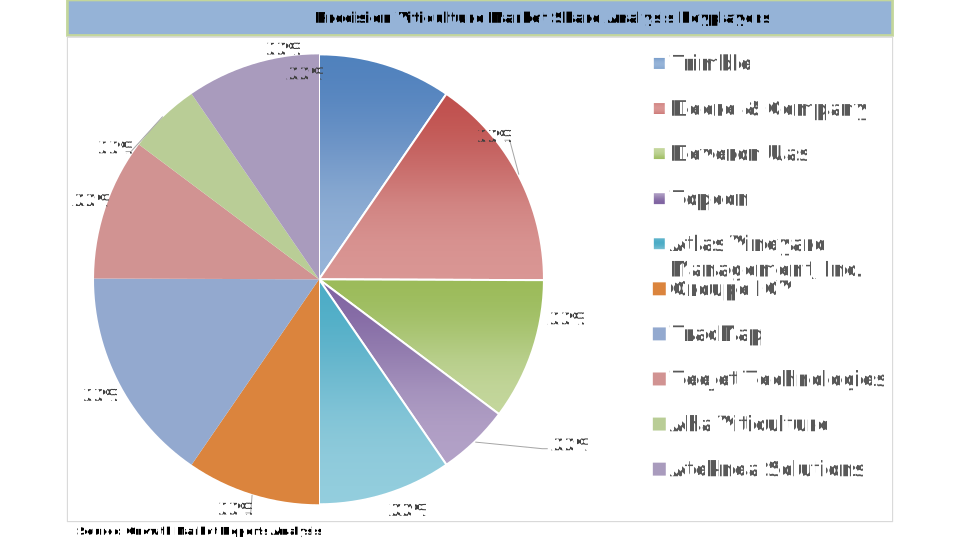
Key players competing in the global precision viticulture market are Trimble; Deere & Company; Deveron Uas; Topcon; Atlas Vineyard Management, Inc.; Groupe ICV; TracMap; Teejet Technologies; Aha Viticulture; and Ateknea Solutions. The main market players are continuously engaged in various business expansion activities such as mergers and acquisitions, research and developments, investments for innovative products, and collaborations. For instance, Deere & Company had introduced a farming machine, 5075GL tractor for orchard and vineyard growers in May 2018.
Major players include Trimble Inc., Topcon Corporation, John Deere, Ag Leader Technology, Deveron Corp, Groupe ICV, TeeJet Technologies, Raven Industries, AgJunction Inc., Yara International ASA, Robert Bosch GmbH, and others. These companies offer a range of hardware, software, and services for vineyard optimization.
Key challenges include high initial investment costs, limited technical expertise among traditional vineyard operators, data security and privacy concerns, and resistance to adopting new technologies.
Deployment modes include on-premises solutions, which offer greater control and customization, and cloud-based solutions, which provide scalability, cost-effectiveness, and remote access. Hybrid models are also emerging to combine the benefits of both.
Precision viticulture solutions consist of hardware (sensors, drones, weather stations, GPS devices), software (data analytics, vineyard management platforms), and services (consulting, installation, training, technical support).
Key end-users include wineries, independent vineyards, research institutes, agricultural cooperatives, consultants, and government agencies. Each group uses precision viticulture to improve yield, quality, and sustainability.
Europe is the largest market, accounting for over 40% of global revenue in 2024, followed by North America. The Asia Pacific region is the fastest-growing market, driven by expanding vineyard areas and rising wine consumption.
Major applications include yield monitoring, field mapping, crop scouting, irrigation management, and weather tracking & forecasting. These applications help optimize resource use, improve grape quality, and enhance sustainability in vineyard operations.
Key technologies include guidance systems (GPS, GNSS), remote sensing (satellite imagery, drones, multispectral cameras), variable rate technology (VRT), Geographic Information Systems (GIS), artificial intelligence (AI), machine learning, and blockchain for traceability.
The global precision viticulture market reached USD 1.18 billion in 2024 and is expected to grow at a CAGR of 10.3%, reaching USD 2.84 billion by 2033. This growth is driven by the adoption of advanced technologies, sustainability trends, and increasing demand for high-quality wines.
Precision viticulture refers to the use of advanced technologies such as IoT, drones, GIS, and data analytics to optimize vineyard management. It helps improve grape yield and quality, reduce environmental impact, and enable sustainable wine production by allowing data-driven decisions in vineyard operations.