PU Adhesive in Electronics Market Report 2034

PU Adhesive in Electronics Market Report 2034

Segments - by Product Type (One-Component, Two-Component, Hot Melt, Others), by Application (Consumer Electronics, Automotive Electronics, Industrial Electronics, Telecommunication Devices, Others), by End-Use (OEMs, Aftermarket), by Distribution Channel (Direct Sales, Distributors/Wholesalers, Online Retail)

https://growthmarketreports.com/Raksha
Author : Raksha Sharma
https://growthmarketreports.com/Vaibhav
Fact-checked by : V. Chandola
https://growthmarketreports.com/Shruti
Editor : Shruti Bhat

Last Updated : Jun, 2026 | Report ID :MC-1090 | 4.7 Rating | 99 Reviews | 259 Pages | Format : Docx PDF

Report Description

This report is updated with the latest market data and insights as of June 2026. Base year: 2025  |  Forecast period: 2026-2034


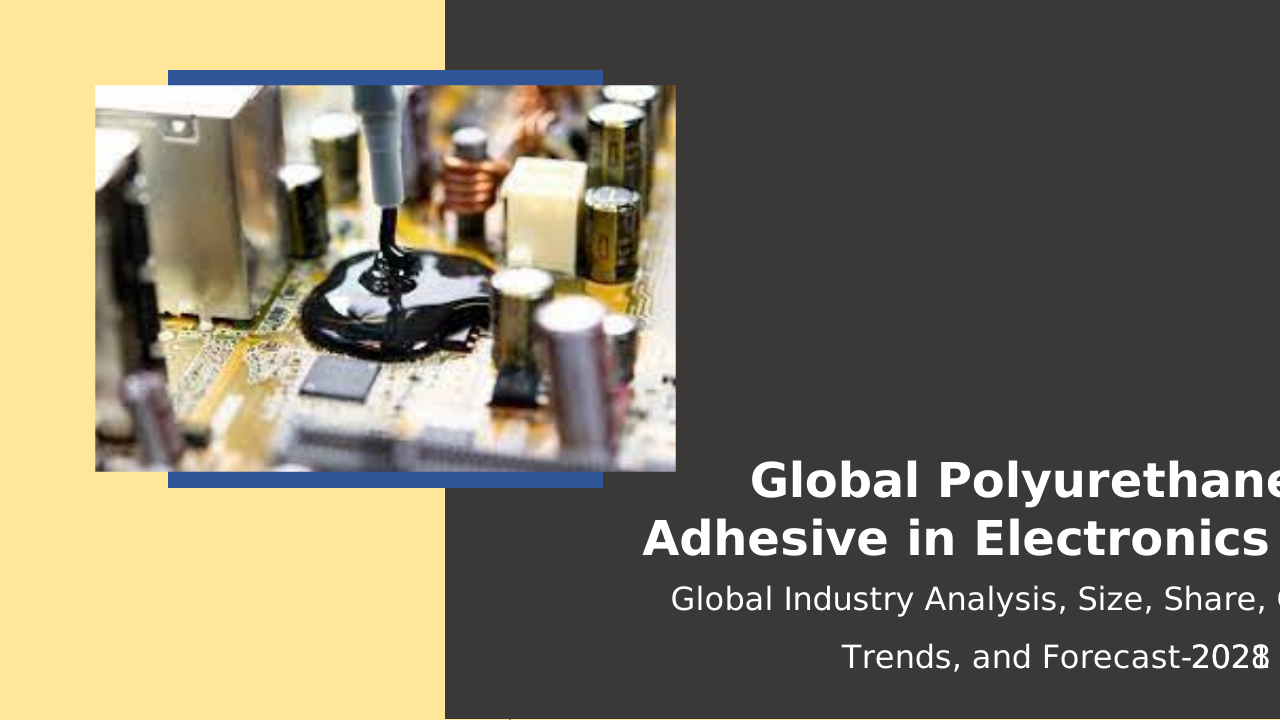
Polyurethane (PU) Adhesive in Electronics Market Outlook

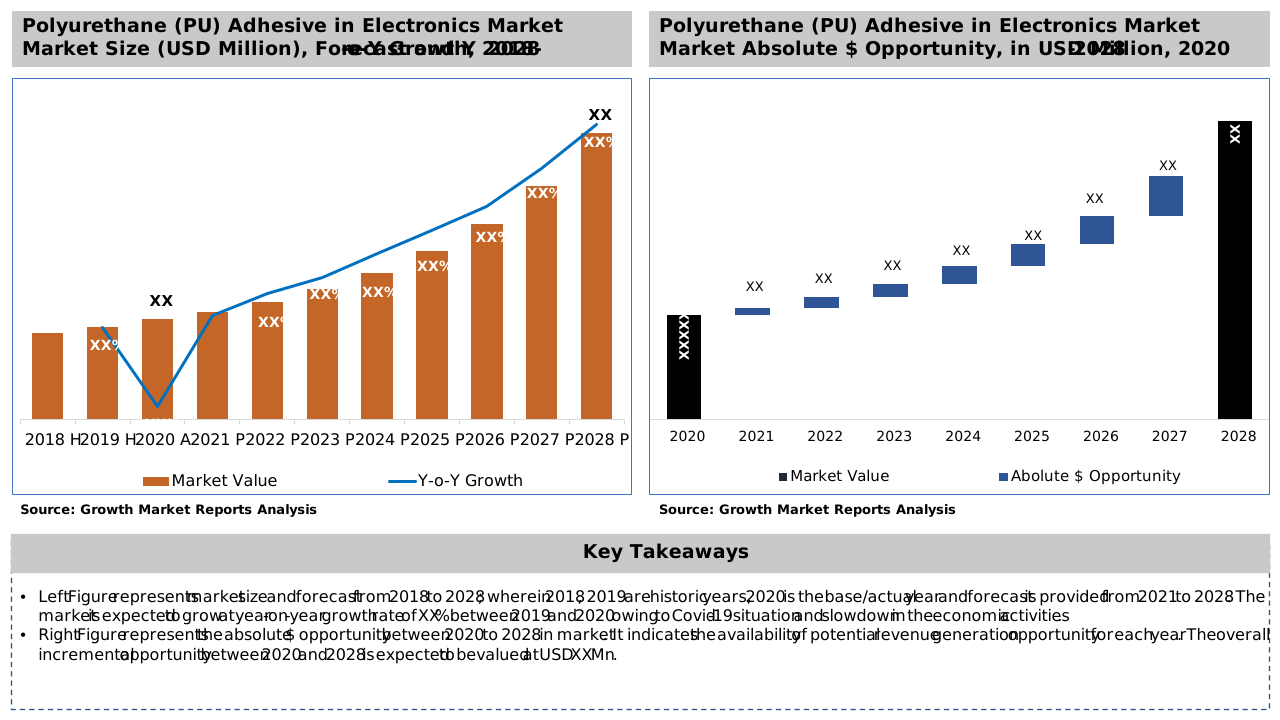
According to our latest research, the global market size for Polyurethane (PU) Adhesive in Electronics reached USD 1.26 billion in 2025, reflecting a robust industry driven by the increasing adoption of advanced electronics across diverse sectors. The market is poised to grow at a CAGR of 6.7% from 2026 to 2034, resulting in a projected market value of USD 2.27 billion by 2034. This growth is primarily fueled by the rising demand for lightweight, durable, and flexible bonding solutions in electronic assemblies, as well as the continuous evolution of consumer and industrial electronics. As per our latest research, advancements in miniaturization, the proliferation of IoT devices, and the rapid expansion of electric vehicles are key factors contributing to sustained market momentum through the forecast period.

Global Polyurethane (PU) Adhesive in Electronics Market Size Forecast 2025-2034, USD Billion

The growth trajectory of the Polyurethane (PU) Adhesive in Electronics market is significantly influenced by the accelerating pace of electronic device innovation and production globally. Manufacturers are increasingly opting for PU adhesives due to their superior bonding strength, flexibility, and resistance to environmental stressors such as moisture, heat, and chemicals. These properties make PU adhesives ideal for assembling delicate electronic components where traditional mechanical fasteners may cause damage or introduce unwanted weight. Additionally, the trend toward miniaturization in electronic devices, such as smartphones, wearables, and smart home systems, necessitates the use of adhesives that can provide reliable performance in confined spaces without compromising the integrity of sensitive circuits and components.

Another major growth factor is the rapid expansion of the automotive electronics segment, driven by the global shift toward electric and hybrid vehicles. PU adhesives are extensively used in assembling sensors, battery packs, displays, and infotainment systems due to their excellent vibration damping and thermal management properties. As automotive manufacturers strive to enhance vehicle safety, efficiency, and connectivity, the integration of advanced electronic systems is becoming increasingly sophisticated, driving demand for high-performance polyurethane bonding solutions in this sector. Furthermore, ongoing developments in autonomous driving technologies and connected vehicle ecosystems are expected to further accelerate PU adhesive adoption across automotive electronics through 2034.

The increasing penetration of industrial automation and telecommunication infrastructure also plays a pivotal role in market expansion. Industrial electronics, such as control panels, sensors, and robotics, require adhesives that can endure harsh operating environments and provide long-term stability. PU adhesives, with their versatility and durability, are well-suited to meet these requirements. In the telecommunication sector, the deployment of 5G networks and the proliferation of smart devices necessitate reliable adhesive solutions for the assembly of antennas, circuit boards, and enclosures. The synergy between these dynamic industry trends and the unique attributes of PU adhesives is expected to sustain strong market growth throughout the 2026-2034 forecast period.

The role of electronics adhesives in the Polyurethane (PU) Adhesive in Electronics market is becoming increasingly significant. These adhesives are crucial for ensuring the integrity and performance of electronic assemblies, particularly as devices become more compact and complex. They provide essential properties such as thermal management, electrical insulation, and environmental protection, which are vital for the longevity and reliability of electronic components. As the demand for advanced electronic devices continues to grow, the need for specialized adhesives that can meet stringent performance requirements is expected to rise, further driving market expansion through 2034.

From a regional perspective, Asia Pacific continues to dominate the Polyurethane (PU) Adhesive in Electronics market, accounting for the largest share in 2025. This is attributed to the region's robust electronics manufacturing ecosystem, particularly in China, Japan, South Korea, and Taiwan. The presence of leading OEMs, coupled with substantial investments in R&D and infrastructure, has fostered a highly conducive environment for market expansion. North America and Europe are also significant contributors, driven by technological advancements and the growing adoption of electric vehicles and smart devices. Meanwhile, emerging economies in Latin America and the Middle East and Africa are witnessing steady growth, supported by increasing investments in industrial automation and telecommunication infrastructure development.

Product Type Analysis

The Polyurethane (PU) Adhesive in Electronics market is segmented by product type into One-Component, Two-Component, Hot Melt, and Others, each offering distinct advantages for specific applications. One-component PU adhesives are widely favored for their ease of use and fast curing properties, making them suitable for high-throughput manufacturing environments. These adhesives are commonly utilized in consumer electronics assembly, where speed and efficiency are paramount. Their ability to cure at room temperature without the need for additional mixing equipment simplifies the production process and reduces labor costs. As a result, one-component PU adhesives have gained significant traction among OEMs seeking to optimize assembly lines, holding approximately 36.5% of global market share in 2025.

Polyurethane (PU) Adhesive in Electronics Market Share by Product Type 2025

Two-component PU adhesives are renowned for their exceptional bonding strength and versatility. These adhesives consist of a resin and a hardener that are mixed prior to application, resulting in a chemical reaction that forms a durable and resilient bond. Two-component systems are particularly well-suited for applications that demand superior mechanical properties, such as automotive electronics and industrial devices. The ability to tailor curing time and mechanical characteristics by adjusting the formulation provides manufacturers with greater flexibility to meet specific performance requirements. As electronic devices become more complex and are subjected to harsher operating conditions, demand for two-component PU adhesives is expected to witness steady growth, accounting for roughly 29.0% of the market in 2025.

Hot melt PU adhesives represent another important segment, holding approximately 24.5% of global market share in 2025. These adhesives offer the benefits of rapid curing, high initial strength, and minimal environmental impact due to their solvent-free nature. They are increasingly being adopted in applications where speed and environmental sustainability are critical considerations. Hot melt PU adhesives are particularly well-suited for the assembly of lightweight electronic components, such as connectors, switches, and sensors, where immediate handling strength is required. The growing emphasis on eco-friendly manufacturing practices and the need for efficient production cycles are key factors driving their adoption across the electronics industry.

The "Others" category, accounting for around 10.0% of market share in 2025, encompasses a range of specialized PU adhesive formulations designed for niche applications, including conductive adhesives, flame-retardant adhesives, and low-outgassing adhesives. These products cater to specific requirements in sectors such as aerospace electronics, medical devices, and high-reliability industrial systems. As the demand for customized adhesive solutions continues to rise, manufacturers are investing in R&D to develop innovative PU adhesive products that address emerging challenges in electronic assembly. Notably, the broader PU adhesives landscape is also evolving in parallel, with new bio-based and low-VOC formulations entering commercial production by 2025. The ongoing evolution of product types within this market underscores the industry's commitment to meeting the diverse and evolving needs of the global electronics sector.

Report Scope

Attributes Details
Report Title Polyurethane (PU) Adhesive in Electronics Market Research Report 2034
By Product Type One-Component, Two-Component, Hot Melt, Others
By Application Consumer Electronics, Automotive Electronics, Industrial Electronics, Telecommunication Devices, Others
By End-Use OEMs, Aftermarket
By Distribution Channel Direct Sales, Distributors/Wholesalers, Online Retail
Regions Covered North America, Europe, APAC, Latin America, MEA
Base Year 2025
Historic Data 2019-2024
Forecast Period 2026-2034
Number of Pages 259
Number of Tables & Figures 399
Customization Available Yes, the report can be customized as per your need.

Application Analysis

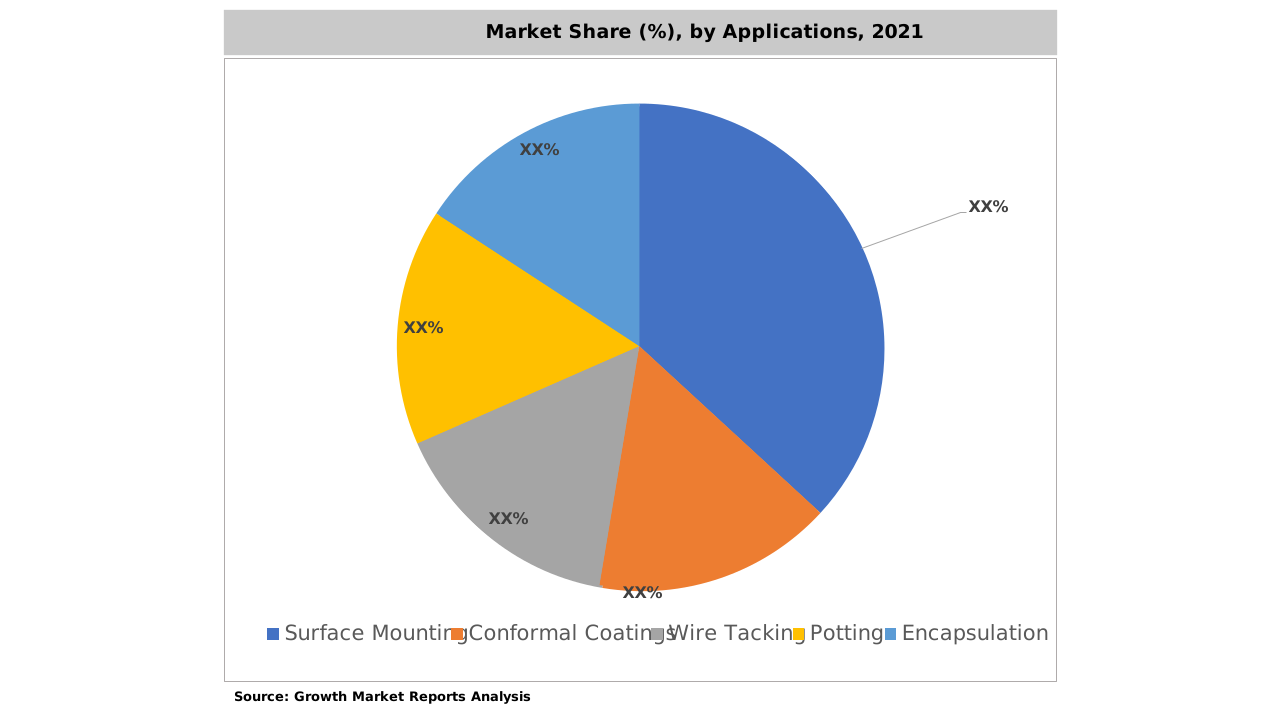
The application landscape for Polyurethane (PU) Adhesive in Electronics is broad, encompassing Consumer Electronics, Automotive Electronics, Industrial Electronics, Telecommunication Devices, and Others. Consumer electronics represent the largest application segment, driven by the relentless demand for smartphones, tablets, laptops, wearables, and smart home devices. PU adhesives are integral to the assembly of displays, touchscreens, batteries, and circuit boards, providing reliable bonding and protection against environmental stressors. The trend toward thinner, lighter, and more durable consumer devices has further amplified the need for high-performance adhesives capable of delivering both mechanical strength and flexibility throughout 2025 and beyond.

Automotive electronics constitute a rapidly growing application area, fueled by the global transition toward electric and autonomous vehicles. PU adhesives are extensively used in the assembly of electronic control units, battery management systems, infotainment displays, and advanced driver-assistance systems (ADAS). The ability of PU adhesives to absorb vibrations, withstand temperature fluctuations, and provide electrical insulation makes them indispensable in automotive applications. As automakers continue to integrate more sophisticated electronic systems to enhance vehicle safety, connectivity, and performance, demand for PU adhesives in this segment is expected to surge well into the 2026-2034 forecast period.

Industrial electronics, including automation equipment, robotics, sensors, and control panels, rely heavily on PU adhesives for their assembly and protection. These devices often operate in harsh environments characterized by exposure to dust, moisture, chemicals, and extreme temperatures. PU adhesives offer excellent resistance to these conditions, ensuring long-term reliability and performance. The increasing adoption of Industry 4.0 technologies and the expansion of smart manufacturing facilities are driving demand for robust adhesive solutions in industrial electronics, making this one of the most dynamic growth segments through 2034.

The telecommunication devices segment is witnessing steady growth, supported by the global rollout of 5G networks and the proliferation of connected devices. PU adhesives are used in the assembly of antennas, circuit boards, and enclosures, providing secure bonding and environmental protection. The need for high-frequency signal integrity and miniaturized device architectures necessitates the use of advanced adhesives that can deliver consistent performance. As telecommunication infrastructure continues to evolve, the role of PU adhesives in ensuring the reliability and durability of electronic components will become increasingly important through 2034.

The "Others" category includes applications in medical electronics, aerospace electronics, and specialty devices. These sectors demand adhesives that meet stringent regulatory and performance standards, such as biocompatibility, flame retardancy, and low outgassing. PU adhesives are being tailored to address these unique requirements, enabling their use in critical applications such as implantable medical devices, avionics, and mission-critical industrial systems. The diversification of application areas reflects the versatility and adaptability of PU adhesives in meeting the evolving needs of the global electronics industry.

End-Use Analysis

The Polyurethane (PU) Adhesive in Electronics market is segmented by end-use into OEMs (Original Equipment Manufacturers) and Aftermarket. OEMs represent the dominant end-use segment, accounting for the majority of market demand in 2025. This dominance is attributed to the large-scale production of electronic devices by leading manufacturers across consumer, automotive, industrial, and telecommunication sectors. OEMs prioritize adhesives that offer consistent quality, reliability, and compatibility with automated assembly processes. The integration of PU adhesives into OEM manufacturing lines is facilitated by their ease of application, rapid curing times, and ability to meet stringent performance specifications required by modern electronic assemblies.

The aftermarket segment, while smaller in comparison, is experiencing steady growth as the demand for electronic device repair, maintenance, and modification increases. Aftermarket applications include the replacement of damaged components, retrofitting of existing systems, and customization of electronic devices. PU adhesives are preferred in the aftermarket due to their versatility, ease of use, and compatibility with a wide range of substrates. The growing trend toward device refurbishment and recycling, particularly in the consumer electronics and automotive sectors, is expected to drive demand for PU adhesives in the aftermarket segment through the 2026-2034 forecast period.

OEMs are also increasingly focused on sustainability and environmental compliance, prompting the adoption of low-VOC and eco-friendly PU adhesive formulations. Regulatory pressures and consumer preferences for green electronics have led manufacturers to seek adhesives that minimize environmental impact without compromising performance. This shift toward sustainable manufacturing practices is expected to influence product development and procurement strategies among OEMs, further shaping the competitive landscape of the PU adhesive market through 2034.

Aftermarket players, including repair shops, refurbishers, and independent service providers, often require adhesive solutions that are easy to handle, store, and apply in diverse settings. PU adhesives that offer long shelf life, fast curing, and strong adhesion to various substrates are particularly valued in this segment. As the electronics lifecycle extends through repair and refurbishment initiatives, the aftermarket is poised to play an increasingly important role in sustaining long-term demand for PU adhesives globally.

Distribution Channel Analysis

The distribution of Polyurethane (PU) Adhesive in Electronics is segmented into Direct Sales, Distributors/Wholesalers, and Online Retail. Direct sales channels are preferred by large OEMs and industrial customers who require customized solutions, technical support, and bulk purchasing options. Direct engagement with adhesive manufacturers enables these customers to access tailored product formulations, expedited delivery, and comprehensive after-sales service. The direct sales model fosters long-term partnerships between manufacturers and key clients, ensuring a steady demand for PU adhesives in high-volume production environments throughout the forecast period.

Distributors and wholesalers play a crucial role in expanding market reach, particularly among small and medium-sized enterprises (SMEs) and aftermarket players. These intermediaries offer a wide range of adhesive products from multiple suppliers, providing customers with greater choice and flexibility. Distributors also facilitate inventory management, technical support, and localized delivery, making them an essential component of the global supply chain. The ability to serve diverse customer segments across different regions enhances the accessibility and availability of PU adhesives throughout the electronics market.

Online retail channels are gaining traction as of 2025, driven by the increasing digitalization of procurement processes and the growing preference for e-commerce platforms. Online marketplaces enable customers to compare products, access technical specifications, and place orders with ease. The convenience and transparency offered by online retail are particularly appealing to small businesses, independent repair shops, and DIY enthusiasts. The rise of e-commerce is expected to further democratize access to PU adhesives, enabling manufacturers to reach a broader customer base and streamline distribution operations through 2034.

The evolving distribution landscape reflects the diverse needs of end-users in the electronics industry. While large OEMs continue to rely on direct sales for strategic procurement and technical collaboration, SMEs and aftermarket participants benefit from the flexibility and convenience offered by distributors and online channels. Manufacturers are increasingly adopting omnichannel strategies to optimize market coverage and enhance customer engagement, ensuring that PU adhesives are readily available to meet the growing and varied demands of the global electronics sector.

Opportunities & Threats

The Polyurethane (PU) Adhesive in Electronics market presents significant opportunities for growth through 2034, driven by the continuous evolution of electronic devices and the emergence of new application areas. The rapid adoption of electric vehicles, smart wearables, and IoT devices is creating new avenues for PU adhesive manufacturers to develop specialized products tailored to unique application requirements. The increasing focus on sustainability and environmental compliance offers further opportunities for innovation, as manufacturers invest in the development of low-VOC, bio-based, and recyclable PU adhesive formulations. Collaborations between adhesive suppliers, OEMs, and research institutions are expected to accelerate the commercialization of next-generation adhesive solutions, enhancing the market's long-term growth potential.

Technological advancements in electronics manufacturing, such as 3D printing, flexible electronics, and advanced packaging techniques, are opening up new frontiers for PU adhesive applications. The integration of smart materials, sensors, and wireless connectivity into everyday devices requires adhesives that can provide both mechanical strength and functional performance, such as electrical conductivity or thermal management. PU adhesives with multifunctional properties are well-positioned to capitalize on these emerging trends, enabling manufacturers to push the boundaries of electronic device design and functionality. The globalization of electronics supply chains and the expansion of manufacturing capabilities in emerging markets further amplify the opportunities for market growth in the 2026-2034 period.

Despite the favorable outlook, the market faces certain restraints, including the volatility of raw material prices and the stringent regulatory landscape governing chemical formulations. PU adhesives are derived from petrochemical feedstocks, making them susceptible to fluctuations in oil prices and supply chain disruptions. Additionally, regulatory requirements related to VOC emissions, hazardous substances, and workplace safety impose compliance costs and may limit the use of certain PU adhesive formulations. Manufacturers must navigate these challenges by investing in sustainable sourcing, process optimization, and regulatory compliance to ensure long-term market competitiveness through 2034.

Regional Outlook

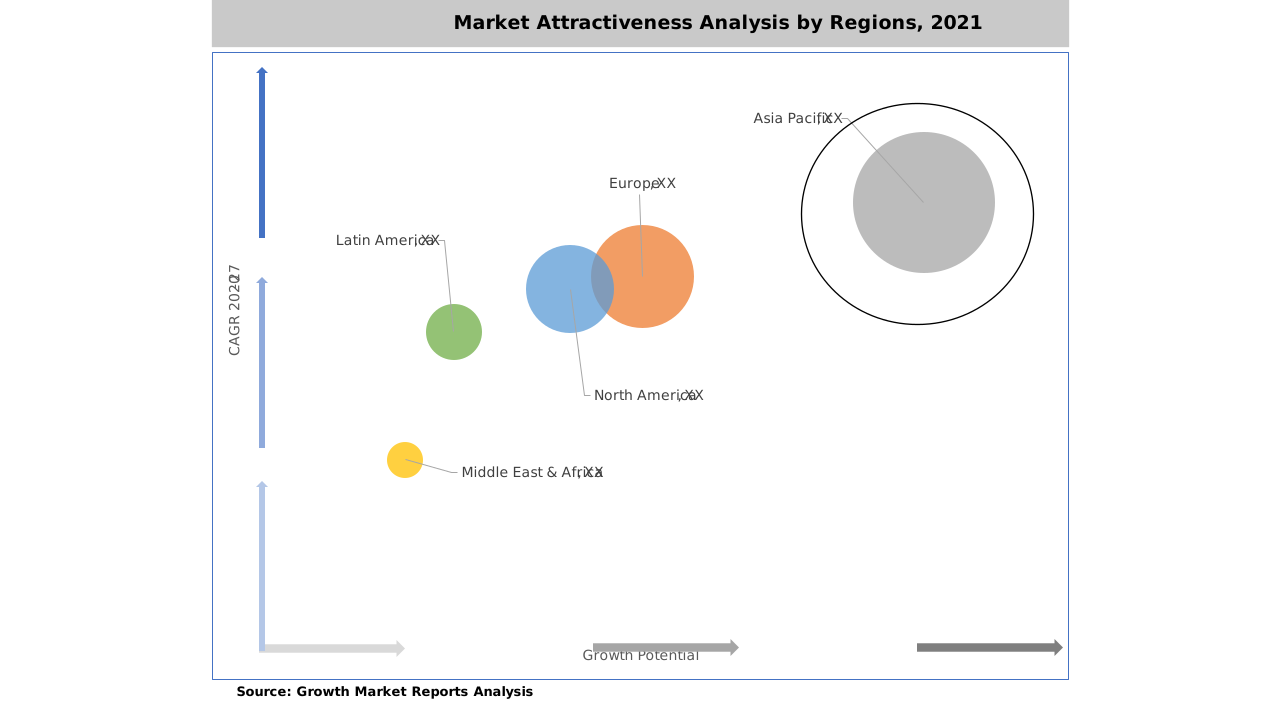
Asia Pacific remains the dominant region in the Polyurethane (PU) Adhesive in Electronics market, accounting for approximately 47% of the global market share in 2025, equivalent to around USD 592 million. The region's leadership is underpinned by its vibrant electronics manufacturing ecosystem, particularly in countries such as China, Japan, South Korea, and Taiwan. These countries host some of the world's largest OEMs and contract manufacturers, driving substantial demand for high-performance PU adhesives. The rapid growth of consumer electronics, automotive electronics, and industrial automation in Asia Pacific is expected to sustain a strong CAGR of 7.4% through 2034, outpacing other regions and solidifying its position as the primary engine of global market expansion. The region's dynamic growth is further supported by specialized demand for advanced adhesive solutions in Asian electronics manufacturing.

Polyurethane (PU) Adhesive in Electronics Market Regional Share 2025

North America is another significant market, with an estimated market size of USD 271 million in 2025. The region benefits from a robust innovation ecosystem, a strong presence of leading technology companies, and early adoption of advanced electronic devices. The growing emphasis on electric vehicles, smart manufacturing, and telecommunication infrastructure is driving demand for PU adhesives in North America. Regulatory initiatives promoting environmental sustainability and the adoption of green electronics are further shaping market dynamics in the region. The United States, in particular, is a key contributor, accounting for the majority of regional demand due to its large consumer base and advanced manufacturing capabilities.

Europe holds a substantial share of the global market, with a 2025 value of approximately USD 214 million. The region is characterized by a strong focus on automotive innovation, industrial automation, and environmental compliance. European manufacturers are at the forefront of developing sustainable PU adhesive solutions, driven by stringent regulatory standards and consumer preferences for eco-friendly products. The increasing adoption of electric vehicles, smart home systems, and industrial IoT devices is expected to drive steady demand for PU adhesives in Europe through the 2026-2034 forecast period. Meanwhile, Latin America and the Middle East and Africa represent emerging markets, collectively accounting for around USD 182 million in 2025. These regions are witnessing gradual growth, supported by investments in infrastructure, industrialization, and the expansion of electronics manufacturing capabilities.

Competitor Outlook

The competitive landscape of the Polyurethane (PU) Adhesive in Electronics market is characterized by the presence of several global and regional players, each vying for market share through product innovation, strategic partnerships, and geographic expansion. Leading companies are investing heavily in research and development to introduce advanced adhesive formulations that cater to the evolving needs of the electronics industry. The focus on sustainability, regulatory compliance, and performance optimization is driving continuous innovation, with manufacturers seeking to differentiate their offerings through unique value propositions such as low-VOC content, rapid curing times, and multifunctional properties in 2025 and beyond.

The market is moderately consolidated, with a handful of major players accounting for a significant share of global revenue. These companies leverage their extensive distribution networks, technical expertise, and strong brand recognition to maintain a competitive edge. At the same time, the market remains open to new entrants and niche players who specialize in customized adhesive solutions for specific applications or industries. The growing demand for specialized adhesives in emerging application areas, such as flexible electronics and medical devices, is creating opportunities for smaller companies to carve out a niche and compete effectively against larger incumbents through the forecast period.

Strategic collaborations and mergers and acquisitions are common strategies employed by market participants to enhance their product portfolios, expand geographic reach, and strengthen their market positions. Partnerships with OEMs, contract manufacturers, and research institutions enable adhesive manufacturers to stay abreast of technological advancements and respond quickly to changing market demands. The ability to provide comprehensive technical support, application engineering, and after-sales service is increasingly recognized as a key differentiator in the competitive landscape of 2025.

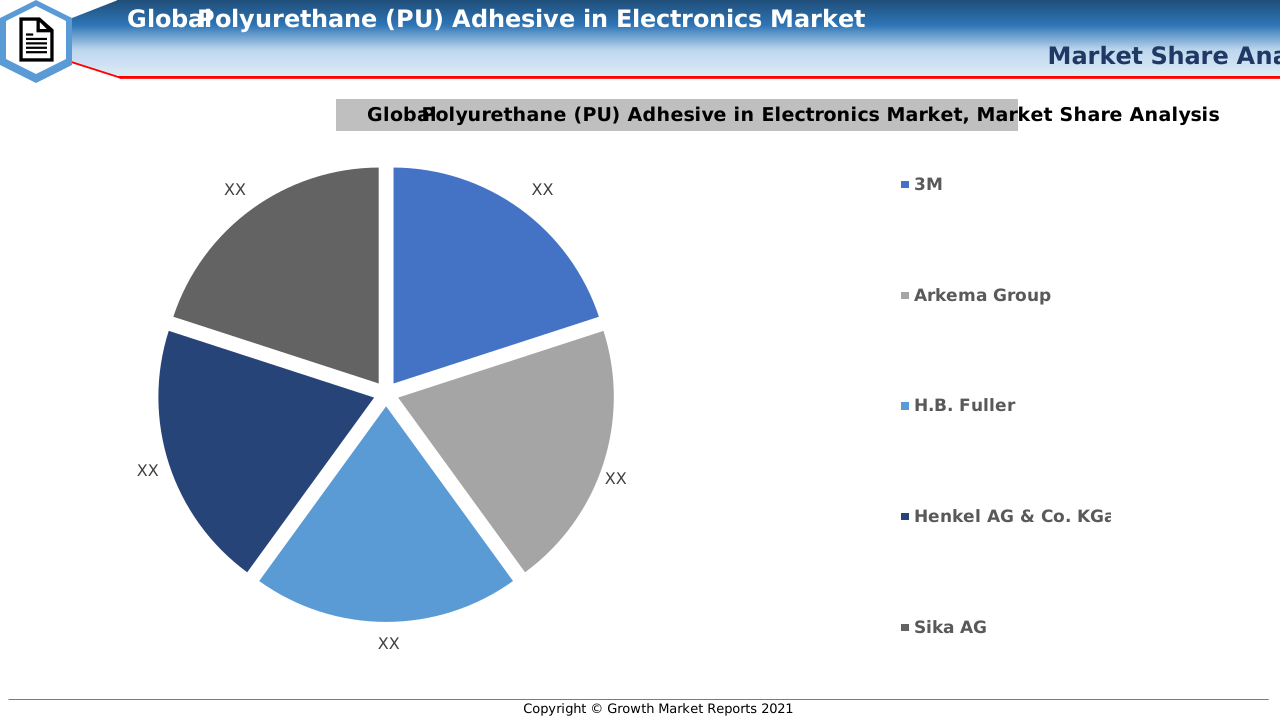
Major companies operating in the Polyurethane (PU) Adhesive in Electronics market include Henkel AG and Co. KGaA, 3M Company, H.B. Fuller Company, Sika AG, Dow Inc., Huntsman Corporation, Arkema Group, BASF SE, Evonik Industries AG, and Wacker Chemie AG. Henkel is renowned for its broad portfolio of high-performance adhesives and its strong focus on sustainability and innovation. 3M leverages its expertise in material science to develop advanced adhesive solutions for diverse electronic applications. H.B. Fuller and Sika AG are recognized for their commitment to customer-centric innovation and their extensive global distribution networks. Dow Inc. and Huntsman Corporation focus on developing specialty PU adhesives with tailored properties for automotive and industrial electronics. Arkema and BASF SE are notable for their investments in eco-friendly adhesive technologies and their ability to address the unique needs of niche markets. Specialized players such as DELO Industrial Adhesives, Dymax Corporation, Master Bond Inc., and Permabond LLC serve precision-demanding sectors with highly engineered formulations. Collectively, these companies are shaping the future of the Polyurethane (PU) Adhesive in Electronics market through relentless innovation, strategic partnerships, and a commitment to meeting the evolving demands of the global electronics industry through 2034.

Key Players

  • 3M Company
  • Henkel AG & Co. KGaA
  • Sika AG
  • H.B. Fuller Company
  • Arkema Group
  • Dow Inc.
  • BASF SE
  • Huntsman Corporation
  • Wacker Chemie AG
  • Permabond LLC
  • ITW Performance Polymers
  • Jowat SE
  • Bostik SA
  • Evonik Industries AG
  • Master Bond Inc.
  • Dymax Corporation
  • DELO Industrial Adhesives

Segments

The Polyurethane (PU) Adhesive in Electronics market has been segmented on the basis of

Product Type

  • One-Component
  • Two-Component
  • Hot Melt
  • Others

Application

  • Consumer Electronics
  • Automotive Electronics
  • Industrial Electronics
  • Telecommunication Devices
  • Others

End-Use

  • OEMs
  • Aftermarket

Distribution Channel

  • Direct Sales
  • Distributors/Wholesalers
  • Online Retail

Frequently Asked Questions

The Polyurethane (PU) Adhesive in Electronics market is led by a mix of global chemical and specialty adhesive companies. Henkel AG and 3M Company are among the foremost players, leveraging extensive R&D capabilities and broad product portfolios. H.B. Fuller, Sika AG, and Dow Inc. are recognized for their global distribution networks and application-specific innovations. Arkema Group, Huntsman Corporation, BASF SE, and Evonik Industries AG are notable for investments in sustainable and high-performance formulations. Specialized players such as DELO Industrial Adhesives, Dymax Corporation, Master Bond Inc., and Permabond LLC serve niche markets with precision-engineered adhesive solutions.

The PU Adhesive in Electronics market faces several notable challenges as of 2025. Volatility in petrochemical raw material prices directly impacts production costs and profit margins, since PU adhesives are derived from oil-based feedstocks. Increasingly stringent global regulations around VOC emissions, hazardous substances, and workplace safety impose compliance burdens on manufacturers. Competition from alternative adhesive technologies, including UV-curable and silicone-based systems, presents ongoing market pressure. Additionally, supply chain disruptions and geopolitical uncertainties continue to affect the availability and pricing of key raw materials and finished products.

PU adhesives in electronics are distributed through three primary channels. Direct sales remain the preferred route for large OEMs and industrial customers seeking custom formulations, bulk pricing, and dedicated technical support. Distributors and wholesalers serve small and medium-sized enterprises and aftermarket players, providing broad product access, localized inventory, and regional expertise. Online retail channels are gaining momentum, driven by digitalization of procurement and the convenience of e-commerce platforms. Manufacturers are increasingly adopting omnichannel strategies to serve diverse customer segments across all regions effectively.

Original Equipment Manufacturers (OEMs) are the dominant end-users, accounting for the majority of global demand in 2025. OEMs across consumer electronics, automotive, industrial, and telecommunication sectors integrate PU adhesives into high-volume, automated production lines. The aftermarket segment, comprising repair shops, refurbishers, and independent service providers, represents a smaller but steadily growing share of demand. The growing trend toward device refurbishment, component replacement, and sustainability-focused lifecycle extension is supporting aftermarket growth through the 2026-2034 forecast period.

The PU adhesive market for electronics offers four main product types. One-component PU adhesives are valued for their ease of application and fast room-temperature curing, making them ideal for high-volume OEM assembly lines. Two-component PU adhesives provide superior bonding strength and are preferred for demanding automotive and industrial applications. Hot melt PU adhesives offer solvent-free, rapid-curing characteristics suited for lightweight component assembly. The "Others" category includes specialized formulations such as conductive adhesives, flame-retardant adhesives, and low-outgassing variants for niche sectors like aerospace and medical electronics.

Several key factors are driving the growth of PU adhesives in electronics as of 2025. The rapid miniaturization of electronic devices necessitates high-performance bonding solutions that work reliably in confined spaces. The global shift toward electric and hybrid vehicles is creating substantial demand for adhesives capable of managing vibration, heat, and electrical insulation in complex automotive assemblies. The deployment of 5G networks and the explosive growth of IoT devices are further accelerating demand. Additionally, the rise of Industry 4.0 and smart manufacturing is boosting adoption in industrial electronics.

PU adhesives in electronics are primarily used across five key application segments. Consumer electronics, including smartphones, tablets, wearables, and smart home devices, represent the largest segment. Automotive electronics is the fastest-growing application, driven by electric vehicles and ADAS systems. Industrial electronics applications include robotics, sensors, and automation equipment. Telecommunication devices, such as antennas and circuit board assemblies, are also significant users. Finally, specialty applications in medical electronics, aerospace, and mission-critical industrial systems round out the diverse landscape.

Asia Pacific is the dominant region, accounting for approximately 47% of the global market share in 2025, equivalent to around USD 592 million. This leadership is driven by the region's extensive electronics manufacturing base in China, Japan, South Korea, and Taiwan. North America holds the second-largest share at approximately 21.5% (around USD 271 million), followed by Europe at roughly 17% (around USD 214 million). Latin America and the Middle East and Africa collectively represent the remaining share, with gradual growth anticipated through 2034.

The Polyurethane (PU) Adhesive in Electronics market is projected to grow at a compound annual growth rate (CAGR) of 6.7% during the forecast period from 2026 to 2034. This growth is supported by increasing miniaturization of electronic devices, rising adoption of electric and autonomous vehicles, and the proliferation of IoT-connected devices across consumer, industrial, and telecommunication sectors globally.

As of 2025, the global Polyurethane (PU) Adhesive in Electronics market is valued at approximately USD 1.26 billion. This figure reflects robust demand driven by the expanding consumer electronics sector, the accelerating transition to electric vehicles, and the ongoing global rollout of 5G telecommunication infrastructure. The market is expected to reach USD 2.27 billion by 2034, underpinned by consistent growth across all major application segments and regions.

Table Of Content

Chapter 1 Executive Summary
Chapter 2 Assumptions and Acronyms Used
Chapter 3 Research Methodology
Chapter 4 Polyurethane (PU) Adhesive in Electronics Market Overview
   4.1 Introduction
      4.1.1 Market Taxonomy
      4.1.2 Market Definition
      4.1.3 Macro-Economic Factors Impacting the Market Growth
   4.2 Polyurethane (PU) Adhesive in Electronics Market Dynamics
      4.2.1 Market Drivers
      4.2.2 Market Restraints
      4.2.3 Market Opportunity
   4.3 Polyurethane (PU) Adhesive in Electronics Market - Supply Chain Analysis
      4.3.1 List of Key Suppliers
      4.3.2 List of Key Distributors
      4.3.3 List of Key Consumers
   4.4 Key Forces Shaping the Polyurethane (PU) Adhesive in Electronics Market
      4.4.1 Bargaining Power of Suppliers
      4.4.2 Bargaining Power of Buyers
      4.4.3 Threat of Substitution
      4.4.4 Threat of New Entrants
      4.4.5 Competitive Rivalry
   4.5 Global Polyurethane (PU) Adhesive in Electronics Market Size & Forecast, 2023-2032
      4.5.1 Polyurethane (PU) Adhesive in Electronics Market Size and Y-o-Y Growth
      4.5.2 Polyurethane (PU) Adhesive in Electronics Market Absolute $ Opportunity

Chapter 5 Global Polyurethane (PU) Adhesive in Electronics Market Analysis and Forecast By Product Type
   5.1 Introduction
      5.1.1 Key Market Trends & Growth Opportunities By Product Type
      5.1.2 Basis Point Share (BPS) Analysis By Product Type
      5.1.3 Absolute $ Opportunity Assessment By Product Type
   5.2 Polyurethane (PU) Adhesive in Electronics Market Size Forecast By Product Type
      5.2.1 One-Component
      5.2.2 Two-Component
      5.2.3 Hot Melt
      5.2.4 Others
   5.3 Market Attractiveness Analysis By Product Type

Chapter 6 Global Polyurethane (PU) Adhesive in Electronics Market Analysis and Forecast By Application
   6.1 Introduction
      6.1.1 Key Market Trends & Growth Opportunities By Application
      6.1.2 Basis Point Share (BPS) Analysis By Application
      6.1.3 Absolute $ Opportunity Assessment By Application
   6.2 Polyurethane (PU) Adhesive in Electronics Market Size Forecast By Application
      6.2.1 Consumer Electronics
      6.2.2 Automotive Electronics
      6.2.3 Industrial Electronics
      6.2.4 Telecommunication Devices
      6.2.5 Others
   6.3 Market Attractiveness Analysis By Application

Chapter 7 Global Polyurethane (PU) Adhesive in Electronics Market Analysis and Forecast By End-Use
   7.1 Introduction
      7.1.1 Key Market Trends & Growth Opportunities By End-Use
      7.1.2 Basis Point Share (BPS) Analysis By End-Use
      7.1.3 Absolute $ Opportunity Assessment By End-Use
   7.2 Polyurethane (PU) Adhesive in Electronics Market Size Forecast By End-Use
      7.2.1 OEMs
      7.2.2 Aftermarket
   7.3 Market Attractiveness Analysis By End-Use

Chapter 8 Global Polyurethane (PU) Adhesive in Electronics Market Analysis and Forecast By Distribution Channel
   8.1 Introduction
      8.1.1 Key Market Trends & Growth Opportunities By Distribution Channel
      8.1.2 Basis Point Share (BPS) Analysis By Distribution Channel
      8.1.3 Absolute $ Opportunity Assessment By Distribution Channel
   8.2 Polyurethane (PU) Adhesive in Electronics Market Size Forecast By Distribution Channel
      8.2.1 Direct Sales
      8.2.2 Distributors/Wholesalers
      8.2.3 Online Retail
   8.3 Market Attractiveness Analysis By Distribution Channel

Chapter 9 Global Polyurethane (PU) Adhesive in Electronics Market Analysis and Forecast by Region
   9.1 Introduction
      9.1.1 Key Market Trends & Growth Opportunities By Region
      9.1.2 Basis Point Share (BPS) Analysis By Region
      9.1.3 Absolute $ Opportunity Assessment By Region
   9.2 Polyurethane (PU) Adhesive in Electronics Market Size Forecast By Region
      9.2.1 North America
      9.2.2 Europe
      9.2.3 Asia Pacific
      9.2.4 Latin America
      9.2.5 Middle East & Africa (MEA)
   9.3 Market Attractiveness Analysis By Region

Chapter 10 Coronavirus Disease (COVID-19) Impact 
   10.1 Introduction 
   10.2 Current & Future Impact Analysis 
   10.3 Economic Impact Analysis 
   10.4 Government Policies 
   10.5 Investment Scenario

Chapter 11 North America Polyurethane (PU) Adhesive in Electronics Analysis and Forecast
   11.1 Introduction
   11.2 North America Polyurethane (PU) Adhesive in Electronics Market Size Forecast by Country
      11.2.1 U.S.
      11.2.2 Canada
   11.3 Basis Point Share (BPS) Analysis by Country
   11.4 Absolute $ Opportunity Assessment by Country
   11.5 Market Attractiveness Analysis by Country
   11.6 North America Polyurethane (PU) Adhesive in Electronics Market Size Forecast By Product Type
      11.6.1 One-Component
      11.6.2 Two-Component
      11.6.3 Hot Melt
      11.6.4 Others
   11.7 Basis Point Share (BPS) Analysis By Product Type 
   11.8 Absolute $ Opportunity Assessment By Product Type 
   11.9 Market Attractiveness Analysis By Product Type
   11.10 North America Polyurethane (PU) Adhesive in Electronics Market Size Forecast By Application
      11.10.1 Consumer Electronics
      11.10.2 Automotive Electronics
      11.10.3 Industrial Electronics
      11.10.4 Telecommunication Devices
      11.10.5 Others
   11.11 Basis Point Share (BPS) Analysis By Application 
   11.12 Absolute $ Opportunity Assessment By Application 
   11.13 Market Attractiveness Analysis By Application
   11.14 North America Polyurethane (PU) Adhesive in Electronics Market Size Forecast By End-Use
      11.14.1 OEMs
      11.14.2 Aftermarket
   11.15 Basis Point Share (BPS) Analysis By End-Use 
   11.16 Absolute $ Opportunity Assessment By End-Use 
   11.17 Market Attractiveness Analysis By End-Use
   11.18 North America Polyurethane (PU) Adhesive in Electronics Market Size Forecast By Distribution Channel
      11.18.1 Direct Sales
      11.18.2 Distributors/Wholesalers
      11.18.3 Online Retail
   11.19 Basis Point Share (BPS) Analysis By Distribution Channel 
   11.20 Absolute $ Opportunity Assessment By Distribution Channel 
   11.21 Market Attractiveness Analysis By Distribution Channel

Chapter 12 Europe Polyurethane (PU) Adhesive in Electronics Analysis and Forecast
   12.1 Introduction
   12.2 Europe Polyurethane (PU) Adhesive in Electronics Market Size Forecast by Country
      12.2.1 Germany
      12.2.2 France
      12.2.3 Italy
      12.2.4 U.K.
      12.2.5 Spain
      12.2.6 Russia
      12.2.7 Rest of Europe
   12.3 Basis Point Share (BPS) Analysis by Country
   12.4 Absolute $ Opportunity Assessment by Country
   12.5 Market Attractiveness Analysis by Country
   12.6 Europe Polyurethane (PU) Adhesive in Electronics Market Size Forecast By Product Type
      12.6.1 One-Component
      12.6.2 Two-Component
      12.6.3 Hot Melt
      12.6.4 Others
   12.7 Basis Point Share (BPS) Analysis By Product Type 
   12.8 Absolute $ Opportunity Assessment By Product Type 
   12.9 Market Attractiveness Analysis By Product Type
   12.10 Europe Polyurethane (PU) Adhesive in Electronics Market Size Forecast By Application
      12.10.1 Consumer Electronics
      12.10.2 Automotive Electronics
      12.10.3 Industrial Electronics
      12.10.4 Telecommunication Devices
      12.10.5 Others
   12.11 Basis Point Share (BPS) Analysis By Application 
   12.12 Absolute $ Opportunity Assessment By Application 
   12.13 Market Attractiveness Analysis By Application
   12.14 Europe Polyurethane (PU) Adhesive in Electronics Market Size Forecast By End-Use
      12.14.1 OEMs
      12.14.2 Aftermarket
   12.15 Basis Point Share (BPS) Analysis By End-Use 
   12.16 Absolute $ Opportunity Assessment By End-Use 
   12.17 Market Attractiveness Analysis By End-Use
   12.18 Europe Polyurethane (PU) Adhesive in Electronics Market Size Forecast By Distribution Channel
      12.18.1 Direct Sales
      12.18.2 Distributors/Wholesalers
      12.18.3 Online Retail
   12.19 Basis Point Share (BPS) Analysis By Distribution Channel 
   12.20 Absolute $ Opportunity Assessment By Distribution Channel 
   12.21 Market Attractiveness Analysis By Distribution Channel

Chapter 13 Asia Pacific Polyurethane (PU) Adhesive in Electronics Analysis and Forecast
   13.1 Introduction
   13.2 Asia Pacific Polyurethane (PU) Adhesive in Electronics Market Size Forecast by Country
      13.2.1 China
      13.2.2 Japan
      13.2.3 South Korea
      13.2.4 India
      13.2.5 Australia
      13.2.6 South East Asia (SEA)
      13.2.7 Rest of Asia Pacific (APAC)
   13.3 Basis Point Share (BPS) Analysis by Country
   13.4 Absolute $ Opportunity Assessment by Country
   13.5 Market Attractiveness Analysis by Country
   13.6 Asia Pacific Polyurethane (PU) Adhesive in Electronics Market Size Forecast By Product Type
      13.6.1 One-Component
      13.6.2 Two-Component
      13.6.3 Hot Melt
      13.6.4 Others
   13.7 Basis Point Share (BPS) Analysis By Product Type 
   13.8 Absolute $ Opportunity Assessment By Product Type 
   13.9 Market Attractiveness Analysis By Product Type
   13.10 Asia Pacific Polyurethane (PU) Adhesive in Electronics Market Size Forecast By Application
      13.10.1 Consumer Electronics
      13.10.2 Automotive Electronics
      13.10.3 Industrial Electronics
      13.10.4 Telecommunication Devices
      13.10.5 Others
   13.11 Basis Point Share (BPS) Analysis By Application 
   13.12 Absolute $ Opportunity Assessment By Application 
   13.13 Market Attractiveness Analysis By Application
   13.14 Asia Pacific Polyurethane (PU) Adhesive in Electronics Market Size Forecast By End-Use
      13.14.1 OEMs
      13.14.2 Aftermarket
   13.15 Basis Point Share (BPS) Analysis By End-Use 
   13.16 Absolute $ Opportunity Assessment By End-Use 
   13.17 Market Attractiveness Analysis By End-Use
   13.18 Asia Pacific Polyurethane (PU) Adhesive in Electronics Market Size Forecast By Distribution Channel
      13.18.1 Direct Sales
      13.18.2 Distributors/Wholesalers
      13.18.3 Online Retail
   13.19 Basis Point Share (BPS) Analysis By Distribution Channel 
   13.20 Absolute $ Opportunity Assessment By Distribution Channel 
   13.21 Market Attractiveness Analysis By Distribution Channel

Chapter 14 Latin America Polyurethane (PU) Adhesive in Electronics Analysis and Forecast
   14.1 Introduction
   14.2 Latin America Polyurethane (PU) Adhesive in Electronics Market Size Forecast by Country
      14.2.1 Brazil
      14.2.2 Mexico
      14.2.3 Rest of Latin America (LATAM)
   14.3 Basis Point Share (BPS) Analysis by Country
   14.4 Absolute $ Opportunity Assessment by Country
   14.5 Market Attractiveness Analysis by Country
   14.6 Latin America Polyurethane (PU) Adhesive in Electronics Market Size Forecast By Product Type
      14.6.1 One-Component
      14.6.2 Two-Component
      14.6.3 Hot Melt
      14.6.4 Others
   14.7 Basis Point Share (BPS) Analysis By Product Type 
   14.8 Absolute $ Opportunity Assessment By Product Type 
   14.9 Market Attractiveness Analysis By Product Type
   14.10 Latin America Polyurethane (PU) Adhesive in Electronics Market Size Forecast By Application
      14.10.1 Consumer Electronics
      14.10.2 Automotive Electronics
      14.10.3 Industrial Electronics
      14.10.4 Telecommunication Devices
      14.10.5 Others
   14.11 Basis Point Share (BPS) Analysis By Application 
   14.12 Absolute $ Opportunity Assessment By Application 
   14.13 Market Attractiveness Analysis By Application
   14.14 Latin America Polyurethane (PU) Adhesive in Electronics Market Size Forecast By End-Use
      14.14.1 OEMs
      14.14.2 Aftermarket
   14.15 Basis Point Share (BPS) Analysis By End-Use 
   14.16 Absolute $ Opportunity Assessment By End-Use 
   14.17 Market Attractiveness Analysis By End-Use
   14.18 Latin America Polyurethane (PU) Adhesive in Electronics Market Size Forecast By Distribution Channel
      14.18.1 Direct Sales
      14.18.2 Distributors/Wholesalers
      14.18.3 Online Retail
   14.19 Basis Point Share (BPS) Analysis By Distribution Channel 
   14.20 Absolute $ Opportunity Assessment By Distribution Channel 
   14.21 Market Attractiveness Analysis By Distribution Channel

Chapter 15 Middle East & Africa (MEA) Polyurethane (PU) Adhesive in Electronics Analysis and Forecast
   15.1 Introduction
   15.2 Middle East & Africa (MEA) Polyurethane (PU) Adhesive in Electronics Market Size Forecast by Country
      15.2.1 Saudi Arabia
      15.2.2 South Africa
      15.2.3 UAE
      15.2.4 Rest of Middle East & Africa (MEA)
   15.3 Basis Point Share (BPS) Analysis by Country
   15.4 Absolute $ Opportunity Assessment by Country
   15.5 Market Attractiveness Analysis by Country
   15.6 Middle East & Africa (MEA) Polyurethane (PU) Adhesive in Electronics Market Size Forecast By Product Type
      15.6.1 One-Component
      15.6.2 Two-Component
      15.6.3 Hot Melt
      15.6.4 Others
   15.7 Basis Point Share (BPS) Analysis By Product Type 
   15.8 Absolute $ Opportunity Assessment By Product Type 
   15.9 Market Attractiveness Analysis By Product Type
   15.10 Middle East & Africa (MEA) Polyurethane (PU) Adhesive in Electronics Market Size Forecast By Application
      15.10.1 Consumer Electronics
      15.10.2 Automotive Electronics
      15.10.3 Industrial Electronics
      15.10.4 Telecommunication Devices
      15.10.5 Others
   15.11 Basis Point Share (BPS) Analysis By Application 
   15.12 Absolute $ Opportunity Assessment By Application 
   15.13 Market Attractiveness Analysis By Application
   15.14 Middle East & Africa (MEA) Polyurethane (PU) Adhesive in Electronics Market Size Forecast By End-Use
      15.14.1 OEMs
      15.14.2 Aftermarket
   15.15 Basis Point Share (BPS) Analysis By End-Use 
   15.16 Absolute $ Opportunity Assessment By End-Use 
   15.17 Market Attractiveness Analysis By End-Use
   15.18 Middle East & Africa (MEA) Polyurethane (PU) Adhesive in Electronics Market Size Forecast By Distribution Channel
      15.18.1 Direct Sales
      15.18.2 Distributors/Wholesalers
      15.18.3 Online Retail
   15.19 Basis Point Share (BPS) Analysis By Distribution Channel 
   15.20 Absolute $ Opportunity Assessment By Distribution Channel 
   15.21 Market Attractiveness Analysis By Distribution Channel

Chapter 16 Competition Landscape 
   16.1 Polyurethane (PU) Adhesive in Electronics Market: Competitive Dashboard
   16.2 Global Polyurethane (PU) Adhesive in Electronics Market: Market Share Analysis, 2023
   16.3 Company Profiles (Details – Overview, Financials, Developments, Strategy) 
      16.3.1 3M Company
      16.3.2 Henkel AG & Co. KGaA
      16.3.3 Sika AG
      16.3.4 H.B. Fuller Company
      16.3.5 Arkema Group
      16.3.6 Dow Inc.
      16.3.7 BASF SE
      16.3.8 Huntsman Corporation
      16.3.9 Wacker Chemie AG
      16.3.10 Permabond LLC
      16.3.11 ITW Performance Polymers
      16.3.12 Jowat SE
      16.3.13 Bostik SA
      16.3.14 Evonik Industries AG
      16.3.15 Master Bond Inc.
      16.3.16 Dymax Corporation
      16.3.17 DELO Industrial Adhesives

Methodology

Our Clients

Microsoft
Deloitte
Nestle SA
General Electric
Pfizer
Honda Motor Co. Ltd.
Siemens Healthcare
The John Holland Group