Point of Care Infectious Disease Testing Market Research Report 2033

Point of Care Infectious Disease Testing Market Research Report 2033

Segments - by Product Type (Instruments, Consumables, Software), by Technology (Lateral Flow Assays, Molecular Diagnostics, Immunoassays, Others), by Application (Respiratory Infections, Gastrointestinal Infections, Sexually Transmitted Infections, Tropical Diseases, Others), by End-User (Hospitals and Clinics, Diagnostic Centers, Home Care Settings, Research Laboratories, Others)

https://growthmarketreports.com/raksha
Author : Raksha Sharma
https://growthmarketreports.com/Vaibhav
Fact-checked by : V. Chandola
https://growthmarketreports.com/Shruti
Editor : Shruti Bhat

Upcoming | Report ID :HC-1497 | 4.7 Rating | 89 Reviews | 274 Pages | Format : Docx PDF

Report Description


Point of Care Infectious Disease Testing Market Outlook

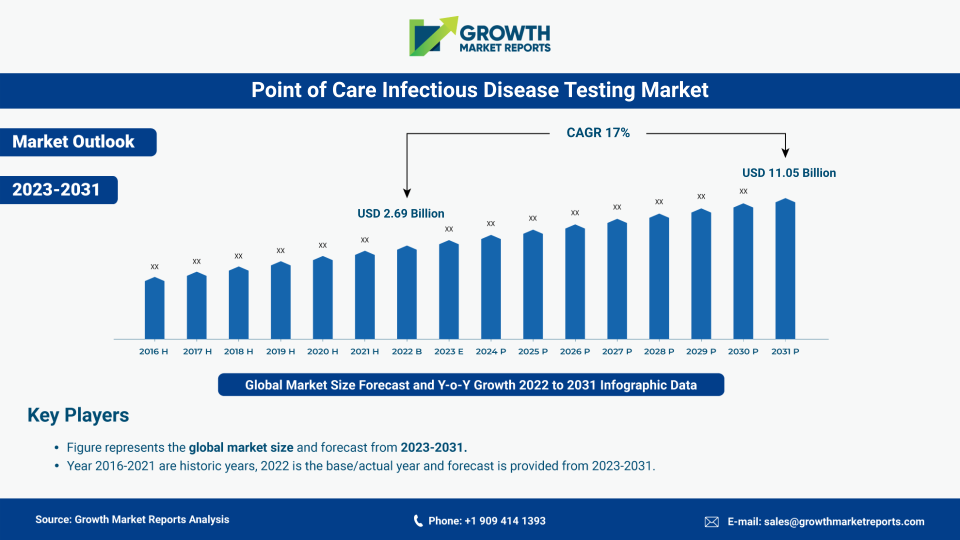
As per our latest research, the global Point of Care Infectious Disease Testing market size in 2024 stands at USD 4.6 billion, with a robust compound annual growth rate (CAGR) of 7.8% anticipated from 2025 to 2033. By the end of 2033, the market is forecasted to reach a value of USD 9.1 billion. The strong growth trajectory is driven by the increasing prevalence of infectious diseases, rapid technological advancements in diagnostic platforms, and a global shift towards decentralized healthcare delivery models.

The primary growth factors fueling the Point of Care Infectious Disease Testing market include rising incidences of infectious diseases such as influenza, tuberculosis, HIV, and tropical diseases, especially in low- and middle-income countries. The demand for rapid and accurate diagnostic solutions at the point of care has surged, as healthcare providers aim to initiate timely treatment and curb the spread of infections. Furthermore, the COVID-19 pandemic has significantly heightened awareness regarding the importance of prompt diagnostics, leading to increased investment in point-of-care (POC) testing infrastructure and the adoption of innovative technologies. This shift is further supported by governmental and non-governmental initiatives aimed at improving healthcare accessibility in remote and underserved regions, thereby expanding the market reach.

Another critical driver is the continuous evolution of diagnostic technologies, particularly in the areas of molecular diagnostics and immunoassays. The integration of advanced technologies such as microfluidics, digital health platforms, and artificial intelligence has enhanced the sensitivity, specificity, and user-friendliness of POC testing devices. These innovations have enabled the development of portable, easy-to-use, and cost-effective diagnostic tools, which are increasingly being adopted in varied healthcare settings, including hospitals, clinics, home care, and even in field applications during outbreaks. The push towards personalized medicine and the growing emphasis on patient-centric care models have further accelerated the uptake of point-of-care infectious disease testing solutions.

The market's growth is also propelled by favorable regulatory policies and reimbursement frameworks in several regions, particularly in North America and Europe. Regulatory agencies are streamlining approval processes for new POC diagnostic products, recognizing their critical role in public health management. Additionally, the increasing collaboration between public health organizations, diagnostic companies, and research institutions is fostering innovation and facilitating the introduction of new products. However, challenges such as limited awareness in certain regions, concerns regarding the accuracy of some rapid tests, and the need for skilled personnel for complex assays remain, necessitating ongoing efforts to address these barriers and unlock the market's full potential.

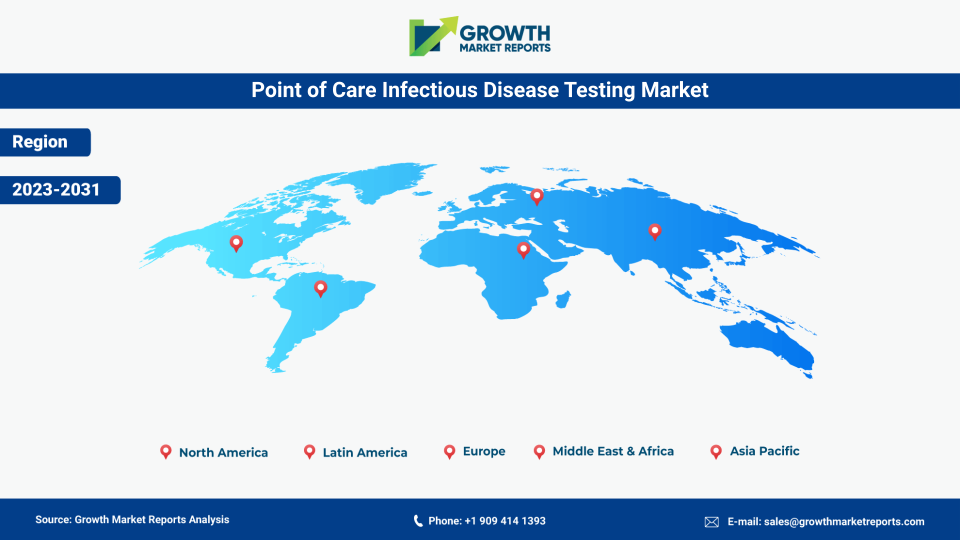
From a regional perspective, North America currently dominates the global Point of Care Infectious Disease Testing market, accounting for the largest revenue share in 2024, followed by Europe and Asia Pacific. The strong presence of leading diagnostic companies, high healthcare expenditure, and widespread adoption of advanced diagnostic technologies contribute to North America's leadership. Meanwhile, the Asia Pacific region is expected to witness the fastest growth rate over the forecast period, driven by increasing healthcare investments, expanding patient populations, and rising awareness regarding early diagnosis and disease prevention. Latin America and the Middle East & Africa are also projected to experience steady growth, supported by ongoing healthcare infrastructure development and international aid programs targeting infectious disease control.

Global Point of Care Infectious Disease Testing Industry Outlook

Product Type Analysis

The Product Type segment of the Point of Care Infectious Disease Testing market is broadly classified into instruments, consumables, and software. Instruments, which include handheld analyzers, portable readers, and other diagnostic devices, form the backbone of POC testing as they facilitate the rapid analysis of biological samples. These devices have witnessed significant technological advancements in recent years, with manufacturers focusing on miniaturization, automation, and connectivity to enhance usability and performance. The growing demand for compact and user-friendly instruments, especially in resource-limited settings, is expected to drive this segment's growth. Moreover, increasing investments in research and development are leading to the introduction of next-generation instruments with improved sensitivity and multiplexing capabilities, further expanding their application scope in infectious disease testing.

Consumables, encompassing test strips, reagents, cartridges, and other disposable components, represent the largest revenue-generating sub-segment within the product type category. The recurring nature of consumable usage in POC testing, coupled with the rising volume of diagnostic tests performed globally, underpins the strong demand for these products. Manufacturers are increasingly focusing on developing high-quality, cost-effective consumables that offer enhanced stability, accuracy, and ease of use. The trend towards single-use, disposable tests, especially in the context of highly contagious diseases, is also contributing to the growth of this segment. Additionally, partnerships between diagnostic companies and healthcare providers are facilitating the widespread distribution and availability of consumables in both urban and rural markets.

The software sub-segment, while relatively nascent, is gaining traction as digital health solutions become integral to modern diagnostic workflows. Software platforms are being developed to support data management, result interpretation, remote monitoring, and integration with electronic health records (EHRs). The adoption of cloud-based and AI-powered software solutions is enabling real-time data sharing and analytics, thereby enhancing clinical decision-making and epidemiological surveillance. As healthcare systems increasingly prioritize interoperability and data-driven approaches, the demand for robust software solutions within the POC infectious disease testing market is expected to rise, creating new growth opportunities for technology providers.

A key trend shaping the product type landscape is the convergence of hardware and software, leading to the development of integrated diagnostic platforms. These platforms combine advanced instruments with intuitive software interfaces, offering end-to-end solutions that streamline the testing process from sample collection to result reporting. This integration not only improves workflow efficiency but also enhances test accuracy and reduces the risk of human error. As the market continues to evolve, manufacturers are likely to focus on developing multifunctional, scalable, and user-centric products that cater to the diverse needs of healthcare providers across different settings.

Report Scope

Attributes Details
Report Title Point of Care Infectious Disease Testing Market Research Report 2033
By Product Type Instruments, Consumables, Software
By Technology Lateral Flow Assays, Molecular Diagnostics, Immunoassays, Others
By Application Respiratory Infections, Gastrointestinal Infections, Sexually Transmitted Infections, Tropical Diseases, Others
By End-User Hospitals and Clinics, Diagnostic Centers, Home Care Settings, Research Laboratories, Others
Regions Covered North America, Europe, APAC, Latin America, MEA
Base Year 2024
Historic Data 2018-2023
Forecast Period 2025-2033
Number of Pages 274
Number of Tables & Figures 312
Customization Available Yes, the report can be customized as per your need.

Technology Analysis

The Technology segment of the Point of Care Infectious Disease Testing market is segmented into lateral flow assays, molecular diagnostics, immunoassays, and others. Lateral flow assays (LFAs) are among the most widely used POC diagnostic technologies, owing to their simplicity, rapid turnaround time, and low cost. LFAs have found extensive application in the detection of a variety of infectious agents, including respiratory viruses, sexually transmitted infections, and tropical diseases. The COVID-19 pandemic further accelerated the adoption of LFAs, with numerous rapid antigen and antibody tests being deployed globally. Continuous innovation in assay design, such as the incorporation of nanoparticles and multiplexing capabilities, is enhancing the sensitivity and specificity of LFAs, thereby expanding their utility in diverse clinical and field settings.

Molecular diagnostics, particularly nucleic acid amplification techniques such as PCR and isothermal amplification, represent a rapidly growing segment within the POC infectious disease testing market. These technologies offer high sensitivity and specificity, enabling the accurate detection of pathogens even at low concentrations. The miniaturization of molecular diagnostic platforms and the development of cartridge-based, fully automated systems have made it feasible to perform complex assays at the point of care. The increasing prevalence of drug-resistant infections and the need for rapid pathogen identification are driving the demand for molecular diagnostics in both developed and developing regions. Moreover, ongoing research efforts are focused on reducing assay turnaround times and simplifying sample preparation processes to further enhance the accessibility and utility of molecular POC tests.

Immunoassays, including enzyme-linked immunosorbent assays (ELISAs) and chemiluminescent immunoassays, are also widely utilized in POC infectious disease testing. These assays detect specific antigens or antibodies in patient samples, providing valuable information for disease diagnosis and monitoring. Advances in immunoassay technology, such as the use of novel biomarkers and signal amplification techniques, are improving test performance and enabling the detection of a broader range of infectious agents. The versatility of immunoassays, coupled with their relatively low cost and ease of use, makes them suitable for deployment in various healthcare settings, from hospitals to remote clinics.

Other emerging technologies, such as biosensors, microfluidics, and CRISPR-based diagnostics, are gradually making their way into the POC infectious disease testing landscape. These innovative approaches hold the promise of delivering ultra-rapid, highly sensitive, and multiplexed testing solutions, potentially transforming the future of point-of-care diagnostics. As technology providers continue to invest in research and development, the market is expected to witness the introduction of next-generation diagnostic platforms that offer improved performance, affordability, and user experience, thereby driving further market growth.

Application Analysis

The Application segment of the Point of Care Infectious Disease Testing market encompasses a wide range of use cases, including respiratory infections, gastrointestinal infections, sexually transmitted infections (STIs), tropical diseases, and others. Respiratory infections, such as influenza, COVID-19, and respiratory syncytial virus (RSV), represent the largest application area, driven by the high burden of these diseases and the critical need for rapid diagnosis to guide treatment and infection control measures. The COVID-19 pandemic, in particular, has underscored the importance of POC testing in managing outbreaks and reducing transmission, leading to a surge in demand for rapid antigen and molecular diagnostic tests targeting respiratory pathogens.

Gastrointestinal infections, caused by bacteria, viruses, and parasites, are another significant application area for POC testing. These infections are often associated with high morbidity and mortality, especially in children and immunocompromised individuals. The ability to rapidly identify the causative agent at the point of care enables timely initiation of appropriate therapy and helps prevent the spread of infection within communities. The development of multiplex assays capable of detecting multiple pathogens simultaneously is further enhancing the utility of POC testing in the diagnosis of gastrointestinal diseases.

Sexually transmitted infections (STIs), including HIV, syphilis, chlamydia, and gonorrhea, are a major public health concern globally. Early and accurate diagnosis is crucial for effective disease management and prevention of transmission. Point-of-care testing solutions offer a discreet, accessible, and rapid means of screening for STIs, particularly in resource-limited settings where laboratory infrastructure may be lacking. The growing emphasis on routine screening and the integration of POC testing into public health programs are expected to drive significant growth in this application segment over the forecast period.

Tropical diseases, such as malaria, dengue, and Zika virus infection, are prevalent in many low- and middle-income countries and pose significant challenges to healthcare systems. Point-of-care testing plays a vital role in the early detection and management of these diseases, particularly in remote and underserved areas where access to centralized laboratories is limited. The development of affordable, robust, and easy-to-use POC tests tailored to the needs of these regions is a key focus area for diagnostic companies and public health organizations. Other applications, including emerging infectious diseases and healthcare-associated infections, are also gaining attention as the market continues to evolve.

End-User Analysis

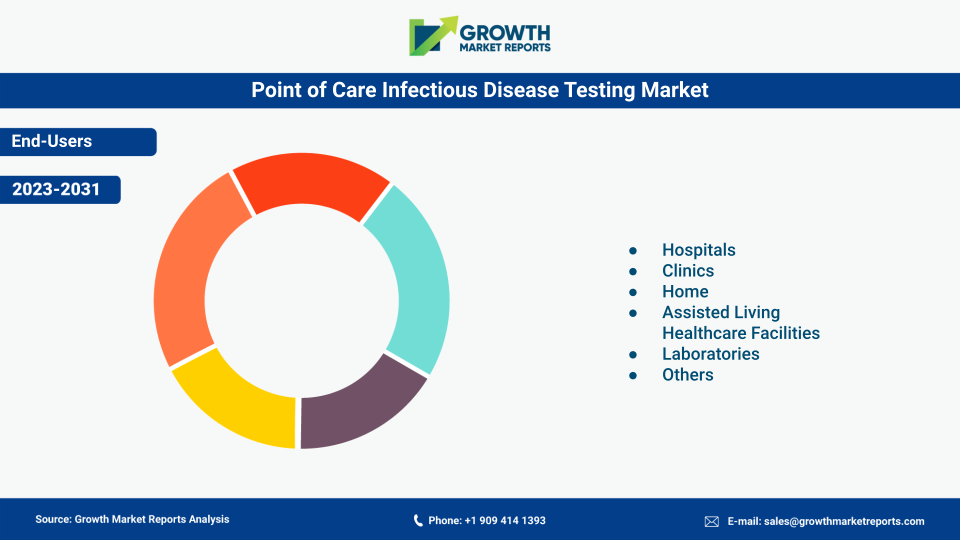
The End-User segment of the Point of Care Infectious Disease Testing market includes hospitals and clinics, diagnostic centers, home care settings, research laboratories, and others. Hospitals and clinics represent the largest end-user category, accounting for a significant share of market revenue in 2024. These settings require rapid and reliable diagnostic solutions to support timely clinical decision-making, facilitate patient triage, and manage infectious disease outbreaks. The integration of POC testing into routine hospital workflows is improving patient outcomes, reducing healthcare costs, and enhancing the overall efficiency of healthcare delivery.

Diagnostic centers, including independent laboratories and outpatient testing facilities, are also key users of point-of-care infectious disease testing solutions. These centers often serve as referral hubs for primary care providers and play a crucial role in expanding access to diagnostic services, particularly in urban and peri-urban areas. The adoption of advanced POC testing platforms in diagnostic centers is enabling faster turnaround times, higher test throughput, and improved patient satisfaction.

Home care settings represent a rapidly growing segment, driven by the increasing demand for self-testing and remote patient monitoring solutions. The COVID-19 pandemic has accelerated the adoption of home-based POC tests, with regulatory agencies granting emergency use authorizations for a wide range of products. The convenience, privacy, and accessibility offered by home testing are particularly appealing to patients with chronic conditions, immunocompromised individuals, and those living in remote areas. As telemedicine and digital health continue to gain traction, the integration of POC testing into home care models is expected to become increasingly common.

Research laboratories and academic institutions are important end-users of POC infectious disease testing technologies, particularly in the context of clinical trials, epidemiological studies, and product development. These settings require high-performance diagnostic tools capable of delivering accurate and reproducible results under controlled conditions. The collaboration between research institutions and diagnostic companies is fostering innovation and accelerating the translation of novel technologies from the laboratory to the market. Other end-users, such as military and humanitarian organizations, are also leveraging POC testing to support disease surveillance and outbreak response efforts in challenging environments.

Opportunities & Threats

The Point of Care Infectious Disease Testing market presents significant opportunities for growth and innovation, particularly in the areas of emerging technologies and expanding access to underserved populations. The ongoing development of novel diagnostic platforms, such as CRISPR-based assays and microfluidic devices, holds the potential to revolutionize point-of-care testing by offering ultra-rapid, highly sensitive, and multiplexed solutions. These advancements are expected to address unmet needs in the diagnosis of both common and emerging infectious diseases, opening new avenues for market expansion. Additionally, the increasing adoption of digital health and telemedicine is creating opportunities for the integration of POC testing into remote and home-based care models, thereby improving healthcare accessibility and patient outcomes.

Another major opportunity lies in the expansion of the market in low- and middle-income countries, where the burden of infectious diseases is highest and access to centralized laboratory infrastructure is often limited. Governments, international organizations, and private sector stakeholders are investing in initiatives aimed at strengthening healthcare systems and improving diagnostic capabilities in these regions. The development of affordable, robust, and easy-to-use POC testing solutions tailored to the needs of resource-limited settings is expected to drive significant market growth. Furthermore, the increasing focus on antimicrobial stewardship and infection control is driving demand for rapid and accurate diagnostics to guide appropriate therapy and reduce the spread of drug-resistant pathogens.

Despite the promising outlook, the market faces several restraining factors that could impede growth. One of the primary challenges is the variability in test performance, particularly in the case of some rapid antigen and antibody tests, which can lead to false negatives or positives. Concerns regarding the accuracy and reliability of certain POC tests have prompted regulatory agencies to implement stringent approval processes and post-market surveillance, potentially delaying product launches and limiting market penetration. Additionally, the need for skilled personnel to perform complex assays, especially in decentralized settings, and the high cost of some advanced diagnostic platforms may pose barriers to widespread adoption. Ongoing efforts to improve test performance, streamline regulatory pathways, and enhance user training are essential to overcoming these challenges and ensuring the sustained growth of the market.

Regional Outlook

From a regional perspective, North America leads the Point of Care Infectious Disease Testing market, contributing approximately USD 1.8 billion in revenue in 2024. The region's dominance is underpinned by the strong presence of leading diagnostic companies, high healthcare expenditure, and widespread adoption of advanced diagnostic technologies. The United States, in particular, is a major market, driven by robust investment in healthcare infrastructure, favorable reimbursement policies, and proactive public health initiatives. The region is expected to maintain a steady growth rate, with a projected CAGR of 6.9% from 2025 to 2033, supported by ongoing innovation and the increasing integration of POC testing into clinical workflows.

Europe is the second-largest regional market, with a revenue contribution of around USD 1.2 billion in 2024. The region benefits from well-established healthcare systems, strong regulatory frameworks, and high awareness regarding the importance of early diagnosis and disease prevention. Countries such as Germany, the United Kingdom, and France are at the forefront of POC testing adoption, driven by government initiatives to enhance healthcare accessibility and control infectious disease outbreaks. The European market is also characterized by significant investment in research and development, fostering the introduction of innovative diagnostic products and solutions.

The Asia Pacific region is poised for the fastest growth, with a projected CAGR of 9.2% over the forecast period. The market size for Asia Pacific is estimated at USD 0.9 billion in 2024, with substantial growth expected in countries such as China, India, and Japan. The region's rapid expansion is attributed to increasing healthcare investments, growing patient populations, and rising awareness regarding the benefits of point-of-care testing. Efforts to strengthen healthcare infrastructure, improve disease surveillance, and expand access to diagnostic services in rural and underserved areas are further driving market growth. Latin America and the Middle East & Africa are also experiencing steady growth, supported by international aid programs and government initiatives aimed at controlling infectious diseases and improving healthcare outcomes.

Point of Care Infectious Disease Testing Market Statistics

Competitor Outlook

The Point of Care Infectious Disease Testing market is characterized by intense competition, with a diverse array of players ranging from global diagnostic giants to innovative startups. The competitive landscape is shaped by continuous technological advancements, strategic partnerships, and a strong focus on research and development. Leading companies are investing heavily in the development of next-generation diagnostic platforms that offer improved accuracy, speed, and user-friendliness. The market is also witnessing a trend towards mergers and acquisitions, as established players seek to expand their product portfolios, enter new geographic markets, and enhance their technological capabilities. Additionally, collaborations between diagnostic companies, healthcare providers, and research institutions are fostering innovation and accelerating the commercialization of novel POC testing solutions.

Key players in the market are differentiating themselves through the development of integrated diagnostic platforms that combine advanced instruments, consumables, and software. These end-to-end solutions are designed to streamline the testing process, improve workflow efficiency, and deliver actionable insights at the point of care. Companies are also focusing on expanding their presence in emerging markets by developing affordable, robust, and easy-to-use products tailored to the needs of resource-limited settings. The emphasis on digital health and connectivity is driving the integration of POC testing platforms with electronic health records, telemedicine solutions, and remote monitoring systems, enabling real-time data sharing and enhancing clinical decision-making.

Regulatory compliance and quality assurance are critical factors influencing the competitive dynamics of the market. Leading companies are investing in robust quality management systems and engaging with regulatory agencies to ensure the timely approval and launch of new products. The ability to demonstrate test accuracy, reliability, and ease of use is essential for gaining market acceptance and building trust among healthcare providers and patients. Additionally, companies are leveraging marketing and educational initiatives to raise awareness regarding the benefits of POC testing and drive adoption across diverse healthcare settings.

Some of the major companies operating in the Point of Care Infectious Disease Testing market include Abbott Laboratories, F. Hoffmann-La Roche Ltd., bioMérieux SA, Siemens Healthineers AG, Danaher Corporation (Cepheid), Becton, Dickinson and Company (BD), QuidelOrtho Corporation, Bio-Rad Laboratories, Thermo Fisher Scientific Inc., and Chembio Diagnostics, Inc. These companies are at the forefront of innovation, offering a wide range of POC testing solutions for various infectious diseases. Abbott Laboratories, for example, has a strong presence in the market with its ID NOW and Panbio product lines, while Roche is known for its cobas and Accu-Chek platforms. Cepheid, a subsidiary of Danaher Corporation, is recognized for its GeneXpert system, which has been widely adopted for rapid molecular diagnostics in both developed and developing regions.

bioMérieux SA and Siemens Healthineers AG are also key players, offering comprehensive portfolios of immunoassay and molecular diagnostic products for point-of-care applications. Becton, Dickinson and Company (BD) has a strong focus on infectious disease diagnostics, with a range of POC testing solutions targeting respiratory, gastrointestinal, and sexually transmitted infections. QuidelOrtho Corporation and Chembio Diagnostics, Inc. are known for their rapid antigen and antibody testing platforms, which have played a critical role in the global response to the COVID-19 pandemic. Thermo Fisher Scientific Inc. and Bio-Rad Laboratories are leveraging their expertise in molecular biology and immunoassays to develop innovative POC testing solutions for a wide range of infectious diseases.

These companies are continuously investing in research and development, strategic partnerships, and market expansion initiatives to maintain their competitive edge. The focus on innovation, quality, and customer-centric solutions is expected to drive sustained growth and shape the future of the Point of Care Infectious Disease Testing market over the coming years.

Key Players

  • Abbott Laboratories
  • F. Hoffmann-La Roche Ltd
  • bioMérieux SA
  • Danaher Corporation
  • Siemens Healthineers AG
  • QuidelOrtho Corporation
  • Becton, Dickinson and Company (BD)
  • Thermo Fisher Scientific Inc.
  • Cepheid (a Danaher company)
  • Bio-Rad Laboratories, Inc.
  • Hologic, Inc.
  • Chembio Diagnostics, Inc.
  • OraSure Technologies, Inc.
  • Meridian Bioscience, Inc.
  • Sekisui Diagnostics
  • Trinity Biotech plc
  • Sysmex Corporation
  • LumiraDx
  • GenMark Diagnostics (a Roche company)
  • Abaxis (a Zoetis company)
Point of Care Infectious Disease Testing Market Overview

Segments

The Point of Care Infectious Disease Testing market has been segmented on the basis of

Product Type

  • Instruments
  • Consumables
  • Software

Technology

  • Lateral Flow Assays
  • Molecular Diagnostics
  • Immunoassays
  • Others

Application

  • Respiratory Infections
  • Gastrointestinal Infections
  • Sexually Transmitted Infections
  • Tropical Diseases
  • Others

End-User

  • Hospitals and Clinics
  • Diagnostic Centers
  • Home Care Settings
  • Research Laboratories
  • Others

Competitive Landscape

Key players competing in the global point of care infectious disease testing market are Alere, Thermo Fisher Scientific Inc, F. Hoffmann-La Roche Ltd, Siemens Healthineers, BD & Company, Chembio Diagnostics Inc., Trinity Biotech, Cardinal Health, Quest Diagnostics Inc., Bio-Rad Labs Inc., bioMérieux SA, Sight Diagnostics Ltd., Gene POC, Trivitron Healthcare, OJ-Bio Ltd., and Ortho-Clinical Diagnostics.

Some of these players are establishing strategic alliances with other existing and emerging organizations. The partnerships aim to increase their market share by developing a broad product range that help in accurate diagnosis process.
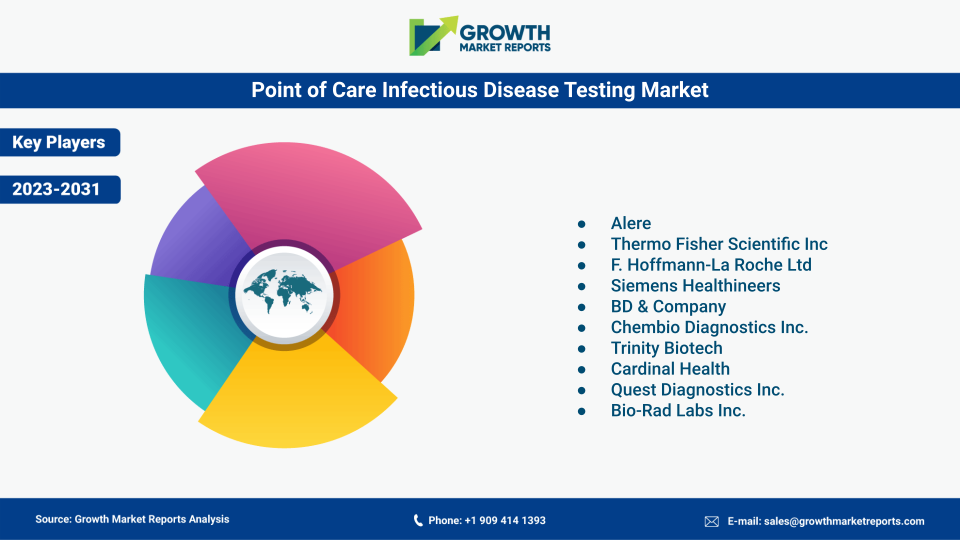

Point of Care Infectious Disease Testing Market Key  Players

Frequently Asked Questions

Major players include Abbott Laboratories, F. Hoffmann-La Roche Ltd., bioMérieux SA, Siemens Healthineers AG, Danaher Corporation (Cepheid), Becton, Dickinson and Company (BD), QuidelOrtho Corporation, Bio-Rad Laboratories, Thermo Fisher Scientific Inc., and Chembio Diagnostics, Inc.

Key challenges include variability in test accuracy, need for skilled personnel for complex assays, high costs of advanced platforms, and limited awareness in some regions.

Growth is driven by rising incidences of infectious diseases, technological advancements, increased healthcare investments, government initiatives, and the shift towards decentralized and personalized healthcare.

Main end-users include hospitals and clinics, diagnostic centers, home care settings, research laboratories, and organizations involved in disease surveillance and outbreak response.

Primary applications include testing for respiratory infections (e.g., influenza, COVID-19), gastrointestinal infections, sexually transmitted infections (STIs), tropical diseases (e.g., malaria, dengue), and other emerging infectious diseases.

Key technologies include lateral flow assays, molecular diagnostics (like PCR), immunoassays, and emerging methods such as biosensors and CRISPR-based diagnostics.

The main product types are instruments (such as handheld analyzers and portable readers), consumables (test strips, reagents, cartridges), and software for data management and result interpretation.

North America currently dominates the market, followed by Europe and Asia Pacific. Asia Pacific is expected to experience the fastest growth rate.

The market is expected to grow at a compound annual growth rate (CAGR) of 7.8% from 2025 to 2033.

As of 2024, the global Point of Care Infectious Disease Testing market is valued at USD 4.6 billion.

Table Of Content

Chapter 1 Executive Summary
Chapter 2 Assumptions and Acronyms Used
Chapter 3 Research Methodology
Chapter 4 Point of Care Infectious Disease Testing Market Overview
   4.1 Introduction
      4.1.1 Market Taxonomy
      4.1.2 Market Definition
      4.1.3 Macro-Economic Factors Impacting the Market Growth
   4.2 Point of Care Infectious Disease Testing Market Dynamics
      4.2.1 Market Drivers
      4.2.2 Market Restraints
      4.2.3 Market Opportunity
   4.3 Point of Care Infectious Disease Testing Market - Supply Chain Analysis
      4.3.1 List of Key Suppliers
      4.3.2 List of Key Distributors
      4.3.3 List of Key Consumers
   4.4 Key Forces Shaping the Point of Care Infectious Disease Testing Market
      4.4.1 Bargaining Power of Suppliers
      4.4.2 Bargaining Power of Buyers
      4.4.3 Threat of Substitution
      4.4.4 Threat of New Entrants
      4.4.5 Competitive Rivalry
   4.5 Global Point of Care Infectious Disease Testing Market Size & Forecast, 2023-2032
      4.5.1 Point of Care Infectious Disease Testing Market Size and Y-o-Y Growth
      4.5.2 Point of Care Infectious Disease Testing Market Absolute $ Opportunity

Chapter 5 Global Point of Care Infectious Disease Testing Market Analysis and Forecast By Product Type
   5.1 Introduction
      5.1.1 Key Market Trends & Growth Opportunities By Product Type
      5.1.2 Basis Point Share (BPS) Analysis By Product Type
      5.1.3 Absolute $ Opportunity Assessment By Product Type
   5.2 Point of Care Infectious Disease Testing Market Size Forecast By Product Type
      5.2.1 Instruments
      5.2.2 Consumables
      5.2.3 Software
   5.3 Market Attractiveness Analysis By Product Type

Chapter 6 Global Point of Care Infectious Disease Testing Market Analysis and Forecast By Technology
   6.1 Introduction
      6.1.1 Key Market Trends & Growth Opportunities By Technology
      6.1.2 Basis Point Share (BPS) Analysis By Technology
      6.1.3 Absolute $ Opportunity Assessment By Technology
   6.2 Point of Care Infectious Disease Testing Market Size Forecast By Technology
      6.2.1 Lateral Flow Assays
      6.2.2 Molecular Diagnostics
      6.2.3 Immunoassays
      6.2.4 Others
   6.3 Market Attractiveness Analysis By Technology

Chapter 7 Global Point of Care Infectious Disease Testing Market Analysis and Forecast By Application
   7.1 Introduction
      7.1.1 Key Market Trends & Growth Opportunities By Application
      7.1.2 Basis Point Share (BPS) Analysis By Application
      7.1.3 Absolute $ Opportunity Assessment By Application
   7.2 Point of Care Infectious Disease Testing Market Size Forecast By Application
      7.2.1 Respiratory Infections
      7.2.2 Gastrointestinal Infections
      7.2.3 Sexually Transmitted Infections
      7.2.4 Tropical Diseases
      7.2.5 Others
   7.3 Market Attractiveness Analysis By Application

Chapter 8 Global Point of Care Infectious Disease Testing Market Analysis and Forecast By End-User
   8.1 Introduction
      8.1.1 Key Market Trends & Growth Opportunities By End-User
      8.1.2 Basis Point Share (BPS) Analysis By End-User
      8.1.3 Absolute $ Opportunity Assessment By End-User
   8.2 Point of Care Infectious Disease Testing Market Size Forecast By End-User
      8.2.1 Hospitals and Clinics
      8.2.2 Diagnostic Centers
      8.2.3 Home Care Settings
      8.2.4 Research Laboratories
      8.2.5 Others
   8.3 Market Attractiveness Analysis By End-User

Chapter 9 Global Point of Care Infectious Disease Testing Market Analysis and Forecast by Region
   9.1 Introduction
      9.1.1 Key Market Trends & Growth Opportunities By Region
      9.1.2 Basis Point Share (BPS) Analysis By Region
      9.1.3 Absolute $ Opportunity Assessment By Region
   9.2 Point of Care Infectious Disease Testing Market Size Forecast By Region
      9.2.1 North America
      9.2.2 Europe
      9.2.3 Asia Pacific
      9.2.4 Latin America
      9.2.5 Middle East & Africa (MEA)
   9.3 Market Attractiveness Analysis By Region

Chapter 10 Coronavirus Disease (COVID-19) Impact 
   10.1 Introduction 
   10.2 Current & Future Impact Analysis 
   10.3 Economic Impact Analysis 
   10.4 Government Policies 
   10.5 Investment Scenario

Chapter 11 North America Point of Care Infectious Disease Testing Analysis and Forecast
   11.1 Introduction
   11.2 North America Point of Care Infectious Disease Testing Market Size Forecast by Country
      11.2.1 U.S.
      11.2.2 Canada
   11.3 Basis Point Share (BPS) Analysis by Country
   11.4 Absolute $ Opportunity Assessment by Country
   11.5 Market Attractiveness Analysis by Country
   11.6 North America Point of Care Infectious Disease Testing Market Size Forecast By Product Type
      11.6.1 Instruments
      11.6.2 Consumables
      11.6.3 Software
   11.7 Basis Point Share (BPS) Analysis By Product Type 
   11.8 Absolute $ Opportunity Assessment By Product Type 
   11.9 Market Attractiveness Analysis By Product Type
   11.10 North America Point of Care Infectious Disease Testing Market Size Forecast By Technology
      11.10.1 Lateral Flow Assays
      11.10.2 Molecular Diagnostics
      11.10.3 Immunoassays
      11.10.4 Others
   11.11 Basis Point Share (BPS) Analysis By Technology 
   11.12 Absolute $ Opportunity Assessment By Technology 
   11.13 Market Attractiveness Analysis By Technology
   11.14 North America Point of Care Infectious Disease Testing Market Size Forecast By Application
      11.14.1 Respiratory Infections
      11.14.2 Gastrointestinal Infections
      11.14.3 Sexually Transmitted Infections
      11.14.4 Tropical Diseases
      11.14.5 Others
   11.15 Basis Point Share (BPS) Analysis By Application 
   11.16 Absolute $ Opportunity Assessment By Application 
   11.17 Market Attractiveness Analysis By Application
   11.18 North America Point of Care Infectious Disease Testing Market Size Forecast By End-User
      11.18.1 Hospitals and Clinics
      11.18.2 Diagnostic Centers
      11.18.3 Home Care Settings
      11.18.4 Research Laboratories
      11.18.5 Others
   11.19 Basis Point Share (BPS) Analysis By End-User 
   11.20 Absolute $ Opportunity Assessment By End-User 
   11.21 Market Attractiveness Analysis By End-User

Chapter 12 Europe Point of Care Infectious Disease Testing Analysis and Forecast
   12.1 Introduction
   12.2 Europe Point of Care Infectious Disease Testing Market Size Forecast by Country
      12.2.1 Germany
      12.2.2 France
      12.2.3 Italy
      12.2.4 U.K.
      12.2.5 Spain
      12.2.6 Russia
      12.2.7 Rest of Europe
   12.3 Basis Point Share (BPS) Analysis by Country
   12.4 Absolute $ Opportunity Assessment by Country
   12.5 Market Attractiveness Analysis by Country
   12.6 Europe Point of Care Infectious Disease Testing Market Size Forecast By Product Type
      12.6.1 Instruments
      12.6.2 Consumables
      12.6.3 Software
   12.7 Basis Point Share (BPS) Analysis By Product Type 
   12.8 Absolute $ Opportunity Assessment By Product Type 
   12.9 Market Attractiveness Analysis By Product Type
   12.10 Europe Point of Care Infectious Disease Testing Market Size Forecast By Technology
      12.10.1 Lateral Flow Assays
      12.10.2 Molecular Diagnostics
      12.10.3 Immunoassays
      12.10.4 Others
   12.11 Basis Point Share (BPS) Analysis By Technology 
   12.12 Absolute $ Opportunity Assessment By Technology 
   12.13 Market Attractiveness Analysis By Technology
   12.14 Europe Point of Care Infectious Disease Testing Market Size Forecast By Application
      12.14.1 Respiratory Infections
      12.14.2 Gastrointestinal Infections
      12.14.3 Sexually Transmitted Infections
      12.14.4 Tropical Diseases
      12.14.5 Others
   12.15 Basis Point Share (BPS) Analysis By Application 
   12.16 Absolute $ Opportunity Assessment By Application 
   12.17 Market Attractiveness Analysis By Application
   12.18 Europe Point of Care Infectious Disease Testing Market Size Forecast By End-User
      12.18.1 Hospitals and Clinics
      12.18.2 Diagnostic Centers
      12.18.3 Home Care Settings
      12.18.4 Research Laboratories
      12.18.5 Others
   12.19 Basis Point Share (BPS) Analysis By End-User 
   12.20 Absolute $ Opportunity Assessment By End-User 
   12.21 Market Attractiveness Analysis By End-User

Chapter 13 Asia Pacific Point of Care Infectious Disease Testing Analysis and Forecast
   13.1 Introduction
   13.2 Asia Pacific Point of Care Infectious Disease Testing Market Size Forecast by Country
      13.2.1 China
      13.2.2 Japan
      13.2.3 South Korea
      13.2.4 India
      13.2.5 Australia
      13.2.6 South East Asia (SEA)
      13.2.7 Rest of Asia Pacific (APAC)
   13.3 Basis Point Share (BPS) Analysis by Country
   13.4 Absolute $ Opportunity Assessment by Country
   13.5 Market Attractiveness Analysis by Country
   13.6 Asia Pacific Point of Care Infectious Disease Testing Market Size Forecast By Product Type
      13.6.1 Instruments
      13.6.2 Consumables
      13.6.3 Software
   13.7 Basis Point Share (BPS) Analysis By Product Type 
   13.8 Absolute $ Opportunity Assessment By Product Type 
   13.9 Market Attractiveness Analysis By Product Type
   13.10 Asia Pacific Point of Care Infectious Disease Testing Market Size Forecast By Technology
      13.10.1 Lateral Flow Assays
      13.10.2 Molecular Diagnostics
      13.10.3 Immunoassays
      13.10.4 Others
   13.11 Basis Point Share (BPS) Analysis By Technology 
   13.12 Absolute $ Opportunity Assessment By Technology 
   13.13 Market Attractiveness Analysis By Technology
   13.14 Asia Pacific Point of Care Infectious Disease Testing Market Size Forecast By Application
      13.14.1 Respiratory Infections
      13.14.2 Gastrointestinal Infections
      13.14.3 Sexually Transmitted Infections
      13.14.4 Tropical Diseases
      13.14.5 Others
   13.15 Basis Point Share (BPS) Analysis By Application 
   13.16 Absolute $ Opportunity Assessment By Application 
   13.17 Market Attractiveness Analysis By Application
   13.18 Asia Pacific Point of Care Infectious Disease Testing Market Size Forecast By End-User
      13.18.1 Hospitals and Clinics
      13.18.2 Diagnostic Centers
      13.18.3 Home Care Settings
      13.18.4 Research Laboratories
      13.18.5 Others
   13.19 Basis Point Share (BPS) Analysis By End-User 
   13.20 Absolute $ Opportunity Assessment By End-User 
   13.21 Market Attractiveness Analysis By End-User

Chapter 14 Latin America Point of Care Infectious Disease Testing Analysis and Forecast
   14.1 Introduction
   14.2 Latin America Point of Care Infectious Disease Testing Market Size Forecast by Country
      14.2.1 Brazil
      14.2.2 Mexico
      14.2.3 Rest of Latin America (LATAM)
   14.3 Basis Point Share (BPS) Analysis by Country
   14.4 Absolute $ Opportunity Assessment by Country
   14.5 Market Attractiveness Analysis by Country
   14.6 Latin America Point of Care Infectious Disease Testing Market Size Forecast By Product Type
      14.6.1 Instruments
      14.6.2 Consumables
      14.6.3 Software
   14.7 Basis Point Share (BPS) Analysis By Product Type 
   14.8 Absolute $ Opportunity Assessment By Product Type 
   14.9 Market Attractiveness Analysis By Product Type
   14.10 Latin America Point of Care Infectious Disease Testing Market Size Forecast By Technology
      14.10.1 Lateral Flow Assays
      14.10.2 Molecular Diagnostics
      14.10.3 Immunoassays
      14.10.4 Others
   14.11 Basis Point Share (BPS) Analysis By Technology 
   14.12 Absolute $ Opportunity Assessment By Technology 
   14.13 Market Attractiveness Analysis By Technology
   14.14 Latin America Point of Care Infectious Disease Testing Market Size Forecast By Application
      14.14.1 Respiratory Infections
      14.14.2 Gastrointestinal Infections
      14.14.3 Sexually Transmitted Infections
      14.14.4 Tropical Diseases
      14.14.5 Others
   14.15 Basis Point Share (BPS) Analysis By Application 
   14.16 Absolute $ Opportunity Assessment By Application 
   14.17 Market Attractiveness Analysis By Application
   14.18 Latin America Point of Care Infectious Disease Testing Market Size Forecast By End-User
      14.18.1 Hospitals and Clinics
      14.18.2 Diagnostic Centers
      14.18.3 Home Care Settings
      14.18.4 Research Laboratories
      14.18.5 Others
   14.19 Basis Point Share (BPS) Analysis By End-User 
   14.20 Absolute $ Opportunity Assessment By End-User 
   14.21 Market Attractiveness Analysis By End-User

Chapter 15 Middle East & Africa (MEA) Point of Care Infectious Disease Testing Analysis and Forecast
   15.1 Introduction
   15.2 Middle East & Africa (MEA) Point of Care Infectious Disease Testing Market Size Forecast by Country
      15.2.1 Saudi Arabia
      15.2.2 South Africa
      15.2.3 UAE
      15.2.4 Rest of Middle East & Africa (MEA)
   15.3 Basis Point Share (BPS) Analysis by Country
   15.4 Absolute $ Opportunity Assessment by Country
   15.5 Market Attractiveness Analysis by Country
   15.6 Middle East & Africa (MEA) Point of Care Infectious Disease Testing Market Size Forecast By Product Type
      15.6.1 Instruments
      15.6.2 Consumables
      15.6.3 Software
   15.7 Basis Point Share (BPS) Analysis By Product Type 
   15.8 Absolute $ Opportunity Assessment By Product Type 
   15.9 Market Attractiveness Analysis By Product Type
   15.10 Middle East & Africa (MEA) Point of Care Infectious Disease Testing Market Size Forecast By Technology
      15.10.1 Lateral Flow Assays
      15.10.2 Molecular Diagnostics
      15.10.3 Immunoassays
      15.10.4 Others
   15.11 Basis Point Share (BPS) Analysis By Technology 
   15.12 Absolute $ Opportunity Assessment By Technology 
   15.13 Market Attractiveness Analysis By Technology
   15.14 Middle East & Africa (MEA) Point of Care Infectious Disease Testing Market Size Forecast By Application
      15.14.1 Respiratory Infections
      15.14.2 Gastrointestinal Infections
      15.14.3 Sexually Transmitted Infections
      15.14.4 Tropical Diseases
      15.14.5 Others
   15.15 Basis Point Share (BPS) Analysis By Application 
   15.16 Absolute $ Opportunity Assessment By Application 
   15.17 Market Attractiveness Analysis By Application
   15.18 Middle East & Africa (MEA) Point of Care Infectious Disease Testing Market Size Forecast By End-User
      15.18.1 Hospitals and Clinics
      15.18.2 Diagnostic Centers
      15.18.3 Home Care Settings
      15.18.4 Research Laboratories
      15.18.5 Others
   15.19 Basis Point Share (BPS) Analysis By End-User 
   15.20 Absolute $ Opportunity Assessment By End-User 
   15.21 Market Attractiveness Analysis By End-User

Chapter 16 Competition Landscape 
   16.1 Point of Care Infectious Disease Testing Market: Competitive Dashboard
   16.2 Global Point of Care Infectious Disease Testing Market: Market Share Analysis, 2023
   16.3 Company Profiles (Details – Overview, Financials, Developments, Strategy) 
      16.3.1 Abbott Laboratories
F. Hoffmann-La Roche Ltd
bioMérieux SA
Danaher Corporation
Siemens Healthineers AG
QuidelOrtho Corporation
Becton, Dickinson and Company (BD)
Thermo Fisher Scientific Inc.
Cepheid (a Danaher company)
Bio-Rad Laboratories, Inc.
Hologic, Inc.
Chembio Diagnostics, Inc.
OraSure Technologies, Inc.
Meridian Bioscience, Inc.
Sekisui Diagnostics
Trinity Biotech plc
Sysmex Corporation
LumiraDx
GenMark Diagnostics (a Roche company)
Abaxis (a Zoetis company)

Methodology

Our Clients

Microsoft
General Mills
FedEx Logistics
Deloitte
The John Holland Group
General Electric
sinopec
Pfizer