Point-of-care Glucose Testing Market Research Report 2033

Point-of-care Glucose Testing Market Research Report 2033

Segments - by Product Type (Blood Glucose Meters, Continuous Glucose Monitoring Devices, Test Strips, Lancets, Others), by End User (Hospitals, Clinics, Home Care, Diagnostic Centers, Others), by Mode Of Testing (Professional, Self-Monitoring)

https://growthmarketreports.com/raksha
Author : Raksha Sharma
https://growthmarketreports.com/Vaibhav
Fact-checked by : V. Chandola
https://growthmarketreports.com/Shruti
Editor : Shruti Bhat

Upcoming | Report ID :HC-752 | 4.7 Rating | 32 Reviews | 260 Pages | Format : Docx PDF

Report Description


Point-of-care Glucose Testing Market Outlook

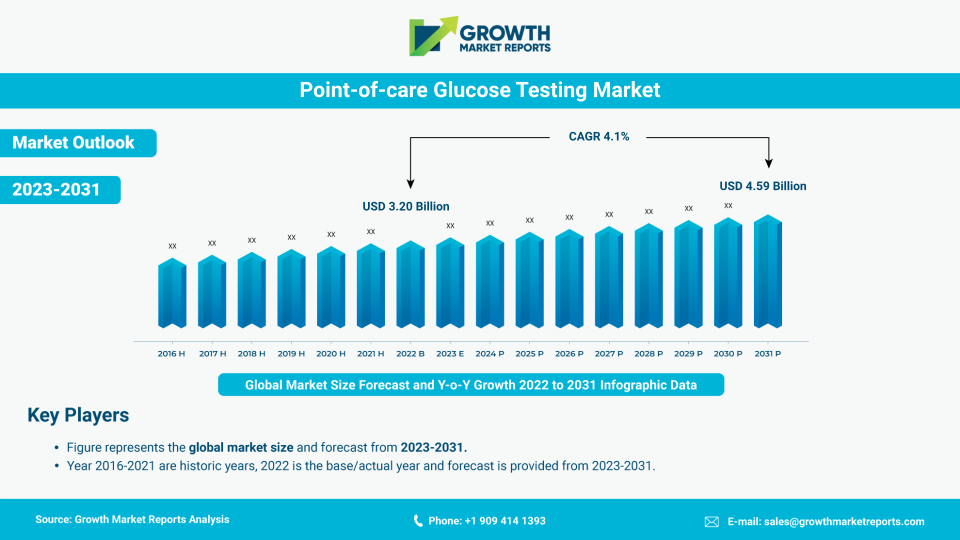
According to our latest research, the global point-of-care glucose testing market size was valued at USD 5.9 billion in 2024. The market is exhibiting robust expansion, with a recorded compound annual growth rate (CAGR) of 7.1% from 2025 to 2033. By the end of 2033, the market is forecasted to reach USD 10.9 billion, driven by the increasing prevalence of diabetes, technological advancements in glucose monitoring devices, and a growing emphasis on decentralized healthcare. The marketÂ’s upward trajectory is underpinned by the global shift towards patient-centric care and the rising demand for rapid, accurate, and convenient glucose monitoring solutions.

The primary growth factor for the point-of-care glucose testing market is the escalating incidence of diabetes worldwide. As per the International Diabetes Federation, over 537 million adults are living with diabetes globally in 2024, a figure projected to rise significantly over the coming decade. This surge has intensified the need for efficient glucose monitoring solutions that can deliver real-time results and facilitate timely medical interventions. Point-of-care glucose testing devices, such as blood glucose meters and continuous glucose monitoring (CGM) systems, enable patients and healthcare professionals to monitor blood glucose levels conveniently, thereby supporting better disease management and reducing the risk of complications associated with uncontrolled diabetes.

Technological innovation is another pivotal driver propelling the growth of the point-of-care glucose testing market. The integration of digital health technologies, including Bluetooth-enabled glucose meters, smartphone compatibility, and cloud-based data management, has revolutionized the way blood glucose is monitored and managed. These advancements have not only improved the accuracy and reliability of testing but also enhanced patient engagement by allowing seamless data sharing with healthcare providers. Additionally, the development of minimally invasive and non-invasive testing methods is expected to further boost adoption rates, especially among pediatric and geriatric populations who are more sensitive to traditional finger-prick testing methods.

The market is also benefitting from the global movement towards decentralized healthcare and home-based diagnostics. The COVID-19 pandemic accelerated the adoption of remote patient monitoring and self-testing solutions, highlighting the importance of accessible and user-friendly medical devices. Point-of-care glucose testing devices have become essential tools for individuals requiring frequent monitoring, such as those with Type 1 or Type 2 diabetes, gestational diabetes, and individuals at risk of hypoglycemia. The growing preference for self-monitoring, coupled with increased awareness about the benefits of early detection and proactive disease management, is expected to sustain market growth in the long term.

The advent of Smart Blood Glucose-Meter technology has further revolutionized the landscape of point-of-care glucose testing. These advanced devices integrate seamlessly with digital health platforms, offering enhanced connectivity and user-friendly interfaces. Smart Blood Glucose-Meters not only provide real-time glucose readings but also facilitate data sharing with healthcare providers, enabling personalized treatment plans and improved patient outcomes. The ability to track glucose trends over time empowers users to make informed lifestyle and dietary adjustments, ultimately enhancing disease management. As these devices become more affordable and accessible, they are expected to play a crucial role in the ongoing shift towards patient-centered care and self-monitoring.

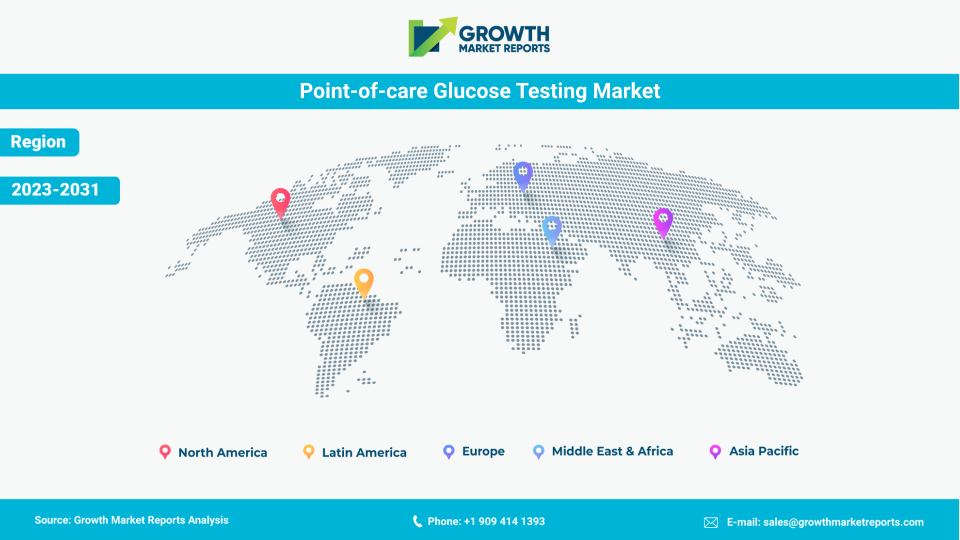
From a regional perspective, North America held the largest share of the global point-of-care glucose testing market in 2024, accounting for approximately 39% of the total market value. This dominance is attributed to the high prevalence of diabetes, advanced healthcare infrastructure, and strong reimbursement policies in the United States and Canada. Europe follows closely, driven by favorable government initiatives and increasing adoption of innovative medical technologies. The Asia Pacific region, meanwhile, is experiencing the fastest growth, with a projected CAGR of 8.4% through 2033, fueled by rising diabetes incidence, expanding healthcare access, and growing investments in healthcare technology across emerging economies such as China and India.

Global Point-of-care Glucose Testing Industry Outlook

Product Type Analysis

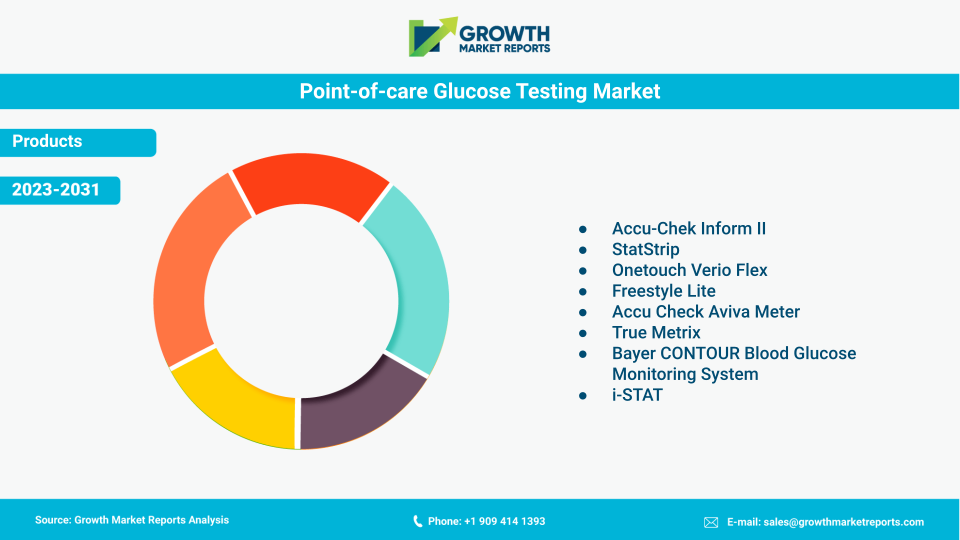
The product type segment of the point-of-care glucose testing market encompasses blood glucose meters, continuous glucose monitoring (CGM) devices, test strips, lancets, and other ancillary products. Blood glucose meters remain the most widely used devices, owing to their affordability, portability, and ease of use. These meters are integral for both professional and self-monitoring applications, providing quick and accurate readings that empower patients to make informed decisions about their insulin intake, diet, and lifestyle. The widespread availability of blood glucose meters, coupled with ongoing enhancements in device accuracy and connectivity, continues to drive their adoption, particularly in home care and outpatient settings.

Continuous glucose monitoring devices are gaining substantial traction, especially among patients with Type 1 diabetes and those requiring intensive glycemic control. CGM systems offer real-time, continuous tracking of blood glucose levels, alerting users to fluctuations and trends that may require medical attention. These devices significantly reduce the need for frequent finger-prick tests and provide a comprehensive picture of glucose variability, which is essential for optimizing therapeutic strategies. The integration of CGMs with insulin pumps and mobile health applications is further enhancing their utility and acceptance, particularly in technologically advanced healthcare markets.

Test strips are a critical consumable component of both blood glucose meters and some CGM devices. The recurring need for test strips ensures a steady revenue stream for manufacturers, making this sub-segment highly lucrative. Innovations in test strip technology, such as improved enzyme formulations and enhanced sample wicking capabilities, have led to greater accuracy and reliability in glucose measurement. Additionally, the introduction of multi-analyte strips capable of detecting other biomarkers, such as ketones, is expanding the scope of point-of-care diagnostics, offering added value to end users.

Point-of-Care HbA1c Testing is gaining prominence as a vital component of diabetes management, complementing traditional glucose monitoring methods. This testing provides a comprehensive view of a patient's average blood glucose levels over the past two to three months, offering valuable insights into long-term glycemic control. The integration of Point-of-Care HbA1c Testing into routine clinical practice allows for timely adjustments to treatment regimens, reducing the risk of diabetes-related complications. As healthcare systems increasingly prioritize preventive care, the demand for rapid and accurate HbA1c testing solutions is expected to grow, driving innovation and adoption in this segment.

Lancets and other accessories, including control solutions and calibration devices, play a supporting role in the point-of-care glucose testing ecosystem. While lancets are essential for obtaining blood samples, ongoing advancements are focused on minimizing pain and reducing the risk of infection. The development of ultra-thin and auto-retractable lancets has improved patient comfort and safety, encouraging regular monitoring among users. Collectively, the diverse range of products within this segment caters to the varied needs of patients and healthcare providers, ensuring comprehensive and effective glucose management.

Report Scope

Attributes Details
Report Title Point-of-care Glucose Testing Market Research Report 2033
By Product Type Blood Glucose Meters, Continuous Glucose Monitoring Devices, Test Strips, Lancets, Others
By End User Hospitals, Clinics, Home Care, Diagnostic Centers, Others
By Mode Of Testing Professional, Self-Monitoring
Regions Covered North America, Europe, APAC, Latin America, MEA
Base Year 2024
Historic Data 2018-2023
Forecast Period 2025-2033
Number of Pages 260
Number of Tables & Figures 251
Customization Available Yes, the report can be customized as per your need.

End User Analysis

The end user landscape for point-of-care glucose testing devices is remarkably diverse, encompassing hospitals, clinics, home care settings, diagnostic centers, and other healthcare facilities. Hospitals represent a significant market share due to the high volume of diabetic patients requiring acute and chronic care. In hospital settings, point-of-care glucose testing is critical for perioperative monitoring, intensive care, and emergency departments, where rapid and accurate glucose assessment can be life-saving. The integration of these devices into hospital information systems also facilitates efficient data management and enhances clinical decision-making.

Clinics and outpatient care centers are another key segment, particularly in regions with well-established primary healthcare networks. These facilities rely on point-of-care glucose testing to screen, diagnose, and monitor diabetes in a timely manner, often serving as the first point of contact for patients with suspected hyperglycemia or hypoglycemia. The affordability and portability of modern glucose meters make them ideal for use in resource-constrained settings, supporting early intervention and reducing the burden on tertiary care centers.

Home care has emerged as the fastest-growing end user segment, driven by the increasing trend towards self-management of chronic diseases and the growing elderly population. The availability of user-friendly, connected glucose meters and CGMs has empowered patients to monitor their glucose levels independently, reducing the need for frequent hospital visits and enabling proactive disease management. Enhanced patient education and support from telemedicine services are further accelerating the adoption of point-of-care glucose testing in home environments, contributing to improved health outcomes and patient satisfaction.

Hemoglobin A1c Testing remains a cornerstone in the assessment of diabetes management, providing critical information about a patient's long-term glycemic status. Unlike daily glucose tests, Hemoglobin A1c Testing reflects the average blood sugar levels over a prolonged period, offering a more stable indicator of metabolic control. This testing is particularly valuable for healthcare providers in tailoring treatment plans and monitoring the effectiveness of interventions. As the prevalence of diabetes continues to rise globally, the importance of Hemoglobin A1c Testing in both clinical and home settings is underscored, highlighting its role in achieving optimal diabetes care and improving patient outcomes.

Diagnostic centers and other healthcare facilities, such as nursing homes and rehabilitation centers, also play a vital role in the market. These centers often cater to patients requiring routine or specialized glucose testing as part of broader diagnostic and monitoring protocols. The demand for rapid, accurate, and minimally invasive testing solutions in these settings is driving the uptake of advanced point-of-care devices, particularly in regions with high diabetes prevalence and limited access to centralized laboratory services.

Mode of Testing Analysis

The mode of testing segment in the point-of-care glucose testing market is broadly classified into professional and self-monitoring categories. Professional testing is typically conducted by healthcare providers in clinical settings, including hospitals, clinics, and diagnostic centers. This mode is essential for patients who require regular monitoring under medical supervision, such as those with complex comorbidities or those undergoing intensive therapy. Professional point-of-care testing ensures high accuracy and reliability, as it is performed by trained personnel using calibrated devices, and is often integrated with electronic health records for comprehensive patient management.

Self-monitoring has witnessed exponential growth in recent years, supported by technological advancements and rising patient awareness regarding the benefits of proactive disease management. Modern self-monitoring devices are designed to be user-friendly, portable, and highly accurate, enabling patients to check their glucose levels conveniently at home or on the go. The proliferation of smartphone-compatible glucose meters, wearable CGMs, and cloud-based data platforms has further empowered patients to manage their condition independently, share data with healthcare providers remotely, and receive personalized feedback and recommendations.

The growing preference for self-monitoring is particularly evident among patients with Type 1 and insulin-dependent Type 2 diabetes, who require frequent glucose assessments to adjust their medication and dietary intake. Self-monitoring not only enhances patient engagement and adherence to treatment regimens but also reduces the risk of acute complications, such as hypoglycemia and hyperglycemia. The availability of affordable and reliable self-monitoring devices is also expanding access to glucose testing in low- and middle-income regions, where healthcare infrastructure may be limited.

Despite the advantages of self-monitoring, professional testing remains indispensable for certain patient populations, including those with cognitive impairments, children, and individuals with physical disabilities. Healthcare providers play a crucial role in educating patients about proper testing techniques, interpreting results, and making necessary adjustments to treatment plans. The complementary nature of professional and self-monitoring modes ensures comprehensive and effective glucose management across diverse patient groups, driving overall market growth.

Opportunities & Threats

The point-of-care glucose testing market is poised for significant opportunities in the coming years, particularly with the integration of advanced digital health technologies. The adoption of artificial intelligence and machine learning algorithms in glucose monitoring devices is enabling predictive analytics and personalized insights, which can help patients and healthcare providers anticipate and prevent adverse glycemic events. Additionally, the expansion of telemedicine and remote patient monitoring services is creating new avenues for device manufacturers to collaborate with digital health platforms, offering comprehensive diabetes management solutions that extend beyond traditional glucose testing. These technological advancements, coupled with supportive regulatory frameworks and increasing healthcare investments, are expected to unlock substantial growth potential for market players.

Another promising opportunity lies in the untapped markets of emerging economies, where the prevalence of diabetes is rising rapidly but access to quality healthcare remains limited. Governments and non-governmental organizations are increasingly focusing on diabetes awareness and screening programs, creating a favorable environment for the adoption of point-of-care glucose testing devices. Manufacturers that can offer affordable, reliable, and easy-to-use solutions tailored to these markets stand to gain a competitive edge. Furthermore, the growing demand for minimally invasive and non-invasive testing methods presents a significant opportunity for innovation, as patients and healthcare providers seek alternatives to traditional finger-prick tests.

Despite these opportunities, the point-of-care glucose testing market faces several challenges and restraining factors. One of the primary threats is the risk of inaccurate or inconsistent test results, which can lead to inappropriate clinical decisions and adverse patient outcomes. Factors such as improper device calibration, user error, and interference from medications or physiological conditions can compromise the reliability of glucose measurements. Additionally, the high cost of advanced CGM devices and consumables may limit their adoption in price-sensitive markets, particularly in developing regions. Ensuring device accuracy, affordability, and user education will be critical for overcoming these challenges and sustaining long-term market growth.

Regional Outlook

North America continues to dominate the point-of-care glucose testing market, with the region accounting for a market size of USD 2.3 billion in 2024. The United States, in particular, is a major contributor, driven by its high diabetes prevalence, advanced healthcare infrastructure, and widespread adoption of innovative medical technologies. The presence of leading market players, favorable reimbursement policies, and ongoing investments in research and development further strengthen the regionÂ’s position. Canada also plays a significant role, supported by government initiatives aimed at improving diabetes care and expanding access to point-of-care diagnostics.

Europe holds the second-largest share, with a market value of approximately USD 1.7 billion in 2024. The regionÂ’s growth is fueled by increasing awareness about diabetes management, supportive government policies, and the early adoption of digital health solutions. Countries such as Germany, the United Kingdom, and France are at the forefront of integrating point-of-care glucose testing into primary care and community health programs. The European market is expected to grow at a steady CAGR of 6.5% through 2033, driven by ongoing healthcare reforms and a strong focus on preventive medicine.

The Asia Pacific region is emerging as the fastest-growing market, with a current market size of USD 1.2 billion and a projected CAGR of 8.4% over the forecast period. Rapid urbanization, changing lifestyles, and increasing healthcare expenditure are contributing to the rising burden of diabetes in countries such as China, India, and Japan. Governments are investing in healthcare infrastructure and diabetes awareness programs, creating a conducive environment for the adoption of point-of-care glucose testing devices. The regionÂ’s large and underserved population presents significant growth opportunities for market players, particularly those offering affordable and scalable solutions.

Point-of-care Glucose Testing Market Statistics

Competitor Outlook

The competitive landscape of the point-of-care glucose testing market is characterized by intense rivalry among established players, continuous innovation, and a strong focus on strategic collaborations. Major companies are investing heavily in research and development to introduce next-generation devices that offer greater accuracy, connectivity, and user convenience. The market is witnessing a wave of product launches featuring advanced features such as wireless data transmission, integration with mobile health applications, and real-time analytics. Companies are also expanding their product portfolios to include both professional and self-monitoring solutions, catering to the diverse needs of healthcare providers and patients alike.

Strategic partnerships and collaborations are playing a pivotal role in shaping the competitive dynamics of the market. Leading device manufacturers are partnering with digital health companies, healthcare providers, and insurance firms to offer integrated diabetes management solutions. These alliances are enabling the development of comprehensive care models that combine glucose monitoring with patient education, remote consultations, and personalized treatment plans. Additionally, mergers and acquisitions are facilitating market consolidation, enabling companies to leverage synergies, expand their geographic reach, and enhance their technological capabilities.

The market is also witnessing the entry of new players, particularly in the Asia Pacific and Latin American regions, where the demand for affordable and accessible point-of-care glucose testing devices is rising. These entrants are focusing on cost-effective manufacturing, innovative distribution strategies, and localized product development to capture market share. However, established players continue to maintain a competitive edge through their strong brand reputation, extensive distribution networks, and robust after-sales support.

Some of the major companies operating in the point-of-care glucose testing market include Roche Diagnostics, Abbott Laboratories, Becton, Dickinson and Company (BD), Ascensia Diabetes Care, Medtronic plc, Johnson & Johnson (LifeScan, Inc.), and Dexcom, Inc.. Roche Diagnostics is renowned for its Accu-Chek product line, which offers a comprehensive range of blood glucose meters and test strips. Abbott Laboratories is a pioneer in continuous glucose monitoring with its FreeStyle Libre system, which has gained widespread adoption globally. Becton, Dickinson and Company is a leading provider of lancets and other ancillary products, while Ascensia Diabetes Care focuses on innovative self-monitoring solutions.

Medtronic plc and Dexcom, Inc. are at the forefront of continuous glucose monitoring technology, offering advanced CGM systems that are integrated with insulin pumps and mobile health platforms. Johnson & JohnsonÂ’s LifeScan, Inc. division is a key player in blood glucose meters and test strips, with a strong presence in both developed and emerging markets. These companies are continuously investing in product development, regulatory compliance, and customer support to maintain their market leadership and drive innovation in the point-of-care glucose testing space.

Key Players

  • Abbott Laboratories
  • Roche Diagnostics
  • Ascensia Diabetes Care
  • LifeScan Inc.
  • Medtronic plc
  • B. Braun Melsungen AG
  • ARKRAY Inc.
  • Dexcom Inc.
  • Nova Biomedical
  • Trividia Health Inc.
  • Sinocare Inc.
  • AgaMatrix Inc.
  • Terumo Corporation
  • Sanofi S.A.
  • Bio-Rad Laboratories Inc.
  • Ypsomed Holding AG
  • Nipro Corporation
  • EKF Diagnostics Holdings plc
  • PTS Diagnostics
  • Menarini Diagnostics
Point-of-care Glucose Testing Market Overview

Segments

The Point-of-care Glucose Testing market has been segmented on the basis of

Product Type

  • Blood Glucose Meters
  • Continuous Glucose Monitoring Devices
  • Test Strips
  • Lancets
  • Others

End User

  • Hospitals
  • Clinics
  • Home Care
  • Diagnostic Centers
  • Others

Mode Of Testing

  • Professional
  • Self-Monitoring

Competitive Landscape

The major players in the global point-of-care glucose testing market are Abbott Laboratories; Qiagen; F. Hoffmann-La Roche AG; Nipro; Nova Biomedical; ACON Laboratories, Inc; Trividia Health, Inc; Prodigy Diabetes Care; Bayer AG/Ascensia Diabetes Care Holdings AG; and EKF Diagnostics. Most of these players are currently engaged in strategic initiatives including mergers & acquisitions, promoting awareness, and new product development to increase their market share and market position.

Platinum Equity, in October 2018, has acquired LifeScan which was an integrated business parallel to Johnson & Johnson.
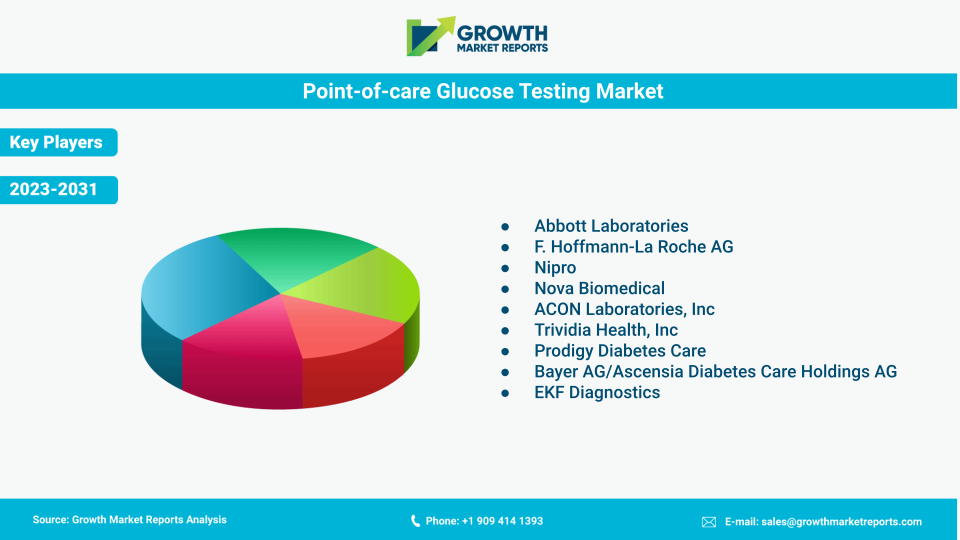

Global Point Of Care Glucose Testing Market Key Players

Frequently Asked Questions

Opportunities include the integration of AI and digital health technologies, expansion into emerging markets, and the development of affordable, minimally invasive, and non-invasive testing solutions.

Challenges include the risk of inaccurate test results, high costs of advanced CGM devices, and the need for improved device calibration and user education.

Key players include Roche Diagnostics, Abbott Laboratories, Becton Dickinson (BD), Ascensia Diabetes Care, Medtronic plc, Johnson & Johnson (LifeScan, Inc.), and Dexcom, Inc.

Innovations include Bluetooth-enabled meters, smartphone compatibility, cloud-based data management, minimally invasive and non-invasive testing methods, and integration with mobile health apps.

Professional testing is conducted by healthcare providers in clinical settings, while self-monitoring allows patients to check their glucose levels independently at home or on the go.

Major end users include hospitals, clinics, home care settings, diagnostic centers, and other healthcare facilities.

The market includes blood glucose meters, continuous glucose monitoring (CGM) devices, test strips, lancets, and other ancillary products.

North America holds the largest market share, followed by Europe. The Asia Pacific region is the fastest-growing market, driven by increasing diabetes incidence and expanding healthcare access.

Key growth drivers include the rising prevalence of diabetes, technological advancements in glucose monitoring devices, and the shift towards decentralized, patient-centric healthcare.

As of 2024, the global point-of-care glucose testing market is valued at USD 5.9 billion and is expected to reach USD 10.9 billion by 2033.

Table Of Content

Chapter 1 Executive Summary
Chapter 2 Assumptions and Acronyms Used
Chapter 3 Research Methodology
Chapter 4 Point-of-care Glucose Testing Market Overview
   4.1 Introduction
      4.1.1 Market Taxonomy
      4.1.2 Market Definition
      4.1.3 Macro-Economic Factors Impacting the Market Growth
   4.2 Point-of-care Glucose Testing Market Dynamics
      4.2.1 Market Drivers
      4.2.2 Market Restraints
      4.2.3 Market Opportunity
   4.3 Point-of-care Glucose Testing Market - Supply Chain Analysis
      4.3.1 List of Key Suppliers
      4.3.2 List of Key Distributors
      4.3.3 List of Key Consumers
   4.4 Key Forces Shaping the Point-of-care Glucose Testing Market
      4.4.1 Bargaining Power of Suppliers
      4.4.2 Bargaining Power of Buyers
      4.4.3 Threat of Substitution
      4.4.4 Threat of New Entrants
      4.4.5 Competitive Rivalry
   4.5 Global Point-of-care Glucose Testing Market Size & Forecast, 2023-2032
      4.5.1 Point-of-care Glucose Testing Market Size and Y-o-Y Growth
      4.5.2 Point-of-care Glucose Testing Market Absolute $ Opportunity

Chapter 5 Global Point-of-care Glucose Testing Market Analysis and Forecast By Product Type
   5.1 Introduction
      5.1.1 Key Market Trends & Growth Opportunities By Product Type
      5.1.2 Basis Point Share (BPS) Analysis By Product Type
      5.1.3 Absolute $ Opportunity Assessment By Product Type
   5.2 Point-of-care Glucose Testing Market Size Forecast By Product Type
      5.2.1 Blood Glucose Meters
      5.2.2 Continuous Glucose Monitoring Devices
      5.2.3 Test Strips
      5.2.4 Lancets
      5.2.5 Others
   5.3 Market Attractiveness Analysis By Product Type

Chapter 6 Global Point-of-care Glucose Testing Market Analysis and Forecast By End User
   6.1 Introduction
      6.1.1 Key Market Trends & Growth Opportunities By End User
      6.1.2 Basis Point Share (BPS) Analysis By End User
      6.1.3 Absolute $ Opportunity Assessment By End User
   6.2 Point-of-care Glucose Testing Market Size Forecast By End User
      6.2.1 Hospitals
      6.2.2 Clinics
      6.2.3 Home Care
      6.2.4 Diagnostic Centers
      6.2.5 Others
   6.3 Market Attractiveness Analysis By End User

Chapter 7 Global Point-of-care Glucose Testing Market Analysis and Forecast By Mode Of Testing
   7.1 Introduction
      7.1.1 Key Market Trends & Growth Opportunities By Mode Of Testing
      7.1.2 Basis Point Share (BPS) Analysis By Mode Of Testing
      7.1.3 Absolute $ Opportunity Assessment By Mode Of Testing
   7.2 Point-of-care Glucose Testing Market Size Forecast By Mode Of Testing
      7.2.1 Professional
      7.2.2 Self-Monitoring
   7.3 Market Attractiveness Analysis By Mode Of Testing

Chapter 8 Global Point-of-care Glucose Testing Market Analysis and Forecast by Region
   8.1 Introduction
      8.1.1 Key Market Trends & Growth Opportunities By Region
      8.1.2 Basis Point Share (BPS) Analysis By Region
      8.1.3 Absolute $ Opportunity Assessment By Region
   8.2 Point-of-care Glucose Testing Market Size Forecast By Region
      8.2.1 North America
      8.2.2 Europe
      8.2.3 Asia Pacific
      8.2.4 Latin America
      8.2.5 Middle East & Africa (MEA)
   8.3 Market Attractiveness Analysis By Region

Chapter 9 Coronavirus Disease (COVID-19) Impact 
   9.1 Introduction 
   9.2 Current & Future Impact Analysis 
   9.3 Economic Impact Analysis 
   9.4 Government Policies 
   9.5 Investment Scenario

Chapter 10 North America Point-of-care Glucose Testing Analysis and Forecast
   10.1 Introduction
   10.2 North America Point-of-care Glucose Testing Market Size Forecast by Country
      10.2.1 U.S.
      10.2.2 Canada
   10.3 Basis Point Share (BPS) Analysis by Country
   10.4 Absolute $ Opportunity Assessment by Country
   10.5 Market Attractiveness Analysis by Country
   10.6 North America Point-of-care Glucose Testing Market Size Forecast By Product Type
      10.6.1 Blood Glucose Meters
      10.6.2 Continuous Glucose Monitoring Devices
      10.6.3 Test Strips
      10.6.4 Lancets
      10.6.5 Others
   10.7 Basis Point Share (BPS) Analysis By Product Type 
   10.8 Absolute $ Opportunity Assessment By Product Type 
   10.9 Market Attractiveness Analysis By Product Type
   10.10 North America Point-of-care Glucose Testing Market Size Forecast By End User
      10.10.1 Hospitals
      10.10.2 Clinics
      10.10.3 Home Care
      10.10.4 Diagnostic Centers
      10.10.5 Others
   10.11 Basis Point Share (BPS) Analysis By End User 
   10.12 Absolute $ Opportunity Assessment By End User 
   10.13 Market Attractiveness Analysis By End User
   10.14 North America Point-of-care Glucose Testing Market Size Forecast By Mode Of Testing
      10.14.1 Professional
      10.14.2 Self-Monitoring
   10.15 Basis Point Share (BPS) Analysis By Mode Of Testing 
   10.16 Absolute $ Opportunity Assessment By Mode Of Testing 
   10.17 Market Attractiveness Analysis By Mode Of Testing

Chapter 11 Europe Point-of-care Glucose Testing Analysis and Forecast
   11.1 Introduction
   11.2 Europe Point-of-care Glucose Testing Market Size Forecast by Country
      11.2.1 Germany
      11.2.2 France
      11.2.3 Italy
      11.2.4 U.K.
      11.2.5 Spain
      11.2.6 Russia
      11.2.7 Rest of Europe
   11.3 Basis Point Share (BPS) Analysis by Country
   11.4 Absolute $ Opportunity Assessment by Country
   11.5 Market Attractiveness Analysis by Country
   11.6 Europe Point-of-care Glucose Testing Market Size Forecast By Product Type
      11.6.1 Blood Glucose Meters
      11.6.2 Continuous Glucose Monitoring Devices
      11.6.3 Test Strips
      11.6.4 Lancets
      11.6.5 Others
   11.7 Basis Point Share (BPS) Analysis By Product Type 
   11.8 Absolute $ Opportunity Assessment By Product Type 
   11.9 Market Attractiveness Analysis By Product Type
   11.10 Europe Point-of-care Glucose Testing Market Size Forecast By End User
      11.10.1 Hospitals
      11.10.2 Clinics
      11.10.3 Home Care
      11.10.4 Diagnostic Centers
      11.10.5 Others
   11.11 Basis Point Share (BPS) Analysis By End User 
   11.12 Absolute $ Opportunity Assessment By End User 
   11.13 Market Attractiveness Analysis By End User
   11.14 Europe Point-of-care Glucose Testing Market Size Forecast By Mode Of Testing
      11.14.1 Professional
      11.14.2 Self-Monitoring
   11.15 Basis Point Share (BPS) Analysis By Mode Of Testing 
   11.16 Absolute $ Opportunity Assessment By Mode Of Testing 
   11.17 Market Attractiveness Analysis By Mode Of Testing

Chapter 12 Asia Pacific Point-of-care Glucose Testing Analysis and Forecast
   12.1 Introduction
   12.2 Asia Pacific Point-of-care Glucose Testing Market Size Forecast by Country
      12.2.1 China
      12.2.2 Japan
      12.2.3 South Korea
      12.2.4 India
      12.2.5 Australia
      12.2.6 South East Asia (SEA)
      12.2.7 Rest of Asia Pacific (APAC)
   12.3 Basis Point Share (BPS) Analysis by Country
   12.4 Absolute $ Opportunity Assessment by Country
   12.5 Market Attractiveness Analysis by Country
   12.6 Asia Pacific Point-of-care Glucose Testing Market Size Forecast By Product Type
      12.6.1 Blood Glucose Meters
      12.6.2 Continuous Glucose Monitoring Devices
      12.6.3 Test Strips
      12.6.4 Lancets
      12.6.5 Others
   12.7 Basis Point Share (BPS) Analysis By Product Type 
   12.8 Absolute $ Opportunity Assessment By Product Type 
   12.9 Market Attractiveness Analysis By Product Type
   12.10 Asia Pacific Point-of-care Glucose Testing Market Size Forecast By End User
      12.10.1 Hospitals
      12.10.2 Clinics
      12.10.3 Home Care
      12.10.4 Diagnostic Centers
      12.10.5 Others
   12.11 Basis Point Share (BPS) Analysis By End User 
   12.12 Absolute $ Opportunity Assessment By End User 
   12.13 Market Attractiveness Analysis By End User
   12.14 Asia Pacific Point-of-care Glucose Testing Market Size Forecast By Mode Of Testing
      12.14.1 Professional
      12.14.2 Self-Monitoring
   12.15 Basis Point Share (BPS) Analysis By Mode Of Testing 
   12.16 Absolute $ Opportunity Assessment By Mode Of Testing 
   12.17 Market Attractiveness Analysis By Mode Of Testing

Chapter 13 Latin America Point-of-care Glucose Testing Analysis and Forecast
   13.1 Introduction
   13.2 Latin America Point-of-care Glucose Testing Market Size Forecast by Country
      13.2.1 Brazil
      13.2.2 Mexico
      13.2.3 Rest of Latin America (LATAM)
   13.3 Basis Point Share (BPS) Analysis by Country
   13.4 Absolute $ Opportunity Assessment by Country
   13.5 Market Attractiveness Analysis by Country
   13.6 Latin America Point-of-care Glucose Testing Market Size Forecast By Product Type
      13.6.1 Blood Glucose Meters
      13.6.2 Continuous Glucose Monitoring Devices
      13.6.3 Test Strips
      13.6.4 Lancets
      13.6.5 Others
   13.7 Basis Point Share (BPS) Analysis By Product Type 
   13.8 Absolute $ Opportunity Assessment By Product Type 
   13.9 Market Attractiveness Analysis By Product Type
   13.10 Latin America Point-of-care Glucose Testing Market Size Forecast By End User
      13.10.1 Hospitals
      13.10.2 Clinics
      13.10.3 Home Care
      13.10.4 Diagnostic Centers
      13.10.5 Others
   13.11 Basis Point Share (BPS) Analysis By End User 
   13.12 Absolute $ Opportunity Assessment By End User 
   13.13 Market Attractiveness Analysis By End User
   13.14 Latin America Point-of-care Glucose Testing Market Size Forecast By Mode Of Testing
      13.14.1 Professional
      13.14.2 Self-Monitoring
   13.15 Basis Point Share (BPS) Analysis By Mode Of Testing 
   13.16 Absolute $ Opportunity Assessment By Mode Of Testing 
   13.17 Market Attractiveness Analysis By Mode Of Testing

Chapter 14 Middle East & Africa (MEA) Point-of-care Glucose Testing Analysis and Forecast
   14.1 Introduction
   14.2 Middle East & Africa (MEA) Point-of-care Glucose Testing Market Size Forecast by Country
      14.2.1 Saudi Arabia
      14.2.2 South Africa
      14.2.3 UAE
      14.2.4 Rest of Middle East & Africa (MEA)
   14.3 Basis Point Share (BPS) Analysis by Country
   14.4 Absolute $ Opportunity Assessment by Country
   14.5 Market Attractiveness Analysis by Country
   14.6 Middle East & Africa (MEA) Point-of-care Glucose Testing Market Size Forecast By Product Type
      14.6.1 Blood Glucose Meters
      14.6.2 Continuous Glucose Monitoring Devices
      14.6.3 Test Strips
      14.6.4 Lancets
      14.6.5 Others
   14.7 Basis Point Share (BPS) Analysis By Product Type 
   14.8 Absolute $ Opportunity Assessment By Product Type 
   14.9 Market Attractiveness Analysis By Product Type
   14.10 Middle East & Africa (MEA) Point-of-care Glucose Testing Market Size Forecast By End User
      14.10.1 Hospitals
      14.10.2 Clinics
      14.10.3 Home Care
      14.10.4 Diagnostic Centers
      14.10.5 Others
   14.11 Basis Point Share (BPS) Analysis By End User 
   14.12 Absolute $ Opportunity Assessment By End User 
   14.13 Market Attractiveness Analysis By End User
   14.14 Middle East & Africa (MEA) Point-of-care Glucose Testing Market Size Forecast By Mode Of Testing
      14.14.1 Professional
      14.14.2 Self-Monitoring
   14.15 Basis Point Share (BPS) Analysis By Mode Of Testing 
   14.16 Absolute $ Opportunity Assessment By Mode Of Testing 
   14.17 Market Attractiveness Analysis By Mode Of Testing

Chapter 15 Competition Landscape 
   15.1 Point-of-care Glucose Testing Market: Competitive Dashboard
   15.2 Global Point-of-care Glucose Testing Market: Market Share Analysis, 2023
   15.3 Company Profiles (Details – Overview, Financials, Developments, Strategy) 
      15.3.1 Abbott Laboratories
Roche Diagnostics
Ascensia Diabetes Care
LifeScan Inc.
Medtronic plc
B. Braun Melsungen AG
ARKRAY Inc.
Dexcom Inc.
Nova Biomedical
Trividia Health Inc.
Sinocare Inc.
AgaMatrix Inc.
Terumo Corporation
Sanofi S.A.
Bio-Rad Laboratories Inc.
Ypsomed Holding AG
Nipro Corporation
EKF Diagnostics Holdings plc
PTS Diagnostics
Menarini Diagnostics

Methodology

Our Clients

FedEx Logistics
Pfizer
Honda Motor Co. Ltd.
Siemens Healthcare
Microsoft
The John Holland Group
General Mills
Dassault Aviation