Podcasting Market Research Report 2033

Podcasting Market Research Report 2033

Segments - by Component (Software, Hardware, Services), by Genre (News & Politics, Society & Culture, Comedy, Sports, Business, Education, Technology, Others), by Platform (Apple Podcasts, Spotify, Google Podcasts, Stitcher, Others), by Revenue Model (Advertising, Subscription, Sponsorship, Others), by End-User (Individuals, Enterprises, Educational Institutions, Others)

https://growthmarketreports.com/Debadatta
Author : Debadatta Patel
https://growthmarketreports.com/Vaibhav
Fact-checked by : V. Chandola
https://growthmarketreports.com/Shruti
Editor : Shruti Bhat

Upcoming | Report ID :CG-564 | 4.7 Rating | 25 Reviews | 261 Pages | Format : Docx PDF

Report Description


Podcasting Market Outlook

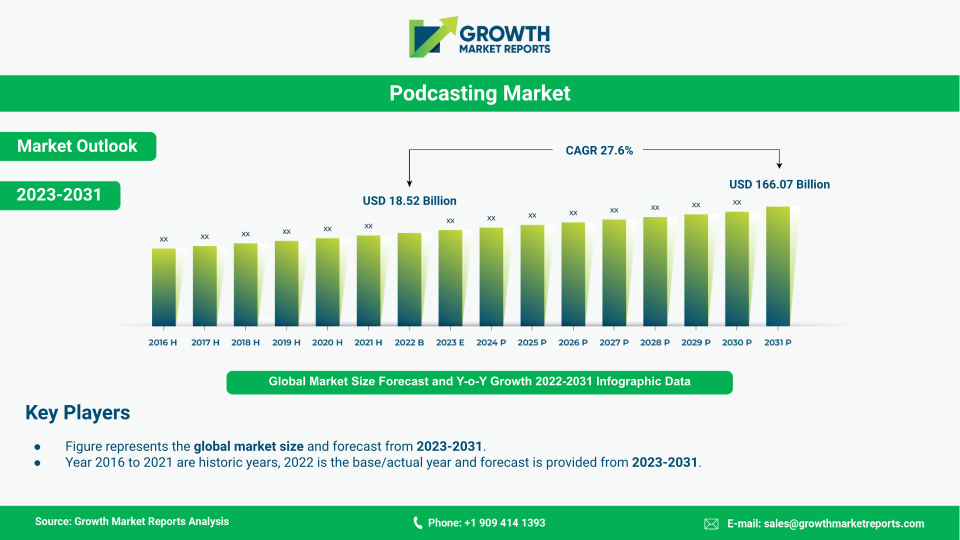
According to our latest research, the global podcasting market size reached USD 24.8 billion in 2024, demonstrating robust growth and widespread adoption across diverse demographics and geographies. The market is projected to expand at a CAGR of 26.5% from 2025 to 2033, culminating in a forecasted market value of USD 236.5 billion by the end of 2033. This remarkable growth trajectory is driven by increasing smartphone penetration, expanding internet accessibility, and the rising popularity of on-demand audio content. The podcasting market is witnessing a transformation fueled by technological advancements, changing consumer preferences, and innovative monetization strategies, positioning it as a pivotal segment within the global digital media industry.

One of the primary growth factors propelling the podcasting market is the surge in mobile device usage and high-speed internet connectivity globally. As consumers increasingly seek personalized and flexible content consumption, podcasts have emerged as a preferred medium for entertainment, education, and information. The proliferation of affordable smartphones and the expansion of 4G and 5G networks have enabled users in both developed and emerging economies to access podcasts seamlessly. This shift towards mobile-first consumption has not only expanded the listener base but also encouraged creators and enterprises to invest in high-quality podcast production, further fueling market growth. The ease of distribution through digital platforms and the ability to cater to niche audiences have made podcasting an attractive avenue for content creators and advertisers alike.

Another significant driver is the evolution of monetization models within the podcasting ecosystem. Initially dominated by advertising revenues, the market has witnessed a diversification into subscriptions, sponsorships, and premium content offerings. Leading platforms such as Spotify, Apple Podcasts, and Google Podcasts have introduced innovative features, including exclusive shows, early access, and ad-free experiences, incentivizing listeners to opt for paid subscriptions. Enterprises and educational institutions are also leveraging podcasts for internal communications, training, and knowledge sharing, creating new revenue streams for service providers. The integration of advanced analytics and targeted advertising has enhanced the ability of podcasters to deliver personalized content and measure audience engagement effectively, thereby attracting higher advertising spend and strategic partnerships.

Content diversification and the emergence of new genres are also catalyzing the podcasting market’s expansion. While news and politics, comedy, and society & culture remain dominant genres, there is a growing demand for business, education, and technology-focused podcasts. This trend is particularly pronounced among younger demographics and professionals seeking continuous learning and industry insights. The rise of localized and multilingual content is broadening the appeal of podcasts across different regions and cultural contexts. Furthermore, collaborations between traditional media houses and independent creators are resulting in high-production-value podcasts that attract larger audiences and premium advertisers. The democratization of podcast creation tools and platforms is lowering entry barriers, enabling a broader spectrum of voices and perspectives to flourish in the market.

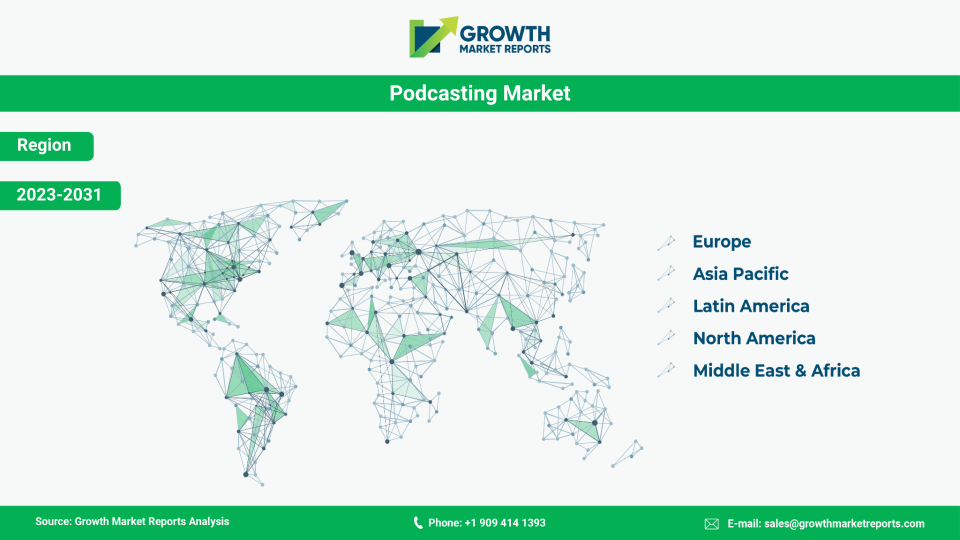
From a regional perspective, North America continues to lead the podcasting market, accounting for the largest share in 2024 due to its mature digital infrastructure, high smartphone adoption, and well-established content ecosystem. However, the Asia Pacific region is witnessing the fastest growth, driven by rapid urbanization, increasing internet penetration, and a burgeoning youth population. Europe remains a significant contributor, characterized by a diverse linguistic landscape and strong demand for localized content. Latin America and the Middle East & Africa are emerging as promising markets, supported by government initiatives to enhance digital literacy and the growing popularity of on-demand audio platforms. These regional dynamics underscore the global nature of the podcasting market and highlight the importance of tailored strategies to address distinct consumer preferences and regulatory environments.

Global Podcasting Industry Outlook

Component Analysis

The podcasting market by component is segmented into software, hardware, and services, each playing a vital role in the overall ecosystem. Software solutions encompass podcast hosting platforms, editing tools, analytics dashboards, and content management systems. These tools have evolved significantly, offering user-friendly interfaces, automated editing features, and seamless integration with distribution channels. The demand for advanced analytics and audience measurement software is rising as podcasters and advertisers seek deeper insights into listener behavior and engagement metrics. Cloud-based podcasting software is gaining traction due to its scalability, cost-effectiveness, and ability to support remote collaboration among creators. The continuous innovation in software solutions is empowering both amateur and professional podcasters to produce, distribute, and monetize content efficiently.

Hardware forms the backbone of podcast production, encompassing microphones, audio interfaces, mixers, headphones, and recording devices. The market has witnessed a surge in demand for high-fidelity recording equipment as creators prioritize audio quality to enhance listener experience. Technological advancements have led to the development of compact, portable, and affordable hardware solutions, making professional-grade podcasting accessible to a wider audience. The integration of USB and wireless connectivity features has simplified setup processes, enabling creators to record and publish content from virtually any location. As the market matures, there is a growing emphasis on hardware reliability, durability, and compatibility with various software platforms, driving innovation and competition among manufacturers.

The services segment encompasses a wide range of offerings, including podcast production, editing, marketing, distribution, and monetization support. Professional podcast production agencies are in high demand, particularly among enterprises and educational institutions seeking to create branded content and internal communication channels. Marketing and distribution services play a crucial role in amplifying podcast reach and attracting new listeners through social media promotion, cross-platform syndication, and influencer collaborations. Monetization services, such as programmatic advertising and sponsorship matchmaking, are enabling creators to maximize revenue opportunities. The services segment is characterized by a high degree of customization, with providers offering tailored solutions to meet the unique needs of individual creators, businesses, and organizations.

The interplay between software, hardware, and services is driving the evolution of the podcasting market, fostering a collaborative ecosystem that supports end-to-end content creation and distribution. The integration of artificial intelligence and machine learning technologies is enhancing the capabilities of software and services, enabling features such as automated transcription, sentiment analysis, and personalized content recommendations. Hardware manufacturers are partnering with software providers to deliver bundled solutions that simplify the podcasting workflow. As the market continues to grow, the demand for comprehensive, interoperable, and scalable component solutions will intensify, shaping the future landscape of the podcasting industry.

Report Scope

Attributes Details
Report Title Podcasting Market Research Report 2033
By Component Software, Hardware, Services
By Genre News & Politics, Society & Culture, Comedy, Sports, Business, Education, Technology, Others
By Platform Apple Podcasts, Spotify, Google Podcasts, Stitcher, Others
By Revenue Model Advertising, Subscription, Sponsorship, Others
By End-User Individuals, Enterprises, Educational Institutions, Others
Regions Covered North America, Europe, APAC, Latin America, MEA
Base Year 2024
Historic Data 2018-2023
Forecast Period 2025-2033
Number of Pages 261
Number of Tables & Figures 375
Customization Available Yes, the report can be customized as per your need.

Genre Analysis

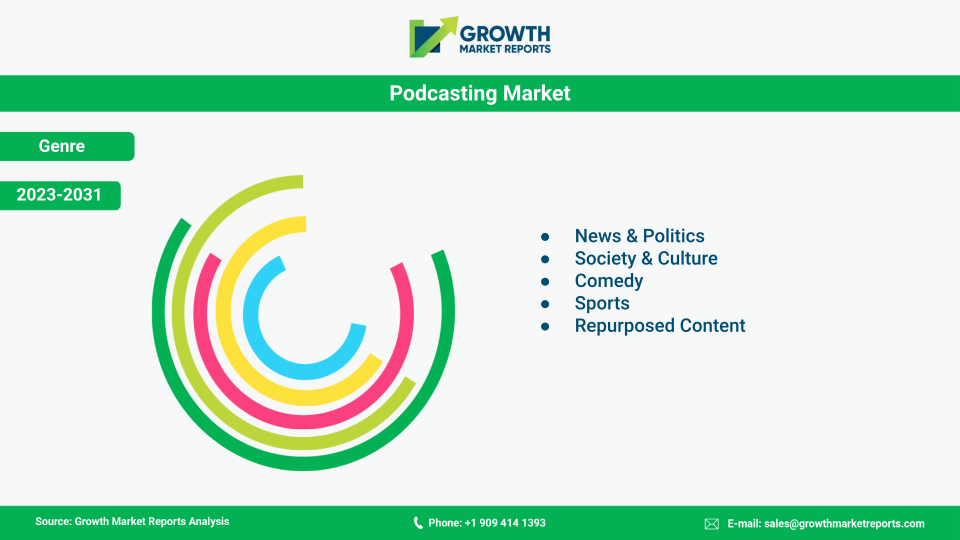
The podcasting market is highly segmented by genre, reflecting the diverse interests and preferences of global audiences. News & Politics remains one of the most popular genres, driven by the demand for real-time updates, in-depth analysis, and expert commentary on current events. The credibility and reach of established media organizations, combined with the agility of independent creators, have positioned news podcasts as a trusted source of information for millions of listeners. The genre’s appeal is further amplified during election cycles, major geopolitical events, and crises, as audiences seek timely and accurate coverage. Advertisers are increasingly targeting news podcasts due to their engaged and loyal listener base, resulting in higher monetization potential for creators.

Society & Culture and Comedy are also significant contributors to the podcasting market, attracting diverse audiences with their wide-ranging content and engaging storytelling formats. Society & culture podcasts explore themes such as identity, relationships, history, and social issues, resonating with listeners seeking relatable and thought-provoking content. Comedy podcasts, on the other hand, offer entertainment and escapism, featuring stand-up performances, improv shows, and humorous discussions. The interactive nature of these genres encourages audience participation through listener submissions, live recordings, and social media engagement. The popularity of society & culture and comedy podcasts is reflected in their high download rates and strong presence on leading platforms.

Sports and Business genres are experiencing rapid growth, fueled by the increasing appetite for expert analysis, behind-the-scenes insights, and industry trends. Sports podcasts cater to fans of various disciplines, offering game recaps, player interviews, and fantasy league advice. The genre’s appeal is enhanced by the involvement of former athletes, coaches, and sports journalists, who provide unique perspectives and insider knowledge. Business podcasts, meanwhile, attract entrepreneurs, professionals, and investors seeking advice on leadership, innovation, finance, and market trends. The educational value and actionable insights offered by business podcasts have made them a staple for career development and lifelong learning.

Education and Technology podcasts are gaining traction among students, educators, and tech enthusiasts. Educational podcasts cover a broad spectrum of subjects, from language learning and science to history and personal development. The flexibility and accessibility of podcasting make it an ideal medium for supplementary learning and professional training. Technology podcasts, meanwhile, delve into topics such as software development, cybersecurity, artificial intelligence, and digital transformation. The genre’s relevance is underscored by the rapid pace of technological innovation and the growing demand for up-to-date information and expert opinions. The emergence of niche genres and cross-genre collaborations is further enriching the podcasting landscape, offering listeners an ever-expanding array of content choices.

Platform Analysis

The podcasting market is characterized by a dynamic and competitive platform landscape, with major players such as Apple Podcasts, Spotify, Google Podcasts, and Stitcher vying for market share. Apple Podcasts remains a dominant force, leveraging its extensive user base, seamless integration with iOS devices, and curated content recommendations. The platform’s emphasis on user experience, discoverability, and exclusive partnerships has solidified its position as a go-to destination for podcast listeners and creators. Apple Podcasts’ monetization features, including paid subscriptions and premium content, are attracting high-profile creators and expanding revenue opportunities.

Spotify has emerged as a formidable competitor, investing heavily in original content, exclusive deals, and advanced recommendation algorithms. The platform’s global reach, cross-platform compatibility, and integration with music streaming services have contributed to its rapid growth and increasing market share. Spotify’s data-driven approach to content curation and audience targeting is enabling advertisers to deliver highly relevant messages to engaged listeners. The company’s focus on podcast discovery, personalization, and social sharing features is enhancing user engagement and retention, making it a preferred platform for both creators and listeners.

Google Podcasts and Stitcher offer unique value propositions, catering to specific segments of the podcasting market. Google Podcasts leverages the power of the Google ecosystem, enabling seamless integration with search, Google Assistant, and Android devices. The platform’s commitment to open standards and interoperability is fostering a diverse and inclusive podcasting environment. Stitcher, known for its curated playlists, exclusive shows, and user-friendly interface, appeals to listeners seeking a personalized and ad-free experience. The platform’s focus on content quality and listener engagement has earned it a loyal following among podcast enthusiasts.

The emergence of new and niche platforms is further intensifying competition and driving innovation in the podcasting market. These platforms are differentiating themselves through unique features such as interactive content, live streaming, community building, and blockchain-based monetization. The growing importance of cross-platform distribution and syndication is enabling creators to reach wider audiences and maximize their content’s impact. As the market evolves, platforms that prioritize user experience, content diversity, and monetization flexibility are likely to capture greater market share and shape the future of podcasting.

Revenue Model Analysis

The podcasting market’s revenue streams are increasingly diversified, reflecting the evolving monetization landscape and the growing sophistication of creators and platforms. Advertising remains the primary revenue model, accounting for the largest share of market income. Programmatic advertising, host-read ads, and dynamic ad insertion are enabling targeted and scalable ad campaigns, enhancing ROI for advertisers and revenue potential for podcasters. The ability to deliver personalized ads based on listener demographics, preferences, and behavior is attracting higher advertising spend from brands seeking to engage with highly engaged and loyal audiences. The integration of advanced analytics and attribution tools is enabling advertisers to measure campaign effectiveness and optimize their strategies in real time.

Subscription models are gaining traction as listeners seek ad-free experiences, exclusive content, and early access to episodes. Leading platforms such as Spotify and Apple Podcasts are offering tiered subscription plans, allowing creators to monetize their most dedicated fans and build sustainable income streams. The subscription model is particularly appealing to creators with niche audiences and high-value content, as it provides a predictable and recurring revenue source. The success of subscription-based podcasts is encouraging more creators to experiment with premium offerings, bonus episodes, and member-only communities.

Sponsorship is another important revenue stream, enabling creators to collaborate with brands and organizations for mutually beneficial partnerships. Sponsorship deals often involve branded content, product placements, and co-branded episodes, providing sponsors with direct access to engaged audiences. The authenticity and trust established between podcasters and their listeners make sponsorships an effective marketing channel for brands seeking to build awareness and drive conversions. The flexibility and creativity offered by sponsorship arrangements are enabling creators to tailor partnerships to their content and audience preferences, maximizing value for both parties.

Other revenue models, such as crowdfunding, merchandise sales, live events, and licensing, are gaining prominence as creators seek to diversify their income sources and engage with their audiences in new ways. Crowdfunding platforms like Patreon and Kickstarter enable listeners to support their favorite podcasts directly, fostering a sense of community and ownership. Merchandise sales, including branded apparel, accessories, and digital products, are providing additional revenue streams and enhancing brand loyalty. Live events and virtual meetups are enabling creators to connect with their audiences in person, creating memorable experiences and generating incremental revenue. As the podcasting market matures, the ability to leverage multiple revenue models will be a key differentiator for successful creators and platforms.

End-User Analysis

The podcasting market serves a diverse array of end-users, including individuals, enterprises, educational institutions, and others, each with unique needs and consumption patterns. Individuals constitute the largest end-user segment, driven by the demand for personalized, on-the-go content that caters to a wide range of interests and lifestyles. The rise of multitasking and the desire for continuous learning and entertainment have made podcasts an integral part of daily routines for millions of listeners worldwide. The ability to access content anytime, anywhere, and on any device is a key factor driving individual adoption and engagement.

Enterprises are increasingly leveraging podcasts as a strategic communication tool for employee engagement, training, and brand building. Internal podcasts are being used to disseminate company news, share leadership insights, and foster a sense of community among remote and distributed teams. External-facing podcasts are enabling businesses to position themselves as thought leaders, share industry trends, and connect with customers and partners. The scalability, cost-effectiveness, and measurability of podcasting make it an attractive channel for corporate communications and marketing initiatives. Enterprises are also investing in branded podcast series and sponsored content to enhance their visibility and reach new audiences.

Educational institutions are embracing podcasts as a supplementary learning resource, enabling students and educators to access high-quality educational content outside the traditional classroom setting. Podcasts are being used to deliver lectures, facilitate discussions, and share expert interviews on a wide range of subjects. The flexibility and accessibility of podcasting are particularly valuable in remote and hybrid learning environments, supporting self-paced learning and continuous professional development. Educational podcasts are also fostering collaboration and knowledge sharing among educators, researchers, and industry practitioners, enriching the overall learning experience.

Other end-users, including non-profit organizations, government agencies, and community groups, are utilizing podcasts to raise awareness, advocate for causes, and engage with stakeholders. The low production and distribution costs of podcasting make it an accessible medium for organizations with limited resources. The ability to target specific audiences and measure engagement through analytics is enabling these organizations to optimize their outreach and impact. As the podcasting market continues to evolve, the diverse needs and objectives of end-users will drive innovation and shape the development of new content formats, distribution channels, and monetization strategies.

Opportunities & Threats

The podcasting market presents a wealth of opportunities for creators, platforms, advertisers, and technology providers. The continued expansion of internet and smartphone penetration, particularly in emerging markets, is unlocking new audiences and driving exponential growth in listenership. The rise of smart speakers, connected cars, and wearable devices is creating new touchpoints for podcast consumption, enabling users to access content seamlessly across multiple devices and environments. The integration of artificial intelligence and machine learning technologies is enhancing content discovery, personalization, and recommendation, improving user experience and engagement. The growing demand for localized, multilingual, and niche content is opening up new avenues for creators to differentiate themselves and build loyal communities. The emergence of interactive and immersive podcast formats, such as live shows, Q&A sessions, and augmented reality experiences, is further enriching the content landscape and attracting new listeners.

Advertisers and brands are increasingly recognizing the value of podcasting as a highly effective channel for reaching engaged and influential audiences. The authenticity and intimacy of the podcasting medium foster strong relationships between hosts and listeners, resulting in higher trust and brand recall. The ability to deliver targeted, contextually relevant ads and measure campaign performance through advanced analytics is enabling advertisers to optimize their strategies and maximize ROI. The rise of branded podcasts, influencer partnerships, and content syndication is creating new monetization opportunities for creators and platforms. As the podcasting market continues to grow and mature, the potential for innovation, collaboration, and value creation across the ecosystem remains substantial.

Despite its promising outlook, the podcasting market faces several challenges and restrainers that could impact its growth trajectory. One of the primary concerns is the increasing competition and content saturation, making it difficult for new and independent creators to gain visibility and attract audiences. The fragmentation of platforms and distribution channels can create barriers to discovery and limit the reach of certain podcasts. Monetization remains a challenge for many creators, particularly those targeting niche audiences or operating in regions with lower advertising spend. Regulatory and copyright issues, including licensing, royalty payments, and content moderation, pose additional risks for platforms and creators. Addressing these challenges will require ongoing investment in technology, content quality, and ecosystem collaboration to ensure the long-term sustainability and growth of the podcasting market.

Regional Outlook

North America continues to dominate the global podcasting market, accounting for approximately USD 10.3 billion in revenue in 2024. The region’s leadership is underpinned by a mature digital infrastructure, high smartphone and internet penetration, and a vibrant content creation ecosystem. The United States, in particular, is home to some of the world’s most popular podcasts, platforms, and creators, driving innovation and setting industry benchmarks. The presence of leading technology companies, media organizations, and advertising agencies is further fueling market growth and monetization opportunities. The North American market is expected to maintain its leadership position over the forecast period, supported by continuous investment in content, technology, and audience development.

Europe represents a significant and rapidly growing podcasting market, with revenues reaching USD 5.8 billion in 2024. The region is characterized by a diverse linguistic and cultural landscape, driving demand for localized and multilingual content. Major markets such as the United Kingdom, Germany, France, and the Nordic countries are witnessing robust growth in podcast adoption and monetization. European listeners are increasingly seeking high-quality, ad-free experiences, fueling the growth of subscription and premium content models. The region’s regulatory environment, including data privacy and copyright laws, presents both opportunities and challenges for platforms and creators. Europe is expected to grow at a healthy CAGR of 23.9% from 2025 to 2033, driven by continued digital transformation and evolving consumer preferences.

The Asia Pacific region is emerging as the fastest-growing podcasting market, with revenues reaching USD 4.1 billion in 2024. Rapid urbanization, rising disposable incomes, and the proliferation of affordable smartphones are driving podcast adoption across key markets such as China, India, Japan, and Australia. The region’s large and diverse population presents significant opportunities for localized, multilingual, and culturally relevant content. Government initiatives to enhance digital literacy and internet accessibility are further supporting market growth. The Asia Pacific podcasting market is projected to expand at a CAGR of 31.2% during the forecast period, outpacing other regions and attracting increasing investment from global and local players. Latin America and the Middle East & Africa, while currently smaller in scale, are also witnessing steady growth, driven by increasing internet penetration and the rising popularity of digital audio platforms.

Podcasting Market Statistics

Competitor Outlook

The podcasting market is characterized by intense competition and a dynamic landscape, with a mix of established technology giants, media conglomerates, and innovative startups vying for market share. The competitive environment is shaped by continuous innovation in content creation, distribution, monetization, and user experience. Leading platforms are investing heavily in original and exclusive content, advanced analytics, and personalized recommendation engines to attract and retain listeners. Strategic partnerships, mergers and acquisitions, and global expansion initiatives are common strategies employed by major players to strengthen their market position and diversify their offerings. The entry of new players and the emergence of niche platforms are further intensifying competition and driving innovation across the ecosystem.

Content differentiation and creator engagement are critical success factors in the podcasting market. Platforms and service providers are focusing on building robust creator ecosystems, offering tools, resources, and incentives to attract and retain top talent. The ability to support diverse content formats, genres, and languages is enabling market leaders to cater to a wide range of audience preferences and expand their global footprint. Monetization flexibility, including advertising, subscriptions, sponsorships, and alternative revenue streams, is a key differentiator for platforms seeking to maximize value for creators and listeners. The integration of advanced technologies such as artificial intelligence, machine learning, and blockchain is enhancing content discovery, personalization, and security, setting new standards for the industry.

Major companies in the podcasting market include Spotify, Apple Inc., Google LLC, Sirius XM Holdings Inc. (Stitcher), Amazon.com, Inc. (Audible), iHeartMedia, Inc., and Podbean. Spotify has established itself as a global leader through aggressive investments in exclusive content, acquisitions of podcasting startups, and the development of advanced analytics and monetization tools. The company’s focus on user experience, personalization, and cross-platform integration has enabled it to capture a significant share of the global podcasting market. Apple Inc. remains a dominant force, leveraging its extensive user base, seamless integration with iOS devices, and curated content offerings to maintain its leadership position.

Google LLC is leveraging its vast ecosystem, including search, Android, and Google Assistant, to drive podcast discovery and consumption. The company’s commitment to open standards and interoperability is fostering a diverse and inclusive podcasting environment. Sirius XM Holdings Inc., through its acquisition of Stitcher, is expanding its presence in the on-demand audio market and enhancing its content portfolio. Amazon.com, Inc., through Audible, is focusing on original audio content, exclusive shows, and subscription-based models to attract and retain listeners. iHeartMedia, Inc. is leveraging its extensive radio network and content library to offer a wide range of podcasts across genres and formats. Podbean is known for its user-friendly hosting platform, advanced analytics, and monetization solutions, catering to both amateur and professional podcasters.

The competitive outlook for the podcasting market is shaped by the ongoing race to innovate, differentiate, and capture new audiences. Companies that prioritize content quality, creator support, user experience, and monetization flexibility are well-positioned to succeed in this rapidly evolving landscape. Strategic investments in technology, partnerships, and global expansion will continue to drive growth and shape the future of the podcasting industry. As the market matures, the ability to adapt to changing consumer preferences, regulatory environments, and technological advancements will be critical for sustained success and leadership in the global podcasting market.

Key Players

  • Spotify
  • Apple Inc.
  • Amazon (Amazon Music, Audible)
  • iHeartMedia
  • SiriusXM (including Stitcher, Pandora)
  • Google (Google Podcasts, YouTube Podcasts)
  • Audacy (formerly Entercom)
  • TuneIn
  • Acast
  • Libsyn (Liberated Syndication)
  • Podbean
  • Megaphone (Spotify)
  • Castbox
  • Wondery (Amazon)
  • Podomatic
  • Audioboom
  • RedCircle
  • Spreaker (Voxnest, iHeartMedia)
  • Podigee
  • Buzzsprout
Podcasting Market Overview

Segments

The Podcasting market has been segmented on the basis of

Component

  • Software
  • Hardware
  • Services

Genre

  • News & Politics
  • Society & Culture
  • Comedy
  • Sports
  • Business
  • Education
  • Technology
  • Others

Platform

  • Apple Podcasts
  • Spotify
  • Google Podcasts
  • Stitcher
  • Others

Revenue Model

  • Advertising
  • Subscription
  • Sponsorship
  • Others

End-User

  • Individuals
  • Enterprises
  • Educational Institutions
  • Others

Competitive Landscape

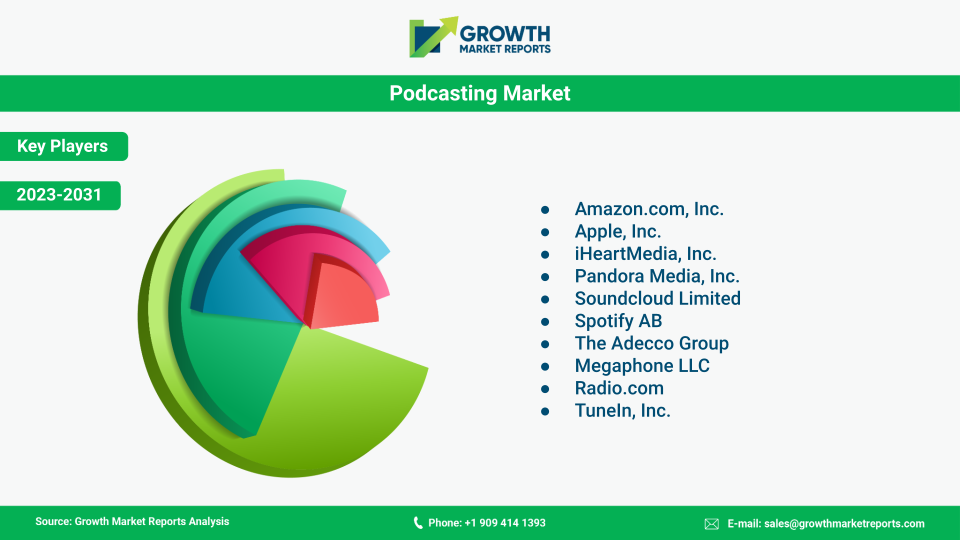
Major players in the market include Amazon.com, Inc., Apple, Inc., iHeartMedia, Inc., Pandora Media, Inc., Soundcloud Limited, Spotify AB, The Adecco Group, Megaphone LLC, Radio.com, and TuneIn, Inc. The market is still expected to grow exponential, as more number of media companies are trying to capture a share in this market.

Players from media industries are focusing on unique content and collaborating with content providers to target more audience share, thus offering a competitive edge to the players. YouTube, Inc., the US-based video-streaming platform, allowed users to upload audio webcasts of their channel admins to increase their digital footprint in the industry. 


Key players are collaborating with independent publishers and publishing companies to attract more audience by offering unique and fresh content. For instance,

  • In February 2020, Spotify AB acquired The Ringer to create podcasts for society & culture genres and sports for extending Spotify AB’s current catalog and audience engagement.

Podcasting Market Key Players

Frequently Asked Questions

Key challenges include increasing competition and content saturation, platform fragmentation, monetization difficulties for new creators, regulatory and copyright issues, and the need for continuous investment in technology and content quality.

Enterprises use podcasts for internal communications, training, and brand building, while educational institutions leverage them for supplementary learning, professional development, and knowledge sharing.

The podcasting market comprises software (hosting platforms, editing tools, analytics), hardware (microphones, audio interfaces, mixers), and services (production, editing, marketing, distribution, and monetization support).

Major companies include Spotify, Apple Inc., Google LLC, Sirius XM Holdings Inc. (Stitcher), Amazon.com, Inc. (Audible), iHeartMedia, Inc., Podbean, and others such as Acast, Libsyn, and Wondery.

Popular genres include News & Politics, Society & Culture, Comedy, Sports, Business, Education, and Technology. News & Politics is driven by demand for real-time updates, while Society & Culture and Comedy attract diverse audiences with engaging storytelling.

The primary revenue models include advertising, subscriptions, sponsorships, crowdfunding, merchandise sales, live events, and licensing. Advertising remains the largest revenue source, but subscriptions and sponsorships are rapidly growing.

North America leads the podcasting market due to its mature digital infrastructure, while the Asia Pacific region is the fastest-growing, driven by urbanization and increasing internet penetration. Europe, Latin America, and the Middle East & Africa are also significant contributors.

Key growth drivers include increasing smartphone penetration, expanding internet accessibility, rising popularity of on-demand audio content, technological advancements, and innovative monetization strategies.

The podcasting market is expected to grow at a CAGR of 26.5% from 2025 to 2033, reaching an estimated value of USD 236.5 billion by the end of 2033.

As of 2024, the global podcasting market size reached USD 24.8 billion, reflecting robust growth and widespread adoption across various regions and demographics.

Table Of Content

Chapter 1 Executive Summary
Chapter 2 Assumptions and Acronyms Used
Chapter 3 Research Methodology
Chapter 4 Podcasting Market Overview
   4.1 Introduction
      4.1.1 Market Taxonomy
      4.1.2 Market Definition
      4.1.3 Macro-Economic Factors Impacting the Market Growth
   4.2 Podcasting Market Dynamics
      4.2.1 Market Drivers
      4.2.2 Market Restraints
      4.2.3 Market Opportunity
   4.3 Podcasting Market - Supply Chain Analysis
      4.3.1 List of Key Suppliers
      4.3.2 List of Key Distributors
      4.3.3 List of Key Consumers
   4.4 Key Forces Shaping the Podcasting Market
      4.4.1 Bargaining Power of Suppliers
      4.4.2 Bargaining Power of Buyers
      4.4.3 Threat of Substitution
      4.4.4 Threat of New Entrants
      4.4.5 Competitive Rivalry
   4.5 Global Podcasting Market Size & Forecast, 2023-2032
      4.5.1 Podcasting Market Size and Y-o-Y Growth
      4.5.2 Podcasting Market Absolute $ Opportunity

Chapter 5 Global Podcasting Market Analysis and Forecast By Component
   5.1 Introduction
      5.1.1 Key Market Trends & Growth Opportunities By Component
      5.1.2 Basis Point Share (BPS) Analysis By Component
      5.1.3 Absolute $ Opportunity Assessment By Component
   5.2 Podcasting Market Size Forecast By Component
      5.2.1 Software
      5.2.2 Hardware
      5.2.3 Services
   5.3 Market Attractiveness Analysis By Component

Chapter 6 Global Podcasting Market Analysis and Forecast By Genre
   6.1 Introduction
      6.1.1 Key Market Trends & Growth Opportunities By Genre
      6.1.2 Basis Point Share (BPS) Analysis By Genre
      6.1.3 Absolute $ Opportunity Assessment By Genre
   6.2 Podcasting Market Size Forecast By Genre
      6.2.1 News & Politics
      6.2.2 Society & Culture
      6.2.3 Comedy
      6.2.4 Sports
      6.2.5 Business
      6.2.6 Education
      6.2.7 Technology
      6.2.8 Others
   6.3 Market Attractiveness Analysis By Genre

Chapter 7 Global Podcasting Market Analysis and Forecast By Platform
   7.1 Introduction
      7.1.1 Key Market Trends & Growth Opportunities By Platform
      7.1.2 Basis Point Share (BPS) Analysis By Platform
      7.1.3 Absolute $ Opportunity Assessment By Platform
   7.2 Podcasting Market Size Forecast By Platform
      7.2.1 Apple Podcasts
      7.2.2 Spotify
      7.2.3 Google Podcasts
      7.2.4 Stitcher
      7.2.5 Others
   7.3 Market Attractiveness Analysis By Platform

Chapter 8 Global Podcasting Market Analysis and Forecast By Revenue Model
   8.1 Introduction
      8.1.1 Key Market Trends & Growth Opportunities By Revenue Model
      8.1.2 Basis Point Share (BPS) Analysis By Revenue Model
      8.1.3 Absolute $ Opportunity Assessment By Revenue Model
   8.2 Podcasting Market Size Forecast By Revenue Model
      8.2.1 Advertising
      8.2.2 Subscription
      8.2.3 Sponsorship
      8.2.4 Others
   8.3 Market Attractiveness Analysis By Revenue Model

Chapter 9 Global Podcasting Market Analysis and Forecast By End-User
   9.1 Introduction
      9.1.1 Key Market Trends & Growth Opportunities By End-User
      9.1.2 Basis Point Share (BPS) Analysis By End-User
      9.1.3 Absolute $ Opportunity Assessment By End-User
   9.2 Podcasting Market Size Forecast By End-User
      9.2.1 Individuals
      9.2.2 Enterprises
      9.2.3 Educational Institutions
      9.2.4 Others
   9.3 Market Attractiveness Analysis By End-User

Chapter 10 Global Podcasting Market Analysis and Forecast by Region
   10.1 Introduction
      10.1.1 Key Market Trends & Growth Opportunities By Region
      10.1.2 Basis Point Share (BPS) Analysis By Region
      10.1.3 Absolute $ Opportunity Assessment By Region
   10.2 Podcasting Market Size Forecast By Region
      10.2.1 North America
      10.2.2 Europe
      10.2.3 Asia Pacific
      10.2.4 Latin America
      10.2.5 Middle East & Africa (MEA)
   10.3 Market Attractiveness Analysis By Region

Chapter 11 Coronavirus Disease (COVID-19) Impact 
   11.1 Introduction 
   11.2 Current & Future Impact Analysis 
   11.3 Economic Impact Analysis 
   11.4 Government Policies 
   11.5 Investment Scenario

Chapter 12 North America Podcasting Analysis and Forecast
   12.1 Introduction
   12.2 North America Podcasting Market Size Forecast by Country
      12.2.1 U.S.
      12.2.2 Canada
   12.3 Basis Point Share (BPS) Analysis by Country
   12.4 Absolute $ Opportunity Assessment by Country
   12.5 Market Attractiveness Analysis by Country
   12.6 North America Podcasting Market Size Forecast By Component
      12.6.1 Software
      12.6.2 Hardware
      12.6.3 Services
   12.7 Basis Point Share (BPS) Analysis By Component 
   12.8 Absolute $ Opportunity Assessment By Component 
   12.9 Market Attractiveness Analysis By Component
   12.10 North America Podcasting Market Size Forecast By Genre
      12.10.1 News & Politics
      12.10.2 Society & Culture
      12.10.3 Comedy
      12.10.4 Sports
      12.10.5 Business
      12.10.6 Education
      12.10.7 Technology
      12.10.8 Others
   12.11 Basis Point Share (BPS) Analysis By Genre 
   12.12 Absolute $ Opportunity Assessment By Genre 
   12.13 Market Attractiveness Analysis By Genre
   12.14 North America Podcasting Market Size Forecast By Platform
      12.14.1 Apple Podcasts
      12.14.2 Spotify
      12.14.3 Google Podcasts
      12.14.4 Stitcher
      12.14.5 Others
   12.15 Basis Point Share (BPS) Analysis By Platform 
   12.16 Absolute $ Opportunity Assessment By Platform 
   12.17 Market Attractiveness Analysis By Platform
   12.18 North America Podcasting Market Size Forecast By Revenue Model
      12.18.1 Advertising
      12.18.2 Subscription
      12.18.3 Sponsorship
      12.18.4 Others
   12.19 Basis Point Share (BPS) Analysis By Revenue Model 
   12.20 Absolute $ Opportunity Assessment By Revenue Model 
   12.21 Market Attractiveness Analysis By Revenue Model
   12.22 North America Podcasting Market Size Forecast By End-User
      12.22.1 Individuals
      12.22.2 Enterprises
      12.22.3 Educational Institutions
      12.22.4 Others
   12.23 Basis Point Share (BPS) Analysis By End-User 
   12.24 Absolute $ Opportunity Assessment By End-User 
   12.25 Market Attractiveness Analysis By End-User

Chapter 13 Europe Podcasting Analysis and Forecast
   13.1 Introduction
   13.2 Europe Podcasting Market Size Forecast by Country
      13.2.1 Germany
      13.2.2 France
      13.2.3 Italy
      13.2.4 U.K.
      13.2.5 Spain
      13.2.6 Russia
      13.2.7 Rest of Europe
   13.3 Basis Point Share (BPS) Analysis by Country
   13.4 Absolute $ Opportunity Assessment by Country
   13.5 Market Attractiveness Analysis by Country
   13.6 Europe Podcasting Market Size Forecast By Component
      13.6.1 Software
      13.6.2 Hardware
      13.6.3 Services
   13.7 Basis Point Share (BPS) Analysis By Component 
   13.8 Absolute $ Opportunity Assessment By Component 
   13.9 Market Attractiveness Analysis By Component
   13.10 Europe Podcasting Market Size Forecast By Genre
      13.10.1 News & Politics
      13.10.2 Society & Culture
      13.10.3 Comedy
      13.10.4 Sports
      13.10.5 Business
      13.10.6 Education
      13.10.7 Technology
      13.10.8 Others
   13.11 Basis Point Share (BPS) Analysis By Genre 
   13.12 Absolute $ Opportunity Assessment By Genre 
   13.13 Market Attractiveness Analysis By Genre
   13.14 Europe Podcasting Market Size Forecast By Platform
      13.14.1 Apple Podcasts
      13.14.2 Spotify
      13.14.3 Google Podcasts
      13.14.4 Stitcher
      13.14.5 Others
   13.15 Basis Point Share (BPS) Analysis By Platform 
   13.16 Absolute $ Opportunity Assessment By Platform 
   13.17 Market Attractiveness Analysis By Platform
   13.18 Europe Podcasting Market Size Forecast By Revenue Model
      13.18.1 Advertising
      13.18.2 Subscription
      13.18.3 Sponsorship
      13.18.4 Others
   13.19 Basis Point Share (BPS) Analysis By Revenue Model 
   13.20 Absolute $ Opportunity Assessment By Revenue Model 
   13.21 Market Attractiveness Analysis By Revenue Model
   13.22 Europe Podcasting Market Size Forecast By End-User
      13.22.1 Individuals
      13.22.2 Enterprises
      13.22.3 Educational Institutions
      13.22.4 Others
   13.23 Basis Point Share (BPS) Analysis By End-User 
   13.24 Absolute $ Opportunity Assessment By End-User 
   13.25 Market Attractiveness Analysis By End-User

Chapter 14 Asia Pacific Podcasting Analysis and Forecast
   14.1 Introduction
   14.2 Asia Pacific Podcasting Market Size Forecast by Country
      14.2.1 China
      14.2.2 Japan
      14.2.3 South Korea
      14.2.4 India
      14.2.5 Australia
      14.2.6 South East Asia (SEA)
      14.2.7 Rest of Asia Pacific (APAC)
   14.3 Basis Point Share (BPS) Analysis by Country
   14.4 Absolute $ Opportunity Assessment by Country
   14.5 Market Attractiveness Analysis by Country
   14.6 Asia Pacific Podcasting Market Size Forecast By Component
      14.6.1 Software
      14.6.2 Hardware
      14.6.3 Services
   14.7 Basis Point Share (BPS) Analysis By Component 
   14.8 Absolute $ Opportunity Assessment By Component 
   14.9 Market Attractiveness Analysis By Component
   14.10 Asia Pacific Podcasting Market Size Forecast By Genre
      14.10.1 News & Politics
      14.10.2 Society & Culture
      14.10.3 Comedy
      14.10.4 Sports
      14.10.5 Business
      14.10.6 Education
      14.10.7 Technology
      14.10.8 Others
   14.11 Basis Point Share (BPS) Analysis By Genre 
   14.12 Absolute $ Opportunity Assessment By Genre 
   14.13 Market Attractiveness Analysis By Genre
   14.14 Asia Pacific Podcasting Market Size Forecast By Platform
      14.14.1 Apple Podcasts
      14.14.2 Spotify
      14.14.3 Google Podcasts
      14.14.4 Stitcher
      14.14.5 Others
   14.15 Basis Point Share (BPS) Analysis By Platform 
   14.16 Absolute $ Opportunity Assessment By Platform 
   14.17 Market Attractiveness Analysis By Platform
   14.18 Asia Pacific Podcasting Market Size Forecast By Revenue Model
      14.18.1 Advertising
      14.18.2 Subscription
      14.18.3 Sponsorship
      14.18.4 Others
   14.19 Basis Point Share (BPS) Analysis By Revenue Model 
   14.20 Absolute $ Opportunity Assessment By Revenue Model 
   14.21 Market Attractiveness Analysis By Revenue Model
   14.22 Asia Pacific Podcasting Market Size Forecast By End-User
      14.22.1 Individuals
      14.22.2 Enterprises
      14.22.3 Educational Institutions
      14.22.4 Others
   14.23 Basis Point Share (BPS) Analysis By End-User 
   14.24 Absolute $ Opportunity Assessment By End-User 
   14.25 Market Attractiveness Analysis By End-User

Chapter 15 Latin America Podcasting Analysis and Forecast
   15.1 Introduction
   15.2 Latin America Podcasting Market Size Forecast by Country
      15.2.1 Brazil
      15.2.2 Mexico
      15.2.3 Rest of Latin America (LATAM)
   15.3 Basis Point Share (BPS) Analysis by Country
   15.4 Absolute $ Opportunity Assessment by Country
   15.5 Market Attractiveness Analysis by Country
   15.6 Latin America Podcasting Market Size Forecast By Component
      15.6.1 Software
      15.6.2 Hardware
      15.6.3 Services
   15.7 Basis Point Share (BPS) Analysis By Component 
   15.8 Absolute $ Opportunity Assessment By Component 
   15.9 Market Attractiveness Analysis By Component
   15.10 Latin America Podcasting Market Size Forecast By Genre
      15.10.1 News & Politics
      15.10.2 Society & Culture
      15.10.3 Comedy
      15.10.4 Sports
      15.10.5 Business
      15.10.6 Education
      15.10.7 Technology
      15.10.8 Others
   15.11 Basis Point Share (BPS) Analysis By Genre 
   15.12 Absolute $ Opportunity Assessment By Genre 
   15.13 Market Attractiveness Analysis By Genre
   15.14 Latin America Podcasting Market Size Forecast By Platform
      15.14.1 Apple Podcasts
      15.14.2 Spotify
      15.14.3 Google Podcasts
      15.14.4 Stitcher
      15.14.5 Others
   15.15 Basis Point Share (BPS) Analysis By Platform 
   15.16 Absolute $ Opportunity Assessment By Platform 
   15.17 Market Attractiveness Analysis By Platform
   15.18 Latin America Podcasting Market Size Forecast By Revenue Model
      15.18.1 Advertising
      15.18.2 Subscription
      15.18.3 Sponsorship
      15.18.4 Others
   15.19 Basis Point Share (BPS) Analysis By Revenue Model 
   15.20 Absolute $ Opportunity Assessment By Revenue Model 
   15.21 Market Attractiveness Analysis By Revenue Model
   15.22 Latin America Podcasting Market Size Forecast By End-User
      15.22.1 Individuals
      15.22.2 Enterprises
      15.22.3 Educational Institutions
      15.22.4 Others
   15.23 Basis Point Share (BPS) Analysis By End-User 
   15.24 Absolute $ Opportunity Assessment By End-User 
   15.25 Market Attractiveness Analysis By End-User

Chapter 16 Middle East & Africa (MEA) Podcasting Analysis and Forecast
   16.1 Introduction
   16.2 Middle East & Africa (MEA) Podcasting Market Size Forecast by Country
      16.2.1 Saudi Arabia
      16.2.2 South Africa
      16.2.3 UAE
      16.2.4 Rest of Middle East & Africa (MEA)
   16.3 Basis Point Share (BPS) Analysis by Country
   16.4 Absolute $ Opportunity Assessment by Country
   16.5 Market Attractiveness Analysis by Country
   16.6 Middle East & Africa (MEA) Podcasting Market Size Forecast By Component
      16.6.1 Software
      16.6.2 Hardware
      16.6.3 Services
   16.7 Basis Point Share (BPS) Analysis By Component 
   16.8 Absolute $ Opportunity Assessment By Component 
   16.9 Market Attractiveness Analysis By Component
   16.10 Middle East & Africa (MEA) Podcasting Market Size Forecast By Genre
      16.10.1 News & Politics
      16.10.2 Society & Culture
      16.10.3 Comedy
      16.10.4 Sports
      16.10.5 Business
      16.10.6 Education
      16.10.7 Technology
      16.10.8 Others
   16.11 Basis Point Share (BPS) Analysis By Genre 
   16.12 Absolute $ Opportunity Assessment By Genre 
   16.13 Market Attractiveness Analysis By Genre
   16.14 Middle East & Africa (MEA) Podcasting Market Size Forecast By Platform
      16.14.1 Apple Podcasts
      16.14.2 Spotify
      16.14.3 Google Podcasts
      16.14.4 Stitcher
      16.14.5 Others
   16.15 Basis Point Share (BPS) Analysis By Platform 
   16.16 Absolute $ Opportunity Assessment By Platform 
   16.17 Market Attractiveness Analysis By Platform
   16.18 Middle East & Africa (MEA) Podcasting Market Size Forecast By Revenue Model
      16.18.1 Advertising
      16.18.2 Subscription
      16.18.3 Sponsorship
      16.18.4 Others
   16.19 Basis Point Share (BPS) Analysis By Revenue Model 
   16.20 Absolute $ Opportunity Assessment By Revenue Model 
   16.21 Market Attractiveness Analysis By Revenue Model
   16.22 Middle East & Africa (MEA) Podcasting Market Size Forecast By End-User
      16.22.1 Individuals
      16.22.2 Enterprises
      16.22.3 Educational Institutions
      16.22.4 Others
   16.23 Basis Point Share (BPS) Analysis By End-User 
   16.24 Absolute $ Opportunity Assessment By End-User 
   16.25 Market Attractiveness Analysis By End-User

Chapter 17 Competition Landscape 
   17.1 Podcasting Market: Competitive Dashboard
   17.2 Global Podcasting Market: Market Share Analysis, 2023
   17.3 Company Profiles (Details – Overview, Financials, Developments, Strategy) 
      17.3.1 Spotify
Apple Inc.
Amazon (Amazon Music, Audible)
iHeartMedia
SiriusXM (including Stitcher, Pandora)
Google (Google Podcasts, YouTube Podcasts)
Audacy (formerly Entercom)
TuneIn
Acast
Libsyn (Liberated Syndication)
Podbean
Megaphone (Spotify)
Castbox
Wondery (Amazon)
Podomatic
Audioboom
RedCircle
Spreaker (Voxnest, iHeartMedia)
Podigee
Buzzsprout

Methodology

Our Clients

Nestle SA
sinopec
FedEx Logistics
Pfizer
Dassault Aviation
Honda Motor Co. Ltd.
Siemens Healthcare
General Mills