Segments - by Product Type (Screw Caps, Snap-On Caps, Dispensing Caps, Others), by Material (Polypropylene, Polyethylene, Polystyrene, Others), by End-Use Industry (Beverages, Food, Pharmaceuticals, Personal Care, Household, Others), by Distribution Channel (Direct Sales, Distributors/Wholesalers, Online Retail)
As per our latest research, the global Plastic Caps and Closures market size reached USD 48.6 billion in 2024, reflecting robust demand across multiple end-use industries. The market is projected to expand at a CAGR of 5.2% from 2025 to 2033, ultimately achieving a value of USD 76.7 billion by 2033. This growth is driven by increasing consumption of packaged beverages, rising health and hygiene awareness, and the expanding food and pharmaceutical sectors worldwide.
One of the primary growth factors for the Plastic Caps and Closures market is the surging demand for convenience packaging in both developed and developing economies. As urbanization accelerates and lifestyles become busier, consumers increasingly prefer products that are easy to use, resealable, and portable. Plastic caps and closures offer these advantages, ensuring product freshness, preventing spillage, and enhancing user experience. The beverage sector, especially bottled water and carbonated drinks, is a key driver, accounting for a significant share of cap and closure consumption. Additionally, innovations such as tamper-evident and child-resistant closures are further boosting market adoption, particularly in the food and pharmaceutical industries, where safety and compliance are paramount.
Another significant driver is the ongoing shift towards lightweight and sustainable packaging solutions. Plastic caps and closures manufacturers are investing in research and development to produce products with reduced material usage without compromising strength or functionality. The adoption of recyclable and bio-based plastics is gaining momentum, in response to regulatory pressures and growing environmental consciousness among consumers. This trend is especially prevalent in Europe and North America, where stringent packaging waste regulations and sustainability commitments by major brands are reshaping the market landscape. The proliferation of e-commerce and changing retail dynamics are also driving demand for secure and durable closures that can withstand handling and transportation stresses.
The pharmaceutical and personal care industries are contributing significantly to the expansion of the Plastic Caps and Closures market. The growing global population, rising healthcare expenditures, and the increasing prevalence of chronic diseases are fueling demand for pharmaceutical packaging that ensures product integrity and safety. Plastic closures offer advantages such as moisture resistance, tamper evidence, and ease of dispensing, making them ideal for medicines, syrups, and ointments. Similarly, the personal care sector is witnessing robust growth, driven by rising disposable incomes and heightened focus on hygiene and grooming. The need for user-friendly, attractive, and functional closures in products like shampoos, lotions, and creams is propelling market growth in this segment.
Tamper-Evident Closure Systems have become an integral part of the packaging industry, especially in sectors where product safety and integrity are paramount. These systems are designed to provide a clear indication if a product has been opened or tampered with, thereby ensuring consumer confidence and compliance with safety standards. In the food and pharmaceutical industries, where the risk of contamination or unauthorized access can have serious consequences, tamper-evident closures are not just a value addition but a necessity. The increasing focus on regulatory compliance and consumer safety is driving innovation in tamper-evident technologies, with manufacturers developing advanced solutions that offer both security and convenience. As the demand for secure packaging solutions continues to rise, tamper-evident closure systems are expected to play a crucial role in shaping the future of the caps and closures market.
Regionally, Asia Pacific dominates the Plastic Caps and Closures market, accounting for the largest share in 2024, followed by North America and Europe. The rapid expansion of the food and beverage industry in China, India, and Southeast Asia, coupled with increasing investments in manufacturing infrastructure, is fueling demand for caps and closures in the region. Additionally, the growing middle-class population and changing consumer preferences are accelerating the shift towards packaged and processed foods, further stimulating market growth. North America and Europe are characterized by high adoption of advanced closure technologies and strong emphasis on sustainability, while Latin America and the Middle East & Africa are emerging as high-potential markets due to expanding urbanization and improving retail infrastructure.
The Plastic Caps and Closures market is segmented by product type into screw caps, snap-on caps, dispensing caps, and others, each catering to specific packaging requirements and end-use preferences. Screw caps represent the most widely used product type, owing to their versatility, effectiveness in providing airtight seals, and suitability for a broad range of applications, including beverages, pharmaceuticals, and household products. These caps are particularly valued in the bottled water and soft drink segments, where product integrity and reusability are crucial. The rising popularity of premium beverages and health drinks is further driving the adoption of high-quality screw caps with enhanced tamper-evident features.
Snap-on caps are gaining traction, especially in the food and dairy sectors, due to their ease of use and convenience in opening and closing. These caps are commonly employed in products such as yogurt, sauces, and spreads, where frequent access and resealability are important to consumers. Manufacturers are innovating with ergonomic designs and improved sealing mechanisms to enhance product freshness and prevent contamination. The shift towards single-serve and portion-controlled packaging formats in the food industry is also boosting demand for snap-on caps, which offer a balance of affordability and functionality.
Dispensing caps, including flip-top and push-pull closures, play a vital role in personal care, household, and pharmaceutical packaging. These closures enable controlled dispensing of liquids, gels, and creams, minimizing waste and improving user convenience. The growing popularity of on-the-go personal care products and the increasing demand for household cleaning solutions are driving the adoption of dispensing caps. Manufacturers are focusing on developing closures with anti-leak mechanisms and precise dosing capabilities to meet evolving consumer expectations and regulatory requirements.
Other cap types, such as child-resistant and tamper-evident closures, are witnessing increasing adoption in pharmaceuticals and certain food applications. These specialized closures are designed to ensure product safety, regulatory compliance, and consumer confidence. The trend towards customization and branding is also influencing product development, with manufacturers offering closures in a variety of shapes, colors, and finishes to enhance shelf appeal and brand differentiation. The integration of smart features, such as QR codes and NFC tags for product authentication and consumer engagement, is an emerging trend in the product type segment.
The Bottle Cap, a seemingly simple component, plays a vital role in the packaging industry. It serves as the first line of defense against contamination and spoilage, ensuring the freshness and safety of the contents within. Bottle caps are designed to provide a secure seal, preventing leaks and maintaining the integrity of the product during transportation and storage. In recent years, the design and functionality of bottle caps have evolved significantly, with innovations such as easy-open features, child-resistant mechanisms, and tamper-evident designs becoming increasingly common. The beverage industry, in particular, relies heavily on bottle caps to enhance consumer convenience and product appeal. As sustainability becomes a key focus, manufacturers are exploring eco-friendly materials and designs to reduce environmental impact while maintaining performance standards. The bottle cap, therefore, remains a critical element in the overall packaging strategy, contributing to both product safety and brand differentiation.
| Attributes | Details |
| Report Title | Plastic Caps and Closures Market Research Report 2033 |
| By Product Type | Screw Caps, Snap-On Caps, Dispensing Caps, Others |
| By Material | Polypropylene, Polyethylene, Polystyrene, Others |
| By End-Use Industry | Beverages, Food, Pharmaceuticals, Personal Care, Household, Others |
| By Distribution Channel | Direct Sales, Distributors/Wholesalers, Online Retail |
| Regions Covered | North America, Europe, APAC, Latin America, MEA |
| Base Year | 2024 |
| Historic Data | 2018-2023 |
| Forecast Period | 2025-2033 |
| Number of Pages | 280 |
| Number of Tables & Figures | 286 |
| Customization Available | Yes, the report can be customized as per your need. |
The Plastic Caps and Closures market is segmented by material into polypropylene (PP), polyethylene (PE), polystyrene (PS), and others, each offering distinct advantages in terms of performance, cost, and sustainability. Polypropylene is the most widely used material, owing to its excellent chemical resistance, lightweight nature, and versatility in molding complex shapes. PP caps and closures are extensively used in beverages, food, and pharmaceuticals, where durability and compatibility with a wide range of products are critical. The materialÂ’s recyclability and low carbon footprint further enhance its appeal in markets with strong sustainability mandates.
Polyethylene, including both high-density (HDPE) and low-density (LDPE) variants, is another major material used in cap and closure manufacturing. HDPE is favored for its strength, stiffness, and resistance to moisture, making it suitable for closures in dairy, juice, and household product packaging. LDPE, on the other hand, offers flexibility and impact resistance, making it ideal for dispensing caps and closures that require repeated opening and closing. The growing demand for flexible packaging solutions and the rise of refillable and reusable packaging formats are driving the adoption of PE-based closures.
Polystyrene is primarily used in applications where clarity, rigidity, and cost-effectiveness are important. While PS is less commonly used than PP and PE, it finds niche applications in certain food and confectionery products, as well as in laboratory and medical packaging. The materialÂ’s brittleness and limited chemical resistance have restricted its widespread adoption, but ongoing innovations in polymer blends and additives are enhancing its performance characteristics. Environmental concerns regarding polystyrene waste have also prompted manufacturers to explore alternatives and invest in recycling technologies.
Other materials, such as polycarbonate, PVC, and bio-based plastics, are gaining attention as manufacturers seek to diversify their material portfolios and address evolving regulatory and consumer demands. Bio-based and biodegradable plastics, in particular, are emerging as viable options for sustainable packaging, especially in regions with stringent environmental regulations. The development of advanced materials with enhanced barrier properties, antimicrobial features, and improved processability is expected to shape the future of the material segment in the Plastic Caps and Closures market.
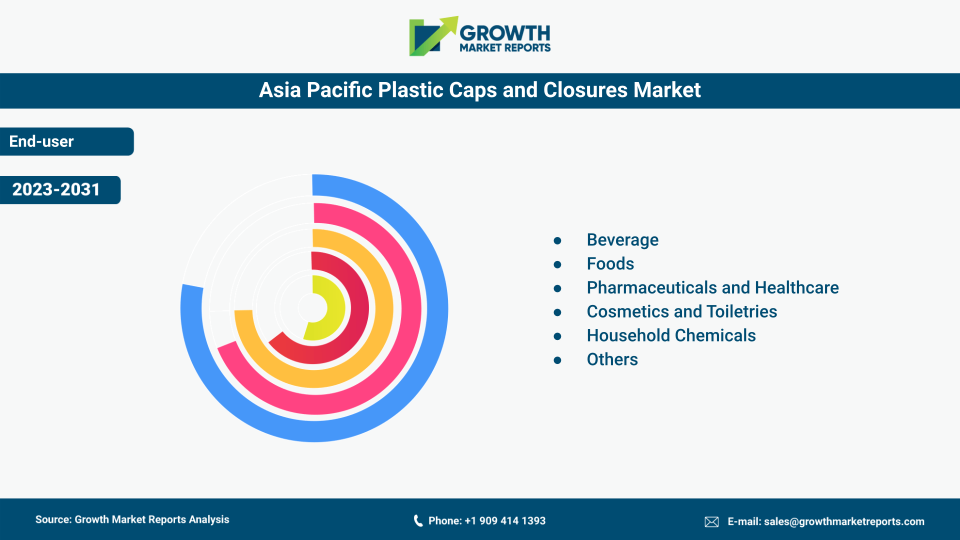
The Plastic Caps and Closures market serves a diverse range of end-use industries, including beverages, food, pharmaceuticals, personal care, household, and others, each with unique packaging requirements and growth dynamics. The beverages segment holds the largest share, driven by the massive consumption of bottled water, carbonated drinks, juices, and alcoholic beverages worldwide. The demand for tamper-evident, resealable, and lightweight closures is particularly high in this segment, as manufacturers seek to enhance product safety, extend shelf life, and improve consumer convenience. The trend towards premiumization and functional beverages is further stimulating innovation in closure designs and materials.
The food industry is another major consumer of plastic caps and closures, with applications spanning sauces, condiments, dairy products, spreads, and ready-to-eat meals. The shift towards packaged and processed foods, driven by urbanization, changing dietary habits, and increasing disposable incomes, is fueling demand for reliable and attractive closures that preserve product freshness and prevent contamination. The growing popularity of single-serve and portion-controlled packaging formats is also boosting the adoption of specialized closures that cater to on-the-go consumption and convenience.
In the pharmaceutical sector, plastic caps and closures are critical for ensuring product integrity, safety, and compliance with stringent regulatory standards. The rising prevalence of chronic diseases, expanding access to healthcare, and increasing demand for over-the-counter medications are driving the need for child-resistant, tamper-evident, and moisture-resistant closures. The trend towards self-medication and home healthcare is also influencing the development of user-friendly dispensing closures that facilitate accurate dosing and minimize spillage.
The personal care and household segments are experiencing robust growth, supported by rising consumer awareness of hygiene, grooming, and cleanliness. Plastic closures are widely used in products such as shampoos, lotions, detergents, and cleaning agents, where ease of use, aesthetics, and safety are key considerations. The increasing demand for innovative packaging solutions that offer differentiation and enhance brand value is encouraging manufacturers to invest in customized and premium closure designs. The emergence of e-commerce and direct-to-consumer channels is also shaping packaging requirements in these segments, with a focus on secure, tamper-proof, and visually appealing closures.
Distribution channels play a pivotal role in the Plastic Caps and Closures market, determining how products reach end-users and influencing market dynamics. Direct sales channels are widely used by large manufacturers to serve key accounts, including multinational beverage, food, and pharmaceutical companies. This approach enables suppliers to build long-term relationships, offer customized solutions, and provide value-added services such as technical support, inventory management, and just-in-time delivery. Direct sales are particularly prevalent in regions with a concentrated manufacturing base and strong supply chain infrastructure.
Distributors and wholesalers serve as critical intermediaries in the market, especially for small and medium-sized manufacturers and customers located in remote or fragmented markets. These channels provide access to a wide range of products, facilitate bulk purchasing, and offer logistical support, making them indispensable in emerging markets and regions with complex distribution networks. Distributors also play a key role in educating customers about new products, technologies, and regulatory requirements, thereby driving market penetration and adoption.
The rise of online retail is transforming the distribution landscape for plastic caps and closures, particularly for small-scale buyers, startups, and niche product segments. E-commerce platforms offer convenience, transparency, and access to a diverse range of products, enabling buyers to compare prices, specifications, and reviews before making purchasing decisions. The COVID-19 pandemic accelerated the shift towards online procurement, with manufacturers and distributors investing in digital platforms, e-catalogs, and virtual showrooms to reach a broader customer base. The increasing adoption of digital supply chain solutions and e-marketplaces is expected to further enhance the efficiency and responsiveness of the distribution channel.
Hybrid distribution models, combining direct sales, distributor networks, and online platforms, are gaining popularity as manufacturers seek to optimize reach, responsiveness, and customer engagement. The integration of advanced technologies such as AI-driven demand forecasting, real-time inventory tracking, and automated order processing is enabling supply chain partners to improve service levels, reduce lead times, and minimize costs. The evolution of distribution channels is expected to play a crucial role in shaping the competitive dynamics and growth trajectory of the Plastic Caps and Closures market in the coming years.
The Plastic Caps and Closures market presents significant opportunities for innovation and growth, particularly in the areas of sustainability, customization, and smart packaging. As environmental concerns and regulatory pressures mount, there is a growing demand for eco-friendly closures made from recyclable, biodegradable, or bio-based materials. Manufacturers who invest in developing sustainable solutions and circular business models stand to gain a competitive edge and access new customer segments. The trend towards personalized and branded packaging is also creating opportunities for value-added services such as custom design, printing, and functional enhancements, enabling manufacturers to differentiate their offerings and command premium pricing.
Technological advancements in materials science, manufacturing processes, and digitalization are unlocking new growth avenues for the Plastic Caps and Closures market. The adoption of advanced injection molding, automation, and quality control systems is enabling manufacturers to improve productivity, reduce costs, and enhance product consistency. The integration of smart features such as QR codes, NFC tags, and tamper-evident technologies is opening up new possibilities for product authentication, traceability, and consumer engagement. The expansion of e-commerce and direct-to-consumer channels is also creating opportunities for agile and responsive supply chains, enabling manufacturers to reach new markets and respond quickly to changing customer needs.
Despite these opportunities, the Plastic Caps and Closures market faces several restraining factors, the most prominent being environmental regulations and public scrutiny of plastic waste. The increasing adoption of single-use plastics bans, extended producer responsibility (EPR) schemes, and recycling mandates in various regions is compelling manufacturers to rethink their material choices, design practices, and end-of-life solutions. The volatility of raw material prices, particularly for petroleum-based polymers, poses additional challenges for cost management and profitability. Intense competition, commoditization, and pricing pressures further constrain margins and necessitate continuous innovation and operational excellence.
The Asia Pacific region dominates the Plastic Caps and Closures market, accounting for approximately 38% of the global value in 2024, or around USD 18.5 billion. This leadership is driven by the rapid expansion of the food and beverage industry, rising urbanization, and increasing disposable incomes in major economies such as China, India, and Indonesia. The regionÂ’s robust manufacturing infrastructure, favorable government policies, and growing middle-class population are fueling demand for packaged products and, consequently, plastic caps and closures. Asia Pacific is expected to maintain its dominance through 2033, supported by a projected CAGR of 5.8%, outpacing other regions in terms of both volume and value growth.
North America is the second-largest market, with a value of approximately USD 11.2 billion in 2024, driven by high per capita consumption of packaged beverages, advanced healthcare infrastructure, and strong emphasis on product safety and sustainability. The region is characterized by the early adoption of innovative closure technologies, stringent regulatory standards, and a well-established recycling ecosystem. Major players in the US and Canada are investing in lightweight, recyclable, and bio-based closures to meet evolving consumer preferences and regulatory requirements. The market is expected to grow steadily, with a focus on premiumization, customization, and integration of smart features.
Europe holds a significant share of the Plastic Caps and Closures market, valued at USD 9.5 billion in 2024, and is known for its strong sustainability orientation and advanced packaging technologies. The region is at the forefront of implementing circular economy initiatives, extended producer responsibility schemes, and packaging waste reduction targets. The demand for eco-friendly closures and the adoption of innovative materials and designs are particularly high in Western European countries such as Germany, France, and the UK. Latin America and the Middle East & Africa are emerging as high-potential markets, with combined market values of USD 6.2 billion in 2024. These regions are witnessing rapid urbanization, improving retail infrastructure, and increasing adoption of packaged products, creating new growth opportunities for caps and closures manufacturers.
The Plastic Caps and Closures market is highly competitive and fragmented, with a mix of global giants, regional players, and specialized manufacturers vying for market share. The competitive landscape is shaped by factors such as product innovation, quality, pricing, sustainability, and customer service. Leading companies are investing heavily in research and development to introduce lightweight, high-performance, and sustainable closures that cater to evolving industry and consumer needs. Strategic partnerships, mergers and acquisitions, and capacity expansions are common strategies employed by key players to strengthen their market position, expand their product portfolios, and enhance their geographic reach.
Technological leadership and operational excellence are critical differentiators in the market, as manufacturers seek to optimize production efficiency, reduce costs, and improve product consistency. The adoption of advanced manufacturing technologies such as high-speed injection molding, automation, and real-time quality monitoring is enabling companies to achieve economies of scale and deliver superior products. The focus on sustainability is prompting leading players to develop recyclable, bio-based, and lightweight closures, as well as invest in closed-loop recycling systems and circular business models. Customer-centricity, agility, and responsiveness are increasingly important, as manufacturers strive to meet the diverse and rapidly changing requirements of global and regional customers.
Brand reputation, product customization, and value-added services are also important drivers of competitive advantage in the Plastic Caps and Closures market. Companies that offer tailored solutions, technical support, and collaborative innovation are better positioned to build long-term relationships with key customers in the beverage, food, pharmaceutical, and personal care sectors. The ability to deliver consistent quality, ensure regulatory compliance, and provide reliable supply is critical for securing large contracts and maintaining customer loyalty. The rise of e-commerce and digital supply chains is creating new opportunities for agile and digitally enabled players to differentiate themselves and capture market share.
Some of the major companies operating in the Plastic Caps and Closures market include Berry Global Group, AptarGroup, Silgan Holdings, RPC Group (Berry Global), Bericap GmbH & Co. KG, Closure Systems International, Amcor plc, Guala Closures Group, and Mold-Rite Plastics. Berry Global is a global leader, known for its extensive product portfolio, strong innovation capabilities, and commitment to sustainability. AptarGroup specializes in dispensing solutions and is recognized for its focus on healthcare, beauty, and food packaging. Silgan Holdings is a major supplier to the food and beverage industry, with a strong presence in North America and Europe. RPC Group, now part of Berry Global, has a broad product offering and a strong footprint in Europe. Bericap and Guala Closures are leading players in the beverage and spirits segments, known for their technical expertise and global reach. Closure Systems International and Mold-Rite Plastics are recognized for their focus on quality, customization, and customer service, serving a diverse range of end-use industries. These companies are at the forefront of innovation, sustainability, and customer engagement, shaping the future of the global Plastic Caps and Closures market.
The Plastic Caps and Closures market has been segmented on the basis of
Key players competing in the Asia Pacific plastic caps and closures market includes Albea Group; Amcor Ltd.; Aptar Group Inc.; Crown Holdings Inc.; and Berry Global Inc.
Some of these players are engaging in business strategies such as mergers, acquisitions, partnerships, collaborations, capacity expansion, and product launches to enhance their market share.
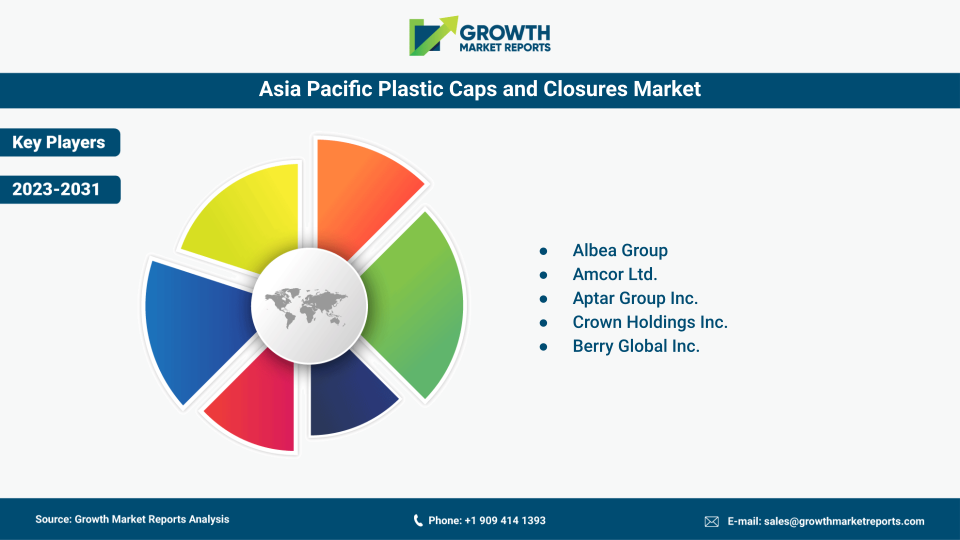
Key players include Berry Global Group, AptarGroup, Silgan Holdings, Bericap GmbH & Co. KG, Amcor plc, Closure Systems International, Guala Closures Group, and Mold-Rite Plastics.
Emerging trends include the development of eco-friendly and recyclable closures, customization for branding, smart packaging features like QR codes, and the adoption of advanced manufacturing technologies.
Distribution channels include direct sales, distributors/wholesalers, and online retail platforms. Hybrid models combining these channels are increasingly popular.
Major end-use industries include beverages, food, pharmaceuticals, personal care, and household products.
Polypropylene (PP), polyethylene (PE), and polystyrene (PS) are the most common materials, with bio-based and recyclable plastics gaining popularity due to sustainability trends.
The main product types are screw caps, snap-on caps, dispensing caps (such as flip-top and push-pull), and specialized closures like child-resistant and tamper-evident caps.
Key growth drivers include rising demand for convenience packaging, increasing consumption of packaged beverages, expanding food and pharmaceutical sectors, and the shift towards sustainable and lightweight packaging solutions.
Asia Pacific is the largest market, followed by North America and Europe. Asia Pacific accounted for approximately 38% of the global market value in 2024.
The Plastic Caps and Closures market is expected to grow at a CAGR of 5.2% from 2025 to 2033, reaching USD 76.7 billion by 2033.
As of 2024, the global Plastic Caps and Closures market size is valued at USD 48.6 billion.