Segments - by Product Type (Auxins, Gibberellins, Cytokinins, Abscisic Acid, Ethylene, Others), by Crop Type (Cereals & Grains, Fruits & Vegetables, Oilseeds & Pulses, Turf & Ornamentals, Others), by Formulation (Water-dispersible & Water-soluble Granules, Solutions, Wettable Powders), by Function (Growth Promoters, Growth Inhibitors), by Application Method (Foliar Spray, Soil Treatment, Seed Treatment, Others)
This report is updated with the latest market data and insights as of June 2026. Base year: 2025 | Forecast period: 2026-2034
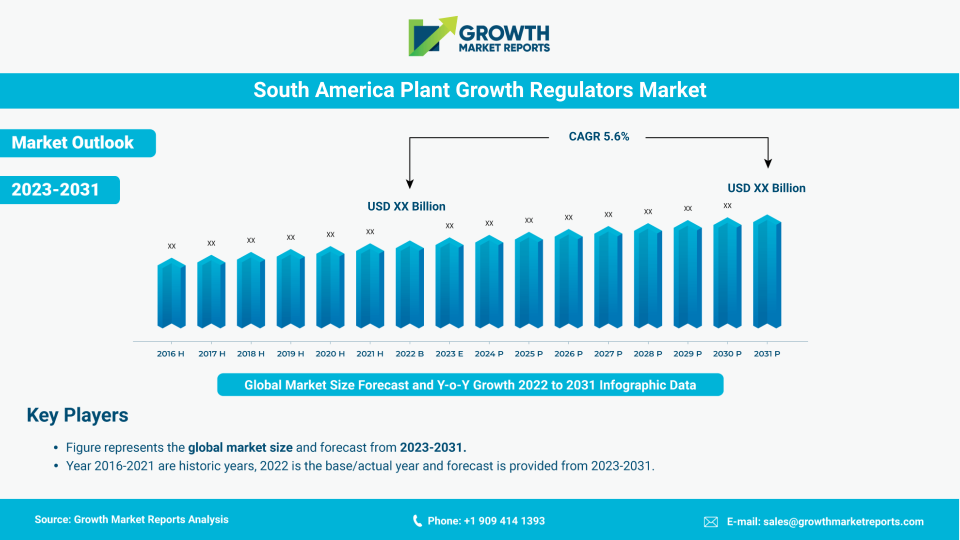
According to our latest research, the global Plant Growth Regulators market size in 2025 stands at USD 3.33 billion, exhibiting robust momentum with a CAGR of 7.0% during the forecast period. By 2034, the market is projected to reach USD 6.14 billion, reflecting significant expansion driven by a combination of technological advancements, increased demand for high-yield crops, and the adoption of sustainable agricultural practices. This growth is largely attributed to the rising emphasis on crop productivity and the need to optimize agricultural output amidst changing climatic conditions and limited arable land. Historical analysis covering 2019-2024 confirms a consistent upward trajectory, setting a strong foundation for accelerated gains through 2034.
One of the primary growth factors for the Plant Growth Regulators market is the increasing global population, which has led to heightened demand for food security and agricultural productivity. As arable land becomes scarcer and environmental concerns intensify, farmers and agribusinesses are increasingly turning to plant growth regulators to maximize crop yields and improve crop quality. These regulators play a crucial role in manipulating plant physiological processes, such as cell division, flowering, and fruiting, enabling growers to achieve better harvests even under suboptimal environmental conditions. The adoption of advanced agricultural techniques, including precision farming and integrated pest management, has further fueled the integration of plant growth regulators into mainstream farming practices. The broader category of plant growth regulator biostimulants is also gaining significant traction as farmers seek complementary tools that enhance soil biology and crop resilience in tandem with conventional regulators.
Another significant driver is the shift towards sustainable and eco-friendly agricultural solutions. With growing awareness about the adverse effects of chemical fertilizers and pesticides, both regulatory authorities and consumers are advocating for safer alternatives. Plant growth regulators, being less toxic and more targeted in their action, align well with these sustainability goals. Their ability to enhance crop resilience against biotic and abiotic stresses, such as drought, salinity, and pests, makes them invaluable in modern agriculture. Additionally, the increasing investment in research and development by key market players to develop novel formulations and application methods has expanded the utility and effectiveness of plant growth regulators across diverse crop types. Compounds such as paclobutrazol are attracting renewed commercial interest due to their proven efficacy in controlling vegetative growth and improving fruit yield consistency.
Government policies and support programs are also propelling the Plant Growth Regulators market. Many countries have introduced subsidies, training programs, and awareness campaigns to promote the use of plant growth regulators as part of their broader agricultural modernization strategies. These initiatives are particularly prominent in emerging economies, where governments are focused on boosting agricultural productivity to ensure food self-sufficiency. Furthermore, the growing trend of organic farming and the rising demand for high-value crops such as fruits, vegetables, and ornamentals have opened new avenues for the application of plant growth regulators, thereby contributing to market expansion. Research into strigolactone-based growth regulators is advancing rapidly, with early commercial applications showing promise for root architecture improvement and mycorrhizal symbiosis in multiple crop systems.
From a regional perspective, Asia Pacific dominates the Plant Growth Regulators market, accounting for the largest share in 2025, followed by North America and Europe. The Asia Pacific region's leadership is driven by the vast agricultural landscape, large population base, and increasing adoption of advanced farming inputs in countries such as China and India. North America's market is bolstered by technological innovation and a strong focus on high-value crop production, while Europe benefits from stringent regulations promoting sustainable agricultural practices. Latin America and the Middle East & Africa are also witnessing steady growth, fueled by expanding agricultural activities and increasing awareness of the benefits of plant growth regulators. Each region presents unique opportunities and challenges, shaping the overall dynamics of the global market.
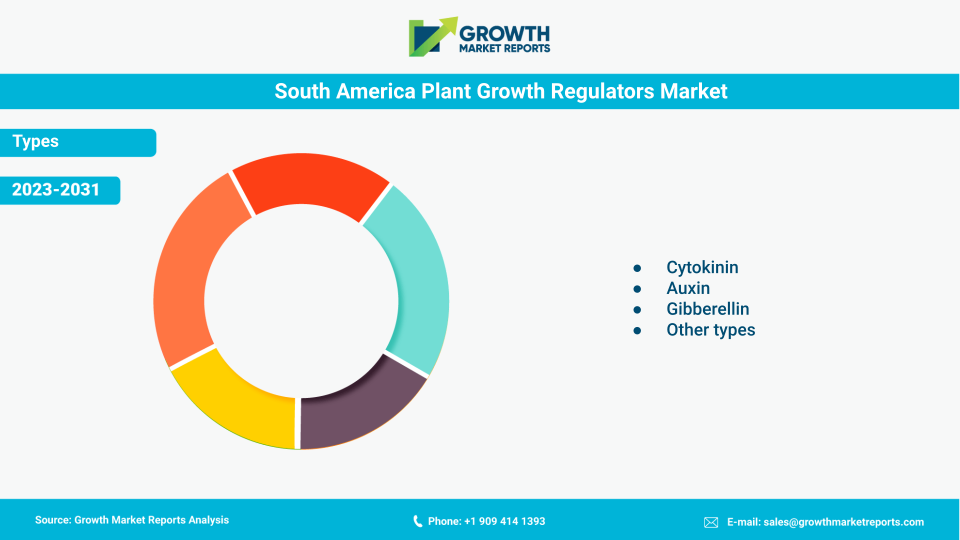
The Product Type segment in the Plant Growth Regulators market is categorized into Auxins, Gibberellins, Cytokinins, Abscisic Acid, Ethylene, and Others, each playing a distinct role in plant physiology and crop management. Auxins command the largest sub-segment share at approximately 27.5% in 2025, widely used for root initiation, fruit setting, and the prevention of premature fruit drop, making them indispensable for fruit and vegetable growers. Their ability to influence cell elongation and differentiation has led to their extensive use in tissue culture and horticultural practices. As growers increasingly seek to improve crop uniformity and quality, the demand for auxins continues to rise, particularly in regions with intensive fruit and vegetable cultivation.
Gibberellins represent the second-largest segment at around 24.0% of the 2025 market, primarily utilized to promote stem elongation, seed germination, and fruit enlargement. Their application is especially prominent in the production of grapes, citrus fruits, and rice, where they help overcome dormancy and enhance crop yield. The growing popularity of gibberellins can be attributed to their effectiveness in improving the commercial value of crops, as well as their compatibility with integrated crop management systems. As research advances, new gibberellin formulations are being developed to cater to specific crop requirements, further driving segment growth. Specialty inhibitor compounds, including those covered in the anti-lodging growth regulators category, are increasingly used alongside gibberellins to balance vegetative and reproductive growth in cereals.
Cytokinins hold approximately 18.5% of the market in 2025, playing a pivotal role in cell division, shoot initiation, and delay of leaf senescence, making them valuable for both food and ornamental crop production. Their use is expanding in the floriculture industry, where they are employed to enhance the visual appeal and shelf life of ornamental plants. Additionally, cytokinins are increasingly being incorporated into seed treatment and foliar spray products to boost crop establishment and vigor. The segment's expansion is supported by ongoing innovations in formulation technology, which have improved the stability and efficacy of cytokinin-based products. Manufacturers are also exploring advanced cytokinin PGR formulation strategies that combine synthetic and natural cytokinin sources for enhanced crop response.
Abscisic Acid and Ethylene represent specialized segments within the market, accounting for approximately 9.0% and 13.0% respectively in 2025. Abscisic acid is primarily used for its role in inducing dormancy and enhancing plant tolerance to environmental stresses such as drought and salinity. Its application is gaining traction in regions prone to erratic weather patterns, as growers seek solutions to safeguard crop yields under challenging conditions. Ethylene, on the other hand, is widely used to regulate fruit ripening and post-harvest processes, particularly in the storage and transportation of fruits and vegetables. The increasing focus on reducing post-harvest losses and improving supply chain efficiency has bolstered the demand for ethylene-based products. The Others category, comprising approximately 8.0% of the 2025 market, includes emerging compounds such as brassinosteroids, polyamines, and salicylic acid, which are attracting growing research and commercial interest. Collectively, these product types cater to a wide range of agricultural needs, ensuring the sustained growth of the market through 2034.
| Attributes | Details |
| Report Title | Plant Growth Regulators Market Research Report 2034 |
| By Product Type | Auxins, Gibberellins, Cytokinins, Abscisic Acid, Ethylene, Others |
| By Crop Type | Cereals & Grains, Fruits & Vegetables, Oilseeds & Pulses, Turf & Ornamentals, Others |
| By Formulation | Water-dispersible & Water-soluble Granules, Solutions, Wettable Powders |
| By Function | Growth Promoters, Growth Inhibitors |
| By Application Method | Foliar Spray, Soil Treatment, Seed Treatment, Others |
| Regions Covered | North America, Europe, APAC, Latin America, MEA |
| Base Year | 2025 |
| Historic Data | 2019-2024 |
| Forecast Period | 2026-2034 |
| Number of Pages | 269 |
| Number of Tables & Figures | 292 |
| Customization Available | Yes, the report can be customized as per your need. |
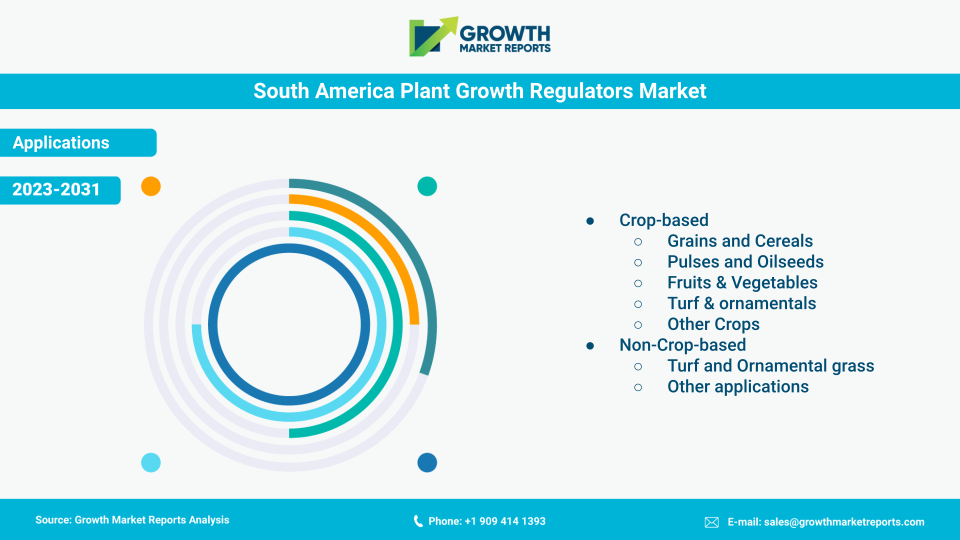
The Crop Type segment of the Plant Growth Regulators market encompasses Cereals & Grains, Fruits & Vegetables, Oilseeds & Pulses, Turf & Ornamentals, and Others. Cereals & Grains form the backbone of global food security, and the application of plant growth regulators in this segment focuses on enhancing yield, improving stress tolerance, and ensuring uniform maturation. As global demand for staple crops such as rice, wheat, and maize continues to rise, the use of growth regulators has become integral to meeting production targets and overcoming challenges posed by climate variability. Products such as chlormequat chloride PGR are widely applied in cereal crops to reduce lodging risk and improve harvest index, representing a mature and consistently demanded sub-category within this segment.
Fruits & Vegetables represent a high-value segment, driven by consumer demand for quality, appearance, and nutritional content. Plant growth regulators are extensively used to improve fruit set, size, color, and shelf life, thereby enhancing marketability and reducing post-harvest losses. The segment's growth is further fueled by the expansion of horticultural exports and the increasing adoption of controlled environment agriculture, where precise regulation of plant growth is critical for achieving desired outcomes. As urbanization accelerates and dietary preferences shift towards fresh produce, this segment is expected to witness sustained demand for plant growth regulators through the 2026-2034 forecast period.
The Oilseeds & Pulses segment is gaining prominence as global consumption of vegetable oils and protein-rich foods increases. Plant growth regulators are used to optimize flowering, pod setting, and seed development in crops such as soybean, sunflower, and chickpea. The need to improve yield stability and resilience against environmental stresses is driving the adoption of growth regulators in this segment, particularly in regions where oilseeds and pulses are key cash crops. Ongoing research aimed at developing crop-specific formulations is expected to further boost segment growth over the forecast horizon.
Turf & Ornamentals comprise a niche but rapidly expanding segment, fueled by the growing popularity of landscaping, golf courses, and urban green spaces. Plant growth regulators are used to control plant height, enhance color, and improve stress tolerance, making them essential for maintaining aesthetic standards in turf management and ornamental horticulture. The segment's growth is supported by increasing investments in urban infrastructure and the rising demand for eco-friendly landscaping solutions. As awareness of environmental sustainability grows, the use of plant growth regulators in this segment is expected to increase, offering new opportunities for market players through 2034.
The Formulation segment in the Plant Growth Regulators market includes Water-dispersible & Water-soluble Granules, Solutions, and Wettable Powders, each tailored to meet specific application needs and crop requirements. Water-dispersible & Water-soluble Granules are gaining popularity due to their ease of handling, storage stability, and compatibility with various application methods. These formulations offer precise dosing and uniform distribution, making them ideal for large-scale agricultural operations. Their growing adoption is driven by the need for efficient and user-friendly products that minimize waste and environmental impact.
Solutions represent a versatile formulation segment, widely used in foliar sprays, soil treatments, and seed treatments. Solutions are favored for their rapid absorption and immediate effect on plant physiology, making them suitable for time-sensitive applications such as stress mitigation and growth promotion. The development of concentrated and ready-to-use solution formulations has enhanced their appeal among farmers seeking convenience and reliability. As the demand for high-performance agricultural inputs rises, the solutions segment is expected to maintain a strong growth trajectory through the 2026-2034 period.
Wettable Powders offer another important formulation option, particularly valued for their long shelf life and cost-effectiveness. These powders can be easily reconstituted with water and applied using conventional spraying equipment, making them accessible to smallholder farmers and large-scale producers alike. The segment's growth is supported by ongoing innovations in powder formulation technology, aimed at improving dispersibility, solubility, and efficacy. As the market shifts towards more sustainable and environmentally friendly products, manufacturers are focusing on developing wettable powders with a reduced environmental footprint and enhanced crop safety.
The choice of formulation is influenced by factors such as crop type, application method, and local agro-climatic conditions. Manufacturers are increasingly investing in research and development to create tailored formulations that address specific grower needs, such as enhanced rainfastness, compatibility with other agrochemicals, and ease of application. This focus on innovation is expected to drive the evolution of the formulation segment, enabling the wider adoption of plant growth regulators across diverse agricultural systems between 2026 and 2034.
The Function segment of the Plant Growth Regulators market is divided into Growth Promoters and Growth Inhibitors, each serving distinct agronomic objectives. Growth Promoters, such as auxins, gibberellins, and cytokinins, are widely used to stimulate cell division, elongation, and differentiation, thereby enhancing crop establishment, vegetative growth, and reproductive development. Their application is critical in maximizing yield potential, improving crop uniformity, and accelerating harvest cycles. The increasing focus on high-yield and high-quality crop production is driving the demand for growth-promoting plant growth regulators, particularly in intensive farming systems across Asia Pacific, North America, and Latin America.
Growth Inhibitors, including abscisic acid and certain synthetic compounds, are used to regulate plant growth by suppressing unwanted vegetative growth, delaying senescence, and enhancing stress tolerance. These regulators are particularly valuable in crops where controlled growth is essential for optimizing resource allocation and improving harvest quality. For example, growth inhibitors are used to prevent lodging in cereals, enhance fruit ripening, and extend the shelf life of harvested produce. The specialty compound prohexadione calcium is earning increasing recognition as an effective growth inhibitor in apple orchards and other fruit tree systems, offering both quality and yield management benefits. The segment's growth is supported by the increasing adoption of integrated crop management practices, which emphasize the precise regulation of plant growth for maximum efficiency and sustainability.
The adoption of plant growth regulators by function is influenced by crop type, growth stage, and specific agronomic challenges. Farmers are increasingly seeking customized solutions that address their unique production goals, such as improving drought tolerance, enhancing fruit set, or controlling plant height. This trend has led to the development of combination products that offer both growth-promoting and growth-inhibiting effects, providing growers with greater flexibility and control over crop development. As the market continues to evolve through 2034, the function segment is expected to witness ongoing innovation and diversification.
Regulatory frameworks and safety considerations also play a crucial role in shaping the function segment. The use of certain growth inhibitors is subject to stringent regulations, particularly in regions with strict food safety standards. Manufacturers are investing in the development of safer, more environmentally friendly alternatives that comply with regulatory requirements and meet consumer expectations for sustainable agriculture. This focus on safety and sustainability is expected to drive the adoption of plant growth regulators across both conventional and organic farming systems during the 2026-2034 forecast window.
The Application Method segment in the Plant Growth Regulators market covers Foliar Spray, Soil Treatment, Seed Treatment, and Others, each offering unique advantages and challenges. Foliar Spray is the most widely adopted method, favored for its rapid absorption and immediate impact on plant physiology. This method allows for precise targeting of specific growth stages and is particularly effective in delivering growth regulators to crops with dense foliage or complex canopy structures. The increasing adoption of precision agriculture technologies, such as drone-based spraying and variable-rate application, has further enhanced the efficiency and effectiveness of foliar sprays entering the 2026-2034 forecast period.
Soil Treatment involves the application of plant growth regulators directly to the soil, where they are absorbed by plant roots and transported to various tissues. This method is commonly used for crops with extensive root systems or where uniform distribution of growth regulators is desired. Soil treatments are valued for their long-lasting effects and ability to improve root development, nutrient uptake, and overall plant vigor. The growing emphasis on soil health and sustainable farming practices is driving the adoption of soil-applied plant growth regulators, particularly in regions facing soil degradation and fertility challenges.
Seed Treatment is gaining popularity as a cost-effective and efficient method for delivering plant growth regulators at the earliest stages of crop development. By treating seeds with growth regulators before planting, farmers can enhance germination rates, seedling vigor, and early root establishment. This method is particularly beneficial in challenging environments, where rapid and uniform crop establishment is critical for achieving optimal yields. The increasing availability of advanced seed treatment technologies and formulations is expected to drive segment growth consistently through 2034.
Other application methods, such as trunk injection and drip irrigation, offer targeted delivery of plant growth regulators to specific plant parts or growth stages. These methods are gaining traction in high-value crops such as fruit trees and vineyards, where precision and efficiency are paramount. As the market continues to evolve, the development of novel application technologies and equipment is expected to expand the range of options available to growers, enabling them to optimize the use of plant growth regulators for maximum agronomic benefit.
The Plant Growth Regulators market presents significant opportunities for growth, driven by the increasing demand for sustainable and high-yield agricultural practices. The rising adoption of organic farming and integrated pest management systems has created a favorable environment for the use of plant growth regulators, which are perceived as safer and more environmentally friendly alternatives to conventional agrochemicals. The development of innovative formulations and application technologies, such as nano-encapsulation and controlled-release systems, offers new avenues for enhancing the efficacy and efficiency of plant growth regulators. Additionally, the expansion of agricultural activities in emerging economies and the growing demand for high-value crops such as fruits, vegetables, and ornamentals are expected to create lucrative opportunities for market players through 2034.
Technological advancements and increased investment in research and development are further fueling opportunities in the Plant Growth Regulators market. The integration of plant growth regulators with precision agriculture technologies, such as remote sensing, data analytics, and automated application systems, is enabling growers to optimize input use and maximize crop performance. The development of crop-specific and region-specific formulations is also opening new markets and applications, particularly in areas facing unique agronomic challenges. As consumer preferences shift towards sustainably produced and high-quality food products, the demand for plant growth regulators is expected to rise steadily, creating new growth prospects for manufacturers and suppliers across the 2026-2034 period.
Despite the promising outlook, the Plant Growth Regulators market faces several restraining factors, including stringent regulatory frameworks and safety concerns. The use of certain plant growth regulators is subject to strict approval processes and residue limits, particularly in regions with high food safety standards such as Europe and North America. Compliance with these regulations can increase development costs and time-to-market for new products, posing challenges for manufacturers. Additionally, the lack of awareness and technical knowledge among smallholder farmers in developing regions can hinder market penetration. Addressing these challenges will require concerted efforts from industry stakeholders, including investment in education, training, and regulatory compliance to sustain long-term growth.
The Asia Pacific region leads the Plant Growth Regulators market, accounting for approximately 38% of the global market share in 2025, with a market size of approximately USD 1.27 billion. This dominance is driven by the region's vast agricultural landscape, high population density, and increasing adoption of advanced farming inputs in countries such as China, India, and Japan. The region is characterized by a diverse range of crops and agro-climatic conditions, creating a strong demand for plant growth regulators tailored to specific crop needs. The rapid urbanization and rising disposable incomes in Asia Pacific are also fueling the demand for high-value crops, further boosting market growth through 2034.
North America holds the second-largest share, with a market size of approximately USD 0.83 billion in 2025. The region's growth is supported by technological innovation, a strong focus on high-value crop production, and the widespread adoption of precision agriculture practices. The United States and Canada are the major contributors, driven by large-scale commercial farming and the presence of leading market players. The North American market is expected to grow at a CAGR of approximately 6.5% during the forecast period, reaching approximately USD 1.47 billion by 2034. The region's stringent regulatory environment and emphasis on sustainable agriculture are shaping the adoption patterns of plant growth regulators in a positive direction.
Europe accounts for a significant share of the global market, with a market size of approximately USD 0.65 billion in 2025. The region's growth is driven by stringent environmental regulations, strong support for organic and sustainable farming, and a well-established agricultural infrastructure. Key markets include Germany, France, and the United Kingdom, where the adoption of plant growth regulators is supported by government policies and research initiatives. Latin America and Middle East & Africa are also witnessing steady growth, with market sizes of approximately USD 0.35 billion and USD 0.23 billion respectively in 2025. These regions are characterized by expanding agricultural activities, increasing awareness of the benefits of plant growth regulators, and rising investments in modern farming technologies. Together, these regional dynamics are shaping the global outlook for the Plant Growth Regulators market through 2034.
The Plant Growth Regulators market is characterized by intense competition, with a mix of global and regional players vying for market share through product innovation, strategic partnerships, and geographic expansion. Leading companies are investing heavily in research and development to create advanced formulations and application technologies that meet the evolving needs of modern agriculture. The competitive landscape is further shaped by mergers and acquisitions, as companies seek to strengthen their product portfolios and expand their presence in emerging markets. The focus on sustainability and regulatory compliance is driving the development of safer, more environmentally friendly products, giving rise to new entrants and niche players in the market as of 2025.
Innovation is a key differentiator in the Plant Growth Regulators market, with companies leveraging advances in biotechnology, nanotechnology, and data analytics to enhance product performance and value proposition. The integration of plant growth regulators with precision agriculture tools and digital farming platforms is enabling companies to offer comprehensive crop management solutions that deliver measurable benefits to growers. Strategic collaborations with research institutions, universities, and government agencies are also playing a crucial role in driving innovation and knowledge transfer within the industry, accelerating the pipeline of next-generation plant growth regulator products.
Market leaders are increasingly focusing on expanding their global footprint through targeted investments in high-growth regions such as Asia Pacific and Latin America. These regions offer significant growth potential due to their large agricultural base, rising adoption of modern farming practices, and supportive government policies. Companies are also investing in capacity expansion, distribution network optimization, and customer education initiatives to strengthen their market position and enhance brand loyalty. The ability to offer customized solutions that address specific crop, climate, and regulatory requirements is emerging as a key success factor in the competitive landscape heading into the 2026-2034 forecast period.
Some of the major companies operating in the Plant Growth Regulators market include BASF SE, Bayer AG, Syngenta AG, FMC Corporation, UPL Limited, Corteva Agriscience, Sumitomo Chemical Co., Ltd., Nufarm Limited, Valent BioSciences LLC, and Adama Agricultural Solutions Ltd.. BASF SE and Bayer AG are recognized for their strong research capabilities and diverse product portfolios, offering a wide range of plant growth regulators for various crop types and applications. Syngenta AG and FMC Corporation are known for their focus on innovation and sustainability, with a strong emphasis on developing environmentally friendly formulations and application technologies. UPL Limited and Corteva Agriscience have established themselves as key players in emerging markets, leveraging their extensive distribution networks and customer-centric approach to drive growth.
Sumitomo Chemical, Nufarm, and Valent BioSciences are notable for their investments in biotechnology and precision agriculture, enabling them to offer advanced solutions that address the challenges of modern farming. Adama Agricultural Solutions, with its strong global generics and specialty portfolio, is expanding its plant growth regulator offerings to capture growing demand in both developed and emerging markets. Additional participants such as Gowan Company, Helena Agri-Enterprises, Fine Americas, Arysta LifeScience, and regional specialists in Asia and the Middle East are actively engaged in strategic collaborations, capacity expansions, and product launches to strengthen their market position. The dynamic and competitive nature of the Plant Growth Regulators market is expected to drive continued innovation and consolidation through 2034.
The Plant Growth Regulators market has been segmented on the basis of
Yes. The report can be customized to meet specific research requirements. Customization options include additional country-level or sub-regional analysis, expanded coverage of specific product types or crop categories, competitive benchmarking of selected companies, supply chain analysis, regulatory landscape assessments for targeted geographies, and custom forecast scenarios. Clients can also request integration of proprietary primary research data. Please contact our research team to discuss your specific requirements and obtain a tailored proposal.
The global Plant Growth Regulators market is served by a mix of multinational agrochemical leaders and specialized regional companies. Prominent players include BASF SE, Syngenta AG, Bayer AG, Corteva Agriscience, FMC Corporation, Nufarm Limited, UPL Limited, Sumitomo Chemical Co., Ltd., Valent BioSciences LLC, and Adama Agricultural Solutions Ltd. These companies compete on the basis of product innovation, formulation technology, geographic reach, and regulatory expertise. Additional notable participants include Gowan Company, Helena Agri-Enterprises, Fine Americas, Arysta LifeScience, and regional specialists in Asia and the Middle East.
Key opportunities include the accelerating adoption of organic and integrated farming systems, the development of novel bio-based and nano-formulated products, and the rapid expansion of agricultural activity in Asia Pacific, Latin America, and Africa. The integration of plant growth regulators with precision agriculture platforms and digital crop advisory tools also opens significant avenues for growth. Main challenges include stringent and evolving regulatory frameworks in Europe and North America that can delay product approvals, limited technical awareness among smallholder farmers in developing regions, and potential concerns about residue limits and environmental safety that require ongoing investment in compliance and product stewardship.
Plant growth regulators are applied through four primary methods: Foliar Spray, Soil Treatment, Seed Treatment, and Others (including trunk injection and drip irrigation). Foliar spray is the most widely adopted method due to its rapid absorption and targeted delivery at specific growth stages, increasingly enhanced by drone-based and variable-rate application technologies. Soil treatment allows for long-lasting root-level absorption and is valued for improving soil health. Seed treatment is gaining momentum as a cost-efficient way to boost germination rates and early crop vigor. Specialty methods such as trunk injection are used in high-value tree crops for precision nutrient delivery.
The primary formulation types are Water-dispersible and Water-soluble Granules, Solutions, and Wettable Powders. Water-dispersible and water-soluble granules offer ease of handling and precise dosing, making them popular for large-scale operations. Solutions are favored for their rapid plant absorption and are widely used in foliar sprays and seed treatments. Wettable powders provide a cost-effective option with long shelf life, suitable for both smallholder farmers and commercial producers. Manufacturers continue to invest in new formulation technologies, including nano-encapsulation and controlled-release systems, to improve product efficacy and environmental compatibility.
Fruits and Vegetables represent the highest-value segment, where plant growth regulators are used to improve fruit set, size, color, and shelf life. Cereals and Grains are another major beneficiary, with growth regulators enhancing yield, stress tolerance, and uniform maturation in staple crops such as rice, wheat, and maize. Oilseeds and Pulses benefit through optimized flowering, pod setting, and seed development. Turf and Ornamentals are a niche but growing segment, where regulators control plant height and enhance visual quality. Each crop category presents distinct and expanding opportunities for plant growth regulator applications.
The market is segmented into Auxins, Gibberellins, Cytokinins, Abscisic Acid, Ethylene, and Others. Auxins are used primarily for root initiation, fruit set, and prevention of premature fruit drop. Gibberellins promote stem elongation, seed germination, and fruit enlargement, particularly in grapes and citrus. Cytokinins support cell division, shoot initiation, and delay of leaf senescence in both food and ornamental crops. Abscisic acid helps induce dormancy and improves plant tolerance to drought and salinity. Ethylene regulates fruit ripening and post-harvest processes, reducing losses in the supply chain. Collectively, these product types address a broad spectrum of agronomic needs.
Asia Pacific is the dominant region, accounting for approximately 38% of the global market in 2025, with a market value of around USD 1.27 billion. This leadership reflects the region's vast agricultural base, large population, and rapid adoption of advanced crop inputs in China, India, and Southeast Asia. North America holds the second-largest share at around 25%, valued at roughly USD 0.83 billion in 2025, followed by Europe at approximately 19.5%. Latin America and the Middle East & Africa are smaller but fast-growing markets, supported by expanding agricultural activities and rising awareness of plant growth regulators.
Key growth drivers include the rising global population and the associated need to boost agricultural productivity on shrinking arable land, increased adoption of sustainable and eco-friendly farming practices, growing investment in research and development by leading agrochemical companies, and supportive government programs promoting modern agricultural inputs. The integration of plant growth regulators with precision farming tools, drone-based application systems, and digital crop management platforms is also accelerating market penetration across both developed and emerging economies.
According to our latest research, the global Plant Growth Regulators market size stands at USD 3.33 billion in 2025, the base year of this study. Growing at a CAGR of 7.0% across the 2026-2034 forecast period, the market is projected to reach approximately USD 6.14 billion by 2034. This robust expansion is driven by rising food security imperatives, the adoption of precision agriculture, and the shift toward sustainable crop management solutions globally.