plano sunglasses Market Research Report 2033

plano sunglasses Market Research Report 2033

Segments - by Product Type (Polarized, Non-Polarized, Photochromic, Mirrored, Others), by Frame Material (Plastic, Metal, Nylon, Acetate, Others), by Lens Material (Glass, Polycarbonate, CR-39, Others), by Distribution Channel (Online Stores, Optical Retailers, Supermarkets/Hypermarkets, Specialty Stores, Others), by End-User (Men, Women, Children, Unisex)

https://growthmarketreports.com/Debadatta
Author : Debadatta Patel
https://growthmarketreports.com/Vaibhav
Fact-checked by : V. Chandola
https://growthmarketreports.com/Shruti
Editor : Shruti Bhat

Upcoming | Report ID :CG-3528 | 4.2 Rating | 33 Reviews | 278 Pages | Format : Docx PDF

Report Description


plano sunglasses Market Outlook

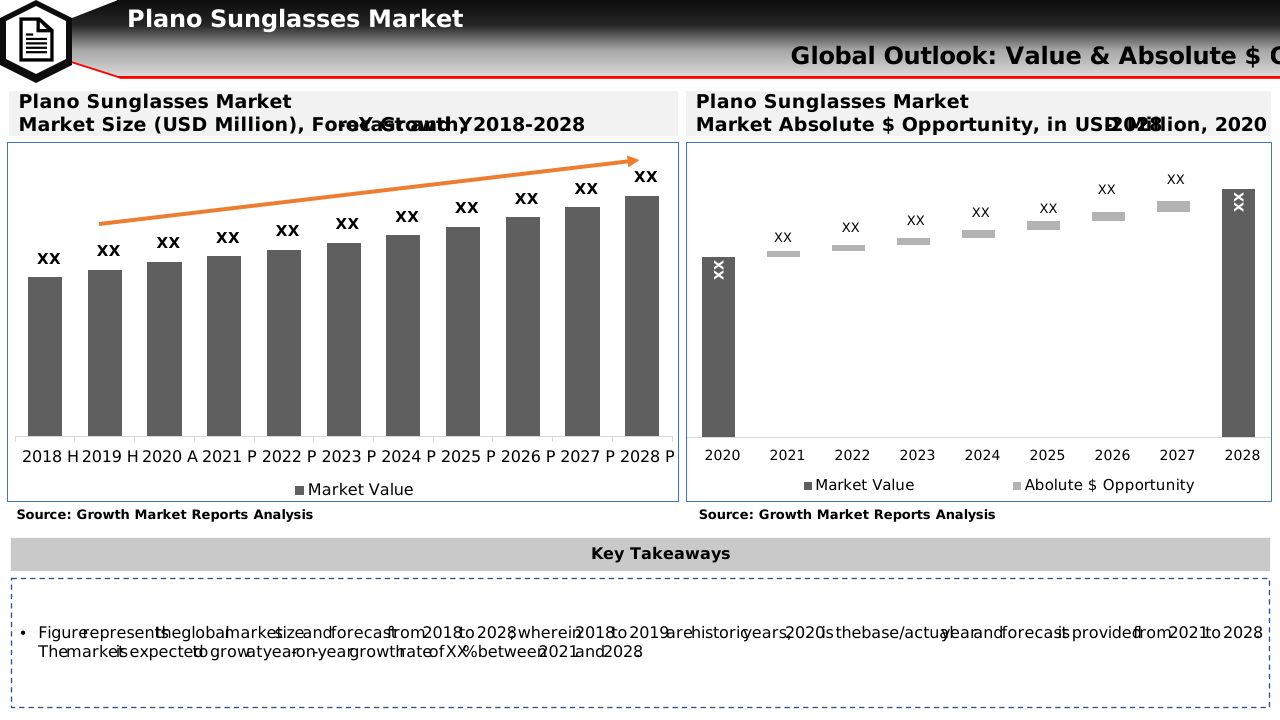
According to the latest research, the global plano sunglasses market size reached USD 22.4 billion in 2024, reflecting robust demand across consumer segments and geographies. The market is anticipated to grow at a CAGR of 6.1% from 2025 to 2033, ultimately reaching a forecasted value of USD 38.1 billion by 2033. This remarkable growth is driven by increasing awareness of eye protection, fashion trends, and the proliferation of digital channels, which have expanded consumer access and product variety worldwide.

One of the primary growth factors for the plano sunglasses market is the rising global awareness regarding the harmful effects of ultraviolet (UV) radiation on eye health. Consumers are increasingly educated about the risks of prolonged UV exposure, such as cataracts and other ocular diseases, which has led to a surge in demand for high-quality sunglasses, especially those with advanced lens technologies. The market has also benefited from public health campaigns and endorsements by ophthalmologists, which have reinforced the importance of wearing sunglasses even for individuals without prescription needs. This shift in consumer behavior is further supported by regulatory standards mandating UV protection in eyewear, ensuring that plano sunglasses deliver both style and safety.

Fashion and lifestyle trends have also played a pivotal role in the expansion of the plano sunglasses market. Sunglasses have evolved beyond their functional purpose to become a key accessory in personal style statements. The influence of celebrities, social media personalities, and fashion designers has led to frequent launches of new designs, collaborations, and limited-edition collections, fueling a desire for product differentiation among consumers. The market has seen a notable shift towards premium and luxury segments, as well as customization options that cater to individual tastes. This dynamic interplay between function and fashion has broadened the appeal of plano sunglasses to a diverse demographic, from young adults to older consumers seeking both protection and aesthetics.

Technological advancements and the expansion of distribution channels have further accelerated market growth. Innovations in lens materials, frame designs, and manufacturing processes have resulted in lighter, more durable, and aesthetically appealing sunglasses. The rise of online retail platforms has democratized access to global brands, enabling consumers to compare features, read reviews, and make informed purchasing decisions from the comfort of their homes. Additionally, omnichannel strategies adopted by major brands have integrated online and offline experiences, enhancing convenience and customer engagement. These developments have contributed to the steady growth trajectory of the plano sunglasses market, fostering competition and innovation across all segments.

As the plano sunglasses market continues to evolve, there is a growing interest in sustainable materials, particularly in the production of lenses. One such innovation is the use of Plant Fiber Sunglass Lens, which offers an eco-friendly alternative to traditional lens materials. These lenses are crafted from renewable plant fibers, reducing the carbon footprint associated with eyewear production. The adoption of plant fiber lenses aligns with the increasing consumer demand for sustainable and environmentally responsible products. Not only do these lenses provide the necessary UV protection, but they also contribute to a brand's green credentials, appealing to environmentally conscious consumers. As more brands explore sustainable options, plant fiber lenses could become a staple in the future of eyewear design.

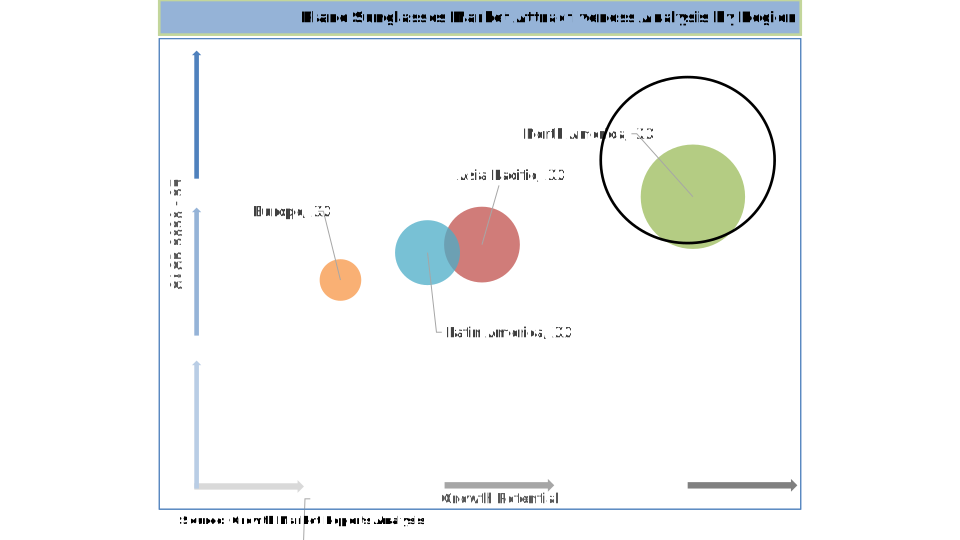
Regionally, Asia Pacific has emerged as the fastest-growing market for plano sunglasses, driven by rising disposable incomes, increasing urbanization, and a burgeoning middle-class population. North America and Europe continue to dominate in terms of market share, owing to established fashion industries, high consumer awareness, and the presence of leading eyewear brands. Meanwhile, Latin America and the Middle East & Africa are witnessing steady growth, supported by expanding retail networks and growing interest in lifestyle accessories. The interplay of these regional dynamics underscores the global potential of the plano sunglasses market, with each region contributing unique drivers and opportunities for industry stakeholders.

Global plano sunglasses Industry Outlook

Product Type Analysis

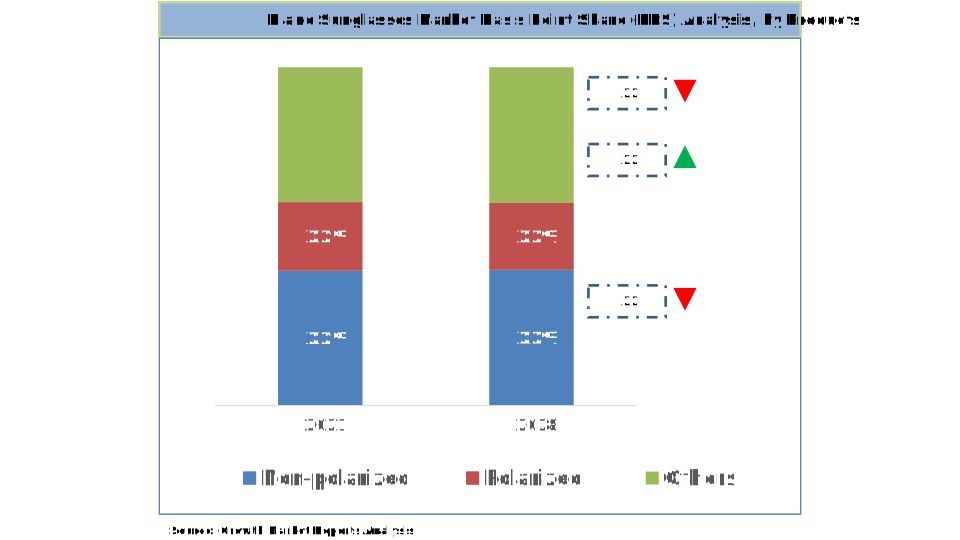
The product type segment of the plano sunglasses market is characterized by a diverse range of offerings, including polarized, non-polarized, photochromic, mirrored, and other specialty lenses. Polarized sunglasses have gained significant traction among consumers due to their ability to reduce glare and enhance visual clarity, particularly for outdoor activities such as driving, fishing, and sports. The adoption of polarized lenses is further supported by rising safety concerns and the increasing popularity of outdoor recreational activities. Non-polarized sunglasses, while traditionally popular for everyday wear, are now facing competition from advanced lens technologies that offer superior protection and comfort.

Photochromic sunglasses, which automatically adjust their tint based on ambient light conditions, are gaining momentum among consumers who seek versatility and convenience. These lenses are particularly popular in regions with variable weather conditions, as they eliminate the need for multiple pairs of eyewear. Mirrored sunglasses, known for their reflective coatings and fashionable appearance, continue to attract a younger demographic seeking bold, statement-making accessories. The market has also witnessed the introduction of hybrid lenses that combine multiple features, such as polarization and photochromic properties, to cater to evolving consumer preferences.

The continuous innovation in lens technologies has enabled manufacturers to differentiate their product offerings and target niche markets. For instance, blue light blocking sunglasses are gaining popularity among digital device users, while sports-specific sunglasses are designed to meet the unique needs of athletes. The trend towards customization and personalization has also driven the development of interchangeable lenses and modular frame systems, allowing consumers to tailor their sunglasses to specific activities or fashion preferences. This diversification within the product type segment has contributed to the overall growth and resilience of the plano sunglasses market.

Furthermore, the increasing influence of fashion trends and celebrity endorsements has led to frequent product launches and collaborations within the plano sunglasses segment. Leading brands are investing in marketing campaigns and influencer partnerships to generate buzz around new collections and limited-edition releases. This heightened level of consumer engagement has fostered brand loyalty and repeat purchases, particularly among younger demographics. As a result, the product type segment remains a key battleground for innovation, differentiation, and market expansion.

The rise of Luxury Sunglasses has been a significant trend in the plano sunglasses market, driven by consumer aspirations for exclusivity and high-quality craftsmanship. Luxury sunglasses are often characterized by their use of premium materials, intricate designs, and association with prestigious fashion houses. These sunglasses not only serve as a functional accessory but also as a status symbol, reflecting the wearer's style and sophistication. The demand for luxury sunglasses is further fueled by celebrity endorsements and limited-edition releases, which create a sense of urgency and desire among consumers. As the market for luxury eyewear expands, brands are increasingly focusing on personalization and bespoke services to cater to discerning customers who seek unique and exclusive products.

Report Scope

Attributes Details
Report Title plano sunglasses Market Research Report 2033
By Product Type Polarized, Non-Polarized, Photochromic, Mirrored, Others
By Frame Material Plastic, Metal, Nylon, Acetate, Others
By Lens Material Glass, Polycarbonate, CR-39, Others
By Distribution Channel Online Stores, Optical Retailers, Supermarkets/Hypermarkets, Specialty Stores, Others
By End-User Men, Women, Children, Unisex
Regions Covered North America, Europe, APAC, Latin America, MEA
Base Year 2024
Historic Data 2018-2023
Forecast Period 2025-2033
Number of Pages 278
Number of Tables & Figures 364
Customization Available Yes, the report can be customized as per your need.

Frame Material Analysis

The frame material segment in the plano sunglasses market includes plastic, metal, nylon, acetate, and other emerging materials. Plastic frames dominate the market due to their affordability, lightweight nature, and versatility in design. Advances in injection molding and 3D printing have enabled manufacturers to produce intricate shapes and vibrant colors, catering to a wide array of consumer tastes. Plastic frames are particularly popular among fashion-conscious consumers and children, as they offer comfort without compromising on style or durability.

Metal frames, typically made from stainless steel, titanium, or aluminum alloys, are favored for their strength, durability, and premium appearance. They are often associated with classic and sophisticated designs, appealing to professionals and older consumers seeking timeless elegance. The use of hypoallergenic and corrosion-resistant metals has further enhanced the appeal of metal frames, especially in regions with humid climates or for individuals with sensitive skin. Metal frames are also increasingly being combined with other materials, such as acetate or wood, to create hybrid designs that offer both functionality and aesthetic appeal.

Nylon frames have carved a niche in the sports and performance eyewear segment due to their exceptional flexibility, impact resistance, and lightweight properties. These frames are ideal for active individuals who require sunglasses that can withstand rigorous use and environmental stress. NylonÂ’s ability to retain its shape and color over time makes it a preferred choice for outdoor enthusiasts and athletes. The growing popularity of adventure sports and fitness activities has contributed to the rising demand for nylon-framed plano sunglasses.

Acetate frames, derived from plant-based materials, are gaining traction among environmentally conscious consumers and luxury brands. Acetate offers a unique combination of strength, flexibility, and vibrant coloration, making it a favorite for high-end and designer sunglasses. The materialÂ’s eco-friendly credentials align with the increasing consumer preference for sustainable products, prompting manufacturers to expand their acetate frame offerings. Other innovative materials, such as carbon fiber, wood, and recycled plastics, are also being explored to address the evolving demands of the market and differentiate product portfolios.

Lens Material Analysis

The lens material segment is a critical determinant of the performance, durability, and price of plano sunglasses. Glass lenses are renowned for their superior optical clarity and scratch resistance, making them a preferred choice for consumers who prioritize visual performance. However, glass lenses are heavier and more prone to shattering compared to other materials, which limits their adoption in sports and active lifestyle segments. Despite these limitations, glass lenses remain popular in premium and luxury sunglasses, where optical quality is a key selling point.

In addition to sunglasses, the market for Luxury Optical Frames is experiencing robust growth, driven by similar consumer preferences for high-end, stylish eyewear. Luxury optical frames are often crafted from superior materials such as titanium, acetate, and even precious metals, offering both durability and aesthetic appeal. These frames are designed to complement a wide range of fashion styles, making them a versatile choice for fashion-conscious individuals. The emphasis on craftsmanship and attention to detail in luxury optical frames sets them apart from mass-market options, appealing to consumers who value quality and exclusivity. As eyewear becomes an integral part of personal style, the demand for luxury optical frames is expected to continue its upward trajectory, with brands investing in innovative designs and collaborations with renowned designers.

Polycarbonate lenses have emerged as the dominant material in the plano sunglasses market due to their lightweight, impact-resistant, and shatterproof properties. These lenses are particularly well-suited for sports, outdoor activities, and childrenÂ’s eyewear, where safety and comfort are paramount. PolycarbonateÂ’s ability to be easily tinted and molded into various shapes has enabled manufacturers to offer a wide range of styles and functionalities. The affordability of polycarbonate lenses has further contributed to their widespread adoption across different price segments.

CR-39 lenses, also known as plastic or resin lenses, strike a balance between optical clarity, weight, and cost. They are lighter than glass and offer good scratch resistance, making them a popular choice for everyday wear. CR-39 lenses can be easily coated with anti-reflective, UV-blocking, or mirrored finishes, enhancing their versatility and appeal. The ongoing development of high-index plastic lenses, which provide thinner and lighter alternatives for high-prescription needs, is also influencing the plano sunglasses market.

Other lens materials, such as Trivex and advanced composites, are gaining attention for their unique blend of optical performance, durability, and lightweight properties. These materials are being adopted in niche segments, such as military and tactical eyewear, where performance under extreme conditions is critical. The continuous evolution of lens materials, driven by advancements in material science and consumer demand for enhanced functionality, is expected to shape the future trajectory of the plano sunglasses market.

Distribution Channel Analysis

The distribution channel landscape for plano sunglasses is undergoing significant transformation, with online stores, optical retailers, supermarkets/hypermarkets, specialty stores, and other channels vying for market share. Online stores have witnessed exponential growth, driven by the convenience of home delivery, extensive product assortments, and competitive pricing. E-commerce platforms have democratized access to global brands, enabling consumers to discover and purchase the latest styles regardless of geographic location. The integration of virtual try-on technologies and augmented reality has further enhanced the online shopping experience, reducing barriers to purchase and increasing conversion rates.

Optical retailers remain a cornerstone of the plano sunglasses market, offering personalized fitting, professional advice, and after-sales services. These brick-and-mortar outlets are particularly valued for high-value purchases, such as premium and prescription sunglasses, where expert guidance is essential. Optical retailers are increasingly adopting omnichannel strategies, integrating online booking, virtual consultations, and in-store experiences to cater to evolving consumer preferences. This hybrid approach has enabled them to retain customer loyalty in an increasingly digital marketplace.

Supermarkets and hypermarkets offer a cost-effective and accessible option for consumers seeking affordable, everyday sunglasses. These channels benefit from high foot traffic and impulse purchases, making them ideal for mass-market brands and seasonal promotions. However, the product range and quality offered in these outlets are often limited compared to specialty stores and optical retailers. Specialty stores, on the other hand, focus on curated selections, exclusive brands, and personalized service, attracting discerning consumers who prioritize quality and uniqueness.

Other distribution channels, such as duty-free shops, pop-up stores, and direct-to-consumer (DTC) brand outlets, are gaining popularity as brands seek to diversify their sales strategies and enhance brand visibility. The rise of experiential retail, where consumers can engage with products in immersive environments, is also influencing the distribution landscape. The ongoing convergence of online and offline channels, supported by data analytics and customer relationship management tools, is expected to drive further innovation and competition in the plano sunglasses market.

End-User Analysis

The end-user segment for plano sunglasses encompasses men, women, children, and unisex categories, each with distinct preferences and purchasing behaviors. The menÂ’s segment has traditionally dominated the market, driven by a preference for functional, durable, and classic styles. However, the segment is evolving, with increasing demand for fashion-forward designs, sports-specific sunglasses, and technologically advanced features such as polarization and blue light blocking. Male consumers are also showing greater willingness to invest in premium and luxury brands, reflecting broader lifestyle and status aspirations.

The womenÂ’s segment is characterized by a strong emphasis on aesthetics, color variety, and brand affiliation. Female consumers are more likely to own multiple pairs of sunglasses to match different outfits and occasions, driving higher purchase frequency and engagement with fashion trends. Collaborations with fashion designers, celebrities, and influencers have been particularly effective in capturing the attention of this demographic. The growing focus on womenÂ’s health and wellness, including eye protection, has further contributed to the segmentÂ’s expansion.

ChildrenÂ’s sunglasses represent a high-growth opportunity within the plano sunglasses market, as parents become increasingly aware of the importance of early eye protection. The segment is supported by educational campaigns, pediatrician recommendations, and the availability of child-friendly designs featuring popular characters and vibrant colors. Safety, comfort, and durability are key considerations for this demographic, prompting manufacturers to invest in lightweight, flexible materials and secure fitting mechanisms.

The unisex segment caters to consumers seeking versatile, gender-neutral designs that prioritize functionality and universal appeal. This segment has gained traction among millennials and Gen Z consumers who value inclusivity and minimalism. Unisex sunglasses are often characterized by classic shapes, neutral colors, and understated branding, making them suitable for a wide range of occasions and personal styles. The growing acceptance of gender-fluid fashion is expected to further drive demand for unisex plano sunglasses in the coming years.

Opportunities & Threats

The plano sunglasses market is poised for significant opportunities as technological innovation and shifting consumer preferences continue to reshape the industry landscape. The integration of smart technologies, such as augmented reality (AR) and heads-up displays, presents a new frontier for product differentiation and value addition. Brands that can seamlessly combine fashion, functionality, and digital connectivity are likely to capture the attention of tech-savvy consumers and early adopters. Additionally, the growing demand for sustainable and eco-friendly products offers a compelling opportunity for manufacturers to develop sunglasses using recycled materials, biodegradable frames, and environmentally responsible packaging. These initiatives not only align with global sustainability goals but also enhance brand reputation and customer loyalty.

Emerging markets, particularly in Asia Pacific and Latin America, represent untapped growth potential for the plano sunglasses market. Rising disposable incomes, urbanization, and increasing awareness of eye health are driving demand for quality eyewear in these regions. Strategic partnerships with local influencers, targeted marketing campaigns, and the expansion of distribution networks can help brands establish a strong foothold in these high-growth markets. The proliferation of digital channels and mobile commerce further facilitates market entry and customer engagement, enabling brands to reach diverse consumer segments with tailored offerings.

Despite these opportunities, the plano sunglasses market faces several restraining factors that could impact growth. Intense competition and price sensitivity, particularly in the mass-market segment, have led to margin pressures and commoditization of basic sunglasses. Counterfeit products and unauthorized replicas pose a significant threat to brand integrity and consumer trust, especially in emerging markets with weaker regulatory enforcement. Additionally, economic uncertainties and fluctuating consumer spending patterns can affect discretionary purchases, particularly in the premium and luxury segments. To mitigate these risks, industry players must invest in brand protection, quality assurance, and differentiated value propositions that resonate with target consumers.

Regional Outlook

The Asia Pacific region is the fastest-growing market for plano sunglasses, with a market size of USD 7.1 billion in 2024 and a projected CAGR of 8.2% through 2033. This growth is driven by rising disposable incomes, rapid urbanization, and increasing awareness of eye health among the burgeoning middle-class population. Key markets such as China, India, and Southeast Asia are witnessing a surge in demand for both affordable and premium sunglasses, supported by expanding retail networks and the proliferation of online channels. Local and international brands are investing heavily in marketing, product innovation, and distribution to capture the attention of young, fashion-conscious consumers.

North America remains a dominant player in the plano sunglasses market, accounting for USD 6.5 billion in 2024. The region benefits from high consumer awareness, a well-established fashion industry, and a strong presence of leading eyewear brands. The United States, in particular, is a trendsetter in terms of design, technology, and marketing strategies. The market is characterized by a high degree of product differentiation, with consumers seeking advanced features such as polarization, blue light blocking, and smart eyewear integration. Retailers are leveraging omnichannel strategies to enhance customer engagement and drive sales, while also focusing on sustainability and ethical sourcing to align with evolving consumer values.

Europe is another key region, with a market size of USD 5.3 billion in 2024, renowned for its strong fashion heritage and emphasis on quality and craftsmanship. Countries such as Italy, France, and Germany are home to some of the worldÂ’s most prestigious eyewear brands, driving innovation and setting global trends. The European market is characterized by a preference for premium and luxury sunglasses, as well as a growing interest in sustainable and eco-friendly products. Strict regulatory standards regarding UV protection and product safety further reinforce consumer trust and market growth. Meanwhile, Latin America and the Middle East & Africa collectively account for USD 3.5 billion in 2024, with growth driven by expanding retail infrastructure, rising fashion consciousness, and increasing investment in healthcare awareness campaigns.

plano sunglasses Market Statistics

Competitor Outlook

The competitive landscape of the plano sunglasses market is highly dynamic, characterized by the presence of established global brands, emerging regional players, and innovative startups. Leading companies are leveraging their extensive distribution networks, strong brand equity, and continuous investment in research and development to maintain their market dominance. Product innovation, celebrity endorsements, and strategic collaborations are key strategies employed by major brands to capture consumer attention and drive brand loyalty. The market is also witnessing increased consolidation, with mergers and acquisitions enabling companies to expand their product portfolios, enter new markets, and enhance operational efficiencies.

Brand differentiation and customer experience are becoming critical success factors in the highly competitive plano sunglasses market. Companies are focusing on delivering unique value propositions, such as customizable designs, sustainable materials, and advanced lens technologies, to stand out in a crowded marketplace. The rise of direct-to-consumer (DTC) brands has disrupted traditional retail models, enabling companies to engage directly with consumers, gather real-time feedback, and offer personalized shopping experiences. Social media and digital marketing play a pivotal role in brand building and customer acquisition, particularly among younger demographics who are highly influenced by online trends and influencer endorsements.

Counterfeit products and unauthorized replicas remain a persistent challenge for established brands, particularly in emerging markets where regulatory enforcement may be weaker. Companies are investing in anti-counterfeiting technologies, intellectual property protection, and consumer education campaigns to safeguard their brand reputation and ensure product authenticity. Sustainability and corporate social responsibility are also gaining importance, with consumers increasingly favoring brands that demonstrate a commitment to ethical sourcing, environmental stewardship, and community engagement.

Some of the major companies in the plano sunglasses market include Luxottica Group S.p.A., Safilo Group S.p.A., EssilorLuxottica, Marchon Eyewear, Inc., Marcolin S.p.A., De Rigo Vision S.p.A., Maui Jim, Inc., and Oakley, Inc. Luxottica Group is renowned for its extensive brand portfolio, including Ray-Ban and Oakley, and its global distribution capabilities. Safilo Group and Marcolin S.p.A. are recognized for their strong presence in the luxury and premium segments, offering a wide range of designer collaborations and innovative product lines. EssilorLuxottica, formed through the merger of Essilor and Luxottica, is a dominant player with integrated capabilities in lens technology and eyewear manufacturing.

Marchon Eyewear and De Rigo Vision are notable for their focus on design innovation, brand partnerships, and expansion into emerging markets. Maui Jim has carved a niche in the premium polarized sunglasses segment, known for its advanced lens technologies and commitment to quality. Oakley, a subsidiary of Luxottica, is a leader in sports and performance eyewear, with a strong emphasis on technological innovation and athlete endorsements. These companies continue to invest in research and development, marketing, and sustainability initiatives to maintain their competitive edge and capture new growth opportunities in the global plano sunglasses market.

Key Players

  • EssilorLuxottica
  • Safilo Group
  • Maui Jim
  • Marchon Eyewear
  • Marcolin Group
  • De Rigo Vision
  • Fielmann AG
  • Charmant Group
  • Bolle Brands
  • Oakley
  • Ray-Ban
  • Warby Parker
  • Silhouette International
  • Zenni Optical
  • Costa Del Mar
  • Prada Eyewear
  • Tom Ford Eyewear
  • Persol
  • Gucci Eyewear
  • Carrera Eyewear
plano sunglasses Market Overview

Segments

The plano sunglasses market has been segmented on the basis of

Product Type

  • Polarized
  • Non-Polarized
  • Photochromic
  • Mirrored
  • Others

Frame Material

  • Plastic
  • Metal
  • Nylon
  • Acetate
  • Others

Lens Material

  • Glass
  • Polycarbonate
  • CR-39
  • Others

Distribution Channel

  • Online Stores
  • Optical Retailers
  • Supermarkets/Hypermarkets
  • Specialty Stores
  • Others

End-User

  • Men
  • Women
  • Children
  • Unisex

Competitive Landscape

Key players competing in the global plano sunglasses market are Ray-Ban; Persol; Safilo Group S.p.A.; Marchon Eyewear, Inc.; De Rigo S.p.A.; Luxottica Group S.p.A.; Oakley, Inc.; Vogue Eyewear; Marcolin Eyewear; and Charmant USA Inc.  Companies are focusing on investments in R&D sector for advancements in plano sunglasses to fulfil the demand from the market and maintain their competitive position in the market. Companies have been widely engaged in strategic partnership, merger & acquisition, new product launch, and collaborations to boost their market share and acquiring new buyers.
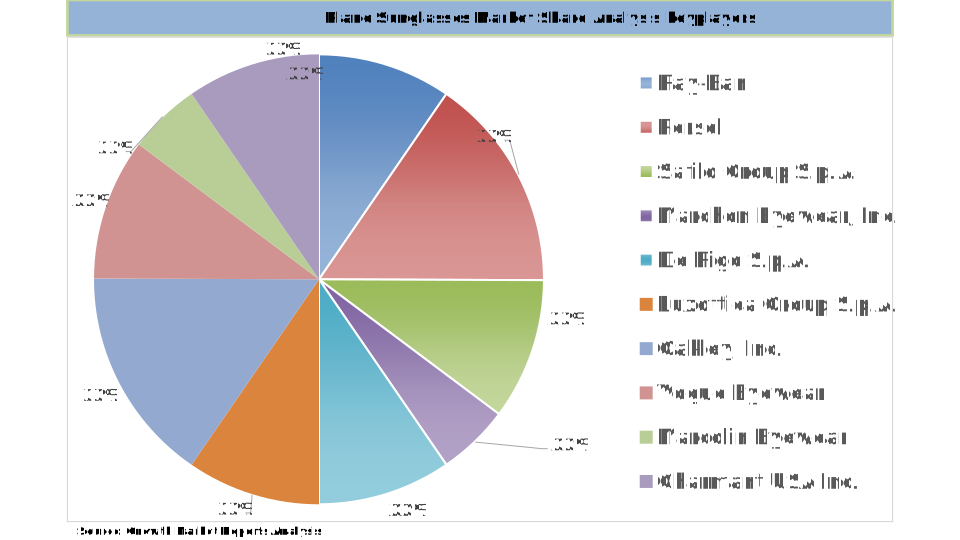
Plano Sunglasses Market keyplayers

For instance, in May 2019, Xiaomi introduced a range of Polarized Sunglasses from Xiaomi Mi on its online platform. The newly launched sunglasses provides six layered lens technology for the elimination of harmful UV rays, glare, and polarized light. 

Frequently Asked Questions

Key challenges include intense competition and price sensitivity, the threat of counterfeit products, economic uncertainties affecting discretionary spending, and the need for ongoing innovation and brand differentiation.

Top players include EssilorLuxottica (Ray-Ban, Oakley), Safilo Group, Maui Jim, Marchon Eyewear, Marcolin Group, De Rigo Vision, Fielmann AG, Charmant Group, Bolle Brands, Warby Parker, Silhouette International, Zenni Optical, Costa Del Mar, Prada Eyewear, Tom Ford Eyewear, Persol, Gucci Eyewear, and Carrera Eyewear.

Major trends include the integration of smart technologies, demand for sustainable and eco-friendly products, customization, and the rise of digital and omnichannel retail experiences.

Key end-users include men, women, children, and unisex consumers, each with distinct preferences for style, functionality, and brand affiliation.

Plano sunglasses are sold through online stores, optical retailers, supermarkets/hypermarkets, specialty stores, and emerging channels like duty-free shops and direct-to-consumer brand outlets.

Common frame materials include plastic, metal, nylon, acetate, and innovative options like carbon fiber, wood, and recycled plastics, each offering unique benefits in terms of style, durability, and sustainability.

Popular lens types include polarized, non-polarized, photochromic, mirrored, and specialty lenses such as blue light blocking and hybrid lenses that combine multiple features.

North America and Europe currently dominate the market in terms of share, while Asia Pacific is the fastest-growing region due to rising disposable incomes, urbanization, and increasing eye health awareness.

Key growth drivers include increasing awareness of UV protection, evolving fashion trends, technological advancements in lens and frame materials, and the expansion of digital and omnichannel retail distribution.

The global plano sunglasses market reached USD 22.4 billion in 2024 and is expected to grow at a CAGR of 6.1% from 2025 to 2033, reaching USD 38.1 billion by 2033.

Table Of Content

Chapter 1 Executive Summary
Chapter 2 Assumptions and Acronyms Used
Chapter 3 Research Methodology
Chapter 4 plano sunglasses Market Overview
   4.1 Introduction
      4.1.1 Market Taxonomy
      4.1.2 Market Definition
      4.1.3 Macro-Economic Factors Impacting the Market Growth
   4.2 plano sunglasses Market Dynamics
      4.2.1 Market Drivers
      4.2.2 Market Restraints
      4.2.3 Market Opportunity
   4.3 plano sunglasses Market - Supply Chain Analysis
      4.3.1 List of Key Suppliers
      4.3.2 List of Key Distributors
      4.3.3 List of Key Consumers
   4.4 Key Forces Shaping the plano sunglasses Market
      4.4.1 Bargaining Power of Suppliers
      4.4.2 Bargaining Power of Buyers
      4.4.3 Threat of Substitution
      4.4.4 Threat of New Entrants
      4.4.5 Competitive Rivalry
   4.5 Global plano sunglasses Market Size & Forecast, 2023-2032
      4.5.1 plano sunglasses Market Size and Y-o-Y Growth
      4.5.2 plano sunglasses Market Absolute $ Opportunity

Chapter 5 Global plano sunglasses Market Analysis and Forecast By Product Type
   5.1 Introduction
      5.1.1 Key Market Trends & Growth Opportunities By Product Type
      5.1.2 Basis Point Share (BPS) Analysis By Product Type
      5.1.3 Absolute $ Opportunity Assessment By Product Type
   5.2 plano sunglasses Market Size Forecast By Product Type
      5.2.1 Polarized
      5.2.2 Non-Polarized
      5.2.3 Photochromic
      5.2.4 Mirrored
      5.2.5 Others
   5.3 Market Attractiveness Analysis By Product Type

Chapter 6 Global plano sunglasses Market Analysis and Forecast By Frame Material
   6.1 Introduction
      6.1.1 Key Market Trends & Growth Opportunities By Frame Material
      6.1.2 Basis Point Share (BPS) Analysis By Frame Material
      6.1.3 Absolute $ Opportunity Assessment By Frame Material
   6.2 plano sunglasses Market Size Forecast By Frame Material
      6.2.1 Plastic
      6.2.2 Metal
      6.2.3 Nylon
      6.2.4 Acetate
      6.2.5 Others
   6.3 Market Attractiveness Analysis By Frame Material

Chapter 7 Global plano sunglasses Market Analysis and Forecast By Lens Material
   7.1 Introduction
      7.1.1 Key Market Trends & Growth Opportunities By Lens Material
      7.1.2 Basis Point Share (BPS) Analysis By Lens Material
      7.1.3 Absolute $ Opportunity Assessment By Lens Material
   7.2 plano sunglasses Market Size Forecast By Lens Material
      7.2.1 Glass
      7.2.2 Polycarbonate
      7.2.3 CR-39
      7.2.4 Others
   7.3 Market Attractiveness Analysis By Lens Material

Chapter 8 Global plano sunglasses Market Analysis and Forecast By Distribution Channel
   8.1 Introduction
      8.1.1 Key Market Trends & Growth Opportunities By Distribution Channel
      8.1.2 Basis Point Share (BPS) Analysis By Distribution Channel
      8.1.3 Absolute $ Opportunity Assessment By Distribution Channel
   8.2 plano sunglasses Market Size Forecast By Distribution Channel
      8.2.1 Online Stores
      8.2.2 Optical Retailers
      8.2.3 Supermarkets/Hypermarkets
      8.2.4 Specialty Stores
      8.2.5 Others
   8.3 Market Attractiveness Analysis By Distribution Channel

Chapter 9 Global plano sunglasses Market Analysis and Forecast By End-User
   9.1 Introduction
      9.1.1 Key Market Trends & Growth Opportunities By End-User
      9.1.2 Basis Point Share (BPS) Analysis By End-User
      9.1.3 Absolute $ Opportunity Assessment By End-User
   9.2 plano sunglasses Market Size Forecast By End-User
      9.2.1 Men
      9.2.2 Women
      9.2.3 Children
      9.2.4 Unisex
   9.3 Market Attractiveness Analysis By End-User

Chapter 10 Global plano sunglasses Market Analysis and Forecast by Region
   10.1 Introduction
      10.1.1 Key Market Trends & Growth Opportunities By Region
      10.1.2 Basis Point Share (BPS) Analysis By Region
      10.1.3 Absolute $ Opportunity Assessment By Region
   10.2 plano sunglasses Market Size Forecast By Region
      10.2.1 North America
      10.2.2 Europe
      10.2.3 Asia Pacific
      10.2.4 Latin America
      10.2.5 Middle East & Africa (MEA)
   10.3 Market Attractiveness Analysis By Region

Chapter 11 Coronavirus Disease (COVID-19) Impact 
   11.1 Introduction 
   11.2 Current & Future Impact Analysis 
   11.3 Economic Impact Analysis 
   11.4 Government Policies 
   11.5 Investment Scenario

Chapter 12 North America plano sunglasses Analysis and Forecast
   12.1 Introduction
   12.2 North America plano sunglasses Market Size Forecast by Country
      12.2.1 U.S.
      12.2.2 Canada
   12.3 Basis Point Share (BPS) Analysis by Country
   12.4 Absolute $ Opportunity Assessment by Country
   12.5 Market Attractiveness Analysis by Country
   12.6 North America plano sunglasses Market Size Forecast By Product Type
      12.6.1 Polarized
      12.6.2 Non-Polarized
      12.6.3 Photochromic
      12.6.4 Mirrored
      12.6.5 Others
   12.7 Basis Point Share (BPS) Analysis By Product Type 
   12.8 Absolute $ Opportunity Assessment By Product Type 
   12.9 Market Attractiveness Analysis By Product Type
   12.10 North America plano sunglasses Market Size Forecast By Frame Material
      12.10.1 Plastic
      12.10.2 Metal
      12.10.3 Nylon
      12.10.4 Acetate
      12.10.5 Others
   12.11 Basis Point Share (BPS) Analysis By Frame Material 
   12.12 Absolute $ Opportunity Assessment By Frame Material 
   12.13 Market Attractiveness Analysis By Frame Material
   12.14 North America plano sunglasses Market Size Forecast By Lens Material
      12.14.1 Glass
      12.14.2 Polycarbonate
      12.14.3 CR-39
      12.14.4 Others
   12.15 Basis Point Share (BPS) Analysis By Lens Material 
   12.16 Absolute $ Opportunity Assessment By Lens Material 
   12.17 Market Attractiveness Analysis By Lens Material
   12.18 North America plano sunglasses Market Size Forecast By Distribution Channel
      12.18.1 Online Stores
      12.18.2 Optical Retailers
      12.18.3 Supermarkets/Hypermarkets
      12.18.4 Specialty Stores
      12.18.5 Others
   12.19 Basis Point Share (BPS) Analysis By Distribution Channel 
   12.20 Absolute $ Opportunity Assessment By Distribution Channel 
   12.21 Market Attractiveness Analysis By Distribution Channel
   12.22 North America plano sunglasses Market Size Forecast By End-User
      12.22.1 Men
      12.22.2 Women
      12.22.3 Children
      12.22.4 Unisex
   12.23 Basis Point Share (BPS) Analysis By End-User 
   12.24 Absolute $ Opportunity Assessment By End-User 
   12.25 Market Attractiveness Analysis By End-User

Chapter 13 Europe plano sunglasses Analysis and Forecast
   13.1 Introduction
   13.2 Europe plano sunglasses Market Size Forecast by Country
      13.2.1 Germany
      13.2.2 France
      13.2.3 Italy
      13.2.4 U.K.
      13.2.5 Spain
      13.2.6 Russia
      13.2.7 Rest of Europe
   13.3 Basis Point Share (BPS) Analysis by Country
   13.4 Absolute $ Opportunity Assessment by Country
   13.5 Market Attractiveness Analysis by Country
   13.6 Europe plano sunglasses Market Size Forecast By Product Type
      13.6.1 Polarized
      13.6.2 Non-Polarized
      13.6.3 Photochromic
      13.6.4 Mirrored
      13.6.5 Others
   13.7 Basis Point Share (BPS) Analysis By Product Type 
   13.8 Absolute $ Opportunity Assessment By Product Type 
   13.9 Market Attractiveness Analysis By Product Type
   13.10 Europe plano sunglasses Market Size Forecast By Frame Material
      13.10.1 Plastic
      13.10.2 Metal
      13.10.3 Nylon
      13.10.4 Acetate
      13.10.5 Others
   13.11 Basis Point Share (BPS) Analysis By Frame Material 
   13.12 Absolute $ Opportunity Assessment By Frame Material 
   13.13 Market Attractiveness Analysis By Frame Material
   13.14 Europe plano sunglasses Market Size Forecast By Lens Material
      13.14.1 Glass
      13.14.2 Polycarbonate
      13.14.3 CR-39
      13.14.4 Others
   13.15 Basis Point Share (BPS) Analysis By Lens Material 
   13.16 Absolute $ Opportunity Assessment By Lens Material 
   13.17 Market Attractiveness Analysis By Lens Material
   13.18 Europe plano sunglasses Market Size Forecast By Distribution Channel
      13.18.1 Online Stores
      13.18.2 Optical Retailers
      13.18.3 Supermarkets/Hypermarkets
      13.18.4 Specialty Stores
      13.18.5 Others
   13.19 Basis Point Share (BPS) Analysis By Distribution Channel 
   13.20 Absolute $ Opportunity Assessment By Distribution Channel 
   13.21 Market Attractiveness Analysis By Distribution Channel
   13.22 Europe plano sunglasses Market Size Forecast By End-User
      13.22.1 Men
      13.22.2 Women
      13.22.3 Children
      13.22.4 Unisex
   13.23 Basis Point Share (BPS) Analysis By End-User 
   13.24 Absolute $ Opportunity Assessment By End-User 
   13.25 Market Attractiveness Analysis By End-User

Chapter 14 Asia Pacific plano sunglasses Analysis and Forecast
   14.1 Introduction
   14.2 Asia Pacific plano sunglasses Market Size Forecast by Country
      14.2.1 China
      14.2.2 Japan
      14.2.3 South Korea
      14.2.4 India
      14.2.5 Australia
      14.2.6 South East Asia (SEA)
      14.2.7 Rest of Asia Pacific (APAC)
   14.3 Basis Point Share (BPS) Analysis by Country
   14.4 Absolute $ Opportunity Assessment by Country
   14.5 Market Attractiveness Analysis by Country
   14.6 Asia Pacific plano sunglasses Market Size Forecast By Product Type
      14.6.1 Polarized
      14.6.2 Non-Polarized
      14.6.3 Photochromic
      14.6.4 Mirrored
      14.6.5 Others
   14.7 Basis Point Share (BPS) Analysis By Product Type 
   14.8 Absolute $ Opportunity Assessment By Product Type 
   14.9 Market Attractiveness Analysis By Product Type
   14.10 Asia Pacific plano sunglasses Market Size Forecast By Frame Material
      14.10.1 Plastic
      14.10.2 Metal
      14.10.3 Nylon
      14.10.4 Acetate
      14.10.5 Others
   14.11 Basis Point Share (BPS) Analysis By Frame Material 
   14.12 Absolute $ Opportunity Assessment By Frame Material 
   14.13 Market Attractiveness Analysis By Frame Material
   14.14 Asia Pacific plano sunglasses Market Size Forecast By Lens Material
      14.14.1 Glass
      14.14.2 Polycarbonate
      14.14.3 CR-39
      14.14.4 Others
   14.15 Basis Point Share (BPS) Analysis By Lens Material 
   14.16 Absolute $ Opportunity Assessment By Lens Material 
   14.17 Market Attractiveness Analysis By Lens Material
   14.18 Asia Pacific plano sunglasses Market Size Forecast By Distribution Channel
      14.18.1 Online Stores
      14.18.2 Optical Retailers
      14.18.3 Supermarkets/Hypermarkets
      14.18.4 Specialty Stores
      14.18.5 Others
   14.19 Basis Point Share (BPS) Analysis By Distribution Channel 
   14.20 Absolute $ Opportunity Assessment By Distribution Channel 
   14.21 Market Attractiveness Analysis By Distribution Channel
   14.22 Asia Pacific plano sunglasses Market Size Forecast By End-User
      14.22.1 Men
      14.22.2 Women
      14.22.3 Children
      14.22.4 Unisex
   14.23 Basis Point Share (BPS) Analysis By End-User 
   14.24 Absolute $ Opportunity Assessment By End-User 
   14.25 Market Attractiveness Analysis By End-User

Chapter 15 Latin America plano sunglasses Analysis and Forecast
   15.1 Introduction
   15.2 Latin America plano sunglasses Market Size Forecast by Country
      15.2.1 Brazil
      15.2.2 Mexico
      15.2.3 Rest of Latin America (LATAM)
   15.3 Basis Point Share (BPS) Analysis by Country
   15.4 Absolute $ Opportunity Assessment by Country
   15.5 Market Attractiveness Analysis by Country
   15.6 Latin America plano sunglasses Market Size Forecast By Product Type
      15.6.1 Polarized
      15.6.2 Non-Polarized
      15.6.3 Photochromic
      15.6.4 Mirrored
      15.6.5 Others
   15.7 Basis Point Share (BPS) Analysis By Product Type 
   15.8 Absolute $ Opportunity Assessment By Product Type 
   15.9 Market Attractiveness Analysis By Product Type
   15.10 Latin America plano sunglasses Market Size Forecast By Frame Material
      15.10.1 Plastic
      15.10.2 Metal
      15.10.3 Nylon
      15.10.4 Acetate
      15.10.5 Others
   15.11 Basis Point Share (BPS) Analysis By Frame Material 
   15.12 Absolute $ Opportunity Assessment By Frame Material 
   15.13 Market Attractiveness Analysis By Frame Material
   15.14 Latin America plano sunglasses Market Size Forecast By Lens Material
      15.14.1 Glass
      15.14.2 Polycarbonate
      15.14.3 CR-39
      15.14.4 Others
   15.15 Basis Point Share (BPS) Analysis By Lens Material 
   15.16 Absolute $ Opportunity Assessment By Lens Material 
   15.17 Market Attractiveness Analysis By Lens Material
   15.18 Latin America plano sunglasses Market Size Forecast By Distribution Channel
      15.18.1 Online Stores
      15.18.2 Optical Retailers
      15.18.3 Supermarkets/Hypermarkets
      15.18.4 Specialty Stores
      15.18.5 Others
   15.19 Basis Point Share (BPS) Analysis By Distribution Channel 
   15.20 Absolute $ Opportunity Assessment By Distribution Channel 
   15.21 Market Attractiveness Analysis By Distribution Channel
   15.22 Latin America plano sunglasses Market Size Forecast By End-User
      15.22.1 Men
      15.22.2 Women
      15.22.3 Children
      15.22.4 Unisex
   15.23 Basis Point Share (BPS) Analysis By End-User 
   15.24 Absolute $ Opportunity Assessment By End-User 
   15.25 Market Attractiveness Analysis By End-User

Chapter 16 Middle East & Africa (MEA) plano sunglasses Analysis and Forecast
   16.1 Introduction
   16.2 Middle East & Africa (MEA) plano sunglasses Market Size Forecast by Country
      16.2.1 Saudi Arabia
      16.2.2 South Africa
      16.2.3 UAE
      16.2.4 Rest of Middle East & Africa (MEA)
   16.3 Basis Point Share (BPS) Analysis by Country
   16.4 Absolute $ Opportunity Assessment by Country
   16.5 Market Attractiveness Analysis by Country
   16.6 Middle East & Africa (MEA) plano sunglasses Market Size Forecast By Product Type
      16.6.1 Polarized
      16.6.2 Non-Polarized
      16.6.3 Photochromic
      16.6.4 Mirrored
      16.6.5 Others
   16.7 Basis Point Share (BPS) Analysis By Product Type 
   16.8 Absolute $ Opportunity Assessment By Product Type 
   16.9 Market Attractiveness Analysis By Product Type
   16.10 Middle East & Africa (MEA) plano sunglasses Market Size Forecast By Frame Material
      16.10.1 Plastic
      16.10.2 Metal
      16.10.3 Nylon
      16.10.4 Acetate
      16.10.5 Others
   16.11 Basis Point Share (BPS) Analysis By Frame Material 
   16.12 Absolute $ Opportunity Assessment By Frame Material 
   16.13 Market Attractiveness Analysis By Frame Material
   16.14 Middle East & Africa (MEA) plano sunglasses Market Size Forecast By Lens Material
      16.14.1 Glass
      16.14.2 Polycarbonate
      16.14.3 CR-39
      16.14.4 Others
   16.15 Basis Point Share (BPS) Analysis By Lens Material 
   16.16 Absolute $ Opportunity Assessment By Lens Material 
   16.17 Market Attractiveness Analysis By Lens Material
   16.18 Middle East & Africa (MEA) plano sunglasses Market Size Forecast By Distribution Channel
      16.18.1 Online Stores
      16.18.2 Optical Retailers
      16.18.3 Supermarkets/Hypermarkets
      16.18.4 Specialty Stores
      16.18.5 Others
   16.19 Basis Point Share (BPS) Analysis By Distribution Channel 
   16.20 Absolute $ Opportunity Assessment By Distribution Channel 
   16.21 Market Attractiveness Analysis By Distribution Channel
   16.22 Middle East & Africa (MEA) plano sunglasses Market Size Forecast By End-User
      16.22.1 Men
      16.22.2 Women
      16.22.3 Children
      16.22.4 Unisex
   16.23 Basis Point Share (BPS) Analysis By End-User 
   16.24 Absolute $ Opportunity Assessment By End-User 
   16.25 Market Attractiveness Analysis By End-User

Chapter 17 Competition Landscape 
   17.1 plano sunglasses Market: Competitive Dashboard
   17.2 Global plano sunglasses Market: Market Share Analysis, 2023
   17.3 Company Profiles (Details – Overview, Financials, Developments, Strategy) 
      17.3.1 EssilorLuxottica
Safilo Group
Maui Jim
Marchon Eyewear
Marcolin Group
De Rigo Vision
Fielmann AG
Charmant Group
Bolle Brands
Oakley
Ray-Ban
Warby Parker
Silhouette International
Zenni Optical
Costa Del Mar
Prada Eyewear
Tom Ford Eyewear
Persol
Gucci Eyewear
Carrera Eyewear

Methodology

Our Clients

Deloitte
General Mills
Microsoft
Pfizer
Honda Motor Co. Ltd.
Nestle SA
FedEx Logistics
The John Holland Group