Segments - by Service Type (Active Pharmaceutical Ingredients (API) Manufacturing, Finished Dosage Formulation (FDF) Manufacturing, Packaging, Others), by Drug Type (Innovative Drugs, Generic Drugs), by End User (Pharmaceutical Companies, Biotechnology Companies, Others)
According to our latest research, the global pharmaceutical contract manufacturing organization (CMO) market size reached USD 141.2 billion in 2024, reflecting robust growth driven by the increasing outsourcing trends in the pharmaceutical industry. The market is projected to expand at a CAGR of 7.6% from 2025 to 2033, reaching an estimated USD 273.1 billion by 2033. This growth is primarily fueled by the escalating demand for cost-effective drug development and manufacturing solutions, as well as the rising complexity of pharmaceutical products, which are compelling companies to partner with specialized CMOs for enhanced efficiency and compliance.
A key growth factor in the pharmaceutical CMO market is the rising pressure on pharmaceutical and biotechnology companies to optimize operational costs and reduce time-to-market for new drugs. The capital-intensive nature of drug manufacturing, coupled with stringent regulatory requirements, has prompted many companies to outsource manufacturing processes to contract manufacturing organizations. This strategy allows pharmaceutical firms to leverage the expertise and advanced technologies of CMOs, enabling them to focus on core competencies such as research and development, marketing, and distribution. Furthermore, the growing prevalence of chronic diseases and the consequent surge in drug demand are compelling companies to seek scalable and flexible manufacturing solutions, further propelling the market’s expansion.
Another significant driver is the increasing complexity of drug formulations, particularly with the advent of biologics and specialty pharmaceuticals. The development and manufacturing of these advanced therapies require specialized knowledge, sophisticated equipment, and compliance with rigorous quality standards, which are often beyond the reach of small and mid-sized pharmaceutical companies. As a result, there is a growing reliance on CMOs that possess the necessary technical expertise and regulatory certifications to handle complex manufacturing processes. Additionally, the trend towards personalized medicine and the need for small-batch production have further underscored the importance of flexible and agile contract manufacturing solutions.
The pharmaceutical CMO market is also benefiting from the globalization of the pharmaceutical supply chain. Companies are increasingly seeking to expand their geographic reach and tap into emerging markets, which necessitates partnerships with local and regional CMOs. This not only helps pharmaceutical companies navigate regulatory complexities in different regions but also enables them to achieve cost advantages through localized manufacturing. Furthermore, the ongoing advancements in manufacturing technologies, such as continuous manufacturing and automation, are enhancing the capabilities of CMOs, allowing them to offer innovative solutions and maintain high standards of quality and efficiency.
From a regional perspective, Asia Pacific stands out as a major growth engine for the pharmaceutical contract manufacturing organization market, owing to its large pool of skilled labor, favorable regulatory environment, and cost advantages. Countries such as India and China have emerged as global hubs for pharmaceutical manufacturing, attracting significant investments from multinational pharmaceutical companies. North America and Europe also hold substantial market shares, driven by the presence of established pharmaceutical industries and stringent quality standards. In contrast, Latin America and the Middle East & Africa are witnessing steady growth, supported by increasing healthcare investments and the expansion of pharmaceutical manufacturing infrastructure.
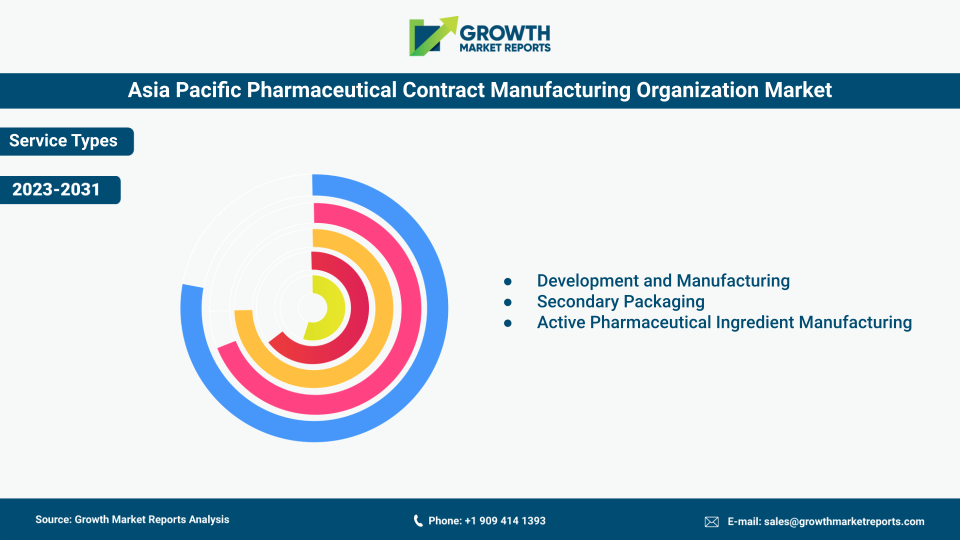
The pharmaceutical contract manufacturing organization market is segmented by service type into active pharmaceutical ingredients (API) manufacturing, finished dosage formulation (FDF) manufacturing, packaging, and others. Among these, API manufacturing remains a critical segment, accounting for a significant share of the overall market. The demand for API manufacturing services is being driven by the increasing complexity of drug molecules and the need for high-quality, cost-effective production. Pharmaceutical companies are increasingly outsourcing API manufacturing to CMOs to leverage their specialized capabilities and ensure compliance with stringent regulatory requirements. The globalization of API supply chains, coupled with the growing demand for generic drugs, is further boosting the growth of this segment.
Finished dosage formulation (FDF) manufacturing is another key segment within the pharmaceutical CMO market. The rising demand for solid oral dosage forms, injectables, and other advanced formulations has led to an increased reliance on CMOs for FDF manufacturing. This trend is particularly pronounced among small and mid-sized pharmaceutical companies that lack the in-house expertise and infrastructure required for large-scale production. CMOs are investing in advanced manufacturing technologies and quality assurance systems to cater to the evolving needs of their clients, thereby strengthening their position in the market. The growing emphasis on quality, speed, and flexibility in drug manufacturing is expected to drive sustained growth in the FDF segment.
Packaging services are also gaining prominence in the pharmaceutical contract manufacturing organization market. As pharmaceutical companies strive to enhance product safety, extend shelf life, and comply with diverse regulatory requirements, the demand for specialized packaging solutions is on the rise. CMOs are offering a wide range of packaging services, including blister packaging, bottle packaging, and serialization, to meet the unique needs of their clients. The increasing focus on anti-counterfeiting measures and the adoption of innovative packaging technologies are further contributing to the growth of this segment. Additionally, the trend towards patient-centric packaging and the need for sustainable packaging solutions are creating new opportunities for CMOs in this space.
Other services within the pharmaceutical CMO market include analytical testing, stability studies, and regulatory support. These value-added services are becoming increasingly important as pharmaceutical companies seek comprehensive solutions that go beyond traditional manufacturing. CMOs are expanding their service portfolios to include end-to-end support, from early-stage development to commercial-scale production. This integrated approach not only enhances operational efficiency but also helps clients navigate complex regulatory landscapes and accelerate time-to-market. As the pharmaceutical industry continues to evolve, the demand for specialized and integrated contract manufacturing services is expected to remain strong.
| Attributes | Details |
| Report Title | Pharmaceutical Contract Manufacturing Organization Market Research Report 2033 |
| By Service Type | Active Pharmaceutical Ingredients (API) Manufacturing, Finished Dosage Formulation (FDF) Manufacturing, Packaging, Others |
| By Drug Type | Innovative Drugs, Generic Drugs |
| By End User | Pharmaceutical Companies, Biotechnology Companies, Others |
| Regions Covered | North America, Europe, APAC, Latin America, MEA |
| Base Year | 2024 |
| Historic Data | 2018-2023 |
| Forecast Period | 2025-2033 |
| Number of Pages | 257 |
| Number of Tables & Figures | 352 |
| Customization Available | Yes, the report can be customized as per your need. |
The pharmaceutical contract manufacturing organization market is segmented by drug type into innovative drugs and generic drugs. Innovative drugs, which include new chemical entities and biologics, represent a significant segment of the market. The development and manufacturing of innovative drugs require specialized expertise, advanced technologies, and compliance with rigorous regulatory standards. Pharmaceutical companies are increasingly partnering with CMOs to access these capabilities and ensure the successful commercialization of their innovative products. The growing focus on personalized medicine and the development of targeted therapies are further driving demand for contract manufacturing services in this segment.
Generic drugs constitute another major segment within the pharmaceutical CMO market. The expiration of patents on blockbuster drugs and the rising demand for affordable medicines have led to a surge in generic drug production. Pharmaceutical companies are outsourcing the manufacturing of generic drugs to CMOs to achieve cost efficiencies and accelerate market entry. CMOs play a crucial role in the generic drug supply chain, offering scalable manufacturing solutions and ensuring compliance with regulatory requirements. The increasing adoption of generic drugs, particularly in emerging markets, is expected to drive sustained growth in this segment.
The manufacturing requirements for innovative drugs and generic drugs differ significantly, necessitating specialized capabilities and infrastructure. For innovative drugs, CMOs must invest in advanced manufacturing technologies, such as bioprocessing and continuous manufacturing, to meet the unique needs of their clients. In contrast, generic drug manufacturing often involves large-scale production and cost optimization, which requires robust quality management systems and efficient supply chain operations. CMOs that can offer tailored solutions for both innovative and generic drugs are well-positioned to capitalize on the growing demand for contract manufacturing services.
The increasing complexity of drug formulations, particularly with the rise of biologics and specialty pharmaceuticals, is creating new opportunities for CMOs in the innovative drug segment. These products require specialized handling, storage, and manufacturing processes, which many pharmaceutical companies prefer to outsource to experienced CMOs. On the other hand, the commoditization of generic drugs is driving CMOs to focus on operational excellence and cost leadership. As the pharmaceutical landscape continues to evolve, CMOs that can adapt to the diverse needs of their clients across both innovative and generic drug segments will remain at the forefront of the market.
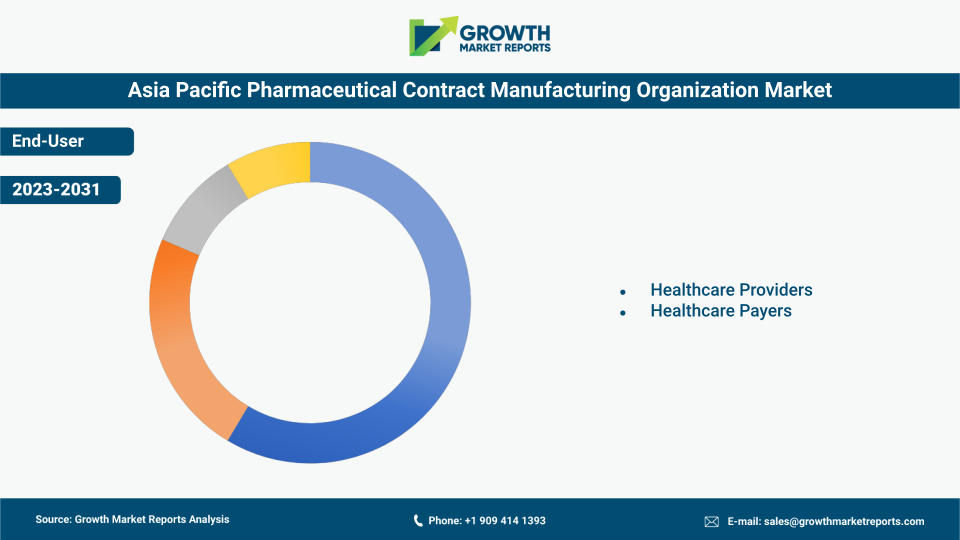
The end user segment of the pharmaceutical contract manufacturing organization market comprises pharmaceutical companies, biotechnology companies, and others. Pharmaceutical companies represent the largest end user group, accounting for a substantial share of the market. These companies are increasingly outsourcing manufacturing activities to CMOs to reduce capital expenditures, optimize operational efficiency, and accelerate product development timelines. The growing complexity of drug formulations and the need for regulatory compliance are further driving demand for contract manufacturing services among pharmaceutical companies. CMOs are responding by expanding their service offerings and investing in advanced manufacturing technologies to meet the evolving needs of their clients.
Biotechnology companies constitute another important end user segment within the pharmaceutical CMO market. The rapid growth of the biotechnology sector, coupled with the increasing development of biologics and biosimilars, is fueling demand for specialized contract manufacturing services. Biotechnology companies often lack the in-house manufacturing capabilities required for large-scale production and regulatory compliance, prompting them to partner with CMOs. These collaborations enable biotechnology firms to focus on research and innovation while leveraging the expertise and infrastructure of CMOs for efficient and compliant manufacturing. The trend towards personalized medicine and the development of advanced therapies are expected to drive sustained growth in this segment.
Other end users of pharmaceutical contract manufacturing services include academic research institutions, government agencies, and non-profit organizations. These entities often require specialized manufacturing solutions for clinical trials, research projects, and public health initiatives. CMOs are increasingly catering to the unique needs of these end users by offering flexible and scalable manufacturing solutions. The growing emphasis on collaborative research and the need for rapid response to public health emergencies are creating new opportunities for CMOs in this segment. As the role of contract manufacturing organizations continues to expand, their client base is expected to become increasingly diverse.
The evolving needs of end users are driving CMOs to adopt a customer-centric approach and offer tailored solutions that address specific requirements. This includes providing end-to-end support, from early-stage development to commercial-scale production, as well as offering value-added services such as regulatory support and supply chain management. By aligning their capabilities with the strategic objectives of their clients, CMOs are strengthening their position as indispensable partners in the pharmaceutical value chain. The increasing focus on quality, flexibility, and innovation is expected to shape the future of the pharmaceutical contract manufacturing organization market.
The pharmaceutical contract manufacturing organization market presents significant opportunities for growth, driven by the increasing trend of outsourcing manufacturing activities across the pharmaceutical and biotechnology sectors. As drug development becomes more complex and costly, pharmaceutical companies are seeking to optimize their operations by partnering with CMOs that offer specialized expertise and advanced manufacturing technologies. The growing demand for biologics, biosimilars, and personalized medicines is creating new avenues for CMOs to expand their service offerings and capture a larger share of the market. Additionally, the globalization of the pharmaceutical supply chain and the emergence of new markets are providing CMOs with opportunities to establish strategic partnerships and enhance their geographic reach.
Technological advancements in manufacturing processes, such as continuous manufacturing, automation, and digitalization, are further enhancing the capabilities of CMOs and enabling them to deliver high-quality, cost-effective solutions. The adoption of innovative manufacturing technologies not only improves operational efficiency but also ensures compliance with stringent regulatory requirements. CMOs that invest in research and development, quality management systems, and workforce training are well-positioned to capitalize on these opportunities and drive sustained growth. Moreover, the increasing focus on sustainability and environmental responsibility is prompting CMOs to adopt green manufacturing practices, which can serve as a key differentiator in a competitive market.
Despite the numerous opportunities, the pharmaceutical CMO market faces certain threats and restrainers, particularly in the form of regulatory challenges and quality concerns. The highly regulated nature of the pharmaceutical industry requires CMOs to adhere to stringent quality standards and maintain robust compliance frameworks. Any lapses in quality or regulatory compliance can result in product recalls, legal liabilities, and reputational damage, posing significant risks to both CMOs and their clients. Additionally, the increasing competition among CMOs and the commoditization of certain manufacturing services can lead to pricing pressures and margin erosion. To mitigate these risks, CMOs must continuously invest in quality assurance, regulatory compliance, and operational excellence.
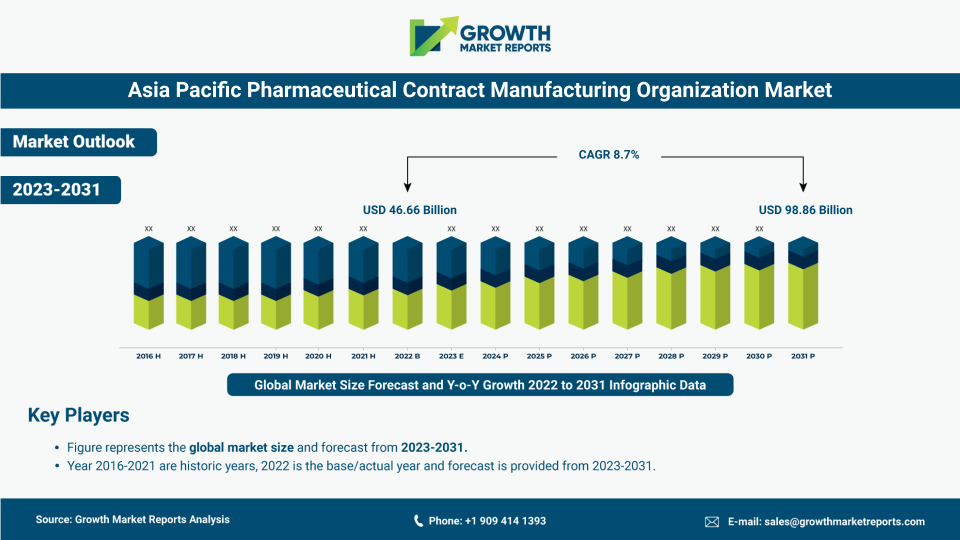
Regionally, the Asia Pacific region dominates the pharmaceutical contract manufacturing organization market, accounting for approximately USD 53.6 billion in 2024. The region is projected to witness the fastest growth, with a CAGR of 9.1% from 2025 to 2033, driven by the presence of a large pool of skilled labor, cost advantages, and a favorable regulatory environment. Countries such as India and China have established themselves as global manufacturing hubs, attracting significant investments from multinational pharmaceutical companies. The expansion of pharmaceutical manufacturing infrastructure and the increasing focus on quality and compliance are further enhancing the region’s attractiveness as a destination for contract manufacturing.
North America holds a significant share of the pharmaceutical CMO market, with a market size of USD 40.2 billion in 2024. The region is characterized by the presence of a well-established pharmaceutical industry, stringent quality standards, and a strong focus on innovation. Pharmaceutical companies in North America are increasingly outsourcing manufacturing activities to CMOs to optimize operational efficiency and accelerate product development. The growing demand for biologics, specialty pharmaceuticals, and personalized medicines is further driving the adoption of contract manufacturing services in the region. The United States, in particular, is a major contributor to the regional market, supported by a robust regulatory framework and a high level of investment in research and development.
Europe is another key region in the pharmaceutical contract manufacturing organization market, with a market size of USD 32.8 billion in 2024. The region is home to several leading pharmaceutical companies and CMOs, and is characterized by a strong emphasis on quality, safety, and regulatory compliance. The increasing adoption of advanced manufacturing technologies and the growing focus on sustainability are shaping the future of the European market. Meanwhile, Latin America and the Middle East & Africa regions are witnessing steady growth, with market sizes of USD 8.1 billion and USD 6.5 billion respectively in 2024. These regions are benefiting from increasing healthcare investments, the expansion of pharmaceutical manufacturing infrastructure, and the growing demand for affordable medicines.
The pharmaceutical contract manufacturing organization market is highly competitive, with a diverse mix of global, regional, and specialized players. The competitive landscape is characterized by intense rivalry, with companies competing on the basis of service quality, technological capabilities, regulatory compliance, and pricing. Leading CMOs are investing heavily in research and development, advanced manufacturing technologies, and quality management systems to differentiate themselves and maintain a competitive edge. Strategic partnerships, mergers and acquisitions, and geographic expansion are common strategies adopted by market players to enhance their market presence and broaden their service portfolios.
Innovation and technological advancement are key differentiators in the pharmaceutical CMO market. Companies that can offer end-to-end solutions, from early-stage development to commercial-scale production, are increasingly preferred by pharmaceutical and biotechnology clients. The ability to provide value-added services, such as regulatory support, analytical testing, and supply chain management, is also becoming a critical factor in client selection. Furthermore, the adoption of digital technologies, automation, and continuous manufacturing processes is enabling CMOs to improve operational efficiency, reduce costs, and enhance product quality.
Quality assurance and regulatory compliance remain paramount in the pharmaceutical CMO market. Companies that have a track record of compliance with international quality standards, such as Good Manufacturing Practice (GMP), are better positioned to attract and retain clients. The increasing complexity of drug formulations and the growing focus on personalized medicine are driving demand for specialized manufacturing capabilities, prompting CMOs to invest in workforce training and infrastructure development. The ability to adapt to evolving client needs and regulatory requirements is essential for long-term success in this dynamic market.
Some of the major companies operating in the pharmaceutical contract manufacturing organization market include Lonza Group, Catalent Inc., Recipharm AB, Thermo Fisher Scientific Inc., Boehringer Ingelheim, Patheon (a part of Thermo Fisher Scientific), Samsung Biologics, Siegfried Holding AG, and Jubilant Life Sciences. Lonza Group is renowned for its comprehensive service offerings, including API manufacturing, biologics, and cell and gene therapy manufacturing. Catalent Inc. is a global leader in drug delivery technologies and finished dosage formulation manufacturing, while Recipharm AB specializes in both API and FDF manufacturing, with a strong presence in Europe. Thermo Fisher Scientific, through its Patheon brand, offers a wide range of contract development and manufacturing services, including biologics and small molecule manufacturing.
Boehringer Ingelheim is a prominent player in the biologics contract manufacturing space, offering end-to-end solutions for the development and production of biopharmaceuticals. Samsung Biologics is a rapidly growing CMO with a focus on biologics manufacturing, leveraging state-of-the-art facilities and advanced technologies. Siegfried Holding AG and Jubilant Life Sciences are also key players, known for their expertise in API and FDF manufacturing, as well as their strong commitment to quality and regulatory compliance. These companies are continuously investing in capacity expansion, technology upgrades, and strategic collaborations to strengthen their market position and address the evolving needs of their clients.
The competitive landscape of the pharmaceutical contract manufacturing organization market is expected to remain dynamic, with companies focusing on innovation, quality, and client-centric solutions. The increasing demand for specialized manufacturing services, coupled with the growing complexity of drug formulations, will continue to drive consolidation and strategic partnerships in the industry. CMOs that can offer integrated, flexible, and high-quality solutions will be well-positioned to capitalize on the significant growth opportunities in this rapidly evolving market.
The Pharmaceutical Contract Manufacturing Organization market has been segmented on the basis of
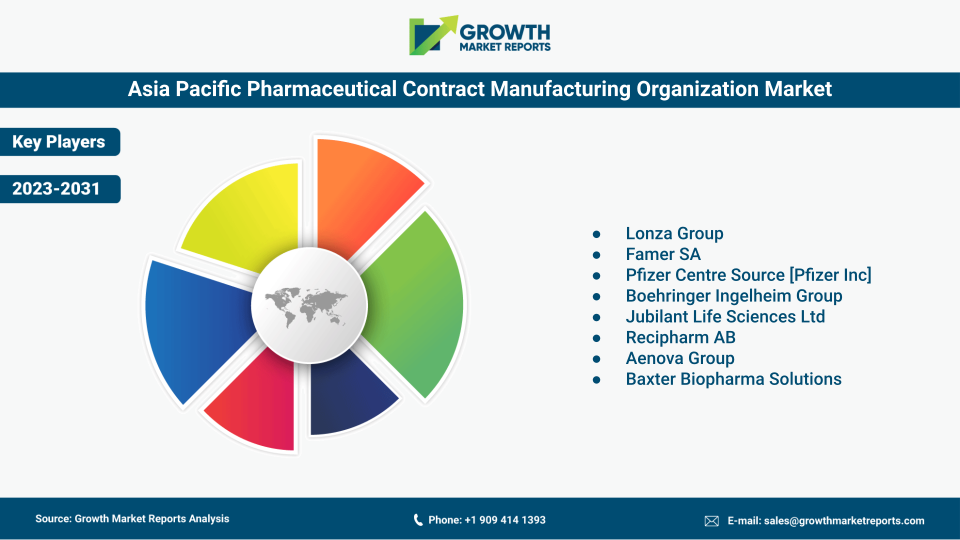
Key players competing in the Asia Pacific pharmaceutical contract manufacturing organization market include Lonza Group, Famer SA, Pfizer Centre Source [Pfizer Inc], Boehringer Ingelheim Group, Jubilant Life Sciences Ltd, Recipharm AB, Aenova Group, Baxter Biopharma Solutions, Thermo Fisher Scientific Inc.[Patheon Inc.], and Catalent Inc.
Some of these players are using several market strategies such as acquisitions, merger, collaborations, partnerships, capacity expansion, and product launches to enhance their market shares and to generate revenue and rise their production line of the business in the coming years.
Technological advancements such as continuous manufacturing, automation, and digitalization are enhancing CMO capabilities, improving efficiency, ensuring quality, and supporting compliance with regulatory standards.
Major players include Lonza Group, Catalent Inc., Thermo Fisher Scientific (Patheon), Recipharm AB, Boehringer Ingelheim, Samsung Biologics, Siegfried Holding AG, Jubilant Life Sciences, and others.
Opportunities include increased outsourcing, demand for biologics and personalized medicine, and technological advancements. Challenges involve regulatory compliance, quality assurance, competition, and pricing pressures.
The main end users are pharmaceutical companies, biotechnology companies, and other organizations such as academic research institutions, government agencies, and non-profits.
API manufacturing involves producing the active ingredients in drugs, while FDF manufacturing refers to creating the final drug products in forms such as tablets, capsules, or injectables. Both are critical services offered by CMOs.
Pharmaceutical CMOs offer services such as active pharmaceutical ingredient (API) manufacturing, finished dosage formulation (FDF) manufacturing, packaging, analytical testing, stability studies, regulatory support, and more.
Asia Pacific is the dominant region, with countries like India and China serving as global manufacturing hubs. North America and Europe also hold significant market shares, while Latin America and the Middle East & Africa are experiencing steady growth.
Key drivers include increasing outsourcing trends, the need for cost-effective drug development, rising complexity of pharmaceutical products, growing demand for biologics and specialty drugs, and the globalization of the pharmaceutical supply chain.
The global pharmaceutical CMO market reached USD 141.2 billion in 2024 and is projected to grow at a CAGR of 7.6% from 2025 to 2033, reaching an estimated USD 273.1 billion by 2033.
A pharmaceutical contract manufacturing organization (CMO) is a company that provides drug development and manufacturing services to pharmaceutical and biotechnology firms on a contract basis. CMOs help companies outsource production, packaging, and other related services, allowing them to focus on research, development, and marketing.