Personal Finance Software Market Research Report 2033

Personal Finance Software Market Research Report 2033

Segments - by Product Type (Web-based, Mobile-based, Desktop-based), by Deployment Mode (On-Premises, Cloud-based), by Application (Budgeting, Investment Tracking, Expense Management, Tax Management, Others), by End-User (Individual, Small Businesses, Enterprises)

https://growthmarketreports.com/Raksha
Author : Raksha Sharma
https://growthmarketreports.com/Vaibhav
Fact-checked by : V. Chandola
https://growthmarketreports.com/Shruti
Editor : Shruti Bhat

Upcoming | Report ID :ICT-SE-4038 | 4.3 Rating | 91 Reviews | 297 Pages | Format : Docx PDF

Report Description


Personal Finance Software Market Outlook

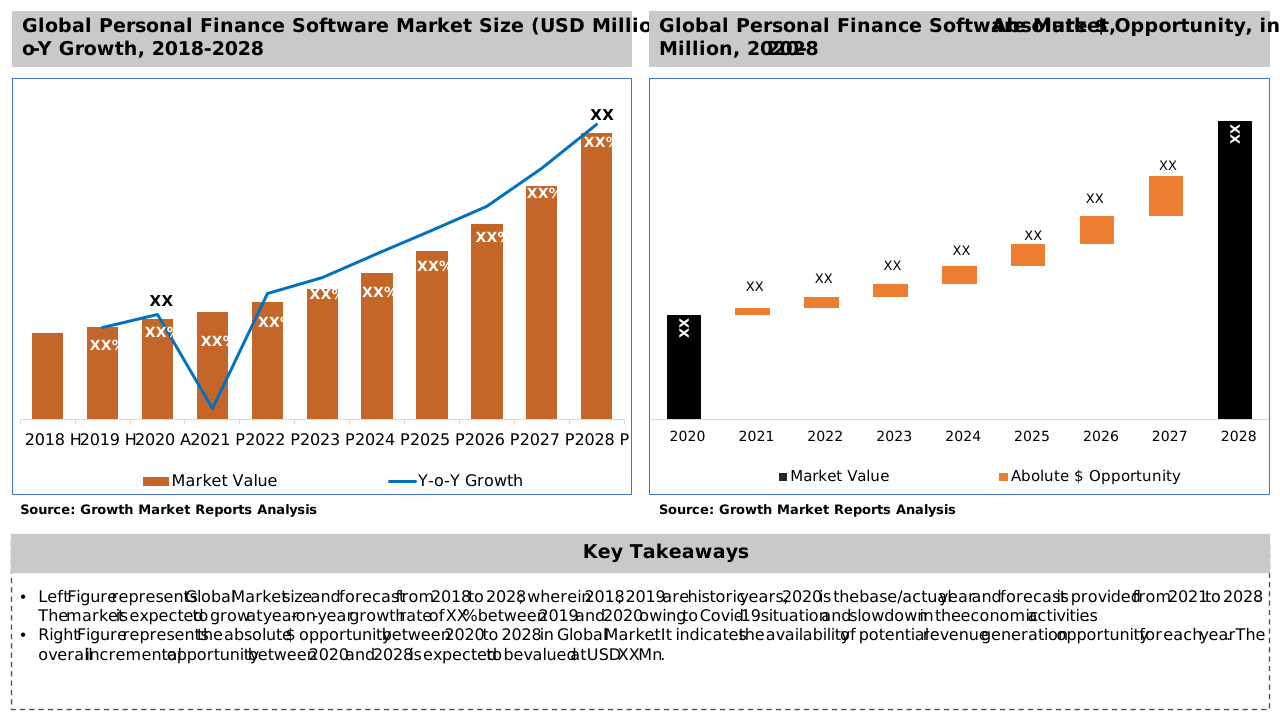
According to our latest research, the global personal finance software market size reached USD 1.29 billion in 2024, driven by the growing adoption of digital financial tools and rising consumer demand for financial literacy solutions. The market is set to expand at a robust CAGR of 5.8% from 2025 to 2033, propelling the market to a forecasted value of USD 2.16 billion by the end of 2033. This sustained growth is primarily due to the increasing penetration of smartphones, the proliferation of internet access, and a heightened focus on personal wealth management and budgeting among individuals and small businesses worldwide. As per the latest research, the marketÂ’s momentum is further bolstered by technological advancements and the integration of artificial intelligence and machine learning into personal finance platforms, which enhance user experience and offer more personalized financial insights.

One of the key growth factors propelling the personal finance software market is the rising consumer awareness regarding the importance of financial planning and management. The ongoing shift towards digital banking and cashless transactions has made it increasingly essential for individuals to track their finances, budget effectively, and plan for future investments. As a result, consumers are turning to personal finance software for features such as automated expense tracking, real-time account synchronization, and goal-setting tools. The proliferation of user-friendly mobile applications and web-based platforms has further democratized access to financial management tools, making them more accessible to a broader demographic, including millennials and Gen Z, who are particularly tech-savvy and value financial independence.

Another significant driver is the integration of advanced technologies such as artificial intelligence, machine learning, and data analytics into personal finance software. These technologies enable platforms to provide personalized recommendations, predictive analytics, and automated insights into spending habits, investment opportunities, and risk factors. AI-driven chatbots and virtual financial advisors are increasingly being adopted to enhance customer support and deliver tailored advice, thereby improving user engagement and retention. The ability to aggregate data from multiple financial accounts and provide a holistic view of an individualÂ’s financial health is a compelling value proposition that continues to drive adoption among both individual consumers and small businesses. Furthermore, the rise of open banking initiatives and APIs has facilitated seamless integration between personal finance software and various financial institutions, enhancing interoperability and user experience.

The growing need for compliance and regulatory adherence, particularly in regions with stringent data privacy laws, is also shaping the evolution of the personal finance software market. Software providers are investing heavily in robust security features, encryption protocols, and compliance frameworks to ensure the safety and confidentiality of user data. This focus on security is particularly critical as cyber threats and financial fraud become more sophisticated. Additionally, the emergence of cloud-based deployment models has allowed vendors to offer scalable and cost-effective solutions that cater to a diverse range of users, from individuals to large enterprises. The ability to access financial data and management tools from anywhere, at any time, is a significant advantage driving the shift towards cloud-based platforms.

The rise of Financial Advisory Software is also playing a pivotal role in the evolution of personal finance management. These sophisticated tools are designed to offer comprehensive financial planning services, enabling users to make informed decisions about their investments, savings, and expenditures. By integrating with personal finance software, financial advisory platforms can provide users with a holistic view of their financial health, incorporating data from various sources to deliver tailored advice and strategies. This synergy not only enhances user experience but also empowers individuals and small businesses to achieve their financial goals with greater precision and confidence.

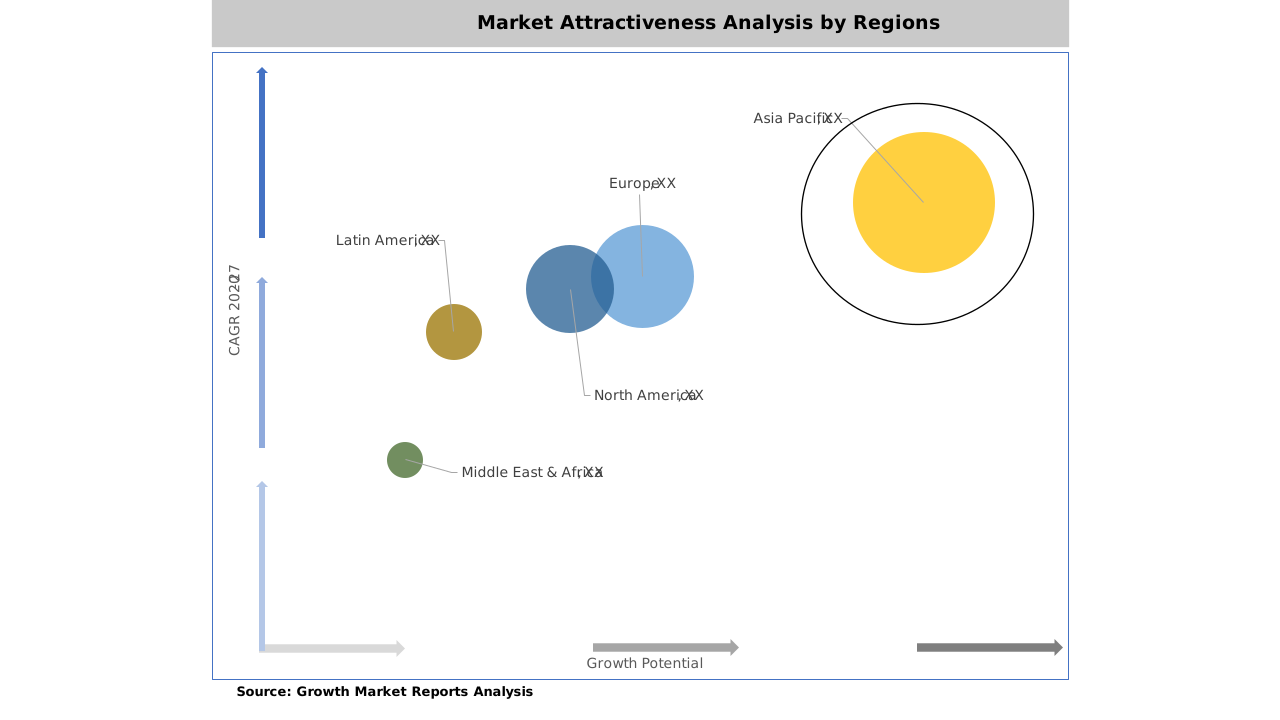
From a regional perspective, North America currently dominates the personal finance software market, accounting for the largest share due to high digital literacy, widespread adoption of financial technologies, and the presence of major software vendors. However, the Asia Pacific region is expected to witness the fastest growth during the forecast period, driven by rapid urbanization, increasing smartphone penetration, and a growing middle-class population with rising disposable incomes. Europe remains a significant market, characterized by a strong regulatory framework and a mature banking sector that supports the adoption of advanced financial management solutions. Meanwhile, Latin America and the Middle East & Africa are emerging as promising markets, fueled by economic development, improved internet infrastructure, and a burgeoning fintech ecosystem.

Global Personal Finance Software Industry Outlook

Product Type Analysis

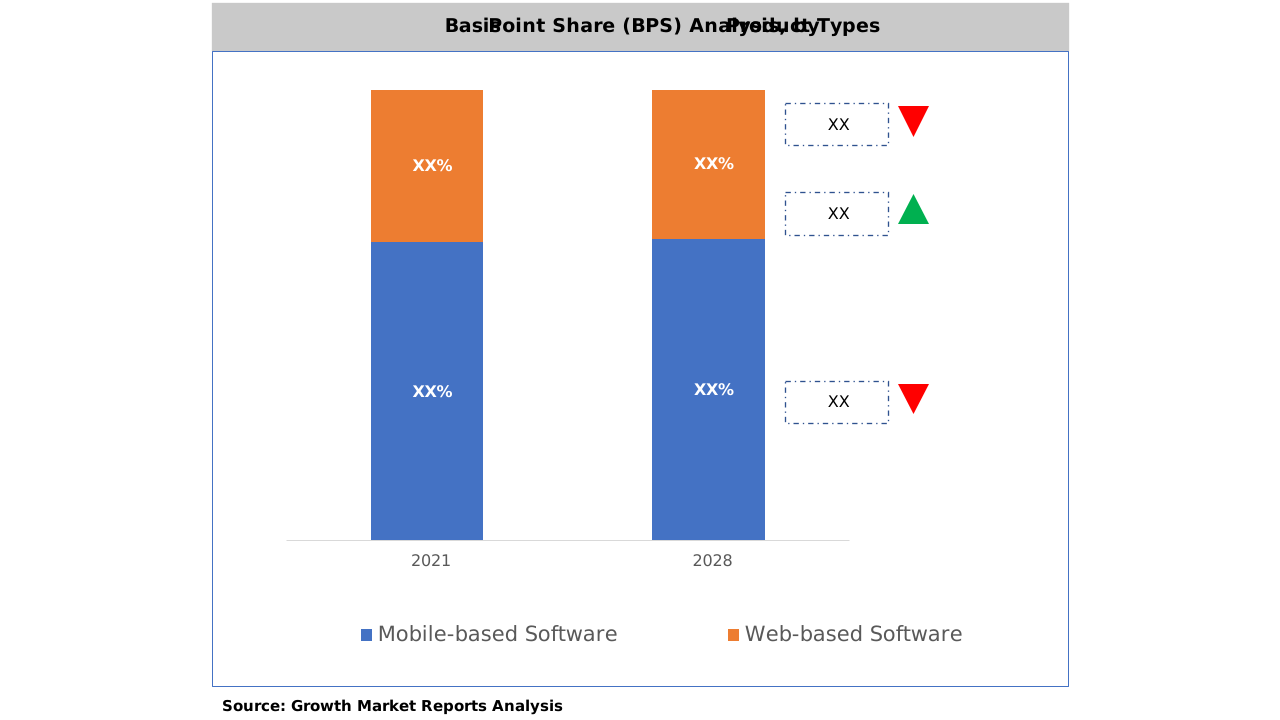
The personal finance software market is segmented by product type into web-based, mobile-based, and desktop-based solutions. Web-based personal finance software has gained substantial traction in recent years due to its accessibility, flexibility, and compatibility with a wide range of devices and operating systems. Users can manage their finances from any location with internet access, making it ideal for individuals and businesses with dynamic lifestyles. The collaborative features offered by web-based platforms, such as shared budgeting and goal tracking, further enhance their appeal. Additionally, web-based solutions often receive regular updates and security patches, ensuring users benefit from the latest features and protections.

The advent of Personal Finance Management AI is revolutionizing the way individuals and businesses approach financial planning. By leveraging artificial intelligence, these systems can analyze vast amounts of financial data to identify patterns, predict future trends, and offer personalized recommendations. This level of insight allows users to optimize their financial strategies, reduce unnecessary expenditures, and maximize returns on investments. The integration of AI into personal finance tools is not only enhancing accuracy and efficiency but also making financial management more accessible to a broader audience, including those who may have previously found such tasks daunting.

Mobile-based personal finance software is experiencing rapid growth, fueled by the proliferation of smartphones and the increasing reliance on mobile devices for day-to-day financial activities. These applications are designed to provide on-the-go access to budgeting tools, expense trackers, and investment management features, catering to the needs of tech-savvy consumers who prioritize convenience and real-time insights. The integration of biometric authentication, push notifications, and location-based services enhances the security and functionality of mobile-based solutions. As financial institutions continue to embrace digital transformation, mobile-based personal finance software is expected to remain a key growth driver in the market.

Desktop-based personal finance software, while experiencing slower growth compared to web and mobile counterparts, continues to hold relevance among users who prefer robust, feature-rich platforms with advanced customization options. These solutions are often favored by small businesses and enterprises that require comprehensive financial reporting, data analysis, and integration with accounting systems. Desktop-based software typically offers enhanced data privacy and offline access, which can be critical for users with specific security or regulatory requirements. However, the shift towards cloud and mobile solutions is gradually impacting the demand for traditional desktop-based offerings.

The competitive landscape within the product type segment is characterized by continuous innovation and differentiation, as vendors strive to offer unique value propositions to attract and retain users. The convergence of web, mobile, and desktop functionalities is becoming increasingly common, with many providers offering multi-platform solutions that allow users to seamlessly switch between devices. This trend is expected to continue as user preferences evolve and the demand for integrated financial management tools grows. Overall, the product type segment remains dynamic, with each category catering to distinct user needs and preferences.

Report Scope

Attributes Details
Report Title Personal Finance Software Market Research Report 2033
By Product Type Web-based, Mobile-based, Desktop-based
By Deployment Mode On-Premises, Cloud-based
By Application Budgeting, Investment Tracking, Expense Management, Tax Management, Others
By End-User Individual, Small Businesses, Enterprises
Regions Covered North America, Europe, APAC, Latin America, MEA
Base Year 2024
Historic Data 2018-2023
Forecast Period 2025-2033
Number of Pages 297
Number of Tables & Figures 368
Customization Available Yes, the report can be customized as per your need.

Deployment Mode Analysis

The deployment mode segment of the personal finance software market comprises on-premises and cloud-based solutions. On-premises deployment has traditionally been favored by enterprises and organizations with stringent data security requirements and the need for full control over their IT infrastructure. These solutions offer enhanced customization, integration with legacy systems, and the ability to comply with specific regulatory mandates. However, the high upfront costs, ongoing maintenance, and limited scalability associated with on-premises deployment have led many users to explore alternative options.

Cloud-based deployment has emerged as the preferred choice for a growing number of individuals, small businesses, and enterprises seeking scalable, cost-effective, and easily accessible financial management solutions. Cloud-based personal finance software offers numerous advantages, including automatic updates, remote access, and seamless integration with other cloud-based applications and services. The subscription-based pricing model reduces the financial burden on users and allows them to scale their usage based on evolving needs. Additionally, cloud-based solutions benefit from robust security features, disaster recovery capabilities, and compliance with industry standards, making them an attractive option for a wide range of users.

The rapid adoption of cloud computing across various industries has significantly influenced the personal finance software market, with vendors increasingly focusing on delivering cloud-native solutions that leverage the full potential of the cloud ecosystem. The ability to aggregate data from multiple sources, provide real-time insights, and facilitate collaboration among users is driving the popularity of cloud-based platforms. Furthermore, the integration of artificial intelligence, machine learning, and big data analytics is more seamless in the cloud environment, enabling providers to offer advanced features and personalized experiences to users.

Despite the growing dominance of cloud-based deployment, on-premises solutions continue to play a vital role in specific market segments, particularly among large enterprises and organizations with unique security or compliance requirements. The coexistence of both deployment modes reflects the diverse needs of users and the importance of offering flexible deployment options. As the market evolves, it is expected that hybrid deployment models, which combine the benefits of on-premises and cloud-based solutions, will gain traction, providing users with greater flexibility and control over their financial management processes.

Application Analysis

The application segment of the personal finance software market encompasses budgeting, investment tracking, expense management, tax management, and other specialized financial management functions. Budgeting applications are among the most widely used, enabling individuals and businesses to create, monitor, and adjust budgets based on income, expenses, and financial goals. These tools provide visualizations, alerts, and recommendations to help users stay on track and make informed financial decisions. The increasing complexity of personal and business finances has heightened the demand for advanced budgeting solutions that offer greater customization, automation, and integration with other financial tools.

Investment tracking applications are gaining popularity as more individuals seek to manage and optimize their investment portfolios. These tools provide real-time updates on stock prices, market trends, and portfolio performance, allowing users to make data-driven investment decisions. The integration of robo-advisors, predictive analytics, and risk assessment features further enhances the value proposition of investment tracking software. As financial markets become more accessible to retail investors, the demand for user-friendly and comprehensive investment tracking solutions is expected to continue rising.

Expense management applications are essential for users seeking to gain control over their spending habits and identify areas for cost savings. These tools automatically categorize transactions, track recurring expenses, and generate detailed reports to provide users with a clear understanding of their financial health. The ability to set spending limits, receive alerts for overspending, and analyze historical data makes expense management applications indispensable for both individuals and businesses. The growing focus on financial wellness and the desire to achieve long-term financial goals are driving the adoption of expense management software across diverse user segments.

Tax management applications address the complex and time-consuming task of preparing and filing taxes, offering features such as automated calculations, document storage, and compliance checks. These tools are particularly valuable for small businesses and self-employed individuals who must navigate multiple tax regulations and requirements. The integration of tax management with other financial functions, such as expense tracking and budgeting, provides users with a comprehensive solution for managing their financial obligations. As tax regulations evolve and become more complex, the demand for reliable and user-friendly tax management software is expected to increase.

Other applications within the personal finance software market include debt management, retirement planning, and financial goal setting. These specialized tools cater to users with unique financial needs and objectives, offering tailored features and guidance to help them achieve their goals. The ability to integrate multiple financial functions into a single platform is a key trend shaping the application segment, as users increasingly seek comprehensive solutions that address all aspects of their financial lives. The ongoing innovation and expansion of application offerings are expected to drive continued growth and diversification within the personal finance software market.

End-User Analysis

The end-user segment of the personal finance software market is broadly categorized into individuals, small businesses, and enterprises, each with distinct requirements and usage patterns. Individual users represent the largest segment, driven by the growing awareness of financial literacy and the desire for greater control over personal finances. These users seek intuitive, easy-to-use platforms that offer budgeting, expense tracking, and investment management features tailored to their unique needs. The proliferation of mobile and web-based solutions has made personal finance software more accessible to a diverse range of individuals, including students, young professionals, and retirees.

Small businesses are increasingly adopting personal finance software to streamline their financial operations, manage cash flow, and ensure compliance with tax and regulatory requirements. These users require more advanced features, such as multi-user access, integration with accounting systems, and customizable reporting tools. The ability to automate routine financial tasks, generate real-time insights, and collaborate with accountants and financial advisors is particularly valuable for small businesses seeking to optimize their financial management processes and drive growth.

Enterprises, while representing a smaller share of the market, have unique requirements that necessitate robust, scalable, and highly customizable personal finance software solutions. These organizations often operate across multiple geographies and business units, requiring advanced features such as multi-currency support, consolidated reporting, and integration with enterprise resource planning (ERP) systems. The focus on data security, regulatory compliance, and auditability is paramount for enterprise users, driving demand for solutions that offer granular access controls, encryption, and comprehensive audit trails.

The evolving needs of end-users are driving continuous innovation within the personal finance software market, with vendors increasingly offering tailored solutions that cater to specific user segments. The ability to provide personalized experiences, seamless integration with third-party services, and ongoing support and training is critical to attracting and retaining users across all segments. As financial management becomes more complex and digital-first, the demand for user-centric, flexible, and feature-rich personal finance software is expected to remain strong.

Opportunities & Threats

The personal finance software market presents significant opportunities for growth and innovation, particularly in emerging markets where digital financial services are gaining traction. The increasing adoption of smartphones and internet connectivity in regions such as Asia Pacific, Latin America, and Africa is creating new avenues for software vendors to reach untapped user segments. The rising demand for financial literacy, coupled with government initiatives to promote digital banking and financial inclusion, is further expanding the addressable market. Vendors that can offer localized solutions, multilingual support, and integration with regional financial institutions are well-positioned to capitalize on these growth opportunities.

Another major opportunity lies in the integration of emerging technologies such as artificial intelligence, machine learning, and blockchain into personal finance software. These technologies have the potential to transform the user experience by providing personalized recommendations, automating routine tasks, and enhancing security and transparency. The development of open banking APIs and ecosystem partnerships with banks, fintech companies, and payment providers is enabling software vendors to offer more comprehensive and interoperable solutions. As users increasingly seek holistic financial management tools, the ability to aggregate data from multiple sources and deliver actionable insights will be a key differentiator in the market.

Despite the promising outlook, the personal finance software market faces several restraining factors, including concerns over data privacy and security. The sensitive nature of financial data makes personal finance software a target for cyberattacks, data breaches, and identity theft. Regulatory compliance with data protection laws such as GDPR and CCPA adds complexity and cost to software development and deployment. Additionally, the rapid pace of technological change and evolving user expectations require vendors to continuously innovate and invest in research and development. Failure to address these challenges could hinder market growth and erode user trust in personal finance software solutions.

Regional Outlook

North America remains the largest and most mature market for personal finance software, accounting for approximately 42% of the global market share in 2024. The regionÂ’s leadership is underpinned by high digital literacy, widespread adoption of advanced financial technologies, and the presence of leading software vendors such as Intuit, Quicken, and Personal Capital. The United States and Canada are at the forefront of innovation, with consumers exhibiting a strong preference for digital banking, budgeting tools, and investment management platforms. The market in North America is expected to maintain steady growth, supported by ongoing technological advancements and a robust fintech ecosystem.

The Asia Pacific region is poised for the fastest growth, with a projected CAGR of 7.2% from 2025 to 2033. The market size in Asia Pacific reached USD 270 million in 2024 and is expected to surpass USD 520 million by 2033. Factors driving this rapid expansion include increasing smartphone penetration, a burgeoning middle-class population, and rising awareness of personal finance management. Countries such as China, India, Japan, and Australia are witnessing significant investments in digital infrastructure and fintech innovation, creating a fertile environment for personal finance software adoption. Localized solutions that cater to the unique needs of diverse user segments are gaining traction in the region.

Europe represents a significant market for personal finance software, characterized by a strong regulatory framework, a mature banking sector, and a growing emphasis on data privacy and security. The market size in Europe stood at USD 340 million in 2024, with steady growth expected over the forecast period. The adoption of open banking initiatives and the integration of fintech solutions with traditional banking services are driving innovation and competition in the region. Meanwhile, Latin America and the Middle East & Africa are emerging as promising markets, with increasing digital adoption, economic development, and a growing focus on financial inclusion. These regions collectively accounted for USD 180 million in 2024, with significant growth potential as digital financial services become more accessible.

Personal Finance Software Market Statistics

Competitor Outlook

The competitive landscape of the personal finance software market is characterized by intense rivalry among established players, innovative startups, and niche vendors. Leading companies are continuously investing in research and development to enhance their product offerings, integrate advanced technologies, and differentiate themselves in a crowded market. The focus on user experience, security, and interoperability is driving the development of multi-platform solutions that cater to the evolving needs of individuals, small businesses, and enterprises. Strategic partnerships, mergers and acquisitions, and ecosystem collaborations are common strategies employed by market participants to expand their market presence and accelerate growth.

Innovation is a key competitive driver, with companies leveraging artificial intelligence, machine learning, and big data analytics to deliver personalized financial insights, automate routine tasks, and improve decision-making. The integration of open banking APIs and partnerships with financial institutions are enabling software vendors to offer more comprehensive and interoperable solutions. User-centric design, intuitive interfaces, and robust security features are critical factors influencing user adoption and retention. As the market matures, the ability to provide seamless integration with third-party services, such as payment gateways, investment platforms, and accounting systems, is becoming increasingly important.

The market is also witnessing the entry of new players, particularly in emerging markets, where localized solutions and innovative business models are gaining traction. Startups are leveraging agile development processes and cloud-native architectures to quickly respond to changing user needs and regulatory requirements. The rise of subscription-based pricing models and freemium offerings is lowering barriers to entry and enabling vendors to reach a broader audience. However, the competitive intensity also poses challenges, as companies must continuously innovate and differentiate themselves to maintain market share and profitability.

Major companies operating in the personal finance software market include Intuit Inc. (maker of QuickBooks and Mint), Quicken Inc., Personal Capital, YNAB (You Need A Budget), Money Dashboard, CountAbout, and Moneydance. Intuit is a market leader, renowned for its comprehensive suite of financial management solutions for individuals and small businesses. Quicken, a pioneer in personal finance software, continues to innovate with new features and integrations. Personal Capital stands out for its focus on investment management and wealth tracking, while YNAB is popular for its budgeting methodology and user-friendly interface. Money Dashboard and CountAbout are gaining traction in the UK and US markets, respectively, by offering unique features and competitive pricing. Moneydance is recognized for its robust desktop-based platform and support for multiple currencies and investment accounts.

In summary, the personal finance software market is highly dynamic and competitive, with established players and new entrants vying for market share through innovation, strategic partnerships, and a relentless focus on user needs. As the market continues to evolve, the ability to deliver secure, personalized, and integrated financial management solutions will be critical to long-term success.

Key Players

  • Intuit Inc.
  • Quicken Inc.
  • The Vanguard Group
  • Personal Capital Corporation
  • YNAB (You Need A Budget)
  • Money Dashboard
  • Fidelity Investments
  • Morningstar, Inc.
  • BlackRock, Inc.
  • Prism Money
  • PocketSmith Ltd.
  • Buxfer Inc.
  • CountAbout Corporation
  • Acorns Grow Incorporated
  • Mvelopes (Finicity Corporation)
  • Banktivity (IGG Software, Inc.)
  • Moneyspire Inc.
  • Albert Corporation
  • Tiller Money Inc.
  • Simplifi by Quicken
Personal Finance Software Market Overview

Segments

The Personal Finance Software market has been segmented on the basis of

Product Type

  • Web-based
  • Mobile-based
  • Desktop-based

Deployment Mode

  • On-Premises
  • Cloud-based

Application

  • Budgeting
  • Investment Tracking
  • Expense Management
  • Tax Management
  • Others

End-User

  • Individual
  • Small Businesses
  • Enterprises

Competitive Landscape

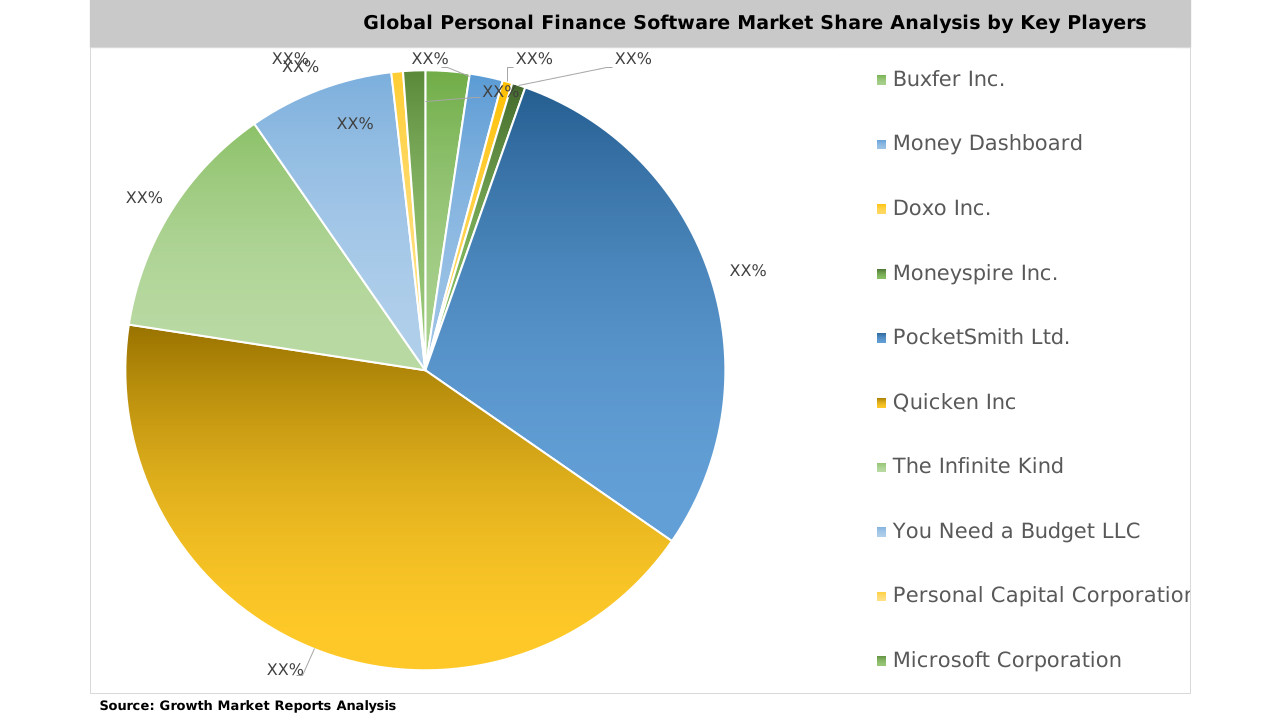
Key players in the global personal finance software market include Buxfer Inc.; Money Dashboard; Doxo Inc.; Moneyspire Inc.; PocketSmith Ltd.; Quicken Inc; The Infinite Kind; You Need a Budget LLC; Personal Capital Corporation; and Microsoft Corporation. These players are widely engaged in various business development strategies including mergers & acquisitions, collaborations, agreements, and partnerships to strengthen their geographical presence and expand their consumer base globally.

Personal Finance Software Market Share

Frequently Asked Questions

Major players include Intuit Inc. (QuickBooks, Mint), Quicken Inc., Personal Capital, YNAB, Money Dashboard, CountAbout, Moneydance, Fidelity Investments, Morningstar, BlackRock, and others.

Opportunities include growth in emerging markets, integration of AI and blockchain, and expanding digital financial services. Challenges involve data privacy concerns, regulatory compliance, and the need for continuous innovation to meet evolving user expectations.

Artificial intelligence, machine learning, data analytics, and open banking APIs are key technologies enhancing personal finance software by enabling personalized recommendations, predictive analytics, and seamless integration with financial institutions.

The main end-users are individuals, small businesses, and enterprises. Individuals seek user-friendly platforms for personal budgeting and investment, while small businesses and enterprises require advanced features, integration, and compliance capabilities.

Key applications include budgeting, investment tracking, expense management, and tax management. Other specialized functions include debt management, retirement planning, and financial goal setting.

Personal finance software can be deployed via on-premises or cloud-based solutions. Cloud-based deployment is increasingly popular for its scalability, cost-effectiveness, and remote access, while on-premises solutions are preferred by organizations with strict security requirements.

Personal finance software is available in web-based, mobile-based, and desktop-based formats. Web-based and mobile-based solutions are growing rapidly due to their accessibility and convenience, while desktop-based software remains popular among users needing advanced features and offline access.

North America currently dominates the market due to high digital literacy and major vendors, while Asia Pacific is expected to see the fastest growth, driven by smartphone adoption and a rising middle class. Europe, Latin America, and the Middle East & Africa are also significant and emerging markets.

The personal finance software market is expected to grow at a CAGR of 5.8% from 2025 to 2033, reaching a forecasted value of USD 2.16 billion by 2033.

As of 2024, the global personal finance software market reached USD 1.29 billion, driven by the increasing adoption of digital financial tools and a growing demand for financial literacy solutions.

Table Of Content

Chapter 1 Executive Summary
Chapter 2 Assumptions and Acronyms Used
Chapter 3 Research Methodology
Chapter 4 Personal Finance Software Market Overview
   4.1 Introduction
      4.1.1 Market Taxonomy
      4.1.2 Market Definition
      4.1.3 Macro-Economic Factors Impacting the Market Growth
   4.2 Personal Finance Software Market Dynamics
      4.2.1 Market Drivers
      4.2.2 Market Restraints
      4.2.3 Market Opportunity
   4.3 Personal Finance Software Market - Supply Chain Analysis
      4.3.1 List of Key Suppliers
      4.3.2 List of Key Distributors
      4.3.3 List of Key Consumers
   4.4 Key Forces Shaping the Personal Finance Software Market
      4.4.1 Bargaining Power of Suppliers
      4.4.2 Bargaining Power of Buyers
      4.4.3 Threat of Substitution
      4.4.4 Threat of New Entrants
      4.4.5 Competitive Rivalry
   4.5 Global Personal Finance Software Market Size & Forecast, 2023-2032
      4.5.1 Personal Finance Software Market Size and Y-o-Y Growth
      4.5.2 Personal Finance Software Market Absolute $ Opportunity

Chapter 5 Global Personal Finance Software Market Analysis and Forecast By Product Type
   5.1 Introduction
      5.1.1 Key Market Trends & Growth Opportunities By Product Type
      5.1.2 Basis Point Share (BPS) Analysis By Product Type
      5.1.3 Absolute $ Opportunity Assessment By Product Type
   5.2 Personal Finance Software Market Size Forecast By Product Type
      5.2.1 Web-based
      5.2.2 Mobile-based
      5.2.3 Desktop-based
   5.3 Market Attractiveness Analysis By Product Type

Chapter 6 Global Personal Finance Software Market Analysis and Forecast By Deployment Mode
   6.1 Introduction
      6.1.1 Key Market Trends & Growth Opportunities By Deployment Mode
      6.1.2 Basis Point Share (BPS) Analysis By Deployment Mode
      6.1.3 Absolute $ Opportunity Assessment By Deployment Mode
   6.2 Personal Finance Software Market Size Forecast By Deployment Mode
      6.2.1 On-Premises
      6.2.2 Cloud-based
   6.3 Market Attractiveness Analysis By Deployment Mode

Chapter 7 Global Personal Finance Software Market Analysis and Forecast By Application
   7.1 Introduction
      7.1.1 Key Market Trends & Growth Opportunities By Application
      7.1.2 Basis Point Share (BPS) Analysis By Application
      7.1.3 Absolute $ Opportunity Assessment By Application
   7.2 Personal Finance Software Market Size Forecast By Application
      7.2.1 Budgeting
      7.2.2 Investment Tracking
      7.2.3 Expense Management
      7.2.4 Tax Management
      7.2.5 Others
   7.3 Market Attractiveness Analysis By Application

Chapter 8 Global Personal Finance Software Market Analysis and Forecast By End-User
   8.1 Introduction
      8.1.1 Key Market Trends & Growth Opportunities By End-User
      8.1.2 Basis Point Share (BPS) Analysis By End-User
      8.1.3 Absolute $ Opportunity Assessment By End-User
   8.2 Personal Finance Software Market Size Forecast By End-User
      8.2.1 Individual
      8.2.2 Small Businesses
      8.2.3 Enterprises
   8.3 Market Attractiveness Analysis By End-User

Chapter 9 Global Personal Finance Software Market Analysis and Forecast by Region
   9.1 Introduction
      9.1.1 Key Market Trends & Growth Opportunities By Region
      9.1.2 Basis Point Share (BPS) Analysis By Region
      9.1.3 Absolute $ Opportunity Assessment By Region
   9.2 Personal Finance Software Market Size Forecast By Region
      9.2.1 North America
      9.2.2 Europe
      9.2.3 Asia Pacific
      9.2.4 Latin America
      9.2.5 Middle East & Africa (MEA)
   9.3 Market Attractiveness Analysis By Region

Chapter 10 Coronavirus Disease (COVID-19) Impact 
   10.1 Introduction 
   10.2 Current & Future Impact Analysis 
   10.3 Economic Impact Analysis 
   10.4 Government Policies 
   10.5 Investment Scenario

Chapter 11 North America Personal Finance Software Analysis and Forecast
   11.1 Introduction
   11.2 North America Personal Finance Software Market Size Forecast by Country
      11.2.1 U.S.
      11.2.2 Canada
   11.3 Basis Point Share (BPS) Analysis by Country
   11.4 Absolute $ Opportunity Assessment by Country
   11.5 Market Attractiveness Analysis by Country
   11.6 North America Personal Finance Software Market Size Forecast By Product Type
      11.6.1 Web-based
      11.6.2 Mobile-based
      11.6.3 Desktop-based
   11.7 Basis Point Share (BPS) Analysis By Product Type 
   11.8 Absolute $ Opportunity Assessment By Product Type 
   11.9 Market Attractiveness Analysis By Product Type
   11.10 North America Personal Finance Software Market Size Forecast By Deployment Mode
      11.10.1 On-Premises
      11.10.2 Cloud-based
   11.11 Basis Point Share (BPS) Analysis By Deployment Mode 
   11.12 Absolute $ Opportunity Assessment By Deployment Mode 
   11.13 Market Attractiveness Analysis By Deployment Mode
   11.14 North America Personal Finance Software Market Size Forecast By Application
      11.14.1 Budgeting
      11.14.2 Investment Tracking
      11.14.3 Expense Management
      11.14.4 Tax Management
      11.14.5 Others
   11.15 Basis Point Share (BPS) Analysis By Application 
   11.16 Absolute $ Opportunity Assessment By Application 
   11.17 Market Attractiveness Analysis By Application
   11.18 North America Personal Finance Software Market Size Forecast By End-User
      11.18.1 Individual
      11.18.2 Small Businesses
      11.18.3 Enterprises
   11.19 Basis Point Share (BPS) Analysis By End-User 
   11.20 Absolute $ Opportunity Assessment By End-User 
   11.21 Market Attractiveness Analysis By End-User

Chapter 12 Europe Personal Finance Software Analysis and Forecast
   12.1 Introduction
   12.2 Europe Personal Finance Software Market Size Forecast by Country
      12.2.1 Germany
      12.2.2 France
      12.2.3 Italy
      12.2.4 U.K.
      12.2.5 Spain
      12.2.6 Russia
      12.2.7 Rest of Europe
   12.3 Basis Point Share (BPS) Analysis by Country
   12.4 Absolute $ Opportunity Assessment by Country
   12.5 Market Attractiveness Analysis by Country
   12.6 Europe Personal Finance Software Market Size Forecast By Product Type
      12.6.1 Web-based
      12.6.2 Mobile-based
      12.6.3 Desktop-based
   12.7 Basis Point Share (BPS) Analysis By Product Type 
   12.8 Absolute $ Opportunity Assessment By Product Type 
   12.9 Market Attractiveness Analysis By Product Type
   12.10 Europe Personal Finance Software Market Size Forecast By Deployment Mode
      12.10.1 On-Premises
      12.10.2 Cloud-based
   12.11 Basis Point Share (BPS) Analysis By Deployment Mode 
   12.12 Absolute $ Opportunity Assessment By Deployment Mode 
   12.13 Market Attractiveness Analysis By Deployment Mode
   12.14 Europe Personal Finance Software Market Size Forecast By Application
      12.14.1 Budgeting
      12.14.2 Investment Tracking
      12.14.3 Expense Management
      12.14.4 Tax Management
      12.14.5 Others
   12.15 Basis Point Share (BPS) Analysis By Application 
   12.16 Absolute $ Opportunity Assessment By Application 
   12.17 Market Attractiveness Analysis By Application
   12.18 Europe Personal Finance Software Market Size Forecast By End-User
      12.18.1 Individual
      12.18.2 Small Businesses
      12.18.3 Enterprises
   12.19 Basis Point Share (BPS) Analysis By End-User 
   12.20 Absolute $ Opportunity Assessment By End-User 
   12.21 Market Attractiveness Analysis By End-User

Chapter 13 Asia Pacific Personal Finance Software Analysis and Forecast
   13.1 Introduction
   13.2 Asia Pacific Personal Finance Software Market Size Forecast by Country
      13.2.1 China
      13.2.2 Japan
      13.2.3 South Korea
      13.2.4 India
      13.2.5 Australia
      13.2.6 South East Asia (SEA)
      13.2.7 Rest of Asia Pacific (APAC)
   13.3 Basis Point Share (BPS) Analysis by Country
   13.4 Absolute $ Opportunity Assessment by Country
   13.5 Market Attractiveness Analysis by Country
   13.6 Asia Pacific Personal Finance Software Market Size Forecast By Product Type
      13.6.1 Web-based
      13.6.2 Mobile-based
      13.6.3 Desktop-based
   13.7 Basis Point Share (BPS) Analysis By Product Type 
   13.8 Absolute $ Opportunity Assessment By Product Type 
   13.9 Market Attractiveness Analysis By Product Type
   13.10 Asia Pacific Personal Finance Software Market Size Forecast By Deployment Mode
      13.10.1 On-Premises
      13.10.2 Cloud-based
   13.11 Basis Point Share (BPS) Analysis By Deployment Mode 
   13.12 Absolute $ Opportunity Assessment By Deployment Mode 
   13.13 Market Attractiveness Analysis By Deployment Mode
   13.14 Asia Pacific Personal Finance Software Market Size Forecast By Application
      13.14.1 Budgeting
      13.14.2 Investment Tracking
      13.14.3 Expense Management
      13.14.4 Tax Management
      13.14.5 Others
   13.15 Basis Point Share (BPS) Analysis By Application 
   13.16 Absolute $ Opportunity Assessment By Application 
   13.17 Market Attractiveness Analysis By Application
   13.18 Asia Pacific Personal Finance Software Market Size Forecast By End-User
      13.18.1 Individual
      13.18.2 Small Businesses
      13.18.3 Enterprises
   13.19 Basis Point Share (BPS) Analysis By End-User 
   13.20 Absolute $ Opportunity Assessment By End-User 
   13.21 Market Attractiveness Analysis By End-User

Chapter 14 Latin America Personal Finance Software Analysis and Forecast
   14.1 Introduction
   14.2 Latin America Personal Finance Software Market Size Forecast by Country
      14.2.1 Brazil
      14.2.2 Mexico
      14.2.3 Rest of Latin America (LATAM)
   14.3 Basis Point Share (BPS) Analysis by Country
   14.4 Absolute $ Opportunity Assessment by Country
   14.5 Market Attractiveness Analysis by Country
   14.6 Latin America Personal Finance Software Market Size Forecast By Product Type
      14.6.1 Web-based
      14.6.2 Mobile-based
      14.6.3 Desktop-based
   14.7 Basis Point Share (BPS) Analysis By Product Type 
   14.8 Absolute $ Opportunity Assessment By Product Type 
   14.9 Market Attractiveness Analysis By Product Type
   14.10 Latin America Personal Finance Software Market Size Forecast By Deployment Mode
      14.10.1 On-Premises
      14.10.2 Cloud-based
   14.11 Basis Point Share (BPS) Analysis By Deployment Mode 
   14.12 Absolute $ Opportunity Assessment By Deployment Mode 
   14.13 Market Attractiveness Analysis By Deployment Mode
   14.14 Latin America Personal Finance Software Market Size Forecast By Application
      14.14.1 Budgeting
      14.14.2 Investment Tracking
      14.14.3 Expense Management
      14.14.4 Tax Management
      14.14.5 Others
   14.15 Basis Point Share (BPS) Analysis By Application 
   14.16 Absolute $ Opportunity Assessment By Application 
   14.17 Market Attractiveness Analysis By Application
   14.18 Latin America Personal Finance Software Market Size Forecast By End-User
      14.18.1 Individual
      14.18.2 Small Businesses
      14.18.3 Enterprises
   14.19 Basis Point Share (BPS) Analysis By End-User 
   14.20 Absolute $ Opportunity Assessment By End-User 
   14.21 Market Attractiveness Analysis By End-User

Chapter 15 Middle East & Africa (MEA) Personal Finance Software Analysis and Forecast
   15.1 Introduction
   15.2 Middle East & Africa (MEA) Personal Finance Software Market Size Forecast by Country
      15.2.1 Saudi Arabia
      15.2.2 South Africa
      15.2.3 UAE
      15.2.4 Rest of Middle East & Africa (MEA)
   15.3 Basis Point Share (BPS) Analysis by Country
   15.4 Absolute $ Opportunity Assessment by Country
   15.5 Market Attractiveness Analysis by Country
   15.6 Middle East & Africa (MEA) Personal Finance Software Market Size Forecast By Product Type
      15.6.1 Web-based
      15.6.2 Mobile-based
      15.6.3 Desktop-based
   15.7 Basis Point Share (BPS) Analysis By Product Type 
   15.8 Absolute $ Opportunity Assessment By Product Type 
   15.9 Market Attractiveness Analysis By Product Type
   15.10 Middle East & Africa (MEA) Personal Finance Software Market Size Forecast By Deployment Mode
      15.10.1 On-Premises
      15.10.2 Cloud-based
   15.11 Basis Point Share (BPS) Analysis By Deployment Mode 
   15.12 Absolute $ Opportunity Assessment By Deployment Mode 
   15.13 Market Attractiveness Analysis By Deployment Mode
   15.14 Middle East & Africa (MEA) Personal Finance Software Market Size Forecast By Application
      15.14.1 Budgeting
      15.14.2 Investment Tracking
      15.14.3 Expense Management
      15.14.4 Tax Management
      15.14.5 Others
   15.15 Basis Point Share (BPS) Analysis By Application 
   15.16 Absolute $ Opportunity Assessment By Application 
   15.17 Market Attractiveness Analysis By Application
   15.18 Middle East & Africa (MEA) Personal Finance Software Market Size Forecast By End-User
      15.18.1 Individual
      15.18.2 Small Businesses
      15.18.3 Enterprises
   15.19 Basis Point Share (BPS) Analysis By End-User 
   15.20 Absolute $ Opportunity Assessment By End-User 
   15.21 Market Attractiveness Analysis By End-User

Chapter 16 Competition Landscape 
   16.1 Personal Finance Software Market: Competitive Dashboard
   16.2 Global Personal Finance Software Market: Market Share Analysis, 2023
   16.3 Company Profiles (Details – Overview, Financials, Developments, Strategy) 
      16.3.1 Intuit Inc.
Quicken Inc.
The Vanguard Group
Personal Capital Corporation
YNAB (You Need A Budget)
Money Dashboard
Fidelity Investments
Morningstar, Inc.
BlackRock, Inc.
Prism Money
PocketSmith Ltd.
Buxfer Inc.
CountAbout Corporation
Acorns Grow Incorporated
Mvelopes (Finicity Corporation)
Banktivity (IGG Software, Inc.)
Moneyspire Inc.
Albert Corporation
Tiller Money Inc.
Simplifi by Quicken

Methodology

Our Clients

Honda Motor Co. Ltd.
The John Holland Group
Siemens Healthcare
Dassault Aviation
Microsoft
FedEx Logistics
Nestle SA
Pfizer