Payment Processing Solutions Market Research Report 2033

Payment Processing Solutions Market Research Report 2033

Segments - by Component (Software, Hardware, Services), by Payment Method (Credit Card, Debit Card, E-Wallet, Bank Transfer, Others), by Deployment Mode (On-Premises, Cloud), by End-User (Retail, BFSI, Healthcare, Hospitality, E-commerce, Government, Others), by Organization Size (Large Enterprises, Small and Medium Enterprises)

https://growthmarketreports.com/Raksha
Author : Raksha Sharma
https://growthmarketreports.com/Vaibhav
Fact-checked by : V. Chandola
https://growthmarketreports.com/Shruti
Editor : Shruti Bhat

Upcoming | Report ID :BFSI-3541 | 5.0 Rating | 92 Reviews | 256 Pages | Format : Docx PDF

Report Description


Payment Processing Solutions Market Outlook

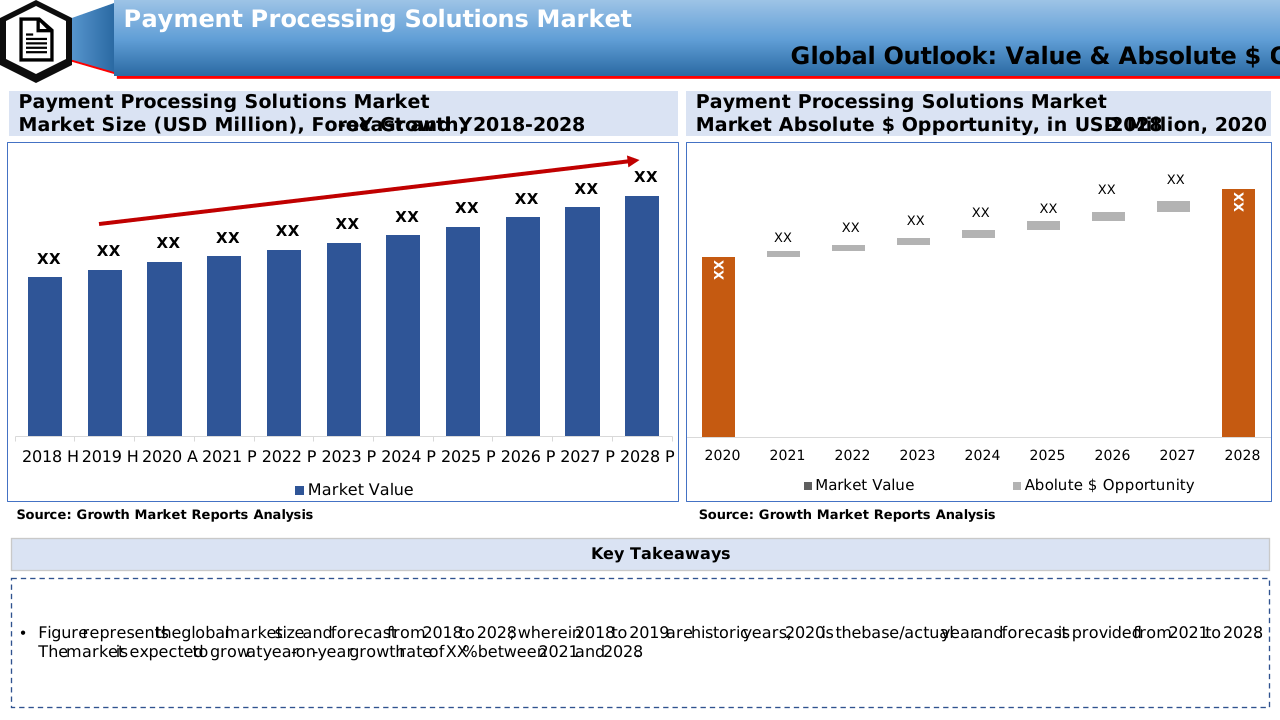
As per our latest research, the global Payment Processing Solutions market size reached USD 98.2 billion in 2024. The market is expected to grow at a robust CAGR of 11.6% during the forecast period, reaching a projected value of USD 244.1 billion by 2033. This impressive growth trajectory is driven by the increasing digitalization of payments, rapid adoption of e-commerce, and the growing demand for secure, seamless, and real-time payment experiences across the globe. The market is witnessing significant transformation, propelled by advancements in payment technologies and the need for efficient, scalable, and integrated payment processing solutions for businesses of all sizes.

The primary growth factor for the Payment Processing Solutions market is the accelerated shift towards digital payments worldwide. The proliferation of smartphones, coupled with widespread internet penetration, has enabled businesses and consumers to embrace digital channels for transactions. This shift is further bolstered by the COVID-19 pandemic, which has catalyzed contactless payments and pushed merchants and consumers to adopt digital-first payment methods. As businesses strive to enhance customer experience and streamline operations, they are increasingly investing in advanced payment processing solutions that offer speed, security, and flexibility. Additionally, government initiatives promoting cashless economies and financial inclusion are playing a critical role in driving market growth across both developed and emerging economies.

Another significant driver is the rapid expansion of the e-commerce sector, which demands seamless and secure payment processing capabilities. Retailers and online merchants are leveraging payment processing solutions to cater to a diverse customer base, offer multiple payment options, and ensure compliance with regulatory standards such as PCI DSS. The integration of artificial intelligence, machine learning, and blockchain technology into payment processing platforms is further enhancing fraud detection, transaction speed, and transparency. These technological advancements are helping businesses to reduce operational costs, minimize chargebacks, and improve overall payment efficiency. Moreover, the rise of omnichannel retail and the convergence of online and offline payment systems are creating new opportunities for solution providers to deliver unified and scalable payment platforms.

The evolving regulatory landscape is also shaping the future of the Payment Processing Solutions market. Regulatory frameworks such as PSD2 in Europe, open banking initiatives, and data protection regulations are compelling payment service providers to innovate and ensure compliance. These regulations are fostering greater transparency, competition, and security in the payment ecosystem, benefitting both consumers and businesses. However, navigating the complexities of cross-border payments, data privacy, and anti-money laundering (AML) requirements remains a challenge for market participants. The ability to adapt to regulatory changes, while maintaining operational efficiency and customer trust, is crucial for sustained market growth.

From a regional perspective, North America continues to dominate the Payment Processing Solutions market, accounting for the largest share in 2024. This leadership is attributed to the presence of major payment technology companies, high digital adoption rates, and a mature regulatory environment. However, Asia Pacific is emerging as the fastest-growing region, driven by the rapid expansion of e-commerce, rising smartphone usage, and supportive government policies in countries such as China, India, and Southeast Asia. Europe is also witnessing steady growth, fueled by regulatory harmonization and the adoption of innovative payment solutions. Meanwhile, Latin America and the Middle East & Africa are experiencing increased investments in payment infrastructure, presenting lucrative opportunities for market players.

Card Processing plays a pivotal role in the Payment Processing Solutions market, acting as a backbone for both traditional and digital payment methods. As consumers increasingly rely on credit and debit cards for transactions, the demand for efficient and secure card processing solutions has surged. These solutions ensure seamless authorization, clearing, and settlement of card transactions, which are critical for maintaining consumer trust and satisfaction. With the integration of advanced technologies such as EMV chips and tokenization, card processing systems are becoming more secure and resilient against fraud. Moreover, the shift towards contactless payments and mobile wallets is further driving the evolution of card processing, enabling faster and more convenient transactions for consumers worldwide.

Global Payment Processing Solutions Industry Outlook

Component Analysis

The component segment of the Payment Processing Solutions market is broadly categorized into software, hardware, and services. Payment processing software forms the backbone of modern payment ecosystems, enabling the seamless execution, management, and reconciliation of transactions across various payment channels. These software solutions are designed to integrate with point-of-sale (POS) systems, e-commerce platforms, and mobile payment applications, providing businesses with real-time transaction monitoring, fraud detection, and analytics capabilities. The growing demand for customizable, scalable, and interoperable software solutions is driving significant investments in research and development by leading vendors. Furthermore, the rise of cloud-based payment processing software is enabling businesses to achieve greater agility, cost savings, and scalability, further fueling segment growth.

Hardware components, including POS terminals, card readers, and payment kiosks, are essential for facilitating in-store and omnichannel payments. The evolution of payment hardware has been marked by the introduction of contactless devices, NFC-enabled terminals, and biometric authentication systems, which have improved transaction speed, security, and user experience. As merchants look to enhance customer engagement and streamline checkout processes, the adoption of advanced hardware solutions is on the rise. Additionally, the integration of IoT and mobile technologies into payment hardware is enabling businesses to offer innovative payment experiences, such as self-checkout and unattended retail. The hardware segment is also benefitting from the increasing deployment of payment devices in emerging markets, where cashless transactions are gaining traction.

The services segment encompasses a wide range of offerings, including payment gateway services, consulting, system integration, maintenance, and support. As payment processing becomes more complex, businesses are seeking expert guidance to navigate regulatory requirements, optimize payment workflows, and enhance security. Service providers are playing a critical role in enabling digital transformation, ensuring compliance with industry standards, and providing ongoing technical support. Managed services are gaining popularity among small and medium enterprises (SMEs) that lack in-house expertise and resources to manage payment infrastructure. The growing emphasis on customer-centricity, operational efficiency, and risk management is expected to drive sustained demand for payment processing services throughout the forecast period.

Overall, the component segment analysis reveals that software remains the largest contributor to market revenue, followed by services and hardware. However, the convergence of software and hardware, coupled with the increasing adoption of managed and value-added services, is reshaping the competitive landscape. Vendors that offer integrated, end-to-end payment processing solutions are well-positioned to capitalize on emerging opportunities and address the evolving needs of businesses across various industries.

Report Scope

Attributes Details
Report Title Payment Processing Solutions Market Research Report 2033
By Component Software, Hardware, Services
By Payment Method Credit Card, Debit Card, E-Wallet, Bank Transfer, Others
By Deployment Mode On-Premises, Cloud
By End-User Retail, BFSI, Healthcare, Hospitality, E-commerce, Government, Others
By Organization Size Large Enterprises, Small and Medium Enterprises
Regions Covered North America, Europe, APAC, Latin America, MEA
Base Year 2024
Historic Data 2018-2023
Forecast Period 2025-2033
Number of Pages 256
Number of Tables & Figures 292
Customization Available Yes, the report can be customized as per your need.

Payment Method Analysis

The payment method segment of the Payment Processing Solutions market is characterized by the diversity and evolution of payment options available to consumers and businesses. Credit cards continue to be the most widely used payment method, accounting for a significant share of global transaction volumes. The widespread acceptance of credit cards, coupled with enhanced security features such as EMV chips and tokenization, has reinforced their dominance in both online and offline commerce. However, the market is witnessing a gradual shift towards alternative payment methods, driven by changing consumer preferences and the need for greater convenience, speed, and security.

Debit cards represent another major payment method, offering consumers a direct and secure means to access funds from their bank accounts. The adoption of debit cards is particularly high in regions with robust banking infrastructure and financial inclusion initiatives. The integration of debit cards with mobile wallets and contactless payment technologies is further enhancing their appeal, especially among younger, tech-savvy consumers. As banks and payment service providers continue to invest in card issuance and digital banking platforms, the debit card segment is expected to maintain steady growth over the forecast period.

E-wallets, also known as digital wallets, have emerged as a disruptive force in the payments landscape. The rapid adoption of smartphones and mobile apps has paved the way for the proliferation of e-wallets, enabling users to store, manage, and transact funds digitally. Popular e-wallets such as PayPal, Apple Pay, Google Pay, and Alipay offer a seamless, secure, and user-friendly payment experience, driving widespread adoption among consumers and merchants alike. E-wallets are particularly popular in Asia Pacific, where mobile-first economies and super apps are transforming the way people pay, shop, and interact with financial services. The ability to integrate loyalty programs, peer-to-peer transfers, and value-added services is further boosting the growth of the e-wallet segment.

Bank transfers remain a preferred payment method for high-value transactions and business-to-business (B2B) payments. The adoption of real-time payment systems, such as SEPA Instant in Europe and UPI in India, is enhancing the speed, efficiency, and transparency of bank transfers. However, challenges related to cross-border payments, interoperability, and compliance continue to hinder the widespread adoption of bank transfers in certain markets. Other payment methods, including prepaid cards, cryptocurrencies, and buy now, pay later (BNPL) solutions, are gaining traction as consumers seek greater flexibility and choice in their payment options. The payment method segment is expected to witness continued innovation and diversification, driven by technological advancements and evolving customer expectations.

Deployment Mode Analysis

The deployment mode segment of the Payment Processing Solutions market is segmented into on-premises and cloud-based solutions. On-premises deployment has traditionally been favored by large enterprises and organizations with stringent data security, compliance, and customization requirements. By hosting payment processing infrastructure within their own data centers, businesses retain full control over data, processes, and system configurations. This approach is particularly prevalent in highly regulated industries such as BFSI and government, where data sovereignty and privacy are paramount. However, on-premises deployment often entails higher upfront costs, longer implementation timelines, and ongoing maintenance responsibilities.

Cloud-based payment processing solutions are gaining rapid traction across industries, driven by the need for agility, scalability, and cost efficiency. Cloud deployment enables businesses to access payment processing capabilities on a subscription or pay-as-you-go basis, reducing capital expenditures and accelerating time-to-market. Cloud solutions offer seamless integration with existing business applications, real-time updates, and enhanced security features, making them an attractive choice for small and medium enterprises (SMEs) as well as large organizations seeking digital transformation. The growing adoption of hybrid cloud models, which combine the benefits of public and private clouds, is further expanding the market for cloud-based payment processing solutions.

The migration to cloud-based platforms is also fueled by the increasing complexity of payment ecosystems, the need for rapid innovation, and the demand for uninterrupted service availability. Cloud providers are investing in advanced security protocols, redundancy, and compliance certifications to address concerns related to data privacy and regulatory compliance. Furthermore, the integration of artificial intelligence, machine learning, and analytics into cloud-based payment processing platforms is enabling businesses to gain actionable insights, automate fraud detection, and personalize customer experiences.

While cloud deployment is experiencing robust growth, certain segments of the market continue to rely on on-premises solutions due to legacy systems, regulatory constraints, or unique business requirements. Solution providers are responding by offering flexible deployment options, hybrid architectures, and migration services to support businesses at various stages of their digital journey. The deployment mode segment is expected to witness continued evolution, with cloud-based solutions emerging as the dominant model over the forecast period.

End-User Analysis

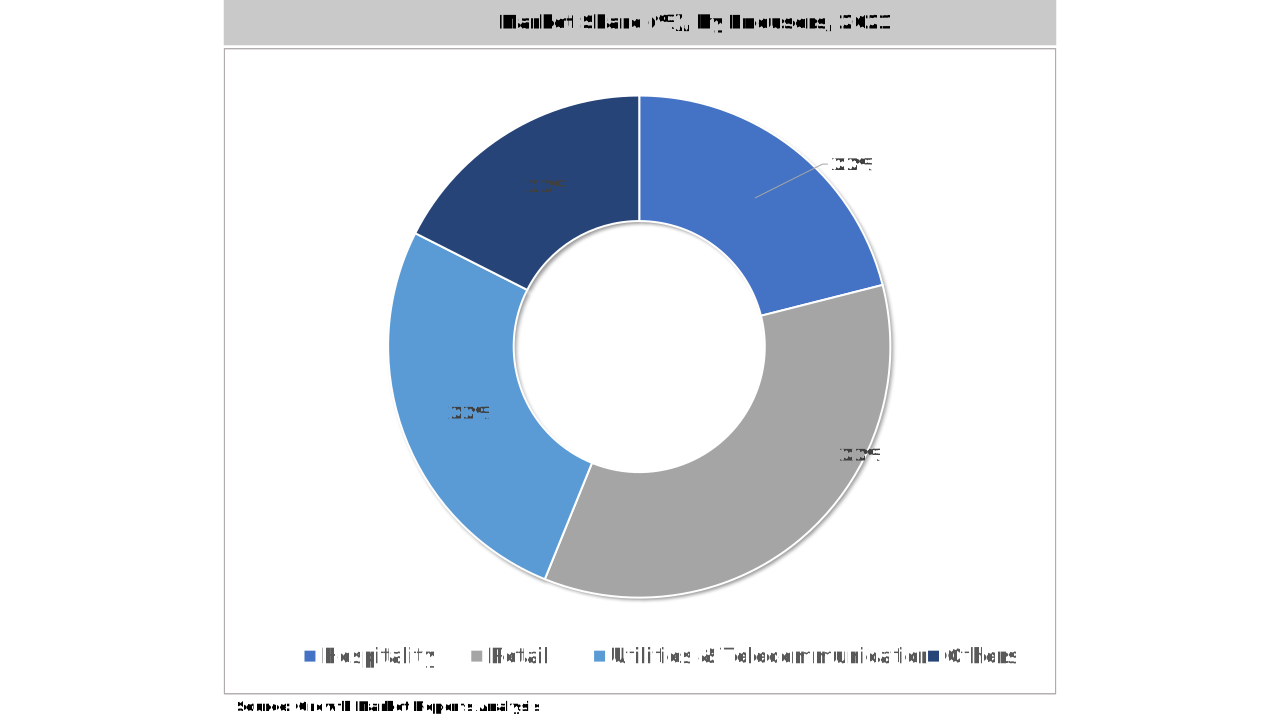
The end-user segment of the Payment Processing Solutions market encompasses a diverse range of industries, each with unique payment processing needs and challenges. The retail sector is a major end-user, leveraging payment processing solutions to support in-store, online, and omnichannel commerce. Retailers are investing in advanced payment technologies to enhance customer experience, reduce checkout times, and offer multiple payment options. The integration of loyalty programs, digital receipts, and mobile payments is helping retailers drive customer engagement and increase sales conversion rates. As the retail landscape continues to evolve, payment processing solutions are playing a critical role in enabling seamless, secure, and scalable transactions.

The BFSI (Banking, Financial Services, and Insurance) sector is another significant end-user of payment processing solutions. Banks, payment service providers, and fintech companies are adopting sophisticated payment platforms to process high volumes of transactions, ensure regulatory compliance, and mitigate fraud risks. The BFSI sector is at the forefront of digital transformation, leveraging artificial intelligence, blockchain, and open banking APIs to deliver innovative payment experiences and enhance operational efficiency. As regulatory requirements become more stringent and customer expectations continue to rise, the demand for advanced payment processing solutions in the BFSI sector is expected to remain strong.

Healthcare organizations are increasingly adopting payment processing solutions to streamline billing, improve patient experience, and ensure compliance with healthcare regulations. The complexity of healthcare payments, including insurance claims, co-pays, and patient billing, necessitates robust payment processing capabilities. Payment solutions that offer integration with electronic health records (EHR), patient portals, and revenue cycle management systems are in high demand. The growing emphasis on patient-centric care, transparency, and digital health is driving healthcare providers to invest in secure, user-friendly payment processing platforms.

The hospitality and e-commerce sectors are also significant end-users of payment processing solutions, seeking to offer frictionless payment experiences to guests and customers. Hotels, restaurants, and online marketplaces are adopting contactless payments, mobile wallets, and integrated POS systems to enhance convenience and security. Government agencies are leveraging payment processing solutions to facilitate tax payments, utility bills, and public services, promoting transparency and efficiency in public finance management. Other end-users, including education, transportation, and utilities, are increasingly recognizing the value of digital payment solutions in improving service delivery and customer satisfaction.

Organization Size Analysis

The organization size segment of the Payment Processing Solutions market is divided into large enterprises and small and medium enterprises (SMEs). Large enterprises, with their extensive operations, high transaction volumes, and complex payment workflows, require robust, scalable, and customizable payment processing solutions. These organizations often prioritize advanced security features, integration capabilities, and regulatory compliance, driving demand for enterprise-grade payment platforms. Large enterprises are also early adopters of emerging technologies such as artificial intelligence, machine learning, and blockchain, leveraging these innovations to enhance fraud detection, automate reconciliation, and optimize payment operations.

Small and medium enterprises (SMEs) represent a rapidly growing segment of the Payment Processing Solutions market, driven by the democratization of digital payment technologies and the proliferation of cloud-based solutions. SMEs are increasingly recognizing the benefits of adopting modern payment processing solutions, including improved cash flow management, enhanced customer experience, and access to value-added services such as analytics and reporting. Cloud-based payment platforms, with their low upfront costs and ease of implementation, are particularly attractive to SMEs with limited IT resources and expertise. The rise of e-commerce, social commerce, and mobile payments is further accelerating the adoption of payment processing solutions among SMEs across various industries.

The unique needs of SMEs, such as affordability, simplicity, and scalability, are prompting solution providers to develop tailored offerings that cater to this segment. Payment processing vendors are introducing flexible pricing models, plug-and-play integrations, and bundled services to address the specific requirements of SMEs. Additionally, partnerships with banks, fintech companies, and payment aggregators are enabling SMEs to access a broader range of payment options and financial services, driving financial inclusion and business growth.

The organization size segment analysis highlights the importance of offering differentiated, scalable, and cost-effective payment processing solutions to address the diverse needs of businesses. While large enterprises continue to drive demand for advanced, integrated platforms, SMEs represent a significant growth opportunity for solution providers seeking to expand their market reach and support digital transformation across the business landscape.

Opportunities & Threats

The Payment Processing Solutions market presents a myriad of opportunities for growth and innovation. One of the most significant opportunities lies in the continued digitalization of payment ecosystems, driven by the proliferation of smartphones, mobile apps, and internet connectivity. As businesses and consumers increasingly embrace digital channels for transactions, there is a growing demand for secure, seamless, and real-time payment processing solutions. The integration of emerging technologies such as artificial intelligence, machine learning, and blockchain is enabling payment service providers to deliver enhanced security, fraud prevention, and personalized experiences. Furthermore, the expansion of e-commerce, cross-border trade, and digital banking is creating new avenues for market players to offer value-added services, such as analytics, loyalty programs, and financial management tools.

Another major opportunity is the untapped potential in emerging markets, where financial inclusion and digital payment adoption are on the rise. Governments and regulatory authorities in regions such as Asia Pacific, Latin America, and Africa are implementing policies to promote cashless economies, expand digital infrastructure, and support fintech innovation. Payment processing solution providers can capitalize on these initiatives by offering affordable, scalable, and user-friendly platforms tailored to the unique needs of local businesses and consumers. Strategic partnerships with banks, telecom operators, and fintech companies can further accelerate market penetration and drive sustainable growth. Additionally, the rise of open banking, API-driven ecosystems, and instant payment systems is fostering collaboration and innovation, enabling new entrants and incumbents to deliver differentiated payment experiences.

Despite the growth prospects, the Payment Processing Solutions market faces several restraining factors. One of the primary challenges is the increasing complexity of regulatory compliance, data privacy, and cybersecurity requirements. Payment service providers must navigate a fragmented regulatory landscape, comply with industry standards such as PCI DSS and GDPR, and invest in robust security measures to protect sensitive data and prevent fraud. The rising sophistication of cyber threats, including phishing, ransomware, and account takeover attacks, poses significant risks to payment processing infrastructure and customer trust. Additionally, the high cost of technology upgrades, integration with legacy systems, and the need for ongoing maintenance and support can strain the resources of businesses, particularly SMEs. Addressing these challenges requires a proactive approach to risk management, continuous innovation, and close collaboration with regulators, industry stakeholders, and technology partners.

Regional Outlook

In 2024, North America led the global Payment Processing Solutions market, accounting for approximately USD 38.1 billion of the total market size. This dominance is attributed to the high penetration of digital payment technologies, a mature e-commerce ecosystem, and the presence of leading payment technology companies such as PayPal, Square, and Stripe. The United States remains at the forefront of payment innovation, with strong adoption of contactless payments, mobile wallets, and integrated payment platforms across retail, BFSI, and hospitality sectors. Regulatory clarity, consumer trust, and a robust financial infrastructure further support the growth of the payment processing solutions market in North America.

Asia Pacific is emerging as the fastest-growing region, with a projected CAGR of 14.2% during the forecast period. The regionÂ’s market size reached USD 21.6 billion in 2024, driven by rapid urbanization, rising smartphone adoption, and the expansion of e-commerce in countries such as China, India, Japan, and Southeast Asia. Government initiatives to promote digital payments, financial inclusion, and fintech innovation are fueling market growth, while the proliferation of super apps and mobile wallets is transforming the way consumers and businesses transact. Asia PacificÂ’s diverse and dynamic payment landscape presents significant opportunities for solution providers to deliver localized, scalable, and innovative payment processing platforms.

Europe accounted for approximately USD 18.7 billion of the global Payment Processing Solutions market in 2024. The region benefits from a harmonized regulatory framework, such as PSD2 and open banking, which fosters competition, transparency, and innovation in the payments ecosystem. The adoption of instant payment systems, digital wallets, and contactless technologies is driving market growth across retail, BFSI, and government sectors. Meanwhile, Latin America and the Middle East & Africa regions are witnessing increased investment in digital payment infrastructure, with market sizes of USD 10.2 billion and USD 9.6 billion respectively in 2024. These regions offer significant untapped potential for payment processing solution providers, particularly in underserved and unbanked populations.

Payment Processing Solutions Market Statistics

Competitor Outlook

The Payment Processing Solutions market is highly competitive, characterized by the presence of global technology giants, established financial institutions, fintech innovators, and specialized payment service providers. The competitive landscape is shaped by ongoing investments in technology innovation, strategic partnerships, mergers and acquisitions, and geographic expansion. Market leaders are differentiating themselves through the development of integrated, end-to-end payment platforms that support multiple payment methods, channels, and currencies. The ability to deliver secure, scalable, and user-friendly solutions is critical to gaining and retaining market share in this dynamic environment.

Innovation is a key driver of competitive advantage in the Payment Processing Solutions market. Leading vendors are leveraging artificial intelligence, machine learning, and blockchain technology to enhance transaction security, automate fraud detection, and deliver real-time analytics. The integration of value-added services, such as loyalty programs, financing options, and business intelligence tools, is enabling solution providers to deliver holistic payment experiences and drive customer engagement. The rise of open banking, API-driven ecosystems, and platform-as-a-service (PaaS) models is fostering collaboration and competition among banks, fintech companies, and technology providers.

Strategic partnerships and collaborations are playing a crucial role in expanding market reach and accelerating innovation. Payment processing vendors are partnering with banks, e-commerce platforms, telecom operators, and technology companies to deliver integrated, omnichannel payment solutions. Mergers and acquisitions are also prevalent, as companies seek to strengthen their product portfolios, enter new markets, and enhance their technological capabilities. The competitive landscape is further intensified by the entry of new players, including fintech startups and non-traditional financial service providers, who are disrupting the market with agile, customer-centric solutions.

Some of the major companies operating in the global Payment Processing Solutions market include PayPal Holdings, Inc., FIS (Fidelity National Information Services, Inc.), Fiserv, Inc., Global Payments Inc., Adyen N.V., Square, Inc. (Block, Inc.), Stripe, Inc., Worldline SA, Visa Inc., and Mastercard Incorporated. These companies are at the forefront of payment technology innovation, offering a wide range of solutions for merchants, financial institutions, and consumers. For example, PayPal continues to expand its ecosystem through acquisitions and partnerships, while Stripe is recognized for its developer-friendly APIs and global reach. Adyen and Worldline are leading providers of omnichannel payment solutions in Europe and beyond, while FIS and Fiserv are leveraging their deep expertise in financial technology to deliver secure, scalable, and integrated platforms.

These major players are investing heavily in research and development, expanding their global footprint, and enhancing their product offerings to address the evolving needs of businesses and consumers. The competitive landscape is expected to remain dynamic, with ongoing innovation, consolidation, and new market entrants shaping the future of the Payment Processing Solutions market. As digital payments continue to gain momentum, companies that prioritize security, innovation, and customer experience will be best positioned to succeed in this rapidly evolving market.

Key Players

  • PayPal
  • Visa
  • Mastercard
  • FIS (Fidelity National Information Services)
  • Fiserv
  • Global Payments
  • Adyen
  • Square (Block, Inc.)
  • Worldline
  • Stripe
  • Nexi
  • PayU
  • ACI Worldwide
  • Elavon (U.S. Bancorp)
  • TSYS (Total System Services)
  • Chase Paymentech
  • Wirecard
  • Paysafe
  • Ingenico
  • Alipay (Ant Group)
Payment Processing Solutions Market Overview

Segments

The Payment Processing Solutions market has been segmented on the basis of

Component

  • Software
  • Hardware
  • Services

Payment Method

  • Credit Card
  • Debit Card
  • E-Wallet
  • Bank Transfer
  • Others

Deployment Mode

  • On-Premises
  • Cloud

End-User

  • Retail
  • BFSI
  • Healthcare
  • Hospitality
  • E-commerce
  • Government
  • Others

Organization Size

  • Large Enterprises
  • Small and Medium Enterprises

Competitive Landscape

Key players competing in the Global Payment Processing Solutions Market are Adyen N.V.; Amazon Payments Inc.; Authorize.Net; and PayPal Holdings Inc.

Companies are partnering with various local retailers and businesses to expand their market share.
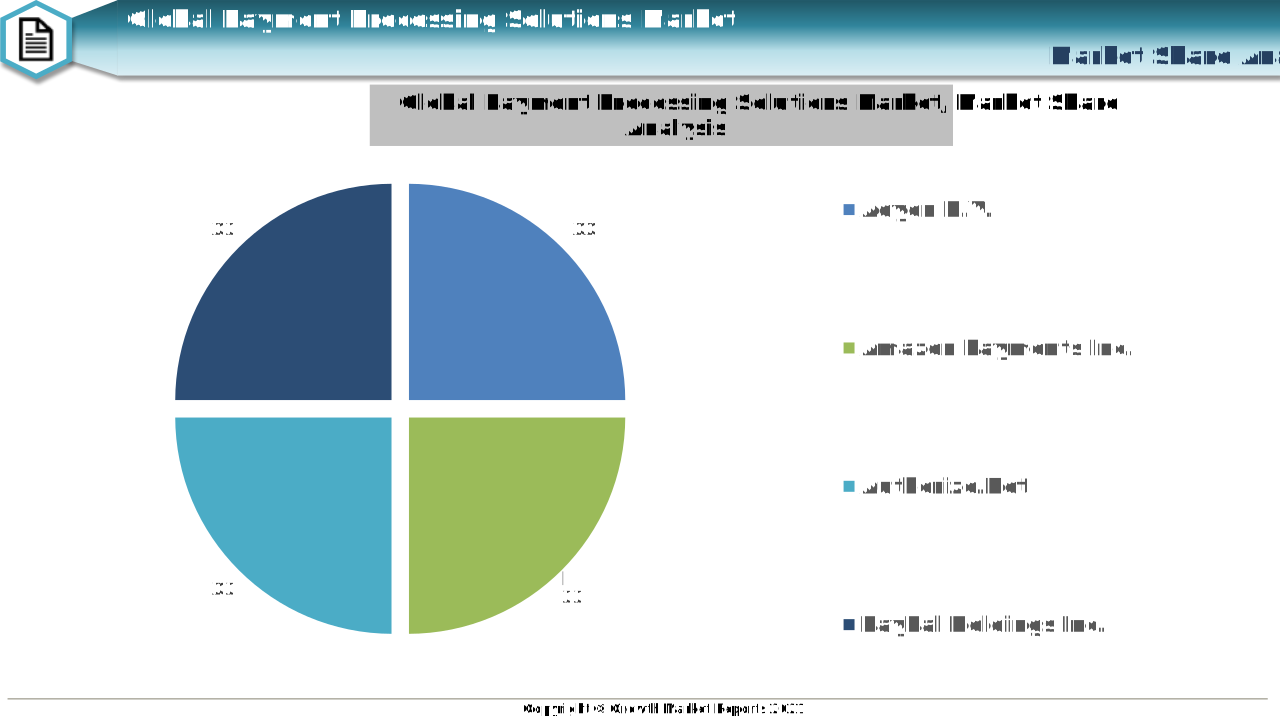

Payment Processing Solutions Market By Key Players

Frequently Asked Questions

Opportunities include digitalization of payment ecosystems, adoption of AI and blockchain, expansion in emerging markets, open banking, instant payment systems, and the development of value-added services like analytics and loyalty programs.

Major players include PayPal, Visa, Mastercard, FIS, Fiserv, Global Payments, Adyen, Square (Block, Inc.), Worldline, Stripe, Nexi, PayU, ACI Worldwide, Elavon, TSYS, Chase Paymentech, Wirecard, Paysafe, Ingenico, and Alipay.

Key challenges include regulatory compliance, data privacy, cybersecurity threats, high technology upgrade costs, integration with legacy systems, and the need for ongoing maintenance and support.

Major end-users include retail, BFSI (banking, financial services, and insurance), healthcare, hospitality, e-commerce, government, and others such as education and transportation.

Cloud-based solutions are gaining traction due to their agility, scalability, cost-efficiency, and ease of integration, making them especially attractive to SMEs and organizations seeking digital transformation.

Credit cards remain the most widely used, but there is significant growth in debit cards, e-wallets (digital wallets), bank transfers, prepaid cards, cryptocurrencies, and buy now, pay later (BNPL) solutions.

The market is segmented into software, hardware, and services. Software is the largest contributor, followed by services and hardware, with increasing convergence and integration across these components.

North America leads the market due to high digital adoption and mature regulatory frameworks, while Asia Pacific is the fastest-growing region, driven by e-commerce expansion, smartphone usage, and supportive government policies.

Key growth drivers include increasing digitalization of payments, rapid e-commerce adoption, demand for secure and real-time payment experiences, technological advancements, and supportive government initiatives promoting cashless economies.

The global Payment Processing Solutions market reached USD 98.2 billion in 2024 and is projected to grow at a CAGR of 11.6%, reaching USD 244.1 billion by 2033.

Table Of Content

Chapter 1 Executive Summary
Chapter 2 Assumptions and Acronyms Used
Chapter 3 Research Methodology
Chapter 4 Payment Processing Solutions Market Overview
   4.1 Introduction
      4.1.1 Market Taxonomy
      4.1.2 Market Definition
      4.1.3 Macro-Economic Factors Impacting the Market Growth
   4.2 Payment Processing Solutions Market Dynamics
      4.2.1 Market Drivers
      4.2.2 Market Restraints
      4.2.3 Market Opportunity
   4.3 Payment Processing Solutions Market - Supply Chain Analysis
      4.3.1 List of Key Suppliers
      4.3.2 List of Key Distributors
      4.3.3 List of Key Consumers
   4.4 Key Forces Shaping the Payment Processing Solutions Market
      4.4.1 Bargaining Power of Suppliers
      4.4.2 Bargaining Power of Buyers
      4.4.3 Threat of Substitution
      4.4.4 Threat of New Entrants
      4.4.5 Competitive Rivalry
   4.5 Global Payment Processing Solutions Market Size & Forecast, 2023-2032
      4.5.1 Payment Processing Solutions Market Size and Y-o-Y Growth
      4.5.2 Payment Processing Solutions Market Absolute $ Opportunity

Chapter 5 Global Payment Processing Solutions Market Analysis and Forecast By Component
   5.1 Introduction
      5.1.1 Key Market Trends & Growth Opportunities By Component
      5.1.2 Basis Point Share (BPS) Analysis By Component
      5.1.3 Absolute $ Opportunity Assessment By Component
   5.2 Payment Processing Solutions Market Size Forecast By Component
      5.2.1 Software
      5.2.2 Hardware
      5.2.3 Services
   5.3 Market Attractiveness Analysis By Component

Chapter 6 Global Payment Processing Solutions Market Analysis and Forecast By Payment Method
   6.1 Introduction
      6.1.1 Key Market Trends & Growth Opportunities By Payment Method
      6.1.2 Basis Point Share (BPS) Analysis By Payment Method
      6.1.3 Absolute $ Opportunity Assessment By Payment Method
   6.2 Payment Processing Solutions Market Size Forecast By Payment Method
      6.2.1 Credit Card
      6.2.2 Debit Card
      6.2.3 E-Wallet
      6.2.4 Bank Transfer
      6.2.5 Others
   6.3 Market Attractiveness Analysis By Payment Method

Chapter 7 Global Payment Processing Solutions Market Analysis and Forecast By Deployment Mode
   7.1 Introduction
      7.1.1 Key Market Trends & Growth Opportunities By Deployment Mode
      7.1.2 Basis Point Share (BPS) Analysis By Deployment Mode
      7.1.3 Absolute $ Opportunity Assessment By Deployment Mode
   7.2 Payment Processing Solutions Market Size Forecast By Deployment Mode
      7.2.1 On-Premises
      7.2.2 Cloud
   7.3 Market Attractiveness Analysis By Deployment Mode

Chapter 8 Global Payment Processing Solutions Market Analysis and Forecast By End-User
   8.1 Introduction
      8.1.1 Key Market Trends & Growth Opportunities By End-User
      8.1.2 Basis Point Share (BPS) Analysis By End-User
      8.1.3 Absolute $ Opportunity Assessment By End-User
   8.2 Payment Processing Solutions Market Size Forecast By End-User
      8.2.1 Retail
      8.2.2 BFSI
      8.2.3 Healthcare
      8.2.4 Hospitality
      8.2.5 E-commerce
      8.2.6 Government
      8.2.7 Others
   8.3 Market Attractiveness Analysis By End-User

Chapter 9 Global Payment Processing Solutions Market Analysis and Forecast By Organization Size
   9.1 Introduction
      9.1.1 Key Market Trends & Growth Opportunities By Organization Size
      9.1.2 Basis Point Share (BPS) Analysis By Organization Size
      9.1.3 Absolute $ Opportunity Assessment By Organization Size
   9.2 Payment Processing Solutions Market Size Forecast By Organization Size
      9.2.1 Large Enterprises
      9.2.2 Small and Medium Enterprises
   9.3 Market Attractiveness Analysis By Organization Size

Chapter 10 Global Payment Processing Solutions Market Analysis and Forecast by Region
   10.1 Introduction
      10.1.1 Key Market Trends & Growth Opportunities By Region
      10.1.2 Basis Point Share (BPS) Analysis By Region
      10.1.3 Absolute $ Opportunity Assessment By Region
   10.2 Payment Processing Solutions Market Size Forecast By Region
      10.2.1 North America
      10.2.2 Europe
      10.2.3 Asia Pacific
      10.2.4 Latin America
      10.2.5 Middle East & Africa (MEA)
   10.3 Market Attractiveness Analysis By Region

Chapter 11 Coronavirus Disease (COVID-19) Impact 
   11.1 Introduction 
   11.2 Current & Future Impact Analysis 
   11.3 Economic Impact Analysis 
   11.4 Government Policies 
   11.5 Investment Scenario

Chapter 12 North America Payment Processing Solutions Analysis and Forecast
   12.1 Introduction
   12.2 North America Payment Processing Solutions Market Size Forecast by Country
      12.2.1 U.S.
      12.2.2 Canada
   12.3 Basis Point Share (BPS) Analysis by Country
   12.4 Absolute $ Opportunity Assessment by Country
   12.5 Market Attractiveness Analysis by Country
   12.6 North America Payment Processing Solutions Market Size Forecast By Component
      12.6.1 Software
      12.6.2 Hardware
      12.6.3 Services
   12.7 Basis Point Share (BPS) Analysis By Component 
   12.8 Absolute $ Opportunity Assessment By Component 
   12.9 Market Attractiveness Analysis By Component
   12.10 North America Payment Processing Solutions Market Size Forecast By Payment Method
      12.10.1 Credit Card
      12.10.2 Debit Card
      12.10.3 E-Wallet
      12.10.4 Bank Transfer
      12.10.5 Others
   12.11 Basis Point Share (BPS) Analysis By Payment Method 
   12.12 Absolute $ Opportunity Assessment By Payment Method 
   12.13 Market Attractiveness Analysis By Payment Method
   12.14 North America Payment Processing Solutions Market Size Forecast By Deployment Mode
      12.14.1 On-Premises
      12.14.2 Cloud
   12.15 Basis Point Share (BPS) Analysis By Deployment Mode 
   12.16 Absolute $ Opportunity Assessment By Deployment Mode 
   12.17 Market Attractiveness Analysis By Deployment Mode
   12.18 North America Payment Processing Solutions Market Size Forecast By End-User
      12.18.1 Retail
      12.18.2 BFSI
      12.18.3 Healthcare
      12.18.4 Hospitality
      12.18.5 E-commerce
      12.18.6 Government
      12.18.7 Others
   12.19 Basis Point Share (BPS) Analysis By End-User 
   12.20 Absolute $ Opportunity Assessment By End-User 
   12.21 Market Attractiveness Analysis By End-User
   12.22 North America Payment Processing Solutions Market Size Forecast By Organization Size
      12.22.1 Large Enterprises
      12.22.2 Small and Medium Enterprises
   12.23 Basis Point Share (BPS) Analysis By Organization Size 
   12.24 Absolute $ Opportunity Assessment By Organization Size 
   12.25 Market Attractiveness Analysis By Organization Size

Chapter 13 Europe Payment Processing Solutions Analysis and Forecast
   13.1 Introduction
   13.2 Europe Payment Processing Solutions Market Size Forecast by Country
      13.2.1 Germany
      13.2.2 France
      13.2.3 Italy
      13.2.4 U.K.
      13.2.5 Spain
      13.2.6 Russia
      13.2.7 Rest of Europe
   13.3 Basis Point Share (BPS) Analysis by Country
   13.4 Absolute $ Opportunity Assessment by Country
   13.5 Market Attractiveness Analysis by Country
   13.6 Europe Payment Processing Solutions Market Size Forecast By Component
      13.6.1 Software
      13.6.2 Hardware
      13.6.3 Services
   13.7 Basis Point Share (BPS) Analysis By Component 
   13.8 Absolute $ Opportunity Assessment By Component 
   13.9 Market Attractiveness Analysis By Component
   13.10 Europe Payment Processing Solutions Market Size Forecast By Payment Method
      13.10.1 Credit Card
      13.10.2 Debit Card
      13.10.3 E-Wallet
      13.10.4 Bank Transfer
      13.10.5 Others
   13.11 Basis Point Share (BPS) Analysis By Payment Method 
   13.12 Absolute $ Opportunity Assessment By Payment Method 
   13.13 Market Attractiveness Analysis By Payment Method
   13.14 Europe Payment Processing Solutions Market Size Forecast By Deployment Mode
      13.14.1 On-Premises
      13.14.2 Cloud
   13.15 Basis Point Share (BPS) Analysis By Deployment Mode 
   13.16 Absolute $ Opportunity Assessment By Deployment Mode 
   13.17 Market Attractiveness Analysis By Deployment Mode
   13.18 Europe Payment Processing Solutions Market Size Forecast By End-User
      13.18.1 Retail
      13.18.2 BFSI
      13.18.3 Healthcare
      13.18.4 Hospitality
      13.18.5 E-commerce
      13.18.6 Government
      13.18.7 Others
   13.19 Basis Point Share (BPS) Analysis By End-User 
   13.20 Absolute $ Opportunity Assessment By End-User 
   13.21 Market Attractiveness Analysis By End-User
   13.22 Europe Payment Processing Solutions Market Size Forecast By Organization Size
      13.22.1 Large Enterprises
      13.22.2 Small and Medium Enterprises
   13.23 Basis Point Share (BPS) Analysis By Organization Size 
   13.24 Absolute $ Opportunity Assessment By Organization Size 
   13.25 Market Attractiveness Analysis By Organization Size

Chapter 14 Asia Pacific Payment Processing Solutions Analysis and Forecast
   14.1 Introduction
   14.2 Asia Pacific Payment Processing Solutions Market Size Forecast by Country
      14.2.1 China
      14.2.2 Japan
      14.2.3 South Korea
      14.2.4 India
      14.2.5 Australia
      14.2.6 South East Asia (SEA)
      14.2.7 Rest of Asia Pacific (APAC)
   14.3 Basis Point Share (BPS) Analysis by Country
   14.4 Absolute $ Opportunity Assessment by Country
   14.5 Market Attractiveness Analysis by Country
   14.6 Asia Pacific Payment Processing Solutions Market Size Forecast By Component
      14.6.1 Software
      14.6.2 Hardware
      14.6.3 Services
   14.7 Basis Point Share (BPS) Analysis By Component 
   14.8 Absolute $ Opportunity Assessment By Component 
   14.9 Market Attractiveness Analysis By Component
   14.10 Asia Pacific Payment Processing Solutions Market Size Forecast By Payment Method
      14.10.1 Credit Card
      14.10.2 Debit Card
      14.10.3 E-Wallet
      14.10.4 Bank Transfer
      14.10.5 Others
   14.11 Basis Point Share (BPS) Analysis By Payment Method 
   14.12 Absolute $ Opportunity Assessment By Payment Method 
   14.13 Market Attractiveness Analysis By Payment Method
   14.14 Asia Pacific Payment Processing Solutions Market Size Forecast By Deployment Mode
      14.14.1 On-Premises
      14.14.2 Cloud
   14.15 Basis Point Share (BPS) Analysis By Deployment Mode 
   14.16 Absolute $ Opportunity Assessment By Deployment Mode 
   14.17 Market Attractiveness Analysis By Deployment Mode
   14.18 Asia Pacific Payment Processing Solutions Market Size Forecast By End-User
      14.18.1 Retail
      14.18.2 BFSI
      14.18.3 Healthcare
      14.18.4 Hospitality
      14.18.5 E-commerce
      14.18.6 Government
      14.18.7 Others
   14.19 Basis Point Share (BPS) Analysis By End-User 
   14.20 Absolute $ Opportunity Assessment By End-User 
   14.21 Market Attractiveness Analysis By End-User
   14.22 Asia Pacific Payment Processing Solutions Market Size Forecast By Organization Size
      14.22.1 Large Enterprises
      14.22.2 Small and Medium Enterprises
   14.23 Basis Point Share (BPS) Analysis By Organization Size 
   14.24 Absolute $ Opportunity Assessment By Organization Size 
   14.25 Market Attractiveness Analysis By Organization Size

Chapter 15 Latin America Payment Processing Solutions Analysis and Forecast
   15.1 Introduction
   15.2 Latin America Payment Processing Solutions Market Size Forecast by Country
      15.2.1 Brazil
      15.2.2 Mexico
      15.2.3 Rest of Latin America (LATAM)
   15.3 Basis Point Share (BPS) Analysis by Country
   15.4 Absolute $ Opportunity Assessment by Country
   15.5 Market Attractiveness Analysis by Country
   15.6 Latin America Payment Processing Solutions Market Size Forecast By Component
      15.6.1 Software
      15.6.2 Hardware
      15.6.3 Services
   15.7 Basis Point Share (BPS) Analysis By Component 
   15.8 Absolute $ Opportunity Assessment By Component 
   15.9 Market Attractiveness Analysis By Component
   15.10 Latin America Payment Processing Solutions Market Size Forecast By Payment Method
      15.10.1 Credit Card
      15.10.2 Debit Card
      15.10.3 E-Wallet
      15.10.4 Bank Transfer
      15.10.5 Others
   15.11 Basis Point Share (BPS) Analysis By Payment Method 
   15.12 Absolute $ Opportunity Assessment By Payment Method 
   15.13 Market Attractiveness Analysis By Payment Method
   15.14 Latin America Payment Processing Solutions Market Size Forecast By Deployment Mode
      15.14.1 On-Premises
      15.14.2 Cloud
   15.15 Basis Point Share (BPS) Analysis By Deployment Mode 
   15.16 Absolute $ Opportunity Assessment By Deployment Mode 
   15.17 Market Attractiveness Analysis By Deployment Mode
   15.18 Latin America Payment Processing Solutions Market Size Forecast By End-User
      15.18.1 Retail
      15.18.2 BFSI
      15.18.3 Healthcare
      15.18.4 Hospitality
      15.18.5 E-commerce
      15.18.6 Government
      15.18.7 Others
   15.19 Basis Point Share (BPS) Analysis By End-User 
   15.20 Absolute $ Opportunity Assessment By End-User 
   15.21 Market Attractiveness Analysis By End-User
   15.22 Latin America Payment Processing Solutions Market Size Forecast By Organization Size
      15.22.1 Large Enterprises
      15.22.2 Small and Medium Enterprises
   15.23 Basis Point Share (BPS) Analysis By Organization Size 
   15.24 Absolute $ Opportunity Assessment By Organization Size 
   15.25 Market Attractiveness Analysis By Organization Size

Chapter 16 Middle East & Africa (MEA) Payment Processing Solutions Analysis and Forecast
   16.1 Introduction
   16.2 Middle East & Africa (MEA) Payment Processing Solutions Market Size Forecast by Country
      16.2.1 Saudi Arabia
      16.2.2 South Africa
      16.2.3 UAE
      16.2.4 Rest of Middle East & Africa (MEA)
   16.3 Basis Point Share (BPS) Analysis by Country
   16.4 Absolute $ Opportunity Assessment by Country
   16.5 Market Attractiveness Analysis by Country
   16.6 Middle East & Africa (MEA) Payment Processing Solutions Market Size Forecast By Component
      16.6.1 Software
      16.6.2 Hardware
      16.6.3 Services
   16.7 Basis Point Share (BPS) Analysis By Component 
   16.8 Absolute $ Opportunity Assessment By Component 
   16.9 Market Attractiveness Analysis By Component
   16.10 Middle East & Africa (MEA) Payment Processing Solutions Market Size Forecast By Payment Method
      16.10.1 Credit Card
      16.10.2 Debit Card
      16.10.3 E-Wallet
      16.10.4 Bank Transfer
      16.10.5 Others
   16.11 Basis Point Share (BPS) Analysis By Payment Method 
   16.12 Absolute $ Opportunity Assessment By Payment Method 
   16.13 Market Attractiveness Analysis By Payment Method
   16.14 Middle East & Africa (MEA) Payment Processing Solutions Market Size Forecast By Deployment Mode
      16.14.1 On-Premises
      16.14.2 Cloud
   16.15 Basis Point Share (BPS) Analysis By Deployment Mode 
   16.16 Absolute $ Opportunity Assessment By Deployment Mode 
   16.17 Market Attractiveness Analysis By Deployment Mode
   16.18 Middle East & Africa (MEA) Payment Processing Solutions Market Size Forecast By End-User
      16.18.1 Retail
      16.18.2 BFSI
      16.18.3 Healthcare
      16.18.4 Hospitality
      16.18.5 E-commerce
      16.18.6 Government
      16.18.7 Others
   16.19 Basis Point Share (BPS) Analysis By End-User 
   16.20 Absolute $ Opportunity Assessment By End-User 
   16.21 Market Attractiveness Analysis By End-User
   16.22 Middle East & Africa (MEA) Payment Processing Solutions Market Size Forecast By Organization Size
      16.22.1 Large Enterprises
      16.22.2 Small and Medium Enterprises
   16.23 Basis Point Share (BPS) Analysis By Organization Size 
   16.24 Absolute $ Opportunity Assessment By Organization Size 
   16.25 Market Attractiveness Analysis By Organization Size

Chapter 17 Competition Landscape 
   17.1 Payment Processing Solutions Market: Competitive Dashboard
   17.2 Global Payment Processing Solutions Market: Market Share Analysis, 2023
   17.3 Company Profiles (Details – Overview, Financials, Developments, Strategy) 
      17.3.1 PayPal
Visa
Mastercard
FIS (Fidelity National Information Services)
Fiserv
Global Payments
Adyen
Square (Block, Inc.)
Worldline
Stripe
Nexi
PayU
ACI Worldwide
Elavon (U.S. Bancorp)
TSYS (Total System Services)
Chase Paymentech
Wirecard
Paysafe
Ingenico
Alipay (Ant Group)

Methodology

Our Clients

The John Holland Group
sinopec
Nestle SA
Dassault Aviation
FedEx Logistics
Siemens Healthcare
General Mills
Honda Motor Co. Ltd.